Leukoencephalopathy With Vanishing White Matter
Leukoencephalopathy with vanishing white matter (VWM), also known as childhood ataxia with central nervous system hypomyelination (CACH), is an autosomal recessive leukodystrophy caused by biallelic pathogenic variants in any of the five genes (EIF2B1-EIF2B5) encoding the subunits of eukaryotic translation initiation factor 2B (eIF2B). eIF2B is the guanine nucleotide exchange factor for eIF2 and a central regulator of the integrated stress response (ISR). Partial loss of eIF2B activity causes constitutive, deregulated activation of the ISR and renders the central nervous system white matter, and in particular astrocytes (with secondary oligodendrocyte dysfunction), abnormally vulnerable. Disease onset spans the antenatal period to senescence and predicts severity. The disease is characterized by progressive cerebellar ataxia and spasticity with episodic, often rapid, neurological deterioration provoked by febrile infections, minor head trauma, major surgery, or acute fright, and by MRI evidence of diffuse white matter rarefaction and cystic degeneration (cavitation) in which the white matter is progressively replaced by fluid.
Ask OpenScientist
Ask a research question about Leukoencephalopathy With Vanishing White Matter. OpenScientist will conduct autonomous deep research using the Disorder Mechanisms Knowledge Base and PubMed literature (typically 10-30 minutes).
Do not include personal health information in your question. Questions and results are cached in your browser's local storage.
Classifications
Mappings
Definitions
1- Progressive cerebellar ataxia Chronic neurologic decline, dominated by cerebellar ataxia and spasticity in childhood-onset disease; in adult-onset disease cognitive decline may dominate.
- Stressor-provoked episodes of acute neurologic deterioration Subacute episodes of rapid decline provoked by febrile infection, minor head trauma, anesthesia, surgery, or acute fright.
- No EIF2B1-5 variant despite a VWM-like MRI If the MRI pattern is consistent with VWM but no pathogenic or likely pathogenic EIF2B1-5 variant is found, VWM is unlikely and another diagnosis should be sought, most likely a mitochondrial leukoencephalopathy.
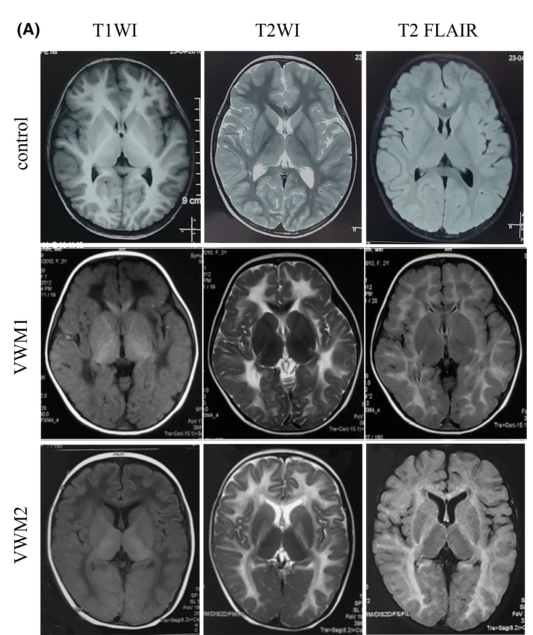
- Characteristic VWM brain MRI pattern Bilateral confluent T2/FLAIR hyperintensity of the periventricular and deep cerebral white matter and the inner rim of the corpus callosum, sparing the subcortical white matter early, with progressive rarefaction and cystic degeneration of the affected white matter to a CSF-like signal in advanced disease (guideline Table 2 and Figures 1-2).
- Biallelic pathogenic or likely pathogenic EIF2B1-5 variants Genetic confirmation with biallelic pathogenic or likely pathogenic variants in a single EIF2B1-EIF2B5 gene. Most known pathogenic variants are missense; biallelic null variants have not been described.
- Search for a second variant in trans when only one is found With a typical MRI and a single pathogenic or likely pathogenic variant, a second variant in trans (even of uncertain significance) should be sought by Sanger sequencing, cDNA analysis, array CGH, MLPA, or long-read genome sequencing, with MRI and clinical review at a VWM expert center when the genotype is uncertain.
Show evidence (4 references)
Subtypes
3Pathophysiology
5Show evidence (4 references)
Show evidence (2 references)
Show evidence (3 references)
Show evidence (2 references)
Show evidence (2 references)
Pathograph
Phenotypes
9Eye 1
Show evidence (1 reference)
Genitourinary 1
Show evidence (1 reference)
Musculoskeletal 1
Show evidence (1 reference)
Nervous System 6
Show evidence (1 reference)
Show evidence (1 reference)
Show evidence (1 reference)
Show evidence (1 reference)
Show evidence (1 reference)
Show evidence (1 reference)
Genetic Associations
5Show evidence (2 references)
Show evidence (1 reference)
Show evidence (1 reference)
Show evidence (1 reference)
Show evidence (1 reference)
Medical Actions
3Show evidence (1 reference)
Show evidence (2 references)
Show evidence (5 references)
Environmental Factors
3Show evidence (2 references)
Show evidence (2 references)
Show evidence (1 reference)
Progression
3Prevalence
2Show evidence (1 reference)
Clinical Trials
2Show evidence (3 references)
Show evidence (2 references)
Experimental Models
2Show evidence (1 reference)
Show evidence (1 reference)
Show evidence (1 reference)
Show evidence (1 reference)
Show evidence (1 reference)
Show evidence (1 reference)
Show evidence (1 reference)
Show evidence (1 reference)
Animal Models
9Show evidence (1 reference)
Show evidence (2 references)
Show evidence (1 reference)
Show evidence (1 reference)
Show evidence (1 reference)
Show evidence (1 reference)
Show evidence (1 reference)
Show evidence (1 reference)
Show evidence (1 reference)
Show evidence (1 reference)
Show evidence (1 reference)
Show evidence (1 reference)
Show evidence (1 reference)
Show evidence (1 reference)
Show evidence (1 reference)
Show evidence (1 reference)
Show evidence (1 reference)
Show evidence (1 reference)
Show evidence (1 reference)
Source YAML
click to showname: Leukoencephalopathy With Vanishing White Matter
creation_date: "2026-06-17T00:00:00Z"
description: >
Leukoencephalopathy with vanishing white matter (VWM), also known as
childhood ataxia with central nervous system hypomyelination (CACH), is an
autosomal recessive leukodystrophy caused by biallelic pathogenic variants in
any of the five genes (EIF2B1-EIF2B5) encoding the subunits of eukaryotic
translation initiation factor 2B (eIF2B). eIF2B is the guanine nucleotide
exchange factor for eIF2 and a central regulator of the integrated stress
response (ISR). Partial loss of eIF2B activity causes constitutive,
deregulated activation of the ISR and renders the central nervous system
white matter, and in particular astrocytes (with secondary oligodendrocyte
dysfunction), abnormally vulnerable. Disease onset spans the antenatal period
to senescence and predicts severity. The disease is characterized by
progressive cerebellar ataxia and spasticity with episodic, often rapid,
neurological deterioration provoked by febrile infections, minor head trauma,
major surgery, or acute fright, and by MRI evidence of diffuse white matter
rarefaction and cystic degeneration (cavitation) in which the white matter is
progressively replaced by fluid.
category: Genetic
disease_term:
preferred_term: leukoencephalopathy with vanishing white matter
term:
id: MONDO:0800448
label: leukoencephalopathy with vanishing white matter
mappings:
mondo_mappings:
# MONDO splits VWM into five per-gene leaf classes, one for each eIF2B subunit
# gene, all direct children of this entry's own MONDO:0800448 anchor. dismech
# covers the gene axis in `genetic:` -- one record per subunit gene, each with
# its own HGNC binding, inheritance block and evidence -- and reserves
# `has_subtypes` for the age-at-onset axis. Age at onset is the axis the
# natural-history literature stratifies on (PMID:15136673, PMID:34745209, both
# cited on the first pathophysiology node), and three phenotypes in this entry
# already carry `subtype:` foreign keys into the onset rows. Because
# `subtype:` is single-valued, adding gene-keyed rows beside
# the onset rows would make a patient who is both "EIF2B5" and "Juvenile-Adult"
# unrepresentable. The five leaves are therefore recorded here as narrowMatch
# rather than as has_subtypes[].subtype_term.
- term:
id: MONDO:0020507
label: leukoencephalopathy with vanishing white matter 1
mapping_predicate: skos:narrowMatch
mapping_source: MONDO
mapping_justification: EIF2B1 (alpha subunit) form; covered by the EIF2B1 record in `genetic:`, which is the sole dismech locus for this leaf class.
- term:
id: MONDO:0957870
label: leukoencephalopathy with vanishing white matter 2
mapping_predicate: skos:narrowMatch
mapping_source: MONDO
mapping_justification: EIF2B2 (beta subunit) form; covered by the EIF2B2 record in `genetic:`, which is the sole dismech locus for this leaf class.
- term:
id: MONDO:0957871
label: leukoencephalopathy with vanishing white matter 3
mapping_predicate: skos:narrowMatch
mapping_source: MONDO
mapping_justification: EIF2B3 (gamma subunit) form; covered by the EIF2B3 record in `genetic:`, which is the sole dismech locus for this leaf class.
- term:
id: MONDO:0957872
label: leukoencephalopathy with vanishing white matter 4
mapping_predicate: skos:narrowMatch
mapping_source: MONDO
mapping_justification: EIF2B4 (delta subunit) form; covered by the EIF2B4 record in `genetic:`, which is the sole dismech locus for this leaf class.
- term:
id: MONDO:0957873
label: leukoencephalopathy with vanishing white matter 5
mapping_predicate: skos:narrowMatch
mapping_source: MONDO
mapping_justification: EIF2B5 (epsilon subunit) form; covered by the EIF2B5 record in `genetic:`, which is the sole dismech locus for this leaf class.
parents:
- Leukodystrophy
references:
- reference: PMID:20301435
title: "Childhood Ataxia with Central Nervous System Hypomyelination / Vanishing White Matter."
tags:
- GeneReviews
has_subtypes:
- name: Antenatal-Infantile
display_name: Antenatal / Subacute Infantile Onset
description: >
Most severe end of the spectrum, including the prenatal/congenital
(Cree leukoencephalopathy) form and the subacute infantile form (onset
age <1 year). Severe, rapidly progressive encephalopathy; the
prenatal/congenital form can present with oligohydramnios, contractures,
microcephaly, and early death.
- name: Early-Childhood
display_name: Early Childhood Onset (classic CACH/VWM)
description: >
Classic form with onset between roughly 1 and <4 years of age, presenting
with cerebellar ataxia and spasticity and stress-provoked episodic
deterioration in which motor decline dominates, leading to death within
several years of onset.
- name: Juvenile-Adult
display_name: Late Childhood / Juvenile / Adult Onset
description: >
Milder, later-onset forms (onset age 4 to <18 years, or adult onset
>=18 years) with slower progression. In adult-onset disease cognitive
decline and personality changes dominate; in women premature ovarian
failure may co-occur (ovarioleukodystrophy).
classifications:
harrisons_chapter:
- classification_value: NEUROLOGIC
notes: >-
VWM/CACH is a leukodystrophy presenting with progressive cerebellar
ataxia, spasticity, and cognitive decline, placing it in Harrison's
Neurologic Disorders Part.
- classification_value: GENETICS_ENVIRONMENT_DISEASE
notes: >-
VWM is a monogenic autosomal recessive disorder caused by biallelic
variants in the eIF2B subunit genes EIF2B1-EIF2B5.
definitions:
- name: 2025 VWM Consortium Consensus Diagnostic Recommendations
definition_type: DIAGNOSTIC_CRITERIA
derivation_basis: ESTABLISHED_CRITERIA
description: >-
Delphi consensus recommendations of the international VWM clinical expert
consortium (van Voorst et al., Neurology 2025). Diagnosis rests on the
combination of clinical features, a characteristic brain MRI pattern, and
genetic confirmation of biallelic pathogenic or likely pathogenic variants
in one of EIF2B1-EIF2B5. MRI and genotype are weighed against each other:
a typical MRI with a single variant prompts a search for a second variant
in trans, while a typical MRI with no EIF2B1-5 variant makes VWM unlikely.
scope: Patients of any age with suspected vanishing white matter
criteria_sets:
- name: Combined clinical, MRI and genetic diagnosis
description: >-
All three elements together establish the diagnosis. Clinical features
are chronic neurologic decline with superimposed subacute episodes of
rapid deterioration provoked by stressors such as febrile infection or
minor head trauma, at any age of onset.
core_clinical_characteristics:
- preferred_term: Progressive cerebellar ataxia
description: >-
Chronic neurologic decline, dominated by cerebellar ataxia and
spasticity in childhood-onset disease; in adult-onset disease cognitive
decline may dominate.
term:
id: HP:0002073
label: Progressive cerebellar ataxia
- preferred_term: Stressor-provoked episodes of acute neurologic deterioration
description: >-
Subacute episodes of rapid decline provoked by febrile infection, minor
head trauma, anesthesia, surgery, or acute fright.
imaging_requirements:
- preferred_term: Characteristic VWM brain MRI pattern
description: >-
Bilateral confluent T2/FLAIR hyperintensity of the periventricular and
deep cerebral white matter and the inner rim of the corpus callosum,
sparing the subcortical white matter early, with progressive rarefaction
and cystic degeneration of the affected white matter to a CSF-like
signal in advanced disease (guideline Table 2 and Figures 1-2).
term:
id: HP:0002352
label: Leukoencephalopathy
laboratory_requirements:
- preferred_term: Biallelic pathogenic or likely pathogenic EIF2B1-5 variants
description: >-
Genetic confirmation with biallelic pathogenic or likely pathogenic
variants in a single EIF2B1-EIF2B5 gene. Most known pathogenic
variants are missense; biallelic null variants have not been described.
additional_requirements:
- preferred_term: Search for a second variant in trans when only one is found
description: >-
With a typical MRI and a single pathogenic or likely pathogenic variant,
a second variant in trans (even of uncertain significance) should be
sought by Sanger sequencing, cDNA analysis, array CGH, MLPA, or
long-read genome sequencing, with MRI and clinical review at a VWM
expert center when the genotype is uncertain.
exclusion_criteria:
- preferred_term: No EIF2B1-5 variant despite a VWM-like MRI
description: >-
If the MRI pattern is consistent with VWM but no pathogenic or likely
pathogenic EIF2B1-5 variant is found, VWM is unlikely and another
diagnosis should be sought, most likely a mitochondrial
leukoencephalopathy.
evidence:
- reference: PMID:41232062
reference_title: "Consensus-Based Expert Recommendations for Diagnosis and Clinical Management of Vanishing White Matter."
supports: SUPPORT
evidence_source: OTHER
quote_role: PRIMARY_RESULT
snippet: >-
There was majority agreement that the diagnosis of VWM is based on a
combination of clinical features, brain MRI characteristics, and genetic
confirmation.
explanation: >-
States the three-part structure of the consensus diagnostic definition.
- reference: PMID:41232062
reference_title: "Consensus-Based Expert Recommendations for Diagnosis and Clinical Management of Vanishing White Matter."
supports: SUPPORT
evidence_source: OTHER
quote_role: PRIMARY_RESULT
snippet: >-
In patients with a suspected VWM diagnosis based on a typical MRI and a
single pathogenic or likely pathogenic variant in a single EIF2B1-5 gene,
attempting to identify a second variant in trans, even if of uncertain
significance, was considered necessary
explanation: >-
Source of the additional requirement to pursue a second variant in trans
when only one is identified.
- reference: PMID:41232062
reference_title: "Consensus-Based Expert Recommendations for Diagnosis and Clinical Management of Vanishing White Matter."
supports: SUPPORT
evidence_source: OTHER
quote_role: PRIMARY_RESULT
snippet: >-
Therefore, if the MRI pattern is consistent with VWM but no pathogenic or
likely pathogenic variant in EIF2B1-5 is found, it is unlikely that the
patient has VWM and another diagnosis should be looked for. In this case,
mitochondrial leukoencephalopathies constitute the most likely
alternative
explanation: >-
Source of the exclusion criterion and of the principal differential
diagnosis.
- reference: PMID:41232062
reference_title: "Consensus-Based Expert Recommendations for Diagnosis and Clinical Management of Vanishing White Matter."
supports: SUPPORT
evidence_source: HUMAN_CLINICAL
quote_role: PRIMARY_RESULT
snippet: >-
Presymptomatic patient with bilateral confluent hyperintensities on T2
FLAIR images in the periventricular and deep cerebral white matter and
inner rim of the corpus callosum, sparing the subcortical white matter and
without rarefaction or cystic decline of the affected white matter.
explanation: >-
Figure 1A legend describing the early-stage MRI pattern used for the
imaging requirement.
notes: >-
The guideline's Table 2 (brain MRI characteristics by subtype and disease
stage) and eTable 6 (all known EIF2B1-5 genotypes) are not present in the
cached full text, so the imaging requirement is summarized from the
Figure 1 legend and from the MRI evidence already cited on the
Leukoencephalopathy phenotype (PMID:9109866); consult Table 2 directly for
the stage-specific detail. The drug-class ISR categorization from the same
guideline (Table 3) is curated separately in `environmental`, where only
the anesthetic class is recorded because it is the only class with
clinical evidence of provoking decline.
pathophysiology:
- name: eIF2B Translation Initiation Complex Deficiency
description: >
Biallelic pathogenic variants in EIF2B1-EIF2B5 partially reduce the
guanine nucleotide exchange activity of eIF2B, the five-subunit GEF that
recycles inactive eIF2-GDP to active eIF2-GTP to permit translation
initiation. eIF2B has an essential housekeeping role in translation and in
its regulation during stress, yet the white matter (and ovaries) are
selectively vulnerable.
genes:
- preferred_term: EIF2B1
term:
id: hgnc:3257
label: EIF2B1
- preferred_term: EIF2B2
term:
id: hgnc:3258
label: EIF2B2
- preferred_term: EIF2B3
term:
id: hgnc:3259
label: EIF2B3
- preferred_term: EIF2B4
term:
id: hgnc:3260
label: EIF2B4
- preferred_term: EIF2B5
term:
id: hgnc:3261
label: EIF2B5
cell_types:
- preferred_term: astrocyte
term:
id: CL:0000127
label: astrocyte
- preferred_term: oligodendrocyte
term:
id: CL:0000128
label: oligodendrocyte
biological_processes:
- preferred_term: translational initiation
modifier: DECREASED
term:
id: GO:0006413
label: translational initiation
- preferred_term: translation
modifier: ABNORMAL
term:
id: GO:0006412
label: translation
evidence:
- reference: PMID:11704758
reference_title: "Subunits of the translation initiation factor eIF2B are mutant in leukoencephalopathy with vanishing white matter."
supports: SUPPORT
evidence_source: HUMAN_CLINICAL
snippet: >-
We have identified mutations in EIF2B5 and EIF2B2, encoding the
epsilon- and beta-subunits of the translation initiation factor eIF2B and
located on chromosomes 3q27 and 14q24, respectively, as causing VWM.
explanation: >-
Identifies mutations in eIF2B subunit genes as the cause of VWM,
establishing the primary molecular lesion.
- reference: PMID:39322396
reference_title: "Vanishing white matter."
supports: SUPPORT
evidence_source: HUMAN_CLINICAL
snippet: >-
"Vanishing white matter" (VWM) is a leukodystrophy caused by autosomal
recessive pathogenic variants in the genes encoding the subunits of
eukaryotic initiation factor 2B (eIF2B).
explanation: >-
Confirms the genetic basis in eIF2B subunit genes and autosomal recessive
inheritance.
- reference: PMID:15136673
reference_title: The effect of genotype on the natural history of eIF2B-related leukodystrophies.
supports: SUPPORT
evidence_source: HUMAN_CLINICAL
quote_role: PRIMARY_RESULT
snippet: >-
Disease severity was correlated with age at onset (p < 0.0001) but not with
the type of the mutated subunit nor with the position of the mutation
within the protein.
explanation: >-
Supports modelling the lesion at the level of the eIF2B complex rather than
per subunit gene: in this cohort which subunit was mutated did not predict
severity.
- reference: PMID:34745209
reference_title: Correlation Between Genotype and Age of Onset in Leukoencephalopathy With Vanishing White Matter.
supports: SUPPORT
evidence_source: HUMAN_CLINICAL
quote_role: PRIMARY_RESULT
snippet: >-
The gene (EIF2B1-5) in which the mutation located, and the number of null
alleles were not associated with age of onset in these patients.
explanation: >-
Independent replication in a larger pooled cohort that the identity of the
mutated subunit gene does not stratify the phenotype, which is why all five
genes are bound to this single complex-level node.
downstream:
- target: Deregulated Integrated Stress Response
causal_link_type: DIRECT
description: >
Reduced eIF2B GEF activity lowers the pool of active eIF2-GTP and causes
constitutive, deregulated activation of the integrated stress response
downstream of eIF2B.
- name: Deregulated Integrated Stress Response
description: >
eIF2B is the central regulatory factor of the integrated stress response
(ISR): phosphorylation of eIF2-alpha inhibits eIF2B, reducing global
translation while up-regulating ISR effector mRNAs. eIF2B-deficient
mutations chronically mimic this state, producing constitutive ISR
activation that is specifically pronounced in astrocytes; ISR mRNA
expression levels correlate with disease severity.
cell_types:
- preferred_term: astrocyte
term:
id: CL:0000127
label: astrocyte
biological_processes:
- preferred_term: integrated stress response signaling
modifier: INCREASED
term:
id: GO:0140467
label: integrated stress response signaling
- preferred_term: regulation of translation
modifier: ABNORMAL
term:
id: GO:0006417
label: regulation of translation
evidence:
- reference: PMID:39322396
reference_title: "Vanishing white matter."
supports: SUPPORT
evidence_source: HUMAN_CLINICAL
snippet: >-
eIF2B is a central regulatory factor in the integrated stress response
(ISR). Genetic variants decrease eIF2B activity and thereby cause
constitutive activation of the ISR downstream of eIF2B. Strikingly, the
ISR is specifically activated in astrocytes.
explanation: >-
Establishes deregulated, constitutive ISR activation as the core
mechanism and its astrocyte specificity.
- reference: PMID:31402619
reference_title: "Vanishing white matter: deregulated integrated stress response as therapy target."
supports: SUPPORT
evidence_source: MODEL_ORGANISM
snippet: >-
In brains of VWM compared to wild-type mice we observed the most
prominent changes in translation concerning ISR mRNAs; their expression
levels correlated with disease severity.
explanation: >-
Mouse models show ISR mRNA translational changes that correlate with
disease severity, linking ISR deregulation to pathology.
downstream:
- target: Astrocyte Dysfunction and Selective Glial Vulnerability
causal_link_type: DIRECT
description: >
Constitutive ISR activation impairs maturation and function of white
matter astrocytes, the cell type selectively affected in VWM.
- name: Astrocyte Dysfunction and Selective Glial Vulnerability
description: >
White matter astrocytes are the primary affected cell type in VWM.
Impaired astrocyte maturation precedes disease onset and parallels
severity; immature, morphologically abnormal astrocytes secrete factors
that inhibit oligodendrocyte maturation, while wild-type astrocytes permit
normal maturation of mutant oligodendrocytes. Specialized astrocytes such
as cerebellar Bergmann glia and retinal Mueller cells are also involved.
cell_types:
- preferred_term: astrocyte
term:
id: CL:0000127
label: astrocyte
- preferred_term: Bergmann glial cell
term:
id: CL:0000644
label: Bergmann glial cell
- preferred_term: oligodendrocyte
term:
id: CL:0000128
label: oligodendrocyte
biological_processes:
- preferred_term: astrocyte differentiation
modifier: DECREASED
term:
id: GO:0048708
label: astrocyte differentiation
evidence:
- reference: PMID:26974157
reference_title: "Astrocytes are central in the pathomechanisms of vanishing white matter."
supports: SUPPORT
evidence_source: MODEL_ORGANISM
snippet: >-
In all mutant strains, impaired maturation of white matter astrocytes
preceded onset and paralleled disease severity and progression.
explanation: >-
Demonstrates that astrocyte maturation impairment precedes and tracks
disease, supporting astrocytes as the central affected cell type.
- reference: PMID:26974157
reference_title: "Astrocytes are central in the pathomechanisms of vanishing white matter."
supports: SUPPORT
evidence_source: IN_VITRO
snippet: >-
In coculture, VWM astrocytes secreted factors that inhibited
oligodendrocyte maturation, whereas WT astrocytes allowed normal
maturation of VWM oligodendrocytes.
explanation: >-
Coculture data show astrocytes drive secondary oligodendrocyte
dysfunction, establishing the astrocyte-to-oligodendrocyte axis.
- reference: PMID:36429009
reference_title: "Cortical Pathology in Vanishing White Matter."
supports: SUPPORT
evidence_source: HUMAN_CLINICAL
snippet: >-
that VWM cortical astrocytes exhibit morphological changes and are less
complex in structure than control cells. Our findings also suggest that
these astrocytes are immature and not reactive.
explanation: >-
Proteomic and immunohistochemical analysis of human VWM patient cortex
confirms astrocytes are morphologically abnormal and immature, extending
astrocyte involvement beyond white matter.
downstream:
- target: Progressive White Matter Rarefaction and Cavitation
causal_link_type: DIRECT
description: >
Astrocyte dysfunction and the resulting failure of oligodendrocyte
maturation lead to progressive loss and cystic degeneration of central
nervous system white matter.
- name: Progressive White Matter Rarefaction and Cavitation
description: >
Diffuse cerebral white matter progressively acquires a CSF-like signal on
MRI and undergoes cystic degeneration (cavitation), so that increasing
areas of white matter are replaced by fluid while the cortex is relatively
preserved. Long-surviving patients also show secondary cortical thinning.
cell_types:
- preferred_term: oligodendrocyte
term:
id: CL:0000128
label: oligodendrocyte
biological_processes:
- preferred_term: myelination
modifier: DECREASED
term:
id: GO:0042552
label: myelination
evidence:
- reference: PMID:9109866
reference_title: "A new leukoencephalopathy with vanishing white matter."
supports: SUPPORT
evidence_source: HUMAN_CLINICAL
snippet: >-
In eight patients with advanced disease, MRI revealed a diffuse cerebral
hemispheric leukoencephalopathy, in which increasing areas of the
abnormal white matter had a signal intensity close to that of CSF on all
pulse sequences.
explanation: >-
Original clinical description of progressive white matter signal change
toward CSF intensity, the hallmark of VWM.
- reference: PMID:9109866
reference_title: "A new leukoencephalopathy with vanishing white matter."
supports: SUPPORT
evidence_source: HUMAN_CLINICAL
snippet: >-
Autopsy in one patient confirmed the presence of extensive cystic
degeneration of the cerebral white matter with reactive change and a
preserved cortex.
explanation: >-
Autopsy confirms cystic degeneration of white matter with cortical
sparing, the cavitation hallmark.
downstream:
- target: Stress-Provoked Neurological Deterioration
causal_link_type: INDIRECT_KNOWN_INTERMEDIATES
description: >
The vulnerable, rarefying white matter is prone to acute episodic
decline when challenged by physiological stress, superimposed on the
chronic progressive course.
- target: Leukoencephalopathy
causal_link_type: DIRECT
description: >
Rarefaction and cystic degeneration of the cerebral white matter are what
the diffuse confluent white matter signal abnormality on MRI records; in
advanced disease the affected white matter approaches CSF signal on all
pulse sequences.
evidence:
- reference: PMID:9109866
reference_title: "A new leukoencephalopathy with vanishing white matter."
supports: SUPPORT
evidence_source: HUMAN_CLINICAL
snippet: >-
In eight patients with advanced disease, MRI revealed a diffuse cerebral
hemispheric leukoencephalopathy, in which increasing areas of the
abnormal white matter had a signal intensity close to that of CSF on all
pulse sequences.
explanation: >-
Reports the imaging leukoencephalopathy as the correlate of the
progressive white matter change this node describes, with autopsy in the
same series confirming cystic degeneration.
- name: Stress-Provoked Neurological Deterioration
description: >
Because eIF2B governs translation during stress, the disease is dominated
by chronic progressive decline punctuated by episodes of rapid, major
neurological deterioration provoked by febrile infections, minor head
trauma, major surgery, or acute and extreme fright, which may precipitate
unexplained coma.
cell_types:
- preferred_term: astrocyte
term:
id: CL:0000127
label: astrocyte
biological_processes:
- preferred_term: cellular response to stress
modifier: ABNORMAL
term:
id: GO:0033554
label: cellular response to stress
evidence:
- reference: PMID:11704758
reference_title: "Subunits of the translation initiation factor eIF2B are mutant in leukoencephalopathy with vanishing white matter."
supports: SUPPORT
evidence_source: HUMAN_CLINICAL
snippet: >-
As eIF2B has an essential role in the regulation of translation under
different conditions, including stress, this may explain the rapid
deterioration of people with VWM under stress.
explanation: >-
Links the eIF2B/ISR defect mechanistically to the characteristic
stress-provoked deterioration.
- reference: PMID:9109866
reference_title: "A new leukoencephalopathy with vanishing white matter."
supports: SUPPORT
evidence_source: HUMAN_CLINICAL
snippet: >-
There were episodes of deterioration following infections and minor head
traumas, and these could results in unexplained coma.
explanation: >-
Original clinical observation of stress-provoked episodic deterioration
and coma.
downstream:
- target: Coma
causal_link_type: DIRECT
description: >
An episode of stress-provoked deterioration may itself progress to
unexplained coma, which in the original series followed infections and
minor head traumas.
evidence:
- reference: PMID:9109866
reference_title: "A new leukoencephalopathy with vanishing white matter."
supports: SUPPORT
evidence_source: HUMAN_CLINICAL
snippet: >-
There were episodes of deterioration following infections and minor head
traumas, and these could results in unexplained coma.
explanation: >-
States that the stress-provoked deterioration episodes could result in
unexplained coma, which is the edge from this node to the Coma phenotype.
phenotypes:
- name: Cerebellar ataxia
category: Neurological
description: Progressive cerebellar ataxia is a core, often presenting, feature.
phenotype_term:
preferred_term: Cerebellar ataxia
term:
id: HP:0002073
label: Progressive cerebellar ataxia
evidence:
- reference: PMID:20301435
reference_title: "Childhood Ataxia with Central Nervous System Hypomyelination / Vanishing White Matter."
supports: SUPPORT
evidence_source: HUMAN_CLINICAL
snippet: >-
Childhood ataxia with central nervous system hypomyelination / vanishing
white matter (CACH/VWM) is characterized by ataxia, spasticity, and
variable optic atrophy.
explanation: >-
GeneReviews lists ataxia as a defining clinical characteristic.
- name: Spasticity
category: Neurological
description: Spasticity is a core motor feature, often with spastic paraparesis.
phenotype_term:
preferred_term: Spasticity
term:
id: HP:0001257
label: Spasticity
evidence:
- reference: PMID:20301435
reference_title: "Childhood Ataxia with Central Nervous System Hypomyelination / Vanishing White Matter."
supports: SUPPORT
evidence_source: HUMAN_CLINICAL
snippet: >-
Childhood ataxia with central nervous system hypomyelination / vanishing
white matter (CACH/VWM) is characterized by ataxia, spasticity, and
variable optic atrophy.
explanation: >-
GeneReviews lists spasticity as a defining clinical characteristic.
- name: Optic atrophy
category: Ophthalmological
description: Variable optic atrophy occurs in VWM.
phenotype_term:
preferred_term: Optic atrophy
term:
id: HP:0000648
label: Optic atrophy
evidence:
- reference: PMID:20301435
reference_title: "Childhood Ataxia with Central Nervous System Hypomyelination / Vanishing White Matter."
supports: SUPPORT
evidence_source: HUMAN_CLINICAL
snippet: >-
Childhood ataxia with central nervous system hypomyelination / vanishing
white matter (CACH/VWM) is characterized by ataxia, spasticity, and
variable optic atrophy.
explanation: >-
GeneReviews lists variable optic atrophy as a clinical characteristic.
- name: Leukoencephalopathy
category: Neuroimaging
description: >
Diffuse cerebral white matter abnormality progressing to a CSF-like signal
with cystic cavitation is the radiologic hallmark.
phenotype_term:
preferred_term: Leukoencephalopathy
term:
id: HP:0002352
label: Leukoencephalopathy
clinical_course: PROGRESSIVE
evidence:
- reference: PMID:9109866
reference_title: "A new leukoencephalopathy with vanishing white matter."
supports: SUPPORT
evidence_source: HUMAN_CLINICAL
snippet: >-
In eight patients with advanced disease, MRI revealed a diffuse cerebral
hemispheric leukoencephalopathy, in which increasing areas of the
abnormal white matter had a signal intensity close to that of CSF on all
pulse sequences.
explanation: >-
Documents the diffuse leukoencephalopathy with progression to CSF-like
signal intensity.
- name: Mental deterioration
category: Neurological
description: >
Cognitive decline and personality changes, dominating in adult-onset
disease.
phenotype_term:
preferred_term: Cognitive decline
term:
id: HP:0001268
label: Mental deterioration
clinical_course: PROGRESSIVE
subtype: Juvenile-Adult
evidence:
- reference: PMID:20301435
reference_title: "Childhood Ataxia with Central Nervous System Hypomyelination / Vanishing White Matter."
supports: SUPPORT
evidence_source: HUMAN_CLINICAL
snippet: >-
in adult-onset forms cognitive decline and personality changes dominate.
explanation: >-
GeneReviews indicates cognitive decline dominates the adult-onset
presentation.
- name: Personality changes
category: Neuropsychiatric
description: Personality changes are prominent in adult-onset disease.
phenotype_term:
preferred_term: Personality changes
term:
id: HP:0000751
label: Personality changes
subtype: Juvenile-Adult
evidence:
- reference: PMID:20301435
reference_title: "Childhood Ataxia with Central Nervous System Hypomyelination / Vanishing White Matter."
supports: SUPPORT
evidence_source: HUMAN_CLINICAL
snippet: >-
in adult-onset forms cognitive decline and personality changes dominate.
explanation: >-
GeneReviews indicates personality changes dominate adult-onset disease.
- name: Coma
category: Neurological
description: >
Stress (infection, head trauma) can precipitate rapid deterioration and
unexplained coma.
phenotype_term:
preferred_term: Coma
term:
id: HP:0001259
label: Coma
temporality: ACUTE
evidence:
- reference: PMID:9109866
reference_title: "A new leukoencephalopathy with vanishing white matter."
supports: SUPPORT
evidence_source: HUMAN_CLINICAL
snippet: >-
There were episodes of deterioration following infections and minor head
traumas, and these could results in unexplained coma.
explanation: >-
Stress-provoked episodic deterioration may culminate in unexplained coma.
- name: Premature ovarian insufficiency
category: Endocrine
description: >
Premature ovarian failure occurs in affected females (ovarioleukodystrophy),
the principal extra-CNS manifestation of VWM.
phenotype_term:
preferred_term: Premature ovarian insufficiency
term:
id: HP:0008209
label: Premature ovarian insufficiency
subtype: Juvenile-Adult
evidence:
- reference: PMID:29331873
reference_title: "Epilepsy and ovarian failure: Two cases of adolescent-onset ovarioleukodystrophy."
supports: SUPPORT
evidence_source: HUMAN_CLINICAL
snippet: >-
This association with premature ovarian failure is known as
ovarioleukodystrophy.
explanation: >-
Documents premature ovarian failure (ovarioleukodystrophy) as an
extra-CNS feature of VWM.
- name: Seizures
category: Neurological
description: Seizures may occur and are managed with anti-seizure medication.
phenotype_term:
preferred_term: Seizure
term:
id: HP:0001250
label: Seizure
evidence:
- reference: PMID:20301435
reference_title: "Childhood Ataxia with Central Nervous System Hypomyelination / Vanishing White Matter."
supports: SUPPORT
evidence_source: HUMAN_CLINICAL
snippet: >-
anti-seizure medication for seizures.
explanation: >-
GeneReviews management section indicates seizures occur and require
anti-seizure medication.
genetic:
- name: EIF2B5
association: Pathogenic Mutations
presence: Positive
gene_term:
preferred_term: EIF2B5
term:
id: hgnc:3261
label: EIF2B5
case_fractions:
- population: >-
Pooled VWM cohort of 341 patients (281 from 87 published reports plus 60
diagnosed at Peking University First Hospital), literature search to
January 2021
case_fraction_percent: 61.9
cohort_size: 341
notes: >-
211 of 341 patients in the pooled cohort carried EIF2B5 (epsilon subunit)
mutations.
evidence:
- reference: PMID:34745209
reference_title: Correlation Between Genotype and Age of Onset in Leukoencephalopathy With Vanishing White Matter.
supports: SUPPORT
evidence_source: HUMAN_CLINICAL
quote_role: PRIMARY_RESULT
snippet: >-
The proportions of patients with mutations in EIF2B1, EIF2B2, EIF2B3,
EIF2B4, and EIF2B5 were 1.5% (5/341), 15.2% (52/341), 11.1% (38/341),
10.3% (35/341) and 61.9% (211/341), respectively.
explanation: >-
Reports the per-gene share of cases across all five eIF2B subunit genes
in this cohort, from which the EIF2B5 figure is taken.
notes: >
EIF2B5 (encoding the catalytic epsilon subunit of eIF2B) is the most
commonly mutated of the five eIF2B subunit genes in VWM. Severity varies by
allele within EIF2B5 rather than by which subunit gene is mutated: in a
cross-sectional study drawn from a database of 184 patients with VWM,
homozygotes for p.Arg113His had milder disease than p.Arg113His compound
heterozygotes and than p.Thr91Ala homozygotes (PMID:20975056). Allele-level
detail belongs on this record rather than in a separate per-gene entry.
inheritance:
- name: Autosomal Recessive
inheritance_term:
preferred_term: Autosomal recessive inheritance
term:
id: HP:0000007
label: Autosomal recessive inheritance
evidence:
- reference: PMID:11704758
reference_title: "Subunits of the translation initiation factor eIF2B are mutant in leukoencephalopathy with vanishing white matter."
supports: SUPPORT
evidence_source: HUMAN_CLINICAL
snippet: >-
We found 16 different mutations in EIF2B5 in 29 patients from 23
families.
explanation: >-
EIF2B5 was the first and most frequently mutated eIF2B gene identified in
VWM patients.
- reference: PMID:20975056
reference_title: Genotype-phenotype correlation in vanishing white matter disease.
supports: SUPPORT
evidence_source: HUMAN_CLINICAL
quote_role: PRIMARY_RESULT
snippet: >-
Patients homozygous for p.Arg113His had a milder disease than patients
compound heterozygous for p.Arg113His and patients homozygous for
p.Thr91Ala.
explanation: >-
Shows that the mild and severe ends of the VWM spectrum both occur within
EIF2B5, so severity tracks the specific allele pair rather than the subunit
gene.
- name: EIF2B2
association: Pathogenic Mutations
presence: Positive
gene_term:
preferred_term: EIF2B2
term:
id: hgnc:3258
label: EIF2B2
case_fractions:
- population: >-
Pooled VWM cohort of 341 patients (281 from 87 published reports plus 60
diagnosed at Peking University First Hospital), literature search to
January 2021
case_fraction_percent: 15.2
cohort_size: 341
notes: >-
52 of 341 patients in the pooled cohort carried EIF2B2 (beta subunit)
mutations.
evidence:
- reference: PMID:34745209
reference_title: Correlation Between Genotype and Age of Onset in Leukoencephalopathy With Vanishing White Matter.
supports: SUPPORT
evidence_source: HUMAN_CLINICAL
quote_role: PRIMARY_RESULT
snippet: >-
The proportions of patients with mutations in EIF2B1, EIF2B2, EIF2B3,
EIF2B4, and EIF2B5 were 1.5% (5/341), 15.2% (52/341), 11.1% (38/341),
10.3% (35/341) and 61.9% (211/341), respectively.
explanation: >-
Reports the per-gene share of cases across all five eIF2B subunit genes
in this cohort, from which the EIF2B2 figure is taken.
notes: >
EIF2B2 (encoding the beta subunit of eIF2B) is one of the five subunit
genes that cause VWM when biallelically mutated.
inheritance:
- name: Autosomal Recessive
inheritance_term:
preferred_term: Autosomal recessive inheritance
term:
id: HP:0000007
label: Autosomal recessive inheritance
evidence:
- reference: PMID:11704758
reference_title: "Subunits of the translation initiation factor eIF2B are mutant in leukoencephalopathy with vanishing white matter."
supports: SUPPORT
evidence_source: HUMAN_CLINICAL
snippet: >-
We also found two distantly related individuals who were homozygous with
respect to a missense mutation in EIF2B2, affecting a conserved amino
acid.
explanation: >-
EIF2B2 mutations were identified among VWM patients, confirming locus
heterogeneity.
- name: EIF2B1
association: Pathogenic Mutations
presence: Positive
gene_term:
preferred_term: EIF2B1
term:
id: hgnc:3257
label: EIF2B1
case_fractions:
- population: >-
Pooled VWM cohort of 341 patients (281 from 87 published reports plus 60
diagnosed at Peking University First Hospital), literature search to
January 2021
case_fraction_percent: 1.5
cohort_size: 341
notes: >-
5 of 341 patients in the pooled cohort carried EIF2B1 (alpha subunit)
mutations.
evidence:
- reference: PMID:34745209
reference_title: Correlation Between Genotype and Age of Onset in Leukoencephalopathy With Vanishing White Matter.
supports: SUPPORT
evidence_source: HUMAN_CLINICAL
quote_role: PRIMARY_RESULT
snippet: >-
The proportions of patients with mutations in EIF2B1, EIF2B2, EIF2B3,
EIF2B4, and EIF2B5 were 1.5% (5/341), 15.2% (52/341), 11.1% (38/341),
10.3% (35/341) and 61.9% (211/341), respectively.
explanation: >-
Reports the per-gene share of cases across all five eIF2B subunit genes
in this cohort, from which the EIF2B1 figure is taken.
notes: >
EIF2B1 (alpha subunit) is one of the five eIF2B subunit genes; biallelic
pathogenic variants in any of EIF2B1-EIF2B5 establish the diagnosis.
inheritance:
- name: Autosomal Recessive
inheritance_term:
preferred_term: Autosomal recessive inheritance
term:
id: HP:0000007
label: Autosomal recessive inheritance
evidence:
- reference: PMID:20301435
reference_title: "Childhood Ataxia with Central Nervous System Hypomyelination / Vanishing White Matter."
supports: SUPPORT
evidence_source: HUMAN_CLINICAL
snippet: >-
identification of biallelic pathogenic variants in one of five genes
(EIF2B1, EIF2B2, EIF2B3, EIF2B4, EIF2B5), which encode the five subunits
of the eukaryotic translation initiation factor 2B (eIF2B).
explanation: >-
GeneReviews establishes that biallelic variants in any of the five eIF2B
genes, including EIF2B1, cause VWM.
- name: EIF2B3
association: Pathogenic Mutations
presence: Positive
gene_term:
preferred_term: EIF2B3
term:
id: hgnc:3259
label: EIF2B3
case_fractions:
- population: >-
Pooled VWM cohort of 341 patients (281 from 87 published reports plus 60
diagnosed at Peking University First Hospital), literature search to
January 2021
case_fraction_percent: 11.1
cohort_size: 341
notes: >-
38 of 341 patients in the pooled cohort carried EIF2B3 (gamma subunit)
mutations.
evidence:
- reference: PMID:34745209
reference_title: Correlation Between Genotype and Age of Onset in Leukoencephalopathy With Vanishing White Matter.
supports: SUPPORT
evidence_source: HUMAN_CLINICAL
quote_role: PRIMARY_RESULT
snippet: >-
The proportions of patients with mutations in EIF2B1, EIF2B2, EIF2B3,
EIF2B4, and EIF2B5 were 1.5% (5/341), 15.2% (52/341), 11.1% (38/341),
10.3% (35/341) and 61.9% (211/341), respectively.
explanation: >-
Reports the per-gene share of cases across all five eIF2B subunit genes
in this cohort, from which the EIF2B3 figure is taken.
notes: >
EIF2B3 (gamma subunit) is one of the five eIF2B subunit genes causing VWM.
inheritance:
- name: Autosomal Recessive
inheritance_term:
preferred_term: Autosomal recessive inheritance
term:
id: HP:0000007
label: Autosomal recessive inheritance
evidence:
- reference: PMID:20301435
reference_title: "Childhood Ataxia with Central Nervous System Hypomyelination / Vanishing White Matter."
supports: SUPPORT
evidence_source: HUMAN_CLINICAL
snippet: >-
identification of biallelic pathogenic variants in one of five genes
(EIF2B1, EIF2B2, EIF2B3, EIF2B4, EIF2B5), which encode the five subunits
of the eukaryotic translation initiation factor 2B (eIF2B).
explanation: >-
GeneReviews establishes EIF2B3 as one of the five VWM disease genes.
- name: EIF2B4
association: Pathogenic Mutations
presence: Positive
gene_term:
preferred_term: EIF2B4
term:
id: hgnc:3260
label: EIF2B4
case_fractions:
- population: >-
Pooled VWM cohort of 341 patients (281 from 87 published reports plus 60
diagnosed at Peking University First Hospital), literature search to
January 2021
case_fraction_percent: 10.3
cohort_size: 341
notes: >-
35 of 341 patients in the pooled cohort carried EIF2B4 (delta subunit)
mutations.
evidence:
- reference: PMID:34745209
reference_title: Correlation Between Genotype and Age of Onset in Leukoencephalopathy With Vanishing White Matter.
supports: SUPPORT
evidence_source: HUMAN_CLINICAL
quote_role: PRIMARY_RESULT
snippet: >-
The proportions of patients with mutations in EIF2B1, EIF2B2, EIF2B3,
EIF2B4, and EIF2B5 were 1.5% (5/341), 15.2% (52/341), 11.1% (38/341),
10.3% (35/341) and 61.9% (211/341), respectively.
explanation: >-
Reports the per-gene share of cases across all five eIF2B subunit genes
in this cohort, from which the EIF2B4 figure is taken.
notes: >
EIF2B4 (delta subunit) is one of the five eIF2B subunit genes causing VWM;
a homozygous EIF2B4 p.Arg373Cys variant has been reported in adult-onset
ovarioleukodystrophy.
inheritance:
- name: Autosomal Recessive
inheritance_term:
preferred_term: Autosomal recessive inheritance
term:
id: HP:0000007
label: Autosomal recessive inheritance
evidence:
- reference: PMID:29331873
reference_title: "Epilepsy and ovarian failure: Two cases of adolescent-onset ovarioleukodystrophy."
supports: SUPPORT
evidence_source: HUMAN_CLINICAL
snippet: >-
In both patients we found the c.1117C>T (p.Arg373Cys) mutation in
homozygosis in the EIF2B4 gen.
explanation: >-
An EIF2B4 homozygous variant was identified in adult-onset
ovarioleukodystrophy, confirming EIF2B4 as a VWM gene.
environmental:
- name: Febrile infection
description: >-
Febrile infections are the most common trigger of an episode of rapid
neurological deterioration in VWM, and the guideline states the mechanism
explicitly: fever activates the integrated stress response, which the eIF2B
defect has already deregulated. This is why the entry's management side
recommends vaccination, antipyretics, and a lower threshold for antibiotics.
evidence:
- reference: PMID:41232062
reference_title: "Consensus-Based Expert Recommendations for Diagnosis and Clinical Management of Vanishing White Matter."
supports: SUPPORT
evidence_source: HUMAN_CLINICAL
snippet: >-
Fever activates the ISR, and febrile infections are the most common
triggers for acute decline in patients with VWM.
explanation: >-
Names febrile infection as the most common provoking factor and gives the
mechanism by which it acts, which is what makes it a curated exposure.
- reference: PMID:20301435
reference_title: "Childhood Ataxia with Central Nervous System Hypomyelination / Vanishing White Matter."
supports: SUPPORT
evidence_source: HUMAN_CLINICAL
snippet: >-
Chronic progressive decline can be exacerbated by rapid deterioration
during febrile illnesses or following head trauma or major surgical
procedures, or by acute and extreme fright.
explanation: >-
Independent GeneReviews confirmation that febrile illness is one of the
stressors that provokes acute decline on top of the chronic course.
influences_mechanisms:
- target: Deregulated Integrated Stress Response
environmental_effect: EXACERBATES
causal_link_type: DIRECT
description: >-
Fever activates the same integrated stress response that the eIF2B defect
already deregulates, so the exposure amplifies an ISR that is abnormal at
baseline. EXACERBATES rather than TRIGGERS: the genetic defect, not the
infection, establishes the deregulated state.
evidence:
- reference: PMID:41232062
reference_title: "Consensus-Based Expert Recommendations for Diagnosis and Clinical Management of Vanishing White Matter."
supports: SUPPORT
evidence_source: HUMAN_CLINICAL
snippet: >-
Fever activates the ISR, and febrile infections are the most common
triggers for acute decline in patients with VWM.
explanation: >-
States the mechanism of this link directly — fever acts on the ISR,
which is the node the exposure is attached to.
- target: Stress-Provoked Neurological Deterioration
environmental_effect: TRIGGERS
causal_link_type: INDIRECT_KNOWN_INTERMEDIATES
description: >-
The episode of acute decline itself does not occur without a stressor, so
the exposure initiates it rather than amplifying it; the intermediate is
the ISR node above.
evidence:
- reference: PMID:41232062
reference_title: "Consensus-Based Expert Recommendations for Diagnosis and Clinical Management of Vanishing White Matter."
supports: SUPPORT
evidence_source: HUMAN_CLINICAL
snippet: >-
Patients can present at any age with chronic neurologic decline and
additional subacute episodes of rapid neurologic deterioration provoked
by stressors such as febrile infections
explanation: >-
Attributes the episodic-deterioration node specifically to febrile
infection as the provoking stressor.
notes: >
Left ontology-unbound deliberately. ECTO was searched for a class covering
infection or fever as an exposure ("exposure to infection", "exposure to
fever", "exposure to pathogen", "exposure to microbe", "exposure to
increased body temperature"): the only hits are named-pathogen classes
under ECTO:3000000 (exposure to organism) and named-virus classes under
ECTO:3000001 (exposure to virus). The curated exposure here is *any*
febrile infection, and what the guideline says acts on the ISR is the
fever, not the organism, so binding either parent would assert something
narrower or broader than the evidence. Per the ontology-term contract, a
free-text name is preferred to a wrong binding. ECTO:4000001 (exposure to
increased temperature) is about ambient temperature, not body temperature,
and is not a substitute.
- name: Minor head trauma
description: >-
Minor head trauma is the second most common trigger of an episode of acute
decline in VWM, after febrile infection. The guideline recommends avoiding
it as far as is reasonable, and GeneReviews recommends helmet use in
children for the same reason. Unlike fever, no source in the cache states
that head trauma acts by activating the ISR, so it is linked only to the
stress-provoked deterioration node and not to the ISR node.
evidence:
- reference: PMID:41232062
reference_title: "Consensus-Based Expert Recommendations for Diagnosis and Clinical Management of Vanishing White Matter."
supports: SUPPORT
evidence_source: HUMAN_CLINICAL
snippet: >-
minor head trauma, the second most common trigger for acute decline in
VWM
explanation: >-
Ranks minor head trauma as the second most common provoking factor for
episodes of acute decline.
- reference: PMID:20301435
reference_title: "Childhood Ataxia with Central Nervous System Hypomyelination / Vanishing White Matter."
supports: SUPPORT
evidence_source: HUMAN_CLINICAL
snippet: >-
For children, wearing a helmet when outside helps minimize the effects of
head trauma.
explanation: >-
GeneReviews recommends a preventive measure specific to this exposure,
which is the management consequence of treating head trauma as a trigger.
influences_mechanisms:
- target: Stress-Provoked Neurological Deterioration
environmental_effect: TRIGGERS
causal_link_type: DIRECT
description: >-
Head trauma is one of the physiological stressors that precipitates an
episode of rapid neurological deterioration on top of the chronic
progressive course.
evidence:
- reference: PMID:20301435
reference_title: "Childhood Ataxia with Central Nervous System Hypomyelination / Vanishing White Matter."
supports: SUPPORT
evidence_source: HUMAN_CLINICAL
snippet: >-
Chronic progressive decline can be exacerbated by rapid deterioration
during febrile illnesses or following head trauma or major surgical
procedures, or by acute and extreme fright.
explanation: >-
Names head trauma among the stressors that provoke the acute
deterioration this node describes.
notes: >
Left ontology-unbound deliberately. ECTO was searched for an exposure class
covering physical trauma or injury ("exposure to trauma", "exposure to
injury", "exposure to physical", "exposure to mechanical force"): the
ontology has no such branch, and the nearest hits (ECTO:6000039 exposure to
Physical Activity, ECTO:0010003 exposure to environmental physical object
quality) do not denote a traumatic impact. Per the ontology-term contract, a
free-text preferred_term is preferred to a wrong binding.
- name: Exposure to ISR-activating inhalation anaesthetics
exposure_term:
preferred_term: exposure to inhalation anaesthetics such as sevoflurane
term:
id: ECTO:2000059
label: exposure to anesthetics
description: >-
The 2025 international consensus guideline classified clinically used drugs
by their effect on the integrated stress response. Inhalation anaesthetics
such as sevoflurane, the agents most commonly used to induce anaesthesia in
children, fall in the ISR-activating group, and anaesthesia is one of the
few drug exposures with direct clinical evidence of provoking an episode of
acute decline in VWM. The guideline recommends considering non-ISR-activating
alternatives such as propofol.
evidence:
- reference: PMID:41232062
reference_title: "Consensus-Based Expert Recommendations for Diagnosis and Clinical Management of Vanishing White Matter."
supports: SUPPORT
evidence_source: HUMAN_CLINICAL
snippet: >-
Clinical evidence for provoking decline is only present for anesthetics:
anesthesia was a provoking factor in 16% of the patients with episodes of
acute decline.
explanation: >-
Quantifies anaesthesia as a documented provoking factor for episodes of
acute neurological decline in a VWM patient cohort, which is what makes
this exposure a curated environmental factor rather than a theoretical one.
influences_mechanisms:
- target: Deregulated Integrated Stress Response
environmental_effect: EXACERBATES
causal_link_type: DIRECT
description: >-
Inhalation anaesthetics act on the same integrated stress response that
the eIF2B defect already deregulates, so the exposure pushes an
already-abnormal ISR further and is the proposed route by which anaesthesia
provokes acute decline.
evidence:
- reference: PMID:41232062
reference_title: "Consensus-Based Expert Recommendations for Diagnosis and Clinical Management of Vanishing White Matter."
supports: SUPPORT
evidence_source: OTHER
snippet: >-
Inhalation anesthetics, such as sevoflurane, which are most commonly
used to induce anesthesia in children, are known to activate the ISR and
may pose a risk for patients with VWM
explanation: >-
States the mechanism of the link — the anaesthetic activates the ISR,
which is the node this exposure is attached to.
- reference: PMID:41232062
reference_title: "Consensus-Based Expert Recommendations for Diagnosis and Clinical Management of Vanishing White Matter."
supports: SUPPORT
evidence_source: OTHER
snippet: >-
It is, therefore, recommended to consider using alternative anesthetic
agents, such as propofol, which do not affect the ISR.
explanation: >-
The recommended substitution is agent-specific and turns on ISR effect,
which is the clinical consequence of this exposure acting on the ISR
node.
notes: >
The guideline's wider drug list — clinically used drugs sorted into likely
ISR-activating, ISR-suppressing, and no-likely-effect groups — is not yet
curated here. Only the anaesthetic class is modelled, because it is the one
the guideline says has clinical rather than purely theoretical evidence:
"The risk is more theoretical and not based on clinical evidence for other
drugs." Curating the remaining classes is tracked in issue 10427.
treatments:
- name: Physical Therapy and Rehabilitation
description: >
Physical therapy and rehabilitation for motor dysfunction (mainly
spasticity and ataxia). VWM has no disease-modifying therapy; care is
supportive.
therapeutic_modality: BEHAVIORAL
treatment_term:
preferred_term: physical therapy
term:
id: NCIT:C15302
label: Physical Therapy
evidence:
- reference: PMID:20301435
reference_title: "Childhood Ataxia with Central Nervous System Hypomyelination / Vanishing White Matter."
supports: SUPPORT
evidence_source: HUMAN_CLINICAL
snippet: >-
Physical therapy and rehabilitation for motor dysfunction (mainly
spasticity and ataxia)
explanation: >-
GeneReviews management recommends physical therapy and rehabilitation for
motor dysfunction.
- name: Infection and Fever Prevention
description: >
Prevention of secondary deterioration through vaccinations, low-dose
maintenance antibiotics during winter, antibiotics for minor infections,
and antipyretics for fever, because febrile infections provoke rapid
decline. Helmets and avoidance of contact sports, head trauma, high body
temperature, and (where possible) major surgery are advised.
therapeutic_modality: VACCINE
treatment_term:
preferred_term: vaccination
term:
id: NCIT:C15346
label: Vaccination
evidence:
- reference: PMID:20301435
reference_title: "Childhood Ataxia with Central Nervous System Hypomyelination / Vanishing White Matter."
supports: SUPPORT
evidence_source: HUMAN_CLINICAL
snippet: >-
Prevention of infections and fever when possible through the use of
vaccinations, low-dose maintenance antibiotics during winter, antibiotics
for minor infections, and antipyretics for fever.
explanation: >-
GeneReviews recommends infection and fever prevention to reduce
stress-provoked deterioration.
- reference: PMID:20301435
reference_title: "Childhood Ataxia with Central Nervous System Hypomyelination / Vanishing White Matter."
supports: SUPPORT
evidence_source: HUMAN_CLINICAL
snippet: >-
Agents/circumstances to avoid: Contact sports, head trauma, infections,
high body temperature and, if possible, major surgery.
explanation: >-
GeneReviews lists stressors to avoid because they trigger acute
neurological deterioration.
- name: ISR Modulation (eIF2B activity enhancement, investigational)
description: >
Disease-modifying approaches target the deregulated integrated stress
response. The eIF2B activator ISRIB normalized ISR mRNA markers and
ameliorated neuropathology in VWM mice, and the FDA-approved alpha2-agonist
guanabenz, which modulates eIF2 phosphorylation/eIF2B activity, improved
Bergmann glia and cerebellar myelin pathology in VWM mice. Guanabenz has
since been taken into humans: a single-arm phase 1/2 trial in 33 children
with early-childhood-onset VWM reported a significantly lower risk of losing
the ability to walk with support than in 66 matched untreated historical
controls, at the cost of a substantial adverse-event burden dominated by
transient hallucinations. The comparison was non-randomised and the authors
call for confirmation in a long-term extension study, so guanabenz is an
investigational therapy with the first human efficacy signal rather than an
established one. The direct eIF2B activator fosigotifator (ABBV-CLS-7262) is
in an ongoing open-label phase 1b/2 study. See the clinical_trials block.
therapeutic_modality: SMALL_MOLECULE
treatment_term:
preferred_term: Pharmacotherapy
term:
id: NCIT:C15986
label: Pharmacotherapy
therapeutic_agent:
- preferred_term: guanabenz
term:
id: CHEBI:5553
label: Guanabenz
- preferred_term: fosigotifator (ABBV-CLS-7262)
term:
id: CHEBI:759733
label: fosigotifator
target_mechanisms:
- target: Deregulated Integrated Stress Response
treatment_effect: INHIBITS
description: >-
Both agents act on the node the eIF2B defect deregulates, from opposite
ends of the same axis: guanabenz indirectly, by damping eIF2-alpha
phosphorylation, and fosigotifator by activating eIF2B directly. This is
the mechanism both trials in the clinical_trials block are testing, and it
is the same ISR node that ISR-activating anaesthetics push the other way.
evidence:
- reference: PMID:42586097
reference_title: "Safety and efficacy of guanabenz in early-childhood onset vanishing white matter: primary analysis of a single-arm, phase 1/2 trial."
supports: SUPPORT
evidence_source: MODEL_ORGANISM
directness: DIRECT
snippet: >-
The α2-adrenergic antihypertensive drug guanabenz inhibits this stress
response and has shown benefit in a mouse model of the disease.
explanation: >-
States that guanabenz acts on the integrated stress response itself,
which is the node this treatment link points at. Graded
MODEL_ORGANISM because the benefit this sentence reports is the mouse
result, not the trial's own human outcome.
- reference: PMID:41232062
reference_title: "Consensus-Based Expert Recommendations for Diagnosis and Clinical Management of Vanishing White Matter."
supports: SUPPORT
evidence_source: OTHER
snippet: >-
Two promising compounds, that is, guanabenz (EU Clinical Trials Register
identifier: EudraCT 2027-001438-25, CTIS 2023-503320-89-00) and
ABBV-CLS-7262 (fosigotifator, ClinicalTrials.gov identifier NCT05757141
and NCT06594016), activating eIF2B indirectly or directly, are currently
under clinical investigation.
explanation: >-
Independent expert-consensus statement that both curated agents act by
activating eIF2B, which is what makes them a single treatment link on
this node rather than two unrelated drugs.
evidence:
- reference: PMID:31402619
reference_title: "Vanishing white matter: deregulated integrated stress response as therapy target."
supports: SUPPORT
evidence_source: MODEL_ORGANISM
snippet: >-
The compound ISRIB (for "ISR inhibitor") was administered to VWM mice to
increase eIF2B activity.
explanation: >-
ISRIB, an eIF2B activator, was tested in VWM mice as an ISR-modulating
disease-modifying strategy.
- reference: PMID:28953319
reference_title: "Bergmann glia translocation: a new disease marker for vanishing white matter identifies therapeutic effects of Guanabenz treatment."
supports: SUPPORT
evidence_source: MODEL_ORGANISM
snippet: >-
Both Bergmann glia pathology and cerebellar myelin pathology improved
with Guanabenz treatment in mice, showing that Bergmann glia
translocation is a sensitive measurement for improvement.
explanation: >-
Guanabenz, which modulates eIF2B/eIF2 phosphorylation, improved
neuropathology in VWM mice, supporting ISR modulation as a therapeutic
target.
- reference: PMID:42586097
reference_title: "Safety and efficacy of guanabenz in early-childhood onset vanishing white matter: primary analysis of a single-arm, phase 1/2 trial."
supports: SUPPORT
evidence_source: HUMAN_CLINICAL
directness: DIRECT
snippet: >-
The 33 patients treated with guanabenz had a significantly lower risk of
losing the ability to walk with support than the 66 historical controls
(HR 0·33 [95% CI 0·16-0·69]; log-rank p=0·0061).
explanation: >-
First human efficacy signal for ISR modulation in VWM, against matched
untreated historical controls.
- reference: PMID:42586097
reference_title: "Safety and efficacy of guanabenz in early-childhood onset vanishing white matter: primary analysis of a single-arm, phase 1/2 trial."
supports: SUPPORT
evidence_source: HUMAN_CLINICAL
directness: DIRECT
snippet: >-
63 serious adverse events were reported in 25 (76%) of 33 patients.
explanation: >-
Records the adverse-event burden that the description reports alongside
the efficacy signal, so the treatment is not read as benign.
- reference: PMID:42586097
reference_title: "Safety and efficacy of guanabenz in early-childhood onset vanishing white matter: primary analysis of a single-arm, phase 1/2 trial."
supports: SUPPORT
evidence_source: HUMAN_CLINICAL
directness: DIRECT
snippet: >-
Guanabenz treatment had an acceptable and manageable safety profile and,
after the initial phase, was well tolerated in children with vanishing
white matter.
explanation: >-
The authors' own tolerability conclusion, which is what makes the
adverse-event rate above compatible with continued treatment.
prevalence:
- population: Global
prevalence_class: RARE
notes: >
VWM is a rare leukodystrophy; precise incidence is not well established. It
is among the more common inherited childhood white matter disorders.
- population: Global (consensus estimate)
measure_type: BIRTH_PREVALENCE
prevalence_class: BAND_1_9_PER_100000
rate_per_100000: 1.0
rate_denominator: LIVE_BIRTHS
notes: >-
The 2025 consensus guideline gives an estimated live-birth incidence of
about 1 in 100,000. This is an expert estimate stated in the guideline's
introduction, not a population-based measurement.
evidence:
- reference: PMID:41232062
reference_title: "Consensus-Based Expert Recommendations for Diagnosis and Clinical Management of Vanishing White Matter."
supports: SUPPORT
evidence_source: OTHER
quote_role: BACKGROUND
snippet: "is a rare (estimated live birth incidence ∼1:100.000) leukodystrophy"
explanation: >-
Consensus estimate of live-birth incidence, normalized to 1 per 100,000
live births.
progression:
- phase: Antenatal / Subacute Infantile
age_range: prenatal to <1 year
notes: >
Most severe; severe encephalopathy, rapid course, early death. Includes the
prenatal/congenital (Cree) form.
- phase: Early Childhood (classic)
age_range: 1 to <4 years
notes: >
Chronic progressive motor deterioration (ataxia, spasticity) with
stress-provoked episodic decline; death typically within years of onset.
- phase: Late Childhood / Juvenile / Adult
age_range: 4 years to adulthood
notes: >
Slower progression. Adult-onset disease is dominated by cognitive decline
and personality changes; ovarian failure may co-occur in women.
clinical_trials:
- name: EUCTR2017-001438-25-NL
phase: PHASE_II
status: COMPLETED
description: >-
Single-arm, open-label phase 1/2 trial of oral guanabenz in children with
early-childhood-onset VWM, run at Amsterdam UMC with international
recruitment (33 patients enrolled May 2021 to May 2024, 31 completing; 4-year
trial duration). The primary efficacy outcome was time to loss of walking
with support, compared against untreated historical controls from the
Vanishing White Matter Registry matched 1:2 on age of onset and disability at
the same disease duration. This is the first human trial of ISR modulation in
VWM. It is registered on the EU Clinical Trials Register (EudraCT
2017-001438-25) and CTIS (2023-503320-89-00), not on ClinicalTrials.gov, so
it is keyed on its WHO ICTRP record.
target_phenotypes:
- preferred_term: Loss of walking with support (trial primary efficacy outcome)
term:
id: HP:0002540
label: Inability to walk
- preferred_term: Progressive cerebellar ataxia
term:
id: HP:0002073
label: Progressive cerebellar ataxia
- preferred_term: Spasticity
term:
id: HP:0001257
label: Spasticity
evidence:
- reference: ICTRP:EUCTR2017-001438-25-NL
reference_title: "Therapeutic trial in patients with early-childhood onset vanishing white matter"
supports: SUPPORT
evidence_source: OTHER
snippet: "Scientific title: A Study to Explore the Safety, Tolerability, Pharmacokinetic Profile, and Potential Efficacy of Guanabenz in Patients With Early Childhood Onset Vanishing White Matter (VWM)"
explanation: >-
WHO ICTRP registration record establishing the trial's identity, sponsor
and intervention, since this trial has no ClinicalTrials.gov identifier.
- reference: PMID:42586097
reference_title: "Safety and efficacy of guanabenz in early-childhood onset vanishing white matter: primary analysis of a single-arm, phase 1/2 trial."
supports: SUPPORT
evidence_source: HUMAN_CLINICAL
snippet: >-
The 33 patients treated with guanabenz had a significantly lower risk of
losing the ability to walk with support than the 66 historical controls
(HR 0·33 [95% CI 0·16-0·69]; log-rank p=0·0061).
explanation: >-
Primary efficacy result of the trial on its stated primary outcome.
- reference: PMID:42586097
reference_title: "Safety and efficacy of guanabenz in early-childhood onset vanishing white matter: primary analysis of a single-arm, phase 1/2 trial."
supports: SUPPORT
evidence_source: HUMAN_CLINICAL
snippet: >-
24 of these reactions were hallucinations, occurring in 18 (55%) of 33
patients; these occurred intermittently, occurred mostly within the first
4 months of treatment, and mostly resolved within 4 months after the first
event.
explanation: >-
The dominant drug-related serious adverse reaction, and its time course,
which is the safety finding that shapes how the trial result is used.
notes: >
Curated as PHASE_II because the ClinicalTrialPhaseEnum has no combined
phase 1/2 value and the ICTRP record scores the trial "Therapeutic
exploratory (Phase II): yes". The publication describes it as phase 1/2.
Status is COMPLETED: the 4-year trial closed with the primary analysis
published, although the authors call for a long-term extension study. The
accompanying commentary (PMID:42586085) and the paediatric PK/PD analysis
(PMID:42315850) are not curated here.
- name: NCT05757141
phase: PHASE_II
status: RECRUITING
description: >-
Open-label, multiple-cohort phase 1b/2 study of fosigotifator (ABBV-CLS-7262),
a direct eIF2B activator, in adult, paediatric and infant participants with
VWM. Assesses safety, tolerability, pharmacokinetics and exploratory efficacy
over 201 weeks. This is the second ISR-modulation arm under clinical
investigation and is mechanistically distinct from guanabenz, which acts
indirectly through eIF2 phosphorylation.
evidence:
- reference: clinicaltrials:NCT05757141
reference_title: "A Phase 1b/2 Open-label Study to Evaluate Safety, Tolerability, Pharmacokinetics, and Exploratory Efficacy Following Fosigotifator Administration in Adult and Pediatric Subjects With Vanishing White Matter Disease"
supports: SUPPORT
evidence_source: OTHER
snippet: >-
This is a 201-week, open-label, multiple cohort study enrolling adults,
pediatric and infant participants with Vanishing White Matter disease.
explanation: >-
ClinicalTrials.gov record establishing the trial's design, duration and
population.
- reference: PMID:41232062
reference_title: "Consensus-Based Expert Recommendations for Diagnosis and Clinical Management of Vanishing White Matter."
supports: SUPPORT
evidence_source: OTHER
snippet: >-
Two promising compounds, that is, guanabenz (EU Clinical Trials Register
identifier: EudraCT 2027-001438-25, CTIS 2023-503320-89-00) and
ABBV-CLS-7262 (fosigotifator, ClinicalTrials.gov identifier NCT05757141
and NCT06594016), activating eIF2B indirectly or directly, are currently
under clinical investigation.
explanation: >-
Independent expert-consensus statement placing both trials in the same
ISR-modulation therapeutic programme and distinguishing indirect from
direct eIF2B activation.
notes: >
Curated as PHASE_II because the enum has no combined value; ClinicalTrials.gov
records the study as PHASE1|PHASE2 and the sponsor title calls it phase 1b/2.
Status RECRUITING as of the ClinicalTrials.gov record verified 2026-06
(primary completion estimated 2027-11). The guideline snippet quoted above
carries a typo in the source — it writes the guanabenz EudraCT number as
2027-001438-25, where the trial publication and the ICTRP record both give
2017-001438-25. Quoted as printed, because a snippet never corrects its
source. A sibling fosigotifator study, NCT06594016, is named in the same
sentence but is not curated here.
animal_models:
- name: Eif2b5 R191H homozygous mouse (2b5ho)
species: Mouse
genotype: Eif2b5 R191H homozygous (Eif2b5 Arg191His/Arg191His)
publication: PMID:26974157
description: >-
Knock-in mouse homozygous for the Eif2b5 Arg191His allele, generated
alongside an Eif2b4 Arg484Trp line and crossed with it to give a series of
genotypes of graded severity. Impaired maturation of white matter
astrocytes precedes disease onset and tracks severity across the series.
This line is the parent of the cell-specific conditional lines below.
evidence:
- reference: PMID:26974157
reference_title: "Astrocytes are central in the pathomechanisms of vanishing white matter."
supports: SUPPORT
evidence_source: MODEL_ORGANISM
snippet: "We generated 2 mouse models with mutations (Eif2b5Arg191His/Arg191His and Eif2b4Arg484Trp/Arg484Trp) that cause severe VWM in humans"
explanation: >-
Origin of the R191H line and of the Eif2b4 R484W line it was crossed
with.
- reference: PMID:39287504
reference_title: "DNL343 is an investigational CNS penetrant eukaryotic initiation factor 2B activator that prevents and reverses the effects of neurodegeneration caused by the integrated stress response."
supports: SUPPORT
evidence_source: MODEL_ORGANISM
snippet: "we generated an eIF2B LOF mouse model by knocking in an Eif2b5 R191H point mutation that is homologous to the VWMD-causing human R195H mutation"
explanation: >-
States the human counterpart of the mouse R191H allele (human EIF2B5
R195H). This sentence is from the independently generated Denali
knock-in of the same residue change, not from the Dooves et al. line.
modeled_mechanisms:
- target: Astrocyte Dysfunction and Selective Glial Vulnerability
relationship: RECAPITULATES
fidelity: MODERATE
description: >-
Immature white matter astrocytes precede onset and parallel severity and
progression, and mutant astrocytes inhibit oligodendrocyte maturation in
coculture, as the node describes.
limitations: >-
Severity in mice is set by the allele combination bred, so the graded
series models the human genotype-severity relationship only for the two
alleles studied.
readouts:
- name: White matter astrocyte maturation
target: Astrocyte Dysfunction and Selective Glial Vulnerability
direction: DECREASED
interpretation: >-
Impaired astrocyte maturation is the earliest cellular change in this
model and scales with disease severity.
evidence:
- reference: PMID:26974157
reference_title: "Astrocytes are central in the pathomechanisms of vanishing white matter."
supports: SUPPORT
evidence_source: MODEL_ORGANISM
snippet: "In all mutant strains, impaired maturation of white matter astrocytes preceded onset and paralleled disease severity and progression."
explanation: Reports the astrocyte maturation measurement behind this readout.
- name: Eif2b5 R132H homozygous mouse
species: Mouse
genotype: Eif2b5 R132H homozygous (Eif2b5 R132H/R132H)
publication: PMID:20826436
description: >-
The first VWM mouse model, carrying a point mutation in the catalytic
eIF2B epsilon subunit. It is a different line from a different laboratory
than the R191H mouse, and has a milder, mainly developmental white matter
phenotype.
evidence:
- reference: PMID:20826436
reference_title: "A mouse model for eukaryotic translation initiation factor 2B-leucodystrophy reveals abnormal development of brain white matter."
supports: SUPPORT
evidence_source: MODEL_ORGANISM
snippet: "leading to R132H replacement corresponding to the clinically significant human R136H mutation in the catalytic subunit"
explanation: States the human counterpart of the mouse allele (EIF2B5 R136H).
modeled_mechanisms:
- target: Stress-Provoked Neurological Deterioration
relationship: PARTIALLY_RECAPITULATES
fidelity: LOW
description: >-
Mutant mice do not recover from experimentally induced demyelination,
an increased sensitivity to brain insult.
limitations: >-
The insult is toxic demyelination by cuprizone, not the febrile infection
or minor head trauma that provokes decline in patients, and the outcome
is failure to remyelinate rather than an acute neurological episode.
readouts:
- name: Recovery from cuprizone-induced demyelination
target: Stress-Provoked Neurological Deterioration
direction: DECREASED
interpretation: Failure of white matter recovery after a defined brain insult.
evidence:
- reference: PMID:20826436
reference_title: "A mouse model for eukaryotic translation initiation factor 2B-leucodystrophy reveals abnormal development of brain white matter."
supports: SUPPORT
evidence_source: MODEL_ORGANISM
snippet: "Most importantly, mutant mice failed to recover from cuprizone-induced demyelination, reflecting an increased sensitivity to brain insults."
explanation: Reports the recovery measurement behind this readout.
- name: Astrocyte-specific Eif2b5 R191H conditional mouse (Gfap-2b5)
species: Mouse
genotype: Eif2b5 flox (conditional R191H exon 4) crossed with Gfap-Cre
publication: PMID:40326783
description: >-
Mutant Eif2b5 expressed only in astrocytes. At 9 months the mice show very
mild ataxia but extensive intramyelinic vacuolization and the strongest
ATF4 transcriptome activation of the three cell-specific lines.
evidence:
- reference: PMID:40326783
reference_title: "Cell-specific Eif2b5 mutant mice: novel insights into roles of macroglia in vanishing white matter."
supports: SUPPORT
evidence_source: MODEL_ORGANISM
snippet: "Conditional Eif2b5 mutant mice were created by crossing the Eif2b5flox mice with Cnp-19 (Cnp-2b5), Gfap-20 (Gfap-2b5) and Syn1-21 (Syn1-2b5) driven Cre recombinases."
explanation: How the three cell-specific lines were generated.
modeled_mechanisms:
- target: Deregulated Integrated Stress Response
relationship: RECAPITULATES
fidelity: MODERATE
description: >-
Astrocyte-restricted mutant eIF2B is enough to produce high expression of
ATF4-related genes in the brain.
limitations: >-
Shows that astrocytes can carry the ISR signature, not that astrocytic
ISR activation alone produces the motor disease; these mice have only
very mild ataxia.
readouts:
- name: ATF4-related gene expression
target: Deregulated Integrated Stress Response
direction: INCREASED
interpretation: Molecular signature of ISR deregulation in this line.
evidence:
- reference: PMID:40326783
reference_title: "Cell-specific Eif2b5 mutant mice: novel insights into roles of macroglia in vanishing white matter."
supports: SUPPORT
evidence_source: MODEL_ORGANISM
snippet: "At age 9 months, we found that astrocyte-specific Eif2b5 conditional mice showed very mild ataxia, extensive intramyelinic vacuolization, normal density and maturity of oligodendrocytes, and high expression of ATF4-related genes."
explanation: Reports the ATF4 gene expression result for the astrocyte line.
- target: Astrocyte Dysfunction and Selective Glial Vulnerability
relationship: PARTIALLY_RECAPITULATES
fidelity: MODERATE
description: >-
Astrocyte-only mutation reproduces several histological and molecular
features of VWM, including intramyelinic vacuolization.
limitations: >-
Oligodendrocyte density and maturity are normal and ataxia is very mild,
so this line does not reproduce the oligodendrocyte maturation defect or
the motor phenotype of the whole-body mutant.
evidence:
- reference: PMID:40326783
reference_title: "Cell-specific Eif2b5 mutant mice: novel insights into roles of macroglia in vanishing white matter."
supports: SUPPORT
evidence_source: MODEL_ORGANISM
snippet: "Oligodendrocytes are the major contributors to the development of ataxia, but astrocyte-specific Eif2b5 conditional mice display several histological and molecular key features of VWM."
explanation: >-
The authors' summary of what astrocyte-only mutation does and does not
reproduce.
- name: Oligodendrocyte-specific Eif2b5 R191H conditional mouse (Cnp-2b5)
species: Mouse
genotype: Eif2b5 flox (conditional R191H exon 4) crossed with Cnp-Cre
publication: PMID:40326783
description: >-
Mutant Eif2b5 expressed only in oligodendrocytes. These mice develop gait
ataxia matching the whole-body mutant, with many unmyelinated axons,
immature cycling oligodendrocytes and reactive astrocytes, but only a minor
ATF4 transcriptome response.
evidence:
- reference: PMID:40326783
reference_title: "Cell-specific Eif2b5 mutant mice: novel insights into roles of macroglia in vanishing white matter."
supports: SUPPORT
evidence_source: MODEL_ORGANISM
snippet: "Oligodendrocyte-specific Eif2b5 conditional mice developed gait ataxia that matched the phenotype of the whole-body Eif2b5 mutant line."
explanation: Motor phenotype of the oligodendrocyte line.
modeled_mechanisms:
- target: Astrocyte Dysfunction and Selective Glial Vulnerability
relationship: PARTIALLY_RECAPITULATES
fidelity: MODERATE
description: >-
Reproduces the oligodendrocyte arm of the node (immature, proliferating
oligodendrocytes with deficient myelination) and the full ataxia
phenotype.
limitations: >-
Myelin that is formed looks normal and the ATF4 response is minor
compared with the astrocyte line, so this line does not show the
astrocyte-driven ISR signature.
readouts:
- name: Myelination of axons
target: Astrocyte Dysfunction and Selective Glial Vulnerability
direction: DECREASED
interpretation: >-
Numerous unmyelinated axons with immature oligodendrocytes, the
cellular basis of the motor phenotype in this line.
evidence:
- reference: PMID:40326783
reference_title: "Cell-specific Eif2b5 mutant mice: novel insights into roles of macroglia in vanishing white matter."
supports: SUPPORT
evidence_source: MODEL_ORGANISM
snippet: "Myelin looked normal, but numerous axons were unmyelinated; astrocytes were reactive, and oligodendrocytes were immature and in cell cycle."
explanation: Reports the myelination and glial maturation findings for the oligodendrocyte line.
- name: Neuron-specific Eif2b5 R191H conditional mouse (Syn1-2b5)
species: Mouse
genotype: Eif2b5 flox (conditional R191H exon 4) crossed with Syn1-Cre
publication: PMID:40326783
description: >-
Mutant Eif2b5 expressed only in neurons. The line has a very mild
phenotype and none of the major features of VWM, consistent with neurons
contributing little to the disease.
evidence:
- reference: PMID:40326783
reference_title: "Cell-specific Eif2b5 mutant mice: novel insights into roles of macroglia in vanishing white matter."
supports: SUPPORT
evidence_source: MODEL_ORGANISM
snippet: "The neuron-specific Eif2b5 conditional line exhibited a very mild phenotype and none of the major characteristics of VWM."
explanation: Phenotype of the neuron line.
modeled_mechanisms:
- target: Progressive White Matter Rarefaction and Cavitation
relationship: FAILS_TO_RECAPITULATE
fidelity: LOW
description: >-
Neuron-restricted mutant eIF2B does not produce the white matter disease.
limitations: >-
A negative result for neuronal expression only. It does not test the
combined effect of neuronal and glial mutation that patients carry, so it
shows that neurons are not sufficient, not that they make no
contribution.
evidence:
- reference: PMID:40326783
reference_title: "Cell-specific Eif2b5 mutant mice: novel insights into roles of macroglia in vanishing white matter."
supports: SUPPORT
evidence_source: MODEL_ORGANISM
snippet: "The neuron-specific Eif2b5 conditional line exhibited a very mild phenotype and none of the major characteristics of VWM."
explanation: >-
Direct statement that neuron-only mutation does not reproduce the
disease.
- name: Eif2b5 R191H knock-in mouse treated with DNL343
species: Mouse
genotype: Eif2b5 R191H homozygous knock-in (C57BL/6J)
background: C57BL/6J
publication: PMID:39287504
description: >-
Independently generated Eif2b5 R191H knock-in used to test DNL343, a
CNS-penetrant small-molecule eIF2B activator. DNL343 reduced CNS ISR
activity and neurodegeneration in a dose-dependent manner, prevented motor
dysfunction, and when started late reversed plasma biomarker elevation and
prevented premature death.
evidence:
- reference: PMID:39287504
reference_title: "DNL343 is an investigational CNS penetrant eukaryotic initiation factor 2B activator that prevents and reverses the effects of neurodegeneration caused by the integrated stress response."
supports: SUPPORT
evidence_source: MODEL_ORGANISM
snippet: "Treatment with DNL343 at a late stage of disease in the LOF model reversed elevation in plasma biomarkers of neuroinflammation and neurodegeneration and prevented premature mortality."
explanation: Late-stage rescue in the eIF2B loss-of-function mouse.
modeled_mechanisms:
- target: Deregulated Integrated Stress Response
relationship: RESCUES
fidelity: MODERATE
description: >-
Pharmacological eIF2B activation suppresses the deregulated ISR in the
mutant brain, the mechanism the ISR Modulation treatment targets.
limitations: >-
This study treats no VWM patients; its human data
are biomarker levels in patient CSF and plasma, not a treatment response.
readouts:
- name: CNS integrated stress response activity
target: Deregulated Integrated Stress Response
direction: RESTORED
interpretation: Dose-dependent reduction of CNS ISR activity on treatment.
evidence:
- reference: PMID:39287504
reference_title: "DNL343 is an investigational CNS penetrant eukaryotic initiation factor 2B activator that prevents and reverses the effects of neurodegeneration caused by the integrated stress response."
supports: SUPPORT
evidence_source: MODEL_ORGANISM
snippet: "DNL343 reduced CNS ISR activity and neurodegeneration in a dose-dependent manner"
explanation: Reports the ISR measurement behind this readout.
- name: VWM mice treated with astrocyte-targeted AAV9-EIF2B5 gene supplementation
species: Mouse
publication: PMID:38549375
description: >-
Two VWM mouse models treated with AAV9 carrying human EIF2B5. Treatment
rescued body weight, motor function and gait, extended life and attenuated
demyelination; the vector driven by a modified GFAP promoter
(gfaABC1D) gave the greatest rescue.
notes: >-
The genotypes of the two models are not stated in the cached abstract or
text of PMID:38549375, so `genotype` is left empty rather than inferred.
evidence:
- reference: PMID:38549375
reference_title: "Evaluation of safety and early efficacy of AAV gene therapy in mouse models of vanishing white matter disease."
supports: SUPPORT
evidence_source: MODEL_ORGANISM
snippet: "Our results demonstrate significant rescue in body weight, motor function, gait normalization, life extension, and finally, evidence that gene supplementation attenuates demyelination."
explanation: Phenotypic rescue by EIF2B5 gene supplementation.
modeled_mechanisms:
- target: Astrocyte Dysfunction and Selective Glial Vulnerability
relationship: RESCUES
fidelity: MODERATE
description: >-
Restoring EIF2B5 preferentially in astrocytes gives the best rescue,
supporting astrocytes as a therapeutic target.
limitations: >-
Expression is biased toward astrocytes rather than restricted to them,
and the authors describe the results as early efficacy.
evidence:
- reference: PMID:38549375
reference_title: "Evaluation of safety and early efficacy of AAV gene therapy in mouse models of vanishing white matter disease."
supports: SUPPORT
evidence_source: MODEL_ORGANISM
snippet: "the greatest rescue results from a vector using a modified glial fibrillary acidic protein (GFAP) promoter-AAV9-gfaABC(1)D-EIF2B5-thereby supporting that astrocytic targeting is critical for disease correction"
explanation: Links the rescue to astrocyte-targeted expression.
- name: Eif2b5 R191H mouse treated with AAV adenine base editing
species: Mouse
genotype: Eif2b5 R191H
publication: PMID:38454603
description: >-
Intein-split adenine base editors delivered by AAV into the cerebral
ventricles of newborn VWM mice corrected 45.9% of the Eif2b5 R191H allele
in cortex. Mature astrocytes rose slightly and the ISR partly recovered in
females, with better body weight and grip strength, but locomotor
disability was not rescued.
evidence:
- reference: PMID:38454603
reference_title: "In vivo base editing of a pathogenic Eif2b5 variant improves vanishing white matter phenotypes in mice."
supports: SUPPORT
evidence_source: MODEL_ORGANISM
snippet: "resulting in 45.9% ± 5.9% correction of the Eif2b5R191H variant in the cortex"
explanation: Editing efficiency at the mouse R191H allele.
modeled_mechanisms:
- target: Deregulated Integrated Stress Response
relationship: RESCUES
fidelity: LOW
description: >-
Partial correction of the causal allele partly restores the ISR, in
female mice only.
limitations: >-
Rescue is partial and sex-limited, locomotor disability is not rescued,
and the authors attribute this to bystander editing and poor delivery to
deep brain regions and oligodendrocytes.
readouts:
- name: Integrated stress response in brain
target: Deregulated Integrated Stress Response
direction: RESTORED
interpretation: Partial ISR recovery in treated females.
evidence:
- reference: PMID:38454603
reference_title: "In vivo base editing of a pathogenic Eif2b5 variant improves vanishing white matter phenotypes in mice."
supports: SUPPORT
evidence_source: MODEL_ORGANISM
snippet: "Treatment slightly increased mature astrocyte populations and partially recovered the integrated stress response (ISR) in female VWM animals."
explanation: Reports the ISR measurement behind this readout.
- name: 2b4he2b5ho mouse treated with lithium
species: Mouse
genotype: Eif2b4 R484W heterozygous; Eif2b5 R191H homozygous (2b4he2b5ho)
publication: PMID:38352041
description: >-
Lithium was tested as an indirect eIF2B activator through GSK3-beta
inhibition. In 2b4he2b5ho mice it caused a paradoxical rise in some ISR
transcripts and marked polydipsia, and the authors conclude lithium is not
a candidate for further development in VWM. (Lithium did improve motor
behaviour in eif2b5 mutant zebrafish, which are not curated here.)
evidence:
- reference: PMID:38352041
reference_title: "Lithium: effects in animal models of vanishing white matter are not promising."
supports: SUPPORT
evidence_source: MODEL_ORGANISM
snippet: "VWM mice heterozygous for eIF2Bδ Arg484Trp and homozygous for eIF2Bε Arg191His mutation (2b4he2b5ho) were used in this study."
explanation: Genotype of the mouse model used.
modeled_mechanisms:
- target: Deregulated Integrated Stress Response
relationship: PERTURBS
fidelity: MODERATE
description: >-
GSK3-beta inhibition with lithium did not suppress the ISR in mutant
mouse brain and raised some ISR transcripts.
limitations: >-
One dose was tested, and lithium did not raise non-phosphorylated
beta-catenin, so target engagement in brain was not shown.
readouts:
- name: ISR transcript levels in brain
target: Deregulated Integrated Stress Response
direction: INCREASED
interpretation: >-
A paradoxical increase in some ISR transcripts on treatment, the
opposite of the intended effect.
evidence:
- reference: PMID:38352041
reference_title: "Lithium: effects in animal models of vanishing white matter are not promising."
supports: SUPPORT
evidence_source: MODEL_ORGANISM
snippet: "In lithium-treated 2b4he2b5ho mutant mice, a paradoxical increase in some ISR transcripts was found."
explanation: Reports the ISR transcript measurement behind this readout.
experimental_models:
- name: VWM patient iPSC-derived white matter-like astrocytes
description: >-
Human and mouse induced pluripotent stem cells from VWM (EIF2B5-mutant)
and control donors, differentiated with CNTF toward white matter-like
astrocytes or with fetal bovine serum toward gray matter-like astrocytes,
and cocultured with oligodendrocyte lineage cells. The white matter-like
subtype, not the gray matter-like one, carries the VWM defect, which
reproduces the regional selectivity of the human disease in a dish.
experimental_model_type: IPSC_DERIVED_MODEL
organism:
preferred_term: human
term:
id: NCBITaxon:9606
label: Homo sapiens
cell_types:
- preferred_term: white matter-like astrocyte
term:
id: CL:0000127
label: astrocyte
conditions:
- EIF2B5-mutant patient iPSC-derived astrocytes
- Eif2b5 Arg191His/Arg191His mouse iPSC-derived astrocytes
- astrocyte-oligodendrocyte coculture
cell_source: >-
Fibroblast-derived iPSCs from two VWM patients with EIF2B5 mutations
(reported as 1484A>G and 806G>A) and three controls; mouse iPSCs from
wild-type and Eif2b5 R191H homozygous mice
culture_system: >-
Two-dimensional astrocyte subtype cultures and astrocyte-oligodendrocyte
cocultures
publication: PMID:31433864
modeled_mechanisms:
- target: Astrocyte Dysfunction and Selective Glial Vulnerability
relationship: RECAPITULATES
fidelity: MODERATE
description: >-
VWM white matter-like astrocytes inhibit oligodendrocyte maturation in
coculture, the astrocyte-to-oligodendrocyte axis the node describes, and
the defect is confined to the white matter-like subtype.
limitations: >-
Two-dimensional cultures from two human donors with EIF2B5 mutations
only; there is no myelinating tissue, so white matter loss itself is not
observed. The white matter-like identity is induced by culture
conditions (CNTF) rather than by anatomical origin.
readouts:
- name: Oligodendrocyte maturation in coculture with white matter-like astrocytes
target: Astrocyte Dysfunction and Selective Glial Vulnerability
direction: DECREASED
interpretation: >-
VWM white matter-like astrocytes impair maturation of cocultured
oligodendrocytes relative to control astrocytes.
evidence:
- reference: PMID:31433864
reference_title: "Astrocyte Subtype Vulnerability in Stem Cell Models of Vanishing White Matter."
supports: SUPPORT
evidence_source: IN_VITRO
snippet: "When comparing VWM and control cultures, white matter-like astrocytes inhibited oligodendrocyte maturation, and showed affected pathways in both human and mouse cultures, involving the immune system and extracellular matrix."
explanation: Reports the coculture maturation measurement behind this readout.
evidence:
- reference: PMID:31433864
reference_title: "Astrocyte Subtype Vulnerability in Stem Cell Models of Vanishing White Matter."
supports: SUPPORT
evidence_source: IN_VITRO
snippet: "Interestingly, both hiPSC‐ and miPSC‐derived white matter–like astrocytes showed specific vulnerability to VWM mutations."
explanation: >-
Shows the subtype-selective astrocyte vulnerability in both human and
mouse iPSC-derived cultures, supporting the model as informative for
this node.
evidence:
- reference: PMID:31433864
reference_title: "Astrocyte Subtype Vulnerability in Stem Cell Models of Vanishing White Matter."
supports: SUPPORT
evidence_source: IN_VITRO
snippet: "Here, we characterize human and mouse pluripotent stem cell-derived gray and white matter astrocyte subtypes to generate an in vitro VWM model."
explanation: Establishes the model system.
- name: VWM patient iPSC-derived rapid myelinating oligodendrocyte cerebral organoids
description: >-
Cerebral organoids from iPSCs of one EIF2B5-mutant and one EIF2B4-mutant
VWM patient and two wild-type lines, built with a growth-factor protocol
that yields mature astrocytes, oligodendrocytes and myelin within about
eight weeks. Mutant organoids are smaller, carry more immature and
dysfunctional astrocytes and oligodendrocytes, and form sparse, thinner
myelin. Treatment with the eIF2B activator ISRIB lowers UPR markers and
improves glial and myelin maturation.
experimental_model_type: ORGANOID
organism:
preferred_term: human
term:
id: NCBITaxon:9606
label: Homo sapiens
tissue_term:
preferred_term: brain
term:
id: UBERON:0000955
label: brain
cell_types:
- preferred_term: astrocyte
term:
id: CL:0000127
label: astrocyte
- preferred_term: oligodendrocyte
term:
id: CL:0000128
label: oligodendrocyte
conditions:
- EIF2B5 compound heterozygous patient iPSC-derived organoid
- EIF2B4 compound heterozygous patient iPSC-derived organoid
- ISRIB treatment
cell_source: >-
Patient-derived iPSCs (EIF2B5 c.1827_1838del and c.1157G>A; EIF2B4
c.932T>C and c.1195A>C) and two wild-type iPSC lines
culture_system: Rapid myelinating oligodendrocyte cerebral organoids
publication: PMID:40296303
modeled_mechanisms:
- target: Astrocyte Dysfunction and Selective Glial Vulnerability
relationship: PARTIALLY_RECAPITULATES
fidelity: MODERATE
description: >-
Mutant organoids contain more immature and dysfunctional astrocytes and
oligodendrocytes, matching the glial maturation failure the node
describes, in a human three-dimensional system with both lineages
present.
limitations: >-
Two patient lines and two wild-type lines, without isogenic controls.
The organoids do not resolve which glial lineage drives the defect,
and the accelerated growth-factor protocol enriches glia, which the
authors note may exaggerate differences from wild type.
readouts:
- name: Immature astrocyte markers (nestin, GFAP-delta, alpha-B-crystallin)
target: Astrocyte Dysfunction and Selective Glial Vulnerability
direction: INCREASED
interpretation: >-
Mutant organoids carry more immature and dysfunctional glia than wild
type.
evidence:
- reference: PMID:40296303
reference_title: "Effects of the Small-Molecule ISRIB on the Rapid and Efficient Myelination of Oligodendrocytes in Human Stem Cell-Derived Cerebral Organoids in Patients With Leukoencephalopathy With Vanishing White Matter."
supports: SUPPORT
evidence_source: IN_VITRO
snippet: "Compared with the wild type, mutant organoids displayed a smaller size and contained increased immature and dysfunctional astrocytes, oligodendrocytes, and sparse myelin."
explanation: Reports the glial maturation comparison behind this readout.
- name: Myelin G-ratio
target: Astrocyte Dysfunction and Selective Glial Vulnerability
direction: INCREASED
interpretation: >-
A higher G-ratio means thinner myelin, the downstream consequence of
failed glial maturation in this model.
evidence:
- reference: PMID:40296303
reference_title: "Effects of the Small-Molecule ISRIB on the Rapid and Efficient Myelination of Oligodendrocytes in Human Stem Cell-Derived Cerebral Organoids in Patients With Leukoencephalopathy With Vanishing White Matter."
supports: SUPPORT
evidence_source: IN_VITRO
snippet: "the G‐ratio was significantly greater in the VWM1 and VWM2 groups than in the control WT group, indicating that the myelin was thinner in the mutant organoids than in the WT organoids."
explanation: Reports the electron-microscopy myelin measurement behind this readout.
- target: Deregulated Integrated Stress Response
relationship: RESCUES
fidelity: LOW
description: >-
ISRIB, an eIF2B activator, lowers ATF4 and XBP1-S expression and
improves glial and myelin maturation in mutant organoids.
limitations: >-
The study reads out all three UPR arms (ATF4, ATF6-N, XBP1-S) rather
than ISR-specific markers, and the authors note that VWM mouse models
show no UPR activation, so this system may report a stress state the
mice do not. A single ISRIB concentration was tested.
readouts:
- name: ATF4 and XBP1-S mRNA after ISRIB
target: Deregulated Integrated Stress Response
direction: DECREASED
interpretation: >-
Stress-response transcripts fall in mutant organoids on ISRIB
treatment.
evidence:
- reference: PMID:40296303
reference_title: "Effects of the Small-Molecule ISRIB on the Rapid and Efficient Myelination of Oligodendrocytes in Human Stem Cell-Derived Cerebral Organoids in Patients With Leukoencephalopathy With Vanishing White Matter."
supports: SUPPORT
evidence_source: IN_VITRO
snippet: "As illustrated in Figure 6, the mRNA expression levels of XBP1‐S and ATF4 were markedly reduced following treatment with ISRIB, consistent with our prediction (Figure 4C,D)."
explanation: Reports the transcript measurement behind this readout.
evidence:
- reference: PMID:40296303
reference_title: "Effects of the Small-Molecule ISRIB on the Rapid and Efficient Myelination of Oligodendrocytes in Human Stem Cell-Derived Cerebral Organoids in Patients With Leukoencephalopathy With Vanishing White Matter."
supports: SUPPORT
evidence_source: IN_VITRO
snippet: "Additionally, we found that the maturation and function of these cells in mutant organoids were significantly improved after ISRIB treatment, which also inhibited hyperactivation of the unfolded protein response (UPR) signaling pathway."
explanation: >-
Reports rescue of glial maturation and suppression of the stress
response by eIF2B activation in the organoids.
evidence:
- reference: PMID:40296303
reference_title: "Effects of the Small-Molecule ISRIB on the Rapid and Efficient Myelination of Oligodendrocytes in Human Stem Cell-Derived Cerebral Organoids in Patients With Leukoencephalopathy With Vanishing White Matter."
supports: SUPPORT
evidence_source: IN_VITRO
snippet: "We constructed EIF2B4 and EIF2B5 mutants as well as wild-type rapid myelinating oligodendrocyte brain organoids using human induced pluripotent stem cells (iPSCs)."
explanation: Establishes the model system.
References & Deep Research
References
1Deep Research
1Deep research results are used as seeds for research; they do not undergo the same validation as the main records and may contain errors. How we use deep research.
Question: You are an expert researcher providing comprehensive, well-cited information.
Provide detailed information focusing on: 1. Key concepts and definitions with current understanding 2. Recent developments and latest research (prioritize 2023-2024 sources) 3. Current applications and real-world implementations 4. Expert opinions and analysis from authoritative sources 5. Relevant statistics and data from recent studies
Format as a comprehensive research report with proper citations. Include URLs and publication dates where available. Always prioritize recent, authoritative sources and provide specific citations for all major claims.
Disease Characteristics Research Template
Target Disease
- Disease Name: Leukoencephalopathy With Vanishing White Matter
- MONDO ID: (if available)
- Category: Genetic
Research Objectives
Please provide a comprehensive research report on Leukoencephalopathy With Vanishing White Matter covering all of the disease characteristics listed below. This report will be used to populate a disease knowledge base entry. Be thorough and cite primary literature (PMID preferred) for all claims.
For each section, suggested databases/resources are listed. These are the first places you should search for information on each topic.
1. Disease Information
Search first: OMIM, Orphanet, ICD-10/ICD-11, MeSH, PubMed
- What is the disease? Provide a concise overview.
- What are the key identifiers? (OMIM, Orphanet, ICD-10/ICD-11, MeSH, Mondo)
- What are the common synonyms and alternative names?
- Is the information derived from individual patients (e.g., EHR) or aggregated disease-level resources?
2. Etiology
- Disease Causal Factors: What are the primary causes? (genetic, environmental, infectious, mechanistic)
- Risk Factors:
Search first: PubMed, Cochrane Library, UpToDate, clinical guidelines, ClinVar, ClinGen, GWAS Catalog, PheGenI, CTD, CDC, WHO, epidemiological databases
- Genetic risk factors (causal variants, susceptibility loci, modifier genes)
- Environmental risk factors (toxins, lifestyle, occupational exposures, age, sex, family history)
- Protective Factors:
Search first: PubMed, Cochrane Library, clinical trial databases, GWAS Catalog, gnomAD, WHO, CDC, nutrition databases
- Genetic protective factors (protective variants, modifier alleles)
- Environmental protective factors (diet, lifestyle, exposures that reduce risk)
- Gene-Environment Interactions: How do genetic and environmental factors interact to influence disease?
Search first: CTD, PubMed, PheGenI, GxE databases
3. Phenotypes
Search first: HPO (Human Phenotype Ontology), OMIM, Orphanet, PubMed, clinicaltrials.gov, MedDRA, SNOMED CT, DECIPHER, LOINC
For each phenotype, provide: - Phenotype type: symptoms, clinical signs, physical manifestations, behavioral changes, or laboratory abnormalities
For symptoms/signs: HPO, OMIM, Orphanet, PubMed For behavioral changes: HPO, DSM, RDoC (Research Domain Criteria), PubMed For laboratory abnormalities: LOINC, SNOMED CT, LabTests Online, PubMed - Phenotype characteristics: Search first: OMIM, Orphanet, HPO, PubMed - Age of symptom onset (neonatal, childhood, adult-onset, late-onset) - Symptom severity (mild, moderate, severe, variable) - Symptom progression (stable, progressive, episodic, fluctuating) - Frequency among affected individuals (percentage or qualitative) - Quality of life impact: Effects on daily functioning and well-being (per-phenotype when possible) Search first: EQ-5D database, SF-36, WHO QOL databases, PubMed - Suggest HPO (Human Phenotype Ontology) terms for each phenotype
4. Genetic/Molecular Information
- Causal Genes: Gene mutations or chromosomal abnormalities responsible for disease (gene symbols, OMIM IDs)
Search first: OMIM, ClinVar, HGMD, Ensembl, NCBI Gene
- Pathogenic Variants:
- Affected genes (gene symbols, HGNC IDs) > Search first: OMIM, NCBI Gene, Ensembl, HGNC, UniProt, GeneCards
- Variant classification (pathogenic, likely pathogenic, VUS per ACMG/AMP guidelines) > Search first: ClinVar, ClinGen, ACMG/AMP guidelines, VarSome
- Variant type/class (missense, frameshift, nonsense, splice-site, structural)
- Allele frequency in population databases > Search first: gnomAD, 1000 Genomes, ExAC, TOPMed, dbSNP
- Somatic vs germline origin > Search first: COSMIC (somatic), ClinVar, ICGC, TCGA
- Functional consequences (loss of function, gain of function, dominant negative)
- Modifier Genes: Genes that modify disease severity or expression
- Epigenetic Information: DNA methylation, histone modifications, chromatin changes affecting disease
Search first: ENCODE, Roadmap Epigenomics, MethBase, DiseaseMeth
- Chromosomal Abnormalities: Large-scale genetic changes (aneuploidy, translocations, inversions)
Search first: DECIPHER, ClinVar, ECARUCA, UCSC Genome Browser
5. Environmental Information
- Environmental Factors: Non-genetic contributing factors (toxins, radiation, pollution, occupational exposure)
Search first: CTD (Comparative Toxicogenomics Database), TOXNET, PubMed, EPA databases
- Lifestyle Factors: Behavioral factors (smoking, diet, exercise, alcohol consumption)
Search first: CDC databases, WHO, PubMed, NHANES
- Infectious Agents: If applicable, pathogens causing or triggering disease (bacteria, viruses, fungi, parasites)
Search first: NCBI Taxonomy, ViPR, BV-BRC, MicrobeDB, GIDEON
6. Mechanism / Pathophysiology
- Molecular Pathways: Specific signaling cascades or biochemical pathways involved (Wnt, MAPK, mTOR, PI3K-AKT, etc.)
Search first: KEGG, Reactome, WikiPathways, PathBank, BioCyc
- Cellular Processes: Cell-level mechanisms (apoptosis, autophagy, cell cycle dysregulation, inflammation, etc.)
Search first: Gene Ontology (GO), Reactome, KEGG, PubMed
- Protein Dysfunction: How protein structure or function is altered (misfolding, aggregation, loss of function, gain of function)
Search first: UniProt, PDB (Protein Data Bank), InterPro, Pfam, AlphaFold
- Metabolic Changes: Alterations in metabolic processes (energy metabolism, lipid metabolism, amino acid metabolism)
Search first: KEGG, BioCyc, HMDB (Human Metabolome Database), BRENDA
- Immune System Involvement: Role of immune response (autoimmunity, immunodeficiency, chronic inflammation)
Search first: ImmPort, Immunome Database, IEDB, Gene Ontology
- Tissue Damage Mechanisms: How tissues/ are injured (oxidative stress, ischemia, fibrosis, necrosis)
Search first: PubMed, Gene Ontology, Reactome
- Biochemical Abnormalities: Specific molecular defects (enzyme deficiencies, receptor dysfunction, ion channel defects)
Search first: BRENDA, UniProt, KEGG, OMIM, PubMed
- Epigenetic Changes: DNA methylation, histone modifications affecting gene expression in disease
Search first: ENCODE, Roadmap Epigenomics, MethBase, DiseaseMeth
- Molecular Profiling (if available):
- Transcriptomics/gene expression changes > Search first: GEO (Gene Expression Omnibus), ArrayExpress, GTEx, Human Cell Atlas, SRA
- Proteomics findings > Search first: PRIDE, ProteomeXchange, Human Protein Atlas, STRING, BioGRID
- Metabolomics signatures > Search first: MetaboLights, Metabolomics Workbench, HMDB, METLIN
- Lipidomics alterations > Search first: LIPID MAPS, SwissLipids, LipidHome, Metabolomics Workbench
- Genomic structural features > Search first: UCSC Genome Browser, Ensembl, NCBI, dbVar, DGV
- Advanced Technologies (if applicable):
- Single-cell analysis findings (cell-type specific mechanisms, cellular heterogeneity) > Search first: Human Cell Atlas, Single Cell Portal, GEO, CELLxGENE
- Spatial transcriptomics findings > Search first: GEO, Spatial Research, Vizgen, 10x Genomics data
- Multi-omics integration results > Search first: TCGA, ICGC, cBioPortal, LinkedOmics, PubMed
- Functional genomics screens (CRISPR, RNAi) > Search first: DepMap, GenomeRNAi, PubMed, BioGRID ORCS
For each mechanism, describe: - The causal chain from initial trigger to clinical manifestation - Which mechanisms are upstream vs downstream - What cell types and biological processes are involved - Suggest GO terms for biological processes and CL terms for cell types
7. Anatomical Structures Affected
- Organ Level:
- Primary organs directly affected
- Secondary organ involvement (complications, secondary effects)
- Body systems involved (cardiovascular, nervous, digestive, respiratory, endocrine, etc.)
Search first: Uberon, FMA (Foundational Model of Anatomy), OMIM, HPO, ICD-11, MeSH, SNOMED CT
- Tissue and Cell Level:
- Specific tissue types affected (epithelial, connective, muscle, nervous)
- Specific cell populations targeted (with Cell Ontology terms)
Search first: Uberon, Human Protein Atlas, Cell Ontology, Human Cell Atlas, CellMarker, PanglaoDB
- Subcellular Level:
- Cellular compartments involved (mitochondria, nucleus, ER, lysosomes) (with GO Cellular Component terms)
Search first: Gene Ontology (Cellular Component), UniProt, Human Protein Atlas
- Localization:
- Specific anatomical sites (with UBERON terms) > Search first: FMA, Uberon, NeuroNames (for brain), SNOMED CT
- Lateralization (unilateral, bilateral, asymmetric) > Search first: HPO, clinical literature, imaging databases
8. Temporal Development
- Onset:
- Typical age of onset (congenital, pediatric, adult, geriatric)
- Onset pattern (acute, subacute, chronic, insidious)
Search first: OMIM, Orphanet, HPO, PubMed
- Progression:
- Disease stages (early, intermediate, advanced, end-stage) > Search first: Cancer Staging Manual (AJCC), WHO classifications, PubMed
- Progression rate (rapid, slow, variable)
- Disease course pattern (episodic, relapsing-remitting, progressive, stable)
- Disease duration (self-limited, chronic lifelong)
Search first: Disease registries, longitudinal cohort databases, natural history studies, PubMed, Orphanet, OMIM
- Patterns:
- Remission patterns (spontaneous, treatment-induced) > Search first: Clinical trial databases, disease registries, PubMed
- Critical periods (time windows of vulnerability or opportunity for intervention) > Search first: PubMed, developmental biology databases, clinical guidelines
9. Inheritance and Population
- Epidemiology:
- Prevalence (cases per 100,000 at given time)
- Incidence (new cases per 100,000 per year)
Search first: Orphanet, CDC, WHO, GBD (Global Burden of Disease), national registries, SEER, disease registries
- For Genetic Etiology:
- Inheritance pattern (AD, AR, X-linked, mitochondrial, multifactorial, polygenic) > Search first: OMIM, Orphanet, ClinVar, GTR (Genetic Testing Registry)
- Penetrance (complete, incomplete, age-dependent) > Search first: ClinVar, OMIM, PubMed, ClinGen
- Expressivity (variable, consistent) > Search first: OMIM, ClinVar, PubMed
- Genetic anticipation (increasing severity in successive generations) > Search first: OMIM, PubMed (especially for repeat expansion disorders)
- Germline mosaicism > Search first: ClinVar, OMIM, genetic counseling literature, PubMed
- Founder effects (population-specific mutations) > Search first: gnomAD, population genetics databases, PubMed
- Consanguinity role > Search first: OMIM, population studies, genetic counseling resources
- Carrier frequency > Search first: gnomAD, carrier screening databases, GeneReviews, GTR
- Population Demographics:
- Affected populations (ethnic or demographic groups with higher prevalence) > Search first: gnomAD, 1000 Genomes, PAGE Study, PubMed, population registries
- Geographic distribution (endemic areas, regional variation) > Search first: WHO, CDC, GBD, Orphanet, geographic epidemiology databases
- Geographic distribution of specific variants
- Sex ratio (male:female) > Search first: Disease registries, OMIM, PubMed, epidemiological databases
- Age distribution of affected individuals > Search first: CDC, disease registries, SEER, Orphanet
10. Diagnostics
- Clinical Tests:
- Laboratory tests (blood, urine, tissue chemistry, specific enzyme assays) > Search first: LOINC, LabTests Online, PubMed
- Biomarkers (proteins, metabolites, genetic markers, circulating biomarkers) > Search first: FDA Biomarker List, BEST (Biomarkers, EndpointS, and other Tools), PubMed
- Imaging studies (X-ray, CT, MRI, PET, ultrasound) > Search first: RadLex, DICOM, Radiopaedia, imaging databases
- Functional tests (pulmonary function, cardiac stress tests) > Search first: LOINC, clinical guidelines, PubMed
- Electrophysiology (EEG, EMG, ECG, nerve conduction studies) > Search first: LOINC, clinical neurophysiology databases, PubMed
- Biopsy findings (histopathology, immunohistochemistry) > Search first: SNOMED CT, College of American Pathologists resources, PubMed
- Pathology findings (microscopic examination) > Search first: SNOMED CT, Digital Pathology databases, PubMed
- Genetic Testing:
Search first: GTR (Genetic Testing Registry), GeneReviews, ClinGen
- Overview of recommended genetic testing approach
- Whole genome sequencing (WGS) utility > Search first: GTR, ClinVar, GEL (Genomics England), gnomAD
- Whole exome sequencing (WES) utility > Search first: GTR, ClinVar, OMIM, GeneMatcher
- Gene panels (which panels, which genes) > Search first: GTR, ClinVar, laboratory-specific databases
- Single gene testing > Search first: GTR, ClinVar, OMIM, GeneReviews
- Chromosomal microarray (CMA) > Search first: DECIPHER, ClinVar, dbVar, ECARUCA
- Karyotyping > Search first: Chromosome Abnormality Database, ClinVar, cytogenetics resources
- FISH > Search first: ClinVar, cytogenetics databases, PubMed
- Mitochondrial DNA testing > Search first: MITOMAP, MSeqDR, ClinVar, GTR
- Repeat expansion testing > Search first: GTR, ClinVar, repeat expansion databases, PubMed
- Omics-Based Diagnostics (if applicable):
- RNA sequencing / transcriptomics > Search first: GEO, ArrayExpress, GTEx, RNA-seq databases
- Proteomics > Search first: PRIDE, ProteomeXchange, FDA Biomarker database
- Metabolomics > Search first: MetaboLights, Metabolomics Workbench, HMDB
- Epigenomics > Search first: GEO, ENCODE, Roadmap Epigenomics, MethBase
- Liquid biopsy > Search first: COSMIC, ClinVar, liquid biopsy databases, PubMed
- Clinical Criteria:
- Standardized diagnostic criteria (DSM, ICD, society guidelines) > Search first: DSM-5, ICD-11, clinical society guidelines, UpToDate
- Differential diagnosis (other conditions to rule out, with distinguishing features) > Search first: DynaMed, UpToDate, clinical decision support systems
- Screening:
- Screening methods for asymptomatic individuals (newborn screening, carrier screening, cascade screening) > Search first: ACMG recommendations, CDC newborn screening, GTR
11. Outcome/Prognosis
- Survival and Mortality:
- Survival rate (5-year, 10-year, overall) > Search first: SEER, cancer registries, disease-specific registries, PubMed
- Life expectancy (with and without treatment if applicable) > Search first: Orphanet, disease registries, actuarial databases, PubMed
- Mortality rate > Search first: CDC, WHO, GBD, national mortality databases
- Disease-specific mortality (deaths directly attributable to disease) > Search first: Disease registries, CDC Wonder, GBD, PubMed
- Morbidity and Function:
- Morbidity (disease-related disability and health impacts) > Search first: GBD, WHO, disability databases, PubMed
- Disability outcomes (long-term functional impairments) > Search first: ICF (International Classification of Functioning), disability registries
- Quality of life measures (EQ-5D, SF-36, PROMIS, disease-specific tools) > Search first: EQ-5D database, SF-36, PROMIS, PubMed
- Disease Course:
- Complications (secondary problems: infections, organ failure, etc.) > Search first: ICD codes, disease registries, clinical databases, PubMed
- Recovery potential (likelihood and extent of recovery, with vs without treatment) > Search first: Natural history studies, rehabilitation databases, PubMed
- Prediction:
- Prognostic factors (age, disease severity, biomarkers, treatment response) > Search first: Prognostic models databases, clinical calculators, PubMed
- Prognostic biomarkers (molecular markers predicting disease course) > Search first: FDA Biomarker database, PubMed, cancer prognostic databases
12. Treatment
- Pharmacotherapy:
- Pharmacological treatments (drug names, drug classes, mechanisms of action) > Search first: DrugBank, RxNorm, ATC classification, DailyMed, FDA databases
- Pharmacogenomics (how genetic variants affect drug metabolism, efficacy, toxicity) > Search first: PharmGKB, CPIC (Clinical Pharmacogenetics), FDA Table of PGx Biomarkers
- Advanced Therapeutics:
- Gene therapy (viral vectors, CRISPR, gene replacement, gene editing) > Search first: ClinicalTrials.gov, FDA gene therapy database, ASGCT resources
- Cell therapy (stem cell transplant, CAR-T, cellular therapeutics) > Search first: ClinicalTrials.gov, FDA cell therapy database, FACT standards
- RNA-based therapies (ASOs, siRNA, mRNA therapies) > Search first: ClinicalTrials.gov, FDA approvals, PubMed
- Targeted therapies (treatments directed at specific molecular targets) > Search first: My Cancer Genome, OncoKB, ClinicalTrials.gov, FDA approvals
- Immunotherapies (checkpoint inhibitors, monoclonal antibodies) > Search first: Cancer Immunotherapy Database, FDA approvals, ClinicalTrials.gov
- Surgical and Interventional:
- Surgical interventions (types of surgery, timing, outcomes) > Search first: CPT codes, surgical registries, clinical guidelines, PubMed
- Supportive and Rehabilitative:
- Supportive care (symptom management, pain control, nutrition) > Search first: Clinical guidelines, Cochrane Library, PubMed
- Rehabilitation (physical therapy, occupational therapy, speech therapy) > Search first: Rehabilitation medicine databases, clinical guidelines, PubMed
- Experimental:
- Experimental treatments in clinical trials (with NCT identifiers if available) > Search first: ClinicalTrials.gov, EU Clinical Trials Register, WHO ICTRP
- Treatment Outcomes:
- Treatment response rates > Search first: Clinical trial databases, FDA reviews, systematic reviews, PubMed
- Side effects and adverse events > Search first: FDA Adverse Event Reporting System (FAERS), MedWatch, PubMed
- Treatment Strategy:
- Treatment algorithms (clinical pathways, decision trees) > Search first: Clinical practice guidelines, NCCN Guidelines, UpToDate
- Combination therapies > Search first: ClinicalTrials.gov, treatment guidelines, PubMed
- Personalized medicine approaches (genotype-guided treatment) > Search first: My Cancer Genome, CIViC, PharmGKB, precision medicine databases
For each treatment, suggest MAXO (Medical Action Ontology) terms where applicable.
13. Prevention
- Prevention Levels:
- Primary prevention (preventing disease occurrence: vaccination, risk factor modification) > Search first: CDC, WHO, USPSTF recommendations, Cochrane Library
- Secondary prevention (early detection and treatment: screening programs, early intervention) > Search first: USPSTF, CDC screening guidelines, WHO
- Tertiary prevention (preventing complications in those with disease) > Search first: Clinical guidelines, disease management protocols, PubMed
- Immunization: Vaccine strategies (if applicable)
Search first: CDC vaccine schedules, WHO immunization, FDA vaccine database
- Screening and Early Detection:
- Screening programs (population-based: newborn screening, cancer screening) > Search first: CDC screening programs, USPSTF, cancer screening databases
- Genetic screening (carrier screening, preimplantation genetic diagnosis, prenatal testing) > Search first: ACMG recommendations, ACOG guidelines, GTR
- Risk stratification (identifying high-risk individuals for targeted prevention) > Search first: Risk prediction models, clinical calculators, PubMed
- Behavioral Interventions: Lifestyle modifications to reduce risk
Search first: CDC, WHO, behavioral intervention databases, Cochrane Library
- Counseling: Genetic counseling (risk assessment, family planning guidance)
Search first: NSGC resources, ACMG guidelines, GeneReviews
- Public Health:
- Public health interventions (sanitation, vector control, health education) > Search first: CDC, WHO, public health databases, PubMed
- Environmental interventions (reducing environmental risk factors) > Search first: EPA databases, WHO environmental health, PubMed
- Prophylaxis: Preventive medications or procedures
Search first: Clinical guidelines, FDA approvals, PubMed
14. Other Species / Natural Disease
- Taxonomy: Species affected (with NCBI Taxon identifiers)
Search first: NCBI Taxonomy
- Breed: Specific breeds affected (with VBO identifiers if applicable)
Search first: VBO (Vertebrate Breed Ontology)
- Gene: Orthologous genes in other species (with NCBI Gene IDs)
Search first: NCBI Gene
- Natural Disease:
- Naturally occurring disease in other species (companion animals, wildlife) > Search first: OMIA (Online Mendelian Inheritance in Animals), VetCompass, PubMed
- Veterinary relevance and importance in animal health > Search first: OMIA, veterinary databases, PubMed
- Comparative Biology:
- Comparative pathology (similarities and differences across species) > Search first: OMIA, comparative pathology databases, PubMed
- Evolutionary conservation of disease mechanisms > Search first: HomoloGene, OrthoMCL, Alliance of Genome Resources
- Transmission (if applicable):
- Zoonotic potential > Search first: CDC zoonotic diseases, WHO zoonoses, GIDEON
- Cross-species susceptibility > Search first: NCBI Taxonomy, veterinary databases, PubMed
15. Model Organisms
- Model Types:
- Model organism type (mammalian, invertebrate, cellular, in vitro) > Search first: Alliance of Genome Resources, model organism databases
- Specific model systems (mouse, rat, zebrafish, Drosophila, C. elegans, yeast, cell lines, organoids, iPSCs) > Search first: MGI, RGD, ZFIN, FlyBase, WormBase, SGD, ATCC, Cellosaurus
- Induced models (drug treatment, surgical intervention, environmental manipulation) > Search first: MGI, model organism databases, PubMed
- Genetic Models:
- Types available (knockout, knock-in, transgenic, conditional, humanized) > Search first: MGI, IMPC, KOMP, EuMMCR, IMSR
- Model Characteristics:
- Phenotype recapitulation (how well model reproduces human disease features) > Search first: Model organism databases, comparative studies, PubMed
- Model limitations (aspects of human disease not captured) > Search first: Model organism databases, PubMed, review articles
- Applications:
- Research applications (what aspects of disease can be studied) > Search first: Model organism databases, PubMed
- Resources:
- Model databases > Search first: MGI, RGD, ZFIN, FlyBase, WormBase, IMSR, EMMA, MMRRC
Citation Requirements
- Cite primary literature (PMID preferred) for all mechanistic and clinical claims
- Prioritize recent reviews and landmark papers
- Include direct quotes from abstracts where possible to support key statements
- Distinguish evidence source types: human clinical, model organism, in vitro, computational
Output Format
Structure your response as a comprehensive narrative organized by the sections above. For each section, provide: - Factual content with specific details (numbers, percentages, gene names, variant nomenclature) - Ontology term suggestions (HPO, GO, CL, UBERON, CHEBI, MAXO, MONDO) where applicable - Evidence citations with PMIDs - Direct quotes from abstracts to support key claims - Clear indication when information is not available or not applicable for this disease
This report will be used to populate a disease knowledge base entry with: - Pathophysiology descriptions with causal chains - Gene/protein annotations (HGNC, GO terms) - Phenotype associations (HP terms) with frequencies - Cell type involvement (CL terms) - Anatomical locations (UBERON terms) - Chemical entities (CHEBI terms) - Treatment annotations (MAXO terms) - Evidence items with PMIDs and exact abstract quotes - Epidemiology, prognosis, diagnostic, and prevention information - Animal model descriptions with phenotype recapitulation details
Comprehensive Research Report: Leukoencephalopathy With Vanishing White Matter (VWM/VWMD/CACH)
Target disease
- Preferred name: Leukoencephalopathy with vanishing white matter (VWM)
- Category: Genetic leukodystrophy (white matter disorder)
- MONDO ID: MONDO:0800448 (Open Targets disease mapping) (OpenTargets Search: Vanishing white matter disease,Leukoencephalopathy with vanishing white matter,Childhood ataxia with central nervous system hypomyelination)
1. Disease information
1.1 Concise overview (current understanding)
Leukoencephalopathy with vanishing white matter (VWM) is a rare autosomal recessive leukodystrophy characterized by chronic neurological deterioration with superimposed stress-provoked episodes of rapid decline (often after febrile/afebrile infections or head trauma). It is caused by biallelic pathogenic variants in the five genes encoding the eukaryotic initiation factor 2B (eIF2B) complex (EIF2B1–EIF2B5), a central regulator of mRNA translation and the integrated stress response (ISR). (knaap2022therapytrialdesign pages 1-2, knaap2022therapytrialdesign pages 2-4, stellingwerff2021mrinaturalhistory pages 1-2)
1.2 Key identifiers and ontology links
- MONDO: MONDO:0800448 (OpenTargets Search: Vanishing white matter disease,Leukoencephalopathy with vanishing white matter,Childhood ataxia with central nervous system hypomyelination)
- OMIM: 603896 (VWM) (man2024proteomicdissectionof pages 1-2, schoenmakers2023coreprotocoldevelopment pages 1-2)
- MeSH / ICD-10 / ICD-11 / Orphanet: Not retrieved in the current tool evidence; should be added from OMIM/Orphanet cross-references during curation.
1.3 Synonyms / alternative names
- Vanishing white matter (VWM)
- Vanishing white matter disease (VWMD)
- Childhood ataxia with central nervous system hypomyelination (CACH)
- eIF2B-related leukodystrophy
- Ovarioleukodystrophy (female phenotype with ovarian failure) These are explicitly used in recent clinical literature and systematic reviews. (gui2024adultonsetleukoencephalopathywith pages 1-2, escobarpacheco2024ovarioleukodystrophydueto pages 4-5, knaap2022therapytrialdesign pages 2-4, escobarpacheco2024ovarioleukodystrophydueto pages 8-10)
1.4 Evidence sources: individual vs aggregated
- Aggregated cohort/natural history: 296 genetically confirmed patients in the multicenter natural history study (Hamilton et al., 2018). (hamilton2018naturalhistoryof pages 1-2)
- Aggregated registry: International VWM registry with >400 genetically confirmed patients, ~250 alive (20 years of collection). (schoenmakers2023coreprotocoldevelopment pages 1-2)
- Individual cases/case series: Adult-onset and ovarioleukodystrophy case reports and systematic review of ovarian phenotype cases. (gui2024adultonsetleukoencephalopathywith pages 1-2, escobarpacheco2024ovarioleukodystrophydueto pages 4-5)
2. Etiology
2.1 Disease causal factors
Primary cause: germline biallelic (recessive) pathogenic variants in EIF2B1, EIF2B2, EIF2B3, EIF2B4, EIF2B5, encoding the 5 subunits (α–ε) of eIF2B. (knaap2022therapytrialdesign pages 1-2, schoenmakers2023coreprotocoldevelopment pages 1-2)
Triggering (provoking) factors: clinical worsening and acute episodes are commonly precipitated by febrile/afebrile infection, head trauma, and other stressors; stress-provoked deterioration is a hallmark feature. (knaap2022therapytrialdesign pages 1-2, knaap2022therapytrialdesign pages 2-4)
2.2 Risk factors
- Genetic: carrying biallelic pathogenic variants in EIF2B1–5 is causal. (knaap2022therapytrialdesign pages 1-2, schoenmakers2023coreprotocoldevelopment pages 1-2)
- Clinical/environmental stressors: infections and trauma are associated with stress-provoked episodes and more severe course. (knaap2022therapytrialdesign pages 2-4)
2.3 Protective factors
Robust protective genetic variants or environmental protective factors are not established in the evidence retrieved; however, absence of stress-provoked episodes and absence of seizures predicted more favorable outcomes in the natural history cohort. (hamilton2018naturalhistoryof pages 1-2)
2.4 Gene–environment interaction
VWM exemplifies gene–environment interaction in which translation/ISR dysregulation from EIF2B variants lowers cellular resilience; acute stress (infection/fever/trauma) triggers rapid neurologic deterioration. (knaap2022therapytrialdesign pages 1-2, herstine2024evaluationofsafety pages 1-2)
3. Phenotypes (clinical manifestations)
3.1 Core neurological phenotypes (with suggested HPO terms)
Common manifestations across cohorts/consensus descriptions include: - Cerebellar ataxia (HPO: HP:0001251) (knaap2022therapytrialdesign pages 2-4, herstine2024evaluationofsafety pages 1-2) - Spasticity / spastic paraplegia (HP:0001257 / HP:0001258) (knaap2022therapytrialdesign pages 2-4, herstine2024evaluationofsafety pages 1-2) - Seizures / epilepsy (HP:0001250) (knaap2022therapytrialdesign pages 2-4, herstine2024evaluationofsafety pages 1-2) - Cognitive impairment / executive dysfunction (HP:0100543; broader: HP:0001263) (hamilton2018naturalhistoryof pages 1-2, knaap2022therapytrialdesign pages 2-4) - Psychiatric/behavioral symptoms (e.g., emotional lability; psychiatric manifestations) (HP:0000716 / HP:0000729) (gui2024adultonsetleukoencephalopathywith pages 1-2, escobarpacheco2024ovarioleukodystrophydueto pages 4-5) - Episodes of rapid neurological deterioration after stress (can map to HP terms for episodic deterioration, coma/altered consciousness: HP:0001259 if present) (gui2024adultonsetleukoencephalopathywith pages 1-2, knaap2022therapytrialdesign pages 2-4)
3.2 Female-specific phenotype: ovarian failure (“ovarioleukodystrophy”)
Ovarian dysfunction is a recognized phenotype in females (often adult onset), discussed as a subtype/phenotypic spectrum of VWM. (gui2024adultonsetleukoencephalopathywith pages 1-2, escobarpacheco2024ovarioleukodystrophydueto pages 8-10) - Suggested HPO: Premature ovarian failure (HP:0008209)
3.3 Phenotype frequencies (recent aggregated data)
A systematic review of EIF2B-associated ovarioleukodystrophy (n=20 cases) reported (selected): - Pyramidal signs: 45% (9/20) - Gait disturbance: 35% (7/20) - Epilepsy: 30% (6/20) - Sphincter dysfunction: 30% (6/20) - Psychiatric manifestations: 35% (7/20) Abnormal neuroimaging and ovarian disorders were present in 100% (20/20). (escobarpacheco2024ovarioleukodystrophydueto pages 4-5)
3.4 Age of onset and progression patterns
Onset spans antenatal to adulthood/senescence; earlier onset predicts faster decline and higher mortality, while later onset is variable and may be dominated by cognitive/psychiatric symptoms. (knaap2022therapytrialdesign pages 1-2, knaap2022therapytrialdesign pages 2-4)
3.5 Quality of life impact
Hamilton et al. used the Health Utilities Index (HUI3) (vision, hearing, speech, ambulation, dexterity, emotion, cognition, pain) and the Guy’s Neurological Disability Scale to quantify disability/HRQoL longitudinally in 296 patients, supporting substantial multi-domain impact as disease progresses. (hamilton2018naturalhistoryof pages 1-2)
4. Genetic / molecular information
4.1 Causal genes
- EIF2B1 (eIF2Bα)
- EIF2B2 (eIF2Bβ)
- EIF2B3 (eIF2Bγ)
- EIF2B4 (eIF2Bδ)
- EIF2B5 (eIF2Bε) All are supported by curated disease–target associations and consensus clinical genetics. (OpenTargets Search: Vanishing white matter disease,Leukoencephalopathy with vanishing white matter,Childhood ataxia with central nervous system hypomyelination, knaap2022therapytrialdesign pages 1-2)
4.2 Pathogenic variant classes (overview)
- Disease is caused by biallelic pathogenic variants; case and cohort literature include missense and other variant types.
- In ovarioleukodystrophy cases, missense variants predominated (systematic review). (escobarpacheco2024ovarioleukodystrophydueto pages 4-5)
Example genotype documentation from an adult case report (EIF2B3): - EIF2B3 c.1037T>C (p.I346T) (pathogenic) and c.22A>T (p.M8L) (VUS) in compound heterozygosity. (gui2024adultonsetleukoencephalopathywith pages 1-2)
4.3 Functional consequences (current understanding)
eIF2B is a guanine nucleotide exchange factor (GEF) for eIF2 and is central to translation initiation and ISR control. Pathogenic EIF2B variants reduce eIF2B function and are linked to constitutive/deregulated ISR signaling, with strong evidence that astrocyte dysfunction is central to pathophysiology. (man2024proteomicdissectionof pages 1-2, herstine2024evaluationofsafety pages 1-2)
4.4 Modifier genes / protective variants / epigenetics
Not established in the retrieved evidence. Natural history data suggest clinical modifiers (absence of stress episodes, absence of seizures) influence outcomes. (hamilton2018naturalhistoryof pages 1-2)
5. Environmental information
5.1 Environmental/lifestyle contributors
No primary environmental cause is established; however, stressors (especially infection/fever and head trauma/trauma) are repeatedly described as triggers for rapid deterioration. (knaap2022therapytrialdesign pages 1-2, herstine2024evaluationofsafety pages 1-2)
5.2 Infectious agents
No single pathogen is causal. Viral-like stress is experimentally modeled in vitro using poly(I:C) to simulate viral infection stimuli in iPSC-derived astrocytes. (ng2023edaravoneandmitochondrial pages 1-2)
6. Mechanism / pathophysiology
6.1 Causal chain (trigger → molecular pathway → cellular pathology → clinical phenotype)
1) Trigger: cellular stress (infection/fever/trauma) (knaap2022therapytrialdesign pages 1-2) 2) Upstream molecular defect: hypomorphic EIF2B variants impair eIF2B GEF activity and translation regulation (herstine2024evaluationofsafety pages 1-2) 3) Pathway-level consequence: deregulated/chronic integrated stress response (ISR), with altered translation attenuation programs (knaap2022therapytrialdesign pages 1-2, herstine2024evaluationofsafety pages 1-2) 4) Cellular vulnerability: astrocytes are primarily affected; downstream effects include impaired oligodendrocyte maturation and myelin abnormalities (man2024proteomicdissectionof pages 1-2, herstine2024evaluationofsafety pages 1-2) 5) Tissue phenotype: progressive white matter rarefaction/cystic degeneration (“vanishing”) (stellingwerff2021mrinaturalhistory pages 1-2, knaap2022therapytrialdesign pages 2-4) 6) Clinical phenotype: chronic motor decline (ataxia, spasticity) and stress-provoked rapid deterioration episodes; cognitive/psychiatric features more prominent in some adult-onset presentations (knaap2022therapytrialdesign pages 2-4)
6.2 Key molecular/cellular processes implicated (selected)
Evidence from iPSC-astrocyte proteomics and pathway analysis indicates differential signaling involving: - EIF2 signaling / ISR - Oxidative stress - Oxidative phosphorylation (OXPHOS) / mitochondrial function - Unfolded protein response (UPR), ER stress - Autophagy, phagosome regulation - TCA cycle / glycolysis - Senescence pathways (ng2023edaravoneandmitochondrial pages 1-2)
In cerebral organoids, the abstract reports: “mutant brain organoids were significantly smaller, accompanied by increase in apoptosis, which might be resulted from overactivation of unfolded protein response (UPR)” and later-stage defects included “increased oligodendrocyte progenitor cells, decreased mature oligodendrocytes, and sparse myelin.” (deng2023human‐inducedpluripotentstem pages 1-2)
6.3 Cell types (suggested Cell Ontology, CL)
- Astrocyte (CL:0000127) — primary affected glial cell type (man2024proteomicdissectionof pages 1-2, herstine2024evaluationofsafety pages 1-2)
- Oligodendrocyte progenitor cell (OPC) (CL:0002453)
- Oligodendrocyte (CL:0000128)
- Microglia (CL:0000129) (activation can be assessed in models) (herstine2024evaluationofsafety pages 2-4)
6.4 Suggested GO biological process terms
- Integrated stress response (GO:0140352)
- Translational initiation (GO:0006413)
- Regulation of translation (GO:0006417)
- Response to endoplasmic reticulum stress (GO:0034976)
- Unfolded protein response (GO:0030968)
- Myelination (GO:0042552)
- Oligodendrocyte differentiation (GO:0048709)
6.5 Molecular profiling and “omics” (recent)
- Mouse proteomics (2024): region- and time-dependent proteome dysregulation in the 2b5^ho mouse; dysregulation in cerebellum/cortex prior to pathology, corpus callosum after onset, brainstem transient (suggesting compensation). (man2024proteomicdissectionof pages 1-2)
- iPSC-astrocyte proteomics (2023): broad pathway changes (ISR, mitochondrial, proteostasis) and partial correction by edaravone and mitochondrial transfer. (ng2023edaravoneandmitochondrial pages 1-2)
7. Anatomical structures affected
7.1 Organ/system level
- Central nervous system with predominant cerebral white matter involvement (leukodystrophy). (stellingwerff2021mrinaturalhistory pages 1-2, knaap2022therapytrialdesign pages 2-4)
- Ovaries (in ovarioleukodystrophy spectrum). (escobarpacheco2024ovarioleukodystrophydueto pages 4-5, escobarpacheco2024ovarioleukodystrophydueto pages 8-10)
7.2 Tissue level (suggested UBERON)
- Cerebral white matter (UBERON:0004803)
- Corpus callosum (UBERON:0002076)
- Cerebellar white matter (UBERON term depending on schema) White matter rarefaction/cystic change is emphasized in MRI descriptions. (knaap2022therapytrialdesign pages 2-4, stellingwerff2021mrinaturalhistory pages 1-2)
7.3 Subcellular / compartments (suggested GO cellular component)
Based on implicated mechanisms: - Mitochondrion (GO:0005739) - Endoplasmic reticulum (GO:0005783) - Ribosome (GO:0005840) These are consistent with mitochondrial dysfunction, ER stress/UPR, and translation control themes. (ng2023edaravoneandmitochondrial pages 1-2, herstine2024evaluationofsafety pages 1-2)
8. Temporal development
8.1 Onset
- Median first disease signs at 3 years (range: before birth to 54 years); 60% symptomatic before age 4 in the 296-patient cohort. (hamilton2018naturalhistoryof pages 1-2)
8.2 Progression/course
- Course often includes chronic decline plus episodic stress-provoked deteriorations.
- Age at onset is a strong predictor of survival and ambulation preservation. (hamilton2018naturalhistoryof pages 1-2)
Natural history milestones by onset group are summarized in artifact-01. (knaap2022therapytrialdesign pages 2-4, hamilton2018naturalhistoryof pages 1-2)
9. Inheritance and population
9.1 Inheritance
- Autosomal recessive / biallelic pathogenic variants in EIF2B1–EIF2B5. (knaap2022therapytrialdesign pages 1-2, schoenmakers2023coreprotocoldevelopment pages 1-2)
9.2 Epidemiology (recently summarized consensus source)
Schoenmakers et al. (BMC Neurology, 2023-08; https://doi.org/10.1186/s12883-023-03354-9) report the only known epidemiological estimates (Netherlands): - Incidence: ~1:100,000 live births - Prevalence: ~1.3:1,000,000 inhabitants (schoenmakers2023coreprotocoldevelopment pages 1-2)
9.3 Registry statistics
- International registry: >400 genetically confirmed patients, ~250 alive (20 years of worldwide data collection). (schoenmakers2023coreprotocoldevelopment pages 1-2)
10. Diagnostics
10.1 Imaging (MRI) hallmarks
Consensus and radiology natural history work describe VWM MRI as often pathognomonic: - Diffuse T2 hyperintensity throughout cerebral white matter - Progressive rarefaction and cystic degeneration on FLAIR/proton density with signal approaching CSF - Radiating stripes reflecting preserved tissue strands - Gray matter relatively preserved; features vary with age at onset (early onset can show swollen white matter; adult abnormalities can be more subtle and periventricular with atrophy). (knaap2022therapytrialdesign pages 2-4, stellingwerff2021mrinaturalhistory pages 1-2)
A representative MRI panel (control vs two VWM children) shows low T1, high T2, and low T2-FLAIR “liquefaction sign.” (deng2023human‐inducedpluripotentstem media f1ae697b)
10.2 Genetic testing approach
- MRI pattern prompts confirmatory genetic testing for EIF2B1–5 variants. (schoenmakers2023coreprotocoldevelopment pages 1-2)
- WES/WGS are used in real-world cohorts for genetically heterogeneous leukoencephalopathies; VWM is among diagnosed entities. (OpenTargets Search: Vanishing white matter disease,Leukoencephalopathy with vanishing white matter,Childhood ataxia with central nervous system hypomyelination)
10.3 Differential diagnosis
Conditions that can overlap with adult-onset leukodystrophy and/or ovarian failure phenotypes include: - AARS2-related leukoencephalopathy with ovarian failure and other Perrault-related genes; these are noted as alternative genetic causes in the ovarian failure + leukoencephalopathy spectrum. (escobarpacheco2024ovarioleukodystrophydueto pages 8-10)
11. Outcome / prognosis
11.1 Prognostic factors
From the 296-patient natural history cohort: - Older age at onset associated with better ambulation preservation and survival. - Absence of stress-provoked episodes and absence of seizures predicted more favorable outcomes. (hamilton2018naturalhistoryof pages 1-2)
11.2 Survival/functional milestone statistics
Age-at-onset–stratified median ages for ambulation loss, wheelchair dependency, and death (and triggered-onset percentages) are summarized here:
| Age at onset group | Disease onset provoked by trigger | Exacerbating disease course | Achieved walking without support | Median age of loss of walking without support | Median age of full wheelchair dependency | Median age of death | Median disease duration at death | Citation |
|---|---|---|---|---|---|---|---|---|
| <12 months | 43% | 84% | 0% | n.a. | n.a. | 9 months [6–14] | 7 months [3–10] | (knaap2022therapytrialdesign pages 2-4, hamilton2018naturalhistoryof pages 1-2) |
| 1 to <2 years | 66% | 88% | 74% | 2 years | 3 years | 4 years [2–8] | 2 years [1–6] | (knaap2022therapytrialdesign pages 2-4, hamilton2018naturalhistoryof pages 1-2) |
| 2 to <4 years | 72% | 93% | 100% | 3 years | 7 years | 9 years [6–15] | 7 years [3–13] | (knaap2022therapytrialdesign pages 2-4, hamilton2018naturalhistoryof pages 1-2) |
| 4 to <8 years | 40% | 76% | 100% | 14 years | 18 years | 13 years [9–23] | 6 years [5–17] | (knaap2022therapytrialdesign pages 2-4, hamilton2018naturalhistoryof pages 1-2) |
| 8 to <18 years | 54% | 68% | 100% | 25 years | 33 years | 29 years [16–34] | 14 years [4–22] | (knaap2022therapytrialdesign pages 2-4, hamilton2018naturalhistoryof pages 1-2) |
| ≥18 years | 21% | 59% | 100% | 44 years | 56 years | 37 years [29–50] | 10 years [4–14] | (knaap2022therapytrialdesign pages 2-4, hamilton2018naturalhistoryof pages 1-2) |
Table: This table summarizes age-at-onset–stratified natural history and prognosis statistics for vanishing white matter disease as reproduced in van der Knaap et al. 2022 from the Hamilton et al. 2018 cohort. It is useful for counseling, prognosis estimation, and trial stratification.
12. Treatment
12.1 Current standard of care (real-world implementation)
There is no curative therapy; care is primarily: - Supportive/symptomatic management - Avoidance of provocative stressors (fever/infection management; head trauma avoidance) This is emphasized in consensus trial-design guidance and case reports. (knaap2022therapytrialdesign pages 1-2, gui2024adultonsetleukoencephalopathywith pages 1-2, schoenmakers2023coreprotocoldevelopment pages 2-4)
Suggested MAXO terms (examples): - Supportive care (MAXO:0000747) - Infection prevention / fever management (MAXO terms depend on catalog) - Genetic counseling (MAXO:0000111)
12.2 ISR-targeted pharmacologic development (expert consensus)
Schoenmakers et al. (2023) explicitly frame ISR as the driving pathomechanism and list multiple ISR-targeting strategies/drug examples: - ER-stress chaperones (e.g., ursodiol) - GSK3β inhibitors modulating eIF2B phosphorylation (trazodone, lithium) - Direct eIF2B activators (ISRIB, 2BAct) - GADD34-targeting approaches (guanabenz, sephin1, also salubrinal in the preprint version) - ATF4 inhibition / downstream modulation They also note: “The year 2021 marked the first therapeutic trial in VWM… to investigate Guanabenz.” (schoenmakers2023coreprotocoldevelopment pages 1-2)
12.3 Clinical trial (explicit NCT)
A 2024 AAV gene therapy paper notes that “An ISRIB derivative is now in an early stage clinical trial for adult VWM patients [NCT05757141].” (herstine2024evaluationofsafety pages 1-2)
12.4 2023–2024 experimental/advanced therapeutics (latest research)
(A) iPSC-astrocyte therapeutic screening / mechanistic rescue (2023)
Ng et al. (CNS Neuroscience & Therapeutics; 2023-03; https://doi.org/10.1111/cns.14190) used patient-derived iPSC astrocytes with proteomics and stress paradigms. The abstract states pathway disruption spanning EIF2 signaling/ISR, oxidative stress, mitochondrial function, UPR/ER stress, autophagy, and metabolism; and reports that: - Edaravone reduced differential expression across UPR, autophagy/ER stress, senescence and metabolic pathways. - Mitochondrial transfer modulated UPR, glycolysis, Ca2+ transport, phagosome formation, ER stress; increased GFAP expression in VWMD astrocytes. (ng2023edaravoneandmitochondrial pages 1-2)
(B) Human iPSC-derived cerebral organoids (2023)
Deng et al. (CNS Neuroscience & Therapeutics; 2023-01; https://doi.org/10.1111/cns.14079) reported: “mutant brain organoids were significantly smaller, accompanied by increase in apoptosis, which might be resulted from overactivation of unfolded protein response (UPR)” and later-stage glial phenotypes (immature astrocytes; fewer mature oligodendrocytes; sparse myelin). (deng2023human‐inducedpluripotentstem pages 1-2)
(C) Astrocyte-targeted AAV9 EIF2B5 gene supplementation (2024)
Herstine et al. (Molecular Therapy; 2024-06; https://doi.org/10.1016/j.ymthe.2024.03.034) describe astrocyte-targeted AAV9-mediated EIF2B5 supplementation. The abstract reports “significant rescue in body weight, motor function, gait normalization, life extension… and… gene supplementation attenuates demyelination,” with greatest rescue from a modified GFAP promoter vector (AAV9-gfaABC(1)D-EIF2B5), supporting astrocyte targeting. (herstine2024evaluationofsafety pages 1-2)
(D) In vivo base editing of pathogenic Eif2b5 variant (2024)
Böck et al. (Molecular Therapy; 2024-05; https://doi.org/10.1016/j.ymthe.2024.03.009) report neonatal intracerebroventricular delivery of split adenine base editors via AAV, achieving 45.9% ± 5.9% correction of the Eif2b5R191H variant in cortex and partial ISR recovery in females, with improvements in body weight and grip strength but not locomotor disability. (bock2024invivobase pages 1-2)
13. Prevention
13.1 Primary/secondary/tertiary prevention (practical guidance)
Because disease is genetic, prevention focuses on: - Genetic counseling and reproductive options for at-risk families (implied by recessive inheritance and importance of early recognition). (knaap2022therapytrialdesign pages 1-2) - Trigger avoidance / tertiary prevention: avoidance of head trauma and aggressive management of fever/infections to reduce likelihood of stress-provoked episodes. (schoenmakers2023coreprotocoldevelopment pages 2-4, gui2024adultonsetleukoencephalopathywith pages 1-2)
No newborn screening guidance was retrieved in the current evidence.
14. Other species / natural disease
No naturally occurring VWM in non-human species was retrieved in the current evidence set.
15. Model organisms and model systems (research use)
15.1 Mouse models
- Eif2b5 R191H model (used for AAV supplementation and base editing studies; corresponds to severe human mutation spectrum). (herstine2024evaluationofsafety pages 2-4, bock2024invivobase pages 1-2)
- Other Eif2b5 models (R132H, I98M) described in AAV gene therapy paper background as recapitulating mild-to-severe spectrum. (herstine2024evaluationofsafety pages 2-4)
15.2 Human cell-based models
- Patient iPSC-derived astrocytes with proteomics and stress paradigms for drug screening (edaravone; mitochondrial transfer). (ng2023edaravoneandmitochondrial pages 1-2)
- Patient iPSC-derived cerebral organoids modeling neurodevelopmental and glial maturation phenotypes. (deng2023human‐inducedpluripotentstem pages 1-2)
15.3 Model limitations (from the retrieved evidence)
- Base-editing rescue was incomplete; authors conclude deeper brain region/oligodendrocyte delivery and editing precision are limiting for broader phenotypic rescue. (bock2024invivobase pages 1-2)
Structured artifacts
Key identifiers and nomenclature
| Disease / Preferred label | MONDO ID | OMIM | Common synonyms | Inheritance | Causal genes | Key references (date; URL) |
|---|---|---|---|---|---|---|
| Leukoencephalopathy with vanishing white matter | MONDO:0800448 | OMIM: 603896 | Vanishing white matter (VWM); vanishing white matter disease (VWMD); childhood ataxia with central nervous system hypomyelination (CACH); eIF2B-related leukodystrophy; ovarioleukodystrophy (female phenotype with ovarian failure) (OpenTargets Search: Vanishing white matter disease,Leukoencephalopathy with vanishing white matter,Childhood ataxia with central nervous system hypomyelination, knaap2022therapytrialdesign pages 2-4, escobarpacheco2024ovarioleukodystrophydueto pages 8-10) | Autosomal recessive / recessive; caused by biallelic pathogenic variants (knaap2022therapytrialdesign pages 2-4, knaap2022therapytrialdesign pages 1-2, stellingwerff2021mrinaturalhistory pages 1-2) | EIF2B1, EIF2B2, EIF2B3, EIF2B4, EIF2B5 encoding eIF2B subunits α–ε (OpenTargets Search: Vanishing white matter disease,Leukoencephalopathy with vanishing white matter,Childhood ataxia with central nervous system hypomyelination, man2024proteomicdissectionof pages 1-2, knaap2022therapytrialdesign pages 2-4) | Hamilton et al., Natural History of Vanishing White Matter (2018); https://doi.org/10.1002/ana.25287 (hamilton2018naturalhistoryof pages 1-2). van der Knaap et al., Therapy trial design in vanishing white matter (2022); https://doi.org/10.1212/nxg.0000000000000657 (knaap2022therapytrialdesign pages 1-2). Schoenmakers et al., Core protocol development for phase 2/3 clinical trials in the leukodystrophy vanishing white matter (2023); https://doi.org/10.1186/s12883-023-03354-9 (OpenTargets Search: Vanishing white matter disease,Leukoencephalopathy with vanishing white matter,Childhood ataxia with central nervous system hypomyelination). Gui et al., Adult-onset leukoencephalopathy with vanishing white matter with compound heterozygous EIF2B3 gene variants (2024); https://doi.org/10.1186/s12883-024-03721-0 (gui2024adultonsetleukoencephalopathywith pages 1-2). |
| Disease-gene evidence summary | MONDO:0800448 | — | Disease-target associations curated in Open Targets support the five canonical EIF2B genes (OpenTargets Search: Vanishing white matter disease,Leukoencephalopathy with vanishing white matter,Childhood ataxia with central nervous system hypomyelination) | Recessive disease architecture supported by cohort and review data (knaap2022therapytrialdesign pages 2-4, knaap2022therapytrialdesign pages 1-2) | EIF2B1–EIF2B5 each show disease association evidence; EIF2B5 is frequently highlighted in case and model literature (OpenTargets Search: Vanishing white matter disease,Leukoencephalopathy with vanishing white matter,Childhood ataxia with central nervous system hypomyelination, herstine2024evaluationofsafety pages 1-2) | Open Targets disease-target association context for MONDO:0800448 (accessed via collected context) (OpenTargets Search: Vanishing white matter disease,Leukoencephalopathy with vanishing white matter,Childhood ataxia with central nervous system hypomyelination). Herstine et al., Evaluation of safety and early efficacy of AAV gene therapy in mouse models of vanishing white matter disease (2024); https://doi.org/10.1016/j.ymthe.2024.03.034 (herstine2024evaluationofsafety pages 1-2). |
| Phenotypic subtype / related label | Same core MONDO disease; female ovarian phenotype often discussed separately | OMIM parent disease: 603896 | Ovarioleukodystrophy; adult-onset VWM with ovarian failure (escobarpacheco2024ovarioleukodystrophydueto pages 4-5, escobarpacheco2024ovarioleukodystrophydueto pages 8-10) | Autosomal recessive (escobarpacheco2024ovarioleukodystrophydueto pages 8-10) | EIF2B1–EIF2B5, with missense variants common in reported ovarian cases (escobarpacheco2024ovarioleukodystrophydueto pages 4-5, escobarpacheco2024ovarioleukodystrophydueto pages 8-10) | Escobar-Pacheco et al., Ovarioleukodystrophy due to EIF2B genes: systematic review and case report (2024); https://doi.org/10.7759/cureus.64497 (escobarpacheco2024ovarioleukodystrophydueto pages 4-5). Wei et al., Adult-onset vanishing white matter disease with the EIF2B2 gene mutation presenting as menometrorrhagia (2019); https://doi.org/10.1186/s12883-019-1429-9 (OpenTargets Search: Vanishing white matter disease,Leukoencephalopathy with vanishing white matter,Childhood ataxia with central nervous system hypomyelination). |
Table: This table summarizes the core disease identifiers and nomenclature for leukoencephalopathy with vanishing white matter, along with inheritance, canonical causal genes, and high-value references. It is useful as a compact normalization artifact for a disease knowledge base entry.
Notes on gaps and curation next steps
- ICD-10/ICD-11, MeSH, Orphanet IDs were not retrieved via the current tool evidence and should be added from OMIM/Orphanet/GARD resources.
- Variant-level population frequencies (gnomAD), ClinVar/ClinGen classifications, and founder variants were not systematically extracted in the retrieved evidence set.
Key cited sources (publication date; URL)
- Hamilton et al. 2018-08. Natural History of Vanishing White Matter. Ann Neurol. https://doi.org/10.1002/ana.25287 (hamilton2018naturalhistoryof pages 1-2)
- van der Knaap et al. 2022-04. Therapy trial design in vanishing white matter. Neurology Genetics. https://doi.org/10.1212/nxg.0000000000000657 (knaap2022therapytrialdesign pages 1-2)
- Schoenmakers et al. 2023-08. Core protocol development for phase 2/3 clinical trials in… VWM. BMC Neurology. https://doi.org/10.1186/s12883-023-03354-9 (schoenmakers2023coreprotocoldevelopment pages 1-2)
- Ng et al. 2023-03. Edaravone and mitochondrial transfer… CNS Neurosci Ther. https://doi.org/10.1111/cns.14190 (ng2023edaravoneandmitochondrial pages 1-2)
- Deng et al. 2023-01. Human iPSC-derived cerebral organoid of VWM. CNS Neurosci Ther. https://doi.org/10.1111/cns.14079 (deng2023human‐inducedpluripotentstem pages 1-2)
- Man et al. 2024-05. Proteomic dissection of VWM pathogenesis. CMLS. https://doi.org/10.1007/s00018-024-05258-4 (man2024proteomicdissectionof pages 1-2)
- Böck et al. 2024-05. In vivo base editing… improves VWM phenotypes in mice. Molecular Therapy. https://doi.org/10.1016/j.ymthe.2024.03.009 (bock2024invivobase pages 1-2)
- Herstine et al. 2024-06. AAV gene therapy… mouse models of VWM. Molecular Therapy. https://doi.org/10.1016/j.ymthe.2024.03.034 (herstine2024evaluationofsafety pages 1-2)
- Escobar-Pacheco et al. 2024-07. Ovarioleukodystrophy due to EIF2B genes: systematic review… Cureus. https://doi.org/10.7759/cureus.64497 (escobarpacheco2024ovarioleukodystrophydueto pages 4-5)
References
-
(OpenTargets Search: Vanishing white matter disease,Leukoencephalopathy with vanishing white matter,Childhood ataxia with central nervous system hypomyelination): Open Targets Query (Vanishing white matter disease,Leukoencephalopathy with vanishing white matter,Childhood ataxia with central nervous system hypomyelination, 23 results). Buniello, A. et al. (2025). Open Targets Platform: facilitating therapeutic hypotheses building in drug discovery. Nucleic Acids Research.
-
(knaap2022therapytrialdesign pages 1-2): Marjo S. van der Knaap, Joshua L. Bonkowsky, Adeline Vanderver, Raphael Schiffmann, Ingeborg Krägeloh-Mann, Enrico Bertini, Genevieve Bernard, Seyed Ali Fatemi, Nicole I. Wolf, Elise Saunier-Vivar, Robert Rauner, Hanka Dekker, Pieter van Bokhoven, Peter van de Ven, and Prisca S. Leferink. Therapy trial design in vanishing white matter. Neurology Genetics, Apr 2022. URL: https://doi.org/10.1212/nxg.0000000000000657, doi:10.1212/nxg.0000000000000657. This article has 32 citations.
-
(knaap2022therapytrialdesign pages 2-4): Marjo S. van der Knaap, Joshua L. Bonkowsky, Adeline Vanderver, Raphael Schiffmann, Ingeborg Krägeloh-Mann, Enrico Bertini, Genevieve Bernard, Seyed Ali Fatemi, Nicole I. Wolf, Elise Saunier-Vivar, Robert Rauner, Hanka Dekker, Pieter van Bokhoven, Peter van de Ven, and Prisca S. Leferink. Therapy trial design in vanishing white matter. Neurology Genetics, Apr 2022. URL: https://doi.org/10.1212/nxg.0000000000000657, doi:10.1212/nxg.0000000000000657. This article has 32 citations.
-
(stellingwerff2021mrinaturalhistory pages 1-2): Menno D. Stellingwerff, Murtadha L. Al-Saady, Tim van de Brug, Frederik Barkhof, Petra J. W. Pouwels, and Marjo S. van der Knaap. Mri natural history of the leukodystrophy vanishing white matter. Sep 2021. URL: https://doi.org/10.1148/radiol.2021210110, doi:10.1148/radiol.2021210110. This article has 33 citations and is from a highest quality peer-reviewed journal.
-
(man2024proteomicdissectionof pages 1-2): Jodie H. K. Man, Parand Zarekiani, Peter Mosen, Mike de Kok, Donna O. Debets, Marjolein Breur, Maarten Altelaar, Marjo S. van der Knaap, and Marianna Bugiani. Proteomic dissection of vanishing white matter pathogenesis. Cellular and Molecular Life Sciences: CMLS, May 2024. URL: https://doi.org/10.1007/s00018-024-05258-4, doi:10.1007/s00018-024-05258-4. This article has 1 citations.
-
(schoenmakers2023coreprotocoldevelopment pages 1-2): Daphne H. Schoenmakers, Prisca S. Leferink, Adeline Vanderver, Joshua L. Bonkowsky, Ingeborg Krägeloh-Mann, Geneviève Bernard, Enrico Bertini, Ali Fatemi, Brent L. Fogel, Nicole I. Wolf, Donna Skwirut, Allyson Buck, Brett Holberg, Elise F. Saunier-Vivar, Robert Rauner, Hanka Dekker, Pieter van Bokhoven, Menno D. Stellingwerff, Johannes Berkhof, and Marjo S. van der Knaap. Core protocol development for phase 2/3 clinical trials in the leukodystrophy vanishing white matter: a consensus statement by the vwm consortium and patient advocates. BMC Neurology, Aug 2023. URL: https://doi.org/10.1186/s12883-023-03354-9, doi:10.1186/s12883-023-03354-9. This article has 6 citations and is from a peer-reviewed journal.
-
(gui2024adultonsetleukoencephalopathywith pages 1-2): Meilin Gui, Miao He, and Lixia Qin. Adult-onset leukoencephalopathy with vanishing white matter with compound heterozygous eif2b3 gene variants. BMC Neurology, Jun 2024. URL: https://doi.org/10.1186/s12883-024-03721-0, doi:10.1186/s12883-024-03721-0. This article has 9 citations and is from a peer-reviewed journal.
-
(escobarpacheco2024ovarioleukodystrophydueto pages 4-5): Mariana Escobar-Pacheco, Mariana Luna-Álvarez, David Dávila-Ortiz de Montellano, Petra Yescas-Gómez, and Miguel Á Ramírez-García. Ovarioleukodystrophy due to eif2b genes: systematic review and case report. Cureus, Jul 2024. URL: https://doi.org/10.7759/cureus.64497, doi:10.7759/cureus.64497. This article has 4 citations.
-
(escobarpacheco2024ovarioleukodystrophydueto pages 8-10): Mariana Escobar-Pacheco, Mariana Luna-Álvarez, David Dávila-Ortiz de Montellano, Petra Yescas-Gómez, and Miguel Á Ramírez-García. Ovarioleukodystrophy due to eif2b genes: systematic review and case report. Cureus, Jul 2024. URL: https://doi.org/10.7759/cureus.64497, doi:10.7759/cureus.64497. This article has 4 citations.
-
(hamilton2018naturalhistoryof pages 1-2): Eline M. C. Hamilton, Hannemieke D. W. van der Lei, Gerre Vermeulen, Jan A. M. Gerver, Charles M. Lourenço, Sakkubai Naidu, Hanna Mierzewska, Reinoud J. B. J. Gemke, Henrica C. W. de Vet, Bernard M. J. Uitdehaag, Birgit I. Lissenberg‐Witte, and Marjo S. van der Knaap. Natural history of vanishing white matter. Annals of Neurology, 84:274-288, Aug 2018. URL: https://doi.org/10.1002/ana.25287, doi:10.1002/ana.25287. This article has 146 citations and is from a highest quality peer-reviewed journal.
-
(herstine2024evaluationofsafety pages 1-2): Jessica A. Herstine, Pi-Kai Chang, Sergiy Chornyy, Tamara J. Stevenson, Alex C. Sunshine, Ksenia Nokhrina, Jessica Rediger, Julia Wentz, Tatyana A. Vetter, Erika Scholl, Caleb Holaway, Nettie K. Pyne, Anna Bratasz, Stewart Yeoh, Kevin M. Flanigan, Joshua L. Bonkowsky, and Allison M. Bradbury. Evaluation of safety and early efficacy of aav gene therapy in mouse models of vanishing white matter disease. Molecular Therapy, 32:1701-1720, Jun 2024. URL: https://doi.org/10.1016/j.ymthe.2024.03.034, doi:10.1016/j.ymthe.2024.03.034. This article has 12 citations and is from a highest quality peer-reviewed journal.
-
(ng2023edaravoneandmitochondrial pages 1-2): Neville S. Ng, Michelle Newbery, Aude Touffu, Simon Maksour, Johnson Chung, Luke Carroll, Thiri Zaw, Yunqi Wu, and Lezanne Ooi. Edaravone and mitochondrial transfer as potential therapeutics for vanishing white matter disease astrocyte dysfunction. CNS Neuroscience & Therapeutics, 29:2481-2497, Mar 2023. URL: https://doi.org/10.1111/cns.14190, doi:10.1111/cns.14190. This article has 10 citations and is from a peer-reviewed journal.
-
(deng2023human‐inducedpluripotentstem pages 1-2): Jiong Deng, Jie Zhang, Kai Gao, Ling Zhou, Yuwu Jiang, Jingmin Wang, and Ye Wu. Human‐induced pluripotent stem cell‐derived cerebral organoid of leukoencephalopathy with vanishing white matter. CNS Neuroscience & Therapeutics, 29:1049-1066, Jan 2023. URL: https://doi.org/10.1111/cns.14079, doi:10.1111/cns.14079. This article has 17 citations and is from a peer-reviewed journal.
-
(herstine2024evaluationofsafety pages 2-4): Jessica A. Herstine, Pi-Kai Chang, Sergiy Chornyy, Tamara J. Stevenson, Alex C. Sunshine, Ksenia Nokhrina, Jessica Rediger, Julia Wentz, Tatyana A. Vetter, Erika Scholl, Caleb Holaway, Nettie K. Pyne, Anna Bratasz, Stewart Yeoh, Kevin M. Flanigan, Joshua L. Bonkowsky, and Allison M. Bradbury. Evaluation of safety and early efficacy of aav gene therapy in mouse models of vanishing white matter disease. Molecular Therapy, 32:1701-1720, Jun 2024. URL: https://doi.org/10.1016/j.ymthe.2024.03.034, doi:10.1016/j.ymthe.2024.03.034. This article has 12 citations and is from a highest quality peer-reviewed journal.
-
(deng2023human‐inducedpluripotentstem media f1ae697b): Jiong Deng, Jie Zhang, Kai Gao, Ling Zhou, Yuwu Jiang, Jingmin Wang, and Ye Wu. Human‐induced pluripotent stem cell‐derived cerebral organoid of leukoencephalopathy with vanishing white matter. CNS Neuroscience & Therapeutics, 29:1049-1066, Jan 2023. URL: https://doi.org/10.1111/cns.14079, doi:10.1111/cns.14079. This article has 17 citations and is from a peer-reviewed journal.
-
(schoenmakers2023coreprotocoldevelopment pages 2-4): Daphne H. Schoenmakers, Prisca S. Leferink, Adeline Vanderver, Joshua L. Bonkowsky, Ingeborg Krägeloh-Mann, Geneviève Bernard, Enrico Bertini, Ali Fatemi, Brent L. Fogel, Nicole I. Wolf, Donna Skwirut, Allyson Buck, Brett Holberg, Elise F. Saunier-Vivar, Robert Rauner, Hanka Dekker, Pieter van Bokhoven, Menno D. Stellingwerff, Johannes Berkhof, and Marjo S. van der Knaap. Core protocol development for phase 2/3 clinical trials in the leukodystrophy vanishing white matter: a consensus statement by the vwm consortium and patient advocates. BMC Neurology, Aug 2023. URL: https://doi.org/10.1186/s12883-023-03354-9, doi:10.1186/s12883-023-03354-9. This article has 6 citations and is from a peer-reviewed journal.
-
(bock2024invivobase pages 1-2): Desirée Böck, Ilma M. Revers, Anastasia S.J. Bomhof, Anne E.J. Hillen, Claire Boeijink, Lucas Kissling, Sabina Egli, Miguel A. Moreno-Mateos, Marjo S. van der Knaap, Niek P. van Til, and Gerald Schwank. In vivo base editing of a pathogenic eif2b5 variant improves vanishing white matter phenotypes in mice. May 2024. URL: https://doi.org/10.1016/j.ymthe.2024.03.009, doi:10.1016/j.ymthe.2024.03.009. This article has 6 citations and is from a highest quality peer-reviewed journal.