Acute Disseminated Encephalomyelitis
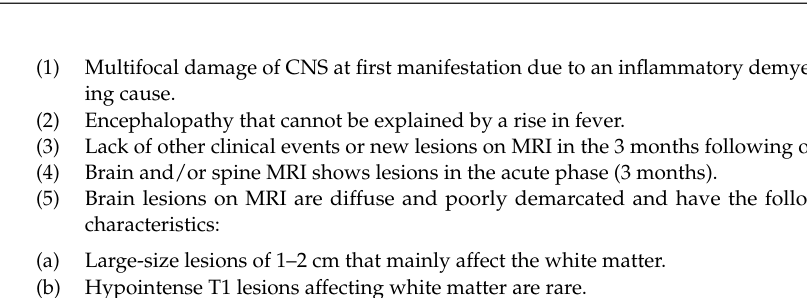
Acute disseminated encephalomyelitis (ADEM) is an acute, usually monophasic immune-mediated demyelinating syndrome of the central nervous system that is most common in children. The pediatric case definition requires a first polyfocal inflammatory demyelinating event with encephalopathy and supportive brain MRI findings after exclusion of better explanations. An ADEM phenotype can also be the presenting attack of the distinct disorder MOG-IgG-associated disease (MOGAD); a positive MOG-IgG result or a later demyelinating attack therefore prompts diagnostic reclassification rather than automatically broadening monophasic ADEM into a chronic relapsing disorder.
Ask OpenScientist
Ask a research question about Acute Disseminated Encephalomyelitis. OpenScientist will conduct autonomous deep research using the Disorder Mechanisms Knowledge Base and PubMed literature (typically 10-30 minutes).
Do not include personal health information in your question. Questions and results are cached in your browser's local storage.
Definitions
1- Encephalopathy
- CNS demyelination
- Multifocal neurologic deficits HPO lacks a single term for polyfocal neurologic deficits; this descriptor captures the broad CNS physiologic disturbance while the entry's individual phenotypes encode the component neurologic findings.
Show evidence (1 reference)
Show evidence (4 references)
Subtypes
2Show evidence (2 references)
Show evidence (2 references)
Mechanistic Hypotheses
2Show evidence (1 reference)
Show evidence (1 reference)
Discussions and Knowledge Gaps
1Show evidence (1 reference)
Pathophysiology
5Show evidence (2 references)
Show evidence (2 references)
Show evidence (2 references)
Show evidence (1 reference)
Show evidence (2 references)
Histopathology
2Show evidence (1 reference)
Show evidence (1 reference)
Pathograph
Phenotypes
15Eye 1
Show evidence (2 references)
Immune 1
Show evidence (2 references)
Metabolism 1
Show evidence (1 reference)
Musculoskeletal 1
Show evidence (2 references)
Nervous System 11
Show evidence (2 references)
Show evidence (2 references)
Show evidence (2 references)
Show evidence (1 reference)
Show evidence (1 reference)
Show evidence (2 references)
Show evidence (2 references)
Show evidence (2 references)
Show evidence (1 reference)
Show evidence (2 references)
Show evidence (2 references)
Medical Actions
4Show evidence (3 references)
Show evidence (2 references)
Show evidence (2 references)
Show evidence (1 reference)
Environmental Factors
2Show evidence (1 reference)
Show evidence (1 reference)
Biochemical Markers
3Show evidence (1 reference)
Show evidence (1 reference)
Show evidence (1 reference)
Diagnosis
4Show evidence (2 references)
Show evidence (1 reference)
Show evidence (2 references)
Show evidence (1 reference)
Imaging Findings
3Show evidence (2 references)
Show evidence (1 reference)
Show evidence (1 reference)
Progression
4Show evidence (1 reference)
Show evidence (2 references)
Show evidence (2 references)
Show evidence (1 reference)
Epidemiology
1Show evidence (1 reference)
Differential Diagnoses
6Conditions with similar clinical presentations that must be differentiated from Acute Disseminated Encephalomyelitis:
- Two or more periventricular lesions and T1 black holes favor MS.
- Absence of a bilateral lesion pattern favors MS over typical ADEM.
- Later nonencephalopathic attacks or new MS-specific lesions require reclassification.
Show evidence (1 reference)
- Serum MOG-IgG detected by an appropriate cell-based assay is a core MOGAD criterion.
- Optic neuritis, transverse myelitis, cortical encephalitis, or further attacks support MOGAD reclassification.
Show evidence (1 reference)
- Positive serum AQP4-IgG supports NMOSD.
- Area-postrema syndrome, severe optic neuritis, or longitudinally extensive myelitis are red flags.
Show evidence (1 reference)
- CSF leukocyte counts above 100 cells per microliter are unusual in ADEM.
- Pathogen PCR, culture, antigen testing, or a compatible exposure supports infection.
Show evidence (1 reference)
- Persistent seizures or predominant extrapyramidal movement disorder.
- MRI is often normal rather than showing typical multifocal demyelination.
Show evidence (1 reference)
- Stroke-like events favor vascular, systemic inflammatory, or mitochondrial disease.
- Bilaterally symmetric lesions favor genetic, metabolic, or histiocytic disorders.
- A progressive course favors genetic, metabolic, or neoplastic disease.
Show evidence (1 reference)
Clinical Trials
3Show evidence (1 reference)
Show evidence (1 reference)
Show evidence (1 reference)
Source YAML
click to showname: Acute Disseminated Encephalomyelitis
creation_date: "2026-05-16T04:09:27Z"
category: Neurological Disorder
parents:
- Autoimmune Disorder
- Demyelinating Disease
disease_term:
preferred_term: acute disseminated encephalomyelitis
term:
id: MONDO:0019383
label: acute disseminated encephalomyelitis
description: >-
Acute disseminated encephalomyelitis (ADEM) is an acute, usually monophasic
immune-mediated demyelinating syndrome of the central nervous system that is
most common in children. The pediatric case definition requires a first
polyfocal inflammatory demyelinating event with encephalopathy and supportive
brain MRI findings after exclusion of better explanations. An ADEM phenotype
can also be the presenting attack of the distinct disorder MOG-IgG-associated
disease (MOGAD); a positive MOG-IgG result or a later demyelinating attack
therefore prompts diagnostic reclassification rather than automatically
broadening monophasic ADEM into a chronic relapsing disorder.
definitions:
- name: IPMSSG pediatric clinical definition
definition_type: CASE_DEFINITION
description: >-
The IPMSSG definition applies to pediatric ADEM: a first polyfocal clinical
CNS event of presumed inflammatory demyelinating cause, encephalopathy not
explained by fever or a postictal state, and an abnormal brain MRI during
the acute phase. Symptoms or MRI changes during the first three months may
represent evolution or treatment-related fluctuation of the same event.
Infectious, inflammatory, neoplastic, metabolic, genetic, and other mimics
must be excluded. There is no equivalently accepted international adult
case definition, so adult diagnosis is an extrapolation supported by
compatible clinical and radiologic findings and exclusion of alternatives.
criteria_sets:
- name: Core clinical features
core_clinical_characteristics:
- preferred_term: Encephalopathy
term:
id: HP:0001298
label: Encephalopathy
- preferred_term: CNS demyelination
term:
id: HP:0007305
label: CNS demyelination
- preferred_term: Multifocal neurologic deficits
term:
id: HP:0012638
label: Abnormal nervous system physiology
description: >-
HPO lacks a single term for polyfocal neurologic deficits; this
descriptor captures the broad CNS physiologic disturbance while the
entry's individual phenotypes encode the component neurologic findings.
evidence:
- reference: PMID:33153097
reference_title: "Acute Disseminated Encephalomyelitis: Current Perspectives."
supports: SUPPORT
evidence_source: OTHER
snippet: "By definition, ADEM requires the presence of encephalopathy and polyfocal CNS symptoms."
explanation: >-
The review directly supports encephalopathy and polyfocal CNS symptoms
as core clinical requirements.
evidence:
- reference: PMID:33153097
reference_title: "Acute Disseminated Encephalomyelitis: Current Perspectives."
supports: SUPPORT
evidence_source: OTHER
snippet: >-
Acute disseminated encephalomyelitis (ADEM) is an immune-mediated central
nervous system (CNS) disorder, characterized by polyfocal symptoms,
encephalopathy and typical magnetic resonance imaging (MRI) findings, that
especially affects young children.
explanation: >-
This review summarizes the core ADEM case definition: immune-mediated CNS
disease with encephalopathy, polyfocal symptoms, and typical MRI findings.
- reference: PMID:33830467
reference_title: "Assessment and Management of Acute Disseminated Encephalomyelitis (ADEM) in the Pediatric Patient."
supports: SUPPORT
evidence_source: OTHER
snippet: >-
Diagnostic evaluation for ADEM involves neuroimaging and laboratory
studies to exclude potential infectious, inflammatory, neoplastic, and
genetic mimics of ADEM.
explanation: >-
Wang 2021 supports the diagnosis-of-exclusion framing used in this
definition.
- reference: PMID:23572237
reference_title: "International Pediatric Multiple Sclerosis Study Group criteria for pediatric multiple sclerosis and immune-mediated central nervous system demyelinating disorders: revisions to the 2007 definitions."
supports: SUPPORT
evidence_source: OTHER
snippet: >-
Revised criteria are proposed for pediatric acute disseminated
encephalomyelitis, pediatric clinically isolated syndrome, pediatric
neuromyelitis optica and pediatric MS.
explanation: >-
This consensus paper establishes that the operational ADEM definition is
specifically a pediatric IPMSSG definition rather than a validated adult
standard.
- reference: PMID:33153097
reference_title: "Acute Disseminated Encephalomyelitis: Current Perspectives."
supports: SUPPORT
evidence_source: OTHER
snippet: "there are no international definitions of ADEM in adults"
explanation: >-
The review explicitly identifies the lack of an international adult ADEM
definition, requiring cautious extrapolation of pediatric criteria.
has_subtypes:
- name: Monophasic ADEM
description: >-
A single acute demyelinating episode with encephalopathy and polyfocal CNS
involvement, without a later qualifying demyelinating attack after the
three-month evolution and steroid-taper fluctuation window.
evidence:
- reference: PMID:27572859
reference_title: "Acute disseminated encephalomyelitis: Updates on an inflammatory CNS syndrome."
supports: SUPPORT
evidence_source: OTHER
snippet: >-
ADEM is generally considered a monophasic disease. However, recurrent ADEM
has been described and defined as multiphasic disseminated
encephalomyelitis.
explanation: >-
Pohl et al. summarize the usual monophasic course while acknowledging
recurrent/multiphasic presentations.
- reference: PMID:40340642
reference_title: "Acute Disseminated Encephalomyelitis in Children and Adolescents: A Multicenter Retrospective Study of Relapse and Outcome."
supports: SUPPORT
evidence_source: HUMAN_CLINICAL
snippet: >-
The nationwide cohort presented further supports the typically monophasic
nature of acute disseminated encephalomyelitis, and a high rate of
complete recovery.
explanation: >-
A 245-patient pediatric/adolescent cohort supports the typical monophasic
course in contemporary clinical practice.
- name: Multiphasic ADEM
description: >-
The classic IPMSSG construct is one ADEM attack followed more than three
months later by a second ADEM episode with renewed encephalopathy, new
polyfocal findings, and new MRI lesions, without further attacks. More than
two attacks or later non-ADEM attacks should prompt reassessment for MOGAD,
multiple sclerosis, NMOSD, or another diagnosis.
evidence:
- reference: PMID:33153097
reference_title: "Acute Disseminated Encephalomyelitis: Current Perspectives."
supports: SUPPORT
evidence_source: OTHER
snippet: >-
MDEM is defined as an ADEM attack followed >3 months later by a second
ADEM episode without any further attacks
explanation: >-
This is the narrow classic multiphasic ADEM definition; recurrent attacks
beyond it require renewed diagnostic classification.
- reference: PMID:36706773
reference_title: "Diagnosis of myelin oligodendrocyte glycoprotein antibody-associated disease: International MOGAD Panel proposed criteria."
supports: SUPPORT
evidence_source: OTHER
snippet: >-
MOGAD can present as either a monophasic or relapsing disease course, and
MOG-IgG cell-based assays are important for diagnostic accuracy.
explanation: >-
Modern MOGAD criteria require MOG-IgG testing and diagnostic
reclassification when an ADEM-like presentation becomes relapsing.
epidemiology:
- name: Pediatric annual incidence
description: >-
Reported ADEM incidence varies across pediatric populations and study
definitions.
minimum_value: 0.07
maximum_value: 0.9
unit: cases per 100000 children per year
evidence:
- reference: PMID:33153097
reference_title: "Acute Disseminated Encephalomyelitis: Current Perspectives."
supports: SUPPORT
evidence_source: OTHER
snippet: "Reported annual incidence varies from 0.07–0.9/100,000 children in different locations"
explanation: >-
The Paolilo et al. review summarizes published pediatric incidence
estimates.
mechanistic_hypotheses:
- hypothesis_group_id: postinfectious_molecular_mimicry_model
hypothesis_label: Postinfectious Molecular Mimicry Model
status: ALTERNATIVE
description: >-
A preceding infection may activate lymphocytes that cross-react with shared
pathogen and CNS-myelin epitopes. This is a plausible experimental model,
but the initiating antigen and cross-reactive clone have not been
established in most human ADEM.
evidence:
- reference: PMID:33153097
reference_title: "Acute Disseminated Encephalomyelitis: Current Perspectives."
supports: SUPPORT
evidence_source: OTHER
snippet: >-
The first is molecular mimicry: structural conformation or peptide
sequences may be shared between host CNS proteins and some viral
pathogens.
explanation: >-
The review explicitly presents molecular mimicry as one proposed
postinfectious mechanism rather than a demonstrated universal cause.
- hypothesis_group_id: bbb_disruption_antigen_release_model
hypothesis_label: BBB Disruption and CNS Antigen Release Model
status: ALTERNATIVE
description: >-
A neurotropic infection may injure the CNS and blood-brain barrier, release
normally sequestered myelin antigens, and permit expansion and CNS entry of
autoreactive immune cells. Human ADEM evidence remains indirect.
evidence:
- reference: PMID:33153097
reference_title: "Acute Disseminated Encephalomyelitis: Current Perspectives."
supports: SUPPORT
evidence_source: OTHER
snippet: >-
After the first infection by a neurotropic virus, CNS damage may occur
with disruption of the blood–brain barrier (BBB).
explanation: >-
The review describes BBB injury and antigen release as the second major
postinfectious hypothesis.
environmental:
- name: Preceding infection
influences_mechanisms:
- target: Preceding Immune Trigger
environmental_effect: TRIGGERS
causal_link_type: DIRECT
description: >-
Most events follow a respiratory or gastrointestinal illness by days to
weeks. Recorded as direct because this node is the antecedent itself
rather than a downstream consequence of it; what the antecedent then
does is modelled by the mimicry and barrier nodes further along.
evidence:
- reference: PMID:33153097
reference_title: "Acute Disseminated Encephalomyelitis: Current Perspectives."
supports: SUPPORT
evidence_source: OTHER
snippet: "A preceding infection or illness is observed in 70–80% of cases"
explanation: >-
Places a preceding infection or illness in 70 to 80 percent of cases,
which is the observation this node records.
notes: >-
A respiratory, gastrointestinal, or other infection commonly precedes ADEM,
but a trigger is not required by diagnostic criteria and temporal
association does not identify the causal immune pathway in an individual.
evidence:
- reference: PMID:33153097
reference_title: "Acute Disseminated Encephalomyelitis: Current Perspectives."
supports: SUPPORT
evidence_source: OTHER
snippet: "A preceding infection or illness is observed in 70–80% of cases"
explanation: >-
The review summarizes the common temporal association with infection.
- name: Recent immunization
influences_mechanisms:
- target: Preceding Immune Trigger
environmental_effect: PREDISPOSES
causal_link_type: INDIRECT_UNKNOWN_INTERMEDIATES
description: >-
Reported after immunisation but not established as a general cause, and
the cited source argues against reading it as one. Graded well below the
preceding-infection link into this same node, and worded so that adding
the link does not quietly convert a contested temporal report into a
mechanism.
evidence:
- reference: PMID:33153097
reference_title: "Acute Disseminated Encephalomyelitis: Current Perspectives."
supports: SUPPORT
evidence_source: OTHER
snippet: "Although vaccinations have also been implicated as a cause of ADEM, no clear pathogenetic correlation exists and the incidence of ADS following infection is higher than that induced by immunization itself"
explanation: >-
States that no clear pathogenetic correlation exists for vaccination
and that incidence after infection exceeds incidence after
immunisation. The source supports the association being weak, which is
what this grade records.
notes: >-
ADEM has rarely been reported after immunization, but epidemiologic and
mechanistic evidence does not establish vaccination as a general cause and
the postinfection incidence is higher.
evidence:
- reference: PMID:33153097
reference_title: "Acute Disseminated Encephalomyelitis: Current Perspectives."
supports: SUPPORT
evidence_source: OTHER
snippet: >-
Although vaccinations have also been implicated as a cause of ADEM, no
clear pathogenetic correlation exists and the incidence of ADS following
infection is higher than that induced by immunization itself
explanation: >-
This supports cautious temporal-association wording and argues against a
direct universal vaccine-causation claim.
pathophysiology:
- name: Preceding Immune Trigger
description: >-
Infection or, much less securely, another immune exposure precedes many
pediatric ADEM events by days to weeks. The association supports an
immune-triggered syndrome but does not establish a specific pathogen or
immune route in most patients.
biological_processes:
- preferred_term: immune response
modifier: INCREASED
term:
id: GO:0006955
label: immune response
- preferred_term: inflammatory response
modifier: INCREASED
term:
id: GO:0006954
label: inflammatory response
downstream:
- target: Molecular Mimicry
causal_link_type: UNKNOWN
hypothesis_groups:
- postinfectious_molecular_mimicry_model
description: >-
Infection-associated immune activation may generate cross-reactive
antiviral immune responses.
evidence:
- reference: PMID:33153097
reference_title: "Acute Disseminated Encephalomyelitis: Current Perspectives."
supports: SUPPORT
evidence_source: OTHER
snippet: >-
The first is molecular mimicry: structural conformation or peptide
sequences may be shared between host CNS proteins and some viral
pathogens.
explanation: >-
The review presents molecular mimicry as one hypothesis linking a prior
infection to CNS autoimmunity.
- target: BBB Disruption and Antigen Release
causal_link_type: UNKNOWN
hypothesis_groups:
- bbb_disruption_antigen_release_model
description: >-
Infection-associated CNS injury may expose normally sequestered CNS
antigens to the immune system.
evidence:
- reference: PMID:33153097
reference_title: "Acute Disseminated Encephalomyelitis: Current Perspectives."
supports: SUPPORT
evidence_source: OTHER
snippet: >-
After the first infection by a neurotropic virus, CNS damage may occur
with disruption of the blood–brain barrier (BBB).
explanation: >-
The review presents BBB disruption as an alternative postinfectious
hypothesis.
evidence:
- reference: PMID:33153097
reference_title: "Acute Disseminated Encephalomyelitis: Current Perspectives."
supports: SUPPORT
evidence_source: OTHER
snippet: >-
Mechanistically, ADEM has been classified as a predominately
post-infectious CNS disorder, with an identifiable trigger reported in up
to 50–85% of cases
explanation: >-
This supports postinfectious immune triggering as a central ADEM
mechanism.
- reference: PMID:41750202
reference_title: "Acute Disseminated Encephalomyelitis (ADEM): Current View into Etiopathogenesis and Clinical Features."
supports: SUPPORT
evidence_source: OTHER
snippet: >-
ADEM typically follows an infectious or, less commonly,
immunization-related trigger, and despite decades of clinical observation,
its etiopathogenesis remains only partially understood.
explanation: >-
The 2026 review confirms the infectious/immunization trigger model while
emphasizing remaining mechanistic uncertainty.
- name: Molecular Mimicry
description: >-
Molecular mimicry is a proposed mechanism in which pathogen antigens share
structural conformations or peptide sequences with CNS proteins, generating
cross-reactive antiviral immune responses that later target myelin.
biological_processes:
- preferred_term: defense response to virus
term:
id: GO:0051607
label: defense response to virus
- preferred_term: immune response
modifier: INCREASED
term:
id: GO:0006955
label: immune response
downstream:
- target: CNS-Directed Autoimmune Inflammation
causal_link_type: INDIRECT_UNKNOWN_INTERMEDIATES
hypothesis_groups:
- postinfectious_molecular_mimicry_model
description: >-
Putative pathogen-cross-reactive lymphocytes may initiate CNS-directed
inflammation, but this route has not been demonstrated in most patients.
evidence:
- reference: PMID:33153097
reference_title: "Acute Disseminated Encephalomyelitis: Current Perspectives."
supports: SUPPORT
evidence_source: OTHER
snippet: >-
When a viral infection occurs, a cross-reactive auto-immune reaction may
be induced against the tissue expressing the mimicked protein.
explanation: >-
The review states the proposed cross-reactive route, while human causal
evidence remains indirect.
evidence:
- reference: PMID:33153097
reference_title: "Acute Disseminated Encephalomyelitis: Current Perspectives."
supports: SUPPORT
evidence_source: OTHER
snippet: >-
The first is molecular mimicry: structural conformation or peptide
sequences may be shared between host CNS proteins and some viral
pathogens.
explanation: >-
This directly supports molecular mimicry as a proposed ADEM induction
mechanism.
- reference: PMID:41750202
reference_title: "Acute Disseminated Encephalomyelitis (ADEM): Current View into Etiopathogenesis and Clinical Features."
supports: SUPPORT
evidence_source: OTHER
snippet: >-
Particular emphasis is placed on post-infectious immune mechanisms,
including molecular mimicry, blood-brain barrier (BBB) disruption, loss of
immune tolerance, and neuroinflammatory cascades.
explanation: >-
The 2026 review independently includes molecular mimicry in the current
ADEM mechanistic framework.
- name: BBB Disruption and Antigen Release
description: >-
Infection-associated CNS injury may disrupt the blood-brain barrier,
allowing CNS-confined myelin antigens to leak into peripheral immune
compartments and break immune tolerance.
locations:
- preferred_term: blood brain barrier
modifier: ABNORMAL
term:
id: UBERON:0000120
label: blood brain barrier
biological_processes:
- preferred_term: inflammatory response
modifier: INCREASED
term:
id: GO:0006954
label: inflammatory response
downstream:
- target: CNS-Directed Autoimmune Inflammation
causal_link_type: INDIRECT_UNKNOWN_INTERMEDIATES
hypothesis_groups:
- bbb_disruption_antigen_release_model
description: >-
CNS antigen release and tolerance breakdown may generate autoreactive
immune responses, but the route is based mainly on mechanistic models.
evidence:
- reference: PMID:33153097
reference_title: "Acute Disseminated Encephalomyelitis: Current Perspectives."
supports: SUPPORT
evidence_source: OTHER
snippet: >-
This would lead to leakage of CNS-confined auto-antigens, which would
induce a breakdown of tolerance and emergence of autoreactive immune
cells against CNS proteins
explanation: >-
The review states the proposed antigen-release and tolerance-breakdown
route, while human causal evidence remains indirect.
evidence:
- reference: PMID:33153097
reference_title: "Acute Disseminated Encephalomyelitis: Current Perspectives."
supports: SUPPORT
evidence_source: OTHER
snippet: >-
The second hypothesis is the post infectious theory. After the first
infection by a neurotropic virus, CNS damage may occur with disruption of
the blood–brain barrier (BBB).
explanation: >-
This supports BBB disruption and CNS antigen leakage as a proposed
mechanism for postinfectious autoimmunity.
- reference: PMID:41750202
reference_title: "Acute Disseminated Encephalomyelitis (ADEM): Current View into Etiopathogenesis and Clinical Features."
supports: SUPPORT
evidence_source: OTHER
snippet: >-
Particular emphasis is placed on post-infectious immune mechanisms,
including molecular mimicry, blood-brain barrier (BBB) disruption, loss of
immune tolerance, and neuroinflammatory cascades.
explanation: >-
The 2026 review independently includes BBB disruption and loss of immune
tolerance in the current ADEM mechanistic framework.
- name: CNS-Directed Autoimmune Inflammation
description: >-
Loss of self-tolerance is the shared proposed convergence point of the
postinfectious hypotheses. Activated lymphocytes, macrophages, microglia,
cytokines, and in some presentations antibodies generate multifocal CNS
inflammation; the dominant effector pathway varies and is incompletely
defined in non-MOGAD ADEM.
locations:
- preferred_term: central nervous system
term:
id: UBERON:0001017
label: central nervous system
cell_types:
- preferred_term: macrophage
term:
id: CL:0000235
label: macrophage
- preferred_term: lymphocyte
term:
id: CL:0000542
label: lymphocyte
- preferred_term: microglial cell
term:
id: CL:0000129
label: microglial cell
biological_processes:
- preferred_term: inflammatory response
modifier: INCREASED
term:
id: GO:0006954
label: inflammatory response
downstream:
- target: Perivenous Inflammatory Demyelination
causal_link_type: INDIRECT_KNOWN_INTERMEDIATES
intermediate_mechanisms:
- inflammatory cells and soluble mediators concentrated around CNS venules
description: >-
CNS-directed inflammation converges on the characteristic perivenous
demyelinating lesion pattern.
evidence:
- reference: PMID:33153097
reference_title: "Acute Disseminated Encephalomyelitis: Current Perspectives."
supports: SUPPORT
evidence_source: OTHER
snippet: >-
A perivascular, particularly perivenous, demyelination, giving an aspect
of perivenular sleeves, has been observed with the presence of
inflammatory cells, specifically macrophages, lymphocytes and microglia
explanation: >-
The review links inflammatory-cell accumulation to the characteristic
perivenous demyelinating pattern.
- target: Reduced Consciousness
causal_link_type: INDIRECT_UNKNOWN_INTERMEDIATES
description: >-
Multifocal CNS inflammation can disrupt arousal networks and produce
reduced consciousness; lesion location and edema likely mediate the link.
evidence:
- reference: PMID:39092058
reference_title: "Clinical pattern, neuroimaging findings and outcome of Acute Disseminated Encephalomyelitis in children: A retrospective study."
supports: SUPPORT
evidence_source: HUMAN_CLINICAL
snippet: >-
The most common clinical features were fever, headache, and altered
consciousness, while motor deficit was observed in 15 (53.5%) patients.
explanation: >-
The pediatric cohort establishes altered consciousness as part of the
acute inflammatory syndrome but does not resolve the intermediate route.
- target: Thalamic Involvement
causal_link_type: INDIRECT_UNKNOWN_INTERMEDIATES
description: >-
The multifocal inflammatory lesion distribution can extend into the
thalami.
evidence:
- reference: PMID:27572859
reference_title: "Acute disseminated encephalomyelitis: Updates on an inflammatory CNS syndrome."
supports: SUPPORT
evidence_source: OTHER
snippet: >-
MRI typically demonstrates reversible, ill-defined white matter lesions
of the brain and often also the spinal cord, along with frequent
involvement of thalami and basal ganglia.
explanation: >-
The review supports thalamic involvement within the multifocal ADEM
lesion pattern.
- target: Basal Ganglia Involvement
causal_link_type: INDIRECT_UNKNOWN_INTERMEDIATES
description: >-
The multifocal inflammatory lesion distribution can extend into the basal
ganglia.
evidence:
- reference: PMID:27572859
reference_title: "Acute disseminated encephalomyelitis: Updates on an inflammatory CNS syndrome."
supports: SUPPORT
evidence_source: OTHER
snippet: >-
MRI typically demonstrates reversible, ill-defined white matter lesions
of the brain and often also the spinal cord, along with frequent
involvement of thalami and basal ganglia.
explanation: >-
The review supports basal-ganglia involvement within the multifocal
ADEM lesion pattern.
- target: Diffuse White Matter Abnormalities
causal_link_type: INDIRECT_UNKNOWN_INTERMEDIATES
description: >-
CNS-directed inflammation produces the characteristic large, poorly
demarcated white-matter lesion pattern through incompletely resolved
cellular injury pathways.
evidence:
- reference: PMID:33153097
reference_title: "Acute Disseminated Encephalomyelitis: Current Perspectives."
supports: SUPPORT
evidence_source: OTHER
snippet: "Lesions typically are bilateral, asymmetrical, large (>2 cm) and poorly demarcated."
explanation: >-
The review establishes the downstream imaging pattern, while the exact
cellular route from autoimmunity remains unresolved.
- target: Myelitis
causal_link_type: INDIRECT_UNKNOWN_INTERMEDIATES
description: >-
Extension of multifocal CNS inflammation to the spinal cord produces the
myelitis component of some attacks.
evidence:
- reference: PMID:33153097
reference_title: "Acute Disseminated Encephalomyelitis: Current Perspectives."
supports: SUPPORT
evidence_source: OTHER
snippet: >-
Neurological signs include pyramidal signs, ataxia, brainstem symptoms,
optica neuritis and transverse myelitis
explanation: >-
The review includes transverse myelitis in the multifocal ADEM syndrome.
- target: Optic Neuritis
causal_link_type: INDIRECT_UNKNOWN_INTERMEDIATES
description: >-
Extension of inflammatory demyelination to the optic nerve can produce
optic neuritis during the index attack.
evidence:
- reference: PMID:33153097
reference_title: "Acute Disseminated Encephalomyelitis: Current Perspectives."
supports: SUPPORT
evidence_source: OTHER
snippet: >-
Neurological signs include pyramidal signs, ataxia, brainstem symptoms,
optica neuritis and transverse myelitis
explanation: >-
The review includes optic neuritis in the multifocal ADEM syndrome.
- target: Ataxia
causal_link_type: INDIRECT_UNKNOWN_INTERMEDIATES
description: >-
Cerebellar, brainstem, or connected-tract inflammation can manifest as
ataxia.
evidence:
- reference: PMID:33153097
reference_title: "Acute Disseminated Encephalomyelitis: Current Perspectives."
supports: SUPPORT
evidence_source: OTHER
snippet: >-
Neurological signs include pyramidal signs, ataxia, brainstem symptoms,
optica neuritis and transverse myelitis
explanation: >-
The review includes ataxia among the acute neurologic manifestations.
- target: Seizures
causal_link_type: INDIRECT_UNKNOWN_INTERMEDIATES
description: >-
Cortical or network-level inflammatory dysfunction can lower seizure
threshold during the acute attack.
evidence:
- reference: PMID:33153097
reference_title: "Acute Disseminated Encephalomyelitis: Current Perspectives."
supports: SUPPORT
evidence_source: OTHER
snippet: >-
Symptoms may also include atypical signs like meningism, fever and
seizures, resembling infectious meningo-encephalitis.
explanation: >-
The review supports seizures as an acute manifestation but not a single
resolved causal route.
- target: Fever
causal_link_type: INDIRECT_UNKNOWN_INTERMEDIATES
description: >-
Fever can accompany the acute inflammatory syndrome, although infection
and other mimics must be excluded and the causal source may be systemic.
evidence:
- reference: PMID:39092058
reference_title: "Clinical pattern, neuroimaging findings and outcome of Acute Disseminated Encephalomyelitis in children: A retrospective study."
supports: SUPPORT
evidence_source: HUMAN_CLINICAL
snippet: >-
The most common clinical features were fever, headache, and altered
consciousness, while motor deficit was observed in 15 (53.5%) patients.
explanation: >-
The cohort establishes fever as part of the observed syndrome without
proving whether CNS or systemic inflammation is its immediate source.
- target: Headache
causal_link_type: INDIRECT_UNKNOWN_INTERMEDIATES
description: >-
Meningeal irritation, cytokine signaling, or raised intracranial pressure
may mediate headache during acute CNS inflammation.
evidence:
- reference: PMID:39092058
reference_title: "Clinical pattern, neuroimaging findings and outcome of Acute Disseminated Encephalomyelitis in children: A retrospective study."
supports: SUPPORT
evidence_source: HUMAN_CLINICAL
snippet: >-
The most common clinical features were fever, headache, and altered
consciousness, while motor deficit was observed in 15 (53.5%) patients.
explanation: >-
The cohort establishes headache as an acute manifestation but does not
identify its immediate mechanism.
- target: Muscle Weakness
causal_link_type: INDIRECT_UNKNOWN_INTERMEDIATES
description: >-
Inflammation affecting corticospinal tracts, brainstem, or spinal cord can
produce pyramidal motor weakness.
evidence:
- reference: PMID:39092058
reference_title: "Clinical pattern, neuroimaging findings and outcome of Acute Disseminated Encephalomyelitis in children: A retrospective study."
supports: SUPPORT
evidence_source: HUMAN_CLINICAL
snippet: >-
The most common clinical features were fever, headache, and altered
consciousness, while motor deficit was observed in 15 (53.5%) patients.
explanation: >-
The cohort supports motor deficit as a manifestation of the multifocal
inflammatory attack.
- target: CSF Pleocytosis
causal_link_type: INDIRECT_UNKNOWN_INTERMEDIATES
description: >-
CNS immune-cell recruitment can be reflected by a mild, variable increase
in CSF leukocytes.
evidence:
- reference: PMID:33153097
reference_title: "Acute Disseminated Encephalomyelitis: Current Perspectives."
supports: SUPPORT
evidence_source: OTHER
snippet: "CSF pleocytosis is observed in a wide range of patients (28–86%)"
explanation: >-
The review supports pleocytosis as a variable correlate of the acute
inflammatory syndrome.
- target: Cognitive Impairment
causal_link_type: INDIRECT_UNKNOWN_INTERMEDIATES
description: >-
Acute inflammatory injury and network disruption may leave persistent
cognitive or academic sequelae even after motor recovery.
evidence:
- reference: PMID:39092058
reference_title: "Clinical pattern, neuroimaging findings and outcome of Acute Disseminated Encephalomyelitis in children: A retrospective study."
supports: SUPPORT
evidence_source: HUMAN_CLINICAL
snippet: >-
Despite generally favorable outcome, long-term monitoring revealed that
patients may experience motor deficits, seizures, cognitive impairment,
and academic difficulties.
explanation: >-
Long-term cohort observation supports cognitive sequelae following the
inflammatory attack without isolating the precise injury pathway.
evidence:
- reference: PMID:33153097
reference_title: "Acute Disseminated Encephalomyelitis: Current Perspectives."
supports: SUPPORT
evidence_source: OTHER
snippet: >-
Mechanisms of disease induction center around the loss of self-tolerance,
causing a central nervous system-directed auto-reactivity that is similar
across a range of neuroinflammatory conditions
explanation: >-
This supports loss of tolerance and CNS-directed autoimmunity as a
convergence model while not identifying a single ADEM-specific effector.
- name: Perivenous Inflammatory Demyelination
description: >-
The classic microscopic lesion pattern in ADEM is perivenous inflammatory
demyelination, with macrophage, lymphocyte, and microglial inflammatory
cells surrounding small veins and clearing myelin. This pattern helps
distinguish ADEM from typical confluent multiple-sclerosis plaques, although
mixed or overlapping pathology can occur.
cell_types:
- preferred_term: macrophage
term:
id: CL:0000235
label: macrophage
- preferred_term: lymphocyte
term:
id: CL:0000542
label: lymphocyte
- preferred_term: microglial cell
term:
id: CL:0000129
label: microglial cell
biological_processes:
- preferred_term: inflammatory response
modifier: INCREASED
term:
id: GO:0006954
label: inflammatory response
- preferred_term: myelination
modifier: DECREASED
term:
id: GO:0042552
label: myelination
cellular_components:
- preferred_term: myelin sheath
modifier: DECREASED
term:
id: GO:0043209
label: myelin sheath
downstream:
- target: CNS Demyelination
causal_link_type: DIRECT
description: >-
Perivenous loss of CNS myelin is the tissue lesion represented by the
clinical and MRI demyelination phenotype.
evidence:
- reference: PMID:20129932
reference_title: "Perivenous demyelination: association with clinically defined acute disseminated encephalomyelitis and comparison with pathologically confirmed multiple sclerosis."
supports: SUPPORT
evidence_source: HUMAN_CLINICAL
snippet: >-
Perivenous demyelination is the pathological hallmark of acute
disseminated encephalomyelitis, whereas confluent demyelination is the
hallmark of acute multiple sclerosis.
explanation: >-
Human biopsy and autopsy data directly establish the perivenous
demyelinating lesion pattern in clinicopathologically defined ADEM.
- target: Encephalopathy
causal_link_type: INDIRECT_UNKNOWN_INTERMEDIATES
description: >-
Multifocal inflammatory lesions and associated cortical network
dysfunction are associated with the obligatory encephalopathy phenotype,
although the exact route is unresolved.
evidence:
- reference: PMID:20129932
reference_title: "Perivenous demyelination: association with clinically defined acute disseminated encephalomyelitis and comparison with pathologically confirmed multiple sclerosis."
supports: SUPPORT
evidence_source: HUMAN_CLINICAL
snippet: >-
The perivenous demyelination cohort was more likely than the confluent
demyelination cohort to present with encephalopathy (P < 0.001)
explanation: >-
The clinicopathologic association links the perivenous ADEM pattern to
encephalopathy without proving a single causal intermediate.
evidence:
- reference: PMID:20129932
reference_title: "Perivenous demyelination: association with clinically defined acute disseminated encephalomyelitis and comparison with pathologically confirmed multiple sclerosis."
supports: SUPPORT
evidence_source: HUMAN_CLINICAL
snippet: >-
Perivenous demyelination is the pathological hallmark of acute
disseminated encephalomyelitis, whereas confluent demyelination is the
hallmark of acute multiple sclerosis.
explanation: >-
Brain biopsy/autopsy comparison identifies perivenous demyelination as
the ADEM pathologic hallmark.
- reference: PMID:33153097
reference_title: "Acute Disseminated Encephalomyelitis: Current Perspectives."
supports: SUPPORT
evidence_source: OTHER
snippet: >-
A perivascular, particularly perivenous, demyelination, giving an aspect
of perivenular sleeves, has been observed with the presence of
inflammatory cells, specifically macrophages, lymphocytes and microglia
explanation: >-
The clinical review describes the cellular composition of perivenous ADEM
lesions.
histopathology:
- name: Perivenous demyelination
description: >-
ADEM lesions classically show perivenous demyelination rather than the
confluent demyelination typical of acute multiple sclerosis.
diagnostic: false
context: >-
Supportive tissue pattern in rare brain biopsy or autopsy material; tissue
sampling is not part of the routine clinical diagnosis of ADEM.
evidence:
- reference: PMID:20129932
reference_title: "Perivenous demyelination: association with clinically defined acute disseminated encephalomyelitis and comparison with pathologically confirmed multiple sclerosis."
supports: SUPPORT
evidence_source: HUMAN_CLINICAL
snippet: >-
Perivenous demyelination is the pathological hallmark of acute
disseminated encephalomyelitis, whereas confluent demyelination is the
hallmark of acute multiple sclerosis.
explanation: >-
This directly supports perivenous demyelination as the characteristic
histopathologic pattern, while the diagnosis itself remains clinical and
radiologic.
- name: Cortical microglial activation without cortical demyelination
description: >-
A subset of perivenous ADEM cases shows cortical microglial activation and
aggregation without cortical demyelination, proposed as a correlate of
altered consciousness.
diagnostic: false
context: >-
Research observation in a small pathology subset with depressed or altered
consciousness; not a validated diagnostic test.
evidence:
- reference: PMID:20129932
reference_title: "Perivenous demyelination: association with clinically defined acute disseminated encephalomyelitis and comparison with pathologically confirmed multiple sclerosis."
supports: SUPPORT
evidence_source: HUMAN_CLINICAL
snippet: >-
A distinct pattern of cortical microglial activation and aggregation
without associated cortical demyelination was found among six perivenous
demyelination patients, all of whom had encephalopathy and four of whom
had depressed level of consciousness.
explanation: >-
This supports a microscopic correlate of encephalopathy in perivenous ADEM
pathology.
phenotypes:
- name: Encephalopathy
description: >-
Altered mental status, behavioral change, irritability, reduced
consciousness, or coma is obligatory in pediatric ADEM definitions and helps
separate ADEM from isolated optic neuritis, myelitis, or nonencephalopathic
first demyelinating events.
category: Symptoms
phenotype_term:
preferred_term: encephalopathy
term:
id: HP:0001298
label: Encephalopathy
evidence:
- reference: PMID:33153097
reference_title: "Acute Disseminated Encephalomyelitis: Current Perspectives."
supports: SUPPORT
evidence_source: OTHER
snippet: "By definition, ADEM requires the presence of encephalopathy and polyfocal CNS symptoms."
explanation: >-
The review states that encephalopathy is required for the ADEM clinical
definition.
- reference: PMID:27572859
reference_title: "Acute disseminated encephalomyelitis: Updates on an inflammatory CNS syndrome."
supports: SUPPORT
evidence_source: OTHER
snippet: "ADEM is clinically defined by acute polyfocal neurologic deficits including encephalopathy."
explanation: >-
Pohl et al. support encephalopathy as part of the ADEM clinical
definition.
- name: Reduced Consciousness
description: >-
Reduced consciousness and coma can occur during acute ADEM and correlate
with the meningoencephalopathic perivenous lesion phenotype in pathology
cohorts.
category: Symptoms
phenotype_term:
preferred_term: reduced consciousness
term:
id: HP:0004372
label: Reduced consciousness
evidence:
- reference: PMID:20129932
reference_title: "Perivenous demyelination: association with clinically defined acute disseminated encephalomyelitis and comparison with pathologically confirmed multiple sclerosis."
supports: SUPPORT
evidence_source: HUMAN_CLINICAL
snippet: >-
Perivenous demyelination is associated with meningoencephalopathic
presentations and a monophasic course.
explanation: >-
The perivenous pathology cohort associates ADEM pathology with
meningoencephalopathic presentations.
- reference: PMID:39092058
reference_title: "Clinical pattern, neuroimaging findings and outcome of Acute Disseminated Encephalomyelitis in children: A retrospective study."
supports: SUPPORT
evidence_source: HUMAN_CLINICAL
snippet: >-
The most common clinical features were fever, headache, and altered
consciousness, while motor deficit was observed in 15 (53.5%) patients.
explanation: >-
Pediatric cohort data directly report altered consciousness as a common
clinical feature.
- name: CNS Demyelination
description: >-
MRI evidence of multifocal CNS demyelination is central to diagnosis and
typically affects brain white matter, with gray matter, brainstem, and
spinal cord involvement in some patients.
category: Clinical Signs
phenotype_term:
preferred_term: CNS demyelination
term:
id: HP:0007305
label: CNS demyelination
evidence:
- reference: PMID:27572859
reference_title: "Acute disseminated encephalomyelitis: Updates on an inflammatory CNS syndrome."
supports: SUPPORT
evidence_source: OTHER
snippet: >-
MRI typically demonstrates reversible, ill-defined white matter lesions of
the brain and often also the spinal cord, along with frequent involvement
of thalami and basal ganglia.
explanation: >-
The review supports brain and spinal cord demyelinating lesions as core
ADEM imaging findings.
- reference: PMID:39092058
reference_title: "Clinical pattern, neuroimaging findings and outcome of Acute Disseminated Encephalomyelitis in children: A retrospective study."
supports: SUPPORT
evidence_source: HUMAN_CLINICAL
snippet: >-
Brain MRI identified bilateral and multifocal lesions in 22 (78.6%)
patients, with brainstem lesions detected in 7 (25%) patients.
explanation: >-
A pediatric cohort directly reports bilateral multifocal MRI lesions.
- name: Thalamic Involvement
description: >-
ADEM MRI lesions can involve the thalami, a deep gray matter pattern that
helps distinguish ADEM from some other acquired demyelinating syndromes.
category: Clinical Signs
phenotype_term:
preferred_term: thalamic involvement
term:
id: HP:0010663
label: Abnormal thalamus morphology
evidence:
- reference: PMID:27572859
reference_title: "Acute disseminated encephalomyelitis: Updates on an inflammatory CNS syndrome."
supports: SUPPORT
evidence_source: OTHER
snippet: >-
MRI typically demonstrates reversible, ill-defined white matter lesions of
the brain and often also the spinal cord, along with frequent involvement
of thalami and basal ganglia.
explanation: >-
The review explicitly includes thalamic involvement among typical ADEM MRI
findings.
- name: Basal Ganglia Involvement
description: >-
ADEM MRI lesions can involve the basal ganglia as part of the frequent deep
gray matter involvement reported in clinical reviews.
category: Clinical Signs
phenotype_term:
preferred_term: basal ganglia involvement
term:
id: HP:0002134
label: Abnormal basal ganglia morphology
evidence:
- reference: PMID:27572859
reference_title: "Acute disseminated encephalomyelitis: Updates on an inflammatory CNS syndrome."
supports: SUPPORT
evidence_source: OTHER
snippet: >-
MRI typically demonstrates reversible, ill-defined white matter lesions of
the brain and often also the spinal cord, along with frequent involvement
of thalami and basal ganglia.
explanation: >-
The review explicitly includes basal ganglia involvement among typical
ADEM MRI findings.
- name: Diffuse White Matter Abnormalities
description: >-
Large, bilateral, asymmetric, poorly demarcated T2/FLAIR lesions involving
white matter are typical ADEM MRI findings.
category: Clinical Signs
phenotype_term:
preferred_term: diffuse white matter abnormalities
term:
id: HP:0007204
label: Diffuse white matter abnormalities
evidence:
- reference: PMID:33153097
reference_title: "Acute Disseminated Encephalomyelitis: Current Perspectives."
supports: SUPPORT
evidence_source: OTHER
snippet: >-
Brain MRI in the acute stage shows hyperintense abnormalities in
T2-weighted and fluid-attenuated inversion recovery (FLAIR) images
explanation: >-
The review describes the MRI sequence appearance of acute ADEM lesions.
- reference: PMID:33153097
reference_title: "Acute Disseminated Encephalomyelitis: Current Perspectives."
supports: SUPPORT
evidence_source: OTHER
snippet: "Lesions typically are bilateral, asymmetrical, large (>2 cm) and poorly demarcated."
explanation: >-
The review supports the typical diffuse, bilateral, poorly demarcated MRI
lesion morphology.
- name: Myelitis
description: >-
Spinal cord inflammation can occur as part of the multifocal CNS
demyelinating attack, causing motor, sensory, or bladder dysfunction.
category: Symptoms
phenotype_term:
preferred_term: myelitis
term:
id: HP:0012486
label: Myelitis
evidence:
- reference: PMID:27572859
reference_title: "Acute disseminated encephalomyelitis: Updates on an inflammatory CNS syndrome."
supports: SUPPORT
evidence_source: OTHER
snippet: >-
MRI typically demonstrates reversible, ill-defined white matter lesions of
the brain and often also the spinal cord, along with frequent involvement
of thalami and basal ganglia.
explanation: >-
Spinal cord involvement supports myelitis as part of the ADEM phenotype.
- reference: PMID:33153097
reference_title: "Acute Disseminated Encephalomyelitis: Current Perspectives."
supports: SUPPORT
evidence_source: OTHER
snippet: >-
Neurological signs include pyramidal signs, ataxia, brainstem symptoms,
optica neuritis and transverse myelitis
explanation: >-
The review lists transverse myelitis among ADEM neurologic signs.
- name: Optic Neuritis
description: >-
Optic nerve inflammation can occur during the polyfocal ADEM attack. Optic
neuritis after the index event, especially if recurrent or MOG-IgG-positive,
should prompt MOGAD or another relapsing-disease classification rather than
be treated as an ordinary feature of monophasic ADEM.
category: Symptoms
phenotype_term:
preferred_term: optic neuritis
term:
id: HP:0100653
label: Optic neuritis
evidence:
- reference: PMID:33153097
reference_title: "Acute Disseminated Encephalomyelitis: Current Perspectives."
supports: SUPPORT
evidence_source: OTHER
snippet: >-
Neurological signs include pyramidal signs, ataxia, brainstem symptoms,
optica neuritis and transverse myelitis
explanation: >-
The review includes optic neuritis among neurologic signs associated with
ADEM.
- reference: PMID:33153097
reference_title: "Acute Disseminated Encephalomyelitis: Current Perspectives."
supports: SUPPORT
evidence_source: OTHER
snippet: >-
The second recurrent demyelinating subgroup with persistent MOG-Ab is
ADEM-ON.
explanation: >-
Historical ADEM-ON terminology describes a recurrent MOG-IgG-enriched
phenotype; modern evaluation should consider MOGAD.
- name: Ataxia
description: >-
Ataxia can occur with cerebellar, brainstem, or multifocal CNS involvement
during the acute demyelinating episode.
category: Symptoms
phenotype_term:
preferred_term: ataxia
term:
id: HP:0001251
label: Ataxia
evidence:
- reference: PMID:33153097
reference_title: "Acute Disseminated Encephalomyelitis: Current Perspectives."
supports: SUPPORT
evidence_source: OTHER
snippet: >-
Neurological signs include pyramidal signs, ataxia, brainstem symptoms,
optica neuritis and transverse myelitis
explanation: >-
The review lists ataxia among ADEM neurologic signs.
- reference: PMID:40340642
reference_title: "Acute Disseminated Encephalomyelitis in Children and Adolescents: A Multicenter Retrospective Study of Relapse and Outcome."
supports: SUPPORT
evidence_source: HUMAN_CLINICAL
snippet: >-
The multivariable logistic regression analysis revealed the following
clinical parameters as predictors of relapse: sex, visual impairment, and
ataxia at initial presentation.
explanation: >-
The multicenter pediatric cohort reports ataxia at initial presentation.
- name: Seizures
description: >-
Seizures can occur during acute ADEM and may also persist as a long-term
complication in a subset of children.
category: Symptoms
phenotype_term:
preferred_term: seizure
term:
id: HP:0001250
label: Seizure
evidence:
- reference: PMID:33153097
reference_title: "Acute Disseminated Encephalomyelitis: Current Perspectives."
supports: SUPPORT
evidence_source: OTHER
snippet: >-
Symptoms may also include atypical signs like meningism, fever and
seizures, resembling infectious meningo-encephalitis.
explanation: >-
The review includes seizures in the clinical presentation of ADEM.
- reference: PMID:40340642
reference_title: "Acute Disseminated Encephalomyelitis in Children and Adolescents: A Multicenter Retrospective Study of Relapse and Outcome."
supports: SUPPORT
evidence_source: HUMAN_CLINICAL
snippet: >-
Incomplete clinical recovery (n = 42/180, 23.3%) was associated with the
presence of seizures on admission and the need for an intensive care unit.
explanation: >-
The pediatric cohort links seizures on admission to incomplete clinical
recovery.
- name: Fever
description: >-
Fever can occur during acute ADEM and can make early presentations resemble
infectious encephalitis.
category: Symptoms
phenotype_term:
preferred_term: fever
term:
id: HP:0001945
label: Fever
evidence:
- reference: PMID:39092058
reference_title: "Clinical pattern, neuroimaging findings and outcome of Acute Disseminated Encephalomyelitis in children: A retrospective study."
supports: SUPPORT
evidence_source: HUMAN_CLINICAL
snippet: >-
The most common clinical features were fever, headache, and altered
consciousness, while motor deficit was observed in 15 (53.5%) patients.
explanation: >-
Pediatric cohort data include fever among the most common ADEM clinical
features.
- name: Headache
description: >-
Headache can occur during acute ADEM, often in the same
meningoencephalitic presentation as fever and altered consciousness.
category: Symptoms
phenotype_term:
preferred_term: headache
term:
id: HP:0002315
label: Headache
evidence:
- reference: PMID:39092058
reference_title: "Clinical pattern, neuroimaging findings and outcome of Acute Disseminated Encephalomyelitis in children: A retrospective study."
supports: SUPPORT
evidence_source: HUMAN_CLINICAL
snippet: >-
The most common clinical features were fever, headache, and altered
consciousness, while motor deficit was observed in 15 (53.5%) patients.
explanation: >-
Pediatric cohort data include headache among the most common ADEM clinical
features.
- name: Muscle Weakness
description: >-
Motor deficits and pyramidal signs can occur during the polyfocal ADEM
attack and may persist at discharge in some patients.
category: Symptoms
phenotype_term:
preferred_term: motor deficit
term:
id: HP:0001324
label: Muscle weakness
evidence:
- reference: PMID:39092058
reference_title: "Clinical pattern, neuroimaging findings and outcome of Acute Disseminated Encephalomyelitis in children: A retrospective study."
supports: SUPPORT
evidence_source: HUMAN_CLINICAL
snippet: >-
The most common clinical features were fever, headache, and altered
consciousness, while motor deficit was observed in 15 (53.5%) patients.
explanation: >-
This cohort directly reports motor deficit in children with ADEM.
- reference: PMID:35757742
reference_title: "Clinical Presentation and Outcomes of Acute Disseminated Encephalomyelitis in Adults Worldwide: Systematic Review and Meta-Analysis."
supports: SUPPORT
evidence_source: HUMAN_CLINICAL
snippet: "pyramidal signs (68.7%, 95% CI =40.0-91.9)"
explanation: >-
Adult meta-analysis supports pyramidal/motor signs as a common ADEM
feature.
- name: CSF Pleocytosis
description: >-
Cerebrospinal fluid may show mild inflammatory pleocytosis, though CSF
findings are nonspecific and mainly help exclude mimics.
category: Clinical Signs
phenotype_term:
preferred_term: CSF pleocytosis
term:
id: HP:0012229
label: CSF pleocytosis
evidence:
- reference: PMID:27572859
reference_title: "Acute disseminated encephalomyelitis: Updates on an inflammatory CNS syndrome."
supports: SUPPORT
evidence_source: OTHER
snippet: >-
CSF analysis may reveal a mild pleocytosis and elevated protein, but is
generally negative for intrathecal oligoclonal immunoglobulin G synthesis.
explanation: >-
The review supports CSF pleocytosis and elevated protein as possible
laboratory findings in ADEM.
- reference: PMID:33153097
reference_title: "Acute Disseminated Encephalomyelitis: Current Perspectives."
supports: SUPPORT
evidence_source: OTHER
snippet: "CSF pleocytosis is observed in a wide range of patients (28–86%)"
explanation: >-
Paolilo et al. provide a range for CSF pleocytosis frequency in published
studies.
- name: Cognitive Impairment
description: >-
Cognitive, behavioral, academic, and other neuropsychological sequelae can
persist even after apparent neurologic recovery.
category: Symptoms
phenotype_term:
preferred_term: cognitive impairment
term:
id: HP:0100543
label: Cognitive impairment
evidence:
- reference: PMID:27572859
reference_title: "Acute disseminated encephalomyelitis: Updates on an inflammatory CNS syndrome."
supports: SUPPORT
evidence_source: OTHER
snippet: >-
Outcome of ADEM in pediatric patients is generally favorable, but
cognitive deficits have been reported even in the absence of other
neurologic sequelae.
explanation: >-
The review supports cognitive deficits as a possible pediatric ADEM
sequela.
- reference: PMID:39092058
reference_title: "Clinical pattern, neuroimaging findings and outcome of Acute Disseminated Encephalomyelitis in children: A retrospective study."
supports: SUPPORT
evidence_source: HUMAN_CLINICAL
snippet: >-
Despite generally favorable outcome, long-term monitoring revealed that
patients may experience motor deficits, seizures, cognitive impairment,
and academic difficulties.
explanation: >-
Pediatric follow-up cohort supports cognitive and academic sequelae.
imaging_findings:
- name: Large bilateral asymmetric multifocal T2/FLAIR lesions
modality: MRI
description: >-
Acute brain MRI typically shows large, poorly demarcated, bilateral but
asymmetric hyperintense lesions on T2-weighted and FLAIR sequences, often
involving cerebral white matter. This is supportive rather than
pathognomonic and can be absent during the first days.
imaging_finding_term:
preferred_term: Multifocal cerebral white matter abnormalities
term:
id: HP:0007052
label: Multifocal cerebral white matter abnormalities
located_in:
preferred_term: brain white matter
term:
id: UBERON:0003544
label: brain white matter
spatial_extent: MULTIFOCAL
diagnostic: true
notes: >-
A normal early MRI does not exclude ADEM. Because clinical improvement can
precede radiologic improvement, a reference MRI at about three months helps
distinguish evolution of the index event from a new attack.
evidence:
- reference: PMID:33153097
reference_title: "Acute Disseminated Encephalomyelitis: Current Perspectives."
supports: SUPPORT
evidence_source: OTHER
snippet: >-
Brain MRI in the acute stage shows hyperintense abnormalities in
T2-weighted and fluid-attenuated inversion recovery (FLAIR) images
explanation: >-
The review identifies the characteristic sequence appearance of acute
ADEM lesions.
- reference: PMID:33153097
reference_title: "Acute Disseminated Encephalomyelitis: Current Perspectives."
supports: SUPPORT
evidence_source: OTHER
snippet: "Lesions typically are bilateral, asymmetrical, large (>2 cm) and poorly demarcated."
explanation: >-
The review directly supports the characteristic size, distribution, and
margin of ADEM lesions.
- name: Cortical and deep gray matter lesions
modality: MRI
description: >-
ADEM can involve cortex and deep gray matter, including thalami and basal
ganglia, alongside white-matter lesions.
imaging_finding_term:
preferred_term: Abnormal thalamus morphology
term:
id: HP:0010663
label: Abnormal thalamus morphology
spatial_extent: MULTIFOCAL
diagnostic: false
evidence:
- reference: PMID:33153097
reference_title: "Acute Disseminated Encephalomyelitis: Current Perspectives."
supports: SUPPORT
evidence_source: OTHER
snippet: >-
Both white and gray matter can be affected. Cortical as well as deep gray
matter lesions have been described.
explanation: >-
This supports cortical and deep-gray involvement as part of the ADEM MRI
spectrum.
- name: Long-segment spinal cord abnormalities
modality: MRI
description: >-
Spinal cord lesions can accompany brain disease and, when present, may span
more than two vertebral segments; their population frequency is uncertain
because spinal imaging is not performed uniformly.
imaging_finding_term:
preferred_term: Myelitis
term:
id: HP:0012486
label: Myelitis
spatial_extent: MULTIFOCAL
diagnostic: false
evidence:
- reference: PMID:33153097
reference_title: "Acute Disseminated Encephalomyelitis: Current Perspectives."
supports: SUPPORT
evidence_source: OTHER
snippet: >-
Acute disseminated encephalomyelitis (ADEM) is an inflammatory demyelinating disorder of the
central nervous system (CNS) that predominantly affects children ... Brain MRI in the acute
stage shows hyperintense abnormalities in T2-weighted and fluid-attenuated inversion recovery
(FLAIR) images ... The frequency of spinal cord abnormalities is not well known, as spinal
cord imaging is not routinely done in all ADEM cohort studies. If present, spinal cord
abnormalities can be observed over more than two vertebral segments
explanation: >-
Restores ADEM and MRI context and the source's explanation of uncertain spinal-lesion
frequency. Longitudinal involvement over vertebral segments is not itself evidence of multiple
discrete foci.
biochemical:
- name: CSF leukocyte count
presence: INCREASED
context: >-
Mild pleocytosis is variable and nonspecific; counts above 100 cells per
microliter are unusual for ADEM and should increase concern for infectious
meningoencephalitis.
evidence:
- reference: PMID:33153097
reference_title: "Acute Disseminated Encephalomyelitis: Current Perspectives."
supports: SUPPORT
evidence_source: OTHER
snippet: "CSF pleocytosis is observed in a wide range of patients (28–86%)"
explanation: >-
The broad frequency range supports pleocytosis as a variable, nonspecific
ADEM finding rather than a required biomarker.
- name: CSF protein concentration
presence: INCREASED
context: >-
CSF protein can be elevated, but normal values do not exclude ADEM and an
increase is not disease-specific.
evidence:
- reference: PMID:33153097
reference_title: "Acute Disseminated Encephalomyelitis: Current Perspectives."
supports: SUPPORT
evidence_source: OTHER
snippet: "Elevated CSF protein levels are observed in 23–66% of cases"
explanation: >-
The review quantifies the variable frequency of elevated CSF protein.
- name: CSF-restricted oligoclonal IgG bands
presence: USUALLY_ABSENT_OR_TRANSIENT
context: >-
CSF-restricted oligoclonal bands are uncommon and may be transient in ADEM;
persistent intrathecal bands are more typical of multiple sclerosis but are
not independently diagnostic.
evidence:
- reference: PMID:33153097
reference_title: "Acute Disseminated Encephalomyelitis: Current Perspectives."
supports: SUPPORT
evidence_source: OTHER
snippet: "Oligoclonal bands are found in less than 10% and may be transitory, contrary to MS"
explanation: >-
The review directly supports the usual absence or transience of
oligoclonal bands in ADEM.
diagnosis:
- name: Brain and clinically indicated spinal MRI
description: >-
MRI supports the ADEM case definition by demonstrating multifocal
inflammatory demyelinating lesions, but a normal scan in the first days
does not exclude ADEM. Repeat imaging around three months provides a
reference for resolution or later diagnostic reclassification.
diagnosis_term:
preferred_term: magnetic resonance imaging procedure
term:
id: NCIT:C16809
label: Magnetic Resonance Imaging
results: >-
Typical brain lesions are large, bilateral, asymmetric, and poorly
demarcated on T2/FLAIR; deep-gray and spinal-cord involvement may occur.
evidence:
- reference: PMID:33153097
reference_title: "Acute Disseminated Encephalomyelitis: Current Perspectives."
supports: SUPPORT
evidence_source: OTHER
snippet: "Notably, MRI may show no abnormalities in the first days"
explanation: >-
This establishes that a normal early MRI cannot by itself exclude ADEM.
- reference: PMID:33153097
reference_title: "Acute Disseminated Encephalomyelitis: Current Perspectives."
supports: SUPPORT
evidence_source: OTHER
snippet: "a reference scan timed around three months after ADEM onset is advised."
explanation: >-
The review supports a three-month reference scan to assess evolution and
distinguish a later event.
- name: Cerebrospinal fluid analysis
description: >-
CSF cell count, protein, oligoclonal bands, and microbiologic studies help
assess CNS inflammation and exclude infectious meningoencephalitis and
other mimics; no CSF result is specific for ADEM.
diagnosis_term:
preferred_term: cerebrospinal fluid analysis
term:
id: NCIT:C173272
label: CSF Analysis
results: >-
Mild pleocytosis and elevated protein may occur; oligoclonal bands are
usually absent or transient. Marked pleocytosis warrants renewed evaluation
for infection.
evidence:
- reference: PMID:27572859
reference_title: "Acute disseminated encephalomyelitis: Updates on an inflammatory CNS syndrome."
supports: SUPPORT
evidence_source: OTHER
snippet: >-
CSF analysis may reveal a mild pleocytosis and elevated protein, but is
generally negative for intrathecal oligoclonal immunoglobulin G synthesis.
explanation: >-
This supports CSF analysis as a nonspecific adjunct that also helps
separate ADEM from common mimics.
- name: Serum MOG-IgG cell-based assay
description: >-
Serum MOG-IgG testing is not required to recognize the ADEM phenotype, but
a compatible presentation plus a valid positive cell-based assay supports
classification as MOGAD, a distinct disorder with its own relapse and
treatment implications.
diagnosis_term:
preferred_term: serology testing
term:
id: NCIT:C25294
label: Laboratory Procedure
results: >-
Interpret serum MOG-IgG using modern MOGAD criteria and assay/titer context;
a positive result should not be encoded as a universal ADEM biomarker.
evidence:
- reference: PMID:36706773
reference_title: "Diagnosis of myelin oligodendrocyte glycoprotein antibody-associated disease: International MOGAD Panel proposed criteria."
supports: SUPPORT
evidence_source: OTHER
snippet: >-
Serum antibodies directed against myelin oligodendrocyte glycoprotein
(MOG) are found in patients with acquired CNS demyelinating syndromes that
are distinct from multiple sclerosis and aquaporin-4-seropositive
neuromyelitis optica spectrum disorder.
explanation: >-
International criteria establish MOGAD as distinct from MS and
AQP4-positive NMOSD rather than a chronic subtype of ADEM.
- reference: PMID:36706773
reference_title: "Diagnosis of myelin oligodendrocyte glycoprotein antibody-associated disease: International MOGAD Panel proposed criteria."
supports: SUPPORT
evidence_source: OTHER
snippet: >-
MOGAD can present as either a monophasic or relapsing disease course, and
MOG-IgG cell-based assays are important for diagnostic accuracy.
explanation: >-
This supports serum MOG-IgG cell-based testing when MOGAD is clinically
plausible.
- name: Serum AQP4-IgG testing when NMOSD is suspected
description: >-
AQP4-IgG testing is indicated when optic neuritis, longitudinally extensive
myelitis, area-postrema symptoms, or other features raise concern for
NMOSD; a positive result redirects the diagnosis away from isolated ADEM.
diagnosis_term:
preferred_term: serology testing
term:
id: NCIT:C25294
label: Laboratory Procedure
evidence:
- reference: PMID:33153097
reference_title: "Acute Disseminated Encephalomyelitis: Current Perspectives."
supports: SUPPORT
evidence_source: OTHER
snippet: >-
Typical brain MRI characteristics and aquaporin-4 antibody (AQP4-Ab),
respectively, help to distinguish these disorders
explanation: >-
The review supports brain MRI for MS discrimination and AQP4 antibody
testing for NMOSD discrimination after an ADEM-like first event.
differential_diagnoses:
- name: Multiple sclerosis
disease_term:
preferred_term: multiple sclerosis
term:
id: MONDO:0005301
label: multiple sclerosis
description: >-
MS may begin with an acquired demyelinating syndrome, but periventricular
lesions, T1 black holes, absence of a bilateral lesion pattern, persistent
oligoclonal bands, or later nonencephalopathic attacks favor MS over ADEM.
distinguishing_features:
- Two or more periventricular lesions and T1 black holes favor MS.
- Absence of a bilateral lesion pattern favors MS over typical ADEM.
- Later nonencephalopathic attacks or new MS-specific lesions require reclassification.
evidence:
- reference: PMID:33153097
reference_title: "Acute Disseminated Encephalomyelitis: Current Perspectives."
supports: SUPPORT
evidence_source: OTHER
snippet: >-
In order to discriminate between ADEM and MS at the time of the first
attack, three items are potentially useful: (1) two or more
periventricular lesions, (2) presence of black holes and (3) absence of a
bilateral lesion pattern.
explanation: >-
The review provides MRI features that favor MS at presentation, while
emphasizing elsewhere that they are not independently diagnostic.
- name: Myelin oligodendrocyte glycoprotein antibody-associated disease
disease_term:
preferred_term: myelin oligodendrocyte glycoprotein antibody-associated disease
term:
id: MONDO:1040024
label: myelin oligodendrocyte glycoprotein antibody-associated disease
description: >-
ADEM is a recognized core attack phenotype of MOGAD, especially in young
children. A valid serum MOG-IgG result and compatible clinical event support
MOGAD classification; relapse may occur and should not be labeled recurrent
idiopathic ADEM by default.
distinguishing_features:
- Serum MOG-IgG detected by an appropriate cell-based assay is a core MOGAD criterion.
- Optic neuritis, transverse myelitis, cortical encephalitis, or further attacks support MOGAD reclassification.
evidence:
- reference: PMID:36706773
reference_title: "Diagnosis of myelin oligodendrocyte glycoprotein antibody-associated disease: International MOGAD Panel proposed criteria."
supports: SUPPORT
evidence_source: OTHER
snippet: >-
MOGAD is typically associated with acute disseminated encephalomyelitis,
optic neuritis, or transverse myelitis
explanation: >-
International MOGAD criteria explicitly recognize ADEM as a core event
phenotype of a separate antibody-associated disease.
- name: Neuromyelitis optica spectrum disorder
disease_term:
preferred_term: neuromyelitis optica spectrum disorder
term:
id: MONDO:0019100
label: neuromyelitis optica
description: >-
AQP4-IgG-positive NMOSD can cause optic neuritis, longitudinally extensive
myelitis, or an ADEM-like first presentation. AQP4-IgG positivity and
characteristic NMOSD syndromes favor NMOSD rather than isolated ADEM.
distinguishing_features:
- Positive serum AQP4-IgG supports NMOSD.
- Area-postrema syndrome, severe optic neuritis, or longitudinally extensive myelitis are red flags.
evidence:
- reference: PMID:33153097
reference_title: "Acute Disseminated Encephalomyelitis: Current Perspectives."
supports: SUPPORT
evidence_source: OTHER
snippet: >-
The first demyelinating event might also represent the first manifestation
of a chronic demyelinating relapsing disease, such as multiple sclerosis
(MS), neuromyelitis optica spectrum disorder (NMOSD) or myelin
oligodendrocyte glycoprotein antibody (MOG-Ab)-associated disease
explanation: >-
This identifies NMOSD and MOGAD among chronic disorders that can first
present with an ADEM-like demyelinating event.
- name: Infectious meningoencephalitis
disease_term:
preferred_term: encephalitis
term:
id: MONDO:0019956
label: encephalitis
description: >-
Fever, seizures, meningismus, and encephalopathy can closely mimic ADEM.
Microbiologic evaluation and CSF interpretation are essential before
immunotherapy; marked pleocytosis is atypical for ADEM.
distinguishing_features:
- CSF leukocyte counts above 100 cells per microliter are unusual in ADEM.
- Pathogen PCR, culture, antigen testing, or a compatible exposure supports infection.
evidence:
- reference: PMID:33153097
reference_title: "Acute Disseminated Encephalomyelitis: Current Perspectives."
supports: SUPPORT
evidence_source: OTHER
snippet: >-
There is no strict upper limit to the pleocytosis, although CSF leukocyte
cell counts above 100/μL are rarely seen and warrant against the
possibility of an infectious meningoencephalitis
explanation: >-
The review identifies marked pleocytosis as a warning against ADEM and in
favor of infectious meningoencephalitis.
- name: Autoimmune encephalitis
disease_term:
preferred_term: autoimmune encephalitis
term:
id: MONDO:0020640
label: autoimmune encephalitis
description: >-
Autoimmune encephalitis, particularly anti-NMDAR encephalitis, can cause
encephalopathy, seizures, psychiatric symptoms, and movement disorders.
Persistent seizures or prominent dystonia/chorea with a normal or
non-demyelinating MRI favor autoimmune encephalitis.
distinguishing_features:
- Persistent seizures or predominant extrapyramidal movement disorder.
- MRI is often normal rather than showing typical multifocal demyelination.
evidence:
- reference: PMID:33153097
reference_title: "Acute Disseminated Encephalomyelitis: Current Perspectives."
supports: SUPPORT
evidence_source: OTHER
snippet: >-
Persistent seizures or predominant extrapyramidal movement disorders like
dystonia and chorea may be symptoms of anti-N-methyl-D-asparate receptor
(anti-NMDAR) encephalitis.
explanation: >-
The review identifies the seizure and movement-disorder pattern that
should redirect evaluation toward anti-NMDAR encephalitis.
- name: Vascular, metabolic, genetic, and neoplastic mimics
description: >-
CNS vasculitis, systemic inflammatory disease, mitochondrial disease,
leukodystrophy, hemophagocytic lymphohistiocytosis, and CNS neoplasm can
resemble ADEM. Stroke-like events, bilaterally symmetric lesions, or a
relentlessly progressive course are red flags against ADEM.
distinguishing_features:
- Stroke-like events favor vascular, systemic inflammatory, or mitochondrial disease.
- Bilaterally symmetric lesions favor genetic, metabolic, or histiocytic disorders.
- A progressive course favors genetic, metabolic, or neoplastic disease.
evidence:
- reference: PMID:33153097
reference_title: "Acute Disseminated Encephalomyelitis: Current Perspectives."
supports: SUPPORT
evidence_source: OTHER
snippet: >-
The differential diagnosis of ADEM is broad and contains, besides other
ADSs, other inflammatory diseases and vascular, metabolic and genetic
disorders
explanation: >-
The review explicitly frames the broad non-demyelinating differential.
progression:
- phase: Trigger-to-neurologic onset interval
subtype: Monophasic ADEM
notes: >-
When a preceding infection is present, neurologic symptoms usually emerge
days to weeks later.
duration_days: "2-21"
evidence:
- reference: PMID:33153097
reference_title: "Acute Disseminated Encephalomyelitis: Current Perspectives."
supports: SUPPORT
evidence_source: OTHER
snippet: "Neurological symptoms generally begin within 2–21 days (range 1–42) after an infection"
explanation: >-
The review provides a typical infection-to-neurologic-onset interval.
- phase: Relapse risk
notes: >-
Most pediatric ADEM is monophasic. Published cohorts call later events
relapses, but every event after the three-month index-attack window requires
renewed classification as classic multiphasic ADEM, MOGAD, MS, NMOSD, or
another disorder. Persistent MOG-IgG1 strongly enriches for a relapsing
MOGAD course in selected referral cohorts rather than defining relapsing
idiopathic ADEM.
evidence:
- reference: PMID:40340642
reference_title: "Acute Disseminated Encephalomyelitis in Children and Adolescents: A Multicenter Retrospective Study of Relapse and Outcome."
supports: SUPPORT
evidence_source: HUMAN_CLINICAL
snippet: "Twenty-three patients (12.6%) relapsed."
explanation: >-
Contemporary nationwide pediatric cohort quantifies subsequent events in
12.6% of evaluated patients; the report's relapse label does not remove
the need for modern diagnostic reclassification.
- reference: PMID:30014148
reference_title: "Association of MOG-IgG Serostatus With Relapse After Acute Disseminated Encephalomyelitis and Proposed Diagnostic Criteria for MOG-IgG-Associated Disorders."
supports: SUPPORT
evidence_source: HUMAN_CLINICAL
snippet: >-
Relapse occurred in 15 of 17 patients (88%) with persistent MOG-IgG1
seropositivity after ADEM; only 1 patient with transient seropositivity
experienced relapse.
explanation: >-
Persistent MOG-IgG1 seropositivity identifies a high-risk MOGAD-enriched
relapsing subgroup after an initial ADEM phenotype.
- phase: Recovery and sequelae
notes: >-
Neurologic recovery is often favorable, but residual motor, seizure,
cognitive, academic, or behavioral sequelae occur in a clinically important
minority.
evidence:
- reference: PMID:33153097
reference_title: "Acute Disseminated Encephalomyelitis: Current Perspectives."
supports: SUPPORT
evidence_source: OTHER
snippet: "full recovery with normal neurological examination is reported for most patients (50–80%)"
explanation: >-
The review summarizes historical pediatric recovery rates.
- reference: PMID:33830467
reference_title: "Assessment and Management of Acute Disseminated Encephalomyelitis (ADEM) in the Pediatric Patient."
supports: SUPPORT
evidence_source: OTHER
snippet: >-
Long-term outcomes for ADEM are generally favorable, but some children
have significant morbidity related to the severity of acute illness and/or
manifest ongoing neurocognitive sequelae.
explanation: >-
Wang 2021 emphasizes generally favorable outcomes while documenting
persistent morbidity in some children.
- phase: Adult mortality and residual disability
subtype: Monophasic ADEM
notes: >-
Adult estimates are less secure because there is no internationally agreed
adult case definition and included cohorts may differ in diagnostic
classification. A systematic review nevertheless found materially worse
outcomes than are usually reported in children.
evidence:
- reference: PMID:35757742
reference_title: "Clinical Presentation and Outcomes of Acute Disseminated Encephalomyelitis in Adults Worldwide: Systematic Review and Meta-Analysis."
supports: SUPPORT
evidence_source: HUMAN_CLINICAL
snippet: >-
The mortality rate was 7.8% (95% CI = 3.3-13.5), and the risk of residual
deficits was 47.5% (95% CI = 31.8-63.4).
explanation: >-
The adult meta-analysis quantifies pooled mortality and residual-deficit
risk, interpreted cautiously because adult ADEM lacks a consensus case
definition.
treatments:
- name: High-Dose Corticosteroids
description: >-
High-dose intravenous methylprednisolone is the usual first-line acute
immunotherapy for suspected ADEM once infectious mimics are being addressed
or excluded. This practice is derived from observational evidence and expert
opinion rather than an ADEM-specific randomized trial.
treatment_term:
preferred_term: Pharmacotherapy
term:
id: NCIT:C15986
label: Pharmacotherapy
therapeutic_agent:
- preferred_term: corticosteroid
term:
id: CHEBI:50858
label: corticosteroid
target_mechanisms:
- target: CNS-Directed Autoimmune Inflammation
treatment_effect: INHIBITS
description: >-
Corticosteroids broadly suppress immune activation, cytokine production,
vascular permeability, and CNS inflammation during the acute attack.
evidence:
- reference: PMID:33153097
reference_title: "Acute Disseminated Encephalomyelitis: Current Perspectives."
supports: SUPPORT
evidence_source: OTHER
snippet: >-
First-line acute treatment generally consists of IV methylprednisolone at
a dose of 30 mg/kg/day (maximum 1000 mg/day) for 3–5 days
explanation: >-
The review supports steroid use for the inflammatory attack; the broad
immunosuppressive target description is pharmacologic inference.
evidence:
- reference: PMID:33153097
reference_title: "Acute Disseminated Encephalomyelitis: Current Perspectives."
supports: SUPPORT
evidence_source: OTHER
snippet: >-
As there are no specific randomized trials for ADEM, treatment protocols
are derived from observational studies and expert opinions.
explanation: >-
This defines the evidence ceiling for all acute ADEM treatment protocols.
- reference: PMID:33153097
reference_title: "Acute Disseminated Encephalomyelitis: Current Perspectives."
supports: SUPPORT
evidence_source: OTHER
snippet: >-
First-line acute treatment generally consists of IV methylprednisolone at
a dose of 30 mg/kg/day (maximum 1000 mg/day) for 3–5 days
explanation: >-
The review provides the standard first-line steroid regimen.
- reference: PMID:39092058
reference_title: "Clinical pattern, neuroimaging findings and outcome of Acute Disseminated Encephalomyelitis in children: A retrospective study."
supports: SUPPORT
evidence_source: HUMAN_CLINICAL
snippet: "Treatment included IV methylprednisolone (22; 73%), IVIG (9; 30%), or both (6; 20%)."
explanation: >-
Pediatric cohort data show IV methylprednisolone use in most cases.
- name: Intravenous Immunoglobulin
description: >-
Intravenous immunoglobulin is used as second-line therapy for
steroid-unresponsive ADEM or when steroid use is limited by clinical
context; the evidence base is observational and expert-derived.
treatment_term:
preferred_term: intravenous immunoglobulin therapy
term:
id: NCIT:C121331
label: Intravenous Immunoglobulin Therapy
target_mechanisms:
- target: CNS-Directed Autoimmune Inflammation
treatment_effect: INHIBITS
description: >-
IVIG modulates pathogenic autoantibody and Fc-receptor-mediated immune
pathways and can dampen inflammatory demyelination.
evidence:
- reference: PMID:33153097
reference_title: "Acute Disseminated Encephalomyelitis: Current Perspectives."
supports: SUPPORT
evidence_source: OTHER
snippet: >-
Intravenous immunoglobulin (IVIG) is prescribed as second-line treatment
for steroid-unresponsive ADEM at a total dose of 2 g/kg for 2–5 days.
explanation: >-
The review supports IVIG use in refractory inflammatory disease; the
detailed immunomodulatory route is pharmacologic inference.
evidence:
- reference: PMID:33153097
reference_title: "Acute Disseminated Encephalomyelitis: Current Perspectives."
supports: SUPPORT
evidence_source: OTHER
snippet: >-
Intravenous immunoglobulin (IVIG) is prescribed as second-line treatment
for steroid-unresponsive ADEM at a total dose of 2 g/kg for 2–5 days.
explanation: >-
The review supports IVIG as second-line treatment for steroid-unresponsive
ADEM.
- reference: PMID:33830467
reference_title: "Assessment and Management of Acute Disseminated Encephalomyelitis (ADEM) in the Pediatric Patient."
supports: SUPPORT
evidence_source: OTHER
snippet: >-
Acute treatment modalities include high-dose intravenous corticosteroids,
therapeutic plasma exchange, and intravenous immunoglobulin.
explanation: >-
Wang 2021 identifies IVIG among standard acute ADEM treatment modalities.
- name: Plasma Exchange
description: >-
Therapeutic plasma exchange is used for severe or steroid/IVIG-refractory
ADEM, especially when rapid removal of circulating inflammatory mediators or
pathogenic autoantibodies is clinically urgent. ADEM-specific evidence is
limited, and randomized evidence comes from mixed inflammatory demyelinating
attacks rather than a dedicated ADEM population.
treatment_term:
preferred_term: plasmapheresis
term:
id: NCIT:C15304
label: Plasmapheresis
target_mechanisms:
- target: CNS-Directed Autoimmune Inflammation
treatment_effect: INHIBITS
description: >-
Plasma exchange removes circulating IgG and other soluble inflammatory
mediators during severe acute neuroinflammatory attacks; the specific
pathogenic mediator in non-MOGAD ADEM is not established.
evidence:
- reference: PMID:33153097
reference_title: "Acute Disseminated Encephalomyelitis: Current Perspectives."
supports: SUPPORT
evidence_source: OTHER
snippet: "Plasma exchange (PLEX) with three to seven exchanges is used in refractory patients"
explanation: >-
The review supports PLEX use in refractory ADEM; removal of a specific
pathogenic mediator in non-MOGAD ADEM remains inferential.
evidence:
- reference: PMID:33153097
reference_title: "Acute Disseminated Encephalomyelitis: Current Perspectives."
supports: SUPPORT
evidence_source: OTHER
snippet: "Plasma exchange (PLEX) with three to seven exchanges is used in refractory patients"
explanation: >-
The review supports plasma exchange use for refractory ADEM.
- reference: PMID:39130917
reference_title: "Evaluating Therapeutic Plasma Exchange in Pediatric Acute Disseminated Encephalomyelitis: A Comprehensive Review."
supports: SUPPORT
evidence_source: OTHER
snippet: >-
Implications for clinical practice include considering TPE as a
therapeutic option, particularly in severe or refractory cases, and
emphasizing the importance of early intervention.
explanation: >-
The 2024 review supports TPE consideration in severe or refractory
pediatric ADEM.
- name: Supportive and Empiric Anti-Infective Care
description: >-
Because ADEM can initially resemble infectious meningoencephalitis,
supportive care is essential and empiric antimicrobials or antivirals may be
appropriate only while infection remains clinically plausible. These agents
treat a possible mimic or coexisting infection, not the ADEM immune
mechanism itself.
treatment_term:
preferred_term: supportive care
term:
id: NCIT:C15747
label: Supportive Care
evidence:
- reference: PMID:33153097
reference_title: "Acute Disseminated Encephalomyelitis: Current Perspectives."
supports: SUPPORT
evidence_source: OTHER
snippet: >-
Supportive care is important, and treatment with antivirals and
antibiotics is generally prescribed, as ADEM may mimic infection
explanation: >-
This supports supportive and empiric anti-infective management during
early diagnostic evaluation.
clinical_trials:
- name: NCT00004645
phase: PHASE_III
status: UNKNOWN
description: >-
Phase III sham-controlled study of plasma exchange for acute severe attacks
of inflammatory demyelinating disease refractory to intravenous
methylprednisolone. The population was not ADEM-specific, so this is indirect
rescue-therapy evidence relevant to severe steroid-refractory ADEM rather
than a dedicated ADEM trial.
target_phenotypes:
- preferred_term: CNS demyelination
term:
id: HP:0007305
label: CNS demyelination
evidence:
- reference: clinicaltrials:NCT00004645
reference_title: "Phase III Randomized, Double-Blind, Sham-Controlled Study of Plasma Exchange for Acute Severe Attacks of Inflammatory Demyelinating Disease Refractory to Intravenous Methylprednisolone"
supports: SUPPORT
evidence_source: HUMAN_CLINICAL
snippet: >-
Evaluate the effectiveness of plasma exchange in the treatment of acute
severe attacks of inflammatory demyelinating disease in patients who have
failed intravenous steroid therapy.
explanation: >-
The study evaluates plasma exchange in severe steroid-refractory
inflammatory demyelinating attacks. Applicability to severe ADEM is an
inference from the mixed-disease population.
- name: NCT03284801
phase: NOT_APPLICABLE
status: UNKNOWN
description: >-
Observational audit of ADEM diagnosis and management in the Neurology Unit
of Assiut University Children Hospital; it is not an interventional efficacy
trial.
target_phenotypes:
- preferred_term: encephalopathy
term:
id: HP:0001298
label: Encephalopathy
- preferred_term: CNS demyelination
term:
id: HP:0007305
label: CNS demyelination
evidence:
- reference: clinicaltrials:NCT03284801
reference_title: Management of Acute Disseminated Encephalomyelitis in Neurology Unit of Assiut University Children Hospital
supports: SUPPORT
evidence_source: HUMAN_CLINICAL
snippet: >-
Acute disseminated encephalomyelitis is an immune-mediated inflammatory
demyelinating disease of the central nervous system, which is typically
transitory and self-limiting.
explanation: >-
The ClinicalTrials.gov record is directly focused on ADEM management.
- name: NCT05154370
phase: NOT_APPLICABLE
status: RECRUITING
description: >-
Prospective China National Registry of Neuro-Inflammatory Diseases, including
ADEM among CNS idiopathic inflammatory demyelinating diseases.
target_phenotypes:
- preferred_term: CNS demyelination
term:
id: HP:0007305
label: CNS demyelination
evidence:
- reference: clinicaltrials:NCT05154370
reference_title: "China National Registry of Neuro-Inflammatory Diseases: a Prospective Cohort Study"
supports: SUPPORT
evidence_source: HUMAN_CLINICAL
snippet: >-
Multiple sclerosis (MS), clinically isolated syndrome (CIS), neuromyelitis
optica spectrum disorder (NMOSD), myelin oligodendrocyte glycoprotein
antibody-associated disease (MOGAD) and acute disseminated encephalomyelitis
(ADEM) are all common IDDs of the CNS.
explanation: >-
The registry explicitly includes ADEM among CNS inflammatory demyelinating
diseases.
discussions:
- discussion_id: disc_adem_treatment_evidence_gap
prompt: >-
Which acute immunotherapy sequence produces the best functional and
neurocognitive outcomes in rigorously classified ADEM?
kind: KNOWLEDGE_GAP
status: OPEN
attaches_to:
- treatments#High-Dose Corticosteroids
- treatments#Intravenous Immunoglobulin
- treatments#Plasma Exchange
rationale: >-
Steroids, IVIG, and plasma exchange are widely used, but modern ADEM lacks
disease-specific randomized comparative trials. Future studies must use
explicit pediatric or adult case definitions, separate MOGAD and other
relapsing disorders, and measure functional, radiologic, and neurocognitive
outcomes rather than acute discharge status alone.
evidence:
- reference: PMID:33153097
reference_title: "Acute Disseminated Encephalomyelitis: Current Perspectives."
supports: SUPPORT
evidence_source: OTHER
snippet: >-
As there are no specific randomized trials for ADEM, treatment protocols
are derived from observational studies and expert opinions.
explanation: >-
The review directly identifies the absence of ADEM-specific randomized
treatment trials.
posed_date: "2026-07-20T00:00:00Z"
datasets: []
References & Deep Research
Deep Research
1Deep research results are used as seeds for research; they do not undergo the same validation as the main records and may contain errors. How we use deep research.
Acute Disseminated Encephalomyelitis (ADEM): Comprehensive Disease Characteristics Report
Executive summary (current understanding)
Acute disseminated encephalomyelitis (ADEM) is an immune-mediated inflammatory demyelinating disorder of the central nervous system (CNS) classically presenting as a first, polyfocal demyelinating event with encephalopathy and characteristic MRI abnormalities, most often in children. Operational pediatric definitions (International Pediatric Multiple Sclerosis Study Group; IPMSSG) emphasize encephalopathy “that cannot be explained by fever” and typical large, poorly demarcated white-matter lesions on MRI (krupp2013internationalpediatricmultiple pages 2-3). The modern landscape of “ADEM” is increasingly shaped by antibody-defined subgroups—especially myelin oligodendrocyte glycoprotein antibodies (MOG-IgG), which are detected in >50% of pediatric ADEM cohorts and are associated with higher relapse risk (dong2023clinicalradiologicaltherapeutic pages 1-2).
Evidence inventory and limitations
This report is based on the retrieved peer-reviewed literature and ClinicalTrials.gov records contained in the tool context (2023–2024 prioritized where available). Important limitation: using the available tools and retrieved corpus, I could not reliably extract MONDO ID, Orphanet ID, or MeSH unique ID for ADEM; therefore, this report emphasizes ICD-based identifiers and consensus clinical criteria (boesen2018implicationsofthe pages 3-4, xiu2021incidenceandmortality pages 1-2).
1. Disease information
1.1 Disease overview / definition
- ADEM is an immune-mediated inflammatory/demyelinating CNS disorder. In a nationwide Chinese registry-based study, ADEM is defined as “an immune-mediated demyelinating disorder characterized by a widespread attack of inflammation in the brain and spinal cord that damages myelin” (xiu2021incidenceandmortality pages 1-2).
- In the SARS-CoV-2 infection/vaccination context, ADEM is described as “an acute-onset demyelinating disease that involves a rapid evolution and multifocal neurological deficits” (stoian2023theoccurrenceof pages 1-2).
1.2 Key identifiers and classification systems (available in retrieved evidence)
The most consistently retrievable identifiers in the current evidence are ICD-10 codes used for registry ascertainment and IPMSSG 2013 clinical criteria used for case definition.
| Identifier system | Code/term | Notes/definition snippet | Primary supporting source (with URL and year) |
|---|---|---|---|
| ICD-10 | G04.0 | Used as the core discharge/registry code for ADEM ascertainment in nationwide studies; one study identified ADEM-related hospitalizations using ICD-10 code “G04.0” and defined ADEM as “an immune-mediated demyelinating disorder characterized by a widespread attack of inflammation in the brain and spinal cord that damages myelin” (xiu2021incidenceandmortality pages 1-2) | Xiu Y et al. Incidence and Mortality of Acute Disseminated Encephalomyelitis in China: A Nationwide Population-Based Study. 2021. https://doi.org/10.1007/s12264-021-00642-7 |
| ICD-10 | G04.0, G04.8, G04.9 | Danish pediatric registry validation study used ADEM-related ICD-10 codes “G04.0, G04.8, G04.9” for case finding; unspecified encephalitis codes G04.0/G04.8/G04.9 were included in capture before record-level validation against clinical/IPMSSG criteria (boesen2018implicationsofthe pages 3-4, boesen2018implicationsofthe pages 2-2) | Boesen MS et al. Implications of the International Paediatric Multiple Sclerosis Study Group consensus criteria for paediatric acute disseminated encephalomyelitis: a nationwide validation study. 2018. https://doi.org/10.1111/dmcn.13798 |
| IPMSSG 2013 pediatric criteria | Pediatric ADEM | IPMSSG operational definition requires “A first polyfocal, clinical CNS event with presumed inflammatory demyelinating cause” plus “Encephalopathy that cannot be explained by fever,” no new clinical/MRI findings for at least 3 months, and acute-phase abnormal brain MRI (krupp2013internationalpediatricmultiple pages 2-3) | Krupp LB et al. International Pediatric Multiple Sclerosis Study Group criteria for pediatric multiple sclerosis and immune-mediated central nervous system demyelinating disorders: revisions to the 2007 definitions. 2013. https://doi.org/10.1177/1352458513484547 |
| IPMSSG 2013 MRI characterization | Typical pediatric ADEM MRI | Typical MRI lesions are described as “diffuse, poorly demarcated, large (>1–2 cm) lesions involving predominantly the cerebral white matter”; “T1 hypointense lesions in the white matter are rare,” and deep gray matter lesions may occur (krupp2013internationalpediatricmultiple pages 2-3, krupp2013internationalpediatricmultiple pages 6-7) | Krupp LB et al. International Pediatric Multiple Sclerosis Study Group criteria for pediatric multiple sclerosis and immune-mediated central nervous system demyelinating disorders: revisions to the 2007 definitions. 2013. https://doi.org/10.1177/1352458513484547 |
| Registry/clinical classification label | Clinical ADEM vs IPMSSG ADEM | Registry validation work distinguishes physician-diagnosed “Clinical ADEM” from stricter “IPMSSG ADEM,” highlighting that many coded/clinical ADEM cases do not fulfill mandatory encephalopathy/polyfocal-deficit criteria (boesen2018implicationsofthe pages 4-4, boesen2018implicationsofthe pages 1-2, boesen2018implicationsofthe pages 6-7) | Boesen MS et al. Implications of the International Paediatric Multiple Sclerosis Study Group consensus criteria for paediatric acute disseminated encephalomyelitis: a nationwide validation study. 2018. https://doi.org/10.1111/dmcn.13798 |
| Abbreviation / disease term | ADEM = acute disseminated encephalomyelitis | Standard expansion used in registry and clinical studies; defined as an immune-mediated inflammatory/demyelinating CNS disorder, often characterized by encephalopathy, multifocal deficits, and large poorly demarcated white-matter MRI lesions (boesen2018implicationsofthe pages 1-2, xiu2021incidenceandmortality pages 1-2) | Boesen MS et al. 2018. https://doi.org/10.1111/dmcn.13798 ; Xiu Y et al. 2021. https://doi.org/10.1007/s12264-021-00642-7 |
Table: This table summarizes the key coding and classification systems used for ADEM in the available evidence, highlighting ICD-10 codes used in registry studies and the defining IPMSSG 2013 pediatric criteria. It is useful for mapping disease terminology across clinical, epidemiologic, and knowledge-base contexts.
Interpretation note (registry vs clinical definitions): Danish validation work highlights that physician-diagnosed “Clinical ADEM” can diverge substantially from IPMSSG ADEM because encephalopathy/polyfocal deficits may not be enforced in routine practice; this is critical for building EHR/claims phenotypes (boesen2018implicationsofthe pages 1-2).
1.3 Common synonyms / alternative names (within retrieved corpus)
- ADEM: “acute disseminated encephalomyelitis” (standard abbreviation used across cohorts/registries) (boesen2018implicationsofthe pages 4-4).
- Hemorrhagic variant: “acute hemorrhagic leukoencephalitis (AHLE)” (also called hemorrhagic ADEM variant) (stoian2023theoccurrenceof pages 1-2).
1.4 Evidence sources: individual vs aggregated
- Aggregated resources: systematic reviews/meta-analyses (e.g., adults worldwide meta-analysis; COVID-associated ADEM reviews) (li2022clinicalpresentationand pages 1-2, wang2022sarscov2associatedacutedisseminated pages 18-19).
- Registry/EHR-like aggregated: national administrative datasets using ICD-10 plus adjudication (China HQMS; Denmark NPR) (xiu2021incidenceandmortality pages 1-2, boesen2018implicationsofthe pages 3-4).
- Individual patient reports/case series: post-vaccine ADEM and COVID-associated ADEM are often case-report driven in systematic reviews (nabizadeh2023acutedisseminatedencephalomyelitis pages 1-3, stoian2023theoccurrenceof pages 1-2).
2. Etiology
2.1 Primary causal factors / triggers
ADEM is widely conceptualized as a post-infectious or post-immunization immune-mediated demyelinating syndrome. - Pediatric cohort/review descriptions: ADEM “typically occurs after a viral infection or recent vaccination” (mukhtiar2024clinicalpatternneuroimaging pages 1-2). - COVID context review: ADEM usually develops following viral/bacterial infection and “less frequently” after vaccination; historical vaccine associations listed include influenza, varicella, measles, mumps, rabies, hepatitis B, diphtheria, and tetanus (stoian2023theoccurrenceof pages 2-4).
2.2 Risk factors
Age: ADEM is predominantly pediatric, with median onset often cited around 5–8 years (pediatric cohort/review) (mukhtiar2024clinicalpatternneuroimaging pages 1-2, paolilo2020acutedisseminatedencephalomyelitis pages 3-5).
Antecedent infections: A preceding infection/illness is frequently reported (review-level estimates 70–80%) with neurologic onset often 2–21 days after infection (paolilo2020acutedisseminatedencephalomyelitis pages 3-5).
SARS-CoV-2 infection/vaccination: Systematic reviews catalog ADEM cases after infection and vaccination; in one review cohort of 74 ADEM cases, 60.81% followed SARS-CoV-2 infection and 39.19% followed vaccination (stoian2023theoccurrenceof pages 23-26).
2.3 Protective factors
No robust protective genetic variants or environmental protective exposures were extractable from the retrieved evidence.
2.4 Gene–environment interactions
The strongest “molecular-by-exposure” interaction in the retrieved corpus is the MOG-IgG-defined subgroup interacting with common immune triggers (infection/vaccination) in shaping relapse risk and phenotype (pediatric ADEM >50% MOG-IgG positivity; relapse associations) (dong2023clinicalradiologicaltherapeutic pages 1-2).
3. Phenotypes (clinical presentation) and suggested HPO terms
ADEM typically presents as an acute/subacute encephalopathic illness with polyfocal deficits.
| Feature | Type (symptom/sign/lab/imaging) | Suggested HPO term | Evidence summary with numbers | Source (URL, year) |
|---|---|---|---|---|
| Encephalopathy / Altered consciousness | Symptom/Sign | HP:0002243, HP:0004372 | Requisite for pediatric ADEM per IPMSSG (not explained by fever); includes irritability, lethargy, or coma. Reported as the most frequent presenting feature (18.5% to >50% depending on cohort). (nabizadeh2023acutedisseminatedencephalomyelitis pages 1-3, mukhtiar2024clinicalpatternneuroimaging pages 1-2, krupp2013internationalpediatricmultiple pages 2-3) | Krupp et al., 2013 (https://doi.org/10.1177/1352458513484547); Mukhtiar et al., 2024 (https://doi.org/10.12669/pjms.40.7.8015) |
| Pyramidal signs / Motor deficit | Sign | HP:0002493, HP:0003470 | Observed in 68.7% of adult ADEM cases; 53.5% of pediatric cases in a single-center cohort. Often presents as polyfocal weakness or paresis. (mukhtiar2024clinicalpatternneuroimaging pages 1-2, li2022clinicalpresentationand pages 1-2) | Li et al., 2022 (https://doi.org/10.3389/fimmu.2022.870867); Mukhtiar et al., 2024 (https://doi.org/10.12669/pjms.40.7.8015) |
| Fever and Headache | Symptom | HP:0001945, HP:0002315 | Very common prodromal and presenting features; typically lasting 3-4 days before progressing to encephalopathy. (mukhtiar2024clinicalpatternneuroimaging pages 1-2) | Mukhtiar et al., 2024 (https://doi.org/10.12669/pjms.40.7.8015) |
| Seizures | Sign | HP:0001250 | Reported in ~9.2% of post-vaccine cases; observed at a significantly lower frequency in MOG-seropositive pediatric ADEM compared to MOG-seronegative cases. (nabizadeh2023acutedisseminatedencephalomyelitis pages 1-3, dong2023clinicalradiologicaltherapeutic pages 1-2) | Nabizadeh et al., 2023 (https://doi.org/10.1016/j.jocn.2023.03.008); Dong et al., 2023 (https://doi.org/10.3389/fnins.2023.1128422) |
| Large, diffuse white matter lesions | Imaging | HP:0002500, HP:0011036 | Abnormal brain MRI in 91.6% of adults (87.1% show white matter lesions). Lesions are typically bilateral, asymmetrical, poorly demarcated, >1-2 cm, and hyperintense on T2/FLAIR. T1 hypointensity is rare (unlike in MS). (krupp2013internationalpediatricmultiple pages 2-3, stoian2023theoccurrenceof media 322d56fe, li2022clinicalpresentationand pages 4-5) | Krupp et al., 2013 (https://doi.org/10.1177/1352458513484547); Li et al., 2022 (https://doi.org/10.3389/fimmu.2022.870867) |
| Deep gray matter involvement | Imaging | HP:0012750 | Frequent involvement of the thalamus and basal ganglia; the corpus callosum is typically spared and Dawson fingers are absent (helpful to differentiate from MS). (krupp2013internationalpediatricmultiple pages 2-3, stoian2023theoccurrenceof media 322d56fe) | Krupp et al., 2013 (https://doi.org/10.1177/1352458513484547); Stoian et al., 2023 (https://doi.org/10.3390/vaccines11071225) |
| CSF pleocytosis and elevated protein | Lab | HP:0002128, HP:0002922 | Abnormal CSF found in 46.6% to 80% of cases. In adults, pleocytosis occurs in 51.8% and elevated protein in 39.1%. (mukhtiar2024clinicalpatternneuroimaging pages 1-2, li2022clinicalpresentationand pages 4-5, stoian2023theoccurrenceof pages 31-32) | Li et al., 2022 (https://doi.org/10.3389/fimmu.2022.870867); Mukhtiar et al., 2024 (https://doi.org/10.12669/pjms.40.7.8015) |
| Oligoclonal bands (OCB) absence | Lab | HP:0003261 | OCB positivity is low in ADEM (~20% to 23.9% in adults) compared to MS (>80%), serving as a key diagnostic differentiator. (li2022clinicalpresentationand pages 6-7, li2022clinicalpresentationand pages 4-5) | Li et al., 2022 (https://doi.org/10.3389/fimmu.2022.870867) |
| MOG-IgG Seropositivity | Lab | N/A | Detectable in >50% of pediatric ADEM cases; strongly associated with multiphasic disease and higher relapse risk, though onset disability is often milder. (dong2023clinicalradiologicaltherapeutic pages 1-2) | Dong et al., 2023 (https://doi.org/10.3389/fnins.2023.1128422) |
Table: A summary of the core clinical symptoms, imaging findings, and laboratory test results characteristic of ADEM, including differences from MS and corresponding HPO terms.
3.1 Common clinical features and frequencies (examples from recent/large cohorts)
- Pediatric single-center cohort (Pakistan, 2018–2022): fever, headache, altered consciousness were most common; motor deficits occurred in 53.5%; CSF abnormal in 46.6%; bilateral/multifocal MRI lesions in 78.6%; brainstem involvement 25%; improvement 89.3%; residual weakness at discharge 26%; one death (mukhtiar2024clinicalpatternneuroimaging pages 1-2).
- Post-COVID vaccination ADEM case review (54 cases): muscle weakness 22.2%, unconsciousness 18.5%, urinary complaints 16.6%, visual impairment 16.6%, seizures 9.2%; clinical improvement 85.1%; deaths reported (4 cases per excerpt) (nabizadeh2023acutedisseminatedencephalomyelitis pages 1-3).
3.2 Quality of life impact
Direct standardized QoL instruments (EQ-5D, PROMIS) were not extractable from the retrieved cohort texts. However, pediatric cohorts report long-term issues such as poor scholastic performance and behavioral problems (functional outcomes consistent with QoL impact) (mukhtiar2024clinicalpatternneuroimaging pages 1-2).
4. Genetic / molecular information
4.1 Causal genes
ADEM is generally not a monogenic disease; no causal gene list (OMIM-style) was supported by the retrieved evidence.
4.2 Key molecular biomarkers: MOG-IgG and antibody-defined disease boundaries
A major development in “ADEM” classification is overlap with MOG antibody-associated disease (MOGAD). - Pediatric ADEM cohort: MOG antibodies can be detected in >50% of children with ADEM; in one cohort, 35/62 (≈56%) were MOG-seropositive (dong2023clinicalradiologicaltherapeutic pages 1-2). - Prognosis: in this cohort, MOG-seropositive children were more likely to relapse (P=0.017) (dong2023clinicalradiologicaltherapeutic pages 1-2).
4.3 Diagnostic interpretation (2023 MOGAD criteria context; 2024 evidence)
A clinically actionable 2024 test-performance study quantified how MOG-IgG positivity predicts “true MOGAD” under 2023 criteria: - Overall PPV 78.3% for MOG-IgG seropositivity. - PPV by titer: 52.6% for low titer vs 90.1% for high titer. - PPV in children vs adults: 93.9% vs 67.2%. - PPV without a core clinical demyelinating attack: 6.3%. (nguyen2024thepositivepredictive pages 1-2) These findings support expert recommendations to interpret low-titer MOG-IgG cautiously, especially when a core demyelinating attack phenotype is absent (nguyen2024thepositivepredictive pages 1-2).
4.4 Modifier genes / HLA
No ADEM-specific modifier gene or HLA association statistics were extractable from the retrieved evidence.
5. Environmental information
5.1 Infectious agents (triggers)
Multiple viral infections are cited as antecedent triggers in reviews of ADEM, including influenza and Epstein–Barr virus (EBV) among others (stoian2023theoccurrenceof pages 2-4).
5.2 Vaccination and immune stimulation
The post-vaccination ADEM literature remains dominated by case reports/series; a 2023 systematic review identified 54 cases after COVID-19 vaccination and concluded that causality is not established (“it is not clear that ADEM could be a potential complication of COVID-19 vaccination based on the current evidence”) (nabizadeh2023acutedisseminatedencephalomyelitis pages 1-3).
5.3 Other environmental/lifestyle factors
No reproducible toxin, occupational, dietary, or lifestyle exposures were extractable from the retrieved evidence.
6. Mechanism / pathophysiology
6.1 Causal chain (conceptual model)
- Triggering immune event (often viral infection; less commonly vaccination) → (stoian2023theoccurrenceof pages 2-4)
- Aberrant immune activation (molecular mimicry and immune cross-reactivity hypothesized in SARS-CoV-2 settings) → BBB dysfunction/neuroinflammation (stoian2023theoccurrenceof pages 30-31, stoian2023theoccurrenceof pages 1-2)
- CNS demyelinating inflammation with perivenous/perivascular pathology and multifocal lesions → MRI T2/FLAIR hyperintensities, encephalopathy, polyfocal deficits (krupp2013internationalpediatricmultiple pages 2-3, stoian2023theoccurrenceof pages 31-32)
- In a subset, antibody-mediated disease biology (MOG-IgG) is associated with relapse propensity and overlapping phenotypes (ADEM, optic neuritis, myelitis, cortical encephalitis) (dong2023clinicalradiologicaltherapeutic pages 1-2, kim2024pediatricmogab–associatedencephalitis pages 1-2).
6.2 Immune system involvement and candidate pathways
- Immune-mediated demyelination is central (definition-level) (xiu2021incidenceandmortality pages 1-2).
- In severe COVID-associated ADEM/AHLE, hemorrhagic lesions and severe systemic illness correlate with worse outcomes (wang2022sarscov2associatedacutedisseminated pages 18-19).
Ontology suggestions (mechanism): - GO Biological Process (examples): - “immune system process” (GO:0002376) - “inflammatory response” (GO:0006954) - “demyelination” (GO:0042552) - “leukocyte migration” (GO:0050900) - Cell Ontology (examples): - microglia (CL:0000129) - T cell (CL:0000084) - B cell (CL:0000236) - macrophage (CL:0000235) - UBERON anatomy (examples): - brain (UBERON:0000955) - spinal cord (UBERON:0002240) - cerebral white matter (UBERON:0006120)
6.3 Molecular profiling / omics
Direct transcriptomic/proteomic datasets were not present in the retrieved literature; however, a 2025 recruiting interventional study explicitly aims to identify relapse-predictive biomarkers using high-throughput omics in PBMCs across ADEM-MOGAD and control demyelinating phenotypes (NCT06863974) (NCT06863974 chunk 1).
7. Anatomical structures affected
7.1 Organ/system level
- Primary: CNS (brain and spinal cord) (xiu2021incidenceandmortality pages 1-2).
7.2 Tissue/cell level
- Predominant injury: white matter demyelination; deep gray matter (thalamus/basal ganglia) can be involved (krupp2013internationalpediatricmultiple pages 2-3).
7.3 MRI localization patterns (key differentiators)
Typical ADEM MRI lesions are diffuse, poorly demarcated, large (>1–2 cm) and predominantly in cerebral white matter; deep gray matter lesions may occur and T1 hypointense “black holes” are rare (krupp2013internationalpediatricmultiple pages 2-3). Lesion patterns can aid differential diagnosis vs MS (periventricular lesions, black holes, lack of bilateral diffuse pattern) (krupp2013internationalpediatricmultiple pages 2-3, stoian2023theoccurrenceof pages 31-32).
Visual evidence (diagnostic criteria and MRI features): key figure/table regions summarizing diagnostic criteria and MRI lesion distributions were retrieved from a 2023 systematic review (stoian2023theoccurrenceof media 322d56fe, stoian2023theoccurrenceof media df3808bd, stoian2023theoccurrenceof media ee7112b9).
8. Temporal development
8.1 Onset
- Pediatric ADEM often follows a short prodrome (e.g., fever/malaise/headache) and then progresses to encephalopathy and deficits (mukhtiar2024clinicalpatternneuroimaging pages 1-2).
8.2 Course and progression
- IPMSSG defines a monophasic course operationally by absence of new clinical/MRI findings after ≥3 months from onset (krupp2013internationalpediatricmultiple pages 2-3).
- Relapse risk exists, particularly in MOG-seropositive subgroups (dong2023clinicalradiologicaltherapeutic pages 1-2).
9. Inheritance and population
9.1 Epidemiology (incidence, mortality, outcomes)
| Population/setting | Study type (cohort/meta-analysis/systematic review) | N | Incidence (with units) | Mortality | Residual deficits/long-term sequelae | Notes | Source (URL, year) |
|---|---|---|---|---|---|---|---|
| Children, general/pediatric ADEM (global estimates cited in reviews) | Narrative review / review of epidemiology | NR | 0.07–0.9 per 100,000 children/year | NR | ICU needed in ~15% of pediatric cases; recovery usually over weeks; multiphasic course or later MS can occur in a minority | Median onset 5–8 years; male:female reported from 1:0.8 to 2.3:1; identifiable trigger in up to 50–85%, preceding infection/illness in 70–80% (paolilo2020acutedisseminatedencephalomyelitis pages 3-5) | Paolilo R et al. https://doi.org/10.3390/children7110210 (2020) |
| Children, single-center Pakistan cohort | Retrospective cohort | 30 | Background estimate cited: 0.07–0.9 per 100,000 children/year | 1/30 (3.3%) | Residual weakness at discharge 8/30 (26%); long-term sequelae included motor deficits, seizures, poor scholastic performance, behavioral problems | Mean age 6.43 years; immediate clinical improvement in 25/28 evaluable or 89.3% as reported (mukhtiar2024clinicalpatternneuroimaging pages 1-2) | Mukhtiar K et al. https://doi.org/10.12669/pjms.40.7.8015 (2024) |
| Adults worldwide | Systematic review and meta-analysis | 437 | NR | 7.8% (95% CI 3.3–13.5) | Residual deficits 47.5% (95% CI 31.8–63.4) | Pooled adult features included white matter lesions 87.1%, polyfocal onset 80.5%, pyramidal signs 68.7%; adults had worse outcomes than children (li2022clinicalpresentationand pages 1-2) | Li K et al. https://doi.org/10.3389/fimmu.2022.870867 (2022) |
| Adults worldwide | Systematic review and meta-analysis | 437 | NR | 7.8% overall; 4.3% within 3 months; 11.0% after >3 months; Asia subgroup 14.5% | Nearly half had residual deficits at mean follow-up 2.8 ± 3.6 years | Recurrence 7.2%; mean hospital stay 23.1 days; ICU 39.7%; preceding infection ~25.7%, vaccination ~2.9% (li2022clinicalpresentationand pages 4-5, li2022clinicalpresentationand pages 5-6) | Li K et al. https://doi.org/10.3389/fimmu.2022.870867 (2022) |
| Nationwide China, tertiary hospitals | Population-based cohort / registry study | 2,265 newly diagnosed cases; 3,101 total patients; 6,978 hospitalizations | Provincial annual incidence examples: Beijing 0.066 per 100,000 person-years (95% CI 0.046–0.086); Heilongjiang 0.027 per 100,000 person-years (95% CI 0.018–0.037) | NR in excerpt | NR in excerpt | Cases identified with ICD-10 G04.0 across 1,665 tertiary hospitals; study also cited prior pediatric incidences: Europe 0.07–0.51, North America 0.2–0.6, Japan ~0.4 per 100,000 (xiu2021incidenceandmortality pages 1-2) | Xiu Y et al. https://doi.org/10.1007/s12264-021-00642-7 (2021) |
| Denmark, pediatric registry validation | Nationwide validation cohort | NR for full national cohort; incidence analysis reported for clinical/IPMSSG subsets | Clinical ADEM 0.54 per 100,000 person-years; IPMSSG ADEM 0.19 per 100,000 person-years | NR | NR | Shows how stricter IPMSSG criteria reduce estimated incidence; registry pull used ICD-10 G04.0/G04.8/G04.9 among others (boesen2018implicationsofthe pages 3-4) | Boesen MS et al. https://doi.org/10.1111/dmcn.13798 (2018) |
| SARS-CoV-2-associated ADEM/AHLE | Systematic review | 48 | NR | 5/48 (10%) died in hospital | Poor outcome on discharge in 31/48 (64%); only 15% full recovery | Median age 44 years; 19% were children; outcomes worse than classic ADEM (wang2022sarscov2associatedacutedisseminated pages 18-19) | Wang Y et al. https://doi.org/10.1007/s00415-021-10771-8 (2022) |
| COVID-19 infection or vaccination-associated ADEM | Systematic review | 74 | NR | 8 deaths reported across review cohort | Average recovery 1–6 months in treated cases; permanent neurological disability can occur | 45 followed infection, 29 vaccination; 13/74 (17.33%) AHLE; poor outcome linked to coma/AHLE, extensive lesions, brainstem involvement, ICU admission (stoian2023theoccurrenceof pages 1-2, stoian2023theoccurrenceof pages 31-32) | Stoian A et al. https://doi.org/10.3390/vaccines11071225 (2023) |
| Post-COVID-19 vaccination ADEM | Systematic review of case reports | 54 | NR | 4 deaths (reported as 13.8% in excerpt) | Clinical improvement in 46 cases (85.1%); MRI improvement in 44 cases (81.4%) | Median interval from vaccination to neurologic symptoms 14 days; most cases after first dose (45/54, 85.1%) (nabizadeh2023acutedisseminatedencephalomyelitis pages 1-3) | Nabizadeh F et al. https://doi.org/10.1016/j.jocn.2023.03.008 (2023) |
Table: This table compiles the main epidemiology and outcomes statistics for acute disseminated encephalomyelitis from the retrieved cohort studies, meta-analyses, and systematic reviews. It is useful for quickly comparing pediatric, adult, and COVID-associated ADEM burden, mortality, and sequelae across settings.
Key epidemiologic statistics from the retrieved evidence: - Pediatric incidence (general estimates): 0.07–0.9 per 100,000 children/year (pediatric cohort/review) (mukhtiar2024clinicalpatternneuroimaging pages 1-2, paolilo2020acutedisseminatedencephalomyelitis pages 3-5). - Population-based incidence (China, tertiary hospitals): provincial annual incidence examples include Beijing 0.066 per 100,000 person-years and Heilongjiang 0.027 per 100,000 person-years (xiu2021incidenceandmortality pages 1-2). - Adults (meta-analysis): mortality 7.8% (95% CI 3.3–13.5) and residual deficits 47.5% (95% CI 31.8–63.4) (li2022clinicalpresentationand pages 1-2).
9.2 Sex ratio
Male predominance is suggested in pediatric reviews (range reported male:female 1:0.8 to 2.3:1) (paolilo2020acutedisseminatedencephalomyelitis pages 3-5).
9.3 Geographic distribution
Incidence varies geographically and has been reported to be higher with increasing distance from the equator (review summary) (paolilo2020acutedisseminatedencephalomyelitis pages 3-5).
10. Diagnostics
10.1 Clinical criteria (IPMSSG 2013 pediatric ADEM)
The IPMSSG operational definition requires all of: - “A first polyfocal, clinical CNS event with presumed inflammatory demyelinating cause” - “Encephalopathy that cannot be explained by fever” - No new clinical and MRI findings for ≥3 months - Abnormal brain MRI in the acute (3-month) phase and typical MRI lesions described as “diffuse, poorly demarcated, large (>1–2 cm) lesions involving predominantly the cerebral white matter” (krupp2013internationalpediatricmultiple pages 2-3).
10.2 Imaging
MRI is central: - Lesions commonly appear as multifocal, bilateral T2/FLAIR hyperintensities, often involving white matter with possible deep gray involvement; contrast enhancement varies (e.g., 36.48% in a COVID-associated systematic review cohort) (stoian2023theoccurrenceof pages 23-26).
10.3 CSF and laboratory
- CSF abnormalities can occur (pleocytosis, elevated protein), but may be absent in a subset; OCBs are generally less common than in MS (adult meta-analysis OCB ~23.9%) (li2022clinicalpresentationand pages 4-5).
10.4 Differential diagnosis
- Key differentials include pediatric MS, NMOSD, MOGAD, infectious encephalitis. MRI and CSF features help distinguish ADEM vs MS (periventricular lesions, black holes, absence of bilateral diffuse pattern) (krupp2013internationalpediatricmultiple pages 2-3, stoian2023theoccurrenceof pages 31-32).
11. Outcome / prognosis
11.1 Pediatric outcomes
Pediatric cohorts often report favorable short-term outcomes but nontrivial residual deficits: - Improvement 89.3% with residual weakness 26% at discharge in one cohort (mukhtiar2024clinicalpatternneuroimaging pages 1-2).
11.2 Adult outcomes
Adults have worse prognosis: - Mortality 7.8% and residual deficits 47.5% in meta-analysis (li2022clinicalpresentationand pages 1-2).
11.3 COVID-associated outcomes
COVID-associated ADEM/AHLE series show notably worse outcomes than “classic” pediatric ADEM: - Poor outcome 64%, death 10%, only 15% full recovery in one systematic review cohort (wang2022sarscov2associatedacutedisseminated pages 18-19).
12. Treatment
| Intervention | Indication/setting | Mechanism/class | Typical regimen/dose (as available) | Evidence/outcomes | Trial identifiers/status (if any) | Source (URL, year) with pqac citations |
|---|---|---|---|---|---|---|
| IV methylprednisolone (IVMP) | First-line acute treatment for ADEM; also used in MOGAD/MOG-related ADEM attacks | High-dose corticosteroid; broad anti-inflammatory and immunosuppressive therapy | 1–2 g/day for 3–5 days then oral taper in adults/reviews; pediatric dosing commonly 30 mg/kg/day (max 1000 mg) for 3–5 days, followed by oral prednisone taper over 4–6 weeks (stoian2023theoccurrenceof pages 31-32, paolilo2020acutedisseminatedencephalomyelitis pages 7-9, mahapure2021covid19associatedacutedisseminated pages 10-11, vempati2023acutedisseminatedencephalomyelitis pages 4-8) | Favorable response in about two-thirds of cases; steroids shorten disease duration and halt progression; early treatment associated with better outcomes; rapid taper/early discontinuation may increase relapse risk in MOGAD/ADEM-spectrum disease (stoian2023theoccurrenceof pages 31-32, paolilo2020acutedisseminatedencephalomyelitis pages 7-9, mahapure2021covid19associatedacutedisseminated pages 10-11, misu2025myelinoligodendrocyteglycoprotein pages 7-8) | Standard of care; no dedicated ADEM RCT retrieved | Stoian et al. https://doi.org/10.3390/vaccines11071225 (2023); Paolilo et al. https://doi.org/10.3390/children7110210 (2020); Mahapure et al. https://doi.org/10.4103/ajns.ajns_406_20 (2021); Vempati et al. https://doi.org/10.7759/cureus.42070 (2023) (stoian2023theoccurrenceof pages 31-32, paolilo2020acutedisseminatedencephalomyelitis pages 7-9, mahapure2021covid19associatedacutedisseminated pages 10-11, vempati2023acutedisseminatedencephalomyelitis pages 4-8) |
| Oral corticosteroid taper after IVMP | Post-acute ADEM and MOGAD-related ADEM to reduce rebound/relapse | Corticosteroid continuation/taper | Prednisone taper over 4–6 weeks commonly recommended; in one MOGAD-related source, relapse trends noted when prednisolone dropped below 10 mg/day within 2 months (paolilo2020acutedisseminatedencephalomyelitis pages 7-9, misu2025myelinoligodendrocyteglycoprotein pages 7-8) | Used routinely in practice; slower taper in MOG-seropositive pediatric ADEM was observed, but relapse risk remained higher in that group (dong2023clinicalradiologicaltherapeutic pages 1-2) | Standard practice; no dedicated trial retrieved | Paolilo et al. https://doi.org/10.3390/children7110210 (2020); Misu https://doi.org/10.3390/ijms26178538 (2025); Dong et al. https://doi.org/10.3389/fnins.2023.1128422 (2023) (paolilo2020acutedisseminatedencephalomyelitis pages 7-9, misu2025myelinoligodendrocyteglycoprotein pages 7-8, dong2023clinicalradiologicaltherapeutic pages 1-2) |
| IVIG | Second-line or adjunctive therapy for steroid-unresponsive ADEM; part of first-line immunotherapy set in suspected immune-mediated MOG-Ab encephalitis | Pooled immunoglobulin; immunomodulatory | Total dose 2 g/kg over 2–5 days in review guidance; COVID-ADEM reviews also describe IVIG as next-line after steroids (paolilo2020acutedisseminatedencephalomyelitis pages 7-9, mahapure2021covid19associatedacutedisseminated pages 10-11) | Generally well tolerated; used for steroid-unresponsive, recurrent, or steroid-dependent disease; in pediatric MOG-Ab encephalitis, should not be delayed once infections are reasonably excluded and immune-mediated disease suspected (paolilo2020acutedisseminatedencephalomyelitis pages 7-9, mahapure2021covid19associatedacutedisseminated pages 10-11, kim2024pediatricmogab–associatedencephalitis pages 1-2) | Standard practice; no dedicated ADEM IVIG trial retrieved | Paolilo et al. https://doi.org/10.3390/children7110210 (2020); Mahapure et al. https://doi.org/10.4103/ajns.ajns_406_20 (2021); Kim et al. https://doi.org/10.1212/nxi.0000000000200323 (2024) (paolilo2020acutedisseminatedencephalomyelitis pages 7-9, mahapure2021covid19associatedacutedisseminated pages 10-11, kim2024pediatricmogab–associatedencephalitis pages 1-2) |
| Plasma exchange / therapeutic plasma exchange (PLEX/TPE) | Escalation therapy for severe or steroid-refractory ADEM; also considered in severe MOGAD attacks | Apheresis; removal of pathogenic antibodies, immune complexes, cytokines | In classic RCT, exchanges every 2 days for 7 exchanges; pediatric series often 4–5 sessions after steroid/IVIG failure (bhardwaj2024evaluatingtherapeuticplasma pages 4-5, NCT00004645 chunk 1) | Recommended when inadequate response to steroids/IVIG; mixed neuroimmunology series reported immediate improvement in 95% and sustained significant improvement in 78% at follow-up; small pediatric ADEM series showed progressive clinical improvement in all patients, though some retained deficits (bhardwaj2024evaluatingtherapeuticplasma pages 4-5, bhardwaj2024evaluatingtherapeuticplasma pages 5-6) | NCT00004645, Phase 3, randomized double-blind sham-controlled, status unknown/previously active-not-recruiting; included ADEM among acute severe inflammatory demyelinating attacks refractory to IVMP (NCT00004645 chunk 1) | Bhardwaj et al. https://doi.org/10.7759/cureus.64190 (2024); ClinicalTrials.gov NCT00004645 (1995) (bhardwaj2024evaluatingtherapeuticplasma pages 4-5, bhardwaj2024evaluatingtherapeuticplasma pages 5-6, NCT00004645 chunk 1) |
| Early first-line immunotherapy bundle (steroids, IVIG, plasma exchange) | Pediatric suspected MOG-Ab encephalitis/ADEM spectrum, including initially normal MRI | Acute immunosuppression strategy | No single fixed regimen; recommendation is to start first-line immunotherapy once HSV PCR/Gram stain are negative and infection no longer explains presentation (kim2024pediatricmogab–associatedencephalitis pages 1-2) | Real-world implication: many children were initially misdiagnosed as infective meningoencephalitis (67%); delayed steroids were associated with encephalitis phenotype compared with ADEM phenotype (median 16.6 vs 9.6 days) (kim2024pediatricmogab–associatedencephalitis pages 1-2) | Not a trial; practice recommendation from multicenter cohort | Kim et al. https://doi.org/10.1212/nxi.0000000000200323 (2024) (kim2024pediatricmogab–associatedencephalitis pages 1-2) |
| Azathioprine | Relapse prevention after first MOGAD attack / recurrent MOGAD including MOG-related ADEM phenotypes | Purine antimetabolite immunosuppressant | Trial dosing: 100 mg/day if ≤50 kg and 150 mg/day if >50 kg, orally, plus associated prednisone taper over 6 months (NCT05349006 chunk 1) | Trial aims to determine whether early azathioprine prevents relapse and disability accrual; secondary outcomes include EDSS, visual outcomes, MRI lesions, QoL, and MOG-Ab titers (NCT05349006 chunk 1) | NCT05349006, Phase 3, RECRUITING, estimated enrollment 126 (NCT05349006 chunk 1) | ClinicalTrials.gov NCT05349006 (2023) (NCT05349006 chunk 1) |
| Satralizumab | MOGAD relapse prevention in adolescents/adults, relevant to relapsing MOG-related ADEM phenotypes | Anti-IL-6 receptor monoclonal antibody | Subcutaneous loading at weeks 0, 2, 4, then every 4 weeks; monotherapy or add-on to baseline therapy (NCT05271409 chunk 1) | Primary outcome is time to first adjudicated MOGAD relapse; key secondary outcomes include ARR, active MRI lesions, rescue therapy use, and hospitalization rate (NCT05271409 chunk 1) | NCT05271409 (Meteoroid), Phase 3, RECRUITING, estimated enrollment 152 (NCT05271409 chunk 1) | ClinicalTrials.gov NCT05271409 (2022) (NCT05271409 chunk 1) |
| Rozanolixizumab | Adult MOGAD relapse prevention, applicable to relapsing MOG-related ADEM spectrum | FcRn inhibitor reducing pathogenic IgG | Subcutaneous infusion/administration in randomized placebo-controlled design; exact dose not given in retrieved chunk (NCT05063162 chunk 1) | Primary endpoint is time to first centrally adjudicated relapse; secondary measures include EDSS, low-contrast visual acuity, hospitalizations, ARR, and TEAEs (NCT05063162 chunk 1) | NCT05063162 (cosMOG), Phase 3, ACTIVE_NOT_RECRUITING, enrollment 113 (NCT05063162 chunk 1) | ClinicalTrials.gov NCT05063162 (2022) (NCT05063162 chunk 1) |
| Tocilizumab | MOGAD patients, generally for relapse prevention or refractory disease | Anti-IL-6 receptor monoclonal antibody | Regimen not available in retrieved chunk | Trial listed as evaluating safety and efficacy in MOGAD; detailed endpoints not retrieved in current context (from clinical trial search summary) | NCT06452537, Phase 2/3, ACTIVE_NOT_RECRUITING, enrollment 102 | ClinicalTrials.gov NCT06452537 (trial registry summary from search results) () |
| High-throughput omics biomarker study (blood/PBMC profiling) | First demyelinating attack in children to predict relapse in ADEM/MOGAD network | Biomarker discovery / immune-cell multi-omics | Serial blood collection at inclusion, 6 months, and 24 months; PBMC sampling before immunomodulatory treatment for retrospective inclusions (NCT06863974 chunk 1) | Objective is early identification of biomarkers predicting MOGAD recurrence after first attack; outcomes include EDSS and number/type of demyelinating relapses (NCT06863974 chunk 1) | NCT06863974 (HOT-BRAIN), interventional, RECRUITING, enrollment 20 (NCT06863974 chunk 1) | ClinicalTrials.gov NCT06863974 (2025) (NCT06863974 chunk 1) |
Table: This table summarizes acute real-world treatment strategies for ADEM and MOGAD-related ADEM, including escalation approaches and selected ongoing or recent clinical trials. It is useful for connecting current standard care with emerging targeted and biomarker-driven interventions.
12.1 Current standard acute management (real-world implementation)
- First-line: high-dose IV corticosteroids (e.g., IV methylprednisolone 30 mg/kg/day [max 1 g] for 3–5 days; or 1–2 g/day for 3–5 days in adult-oriented review descriptions) followed by oral taper (paolilo2020acutedisseminatedencephalomyelitis pages 7-9, stoian2023theoccurrenceof pages 31-32).
- Escalation: IVIG and/or plasma exchange (PLEX/TPE) for steroid-refractory cases (mahapure2021covid19associatedacutedisseminated pages 10-11, stoian2023theoccurrenceof pages 31-32).
- ADEM-specific RCT evidence is limited; one sham-controlled plasma exchange trial included ADEM among steroid-refractory acute severe demyelinating attacks (NCT00004645) (NCT00004645 chunk 1).
12.2 MAXO (Medical Action Ontology) suggestions
(Exact MAXO IDs are not available in the retrieved evidence; terms below are suggested action concepts.) - High-dose intravenous corticosteroid therapy - Intravenous immunoglobulin therapy - Therapeutic plasma exchange - Immunosuppressive therapy (azathioprine) - Anti–IL-6 receptor monoclonal antibody therapy (satralizumab/tocilizumab in MOGAD trials)
13. Prevention
No established primary prevention exists beyond reducing risk of triggering infections through general public health measures. The retrieved evidence does not support definitive causal attribution of routine vaccination to ADEM and includes systematic-review caution on causality in COVID vaccine-associated case reports (nabizadeh2023acutedisseminatedencephalomyelitis pages 1-3).
14. Other species / natural disease
Not addressed in retrieved evidence.
15. Model organisms
Not directly addressed in retrieved evidence. (Historically, experimental autoimmune encephalomyelitis is often discussed as a demyelinating model, but model-organism specifics were not extractable from the retrieved ADEM-focused corpus.)
Recent developments and latest research highlights (2023–2024 priority)
- Case-aggregated safety signal characterization: systematic reviews of ADEM after COVID-19 infection and vaccination have provided aggregate clinical, imaging, and outcome summaries, including proportions of ADEM vs hemorrhagic variants and treatment patterns (stoian2023theoccurrenceof pages 23-26, stoian2023theoccurrenceof pages 1-2).
- Post-vaccination case aggregation with outcome statistics: 2023 systematic review of 54 post-COVID vaccination ADEM cases reported 85.1% clinical improvement and deaths among reported cases, while emphasizing causality uncertainty (nabizadeh2023acutedisseminatedencephalomyelitis pages 1-3).
- Operationalization of MOG antibody testing interpretation under 2023 MOGAD criteria: 2024 multi-center analysis quantified PPV and demonstrated strong dependence on titer and presence of a core demyelinating attack—critical for avoiding false-positive MOGAD labeling in ADEM-spectrum presentations (nguyen2024thepositivepredictive pages 1-2).
- Expanding phenotypic boundaries (MOG-Ab encephalitis phenotype): 2024 multicenter pediatric cohort argues for broad MOG-Ab testing in suspected encephalitis even with initially normal MRI and for timely immunotherapy initiation once key infectious tests are negative (kim2024pediatricmogab–associatedencephalitis pages 1-2).
Reference URLs and publication dates (selected key sources)
- Krupp LB et al. IPMSSG pediatric demyelinating criteria revisions. Mult Scler J. Apr 2013. https://doi.org/10.1177/1352458513484547 (krupp2013internationalpediatricmultiple pages 2-3)
- Stoian A et al. ADEM after SARS-CoV-2 infection/vaccination systematic review. Vaccines. Jul 2023. https://doi.org/10.3390/vaccines11071225 (stoian2023theoccurrenceof pages 1-2)
- Nabizadeh F et al. ADEM after COVID-19 vaccination systematic review. J Clin Neurosci. May 2023. https://doi.org/10.1016/j.jocn.2023.03.008 (nabizadeh2023acutedisseminatedencephalomyelitis pages 1-3)
- Mukhtiar K et al. Pediatric ADEM cohort. Pakistan J Med Sci. Jun 2024. https://doi.org/10.12669/pjms.40.7.8015 (mukhtiar2024clinicalpatternneuroimaging pages 1-2)
- Nguyen L et al. PPV of MOG-IgG based on 2023 MOGAD criteria. MSJ-ETC. Jul 2024. https://doi.org/10.1177/20552173241274610 (nguyen2024thepositivepredictive pages 1-2)
- Dong X et al. MOG+ vs MOG− pediatric ADEM cohort. Front Neurosci. May 2023. https://doi.org/10.3389/fnins.2023.1128422 (dong2023clinicalradiologicaltherapeutic pages 1-2)
- Li K et al. Adult ADEM meta-analysis. Front Immunol. Jun 2022. https://doi.org/10.3389/fimmu.2022.870867 (li2022clinicalpresentationand pages 1-2)
- Xiu Y et al. China nationwide incidence study using ICD-10 G04.0. Neurosci Bull. Mar 2021. https://doi.org/10.1007/s12264-021-00642-7 (xiu2021incidenceandmortality pages 1-2)
References
-
(krupp2013internationalpediatricmultiple pages 2-3): Lauren B Krupp, Marc Tardieu, Maria Pia Amato, Brenda Banwell, Tanuja Chitnis, Russell C Dale, Angelo Ghezzi, Rogier Hintzen, Andrew Kornberg, Daniela Pohl, Kevin Rostasy, Silvia Tenembaum, and Evangeline Wassmer. International pediatric multiple sclerosis study group criteria for pediatric multiple sclerosis and immune-mediated central nervous system demyelinating disorders: revisions to the 2007 definitions. Multiple Sclerosis Journal, 19:1261-1267, Apr 2013. URL: https://doi.org/10.1177/1352458513484547, doi:10.1177/1352458513484547. This article has 1386 citations.
-
(dong2023clinicalradiologicaltherapeutic pages 1-2): Xue-yan Dong, Yan-yan Jiang, Ping Yuan, Xiaoming Fan, Jiannan Ma, Peng Wu, Li Jiang, and Xiu-juan Li. Clinical, radiological, therapeutic and prognostic differences between mog-seropositive and mog-seronegative pediatric acute disseminated encephalomyelitis patients: a retrospective cohort study. Frontiers in Neuroscience, May 2023. URL: https://doi.org/10.3389/fnins.2023.1128422, doi:10.3389/fnins.2023.1128422. This article has 9 citations and is from a peer-reviewed journal.
-
(boesen2018implicationsofthe pages 3-4): Magnus S Boesen, Morten Blinkenberg, Nils Koch‐Henriksen, Lau C Thygesen, Peter V Uldall, Melinda Magyari, and Alfred P Born. Implications of the international paediatric multiple sclerosis study group consensus criteria for paediatric acute disseminated encephalomyelitis: a nationwide validation study. Developmental Medicine & Child Neurology, 60:1123-1131, Nov 2018. URL: https://doi.org/10.1111/dmcn.13798, doi:10.1111/dmcn.13798. This article has 53 citations and is from a highest quality peer-reviewed journal.
-
(xiu2021incidenceandmortality pages 1-2): Yuwen Xiu, Hongqiu Gu, Xindi Li, Zixiao Li, Wei-Na Jin, Qiang Liu, and Fu-Dong Shi. Incidence and mortality of acute disseminated encephalomyelitis in china: a nationwide population-based study. Neuroscience Bulletin, 37:804-808, Mar 2021. URL: https://doi.org/10.1007/s12264-021-00642-7, doi:10.1007/s12264-021-00642-7. This article has 6 citations and is from a peer-reviewed journal.
-
(stoian2023theoccurrenceof pages 1-2): Adina Stoian, Zoltan Bajko, Mircea Stoian, Roxana Adriana Cioflinc, Raluca Niculescu, Emil Marian Arbănași, Eliza Russu, Marian Botoncea, and Rodica Bălașa. The occurrence of acute disseminated encephalomyelitis in sars-cov-2 infection/vaccination: our experience and a systematic review of the literature. Vaccines, 11:1225, Jul 2023. URL: https://doi.org/10.3390/vaccines11071225, doi:10.3390/vaccines11071225. This article has 36 citations.
-
(boesen2018implicationsofthe pages 2-2): Magnus S Boesen, Morten Blinkenberg, Nils Koch‐Henriksen, Lau C Thygesen, Peter V Uldall, Melinda Magyari, and Alfred P Born. Implications of the international paediatric multiple sclerosis study group consensus criteria for paediatric acute disseminated encephalomyelitis: a nationwide validation study. Developmental Medicine & Child Neurology, 60:1123-1131, Nov 2018. URL: https://doi.org/10.1111/dmcn.13798, doi:10.1111/dmcn.13798. This article has 53 citations and is from a highest quality peer-reviewed journal.
-
(krupp2013internationalpediatricmultiple pages 6-7): Lauren B Krupp, Marc Tardieu, Maria Pia Amato, Brenda Banwell, Tanuja Chitnis, Russell C Dale, Angelo Ghezzi, Rogier Hintzen, Andrew Kornberg, Daniela Pohl, Kevin Rostasy, Silvia Tenembaum, and Evangeline Wassmer. International pediatric multiple sclerosis study group criteria for pediatric multiple sclerosis and immune-mediated central nervous system demyelinating disorders: revisions to the 2007 definitions. Multiple Sclerosis Journal, 19:1261-1267, Apr 2013. URL: https://doi.org/10.1177/1352458513484547, doi:10.1177/1352458513484547. This article has 1386 citations.
-
(boesen2018implicationsofthe pages 4-4): Magnus S Boesen, Morten Blinkenberg, Nils Koch‐Henriksen, Lau C Thygesen, Peter V Uldall, Melinda Magyari, and Alfred P Born. Implications of the international paediatric multiple sclerosis study group consensus criteria for paediatric acute disseminated encephalomyelitis: a nationwide validation study. Developmental Medicine & Child Neurology, 60:1123-1131, Nov 2018. URL: https://doi.org/10.1111/dmcn.13798, doi:10.1111/dmcn.13798. This article has 53 citations and is from a highest quality peer-reviewed journal.
-
(boesen2018implicationsofthe pages 1-2): Magnus S Boesen, Morten Blinkenberg, Nils Koch‐Henriksen, Lau C Thygesen, Peter V Uldall, Melinda Magyari, and Alfred P Born. Implications of the international paediatric multiple sclerosis study group consensus criteria for paediatric acute disseminated encephalomyelitis: a nationwide validation study. Developmental Medicine & Child Neurology, 60:1123-1131, Nov 2018. URL: https://doi.org/10.1111/dmcn.13798, doi:10.1111/dmcn.13798. This article has 53 citations and is from a highest quality peer-reviewed journal.
-
(boesen2018implicationsofthe pages 6-7): Magnus S Boesen, Morten Blinkenberg, Nils Koch‐Henriksen, Lau C Thygesen, Peter V Uldall, Melinda Magyari, and Alfred P Born. Implications of the international paediatric multiple sclerosis study group consensus criteria for paediatric acute disseminated encephalomyelitis: a nationwide validation study. Developmental Medicine & Child Neurology, 60:1123-1131, Nov 2018. URL: https://doi.org/10.1111/dmcn.13798, doi:10.1111/dmcn.13798. This article has 53 citations and is from a highest quality peer-reviewed journal.
-
(li2022clinicalpresentationand pages 1-2): Kunyi Li, Mao-zhong Li, L. Wen, Qiancheng Wang, Xin Ding, and Jian Wang. Clinical presentation and outcomes of acute disseminated encephalomyelitis in adults worldwide: systematic review and meta-analysis. Frontiers in Immunology, Jun 2022. URL: https://doi.org/10.3389/fimmu.2022.870867, doi:10.3389/fimmu.2022.870867. This article has 43 citations and is from a peer-reviewed journal.
-
(wang2022sarscov2associatedacutedisseminated pages 18-19): Yumin Wang, Yanchao Wang, Liang Huo, Qiang Li, Jichao Chen, and Hongquan Wang. Sars-cov-2-associated acute disseminated encephalomyelitis: a systematic review of the literature. Journal of Neurology, 269:1071-1092, Aug 2022. URL: https://doi.org/10.1007/s00415-021-10771-8, doi:10.1007/s00415-021-10771-8. This article has 64 citations and is from a domain leading peer-reviewed journal.
-
(nabizadeh2023acutedisseminatedencephalomyelitis pages 1-3): Fardin Nabizadeh, Maryam Noori, Shayan Rahmani, and Helia Hosseini. Acute disseminated encephalomyelitis (adem) following covid-19 vaccination: a systematic review. Journal of Clinical Neuroscience, 111:57-70, May 2023. URL: https://doi.org/10.1016/j.jocn.2023.03.008, doi:10.1016/j.jocn.2023.03.008. This article has 40 citations and is from a peer-reviewed journal.
-
(mukhtiar2024clinicalpatternneuroimaging pages 1-2): Khairunnisa Mukhtiar, Mohammad Raza, Sidra Ishaque, Quratulain Maha, and Ayesha Noor. Clinical pattern, neuroimaging findings and outcome of acute disseminated encephalomyelitis in children: a retrospective study. Pakistan Journal of Medical Sciences, 40:1479-1484, Jun 2024. URL: https://doi.org/10.12669/pjms.40.7.8015, doi:10.12669/pjms.40.7.8015. This article has 10 citations and is from a peer-reviewed journal.
-
(stoian2023theoccurrenceof pages 2-4): Adina Stoian, Zoltan Bajko, Mircea Stoian, Roxana Adriana Cioflinc, Raluca Niculescu, Emil Marian Arbănași, Eliza Russu, Marian Botoncea, and Rodica Bălașa. The occurrence of acute disseminated encephalomyelitis in sars-cov-2 infection/vaccination: our experience and a systematic review of the literature. Vaccines, 11:1225, Jul 2023. URL: https://doi.org/10.3390/vaccines11071225, doi:10.3390/vaccines11071225. This article has 36 citations.
-
(paolilo2020acutedisseminatedencephalomyelitis pages 3-5): Renata Barbosa Paolilo, Kumaran Deiva, Rinze Neuteboom, Kevin Rostásy, and Ming Lim. Acute disseminated encephalomyelitis: current perspectives. Children, 7:210, Nov 2020. URL: https://doi.org/10.3390/children7110210, doi:10.3390/children7110210. This article has 118 citations.
-
(stoian2023theoccurrenceof pages 23-26): Adina Stoian, Zoltan Bajko, Mircea Stoian, Roxana Adriana Cioflinc, Raluca Niculescu, Emil Marian Arbănași, Eliza Russu, Marian Botoncea, and Rodica Bălașa. The occurrence of acute disseminated encephalomyelitis in sars-cov-2 infection/vaccination: our experience and a systematic review of the literature. Vaccines, 11:1225, Jul 2023. URL: https://doi.org/10.3390/vaccines11071225, doi:10.3390/vaccines11071225. This article has 36 citations.
-
(stoian2023theoccurrenceof media 322d56fe): Adina Stoian, Zoltan Bajko, Mircea Stoian, Roxana Adriana Cioflinc, Raluca Niculescu, Emil Marian Arbănași, Eliza Russu, Marian Botoncea, and Rodica Bălașa. The occurrence of acute disseminated encephalomyelitis in sars-cov-2 infection/vaccination: our experience and a systematic review of the literature. Vaccines, 11:1225, Jul 2023. URL: https://doi.org/10.3390/vaccines11071225, doi:10.3390/vaccines11071225. This article has 36 citations.
-
(li2022clinicalpresentationand pages 4-5): Kunyi Li, Mao-zhong Li, L. Wen, Qiancheng Wang, Xin Ding, and Jian Wang. Clinical presentation and outcomes of acute disseminated encephalomyelitis in adults worldwide: systematic review and meta-analysis. Frontiers in Immunology, Jun 2022. URL: https://doi.org/10.3389/fimmu.2022.870867, doi:10.3389/fimmu.2022.870867. This article has 43 citations and is from a peer-reviewed journal.
-
(stoian2023theoccurrenceof pages 31-32): Adina Stoian, Zoltan Bajko, Mircea Stoian, Roxana Adriana Cioflinc, Raluca Niculescu, Emil Marian Arbănași, Eliza Russu, Marian Botoncea, and Rodica Bălașa. The occurrence of acute disseminated encephalomyelitis in sars-cov-2 infection/vaccination: our experience and a systematic review of the literature. Vaccines, 11:1225, Jul 2023. URL: https://doi.org/10.3390/vaccines11071225, doi:10.3390/vaccines11071225. This article has 36 citations.
-
(li2022clinicalpresentationand pages 6-7): Kunyi Li, Mao-zhong Li, L. Wen, Qiancheng Wang, Xin Ding, and Jian Wang. Clinical presentation and outcomes of acute disseminated encephalomyelitis in adults worldwide: systematic review and meta-analysis. Frontiers in Immunology, Jun 2022. URL: https://doi.org/10.3389/fimmu.2022.870867, doi:10.3389/fimmu.2022.870867. This article has 43 citations and is from a peer-reviewed journal.
-
(nguyen2024thepositivepredictive pages 1-2): Linda Nguyen, Sumit Singh, Fabricio S Feltrin, Lauren M Tardo, Rebekah L Clarke, Cynthia X Wang, and Benjamin M Greenberg. The positive predictive value of mog-igg testing based on the 2023 diagnostic criteria for mogad. Multiple Sclerosis Journal - Experimental, Translational and Clinical, Jul 2024. URL: https://doi.org/10.1177/20552173241274610, doi:10.1177/20552173241274610. This article has 7 citations.
-
(stoian2023theoccurrenceof pages 30-31): Adina Stoian, Zoltan Bajko, Mircea Stoian, Roxana Adriana Cioflinc, Raluca Niculescu, Emil Marian Arbănași, Eliza Russu, Marian Botoncea, and Rodica Bălașa. The occurrence of acute disseminated encephalomyelitis in sars-cov-2 infection/vaccination: our experience and a systematic review of the literature. Vaccines, 11:1225, Jul 2023. URL: https://doi.org/10.3390/vaccines11071225, doi:10.3390/vaccines11071225. This article has 36 citations.
-
(kim2024pediatricmogab–associatedencephalitis pages 1-2): Nee Na Kim, Dimitrios Champsas, Michael Eyre, Omar Abdel-Mannan, Vanessa Lee, Alison Skippen, Manali V. Chitre, Rob Forsyth, Cheryl Hemingway, Rachel Kneen, Ming Lim, Dipak Ram, Sithara Ramdas, Evangeline Wassmer, Siobhan West, Sukhvir Wright, Asthik Biswas, Kshitij Mankad, Eoin P. Flanagan, Jacqueline Palace, Thomas Rossor, Olga Ciccarelli, and Yael Hacohen. Pediatric mog-ab–associated encephalitis. Neurology Neuroimmunology & Neuroinflammation, Nov 2024. URL: https://doi.org/10.1212/nxi.0000000000200323, doi:10.1212/nxi.0000000000200323. This article has 21 citations.
-
(NCT06863974 chunk 1): High-throughput Omic Technology for Identification of Biomarkers of Relapsing Acute Disseminated Encephalomyelitis in Immune Cell Network. University Hospital, Angers. 2025. ClinicalTrials.gov Identifier: NCT06863974
-
(stoian2023theoccurrenceof media df3808bd): Adina Stoian, Zoltan Bajko, Mircea Stoian, Roxana Adriana Cioflinc, Raluca Niculescu, Emil Marian Arbănași, Eliza Russu, Marian Botoncea, and Rodica Bălașa. The occurrence of acute disseminated encephalomyelitis in sars-cov-2 infection/vaccination: our experience and a systematic review of the literature. Vaccines, 11:1225, Jul 2023. URL: https://doi.org/10.3390/vaccines11071225, doi:10.3390/vaccines11071225. This article has 36 citations.
-
(stoian2023theoccurrenceof media ee7112b9): Adina Stoian, Zoltan Bajko, Mircea Stoian, Roxana Adriana Cioflinc, Raluca Niculescu, Emil Marian Arbănași, Eliza Russu, Marian Botoncea, and Rodica Bălașa. The occurrence of acute disseminated encephalomyelitis in sars-cov-2 infection/vaccination: our experience and a systematic review of the literature. Vaccines, 11:1225, Jul 2023. URL: https://doi.org/10.3390/vaccines11071225, doi:10.3390/vaccines11071225. This article has 36 citations.
-
(li2022clinicalpresentationand pages 5-6): Kunyi Li, Mao-zhong Li, L. Wen, Qiancheng Wang, Xin Ding, and Jian Wang. Clinical presentation and outcomes of acute disseminated encephalomyelitis in adults worldwide: systematic review and meta-analysis. Frontiers in Immunology, Jun 2022. URL: https://doi.org/10.3389/fimmu.2022.870867, doi:10.3389/fimmu.2022.870867. This article has 43 citations and is from a peer-reviewed journal.
-
(paolilo2020acutedisseminatedencephalomyelitis pages 7-9): Renata Barbosa Paolilo, Kumaran Deiva, Rinze Neuteboom, Kevin Rostásy, and Ming Lim. Acute disseminated encephalomyelitis: current perspectives. Children, 7:210, Nov 2020. URL: https://doi.org/10.3390/children7110210, doi:10.3390/children7110210. This article has 118 citations.
-
(mahapure2021covid19associatedacutedisseminated pages 10-11): Kiran Mahapure, Anagha Prabhune, and Aradhana Chouvhan. Covid-19-associated acute disseminated encephalomyelitis: a systematic review. Asian Journal of Neurosurgery, 16:457-469, Sep 2021. URL: https://doi.org/10.4103/ajns.ajns_406_20, doi:10.4103/ajns.ajns_406_20. This article has 17 citations.
-
(vempati2023acutedisseminatedencephalomyelitis pages 4-8): Roopeessh Vempati, Sri Harsha Narayana, Ritik Kathal, Juhi Chandra, Gazala Khan, Kritika Bhakoo, and Praveena Sunkara. Acute disseminated encephalomyelitis in a six-year-old child: a case report. Cureus, Jul 2023. URL: https://doi.org/10.7759/cureus.42070, doi:10.7759/cureus.42070. This article has 2 citations.
-
(misu2025myelinoligodendrocyteglycoprotein pages 7-8): Tatsuro Misu. Myelin oligodendrocyte glycoprotein antibody-associated disease: pathophysiology, clinical patterns, and therapeutic challenges of intractable and severe forms. International Journal of Molecular Sciences, 26:8538, Sep 2025. URL: https://doi.org/10.3390/ijms26178538, doi:10.3390/ijms26178538. This article has 5 citations.
-
(bhardwaj2024evaluatingtherapeuticplasma pages 4-5): Tanvi Bhardwaj, Sunil Kumar, Neha Parashar, Gyaneshwar Tiwari, and K. M. Hiwale. Evaluating therapeutic plasma exchange in pediatric acute disseminated encephalomyelitis: a comprehensive review. Cureus, Jul 2024. URL: https://doi.org/10.7759/cureus.64190, doi:10.7759/cureus.64190. This article has 5 citations.
-
(NCT00004645 chunk 1): Phase III Randomized, Double-Blind, Sham-Controlled Study of Plasma Exchange for Acute Severe Attacks of Inflammatory Demyelinating Disease Refractory to Intravenous Methylprednisolone. National Institute of Neurological Disorders and Stroke (NINDS). 1995. ClinicalTrials.gov Identifier: NCT00004645
-
(bhardwaj2024evaluatingtherapeuticplasma pages 5-6): Tanvi Bhardwaj, Sunil Kumar, Neha Parashar, Gyaneshwar Tiwari, and K. M. Hiwale. Evaluating therapeutic plasma exchange in pediatric acute disseminated encephalomyelitis: a comprehensive review. Cureus, Jul 2024. URL: https://doi.org/10.7759/cureus.64190, doi:10.7759/cureus.64190. This article has 5 citations.
-
(NCT05349006 chunk 1): Azathioprine in MOGAD. Hospices Civils de Lyon. 2023. ClinicalTrials.gov Identifier: NCT05349006
-
(NCT05271409 chunk 1): A Study to Evaluate the Efficacy, Safety, Pharmacokinetics, and Pharmacodynamics of Satralizumab in Participants With Myelin Oligodendrocyte Glycoprotein Antibody-associated Disease. Hoffmann-La Roche. 2022. ClinicalTrials.gov Identifier: NCT05271409
-
(NCT05063162 chunk 1): A Study to Evaluate the Efficacy and Safety of Rozanolixizumab in Adult Participants With Myelin Oligodendrocyte Glycoprotein (MOG) Antibody-associated Disease (MOGAD). UCB Biopharma SRL. 2022. ClinicalTrials.gov Identifier: NCT05063162