1. Disease Information
What is the disease?
RCBTB1-associated retinopathy is an IRD attributed to biallelic variants in RCBTB1 and characterized clinically by progressive macular chorioretinal atrophy with prominent RPE involvement, and in some cases an RP-like phenotype. (huang2023mitochondrialdysfunctionand pages 9-10, huang2023mitochondrialdysfunctionand pages 1-2)
Key identifiers
The retrieved corpus did not contain OMIM/Orphanet/MeSH/ICD/MONDO identifiers specifically for “RCBTB1-associated retinopathy” (evidence gap). (huang2023mitochondrialdysfunctionand pages 1-2)
However, the related vitreoretinopathy paper provides identifiers for disorders in which RCBTB1 haploinsufficiency was implicated: - FEVR: OMIM 133780, 305390, 605750, 601813, 613310, 616468 (wu2016haploinsufficiencyofrcbtb1 pages 1-2) - Coats disease: OMIM 300216 (wu2016haploinsufficiencyofrcbtb1 pages 1-2) - Related congenital vitreoretinopathies mentioned: persistent hyperplastic primary vitreous (OMIM 611308) and Norrie disease (OMIM 310600) (wu2016haploinsufficiencyofrcbtb1 pages 1-2)
Synonyms and alternative names
- “RCBTB1-associated retinopathy” (huang2023mitochondrialdysfunctionand pages 1-2)
- “progressive late-onset macular chorioretinal atrophy (with peripheral retinal abnormalities)” as a major phenotype label (huang2023mitochondrialdysfunctionand pages 9-10)
- “retinitis pigmentosa phenotype” for a subset of cases (huang2023mitochondrialdysfunctionand pages 9-10)
Evidence source types
- Aggregated disease-level synthesis from the literature (15 cases/11 families) (huang2023mitochondrialdysfunctionand pages 1-2)
- Human cellular disease modeling: patient-derived iPSC-RPE functional assays (huang2023mitochondrialdysfunctionand pages 5-6)
2. Etiology
Disease causal factors
- Genetic: Pathogenic variants in RCBTB1.
- Retinopathy: biallelic variants are reported across 15 cases/11 families (autosomal recessive pattern). (huang2023mitochondrialdysfunctionand pages 1-2)
- Vitreoretinopathy association: heterozygous loss-of-function variants can produce a haploinsufficiency state with vascular phenotypes (FEVR/Coats). (wu2016haploinsufficiencyofrcbtb1 pages 2-3)
Risk factors
- Primary risk factor is genetic (biallelic pathogenic variants in RCBTB1). (huang2023mitochondrialdysfunctionand pages 1-2)
Protective factors and gene–environment interactions
Not identified in retrieved sources.
3. Phenotypes
Phenotype spectrum (human)
From a literature synthesis in a 2023 mechanistic study: - 15 cases from 11 families with biallelic RCBTB1 variants are described. (huang2023mitochondrialdysfunctionand pages 1-2) - Two main clinical patterns: 1) Progressive late-onset macular chorioretinal atrophy with peripheral retinal abnormalities presenting in the 40s–50s (11 cases from 9 families). (huang2023mitochondrialdysfunctionand pages 9-10) 2) Typical RP phenotype in the 20s (4 cases). (huang2023mitochondrialdysfunctionand pages 9-10) - Onset range for retinal atrophy (in nine families): 30–62 years. (huang2023mitochondrialdysfunctionand pages 9-10) - Common presentation: “gradually reduced visual acuity or visual distortion” from macular atrophy. (huang2023mitochondrialdysfunctionand pages 9-10)
Key ocular findings
- OCT and FAF: “attenuation of the RPE layer and the adjacent ellipsoid zone in the atrophic retinal lesions.” (huang2023mitochondrialdysfunctionand pages 9-10)
- Multimodal imaging: enlarging RPE atrophic lesions and widespread RPE irregularities are described, supporting a progressive course. (huang2023mitochondrialdysfunctionand pages 9-10)
Suggested HPO terms (mapping to retrieved descriptions)
- Decreased visual acuity — HP:0007663 (huang2023mitochondrialdysfunctionand pages 9-10)
- Metamorphopsia/visual distortion — HP:0008013 (huang2023mitochondrialdysfunctionand pages 9-10)
- Chorioretinal atrophy — HP:0001103 (huang2023mitochondrialdysfunctionand pages 9-10)
- Retinal pigment epithelium atrophy — HP:0007737 (huang2023mitochondrialdysfunctionand pages 9-10)
- Abnormality of the ellipsoid zone — HP:0030507 (huang2023mitochondrialdysfunctionand pages 9-10)
- Retinitis pigmentosa — HP:0000510 (huang2023mitochondrialdysfunctionand pages 9-10)
Quality of life impact
Not quantified in the retrieved texts; progressive vision loss is implied. (huang2023mitochondrialdysfunctionand pages 9-10)
4. Genetic/Molecular Information
Causal gene
- RCBTB1 (RCC1 and BTB domain-containing protein 1). (huang2023mitochondrialdysfunctionand pages 1-2)
Pathogenic variants (explicitly retrieved)
Biallelic retinopathy-associated variants mentioned: - Compound heterozygous frameshifting variants c.170delG and c.707delA (reported as associated with progressive chorioretinal atrophy over 5 years in an earlier natural history description cited/recapped in 2023). (huang2023mitochondrialdysfunctionand pages 1-2)
Heterozygous LoF variants in vitreoretinopathy (FEVR/Coats) paper (important for gene function and variant interpretation): - NM_018191.3:c.707delA (p.Asn236Thrfs*11) (Coats disease case). (wu2016haploinsufficiencyofrcbtb1 pages 2-3) - NM_018191.3:c.1172+1G>A (p.Glu349Glyfs*17) (FEVR cases). (wu2016haploinsufficiencyofrcbtb1 pages 2-3)
Variant mechanism and inheritance
- Retinopathy: biallelic requirement implies autosomal recessive inheritance. (huang2023mitochondrialdysfunctionand pages 1-2)
- Vitreoretinopathy association: haploinsufficiency supported by approximately half-normal RCBTB1 protein in patient-derived lymphoblastoid cell lines. (wu2016haploinsufficiencyofrcbtb1 pages 1-2, wu2016haploinsufficiencyofrcbtb1 pages 2-3)
Modifier genes / epigenetic information / chromosomal abnormalities
Not identified in retrieved sources.
5. Environmental Information
No non-genetic environmental, lifestyle, or infectious contributors were identified in the retrieved sources.
6. Mechanism / Pathophysiology
RPE-centered oxidative stress and mitochondrial dysfunction axis (human cellular model; 2023)
Direct abstract quote supporting mechanism: “Patient-derived RPE cells displayed abnormal mitochondrial ultrastructure… increased levels of reactive oxygen species (ROS)… Control RPE upregulated RCBTB1 and NFE2L2… however, this response was highly attenuated in patient RPE… RCBTB1 was co-immunoprecipitated… by antibodies for either UBE2E3 or CUL3.” (huang2023mitochondrialdysfunctionand pages 1-2)
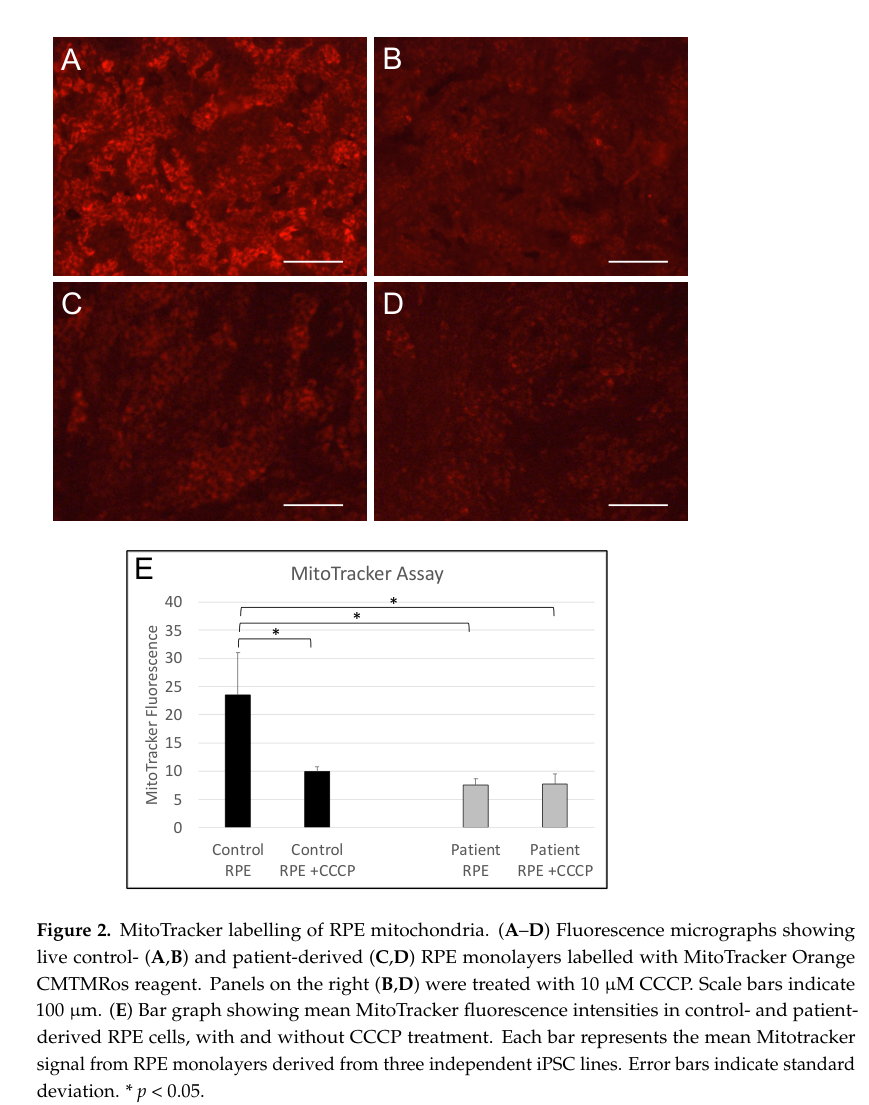
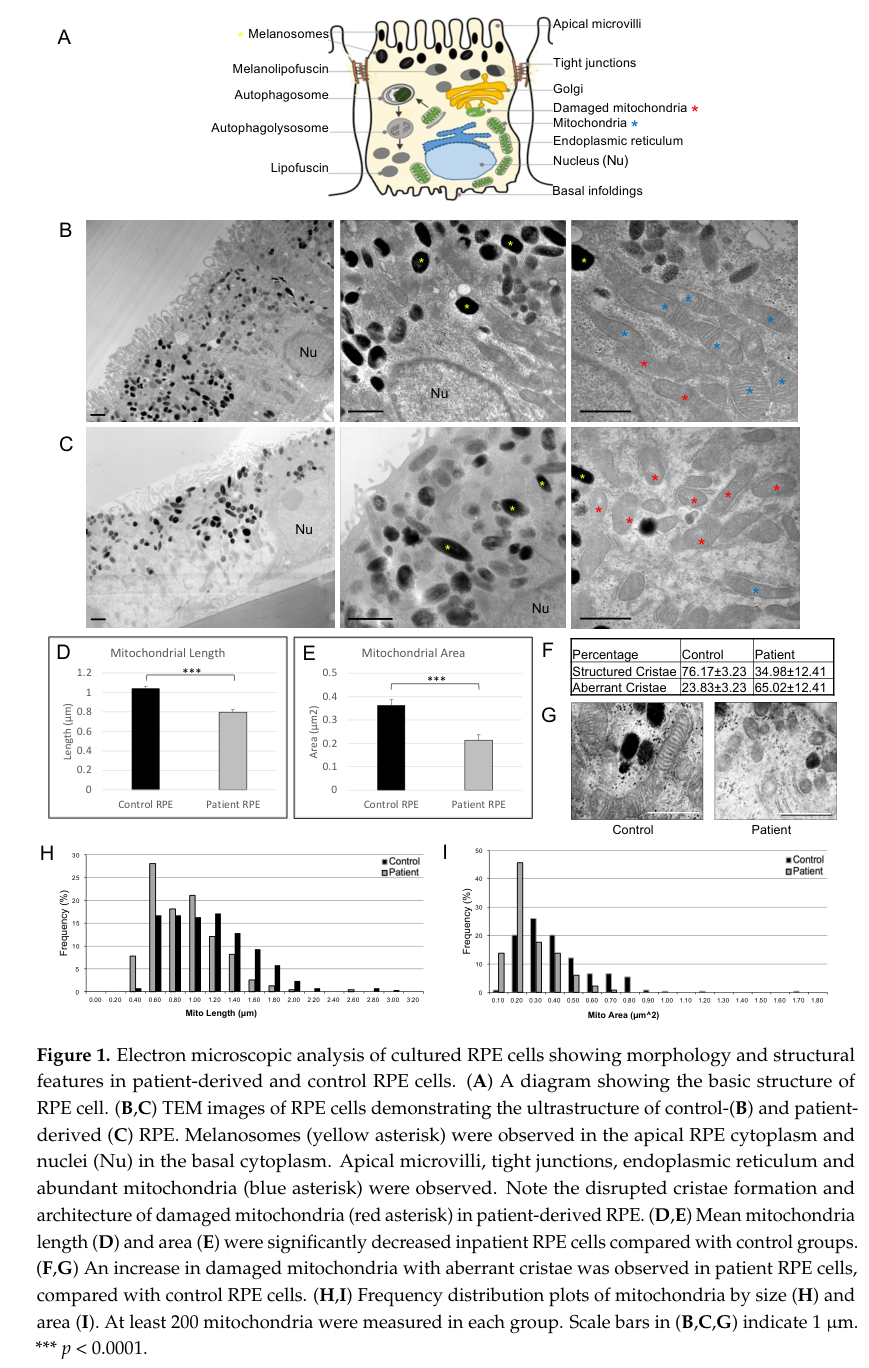
Key mechanistic findings (quantitative where available): - Mitochondrial dysfunction - Reduced mitochondrial membrane potential inferred from reduced MitoTracker signal (p = 0.0214). (huang2023mitochondrialdysfunctionand pages 5-6) - Ultrastructure abnormalities and increased damaged mitochondria; aberrant cristae 65.02 ± 12.41% (patient) vs 23.83 ± 3.23% (control). (huang2023mitochondrialdysfunctionand pages 5-6) - Oxidative stress dysregulation - Baseline ROS increased in patient iPSC-RPE (p = 0.015). (huang2023mitochondrialdysfunctionand pages 5-6) - Higher sensitivity to oxidative stress: significant ROS increase at 100 µM tBHP (p = 0.0463). (huang2023mitochondrialdysfunctionand pages 5-6) - Impaired NFE2L2/Nrf2 antioxidant response - NFE2L2 expression lower in untreated patient RPE (p = 0.0453) and fails to increase under tBHP, while control RPE upregulates NFE2L2 (e.g., p = 0.0437 at 100 µM; p = 0.0012 at 200 µM). (huang2023mitochondrialdysfunctionand pages 8-9) - NFE2L2 target genes (IDH1, SLC25A25, RXRA) reduced in patient RPE. (huang2023mitochondrialdysfunctionand pages 8-9) - Ubiquitination machinery interactions (CUL3/UBE2E3) - Co-immunoprecipitation shows RCBTB1 in complexes with CUL3 and UBE2E3; isoform-selective pull-down is described. (huang2023mitochondrialdysfunctionand pages 8-9) - An NFE2L2 antioxidant response element motif (TGACCCGGC) is noted upstream of RCBTB1 transcription start site, suggesting NFE2L2-regulated induction. (huang2023mitochondrialdysfunctionand pages 10-12)
Author interpretation (expert opinion): The authors conclude that their results “highlight RPE mitochondria as a key target site in the pathogenesis of RCBTB1-associated retinopathy” and suggest that therapies alleviating mitochondrial dysfunction may be useful. (huang2023mitochondrialdysfunctionand pages 10-12)
Retinal angiogenesis axis (heterozygous LoF vitreoretinopathies; 2016)
Wu et al. provide mechanistic evidence linking reduced RCBTB1 to Norrin/FZD4/LRP5 β-catenin signaling and angiogenesis: - RCBTB1 knockdown reduces β-catenin nuclear accumulation and reduces Norrin-induced TCF/LEF reporter activity (reported reductions to approximately 50% and 33% at different ligand doses in evidence synthesis). (wu2016haploinsufficiencyofrcbtb1 pages 3-6) - Zebrafish rcbtb1 knockdown causes vascular anomalies in intersegmental and intraocular vessels. (wu2016haploinsufficiencyofrcbtb1 pages 1-2, wu2016haploinsufficiencyofrcbtb1 pages 6-7)
Suggested GO (process), CL (cell type), and tissue terms
- GO:0006979 response to oxidative stress (huang2023mitochondrialdysfunctionand pages 8-9)
- GO:0016567 protein ubiquitination (huang2023mitochondrialdysfunctionand pages 8-9)
- GO:0005739 mitochondrion (huang2023mitochondrialdysfunctionand pages 5-6)
- CL:0002584 retinal pigment epithelial cell (huang2023mitochondrialdysfunctionand pages 1-2)
- UBERON:0000966 retina; UBERON:0001768 retinal pigment epithelium (huang2023mitochondrialdysfunctionand pages 9-10)
7. Anatomical Structures Affected
- Primary: retina, with a strong emphasis on RPE as primary lesion site in RCBTB1-associated retinopathy. (huang2023mitochondrialdysfunctionand pages 9-10)
- Subcellular: mitochondria (altered cristae, membrane potential). (huang2023mitochondrialdysfunctionand pages 5-6)
8. Temporal Development
- Onset: macular atrophy onset 30–62 years in nine families; many present in 40s–50s; RP phenotype can present in 20s. (huang2023mitochondrialdysfunctionand pages 9-10)
- Progression: enlarging RPE atrophic lesions and widespread RPE irregularities described by multimodal imaging synthesis. (huang2023mitochondrialdysfunctionand pages 9-10)
9. Inheritance and Population
Inheritance
- Autosomal recessive for the retinopathy phenotype (biallelic variants). (huang2023mitochondrialdysfunctionand pages 1-2)
- Separate evidence: heterozygous LoF can cause or contribute to vitreoretinopathies via haploinsufficiency. (wu2016haploinsufficiencyofrcbtb1 pages 2-3)
Epidemiology and population genetics
- Prevalence/incidence, carrier frequency, and founder effects are not available in the retrieved corpus (evidence gap).
10. Diagnostics
Clinical imaging and tests (disease-specific)
- OCT + FAF in RCBTB1-associated retinopathy: attenuation of the RPE layer and adjacent ellipsoid zone in atrophic lesions. (huang2023mitochondrialdysfunctionand pages 9-10)
- Vitreoretinopathy (FEVR/Coats) clinical documentation includes fundus findings such as disc-dragging, macular ectopia, fibrovascular stalk, traction retinal detachment, and subretinal lipid exudates. (wu2016haploinsufficiencyofrcbtb1 pages 2-3)
Genetic testing and real-world implementation
- Whole-exome sequencing used to identify RCBTB1 variants in vitreoretinopathy pedigrees; confirmatory direct sequencing and RT-PCR/amplicon sequencing used to verify splice effects. (wu2016haploinsufficiencyofrcbtb1 pages 2-3)
- Copy-number analysis (CNVs): arrEYE array CGH platform designed for retinal dystrophy genes including RCBTB1; includes qPCR validation and Sanger sequencing of exons/splice boundaries. (cauwenbergh2017arreyeacustomized pages 2-4)
Broader IRD diagnostic yield benchmarks (helpful for clinical implementation)
- Broad 322-gene NGS IRD panel in Sweden: 65% solved (182/279). (areblom2023adescriptionof pages 1-2)
- RP/LCA smMIPs targeted sequencing: 56% diagnostic yield in 1,192 probands. (panneman2022costeffectivesequenceanalysis pages 1-3)
Differential diagnosis
Not specified for RCBTB1 macular chorioretinal atrophy in retrieved sources (evidence gap).
11. Outcome/Prognosis
Quantitative prognosis (VA trajectories, blindness rates) is not provided in retrieved sources; progressive enlargement of atrophic lesions is described. (huang2023mitochondrialdysfunctionand pages 9-10)
12. Treatment
Current applications / real-world implementations
Disease-specific management for RCBTB1-retinopathy is not detailed in retrieved sources.
For related Coats disease case, surgical/medical retinal detachment management is described: cryopexy, pars plana vitrectomy, removal of subretinal fibrous cord, and encircling buckle. (wu2016haploinsufficiencyofrcbtb1 pages 2-3)
Experimental / mechanism-based approaches
Authors propose that therapeutic approaches aimed at alleviating mitochondrial dysfunction may be useful, based on similarity to severe mitochondrial retinopathy and observed mitochondrial pathology. (huang2023mitochondrialdysfunctionand pages 10-12)
Clinical trials
No RCBTB1-targeted clinical trials were retrieved. Gene therapy trials retrieved were RPE65-focused (e.g., LX101) and are not directly applicable to RCBTB1. (NCT06212297 chunk 1, NCT07054632 chunk 1)
13. Prevention
Not described in retrieved sources; general genetic counseling and cascade testing are implied by Mendelian genetics but not explicitly detailed.
14. Other Species / Natural Disease
Not identified in retrieved sources.
15. Model Organisms
- Human iPSC-RPE model from an RCBTB1-associated retinopathy patient demonstrates ROS dysregulation, impaired NFE2L2 response, and mitochondrial dysfunction. (huang2023mitochondrialdysfunctionand pages 5-6)
- Zebrafish rcbtb1 knockdown demonstrates vascular anomalies consistent with retinal angiogenesis roles relevant to vitreoretinopathies. (wu2016haploinsufficiencyofrcbtb1 pages 1-2, wu2016haploinsufficiencyofrcbtb1 pages 6-7)
Recent developments prioritized (2023–2024)
2023 mechanistic disease modeling (Cells)
- Publication date: 10 May 2023
- URL: https://doi.org/10.3390/cells12101358
- Key contribution: Links RCBTB1 deficiency in patient-derived RPE to mitochondrial dysfunction and impaired antioxidant responses (NFE2L2 axis) and to CUL3/UBE2E3 complex formation. (huang2023mitochondrialdysfunctionand pages 1-2, huang2023mitochondrialdysfunctionand pages 8-9)
2023 clinical implementation context (Genes)
- Publication date: 8 Jul 2023
- URL: https://doi.org/10.3390/genes14071413
- Key contribution: Demonstrates value of re-testing with broad NGS panels in IRD clinics and provides a 65% solved benchmark. (areblom2023adescriptionof pages 1-2)
Visual evidence (mechanistic)
Figures extracted from the 2023 iPSC-RPE study show mitochondrial ultrastructural abnormalities and reduced MitoTracker labeling in patient-derived RPE. (huang2023mitochondrialdysfunctionand media 84d6e22c, huang2023mitochondrialdysfunctionand media 34d1da4f)
Evidence gaps (explicit)
- Disease-specific OMIM/Orphanet/MONDO/MeSH/ICD identifiers for RCBTB1-associated retinopathy were not present in retrieved texts.
- Epidemiology (prevalence/incidence), gnomAD carrier frequency, founder variants, and penetrance estimates specific to retinopathy were not retrieved.
- No RCBTB1-specific therapeutic trials were retrieved.
- Differential diagnosis lists and formal diagnostic criteria for the macular chorioretinal atrophy phenotype were not retrieved.
Key primary sources (with dates/URLs where present in retrieved texts)
- Huang Z, et al. Cells. Published 10 May 2023. https://doi.org/10.3390/cells12101358 (huang2023mitochondrialdysfunctionand pages 1-2)
- Wu J-H, et al. Human Molecular Genetics. Advance Access 11 Feb 2016. https://doi.org/10.1093/hmg/ddw041 (wu2016haploinsufficiencyofrcbtb1 pages 1-2)
- Van Cauwenbergh C, et al. Genetics in Medicine. Apr 2017. https://doi.org/10.1038/gim.2016.119 (cauwenbergh2017arreyeacustomized pages 2-4)
- Areblom M, et al. Genes. Published 8 Jul 2023. https://doi.org/10.3390/genes14071413 (areblom2023adescriptionof pages 1-2)
- Panneman DM, et al. Frontiers in Cell and Developmental Biology. Feb 2023. https://doi.org/10.3389/fcell.2023.1112270 (panneman2022costeffectivesequenceanalysis pages 1-3)
References
-
(huang2023mitochondrialdysfunctionand pages 9-10): Zhiqin Huang, Dan Zhang, Shang-Chih Chen, Di Huang, David Mackey, Fred K. Chen, and Samuel McLenachan. Mitochondrial dysfunction and impaired antioxidant responses in retinal pigment epithelial cells derived from a patient with rcbtb1-associated retinopathy. Cells, 12:1358, May 2023. URL: https://doi.org/10.3390/cells12101358, doi:10.3390/cells12101358. This article has 9 citations.
-
(huang2023mitochondrialdysfunctionand pages 1-2): Zhiqin Huang, Dan Zhang, Shang-Chih Chen, Di Huang, David Mackey, Fred K. Chen, and Samuel McLenachan. Mitochondrial dysfunction and impaired antioxidant responses in retinal pigment epithelial cells derived from a patient with rcbtb1-associated retinopathy. Cells, 12:1358, May 2023. URL: https://doi.org/10.3390/cells12101358, doi:10.3390/cells12101358. This article has 9 citations.
-
(wu2016haploinsufficiencyofrcbtb1 pages 2-3): Jeng-Hung Wu, Jorn-Hon Liu, Yu-Chieh Ko, Chi-Tang Wang, Yu-Chien Chung, Kuo-Chang Chu, Tze-Tze Liu, Hsiao-Ming Chao, Yun-Jin Jiang, Shih-Jen Chen, and Ming-Yi Chung. Haploinsufficiency of rcbtb1 is associated with coats disease and familial exudative vitreoretinopathy. Human molecular genetics, 25 8:1637-47, Apr 2016. URL: https://doi.org/10.1093/hmg/ddw041, doi:10.1093/hmg/ddw041. This article has 75 citations and is from a domain leading peer-reviewed journal.
-
(wu2016haploinsufficiencyofrcbtb1 pages 3-6): Jeng-Hung Wu, Jorn-Hon Liu, Yu-Chieh Ko, Chi-Tang Wang, Yu-Chien Chung, Kuo-Chang Chu, Tze-Tze Liu, Hsiao-Ming Chao, Yun-Jin Jiang, Shih-Jen Chen, and Ming-Yi Chung. Haploinsufficiency of rcbtb1 is associated with coats disease and familial exudative vitreoretinopathy. Human molecular genetics, 25 8:1637-47, Apr 2016. URL: https://doi.org/10.1093/hmg/ddw041, doi:10.1093/hmg/ddw041. This article has 75 citations and is from a domain leading peer-reviewed journal.
-
(huang2023mitochondrialdysfunctionand pages 8-9): Zhiqin Huang, Dan Zhang, Shang-Chih Chen, Di Huang, David Mackey, Fred K. Chen, and Samuel McLenachan. Mitochondrial dysfunction and impaired antioxidant responses in retinal pigment epithelial cells derived from a patient with rcbtb1-associated retinopathy. Cells, 12:1358, May 2023. URL: https://doi.org/10.3390/cells12101358, doi:10.3390/cells12101358. This article has 9 citations.
-
(huang2023mitochondrialdysfunctionand pages 10-12): Zhiqin Huang, Dan Zhang, Shang-Chih Chen, Di Huang, David Mackey, Fred K. Chen, and Samuel McLenachan. Mitochondrial dysfunction and impaired antioxidant responses in retinal pigment epithelial cells derived from a patient with rcbtb1-associated retinopathy. Cells, 12:1358, May 2023. URL: https://doi.org/10.3390/cells12101358, doi:10.3390/cells12101358. This article has 9 citations.
-
(wu2016haploinsufficiencyofrcbtb1 pages 1-2): Jeng-Hung Wu, Jorn-Hon Liu, Yu-Chieh Ko, Chi-Tang Wang, Yu-Chien Chung, Kuo-Chang Chu, Tze-Tze Liu, Hsiao-Ming Chao, Yun-Jin Jiang, Shih-Jen Chen, and Ming-Yi Chung. Haploinsufficiency of rcbtb1 is associated with coats disease and familial exudative vitreoretinopathy. Human molecular genetics, 25 8:1637-47, Apr 2016. URL: https://doi.org/10.1093/hmg/ddw041, doi:10.1093/hmg/ddw041. This article has 75 citations and is from a domain leading peer-reviewed journal.
-
(huang2023mitochondrialdysfunctionand pages 5-6): Zhiqin Huang, Dan Zhang, Shang-Chih Chen, Di Huang, David Mackey, Fred K. Chen, and Samuel McLenachan. Mitochondrial dysfunction and impaired antioxidant responses in retinal pigment epithelial cells derived from a patient with rcbtb1-associated retinopathy. Cells, 12:1358, May 2023. URL: https://doi.org/10.3390/cells12101358, doi:10.3390/cells12101358. This article has 9 citations.
-
(wu2016haploinsufficiencyofrcbtb1 pages 6-7): Jeng-Hung Wu, Jorn-Hon Liu, Yu-Chieh Ko, Chi-Tang Wang, Yu-Chien Chung, Kuo-Chang Chu, Tze-Tze Liu, Hsiao-Ming Chao, Yun-Jin Jiang, Shih-Jen Chen, and Ming-Yi Chung. Haploinsufficiency of rcbtb1 is associated with coats disease and familial exudative vitreoretinopathy. Human molecular genetics, 25 8:1637-47, Apr 2016. URL: https://doi.org/10.1093/hmg/ddw041, doi:10.1093/hmg/ddw041. This article has 75 citations and is from a domain leading peer-reviewed journal.
-
(cauwenbergh2017arreyeacustomized pages 2-4): Caroline Van Cauwenbergh, Kristof Van Schil, Robrecht Cannoodt, Miriam Bauwens, Thalia Van Laethem, Sarah De Jaegere, Wouter Steyaert, Tom Sante, Björn Menten, Bart P. Leroy, Frauke Coppieters, and Elfride De Baere. Arreye: a customized platform for high-resolution copy number analysis of coding and noncoding regions of known and candidate retinal dystrophy genes and retinal noncoding rnas. Genetics in Medicine, 19:457-466, Apr 2017. URL: https://doi.org/10.1038/gim.2016.119, doi:10.1038/gim.2016.119. This article has 57 citations and is from a highest quality peer-reviewed journal.
-
(areblom2023adescriptionof pages 1-2): Maria Areblom, Sten Kjellström, Sten Andréasson, Anders Öhberg, Lotta Gränse, and Ulrika Kjellström. A description of the yield of genetic reinvestigation in patients with inherited retinal dystrophies and previous inconclusive genetic testing. Genes, 14:1413, Jul 2023. URL: https://doi.org/10.3390/genes14071413, doi:10.3390/genes14071413. This article has 8 citations.
-
(panneman2022costeffectivesequenceanalysis pages 1-3): Daan M. Panneman, Rebekkah J. Hitti-Malin, Lara K. Holtes, Suzanne E. de Bruijn, Janine Reurink, Erica G. M. Boonen, Muhammad Imran Khan, Manir Ali, Sten Andréasson, Elfride De Baere, Sandro Banfi, Miriam Bauwens, Tamar Ben-Yosef, Béatrice Bocquet, Marieke De Bruyne, Berta de la Cerda, Frauke Coppieters, Pietro Farinelli, Thomas Guignard, Chris F. Inglehearn, Marianthi Karali, Ulrika Kjellström, Robert Koenekoop, Bart de Koning, Bart P. Leroy, Martin McKibbin, Isabelle Meunier, Konstantinos Nikopoulos, Koji M. Nishiguchi, James A. Poulter, Carlo Rivolta, Enrique Rodríguez de la Rúa, Patrick Saunders, Francesca Simonelli, Yasmin Tatour, Francesco Testa, Alberta A. H. J. Thiadens, Carmel Toomes, Anna M. Tracewska, Hoai Viet Tran, Hiroaki Ushida, Veronika Vaclavik, Virginie J. M. Verhoeven, Maartje van de Vorst, Christian Gilissen, Alexander Hoischen, Frans P. M. Cremers, and Susanne Roosing. Cost-effective sequence analysis of 113 genes in 1,192 probands with retinitis pigmentosa and leber congenital amaurosis. Frontiers in Cell and Developmental Biology, Feb 2023. URL: https://doi.org/10.3389/fcell.2023.1112270, doi:10.3389/fcell.2023.1112270. This article has 34 citations.
-
(NCT06212297 chunk 1): Fellow-eye Study (FE) of LX101 in Subjects With Inherited Retinal Dystrophy. Innostellar Biotherapeutics Co.,Ltd. 2023. ClinicalTrials.gov Identifier: NCT06212297
-
(NCT07054632 chunk 1): Efficacy and Safety of LX101 for Inherited Retinal Dystrophy Associated With RPE65 Mutations. Innostellar Biotherapeutics Co.,Ltd. 2023. ClinicalTrials.gov Identifier: NCT07054632
-
(huang2023mitochondrialdysfunctionand media 84d6e22c): Zhiqin Huang, Dan Zhang, Shang-Chih Chen, Di Huang, David Mackey, Fred K. Chen, and Samuel McLenachan. Mitochondrial dysfunction and impaired antioxidant responses in retinal pigment epithelial cells derived from a patient with rcbtb1-associated retinopathy. Cells, 12:1358, May 2023. URL: https://doi.org/10.3390/cells12101358, doi:10.3390/cells12101358. This article has 9 citations.
-
(huang2023mitochondrialdysfunctionand media 34d1da4f): Zhiqin Huang, Dan Zhang, Shang-Chih Chen, Di Huang, David Mackey, Fred K. Chen, and Samuel McLenachan. Mitochondrial dysfunction and impaired antioxidant responses in retinal pigment epithelial cells derived from a patient with rcbtb1-associated retinopathy. Cells, 12:1358, May 2023. URL: https://doi.org/10.3390/cells12101358, doi:10.3390/cells12101358. This article has 9 citations.
Artifacts