X-linked Dystonia-Parkinsonism
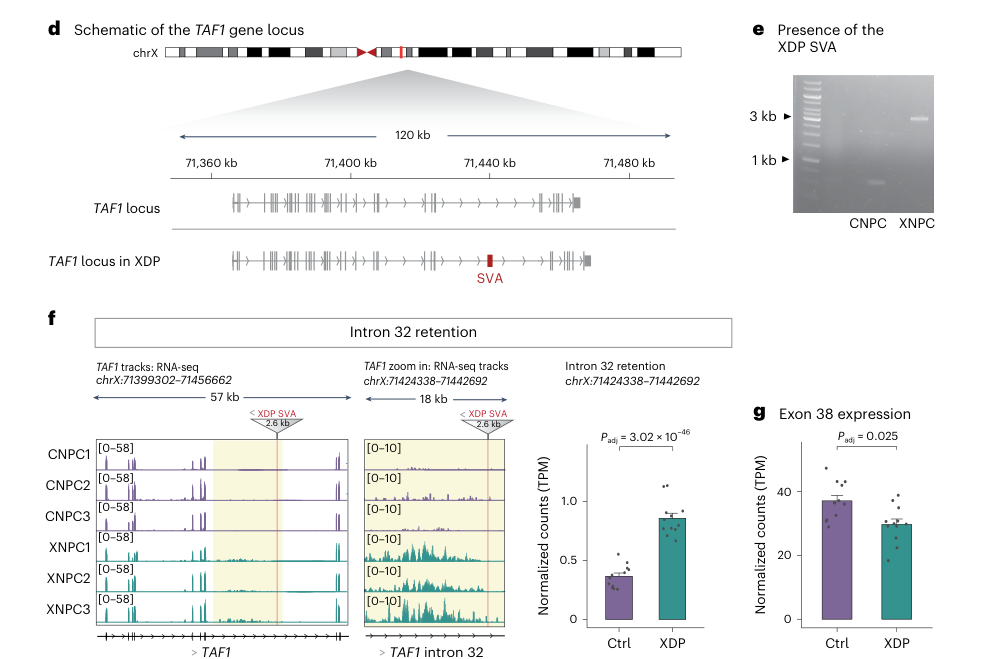
X-linked dystonia-parkinsonism (XDP; DYT3; "Lubag") is an X-linked recessive, adult-onset neurodegenerative movement disorder endemic to the island of Panay, Philippines. It is caused by a disease-specific SINE-VNTR-Alu (SVA) retrotransposon insertion in intron 32 of the TAF1 gene, which encodes the largest subunit of the general transcription factor TFIID. The insertion carries a polymorphic (CCCTCT)n hexanucleotide repeat whose length inversely correlates with age at onset. The SVA reduces expression of the canonical full-length TAF1 transcript and induces aberrant splicing and intron retention, producing a neuron-associated transcriptional dysregulation. XDP also features progressive degeneration of the neostriatum (caudate nucleus and putamen), but the causal bridge from altered TAF1 transcription to selective neuronal loss remains unresolved. Affected men typically present in mid-adulthood with focal dystonia that generalizes over years, later accompanied or replaced by parkinsonism; female carriers are mostly asymptomatic.
Ask OpenScientist
Ask a research question about X-linked Dystonia-Parkinsonism. OpenScientist will conduct autonomous deep research using the Disorder Mechanisms Knowledge Base and PubMed literature (typically 10-30 minutes).
Do not include personal health information in your question. Questions and results are cached in your browser's local storage.
Inheritance
1Show evidence (2 references)
Mechanistic Hypotheses
5Show evidence (1 reference)
Show evidence (1 reference)
Show evidence (1 reference)
Show evidence (2 references)
Show evidence (2 references)
Pathophysiology
4Show evidence (2 references)
Show evidence (5 references)
Show evidence (1 reference)
Show evidence (4 references)
Pathograph
Phenotypes
16Digestive 1
Show evidence (1 reference)
Head and Neck 1
Show evidence (1 reference)
Immune 1
Show evidence (1 reference)
Musculoskeletal 1
Show evidence (1 reference)
Nervous System 6
Show evidence (1 reference)
Show evidence (1 reference)
Show evidence (1 reference)
Show evidence (1 reference)
Show evidence (1 reference)
Show evidence (1 reference)
Growth 1
Show evidence (1 reference)
Other 5
Show evidence (1 reference)
Show evidence (1 reference)
Show evidence (1 reference)
Show evidence (1 reference)
Show evidence (1 reference)
Genetic Associations
3Show evidence (4 references)
Show evidence (1 reference)
Show evidence (1 reference)
Medical Actions
6Show evidence (1 reference)
Show evidence (1 reference)
Show evidence (1 reference)
Show evidence (1 reference)
Show evidence (2 references)
Show evidence (1 reference)
Diagnosis
1Show evidence (2 references)
Progression
1Show evidence (3 references)
Prevalence
1Show evidence (1 reference)
Epidemiology
1Show evidence (2 references)
Related Datasets
3Clinical Trials
3Show evidence (2 references)
Show evidence (1 reference)
Show evidence (1 reference)
Experimental Models
5Show evidence (1 reference)
Show evidence (1 reference)
Show evidence (1 reference)
Show evidence (1 reference)
Show evidence (1 reference)
Show evidence (1 reference)
Show evidence (1 reference)
Source YAML
click to showname: X-linked Dystonia-Parkinsonism
creation_date: "2026-06-03T00:00:00Z"
category: Mendelian
disease_term:
preferred_term: X-linked dystonia-parkinsonism
term:
id: MONDO:0010747
label: X-linked dystonia-parkinsonism
parents:
- focal dystonia
- combined dystonia
- parkinsonian disorder
synonyms:
- XDP
- DYT3
- Lubag
- DYT-TAF1
- X-linked torsion dystonia-parkinsonism
description: >
X-linked dystonia-parkinsonism (XDP; DYT3; "Lubag") is an X-linked recessive,
adult-onset neurodegenerative movement disorder endemic to the island of
Panay, Philippines. It is caused by a disease-specific SINE-VNTR-Alu (SVA)
retrotransposon insertion in intron 32 of the TAF1 gene, which encodes the
largest subunit of the general transcription factor TFIID. The insertion
carries a polymorphic (CCCTCT)n hexanucleotide repeat whose length inversely
correlates with age at onset. The SVA reduces expression of the canonical
full-length TAF1 transcript and induces aberrant splicing and intron
retention, producing a neuron-associated transcriptional dysregulation. XDP
also features progressive degeneration of the neostriatum (caudate nucleus
and putamen), but the causal bridge from altered TAF1 transcription to
selective neuronal loss remains unresolved. Affected men typically present
in mid-adulthood with focal dystonia
that generalizes over years, later accompanied or replaced by parkinsonism;
female carriers are mostly asymptomatic.
references:
- reference: PMID:20301662
title: "X-Linked Dystonia-Parkinsonism."
tags:
- GeneReviews
inheritance:
- name: X-linked recessive
inheritance_term:
preferred_term: X-linked recessive inheritance
term:
id: HP:0001419
label: X-linked recessive inheritance
description: >
XDP is inherited in an X-linked manner. Affected individuals are almost
exclusively male; female carriers are usually asymptomatic, although a
small minority manifest dystonia, parkinsonism, or chorea.
evidence:
- reference: PMID:20301662
reference_title: "X-Linked Dystonia-Parkinsonism."
supports: SUPPORT
evidence_source: HUMAN_CLINICAL
snippet: "XDP is inherited in an X-linked manner."
explanation: GeneReviews states the X-linked inheritance pattern.
- reference: PMID:12928496
reference_title: "Specific sequence changes in multiple transcript system DYT3 are associated with X-linked dystonia parkinsonism."
supports: SUPPORT
evidence_source: HUMAN_CLINICAL
snippet: "X-linked dystonia parkinsonism (XDP) is an X-linked recessive adult onset movement disorder characterized by both dystonia and parkinsonism."
explanation: Confirms X-linked recessive inheritance and the dystonia-parkinsonism phenotype.
epidemiology:
- name: Endemic to Panay, Philippines
description: >
XDP is endemic to the island of Panay in the Philippines and affects men
whose maternal ancestry traces to Panay; the disorder is associated with a
single shared founder haplotype.
evidence:
- reference: PMID:37265597
reference_title: "Establishing a natural history of X-linked dystonia parkinsonism."
supports: SUPPORT
evidence_source: HUMAN_CLINICAL
snippet: "X-linked dystonia parkinsonism is a neurodegenerative movement disorder that affects men whose mothers originate from the island of Panay, Philippines."
explanation: Establishes the endemic geographic and maternal-ancestry distribution.
- reference: PMID:29474918
reference_title: "Dissecting the Causal Mechanism of X-Linked Dystonia-Parkinsonism by Integrating Genome and Transcriptome Assembly."
supports: SUPPORT
evidence_source: HUMAN_CLINICAL
snippet: "X-linked Dystonia-Parkinsonism (XDP) is a Mendelian neurodegenerative disease that is endemic to the Philippines and is associated with a founder haplotype."
explanation: Confirms endemicity to the Philippines and the founder haplotype.
prevalence:
- population: Panay Island, Philippines
prevalence_class: BAND_1_9_PER_100000
rate_per_100000: 5.74
notes: >
Review-reported prevalence in the endemic Panay Island population. XDP
predominantly affects men because of its X-linked inheritance, but the
cited population estimate is not presented as a male-only denominator.
evidence:
- reference: PMID:38835911
reference_title: "Factors influencing reduced penetrance and variable expressivity in X-linked dystonia-parkinsonism."
supports: SUPPORT
evidence_source: HUMAN_CLINICAL
snippet: "XDP is endemic to the Philippines and it is particularly prevalent on Panay Island (5.74 in 100,000 individuals)"
explanation: Provides the numeric Panay Island prevalence estimate and endemic context.
progression:
- phase: Onset and course
notes: >
Median age at onset in genetically confirmed patients is about 40 years,
with a reported range of 20 to 67 years. More than 80% initially present
with focal dystonia, which usually generalizes within five years;
parkinsonism is the first manifestation in a minority (14%). Dystonia and
parkinsonism increasingly overlap, and parkinsonism may predominate among
patients who survive the combined phase. Aspiration pneumonia, starvation,
and suicide contribute to shortened survival.
evidence:
- reference: PMID:38835911
reference_title: "Factors influencing reduced penetrance and variable expressivity in X-linked dystonia-parkinsonism."
supports: SUPPORT
evidence_source: HUMAN_CLINICAL
snippet: "In genetically tested patients, in whom the presence of disease-causing variants has been confirmed, the median age at onset (AAO) of XDP is 40 years ... However, the AAO spectrum is very broad (from 20 to 67 years) and penetrance increases with age"
explanation: A recent review gives the genetically confirmed cohort's median and range of onset.
- reference: PMID:38835911
reference_title: "Factors influencing reduced penetrance and variable expressivity in X-linked dystonia-parkinsonism."
supports: SUPPORT
evidence_source: HUMAN_CLINICAL
snippet: "The majority (>80 %) of patients present initially with focal dystonia that usually generalizes within five years after onset (dystonic phase) ... Nevertheless, in 14 % of patients, parkinsonism signs are the first disease manifestation ... With time, dystonia and parkinsonism increasingly overlap (combined dystonia-parkinsonism phase), and in patients surviving this disease stage the predominant clinical picture is parkinsonism (parkinsonian phase)"
explanation: Calibrates the usual dystonia-first course while preserving the documented parkinsonism-first minority.
- reference: PMID:38835911
reference_title: "Factors influencing reduced penetrance and variable expressivity in X-linked dystonia-parkinsonism."
supports: SUPPORT
evidence_source: HUMAN_CLINICAL
snippet: "XDP patients have a shortened lifespan due to dystonia-related conditions (aspiration pneumonia or starvation) or suicide"
explanation: Identifies major contributors to shortened survival without inferring an exact prognosis.
phenotypes:
- name: Dystonia
description: >
Dystonia develops focally, most commonly in the jaw, neck, trunk, and
eyes, and generalizes over time. Jaw dystonia often progressing to neck
dystonia is the most characteristic feature.
phenotype_term:
preferred_term: Dystonia
term:
id: HP:0001332
label: Dystonia
clinical_course: PROGRESSIVE
evidence:
- reference: PMID:20301662
reference_title: "X-Linked Dystonia-Parkinsonism."
supports: SUPPORT
evidence_source: HUMAN_CLINICAL
snippet: "The dystonia develops focally, most commonly in the jaw, neck, trunk, and eyes, and less commonly in the limbs, tongue, pharynx, and larynx, the most characteristic being jaw dystonia often progressing to neck dystonia."
explanation: GeneReviews describes the focal-to-generalized dystonia distribution.
- name: Oromandibular (jaw) dystonia
description: >
Jaw dystonia is among the most characteristic focal presentations and
often progresses to neck dystonia.
phenotype_term:
preferred_term: Oromandibular dystonia
term:
id: HP:0012048
label: Oromandibular dystonia
evidence:
- reference: PMID:20301662
reference_title: "X-Linked Dystonia-Parkinsonism."
supports: SUPPORT
evidence_source: HUMAN_CLINICAL
snippet: "the most characteristic being jaw dystonia often progressing to neck dystonia"
explanation: GeneReviews identifies jaw (oromandibular) dystonia as the most characteristic focal site.
- name: Cervical dystonia
description: >
Neck and shoulder dystonia occurs in approximately half of patients whose
initial dystonia is craniocervical. That subgroup proportion is not treated
as a whole-disease frequency estimate.
phenotype_term:
preferred_term: Cervical dystonia
term:
id: HP:0000473
label: Torticollis
evidence:
- reference: PMID:38835911
reference_title: "Factors influencing reduced penetrance and variable expressivity in X-linked dystonia-parkinsonism."
supports: SUPPORT
evidence_source: HUMAN_CLINICAL
snippet: "Approximately half of patients that initially exhibit craniocervical dystonia suffer from neck/shoulder dystonia, while 28 % and 23 % manifest blepharospasm and mouth/tongue dystonia, respectively"
explanation: The review directly reports neck/shoulder dystonia within the craniocervical-onset subgroup; it does not provide a whole-cohort frequency.
- name: Blepharospasm
description: >
Blepharospasm is reported in 28% of patients whose initial dystonia is
craniocervical. This conditional subgroup proportion is not promoted to a
whole-disease frequency.
phenotype_term:
preferred_term: Blepharospasm
term:
id: HP:0000643
label: Blepharospasm
evidence:
- reference: PMID:38835911
reference_title: "Factors influencing reduced penetrance and variable expressivity in X-linked dystonia-parkinsonism."
supports: SUPPORT
evidence_source: HUMAN_CLINICAL
snippet: "Approximately half of patients that initially exhibit craniocervical dystonia suffer from neck/shoulder dystonia, while 28 % and 23 % manifest blepharospasm and mouth/tongue dystonia, respectively"
explanation: The review directly reports blepharospasm within the craniocervical-onset subgroup; the percentage is not a disease-wide frequency.
- name: Generalized dystonia
description: >
Focal dystonia becomes multifocal or generalized over time, particularly
in individuals who develop combined dystonia and parkinsonism.
phenotype_term:
preferred_term: Generalized dystonia
term:
id: HP:0007325
label: Generalized dystonia
evidence:
- reference: PMID:20301662
reference_title: "X-Linked Dystonia-Parkinsonism."
supports: SUPPORT
evidence_source: HUMAN_CLINICAL
snippet: "those who develop a combination of parkinsonism and dystonia can develop multifocal or generalized symptoms within a few years"
explanation: GeneReviews documents progression to generalized dystonia.
- name: Parkinsonism
description: >
Adult-onset parkinsonism that may be the initial presenting sign and
includes resting tremor, bradykinesia, rigidity, and postural instability.
phenotype_term:
preferred_term: Parkinsonism
term:
id: HP:0001300
label: Parkinsonism
evidence:
- reference: PMID:20301662
reference_title: "X-Linked Dystonia-Parkinsonism."
supports: SUPPORT
evidence_source: HUMAN_CLINICAL
snippet: "Features of parkinsonism include resting tremor, bradykinesia, rigidity, postural instability, and severe shuffling gait."
explanation: GeneReviews enumerates the parkinsonian features of XDP.
- name: Resting tremor
description: Resting tremor as a feature of XDP parkinsonism.
phenotype_term:
preferred_term: Resting tremor
term:
id: HP:0002322
label: Resting tremor
evidence:
- reference: PMID:20301662
reference_title: "X-Linked Dystonia-Parkinsonism."
supports: SUPPORT
evidence_source: HUMAN_CLINICAL
snippet: "Features of parkinsonism include resting tremor, bradykinesia, rigidity, postural instability, and severe shuffling gait."
explanation: GeneReviews lists resting tremor among XDP parkinsonian features.
- name: Bradykinesia
description: Bradykinesia as a feature of XDP parkinsonism.
phenotype_term:
preferred_term: Bradykinesia
term:
id: HP:0002067
label: Bradykinesia
evidence:
- reference: PMID:20301662
reference_title: "X-Linked Dystonia-Parkinsonism."
supports: SUPPORT
evidence_source: HUMAN_CLINICAL
snippet: "Features of parkinsonism include resting tremor, bradykinesia, rigidity, postural instability, and severe shuffling gait."
explanation: GeneReviews lists bradykinesia among XDP parkinsonian features.
- name: Rigidity
description: Rigidity as a feature of XDP parkinsonism.
phenotype_term:
preferred_term: Rigidity
term:
id: HP:0002063
label: Rigidity
evidence:
- reference: PMID:20301662
reference_title: "X-Linked Dystonia-Parkinsonism."
supports: SUPPORT
evidence_source: HUMAN_CLINICAL
snippet: "Features of parkinsonism include resting tremor, bradykinesia, rigidity, postural instability, and severe shuffling gait."
explanation: GeneReviews lists rigidity among XDP parkinsonian features.
- name: Postural instability
description: Postural instability as a feature of XDP parkinsonism.
phenotype_term:
preferred_term: Postural instability
term:
id: HP:0002172
label: Postural instability
evidence:
- reference: PMID:20301662
reference_title: "X-Linked Dystonia-Parkinsonism."
supports: SUPPORT
evidence_source: HUMAN_CLINICAL
snippet: "Features of parkinsonism include resting tremor, bradykinesia, rigidity, postural instability, and severe shuffling gait."
explanation: GeneReviews lists postural instability among XDP parkinsonian features.
- name: Shuffling gait
description: Severe shuffling gait as a feature of XDP parkinsonism.
phenotype_term:
preferred_term: Shuffling gait
term:
id: HP:0002362
label: Shuffling gait
evidence:
- reference: PMID:20301662
reference_title: "X-Linked Dystonia-Parkinsonism."
supports: SUPPORT
evidence_source: HUMAN_CLINICAL
snippet: "Features of parkinsonism include resting tremor, bradykinesia, rigidity, postural instability, and severe shuffling gait."
explanation: GeneReviews lists severe shuffling gait among XDP parkinsonian features.
- name: Hyposmia
description: >
Olfactory dysfunction occurs early in the disease and may be used to
support the diagnosis when molecular genetic testing is unavailable.
phenotype_term:
preferred_term: Hyposmia
term:
id: HP:0004409
label: Hyposmia
evidence:
- reference: PMID:20301662
reference_title: "X-Linked Dystonia-Parkinsonism."
supports: SUPPORT
evidence_source: HUMAN_CLINICAL
snippet: "Olfactory testing indicates olfactory dysfunction early in the disease and may be used to support the diagnosis when molecular genetic testing is not available."
explanation: GeneReviews documents early olfactory dysfunction in XDP.
- name: Dysphagia
description: >
Swallowing impairment is a complication of XDP; botulinum toxin may worsen
swallowing in individuals with preexisting dysphagia, and swallowing
evaluations are recommended to minimize aspiration risk.
phenotype_term:
preferred_term: Dysphagia
term:
id: HP:0002015
label: Dysphagia
evidence:
- reference: PMID:20301662
reference_title: "X-Linked Dystonia-Parkinsonism."
supports: SUPPORT
evidence_source: HUMAN_CLINICAL
snippet: "Botulinum toxin injections improve focal dystonia but may worsen swallowing in individuals with preexisting dysphagia."
explanation: GeneReviews documents dysphagia as a clinically relevant feature in XDP.
- name: Weight loss
description: >
Clinically important weight loss occurs in XDP and has been the target of
a registered nutritional-supplement study. The registry excerpt does not
establish its frequency, cause, or response to supplementation.
phenotype_term:
preferred_term: Weight loss
term:
id: HP:0001824
label: Weight loss
evidence:
- reference: clinicaltrials:NCT03019458
reference_title: "MINGO Supplemental Trial in X-linked Dystonia Parkinsonism Patients: A Prospective Randomized, Open-labeled, Parallel Group Trial"
supports: SUPPORT
evidence_source: HUMAN_CLINICAL
snippet: "To see whether MINGO, a food supplement, will be able to lessen the drastic weight loss seen among X-linked Dystonia Parkinsonism patients."
explanation: The registry directly identifies severe weight loss as a clinical problem in XDP without supplying a frequency estimate.
- name: Aspiration pneumonia
description: >
Aspiration pneumonia is a serious dystonia-related complication and a
contributor to shortened survival. The retained review does not provide
a frequency estimate.
phenotype_term:
preferred_term: Aspiration pneumonia
term:
id: HP:0011951
label: Aspiration pneumonia
evidence:
- reference: PMID:38835911
reference_title: "Factors influencing reduced penetrance and variable expressivity in X-linked dystonia-parkinsonism."
supports: SUPPORT
evidence_source: HUMAN_CLINICAL
snippet: "XDP patients have a shortened lifespan due to dystonia-related conditions (aspiration pneumonia or starvation) or suicide"
explanation: The review identifies aspiration pneumonia as a clinically consequential XDP complication without quantifying its frequency.
- name: Chorea
description: >
A small minority of female carriers may manifest chorea, and chorea may
occur in the phenotypic spectrum of XDP without dystonia.
phenotype_term:
preferred_term: Chorea
term:
id: HP:0002072
label: Chorea
evidence:
- reference: PMID:20301662
reference_title: "X-Linked Dystonia-Parkinsonism."
supports: SUPPORT
evidence_source: HUMAN_CLINICAL
snippet: "Female carriers are mostly asymptomatic, though a small minority may manifest dystonia, parkinsonism, or chorea."
explanation: GeneReviews documents chorea as part of the XDP phenotypic spectrum.
pathophysiology:
- name: SVA retrotransposon insertion in TAF1
role: trigger
biological_scale: MOLECULAR
description: >
A disease-specific SINE-VNTR-Alu (SVA) retrotransposon is inserted in an
intron of TAF1 (intron 32). The element includes a polymorphic (CCCTCT)n
hexanucleotide repeat whose length is inversely correlated with age at
disease onset. This is the founding genetic lesion of XDP.
genes:
- preferred_term: TAF1
term:
id: hgnc:11535
label: TAF1
evidence:
- reference: PMID:29474918
reference_title: "Dissecting the Causal Mechanism of X-Linked Dystonia-Parkinsonism by Integrating Genome and Transcriptome Assembly."
supports: SUPPORT
evidence_source: HUMAN_CLINICAL
snippet: "We integrated multiple genome and transcriptome assembly technologies to narrow the causal mutation to the TAF1 locus, which included a SINE-VNTR-Alu (SVA) retrotransposition into intron 32 of the gene."
explanation: Localizes the causal SVA insertion to intron 32 of TAF1.
- reference: PMID:17273961
reference_title: "Reduced neuron-specific expression of the TAF1 gene is associated with X-linked dystonia-parkinsonism."
supports: SUPPORT
evidence_source: HUMAN_CLINICAL
snippet: "We found a disease-specific SVA (short interspersed nuclear element, variable number of tandem repeats, and Alu composite) retrotransposon insertion in an intron of the TATA-binding protein-associated factor 1 gene (TAF1)"
explanation: Original identification of the disease-specific SVA insertion in TAF1.
downstream:
- target: TAF1 transcriptional dysregulation
description: >
The intronic SVA alters TAF1 splicing and reduces full-length TAF1
transcript levels in neurons.
causal_link_type: DIRECT
evidence:
- reference: PMID:31116117
reference_title: "X-Linked Dystonia-Parkinsonism: recent advances."
supports: SUPPORT
evidence_source: IN_VITRO
snippet: "In cell models, the SVA alters TAF1 splicing and reduces levels of full-length transcript."
explanation: Links the SVA insertion to altered splicing and reduced TAF1 transcript.
- reference: PMID:29474918
reference_title: "Dissecting the Causal Mechanism of X-Linked Dystonia-Parkinsonism by Integrating Genome and Transcriptome Assembly."
supports: SUPPORT
evidence_source: IN_VITRO
snippet: "CRISPR/Cas9 excision of the SVA rescued this XDP-specific transcriptional signature and normalized TAF1 expression in probands."
explanation: Genetic excision rescues the transcriptional phenotype, supporting a direct causal link from the insertion.
- target: Hexamer-repeat RNA and R-loop formation
description: >
Transcription of the expanded hexamer tract produces repeat-containing
RNA that promotes R-loop formation in XDP striatal organoids and brain
tissue.
causal_link_type: DIRECT
evidence:
- reference: PMID:40540399
reference_title: "A hexamer tandem repeat RNA embedded within an SVA retrotransposon drives R-loop formation and neurodegeneration."
supports: SUPPORT
evidence_source: IN_VITRO
snippet: "We identify an (AGAGGG)n hexamer-containing RNA in the XDP-causing SVA that increases expression during organoid maturation and drives R-loop formation in organoids and brain tissue."
explanation: Identifies the SVA-derived repeat RNA and experimentally links it to R-loop formation.
- name: TAF1 transcriptional dysregulation
role: intermediate
biological_scale: MOLECULAR
description: >
The SVA reduces neuron-specific expression of the canonical full-length
cTAF1 transcript and induces aberrant transcription, alternative splicing,
and intron retention in proximity to the SVA. TAF1 encodes the largest
subunit of the general transcription factor TFIID. CRISPR/Cas9 excision
of the SVA rescues the XDP-specific transcriptional signature and
normalizes TAF1 expression.
biological_processes:
- preferred_term: aberrant mRNA splicing and intron retention
term:
id: GO:0000398
label: mRNA splicing, via spliceosome
modifier: ABNORMAL
evidence:
- reference: PMID:29474918
reference_title: "Dissecting the Causal Mechanism of X-Linked Dystonia-Parkinsonism by Integrating Genome and Transcriptome Assembly."
supports: SUPPORT
evidence_source: IN_VITRO
snippet: "Transcriptome analyses identified decreased expression of the canonical cTAF1 transcript among XDP probands, and de novo assembly across multiple pluripotent stem-cell-derived neuronal lineages discovered aberrant TAF1 transcription that involved alternative splicing and intron retention (IR) in proximity to the SVA that was anti-correlated with overall TAF1 expression."
explanation: Demonstrates decreased canonical TAF1 transcript and SVA-associated aberrant splicing and intron retention.
- reference: PMID:29474918
reference_title: "Dissecting the Causal Mechanism of X-Linked Dystonia-Parkinsonism by Integrating Genome and Transcriptome Assembly."
supports: SUPPORT
evidence_source: IN_VITRO
snippet: "CRISPR/Cas9 excision of the SVA rescued this XDP-specific transcriptional signature and normalized TAF1 expression in probands."
explanation: Establishes the SVA as causal for the transcriptional defect via rescue on excision.
- reference: PMID:17273961
reference_title: "Reduced neuron-specific expression of the TAF1 gene is associated with X-linked dystonia-parkinsonism."
supports: SUPPORT
evidence_source: HUMAN_CLINICAL
snippet: "significantly decreased expression levels of TAF1 and the dopamine receptor D2 gene (DRD2) in the caudate nucleus"
explanation: Shows reduced TAF1 (and DRD2) expression in patient caudate.
- reference: PMID:28672841
reference_title: "Clinicopathological Phenotype and Genetics of X-Linked Dystonia-Parkinsonism (XDP; DYT3; Lubag)."
supports: SUPPORT
evidence_source: HUMAN_CLINICAL
snippet: "XDP has been identified as a transcriptional dysregulation syndrome with impaired expression of the TAF1 (TATA box-binding protein associated factor 1) gene, which is a critical component of the cellular transcription machinery."
explanation: Frames XDP as a transcriptional dysregulation syndrome driven by impaired TAF1.
- reference: PMID:38042508
reference_title: "Proteomic analysis of X-linked dystonia parkinsonism disease striatal neurons reveals altered RNA metabolism and splicing."
supports: SUPPORT
evidence_source: IN_VITRO
snippet: "The genetic cause for XDP is an insertion of a SINE-VNTR-Alu (SVA)-type retrotransposon within intron 32 of TATA-binding protein associated factor 1 (TAF1) that causes an alteration of TAF1 splicing, partial intron retention, and decreased transcription."
explanation: Independent confirmation that the SVA causes altered TAF1 splicing, partial intron retention, and decreased transcription.
downstream:
- target: Neostriatal neuronal loss
description: >
Reduced TAF1 expression is documented in patient caudate, but the
intervening route from transcriptional dysregulation to selective,
progressive neostriatal neuronal loss is not defined. This edge records
that unresolved disease model rather than an established causal chain.
causal_link_type: INDIRECT_UNKNOWN_INTERMEDIATES
hypothesis_groups:
- taf1_dysregulation_to_neostriatal_loss
evidence:
- reference: PMID:17273961
reference_title: "Reduced neuron-specific expression of the TAF1 gene is associated with X-linked dystonia-parkinsonism."
supports: SUPPORT
evidence_source: HUMAN_CLINICAL
snippet: "significantly decreased expression levels of TAF1 and the dopamine receptor D2 gene (DRD2) in the caudate nucleus"
explanation: Patient caudate shows reduced TAF1 expression, localizing the molecular abnormality to the principal affected region without resolving the causal intermediates to neuronal loss.
- reference: PMID:38835911
reference_title: "Factors influencing reduced penetrance and variable expressivity in X-linked dystonia-parkinsonism."
supports: SUPPORT
evidence_source: OTHER
snippet: "The reduction in the TAF1 expression and the retention of a part of intron 32 in some TAF1 transcripts are currently considered relevant cellular/molecular XDP phenotypes, but their role in XDP pathogenesis is not defined and warrants further investigation."
explanation: The review explicitly identifies the TAF1 abnormality while stating that its pathogenic role remains undefined, justifying hypothesis scope and partial support.
- name: Hexamer-repeat RNA and R-loop formation
role: intermediate
biological_scale: MOLECULAR
description: >
The expanded SVA hexamer tract is transcribed into repeat-containing RNA.
In XDP striatal organoids and brain tissue, this RNA promotes R-loop
formation. This 2025 mechanism is distinct from, and may act alongside,
the SVA-associated TAF1 splicing and expression defect.
evidence:
- reference: PMID:40540399
reference_title: "A hexamer tandem repeat RNA embedded within an SVA retrotransposon drives R-loop formation and neurodegeneration."
supports: SUPPORT
evidence_source: IN_VITRO
snippet: "We identify an (AGAGGG)n hexamer-containing RNA in the XDP-causing SVA that increases expression during organoid maturation and drives R-loop formation in organoids and brain tissue."
explanation: Demonstrates the repeat-containing RNA and its R-loop readout in disease-relevant models and patient tissue.
downstream:
- target: Neostriatal neuronal loss
description: >
Isogenic SVA deletion and repeat-RNA knockdown ameliorate apoptosis in
XDP striatal organoids. Extrapolation from that model to progressive
human neostriatal neuronal loss remains an emerging disease model.
causal_link_type: INDIRECT_UNKNOWN_INTERMEDIATES
hypothesis_groups:
- repeat_rna_r_loop_neurodegeneration
evidence:
- reference: PMID:40540399
reference_title: "A hexamer tandem repeat RNA embedded within an SVA retrotransposon drives R-loop formation and neurodegeneration."
supports: SUPPORT
evidence_source: IN_VITRO
snippet: "Knockdown of the hexamer-containing RNA by antisense oligonucleotides rescues apoptosis in XDP organoids."
explanation: Repeat-RNA knockdown rescues the cellular injury phenotype; the human tissue-level extrapolation is captured by the hypothesis group.
- name: Neostriatal neuronal loss
role: consequence
biological_scale: CELLULAR
description: >
The major neuropathology of XDP is progressive neuronal loss in the
neostriatum (caudate nucleus and putamen). Post-mortem studies show a
marked loss of striatal neuropeptide Y-positive cells and nerve fibres,
while patient-derived striatal-neuron models identify medium spiny
neurons as a strongly affected population. These observations do not
establish that the post-mortem NPY-positive cells are medium spiny
neurons, so the node is named at the supported pan-neostriatal level.
locations:
- preferred_term: neostriatum (caudate nucleus and putamen)
term:
id: UBERON:0005383
label: caudate-putamen
evidence:
- reference: PMID:28672841
reference_title: "Clinicopathological Phenotype and Genetics of X-Linked Dystonia-Parkinsonism (XDP; DYT3; Lubag)."
supports: SUPPORT
evidence_source: HUMAN_CLINICAL
snippet: "The major neuropathology of XDP is progressive neuronal loss in the neostriatum (i.e., the caudate nucleus and putamen)."
explanation: Documents progressive neostriatal neuronal loss as the major neuropathology.
- reference: PMID:23599389
reference_title: "Defects in the striatal neuropeptide Y system in X-linked dystonia-parkinsonism."
supports: SUPPORT
evidence_source: HUMAN_CLINICAL
snippet: "In patients with X-linked dystonia-parkinsonism, we found a significant decrease in the number of neuropeptide Y-positive cells accompanied by a marked loss of their nerve fibres in the caudate nucleus and putamen."
explanation: Post-mortem evidence of striatal neuronal loss (neuropeptide Y neurons) in caudate and putamen.
- reference: PMID:23599389
reference_title: "Defects in the striatal neuropeptide Y system in X-linked dystonia-parkinsonism."
supports: SUPPORT
evidence_source: HUMAN_CLINICAL
snippet: "suggesting its possible implication in the mechanism by which a progressive loss of striatal neurons occurs in X-linked dystonia-parkinsonism"
explanation: Connects striatal neuropeptide Y system defects to the progressive loss of striatal neurons.
- reference: PMID:38042508
reference_title: "Proteomic analysis of X-linked dystonia parkinsonism disease striatal neurons reveals altered RNA metabolism and splicing."
supports: SUPPORT
evidence_source: IN_VITRO
snippet: "Although TAF1 is expressed in all organs, medium spiny neurons (MSNs) within the striatum are one of the cell types most affected in XDP."
explanation: Identifies striatal medium spiny neurons as the most affected cell type, consistent with selective MSN vulnerability.
downstream:
- target: Dystonia
description: >
Neostriatal neuronal loss is proposed to contribute to XDP dystonia,
but the cited clinicopathologic review explicitly frames the
intervening pathomechanism as a subject to be elucidated.
causal_link_type: INDIRECT_UNKNOWN_INTERMEDIATES
hypothesis_groups:
- neostriatal_loss_to_movement_disorder
evidence:
- reference: PMID:28672841
reference_title: "Clinicopathological Phenotype and Genetics of X-Linked Dystonia-Parkinsonism (XDP; DYT3; Lubag)."
supports: SUPPORT
evidence_source: OTHER
snippet: "XDP may be used as a human disease model to elucidate the pathomechanisms by which striatal neurodegeneration leads to dystonia symptoms."
explanation: The review proposes this direction while acknowledging that the pathomechanism remains unresolved.
- target: Parkinsonism
description: >
Progressive neostriatal loss and later parkinsonism are central XDP
features, but the specific causal intermediates are not resolved by
the retained evidence.
causal_link_type: INDIRECT_UNKNOWN_INTERMEDIATES
hypothesis_groups:
- neostriatal_loss_to_movement_disorder
evidence:
- reference: PMID:28672841
reference_title: "Clinicopathological Phenotype and Genetics of X-Linked Dystonia-Parkinsonism (XDP; DYT3; Lubag)."
supports: SUPPORT
evidence_source: OTHER
snippet: "X-linked dystonia-parkinsonism ... is an adult-onset movement disorder characterized by progressive and severe dystonia followed by overt parkinsonism in the later years of life. ... The major neuropathology of XDP is progressive neuronal loss in the neostriatum"
explanation: The review establishes temporal phenotype and neuropathology context but not a direct mediated route, hence the explicitly hypothesis-tagged edge.
genetic:
- name: TAF1
gene_term:
preferred_term: TAF1
term:
id: hgnc:11535
label: TAF1
inheritance:
- name: X-linked recessive
inheritance_term:
preferred_term: X-linked recessive inheritance
term:
id: HP:0001419
label: X-linked recessive inheritance
evidence:
- reference: PMID:12928496
reference_title: "Specific sequence changes in multiple transcript system DYT3 are associated with X-linked dystonia parkinsonism."
supports: SUPPORT
evidence_source: HUMAN_CLINICAL
snippet: "X-linked dystonia parkinsonism (XDP) is an X-linked recessive adult onset movement disorder characterized by both dystonia and parkinsonism."
explanation: Confirms the X-linked recessive inheritance pattern of the TAF1-associated disorder.
notes: >
XDP is caused by an antisense SINE-VNTR-Alu (SVA) retrotransposon insertion
within an intron of TAF1, inherited together with additional noncoding
sequence changes as a single shared founder haplotype in all reported
cases. A polymorphic (CCCTCT)n hexanucleotide repeat within the SVA is an
age-at-onset and expressivity modifier: repeat length is inversely
correlated with age at onset and positively correlated with disease
severity and TAF1 repression.
evidence:
- reference: PMID:29229810
reference_title: "Disease onset in X-linked dystonia-parkinsonism correlates with expansion of a hexameric repeat within an SVA retrotransposon in TAF1."
supports: SUPPORT
evidence_source: HUMAN_CLINICAL
snippet: "X-linked dystonia-parkinsonism (XDP) is a neurodegenerative disease associated with an antisense insertion of a SINE-VNTR-Alu (SVA)-type retrotransposon within an intron of TAF1"
explanation: Describes the antisense SVA retrotransposon insertion in TAF1.
- reference: PMID:29229810
reference_title: "Disease onset in X-linked dystonia-parkinsonism correlates with expansion of a hexameric repeat within an SVA retrotransposon in TAF1."
supports: SUPPORT
evidence_source: HUMAN_CLINICAL
snippet: "we examined the sequence of this SVA in XDP patients (n = 140) and detected polymorphic variation in the length of a hexanucleotide repeat domain, (CCCTCT)n The number of repeats in these cases ranged from 35 to 52 and showed a highly significant inverse correlation with age at disease onset."
explanation: Establishes the (CCCTCT)n hexanucleotide repeat and its inverse correlation with age at onset.
- reference: PMID:30973967
reference_title: "A hexanucleotide repeat modifies expressivity of X-linked dystonia parkinsonism."
supports: SUPPORT
evidence_source: HUMAN_CLINICAL
snippet: "RN showed significant inverse correlations with AAO and with TAF1 expression and a positive correlation with disease severity and cognitive dysfunction."
explanation: Confirms the hexanucleotide repeat as a modifier of onset, TAF1 expression, and severity.
- reference: PMID:12928496
reference_title: "Specific sequence changes in multiple transcript system DYT3 are associated with X-linked dystonia parkinsonism."
supports: SUPPORT
evidence_source: HUMAN_CLINICAL
snippet: "Two of these transcripts include distal portions of the TAF1 gene (TATA-box binding protein-associated factor 1) and are alternatively spliced."
explanation: Early mapping of the DYT3 locus to the TAF1 multiple transcript system.
- name: MSH3-adjacent age-at-onset modifier loci
gene_term:
preferred_term: MSH3
term:
id: hgnc:7326
label: MSH3
relationship_type: MODIFIER
notes: >
Genome-wide association identified two age-at-onset modifier loci within
or adjacent to MSH3. The exact causal variants and whether MSH3 itself is
the effector gene remain unresolved.
evidence:
- reference: PMID:38835911
reference_title: "Factors influencing reduced penetrance and variable expressivity in X-linked dystonia-parkinsonism."
supports: SUPPORT
evidence_source: HUMAN_CLINICAL
snippet: "Recently, a genome-wide association study (GWAS) was performed to uncover additional genetic factors that influence the age-related penetrance of XDP. ... Two of these loci are located within or immediately adjacent to the MSH3 gene on chromosome 5, while the third locus includes signals on chromosome 7, adjacent to the PMS2 gene"
explanation: The review reports an age-at-onset association at a locus within or adjacent to MSH3; the entry therefore names a locus rather than asserting a proven MSH3 mechanism.
- name: PMS2-adjacent age-at-onset modifier locus
gene_term:
preferred_term: PMS2
term:
id: hgnc:9122
label: PMS2
relationship_type: MODIFIER
notes: >
Genome-wide association identified an age-at-onset modifier locus within
or adjacent to PMS2. The exact causal variant and whether PMS2 itself is
the effector gene remain unresolved.
evidence:
- reference: PMID:38835911
reference_title: "Factors influencing reduced penetrance and variable expressivity in X-linked dystonia-parkinsonism."
supports: SUPPORT
evidence_source: HUMAN_CLINICAL
snippet: "Recently, a genome-wide association study (GWAS) was performed to uncover additional genetic factors that influence the age-related penetrance of XDP. ... Two of these loci are located within or immediately adjacent to the MSH3 gene on chromosome 5, while the third locus includes signals on chromosome 7, adjacent to the PMS2 gene"
explanation: The review reports an age-at-onset association at a locus within or adjacent to PMS2; the entry therefore names a locus rather than asserting a proven PMS2 mechanism.
diagnosis:
- name: Clinical suspicion with molecular confirmation of the XDP haplotype
description: >
XDP is suspected in a male with the characteristic movement disorder,
X-linked family history, and maternal ancestry from Panay. GeneReviews
describes molecular testing for variants tagging the disease-associated
TAF/DYT3 haplotype as confirmatory, especially when family history is
absent or the presentation is atypical. The cited text predates direct
resolution of the intron-32 SVA and therefore does not by itself establish
which contemporary laboratory assay should be used to size or sequence
that repeat-containing insertion.
diagnosis_term:
preferred_term: molecular genetic testing
term:
id: NCIT:C19770
label: Molecular Analysis
qualifiers:
- predicate:
preferred_term: has participant
term:
id: RO:0000057
label: has participant
value:
preferred_term: TAF1
term:
id: hgnc:11535
label: TAF1
results: Detection of the XDP-associated TAF/DYT3 founder haplotype supports molecular confirmation in the appropriate clinical context.
evidence:
- reference: PMID:20301662
reference_title: "X-Linked Dystonia-Parkinsonism."
supports: SUPPORT
evidence_source: HUMAN_CLINICAL
snippet: "The diagnosis of XDP is suspected in a male with typical clinical findings, family history consistent with X-linked inheritance, and maternal ancestral roots from the Panay Islands in the Philippines."
explanation: GeneReviews supports the clinical, family-history, and ancestry context used to select patients for molecular confirmation.
- reference: PMID:20301662
reference_title: "X-Linked Dystonia-Parkinsonism."
supports: SUPPORT
evidence_source: HUMAN_CLINICAL
snippet: "Molecular genetic testing for variants that tag a disease-associated haplotype of the multilocus transcript system termed TAF/DYT3 is required to confirm the diagnosis"
explanation: GeneReviews states the molecular-confirmation approach and its disease-associated haplotype target.
treatments:
- name: Anticholinergic therapy
description: >
Anticholinergic agents are used in the early stages of dystonia in XDP.
therapeutic_modality: SMALL_MOLECULE
treatment_term:
preferred_term: Pharmacotherapy
term:
id: NCIT:C15986
label: Pharmacotherapy
therapeutic_agent:
- preferred_term: anticholinergic agent
term:
id: NCIT:C66880
label: Anticholinergic Agent
target_phenotypes:
- preferred_term: Dystonia
term:
id: HP:0001332
label: Dystonia
evidence:
- reference: PMID:20301662
reference_title: "X-Linked Dystonia-Parkinsonism."
supports: SUPPORT
evidence_source: OTHER
snippet: "Anticholinergic agents, benzodiazepines, and sometimes neuroleptics are used in the early stages of dystonia"
explanation: GeneReviews recommends anticholinergic agents for early-stage dystonia.
- name: Tetrabenazine and zolpidem
description: >
Zolpidem and tetrabenazine are used after dystonia becomes multifocal or
generalized.
therapeutic_modality: SMALL_MOLECULE
treatment_term:
preferred_term: Pharmacotherapy
term:
id: NCIT:C15986
label: Pharmacotherapy
therapeutic_agent:
- preferred_term: tetrabenazine
term:
id: CHEBI:9467
label: tetrabenazine
- preferred_term: zolpidem
term:
id: CHEBI:10125
label: zolpidem
target_phenotypes:
- preferred_term: Generalized dystonia
term:
id: HP:0007325
label: Generalized dystonia
evidence:
- reference: PMID:20301662
reference_title: "X-Linked Dystonia-Parkinsonism."
supports: SUPPORT
evidence_source: OTHER
snippet: "zolpidem and tetrabenazine are used after dystonia becomes multifocal or generalized"
explanation: GeneReviews recommends zolpidem and tetrabenazine for multifocal/generalized dystonia.
- name: Botulinum toxin injection
description: >
Botulinum toxin injections improve focal dystonia but may worsen
swallowing in individuals with preexisting dysphagia.
therapeutic_modality: OTHER
treatment_term:
preferred_term: botulinum toxin therapy
term:
id: NCIT:C157775
label: Botulinum Toxin Therapy
target_phenotypes:
- preferred_term: Oromandibular dystonia
term:
id: HP:0012048
label: Oromandibular dystonia
evidence:
- reference: PMID:20301662
reference_title: "X-Linked Dystonia-Parkinsonism."
supports: SUPPORT
evidence_source: OTHER
snippet: "Botulinum toxin injections improve focal dystonia but may worsen swallowing in individuals with preexisting dysphagia."
explanation: GeneReviews documents botulinum toxin for focal dystonia and its dysphagia caution.
- name: Levodopa and dopamine agonists
description: >
Parkinsonism in XDP is treated with levodopa and dopamine agonists to
control tremor.
therapeutic_modality: SMALL_MOLECULE
treatment_term:
preferred_term: Pharmacotherapy
term:
id: NCIT:C15986
label: Pharmacotherapy
therapeutic_agent:
- preferred_term: dopamine agonist
term:
id: NCIT:C66884
label: Dopamine Agonist
- preferred_term: levodopa
term:
id: CHEBI:15765
label: L-dopa
target_phenotypes:
- preferred_term: Parkinsonism
term:
id: HP:0001300
label: Parkinsonism
evidence:
- reference: PMID:20301662
reference_title: "X-Linked Dystonia-Parkinsonism."
supports: SUPPORT
evidence_source: OTHER
snippet: "Parkinsonism is treated with levodopa and dopamine agonists to control tremor."
explanation: GeneReviews recommends levodopa and dopamine agonists for XDP parkinsonism.
- name: Bilateral pallidal deep brain stimulation
description: >
Bilateral pallidal deep brain stimulation may be used to treat advanced
disease and medically refractory dystonia, although it may have less
effect on parkinsonism. In patients with combined dystonia and
parkinsonism, pallidal DBS has produced rapid improvement of hyperkinetic
movements, but effects on hypokinetic features have been inconsistent.
therapeutic_modality: DEVICE
treatment_term:
preferred_term: deep brain stimulation
term:
id: NCIT:C21024
label: Deep Brain Stimulation
target_phenotypes:
- preferred_term: Generalized dystonia
term:
id: HP:0007325
label: Generalized dystonia
evidence:
- reference: PMID:20301662
reference_title: "X-Linked Dystonia-Parkinsonism."
supports: SUPPORT
evidence_source: OTHER
snippet: "Bilateral pallidal deep brain stimulation may be used to treat advanced disease and medically refractory dystonia, although it may have less effect on parkinsonism."
explanation: GeneReviews documents pallidal DBS for advanced/refractory dystonia.
- reference: PMID:31116117
reference_title: "X-Linked Dystonia-Parkinsonism: recent advances."
supports: SUPPORT
evidence_source: HUMAN_CLINICAL
snippet: "In patients exhibiting features of both dystonia and parkinsonism, pallidal DBS has resulted in rapid improvement of hyperkinetic movements, but effects on hypokinetic features have been inconsistent."
explanation: Confirms DBS benefit for hyperkinetic (dystonic) features with inconsistent effect on parkinsonism.
- name: Swallowing and mobility support
description: >
Periodic swallowing evaluation can guide diet modification and swallowing
techniques to reduce aspiration risk. Physical therapy alongside medical
and surgical care may delay immobility and its complications.
therapeutic_modality: BEHAVIORAL
treatment_term:
preferred_term: supportive care
term:
id: NCIT:C15747
label: Supportive Care
target_phenotypes:
- preferred_term: Dysphagia
term:
id: HP:0002015
label: Dysphagia
evidence:
- reference: PMID:20301662
reference_title: "X-Linked Dystonia-Parkinsonism."
supports: SUPPORT
evidence_source: OTHER
snippet: "Swallowing evaluation to guide diet modification and swallowing techniques to minimize risk of aspiration. Physical therapy, coupled with maximal medical and surgical therapy, may help delay immobility and its complications."
explanation: GeneReviews recommends swallowing-directed aspiration prevention and adjunctive physical therapy.
mechanistic_hypotheses:
- hypothesis_group_id: taf1_dysregulation_to_neostriatal_loss
hypothesis_label: TAF1 dysregulation as a route to selective neostriatal neuronal loss
status: EMERGING
description: >
Reduced TAF1 expression is present in patient caudate and is a reproducible
SVA-dependent molecular phenotype, but the retained review explicitly says
its role in XDP pathogenesis is undefined. The hypothesis therefore records
the historically central TAF1 route while leaving its intermediates and its
contribution relative to repeat-RNA/R-loop toxicity unresolved.
evidence:
- reference: PMID:38835911
reference_title: "Factors influencing reduced penetrance and variable expressivity in X-linked dystonia-parkinsonism."
supports: SUPPORT
evidence_source: OTHER
snippet: "The reduction in the TAF1 expression and the retention of a part of intron 32 in some TAF1 transcripts are currently considered relevant cellular/molecular XDP phenotypes, but their role in XDP pathogenesis is not defined and warrants further investigation."
explanation: Supports retaining TAF1 dysregulation as an emerging mechanistic hypothesis while explicitly preserving uncertainty about its pathogenic role.
- hypothesis_group_id: neostriatal_loss_to_movement_disorder
hypothesis_label: Neostriatal neuronal loss as a driver of dystonia and parkinsonism
status: EMERGING
description: >
Clinicopathologic evidence establishes progressive neostriatal neuronal
loss alongside the evolving dystonia-parkinsonism syndrome. A review
proposes XDP as a model for studying how striatal neurodegeneration leads
to dystonia, but neither that route nor the route to parkinsonism has been
experimentally resolved. The associated edges are therefore partial,
indirect, and explicitly hypothesis-scoped.
evidence:
- reference: PMID:28672841
reference_title: "Clinicopathological Phenotype and Genetics of X-Linked Dystonia-Parkinsonism (XDP; DYT3; Lubag)."
supports: SUPPORT
evidence_source: OTHER
snippet: "XDP may be used as a human disease model to elucidate the pathomechanisms by which striatal neurodegeneration leads to dystonia symptoms."
explanation: Supports the proposed disease model while explicitly signaling that its intervening mechanism remains to be elucidated.
- hypothesis_group_id: repeat_rna_r_loop_neurodegeneration
hypothesis_label: SVA repeat-RNA and R-loop route to neostriatal neurodegeneration
status: EMERGING
description: >
XDP striatal organoids support a route in which SVA-derived hexamer RNA
drives R-loop formation and neuronal injury: SVA deletion ameliorates
neurodegenerative readouts, and antisense knockdown of the repeat RNA
rescues apoptosis. Whether this model fully explains selective,
progressive neuronal loss in the human neostriatum is not yet established.
evidence:
- reference: PMID:40540399
reference_title: "A hexamer tandem repeat RNA embedded within an SVA retrotransposon drives R-loop formation and neurodegeneration."
supports: SUPPORT
evidence_source: IN_VITRO
snippet: "Phenotypic and transcriptomic analysis of XDP and isogenic SVA-deleted striatal organoids reveal that the SVA insertion drives hallmarks of neurodegeneration, including transcriptional dysregulation, decreased neuronal activity, and apoptosis, which are ameliorated by SVA deletion."
explanation: Isogenic deletion provides rescue evidence for the SVA-to-neurodegenerative-readout route in human striatal organoids.
- hypothesis_group_id: g4_transcriptional_interference
hypothesis_label: G-quadruplex-mediated transcriptional interference at the XDP SVA
status: EMERGING
description: >
The G-rich (CCCTCT)n hexameric repeat within the XDP SVA folds into stable
G-quadruplex (G4) structures that interfere with TAF1 transcription.
Pharmacologic stabilization of these G4s reduces TAF1 transcripts while
destabilization (unfolding) increases TAF1 transcripts, implicating G4
formation as a major cause of aberrant TAF1 expression and a candidate
therapeutic target.
evidence:
- reference: PMID:39287133
reference_title: "G-quadruplexes in an SVA retrotransposon cause aberrant TAF1 gene expression in X-linked dystonia parkinsonism."
supports: SUPPORT
evidence_source: IN_VITRO
snippet: "Our data indicate that G4 formation in the XDP SVA is a major cause of aberrant TAF1 expression"
explanation: Establishes G-quadruplex formation in the XDP SVA as a major driver of aberrant TAF1 expression.
- reference: PMID:39287133
reference_title: "G-quadruplexes in an SVA retrotransposon cause aberrant TAF1 gene expression in X-linked dystonia parkinsonism."
supports: SUPPORT
evidence_source: IN_VITRO
snippet: "stabilisation of the XDP SVA G4s reduces TAF1 transcripts downstream and around the SVA, and increases upstream transcripts, while destabilisation using the G4 unfolder PhpC increases TAF1 transcripts"
explanation: Demonstrates bidirectional pharmacologic modulation of TAF1 transcription by G4 ligands, supporting G4s as a causal and druggable mechanism.
- hypothesis_group_id: sva_epigenetic_repression
hypothesis_label: ZNF91-dependent mini-heterochromatin constrains the XDP SVA
status: EMERGING
description: >
An innate epigenetic defense system mediated by the KRAB zinc-finger
protein ZNF91 deposits H3K9me3 and DNA methylation over SVA elements,
forming mini-heterochromatin domains that attenuate the cis-regulatory
impact of the XDP SVA. Loss of this local heterochromatin worsens the XDP
molecular phenotype, increasing TAF1 intron retention and reducing TAF1
expression.
evidence:
- reference: PMID:38834915
reference_title: "Mini-heterochromatin domains constrain the cis-regulatory impact of SVA transposons in human brain development and disease."
supports: SUPPORT
evidence_source: IN_VITRO
snippet: "the KRAB zinc finger protein ZNF91 establishes H3K9me3 and DNA methylation over SVAs"
explanation: Identifies ZNF91-mediated heterochromatin as the epigenetic control system over SVA elements.
- reference: PMID:38834915
reference_title: "Mini-heterochromatin domains constrain the cis-regulatory impact of SVA transposons in human brain development and disease."
supports: SUPPORT
evidence_source: IN_VITRO
snippet: "removal of local heterochromatin severely aggravates the XDP molecular phenotype, resulting in increased TAF1 intron retention and reduced expression"
explanation: Shows that loss of SVA heterochromatin worsens TAF1 intron retention and reduces expression, linking epigenetic repression to the XDP molecular phenotype.
experimental_models:
- name: XDP iPSC-derived neuronal lineages with CRISPR SVA excision
description: >
Patient-derived pluripotent stem cells differentiated along multiple
neuronal lineages were used to resolve the SVA-associated TAF1
transcriptional signature. CRISPR/Cas9 excision of the SVA provides a
within-genotype rescue, making this the strongest causal model of the
insertion-to-transcription step. It does not model the decades-long
clinical neurodegenerative course.
experimental_model_type: IPSC_DERIVED_MODEL
organism:
preferred_term: human
term:
id: NCBITaxon:9606
label: Homo sapiens
publication: PMID:29474918
modeled_mechanisms:
- target: SVA retrotransposon insertion in TAF1
description: The disease SVA is removed genetically in patient-derived neuronal lineages.
evidence:
- reference: PMID:29474918
reference_title: "Dissecting the Causal Mechanism of X-Linked Dystonia-Parkinsonism by Integrating Genome and Transcriptome Assembly."
supports: SUPPORT
evidence_source: IN_VITRO
snippet: "CRISPR/Cas9 excision of the SVA rescued this XDP-specific transcriptional signature and normalized TAF1 expression in probands."
explanation: The isogenic excision rescue directly tests the causal lesion.
- target: TAF1 transcriptional dysregulation
description: Measures alternative splicing, intron retention, and canonical TAF1 expression before and after rescue.
evidence:
- reference: PMID:29474918
reference_title: "Dissecting the Causal Mechanism of X-Linked Dystonia-Parkinsonism by Integrating Genome and Transcriptome Assembly."
supports: SUPPORT
evidence_source: IN_VITRO
snippet: "de novo assembly across multiple pluripotent stem-cell-derived neuronal lineages discovered aberrant TAF1 transcription that involved alternative splicing and intron retention (IR) in proximity to the SVA that was anti-correlated with overall TAF1 expression."
explanation: Defines the measured molecular phenotype in the neuronal model.
- name: XDP iPSC-derived neural stem cells and medium spiny neurons
description: >
Patient-derived iPSCs were differentiated in parallel into neural stem
cells and medium spiny neurons for quantitative proteomics. The model
identifies genotype-associated RNA-processing, chromatin, mitochondrial,
and neurodegeneration-related modules, but pathway enrichment does not by
itself establish which changes cause selective neuronal loss.
experimental_model_type: IPSC_DERIVED_MODEL
organism:
preferred_term: human
term:
id: NCBITaxon:9606
label: Homo sapiens
cell_types:
- preferred_term: neural stem cell
term:
id: CL:0000047
label: neural stem cell
- preferred_term: medium spiny neuron
term:
id: CL:1001474
label: medium spiny neuron
publication: PMID:38042508
modeled_mechanisms:
- target: TAF1 transcriptional dysregulation
description: Measures TAF1 intron retention and genotype-associated proteomic modules in disease-relevant neuronal lineages.
evidence:
- reference: PMID:38042508
reference_title: "Proteomic analysis of X-linked dystonia parkinsonism disease striatal neurons reveals altered RNA metabolism and splicing."
supports: SUPPORT
evidence_source: IN_VITRO
snippet: "we carried out a proteomic analysis of human XDP patient-derived neural stem cells (NSCs) and MSNs derived from induced pluripotent stem cells."
explanation: Establishes the paired human neural-lineage model used for the molecular profiling.
- name: Patient-derived fibroblast and neural-progenitor G-quadruplex model
description: >
Patient fibroblasts and neural progenitor cells were used to demonstrate
folded G-quadruplexes within the XDP SVA in chromatin and to test
pharmacologic stabilization and unfolding. The system directly measures
the proposed G4-to-TAF1 transcription mechanism, not clinical efficacy or
neuronal survival.
experimental_model_type: OTHER
organism:
preferred_term: human
term:
id: NCBITaxon:9606
label: Homo sapiens
publication: PMID:39287133
modeled_mechanisms:
- target: TAF1 transcriptional dysregulation
description: Perturbs G4 stability and measures the direction of TAF1 transcript changes around the SVA.
evidence:
- reference: PMID:39287133
reference_title: "G-quadruplexes in an SVA retrotransposon cause aberrant TAF1 gene expression in X-linked dystonia parkinsonism."
supports: SUPPORT
evidence_source: IN_VITRO
snippet: "stabilisation of the XDP SVA G4s reduces TAF1 transcripts downstream and around the SVA, and increases upstream transcripts, while destabilisation using the G4 unfolder PhpC increases TAF1 transcripts"
explanation: Bidirectional perturbation links G4 stability to the transcriptional readout.
- name: Human neural-progenitor SVA mini-heterochromatin model
description: >
Human neural progenitor cells were used to perturb ZNF91-dependent local
heterochromatin over SVA elements. Removing that chromatin constraint
worsened intron retention and reduced TAF1 expression, showing that this
response mitigates rather than causes the XDP molecular phenotype. The
model does not establish how the protective response behaves in adult
striatal tissue.
experimental_model_type: OTHER
organism:
preferred_term: human
term:
id: NCBITaxon:9606
label: Homo sapiens
cell_types:
- preferred_term: neural progenitor cell
term:
id: CL:0011020
label: neural progenitor cell
publication: PMID:38834915
modeled_mechanisms:
- target: TAF1 transcriptional dysregulation
description: Tests how loss of local SVA heterochromatin changes TAF1 intron retention and expression.
evidence:
- reference: PMID:38834915
reference_title: "Mini-heterochromatin domains constrain the cis-regulatory impact of SVA transposons in human brain development and disease."
supports: SUPPORT
evidence_source: IN_VITRO
snippet: "removal of local heterochromatin severely aggravates the XDP molecular phenotype, resulting in increased TAF1 intron retention and reduced expression"
explanation: Directly establishes the direction and molecular readout of the chromatin perturbation.
- name: Isogenic XDP striatal organoid repeat-RNA model
description: >
Patient-derived striatal organoids and isogenic SVA-deleted controls were
used to test a repeat-RNA mechanism. SVA deletion ameliorated reduced
neuronal activity and apoptosis, while antisense knockdown of the
hexamer-containing RNA rescued apoptosis. The model supports a causal
cellular route but does not reproduce the decades-long human course.
experimental_model_type: ORGANOID
organism:
preferred_term: human
term:
id: NCBITaxon:9606
label: Homo sapiens
publication: PMID:40540399
modeled_mechanisms:
- target: Hexamer-repeat RNA and R-loop formation
description: Measures repeat-RNA abundance and R-loop formation during striatal-organoid maturation.
evidence:
- reference: PMID:40540399
reference_title: "A hexamer tandem repeat RNA embedded within an SVA retrotransposon drives R-loop formation and neurodegeneration."
supports: SUPPORT
evidence_source: IN_VITRO
snippet: "We identify an (AGAGGG)n hexamer-containing RNA in the XDP-causing SVA that increases expression during organoid maturation and drives R-loop formation in organoids and brain tissue."
explanation: Establishes the molecular readout modeled by the organoid system.
- target: Neostriatal neuronal loss
description: Uses neuronal activity and apoptosis as model readouts of striatal neuronal injury, with rescue by SVA deletion and repeat-RNA knockdown.
evidence:
- reference: PMID:40540399
reference_title: "A hexamer tandem repeat RNA embedded within an SVA retrotransposon drives R-loop formation and neurodegeneration."
supports: SUPPORT
evidence_source: IN_VITRO
snippet: "Phenotypic and transcriptomic analysis of XDP and isogenic SVA-deleted striatal organoids reveal that the SVA insertion drives hallmarks of neurodegeneration, including transcriptional dysregulation, decreased neuronal activity, and apoptosis, which are ameliorated by SVA deletion."
explanation: Isogenic rescue supports the organoid neuronal-injury phenotype while remaining an in-vitro model of human neuronal loss.
clinical_trials:
- name: NCT05592028
description: >
Bilateral transcranial magnetic resonance-guided focused ultrasound
(MRgFUS) pallidothalamic tractotomy for patients with genetically
confirmed X-linked dystonia-parkinsonism, conducted at the Philippine
General Hospital. The primary outcome is change in the XDP-Movement
Disorder Society of the Philippines Scale; secondary measures include the
Burke-Fahn-Marsden Dystonia Rating Scale and MDS-UPDRS Part III.
target_phenotypes:
- preferred_term: Dystonia
term:
id: HP:0001332
label: Dystonia
- preferred_term: Parkinsonism
term:
id: HP:0001300
label: Parkinsonism
evidence:
- reference: PMID:37596524
reference_title: "Transcranial magnetic resonance-guided focused ultrasound pallidothalamic tractotomy for patients with X-linked dystonia-parkinsonism: a study protocol."
supports: SUPPORT
evidence_source: HUMAN_CLINICAL
snippet: "This study aims to determine the improvement in dystonia and parkinsonism in patients with XDP after MRgFUS pallidothalamic tractotomy."
explanation: The registered protocol (NCT05592028) evaluates MRgFUS pallidothalamic tractotomy for dystonia and parkinsonism in XDP.
- reference: PMID:37596524
reference_title: "Transcranial magnetic resonance-guided focused ultrasound pallidothalamic tractotomy for patients with X-linked dystonia-parkinsonism: a study protocol."
supports: SUPPORT
evidence_source: HUMAN_CLINICAL
snippet: "The primary outcome measure is the change in the pre- and post-treatment XDP-Movement Disorder Society of the Philippines Scale scores. In addition, demographic and clinical data will be collected, including the Burke-Fahn-Marsden Dystonia Rating Scale, Part III of the Movement Disorder Society-Unified Parkinson's disease Rating Scale score"
explanation: The protocol specifies the primary XDP scale and the named secondary movement measures.
- name: NCT03019458
description: >
Registry study of the MINGO food supplement for severe weight loss in
people with XDP. The registry summary supports the nutritional objective
but does not establish clinical benefit.
target_phenotypes:
- preferred_term: Weight loss
term:
id: HP:0001824
label: Weight loss
evidence:
- reference: clinicaltrials:NCT03019458
reference_title: "MINGO Supplemental Trial in X-linked Dystonia Parkinsonism Patients: A Prospective Randomized, Open-labeled, Parallel Group Trial"
supports: SUPPORT
evidence_source: HUMAN_CLINICAL
snippet: "To see whether MINGO, a food supplement, will be able to lessen the drastic weight loss seen among X-linked Dystonia Parkinsonism patients."
explanation: The registry states the intervention and its intended nutritional outcome; no efficacy conclusion is inferred.
- name: NCT05713721
description: >
Study of symptomatic and asymptomatic carriers across three monogenic
parkinsonism-dystonia syndromes. It uses video-based movement
examination and non-invasive magnetic stimulation to investigate
sensorimotor integration and candidate protective markers; XDP-specific
findings are not asserted here.
evidence:
- reference: clinicaltrials:NCT05713721
reference_title: "SensoMo-PD: Sensorimotor Integration in Monogenic Parkinson-dystonia Syndromes"
supports: SUPPORT
evidence_source: HUMAN_CLINICAL
snippet: "Mutation carriers with and without symptoms of three different inherited Parkinson-dystonia syndromes will be investigated at their homes with the help of a mobile examination unit."
explanation: The registry supports the carrier-study design without implying an XDP-specific result.
datasets:
- accession: geo:GSE250295
title: G-quadruplexes within the SVA retrotransposon modulate TAF1 gene expression in X-linked Dystonia Parkinsonism
description: >
GEO SuperSeries combining RNA-seq and G4 chromatin-occupancy profiling in
human XDP cellular models used to test the G-quadruplex mechanism.
organism:
preferred_term: human
term:
id: NCBITaxon:9606
label: Homo sapiens
data_type: MULTI_OMICS
sample_count: 69
publication: PMID:39287133
notes: Identified and metadata-verified with scripts/discover_datasets.py on 2026-08-11.
- accession: geo:GSE245093
title: Mini-heterochromatin domains constrain the cis-regulatory impact of SVA transposons in human brain development and disease
description: >
Human neural-progenitor methylation and chromatin data underlying the
ZNF91-dependent SVA mini-heterochromatin model.
organism:
preferred_term: human
term:
id: NCBITaxon:9606
label: Homo sapiens
data_type: METHYLATION
sample_count: 143
publication: PMID:38834915
notes: Identified and metadata-verified with scripts/discover_datasets.py on 2026-08-11.
- accession: geo:GSE289534
title: A hexamer tandem repeat RNA embedded within an SVA retrotransposon drives R-loop formation and neurodegeneration
description: >
Bulk RNA-seq from human XDP and isogenic SVA-deleted striatal organoids
used to resolve repeat-RNA, R-loop, and neuronal-injury mechanisms.
organism:
preferred_term: human
term:
id: NCBITaxon:9606
label: Homo sapiens
data_type: BULK_RNA_SEQ
sample_count: 41
publication: PMID:40540399
notes: Identified and metadata-verified with scripts/discover_datasets.py on 2026-08-11.
review_notes: >-
The 2026 REVIEW reconciled the older GeneReviews course summary with newer
cohort-level review evidence, which shows a predominantly focal-dystonia-first
presentation and a smaller parkinsonism-first subgroup. It also separated
established SVA-to-TAF1 rescue evidence from the emerging repeat-RNA/R-loop
neurodegeneration model, removed an unsupported apoptosis ontology assertion,
and modeled the human TAF1-to-neostriatal-loss bridge only as an emerging,
indirect hypothesis whose pathogenic role remains explicitly undefined.
Monarch D2P suggestions were used as an audit worklist only. Aspiration
pneumonia, cervical dystonia, and blepharospasm were added where exact local
claim-level evidence was available; conditional craniocervical-subgroup
percentages were not promoted to whole-disease frequencies. Frequent falls,
hand tremor, laryngeal stridor, myoclonus, and protruding tongue were not added
because the local cache set did not provide exact claim-level evidence for
them. No causal arrows were invented merely to increase phenotype
connectivity. The available research synthesis did not
provide a sufficiently evidenced disorder-specific differential-diagnosis
algorithm, so that section remains absent rather than speculative.
References & Deep Research
References
1Deep Research
1X-linked Dystonia–Parkinsonism (XDP; “Lubag”) — Comprehensive Disease Characteristics Report
Target disease
Disease: X-linked dystonia–parkinsonism (XDP)
Category: Mendelian; X-linked (recessive) movement disorder
Key synonym set: DYT3; DYT/PARK-TAF1; “Lubag” (pozojevic2022xlinkeddystoniaparkinsonismover pages 1-2, pozojevic2022factorsinfluencingreduced pages 1-2)
Executive summary (current understanding)
XDP is an adult-onset, progressive neurodegenerative movement disorder with a strong founder effect in individuals of Filipino ancestry, especially from Panay Island in the Philippines. Clinically, it most often begins as focal dystonia that generalizes over several years and later evolves toward combined dystonia–parkinsonism and then a parkinsonian-predominant phase in surviving patients. The causal variant is a founder SINE–VNTR–Alu (SVA) retrotransposon insertion in TAF1 intron 32 that disrupts TAF1 transcription and RNA processing; a polymorphic intronic (CCCTCT)n hexamer repeat within the SVA strongly modifies age at onset and shows tissue-specific somatic instability. Recent 2024 work provides mechanistic detail implicating (i) G-quadruplex formation within the amplified repeat domain and (ii) an innate epigenetic defense mediated by the KRAB zinc-finger protein ZNF91 that deposits H3K9me3/DNA methylation (“mini-heterochromatin”) over SVAs and modulates the XDP molecular phenotype. (nicoletto2024gquadruplexesinan pages 1-2, horvath2024miniheterochromatindomainsconstrain pages 1-2)
1. Disease information
1.1 What is the disease?
XDP is an adult-onset neurodegenerative movement disorder characterized by dystonia and parkinsonism, endemic to the Philippines with strong association to Panay Island and Filipino ancestry. It is X-linked and predominantly affects males. (jamora2023transcranialmagneticresonanceguided pages 1-2, pozojevic2022xlinkeddystoniaparkinsonismover pages 1-2)
1.2 Key identifiers
- OMIM: 314250 (XDP; DYT/PARK-TAF1) (pozojevic2022xlinkeddystoniaparkinsonismover pages 1-2, campion2022tissuespecificandrepeat pages 1-2)
- Other IDs (Orphanet, MeSH, MONDO, ICD-10/ICD-11): Not found in the retrieved, tool-accessible corpus; these should be added from OMIM/Orphanet/MONDO cross-references during curation.
1.3 Synonyms / alternative names
- X-linked dystonia–parkinsonism (XDP)
- DYT3
- DYT/PARK-TAF1
- Lubag
(pozojevic2022xlinkeddystoniaparkinsonismover pages 1-2, pozojevic2022factorsinfluencingreduced pages 1-2)
1.4 Evidence type note
The information synthesized here is derived from aggregated disease-level reviews and primary human studies, including patient-derived cell models, postmortem references, and clinical study protocols/registries. (nicoletto2024gquadruplexesinan pages 1-2, tshilenge2024proteomicanalysisof pages 1-2, jamora2023transcranialmagneticresonanceguided pages 1-2)
2. Etiology
2.1 Primary causal factors (genetic)
Causal locus and structural variant - XDP is caused by a founder SVA retrotransposon insertion in intron 32 of TAF1, with associated disruption of TAF1 RNA processing and expression. (tshilenge2024proteomicanalysisof pages 1-2, crombie2024therolesof pages 13-14)
Repeat feature within the SVA - The pathogenic SVA contains a polymorphic (CCCTCT)n hexameric repeat (often reported in the ~30–55 range), which correlates with disease expressivity/age at onset and is somatically unstable. (crombie2024therolesof pages 11-13, campion2022tissuespecificandrepeat pages 1-2)
2.2 Risk factors
- Genetic: Carrying the XDP founder haplotype/TAF1 intron 32 SVA insertion is the primary determinant (Mendelian). (tshilenge2024proteomicanalysisof pages 1-2)
- Sex: Male predominance due to X-linked inheritance; ~95% male in one summary/protocol context. (jamora2023transcranialmagneticresonanceguided pages 1-2)
- Repeat length: Longer (CCCTCT)n repeat is associated with earlier onset; additionally, somatic expansion is implicated as a disease driver. (campion2022tissuespecificandrepeat pages 1-2, pozojevic2022xlinkeddystoniaparkinsonismover pages 2-4)
2.3 Protective factors
No validated protective environmental or pharmacologic factors were identified in the retrieved evidence. Genetic “protective” alleles are implied via modifier loci (e.g., MSH3/PMS2) that delay onset. (pozojevic2022xlinkeddystoniaparkinsonismover pages 2-4, campion2022tissuespecificandrepeat pages 1-2)
2.4 Gene–environment interactions
No specific gene–environment interaction evidence was found in the retrieved corpus.
3. Phenotypes
3.1 Core phenotype spectrum (with suggested HPO terms)
Dystonia (dominant early feature) - Typical presentation: focal dystonia that often generalizes within ~2–5 years. (pozojevic2022factorsinfluencingreduced pages 1-2, jamora2023transcranialmagneticresonanceguided pages 1-2) - Suggested HPO terms: Dystonia (HP:0001332); Focal dystonia (HP:0004370); Generalized dystonia (HP:0007256); Segmental dystonia (HP:0002540).
Distribution/frequencies (useful for knowledge base) - Craniocervical onset ~60%; limb onset ~37%; truncal ~4%. (pozojevic2022factorsinfluencingreduced pages 1-2) - Blepharospasm ~28%; mouth/tongue dystonia ~23%. (pozojevic2022factorsinfluencingreduced pages 1-2) - Suggested HPO terms: Cervical dystonia (HP:0001333); Blepharospasm (HP:0000520); Oromandibular dystonia (HP:0000180); Limb dystonia (HP:0002456); Truncal dystonia (HP:0002547).
Parkinsonism (often later; sometimes initial) - Parkinsonism can present initially (~14% in one summary) or typically emerges later, often beyond the ~10th year, with tremor, bradykinesia, and gait instability. (pozojevic2022factorsinfluencingreduced pages 1-2, jamora2023transcranialmagneticresonanceguided pages 1-2) - Suggested HPO terms: Parkinsonism (HP:0001300); Bradykinesia (HP:0002067); Gait instability (HP:0002317); Tremor (HP:0001337).
3.2 Age of onset / severity / progression
- Typical onset: mean/median ~39–40 years; range reported 20–67 years in genetically confirmed series (and other series reporting broader ranges). (pozojevic2022factorsinfluencingreduced pages 1-2, jamora2023transcranialmagneticresonanceguided pages 1-2)
- Progression: focal dystonia → generalized dystonia → combined dystonia–parkinsonism → parkinsonian predominance in survivors. (pozojevic2022factorsinfluencingreduced pages 1-2)
3.3 Quality of life impact
XDP is associated with poor quality of life and decreased life expectancy; the MRgFUS study protocol includes EQ-5D-5L as a QoL metric, reflecting clinical emphasis on functional impact. (jamora2023transcranialmagneticresonanceguided pages 1-2)
4. Genetic / molecular information
4.1 Causal gene(s)
- TAF1 (TATA-binding protein associated factor 1), Xq13.1; disease mechanism arises from a noncoding structural variant (SVA insertion) in intron 32 that perturbs transcription and RNA processing. (crombie2024therolesof pages 1-2, tshilenge2024proteomicanalysisof pages 1-2)
4.2 Pathogenic variant type/class
- Structural variant / mobile element insertion: SVA retrotransposon insertion in TAF1 intron 32. (tshilenge2024proteomicanalysisof pages 1-2)
- Embedded repeat: polymorphic (CCCTCT)n repeat tract within SVA; variable length and unstable. (campion2022tissuespecificandrepeat pages 1-2)
4.3 Modifier genes
- DNA mismatch repair genes MSH3 and PMS2 are reported modifiers of age-related penetrance/age at onset, linking XDP to somatic repeat instability biology. (pozojevic2022xlinkeddystoniaparkinsonismover pages 2-4, campion2022tissuespecificandrepeat pages 1-2)
4.4 Epigenetic information
Multiple lines of evidence indicate epigenetic regulation at/around the SVA influences the molecular phenotype, including heterochromatin-based repression of SVAs (ZNF91-driven) and disease-related chromatin changes reversible by SVA excision in model systems. (horvath2024miniheterochromatindomainsconstrain pages 1-2, crombie2024therolesof pages 13-14)
5. Environmental information
No specific toxins, lifestyle factors, or infectious triggers were supported by retrieved evidence as contributors to XDP risk or progression.
6. Mechanism / pathophysiology
6.1 Causal chain (from variant to phenotype)
Upstream lesion: Founder SVA insertion (with amplified (CCCTCT)n repeat) in TAF1 intron 32 (tshilenge2024proteomicanalysisof pages 1-2).
Intermediate molecular effects (RNA + chromatin + transcription) 1) Aberrant TAF1 RNA processing: altered splicing with partial intron 32 retention and decreased transcription downstream of the insertion is repeatedly described across XDP neural models. (tshilenge2024proteomicanalysisof pages 1-2) 2) Cryptic exon/aberrant transcript: a disease-associated intronic exon (“32i”) produces TAF1−32i, disrupting the ORF and linked to premature termination/NMD in review synthesis. (crombie2024therolesof pages 13-14) 3) G-quadruplex mechanism (2024 primary advance): Nicoletto et al. (Nucleic Acids Research; advance access 17 Sep 2024; https://doi.org/10.1093/nar/gkae797) report that stable G4s form at the XDP SVA and modulate TAF1 transcription. Abstract quote: “Our data indicate that G4 formation in the XDP SVA is a major cause of aberrant TAF1 expression.” (nicoletto2024gquadruplexesinan pages 1-2) 4) Epigenetic repression / innate defense (2024 primary advance): Horváth et al. (Nature Structural & Molecular Biology; accepted 17 Apr 2024; https://doi.org/10.1038/s41594-024-01320-8) show ZNF91 establishes H3K9me3 and DNA methylation over SVAs; “removal of local heterochromatin severely aggravates the XDP molecular phenotype, resulting in increased TAF1 intron retention and reduced expression.” (horvath2024miniheterochromatindomainsconstrain pages 1-2) 5) Age-related modulation (2024): Rosenkrantz et al. (PNAS; published 5 Aug 2024; https://doi.org/10.1073/pnas.2401217121) report ZNF91 binds G4-prone DNA and propose age-related decline in ZNF91 may contribute to late onset; the paper describes ZNF91 binding to DNA with “high G4 propensity” and hypothesizes ZNF91 “binds to and prevents the formation of G4s…within the XDP-SVA.” (rosenkrantz2024znf91isan pages 1-2)
Downstream cellular/tissue pathology - Preferential vulnerability/degeneration of striatal medium spiny neurons (MSNs) and striatal atrophy (caudate/putamen). (tshilenge2024proteomicanalysisof pages 1-2, crombie2024therolesof pages 13-14) - Proteomics (2024) indicates broad dysregulation of RNA metabolism/splicing, mitochondrial function, chromatin assembly, and neurodegeneration-related pathways in patient-derived MSNs. (tshilenge2024proteomicanalysisof pages 1-2)
6.2 Molecular pathways and processes (suggested GO terms)
Representative GO biological process terms to support annotation (based on evidence above): - Regulation of transcription by RNA polymerase II; transcription initiation by RNA polymerase II (tshilenge2024proteomicanalysisof pages 2-4) - mRNA processing; RNA splicing; intron retention (tshilenge2024proteomicanalysisof pages 1-2, horvath2024miniheterochromatindomainsconstrain pages 1-2) - Nonsense-mediated mRNA decay (NMD) (crombie2024therolesof pages 13-14) - Chromatin-mediated transcriptional repression; establishment of H3K9 methylation; DNA methylation (horvath2024miniheterochromatindomainsconstrain pages 1-2) - Mitochondrial function / mitochondrial disassembly (tshilenge2024proteomicanalysisof pages 1-2)
6.3 Cell types (suggested CL terms)
- Medium spiny neuron (striatal projection neuron; GABAergic) (tshilenge2024proteomicanalysisof pages 1-2)
- Neural stem cell; neural progenitor cell (NPC) (tshilenge2024proteomicanalysisof pages 1-2, horvath2024miniheterochromatindomainsconstrain pages 1-2)
6.4 Anatomical structures (suggested UBERON terms)
- Striatum; caudate nucleus; putamen; basal ganglia (crombie2024therolesof pages 13-14)
- Additional regions implicated in summaries: cerebral cortex, substantia nigra, cerebellum (campion2022tissuespecificandrepeat pages 1-2, tshilenge2024proteomicanalysisof pages 1-2)
6.5 Visual evidence (locus + intron retention)
Figure evidence from Horváth et al. shows the TAF1 locus with the XDP SVA insertion and RNA-seq tracks illustrating intron 32 retention in XDP NPC models. (horvath2024miniheterochromatindomainsconstrain media 7af698dd)
7. Anatomical structures affected
- Primary system: nervous system (motor control circuits). (pozojevic2022xlinkeddystoniaparkinsonismover pages 1-2)
- Primary structures: striatum (caudate/putamen) with preferential MSN degeneration. (tshilenge2024proteomicanalysisof pages 1-2)
- Additional involvement: cortex, substantia nigra, cerebellum referenced in disease context and pathology discussions. (campion2022tissuespecificandrepeat pages 1-2, tshilenge2024proteomicanalysisof pages 1-2)
8. Temporal development
- Onset: adult (mean ~39–40 years; range commonly cited 20–67 in genetically confirmed series). (pozojevic2022factorsinfluencingreduced pages 1-2, jamora2023transcranialmagneticresonanceguided pages 1-2)
- Progression: generalization of dystonia within 2–5 years; parkinsonism typically beyond ~10 years. (jamora2023transcranialmagneticresonanceguided pages 1-2)
9. Inheritance and population
- Inheritance: X-linked recessive; male predominance; rare affected females via homozygosity or skewed X-inactivation/aneuploidy described in reviews. (pozojevic2022factorsinfluencingreduced pages 1-2, crombie2024therolesof pages 14-16)
- Epidemiology: prevalence ~5.74/100,000 on Panay; also reported 0.31/100,000 in the Philippines overall. (jamora2023transcranialmagneticresonanceguided pages 1-2)
- Population demography: predominantly Filipino ancestry; founder effect. (pozojevic2022xlinkeddystoniaparkinsonismover pages 1-2)
10. Diagnostics
10.1 Clinical diagnosis
Suspect XDP in adult-onset focal-to-generalized dystonia with evolving parkinsonism in individuals with Filipino/Panay ancestry or relevant family history. (jamora2023transcranialmagneticresonanceguided pages 1-2)
10.2 Genetic testing (confirmatory)
- Confirmatory testing targets the TAF1 intron 32 SVA insertion / founder haplotype. This is operationalized in clinical protocols requiring “genetically confirmed XDP” for enrollment. (NCT05592028 chunk 1, jamora2023transcranialmagneticresonanceguided pages 1-2)
10.3 Molecular/omics assays used in recent research (informing diagnostic biomarker development)
- RNA-seq/Capture RNA-seq to quantify intron 32 retention / aberrant TAF1 isoforms (tshilenge2024proteomicanalysisof pages 1-2)
- Anti-G4 ChIP-seq/qPCR to detect folded G-quadruplexes at XDP SVA in patient cells (nicoletto2024gquadruplexesinan pages 1-2)
- Chromatin profiling (H3K9me3, DNA methylation) in NPC models to assess SVA repression (horvath2024miniheterochromatindomainsconstrain pages 1-2)
10.4 Differential diagnosis
Differential diagnosis content (distinguishing from other dystonia-parkinsonism syndromes) was not comprehensively retrievable from the current evidence set.
11. Outcome / prognosis
- Mean duration of illness: ~16 years (jamora2023transcranialmagneticresonanceguided pages 1-2)
- Mean age of death: ~55.6 years (jamora2023transcranialmagneticresonanceguided pages 1-2)
- Major complications/causes of death: aspiration (aspiration pneumonia), starvation/weight loss, and suicide are cited as contributors to shortened lifespan; many do not survive >10 years after onset in one summary. (pozojevic2022factorsinfluencingreduced pages 1-2)
12. Treatment
12.1 Symptomatic pharmacotherapy and chemodenervation (real-world practice)
Jamora et al. (BMC Neurology; Aug 2023; https://doi.org/10.1186/s12883-023-03344-x) list oral medications used symptomatically (e.g., carbidopa/levodopa, trihexyphenidyl, biperiden, haloperidol, diazepam, zolpidem, milacemide, anticonvulsants, antihistamines), noting variable/suboptimal response. Botulinum toxin A and muscle afferent blockade are also used. (jamora2023transcranialmagneticresonanceguided pages 1-2)
Suggested MAXO terms (examples): pharmacotherapy; levodopa therapy; anticholinergic therapy; benzodiazepine therapy; botulinum toxin injection; supportive care.
12.2 Deep brain stimulation (DBS)
DBS has been reported as “immediately effective and robust” for alleviating debilitating XDP symptoms, but is costly and often unaffordable in endemic settings. (jamora2023transcranialmagneticresonanceguided pages 2-4)
Suggested MAXO term: deep brain stimulation.
12.3 Ablative and incisionless interventions: MR-guided focused ultrasound (MRgFUS)
Rationale and protocolized implementation (2023–ongoing): - Jamora et al. describe a prospective MRgFUS pallidothalamic tractotomy protocol at Philippine General Hospital using XDP-MDSP as primary outcome and BFMDRS + MDS-UPDRS Part III as additional measures; the protocol is registered as NCT05592028 and includes EQ-5D-5L and MoCA. (jamora2023transcranialmagneticresonanceguided pages 1-2, NCT05592028 chunk 1)
Clinical outcomes (small series): - Four genetically confirmed Filipino XDP patients treated with MRgFUS pallidothalamic tract lesioning reported ~30–36% improvement in XDP-MDSP scores at 6 months and 1 year (as summarized in the protocol paper). (jamora2023transcranialmagneticresonanceguided pages 1-2)
Suggested MAXO terms: MR-guided focused ultrasound ablation; pallidothalamic tractotomy.
12.4 Experimental / precision-medicine directions (preclinical)
Recent mechanistic work suggests several therapeutic hypotheses: - Targeting G-quadruplex structures to restore TAF1 transcriptional output (nicoletto2024gquadruplexesinan pages 1-2) - Modulating SVA repression pathways (ZNF91/heterochromatin) (horvath2024miniheterochromatindomainsconstrain pages 1-2) - Correcting aberrant splicing and/or directly excising the SVA (CRISPR rescue in model systems cited in reviews/primary summaries) (pozojevic2022xlinkeddystoniaparkinsonismover pages 2-4, crombie2024therolesof pages 13-14)
13. Prevention
- Primary prevention: Not established.
- Secondary prevention: Potential future direction is identification of prodromal molecular/physiologic markers (e.g., intron-retention signatures), but not validated for routine screening in retrieved evidence. (crombie2024therolesof pages 13-14)
- Genetic counseling: Implied as central preventive action (family planning, cascade testing) given X-linked inheritance and documented affected females via special mechanisms. (pozojevic2022factorsinfluencingreduced pages 1-2, crombie2024therolesof pages 14-16)
14. Other species / natural disease
No naturally occurring XDP-like disease in non-human species was identified in the retrieved evidence.
15. Model organisms / model systems
15.1 Human cellular models (high relevance)
- iPSC-derived neural stem cells and iPSC-derived medium spiny neurons used for quantitative proteomics and TAF1 splicing/intron retention observations. (tshilenge2024proteomicanalysisof pages 1-2)
- Human neural progenitor cell (NPC) models used for epigenetic regulation of SVAs and XDP molecular phenotype modulation. (horvath2024miniheterochromatindomainsconstrain pages 1-2)
- Patient-derived fibroblasts and NPCs used to demonstrate G4 folding at the SVA and to modulate TAF1 transcription using G4 ligands/unfolders. (nicoletto2024gquadruplexesinan pages 1-2)
15.2 Non-human models
A mouse knockdown model affecting nTaf1 is mentioned in review-level synthesis as producing motor defects, but detailed model phenotyping was not available in the retrieved evidence set. (crombie2024therolesof pages 11-13)
Recent developments (prioritizing 2023–2024)
1) G-quadruplex-driven transcriptional dysregulation: Nucleic Acids Research (Sept 2024) provides experimental evidence that stable G4s form within the XDP SVA in patient cells and that pharmacologic stabilization/destabilization shifts TAF1 transcript patterns. (nicoletto2024gquadruplexesinan pages 1-2) 2) Innate epigenetic defense against SVAs: Nature Structural & Molecular Biology (June 2024) shows ZNF91-dependent mini-heterochromatin (H3K9me3 + DNA methylation) constrains SVA cis-regulatory effects and that loss of local heterochromatin worsens TAF1 intron retention/expression in XDP NPCs. (horvath2024miniheterochromatindomainsconstrain pages 1-2) 3) Proteome-level signatures in striatal neurons: Neurobiology of Disease (Jan 2024) describes pathway enrichments implicating RNA metabolism/splicing and mitochondrial/chromatin processes in patient-derived MSNs, reinforcing RNA-processing as a central disease axis. (tshilenge2024proteomicanalysisof pages 1-2) 4) Clinical translation efforts in endemic regions: BMC Neurology (Aug 2023) protocol and ClinicalTrials.gov expanded-access listing reflect real-world implementation of MRgFUS pallidothalamic tractotomy with XDP-specific outcome measures. (jamora2023transcranialmagneticresonanceguided pages 1-2, NCT05592028 chunk 1)
Current applications / real-world implementations
- Symptomatic oral pharmacotherapy and botulinum toxin are used clinically, with variable response. (jamora2023transcranialmagneticresonanceguided pages 1-2)
- Surgical/lesional interventions: DBS is effective but costly; MRgFUS is being developed as a potentially more accessible incisionless alternative, with protocols deployed in the Philippines and small series experience. (jamora2023transcranialmagneticresonanceguided pages 2-4, jamora2023transcranialmagneticresonanceguided pages 1-2)
Clinical trials and registries (URLs + key metadata)
- NCT05592028 (Expanded Access; AVAILABLE): “High Intensity Focused Ultrasound for X-linked Dystonia-parkinsonism” (MRgFUS pallidothalamic tractotomy; PGH, Philippines). Outcomes include XDP-MDSP, XDP staging, BFMDRS, UPDRS with follow-up through 12 months. (NCT05592028 chunk 1)
- NCT03019458 (Completed; 50 participants): “MINGO Supplemental Trial in X-linked Dystonia-Parkinsonism Patients” (nutritional supplement; BMI primary endpoint; Roxas City, Philippines). (NCT03019458 chunk 1)
- NCT05713721 (Observational; includes DYT/PARK-TAF1 arm): sensorimotor integration study including DBS on/off evaluation in symptomatic carriers; neurophysiology via TMS short-latency afferent inhibition and blinded video ratings. (NCT05713721 chunk 2)
Statistics and data highlights (human studies)
- Prevalence: Panay ~5.74/100,000; Philippines ~0.31/100,000 (jamora2023transcranialmagneticresonanceguided pages 1-2)
- Sex distribution: ~95% male in one report (jamora2023transcranialmagneticresonanceguided pages 1-2)
- Age at onset: ~39–40 years typical; ranges reported 20–67 (and other reports 12–64) (pozojevic2022factorsinfluencingreduced pages 1-2, campion2022tissuespecificandrepeat pages 1-2)
- Clinical progression: generalization within ~2–5 years (jamora2023transcranialmagneticresonanceguided pages 1-2)
- Outcome: mean duration ~16 years; mean age of death ~55.6 years (jamora2023transcranialmagneticresonanceguided pages 1-2)
- Phenotype frequencies: craniocervical onset ~60%, limb ~37%, truncal ~4%; blepharospasm 28%; mouth/tongue dystonia 23% (pozojevic2022factorsinfluencingreduced pages 1-2)
Structured summary table
| Domain | Key facts | Evidence type | Key citations |
|---|---|---|---|
| Identifiers | X-linked dystonia-parkinsonism (XDP); synonyms: DYT/PARK-TAF1, DYT3, Lubag; OMIM #314250; adult-onset X-linked neurodegenerative movement disorder, endemic in the Philippines/Panay founder population | Review | (pozojevic2022factorsinfluencingreduced pages 1-2, pozojevic2022xlinkeddystoniaparkinsonismover pages 1-2) |
| Genetics | Causal lesion is a ~2.6 kb SINE-VNTR-Alu (SVA) retrotransposon inserted in intron 32 of TAF1 on Xq13.1; all probands share a founder haplotype around TAF1; CRISPR excision of the SVA restores TAF1 mRNA in model cells | Review + primary | (pozojevic2022xlinkeddystoniaparkinsonismover pages 1-2, crombie2024therolesof pages 1-2, pozojevic2022xlinkeddystoniaparkinsonismover pages 2-4) |
| Repeat feature | The pathogenic SVA contains a polymorphic hexameric (CCCTCT)n repeat; typical reported range ~30–55 repeats, with amplified HEX tract compared with typical SVAs; repeat length inversely correlates with age at onset and age at death | Review + primary | (nicoletto2024gquadruplexesinan pages 1-2, campion2022tissuespecificandrepeat pages 1-2, crombie2024therolesof pages 11-13, pozojevic2022xlinkeddystoniaparkinsonismover pages 2-4) |
| Modifiers | Each additional hexamer repeat shortens age at onset by ~1.4 years in larger cohorts; repeat length explained ~50% of age-at-onset variance initially, and repeat plus known modifiers explain only ~65%, implying additional factors | Review | (pozojevic2022xlinkeddystoniaparkinsonismover pages 4-5) |
| DNA repair modifiers | MSH3 and PMS2 modify age-associated penetrance/expressivity; protective alleles delay onset; findings link XDP to repeat-instability biology shared with Huntington disease | Review + primary | (pozojevic2022factorsinfluencingreduced pages 1-2, campion2022tissuespecificandrepeat pages 1-2, crombie2024therolesof pages 14-16, pozojevic2022xlinkeddystoniaparkinsonismover pages 2-4) |
| Inheritance / penetrance | X-linked recessive; predominantly affects Filipino males; rare affected females occur via homozygosity, skewed X-inactivation, or aneuploidy; penetrance is age-dependent | Review | (pozojevic2022factorsinfluencingreduced pages 1-2, crombie2024therolesof pages 14-16) |
| Epidemiology | Endemic on Panay island, Philippines; reported prevalence ~5.74 per 100,000 in Panay; strong founder effect with indigenous Philippine haplotype | Review + primary summary | (pozojevic2022xlinkeddystoniaparkinsonismover pages 1-2, tshilenge2024proteomicanalysisof pages 1-2) |
| Age at onset | Median/average onset ~39–40 years; reported onset range 20–67 years; disease is chronic, progressive, and fatal | Review + primary | (pozojevic2022factorsinfluencingreduced pages 1-2, campion2022tissuespecificandrepeat pages 1-2, crombie2024therolesof pages 11-13) |
| Core clinical phenotype | >80% present with focal dystonia; dystonia is initial feature in ~93% in some series; onset distribution ~60% craniocervical, ~37% limb, ~4% truncal; dystonia typically generalizes within 5 years (5–10 years in some reviews), then parkinsonism may emerge and later predominate | Review | (pozojevic2022factorsinfluencingreduced pages 1-2, pozojevic2022xlinkeddystoniaparkinsonismover pages 1-2, crombie2024therolesof pages 11-13) |
| Morbidity / outcome | Severe disability is common; aspiration contributes to premature death; mean age at death reported ~55.6 years; no obvious correlation between repeat length and disease duration in one primary study | Review + primary | (pozojevic2022xlinkeddystoniaparkinsonismover pages 1-2, campion2022tissuespecificandrepeat pages 1-2, crombie2024therolesof pages 11-13) |
| Neuropathology | Preferential degeneration of striatal medium spiny neurons with caudate/putaminal atrophy; iron accumulation in anteromedial putamen reported; subventricular zone neural progenitor loss also described | Review + primary/review | (pozojevic2022xlinkeddystoniaparkinsonismover pages 1-2, crombie2024therolesof pages 11-13, tshilenge2024proteomicanalysisof pages 1-2) |
| Molecular mechanism: TAF1 | XDP SVA is associated with reduced/aberrant TAF1 expression, altered splicing, partial intron 32 retention, and disease-associated transcript TAF1-32i from cryptic exon 32i that disrupts the ORF and can trigger nonsense-mediated decay | Review + primary | (tshilenge2024proteomicanalysisof pages 1-2, crombie2024therolesof pages 13-14) |
| Mechanism: G-quadruplexes | G-rich XDP SVA sequences form stable G-quadruplexes in vitro and in patient fibroblasts/NPCs; G4 stabilization (BRACO-19, quarfloxin) reduces downstream TAF1 transcripts and increases upstream transcripts, while G4 destabilization (PhpC) increases TAF1 transcripts | Primary | (nicoletto2024gquadruplexesinan pages 1-2) |
| Mechanism: epigenetic repression | ZNF91 binds SVAs and, with TRIM28, helps establish local mini-heterochromatin marked by H3K9me3 and DNA methylation; removing this repression worsens the XDP molecular phenotype, increasing TAF1 intron retention and reducing TAF1 expression | Primary | (horvath2024miniheterochromatindomainsconstrain pages 10-11, horvath2024miniheterochromatindomainsconstrain pages 1-2) |
| Mechanism: aging modifier | ZNF91 expression declines with age in brain/blood; reported associations include frontal cortex dR2 = -0.10354 (P = 2.02E-06), cerebellum dR2 = -0.0484 (P = 5.79E-04), nucleus accumbens dR2 = -0.05257 (P = 0.0003); this may help explain late onset | Primary | (rosenkrantz2024znf91isan pages 8-9, rosenkrantz2024znf91isan pages 7-8) |
| Somatic instability | Repeat instability is expansion-biased, length-dependent, and tissue-specific; brain shows greater expansion than blood; cortical regions show relatively high instability, cerebellum low instability; observed changes range from small shifts (up to ±5 repeats) to rarer large expansions (~20 to >100 repeats) and contractions (~20–40 repeats) | Primary | (campion2022tissuespecificandrepeat pages 1-2) |
| Molecular profiling | Proteomics in patient-derived striatal neurons/MSNs shows altered RNA metabolism, splicing, mitochondrial pathways, chromatin assembly, and overlap with neurodegeneration networks; TAF1, YY1, ATF2, USF1, and MYC emerged as enriched regulators | Primary | (tshilenge2024proteomicanalysisof pages 1-2) |
| Biomarkers | Disease-specific TAF1 intron-retention / TAF1-32i transcripts are candidate molecular biomarkers; reviews also cite neurofilament light chain as a proposed biomarker direction, but validated clinical biomarker use remains limited | Review + primary | (crombie2024therolesof pages 13-14, pozojevic2022xlinkeddystoniaparkinsonismover pages 2-4, pozojevic2022xlinkeddystoniaparkinsonismover pages 1-2) |
| Diagnostics | Diagnosis integrates characteristic phenotype, Panay/Filipino ancestry or family history, and confirmatory genetic testing for the TAF1 intron 32 SVA insertion/associated haplotype; repeat sizing and long-read/nanopore approaches are relevant for research and may aid molecular characterization | Review | (pozojevic2022factorsinfluencingreduced pages 1-2, pozojevic2022xlinkeddystoniaparkinsonismover pages 5-6, crombie2024therolesof pages 11-13) |
| Intervention landscape | Current care is largely symptomatic/supportive; mechanistically motivated experimental avenues include SVA excision, splicing correction, G4 destabilization, and modulation of epigenetic repressors/TAF1 expression | Review + primary | (nicoletto2024gquadruplexesinan pages 1-2, crombie2024therolesof pages 13-14, pozojevic2022xlinkeddystoniaparkinsonismover pages 2-4) |
| Trial: focused ultrasound | NCT05592028: MR-guided focused ultrasound pallidothalamic tractotomy, expanded access, AVAILABLE; adult genetically confirmed male XDP; outcomes include XDP-MDSP scale, XDP clinical/functional staging, BFMDRS, UPDRS with follow-up to 12 months | Clinical trial registry | (NCT05592028 chunk 1) |
| Trial: nutritional support | NCT03019458: MINGO supplement trial, randomized open-label, COMPLETED, n = 50; intervention = moringa/rice/mung-bean supplement for 12 weeks; primary endpoint = BMI; secondary endpoints = mortality, infectious-cause hospitalizations, MUAC | Clinical trial registry | (NCT03019458 chunk 1) |
| Trial: sensorimotor / DBS assessment | NCT05713721: observational sensorimotor integration study including DYT/PARK-TAF1 carriers; evaluates TMS short-latency afferent inhibition, video-based clinical outcomes, and effects of deep brain stimulation on/off in symptomatic participants | Clinical trial registry | (NCT05713721 chunk 2, NCT05713721 chunk 1) |
Table: This table condenses the main structured facts about X-linked dystonia-parkinsonism across identifiers, genetics, modifiers, epidemiology, clinical features, mechanisms, biomarkers, and current trial activity. It is designed to support rapid knowledge-base population while preserving traceability to the gathered evidence.
Key limitations of this synthesis (evidence gaps)
- Orphanet/MONDO/MeSH/ICD identifiers were not recoverable from the tool-accessible corpus and should be added from external ontology resources.
- Detailed, standardized diagnostic criteria and differential diagnosis algorithms were not present in retrieved sources.
- Many mechanistic and therapeutic directions (e.g., splicing-targeted ASOs, gene editing) are supported primarily by cell-model work referenced in reviews; additional clinical translation evidence was not retrievable here.
References
-
(pozojevic2022xlinkeddystoniaparkinsonismover pages 1-2): Jelena Pozojevic, Joseph Neos Cruz, and Ana Westenberger. X-linked dystonia-parkinsonism: over and above a repeat disorder. Medizinische Genetik, 33:319-324, Dec 2022. URL: https://doi.org/10.1515/medgen-2021-2105, doi:10.1515/medgen-2021-2105. This article has 8 citations.
-
(pozojevic2022factorsinfluencingreduced pages 1-2): J. Pozojevic, Björn-Hergen Laabs von Holt, and A. Westenberger. Factors influencing reduced penetrance and variable expressivity in x-linked dystonia-parkinsonism. Medizinische Genetik, 34:97-102, Jun 2022. URL: https://doi.org/10.1515/medgen-2022-2135, doi:10.1515/medgen-2022-2135. This article has 4 citations.
-
(nicoletto2024gquadruplexesinan pages 1-2): Giulia Nicoletto, Marianna Terreri, Ilaria Maurizio, Emanuela Ruggiero, Filippo M Cernilogar, Christine A Vaine, Maria Vittoria Cottini, Irina Shcherbakova, Ellen B Penney, Irene Gallina, David Monchaud, D Cristopher Bragg, Gunnar Schotta, and Sara N Richter. G-quadruplexes in an sva retrotransposon cause aberrant taf1 gene expression in x-linked dystonia parkinsonism. Nucleic Acids Research, 52:11571-11586, Sep 2024. URL: https://doi.org/10.1093/nar/gkae797, doi:10.1093/nar/gkae797. This article has 26 citations and is from a highest quality peer-reviewed journal.
-
(horvath2024miniheterochromatindomainsconstrain pages 1-2): Vivien Horváth, Raquel Garza, Marie E. Jönsson, Pia A. Johansson, Anita Adami, Georgia Christoforidou, Ofelia Karlsson, Laura Castilla Vallmanya, Symela Koutounidou, Patricia Gerdes, Ninoslav Pandiloski, Christopher H. Douse, and Johan Jakobsson. Mini-heterochromatin domains constrain the cis-regulatory impact of sva transposons in human brain development and disease. Nature Structural & Molecular Biology, 31:1543-1556, Jun 2024. URL: https://doi.org/10.1038/s41594-024-01320-8, doi:10.1038/s41594-024-01320-8. This article has 25 citations and is from a highest quality peer-reviewed journal.
-
(jamora2023transcranialmagneticresonanceguided pages 1-2): Roland Dominic G. Jamora, Kathleen Joy O. Khu, Marie Charmaine C. Sy, Juan Silvestre G. Pascual, Gerardo D. Legaspi, and Jose A. Aguilar. Transcranial magnetic resonance-guided focused ultrasound pallidothalamic tractotomy for patients with x-linked dystonia-parkinsonism: a study protocol. BMC Neurology, Aug 2023. URL: https://doi.org/10.1186/s12883-023-03344-x, doi:10.1186/s12883-023-03344-x. This article has 8 citations and is from a peer-reviewed journal.
-
(campion2022tissuespecificandrepeat pages 1-2): Lindsey N. Campion, Alan Mejia Maza, Rachita Yadav, Ellen B. Penney, Micaela G. Murcar, Kevin Correia, Tammy Gillis, Cara Fernandez-Cerado, M. Salvie Velasco-Andrada, G. Paul Legarda, Niecy G. Ganza-Bautista, J. Benedict B. Lagarde, Patrick J. Acuña, Trisha Multhaupt-Buell, Gabrielle Aldykiewicz, Melanie L. Supnet, Jan K. De Guzman, Criscely Go, Nutan Sharma, Edwin L. Munoz, Mark C. Ang, Cid Czarina E. Diesta, D. Cristopher Bragg, Laurie J. Ozelius, and Vanessa C. Wheeler. Tissue-specific and repeat length-dependent somatic instability of the x-linked dystonia parkinsonism-associated ccctct repeat. Acta Neuropathologica Communications, Apr 2022. URL: https://doi.org/10.1186/s40478-022-01349-0, doi:10.1186/s40478-022-01349-0. This article has 19 citations and is from a peer-reviewed journal.
-
(tshilenge2024proteomicanalysisof pages 1-2): Kizito-Tshitoko Tshilenge, Joanna Bons, Carlos Galicia Aguirre, Cristian Geronimo-Olvera, Samah Shah, Jacob Rose, Akos A. Gerencser, Sally K. Mak, Michelle E. Ehrlich, D. Cristopher Bragg, Birgit Schilling, and Lisa M. Ellerby. Proteomic analysis of x-linked dystonia parkinsonism disease striatal neurons reveals altered rna metabolism and splicing. Jan 2024. URL: https://doi.org/10.1016/j.nbd.2023.106367, doi:10.1016/j.nbd.2023.106367. This article has 13 citations and is from a domain leading peer-reviewed journal.
-
(crombie2024therolesof pages 13-14): Elisa M. Crombie, Karen Cleverley, H. T. Marc Timmers, and Elizabeth M. C. Fisher. The roles of taf1 in neuroscience and beyond. Royal Society Open Science, Sep 2024. URL: https://doi.org/10.1098/rsos.240790, doi:10.1098/rsos.240790. This article has 15 citations and is from a peer-reviewed journal.
-
(crombie2024therolesof pages 11-13): Elisa M. Crombie, Karen Cleverley, H. T. Marc Timmers, and Elizabeth M. C. Fisher. The roles of taf1 in neuroscience and beyond. Royal Society Open Science, Sep 2024. URL: https://doi.org/10.1098/rsos.240790, doi:10.1098/rsos.240790. This article has 15 citations and is from a peer-reviewed journal.
-
(pozojevic2022xlinkeddystoniaparkinsonismover pages 2-4): Jelena Pozojevic, Joseph Neos Cruz, and Ana Westenberger. X-linked dystonia-parkinsonism: over and above a repeat disorder. Medizinische Genetik, 33:319-324, Dec 2022. URL: https://doi.org/10.1515/medgen-2021-2105, doi:10.1515/medgen-2021-2105. This article has 8 citations.
-
(crombie2024therolesof pages 1-2): Elisa M. Crombie, Karen Cleverley, H. T. Marc Timmers, and Elizabeth M. C. Fisher. The roles of taf1 in neuroscience and beyond. Royal Society Open Science, Sep 2024. URL: https://doi.org/10.1098/rsos.240790, doi:10.1098/rsos.240790. This article has 15 citations and is from a peer-reviewed journal.
-
(rosenkrantz2024znf91isan pages 1-2): Jimi L. Rosenkrantz, J. Elias Brandorff, Sanaz Raghib, Ashni Kapadia, Christine A. Vaine, D. Cristopher Bragg, Grace Farmiloe, and Frank M. J. Jacobs. Znf91 is an endogenous repressor of the molecular phenotype associated with x-linked dystonia–parkinsonism (xdp). Proceedings of the National Academy of Sciences of the United States of America, Aug 2024. URL: https://doi.org/10.1073/pnas.2401217121, doi:10.1073/pnas.2401217121. This article has 8 citations and is from a highest quality peer-reviewed journal.
-
(tshilenge2024proteomicanalysisof pages 2-4): Kizito-Tshitoko Tshilenge, Joanna Bons, Carlos Galicia Aguirre, Cristian Geronimo-Olvera, Samah Shah, Jacob Rose, Akos A. Gerencser, Sally K. Mak, Michelle E. Ehrlich, D. Cristopher Bragg, Birgit Schilling, and Lisa M. Ellerby. Proteomic analysis of x-linked dystonia parkinsonism disease striatal neurons reveals altered rna metabolism and splicing. Jan 2024. URL: https://doi.org/10.1016/j.nbd.2023.106367, doi:10.1016/j.nbd.2023.106367. This article has 13 citations and is from a domain leading peer-reviewed journal.
-
(horvath2024miniheterochromatindomainsconstrain media 7af698dd): Vivien Horváth, Raquel Garza, Marie E. Jönsson, Pia A. Johansson, Anita Adami, Georgia Christoforidou, Ofelia Karlsson, Laura Castilla Vallmanya, Symela Koutounidou, Patricia Gerdes, Ninoslav Pandiloski, Christopher H. Douse, and Johan Jakobsson. Mini-heterochromatin domains constrain the cis-regulatory impact of sva transposons in human brain development and disease. Nature Structural & Molecular Biology, 31:1543-1556, Jun 2024. URL: https://doi.org/10.1038/s41594-024-01320-8, doi:10.1038/s41594-024-01320-8. This article has 25 citations and is from a highest quality peer-reviewed journal.
-
(crombie2024therolesof pages 14-16): Elisa M. Crombie, Karen Cleverley, H. T. Marc Timmers, and Elizabeth M. C. Fisher. The roles of taf1 in neuroscience and beyond. Royal Society Open Science, Sep 2024. URL: https://doi.org/10.1098/rsos.240790, doi:10.1098/rsos.240790. This article has 15 citations and is from a peer-reviewed journal.
-
(NCT05592028 chunk 1): Roland Dominic G. Jamora. High Intensity Focused Ultrasound for X-linked Dystonia-parkinsonism. University of the Philippines Manila - Philippine General Hospital. ClinicalTrials.gov Identifier: NCT05592028
-
(jamora2023transcranialmagneticresonanceguided pages 2-4): Roland Dominic G. Jamora, Kathleen Joy O. Khu, Marie Charmaine C. Sy, Juan Silvestre G. Pascual, Gerardo D. Legaspi, and Jose A. Aguilar. Transcranial magnetic resonance-guided focused ultrasound pallidothalamic tractotomy for patients with x-linked dystonia-parkinsonism: a study protocol. BMC Neurology, Aug 2023. URL: https://doi.org/10.1186/s12883-023-03344-x, doi:10.1186/s12883-023-03344-x. This article has 8 citations and is from a peer-reviewed journal.
-
(NCT03019458 chunk 1): MINGO Supplemental Trial in X-linked Dystonia-Parkinsonism Patients. Sunshine Care Foundation. 2017. ClinicalTrials.gov Identifier: NCT03019458
-
(NCT05713721 chunk 2): Anne Weißbach. Sensorimotor Integration in Monogenic Parkinson-dystonia Syndromes. University Hospital Schleswig-Holstein. 2023. ClinicalTrials.gov Identifier: NCT05713721
-
(pozojevic2022xlinkeddystoniaparkinsonismover pages 4-5): Jelena Pozojevic, Joseph Neos Cruz, and Ana Westenberger. X-linked dystonia-parkinsonism: over and above a repeat disorder. Medizinische Genetik, 33:319-324, Dec 2022. URL: https://doi.org/10.1515/medgen-2021-2105, doi:10.1515/medgen-2021-2105. This article has 8 citations.
-
(horvath2024miniheterochromatindomainsconstrain pages 10-11): Vivien Horváth, Raquel Garza, Marie E. Jönsson, Pia A. Johansson, Anita Adami, Georgia Christoforidou, Ofelia Karlsson, Laura Castilla Vallmanya, Symela Koutounidou, Patricia Gerdes, Ninoslav Pandiloski, Christopher H. Douse, and Johan Jakobsson. Mini-heterochromatin domains constrain the cis-regulatory impact of sva transposons in human brain development and disease. Nature Structural & Molecular Biology, 31:1543-1556, Jun 2024. URL: https://doi.org/10.1038/s41594-024-01320-8, doi:10.1038/s41594-024-01320-8. This article has 25 citations and is from a highest quality peer-reviewed journal.
-
(rosenkrantz2024znf91isan pages 8-9): Jimi L. Rosenkrantz, J. Elias Brandorff, Sanaz Raghib, Ashni Kapadia, Christine A. Vaine, D. Cristopher Bragg, Grace Farmiloe, and Frank M. J. Jacobs. Znf91 is an endogenous repressor of the molecular phenotype associated with x-linked dystonia–parkinsonism (xdp). Proceedings of the National Academy of Sciences of the United States of America, Aug 2024. URL: https://doi.org/10.1073/pnas.2401217121, doi:10.1073/pnas.2401217121. This article has 8 citations and is from a highest quality peer-reviewed journal.
-
(rosenkrantz2024znf91isan pages 7-8): Jimi L. Rosenkrantz, J. Elias Brandorff, Sanaz Raghib, Ashni Kapadia, Christine A. Vaine, D. Cristopher Bragg, Grace Farmiloe, and Frank M. J. Jacobs. Znf91 is an endogenous repressor of the molecular phenotype associated with x-linked dystonia–parkinsonism (xdp). Proceedings of the National Academy of Sciences of the United States of America, Aug 2024. URL: https://doi.org/10.1073/pnas.2401217121, doi:10.1073/pnas.2401217121. This article has 8 citations and is from a highest quality peer-reviewed journal.
-
(pozojevic2022xlinkeddystoniaparkinsonismover pages 5-6): Jelena Pozojevic, Joseph Neos Cruz, and Ana Westenberger. X-linked dystonia-parkinsonism: over and above a repeat disorder. Medizinische Genetik, 33:319-324, Dec 2022. URL: https://doi.org/10.1515/medgen-2021-2105, doi:10.1515/medgen-2021-2105. This article has 8 citations.
-
(NCT05713721 chunk 1): Anne Weißbach. Sensorimotor Integration in Monogenic Parkinson-dystonia Syndromes. University Hospital Schleswig-Holstein. 2023. ClinicalTrials.gov Identifier: NCT05713721