Wiedemann-Steiner Syndrome
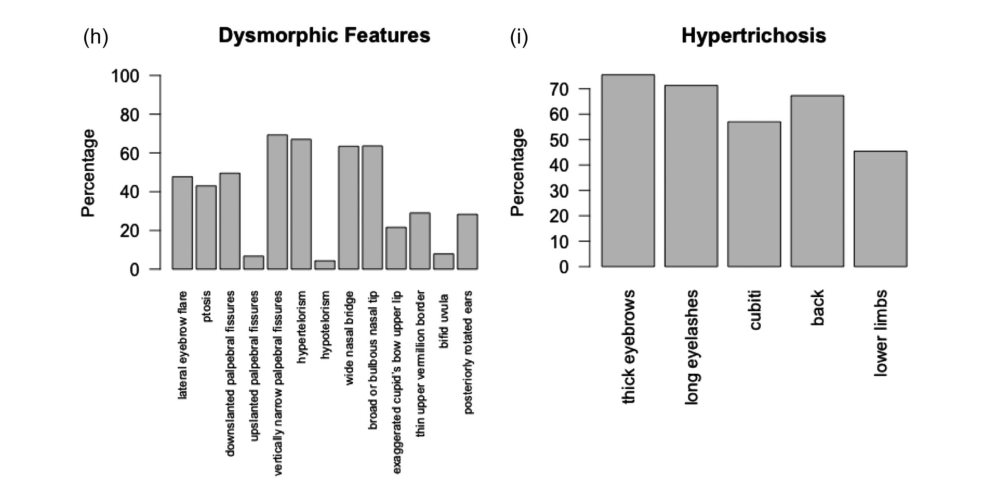
Wiedemann-Steiner syndrome (WDSTS; OMIM 605130) is an autosomal dominant Mendelian disorder of the epigenetic machinery caused by heterozygous pathogenic variants in KMT2A. It is characterized by developmental delay, intellectual disability, characteristic facial features, hypertrichosis cubiti, growth restriction, and variably present neurologic, gastrointestinal, skeletal, cardiac, ophthalmologic, genitourinary, immune, and dental findings. The immune component is an antibody deficiency - hypogammaglobulinemia with poor specific antibody responses and reduced class-switched memory B cells - and is why KMT2A deficiency is listed among the IUIS combined immunodeficiencies with syndromic features; it can present as an early-onset common-variable-immunodeficiency-like picture before the syndromic features are recognized. Most molecularly confirmed cases result from a de novo variant, although rare familial transmission and parental mosaicism are documented.
Ask OpenScientist
Ask a research question about Wiedemann-Steiner Syndrome. OpenScientist will conduct autonomous deep research using the Disorder Mechanisms Knowledge Base and PubMed literature (typically 10-30 minutes).
Do not include personal health information in your question. Questions and results are cached in your browser's local storage.
Classifications
Inheritance
1Show evidence (3 references)
Mechanistic Hypotheses
2Show evidence (1 reference)
Show evidence (1 reference)
Discussions and Knowledge Gaps
2Show evidence (1 reference)
Show evidence (2 references)
Show evidence (1 reference)
Show evidence (2 references)
Pathophysiology
5Show evidence (2 references)
Show evidence (2 references)
Show evidence (1 reference)
Show evidence (1 reference)
Show evidence (3 references)
Pathograph
Phenotypes
25Blood 2
Show evidence (3 references)
Show evidence (2 references)
Cardiovascular 1
Show evidence (2 references)
Digestive 2
Show evidence (2 references)
Show evidence (2 references)
Endocrine 1
Show evidence (1 reference)
Eye 1
Show evidence (1 reference)
Genitourinary 1
Show evidence (1 reference)
Head and Neck 2
Show evidence (1 reference)
Show evidence (1 reference)
Immune 2
Show evidence (3 references)
Show evidence (1 reference)
Integument 1
Show evidence (2 references)
Limbs 1
Show evidence (1 reference)
Musculoskeletal 3
Show evidence (2 references)
Show evidence (2 references)
Show evidence (1 reference)
Nervous System 6
Show evidence (3 references)
Show evidence (2 references)
Show evidence (1 reference)
Show evidence (2 references)
Show evidence (1 reference)
Show evidence (1 reference)
Growth 2
Show evidence (2 references)
Show evidence (1 reference)
Genetic Associations
1Show evidence (3 references)
Medical Actions
12Show evidence (1 reference)
Show evidence (1 reference)
Show evidence (1 reference)
Show evidence (1 reference)
Show evidence (2 references)
Show evidence (2 references)
Show evidence (2 references)
Show evidence (2 references)
Show evidence (1 reference)
Show evidence (1 reference)
Show evidence (1 reference)
Show evidence (2 references)
Diagnosis
3Show evidence (1 reference)
Show evidence (2 references)
Show evidence (2 references)
Progression
1Show evidence (1 reference)
Prevalence
1Show evidence (1 reference)
Differential Diagnoses
1Conditions with similar clinical presentations that must be differentiated from Wiedemann-Steiner Syndrome:
- Identification of a heterozygous pathogenic KMT2A variant establishes WDSTS.
- Hypertrichosis cubiti is frequent but is neither required nor pathognomonic.
- A concordant KMT2A DNA methylation episignature may support ambiguous variant interpretation but is not independently exclusionary.
Show evidence (2 references)
Experimental Models
1Show evidence (1 reference)
Show evidence (1 reference)
Show evidence (1 reference)
Animal Models
1Show evidence (2 references)
Source YAML
click to showname: Wiedemann-Steiner Syndrome
creation_date: "2026-05-16T00:00:00Z"
references:
- reference: PMID:35617449
title: "Wiedemann-Steiner Syndrome."
tags:
- GeneReviews
category: Mendelian
disease_term:
preferred_term: Wiedemann-Steiner syndrome
term:
id: MONDO:0011518
label: Wiedemann-Steiner syndrome
classifications:
harrisons_chapter:
- classification_value: GENETICS_ENVIRONMENT_DISEASE
- classification_value: NEUROLOGIC
iuis_category:
classification_value: combined immunodeficiency with syndromic features
notes: >-
IUIS 2022 Table 2 (combined immunodeficiencies with associated or
syndromic features), sub-section 9, Other Defects; listed as "KMT2A
deficiency (Wiedemann-Steiner syndrome)" with KMT2A (autosomal dominant)
as the genetic defect. The row's immunologic phenotype is
hypogammaglobulinemia with decreased antibody responses and decreased
switched and non-switched memory B cells, alongside respiratory
infections and the defining syndromic features (short stature,
hypertelorism, hairy elbows, developmental delay, intellectual
disability).
evidence:
- reference: PMID:35748970
reference_title: "Human Inborn Errors of Immunity: 2022 Update on the Classification from the International Union of Immunological Societies Expert Committee."
supports: SUPPORT
evidence_source: OTHER
snippet: >-
KMT2A deficiency (Wiedemann-Steiner syndrome) KMT2A AD 605130
explanation: >-
The IUIS Table 2 Other Defects row assigning KMT2A deficiency
(Wiedemann-Steiner syndrome, autosomal dominant) to the combined
immunodeficiencies with syndromic features.
parents:
- Intellectual disability syndrome
- Mendelian neurodevelopmental disorder
synonyms:
- Wiedemann-Steiner syndrome
- WSS
- WDSTS
- KMT2A-related syndrome
description: >
Wiedemann-Steiner syndrome (WDSTS; OMIM 605130) is an autosomal dominant
Mendelian disorder of the epigenetic machinery caused by heterozygous
pathogenic variants in KMT2A. It is characterized by developmental delay,
intellectual disability, characteristic facial features, hypertrichosis
cubiti, growth restriction, and variably present neurologic, gastrointestinal,
skeletal, cardiac, ophthalmologic, genitourinary, immune, and dental findings.
The immune component is an antibody deficiency - hypogammaglobulinemia with
poor specific antibody responses and reduced class-switched memory B cells -
and is why KMT2A deficiency is listed among the IUIS combined
immunodeficiencies with syndromic features; it can present as an early-onset
common-variable-immunodeficiency-like picture before the syndromic features
are recognized. Most molecularly confirmed cases result from a de novo
variant, although rare familial transmission and parental mosaicism are
documented.
inheritance:
- name: Autosomal dominant inheritance
inheritance_term:
preferred_term: Autosomal dominant inheritance
term:
id: HP:0000006
label: Autosomal dominant inheritance
expressivity: VARIABLE
description: >
WDSTS is inherited in an autosomal dominant manner. Most affected
individuals whose parents have undergone molecular testing have a de novo
KMT2A pathogenic variant; rare affected parents and parental mosaicism have
been reported. Each child of an affected individual has a 50% chance of
inheriting the variant.
evidence:
- reference: PMID:35617449
reference_title: "Wiedemann-Steiner Syndrome."
supports: SUPPORT
evidence_source: HUMAN_CLINICAL
snippet: "Most individuals diagnosed with WSS whose parents have undergone molecular genetic testing have the disorder as the result of a de novo pathogenic variant."
explanation: >
GeneReviews defines the autosomal dominant inheritance pattern and notes
that most tested families represent de novo disease.
- reference: PMID:29574747
reference_title: "Wiedemann-Steiner syndrome as a major cause of syndromic intellectual disability: A study of 33 French cases."
supports: SUPPORT
evidence_source: HUMAN_CLINICAL
snippet: "We observed autosomal dominant transmission of WSS in 3 families and mosaicism in one family."
explanation: >
The French cohort documents both vertical transmission and mosaicism.
- reference: PMID:28623346
reference_title: "Early-onset primary antibody deficiency resembling common variable immunodeficiency challenges the diagnosis of Wiedeman-Steiner and Roifman syndromes."
supports: SUPPORT
evidence_source: HUMAN_CLINICAL
snippet: "Family A is the first published kindred to show autosomal dominant transmission of KMT2A-associated WSS in multiple generations"
explanation: >
An independent multigenerational kindred confirming dominant
transmission, in which the transmitting mother was recognized only after
her children were diagnosed.
prevalence:
- population: Worldwide
measure_type: UNKNOWN
prevalence_class: BELOW_1_IN_1000000
notes: >
A literature review estimated prevalence below one per million, but also
emphasized likely underdiagnosis. This should be treated as a provisional
rarity estimate rather than a measured population prevalence.
evidence:
- reference: PMID:37025457
reference_title: "Novel variants and phenotypic heterogeneity in a cohort of 11 Chinese children with Wiedemann-Steiner syndrome."
supports: SUPPORT
evidence_source: HUMAN_CLINICAL
snippet: "The prevalence of WSS is estimated to be less than 1/1,000,000"
explanation: >
This review supplies the reported band while cautioning that cases are
probably underdiagnosed.
progression:
- phase: Early development
age_range: Infancy through childhood
notes: >
Developmental delay is usually apparent in early childhood. In the largest
published cohort, median ages at first words and independent walking were
18 and 20 months, respectively. Available summaries do not establish a
uniform degenerative course or adequately define adult natural history.
evidence:
- reference: PMID:33783954
reference_title: "Expanding the genotypic and phenotypic spectrum in a diverse cohort of 104 individuals with Wiedemann-Steiner syndrome."
supports: SUPPORT
evidence_source: HUMAN_CLINICAL
snippet: "The median ages at walking and first words were 20 months and 18 months, respectively."
explanation: >
The cohort provides directly observed developmental milestone timing.
mechanistic_hypotheses:
- hypothesis_group_id: centrosomal_branch
hypothesis_label: Centrosomal microtubule-nucleation branch
status: EMERGING
description: >
Proposes that loss of a non-nuclear KMT2A/MLL-WDR5 function at centrosomes
contributes to neurodevelopmental manifestations through impaired recruitment
of Cep72 and gamma-tubulin ring-complex proteins. The cellular phenotype is
reported in WSS-derived cells, but its contribution to individual clinical
manifestations has not been quantified.
evidence:
- reference: PMID:39661677
reference_title: "MLL/WDR5 complex recruits centriolar satellite protein Cep72 to regulate microtubule nucleation and spindle formation."
supports: SUPPORT
evidence_source: IN_VITRO
snippet: "Loss of the MLL/WDR5 complex affects microtubule nucleation and regrowth. MLL/WDR5 localize to the pericentriolar material and interact with centriolar satellite protein Cep72 and γ-tubulin ring complex proteins (γ-TuRCs)."
explanation: >
The study establishes the centrosomal cellular phenotype underlying this
emerging mechanistic branch.
- hypothesis_group_id: mouse_neuronal_extrapolation
hypothesis_label: H3K4-dependent neuronal and synaptic branch
status: EMERGING
description: >
Proposes that KMT2A-dependent, locus-specific H3K4 methylation and
transcriptional changes alter dendritic spine biology and contribute to the
human neurodevelopmental phenotype. Evidence currently comes primarily from
constitutive Kmt2a-heterozygous mice and therefore requires confirmation in
human developmental neural models.
evidence:
- reference: PMID:32483278
reference_title: "Mutually suppressive roles of KMT2A and KDM5C in behaviour, neuronal structure, and histone H3K4 methylation."
supports: SUPPORT
evidence_source: MODEL_ORGANISM
snippet: "Despite opposite enzymatic activities, the two mouse models deficient for either Kmt2a or Kdm5c shared reduced dendritic spines and increased aggression."
explanation: >
The Kmt2a-heterozygous mouse supplies the principal evidence for this
neuronal branch.
pathophysiology:
- name: KMT2A Haploinsufficiency
conforms_to: "epigenetic_machinery_neurodevelopmental_dysregulation#Epigenetic Machinery Component Haploinsufficiency"
role: trigger
mechanism_confidence: ESTABLISHED
description: >
The initiating lesion is reduced KMT2A function from a heterozygous
pathogenic variant. KMT2A encodes an H3K4 methyltransferase, but the clinical
allelic spectrum is not limited to experimentally proven loss-of-function
variants; the causal statement is therefore kept at the gene-disease level.
gene:
preferred_term: KMT2A
term:
id: hgnc:7132
label: KMT2A
molecular_functions:
- preferred_term: histone H3K4 methyltransferase activity
term:
id: GO:0042800
label: histone H3K4 methyltransferase activity
modifier: DECREASED
evidence:
- reference: PMID:33783954
reference_title: "Expanding the genotypic and phenotypic spectrum in a diverse cohort of 104 individuals with Wiedemann-Steiner syndrome."
supports: SUPPORT
evidence_source: HUMAN_CLINICAL
snippet: "Wiedemann‐Steiner syndrome (WSS) is an autosomal dominant disorder caused by monoallelic variants in KMT2A and characterized by intellectual disability and hypertrichosis."
explanation: >
The 104-person cohort confirms monoallelic KMT2A variants as causal.
- reference: PMID:39661677
reference_title: "MLL/WDR5 complex recruits centriolar satellite protein Cep72 to regulate microtubule nucleation and spindle formation."
supports: SUPPORT
evidence_source: IN_VITRO
snippet: "Haploinsufficiency of mixed-lineage leukemia (MLL/KMT2A) protein causes Wiedemann-Steiner syndrome (WSS), a neurodevelopmental disorder associated with microcephaly."
explanation: >
The mechanistic study identifies KMT2A haploinsufficiency as the upstream
disease lesion.
downstream:
- target: Altered H3K4 Methylation and Transcriptional Regulation
causal_link_type: DIRECT
description: >
Reduced activity of the H3K4 writer KMT2A can alter H3K4 methylation and
transcription at selected loci; available mouse data do not show a simple
global reduction in H3K4 methylation.
hypothesis_groups:
- mouse_neuronal_extrapolation
evidence:
- reference: PMID:32483278
reference_title: "Mutually suppressive roles of KMT2A and KDM5C in behaviour, neuronal structure, and histone H3K4 methylation."
supports: SUPPORT
evidence_source: MODEL_ORGANISM
snippet: "Here, we show functional interactions of a writer-eraser duo, KMT2A and KDM5C, which are responsible for Wiedemann-Steiner Syndrome (WDSTS), and mental retardation X-linked syndromic Claes-Jensen type (MRXSCJ), respectively."
explanation: >
This mouse study supports an H3K4 writer/eraser relationship, but not
a uniform global methylation-loss model in human disease.
- target: Centrosome Dysfunction and Impaired Microtubule Nucleation
causal_link_type: DIRECT
hypothesis_groups:
- centrosomal_branch
evidence:
- reference: PMID:39661677
reference_title: "MLL/WDR5 complex recruits centriolar satellite protein Cep72 to regulate microtubule nucleation and spindle formation."
supports: SUPPORT
evidence_source: IN_VITRO
snippet: "Loss of the MLL/WDR5 complex affects microtubule nucleation and regrowth."
explanation: >
Direct depletion experiments link loss of the MLL/WDR5 complex to
defective microtubule nucleation.
- target: Characteristic Facial Features
causal_link_type: INDIRECT_UNKNOWN_INTERMEDIATES
evidence:
- reference: PMID:35617449
reference_title: "Wiedemann-Steiner Syndrome."
supports: SUPPORT
evidence_source: HUMAN_CLINICAL
snippet: "Wiedemann-Steiner syndrome (WSS) is characterized by developmental delay, intellectual disability, and characteristic facial features, with or without additional congenital anomalies."
explanation: >
Characteristic facial features are part of molecularly defined WDSTS;
the intervening developmental pathway is not established.
- target: Muscular Hypotonia
causal_link_type: INDIRECT_UNKNOWN_INTERMEDIATES
evidence:
- reference: PMID:33783954
reference_title: "Expanding the genotypic and phenotypic spectrum in a diverse cohort of 104 individuals with Wiedemann-Steiner syndrome."
supports: SUPPORT
evidence_source: HUMAN_CLINICAL
snippet: "Hypotonia was associated with loss of function (LoF) variants, and seizures were associated with non‐LoF variants."
explanation: >
The genotype-phenotype association supports the clinical endpoint,
while the causal intermediates remain unknown.
- target: Short Stature
causal_link_type: INDIRECT_UNKNOWN_INTERMEDIATES
evidence:
- reference: PMID:33783954
reference_title: "Expanding the genotypic and phenotypic spectrum in a diverse cohort of 104 individuals with Wiedemann-Steiner syndrome."
supports: SUPPORT
evidence_source: HUMAN_CLINICAL
snippet: "Common clinical features identified in the cohort included: developmental delay or intellectual disability (97%), constipation (63.8%), failure to thrive (67.7%), feeding difficulties (66.3%), hypertrichosis cubiti (57%), short stature (57.8%), and vertebral anomalies (46.9%)."
explanation: >
The KMT2A cohort establishes short stature as a common clinical
endpoint; the intervening growth mechanism is unresolved.
- target: Elbow Hypertrichosis
causal_link_type: INDIRECT_UNKNOWN_INTERMEDIATES
evidence:
- reference: PMID:33783954
reference_title: "Expanding the genotypic and phenotypic spectrum in a diverse cohort of 104 individuals with Wiedemann-Steiner syndrome."
supports: SUPPORT
evidence_source: HUMAN_CLINICAL
snippet: "Common clinical features identified in the cohort included: developmental delay or intellectual disability (97%), constipation (63.8%), failure to thrive (67.7%), feeding difficulties (66.3%), hypertrichosis cubiti (57%), short stature (57.8%), and vertebral anomalies (46.9%)."
explanation: >
The KMT2A cohort establishes hypertrichosis cubiti as a clinical
endpoint without resolving its developmental mechanism.
- target: Feeding Difficulties
causal_link_type: INDIRECT_UNKNOWN_INTERMEDIATES
evidence:
- reference: PMID:33783954
reference_title: "Expanding the genotypic and phenotypic spectrum in a diverse cohort of 104 individuals with Wiedemann-Steiner syndrome."
supports: SUPPORT
evidence_source: HUMAN_CLINICAL
snippet: "Common clinical features identified in the cohort included: developmental delay or intellectual disability (97%), constipation (63.8%), failure to thrive (67.7%), feeding difficulties (66.3%), hypertrichosis cubiti (57%), short stature (57.8%), and vertebral anomalies (46.9%)."
explanation: >
Feeding difficulty is a common endpoint in the KMT2A cohort, with
unknown mechanistic intermediates.
- target: Failure to Thrive
causal_link_type: INDIRECT_UNKNOWN_INTERMEDIATES
evidence:
- reference: PMID:33783954
reference_title: "Expanding the genotypic and phenotypic spectrum in a diverse cohort of 104 individuals with Wiedemann-Steiner syndrome."
supports: SUPPORT
evidence_source: HUMAN_CLINICAL
snippet: "Common clinical features identified in the cohort included: developmental delay or intellectual disability (97%), constipation (63.8%), failure to thrive (67.7%), feeding difficulties (66.3%), hypertrichosis cubiti (57%), short stature (57.8%), and vertebral anomalies (46.9%)."
explanation: >
Failure to thrive is a common endpoint in the KMT2A cohort, with
unknown mechanistic intermediates.
- target: Constipation
causal_link_type: INDIRECT_UNKNOWN_INTERMEDIATES
evidence:
- reference: PMID:33783954
reference_title: "Expanding the genotypic and phenotypic spectrum in a diverse cohort of 104 individuals with Wiedemann-Steiner syndrome."
supports: SUPPORT
evidence_source: HUMAN_CLINICAL
snippet: "Common clinical features identified in the cohort included: developmental delay or intellectual disability (97%), constipation (63.8%), failure to thrive (67.7%), feeding difficulties (66.3%), hypertrichosis cubiti (57%), short stature (57.8%), and vertebral anomalies (46.9%)."
explanation: >
Constipation is a common endpoint in the KMT2A cohort, with unknown
mechanistic intermediates.
- target: Vertebral Anomalies
causal_link_type: INDIRECT_UNKNOWN_INTERMEDIATES
evidence:
- reference: PMID:33783954
reference_title: "Expanding the genotypic and phenotypic spectrum in a diverse cohort of 104 individuals with Wiedemann-Steiner syndrome."
supports: SUPPORT
evidence_source: HUMAN_CLINICAL
snippet: "Common clinical features identified in the cohort included: developmental delay or intellectual disability (97%), constipation (63.8%), failure to thrive (67.7%), feeding difficulties (66.3%), hypertrichosis cubiti (57%), short stature (57.8%), and vertebral anomalies (46.9%)."
explanation: >
Vertebral anomalies are a common endpoint in the KMT2A cohort, with
unknown developmental intermediates.
- target: Scoliosis
causal_link_type: INDIRECT_UNKNOWN_INTERMEDIATES
evidence:
- reference: PMID:35617449
reference_title: "Wiedemann-Steiner Syndrome."
supports: SUPPORT
evidence_source: HUMAN_CLINICAL
snippet: "Vertebral anomalies or scoliosis in the thoracic or lumbar spine may complicate spinal or epidural anesthesia."
explanation: >
GeneReviews recognizes scoliosis in WDSTS, while its mechanistic
relationship to KMT2A dosage is unresolved.
- target: Seizures
causal_link_type: INDIRECT_UNKNOWN_INTERMEDIATES
evidence:
- reference: PMID:33783954
reference_title: "Expanding the genotypic and phenotypic spectrum in a diverse cohort of 104 individuals with Wiedemann-Steiner syndrome."
supports: SUPPORT
evidence_source: HUMAN_CLINICAL
snippet: "Hypotonia was associated with loss of function (LoF) variants, and seizures were associated with non‐LoF variants."
explanation: >
The genotype-phenotype association supports the seizure endpoint;
intervening mechanisms are unknown.
- target: Cardiac Anomalies
causal_link_type: INDIRECT_UNKNOWN_INTERMEDIATES
evidence:
- reference: PMID:35617449
reference_title: "Wiedemann-Steiner Syndrome."
supports: SUPPORT
evidence_source: HUMAN_CLINICAL
snippet: "ophthalmologic anomalies, congenital heart defects, hand anomalies"
explanation: >
GeneReviews recognizes congenital heart defects in WDSTS, without a
resolved KMT2A-to-cardiac developmental pathway.
- target: Abnormal Corpus Callosum Morphology
causal_link_type: INDIRECT_UNKNOWN_INTERMEDIATES
evidence:
- reference: PMID:37025457
reference_title: "Novel variants and phenotypic heterogeneity in a cohort of 11 Chinese children with Wiedemann-Steiner syndrome."
supports: SUPPORT
evidence_source: HUMAN_CLINICAL
snippet: "The most frequent imaging features were patent ductus arteriosus (57.1%) and patent foramen ovale (42.9%) in cardiovascular system, and abnormal corpus callosum (50.0%) in the brain."
explanation: >
A molecularly diagnosed cohort establishes the imaging endpoint, but
not its intervening mechanism.
- target: Ophthalmologic Anomalies
causal_link_type: INDIRECT_UNKNOWN_INTERMEDIATES
evidence:
- reference: PMID:35617449
reference_title: "Wiedemann-Steiner Syndrome."
supports: SUPPORT
evidence_source: HUMAN_CLINICAL
snippet: "Other clinical features include feeding difficulties, prenatal and postnatal growth restriction, epilepsy, ophthalmologic anomalies, congenital heart defects"
explanation: >
GeneReviews recognizes ophthalmologic anomalies in WDSTS; the
intervening developmental pathway is unresolved.
- target: Obstructive Sleep Apnea
causal_link_type: INDIRECT_UNKNOWN_INTERMEDIATES
evidence:
- reference: PMID:35617449
reference_title: "Wiedemann-Steiner Syndrome."
supports: SUPPORT
evidence_source: HUMAN_CLINICAL
snippet: "CPAP, BiPAP, or surgical removal of the tonsils and adenoids for those with obstructive sleep apnea"
explanation: >
GeneReviews recognizes obstructive sleep apnea as a managed WDSTS
manifestation, without defining its causal pathway.
- target: Impaired Terminal B-Cell Differentiation and Antibody Deficiency
causal_link_type: INDIRECT_UNKNOWN_INTERMEDIATES
description: >
Reduced KMT2A function is associated with a block in terminal B-cell
differentiation and consequent antibody deficiency. The molecular route
from KMT2A dosage to the B-cell phenotype has not been established.
evidence:
- reference: PMID:28623346
reference_title: "Early-onset primary antibody deficiency resembling common variable immunodeficiency challenges the diagnosis of Wiedeman-Steiner and Roifman syndromes."
supports: SUPPORT
evidence_source: HUMAN_CLINICAL
snippet: "strongly suggest a previously unknown role for KMT2A in B cell biology that may be related with T helper cell function"
explanation: >
The authors attribute the observed antibody deficiency to a
KMT2A-dependent role in B-cell biology while stating that the
mechanism is unknown.
- target: Immune Dysfunction and Recurrent Infections
causal_link_type: INDIRECT_UNKNOWN_INTERMEDIATES
evidence:
- reference: PMID:35617449
reference_title: "Wiedemann-Steiner Syndrome."
supports: SUPPORT
evidence_source: HUMAN_CLINICAL
snippet: "renal and uterine anomalies, immune dysfunction, brain malformations, and dental anomalies."
explanation: >
GeneReviews recognizes immune dysfunction as part of WDSTS; the
downstream mechanism remains unknown.
- target: Genitourinary Anomalies
causal_link_type: INDIRECT_UNKNOWN_INTERMEDIATES
evidence:
- reference: PMID:35617449
reference_title: "Wiedemann-Steiner Syndrome."
supports: SUPPORT
evidence_source: HUMAN_CLINICAL
snippet: "renal and uterine anomalies, immune dysfunction, brain malformations, and dental anomalies."
explanation: >
GeneReviews recognizes renal and uterine anomalies as WDSTS
manifestations, without defining their developmental pathway.
- target: Brachydactyly
causal_link_type: INDIRECT_UNKNOWN_INTERMEDIATES
evidence:
- reference: PMID:35617449
reference_title: "Wiedemann-Steiner Syndrome."
supports: SUPPORT
evidence_source: HUMAN_CLINICAL
snippet: "hand anomalies (such as brachydactyly and clinodactyly)"
explanation: >
GeneReviews recognizes brachydactyly in WDSTS; the causal
developmental intermediates remain unknown.
- target: Dental Anomalies
causal_link_type: INDIRECT_UNKNOWN_INTERMEDIATES
evidence:
- reference: PMID:35617449
reference_title: "Wiedemann-Steiner Syndrome."
supports: SUPPORT
evidence_source: HUMAN_CLINICAL
snippet: "brain malformations, and dental anomalies."
explanation: >
GeneReviews recognizes dental anomalies in WDSTS, while their
molecular-developmental pathway is unresolved.
- target: Growth Hormone Deficiency
causal_link_type: INDIRECT_UNKNOWN_INTERMEDIATES
evidence:
- reference: PMID:35617449
reference_title: "Wiedemann-Steiner Syndrome."
supports: SUPPORT
evidence_source: HUMAN_CLINICAL
snippet: "growth hormone therapy for those with growth hormone deficiency"
explanation: >
GeneReviews recognizes growth hormone deficiency as a treatable WDSTS
manifestation; its causal intermediates are not established.
- name: Altered H3K4 Methylation and Transcriptional Regulation
conforms_to: "epigenetic_machinery_neurodevelopmental_dysregulation#Dysregulated Neurodevelopmental Transcriptional Program"
mechanism_confidence: PROVISIONAL
description: >
KMT2A is an H3K4 methylation writer and transcriptional coactivator. In adult
Kmt2a-heterozygous mouse brain, transcriptional changes and weak
locus-specific H3K4me3 differences were detected, while global H3K4me1-3
levels were not dramatically altered. This supports locus- and
cell-context-dependent dysregulation rather than a proven global histone
methylation loss.
The genome-wide DNA methylation episignature used diagnostically is a distinct
measurement and is not evidence of reduced histone H3K4 methylation.
biological_processes:
- preferred_term: chromatin organization
term:
id: GO:0006325
label: chromatin organization
modifier: ABNORMAL
- preferred_term: regulation of DNA-templated transcription
term:
id: GO:0006355
label: regulation of DNA-templated transcription
modifier: ABNORMAL
- preferred_term: epigenetic regulation of gene expression
term:
id: GO:0040029
label: epigenetic regulation of gene expression
modifier: ABNORMAL
evidence:
- reference: PMID:32483278
reference_title: "Mutually suppressive roles of KMT2A and KDM5C in behaviour, neuronal structure, and histone H3K4 methylation."
supports: SUPPORT
evidence_source: MODEL_ORGANISM
snippet: "In western blot analyses, global H3K4me1–3 levels were not altered dramatically in any mutant"
explanation: >
This negative result prevents overinterpreting KMT2A haploinsufficiency as
a global H3K4 methylation deficiency.
- reference: PMID:32483278
reference_title: "Mutually suppressive roles of KMT2A and KDM5C in behaviour, neuronal structure, and histone H3K4 methylation."
supports: SUPPORT
evidence_source: MODEL_ORGANISM
snippet: "By relaxing the threshold, we obtained weak 2A-HET DMRs"
explanation: >
The reported Kmt2a-heterozygous H3K4me3 changes were weak and
locus-specific, supporting the deliberately qualified node.
downstream:
- target: Reduced Dendritic Spine Density and Neuronal Dysregulation
causal_link_type: INDIRECT_KNOWN_INTERMEDIATES
hypothesis_groups:
- mouse_neuronal_extrapolation
evidence:
- reference: PMID:32483278
reference_title: "Mutually suppressive roles of KMT2A and KDM5C in behaviour, neuronal structure, and histone H3K4 methylation."
supports: SUPPORT
evidence_source: MODEL_ORGANISM
snippet: "Double mutation of Kmt2a and Kdm5c clearly reversed dendritic morphology, key behavioral traits including aggression, and partially corrected altered transcriptomes and H3K4me landscapes."
explanation: >
Genetic interaction connects H3K4/transcriptomic changes with
dendritic morphology and behavior in the mouse model.
- name: Centrosome Dysfunction and Impaired Microtubule Nucleation
mechanism_confidence: PROVISIONAL
description: >
The MLL/WDR5 complex localizes to pericentriolar material, interacts with
Cep72 and gamma-tubulin ring-complex proteins, and promotes centrosomal
recruitment of structural proteins. Loss of MLL/WDR5 impairs microtubule
nucleation and spindle formation; a related localization phenotype was also
observed in cells derived from people with WSS. How much this branch
contributes to the human neurodevelopmental phenotype remains uncertain.
biological_processes:
- preferred_term: microtubule nucleation
term:
id: GO:0007020
label: microtubule nucleation
modifier: ABNORMAL
- preferred_term: mitotic spindle organization
term:
id: GO:0007052
label: mitotic spindle organization
modifier: ABNORMAL
evidence:
- reference: PMID:39661677
reference_title: "MLL/WDR5 complex recruits centriolar satellite protein Cep72 to regulate microtubule nucleation and spindle formation."
supports: SUPPORT
evidence_source: IN_VITRO
snippet: "Loss of the MLL/WDR5 complex affects microtubule nucleation and regrowth. MLL/WDR5 localize to the pericentriolar material and interact with centriolar satellite protein Cep72 and γ-tubulin ring complex proteins (γ-TuRCs)."
explanation: >
The study demonstrates a non-nuclear MLL/WDR5-Cep72 centrosomal function
and reports the phenotype in WSS-derived cells.
downstream:
- target: Global Developmental Delay
causal_link_type: INDIRECT_UNKNOWN_INTERMEDIATES
hypothesis_groups:
- centrosomal_branch
evidence:
- reference: PMID:39661677
reference_title: "MLL/WDR5 complex recruits centriolar satellite protein Cep72 to regulate microtubule nucleation and spindle formation."
supports: SUPPORT
evidence_source: IN_VITRO
snippet: "Our studies provide insight into an undiscovered role of MLL at the centrosome"
explanation: >
The study supports the cellular branch, but does not establish its
quantitative contribution to developmental delay; the clinical edge
is therefore indirect and partial.
- name: Reduced Dendritic Spine Density and Neuronal Dysregulation
conforms_to: "epigenetic_machinery_neurodevelopmental_dysregulation#Impaired Neuronal Maturation, Plasticity, and Postnatal Neurogenesis"
mechanism_confidence: PROVISIONAL
description: >
Constitutive Kmt2a-heterozygous mice show reduced dendritic spine density and
increased aggression. Combining Kmt2a heterozygosity with Kdm5c deficiency
reversed dendritic morphology and key behavioral traits and partially
corrected transcriptomic and H3K4me changes. These observations support a
neuronal branch but have not yet been confirmed in human developmental
neurons.
cell_types:
- preferred_term: neuron
term:
id: CL:0000540
label: neuron
biological_processes:
- preferred_term: dendritic spine development
term:
id: GO:0060996
label: dendritic spine development
modifier: ABNORMAL
evidence:
- reference: PMID:32483278
reference_title: "Mutually suppressive roles of KMT2A and KDM5C in behaviour, neuronal structure, and histone H3K4 methylation."
supports: SUPPORT
evidence_source: MODEL_ORGANISM
snippet: "Despite opposite enzymatic activities, the two mouse models deficient for either Kmt2a or Kdm5c shared reduced dendritic spines and increased aggression. Double mutation of Kmt2a and Kdm5c clearly reversed dendritic morphology, key behavioral traits including aggression, and partially corrected altered transcriptomes and H3K4me landscapes."
explanation: >
The study links Kmt2a deficiency to dendritic and behavioral changes in a
mouse model, while its human translational relevance remains unproven.
downstream:
- target: Global Developmental Delay
causal_link_type: INDIRECT_UNKNOWN_INTERMEDIATES
hypothesis_groups:
- mouse_neuronal_extrapolation
evidence:
- reference: PMID:32483278
reference_title: "Mutually suppressive roles of KMT2A and KDM5C in behaviour, neuronal structure, and histone H3K4 methylation."
supports: SUPPORT
evidence_source: MODEL_ORGANISM
snippet: "Despite opposite enzymatic activities, the two mouse models deficient for either Kmt2a or Kdm5c shared reduced dendritic spines and increased aggression."
explanation: >
Mouse neuronal morphology is relevant but does not directly establish
the human developmental-delay endpoint.
- target: Intellectual Disability
causal_link_type: INDIRECT_UNKNOWN_INTERMEDIATES
hypothesis_groups:
- mouse_neuronal_extrapolation
evidence:
- reference: PMID:32483278
reference_title: "Mutually suppressive roles of KMT2A and KDM5C in behaviour, neuronal structure, and histone H3K4 methylation."
supports: SUPPORT
evidence_source: MODEL_ORGANISM
snippet: "Despite opposite enzymatic activities, the two mouse models deficient for either Kmt2a or Kdm5c shared reduced dendritic spines and increased aggression."
explanation: >
The model supplies a plausible neuronal bridge, not direct human
proof of intellectual disability causation.
- target: Behavioral Abnormalities
causal_link_type: INDIRECT_UNKNOWN_INTERMEDIATES
hypothesis_groups:
- mouse_neuronal_extrapolation
evidence:
- reference: PMID:32483278
reference_title: "Mutually suppressive roles of KMT2A and KDM5C in behaviour, neuronal structure, and histone H3K4 methylation."
supports: SUPPORT
evidence_source: MODEL_ORGANISM
snippet: "Despite opposite enzymatic activities, the two mouse models deficient for either Kmt2a or Kdm5c shared reduced dendritic spines and increased aggression."
explanation: >
Increased aggression in mice provides model-organism support for a
behavioral link but is not equivalent to the heterogeneous human
behavioral phenotype.
- name: Impaired Terminal B-Cell Differentiation and Antibody Deficiency
mechanism_confidence: PROVISIONAL
biological_scale: CELLULAR
description: >
The immunologic arm of WDSTS, and the reason IUIS lists KMT2A deficiency
among the combined immunodeficiencies with syndromic features. Detailed
immunophenotyping of a KMT2A-mutated kindred showed a block in terminal
B-cell differentiation - relatively increased transitional and naive B
cells with relatively decreased switched memory B cells - accompanied by
reduced circulating follicular helper T cells, which are required for
germinal-centre help. The result is panhypogammaglobulinemia with poor
polysaccharide vaccine responses. Whether the B-cell block is B-cell
intrinsic or secondary to the T-follicular-helper deficit is unresolved,
and the observations rest on a small number of reported families.
cell_types:
- preferred_term: class-switched memory B cell
term:
id: CL:0000972
label: class switched memory B cell
- preferred_term: circulating follicular helper T cell
term:
id: CL:0002038
label: T follicular helper cell
biological_processes:
- preferred_term: B cell differentiation
term:
id: GO:0030183
label: B cell differentiation
modifier: DECREASED
- preferred_term: immunoglobulin production
term:
id: GO:0002377
label: immunoglobulin production
modifier: DECREASED
evidence:
- reference: PMID:28623346
reference_title: "Early-onset primary antibody deficiency resembling common variable immunodeficiency challenges the diagnosis of Wiedeman-Steiner and Roifman syndromes."
supports: SUPPORT
evidence_source: HUMAN_CLINICAL
snippet: "the here-described WSS patients demonstrated a block in terminal B cell differentiation evidenced by a relative increase in transitional and naive B cells and a relative decrease in switched memory B cells"
explanation: >
Direct immunophenotyping evidence for the terminal B-cell
differentiation block in KMT2A-mutated individuals.
- reference: PMID:28623346
reference_title: "Early-onset primary antibody deficiency resembling common variable immunodeficiency challenges the diagnosis of Wiedeman-Steiner and Roifman syndromes."
supports: SUPPORT
evidence_source: HUMAN_CLINICAL
snippet: "all patients from families A and B had decreased circulating follicular helper T (cTfh) cells"
explanation: >
Establishes the reduced circulating follicular helper T-cell compartment
that accompanies the B-cell block.
- reference: PMID:35748970
reference_title: "Human Inborn Errors of Immunity: 2022 Update on the Classification from the International Union of Immunological Societies Expert Committee."
supports: SUPPORT
evidence_source: OTHER
snippet: "KMT2A deficiency (Wiedemann-Steiner syndrome) KMT2A AD 605130"
explanation: >
The IUIS expert committee lists KMT2A deficiency as an inborn error of
immunity, with hypogammaglobulinemia and decreased memory B cells as the
recorded immunologic phenotype.
downstream:
- target: Hypogammaglobulinemia
causal_link_type: INDIRECT_KNOWN_INTERMEDIATES
evidence:
- reference: PMID:28623346
reference_title: "Early-onset primary antibody deficiency resembling common variable immunodeficiency challenges the diagnosis of Wiedeman-Steiner and Roifman syndromes."
supports: SUPPORT
evidence_source: HUMAN_CLINICAL
snippet: "Upon immunological evaluation, both patients II:2 and II:3 demonstrated panhypogammaglobulinemia, poor antibody responses to Pneumococcal polysaccharide vaccine, increased naive B cells, and very low memory B cells"
explanation: >
The same evaluation that documents the B-cell block records the
resulting panhypogammaglobulinemia.
- target: Decreased Class-Switched Memory B Cells
causal_link_type: DIRECT
evidence:
- reference: PMID:28623346
reference_title: "Early-onset primary antibody deficiency resembling common variable immunodeficiency challenges the diagnosis of Wiedeman-Steiner and Roifman syndromes."
supports: SUPPORT
evidence_source: HUMAN_CLINICAL
snippet: "a relative decrease in switched memory B cells"
explanation: >
The decreased switched memory B-cell compartment is the direct
readout of the differentiation block.
- target: Impaired Specific Antibody Response
causal_link_type: INDIRECT_KNOWN_INTERMEDIATES
evidence:
- reference: PMID:28623346
reference_title: "Early-onset primary antibody deficiency resembling common variable immunodeficiency challenges the diagnosis of Wiedeman-Steiner and Roifman syndromes."
supports: SUPPORT
evidence_source: HUMAN_CLINICAL
snippet: "poor antibody responses to Pneumococcal polysaccharide vaccine"
explanation: >
Impaired polysaccharide vaccine responses follow from the failure of
terminal B-cell differentiation.
- target: Immune Dysfunction and Recurrent Infections
causal_link_type: INDIRECT_KNOWN_INTERMEDIATES
evidence:
- reference: PMID:28623346
reference_title: "Early-onset primary antibody deficiency resembling common variable immunodeficiency challenges the diagnosis of Wiedeman-Steiner and Roifman syndromes."
supports: SUPPORT
evidence_source: HUMAN_CLINICAL
snippet: "From the first year of life, the twin boys suffered from recurrent upper and lower respiratory tract infections, often requiring antibiotics."
explanation: >
Recurrent sinopulmonary infection is the clinical consequence of the
antibody deficiency in the reported KMT2A kindred.
phenotypes:
- name: Characteristic Facial Features
description: >
Characteristic facial features are a defining part of the WDSTS phenotype.
Reported features include thick eyebrows with lateral flare, vertically
narrow downslanting palpebral fissures, widely spaced eyes, a wide nasal
bridge, broad nasal tip, thin upper-lip vermilion, and thick scalp hair.
category: Craniofacial
phenotype_term:
preferred_term: Abnormal facial shape
term:
id: HP:0001999
label: Abnormal facial shape
evidence:
- reference: PMID:35617449
reference_title: "Wiedemann-Steiner Syndrome."
supports: SUPPORT
evidence_source: HUMAN_CLINICAL
snippet: "Wiedemann-Steiner syndrome (WSS) is characterized by developmental delay, intellectual disability, and characteristic facial features, with or without additional congenital anomalies."
explanation: >
GeneReviews identifies characteristic facial features as one of the core
clinical findings.
- name: Global Developmental Delay
description: >
Developmental delay was reported in 90% of affected children in a
physical-therapy review, while developmental delay or intellectual
disability combined was reported in 97% of the largest cohort. Median ages
at first words and independent walking were 18 and 20 months, respectively,
demonstrating delays across communication and motor milestones.
category: Neurological
frequency: VERY_FREQUENT
phenotype_term:
preferred_term: Global developmental delay
term:
id: HP:0001263
label: Global developmental delay
evidence:
- reference: PMID:32604375
reference_title: "Physical Therapy Management of Wiedemann-Steiner Syndrome From Birth to 3 Years."
supports: SUPPORT
evidence_source: HUMAN_CLINICAL
snippet: "Fifty-seven percent of children diagnosed with WSS have hypotonia, and 90% have developmental delay."
explanation: >
The review's developmental-delay estimate directly supports the
very-frequent frequency band.
- reference: PMID:33783954
reference_title: "Expanding the genotypic and phenotypic spectrum in a diverse cohort of 104 individuals with Wiedemann-Steiner syndrome."
supports: SUPPORT
evidence_source: HUMAN_CLINICAL
snippet: "Common clinical features identified in the cohort included: developmental delay or intellectual disability (97%), constipation (63.8%), failure to thrive (67.7%), feeding difficulties (66.3%), hypertrichosis cubiti (57%), short stature (57.8%), and vertebral anomalies (46.9%)."
explanation: >
The Sheppard et al. n=104 multi-centre cohort provides the most robust
frequency estimate (97%) for developmental delay/intellectual disability
in WDSTS.
- reference: PMID:33783954
reference_title: "Expanding the genotypic and phenotypic spectrum in a diverse cohort of 104 individuals with Wiedemann-Steiner syndrome."
supports: SUPPORT
evidence_source: HUMAN_CLINICAL
snippet: "The median ages at walking and first words were 20 months and 18 months, respectively."
explanation: >
The same cohort quantifies delayed motor and speech milestones.
- name: Intellectual Disability
description: >
Intellectual disability is a core feature of WDSTS, although severity is
variable. In a neuropsychological series of ten molecularly confirmed
children, nonverbal reasoning, visuospatial skills, visual memory, attention,
working memory, and mathematics were often weaker than receptive vocabulary,
verbal memory, and word reading.
category: Neurological
phenotype_term:
preferred_term: Intellectual disability
term:
id: HP:0001249
label: Intellectual disability
evidence:
- reference: PMID:36062544
reference_title: "Individuals with Wiedemann-Steiner syndrome show nonverbal reasoning and visuospatial defects with relative verbal skill sparing."
supports: SUPPORT
evidence_source: HUMAN_CLINICAL
snippet: "The majority of patients performed in the below average to very low ranges in Nonverbal Reasoning, Visual/Spatial Perception, Visuoconstruction, Visual Memory, Attention, Working Memory and Math Computation skills. In contrast, over half the sample performed within normal limits on Receptive Vocabulary, Verbal Memory, and Word Reading."
explanation: >
Ng et al. characterise the specific neurocognitive profile of WSS in 10
patients; the small sample supports a profile description but not a
population-wide severity distribution.
- reference: PMID:35617449
reference_title: "Wiedemann-Steiner Syndrome."
supports: SUPPORT
evidence_source: HUMAN_CLINICAL
snippet: "Wiedemann-Steiner syndrome (WSS) is characterized by developmental delay, intellectual disability, and characteristic facial features, with or without additional congenital anomalies."
explanation: >
GeneReviews identifies intellectual disability as a core clinical feature.
- name: Muscular Hypotonia
description: >
Hypotonia was reported in 57% of affected children in a physical-therapy
review and was associated with loss-of-function KMT2A variants in the
104-person cohort. It commonly accompanies motor developmental delay.
category: Neurological
frequency: FREQUENT
phenotype_term:
preferred_term: Hypotonia
term:
id: HP:0001252
label: Hypotonia
evidence:
- reference: PMID:32604375
reference_title: "Physical Therapy Management of Wiedemann-Steiner Syndrome From Birth to 3 Years."
supports: SUPPORT
evidence_source: HUMAN_CLINICAL
snippet: "Fifty-seven percent of children diagnosed with WSS have hypotonia, and 90% have developmental delay. The diagnosis of WSS should require physical therapy services through early intervention programs due to its high correlation with motor developmental delay and disability."
explanation: >
Mendoza 2020 reports a 57% frequency estimate and connects hypotonia with
the need for early motor intervention.
- reference: PMID:33783954
reference_title: "Expanding the genotypic and phenotypic spectrum in a diverse cohort of 104 individuals with Wiedemann-Steiner syndrome."
supports: SUPPORT
evidence_source: HUMAN_CLINICAL
snippet: "Hypotonia was associated with loss of function (LoF) variants, and seizures were associated with non‐LoF variants."
explanation: >
Sheppard et al. identify a genotype-phenotype correlation: hypotonia is
specifically associated with loss-of-function KMT2A variants.
- name: Short Stature
description: >
Short stature was reported in 57.8% of the 104-person international cohort
and in 90.9% of a smaller cohort of 11 Chinese children. The difference
illustrates ascertainment and cohort variability rather than an established
population range.
category: Growth
frequency: FREQUENT
phenotype_term:
preferred_term: Short stature
term:
id: HP:0004322
label: Short stature
evidence:
- reference: PMID:33783954
reference_title: "Expanding the genotypic and phenotypic spectrum in a diverse cohort of 104 individuals with Wiedemann-Steiner syndrome."
supports: SUPPORT
evidence_source: HUMAN_CLINICAL
snippet: "Common clinical features identified in the cohort included: developmental delay or intellectual disability (97%), constipation (63.8%), failure to thrive (67.7%), feeding difficulties (66.3%), hypertrichosis cubiti (57%), short stature (57.8%), and vertebral anomalies (46.9%)."
explanation: >
Short stature is present in 57.8% of the Sheppard multi-centre cohort
of 104 individuals.
- reference: PMID:37025457
reference_title: "Novel variants and phenotypic heterogeneity in a cohort of 11 Chinese children with Wiedemann-Steiner syndrome."
supports: SUPPORT
evidence_source: HUMAN_CLINICAL
snippet: "The most common clinical features were short stature (90.9%) and developmental delay (90.9%), followed by intellectual disability (72.7%)."
explanation: >
Lin et al. report short stature as the most frequent feature (90.9%) in
a Chinese cohort, emphasising cross-ethnic variability in phenotype frequency.
- name: Elbow Hypertrichosis
description: >
Hypertrichosis, particularly involving the elbows (hypertrichosis cubiti), is
a hallmark feature of WDSTS, reported in 57% of the 104-person cohort and 61%
of a 33-person French cohort. It is therefore frequent but neither invariant
nor sufficient for diagnosis; hypertrichosis of other body regions may also
occur.
category: Integument
frequency: FREQUENT
phenotype_term:
preferred_term: Elbow hypertrichosis
term:
id: HP:0004780
label: Elbow hypertrichosis
evidence:
- reference: PMID:33783954
reference_title: "Expanding the genotypic and phenotypic spectrum in a diverse cohort of 104 individuals with Wiedemann-Steiner syndrome."
supports: SUPPORT
evidence_source: HUMAN_CLINICAL
snippet: "Common clinical features identified in the cohort included: developmental delay or intellectual disability (97%), constipation (63.8%), failure to thrive (67.7%), feeding difficulties (66.3%), hypertrichosis cubiti (57%), short stature (57.8%), and vertebral anomalies (46.9%)."
explanation: >
Hypertrichosis cubiti is present in 57% of the n=104 cohort, confirming
it as a frequent but not invariant hallmark of WDSTS.
- reference: PMID:29574747
reference_title: "Wiedemann-Steiner syndrome as a major cause of syndromic intellectual disability: A study of 33 French cases."
supports: SUPPORT
evidence_source: HUMAN_CLINICAL
snippet: "Hypertrichosis cubiti that was supposed to be pathognomonic in the literature was found only in 61% of our cases."
explanation: >
Baer et al. report hypertrichosis cubiti in 61% of 33 French WDSTS cases,
noting it is not pathognomonic—molecular diagnosis is required.
- name: Feeding Difficulties
description: >
Feeding difficulties were reported in 66.3% of the 104-person cohort and can
accompany poor weight gain or failure to thrive. GeneReviews recommends
feeding therapy and, when needed, supplemental tube feeding.
category: Gastrointestinal
frequency: FREQUENT
phenotype_term:
preferred_term: Feeding difficulties
term:
id: HP:0011968
label: Feeding difficulties
evidence:
- reference: PMID:33783954
reference_title: "Expanding the genotypic and phenotypic spectrum in a diverse cohort of 104 individuals with Wiedemann-Steiner syndrome."
supports: SUPPORT
evidence_source: HUMAN_CLINICAL
snippet: "Common clinical features identified in the cohort included: developmental delay or intellectual disability (97%), constipation (63.8%), failure to thrive (67.7%), feeding difficulties (66.3%), hypertrichosis cubiti (57%), short stature (57.8%), and vertebral anomalies (46.9%)."
explanation: >
Feeding difficulties are present in 66.3% of the n=104 cohort, making
it one of the most frequent gastrointestinal features of WDSTS.
- reference: PMID:35617449
reference_title: "Wiedemann-Steiner Syndrome."
supports: SUPPORT
evidence_source: HUMAN_CLINICAL
snippet: "Feeding therapy with possible supplemental tube feeding for those with poor weight gain / failure to thrive"
explanation: >
GeneReviews directly supports feeding therapy and selective tube feeding
when poor growth persists.
- name: Failure to Thrive
description: >
Failure to thrive was reported in 67.7% of the 104-person cohort and is a
common clinical management concern, particularly when feeding difficulties
and poor weight gain occur together.
category: Growth
frequency: FREQUENT
phenotype_term:
preferred_term: Failure to thrive
term:
id: HP:0001508
label: Failure to thrive
evidence:
- reference: PMID:33783954
reference_title: "Expanding the genotypic and phenotypic spectrum in a diverse cohort of 104 individuals with Wiedemann-Steiner syndrome."
supports: SUPPORT
evidence_source: HUMAN_CLINICAL
snippet: "Common clinical features identified in the cohort included: developmental delay or intellectual disability (97%), constipation (63.8%), failure to thrive (67.7%), feeding difficulties (66.3%), hypertrichosis cubiti (57%), short stature (57.8%), and vertebral anomalies (46.9%)."
explanation: >
Failure to thrive is present in 67.7% of the n=104 Sheppard cohort.
- name: Constipation
description: >
Constipation was reported in 63.8% of the 104-person cohort. GeneReviews
recommends assessment at clinical visits and standard bowel management when
present; a syndrome-specific cause has not been established.
category: Gastrointestinal
frequency: FREQUENT
phenotype_term:
preferred_term: Constipation
term:
id: HP:0002019
label: Constipation
evidence:
- reference: PMID:33783954
reference_title: "Expanding the genotypic and phenotypic spectrum in a diverse cohort of 104 individuals with Wiedemann-Steiner syndrome."
supports: SUPPORT
evidence_source: HUMAN_CLINICAL
snippet: "Common clinical features identified in the cohort included: developmental delay or intellectual disability (97%), constipation (63.8%), failure to thrive (67.7%), feeding difficulties (66.3%), hypertrichosis cubiti (57%), short stature (57.8%), and vertebral anomalies (46.9%)."
explanation: >
Constipation is present in 63.8% of the n=104 cohort, making it the
most common gastrointestinal comorbidity in WDSTS after feeding difficulties.
- reference: PMID:35617449
reference_title: "Wiedemann-Steiner Syndrome."
supports: SUPPORT
evidence_source: HUMAN_CLINICAL
snippet: "At each visit: measurement of growth parameters; evaluation of nutritional status; assessment for constipation"
explanation: >
GeneReviews includes constipation assessment in routine surveillance.
- name: Behavioral Abnormalities
description: >
Behavioral and executive-function differences occur in WDSTS. In a
neuropsychological series of ten children, most caregivers reported executive
difficulties, particularly emotion regulation. The small series does not
establish a population frequency or a uniform behavioral profile.
category: Psychiatric
phenotype_term:
preferred_term: Atypical behavior
term:
id: HP:0000708
label: Atypical behavior
evidence:
- reference: PMID:36062544
reference_title: "Individuals with Wiedemann-Steiner syndrome show nonverbal reasoning and visuospatial defects with relative verbal skill sparing."
supports: SUPPORT
evidence_source: HUMAN_CLINICAL
snippet: "Most caregivers reported deficits in executive functioning, most notably in emotion regulation."
explanation: >
Ng et al. identify executive function and emotion regulation deficits as
a characteristic behavioural feature of WDSTS in a neuropsychological
case series of 10 patients.
- name: Vertebral Anomalies
description: >
Vertebral anomalies were reported in 46.9% of the 104-person cohort, with
fusion anomalies of the cervical spine specifically recognized in GeneReviews.
Cervical and thoracolumbar abnormalities can have implications for airway,
spinal, or epidural anesthesia planning.
category: Musculoskeletal
frequency: FREQUENT
phenotype_term:
preferred_term: Abnormality of the vertebral column
term:
id: HP:0000925
label: Abnormality of the vertebral column
evidence:
- reference: PMID:33783954
reference_title: "Expanding the genotypic and phenotypic spectrum in a diverse cohort of 104 individuals with Wiedemann-Steiner syndrome."
supports: SUPPORT
evidence_source: HUMAN_CLINICAL
snippet: "Common clinical features identified in the cohort included: developmental delay or intellectual disability (97%), constipation (63.8%), failure to thrive (67.7%), feeding difficulties (66.3%), hypertrichosis cubiti (57%), short stature (57.8%), and vertebral anomalies (46.9%)."
explanation: >
Vertebral anomalies are among the most common structural comorbidities
in WDSTS, present in 46.9% of the n=104 multi-centre cohort.
- reference: PMID:35617449
reference_title: "Wiedemann-Steiner Syndrome."
supports: SUPPORT
evidence_source: HUMAN_CLINICAL
snippet: "Cervical spine anomalies may lead to immobility or instability, which may complicate airway management. Vertebral anomalies or scoliosis in the thoracic or lumbar spine may complicate spinal or epidural anesthesia."
explanation: >
GeneReviews states the anesthesia implications of cervical and
thoracolumbar vertebral disease.
- name: Scoliosis
description: >
Scoliosis is a recognized musculoskeletal manifestation of WDSTS. It can
coexist with other vertebral anomalies and may complicate spinal or epidural
anesthesia; the cited summary does not provide a reliable population
frequency.
category: Musculoskeletal
phenotype_term:
preferred_term: Scoliosis
term:
id: HP:0002650
label: Scoliosis
evidence:
- reference: PMID:35617449
reference_title: "Wiedemann-Steiner Syndrome."
supports: SUPPORT
evidence_source: HUMAN_CLINICAL
snippet: "Vertebral anomalies or scoliosis in the thoracic or lumbar spine may complicate spinal or epidural anesthesia."
explanation: >
GeneReviews explicitly documents scoliosis and thoracolumbar vertebral
anomalies as clinically significant features in WDSTS, with anesthesia
implications.
- name: Seizures
description: >
Epilepsy is a recognized but variably present feature of WDSTS. In the
104-person cohort, seizures were associated with non-loss-of-function KMT2A
variants. The cited abstract does not provide a population frequency.
category: Neurological
phenotype_term:
preferred_term: Seizures
term:
id: HP:0001250
label: Seizure
evidence:
- reference: PMID:33783954
reference_title: "Expanding the genotypic and phenotypic spectrum in a diverse cohort of 104 individuals with Wiedemann-Steiner syndrome."
supports: SUPPORT
evidence_source: HUMAN_CLINICAL
snippet: "Hypotonia was associated with loss of function (LoF) variants, and seizures were associated with non‐LoF variants."
explanation: >
Sheppard et al. report an association between seizures and non-LoF KMT2A
variants without quantifying it in the abstract.
- reference: PMID:35617449
reference_title: "Wiedemann-Steiner Syndrome."
supports: SUPPORT
evidence_source: HUMAN_CLINICAL
snippet: "Other clinical features include feeding difficulties, prenatal and postnatal growth restriction, epilepsy, ophthalmologic anomalies, congenital heart defects"
explanation: >
GeneReviews includes epilepsy among the recognized clinical features.
- name: Cardiac Anomalies
description: >
Congenital heart defects are part of the WDSTS spectrum. In a cohort of 11
Chinese children, the most frequent cardiovascular imaging findings among
those evaluated were patent ductus arteriosus (57.1%) and patent foramen
ovale (42.9%); these cohort-specific figures should not be generalized.
category: Cardiovascular
phenotype_term:
preferred_term: Congenital cardiac anomaly
term:
id: HP:0001627
label: Abnormal heart morphology
evidence:
- reference: PMID:37025457
reference_title: "Novel variants and phenotypic heterogeneity in a cohort of 11 Chinese children with Wiedemann-Steiner syndrome."
supports: SUPPORT
evidence_source: HUMAN_CLINICAL
snippet: "The most frequent imaging features were patent ductus arteriosus (57.1%) and patent foramen ovale (42.9%) in cardiovascular system, and abnormal corpus callosum (50.0%) in the brain."
explanation: >
Lin et al. quantify PDA and PFO within a small Chinese imaging cohort.
- reference: PMID:35617449
reference_title: "Wiedemann-Steiner Syndrome."
supports: SUPPORT
evidence_source: HUMAN_CLINICAL
snippet: "ophthalmologic anomalies, congenital heart defects, hand anomalies"
explanation: >
GeneReviews confirms congenital heart defects as part of the clinical
spectrum.
- name: Abnormal Corpus Callosum Morphology
description: >
Brain malformations are part of the WDSTS spectrum. Abnormal corpus callosum
morphology was reported in 50% of the imaged subset of a small Chinese
cohort; this figure is cohort-specific and its relationship to cognitive
outcomes has not been established.
category: Neurological
phenotype_term:
preferred_term: Abnormal corpus callosum morphology
term:
id: HP:0001273
label: Abnormal corpus callosum morphology
evidence:
- reference: PMID:37025457
reference_title: "Novel variants and phenotypic heterogeneity in a cohort of 11 Chinese children with Wiedemann-Steiner syndrome."
supports: SUPPORT
evidence_source: HUMAN_CLINICAL
snippet: "The most frequent imaging features were patent ductus arteriosus (57.1%) and patent foramen ovale (42.9%) in cardiovascular system, and abnormal corpus callosum (50.0%) in the brain."
explanation: >
Lin et al. report abnormal corpus callosum morphology in the imaging
subset of their 11-person Chinese cohort.
- name: Ophthalmologic Anomalies
description: >
Ophthalmologic anomalies are recognized in WDSTS. GeneReviews recommends
standard management of eye anomalies and periodic ophthalmologic assessment,
but the cited summary does not define the distribution or population
frequency of specific eye findings.
category: Ophthalmological
phenotype_term:
preferred_term: Abnormality of the eye
term:
id: HP:0000478
label: Abnormality of the eye
evidence:
- reference: PMID:35617449
reference_title: "Wiedemann-Steiner Syndrome."
supports: SUPPORT
evidence_source: HUMAN_CLINICAL
snippet: "Other clinical features include feeding difficulties, prenatal and postnatal growth restriction, epilepsy, ophthalmologic anomalies, congenital heart defects, hand anomalies (such as brachydactyly and clinodactyly), hypotonia, vertebral anomalies (especially fusion anomalies of the cervical spine), renal and uterine anomalies, immune dysfunction, brain malformations, and dental anomalies."
explanation: >
GeneReviews documents ophthalmologic anomalies as a recognised clinical
feature of WDSTS; ophthalmologic evaluation annually is recommended.
- name: Obstructive Sleep Apnea
description: >
Obstructive sleep apnea is a recognized treatable manifestation in WDSTS.
GeneReviews lists CPAP, BiPAP, and surgical removal of the tonsils and
adenoids as management options; the cited summary does not establish its
frequency or a syndrome-specific cause.
category: Respiratory
phenotype_term:
preferred_term: Obstructive sleep apnea
term:
id: HP:0002870
label: Obstructive sleep apnea
evidence:
- reference: PMID:35617449
reference_title: "Wiedemann-Steiner Syndrome."
supports: SUPPORT
evidence_source: HUMAN_CLINICAL
snippet: "CPAP, BiPAP, or surgical removal of the tonsils and adenoids for those with obstructive sleep apnea"
explanation: >
GeneReviews includes CPAP/BiPAP and surgical adenotonsillectomy as
management for OSA in WDSTS, confirming it as a recognised clinical
feature warranting active screening.
- name: Immune Dysfunction and Recurrent Infections
description: >
Immune dysfunction and recurrent infections occur in some individuals with
WDSTS, and are the reason KMT2A deficiency appears in the IUIS inborn
errors of immunity classification. The dominant infectious pattern in the
reported KMT2A kindreds is recurrent upper and lower respiratory tract
infection from early childhood, sometimes progressing to bronchiectasis.
GeneReviews recommends considering IVIG for low antibody levels and
prophylactic antibiotics for frequent infections; neither the GeneReviews
summary nor the reported case series supports a population frequency.
category: Immunological
phenotype_term:
preferred_term: Recurrent infections
term:
id: HP:0002719
label: Recurrent infections
evidence:
- reference: PMID:35617449
reference_title: "Wiedemann-Steiner Syndrome."
supports: SUPPORT
evidence_source: HUMAN_CLINICAL
snippet: "consideration of IVIG therapy in those with low antibody levels; consideration of prophylactic antibiotics in those with frequent infections"
explanation: >
GeneReviews recommends IVIG and prophylactic antibiotics for WDSTS
individuals with immune dysfunction, confirming recurrent infections
as a clinically significant and manageable comorbidity.
- reference: PMID:28623346
reference_title: "Early-onset primary antibody deficiency resembling common variable immunodeficiency challenges the diagnosis of Wiedeman-Steiner and Roifman syndromes."
supports: SUPPORT
evidence_source: HUMAN_CLINICAL
snippet: "From the first year of life, the twin boys suffered from recurrent upper and lower respiratory tract infections, often requiring antibiotics."
explanation: >
Documents the recurrent sinopulmonary infection pattern in a
molecularly confirmed KMT2A kindred.
- reference: PMID:35748970
reference_title: "Human Inborn Errors of Immunity: 2022 Update on the Classification from the International Union of Immunological Societies Expert Committee."
supports: SUPPORT
evidence_source: OTHER
snippet: "Respiratory infections; short stature; hypertelorism; hairy elbows; developmental delay, intellectual disability"
explanation: >
The IUIS Table 2 row for KMT2A deficiency records respiratory infections
alongside the syndromic features.
- name: Hypogammaglobulinemia
description: >
Reduced serum immunoglobulin concentrations are the central laboratory
abnormality of the WDSTS immune phenotype and the basis of the IUIS
listing. Reported individuals have shown panhypogammaglobulinemia, and a
separate case report described congenital immunodeficiency with low
immunoglobulins. Presentation can precede recognition of the syndromic
features, so an early-onset CVID-like picture may be the presenting
problem. The reported series are too small to support a frequency.
category: Immunological
phenotype_term:
preferred_term: Hypogammaglobulinemia
term:
id: HP:0004313
label: Decreased circulating immunoglobulin concentration
evidence:
- reference: PMID:28623346
reference_title: "Early-onset primary antibody deficiency resembling common variable immunodeficiency challenges the diagnosis of Wiedeman-Steiner and Roifman syndromes."
supports: SUPPORT
evidence_source: HUMAN_CLINICAL
snippet: "Upon immunological evaluation, both patients II:2 and II:3 demonstrated panhypogammaglobulinemia, poor antibody responses to Pneumococcal polysaccharide vaccine, increased naive B cells, and very low memory B cells"
explanation: >
Documents panhypogammaglobulinemia in two molecularly confirmed KMT2A
siblings.
- reference: PMID:27320412
reference_title: "Congenital immunodeficiency in an individual with Wiedemann-Steiner syndrome due to a novel missense mutation in KMT2A."
supports: SUPPORT
evidence_source: HUMAN_CLINICAL
snippet: "we report on a boy with a complex phenotype overlapping WSS but exhibiting epilepsy, feeding difficulties, microcephaly, and congenital immunodeficiency with low levels of immunoglobulins as additional features"
explanation: >
An independent case report of low immunoglobulins with a de novo KMT2A
missense variant.
- reference: PMID:35748970
reference_title: "Human Inborn Errors of Immunity: 2022 Update on the Classification from the International Union of Immunological Societies Expert Committee."
supports: SUPPORT
evidence_source: OTHER
snippet: "KMT2A deficiency (Wiedemann-Steiner syndrome) KMT2A AD 605130"
explanation: >
The IUIS Table 2 row records hypogammaglobulinemia with decreased
antibody responses as the associated serum immunoglobulin phenotype.
- name: Decreased Class-Switched Memory B Cells
description: >
A reduced proportion of class-switched (IgD-CD27+) memory B cells, with a
relative expansion of transitional and naive B cells, is the cellular
signature of the WDSTS antibody deficiency. The same pattern was found in
an affected mother identified only after her children were diagnosed,
indicating it can be present in mildly affected carriers. IUIS records
both switched and non-switched memory B-cell compartments as decreased.
category: Immunological
phenotype_term:
preferred_term: Decreased class-switched memory B cell proportion
term:
id: HP:0030388
label: Decreased class-switched memory B cell proportion
evidence:
- reference: PMID:28623346
reference_title: "Early-onset primary antibody deficiency resembling common variable immunodeficiency challenges the diagnosis of Wiedeman-Steiner and Roifman syndromes."
supports: SUPPORT
evidence_source: HUMAN_CLINICAL
snippet: "the here-described WSS patients demonstrated a block in terminal B cell differentiation evidenced by a relative increase in transitional and naive B cells and a relative decrease in switched memory B cells"
explanation: >
Directly documents the reduced switched memory B-cell compartment in
KMT2A-mutated individuals.
- reference: PMID:28623346
reference_title: "Early-onset primary antibody deficiency resembling common variable immunodeficiency challenges the diagnosis of Wiedeman-Steiner and Roifman syndromes."
supports: SUPPORT
evidence_source: HUMAN_CLINICAL
snippet: "Subsequent investigations in the mother demonstrated mild intellectual disability, undetectable serum IgM, and reduced switched memory B cells"
explanation: >
Shows the same B-cell abnormality in the mildly affected transmitting
parent.
- name: Impaired Specific Antibody Response
description: >
Poor antibody responses to unconjugated pneumococcal polysaccharide
vaccine were documented in molecularly confirmed KMT2A cases, and IUIS
records decreased antibody responses as part of the KMT2A deficiency
immunologic phenotype. This is the functional counterpart of the reduced
switched memory B-cell compartment and is what distinguishes the finding
from an isolated low immunoglobulin measurement.
category: Immunological
phenotype_term:
preferred_term: Impaired specific antibody response
term:
id: HP:0012475
label: Impaired specific antibody response
evidence:
- reference: PMID:28623346
reference_title: "Early-onset primary antibody deficiency resembling common variable immunodeficiency challenges the diagnosis of Wiedeman-Steiner and Roifman syndromes."
supports: SUPPORT
evidence_source: HUMAN_CLINICAL
snippet: "poor antibody responses to Pneumococcal polysaccharide vaccine"
explanation: >
Documents the impaired polysaccharide vaccine response in KMT2A-mutated
siblings.
- name: Genitourinary Anomalies
description: >
Renal and uterine anomalies are recognized manifestations of WDSTS, with
additional genitourinary findings reported in cohorts. The cited GeneReviews
summary does not provide a frequency or justify a single aggregate estimate
for all genitourinary anomalies.
category: Genitourinary
phenotype_term:
preferred_term: Abnormality of the genitourinary system
term:
id: HP:0000119
label: Abnormality of the genitourinary system
evidence:
- reference: PMID:35617449
reference_title: "Wiedemann-Steiner Syndrome."
supports: SUPPORT
evidence_source: HUMAN_CLINICAL
snippet: "Other clinical features include feeding difficulties, prenatal and postnatal growth restriction, epilepsy, ophthalmologic anomalies, congenital heart defects, hand anomalies (such as brachydactyly and clinodactyly), hypotonia, vertebral anomalies (especially fusion anomalies of the cervical spine), renal and uterine anomalies, immune dysfunction, brain malformations, and dental anomalies."
explanation: >
GeneReviews lists renal and uterine anomalies as recognized clinical
features of WDSTS.
- name: Brachydactyly
description: >
Hand anomalies, especially brachydactyly and clinodactyly, are recognized
components of the WDSTS phenotype. Available summary evidence establishes
their presence but does not provide a reliable population frequency.
category: Musculoskeletal
phenotype_term:
preferred_term: Brachydactyly
term:
id: HP:0001156
label: Brachydactyly
evidence:
- reference: PMID:35617449
reference_title: "Wiedemann-Steiner Syndrome."
supports: SUPPORT
evidence_source: HUMAN_CLINICAL
snippet: "hand anomalies (such as brachydactyly and clinodactyly)"
explanation: >
GeneReviews explicitly lists brachydactyly and clinodactyly among the
clinical manifestations.
- name: Dental Anomalies
description: >
Dental anomalies are part of the variable multisystem WDSTS phenotype. The
available GeneReviews summary establishes their presence but does not define
a syndrome-specific pattern or population frequency.
category: Craniofacial
phenotype_term:
preferred_term: Abnormality of the dentition
term:
id: HP:0000164
label: Abnormality of the dentition
evidence:
- reference: PMID:35617449
reference_title: "Wiedemann-Steiner Syndrome."
supports: SUPPORT
evidence_source: HUMAN_CLINICAL
snippet: "brain malformations, and dental anomalies."
explanation: >
GeneReviews includes dental anomalies in the clinical spectrum.
- name: Growth Hormone Deficiency
description: >
Growth hormone deficiency occurs in a subset of individuals with WDSTS and
is clinically relevant because growth hormone therapy may be considered when
the deficiency is confirmed. The cited summary does not provide a population
frequency.
category: Endocrine
phenotype_term:
preferred_term: Growth hormone deficiency
term:
id: HP:0034323
label: Reduced circulating growth hormone concentration
evidence:
- reference: PMID:35617449
reference_title: "Wiedemann-Steiner Syndrome."
supports: SUPPORT
evidence_source: HUMAN_CLINICAL
snippet: "growth hormone therapy for those with growth hormone deficiency; thyroid replacement therapy for hypothyroidism"
explanation: >
GeneReviews explicitly recommends growth hormone therapy when growth
hormone deficiency is present.
genetic:
- name: KMT2A
notes: >
Heterozygous pathogenic KMT2A variants cause WDSTS. The allelic spectrum is
highly heterogeneous: 69 of 82 variants in the 104-person cohort were novel.
Most tested families represent de novo disease, but vertical autosomal
dominant transmission and parental mosaicism occur. In that cohort,
hypotonia was associated with loss-of-function variants and seizures with
non-loss-of-function variants; the abstract does not support more granular
variant-class percentages or a universal functional mechanism.
gene_term:
preferred_term: KMT2A
term:
id: hgnc:7132
label: KMT2A
relationship_type: CAUSATIVE
variant_origin: GERMLINE
evidence:
- reference: PMID:33783954
reference_title: "Expanding the genotypic and phenotypic spectrum in a diverse cohort of 104 individuals with Wiedemann-Steiner syndrome."
supports: SUPPORT
evidence_source: HUMAN_CLINICAL
snippet: "Sixty‐nine of the 82 variants (84%) observed in the study were not previously reported in the literature."
explanation: >
Sheppard et al. characterise the full KMT2A variant spectrum in n=104,
showing high allelic heterogeneity with predominantly novel variants.
- reference: PMID:33783954
reference_title: "Expanding the genotypic and phenotypic spectrum in a diverse cohort of 104 individuals with Wiedemann-Steiner syndrome."
supports: SUPPORT
evidence_source: HUMAN_CLINICAL
snippet: "Hypotonia was associated with loss of function (LoF) variants, and seizures were associated with non‐LoF variants."
explanation: >
The cohort supplies the reported genotype-phenotype associations without
supporting stronger variant-class claims.
- reference: PMID:29574747
reference_title: "Wiedemann-Steiner syndrome as a major cause of syndromic intellectual disability: A study of 33 French cases."
supports: SUPPORT
evidence_source: HUMAN_CLINICAL
snippet: "We observed autosomal dominant transmission of WSS in 3 families and mosaicism in one family."
explanation: >
This series documents rare inherited disease and mosaicism.
diagnosis:
- name: Molecular genetic testing
description: >
WDSTS is established in an individual with suggestive findings by identifying
a heterozygous pathogenic variant in KMT2A. Because the phenotype overlaps
other chromatinopathies and can be mild or atypical, clinical findings alone
are not sufficient to establish the molecular diagnosis.
diagnosis_term:
preferred_term: genetic testing
term:
id: NCIT:C15709
label: Genetic Testing
results: A heterozygous pathogenic KMT2A variant establishes the molecular diagnosis.
evidence:
- reference: PMID:35617449
reference_title: "Wiedemann-Steiner Syndrome."
supports: SUPPORT
evidence_source: HUMAN_CLINICAL
snippet: "The diagnosis of WSS is established in a proband with suggestive findings and a heterozygous pathogenic variant in KMT2A identified by molecular genetic testing."
explanation: >
GeneReviews states the molecular diagnostic criterion.
- name: KMT2A DNA methylation episignature analysis
description: >
A genome-wide blood DNA methylation episignature can provide functional
evidence for classification of some KMT2A variants of uncertain significance
or support diagnosis in clinically suggestive cases. This assay measures DNA
methylation, not histone H3K4 methylation. Independent evaluation found
KMT2A-signature sensitivity dependent on classifier settings and affected by
heterogeneous or intermediate profiles, so a negative result does not exclude
WDSTS and the assay does not replace sequence-based diagnosis.
diagnosis_term:
preferred_term: DNA methylation analysis
term:
id: NCIT:C63328
label: DNA Methylation Analysis
results: >
A concordant KMT2A episignature can support variant interpretation; an
absent or intermediate signature is not exclusionary.
evidence:
- reference: PMID:35163737
reference_title: "Clinical Utility of a Unique Genome-Wide DNA Methylation Signature for KMT2A-Related Syndrome."
supports: SUPPORT
evidence_source: HUMAN_CLINICAL
snippet: "WDSTS episignature enabled classification of variants of uncertain significance in the KMT2A gene as well as confirmation of diagnosis in patients with clinical presentation of WDSTS without known genetic variants."
explanation: >
The discovery cohort demonstrates the intended variant-classification and
diagnostic-support use.
- reference: PMID:37872275
reference_title: "Episignatures in practice: independent evaluation of published episignatures for the molecular diagnostics of ten neurodevelopmental disorders."
supports: SUPPORT
evidence_source: HUMAN_CLINICAL
snippet: "Remaining Cornelia de Lange syndrome, KMT2A, KDM5C and CHD7 signatures reached 70–100% sensitivity at best with unstable performances, suffering from heterogeneous methylation profiles among cases and rare discordant samples."
explanation: >
Independent validation supports cautious use because sensitivity was
unstable despite high specificity in the study framework.
- name: Immunologic evaluation
description: >
Serum immunoglobulins, specific antibody responses to protein and
polysaccharide vaccines, and B-cell subset immunophenotyping characterize
the WDSTS antibody deficiency and identify individuals who may benefit
from immunoglobulin replacement or infection prophylaxis. The converse
direction also matters diagnostically: an early-onset
common-variable-immunodeficiency phenotype in a child warrants genetic
assessment, because the syndromic features of WDSTS may not yet be
apparent.
diagnosis_term:
preferred_term: immunologic laboratory evaluation
term:
id: NCIT:C16723
label: Immunology Test
results: >
Hypogammaglobulinemia with impaired specific antibody responses and a
reduced class-switched memory B-cell proportion is the expected pattern
when the immune phenotype is present; normal results do not exclude WDSTS.
evidence:
- reference: PMID:28623346
reference_title: "Early-onset primary antibody deficiency resembling common variable immunodeficiency challenges the diagnosis of Wiedeman-Steiner and Roifman syndromes."
supports: SUPPORT
evidence_source: HUMAN_CLINICAL
snippet: "we underline the importance of an early-stage and thorough genetic assessment in paediatric patients with a common variable immunodeficiency phenotype, to establish a conclusive diagnosis and guide patient management"
explanation: >
States the recommended diagnostic pairing of immunologic phenotype and
genetic assessment.
- reference: PMID:35617449
reference_title: "Wiedemann-Steiner Syndrome."
supports: SUPPORT
evidence_source: HUMAN_CLINICAL
snippet: "consideration of IVIG therapy in those with low antibody levels"
explanation: >
Antibody-level measurement is the decision point GeneReviews ties
management to.
differential_diagnoses:
- name: Overlapping chromatinopathies and syndromic intellectual disability disorders
description: >
The clinical differential includes Coffin-Siris, Nicolaides-Baraitser,
Cornelia de Lange, Rubinstein-Taybi, Kabuki, Bohring-Opitz,
Suleiman-El-Hattab, and blepharophimosis-ptosis-epicanthus inversus
syndromes. Shared developmental delay, growth restriction, hypertrichosis,
and craniofacial findings make phenotype alone insufficient in atypical
cases.
distinguishing_features:
- Identification of a heterozygous pathogenic KMT2A variant establishes WDSTS.
- Hypertrichosis cubiti is frequent but is neither required nor pathognomonic.
- A concordant KMT2A DNA methylation episignature may support ambiguous variant interpretation but is not independently exclusionary.
evidence:
- reference: PMID:37025457
reference_title: "Novel variants and phenotypic heterogeneity in a cohort of 11 Chinese children with Wiedemann-Steiner syndrome."
supports: SUPPORT
evidence_source: HUMAN_CLINICAL
snippet: "the features of WSS are shared by a range of disorders"
explanation: >
The review explicitly frames these syndromes as overlapping clinical
differentials.
- reference: PMID:35617449
reference_title: "Wiedemann-Steiner Syndrome."
supports: SUPPORT
evidence_source: HUMAN_CLINICAL
snippet: "The diagnosis of WSS is established in a proband with suggestive findings and a heterozygous pathogenic variant in KMT2A identified by molecular genetic testing."
explanation: >
Molecular confirmation provides the decisive distinction from overlapping
syndromic diagnoses.
treatments:
- name: Physical Therapy
description: >
Early physical therapy through developmental intervention programs addresses
hypotonia, motor delay, mobility, and functional skills. Evidence specific to
WDSTS is limited to case-based physical-therapy literature and expert
management guidance.
action_category: THERAPEUTIC
therapeutic_modality: BEHAVIORAL
treatment_term:
preferred_term: Physical Therapy
term:
id: NCIT:C15302
label: Physical Therapy
target_phenotypes:
- preferred_term: Hypotonia
term:
id: HP:0001252
label: Hypotonia
- preferred_term: Global developmental delay
term:
id: HP:0001263
label: Global developmental delay
evidence:
- reference: PMID:32604375
reference_title: "Physical Therapy Management of Wiedemann-Steiner Syndrome From Birth to 3 Years."
supports: SUPPORT
evidence_source: HUMAN_CLINICAL
snippet: "The diagnosis of WSS should require physical therapy services through early intervention programs due to its high correlation with motor developmental delay and disability."
explanation: >
The physical-therapy report explicitly recommends early PT services for
motor delay and disability.
- name: Developmental Support
description: >
Standard developmental management is recommended for developmental delay
or intellectual disability. The cited guidance does not specify a
syndrome-specific speech-language modality or treatment regimen.
action_category: THERAPEUTIC
treatment_term:
preferred_term: Supportive Care
term:
id: NCIT:C15747
label: Supportive Care
target_phenotypes:
- preferred_term: Global developmental delay
term:
id: HP:0001263
label: Global developmental delay
evidence:
- reference: PMID:35617449
reference_title: "Wiedemann-Steiner Syndrome."
supports: SUPPORT
evidence_source: HUMAN_CLINICAL
snippet: "standard treatment for epilepsy, developmental delay / intellectual disability"
explanation: >
GeneReviews directly recommends standard management for developmental
delay and intellectual disability.
- name: Occupational Therapy
description: >
Occupational therapy addresses fine motor delays, visuospatial difficulties,
activities of daily living, and adaptive needs. The reported
nonverbal/visuospatial weaknesses can inform individualized goals; direct
WDSTS-specific efficacy evidence is not available.
action_category: THERAPEUTIC
therapeutic_modality: BEHAVIORAL
treatment_term:
preferred_term: occupational therapy
term:
id: NCIT:C121351
label: Occupational Therapy
target_phenotypes:
- preferred_term: Global developmental delay
term:
id: HP:0001263
label: Global developmental delay
evidence:
- reference: PMID:36062544
reference_title: "Individuals with Wiedemann-Steiner syndrome show nonverbal reasoning and visuospatial defects with relative verbal skill sparing."
supports: SUPPORT
evidence_source: HUMAN_CLINICAL
snippet: "The majority of patients performed in the below average to very low ranges in Nonverbal Reasoning, Visual/Spatial Perception, Visuoconstruction, Visual Memory, Attention, Working Memory and Math Computation skills."
explanation: >
The neuropsychological profile informs occupational-therapy targets but
is not a treatment trial.
- name: Behavioral and Psychiatric Management
description: >
Behavioral therapy and standard psychiatric care are used for clinically
significant behavioral, attention, autistic, anxiety, or emotion-regulation
concerns. Intervention should be based on the individual's presentation; no
WDSTS-specific drug regimen is established in the cited guidance.
action_category: THERAPEUTIC
therapeutic_modality: BEHAVIORAL
treatment_term:
preferred_term: Supportive Care
term:
id: NCIT:C15747
label: Supportive Care
target_phenotypes:
- preferred_term: Atypical behavior
term:
id: HP:0000708
label: Atypical behavior
evidence:
- reference: PMID:35617449
reference_title: "Wiedemann-Steiner Syndrome."
supports: SUPPORT
evidence_source: HUMAN_CLINICAL
snippet: "behavioral therapy; standard treatment for epilepsy, developmental delay / intellectual disability"
explanation: >
GeneReviews directly recommends behavioral therapy.
- name: Genetic Counseling
description: >
Counseling covers the typically de novo but autosomal dominant inheritance,
the possibility of an affected or mosaic parent, the 50% transmission risk
for an affected individual, and prenatal or preimplantation genetic testing
once the familial KMT2A pathogenic variant is known.
action_category: COUNSELING_INFORMATIONAL
therapeutic_modality: BEHAVIORAL
treatment_term:
preferred_term: Genetic Counseling
term:
id: NCIT:C15240
label: Genetic Counseling
evidence:
- reference: PMID:29574747
reference_title: "Wiedemann-Steiner syndrome as a major cause of syndromic intellectual disability: A study of 33 French cases."
supports: SUPPORT
evidence_source: HUMAN_CLINICAL
snippet: "We observed autosomal dominant transmission of WSS in 3 families and mosaicism in one family."
explanation: >
Baer et al. document both familial transmission and mosaicism in French
WDSTS cases, underscoring the importance of genetic counselling including
parental testing.
- reference: PMID:35617449
reference_title: "Wiedemann-Steiner Syndrome."
supports: SUPPORT
evidence_source: HUMAN_CLINICAL
snippet: "Each offspring of an individual with WSS is at a 50% risk of being affected. Once the KMT2A pathogenic variant has been identified in an affected family member, prenatal and preimplantation genetic testing are possible."
explanation: >
GeneReviews states the transmission risk and available reproductive
testing options.
- name: Growth Hormone Therapy
description: >
Recombinant human growth hormone (rhGH) therapy has been trialled in WDSTS
patients with short stature. In a Chinese cohort, two patients treated with
rhGH showed satisfactory height gains, though one experienced acceleration
of bone age. GeneReviews recommends treatment specifically for confirmed
growth hormone deficiency; the two-person observation does not establish
general efficacy for all WDSTS-associated short stature.
action_category: THERAPEUTIC
therapeutic_modality: PROTEIN_REPLACEMENT
treatment_term:
preferred_term: hormone modifying therapy
term:
id: NCIT:C15445
label: Hormone Therapy
target_phenotypes:
- preferred_term: Reduced circulating growth hormone concentration
term:
id: HP:0034323
label: Reduced circulating growth hormone concentration
evidence:
- reference: PMID:37025457
reference_title: "Novel variants and phenotypic heterogeneity in a cohort of 11 Chinese children with Wiedemann-Steiner syndrome."
supports: SUPPORT
evidence_source: HUMAN_CLINICAL
snippet: "Two patients were treated with rhGH and yielded satisfactory height gains, but one developed acceleration of bone age."
explanation: >
Lin et al. report rhGH use in two WDSTS patients with short stature,
showing benefit but also bone age acceleration as a potential adverse effect.
- reference: PMID:35617449
reference_title: "Wiedemann-Steiner Syndrome."
supports: SUPPORT
evidence_source: HUMAN_CLINICAL
snippet: "growth hormone therapy for those with growth hormone deficiency"
explanation: >
GeneReviews limits the recommendation to confirmed deficiency.
- name: Anti-Seizure Pharmacotherapy
description: >
Epilepsy is treated according to standard neurologic practice; no
WDSTS-specific antiseizure regimen is established. Valproate warrants caution
because GeneReviews reports one affected individual who developed
hyperammonemia, while explicitly noting that this event is not specific to
WDSTS.
action_category: THERAPEUTIC
therapeutic_modality: SMALL_MOLECULE
treatment_term:
preferred_term: Pharmacotherapy
term:
id: NCIT:C15986
label: Pharmacotherapy
target_phenotypes:
- preferred_term: Seizure
term:
id: HP:0001250
label: Seizure
evidence:
- reference: PMID:35617449
reference_title: "Wiedemann-Steiner Syndrome."
supports: SUPPORT
evidence_source: HUMAN_CLINICAL
snippet: "standard treatment for epilepsy, developmental delay / intellectual disability"
explanation: >
GeneReviews recommends standard epilepsy treatment rather than a
syndrome-specific medication.
- reference: PMID:35617449
reference_title: "Wiedemann-Steiner Syndrome."
supports: SUPPORT
evidence_source: HUMAN_CLINICAL
snippet: "The authors are aware of one individual with WSS who developed hyperammonemia with the use of the anti-seizure medication valproate. While this is not specific to individuals with WSS, valproate should be used with caution."
explanation: >
GeneReviews records the single hyperammonemia observation and qualifies
the resulting valproate caution.
- name: Immunoglobulin Replacement and Infection Prophylaxis
description: >
For WDSTS individuals with documented low antibody levels or immune
dysfunction, IVIG therapy is recommended. Prophylactic antibiotics
should be considered for those with frequent infections. Immunological
evaluation and infection history guide selection; these are conditional
measures rather than routine treatment for every affected person. Because
the antibody deficiency can present before the syndromic features are
recognized, the reported kindreds were managed as common variable
immunodeficiency for years before the KMT2A diagnosis was made.
action_category: THERAPEUTIC
therapeutic_modality: PROTEIN_REPLACEMENT
treatment_term:
preferred_term: immunomodulatory pharmacotherapy
term:
id: NCIT:C15986
label: Pharmacotherapy
target_phenotypes:
- preferred_term: Recurrent infections
term:
id: HP:0002719
label: Recurrent infections
- preferred_term: Hypogammaglobulinemia
term:
id: HP:0004313
label: Decreased circulating immunoglobulin concentration
target_mechanisms:
- target: Impaired Terminal B-Cell Differentiation and Antibody Deficiency
treatment_effect: BYPASSES
description: >
Immunoglobulin replacement supplies antibody directly and so bypasses
the failure of terminal B-cell differentiation rather than correcting
it.
evidence:
- reference: PMID:35617449
reference_title: "Wiedemann-Steiner Syndrome."
supports: SUPPORT
evidence_source: HUMAN_CLINICAL
snippet: "consideration of IVIG therapy in those with low antibody levels"
explanation: >
GeneReviews ties the IVIG recommendation to low antibody levels, the
output of this mechanism node.
evidence:
- reference: PMID:35617449
reference_title: "Wiedemann-Steiner Syndrome."
supports: SUPPORT
evidence_source: HUMAN_CLINICAL
snippet: "consideration of IVIG therapy in those with low antibody levels; consideration of prophylactic antibiotics in those with frequent infections"
explanation: >
GeneReviews recommends IVIG and prophylactic antibiotics as management
for immune dysfunction in WDSTS.
- reference: PMID:28623346
reference_title: "Early-onset primary antibody deficiency resembling common variable immunodeficiency challenges the diagnosis of Wiedeman-Steiner and Roifman syndromes."
supports: SUPPORT
evidence_source: HUMAN_CLINICAL
snippet: "we report two sibling pairs with syndromic primary immunodeficiencies that exceptionally presented with a phenotype resembling early-onset common variable immunodeficiency"
explanation: >
Establishes that the antibody deficiency can be the presenting problem,
which is what makes immunoglobulin replacement a first-line concern in
some individuals.
- name: Feeding Therapy and Nutritional Support
description: >
Feeding therapy is recommended for poor weight gain or failure to thrive,
with supplemental tube feeding considered when oral strategies are
insufficient. The approach is individualized to nutritional status and
feeding safety.
action_category: THERAPEUTIC
therapeutic_modality: BEHAVIORAL
treatment_term:
preferred_term: Supportive Care
term:
id: NCIT:C15747
label: Supportive Care
target_phenotypes:
- preferred_term: Feeding difficulties
term:
id: HP:0011968
label: Feeding difficulties
- preferred_term: Failure to thrive
term:
id: HP:0001508
label: Failure to thrive
evidence:
- reference: PMID:35617449
reference_title: "Wiedemann-Steiner Syndrome."
supports: SUPPORT
evidence_source: HUMAN_CLINICAL
snippet: "Feeding therapy with possible supplemental tube feeding for those with poor weight gain / failure to thrive"
explanation: >
GeneReviews directly states both the feeding-therapy recommendation and
conditional tube supplementation.
- name: Constipation Management
description: >
Bowel dysfunction is managed with standard measures such as stool softeners
or osmotic agents, selected according to clinical assessment and response.
action_category: THERAPEUTIC
therapeutic_modality: SMALL_MOLECULE
treatment_term:
preferred_term: Pharmacotherapy
term:
id: NCIT:C15986
label: Pharmacotherapy
target_phenotypes:
- preferred_term: Constipation
term:
id: HP:0002019
label: Constipation
evidence:
- reference: PMID:35617449
reference_title: "Wiedemann-Steiner Syndrome."
supports: SUPPORT
evidence_source: HUMAN_CLINICAL
snippet: "stool softeners or osmotic agents for bowel dysfunction"
explanation: >
GeneReviews specifies standard pharmacologic bowel management.
- name: Obstructive Sleep Apnea Management
description: >
Obstructive sleep apnea may be managed with CPAP or BiPAP, or with removal
of the tonsils and adenoids when clinically indicated. Choice of modality
depends on airway assessment and sleep-study findings.
action_category: THERAPEUTIC
treatment_term:
preferred_term: Continuous Positive Airway Pressure
term:
id: NCIT:C124040
label: Continuous Positive Airway Pressure
target_phenotypes:
- preferred_term: Obstructive sleep apnea
term:
id: HP:0002870
label: Obstructive sleep apnea
evidence:
- reference: PMID:35617449
reference_title: "Wiedemann-Steiner Syndrome."
supports: SUPPORT
evidence_source: HUMAN_CLINICAL
snippet: "CPAP, BiPAP, or surgical removal of the tonsils and adenoids for those with obstructive sleep apnea"
explanation: >
GeneReviews lists both noninvasive ventilation and surgical airway
options.
- name: Supportive Care and Multidisciplinary Management
description: >
Surveillance should track growth, nutrition, constipation, neurologic and
seizure findings, signs of medullary compression or arrhythmia, developmental
progress, behavior, physical skills, and recurrent infections. GeneReviews
also recommends six-monthly dental review after primary-tooth eruption and
annual or clinically indicated ophthalmologic evaluation.
action_category: MONITORING
treatment_term:
preferred_term: supportive care
term:
id: NCIT:C15747
label: Supportive Care
evidence:
- reference: PMID:35617449
reference_title: "Wiedemann-Steiner Syndrome."
supports: SUPPORT
evidence_source: HUMAN_CLINICAL
snippet: "Surveillance: At each visit: measurement of growth parameters; evaluation of nutritional status; assessment for constipation; evaluation for new neurologic features and seizure activity with EEG follow up as indicated"
explanation: >
GeneReviews specifies the recurring multisystem surveillance domains.
- reference: PMID:35617449
reference_title: "Wiedemann-Steiner Syndrome."
supports: SUPPORT
evidence_source: HUMAN_CLINICAL
snippet: "Dental evaluation every six months after the eruption of primary teeth."
explanation: >
GeneReviews gives a specific dental surveillance interval.
animal_models:
- species: Mus musculus
genotype: Constitutive Kmt2a heterozygous (Kmt2a+/-) male mice
category: Genetic disease model
genes:
- preferred_term: Kmt2a
term:
id: MGI:96995
label: Kmt2a
associated_phenotypes:
- Reduced body weight
- Reduced dendritic spine density
- Increased aggression and social dominance
description: >
Constitutive Kmt2a-heterozygous male mice were studied as a WDSTS model in
an F1 hybrid background. They showed reduced body weight, reduced dendritic
spine density in basolateral amygdala neurons, and altered aggression/social
dominance measures. They did not show deficits in the contextual fear or
novel-object-recognition assays used in that study. Adult male brain tissue,
mixed cell populations, and lifetime adaptation limit direct extrapolation to
human developmental cognition.
evidence:
- reference: PMID:32483278
reference_title: "Mutually suppressive roles of KMT2A and KDM5C in behaviour, neuronal structure, and histone H3K4 methylation."
supports: SUPPORT
evidence_source: MODEL_ORGANISM
snippet: "Despite opposite enzymatic activities, the two mouse models deficient for either Kmt2a or Kdm5c shared reduced dendritic spines and increased aggression."
explanation: >
The abstract states the central Kmt2a-heterozygous structural and
behavioral phenotypes.
- reference: PMID:32483278
reference_title: "Mutually suppressive roles of KMT2A and KDM5C in behaviour, neuronal structure, and histone H3K4 methylation."
supports: SUPPORT
evidence_source: MODEL_ORGANISM
snippet: "Kmt2a-HET mice showed no deficits in either CFC or NOR"
explanation: >
This negative finding bounds the cognitive fidelity of the model.
experimental_models:
- name: WSS patient-derived cell centrosome model
description: >
Cells derived from individuals with WDSTS were used alongside MLL/WDR5
depletion systems to evaluate centrosomal protein recruitment, microtubule
nucleation, spindle formation, and chromosome alignment. The cached abstract
does not identify the patient-cell lineage, so the model is deliberately not
assigned a more specific cell type.
experimental_model_type: OTHER
organism:
preferred_term: human
term:
id: NCBITaxon:9606
label: Homo sapiens
cell_source: Cells derived from individuals with Wiedemann-Steiner syndrome
publication: PMID:39661677
modeled_mechanisms:
- target: Centrosome Dysfunction and Impaired Microtubule Nucleation
description: >
The model reads out recruitment of gamma-tubulin ring-complex and
structural proteins to centrosomes and subsequent microtubule nucleation.
evidence:
- reference: PMID:39661677
reference_title: "MLL/WDR5 complex recruits centriolar satellite protein Cep72 to regulate microtubule nucleation and spindle formation."
supports: SUPPORT
evidence_source: IN_VITRO
snippet: "MLL/WDR5 promote the localization of γ-TuRCs and structural proteins like AKAP9 to the centrosome during interphase and mitosis, a phenotype also observed in cells derived from patients with WSS."
explanation: >
The source explicitly reports the centrosomal localization phenotype
in WSS-derived cells.
findings:
- statement: >
Loss of MLL, WDR5, or Cep72 impairs spindle formation and produces
misaligned chromosomes.
supporting_text: "During mitosis, loss of MLL, WDR5, and Cep72 affects spindle formation and leads to misaligned chromosomes."
evidence:
- reference: PMID:39661677
reference_title: "MLL/WDR5 complex recruits centriolar satellite protein Cep72 to regulate microtubule nucleation and spindle formation."
supports: SUPPORT
evidence_source: IN_VITRO
snippet: "During mitosis, loss of MLL, WDR5, and Cep72 affects spindle formation and leads to misaligned chromosomes."
explanation: >
The abstract directly states this mitotic finding.
evidence:
- reference: PMID:39661677
reference_title: "MLL/WDR5 complex recruits centriolar satellite protein Cep72 to regulate microtubule nucleation and spindle formation."
supports: SUPPORT
evidence_source: IN_VITRO
snippet: "MLL/WDR5 promote the localization of γ-TuRCs and structural proteins like AKAP9 to the centrosome during interphase and mitosis, a phenotype also observed in cells derived from patients with WSS."
explanation: >
This is the direct patient-derived-cell evidence for the centrosomal
branch.
datasets: []
discussions:
- discussion_id: wdts_mouse_neuronal_model_fidelity
kind: HUMAN_MODEL_MISMATCH
status: OPEN
prompt: >
Do the dendritic-spine and H3K4/transcriptomic findings in constitutive
Kmt2a-heterozygous adult male mice reproduce the mechanisms operating in
developing human neurons with heterozygous pathogenic KMT2A variants?
attaches_to:
- pathophysiology#Altered H3K4 Methylation and Transcriptional Regulation
- pathophysiology#Reduced Dendritic Spine Density and Neuronal Dysregulation
rationale: >
The mouse study provides the main experimental bridge from KMT2A dosage to
dendritic morphology, but the molecular assays used adult amygdala tissue
containing mixed neuronal and glial populations, only male mice were studied,
and the constitutive genotype permits lifetime adaptation. Global H3K4me1-3
levels were not dramatically altered, and Kmt2a-heterozygous mice were normal
in the two learning/memory assays used. The model therefore supports a
locus-specific neuronal hypothesis, not a direct equivalence to human
intellectual disability or a global histone-methylation-loss mechanism.
evidence:
- reference: PMID:32483278
reference_title: "Mutually suppressive roles of KMT2A and KDM5C in behaviour, neuronal structure, and histone H3K4 methylation."
supports: SUPPORT
evidence_source: MODEL_ORGANISM
snippet: "First, we measured gene expression and H3K4me3 in adult brain tissues, a mixture of many neuron and glia types, which may mask potentially important molecular changes."
explanation: >
The authors explicitly identify adult mixed brain tissue as a limitation.
- reference: PMID:32483278
reference_title: "Mutually suppressive roles of KMT2A and KDM5C in behaviour, neuronal structure, and histone H3K4 methylation."
supports: SUPPORT
evidence_source: MODEL_ORGANISM
snippet: "It is important to note that the double mutations introduced in our mice were constitutive, and therefore a lifetime of adaptation to loss of these two major chromatin regulators may occur from early developmental stages."
explanation: >
The study acknowledges developmental adaptation in its constitutive
genetic design.
proposed_experiments:
- experiment_id: wdts_isogenic_human_neuron_timecourse
name: Isogenic human KMT2A dosage series across neuronal development
description: >
Generate patient-derived and CRISPR-engineered heterozygous KMT2A iPSC
lines with matched corrected controls, differentiate them into defined
excitatory and inhibitory neuronal lineages, and profile H3K4me states,
chromatin accessibility, single-cell transcription, dendritic spines, and
electrophysiology across developmental time points.
decision_criterion: >
A reproducible allele-dependent phenotype that is rescued by correction
and converges across independent lines would support translation of the
mouse neuronal branch; absence of such changes would argue that the mouse
phenotype is model- or developmental-context-specific.
evidence:
- reference: PMID:32483278
reference_title: "Mutually suppressive roles of KMT2A and KDM5C in behaviour, neuronal structure, and histone H3K4 methylation."
supports: SUPPORT
evidence_source: MODEL_ORGANISM
snippet: "Increasing spatiotemporal resolution of the molecular study is an important future direction."
explanation: >
The authors identify insufficient spatiotemporal resolution as a
limitation that a human developmental time course would address.
- discussion_id: wdts_episignature_interpretation
kind: INTERPRETATION
status: OPEN
prompt: >
How should a negative or intermediate KMT2A blood DNA methylation
episignature be interpreted when phenotype and sequence evidence suggest
WDSTS?
attaches_to:
- diagnosis#KMT2A DNA methylation episignature analysis
rationale: >
The discovery study showed clinical utility for variant classification, but
independent evaluation found KMT2A sensitivity ranging from 70% to 100% at
best with unstable performance and heterogeneous methylation profiles. The
assay is useful as supporting functional evidence, yet its negative predictive
value and handling of intermediate profiles remain insufficiently standardized
for exclusionary use.
evidence:
- reference: PMID:35163737
reference_title: "Clinical Utility of a Unique Genome-Wide DNA Methylation Signature for KMT2A-Related Syndrome."
supports: SUPPORT
evidence_source: HUMAN_CLINICAL
snippet: "WDSTS episignature enabled classification of variants of uncertain significance in the KMT2A gene as well as confirmation of diagnosis in patients with clinical presentation of WDSTS without known genetic variants."
explanation: >
The discovery cohort demonstrates positive clinical utility.
- reference: PMID:37872275
reference_title: "Episignatures in practice: independent evaluation of published episignatures for the molecular diagnostics of ten neurodevelopmental disorders."
supports: SUPPORT
evidence_source: HUMAN_CLINICAL
snippet: "Remaining Cornelia de Lange syndrome, KMT2A, KDM5C and CHD7 signatures reached 70–100% sensitivity at best with unstable performances, suffering from heterogeneous methylation profiles among cases and rare discordant samples."
explanation: >
Independent testing motivates the open interpretation question.
proposed_experiments:
- experiment_id: wdts_locked_classifier_prospective_validation
name: Prospective multi-site validation of a locked KMT2A episignature classifier
description: >
Prospectively test a preregistered, locked classifier in sequence-defined
pathogenic, benign, and uncertain KMT2A variants across laboratories,
recording age, blood-cell composition, phenotype, and intermediate scores.
decision_criterion: >
Stable sensitivity, specificity, and inter-laboratory concordance with
prespecified thresholds would justify standardized interpretation;
persistent classifier- or site-dependent results would support retaining
the assay as non-exclusionary adjunctive evidence.
evidence:
- reference: PMID:37872275
reference_title: "Episignatures in practice: independent evaluation of published episignatures for the molecular diagnostics of ten neurodevelopmental disorders."
supports: SUPPORT
evidence_source: HUMAN_CLINICAL
snippet: "Remaining Cornelia de Lange syndrome, KMT2A, KDM5C and CHD7 signatures reached 70–100% sensitivity at best with unstable performances, suffering from heterogeneous methylation profiles among cases and rare discordant samples."
explanation: >-
Unstable independent performance motivates a locked, multi-site
validation design.
References & Deep Research
References
1Deep Research
1Deep research results are used as seeds for research; they do not undergo the same validation as the main records and may contain errors. How we use deep research.
Evaluations and curation notes (1)
Review: Wiedemann-Steiner Syndrome · 2026-08-08T02:16:33Z · View source
Full evidence audit against the matching Falcon deep-research artifact and cached primary and expert sources. Added inheritance, cautious prevalence and natural-history context, molecular and episignature diagnosis, differential diagnoses, management evidence, animal and patient-cell models, and explicit model and diagnostic interpretation gaps. Separated established KMT2A causation from emerging centrosomal and mouse-neuronal branches. Distinguished blood DNA methylation from histone H3K4 methylation. Removed or qualified unsupported phenotype frequencies, variant percentages, treatment claims, and direct mechanistic assertions. Added evidence to every retained causal edge and all curated phenotypes and treatments.
Wiedemann–Steiner Syndrome (WSS; KMT2A-related) — Disease Characteristics Research Report
Executive Summary
Wiedemann–Steiner syndrome (WSS; also written WDSTS) is an autosomal-dominant Mendelian neurodevelopmental disorder caused primarily by heterozygous pathogenic variants in KMT2A (also known historically as MLL), a histone H3 lysine 4 (H3K4) methyltransferase and core component of the epigenetic “writer” machinery. Clinically, WSS features global developmental delay/intellectual disability, postnatal growth deficiency/short stature, hypertrichosis (often including hypertrichosis cubiti), and characteristic craniofacial dysmorphism, with frequent gastrointestinal, skeletal, cardiac, genitourinary, endocrine, and immune comorbidities in cohort studies. The largest multi-continental cohort (n=104) provides robust phenotype frequencies and milestone distributions; recent (2023–2024) advances emphasize neurocognitive profiling, and clinical implementation of DNA methylation episignatures as functional biomarkers for variant interpretation.
Key quantitative points (largest cohort, n=104): developmental delay/intellectual disability 97%, hypotonia 72.4%, failure to thrive 67.7%, feeding difficulties 66.3%, constipation 63.8%, short stature 57.8%, hypertrichosis cubiti 57%, seizures ~20%, cardiac abnormalities ~35.8% among those evaluated; median milestone ages: first words 18 months, independent walking 20 months. (sheppard2021expandingthegenotypic pages 3-4, sheppard2021expandingthegenotypic pages 11-13, sheppard2021expandingthegenotypic pages 6-11)
1. Disease Information
1.1 Concise overview
WSS is a rare autosomal-dominant disorder of the epigenetic machinery (a “chromatinopathy/MDEM”) caused by heterozygous pathogenic variants in KMT2A, characterized by neurodevelopmental impairment (developmental delay/intellectual disability), hypertrichosis (often including hypertrichosis cubiti), facial dysmorphism, and growth deficiency with multi-system congenital anomalies. (ng2023individualswithwiedemannsteiner pages 1-2, foroutan2022clinicalutilityof pages 2-3)
Recent clinical neuropsychology evidence (2023) indicates a characteristic cognitive pattern with prominent nonverbal/visuospatial weaknesses and relative sparing of some verbal skills in a pediatric series, supporting syndrome-specific educational planning. (ng2023individualswithwiedemannsteiner pages 1-2)
1.2 Key identifiers
- MONDO: MONDO_0011518 (OpenTargets disease identifier) (OpenTargets Search: Wiedemann-Steiner syndrome-KMT2A)
- OMIM (phenotype): 605130 (explicitly cited in neuropsychology and chromatin clinic literature) (ng2023individualswithwiedemannsteiner pages 1-2, harris2024fiveyearsof pages 7-9)
- Causal gene: KMT2A (lysine methyltransferase 2A; H3K4 methyltransferase; 11q23 locus referenced across studies) (foroutan2022clinicalutilityof pages 2-3, lin2023novelvariantsand pages 2-3)
Not available in retrieved evidence (tool-limited): Orphanet ID, MeSH descriptor ID, ICD-10/ICD-11 mappings. These should be added from OMIM/Orphanet/ICD resources directly.
1.3 Synonyms / alternative names
- Wiedemann–Steiner syndrome (WSS)
- Wiedemann-Steiner syndrome (WDSTS)
- KMT2A-related syndrome (often used in epigenetic/episignature literature) (foroutan2022clinicalutilityof pages 2-3)
1.4 Evidence provenance
The report draws primarily from: - Aggregated cohort studies (e.g., Sheppard et al. multicenter cohort of 104 individuals) (sheppard2021expandingthegenotypic pages 3-4, sheppard2021expandingthegenotypic pages 11-13, sheppard2021expandingthegenotypic pages 6-11) - Disease-focused reviews/case series (e.g., Yu et al. 2022 review; Ng et al. 2023 neuropsychology case series) (yu2022wiedemann–steinersyndromecase pages 7-8, ng2023individualswithwiedemannsteiner pages 1-2) - Clinical diagnostic-method studies (e.g., DNA methylation episignature validation papers) (foroutan2022clinicalutilityof pages 2-3, husson2024episignaturesinpractice pages 1-2) - Real-world specialized clinic cohort (Johns Hopkins Epigenetics and Chromatin Clinic experience) (harris2024fiveyearsof pages 7-9, harris2024fiveyearsof pages 5-7)
2. Etiology
2.1 Disease causal factors
Primary cause: Germline heterozygous pathogenic variants in KMT2A leading predominantly to haploinsufficiency (loss-of-function via premature stop codons and/or nonsense-mediated decay is emphasized in reviews and cohort studies). (yu2022wiedemann–steinersyndromecase pages 1-2, sheppard2021expandingthegenotypic pages 4-6)
Direct abstract quote (diagnostic episignature paper): “Wiedemann–Steiner syndrome (WDSTS) is a Mendelian syndromic intellectual disability (ID) condition… caused by pathogenic variants in the KMT2A gene.” (foroutan2022clinicalutilityof pages 2-3)
2.2 Risk factors
For a monogenic, typically de novo disorder, “risk factors” are primarily genetic and reproductive: - De novo occurrence is common. In the 104-person cohort, 55.8% were confirmed de novo (likely an underestimate due to incomplete parental testing). (sheppard2021expandingthegenotypic pages 6-11) - Familial transmission and mosaicism occur but are uncommon. Baer et al. reported autosomal-dominant transmission in three families and mosaicism in one family. (baer2018wiedemann‐steinersyndromeas pages 1-2)
Environmental risk factors are not established in the retrieved literature.
2.3 Protective factors / gene–environment interactions
No validated protective variants or gene–environment interactions specific to WSS were identified in the retrieved evidence.
3. Phenotypes
3.1 Core phenotype spectrum and frequencies
The largest available cohort data (n=104) provide the most stable frequency estimates: - Neurodevelopmental: developmental delay/intellectual disability 97%; hypotonia 72.4%; autism spectrum disorder 21.3%; seizures 20.0% (surveyed subset). (sheppard2021expandingthegenotypic pages 3-4, sheppard2021expandingthegenotypic pages 6-11) - Growth/nutrition: failure to thrive 67.7%; feeding difficulties 66.3%; tube feeds 25.5%. (sheppard2021expandingthegenotypic pages 3-4, sheppard2021expandingthegenotypic pages 11-13) - Gastrointestinal: constipation 63.8%. (sheppard2021expandingthegenotypic pages 3-4) - Growth: short stature 57.8%. (sheppard2021expandingthegenotypic pages 3-4) - Hair/skin: hypertrichosis cubiti 57%; additional hypertrichosis patterns summarized visually in cohort figures. (sheppard2021expandingthegenotypic pages 3-4, sheppard2021expandingthegenotypic media eacdfc98) - Skeletal: vertebral anomalies 46.9%; scoliosis 21.3%. (sheppard2021expandingthegenotypic pages 3-4, sheppard2021expandingthegenotypic pages 11-13) - Cardiac: cardiac abnormalities 35.8% among those evaluated. (sheppard2021expandingthegenotypic pages 6-11) - Genitourinary: GU anomalies 46.8%; renal anomalies 28.6% in cohort subset. (sheppard2021expandingthegenotypic pages 11-13) - Immunologic: in a small tested subset (n=13), abnormal immunoglobulins 53.8% and insufficient pneumococcal response 30.8%; recurrent infections 25.7% overall. (sheppard2021expandingthegenotypic pages 11-13)
Visual evidence: Cohort phenotype distributions and dysmorphism/hypertrichosis patterns are summarized in Sheppard et al. Figures 2–3. (sheppard2021expandingthegenotypic media eacdfc98, sheppard2021expandingthegenotypic media 4a2ea034)
Population-specific variability: In a Chinese cohort (n=11), short stature and developmental delay were each 90.9%; PDA 57.1%, PFO 42.9%, and abnormal corpus callosum 50% were frequent imaging findings. (lin2023novelvariantsand pages 1-2)
3.2 Neurocognitive and behavioral phenotype (recent, 2023–2024 priority)
Neuropsychological profile (2023): Most patients performed in “below average to very low” ranges for nonverbal reasoning, visuospatial skills, attention/working memory, and math; >50% had normal-range receptive vocabulary/verbal memory/word reading; nonverbal reasoning weaker than verbal reasoning (p = .005). (ng2023individualswithwiedemannsteiner pages 1-2)
Clinic-based severity distribution (2024 real-world cohort): In a specialized Epigenetics and Chromatin Clinic, among 14 WSS patients, cognitive impairment was distributed as borderline/GDD above cutoff 21.4%, mild ID 57.1%, moderate ID 21.4%. (harris2024fiveyearsof pages 7-9)
3.3 Phenotype characteristics: onset, progression, and severity
- Onset: typically congenital/early childhood with early developmental delay and postnatal growth deficiency. (ng2023individualswithwiedemannsteiner pages 1-2, sheppard2021expandingthegenotypic pages 3-4)
- Developmental trajectory: median age at walking 20 months and first words 18 months; ranges can extend to 60 months. (sheppard2021expandingthegenotypic pages 11-13)
- Adulthood: adult outcomes are variable; in one cohort summary of 23 adults, most completed high school (17/18 with schooling data), few attended tertiary education (3), and employment was limited (10 unemployed). (sheppard2021expandingthegenotypic pages 11-13)
3.4 HPO term suggestions (non-exhaustive)
(Representative mappings for knowledge-base entry) - Global developmental delay — HP:0001263 - Intellectual disability — HP:0001249 - Hypotonia — HP:0001252 - Seizures — HP:0001250 - Short stature — HP:0004322 - Failure to thrive — HP:0001508 - Feeding difficulties — HP:0011968 - Constipation — HP:0002019 - Hypertrichosis cubiti — HP:0004558 (commonly used clinically for elbow hypertrichosis) - Abnormal corpus callosum morphology — HP:0001273 - Patent ductus arteriosus — HP:0001643 - Patent foramen ovale — HP:0001655 - Scoliosis — HP:0002650 - Strabismus — HP:0000486
(HPO codes are standard; specific HPO coding was not enumerated in the retrieved text and is provided as ontology mapping consistent with phenotype names.)
4. Genetic / Molecular Information
4.1 Causal gene
- KMT2A (lysine methyltransferase 2A; histone H3K4 methyltransferase; epigenetic “writer”). (foroutan2022clinicalutilityof pages 2-3, ng2023individualswithwiedemannsteiner pages 1-2)
4.2 Pathogenic variant classes and frequencies
Largest cohort variant spectrum (n=104; 82 distinct variants): - Frameshift 37.8% - Nonsense 29.3% - Missense 20.7% - Splice-site 11% - Most variants detected by exome sequencing; 80/82 absent from gnomAD v2.1.1. (sheppard2021expandingthegenotypic pages 4-6)
Genotype–phenotype correlations: hypotonia associated with loss-of-function variants; seizures associated with non-loss-of-function variants. (sheppard2021expandingthegenotypic pages 3-4)
4.3 Variant interpretation challenges and epigenetic functional testing
Variant classification can be difficult for rare missense/VUS in KMT2A; a genome-wide DNA methylation episignature has been proposed/used as a functional biomarker to classify VUS and confirm diagnoses. (foroutan2022clinicalutilityof pages 2-3)
Independent validation (2024): Husson et al. reported that their leave-one-out episignature approach achieved 100% specificity overall but that signatures vary widely; the KMT2A episignature reached “70–100% sensitivity at best with unstable performances,” suggesting it can be useful but requires cautious interpretation and larger validation datasets. (husson2024episignaturesinpractice pages 1-2)
5. Environmental Information
No specific environmental contributors, lifestyle factors, or infectious triggers for disease onset are supported by the retrieved evidence; WSS is primarily a genetic haploinsufficiency syndrome.
6. Mechanism / Pathophysiology
6.1 Epigenetic/transcriptional dysregulation (upstream mechanism)
KMT2A encodes an H3K4 methyltransferase essential for development; pathogenic variants cause chromatin remodeling defects and dysregulated gene expression. (foroutan2022clinicalutilityof pages 2-3, yu2022wiedemann–steinersyndromecase pages 1-2)
Methylation biomarker insight: Foroutan et al. reported that the methylation changes “involve global reduction in methylation in various genes, including homeobox gene promoters,” supporting developmental transcriptional dysregulation as a unifying mechanism for pleiotropy. (foroutan2022clinicalutilityof pages 2-3)
6.2 Centrosome and microtubule nucleation dysfunction (2024 mechanistic advance)
A major recent mechanistic development is the demonstration that KMT2A/MLL1 has a centrosomal function via WDR5 and Cep72: - The MLL/KMT2A–WDR5 complex localizes to pericentriolar material and interacts with Cep72 and γ-TuRC components. - Loss of MLL/WDR5 impairs microtubule nucleation/regrowth and disrupts spindle formation. - Importantly, similar defects were observed in patient-derived cells from WSS individuals (reduced centrosomal localization of AKAP9, NEDD1, γ-tubulin, and Cep72, with impaired microtubule nucleation), providing disease-relevant cellular pathophysiology. (chodisetty2024mllwdr5complexrecruits pages 1-2, chodisetty2024mllwdr5complexrecruits pages 13-14)
6.3 Transcriptomic profiling in patient-derived fibroblasts
RNA-seq of fibroblasts from 4 WSS patients (vs 5 controls) identified 1,181 DEGs (p<0.05) and 188 DEGs (p<0.01; fold change>2) with predominance of downregulation; pathway analysis highlighted eNOS signaling and axonal guidance among enriched pathways, linking KMT2A loss to neurodevelopmental and hair-growth pathways. (mietton2018rnasequencingand pages 4-5)
6.4 Model organism evidence (translational mechanisms)
Mouse models demonstrate neurobehavioral and neuronal-structure phenotypes consistent with WSS biology: - Kmt2a haploinsufficiency and Kdm5c deficiency share reduced dendritic spines and increased aggression; double mutants partially rescue dendritic morphology, behavior, transcriptomes, and H3K4me landscapes—supporting the concept that balancing writer/eraser activity can ameliorate phenotypes in principle. (vallianatos2020mutuallysuppressiveroles pages 1-2)
6.5 Suggested ontology terms
GO Biological Process (examples): - Histone H3-K4 methylation — GO:0051568 - Chromatin organization — GO:0006325 - Regulation of transcription, DNA-templated — GO:0006355 - Microtubule nucleation — GO:0007020 - Mitotic spindle organization — GO:0007052
Cell types (CL examples; context-dependent): - Neuron — CL:0000540 - Neural progenitor cell — CL:0000047 - B cell (patient-derived lymphocytes used in mechanism study) — CL:0000236
Anatomy (UBERON examples): - Brain — UBERON:0000955 - Cerebral cortex — UBERON:0001851 - Pituitary gland — UBERON:0000007
(These ontology IDs are standard mappings of terms used in studies; the retrieved texts did not enumerate ontology IDs explicitly.)
7. Anatomical Structures Affected
Based on phenotype distributions and mechanistic studies, WSS primarily affects: - Central nervous system/brain (neurodevelopmental delay, structural brain abnormalities such as corpus callosum anomalies) (sheppard2021expandingthegenotypic pages 6-11, lin2023novelvariantsand pages 1-2) - Endocrine/growth axis (short stature, GH deficiency, pituitary MRI abnormalities in subset) (sheppard2021expandingthegenotypic pages 11-13) - Cardiovascular system (cardiac anomalies; PDA/PFO in some cohorts) (sheppard2021expandingthegenotypic pages 6-11, lin2023novelvariantsand pages 1-2) - GI system (feeding difficulties, constipation) (sheppard2021expandingthegenotypic pages 3-4) - Musculoskeletal system (vertebral anomalies, scoliosis) (sheppard2021expandingthegenotypic pages 3-4, sheppard2021expandingthegenotypic pages 11-13) - Integument/hair (hypertrichosis patterns) (sheppard2021expandingthegenotypic media eacdfc98)
Subcellular localization/mechanisms implicated include nuclear chromatin regulation and centrosome/pericentriolar material functions. (foroutan2022clinicalutilityof pages 2-3, chodisetty2024mllwdr5complexrecruits pages 1-2)
8. Temporal Development
- Typical onset: congenital/infancy with developmental delay and growth deficiency. (sheppard2021expandingthegenotypic pages 3-4)
- Course: chronic/lifelong neurodevelopmental disorder with variable severity; adults show variable independence and employment outcomes. (sheppard2021expandingthegenotypic pages 11-13)
9. Inheritance and Population
9.1 Inheritance
- Autosomal dominant with predominantly de novo pathogenic variants. (ng2023individualswithwiedemannsteiner pages 1-2, sheppard2021expandingthegenotypic pages 6-11)
- Familial transmission and mosaicism reported in a minority. (baer2018wiedemann‐steinersyndromeas pages 1-2, ng2023individualswithwiedemannsteiner pages 1-2)
9.2 Epidemiology
Published estimates vary across sources: - Lin et al. (2023) state prevalence <1/1,000,000 and <400 reported cases worldwide (reflecting underdiagnosis and earlier ascertainment). (lin2023novelvariantsand pages 2-3) - Yu et al. (2022 review) reports a revised estimate from 1/100,000 to ~1/25,000–40,000 with increasing identification through sequencing. (yu2022wiedemann–steinersyndromecase pages 1-2)
These discrepancies likely reflect ascertainment differences and evolving molecular diagnosis; robust population prevalence remains uncertain in the retrieved evidence.
10. Diagnostics
10.1 Genetic testing (current practice)
- Exome sequencing (WES) is heavily utilized in cohorts and case reports and captures diverse variant classes; in one Korean cohort, 9/10 were diagnosed by exome sequencing, with one microdeletion detected by chromosomal microarray. (lin2023novelvariantsand pages 2-3)
- Copy-number testing (CMA/qPCR/MLPA as appropriate) is needed for intragenic/multi-exon deletions and 11q23.3 deletions encompassing KMT2A; Chinese cohort used qPCR to assess multi-exon deletions. (lin2023novelvariantsand pages 2-3)
10.2 DNA methylation episignature testing (2023–2024 development)
- A KMT2A-related DNA methylation episignature has been proposed as a molecular biomarker to confirm diagnosis and classify VUS. (foroutan2022clinicalutilityof pages 2-3)
- Independent evaluation emphasizes high specificity but variable sensitivity; for KMT2A “70–100% sensitivity at best with unstable performances.” (husson2024episignaturesinpractice pages 1-2)
10.3 Differential diagnosis
WSS overlaps with other chromatinopathies (e.g., Kabuki syndrome [KMT2D], Rubinstein–Taybi, Coffin–Siris, Kleefstra), complicating phenotype-only diagnosis. (vallianatos2020mutuallysuppressiveroles pages 1-2, foroutan2022clinicalutilityof pages 2-3)
11. Outcome / Prognosis
- Survival/life expectancy: not quantified in retrieved evidence; no cohort-based mortality estimates available here.
- Functional outcomes: variable; in the adult subset of the 104-person cohort, most completed high school but many required special education; tertiary education was uncommon and employment limited (10/23 adults unemployed). (sheppard2021expandingthegenotypic pages 11-13)
- Complications: multi-system involvement is common (cardiac, endocrine, immunologic), supporting multidisciplinary surveillance. (sheppard2021expandingthegenotypic pages 11-13, sheppard2021expandingthegenotypic pages 6-11)
12. Treatment
12.1 Current standard of care (symptomatic/supportive)
WSS management is typically multidisciplinary and symptom-directed: - Developmental interventions: early intervention, PT/OT/speech therapy; PT case study supports early PT from infancy and goal-based functional outcome tracking. (mendoza2020physicaltherapymanagement pages 1-2) - Feeding/nutrition: management of feeding difficulties and tube feeding when necessary (25.5% in one cohort). (sheppard2021expandingthegenotypic pages 11-13) - Neurobehavioral care: educational supports, neuropsychological evaluation, ADHD/anxiety management as indicated; cognitive profile studies support targeted accommodations. (ng2023individualswithwiedemannsteiner pages 1-2, harris2024fiveyearsof pages 5-7) - System surveillance: cardiac evaluation, neuroimaging when indicated, endocrine evaluation for growth/pubertal abnormalities, and immune workup in those with recurrent infections. (baer2018wiedemann‐steinersyndromeas pages 10-11, sheppard2021expandingthegenotypic pages 11-13)
12.2 Recombinant human growth hormone (rhGH) for short stature / GH deficiency
Evidence is largely from case series and observational cohorts: - In Sheppard et al., GH deficiency was noted in 18.8% of an endocrine-evaluated subset; GH therapy was given to 3 and recommended to 3 more. (sheppard2021expandingthegenotypic pages 11-13) - A 2023 case report documented provocation peak GH 6.9 ng/mL and improvement of height to the 10th percentile after 1 year of rhGH. (kim2023growthhormonedeficiency pages 1-2)
(Additional rhGH quantitative outcomes exist in 2025 literature retrieved but post-date the requested 2023–2024 prioritization; they are not required to establish current practice trends.) (wang2025diagnosisandrecombinant pages 1-2)
12.3 Experimental / targeted therapeutics
No clinical trials were identified for treating WSS neurodevelopmental features directly in the retrieved evidence. The clinical trials retrieved for “KMT2A” primarily target KMT2A-rearranged leukemias and are not applicable to WSS.
12.4 MAXO term suggestions (examples)
- Recombinant human growth hormone therapy — MAXO:0000600 (growth hormone therapy)
- Physical therapy — MAXO:0000011
- Occupational therapy — MAXO:0000012
- Speech therapy — MAXO:0000026
- Genetic counseling — MAXO:0000079
(MAXO codes are provided as standard mappings; not enumerated in retrieved text.)
13. Prevention
Primary prevention of de novo WSS is not established. Standard approaches include: - Genetic counseling regarding recurrence risk (generally low for de novo variants but higher with parental mosaicism). Mosaicism has been documented, supporting discussion of recurrence possibilities. (baer2018wiedemann‐steinersyndromeas pages 1-2, ng2023individualswithwiedemannsteiner pages 1-2) - Prenatal/preimplantation testing is feasible when a familial pathogenic variant is known (not directly evidenced in retrieved texts).
14. Other Species / Natural Disease
No naturally occurring veterinary WSS analogs were identified in retrieved evidence.
15. Model Organisms
- Mouse models: Kmt2a haploinsufficient mice model aspects of WSS neurobiology, with behavioral and dendritic spine phenotypes; interaction with Kdm5c suggests potential compensatory mechanisms via epigenetic balance. (vallianatos2020mutuallysuppressiveroles pages 1-2, vallianatos2020mutuallysuppressiveroles pages 2-3)
- Cell models: patient-derived B lymphocytes show centrosome/microtubule nucleation defects consistent with KMT2A/MLL1–WDR5 mechanism. (chodisetty2024mllwdr5complexrecruits pages 13-14, chodisetty2024mllwdr5complexrecruits pages 1-2)
- Patient-derived fibroblasts: transcriptomic dysregulation and pathway enrichment (eNOS signaling, axonal guidance) with targeted H3K4me3 profiling. (mietton2018rnasequencingand pages 4-5)
Recent developments (2023–2024) — Highlights
- Neurocognitive profiling (2023): evidence for a syndrome-specific cognitive pattern emphasizing nonverbal/visuospatial weaknesses and relative verbal sparing, enabling targeted educational interventions. (ng2023individualswithwiedemannsteiner pages 1-2)
- Clinical adoption of episignatures (2024): independent validation underscores the promise and limitations of KMT2A episignature testing (high specificity; variable/unstable sensitivity), supporting cautious implementation in molecular diagnostics. (husson2024episignaturesinpractice pages 1-2)
- Mechanistic advance (2024): discovery of centrosomal role of KMT2A/MLL1–WDR5 with patient-cell phenocopy provides a new cellular disease axis beyond transcriptional regulation alone. (chodisetty2024mllwdr5complexrecruits pages 1-2)
Summary Table (curated)
The following artifact consolidates key quantitative findings (phenotype frequencies, milestones, variant spectrum) from the highest-yield cohort and supporting studies.
| Domain | Feature/Statistic | Value | Study/Population | Notes |
|---|---|---|---|---|
| Clinical features | Developmental delay and/or intellectual disability | 97% | Sheppard et al. 2021, multicenter cohort (n=104) (sheppard2021expandingthegenotypic pages 3-4) | Core neurodevelopmental feature in the largest cohort |
| Clinical features | Failure to thrive | 67.7% | Sheppard et al. 2021, multicenter cohort (n=104) (sheppard2021expandingthegenotypic pages 3-4) | Common early growth problem |
| Clinical features | Feeding difficulties | 66.3% | Sheppard et al. 2021, multicenter cohort (n=104) (sheppard2021expandingthegenotypic pages 3-4) | Tube feeds reported in 25.5% in extended cohort summary (sheppard2021expandingthegenotypic pages 11-13) |
| Clinical features | Constipation | 63.8% | Sheppard et al. 2021, multicenter cohort (n=104) (sheppard2021expandingthegenotypic pages 3-4) | Frequent gastrointestinal comorbidity |
| Clinical features | Short stature | 57.8% | Sheppard et al. 2021, multicenter cohort (n=104) (sheppard2021expandingthegenotypic pages 3-4) | Postnatal growth deficiency is a hallmark finding |
| Clinical features | Hypertrichosis cubiti | 57.0% | Sheppard et al. 2021, multicenter cohort (n=104) (sheppard2021expandingthegenotypic pages 3-4) | Historically considered highly suggestive, but not universal |
| Clinical features | Vertebral anomalies | 46.9% | Sheppard et al. 2021, multicenter cohort (n=104) (sheppard2021expandingthegenotypic pages 3-4) | Supports skeletal surveillance |
| Clinical features | Hypotonia | 72.4% | Sheppard et al. 2021, multicenter cohort (n=104) (sheppard2021expandingthegenotypic pages 6-11) | Later associated with LoF variants in cohort analysis |
| Clinical features | Hyperactivity | 44.3% | Sheppard et al. 2021, multicenter cohort (n=104) (sheppard2021expandingthegenotypic pages 6-11) | Behavioral/psychiatric burden is substantial |
| Clinical features | Aggressive behavior | 33.0% | Sheppard et al. 2021, multicenter cohort (n=104) (sheppard2021expandingthegenotypic pages 6-11) | Behavioral support often needed |
| Clinical features | Autism spectrum disorder | 21.3% | Sheppard et al. 2021, multicenter cohort (n=104) (sheppard2021expandingthegenotypic pages 6-11) | Not universal but clinically relevant |
| Clinical features | Seizures | 20.0% | Sheppard et al. 2021, surveyed subset of cohort (sheppard2021expandingthegenotypic pages 6-11) | Reported association with non-LoF variants |
| Clinical features | Structural brain abnormality on imaging | 57.5% | Sheppard et al. 2021, imaged subgroup (n=52) (sheppard2021expandingthegenotypic pages 6-11) | Includes corpus callosum and myelination abnormalities |
| Clinical features | Cardiac abnormalities | 35.8% | Sheppard et al. 2021, evaluated subgroup (29/81) (sheppard2021expandingthegenotypic pages 6-11) | Structural anomalies also emphasized in review literature |
| Clinical features | Genitourinary anomalies | 46.8% | Sheppard et al. 2021, multicenter cohort (n=104) (sheppard2021expandingthegenotypic pages 11-13) | Renal anomaly 28.6%; uterine/testicular anomalies 16.9% |
| Clinical features | Recurrent infections | 25.7% | Sheppard et al. 2021, multicenter cohort (n=104) (sheppard2021expandingthegenotypic pages 11-13) | Supports consideration of immune evaluation |
| Clinical features | Abnormal immunoglobulins | 53.8% | Sheppard et al. 2021, tested subgroup (n=13) (sheppard2021expandingthegenotypic pages 11-13) | Small tested subset only |
| Developmental milestones | Sitting independently | Median 10 months (range 6-36) | Sheppard et al. 2021, multicenter cohort (sheppard2021expandingthegenotypic pages 11-13) | Delayed relative to typical development |
| Developmental milestones | Standing independently | Median 17 months (range 8-60) | Sheppard et al. 2021, multicenter cohort (sheppard2021expandingthegenotypic pages 11-13) | Marked gross motor delay |
| Developmental milestones | Walking independently | Median 20 months (range 11-60) | Sheppard et al. 2021, multicenter cohort (sheppard2021expandingthegenotypic pages 3-4, sheppard2021expandingthegenotypic pages 11-13) | Frequently cited milestone delay in WSS |
| Developmental milestones | First words | Median 18 months (range 8-60) | Sheppard et al. 2021, multicenter cohort (sheppard2021expandingthegenotypic pages 3-4, sheppard2021expandingthegenotypic pages 11-13) | Language delay common but variable |
| Clinical features | Short stature | 90.9% | Lin et al. 2023, Chinese cohort (n=11) (lin2023novelvariantsand pages 1-2, lin2023novelvariantsand pages 2-3) | Higher than in Sheppard cohort |
| Clinical features | Developmental delay | 90.9% | Lin et al. 2023, Chinese cohort (n=11) (lin2023novelvariantsand pages 1-2, lin2023novelvariantsand pages 2-3) | Confirms high frequency across populations |
| Clinical features | Intellectual disability | 72.7% | Lin et al. 2023, Chinese cohort (n=11) (lin2023novelvariantsand pages 1-2, lin2023novelvariantsand pages 2-3) | Smaller cohort, likely ascertainment effects |
| Clinical features | Patent ductus arteriosus | 57.1% | Lin et al. 2023, Chinese cohort imaging findings (lin2023novelvariantsand pages 1-2) | Frequent cardiovascular imaging finding in this cohort |
| Clinical features | Patent foramen ovale | 42.9% | Lin et al. 2023, Chinese cohort imaging findings (lin2023novelvariantsand pages 1-2) | Common but potentially incidental in some children |
| Clinical features | Abnormal corpus callosum | 50.0% | Lin et al. 2023, Chinese cohort imaging findings (lin2023novelvariantsand pages 1-2) | Supports neuroimaging when clinically indicated |
| Clinical features | Developmental delay | 84.6% | Lin et al. 2023, combined Chinese cases (n=52) (lin2023novelvariantsand pages 1-2) | Review-level estimate across reported Chinese patients |
| Clinical features | Intellectual disability | 84.6% | Lin et al. 2023, combined Chinese cases (n=52) (lin2023novelvariantsand pages 1-2) | Similar to developmental delay frequency |
| Clinical features | Short stature | 80.8% | Lin et al. 2023, combined Chinese cases (n=52) (lin2023novelvariantsand pages 1-2) | Suggests growth phenotype may be prominent in Chinese reports |
| Clinical features | Delayed bone age | 68.0% | Lin et al. 2023, combined Chinese cases (n=52) (lin2023novelvariantsand pages 1-2) | Bone age may be delayed or, in other reports, advanced |
| Variant spectrum | Distinct KMT2A variants identified | 82 | Sheppard et al. 2021, multicenter cohort (n=104) (sheppard2021expandingthegenotypic pages 3-4, sheppard2021expandingthegenotypic pages 4-6) | 69/82 were novel |
| Variant spectrum | Novel variants among distinct variants | 84% (69/82) | Sheppard et al. 2021, multicenter cohort (sheppard2021expandingthegenotypic pages 3-4, sheppard2021expandingthegenotypic pages 4-6) | Highlights allelic heterogeneity |
| Variant spectrum | De novo variants | 55.8% | Sheppard et al. 2021, cohort summary (sheppard2021expandingthegenotypic pages 6-11) | Likely underestimate due to incomplete parental testing |
| Variant spectrum | Frameshift variants | 37.8% | Sheppard et al. 2021, variant spectrum (sheppard2021expandingthegenotypic pages 4-6) | Largest variant class in this cohort |
| Variant spectrum | Nonsense variants | 29.3% | Sheppard et al. 2021, variant spectrum (sheppard2021expandingthegenotypic pages 4-6) | Supports haploinsufficiency mechanism |
| Variant spectrum | Missense variants | 20.7% | Sheppard et al. 2021, variant spectrum (sheppard2021expandingthegenotypic pages 4-6) | Missense variants often cluster in functional domains |
| Variant spectrum | Splice-site variants | 11.0% | Sheppard et al. 2021, variant spectrum (sheppard2021expandingthegenotypic pages 4-6) | Rounded from reported 11% |
| Variant spectrum | Variants absent from gnomAD v2.1.1 | 80/82 | Sheppard et al. 2021, variant spectrum (sheppard2021expandingthegenotypic pages 4-6) | Consistent with rarity and pathogenic enrichment |
| Variant spectrum | Variants identified | 11 total (3 known, 8 novel) | Lin et al. 2023, Chinese cohort (n=11) (lin2023novelvariantsand pages 1-2) | No hotspot variant detected |
| Variant spectrum | HGMD-listed KMT2A variants | 349 total | Lin et al. 2023 background summary (lin2023novelvariantsand pages 1-2) | 273 disease-causing, 76 possible disease-causing |
| Variant spectrum | Reported KMT2A variants in review | 322 | Yu et al. 2022 review (yu2022wiedemann–steinersyndromecase pages 7-8) | Included missense, nonsense, frameshift, and splicing variants |
| Variant spectrum | Variants in exons 3 and 27 | >50% of pathogenic variants | Yu et al. 2022 review (yu2022wiedemann–steinersyndromecase pages 7-8) | Review-level observation, not cohort-specific |
| Treatment/management | rhGH-treated patients with satisfactory height gain | 2/2 | Lin et al. 2023, Chinese cohort (lin2023novelvariantsand pages 1-2) | One patient developed accelerated bone age |
| Treatment/management | Growth hormone deficiency | 18.8% | Sheppard et al. 2021, endocrine subgroup (sheppard2021expandingthegenotypic pages 11-13) | Supports endocrine assessment in selected patients |
| Treatment/management | Growth hormone deficiency | 18.8%-50% | Yu et al. 2022 review (yu2022wiedemann–steinersyndromecase pages 7-8) | Range reflects literature variability |
| Epidemiology | Estimated prevalence | <1/1,000,000 | Lin et al. 2023 background summary (lin2023novelvariantsand pages 2-3) | Authors also noted <400 reported cases worldwide at that time |
| Epidemiology | Revised prevalence estimate | ~1 in 25,000-40,000 | Yu et al. 2022 review (yu2022wiedemann–steinersyndromecase pages 1-2) | Review noted ascertainment likely increased with sequencing |
Table: This table compiles key quantitative findings for Wiedemann–Steiner syndrome across major cohort and review papers, emphasizing phenotype frequencies, developmental milestones, and KMT2A variant spectrum statistics. It is useful as a quick-reference evidence summary for clinical and knowledge-base curation.
Key URLs and publication dates (from retrieved evidence)
- Sheppard et al., Am J Med Genet A (2021-03): https://doi.org/10.1002/ajmg.a.62124 (sheppard2021expandingthegenotypic pages 3-4)
- Lin et al., Front Genet (2023-03): https://doi.org/10.3389/fgene.2023.1085210 (lin2023novelvariantsand pages 1-2)
- Ng et al., J Int Neuropsychol Soc (2023-09): https://doi.org/10.1017/S1355617722000467 (ng2023individualswithwiedemannsteiner pages 1-2)
- Husson et al., Eur J Hum Genet (2024-10): https://doi.org/10.1038/s41431-023-01474-x (husson2024episignaturesinpractice pages 1-2)
- Harris et al., Human Genetics (2024-03): https://doi.org/10.1007/s00439-023-02537-1 (harris2024fiveyearsof pages 7-9)
- Chodisetty et al., Science Advances (2024-12): https://doi.org/10.1126/sciadv.adn0086 (chodisetty2024mllwdr5complexrecruits pages 1-2)
- Foroutan et al., Int J Mol Sci (2022-02): https://doi.org/10.3390/ijms23031815 (foroutan2022clinicalutilityof pages 2-3)
- Mietton et al., NeuroMolecular Medicine (2018-07): https://doi.org/10.1007/s12017-018-8502-1 (mietton2018rnasequencingand pages 4-5)
Limitations of this tool-based report
- Not all requested identifiers (Orphanet, ICD-10/ICD-11, MeSH) were retrievable with the available tool evidence; they should be added from OMIM/Orphanet/WHO ICD resources.
- Some “expert opinions” (e.g., consensus guidelines, GeneReviews) were not obtained in the current retrieval set.
- Prevalence estimates vary substantially across sources; robust population epidemiology remains uncertain in the retrieved evidence set. (lin2023novelvariantsand pages 2-3, yu2022wiedemann–steinersyndromecase pages 1-2)
References
-
(sheppard2021expandingthegenotypic pages 3-4): Sarah E. Sheppard, Ian M. Campbell, Margaret H. Harr, Nina Gold, Dong Li, Hans T. Bjornsson, Julie S. Cohen, Jill A. Fahrner, Ali Fatemi, Jacqueline R. Harris, Catherine Nowak, Cathy A. Stevens, Katheryn Grand, Margaret Au, John M. Graham, Pedro A. Sanchez‐Lara, Miguel Del Campo, Marilyn C. Jones, Omar Abdul‐Rahman, Fowzan S. Alkuraya, Jennifer A. Bassetti, Katherine Bergstrom, Elizabeth Bhoj, Sarah Dugan, Julie D. Kaplan, Nada Derar, Karen W. Gripp, Natalie Hauser, A. Micheil Innes, Beth Keena, Neslida Kodra, Rebecca Miller, Beverly Nelson, Malgorzata J. Nowaczyk, Zuhair Rahbeeni, Shay Ben‐Shachar, Joseph T. Shieh, Anne Slavotinek, Andrew K. Sobering, Mary‐Alice Abbott, Dawn C. Allain, Louise Amlie‐Wolf, Ping Yee Billie Au, Emma Bedoukian, Geoffrey Beek, James Barry, Janet Berg, Jonathan A. Bernstein, Cheryl Cytrynbaum, Brian Hon‐Yin Chung, Sarah Donoghue, Naghmeh Dorrani, Alison Eaton, Josue A. Flores‐Daboub, Holly Dubbs, Carolyn A. Felix, Chin‐To Fong, Jasmine Lee Fong Fung, Balram Gangaram, Amy Goldstein, Rotem Greenberg, Thoa K. Ha, Joseph Hersh, Kosuke Izumi, Staci Kallish, Elijah Kravets, Pui‐Yan Kwok, Rebekah K. Jobling, Amy E. Knight Johnson, Jessica Kushner, Bo Hoon Lee, Brooke Levin, Kristin Lindstrom, Kandamurugu Manickam, Rebecca Mardach, Elizabeth McCormick, D. Ross McLeod, Frank D. Mentch, Kelly Minks, Colleen Muraresku, Stanley F. Nelson, Patrizia Porazzi, Pavel N. Pichurin, Nina N. Powell‐Hamilton, Zoe Powis, Alyssa Ritter, Caleb Rogers, Luis Rohena, Carey Ronspies, Audrey Schroeder, Zornitza Stark, Lois Starr, Joan Stoler, Pim Suwannarat, Milen Velinov, Rosanna Weksberg, Yael Wilnai, Neda Zadeh, Dina J. Zand, Marni J. Falk, Hakon Hakonarson, Elaine H. Zackai, and Fabiola Quintero‐Rivera. Expanding the genotypic and phenotypic spectrum in a diverse cohort of 104 individuals with wiedemann‐steiner syndrome. American Journal of Medical Genetics Part A, 185:1649-1665, Mar 2021. URL: https://doi.org/10.1002/ajmg.a.62124, doi:10.1002/ajmg.a.62124. This article has 79 citations.
-
(sheppard2021expandingthegenotypic pages 11-13): Sarah E. Sheppard, Ian M. Campbell, Margaret H. Harr, Nina Gold, Dong Li, Hans T. Bjornsson, Julie S. Cohen, Jill A. Fahrner, Ali Fatemi, Jacqueline R. Harris, Catherine Nowak, Cathy A. Stevens, Katheryn Grand, Margaret Au, John M. Graham, Pedro A. Sanchez‐Lara, Miguel Del Campo, Marilyn C. Jones, Omar Abdul‐Rahman, Fowzan S. Alkuraya, Jennifer A. Bassetti, Katherine Bergstrom, Elizabeth Bhoj, Sarah Dugan, Julie D. Kaplan, Nada Derar, Karen W. Gripp, Natalie Hauser, A. Micheil Innes, Beth Keena, Neslida Kodra, Rebecca Miller, Beverly Nelson, Malgorzata J. Nowaczyk, Zuhair Rahbeeni, Shay Ben‐Shachar, Joseph T. Shieh, Anne Slavotinek, Andrew K. Sobering, Mary‐Alice Abbott, Dawn C. Allain, Louise Amlie‐Wolf, Ping Yee Billie Au, Emma Bedoukian, Geoffrey Beek, James Barry, Janet Berg, Jonathan A. Bernstein, Cheryl Cytrynbaum, Brian Hon‐Yin Chung, Sarah Donoghue, Naghmeh Dorrani, Alison Eaton, Josue A. Flores‐Daboub, Holly Dubbs, Carolyn A. Felix, Chin‐To Fong, Jasmine Lee Fong Fung, Balram Gangaram, Amy Goldstein, Rotem Greenberg, Thoa K. Ha, Joseph Hersh, Kosuke Izumi, Staci Kallish, Elijah Kravets, Pui‐Yan Kwok, Rebekah K. Jobling, Amy E. Knight Johnson, Jessica Kushner, Bo Hoon Lee, Brooke Levin, Kristin Lindstrom, Kandamurugu Manickam, Rebecca Mardach, Elizabeth McCormick, D. Ross McLeod, Frank D. Mentch, Kelly Minks, Colleen Muraresku, Stanley F. Nelson, Patrizia Porazzi, Pavel N. Pichurin, Nina N. Powell‐Hamilton, Zoe Powis, Alyssa Ritter, Caleb Rogers, Luis Rohena, Carey Ronspies, Audrey Schroeder, Zornitza Stark, Lois Starr, Joan Stoler, Pim Suwannarat, Milen Velinov, Rosanna Weksberg, Yael Wilnai, Neda Zadeh, Dina J. Zand, Marni J. Falk, Hakon Hakonarson, Elaine H. Zackai, and Fabiola Quintero‐Rivera. Expanding the genotypic and phenotypic spectrum in a diverse cohort of 104 individuals with wiedemann‐steiner syndrome. American Journal of Medical Genetics Part A, 185:1649-1665, Mar 2021. URL: https://doi.org/10.1002/ajmg.a.62124, doi:10.1002/ajmg.a.62124. This article has 79 citations.
-
(sheppard2021expandingthegenotypic pages 6-11): Sarah E. Sheppard, Ian M. Campbell, Margaret H. Harr, Nina Gold, Dong Li, Hans T. Bjornsson, Julie S. Cohen, Jill A. Fahrner, Ali Fatemi, Jacqueline R. Harris, Catherine Nowak, Cathy A. Stevens, Katheryn Grand, Margaret Au, John M. Graham, Pedro A. Sanchez‐Lara, Miguel Del Campo, Marilyn C. Jones, Omar Abdul‐Rahman, Fowzan S. Alkuraya, Jennifer A. Bassetti, Katherine Bergstrom, Elizabeth Bhoj, Sarah Dugan, Julie D. Kaplan, Nada Derar, Karen W. Gripp, Natalie Hauser, A. Micheil Innes, Beth Keena, Neslida Kodra, Rebecca Miller, Beverly Nelson, Malgorzata J. Nowaczyk, Zuhair Rahbeeni, Shay Ben‐Shachar, Joseph T. Shieh, Anne Slavotinek, Andrew K. Sobering, Mary‐Alice Abbott, Dawn C. Allain, Louise Amlie‐Wolf, Ping Yee Billie Au, Emma Bedoukian, Geoffrey Beek, James Barry, Janet Berg, Jonathan A. Bernstein, Cheryl Cytrynbaum, Brian Hon‐Yin Chung, Sarah Donoghue, Naghmeh Dorrani, Alison Eaton, Josue A. Flores‐Daboub, Holly Dubbs, Carolyn A. Felix, Chin‐To Fong, Jasmine Lee Fong Fung, Balram Gangaram, Amy Goldstein, Rotem Greenberg, Thoa K. Ha, Joseph Hersh, Kosuke Izumi, Staci Kallish, Elijah Kravets, Pui‐Yan Kwok, Rebekah K. Jobling, Amy E. Knight Johnson, Jessica Kushner, Bo Hoon Lee, Brooke Levin, Kristin Lindstrom, Kandamurugu Manickam, Rebecca Mardach, Elizabeth McCormick, D. Ross McLeod, Frank D. Mentch, Kelly Minks, Colleen Muraresku, Stanley F. Nelson, Patrizia Porazzi, Pavel N. Pichurin, Nina N. Powell‐Hamilton, Zoe Powis, Alyssa Ritter, Caleb Rogers, Luis Rohena, Carey Ronspies, Audrey Schroeder, Zornitza Stark, Lois Starr, Joan Stoler, Pim Suwannarat, Milen Velinov, Rosanna Weksberg, Yael Wilnai, Neda Zadeh, Dina J. Zand, Marni J. Falk, Hakon Hakonarson, Elaine H. Zackai, and Fabiola Quintero‐Rivera. Expanding the genotypic and phenotypic spectrum in a diverse cohort of 104 individuals with wiedemann‐steiner syndrome. American Journal of Medical Genetics Part A, 185:1649-1665, Mar 2021. URL: https://doi.org/10.1002/ajmg.a.62124, doi:10.1002/ajmg.a.62124. This article has 79 citations.
-
(ng2023individualswithwiedemannsteiner pages 1-2): Rowena Ng, Jacqueline Harris, Jill A. Fahrner, and Hans Tomas Bjornsson. Individuals with wiedemann-steiner syndrome show nonverbal reasoning and visuospatial defects with relative verbal skill sparing. Journal of the International Neuropsychological Society, 29:512-518, Sep 2023. URL: https://doi.org/10.1017/s1355617722000467, doi:10.1017/s1355617722000467. This article has 16 citations and is from a domain leading peer-reviewed journal.
-
(foroutan2022clinicalutilityof pages 2-3): Aidin Foroutan, Sadegheh Haghshenas, Pratibha Bhai, Michael A. Levy, Jennifer Kerkhof, Haley McConkey, Marcello Niceta, Andrea Ciolfi, Lucia Pedace, Evelina Miele, David Genevieve, Solveig Heide, Mariëlle Alders, Giuseppe Zampino, Giuseppe Merla, Mélanie Fradin, Eric Bieth, Dominique Bonneau, Klaus Dieterich, Patricia Fergelot, Elise Schaefer, Laurence Faivre, Antonio Vitobello, Silvia Maitz, Rita Fischetto, Cristina Gervasini, Maria Piccione, Ingrid van de Laar, Marco Tartaglia, Bekim Sadikovic, and Anne-Sophie Lebre. Clinical utility of a unique genome-wide dna methylation signature for kmt2a-related syndrome. International Journal of Molecular Sciences, 23:1815, Feb 2022. URL: https://doi.org/10.3390/ijms23031815, doi:10.3390/ijms23031815. This article has 23 citations.
-
(OpenTargets Search: Wiedemann-Steiner syndrome-KMT2A): Open Targets Query (Wiedemann-Steiner syndrome-KMT2A, 1 results). Buniello, A. et al. (2025). Open Targets Platform: facilitating therapeutic hypotheses building in drug discovery. Nucleic Acids Research.
-
(harris2024fiveyearsof pages 7-9): Jacqueline R. Harris, Christine W. Gao, Jacquelyn F. Britton, Carolyn D. Applegate, Hans T. Bjornsson, and Jill A. Fahrner. Five years of experience in the epigenetics and chromatin clinic: what have we learned and where do we go from here? Human Genetics, 143:1-18, Mar 2024. URL: https://doi.org/10.1007/s00439-023-02537-1, doi:10.1007/s00439-023-02537-1. This article has 40 citations and is from a peer-reviewed journal.
-
(lin2023novelvariantsand pages 2-3): Yunting Lin, Xiaohong Chen, Bobo Xie, Zhihong Guan, Xiaodan Chen, Xiuzhen Li, Peng Yi, Rong Du, Huifen Mei, Li Liu, Wen Zhang, and Chunhua Zeng. Novel variants and phenotypic heterogeneity in a cohort of 11 chinese children with wiedemann-steiner syndrome. Frontiers in Genetics, Mar 2023. URL: https://doi.org/10.3389/fgene.2023.1085210, doi:10.3389/fgene.2023.1085210. This article has 10 citations and is from a peer-reviewed journal.
-
(yu2022wiedemann–steinersyndromecase pages 7-8): Huan Yu, Guijiao Zhang, Shengxu Yu, and Wei Wu. Wiedemann–steiner syndrome: case report and review of literature. Children, 9:1545, Oct 2022. URL: https://doi.org/10.3390/children9101545, doi:10.3390/children9101545. This article has 16 citations.
-
(husson2024episignaturesinpractice pages 1-2): Thomas Husson, François Lecoquierre, Gaël Nicolas, Anne-Claire Richard, Alexandra Afenjar, Séverine AUDEBERT-BELLANGER, Catherine Badens, Frédéric Bilan, Varoona Bizaoui, Anne Boland, Marie-Noelle Bonnet-Dupeyron, Elise Brischoux-Boucher, Céline Bonnet, Marie Bournez, Odile Boute, Perrine Brunelle, Roseline Caumes, Perrine Charles, Nicolas Chassaing, Nicolas Chatron, Benjamin Cogné, Estelle Colin, Valérie Cormier-Daire, Rodolphe Dard, Benjamin Dauriat, Julian Delanne, Jean-François Deleuze, Florence Demurger, Anne-Sophie Denommé-Pichon, Christel Depienne, Anne Dieux Coeslier, Christèle Dubourg, Patrick Edery, salima EL CHEHADEH, Laurence Faivre, Mélanie FRADIN, Aurore Garde, David Geneviève, Brigitte Gilbert-Dussardier, Cyril Goizet, Alice Goldenberg, Evan Gouy, Anne-Marie Guerrot, Anne Guimier, Ines HARZALLAH, Delphine Héron, Bertrand Isidor, Xavier Le Guillou Horn, Boris Keren, Alma Kuechler, Elodie Lacaze, Alinoë Lavillaureix, Daphné Lehalle, Gaetan Lesca, James Lespinasse, Jonathan Levy, Stanislas Lyonnet, Godelieve Morel, Nolwenn Jean Marçais, Sandrine Marlin, Luisa Marsili, Cyril Mignot, Sophie Nambot, Mathilde Nizon, Robert Olaso, Laurent PASQUIER, Laurine Perrin, Florence Petit, Amélie Piton, Fabienne Prieur, Audrey Putoux, Marc Planes, Sylvie Odent, Chloé Quelin, Sylvia Quemener, Mélanie Rama, Marlène RIO, Massimiliano Rossi, Elise Schaefer, Sophie Rondeau, Pascale SAUGIER-VEBER, Thomas Smol, Sabine Sigaudy, Renaud TOURAINE, Frédéric Tran-Mau-Them, Aurélien Trimouille, Clémence Vanlerberghe, Valérie Vantalon, Gabriella Vera, Marie Vincent, Alban Ziegler, Olivier Guillin, Dominique Campion, and Camille Charbonnier. Episignatures in practice: independent evaluation of published episignatures for the molecular diagnostics of ten neurodevelopmental disorders. European Journal of Human Genetics, 32:190-199, Oct 2024. URL: https://doi.org/10.1038/s41431-023-01474-x, doi:10.1038/s41431-023-01474-x. This article has 38 citations and is from a domain leading peer-reviewed journal.
-
(harris2024fiveyearsof pages 5-7): Jacqueline R. Harris, Christine W. Gao, Jacquelyn F. Britton, Carolyn D. Applegate, Hans T. Bjornsson, and Jill A. Fahrner. Five years of experience in the epigenetics and chromatin clinic: what have we learned and where do we go from here? Human Genetics, 143:1-18, Mar 2024. URL: https://doi.org/10.1007/s00439-023-02537-1, doi:10.1007/s00439-023-02537-1. This article has 40 citations and is from a peer-reviewed journal.
-
(yu2022wiedemann–steinersyndromecase pages 1-2): Huan Yu, Guijiao Zhang, Shengxu Yu, and Wei Wu. Wiedemann–steiner syndrome: case report and review of literature. Children, 9:1545, Oct 2022. URL: https://doi.org/10.3390/children9101545, doi:10.3390/children9101545. This article has 16 citations.
-
(sheppard2021expandingthegenotypic pages 4-6): Sarah E. Sheppard, Ian M. Campbell, Margaret H. Harr, Nina Gold, Dong Li, Hans T. Bjornsson, Julie S. Cohen, Jill A. Fahrner, Ali Fatemi, Jacqueline R. Harris, Catherine Nowak, Cathy A. Stevens, Katheryn Grand, Margaret Au, John M. Graham, Pedro A. Sanchez‐Lara, Miguel Del Campo, Marilyn C. Jones, Omar Abdul‐Rahman, Fowzan S. Alkuraya, Jennifer A. Bassetti, Katherine Bergstrom, Elizabeth Bhoj, Sarah Dugan, Julie D. Kaplan, Nada Derar, Karen W. Gripp, Natalie Hauser, A. Micheil Innes, Beth Keena, Neslida Kodra, Rebecca Miller, Beverly Nelson, Malgorzata J. Nowaczyk, Zuhair Rahbeeni, Shay Ben‐Shachar, Joseph T. Shieh, Anne Slavotinek, Andrew K. Sobering, Mary‐Alice Abbott, Dawn C. Allain, Louise Amlie‐Wolf, Ping Yee Billie Au, Emma Bedoukian, Geoffrey Beek, James Barry, Janet Berg, Jonathan A. Bernstein, Cheryl Cytrynbaum, Brian Hon‐Yin Chung, Sarah Donoghue, Naghmeh Dorrani, Alison Eaton, Josue A. Flores‐Daboub, Holly Dubbs, Carolyn A. Felix, Chin‐To Fong, Jasmine Lee Fong Fung, Balram Gangaram, Amy Goldstein, Rotem Greenberg, Thoa K. Ha, Joseph Hersh, Kosuke Izumi, Staci Kallish, Elijah Kravets, Pui‐Yan Kwok, Rebekah K. Jobling, Amy E. Knight Johnson, Jessica Kushner, Bo Hoon Lee, Brooke Levin, Kristin Lindstrom, Kandamurugu Manickam, Rebecca Mardach, Elizabeth McCormick, D. Ross McLeod, Frank D. Mentch, Kelly Minks, Colleen Muraresku, Stanley F. Nelson, Patrizia Porazzi, Pavel N. Pichurin, Nina N. Powell‐Hamilton, Zoe Powis, Alyssa Ritter, Caleb Rogers, Luis Rohena, Carey Ronspies, Audrey Schroeder, Zornitza Stark, Lois Starr, Joan Stoler, Pim Suwannarat, Milen Velinov, Rosanna Weksberg, Yael Wilnai, Neda Zadeh, Dina J. Zand, Marni J. Falk, Hakon Hakonarson, Elaine H. Zackai, and Fabiola Quintero‐Rivera. Expanding the genotypic and phenotypic spectrum in a diverse cohort of 104 individuals with wiedemann‐steiner syndrome. American Journal of Medical Genetics Part A, 185:1649-1665, Mar 2021. URL: https://doi.org/10.1002/ajmg.a.62124, doi:10.1002/ajmg.a.62124. This article has 79 citations.
-
(baer2018wiedemann‐steinersyndromeas pages 1-2): S. Baer, A. Afenjar, T. Smol, A. Piton, B. Gérard, Y. Alembik, T. Bienvenu, G. Boursier, O. Boute, C. Colson, M.‐P. Cordier, V. Cormier‐Daire, B. Delobel, M. Doco‐Fenzy, B. Duban‐Bedu, M. Fradin, D. Geneviève, A. Goldenberg, M. Grelet, D. Haye, D. Heron, B. Isidor, B. Keren, D. Lacombe, A.‐S. Lèbre, G. Lesca, A. Masurel, M. Mathieu‐Dramard, C. Nava, L. Pasquier, A. Petit, N. Philip, J. Piard, S. Rondeau, P. Saugier‐Veber, S. Sukno, J. Thevenon, J. Van‐Gils, C. Vincent‐Delorme, M. Willems, E. Schaefer, and G. Morin. Wiedemann‐steiner syndrome as a major cause of syndromic intellectual disability: a study of 33 french cases. Clinical Genetics, 94:141-152, Jul 2018. URL: https://doi.org/10.1111/cge.13254, doi:10.1111/cge.13254. This article has 92 citations and is from a peer-reviewed journal.
-
(sheppard2021expandingthegenotypic media eacdfc98): Sarah E. Sheppard, Ian M. Campbell, Margaret H. Harr, Nina Gold, Dong Li, Hans T. Bjornsson, Julie S. Cohen, Jill A. Fahrner, Ali Fatemi, Jacqueline R. Harris, Catherine Nowak, Cathy A. Stevens, Katheryn Grand, Margaret Au, John M. Graham, Pedro A. Sanchez‐Lara, Miguel Del Campo, Marilyn C. Jones, Omar Abdul‐Rahman, Fowzan S. Alkuraya, Jennifer A. Bassetti, Katherine Bergstrom, Elizabeth Bhoj, Sarah Dugan, Julie D. Kaplan, Nada Derar, Karen W. Gripp, Natalie Hauser, A. Micheil Innes, Beth Keena, Neslida Kodra, Rebecca Miller, Beverly Nelson, Malgorzata J. Nowaczyk, Zuhair Rahbeeni, Shay Ben‐Shachar, Joseph T. Shieh, Anne Slavotinek, Andrew K. Sobering, Mary‐Alice Abbott, Dawn C. Allain, Louise Amlie‐Wolf, Ping Yee Billie Au, Emma Bedoukian, Geoffrey Beek, James Barry, Janet Berg, Jonathan A. Bernstein, Cheryl Cytrynbaum, Brian Hon‐Yin Chung, Sarah Donoghue, Naghmeh Dorrani, Alison Eaton, Josue A. Flores‐Daboub, Holly Dubbs, Carolyn A. Felix, Chin‐To Fong, Jasmine Lee Fong Fung, Balram Gangaram, Amy Goldstein, Rotem Greenberg, Thoa K. Ha, Joseph Hersh, Kosuke Izumi, Staci Kallish, Elijah Kravets, Pui‐Yan Kwok, Rebekah K. Jobling, Amy E. Knight Johnson, Jessica Kushner, Bo Hoon Lee, Brooke Levin, Kristin Lindstrom, Kandamurugu Manickam, Rebecca Mardach, Elizabeth McCormick, D. Ross McLeod, Frank D. Mentch, Kelly Minks, Colleen Muraresku, Stanley F. Nelson, Patrizia Porazzi, Pavel N. Pichurin, Nina N. Powell‐Hamilton, Zoe Powis, Alyssa Ritter, Caleb Rogers, Luis Rohena, Carey Ronspies, Audrey Schroeder, Zornitza Stark, Lois Starr, Joan Stoler, Pim Suwannarat, Milen Velinov, Rosanna Weksberg, Yael Wilnai, Neda Zadeh, Dina J. Zand, Marni J. Falk, Hakon Hakonarson, Elaine H. Zackai, and Fabiola Quintero‐Rivera. Expanding the genotypic and phenotypic spectrum in a diverse cohort of 104 individuals with wiedemann‐steiner syndrome. American Journal of Medical Genetics Part A, 185:1649-1665, Mar 2021. URL: https://doi.org/10.1002/ajmg.a.62124, doi:10.1002/ajmg.a.62124. This article has 79 citations.
-
(sheppard2021expandingthegenotypic media 4a2ea034): Sarah E. Sheppard, Ian M. Campbell, Margaret H. Harr, Nina Gold, Dong Li, Hans T. Bjornsson, Julie S. Cohen, Jill A. Fahrner, Ali Fatemi, Jacqueline R. Harris, Catherine Nowak, Cathy A. Stevens, Katheryn Grand, Margaret Au, John M. Graham, Pedro A. Sanchez‐Lara, Miguel Del Campo, Marilyn C. Jones, Omar Abdul‐Rahman, Fowzan S. Alkuraya, Jennifer A. Bassetti, Katherine Bergstrom, Elizabeth Bhoj, Sarah Dugan, Julie D. Kaplan, Nada Derar, Karen W. Gripp, Natalie Hauser, A. Micheil Innes, Beth Keena, Neslida Kodra, Rebecca Miller, Beverly Nelson, Malgorzata J. Nowaczyk, Zuhair Rahbeeni, Shay Ben‐Shachar, Joseph T. Shieh, Anne Slavotinek, Andrew K. Sobering, Mary‐Alice Abbott, Dawn C. Allain, Louise Amlie‐Wolf, Ping Yee Billie Au, Emma Bedoukian, Geoffrey Beek, James Barry, Janet Berg, Jonathan A. Bernstein, Cheryl Cytrynbaum, Brian Hon‐Yin Chung, Sarah Donoghue, Naghmeh Dorrani, Alison Eaton, Josue A. Flores‐Daboub, Holly Dubbs, Carolyn A. Felix, Chin‐To Fong, Jasmine Lee Fong Fung, Balram Gangaram, Amy Goldstein, Rotem Greenberg, Thoa K. Ha, Joseph Hersh, Kosuke Izumi, Staci Kallish, Elijah Kravets, Pui‐Yan Kwok, Rebekah K. Jobling, Amy E. Knight Johnson, Jessica Kushner, Bo Hoon Lee, Brooke Levin, Kristin Lindstrom, Kandamurugu Manickam, Rebecca Mardach, Elizabeth McCormick, D. Ross McLeod, Frank D. Mentch, Kelly Minks, Colleen Muraresku, Stanley F. Nelson, Patrizia Porazzi, Pavel N. Pichurin, Nina N. Powell‐Hamilton, Zoe Powis, Alyssa Ritter, Caleb Rogers, Luis Rohena, Carey Ronspies, Audrey Schroeder, Zornitza Stark, Lois Starr, Joan Stoler, Pim Suwannarat, Milen Velinov, Rosanna Weksberg, Yael Wilnai, Neda Zadeh, Dina J. Zand, Marni J. Falk, Hakon Hakonarson, Elaine H. Zackai, and Fabiola Quintero‐Rivera. Expanding the genotypic and phenotypic spectrum in a diverse cohort of 104 individuals with wiedemann‐steiner syndrome. American Journal of Medical Genetics Part A, 185:1649-1665, Mar 2021. URL: https://doi.org/10.1002/ajmg.a.62124, doi:10.1002/ajmg.a.62124. This article has 79 citations.
-
(lin2023novelvariantsand pages 1-2): Yunting Lin, Xiaohong Chen, Bobo Xie, Zhihong Guan, Xiaodan Chen, Xiuzhen Li, Peng Yi, Rong Du, Huifen Mei, Li Liu, Wen Zhang, and Chunhua Zeng. Novel variants and phenotypic heterogeneity in a cohort of 11 chinese children with wiedemann-steiner syndrome. Frontiers in Genetics, Mar 2023. URL: https://doi.org/10.3389/fgene.2023.1085210, doi:10.3389/fgene.2023.1085210. This article has 10 citations and is from a peer-reviewed journal.
-
(chodisetty2024mllwdr5complexrecruits pages 1-2): Swathi Chodisetty, Aditi Arora, Kausika Kumar Malik, Himanshu Goel, and Shweta Tyagi. Mll/wdr5 complex recruits centriolar satellite protein cep72 to regulate microtubule nucleation and spindle formation. Dec 2024. URL: https://doi.org/10.1126/sciadv.adn0086, doi:10.1126/sciadv.adn0086. This article has 5 citations and is from a highest quality peer-reviewed journal.
-
(chodisetty2024mllwdr5complexrecruits pages 13-14): Swathi Chodisetty, Aditi Arora, Kausika Kumar Malik, Himanshu Goel, and Shweta Tyagi. Mll/wdr5 complex recruits centriolar satellite protein cep72 to regulate microtubule nucleation and spindle formation. Dec 2024. URL: https://doi.org/10.1126/sciadv.adn0086, doi:10.1126/sciadv.adn0086. This article has 5 citations and is from a highest quality peer-reviewed journal.
-
(mietton2018rnasequencingand pages 4-5): Léo Mietton, Nicolas Lebrun, Irina Giurgea, Alice Goldenberg, Benjamin Saintpierre, Juliette Hamroune, Alexandra Afenjar, Pierre Billuart, and Thierry Bienvenu. Rna sequencing and pathway analysis identify important pathways involved in hypertrichosis and intellectual disability in patients with wiedemann–steiner syndrome. NeuroMolecular Medicine, 20:409-417, Jul 2018. URL: https://doi.org/10.1007/s12017-018-8502-1, doi:10.1007/s12017-018-8502-1. This article has 9 citations and is from a peer-reviewed journal.
-
(vallianatos2020mutuallysuppressiveroles pages 1-2): Christina N. Vallianatos, Brynne Raines, Robert S. Porter, Katherine M. Bonefas, Michael C. Wu, Patricia M. Garay, Katie M. Collette, Young Ah Seo, Yali Dou, Catherine E. Keegan, Natalie C. Tronson, and Shigeki Iwase. Mutually suppressive roles of kmt2a and kdm5c in behaviour, neuronal structure, and histone h3k4 methylation. Communications Biology, Mar 2020. URL: https://doi.org/10.1038/s42003-020-1001-6, doi:10.1038/s42003-020-1001-6. This article has 61 citations and is from a peer-reviewed journal.
-
(mendoza2020physicaltherapymanagement pages 1-2): Carmel Mendoza. Physical therapy management of wiedemann-steiner syndrome from birth to 3 years. Pediatric Physical Therapy, 32:E64-E69, Jul 2020. URL: https://doi.org/10.1097/pep.0000000000000714, doi:10.1097/pep.0000000000000714. This article has 6 citations and is from a peer-reviewed journal.
-
(baer2018wiedemann‐steinersyndromeas pages 10-11): S. Baer, A. Afenjar, T. Smol, A. Piton, B. Gérard, Y. Alembik, T. Bienvenu, G. Boursier, O. Boute, C. Colson, M.‐P. Cordier, V. Cormier‐Daire, B. Delobel, M. Doco‐Fenzy, B. Duban‐Bedu, M. Fradin, D. Geneviève, A. Goldenberg, M. Grelet, D. Haye, D. Heron, B. Isidor, B. Keren, D. Lacombe, A.‐S. Lèbre, G. Lesca, A. Masurel, M. Mathieu‐Dramard, C. Nava, L. Pasquier, A. Petit, N. Philip, J. Piard, S. Rondeau, P. Saugier‐Veber, S. Sukno, J. Thevenon, J. Van‐Gils, C. Vincent‐Delorme, M. Willems, E. Schaefer, and G. Morin. Wiedemann‐steiner syndrome as a major cause of syndromic intellectual disability: a study of 33 french cases. Clinical Genetics, 94:141-152, Jul 2018. URL: https://doi.org/10.1111/cge.13254, doi:10.1111/cge.13254. This article has 92 citations and is from a peer-reviewed journal.
-
(kim2023growthhormonedeficiency pages 1-2): Mi Ra Kim, Eun-Gyong Yoo, Seonkyeong Rhie, Go Hun Seo, and Mo Kyung Jung. Growth hormone deficiency in a boy with wiedemann-steiner syndrome: a case report and review. Annals of Pediatric Endocrinology & Metabolism, 28:S25-S28, Dec 2023. URL: https://doi.org/10.6065/apem.2244052.026, doi:10.6065/apem.2244052.026. This article has 5 citations.
-
(wang2025diagnosisandrecombinant pages 1-2): Mengqin Wang, Jiaqian Hu, Zixia Zhang, Xi Wang, Shuxian Yuan, Yixuan Zhao, Yingxian Zhang, Haiyan Wei, Jiajia Chen, Yaodong Zhang, and Yongxing Chen. Diagnosis and recombinant human growth hormone treatment of wiedemann–steiner syndrome: discovery of novel kmt2a variants and review of existing literature. BMC Pediatrics, Jul 2025. URL: https://doi.org/10.1186/s12887-025-05751-0, doi:10.1186/s12887-025-05751-0. This article has 3 citations and is from a peer-reviewed journal.
-
(vallianatos2020mutuallysuppressiveroles pages 2-3): Christina N. Vallianatos, Brynne Raines, Robert S. Porter, Katherine M. Bonefas, Michael C. Wu, Patricia M. Garay, Katie M. Collette, Young Ah Seo, Yali Dou, Catherine E. Keegan, Natalie C. Tronson, and Shigeki Iwase. Mutually suppressive roles of kmt2a and kdm5c in behaviour, neuronal structure, and histone h3k4 methylation. Communications Biology, Mar 2020. URL: https://doi.org/10.1038/s42003-020-1001-6, doi:10.1038/s42003-020-1001-6. This article has 61 citations and is from a peer-reviewed journal.