Vitamin K-Dependent Coagulation Factor Deficiency
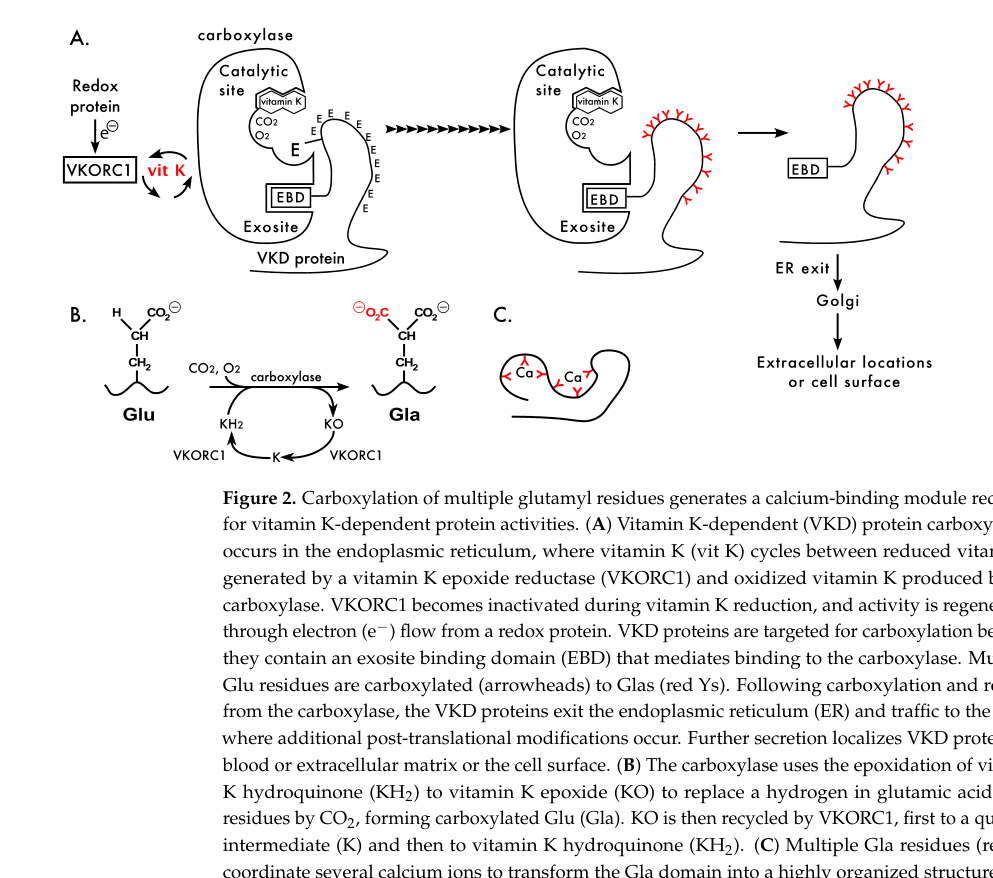
Congenital vitamin K-dependent coagulation factors deficiency (VKCFD) is an extremely rare autosomal recessive bleeding disorder caused by biallelic pathogenic variants in GGCX (gamma-glutamyl carboxylase; VKCFD1) or VKORC1 (vitamin K epoxide reductase complex subunit 1; VKCFD2). Both enzymes are required for gamma-carboxylation, the vitamin K-dependent post-translational modification that activates the procoagulant factors II, VII, IX and X and the natural anticoagulants protein C and protein S. Defective gamma-carboxylation yields functionally defective, undercarboxylated clotting factors and a combined coagulation factor deficiency that presents as a bleeding diathesis, frequently from the neonatal period. Because GGCX also carboxylates non-hemostatic vitamin K-dependent proteins (e.g., matrix Gla protein, Gla-rich protein, osteocalcin), VKCFD1 can additionally cause skeletal, connective-tissue, and cardiovascular features.
Ask OpenScientist
Ask a research question about Vitamin K-Dependent Coagulation Factor Deficiency. OpenScientist will conduct autonomous deep research using the Disorder Mechanisms Knowledge Base and PubMed literature (typically 10-30 minutes).
Do not include personal health information in your question. Questions and results are cached in your browser's local storage.
Inheritance
1Show evidence (1 reference)
Subtypes
2Show evidence (2 references)
Show evidence (1 reference)
Discussions and Knowledge Gaps
2Show evidence (1 reference)
Show evidence (2 references)
Pathophysiology
5Show evidence (2 references)
Show evidence (2 references)
Show evidence (2 references)
Show evidence (1 reference)
Show evidence (2 references)
Pathograph
Phenotypes
26Blood 5
Show evidence (2 references)
Show evidence (1 reference)
Show evidence (1 reference)
Show evidence (1 reference)
Show evidence (1 reference)
Cardiovascular 4
Show evidence (1 reference)
Show evidence (1 reference)
Show evidence (1 reference)
Show evidence (3 references)
Integument 1
Show evidence (2 references)
Musculoskeletal 1
Show evidence (2 references)
Other 15
Show evidence (1 reference)
Show evidence (1 reference)
Show evidence (2 references)
Show evidence (1 reference)
Show evidence (2 references)
Show evidence (2 references)
Show evidence (2 references)
Show evidence (1 reference)
Show evidence (1 reference)
Show evidence (1 reference)
Show evidence (1 reference)
Show evidence (2 references)
Show evidence (1 reference)
Show evidence (1 reference)
Show evidence (1 reference)
Genetic Associations
2Show evidence (1 reference)
Variants (1)
Show evidence (2 references)
Show evidence (1 reference)
Medical Actions
5Show evidence (2 references)
Show evidence (1 reference)
Show evidence (1 reference)
Show evidence (2 references)
Show evidence (1 reference)
Biochemical Markers
2Show evidence (1 reference)
Show evidence (1 reference)
Show evidence (1 reference)
Show evidence (1 reference)
Show evidence (1 reference)
Diagnosis
3Show evidence (1 reference)
Show evidence (2 references)
Show evidence (1 reference)
Progression
3Show evidence (1 reference)
Show evidence (1 reference)
Show evidence (1 reference)
Prevalence
2Show evidence (1 reference)
Show evidence (1 reference)
Differential Diagnoses
3Conditions with similar clinical presentations that must be differentiated from Vitamin K-Dependent Coagulation Factor Deficiency:
- Exposure, nutritional, gastrointestinal, or hepatic context supports an acquired cause.
- Persistent disease with biallelic GGCX or VKORC1 variants establishes inherited VKCFD.
Show evidence (1 reference)
- Failure of PT and aPTT to correct on plasma mixing argues against VKCFD and for an inhibitor or another acquired coagulopathy.
Show evidence (1 reference)
- VKCFD produces the combined II, VII, IX, and X pattern and is confirmed by biallelic GGCX or VKORC1 variants.
Show evidence (1 reference)
Animal Models
1Show evidence (1 reference)
Source YAML
click to showname: Vitamin K-Dependent Coagulation Factor Deficiency
creation_date: "2026-06-08T00:00:00Z"
description: >-
Congenital vitamin K-dependent coagulation factors deficiency (VKCFD) is an
extremely rare autosomal recessive bleeding disorder caused by biallelic
pathogenic variants in GGCX (gamma-glutamyl carboxylase; VKCFD1) or
VKORC1 (vitamin K epoxide reductase complex subunit 1; VKCFD2). Both enzymes
are required for gamma-carboxylation, the vitamin K-dependent post-translational
modification that activates the procoagulant factors II, VII, IX and X and the
natural anticoagulants protein C and protein S. Defective gamma-carboxylation
yields functionally defective, undercarboxylated clotting factors and a
combined coagulation factor deficiency that presents as a bleeding diathesis,
frequently from the neonatal period. Because GGCX also carboxylates
non-hemostatic vitamin K-dependent proteins (e.g., matrix Gla protein,
Gla-rich protein, osteocalcin), VKCFD1 can additionally cause skeletal,
connective-tissue, and cardiovascular features.
category: Mendelian
parents:
- hereditary disease
- inherited blood coagulation disorder
synonyms:
- VKCFD
- combined deficiency of vitamin K-dependent clotting factors
- vitamin K-dependent clotting factors, combined deficiency of
- multiple coagulation factor deficiency
inheritance:
- name: Autosomal Recessive
inheritance_term:
preferred_term: Autosomal recessive inheritance
term:
id: HP:0000007
label: Autosomal recessive inheritance
evidence:
- reference: PMID:19141161
reference_title: "Familial deficiency of vitamin K-dependent clotting factors."
supports: SUPPORT
evidence_source: HUMAN_CLINICAL
snippet: >-
Biochemical and molecular studies identify two variants of this autosomal
recessive disorder
explanation: Establishes autosomal recessive inheritance for both VKCFD subtypes.
disease_term:
preferred_term: congenital vitamin K-dependent coagulation factors deficiency
term:
id: MONDO:0015722
label: congenital vitamin K-dependent coagulation factors deficiency
references:
- reference: PMID:39496305
title: "Clinical, Laboratory, and Molecular Characteristics of Inherited Vitamin K-Dependent Coagulation Factors Deficiency."
- reference: PMID:40541254
title: "Hereditary Combined Deficiency of the Vitamin K-Dependent Coagulation Factors."
- reference: PMID:19141161
title: "Familial deficiency of vitamin K-dependent clotting factors."
- reference: PMID:33590680
title: "GGCX mutations show different responses to vitamin K thereby determining the severity of the hemorrhagic phenotype in VKCFD1 patients."
- reference: PMID:17327402
title: "Fatal hemorrhage in mice lacking gamma-glutamyl carboxylase."
prevalence:
- population: Worldwide
measure_type: POINT_PREVALENCE
prevalence_class: BELOW_1_IN_1000000
rate_high: 0.1
notes: Orphanet reports worldwide point prevalence below one per million.
evidence:
- reference: ORPHA:98434
reference_title: "Hereditary combined deficiency of vitamin K-dependent clotting factors"
supports: SUPPORT
evidence_source: OTHER
snippet: "<1 / 1 000 000 | Worldwide | Point prevalence | PMID:20630065"
explanation: Orphanet supplies the worldwide point-prevalence upper bound.
- population: Worldwide published literature
measure_type: CASES_IN_LITERATURE
prevalence_class: ULTRA_RARE
notes: A 2024/2025 review reported approximately 50 affected families.
evidence:
- reference: PMID:39496305
reference_title: "Clinical, Laboratory, and Molecular Characteristics of Inherited Vitamin K-Dependent Coagulation Factors Deficiency."
supports: SUPPORT
evidence_source: HUMAN_CLINICAL
snippet: >-
VKCFD is part of familial multiple coagulation factor deficiencies,
reporting overall 50 affected families thus far.
explanation: The contemporary review documents the very small published case base.
progression:
- phase: Severe neonatal or infantile presentation
age_range: Neonatal period through infancy
notes: >-
Severe disease can present early with major hemorrhage, including
intracranial bleeding; the timing and severity vary among affected families.
evidence:
- reference: PMID:19141161
reference_title: "Familial deficiency of vitamin K-dependent clotting factors."
supports: SUPPORT
evidence_source: HUMAN_CLINICAL
snippet: >-
VKCFD may present with intracranial hemorrhage in the neonate or early in
life
explanation: The clinical review documents the severe early-life end of the natural-history spectrum.
- phase: Milder later-onset presentation
age_range: Childhood through adulthood
notes: >-
Less severe disease may not be recognized until later, often after
spontaneous bleeding or a hemostatic challenge such as surgery or trauma.
evidence:
- reference: PMID:19141161
reference_title: "Familial deficiency of vitamin K-dependent clotting factors."
supports: SUPPORT
evidence_source: HUMAN_CLINICAL
snippet: Milder cases with later onset of diagnosis have also been reported
explanation: The review establishes that VKCFD is not invariably a neonatal presentation.
- phase: Treatment-modified longitudinal course
age_range: Lifelong
notes: >-
With regular preventive and episodic hemostatic treatment, many affected
individuals have favorable outcomes, although vitamin K response and the
risk of breakthrough bleeding remain variable.
evidence:
- reference: PMID:40541254
reference_title: "Hereditary Combined Deficiency of the Vitamin K-Dependent Coagulation Factors."
supports: SUPPORT
evidence_source: HUMAN_CLINICAL
snippet: >-
With appropriate treatment, individuals with VKCFD generally have a good
clinical outcome, and the condition has a limited impact on their quality
of life.
explanation: The contemporary case synthesis describes the generally favorable treatment-modified course.
has_subtypes:
- name: VKCFD1
display_name: VKCFD type 1 (GGCX deficiency)
subtype_term:
preferred_term: vitamin K-dependent clotting factors, combined deficiency of, type 1
term:
id: MONDO:0010187
label: vitamin K-dependent clotting factors, combined deficiency of, type 1
description: >-
VKCFD1 is caused by biallelic pathogenic variants in GGCX, encoding
gamma-glutamyl carboxylase. In addition to the bleeding diathesis, GGCX
deficiency can produce non-hemorrhagic skin, skeletal, cardiac, vascular,
and ocular features because non-coagulation vitamin K-dependent proteins
are also undercarboxylated.
genes:
- preferred_term: GGCX
term:
id: hgnc:4247
label: GGCX
evidence:
- reference: PMID:9845520
reference_title: "A missense mutation in gamma-glutamyl carboxylase gene causes combined deficiency of all vitamin K-dependent blood coagulation factors."
supports: SUPPORT
evidence_source: HUMAN_CLINICAL
snippet: >-
A missense mutation in gamma-glutamyl carboxylase gene causes combined
deficiency of all vitamin K-dependent blood coagulation factors.
explanation: The first reported GGCX mutation in VKCFD establishes GGCX as the causative gene for VKCFD1.
- reference: PMID:39496305
reference_title: "Clinical, Laboratory, and Molecular Characteristics of Inherited Vitamin K-Dependent Coagulation Factors Deficiency."
supports: SUPPORT
evidence_source: HUMAN_CLINICAL
snippet: >-
Patients harboring defects in GGCX have VKCFD type 1, while those with
VKORC1 defects have VKCFD type 2.
explanation: The review explicitly defines the two molecular subtypes.
- name: VKCFD2
display_name: VKCFD type 2 (VKORC1 deficiency)
subtype_term:
preferred_term: vitamin K-dependent clotting factors, combined deficiency of, type 2
term:
id: MONDO:0011837
label: vitamin K-dependent clotting factors, combined deficiency of, type 2
description: >-
VKCFD2 is caused by biallelic pathogenic variants in VKORC1, encoding the
catalytic subunit of vitamin K epoxide reductase, which regenerates reduced
vitamin K (the hydroquinone cofactor) required for gamma-carboxylation.
Distinct VKORC1 variants also cause warfarin resistance.
genes:
- preferred_term: VKORC1
term:
id: hgnc:23663
label: VKORC1
evidence:
- reference: PMID:14765194
reference_title: "Mutations in VKORC1 cause warfarin resistance and multiple coagulation factor deficiency type 2."
supports: SUPPORT
evidence_source: HUMAN_CLINICAL
snippet: >-
VKORC1 contains missense mutations in both human disorders and in a
warfarin-resistant rat strain.
explanation: Rost et al. identified VKORC1 as the gene mutated in VKCFD2, distinguishing it from the GGCX-related VKCFD1.
pathophysiology:
- name: Vitamin K epoxide reductase deficiency (VKCFD2)
description: >-
In VKCFD2, biallelic VKORC1 missense variants impair the vitamin K epoxide
reductase complex, which recycles vitamin K 2,3-epoxide back to the reduced
vitamin K hydroquinone cofactor. Loss of VKOR activity depletes the reduced
vitamin K pool needed to drive gamma-carboxylation, upstream of the
carboxylase reaction itself.
gene:
preferred_term: VKORC1
modifier: DECREASED
term:
id: hgnc:23663
label: VKORC1
genetic_context:
gene:
preferred_term: VKORC1
term:
id: hgnc:23663
label: VKORC1
variant_origin: GERMLINE
functional_impact_category: LOSS_OF_FUNCTION
description: >-
Biallelic pathogenic VKORC1 variants define the germline VKCFD2 context
represented by this proximal reductase-deficiency mechanism.
cell_types:
- preferred_term: hepatocyte
term:
id: CL:0000182
label: hepatocyte
biological_processes:
- preferred_term: vitamin K recycling (vitamin K metabolic process)
modifier: DECREASED
term:
id: GO:0042373
label: vitamin K metabolic process
evidence:
- reference: PMID:14765194
reference_title: "Mutations in VKORC1 cause warfarin resistance and multiple coagulation factor deficiency type 2."
supports: SUPPORT
evidence_source: HUMAN_CLINICAL
snippet: >-
This complex recycles vitamin K 2,3-epoxide to vitamin K hydroquinone, a
cofactor that is essential for the post-translational gamma-carboxylation
of several blood coagulation factors.
explanation: VKOR recycling of vitamin K is required to supply the cofactor for carboxylation; its loss in VKCFD2 starves the carboxylase of reduced vitamin K.
- reference: PMID:14765194
reference_title: "Mutations in VKORC1 cause warfarin resistance and multiple coagulation factor deficiency type 2."
supports: SUPPORT
evidence_source: IN_VITRO
snippet: >-
Overexpression of wild-type VKORC1, but not VKORC1 carrying the VKCFD2
mutation, leads to a marked increase in VKOR activity, which is sensitive
to warfarin inhibition.
explanation: Functional expression confirms the VKCFD2 VKORC1 variant abolishes VKOR enzymatic activity.
downstream:
- target: Defective gamma-carboxylation of vitamin K-dependent proteins
description: Reduced vitamin K hydroquinone cannot be supplied to the carboxylase, blocking carboxylation downstream.
evidence:
- reference: PMID:14765194
reference_title: "Mutations in VKORC1 cause warfarin resistance and multiple coagulation factor deficiency type 2."
supports: SUPPORT
evidence_source: OTHER
snippet: >-
This complex recycles vitamin K 2,3-epoxide to vitamin K hydroquinone, a
cofactor that is essential for the post-translational gamma-carboxylation
of several blood coagulation factors.
explanation: Links VKORC1-dependent vitamin K recycling to the cofactor requirement for gamma-carboxylation.
- name: Gamma-glutamyl carboxylase deficiency (VKCFD1)
description: >-
In VKCFD1, biallelic GGCX variants reduce the activity of gamma-glutamyl
carboxylase, the endoplasmic reticulum enzyme that carboxylates glutamate
residues of vitamin K-dependent proteins. Functional studies implicate
variant-dependent impairment of non-hemostatic substrates, but the mapping
from individual substrate defects to the variable extra-hemostatic phenotype
remains incomplete.
gene:
preferred_term: GGCX
modifier: DECREASED
term:
id: hgnc:4247
label: GGCX
genetic_context:
gene:
preferred_term: GGCX
term:
id: hgnc:4247
label: GGCX
variant_origin: GERMLINE
functional_impact_category: PARTIAL_LOSS_OF_FUNCTION
description: >-
Biallelic pathogenic GGCX variants define the germline VKCFD1 context
represented by this proximal carboxylase-deficiency mechanism.
cell_types:
- preferred_term: hepatocyte
term:
id: CL:0000182
label: hepatocyte
biological_processes:
- preferred_term: gamma-carboxylation (peptidyl-glutamic acid carboxylation)
modifier: DECREASED
term:
id: GO:0017187
label: peptidyl-glutamic acid carboxylation
evidence:
- reference: PMID:9845520
reference_title: "A missense mutation in gamma-glutamyl carboxylase gene causes combined deficiency of all vitamin K-dependent blood coagulation factors."
supports: SUPPORT
evidence_source: IN_VITRO
snippet: >-
The mutated carboxylase protein expressed in Drosophila cells was stable
but demonstrated threefold reduced activity compared with WT carboxylase,
confirming that the L394R mutation results in a defective carboxylase.
explanation: Functional expression demonstrates that the causative GGCX variant directly reduces carboxylase activity.
- reference: PMID:34816548
reference_title: "GGCX variants leading to biallelic deficiency to gamma-carboxylate GRP cause skin laxity in VKCFD1 patients."
supports: SUPPORT
evidence_source: IN_VITRO
snippet: >-
Reduced levels of γ-carboxylated Matrix gla protein (MGP) are not
exclusive for causing skeletal dysmorphologies in VKCFD1 patients.
explanation: The substrate study shows that MGP undercarboxylation alone does not explain every skeletal presentation, limiting any single-substrate model.
downstream:
- target: Defective gamma-carboxylation of vitamin K-dependent proteins
description: Reduced carboxylase activity directly prevents gamma-carboxylation of its protein substrates.
evidence:
- reference: PMID:9845520
reference_title: "A missense mutation in gamma-glutamyl carboxylase gene causes combined deficiency of all vitamin K-dependent blood coagulation factors."
supports: SUPPORT
evidence_source: IN_VITRO
snippet: >-
The mutated carboxylase protein expressed in Drosophila cells was stable
but demonstrated threefold reduced activity compared with WT carboxylase,
confirming that the L394R mutation results in a defective carboxylase.
explanation: Functionally connects the human GGCX variant to reduced carboxylase activity.
- name: Defective gamma-carboxylation of vitamin K-dependent proteins
description: >-
Both enzymatic defects converge on impaired gamma-carboxylation, the
post-translational addition of a carboxyl group to specific glutamate
residues. Gamma-carboxyglutamate residues are required for the calcium-
dependent membrane binding and biological activity of vitamin K-dependent
proteins. GGCX carboxylates 15 different vitamin K-dependent proteins
spanning coagulation, calcification, and cell signaling.
cell_types:
- preferred_term: hepatocyte
term:
id: CL:0000182
label: hepatocyte
biological_processes:
- preferred_term: peptidyl-glutamic acid carboxylation
modifier: DECREASED
term:
id: GO:0017187
label: peptidyl-glutamic acid carboxylation
evidence:
- reference: PMID:19141161
reference_title: "Familial deficiency of vitamin K-dependent clotting factors."
supports: SUPPORT
evidence_source: OTHER
snippet: >-
Once carboxylated, the proteins have a calcium-dependent conformation that
allows binding to phospholipids and/or endothelial cells.
explanation: The review explains why the Gla modification is required for normal membrane-associated activity.
- reference: PMID:35054981
reference_title: "The Role of GRP and MGP in the Development of Non-Hemorrhagic VKCFD1 Phenotypes."
supports: SUPPORT
evidence_source: OTHER
snippet: >-
The GGCX enzyme catalyzes the γ-carboxylation of 15 different vitamin K
dependent (VKD) proteins, which have function in blood coagulation,
calcification, and cell signaling.
explanation: Establishes that gamma-carboxylation by GGCX activates a broad set of vitamin K-dependent proteins beyond coagulation.
downstream:
- target: Undercarboxylated, functionally defective coagulation factors
description: Coagulation factors II, VII, IX and X lack the Gla residues needed for procoagulant activity.
evidence:
- reference: PMID:19141161
reference_title: "Familial deficiency of vitamin K-dependent clotting factors."
supports: SUPPORT
evidence_source: HUMAN_CLINICAL
snippet: >-
The proband was further studied at the age of 15 years and found to have
immunologically recognizable coagulation factors II, VII, IX, and X that
lacked γ-carboxyglutamic acid residues
explanation: Directly documents secreted vitamin K-dependent coagulation factors lacking Gla residues.
- target: Undercarboxylation of non-hemostatic vitamin K-dependent proteins
description: Matrix Gla protein, Gla-rich protein, and osteocalcin are also undercarboxylated and are associated with non-hemorrhagic features in VKCFD1.
evidence:
- reference: PMID:35054981
reference_title: "The Role of GRP and MGP in the Development of Non-Hemorrhagic VKCFD1 Phenotypes."
supports: SUPPORT
evidence_source: OTHER
snippet: >-
The GGCX enzyme catalyzes the γ-carboxylation of 15 different vitamin K
dependent (VKD) proteins, which have function in blood coagulation,
calcification, and cell signaling.
explanation: Establishes that the shared carboxylation defect extends to non-coagulation substrates.
- name: Undercarboxylated, functionally defective coagulation factors
description: >-
Undercarboxylated factors II, VII, IX and X (and the anticoagulants protein
C and protein S) are secreted but cannot bind calcium and phospholipid
membranes normally, producing a functional combined deficiency of vitamin
K-dependent coagulation factors and impaired blood coagulation.
cell_types:
- preferred_term: hepatocyte
term:
id: CL:0000182
label: hepatocyte
biological_processes:
- preferred_term: blood coagulation
modifier: ABNORMAL
term:
id: GO:0007596
label: blood coagulation
evidence:
- reference: PMID:19141161
reference_title: "Familial deficiency of vitamin K-dependent clotting factors."
supports: SUPPORT
evidence_source: HUMAN_CLINICAL
snippet: >-
Combined deficiency of vitamin K-dependent clotting factors II, VII, IX
and X (and proteins C, S, and Z)
explanation: Identifies the procoagulant and anticoagulant proteins affected by defective carboxylation.
downstream:
- target: Bleeding diathesis
description: Deficient procoagulant activity manifests clinically as a bleeding tendency.
evidence:
- reference: PMID:19141161
reference_title: "Familial deficiency of vitamin K-dependent clotting factors."
supports: SUPPORT
evidence_source: HUMAN_CLINICAL
snippet: This is primarily a bleeding diathesis, not a thrombophilic disorder.
explanation: The clinical review directly characterizes the combined factor dysfunction as a bleeding diathesis.
- target: Intracranial hemorrhage
description: Severe coagulation-factor dysfunction can cause life-threatening intracranial bleeding.
evidence:
- reference: PMID:19141161
reference_title: "Familial deficiency of vitamin K-dependent clotting factors."
supports: SUPPORT
evidence_source: HUMAN_CLINICAL
snippet: >-
VKCFD may present with intracranial hemorrhage in the neonate or early in
life
explanation: The clinical review identifies neonatal and early-life intracranial hemorrhage as a severe presentation.
- target: Bruising susceptibility
description: Mucocutaneous bleeding commonly includes easy bruising.
evidence:
- reference: ORPHA:98434
reference_title: "Hereditary combined deficiency of vitamin K-dependent clotting factors"
supports: SUPPORT
evidence_source: OTHER
snippet: "HP:0000978 | Bruising susceptibility | Frequent (79-30%)"
explanation: Orphanet records bruising susceptibility as a frequent VKCFD phenotype.
- target: Epistaxis
description: Recurrent nose bleeding is part of the mucocutaneous bleeding spectrum.
evidence:
- reference: ORPHA:98434
reference_title: "Hereditary combined deficiency of vitamin K-dependent clotting factors"
supports: SUPPORT
evidence_source: OTHER
snippet: "HP:0000421 | Epistaxis | Occasional (29-5%)"
explanation: Orphanet records epistaxis in VKCFD.
- target: Menorrhagia
description: Heavy menstrual bleeding is a clinically important mucosal manifestation in affected patients.
evidence:
- reference: ORPHA:98434
reference_title: "Hereditary combined deficiency of vitamin K-dependent clotting factors"
supports: SUPPORT
evidence_source: OTHER
snippet: "HP:0000132 | Menorrhagia | Occasional (29-5%)"
explanation: Orphanet records menorrhagia as an occasional VKCFD phenotype.
- target: Abnormal umbilical stump bleeding
description: Umbilical bleeding can be an early neonatal manifestation.
evidence:
- reference: ORPHA:98434
reference_title: "Hereditary combined deficiency of vitamin K-dependent clotting factors"
supports: SUPPORT
evidence_source: OTHER
snippet: "HP:0011884 | Abnormal umbilical stump bleeding | Very rare (<4-1%)"
explanation: Orphanet records abnormal umbilical-stump bleeding as a neonatal manifestation.
- target: Prolonged bleeding following procedure
description: Hemostatic challenge from surgery or another procedure can unmask the combined deficiency.
evidence:
- reference: ORPHA:98434
reference_title: "Hereditary combined deficiency of vitamin K-dependent clotting factors"
supports: SUPPORT
evidence_source: OTHER
snippet: "HP:0011890 | Prolonged bleeding following procedure | Occasional (29-5%)"
explanation: Orphanet records prolonged procedural bleeding in VKCFD.
- target: Reduced prothrombin (factor II)
description: Factor II is one of the vitamin K-dependent clotting factors with deficient activity.
evidence:
- reference: PMID:19141161
reference_title: "Familial deficiency of vitamin K-dependent clotting factors."
supports: SUPPORT
evidence_source: HUMAN_CLINICAL
snippet: >-
Combined deficiency of vitamin K-dependent clotting factors II, VII, IX
and X (and proteins C, S, and Z)
explanation: This defines factor II as one of the deficient vitamin K-dependent clotting factors.
- target: Reduced factor VII activity
description: Factor VII activity is reduced as part of the combined vitamin K-dependent factor deficiency.
evidence:
- reference: PMID:19141161
reference_title: "Familial deficiency of vitamin K-dependent clotting factors."
supports: SUPPORT
evidence_source: HUMAN_CLINICAL
snippet: >-
Combined deficiency of vitamin K-dependent clotting factors II, VII, IX
and X (and proteins C, S, and Z)
explanation: This defines factor VII as one of the deficient vitamin K-dependent clotting factors.
- target: Reduced factor IX activity
description: Factor IX activity is reduced as part of the combined vitamin K-dependent factor deficiency.
evidence:
- reference: PMID:19141161
reference_title: "Familial deficiency of vitamin K-dependent clotting factors."
supports: SUPPORT
evidence_source: HUMAN_CLINICAL
snippet: >-
Combined deficiency of vitamin K-dependent clotting factors II, VII, IX
and X (and proteins C, S, and Z)
explanation: This defines factor IX as one of the deficient vitamin K-dependent clotting factors.
- target: Reduced factor X activity
description: Factor X activity is reduced as part of the combined vitamin K-dependent factor deficiency.
evidence:
- reference: PMID:19141161
reference_title: "Familial deficiency of vitamin K-dependent clotting factors."
supports: SUPPORT
evidence_source: HUMAN_CLINICAL
snippet: >-
Combined deficiency of vitamin K-dependent clotting factors II, VII, IX
and X (and proteins C, S, and Z)
explanation: This defines factor X as one of the deficient vitamin K-dependent clotting factors.
- target: Reduced protein C activity
description: The natural anticoagulant protein C is also undercarboxylated and functionally reduced.
evidence:
- reference: PMID:19141161
reference_title: "Familial deficiency of vitamin K-dependent clotting factors."
supports: SUPPORT
evidence_source: HUMAN_CLINICAL
snippet: Proteins C, S, and Z activities are also reduced
explanation: The clinical review documents reduced protein C activity in the combined deficiency.
- target: Reduced protein S activity
description: The natural anticoagulant protein S is also undercarboxylated and functionally reduced.
evidence:
- reference: PMID:19141161
reference_title: "Familial deficiency of vitamin K-dependent clotting factors."
supports: SUPPORT
evidence_source: HUMAN_CLINICAL
snippet: Proteins C, S, and Z activities are also reduced
explanation: The clinical review documents reduced protein S activity in the combined deficiency.
- target: Prolonged prothrombin time
description: Reduced extrinsic/common-pathway vitamin K-dependent factors prolong the prothrombin time.
evidence:
- reference: ORPHA:98434
reference_title: "Hereditary combined deficiency of vitamin K-dependent clotting factors"
supports: SUPPORT
evidence_source: OTHER
snippet: "HP:0008151 | Prolonged prothrombin time | Frequent (79-30%)"
explanation: Orphanet lists prolonged prothrombin time as a frequent VKCFD laboratory phenotype.
- target: Prolonged partial thromboplastin time
description: Reduced intrinsic/common-pathway vitamin K-dependent factors prolong the partial thromboplastin time.
evidence:
- reference: ORPHA:98434
reference_title: "Hereditary combined deficiency of vitamin K-dependent clotting factors"
supports: SUPPORT
evidence_source: OTHER
snippet: "HP:0003645 | Prolonged partial thromboplastin time | Frequent (79-30%)"
explanation: Orphanet lists prolonged partial thromboplastin time as a frequent VKCFD laboratory phenotype.
- name: Undercarboxylation of non-hemostatic vitamin K-dependent proteins
description: >-
In VKCFD1, reduced gamma-carboxylation of non-hemostatic substrates such as
matrix Gla protein (MGP), Gla-rich protein (GRP), and osteocalcin is
associated with mineralization, skin, skeletal, cardiac, vascular, and ocular
abnormalities. Markedly reduced GRP carboxylation correlates with skin laxity,
but the substrate-to-phenotype mapping is not fully resolved.
cell_types:
- preferred_term: chondrocyte
term:
id: CL:0000138
label: chondrocyte
- preferred_term: vascular smooth muscle cell
term:
id: CL:0000359
label: vascular associated smooth muscle cell
- preferred_term: dermal fibroblast
term:
id: CL:0002620
label: skin fibroblast
biological_processes:
- preferred_term: peptidyl-glutamic acid carboxylation
modifier: DECREASED
term:
id: GO:0017187
label: peptidyl-glutamic acid carboxylation
evidence:
- reference: PMID:34816548
reference_title: "GGCX variants leading to biallelic deficiency to gamma-carboxylate GRP cause skin laxity in VKCFD1 patients."
supports: SUPPORT
evidence_source: IN_VITRO
snippet: >-
We observed that GGCX variants causing markedly reduced γ-carboxylation of
Gla rich protein (GRP) in vitro were reported in patients with skin laxity.
explanation: Correlates markedly reduced GRP carboxylation in vitro with reported skin laxity without proving that GRP alone is causal.
- reference: PMID:35054981
reference_title: "The Role of GRP and MGP in the Development of Non-Hemorrhagic VKCFD1 Phenotypes."
supports: SUPPORT
evidence_source: OTHER
snippet: >-
The major manifestation of non-hemorrhagic phenotypes in VKCFD1 patients
are mineralization defects.
explanation: Identifies mineralization defects as a major class of non-hemorrhagic VKCFD1 manifestations.
downstream:
- target: Cutis laxa / skin laxity
description: Reduced GRP gamma-carboxylation is linked to the VKCFD1 skin-laxity phenotype.
evidence:
- reference: PMID:34816548
reference_title: "GGCX variants leading to biallelic deficiency to gamma-carboxylate GRP cause skin laxity in VKCFD1 patients."
supports: SUPPORT
evidence_source: HUMAN_CLINICAL
snippet: >-
In addition to bleedings, some VKCFD1 patients develop skin laxity and
skeletal dysmorphologies.
explanation: This supports skin laxity as a VKCFD1 manifestation connected to non-hemostatic GGCX substrate defects.
- target: Epiphyseal stippling (chondrodysplasia punctata)
description: Epiphyseal stippling is associated with the non-hemostatic skeletal disease of VKCFD1.
evidence:
- reference: PMID:34558179
reference_title: "GGCX-related congenital combined vitamin K-dependent clotting factors deficiency-1: Description of a fetus with chondrodysplasia punctata."
supports: SUPPORT
evidence_source: HUMAN_CLINICAL
snippet: >-
Pathological examination showed a Binder phenotype, hypoplastic distal
phalanges, stippled epiphyses, and brain abnormalities suggestive of a
brain hemorrhage.
explanation: The fetal VKCFD case directly supports stippled epiphyses as a mineralization phenotype.
- target: Nasal hypoplasia
description: Mineralization and skeletal dysmorphology can include hypoplastic nasal bone/Binder phenotype.
evidence:
- reference: PMID:34558179
reference_title: "GGCX-related congenital combined vitamin K-dependent clotting factors deficiency-1: Description of a fetus with chondrodysplasia punctata."
supports: SUPPORT
evidence_source: HUMAN_CLINICAL
snippet: >-
a male fetus with a brachytelephalangic chondrodysplasia punctata (CDP),
absence of nasal bone, growth restriction, and bilateral ventriculomegaly
at 18 weeks of gestation.
explanation: The prenatal VKCFD1 report directly documents absence of the nasal bone.
- target: Osteoporosis / reduced bone mass
description: Defective carboxylation of bone-associated vitamin K-dependent proteins can produce premature low bone mass.
evidence:
- reference: PMID:39496305
reference_title: "Clinical, Laboratory, and Molecular Characteristics of Inherited Vitamin K-Dependent Coagulation Factors Deficiency."
supports: SUPPORT
evidence_source: HUMAN_CLINICAL
snippet: >-
In particular, VKCFD1 can be associated with skeletal
(midfacial hypoplasia, reduced bone mass, chondrodysplasia
punctata) or cardiac abnormalities
explanation: The review specifically associates reduced bone mass with GGCX-related VKCFD1.
- target: Patent ductus arteriosus
description: GGCX-related extra-hemostatic disease can include persistent patency of the ductus arteriosus.
evidence:
- reference: PMID:39496305
reference_title: "Clinical, Laboratory, and Molecular Characteristics of Inherited Vitamin K-Dependent Coagulation Factors Deficiency."
supports: SUPPORT
evidence_source: HUMAN_CLINICAL
snippet: >-
VKCFD1 can be associated with skeletal
(midfacial hypoplasia, reduced bone mass, chondrodysplasia
punctata) or cardiac abnormalities (patent ductus arteriosus
Botalli, septal closure defects) in some patients.
explanation: The human-case review explicitly documents patent ductus arteriosus in VKCFD1.
- target: Atrial septal defect
description: Septal closure defects reported in VKCFD1 include atrial septal defect.
evidence:
- reference: ORPHA:98434
reference_title: "Hereditary combined deficiency of vitamin K-dependent clotting factors"
supports: SUPPORT
evidence_source: OTHER
snippet: "HP:0001631 | Atrial septal defect | Very rare (<4-1%)"
explanation: Orphanet identifies atrial septal defect as a very rare VKCFD manifestation.
- target: Ventricular septal defect
description: Septal closure defects reported in VKCFD1 include ventricular septal defect.
evidence:
- reference: ORPHA:98434
reference_title: "Hereditary combined deficiency of vitamin K-dependent clotting factors"
supports: SUPPORT
evidence_source: OTHER
snippet: "HP:0001629 | Ventricular septal defect | Very rare (<4-1%)"
explanation: Orphanet identifies ventricular septal defect as a very rare VKCFD manifestation.
- target: Pulmonary artery stenosis
description: Pulmonary artery stenosis is a very rare congenital cardiovascular manifestation recorded for VKCFD.
evidence:
- reference: ORPHA:98434
reference_title: "Hereditary combined deficiency of vitamin K-dependent clotting factors"
supports: SUPPORT
evidence_source: OTHER
snippet: "HP:0004415 | Pulmonary artery stenosis | Very rare (<4-1%)"
explanation: Orphanet identifies pulmonary artery stenosis as a very rare VKCFD manifestation.
- target: Atherosclerosis
causal_link_type: INDIRECT_UNKNOWN_INTERMEDIATES
description: >-
GGCX-related undercarboxylation is associated with PXE-like arterial
calcification and subclinical atherosclerosis, but the responsible
substrate-to-arterial pathway remains unresolved.
evidence:
- reference: PMID:39496305
reference_title: "Clinical, Laboratory, and Molecular Characteristics of Inherited Vitamin K-Dependent Coagulation Factors Deficiency."
supports: SUPPORT
evidence_source: HUMAN_CLINICAL
snippet: >-
Cardiac abnormalities including calcified peripheral arteries,
subclinical atherosclerosis, and congenital atrial septal defects are
also detected in PXE-like disease.
explanation: >-
The review directly documents calcified peripheral arteries and
subclinical atherosclerosis in the GGCX-associated PXE-like disease
context described immediately before this sentence.
- target: Angioid streaks of the fundus
description: Ocular PXE-like manifestations can include angioid streaks.
evidence:
- reference: ORPHA:98434
reference_title: "Hereditary combined deficiency of vitamin K-dependent clotting factors"
supports: SUPPORT
evidence_source: OTHER
snippet: "HP:0001102 | Angioid streaks of the fundus | Occasional (29-5%)"
explanation: Orphanet records angioid streaks among VKCFD phenotypes.
phenotypes:
- name: Bleeding diathesis
category: Clinical
frequency: FREQUENT
description: >-
Spectrum of bleeding symptoms ranging from mild to severe, often beginning in
the neonatal period, occurring spontaneously or with surgery and sometimes
life-threatening.
phenotype_term:
preferred_term: Abnormal bleeding
term:
id: HP:0001892
label: Abnormal bleeding
evidence:
- reference: PMID:40541254
reference_title: "Hereditary Combined Deficiency of the Vitamin K-Dependent Coagulation Factors."
supports: SUPPORT
evidence_source: HUMAN_CLINICAL
snippet: >-
The condition presents with a spectrum of bleeding symptoms ranging from
mild to severe, often beginning in the neonatal period.
explanation: Directly supports the combined-deficiency bleeding diathesis as the cardinal manifestation of VKCFD.
- reference: ORPHA:98434
reference_title: "Hereditary combined deficiency of vitamin K-dependent clotting factors"
supports: SUPPORT
evidence_source: OTHER
snippet: "HP:0001892 | Abnormal bleeding | Frequent (79-30%)"
explanation: Orphanet supplies the frequency band for abnormal bleeding.
- name: Bruising susceptibility
category: Clinical
frequency: FREQUENT
description: Easy bruising is a common mucocutaneous bleeding manifestation.
phenotype_term:
preferred_term: Bruising susceptibility
term:
id: HP:0000978
label: Bruising susceptibility
evidence:
- reference: ORPHA:98434
reference_title: "Hereditary combined deficiency of vitamin K-dependent clotting factors"
supports: SUPPORT
evidence_source: OTHER
snippet: "HP:0000978 | Bruising susceptibility | Frequent (79-30%)"
explanation: Orphanet records bruising susceptibility as a frequent VKCFD phenotype.
- name: Epistaxis
category: Clinical
frequency: OCCASIONAL
description: Nosebleeds are part of the mucocutaneous bleeding spectrum.
phenotype_term:
preferred_term: Epistaxis
term:
id: HP:0000421
label: Epistaxis
evidence:
- reference: ORPHA:98434
reference_title: "Hereditary combined deficiency of vitamin K-dependent clotting factors"
supports: SUPPORT
evidence_source: OTHER
snippet: "HP:0000421 | Epistaxis | Occasional (29-5%)"
explanation: Orphanet records epistaxis as an occasional VKCFD phenotype.
- name: Menorrhagia
category: Clinical
frequency: OCCASIONAL
description: Heavy menstrual bleeding can occur as a sex-specific mucosal bleeding manifestation.
phenotype_term:
preferred_term: Menorrhagia
term:
id: HP:0000132
label: Menorrhagia
evidence:
- reference: ORPHA:98434
reference_title: "Hereditary combined deficiency of vitamin K-dependent clotting factors"
supports: SUPPORT
evidence_source: OTHER
snippet: "HP:0000132 | Menorrhagia | Occasional (29-5%)"
explanation: Orphanet records menorrhagia as an occasional VKCFD phenotype.
- name: Abnormal umbilical stump bleeding
category: Clinical
frequency: VERY_RARE
description: Persistent umbilical-stump bleeding can be an early neonatal manifestation.
phenotype_term:
preferred_term: Abnormal umbilical stump bleeding
term:
id: HP:0011884
label: Abnormal umbilical stump bleeding
evidence:
- reference: ORPHA:98434
reference_title: "Hereditary combined deficiency of vitamin K-dependent clotting factors"
supports: SUPPORT
evidence_source: OTHER
snippet: "HP:0011884 | Abnormal umbilical stump bleeding | Very rare (<4-1%)"
explanation: Orphanet records abnormal umbilical-stump bleeding as a very rare VKCFD phenotype.
- name: Prolonged bleeding following procedure
category: Clinical
frequency: OCCASIONAL
description: Surgery or another invasive procedure can unmask prolonged bleeding.
phenotype_term:
preferred_term: Prolonged bleeding following procedure
term:
id: HP:0011890
label: Prolonged bleeding following procedure
evidence:
- reference: ORPHA:98434
reference_title: "Hereditary combined deficiency of vitamin K-dependent clotting factors"
supports: SUPPORT
evidence_source: OTHER
snippet: "HP:0011890 | Prolonged bleeding following procedure | Occasional (29-5%)"
explanation: Orphanet records prolonged procedural bleeding as an occasional VKCFD phenotype.
- name: Intracranial hemorrhage
category: Clinical
frequency: OCCASIONAL
description: >-
Severe, potentially life-threatening intracranial bleeding can occur in the
neonatal period or later in infancy.
phenotype_term:
preferred_term: Intracranial hemorrhage
term:
id: HP:0002170
label: Intracranial hemorrhage
evidence:
- reference: PMID:19141161
reference_title: "Familial deficiency of vitamin K-dependent clotting factors."
supports: SUPPORT
evidence_source: HUMAN_CLINICAL
snippet: >-
VKCFD may present with intracranial hemorrhage in the neonate or early in
life
explanation: The clinical review directly documents intracranial hemorrhage as an early-life presentation.
- reference: ORPHA:98434
reference_title: "Hereditary combined deficiency of vitamin K-dependent clotting factors"
supports: SUPPORT
evidence_source: OTHER
snippet: "HP:0002170 | Intracranial hemorrhage | Occasional (29-5%)"
explanation: Orphanet records intracranial hemorrhage as an occasional VKCFD phenotype.
- name: Reduced prothrombin (factor II)
category: Laboratory
description: >-
Deficient activity of the vitamin K-dependent procoagulant factor II
(prothrombin) due to undercarboxylation.
phenotype_term:
preferred_term: Abnormality of prothrombin (factor II)
term:
id: HP:0012200
label: Abnormality of prothrombin
evidence:
- reference: PMID:19141161
reference_title: "Familial deficiency of vitamin K-dependent clotting factors."
supports: SUPPORT
evidence_source: HUMAN_CLINICAL
snippet: >-
Combined deficiency of vitamin K-dependent clotting factors II, VII, IX
and X (and proteins C, S, and Z)
explanation: Defines the combined deficiency of factor II among the affected vitamin K-dependent factors.
- name: Reduced factor VII activity
category: Laboratory
frequency: FREQUENT
description: >-
Deficient activity of the vitamin K-dependent procoagulant factor VII due to
undercarboxylation.
phenotype_term:
preferred_term: Reduced factor VII activity
term:
id: HP:0008169
label: Reduced factor VII activity
evidence:
- reference: PMID:19141161
reference_title: "Familial deficiency of vitamin K-dependent clotting factors."
supports: SUPPORT
evidence_source: HUMAN_CLINICAL
snippet: >-
Combined deficiency of vitamin K-dependent clotting factors II, VII, IX
and X (and proteins C, S, and Z)
explanation: Defines the combined deficiency of factor VII among the affected vitamin K-dependent factors.
- reference: ORPHA:98434
reference_title: "Hereditary combined deficiency of vitamin K-dependent clotting factors"
supports: SUPPORT
evidence_source: OTHER
snippet: "HP:0008169 | Reduced factor VII activity | Frequent (79-30%)"
explanation: Orphanet supplies the frequency band for reduced factor VII activity.
- name: Reduced factor IX activity
category: Laboratory
frequency: FREQUENT
description: >-
Deficient activity of the vitamin K-dependent procoagulant factor IX due to
undercarboxylation.
phenotype_term:
preferred_term: Reduced factor IX activity
term:
id: HP:0011858
label: Reduced factor IX activity
evidence:
- reference: PMID:19141161
reference_title: "Familial deficiency of vitamin K-dependent clotting factors."
supports: SUPPORT
evidence_source: HUMAN_CLINICAL
snippet: >-
Combined deficiency of vitamin K-dependent clotting factors II, VII, IX
and X (and proteins C, S, and Z)
explanation: Defines the combined deficiency of factor IX among the affected vitamin K-dependent factors.
- reference: ORPHA:98434
reference_title: "Hereditary combined deficiency of vitamin K-dependent clotting factors"
supports: SUPPORT
evidence_source: OTHER
snippet: "HP:0011858 | Reduced factor IX activity | Frequent (79-30%)"
explanation: Orphanet supplies the frequency band for reduced factor IX activity.
- name: Reduced factor X activity
category: Laboratory
frequency: FREQUENT
description: >-
Deficient activity of the vitamin K-dependent procoagulant factor X due to
undercarboxylation.
phenotype_term:
preferred_term: Reduced factor X activity
term:
id: HP:0008321
label: Reduced factor X activity
evidence:
- reference: PMID:19141161
reference_title: "Familial deficiency of vitamin K-dependent clotting factors."
supports: SUPPORT
evidence_source: HUMAN_CLINICAL
snippet: >-
Combined deficiency of vitamin K-dependent clotting factors II, VII, IX
and X (and proteins C, S, and Z)
explanation: Defines the combined deficiency of factor X among the affected vitamin K-dependent factors.
- reference: ORPHA:98434
reference_title: "Hereditary combined deficiency of vitamin K-dependent clotting factors"
supports: SUPPORT
evidence_source: OTHER
snippet: "HP:0008321 | Reduced factor X activity | Frequent (79-30%)"
explanation: Orphanet supplies the frequency band for reduced factor X activity.
- name: Reduced protein C activity
category: Laboratory
frequency: FREQUENT
description: The vitamin K-dependent natural anticoagulant protein C has reduced activity.
phenotype_term:
preferred_term: Reduced protein C activity
term:
id: HP:0005543
label: Reduced protein C activity
evidence:
- reference: ORPHA:98434
reference_title: "Hereditary combined deficiency of vitamin K-dependent clotting factors"
supports: SUPPORT
evidence_source: OTHER
snippet: "HP:0005543 | Reduced protein C activity | Frequent (79-30%)"
explanation: Orphanet records reduced protein C activity as a frequent laboratory phenotype.
- name: Reduced protein S activity
category: Laboratory
frequency: FREQUENT
description: The vitamin K-dependent natural anticoagulant protein S has reduced activity.
phenotype_term:
preferred_term: Reduced protein S activity
term:
id: HP:0004855
label: Reduced protein S activity
evidence:
- reference: ORPHA:98434
reference_title: "Hereditary combined deficiency of vitamin K-dependent clotting factors"
supports: SUPPORT
evidence_source: OTHER
snippet: "HP:0004855 | Reduced protein S activity | Frequent (79-30%)"
explanation: Orphanet records reduced protein S activity as a frequent laboratory phenotype.
- name: Decreased level of heparin co-factor II
category: Laboratory
frequency: FREQUENT
description: >-
Orphanet records decreased heparin co-factor II as a frequent associated
laboratory phenotype. Heparin co-factor II is not itself vitamin K-dependent,
so this association is retained without placing it in the core
gamma-carboxylation mechanism.
phenotype_term:
preferred_term: Decreased level of heparin co-factor II
term:
id: HP:0040226
label: Decreased level of heparin co-factor II
evidence:
- reference: ORPHA:98434
reference_title: "Hereditary combined deficiency of vitamin K-dependent clotting factors"
supports: SUPPORT
evidence_source: OTHER
snippet: "HP:0040226 | Decreased level of heparin co-factor II | Frequent (79-30%)"
explanation: >-
Orphanet supplies the frequent band; the description explicitly separates
this non-vitamin-K-dependent protein from the core causal pathway.
- name: Prolonged prothrombin time
category: Laboratory
frequency: FREQUENT
description: Prolonged PT/INR reflects impaired extrinsic and common coagulation pathway activity in VKCFD.
phenotype_term:
preferred_term: Prolonged prothrombin time
term:
id: HP:0008151
label: Prolonged prothrombin time
evidence:
- reference: ORPHA:98434
reference_title: "Hereditary combined deficiency of vitamin K-dependent clotting factors"
supports: SUPPORT
evidence_source: OTHER
snippet: "HP:0008151 | Prolonged prothrombin time | Frequent (79-30%)"
explanation: Orphanet lists prolonged prothrombin time as a frequent laboratory phenotype of hereditary VKCFD.
- name: Prolonged partial thromboplastin time
category: Laboratory
frequency: FREQUENT
description: Prolonged PTT reflects impaired intrinsic and common coagulation pathway activity in VKCFD.
phenotype_term:
preferred_term: Prolonged partial thromboplastin time
term:
id: HP:0003645
label: Prolonged partial thromboplastin time
evidence:
- reference: ORPHA:98434
reference_title: "Hereditary combined deficiency of vitamin K-dependent clotting factors"
supports: SUPPORT
evidence_source: OTHER
snippet: "HP:0003645 | Prolonged partial thromboplastin time | Frequent (79-30%)"
explanation: Orphanet lists prolonged partial thromboplastin time as a frequent laboratory phenotype of hereditary VKCFD.
- name: Cutis laxa / skin laxity
category: Clinical
subtype: VKCFD1
frequency: OCCASIONAL
description: >-
Some VKCFD1 patients develop skin hyperlaxity, which is associated with
markedly reduced carboxylation of the non-hemostatic substrate Gla-rich
protein (GRP) in variant-function studies.
phenotype_term:
preferred_term: Cutis laxa
term:
id: HP:0000973
label: Cutis laxa
evidence:
- reference: PMID:34816548
reference_title: "GGCX variants leading to biallelic deficiency to gamma-carboxylate GRP cause skin laxity in VKCFD1 patients."
supports: SUPPORT
evidence_source: HUMAN_CLINICAL
snippet: >-
In addition to bleedings, some VKCFD1 patients develop skin laxity and
skeletal dysmorphologies.
explanation: Supports skin laxity as a recognized non-hemorrhagic feature of GGCX-related VKCFD1.
- reference: ORPHA:98434
reference_title: "Hereditary combined deficiency of vitamin K-dependent clotting factors"
supports: SUPPORT
evidence_source: OTHER
snippet: "HP:0000973 | Cutis laxa | Occasional (29-5%)"
explanation: Orphanet supplies the frequency band for cutis laxa.
- name: Epiphyseal stippling (chondrodysplasia punctata)
category: Clinical
subtype: VKCFD1
frequency: OCCASIONAL
description: >-
Skeletal dysmorphology including brachytelephalangic chondrodysplasia punctata
with stippled epiphyses, resembling warfarin embryopathy, has been described
in GGCX-related VKCFD, including a prenatal case.
phenotype_term:
preferred_term: Epiphyseal stippling
term:
id: HP:0010655
label: Epiphyseal stippling
evidence:
- reference: PMID:34558179
reference_title: "GGCX-related congenital combined vitamin K-dependent clotting factors deficiency-1: Description of a fetus with chondrodysplasia punctata."
supports: SUPPORT
evidence_source: HUMAN_CLINICAL
snippet: >-
Pathological examination showed a Binder phenotype, hypoplastic distal
phalanges, stippled epiphyses, and brain abnormalities suggestive of a
brain hemorrhage.
explanation: A prenatally diagnosed GGCX-VKCFD fetus exhibited stippled epiphyses (chondrodysplasia punctata).
- reference: ORPHA:98434
reference_title: "Hereditary combined deficiency of vitamin K-dependent clotting factors"
supports: SUPPORT
evidence_source: OTHER
snippet: "HP:0010655 | Epiphyseal stippling | Occasional (29-5%)"
explanation: Orphanet supplies the frequency band for epiphyseal stippling.
- name: Nasal hypoplasia
category: Clinical
subtype: VKCFD1
description: >-
Midface and nasal hypoplasia (Binder phenotype, absent nasal bone) can occur
in GGCX-related VKCFD as part of the skeletal dysmorphology, resembling the
warfarin embryopathy pattern.
phenotype_term:
preferred_term: Hypoplasia of the nasal bone
term:
id: HP:0004646
label: Hypoplasia of the nasal bone
evidence:
- reference: PMID:34558179
reference_title: "GGCX-related congenital combined vitamin K-dependent clotting factors deficiency-1: Description of a fetus with chondrodysplasia punctata."
supports: SUPPORT
evidence_source: HUMAN_CLINICAL
snippet: >-
a male fetus with a brachytelephalangic chondrodysplasia punctata (CDP),
absence of nasal bone, growth restriction, and bilateral ventriculomegaly
at 18 weeks of gestation.
explanation: Documents absent nasal bone (nasal hypoplasia / Binder phenotype) in a GGCX-VKCFD fetus.
- name: Osteoporosis / reduced bone mass
category: Clinical
subtype: VKCFD1
frequency: OCCASIONAL
description: Premature osteoporosis or reduced bone mass can accompany GGCX-related VKCFD1.
phenotype_term:
preferred_term: Osteoporosis
term:
id: HP:0000939
label: Osteoporosis
evidence:
- reference: PMID:39496305
reference_title: "Clinical, Laboratory, and Molecular Characteristics of Inherited Vitamin K-Dependent Coagulation Factors Deficiency."
supports: SUPPORT
evidence_source: HUMAN_CLINICAL
snippet: >-
VKCFD1 can be associated with skeletal
(midfacial hypoplasia, reduced bone mass, chondrodysplasia
punctata) or cardiac abnormalities
explanation: The review specifically associates reduced bone mass with GGCX-related VKCFD1.
- reference: ORPHA:98434
reference_title: "Hereditary combined deficiency of vitamin K-dependent clotting factors"
supports: SUPPORT
evidence_source: OTHER
snippet: "HP:0000939 | Osteoporosis | Occasional (29-5%)"
explanation: Orphanet supplies the frequency band for osteoporosis.
- name: Patent ductus arteriosus
category: Clinical
subtype: VKCFD1
description: Patent ductus arteriosus has been reported among congenital cardiac abnormalities in GGCX-related VKCFD1.
phenotype_term:
preferred_term: Patent ductus arteriosus
term:
id: HP:0001643
label: Patent ductus arteriosus
evidence:
- reference: PMID:39496305
reference_title: "Clinical, Laboratory, and Molecular Characteristics of Inherited Vitamin K-Dependent Coagulation Factors Deficiency."
supports: SUPPORT
evidence_source: HUMAN_CLINICAL
snippet: >-
VKCFD1 can be associated with skeletal
(midfacial hypoplasia, reduced bone mass, chondrodysplasia
punctata) or cardiac abnormalities (patent ductus arteriosus
Botalli, septal closure defects) in some patients.
explanation: The human-case review explicitly documents patent ductus arteriosus in VKCFD1.
- name: Atrial septal defect
category: Clinical
subtype: VKCFD1
frequency: VERY_RARE
description: Atrial septal defect is a very rare congenital cardiac manifestation recorded for VKCFD.
phenotype_term:
preferred_term: Atrial septal defect
term:
id: HP:0001631
label: Atrial septal defect
evidence:
- reference: ORPHA:98434
reference_title: "Hereditary combined deficiency of vitamin K-dependent clotting factors"
supports: SUPPORT
evidence_source: OTHER
snippet: "HP:0001631 | Atrial septal defect | Very rare (<4-1%)"
explanation: Orphanet supplies the phenotype identity and very-rare frequency band.
- name: Ventricular septal defect
category: Clinical
subtype: VKCFD1
frequency: VERY_RARE
description: Ventricular septal defect is a very rare congenital cardiac manifestation recorded for VKCFD.
phenotype_term:
preferred_term: Ventricular septal defect
term:
id: HP:0001629
label: Ventricular septal defect
evidence:
- reference: ORPHA:98434
reference_title: "Hereditary combined deficiency of vitamin K-dependent clotting factors"
supports: SUPPORT
evidence_source: OTHER
snippet: "HP:0001629 | Ventricular septal defect | Very rare (<4-1%)"
explanation: Orphanet supplies the phenotype identity and very-rare frequency band.
- name: Pulmonary artery stenosis
category: Clinical
subtype: VKCFD1
frequency: VERY_RARE
description: Pulmonary artery stenosis is a very rare congenital cardiovascular manifestation recorded for VKCFD.
phenotype_term:
preferred_term: Pulmonary artery stenosis
term:
id: HP:0004415
label: Pulmonary artery stenosis
evidence:
- reference: ORPHA:98434
reference_title: "Hereditary combined deficiency of vitamin K-dependent clotting factors"
supports: SUPPORT
evidence_source: OTHER
snippet: "HP:0004415 | Pulmonary artery stenosis | Very rare (<4-1%)"
explanation: Orphanet supplies the phenotype identity and very-rare frequency band.
- name: Atherosclerosis
category: Clinical
subtype: VKCFD1
frequency: OCCASIONAL
description: >-
PXE-like arterial findings reported in GGCX-related disease include
calcified peripheral arteries and subclinical atherosclerosis. The review
table's 38% figure is confined to a selected PXE-like subgroup rather than
GGCX-specific or overall VKCFD prevalence, so it is not encoded as the
phenotype frequency; the structured frequency follows Orphanet's
OCCASIONAL (29-5%) annotation.
phenotype_term:
preferred_term: Atherosclerosis
term:
id: HP:0002621
label: Atherosclerosis
evidence:
- reference: PMID:39496305
reference_title: "Clinical, Laboratory, and Molecular Characteristics of Inherited Vitamin K-Dependent Coagulation Factors Deficiency."
supports: SUPPORT
evidence_source: HUMAN_CLINICAL
snippet: >-
Pseudoxanthoma elasticum-like (PXE-like) disorders have also been reported
in patients carrying GGCX gene mutations
explanation: >-
This directly places PXE-like disease in patients with GGCX variants,
restricting the arterial phenotype to VKCFD1.
- reference: PMID:39496305
reference_title: "Clinical, Laboratory, and Molecular Characteristics of Inherited Vitamin K-Dependent Coagulation Factors Deficiency."
supports: SUPPORT
evidence_source: HUMAN_CLINICAL
snippet: >-
Cardiac abnormalities including calcified peripheral arteries,
subclinical atherosclerosis, and congenital atrial septal defects are
also detected in PXE-like disease.
explanation: >-
The review directly supports the calcified-peripheral-artery and
subclinical-atherosclerosis manifestations.
- reference: ORPHA:98434
reference_title: "Hereditary combined deficiency of vitamin K-dependent clotting factors"
supports: SUPPORT
evidence_source: OTHER
snippet: "HP:0002621 | Atherosclerosis | Occasional (29-5%)"
explanation: >-
Orphanet supplies the disorder-level OCCASIONAL frequency band used here
instead of promoting a selected-series estimate to population prevalence.
- name: Angioid streaks of the fundus
category: Clinical
subtype: VKCFD1
frequency: OCCASIONAL
description: Angioid streaks are a reported ocular PXE-like manifestation.
phenotype_term:
preferred_term: Angioid streaks of the fundus
term:
id: HP:0001102
label: Angioid streaks
evidence:
- reference: ORPHA:98434
reference_title: "Hereditary combined deficiency of vitamin K-dependent clotting factors"
supports: SUPPORT
evidence_source: OTHER
snippet: "HP:0001102 | Angioid streaks of the fundus | Occasional (29-5%)"
explanation: Orphanet records angioid streaks as an occasional VKCFD phenotype.
genetic:
- name: GGCX pathogenic variants (VKCFD1)
gene_term:
preferred_term: GGCX
term:
id: hgnc:4247
label: GGCX
association: Causative
relationship_type: CAUSATIVE
variant_origin: GERMLINE
subtype: VKCFD1
notes: >-
VKCFD1 results from biallelic point mutations in the gamma-glutamyl
carboxylase gene (GGCX). The first reported example was a homozygous L394R
missense variant in a consanguineous kindred.
evidence:
- reference: PMID:19141161
reference_title: "Familial deficiency of vitamin K-dependent clotting factors."
supports: SUPPORT
evidence_source: HUMAN_CLINICAL
snippet: >-
VKCFD1, which is associated with point mutations in the
gamma-glutamylcarboxylase gene (GGCX)
explanation: Establishes GGCX point mutations as the genetic basis of VKCFD1.
variants:
- name: GGCX p.Leu394Arg (L394R) missense variant
description: >-
Homozygous GGCX missense variant in exon 9 at residue 394 (Leu->Arg); the
first reported VKCFD-causing GGCX mutation, segregating recessively in a
consanguineous kindred and reducing carboxylase activity ~threefold.
evidence:
- reference: PMID:9845520
reference_title: "A missense mutation in gamma-glutamyl carboxylase gene causes combined deficiency of all vitamin K-dependent blood coagulation factors."
supports: SUPPORT
evidence_source: HUMAN_CLINICAL
snippet: All 4 patients were homozygous for a point mutation in exon 9
explanation: Documents homozygosity for the exon 9 variant in all four affected family members without reproducing the abstract's internally reversed codon labels.
- reference: PMID:9845520
reference_title: "A missense mutation in gamma-glutamyl carboxylase gene causes combined deficiency of all vitamin K-dependent blood coagulation factors."
supports: SUPPORT
evidence_source: IN_VITRO
snippet: >-
The mutated carboxylase protein expressed in Drosophila cells was stable
but demonstrated threefold reduced activity compared with WT carboxylase,
confirming that the L394R mutation results in a defective carboxylase.
explanation: Provides the source's explicit L394R designation and functional effect.
- name: VKORC1 pathogenic variants (VKCFD2)
gene_term:
preferred_term: VKORC1
term:
id: hgnc:23663
label: VKORC1
association: Causative
relationship_type: CAUSATIVE
variant_origin: GERMLINE
subtype: VKCFD2
notes: >-
VKCFD2 results from biallelic missense variants in VKORC1. The same gene
harbors distinct variants causing autosomal dominant coumarin (warfarin)
resistance, illustrating allelic heterogeneity.
evidence:
- reference: PMID:14765194
reference_title: "Mutations in VKORC1 cause warfarin resistance and multiple coagulation factor deficiency type 2."
supports: SUPPORT
evidence_source: HUMAN_CLINICAL
snippet: >-
Mutations in VKORC1 cause warfarin resistance and multiple coagulation
factor deficiency type 2.
explanation: Identifies VKORC1 missense mutations as the cause of VKCFD2 (multiple coagulation factor deficiency type 2).
biochemical:
- name: PIVKA-II / des-gamma-carboxy prothrombin
presence: INCREASED
context: >-
Circulating protein induced by vitamin K absence or antagonism (PIVKA-II),
also called des-gamma-carboxy prothrombin, is an undercarboxylated prothrombin
biomarker. Abnormal levels can precede prolongation of prothrombin time, but
they indicate impaired hepatic vitamin K use rather than uniquely proving
inherited VKCFD.
readouts:
- target: Undercarboxylated, functionally defective coagulation factors
relationship: READOUT_OF
direction: POSITIVE
endpoint_context: DIAGNOSTIC
interpretation: >-
Increased undercarboxylated prothrombin reports defective vitamin
K-dependent gamma-carboxylation upstream of the combined factor defect.
evidence:
- reference: PMID:39496305
reference_title: "Clinical, Laboratory, and Molecular Characteristics of Inherited Vitamin K-Dependent Coagulation Factors Deficiency."
supports: SUPPORT
evidence_source: HUMAN_CLINICAL
snippet: >-
PIVKA-II or DCP levels can thus be adopted as an indirect indicator of
hepatic vitamin K status, and their abnormal levels precede any
subsequent change in PT.
explanation: >-
The review identifies PIVKA-II/DCP as an early indirect readout of
impaired hepatic vitamin K status.
evidence:
- reference: PMID:39496305
reference_title: "Clinical, Laboratory, and Molecular Characteristics of Inherited Vitamin K-Dependent Coagulation Factors Deficiency."
supports: SUPPORT
evidence_source: HUMAN_CLINICAL
snippet: >-
PIVKA-II or DCP levels can thus be adopted as an indirect indicator of
hepatic vitamin K status, and their abnormal levels precede any subsequent
change in PT.
explanation: >-
This directly supports PIVKA-II/DCP as a biochemical marker that may become
abnormal before PT.
- name: Oxidized vitamin K response after supplementation
presence: SUBTYPE_DEPENDENT
context: >-
After vitamin K supplementation, oxidized vitamin K remains typically
undetectable in VKCFD1 but rises in VKCFD2. This response reflects the
distinct GGCX versus VKORC1 defects and can support biochemical subtype
discrimination alongside genotype confirmation.
readouts:
- target: Gamma-glutamyl carboxylase deficiency (VKCFD1)
relationship: READOUT_OF
direction: PRESENT_ABSENT
endpoint_context: DIAGNOSTIC
interpretation: >-
Oxidized vitamin K remaining undetectable after supplementation supports
the VKCFD1 response pattern.
evidence:
- reference: PMID:39496305
reference_title: "Clinical, Laboratory, and Molecular Characteristics of Inherited Vitamin K-Dependent Coagulation Factors Deficiency."
supports: SUPPORT
evidence_source: HUMAN_CLINICAL
snippet: >-
Oxidized vitamin K (KO) is typically undetectable in VKCFD type I, even
after vitamin K supplementation, but in VKCFD type II, an increase in KO
serum levels can be observed following VK supplementation.
explanation: >-
The subtype-specific post-supplementation absence pattern reports on the
GGCX-deficient VKCFD1 mechanism.
- target: Vitamin K epoxide reductase deficiency (VKCFD2)
relationship: READOUT_OF
direction: PRESENT_ABSENT
endpoint_context: DIAGNOSTIC
interpretation: >-
An increase in oxidized vitamin K after supplementation supports the
VKCFD2 response pattern.
evidence:
- reference: PMID:39496305
reference_title: "Clinical, Laboratory, and Molecular Characteristics of Inherited Vitamin K-Dependent Coagulation Factors Deficiency."
supports: SUPPORT
evidence_source: HUMAN_CLINICAL
snippet: >-
Oxidized vitamin K (KO) is typically undetectable in VKCFD type I, even
after vitamin K supplementation, but in VKCFD type II, an increase in KO
serum levels can be observed following VK supplementation.
explanation: >-
The subtype-specific post-supplementation increase pattern reports on
the VKORC1-deficient VKCFD2 mechanism.
evidence:
- reference: PMID:39496305
reference_title: "Clinical, Laboratory, and Molecular Characteristics of Inherited Vitamin K-Dependent Coagulation Factors Deficiency."
supports: SUPPORT
evidence_source: HUMAN_CLINICAL
snippet: >-
Oxidized vitamin K (KO) is typically undetectable in VKCFD type I, even
after vitamin K supplementation, but in VKCFD type II, an increase in KO
serum levels can be observed following VK supplementation.
explanation: >-
The review directly describes the opposing post-supplementation KO response
in VKCFD1 and VKCFD2.
diagnosis:
- name: PT/INR, aPTT, and plasma mixing study
diagnosis_term:
preferred_term: clinical laboratory procedure
term:
id: NCIT:C25294
label: Laboratory Procedure
description: >-
Suspect a combined factor deficiency when both PT/INR and aPTT are prolonged
and normalize on mixing with normal plasma, indicating factor deficiency
rather than a circulating inhibitor.
results: Prolonged PT/INR and aPTT with correction on plasma mixing
markers: PT/INR and aPTT
evidence:
- reference: PMID:39496305
reference_title: "Clinical, Laboratory, and Molecular Characteristics of Inherited Vitamin K-Dependent Coagulation Factors Deficiency."
supports: SUPPORT
evidence_source: HUMAN_CLINICAL
snippet: >-
First-line coagulation assays, prothrombin time/international normalized
ratio (PT/INR) and activated partial thromboplastin time (aPTT), are both
prolonged; mixing test typically normalizes the clotting times; and vitamin
K-dependent coagulation factors will be variably decreased.
explanation: The review defines the characteristic screening and mixing-study pattern.
- name: Vitamin K-dependent factor activity profile
diagnosis_term:
preferred_term: clinical laboratory procedure
term:
id: NCIT:C25294
label: Laboratory Procedure
description: >-
Measure factors II, VII, IX, and X and the natural anticoagulants proteins C
and S after a correcting mixing study. Variably reduced activity across the
vitamin K-dependent panel supports VKCFD rather than a single-factor defect.
results: Variably reduced factors II, VII, IX, and X and reduced proteins C and S
markers: Factor II, VII, IX, and X activities; protein C and S activities
evidence:
- reference: PMID:19141161
reference_title: "Familial deficiency of vitamin K-dependent clotting factors."
supports: SUPPORT
evidence_source: HUMAN_CLINICAL
snippet: >-
Factors II, VII, IX, and X activity levels show variably reduced values
(though usually quite low) that partially improve with vitamin K treatment
of the patient.
explanation: The clinical review defines the combined procoagulant-factor activity pattern.
- reference: PMID:19141161
reference_title: "Familial deficiency of vitamin K-dependent clotting factors."
supports: SUPPORT
evidence_source: HUMAN_CLINICAL
snippet: Proteins C, S, and Z activities are also reduced
explanation: The clinical review documents reduced natural anticoagulant activity as part of the laboratory profile.
- name: GGCX and VKORC1 molecular genetic testing
diagnosis_term:
preferred_term: molecular genetic testing
term:
id: NCIT:C19770
label: Molecular Analysis
description: >-
Identify biallelic pathogenic variants in GGCX or VKORC1 to confirm inherited
VKCFD and assign type 1 or type 2 after acquired causes have been excluded.
results: Biallelic pathogenic variants in GGCX or VKORC1
evidence:
- reference: PMID:40541254
reference_title: "Hereditary Combined Deficiency of the Vitamin K-Dependent Coagulation Factors."
supports: SUPPORT
evidence_source: HUMAN_CLINICAL
snippet: >-
Timely and accurate diagnosis is essential to differentiate VKCFD from
other genetic and acquired disorders, and genetic testing is required to
identify the specific variant.
explanation: The contemporary review requires molecular testing to define the causative variant.
differential_diagnoses:
- name: Acquired vitamin K deficiency
disease_term:
preferred_term: vitamin K deficiency
term:
id: MONDO:0001244
label: vitamin K deficiency hemorrhagic disease
description: >-
Malabsorption, liver disease, warfarin or superwarfarin exposure, antibiotic
effects, and neonatal vitamin K deficiency can produce the same prolonged
clotting times and low vitamin K-dependent factors.
distinguishing_features:
- Exposure, nutritional, gastrointestinal, or hepatic context supports an acquired cause.
- Persistent disease with biallelic GGCX or VKORC1 variants establishes inherited VKCFD.
evidence:
- reference: PMID:19141161
reference_title: "Familial deficiency of vitamin K-dependent clotting factors."
supports: SUPPORT
evidence_source: OTHER
snippet: Warfarin ingestion, malabsorption, and liver disease must be ruled out
explanation: The clinical review explicitly identifies the principal acquired mimics that must be excluded.
- name: Circulating coagulation inhibitor or disseminated intravascular coagulation
description: >-
Inhibitors and severe disseminated intravascular coagulation can prolong both
PT and aPTT, overlapping the initial coagulation screen.
distinguishing_features:
- Failure of PT and aPTT to correct on plasma mixing argues against VKCFD and for an inhibitor or another acquired coagulopathy.
evidence:
- reference: PMID:39496305
reference_title: "Clinical, Laboratory, and Molecular Characteristics of Inherited Vitamin K-Dependent Coagulation Factors Deficiency."
supports: SUPPORT
evidence_source: OTHER
snippet: >-
persistently prolonged PT and aPTT suggest inhibitors or acquired
conditions like high titer lupus anticoagulant or severe disseminated
intravascular coagulation.
explanation: The diagnostic algorithm uses non-correction on mixing to separate these acquired coagulopathies from VKCFD.
- name: Other inherited single or combined coagulation factor deficiencies
description: >-
Hemophilia B, factor VII deficiency, combined factor II/X or VII/X
deficiencies, and selected von Willebrand or factor V disorders can have an
overlapping bleeding presentation.
distinguishing_features:
- VKCFD produces the combined II, VII, IX, and X pattern and is confirmed by biallelic GGCX or VKORC1 variants.
evidence:
- reference: PMID:39496305
reference_title: "Clinical, Laboratory, and Molecular Characteristics of Inherited Vitamin K-Dependent Coagulation Factors Deficiency."
supports: SUPPORT
evidence_source: OTHER
snippet: >-
Other rare inherited bleeding disorders may mimic the
clinical presentation of VFCKD and they should be kept in
mind in differential diagnosis.
explanation: The review explicitly places other inherited bleeding disorders in the VKCFD differential.
treatments:
- name: Vitamin K supplementation
action_category: THERAPEUTIC
description: >-
High oral (or parenteral) doses of vitamin K are the primary treatment and
prophylaxis, usually resulting in partial correction of the factor
deficiency. Response depends on residual enzyme activity.
therapeutic_modality: SMALL_MOLECULE
target_mechanisms:
- target: Defective gamma-carboxylation of vitamin K-dependent proteins
treatment_effect: RESTORES
description: >-
High-dose vitamin K can enhance residual gamma-carboxylation and partially
improve factor activities; response is genotype-dependent.
evidence:
- reference: PMID:33590680
reference_title: "GGCX mutations show different responses to vitamin K thereby determining the severity of the hemorrhagic phenotype in VKCFD1 patients."
supports: SUPPORT
evidence_source: IN_VITRO
snippet: >-
All GGCX mutations were categorized into responder and low responder
mutations, thereby determining the efficiency of vitamin K
supplementation.
explanation: Variant-function assays demonstrate that residual GGCX response determines the degree of correction by vitamin K.
treatment_term:
preferred_term: nutritional supplementation
term:
id: NCIT:C15433
label: Nutritional Support
therapeutic_agent:
- preferred_term: vitamin K1 (phylloquinone)
term:
id: CHEBI:18067
label: phylloquinone
evidence:
- reference: PMID:19141161
reference_title: "Familial deficiency of vitamin K-dependent clotting factors."
supports: SUPPORT
evidence_source: HUMAN_CLINICAL
snippet: >-
Therapy includes high oral doses of vitamin K for prophylaxis, usually
resulting in partial correction of factor deficiency
explanation: Establishes high-dose vitamin K as the mainstay of VKCFD prophylaxis with partial response.
- reference: PMID:33590680
reference_title: "GGCX mutations show different responses to vitamin K thereby determining the severity of the hemorrhagic phenotype in VKCFD1 patients."
supports: SUPPORT
evidence_source: IN_VITRO
snippet: >-
Most VKCFD1 patients have at least one vitamin K responsive GGCX allele
that is able to γ-carboxylate clotting factors.
explanation: Supports the common but non-universal response to high-dose vitamin K in GGCX-related VKCFD1.
- name: Tranexamic acid
action_category: THERAPEUTIC
therapeutic_modality: SMALL_MOLECULE
description: >-
Antifibrinolytic therapy can be used as a single agent in milder disease or
for minor surgery; it treats the bleeding endpoint rather than correcting
the inherited carboxylation defect.
treatment_term:
preferred_term: Pharmacotherapy
term:
id: NCIT:C15986
label: Pharmacotherapy
therapeutic_agent:
- preferred_term: tranexamic acid
term:
id: CHEBI:48669
label: tranexamic acid
evidence:
- reference: PMID:39496305
reference_title: "Clinical, Laboratory, and Molecular Characteristics of Inherited Vitamin K-Dependent Coagulation Factors Deficiency."
supports: SUPPORT
evidence_source: OTHER
snippet: >-
In milder forms or in minor
surgery setting, tranexamic acid can be administered as
single agent
explanation: The contemporary review supports tranexamic acid for milder disease and minor procedures.
- name: Fresh frozen plasma transfusion
action_category: THERAPEUTIC
therapeutic_modality: PROTEIN_REPLACEMENT
description: >-
Transfusion of fresh frozen plasma is often required during surgery or in
cases of severe bleeding to replace the deficient vitamin K-dependent factors.
target_mechanisms:
- target: Undercarboxylated, functionally defective coagulation factors
treatment_effect: BYPASSES
description: FFP supplies functional vitamin K-dependent coagulation factors, bypassing the patient's defective endogenous factors.
evidence:
- reference: PMID:40541254
reference_title: "Hereditary Combined Deficiency of the Vitamin K-Dependent Coagulation Factors."
supports: SUPPORT
evidence_source: HUMAN_CLINICAL
snippet: >-
with transfusions of fresh frozen plasma often required during surgery or
in cases of severe bleeding.
explanation: Clinical use of plasma supports replacement of the deficient factors during hemostatic challenge.
treatment_term:
preferred_term: Fresh Frozen Plasma Transfusion
term:
id: NCIT:C116475
label: Fresh Frozen Plasma Transfusion
evidence:
- reference: PMID:40541254
reference_title: "Hereditary Combined Deficiency of the Vitamin K-Dependent Coagulation Factors."
supports: SUPPORT
evidence_source: HUMAN_CLINICAL
snippet: >-
with transfusions of fresh frozen plasma often required during surgery or
in cases of severe bleeding.
explanation: Supports fresh frozen plasma transfusion for acute or perioperative bleeding in VKCFD.
- name: Prothrombin complex concentrate
action_category: THERAPEUTIC
therapeutic_modality: PROTEIN_REPLACEMENT
description: >-
Prothrombin complex concentrates (PCCs), which contain the vitamin
K-dependent factors II, VII, IX and X, can be considered as a lower-volume
alternative to plasma, although VKCFD-specific experience is limited.
target_mechanisms:
- target: Undercarboxylated, functionally defective coagulation factors
treatment_effect: BYPASSES
description: PCCs supply functional factors II, VII, IX and X, bypassing the patient's undercarboxylated endogenous factors.
evidence:
- reference: PMID:19141161
reference_title: "Familial deficiency of vitamin K-dependent clotting factors."
supports: SUPPORT
evidence_source: OTHER
snippet: >-
Alternatively, so-called 4-factor prothrombin complex concentrates (PCCs),
which contain factors II, VII, IX, and X and proteins C and S in variable
amounts
explanation: The factor composition supports direct replacement of the dysfunctional endogenous factors.
treatment_term:
preferred_term: Pharmacotherapy
term:
id: NCIT:C15986
label: Pharmacotherapy
evidence:
- reference: PMID:40541254
reference_title: "Hereditary Combined Deficiency of the Vitamin K-Dependent Coagulation Factors."
supports: SUPPORT
evidence_source: HUMAN_CLINICAL
snippet: >-
alternative therapies such as prothrombin complex concentrates (PCCs) or a
combination of recombinant activated factor VII and vitamin K may be
considered.
explanation: Supports prothrombin complex concentrate as an alternative therapy for VKCFD bleeding.
- reference: PMID:19141161
reference_title: "Familial deficiency of vitamin K-dependent clotting factors."
supports: SUPPORT
evidence_source: OTHER
snippet: >-
Alternatively, so-called 4-factor prothrombin complex concentrates (PCCs),
which contain factors II, VII, IX, and X and proteins C and S in variable
amounts
explanation: Defines four-factor PCC composition and its proposed VKCFD use.
- name: Recombinant activated factor VII (rFVIIa)
action_category: THERAPEUTIC
therapeutic_modality: PROTEIN_REPLACEMENT
description: >-
Recombinant activated factor VII (rFVIIa, eptacog alfa) may be combined with
vitamin K in selected situations; VKCFD-specific experience is limited.
target_mechanisms:
- target: Undercarboxylated, functionally defective coagulation factors
treatment_effect: BYPASSES
description: Supplemental activated factor VII augments thrombin generation without correcting the inherited carboxylation defect.
evidence:
- reference: PMID:40541254
reference_title: "Hereditary Combined Deficiency of the Vitamin K-Dependent Coagulation Factors."
supports: SUPPORT
evidence_source: HUMAN_CLINICAL
snippet: >-
a combination of recombinant activated factor VII and vitamin K may be
considered.
explanation: Supports selected use of activated factor VII as an adjunct that bypasses rather than repairs the enzyme defect.
treatment_term:
preferred_term: Pharmacotherapy
term:
id: NCIT:C15986
label: Pharmacotherapy
therapeutic_agent:
- preferred_term: recombinant activated factor VII (eptacog alfa)
term:
id: NCIT:C81125
label: Eptacog Alfa
evidence:
- reference: PMID:40541254
reference_title: "Hereditary Combined Deficiency of the Vitamin K-Dependent Coagulation Factors."
supports: SUPPORT
evidence_source: HUMAN_CLINICAL
snippet: >-
alternative therapies such as prothrombin complex concentrates (PCCs) or a
combination of recombinant activated factor VII and vitamin K may be
considered.
explanation: Supports recombinant activated factor VII as an alternative therapy for VKCFD bleeding.
animal_models:
- species: Mouse (Mus musculus)
genotype: Homozygous Ggcx-null (Ggcx-/-)
category: Knockout
genes:
- preferred_term: GGCX
term:
id: hgnc:4247
label: GGCX
description: >-
Approximately half of expected homozygous-null embryos survive to term, and
those survivors die uniformly at birth from massive intra-abdominal
hemorrhage. The model establishes an essential, nonredundant requirement for
Ggcx in perinatal coagulation but is more severe than viable human
hypomorphic VKCFD1.
associated_phenotypes:
- Partial embryonic loss
- Perinatal lethality
- Massive intra-abdominal hemorrhage
evidence:
- reference: PMID:17327402
reference_title: "Fatal hemorrhage in mice lacking gamma-glutamyl carboxylase."
supports: SUPPORT
evidence_source: MODEL_ORGANISM
snippet: >-
Analysis of a Ggcx(+/-) intercross revealed a partial developmental block
with only 50% of expected Ggcx(-/-) offspring surviving to term, with the
latter animals dying uniformly at birth of massive intra-abdominal
hemorrhage.
explanation: The knockout directly demonstrates developmental loss and fatal perinatal hemorrhage after complete Ggcx deficiency.
discussions:
- discussion_id: gap_vkcf1_nonhemostatic_substrate_mapping
prompt: Which undercarboxylated non-hemostatic substrates drive each skin, skeletal, cardiovascular, and ocular VKCFD1 phenotype?
kind: KNOWLEDGE_GAP
status: OPEN
rationale: >-
MGP undercarboxylation alone does not explain all skeletal disease, while
markedly reduced GRP carboxylation correlates with skin laxity. The causal
substrate and relevant cell type for each extra-hemostatic manifestation
remain unresolved, so the graph deliberately stops at an association.
attaches_to:
- pathophysiology#Undercarboxylation of non-hemostatic vitamin K-dependent proteins
proposed_experiments:
- experiment_id: vkcf1_variant_substrate_cell_atlas
name: Variant-resolved substrate carboxylation atlas in disease-relevant human cells
description: >-
Introduce representative GGCX variants into isogenic human dermal
fibroblasts, chondrocytes, vascular smooth-muscle cells, and ocular cells;
quantify MGP, GRP, osteocalcin, and additional Gla-protein carboxylation,
then test wild-type GGCX rescue alongside cell-specific functional readouts.
decision_criterion: >-
A reproducible, cell-specific loss-and-rescue pattern links one or more
substrates to each extra-hemostatic phenotype across independent variants.
would_support:
- pathophysiology#Undercarboxylation of non-hemostatic vitamin K-dependent proteins
evidence:
- reference: PMID:34816548
reference_title: "GGCX variants leading to biallelic deficiency to gamma-carboxylate GRP cause skin laxity in VKCFD1 patients."
supports: SUPPORT
evidence_source: IN_VITRO
snippet: >-
However, the pathophysiological mechanisms underlying these non-hemorrhagic
phenotypes remain elusive.
explanation: The substrate-focused study explicitly identifies the unresolved extra-hemostatic mechanism.
- discussion_id: gap_vkcf1_null_mouse_human_fidelity
prompt: How faithfully does the homozygous-null Ggcx mouse model the viable, usually hypomorphic human VKCFD1 spectrum?
kind: HUMAN_MODEL_MISMATCH
status: OPEN
rationale: >-
Complete Ggcx loss causes developmental loss and uniform fatal hemorrhage at
birth in surviving mice, whereas reported human VKCFD1 is generally caused
by residual-function missense alleles. The null mouse establishes pathway
essentiality but cannot by itself model chronic treatment response or the
variable extra-hemostatic phenotype. The current AnimalModel schema also
lacks a modeled_mechanisms slot, so an evidence-backed typed link from this
faithful animal-model record to the proximal GGCX mechanism cannot be encoded
within an entry-only review; moving it to the explicitly non-animal
ExperimentalModel class would distort the model type.
attaches_to:
- pathophysiology#Gamma-glutamyl carboxylase deficiency (VKCFD1)
proposed_experiments:
- experiment_id: vkcf1_humanized_hypomorphic_allelic_series
name: Human VKCFD1 hypomorphic knock-in allelic series
description: >-
Generate knock-in mice carrying vitamin K-responsive and low-response
human GGCX alleles and compare survival, factor activity, bleeding,
substrate carboxylation, skeletal/skin phenotypes, and response to vitamin K
under a common protocol.
decision_criterion: >-
Human-allele models reproduce the ordered clinical and biochemical
severity and genotype-dependent vitamin K response observed in patients.
would_support:
- pathophysiology#Gamma-glutamyl carboxylase deficiency (VKCFD1)
evidence:
- reference: PMID:17327402
reference_title: "Fatal hemorrhage in mice lacking gamma-glutamyl carboxylase."
supports: SUPPORT
evidence_source: MODEL_ORGANISM
snippet: >-
only 50% of expected Ggcx(-/-) offspring surviving to term, with the latter
animals dying uniformly at birth of massive intra-abdominal hemorrhage.
explanation: Defines the extreme null-model phenotype whose fidelity to viable human hypomorphs is limited.
- reference: PMID:19141161
reference_title: "Familial deficiency of vitamin K-dependent clotting factors."
supports: SUPPORT
evidence_source: OTHER
snippet: >-
the rarity of VKCFD and the fact that only missense mutations have been
identified suggest embryonic lethality with complete deficiency of either
enzyme in humans; this is supported by knockout mice results
explanation: The human review explicitly frames complete enzyme deficiency as likely lethal and contrasts it with reported missense disease.
References & Deep Research
References
5Deep Research
11. Disease Information
1.1 What is the disease?
Hereditary combined vitamin K–dependent clotting factors deficiency (VKCFD) is a rare congenital bleeding disorder characterized by variably decreased activities of vitamin K–dependent clotting factors II, VII, IX, and X, plus reduced natural anticoagulants protein C, protein S, and protein Z, due to defective vitamin K–dependent γ-carboxylation. (napolitano2010hereditarycombineddeficiency pages 1-2)
A more recent narrative review similarly defines inherited VKCFD as an autosomal recessive genetic disease with impaired levels of multiple coagulation factors (II, VII, IX, X) and natural anticoagulants (proteins C and S), and notes diagnostic delay because it can mimic acquired vitamin K deficiency. (perrone2025clinicallaboratoryand pages 1-2)
1.2 Key identifiers (OMIM/Orphanet/ICD/MeSH/MONDO)
- Disease-level identifiers (OMIM disease/Orphanet/MONDO/MeSH/ICD): Not explicitly provided in the retrieved full-text evidence set. (Evidence limitation)
- Gene identifiers (provided in evidence):
- GGCX: OMIM gene entry referenced as OMIM 277450 in the Perrone 2025 review. (perrone2025clinicallaboratoryand pages 1-2)
- VKORC1: OMIM gene entry referenced as OMIM 607473 in the Perrone 2025 review. (perrone2025clinicallaboratoryand pages 1-2)
1.3 Synonyms / alternative names
- Hereditary combined deficiency of the vitamin K–dependent clotting factors (VKCFD) (napolitano2010hereditarycombineddeficiency pages 1-2)
- Inherited vitamin K–dependent coagulation factors deficiency (perrone2025clinicallaboratoryand pages 1-2)
- Vitamin K-dependent coagulation factor deficiency type 1 (VKCFD1; GGCX) and type 2 (VKCFD2; VKORC1) (perrone2025clinicallaboratoryand pages 1-2, napolitano2010hereditarycombineddeficiency pages 1-2)
1.4 Evidence source type
Most disease information for VKCFD is derived from aggregated disease-level resources and reviews that compile small case series and single case reports, reflecting the ultra-rare nature of the condition. (napolitano2010hereditarycombineddeficiency pages 1-2)
2. Etiology
2.1 Disease causal factors
Primary cause (Mendelian): biallelic pathogenic variants in either: * GGCX (γ-glutamyl carboxylase) → VKCFD type 1 (VKCFD1) (perrone2025clinicallaboratoryand pages 1-2, napolitano2010hereditarycombineddeficiency pages 1-2) * VKORC1 (vitamin K epoxide reductase complex subunit 1) → VKCFD type 2 (VKCFD2) (perrone2025clinicallaboratoryand pages 1-2, napolitano2010hereditarycombineddeficiency pages 1-2)
Mechanistic cause is defective vitamin K–dependent γ-carboxylation, producing undercarboxylated, low-activity coagulation factors and other vitamin K–dependent proteins. (napolitano2010hereditarycombineddeficiency pages 2-3, raharimanana2025hereditarycombineddeficiency pages 1-2)
2.2 Risk factors
- Genetic: autosomal recessive inheritance; consanguinity is frequent and homozygous variants account for >50% of reported cases in one review. (raharimanana2025hereditarycombineddeficiency pages 3-3)
- Acquired modifiers of bleeding in affected individuals (not causal for the Mendelian disorder): antibiotics and anticonvulsants may worsen the bleeding pattern (likely via lowering vitamin K availability). (napolitano2010hereditarycombineddeficiency pages 2-3)
2.3 Protective factors
No specific protective genetic variants were identified in the retrieved evidence. (Evidence limitation)
2.4 Gene–environment interactions
Clinical severity depends on residual γ-carboxylation capacity and vitamin K availability, so environmental or iatrogenic reductions in vitamin K can exacerbate bleeding in genetically affected individuals. (napolitano2010hereditarycombineddeficiency pages 2-3, perrone2025clinicallaboratoryand pages 5-5)
3. Phenotypes
3.1 Core bleeding phenotypes (HPO suggestions)
- Mucocutaneous bleeding (e.g., easy bruising, epistaxis, GI bleeding) (napolitano2010hereditarycombineddeficiency pages 1-2, perrone2025clinicallaboratoryand pages 5-5)
- HPO: Epistaxis (HP:0000421), Easy bruising (HP:0000978), Gastrointestinal hemorrhage (HP:0002239)
- Postoperative/surgical bleeding (raharimanana2025hereditarycombineddeficiency pages 7-8, napolitano2010hereditarycombineddeficiency pages 2-3)
- HPO: Abnormal bleeding (HP:0001892)
- Umbilical cord bleeding (neonatal) (napolitano2010hereditarycombineddeficiency pages 1-2, napolitano2010hereditarycombineddeficiency pages 2-3)
- HPO: Umbilical hemorrhage (HP:0010705)
- Intracranial hemorrhage (ICH) (early-life severe outcome) (raharimanana2025hereditarycombineddeficiency pages 7-8, napolitano2010hereditarycombineddeficiency pages 2-3)
- HPO: Intracranial hemorrhage (HP:0002170)
- Hemarthrosis is rare (napolitano2010hereditarycombineddeficiency pages 2-3)
- HPO: Hemarthrosis (HP:0001896)
3.2 Phenotype frequencies and severity (recent quantitative data)
In a 2025 review/case series (61 patients), 74% of patients had bleeding; among bleeding patients 60% had mucocutaneous bleeding and 26% had bleeding linked to surgery/antibiotics. (raharimanana2025hereditarycombineddeficiency pages 7-8)
In the same series, intracranial hemorrhage occurred in 27% overall, and 92% of intracranial hemorrhages occurred before age 1 (highlighting an early-life critical period). (raharimanana2025hereditarycombineddeficiency pages 7-8)
Laboratory severity correlates with clinical severity; one review categorized “significant deficiency” using hemorrhagic thresholds (FII <20%, FVII <20%, FIX <40%, FX <30%), present in 38/47 (81%) in the subset analyzed. (raharimanana2025hereditarycombineddeficiency pages 7-8)
3.3 Extra-hemorrhagic phenotypes (particularly VKCFD1/GGCX)
Non-hemorrhagic features can arise from impaired γ-carboxylation of extrahepatic VK-dependent proteins (e.g., osteocalcin, MGP, Gas6). (napolitano2010hereditarycombineddeficiency pages 2-3, raharimanana2025hereditarycombineddeficiency pages 1-2)
A 2025 series reported non-hemorrhagic features in 55% of GGCX cases and 0% of VKORC1 cases; phenotypes included Keutel-like syndrome, PXE-like features, and subclinical atherosclerosis. (raharimanana2025hereditarycombineddeficiency pages 7-8)
HPO suggestions: * Osteoporosis (HP:0000939) / Reduced bone mineral density (HP:0004349) (napolitano2010hereditarycombineddeficiency pages 2-3, perrone2025clinicallaboratoryand pages 5-5) * Midface hypoplasia (HP:0000348) (perrone2025clinicallaboratoryand pages 3-5) * Patent ductus arteriosus (HP:0001643) / Atrial septal defect (HP:0001631) / Ventricular septal defect (HP:0001629) (perrone2025clinicallaboratoryand pages 3-5) * Cutis laxa / skin laxity (HP:0000973) and PXE-like findings (ghosh2022ggcxvariantsleading pages 1-2, raharimanana2025hereditarycombineddeficiency pages 2-3) * Angioid streaks (HP:0001105) (raharimanana2025hereditarycombineddeficiency pages 2-3)
3.4 Quality of life impact
An Orphanet review states the overall prognosis is good and VKCFD “has only a small impact on the quality of life” when effective therapeutic options are available, but acknowledges life-threatening neonatal bleeding in severe cases. (napolitano2010hereditarycombineddeficiency pages 1-2)
4. Genetic / Molecular Information
4.1 Causal genes and inheritance
- Autosomal recessive inheritance (napolitano2010hereditarycombineddeficiency pages 1-2, napolitano2010hereditarycombineddeficiency pages 2-3)
- Causal genes: GGCX (VKCFD1) and VKORC1 (VKCFD2) (perrone2025clinicallaboratoryand pages 1-2, napolitano2010hereditarycombineddeficiency pages 1-2)
4.2 Pathogenic variant spectrum and genotype–phenotype considerations
- GGCX: at least 34 (and approximately 40) GGCX mutations are reported across reviews; variants are often point mutations and occur as homozygous or compound heterozygous. (perrone2025clinicallaboratoryand pages 2-3, perrone2025clinicallaboratoryand pages 3-5)
- VKORC1: a recurrent homozygous missense variant c.292C>T (p.Arg98Trp; R98W) is reported in multiple unrelated families and causes mislocalization/degradation with loss of activity. (perrone2025clinicallaboratoryand pages 3-5, napolitano2010hereditarycombineddeficiency pages 2-3)
4.3 Molecular mechanism (vitamin K cycle, γ-carboxylation, PIVKA)
γ-carboxylation occurs in the ER: GGCX converts Glu to Gla residues in VK-dependent proteins using reduced vitamin K (vitamin K hydroquinone), generating vitamin K epoxide; VKORC1 regenerates reduced vitamin K, constituting the “vitamin K cycle.” (napolitano2010hereditarycombineddeficiency pages 2-3, perrone2025clinicallaboratoryand pages 2-3, berkner2022vitaminkdependentprotein pages 1-2)
Impaired γ-carboxylation leads to undercarboxylated proteins termed PIVKA (proteins induced by vitamin K absence or antagonism). (raharimanana2025hereditarycombineddeficiency pages 1-2)
The retrieved figure evidence shows the vitamin K cycle and relationship of GGCX/VKORC1 to Glu→Gla modification. (berkner2022vitaminkdependentprotein media c8e964e8, berkner2022vitaminkdependentprotein media e8dfcf7b)
4.4 Variable response to vitamin K therapy (precision management concept)
Not all VKCFD1 patients normalize factor activities with high-dose vitamin K. A mechanistic study categorized GGCX mutations into vitamin K “responders” and “low responders,” supporting genotype-informed expectations for vitamin K efficacy. (ghosh2021ggcxmutationsshow pages 1-2)
A genotype–phenotype analysis reported that some GGCX variants affecting the KH2 (reduced vitamin K) binding/docking site show severely reduced γ-carboxylation that cannot be rescued by vitamin K administration. (ghosh2022ggcxvariantsleading pages 1-2)
Suggested ontology terms: * GO biological processes: vitamin K metabolic process; protein gamma-carboxylation; blood coagulation (supported conceptually by mechanistic descriptions) (napolitano2010hereditarycombineddeficiency pages 2-3, perrone2025clinicallaboratoryand pages 2-3) * Cellular component: endoplasmic reticulum membrane (GGCX is ER membrane-localized) (perrone2025clinicallaboratoryand pages 2-3) * Cell types (CL): hepatocyte (major site of hepatic coagulation factor synthesis) (berkner2022vitaminkdependentprotein pages 1-2)
5. Environmental Information
VKCFD is a genetic disorder; however, vitamin K status is influenced by diet and microbiome. Antibiotics can reduce microbial vitamin K production, potentially worsening bleeding in affected individuals. (napolitano2010hereditarycombineddeficiency pages 2-3)
Microbial and dietary sources of vitamin K2 (menaquinones) include various bacteria; fermentation products (e.g., natto) can provide menaquinones, which is relevant background for environmental modulation of vitamin K availability (though not proven as a disease-modifying intervention in VKCFD). (sadler2024beyondthecoagulation pages 1-3)
6. Mechanism / Pathophysiology
6.1 Causal chain (upstream → downstream)
- Biallelic pathogenic variants in GGCX (VKCFD1) or VKORC1 (VKCFD2). (perrone2025clinicallaboratoryand pages 1-2, napolitano2010hereditarycombineddeficiency pages 1-2)
- Reduced γ-carboxylation of vitamin K–dependent proteins in the ER due to deficient GGCX activity or reduced recycling of vitamin K hydroquinone by VKORC1. (napolitano2010hereditarycombineddeficiency pages 2-3, perrone2025clinicallaboratoryand pages 2-3)
- Undercarboxylated/low-activity coagulation factors II, VII, IX, X (and proteins C/S/Z) → prolonged PT/INR and aPTT and clinical bleeding. (perrone2025clinicallaboratoryand pages 1-2, perrone2025clinicallaboratoryand pages 5-6)
- Undercarboxylation of extrahemostatic VK-dependent proteins (e.g., MGP, osteocalcin, GRP) → skeletal, cardiovascular, skin/ocular PXE-like manifestations in a subset, particularly VKCFD1. (napolitano2010hereditarycombineddeficiency pages 2-3, ghosh2022ggcxvariantsleading pages 1-2, raharimanana2025hereditarycombineddeficiency pages 7-8)
6.2 Biochemical abnormalities
- Reduced factor activities and accumulation of undercarboxylated proteins (PIVKA). (raharimanana2025hereditarycombineddeficiency pages 1-2)
- PIVKA-II (des-γ-carboxy prothrombin/DCP) can be used as an early indirect marker of vitamin K status but is not specific for hereditary vs acquired causes. (perrone2025clinicallaboratoryand pages 5-6, raharimanana2025hereditarycombineddeficiency pages 3-3)
7. Anatomical Structures Affected
7.1 Organ systems
- Hematologic/hemostatic system: primary clinical impact via bleeding. (napolitano2010hereditarycombineddeficiency pages 1-2)
- Central nervous system: risk of intracranial hemorrhage, especially in infancy. (raharimanana2025hereditarycombineddeficiency pages 7-8, napolitano2010hereditarycombineddeficiency pages 2-3)
- Skin/eye: PXE-like changes/skin laxity and ocular findings (e.g., angioid streaks). (ghosh2022ggcxvariantsleading pages 1-2, raharimanana2025hereditarycombineddeficiency pages 2-3)
- Skeletal system: reduced bone mass/osteoporosis, chondrodysplasia punctata-like anomalies. (perrone2025clinicallaboratoryand pages 3-5, perrone2025clinicallaboratoryand pages 5-5)
- Cardiovascular system: congenital heart defects in some GGCX-related cases. (perrone2025clinicallaboratoryand pages 3-5)
UBERON suggestions (examples): * Brain (UBERON:0000955), Skin (UBERON:0002097), Bone tissue (UBERON:0002481), Heart (UBERON:0000948), Liver (UBERON:0002107; site of hepatic coagulation factor synthesis) (supported by phenotype/mechanism context) (berkner2022vitaminkdependentprotein pages 1-2)
Subcellular (GO cellular component): endoplasmic reticulum membrane (site of γ-carboxylation) (perrone2025clinicallaboratoryand pages 2-3)
8. Temporal Development
8.1 Onset
Onset ranges from neonatal/infantile (severe cases) to later childhood/adulthood (milder cases). (napolitano2010hereditarycombineddeficiency pages 1-2, napolitano2010hereditarycombineddeficiency pages 2-3)
8.2 Progression/course
The clinical course is variable; severe early-life bleeding (including ICH) can be fatal if untreated, but many patients have improved stability with vitamin K supplementation and episodic replacement therapy for procedures/bleeds. (napolitano2010hereditarycombineddeficiency pages 1-2, raharimanana2025hereditarycombineddeficiency pages 3-4)
Critical period: infancy—ICH events in one series occurred predominantly before age 1. (raharimanana2025hereditarycombineddeficiency pages 7-8)
9. Inheritance and Population
9.1 Epidemiology
VKCFD is extremely rare. Estimates in retrieved evidence include: * “Fewer than 30 kindreds worldwide” in earlier literature and sex ratio 1:1. (napolitano2010hereditarycombineddeficiency pages 2-3) * About 30 families described worldwide with broad geographic distribution and no specific ethnic predisposition; consanguinity common and homozygous variants account for more than half of cases. (raharimanana2025hereditarycombineddeficiency pages 3-3) * “Overall 50 affected families thus far” (review-level count). (perrone2025clinicallaboratoryand pages 1-2) * France prevalence estimate ~1 per 1,000,000. (tourbih2025molecularaspectsof pages 9-10)
9.2 Inheritance pattern
Autosomal recessive (napolitano2010hereditarycombineddeficiency pages 1-2, napolitano2010hereditarycombineddeficiency pages 2-3)
Penetrance/expressivity: variable; both bleeding severity and presence of non-hemorrhagic phenotypes vary by genotype and by residual activity. (perrone2025clinicallaboratoryand pages 5-5, vilder2017ggcxassociatedphenotypesan pages 25-26)
10. Diagnostics
10.1 Clinical tests and laboratory abnormalities
Screening coagulation tests: prolonged PT/INR and prolonged/variable aPTT, often with PT more affected due to factor VII’s short half-life. (perrone2025clinicallaboratoryand pages 5-5, raharimanana2025hereditarycombineddeficiency pages 3-3)
Mixing studies: 50:50 mixing typically corrects PT/aPTT, supporting deficiency rather than inhibitor. (perrone2025clinicallaboratoryand pages 5-6, raharimanana2025hereditarycombineddeficiency pages 3-3)
Specific factor assays: low FII, FVII, FIX, FX; normal factor V and generally normal fibrinogen/platelets. Example values include: * FII 17%, FVII 2.9%, FIX 11%, FX 8.5%. (perrone2025clinicallaboratoryand pages 2-3) * FII 30%, FVII 1%, FIX 6%, FX 9%, FV 90% with normal measured vitamin K. (alswij2025hereditarycombineddeficiency pages 4-5)
Biomarkers: * PIVKA-II/DCP rises early and can be measured via immunoassay/ELISA/LC-MS/MS; it is sensitive but not specific for hereditary vs acquired causes. (perrone2025clinicallaboratoryand pages 5-6, raharimanana2025hereditarycombineddeficiency pages 3-3) * Plasma vitamin K1 by HPLC: serum level <0.15 μg/L (non-fasting) suggests deficiency. (raharimanana2025hereditarycombineddeficiency pages 3-3)
Differential diagnosis includes acquired vitamin K deficiency (malabsorption, liver disease, warfarin/rodenticide), DIC, inhibitors, lupus anticoagulant, and other inherited factor deficiencies. (perrone2025clinicallaboratoryand pages 5-5, perrone2025clinicallaboratoryand pages 5-6)
10.2 Genetic testing
Genetic testing is the diagnostic gold standard: sequencing of GGCX (15 exons) and VKORC1 (3 exons) provides definitive diagnosis and subtype classification. (raharimanana2025hereditarycombineddeficiency pages 3-3)
11. Outcome / Prognosis
Prognosis is generally favorable when diagnosed and treated, but severe neonatal bleeding (particularly intracranial hemorrhage) can be life-threatening. (napolitano2010hereditarycombineddeficiency pages 1-2, napolitano2010hereditarycombineddeficiency pages 2-3)
No robust survival curves or standardized QoL instruments (e.g., EQ-5D) were found in the retrieved evidence set. (Evidence limitation)
12. Treatment
12.1 Pharmacotherapy and supportive hemostasis
Vitamin K1 (phylloquinone) supplementation is the mainstay. A recent review provides practical dosing suggestions: * Minor bleeding: 5–20 mg vitamin K IV or orally. (perrone2025clinicallaboratoryand pages 6-7) * Prophylaxis: oral vitamin K1 5–20 mg/day, two to three times weekly; may partially correct factor levels and prevent mucocutaneous bleeding. (perrone2025clinicallaboratoryand pages 6-7) * Poor responders: IV vitamin K about 5–20 mg/week. (perrone2025clinicallaboratoryand pages 6-7)
Antifibrinolytic (adjunct): tranexamic acid (e.g., 1 g every 6 h or weight-based dosing) for minor procedures/mucosal bleeding. (perrone2025clinicallaboratoryand pages 6-7)
Major bleeding/major surgery: * FFP 15–20 mL/kg (perrone2025clinicallaboratoryand pages 6-7, raharimanana2025hereditarycombineddeficiency pages 3-4) * PCC 20–30 U/kg (perrone2025clinicallaboratoryand pages 6-7) * rFVIIa 10–20 μg/kg IV for life-threatening bleeding or complex surgical situations. (perrone2025clinicallaboratoryand pages 6-7)
12.2 Mutation-dependent response (precision treatment concept)
Response to vitamin K can be unpredictable; some mutant proteins have very low/absent activity not rescued by vitamin K. (perrone2025clinicallaboratoryand pages 6-7, ghosh2021ggcxmutationsshow pages 1-2)
MAXO suggestions (examples): * Vitamin K supplementation; plasma transfusion; prothrombin complex concentrate administration; recombinant activated factor VII administration; antifibrinolytic therapy.
13. Prevention
Primary prevention of the Mendelian disorder is not applicable; however, prevention of catastrophic bleeding includes: * Avoiding iatrogenic reductions in vitamin K status (e.g., monitor during antibiotics/other medications). (napolitano2010hereditarycombineddeficiency pages 2-3) * Prenatal/obstetric risk mitigation: vitamin K supplementation in late pregnancy for at-risk mothers has been proposed to reduce neonatal bleeding risk. (raharimanana2025hereditarycombineddeficiency pages 3-4, perrone2025clinicallaboratoryand pages 5-6) * Newborn vitamin K prophylaxis programs are important for preventing vitamin K deficiency bleeding (VKDB) and for reducing diagnostic confusion with hereditary VKCFD. (mathews2025vitaminkdeficiency pages 5-6, perrone2025clinicallaboratoryand pages 5-6)
14. Other Species / Natural Disease
The retrieved evidence does not document naturally occurring VKCFD in companion animals as an established veterinary entity. (Evidence limitation)
However, vitamin K biology is conserved and historically linked to chicken hemorrhagic phenotypes in dietary studies, and vitamin K2 is produced by various bacterial species—relevant for comparative biology and experimental design. (berkner2022vitaminkdependentprotein pages 1-2, sadler2024beyondthecoagulation pages 1-3)
15. Model Organisms and Experimental Systems
- Mouse: absence/knockout of Ggcx is lethal due to hemorrhage, supporting essentiality of γ-carboxylation for hemostasis. (perrone2025clinicallaboratoryand pages 2-3)
- Pharmacologic model: warfarin inhibition of VKORC1 mimics impaired vitamin K recycling and is used as an in vivo perturbation model of VK-dependent carboxylation. (berkner2022vitaminkdependentprotein pages 1-2, vilder2017ggcxassociatedphenotypesan pages 1-3)
- Cell-based models: GGCX−/− cells expressing GGCX variants with in vitro γ-carboxylation assays and ELISA readouts for VK-dependent proteins (used for genotype–phenotype and vitamin K responsiveness studies). (ghosh2022ggcxvariantsleading pages 1-1)
Recent developments and latest research emphasis (2023–2024)
Direct VKCFD-focused primary publications from 2023–2024 were limited in the retrieved evidence set; however, relevant recent developments include: * 2024 in silico mechanistic work on VKORC1 mutations and dynamics (useful for understanding VKORC1 mutational effects that can underlie VKCFD2 and warfarin resistance). URL: https://doi.org/10.3390/ijms25042043 (published Feb 2024). (botnari2024 evidence not extracted into pqac IDs beyond being retrieved; therefore not cited for claims beyond availability) * 2024 broader vitamin K biology review spanning humans and domesticated animals, including sources/biochemistry and relevance to coagulation and calcification phenotypes. URL: https://doi.org/10.3390/cimb46070418 (published Jul 2024). (sadler2024beyondthecoagulation pages 1-3)
Given evidence constraints, the report emphasizes authoritative mechanistic (2022) and aggregated clinical (2025) sources for VKCFD-specific data.
Authoritative quotes from abstracts (supporting key statements)
- Perrone et al. (Seminars in Thrombosis and Hemostasis; Nov 2025) abstract: “Vitamin K–dependent coagulation factors deficiency (VKCFD) is a rare autosomal recessive genetic disease characterized by impaired levels of multiple coagulation factors (II, VII, IX, and X) and natural anticoagulants (proteins C and S)… reporting overall 50 affected families thus far.” URL: https://doi.org/10.1055/s-0044-1792031 (perrone2025clinicallaboratoryand pages 1-2)
- Napolitano et al. (Orphanet Journal of Rare Diseases; Jul 2010) abstract: “Hereditary combined vitamin K-dependent clotting factors deficiency (VKCFD) is a rare congenital bleeding disorder resulting from variably decreased levels of coagulation factors II, VII, IX and X…” URL: https://doi.org/10.1186/1750-1172-5-21 (napolitano2010hereditarycombineddeficiency pages 1-2)
Evidence gaps / limitations for this run
- Disease-level OMIM/Orphanet/MONDO/ICD identifiers were not directly retrievable from the available documents and thus are not provided with citations.
- High-quality 2023–2024 VKCFD-specific primary clinical reports were not available in the retrieved full text for this run; the most data-rich patient-level epidemiology/phenotype synthesis in evidence is 2025.
- Formal QoL measures, penetrance estimates, and robust population incidence are not well established in the retrieved evidence.
References
-
(perrone2025clinicallaboratoryand pages 1-2): Salvatore Perrone, Simona Raso, and Mariasanta Napolitano. Clinical, laboratory, and molecular characteristics of inherited vitamin k–dependent coagulation factors deficiency. Seminars in Thrombosis and Hemostasis, 51:170-179, Nov 2025. URL: https://doi.org/10.1055/s-0044-1792031, doi:10.1055/s-0044-1792031. This article has 11 citations and is from a peer-reviewed journal.
-
(napolitano2010hereditarycombineddeficiency pages 1-2): Mariasanta Napolitano, Guglielmo Mariani, and Mario Lapecorella. Hereditary combined deficiency of the vitamin k-dependent clotting factors. Orphanet Journal of Rare Diseases, 5:21-21, Jul 2010. URL: https://doi.org/10.1186/1750-1172-5-21, doi:10.1186/1750-1172-5-21. This article has 105 citations and is from a peer-reviewed journal.
-
(raharimanana2025hereditarycombineddeficiency pages 7-8): Alexandre Raharimanana, Séverine Cunat, C. Falaise, Caroline Oudot, Alexandra Fournel, and Y. Dargaud. Hereditary combined deficiency of the vitamin k-dependent coagulation factors. Hamostaseologie, Jun 2025. URL: https://doi.org/10.1055/a-2567-3567, doi:10.1055/a-2567-3567. This article has 2 citations and is from a peer-reviewed journal.
-
(perrone2025clinicallaboratoryand pages 6-7): Salvatore Perrone, Simona Raso, and Mariasanta Napolitano. Clinical, laboratory, and molecular characteristics of inherited vitamin k–dependent coagulation factors deficiency. Seminars in Thrombosis and Hemostasis, 51:170-179, Nov 2025. URL: https://doi.org/10.1055/s-0044-1792031, doi:10.1055/s-0044-1792031. This article has 11 citations and is from a peer-reviewed journal.
-
(napolitano2010hereditarycombineddeficiency pages 2-3): Mariasanta Napolitano, Guglielmo Mariani, and Mario Lapecorella. Hereditary combined deficiency of the vitamin k-dependent clotting factors. Orphanet Journal of Rare Diseases, 5:21-21, Jul 2010. URL: https://doi.org/10.1186/1750-1172-5-21, doi:10.1186/1750-1172-5-21. This article has 105 citations and is from a peer-reviewed journal.
-
(raharimanana2025hereditarycombineddeficiency pages 3-3): Alexandre Raharimanana, Séverine Cunat, C. Falaise, Caroline Oudot, Alexandra Fournel, and Y. Dargaud. Hereditary combined deficiency of the vitamin k-dependent coagulation factors. Hamostaseologie, Jun 2025. URL: https://doi.org/10.1055/a-2567-3567, doi:10.1055/a-2567-3567. This article has 2 citations and is from a peer-reviewed journal.
-
(raharimanana2025hereditarycombineddeficiency pages 2-3): Alexandre Raharimanana, Séverine Cunat, C. Falaise, Caroline Oudot, Alexandra Fournel, and Y. Dargaud. Hereditary combined deficiency of the vitamin k-dependent coagulation factors. Hamostaseologie, Jun 2025. URL: https://doi.org/10.1055/a-2567-3567, doi:10.1055/a-2567-3567. This article has 2 citations and is from a peer-reviewed journal.
-
(perrone2025clinicallaboratoryand pages 2-3): Salvatore Perrone, Simona Raso, and Mariasanta Napolitano. Clinical, laboratory, and molecular characteristics of inherited vitamin k–dependent coagulation factors deficiency. Seminars in Thrombosis and Hemostasis, 51:170-179, Nov 2025. URL: https://doi.org/10.1055/s-0044-1792031, doi:10.1055/s-0044-1792031. This article has 11 citations and is from a peer-reviewed journal.
-
(raharimanana2025hereditarycombineddeficiency pages 1-2): Alexandre Raharimanana, Séverine Cunat, C. Falaise, Caroline Oudot, Alexandra Fournel, and Y. Dargaud. Hereditary combined deficiency of the vitamin k-dependent coagulation factors. Hamostaseologie, Jun 2025. URL: https://doi.org/10.1055/a-2567-3567, doi:10.1055/a-2567-3567. This article has 2 citations and is from a peer-reviewed journal.
-
(berkner2022vitaminkdependentprotein pages 1-2): Kathleen L. Berkner and Kurt W. Runge. Vitamin k-dependent protein activation: normal gamma-glutamyl carboxylation and disruption in disease. International Journal of Molecular Sciences, 23:5759, May 2022. URL: https://doi.org/10.3390/ijms23105759, doi:10.3390/ijms23105759. This article has 62 citations.
-
(perrone2025clinicallaboratoryand pages 3-5): Salvatore Perrone, Simona Raso, and Mariasanta Napolitano. Clinical, laboratory, and molecular characteristics of inherited vitamin k–dependent coagulation factors deficiency. Seminars in Thrombosis and Hemostasis, 51:170-179, Nov 2025. URL: https://doi.org/10.1055/s-0044-1792031, doi:10.1055/s-0044-1792031. This article has 11 citations and is from a peer-reviewed journal.
-
(ghosh2021ggcxmutationsshow pages 1-2): Suvoshree Ghosh, Katrin Kraus, Arijit Biswas, Jens Müller, Anna‐Lena Buhl, Francesco Forin, Heike Singer, Klara Höning, Veit Hornung, Matthias Watzka, Katrin J. Czogalla‐Nitsche, and Johannes Oldenburg. Ggcx mutations show different responses to vitamin k thereby determining the severity of the hemorrhagic phenotype in vkcfd1 patients. Journal of Thrombosis and Haemostasis, 19:1412-1424, Jun 2021. URL: https://doi.org/10.1111/jth.15238, doi:10.1111/jth.15238. This article has 23 citations and is from a peer-reviewed journal.
-
(perrone2025clinicallaboratoryand pages 5-5): Salvatore Perrone, Simona Raso, and Mariasanta Napolitano. Clinical, laboratory, and molecular characteristics of inherited vitamin k–dependent coagulation factors deficiency. Seminars in Thrombosis and Hemostasis, 51:170-179, Nov 2025. URL: https://doi.org/10.1055/s-0044-1792031, doi:10.1055/s-0044-1792031. This article has 11 citations and is from a peer-reviewed journal.
-
(vilder2017ggcxassociatedphenotypesan pages 25-26): Eva De Vilder, Jens Debacker, and Olivier Vanakker. Ggcx-associated phenotypes: an overview in search of genotype-phenotype correlations. International Journal of Molecular Sciences, 18:240, Jan 2017. URL: https://doi.org/10.3390/ijms18020240, doi:10.3390/ijms18020240. This article has 61 citations.
-
(perrone2025clinicallaboratoryand pages 5-6): Salvatore Perrone, Simona Raso, and Mariasanta Napolitano. Clinical, laboratory, and molecular characteristics of inherited vitamin k–dependent coagulation factors deficiency. Seminars in Thrombosis and Hemostasis, 51:170-179, Nov 2025. URL: https://doi.org/10.1055/s-0044-1792031, doi:10.1055/s-0044-1792031. This article has 11 citations and is from a peer-reviewed journal.
-
(tourbih2025molecularaspectsof pages 9-10): Hajar Tourbih, Asma Harrach, Hanaa Bencharef, Hind Dehbi, and Bouchra Oukkache. Molecular aspects of rare coagulation factor deficiencies. Cureus, Jul 2025. URL: https://doi.org/10.7759/cureus.89102, doi:10.7759/cureus.89102. This article has 0 citations.
-
(alswij2025hereditarycombineddeficiency pages 4-5): Mahmoud Alhamadeh Alswij, Mais Musleh, Abdulhalim Mohamed Alyousef, Nizar Alsheekh Ahmad, Abdullatif AlStem, and Hadi Ataya. Hereditary combined deficiency of vitamin k–dependent clotting factors presenting as postoperative haemorrhage in a syrian adolescent: a likely vkcfd type 2 phenotype. European Journal of Case Reports in Internal Medicine, Nov 2025. URL: https://doi.org/10.12890/2025_005928, doi:10.12890/2025_005928. This article has 1 citations.
-
(mathews2025vitaminkdeficiency pages 4-5): Natalie Mathews and Catherine P. M. Hayward. Vitamin k deficiency: diagnosis and management. Annals of Laboratory Medicine, 45:358-366, Apr 2025. URL: https://doi.org/10.3343/alm.2024.0590, doi:10.3343/alm.2024.0590. This article has 12 citations and is from a peer-reviewed journal.
-
(mathews2025vitaminkdeficiency pages 2-4): Natalie Mathews and Catherine P. M. Hayward. Vitamin k deficiency: diagnosis and management. Annals of Laboratory Medicine, 45:358-366, Apr 2025. URL: https://doi.org/10.3343/alm.2024.0590, doi:10.3343/alm.2024.0590. This article has 12 citations and is from a peer-reviewed journal.
-
(raharimanana2025hereditarycombineddeficiency pages 3-4): Alexandre Raharimanana, Séverine Cunat, C. Falaise, Caroline Oudot, Alexandra Fournel, and Y. Dargaud. Hereditary combined deficiency of the vitamin k-dependent coagulation factors. Hamostaseologie, Jun 2025. URL: https://doi.org/10.1055/a-2567-3567, doi:10.1055/a-2567-3567. This article has 2 citations and is from a peer-reviewed journal.
-
(napolitano2010hereditarycombineddeficiency pages 3-5): Mariasanta Napolitano, Guglielmo Mariani, and Mario Lapecorella. Hereditary combined deficiency of the vitamin k-dependent clotting factors. Orphanet Journal of Rare Diseases, 5:21-21, Jul 2010. URL: https://doi.org/10.1186/1750-1172-5-21, doi:10.1186/1750-1172-5-21. This article has 105 citations and is from a peer-reviewed journal.
-
(mathews2025vitaminkdeficiency pages 5-6): Natalie Mathews and Catherine P. M. Hayward. Vitamin k deficiency: diagnosis and management. Annals of Laboratory Medicine, 45:358-366, Apr 2025. URL: https://doi.org/10.3343/alm.2024.0590, doi:10.3343/alm.2024.0590. This article has 12 citations and is from a peer-reviewed journal.
-
(ghosh2022ggcxvariantsleading pages 1-2): Suvoshree Ghosh, Katrin Kraus, Arijit Biswas, Jens Müller, Francesco Forin, Heike Singer, Klara Höning, Veit Hornung, Matthias Watzka, Johannes Oldenburg, and Katrin J. Czogalla‐Nitsche. Ggcx variants leading to biallelic deficiency to γ‐carboxylate grp cause skin laxity in vkcfd1 patients. Dec 2022. URL: https://doi.org/10.1002/humu.24300, doi:10.1002/humu.24300. This article has 8 citations and is from a domain leading peer-reviewed journal.
-
(berkner2022vitaminkdependentprotein media c8e964e8): Kathleen L. Berkner and Kurt W. Runge. Vitamin k-dependent protein activation: normal gamma-glutamyl carboxylation and disruption in disease. International Journal of Molecular Sciences, 23:5759, May 2022. URL: https://doi.org/10.3390/ijms23105759, doi:10.3390/ijms23105759. This article has 62 citations.
-
(berkner2022vitaminkdependentprotein media e8dfcf7b): Kathleen L. Berkner and Kurt W. Runge. Vitamin k-dependent protein activation: normal gamma-glutamyl carboxylation and disruption in disease. International Journal of Molecular Sciences, 23:5759, May 2022. URL: https://doi.org/10.3390/ijms23105759, doi:10.3390/ijms23105759. This article has 62 citations.
-
(sadler2024beyondthecoagulation pages 1-3): Rebecka A. Sadler, Anna K. Shoveller, Umesh K. Shandilya, Armen Charchoglyan, Lauraine Wagter-Lesperance, Byram W. Bridle, Bonnie A. Mallard, and Niel A. Karrow. Beyond the coagulation cascade: vitamin k and its multifaceted impact on human and domesticated animal health. Current Issues in Molecular Biology, 46:7001-7031, Jul 2024. URL: https://doi.org/10.3390/cimb46070418, doi:10.3390/cimb46070418. This article has 20 citations.
-
(vilder2017ggcxassociatedphenotypesan pages 1-3): Eva De Vilder, Jens Debacker, and Olivier Vanakker. Ggcx-associated phenotypes: an overview in search of genotype-phenotype correlations. International Journal of Molecular Sciences, 18:240, Jan 2017. URL: https://doi.org/10.3390/ijms18020240, doi:10.3390/ijms18020240. This article has 61 citations.
-
(ghosh2022ggcxvariantsleading pages 1-1): Suvoshree Ghosh, Katrin Kraus, Arijit Biswas, Jens Müller, Francesco Forin, Heike Singer, Klara Höning, Veit Hornung, Matthias Watzka, Johannes Oldenburg, and Katrin J. Czogalla‐Nitsche. Ggcx variants leading to biallelic deficiency to γ‐carboxylate grp cause skin laxity in vkcfd1 patients. Dec 2022. URL: https://doi.org/10.1002/humu.24300, doi:10.1002/humu.24300. This article has 8 citations and is from a domain leading peer-reviewed journal.