SLC35A2-congenital disorder of glycosylation
SLC35A2-congenital disorder of glycosylation (SLC35A2-CDG; historically CDG-IIm) is an X-linked disorder of glycosylation caused by pathogenic variants in SLC35A2 (Xp11.23), which encodes the major Golgi/ER UDP-galactose transporter required for proper protein and lipid glycosylation. Reduced transport of UDP-galactose into the Golgi lumen causes hypogalactosylation of N- and O-glycans (a type II CDG pattern) and secondary hyposialylation, producing a phenotype dominated by neurological impairment: developmental and epileptic encephalopathy with infantile spasms, severe developmental delay, hypotonia, growth deficiency, and dysmorphic features. Most affected individuals are female and carry de novo variants; serum transferrin glycosylation is frequently normal or normalizes with age, so genomic testing and functional/glycomic assays are often needed. Brain-restricted somatic SLC35A2 mosaicism is a major cause of mild malformation of cortical development with oligodendroglial hyperplasia in epilepsy (MOGHE) and drug-resistant focal epilepsy. Oral D-galactose supplementation has shown clinical and biochemical benefit in a pilot trial.
Ask OpenScientist
Ask a research question about SLC35A2-congenital disorder of glycosylation. OpenScientist will conduct autonomous deep research using the Disorder Mechanisms Knowledge Base and PubMed literature (typically 10-30 minutes).
Do not include personal health information in your question. Questions and results are cached in your browser's local storage.
Inheritance
2Show evidence (2 references)
Show evidence (1 reference)
Subtypes
2Show evidence (1 reference)
Show evidence (2 references)
Discussions and Knowledge Gaps
1Pathophysiology
4Show evidence (2 references)
Show evidence (2 references)
Show evidence (2 references)
Show evidence (4 references)
Pathograph
Phenotypes
11Eye 1
Show evidence (1 reference)
Head and Neck 1
Show evidence (1 reference)
Musculoskeletal 2
Show evidence (1 reference)
Show evidence (1 reference)
Nervous System 6
Show evidence (1 reference)
Show evidence (1 reference)
Show evidence (1 reference)
Show evidence (1 reference)
Show evidence (1 reference)
Show evidence (1 reference)
Growth 1
Show evidence (1 reference)
Genetic Associations
1Show evidence (2 references)
Medical Actions
3Show evidence (3 references)
Show evidence (1 reference)
Show evidence (1 reference)
Biochemical Markers
1Show evidence (2 references)
Related Datasets
2Clinical Trials
2Show evidence (1 reference)
Show evidence (1 reference)
Source YAML
click to showname: SLC35A2-congenital disorder of glycosylation
creation_date: "2026-06-03T00:00:00Z"
description: >-
SLC35A2-congenital disorder of glycosylation (SLC35A2-CDG; historically
CDG-IIm) is an X-linked disorder of glycosylation caused by pathogenic
variants in SLC35A2 (Xp11.23), which encodes the major Golgi/ER
UDP-galactose transporter required for proper protein and lipid
glycosylation. Reduced transport of UDP-galactose into the Golgi lumen
causes hypogalactosylation of N- and O-glycans (a type II CDG pattern) and
secondary hyposialylation, producing a phenotype dominated by neurological
impairment: developmental and epileptic encephalopathy with infantile
spasms, severe developmental delay, hypotonia, growth deficiency, and
dysmorphic features. Most affected individuals are female and carry de novo
variants; serum transferrin glycosylation is frequently normal or normalizes
with age, so genomic testing and functional/glycomic assays are often needed.
Brain-restricted somatic SLC35A2 mosaicism is a major cause of mild
malformation of cortical development with oligodendroglial hyperplasia in
epilepsy (MOGHE) and drug-resistant focal epilepsy. Oral D-galactose
supplementation has shown clinical and biochemical benefit in a pilot trial.
category: Mendelian
disease_term:
preferred_term: SLC35A2-congenital disorder of glycosylation
term:
id: MONDO:0010478
label: SLC35A2-congenital disorder of glycosylation
synonyms:
- SLC35A2-CDG
- CDG-IIm
- congenital disorder of glycosylation type IIm
- UDP-galactose transporter deficiency
parents:
- congenital disorder of glycosylation
has_subtypes:
- name: Germline
display_name: Germline SLC35A2-CDG (X-linked, multisystem)
description: >-
De novo or inherited germline SLC35A2 variants present in every tissue.
Because the UDP-galactose transporter is deficient body-wide, the
presentation is multisystem: developmental and epileptic encephalopathy with
epileptic spasms, global developmental delay, hypotonia, dysmorphic and
skeletal features, failure to thrive, and an abnormal type II serum
transferrin profile that makes the disorder detectable by standard CDG
biochemical screening.
evidence:
- reference: PMID:41373710
reference_title: "SLC35A2-Related Brain Disorders: Genetics, Pathophysiology, and Therapeutic Insights."
supports: SUPPORT
evidence_source: HUMAN_CLINICAL
snippet: >-
germline or de novo mutations, which give rise to SLC35A2-CDG and result
in widespread neurodevelopmental impairment
explanation: >-
The review draws the germline-versus-somatic split this subtype models,
and assigns the widespread multisystem phenotype to the germline arm.
- name: Somatic MOGHE
display_name: Brain-restricted somatic mosaicism (MOGHE)
description: >-
Post-zygotic SLC35A2 variants confined to a neuroglial clone in the
developing brain. Blood and fibroblasts are typically wild type, so serum
transferrin screening is normal and the diagnosis rests on sequencing
resected epileptogenic tissue. The disease is focal: mild malformation of
cortical development with oligodendroglial hyperplasia in epilepsy (MOGHE),
presenting as drug-resistant focal epilepsy, most often infantile epileptic
spasms syndrome, and treated by resection rather than by systemic therapy.
This arm shares a gene with germline SLC35A2-CDG but not a clinical
specialty, a diagnostic route, or a treatment.
evidence:
- reference: PMID:41373710
reference_title: "SLC35A2-Related Brain Disorders: Genetics, Pathophysiology, and Therapeutic Insights."
supports: SUPPORT
evidence_source: HUMAN_CLINICAL
snippet: >-
somatic, brain-restricted mutations, which underlie focal cortical
malformations such as MOGHE and non-lesional focal epilepsies
explanation: >-
Defines the brain-restricted somatic arm as a distinct category of
SLC35A2 disease.
- reference: PMID:42542984
reference_title: "Mild malformation of cortical development with oligodendroglial hyperplasia in epilepsy (MOGHE): genetics, mechanisms and precision therapy."
supports: SUPPORT
evidence_source: HUMAN_CLINICAL
snippet: >-
Recent genetic analyses of epileptogenic tissue resected from individuals
with MOGHE have identified somatic mosaic loss-of-function variants in
SLC35A2.
explanation: >-
Establishes the diagnostic route - sequencing resected epileptogenic
tissue - that distinguishes this arm in practice.
inheritance:
- name: X-linked
inheritance_term:
preferred_term: X-linked inheritance
term:
id: HP:0001417
label: X-linked inheritance
de_novo_rate: "87"
description: >-
X-linked; most reported cases arise from de novo variants (26/30, 87% in the
largest cohort) with marked female predominance, consistent with selection
against fully hemizygous mutant male cells. Affected males described so far
are typically somatic mosaics. X-inactivation pattern is a severity modifier
in females.
evidence:
- reference: PMID:30817854
reference_title: "SLC35A2-CDG: Functional characterization, expanded molecular, clinical, and biochemical phenotypes of 30 unreported Individuals."
supports: SUPPORT
evidence_source: HUMAN_CLINICAL
snippet: "Pathogenic de novo variants in the X-linked gene SLC35A2 encoding the major \nGolgi-localized UDP-galactose transporter required for proper protein and lipid \nglycosylation cause a rare type of congenital disorder of glycosylation"
explanation: Establishes X-linked inheritance with de novo variants as the predominant mechanism.
- reference: PMID:23561849
reference_title: "Mosaicism of the UDP-galactose transporter SLC35A2 causes a congenital disorder of glycosylation."
supports: SUPPORT
evidence_source: HUMAN_CLINICAL
snippet: "Two affected males were somatic mosaics, suggesting that a \nwild-type SLC35A2 allele may be required for survival."
explanation: Supports somatic mosaicism in affected males and selection against fully mutant cells.
- name: Somatic mosaicism (brain-restricted MOGHE arm)
inheritance_term:
preferred_term: Somatic mosaicism
term:
id: HP:0001442
label: Typified by somatic mosaicism
description: >-
The MOGHE arm of SLC35A2 disease is a post-zygotic disorder: a loss-of-function variant
arises in a neuroglial progenitor and is confined to a clone in the epileptogenic cortex.
Blood and fibroblasts are wild type, so the diagnosis rests on sequencing resected brain
tissue, and the arm is not heritable. This block sits alongside the X-linked block above,
which describes the germline multisystem form.
evidence:
- reference: PMID:42542984
reference_title: "Mild malformation of cortical development with oligodendroglial hyperplasia in epilepsy (MOGHE): genetics, mechanisms and precision therapy."
supports: SUPPORT
evidence_source: HUMAN_CLINICAL
snippet: "Recent genetic analyses of epileptogenic tissue resected from individuals with MOGHE have identified somatic mosaic loss-of-function variants in SLC35A2."
explanation: Establishes the somatic mosaic, brain-restricted origin of the MOGHE arm.
pathophysiology:
- name: Impaired Golgi UDP-galactose Transport
conforms_to: "congenital_disorder_of_glycosylation#Golgi N-Glycan Processing and Trafficking Defect"
description: >
Pathogenic variants in SLC35A2 reduce transport of UDP-galactose, the
nucleotide-sugar donor for galactosylation, from the cytosol into the
lumen of the Golgi apparatus (and endoplasmic reticulum for one splice
isoform). SLC35A2 is the single known Golgi-localized UDP-galactose
transporter, so loss of its activity is the primary biochemical lesion.
biological_processes:
- preferred_term: UDP-galactose transmembrane transport
term:
id: GO:0072334
label: UDP-galactose transmembrane transport
modifier: DECREASED
cellular_components:
- preferred_term: Golgi membrane
term:
id: GO:0000139
label: Golgi membrane
chemical_entities:
- preferred_term: UDP-galactose
term:
id: CHEBI:18307
label: UDP-D-galactose
downstream:
- target: Hypogalactosylation of Glycans
causal_link_type: DIRECT
evidence:
- reference: PMID:23561849
reference_title: "Mosaicism of the UDP-galactose transporter SLC35A2 causes a congenital disorder of glycosylation."
supports: SUPPORT
evidence_source: HUMAN_CLINICAL
snippet: "Biochemical analysis and whole-exome sequencing identified mutations in the \nGolgi-localized UDP-galactose transporter SLC35A2 that define an undiagnosed \nX-linked congenital disorder of glycosylation (CDG) in three unrelated families. \nEach mutation reduced UDP-galactose transport"
explanation: Establishes reduced Golgi UDP-galactose transport as the core molecular defect.
- reference: PMID:30817854
reference_title: "SLC35A2-CDG: Functional characterization, expanded molecular, clinical, and biochemical phenotypes of 30 unreported Individuals."
supports: SUPPORT
evidence_source: IN_VITRO
snippet: "we developed a robust and \nreliable biochemical assay to assess SLC35A2-dependent UDP-galactose transport \nactivity in primary fibroblasts. Finally, we show that transport activity is \ndirectly correlated to the ratio of wild-type to mutant alleles in fibroblasts \nfrom affected individuals."
explanation: Functional fibroblast assays confirm reduced UDP-galactose transport that scales with mutant allele burden.
- name: Hypogalactosylation of Glycans
conforms_to: "congenital_disorder_of_glycosylation#Protein Hypoglycosylation"
description: >
Reduced lumenal UDP-galactose limits the addition of terminal galactose to
N- and O-glycans, producing truncated, agalactosylated and monogalactosylated
glycans and secondary hyposialylation (because sialic acid is normally added
onto galactose). This yields a type II (processing) CDG glycosylation
signature detectable as agalactosylated/monogalactosylated N-glycans and a
type II transferrin isoform profile when present.
biological_processes:
- preferred_term: protein N-linked glycosylation
term:
id: GO:0006487
label: protein N-linked glycosylation
modifier: ABNORMAL
chemical_entities:
- preferred_term: galactose
term:
id: CHEBI:28260
label: galactose
downstream:
- target: Neurodevelopmental Dysfunction
causal_link_type: INDIRECT_UNKNOWN_INTERMEDIATES
evidence:
- reference: PMID:36831116
reference_title: "N-Glycoprofiling of SLC35A2-CDG: Patient with a Novel Hemizygous Variant."
supports: SUPPORT
evidence_source: HUMAN_CLINICAL
snippet: "An abnormal serum \nN-glycoprofile with significantly increased levels of agalactosylated \n(Hex3HexNAc4-5 and Hex3HexNAc5Fuc1) and monogalactosylated (Hex4HexNAc4 ± \nNeuAc1) N-glycans was observed."
explanation: Documents the hypogalactosylation signature of N-glycans characteristic of the disorder.
- reference: PMID:23561849
reference_title: "Mosaicism of the UDP-galactose transporter SLC35A2 causes a congenital disorder of glycosylation."
supports: SUPPORT
evidence_source: HUMAN_CLINICAL
snippet: "Each mutation reduced UDP-galactose transport, leading to galactose-deficient \nglycoproteins."
explanation: Directly links reduced transport to galactose-deficient (hypogalactosylated) glycoproteins.
- name: Neurodevelopmental Dysfunction
description: >
Defective galactosylation of neural glycoproteins and glycolipids impairs
central nervous system development and function, manifesting as developmental
and epileptic encephalopathy, severe developmental delay, intellectual
disability, hypotonia, and brain imaging abnormalities (cerebral atrophy,
delayed myelination). The central nervous system is the dominant affected
organ system in germline SLC35A2-CDG.
cell_types:
- preferred_term: neuron
term:
id: CL:0000540
label: neuron
evidence:
- reference: PMID:32103184
reference_title: "Clinical and biochemical improvement with galactose supplementation in SLC35A2-CDG."
supports: SUPPORT
evidence_source: HUMAN_CLINICAL
snippet: "Patients present with epileptic encephalopathy, \ndevelopmental disability, growth deficiency, and dysmorphism."
explanation: Summarizes the dominant neurodevelopmental phenotype resulting from the glycosylation defect.
- reference: PMID:30817854
reference_title: "SLC35A2-CDG: Functional characterization, expanded molecular, clinical, and biochemical phenotypes of 30 unreported Individuals."
supports: SUPPORT
evidence_source: HUMAN_CLINICAL
snippet: "The majority of affected individuals are primarily characterized \nby varying degrees of neurological impairments with or without skeletal \nabnormalities."
explanation: Confirms neurological impairment as the predominant clinical consequence.
- name: Brain Somatic Mosaicism and MOGHE
description: >
Post-zygotic somatic SLC35A2 variants arising in a neuroglial progenitor
during brain development cause brain-restricted mosaicism that underlies
mild malformation of cortical development with oligodendroglial hyperplasia
in epilepsy (MOGHE) and other malformations of cortical development. MOGHE is
characterized by clusters of increased oligodendroglial cell density, patchy
hypomyelination, and heterotopic neurons in white matter, and presents as
drug-resistant focal epilepsy or early epileptic encephalopathy with
epileptic spasms.
cell_types:
- preferred_term: oligodendrocyte
term:
id: CL:0000128
label: oligodendrocyte
- preferred_term: neuron
term:
id: CL:0000540
label: neuron
evidence:
- reference: PMID:33407896
reference_title: "Frequent SLC35A2 brain mosaicism in mild malformation of cortical development with oligodendroglial hyperplasia in epilepsy (MOGHE)."
supports: SUPPORT
evidence_source: HUMAN_CLINICAL
snippet: "We identified somatic pathogenic SLC35A2 variants in 9/20 \n(45%) patients with mosaic rates ranging from 7 to 52%."
explanation: Establishes frequent brain somatic SLC35A2 mosaicism as the genetic basis of MOGHE.
- reference: PMID:33407896
reference_title: "Frequent SLC35A2 brain mosaicism in mild malformation of cortical development with oligodendroglial hyperplasia in epilepsy (MOGHE)."
supports: SUPPORT
evidence_source: HUMAN_CLINICAL
snippet: "MOGHE is \nhistopathologically characterized by clusters of increased oligodendroglial cell \ndensities, patchy zones of hypomyelination, and heterotopic neurons in the white \nmatter."
explanation: Describes the cell types and histopathology of the MOGHE lesion.
- reference: PMID:42542984
reference_title: "Mild malformation of cortical development with oligodendroglial hyperplasia in epilepsy (MOGHE): genetics, mechanisms and precision therapy."
supports: SUPPORT
evidence_source: HUMAN_CLINICAL
snippet: >-
Histopathologically, MOGHE demonstrates subtle cortical dyslamination,
heterotopic neurons in the white matter, hypomyelination, and a
distinctive increase in the density and clustering of oligodendroglial
cells, features that distinguish it from other malformations of cortical
development such as focal cortical dysplasia (FCD).
explanation: >-
A 2026 review restates the defining histopathology and, importantly, what
separates MOGHE from FCD.
- reference: PMID:42542984
reference_title: "Mild malformation of cortical development with oligodendroglial hyperplasia in epilepsy (MOGHE): genetics, mechanisms and precision therapy."
supports: SUPPORT
evidence_source: HUMAN_CLINICAL
snippet: >-
Clinically, the epilepsies associated with MOGHE are heterogeneous, with
infantile epileptic spasms syndrome (IESS) being the most common
manifestation.
explanation: >-
Identifies infantile epileptic spasms syndrome as the dominant clinical
presentation of this subtype.
phenotypes:
- name: Developmental and epileptic encephalopathy
description: >-
Early epileptic encephalopathy with epileptic spasms is the predominant
seizure presentation; brain somatic and germline cases both feature early
epileptic encephalopathy.
phenotype_term:
preferred_term: Developmental and epileptic encephalopathy
term:
id: HP:0200134
label: Epileptic encephalopathy
evidence:
- reference: PMID:36307217
reference_title: "Clinical Features, Neuropathology, and Surgical Outcome in Patients With Refractory Epilepsy and Brain Somatic Variants in the SLC35A2 Gene."
supports: SUPPORT
evidence_source: HUMAN_CLINICAL
snippet: "early epileptic encephalopathy (EE, 39 patients) with epileptic \nspasms as the predominant seizure type and moderate to severe intellectual \ndisability"
explanation: Defines early epileptic encephalopathy with epileptic spasms as a major phenotype.
- name: Epileptic spasms
description: Epileptic spasms are the predominant seizure type in the epileptic encephalopathy phenotype.
phenotype_term:
preferred_term: Infantile spasms
term:
id: HP:0012469
label: Infantile spasms
evidence:
- reference: PMID:36307217
reference_title: "Clinical Features, Neuropathology, and Surgical Outcome in Patients With Refractory Epilepsy and Brain Somatic Variants in the SLC35A2 Gene."
supports: SUPPORT
evidence_source: HUMAN_CLINICAL
snippet: "early epileptic encephalopathy (EE, 39 patients) with epileptic \nspasms as the predominant seizure type"
explanation: Identifies epileptic/infantile spasms as the predominant seizure type.
- name: Epilepsy
description: >-
Infantile-onset epilepsy is very frequent (~83%), often resistant to multiple
antiseizure medications or ketogenic diet.
frequency: VERY_FREQUENT
phenotype_term:
preferred_term: Seizure
term:
id: HP:0001250
label: Seizure
evidence:
- reference: PMID:34122512
reference_title: "Four New Cases of SLC35A2-CDG With Novel Mutations and Clinical Features."
supports: SUPPORT
evidence_source: HUMAN_CLINICAL
snippet: "All patients had infantile onset epilepsies that were completely or partly resistant \nto multiple anti-epileptic medications or ketogenic diet."
explanation: Documents infantile-onset, frequently drug-resistant epilepsy.
- name: Global developmental delay
description: Developmental delay is essentially universal in reported SLC35A2-CDG cases (100%, 62/62 in a pooled literature summary).
frequency: VERY_FREQUENT
phenotype_term:
preferred_term: Global developmental delay
term:
id: HP:0001263
label: Global developmental delay
evidence:
- reference: PMID:32103184
reference_title: "Clinical and biochemical improvement with galactose supplementation in SLC35A2-CDG."
supports: SUPPORT
evidence_source: HUMAN_CLINICAL
snippet: "Patients present with epileptic encephalopathy, \ndevelopmental disability, growth deficiency, and dysmorphism."
explanation: Developmental disability is a core feature of the disorder.
- name: Intellectual disability
description: Moderate to severe intellectual disability accompanies the encephalopathy.
phenotype_term:
preferred_term: Intellectual disability
term:
id: HP:0001249
label: Intellectual disability
evidence:
- reference: PMID:36307217
reference_title: "Clinical Features, Neuropathology, and Surgical Outcome in Patients With Refractory Epilepsy and Brain Somatic Variants in the SLC35A2 Gene."
supports: SUPPORT
evidence_source: HUMAN_CLINICAL
snippet: "epileptic spasms as the predominant seizure type and moderate to severe intellectual \ndisability"
explanation: Documents moderate to severe intellectual disability in the encephalopathy phenotype.
- name: Hypotonia
description: Central hypotonia is a frequent feature.
phenotype_term:
preferred_term: Hypotonia
term:
id: HP:0001252
label: Hypotonia
evidence:
- reference: PMID:25778940
reference_title: "A new case of UDP-galactose transporter deficiency (SLC35A2-CDG): molecular basis, clinical phenotype, and therapeutic approach."
supports: SUPPORT
evidence_source: HUMAN_CLINICAL
snippet: "developmental delay, muscular hypotonia, epileptic seizures, inverted nipples, and visual impairment"
explanation: Documents muscular hypotonia as part of the clinical phenotype.
- name: Failure to thrive
subtype: Germline
description: Growth deficiency and failure to thrive with feeding difficulties are common.
phenotype_term:
preferred_term: Failure to thrive
term:
id: HP:0001508
label: Failure to thrive
evidence:
- reference: PMID:29907092
reference_title: "Mosaicism of the UDP-Galactose transporter SLC35A2 in a female causing a congenital disorder of glycosylation: a case report."
supports: SUPPORT
evidence_source: HUMAN_CLINICAL
snippet: "A 27 month old girl with developmental delay, central \nhypotonia, cerebral atrophy, and failure to thrive with growth retardation"
explanation: Documents failure to thrive with growth retardation.
- name: Dysmorphic features
subtype: Germline
description: Dysmorphic facial features are reported in the majority of cases.
phenotype_term:
preferred_term: Dysmorphic facial features
term:
id: HP:0001999
label: Abnormal facial shape
evidence:
- reference: PMID:32103184
reference_title: "Clinical and biochemical improvement with galactose supplementation in SLC35A2-CDG."
supports: SUPPORT
evidence_source: HUMAN_CLINICAL
snippet: "Patients present with epileptic encephalopathy, \ndevelopmental disability, growth deficiency, and dysmorphism."
explanation: Dysmorphism is listed among the presenting features.
- name: Cerebral atrophy
description: Brain MRI commonly shows cerebral atrophy.
phenotype_term:
preferred_term: Cerebral atrophy
term:
id: HP:0002059
label: Cerebral atrophy
evidence:
- reference: PMID:29907092
reference_title: "Mosaicism of the UDP-Galactose transporter SLC35A2 in a female causing a congenital disorder of glycosylation: a case report."
supports: SUPPORT
evidence_source: HUMAN_CLINICAL
snippet: "developmental delay, central \nhypotonia, cerebral atrophy, and failure to thrive"
explanation: Documents cerebral atrophy as a neuroimaging finding.
- name: Skeletal abnormalities
subtype: Germline
description: >-
Skeletal abnormalities occur in many patients (~83%), including short
stature/short limbs, contractures, scoliosis, and other features.
phenotype_term:
preferred_term: Skeletal abnormalities
term:
id: HP:0000924
label: Abnormality of the skeletal system
evidence:
- reference: PMID:30817854
reference_title: "SLC35A2-CDG: Functional characterization, expanded molecular, clinical, and biochemical phenotypes of 30 unreported Individuals."
supports: SUPPORT
evidence_source: HUMAN_CLINICAL
snippet: "The majority of affected individuals are primarily characterized \nby varying degrees of neurological impairments with or without skeletal \nabnormalities."
explanation: Documents skeletal abnormalities as a recurrent feature.
- name: Visual impairment
description: Visual impairment and ocular defects are reported.
phenotype_term:
preferred_term: Visual impairment
term:
id: HP:0000505
label: Visual impairment
evidence:
- reference: PMID:25778940
reference_title: "A new case of UDP-galactose transporter deficiency (SLC35A2-CDG): molecular basis, clinical phenotype, and therapeutic approach."
supports: SUPPORT
evidence_source: HUMAN_CLINICAL
snippet: "developmental delay, muscular hypotonia, epileptic seizures, inverted nipples, and visual impairment"
explanation: Documents visual impairment in an affected patient.
biochemical:
- name: Type II transferrin isoform profile
subtype: Germline
notes: >-
When present, serum transferrin isoelectric focusing shows a CDG type II
pattern reflecting hypogalactosylation. Importantly, transferrin screening
is frequently normal in SLC35A2-CDG and may normalize with age, so a normal
transferrin result does not exclude the diagnosis.
biomarker_term:
preferred_term: Type II transferrin isoform profile
term:
id: HP:0012301
label: Type II transferrin isoform profile
evidence:
- reference: PMID:36831116
reference_title: "N-Glycoprofiling of SLC35A2-CDG: Patient with a Novel Hemizygous Variant."
supports: SUPPORT
evidence_source: HUMAN_CLINICAL
snippet: "Isoelectric focusing of serum transferrin, which resulted in a CDG type II pattern"
explanation: Documents the type II transferrin isoform pattern in an affected patient.
- reference: PMID:30817854
reference_title: "SLC35A2-CDG: Functional characterization, expanded molecular, clinical, and biochemical phenotypes of 30 unreported Individuals."
supports: SUPPORT
evidence_source: HUMAN_CLINICAL
snippet: "most affected individuals do not show abnormalities \nin serum transferrin N-glycosylation, a common biomarker for most types of CDG"
explanation: Documents the key diagnostic caveat that transferrin screening is frequently normal.
genetic:
- name: SLC35A2
association: Loss of function mutation
variant_origin: DE_NOVO
features: >-
X-linked gene at Xp11.23 encoding the major Golgi/ER UDP-galactose
transporter. Pathogenic variants (missense, frameshift/INDEL, nonsense,
in-frame deletions, splice-site, start-loss) reduce UDP-galactose transport.
Most are de novo; germline cases show female predominance and affected males
are typically somatic mosaics. Brain-restricted somatic variants cause MOGHE.
gene_term:
preferred_term: SLC35A2
term:
id: hgnc:11022
label: SLC35A2
evidence:
- reference: PMID:30817854
reference_title: "SLC35A2-CDG: Functional characterization, expanded molecular, clinical, and biochemical phenotypes of 30 unreported Individuals."
supports: SUPPORT
evidence_source: HUMAN_CLINICAL
snippet: "Pathogenic de novo variants in the X-linked gene SLC35A2 encoding the major \nGolgi-localized UDP-galactose transporter required for proper protein and lipid \nglycosylation cause a rare type of congenital disorder of glycosylation"
explanation: Establishes SLC35A2 as the causal gene with de novo X-linked variants.
- reference: PMID:23561849
reference_title: "Mosaicism of the UDP-galactose transporter SLC35A2 causes a congenital disorder of glycosylation."
supports: SUPPORT
evidence_source: HUMAN_CLINICAL
snippet: "Biochemical analysis and whole-exome sequencing identified mutations in the \nGolgi-localized UDP-galactose transporter SLC35A2"
explanation: Original gene discovery establishing SLC35A2 as the cause.
treatments:
- name: D-galactose supplementation
description: >-
Oral D-galactose supplementation (dose-escalated up to 1.5 g/kg/day) is an
investigational targeted dietary therapy that may partially overcome the
Golgi UDP-galactose deficiency and improve galactosylation. A pilot study of
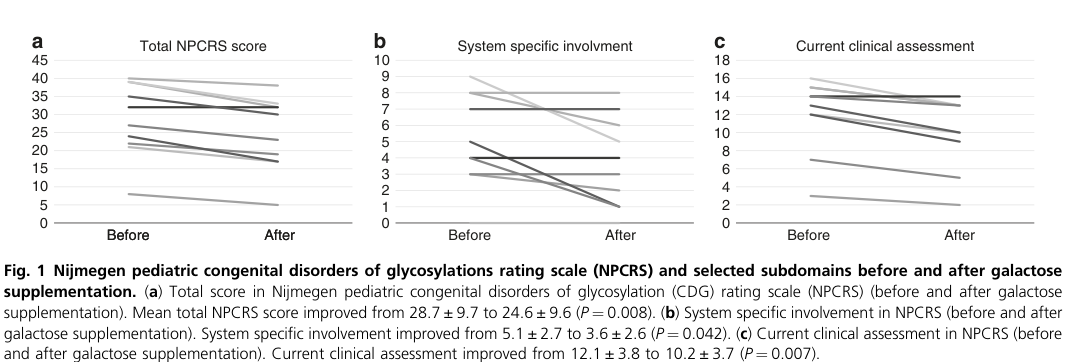
10 patients showed improvements in clinical severity (Nijmegen Pediatric CDG
Rating Scale), growth, development, gastrointestinal symptoms, and epilepsy,
with improved glycosylation and good tolerability.
therapeutic_modality: OTHER
treatment_term:
preferred_term: nutritional supplementation
term:
id: NCIT:C15433
label: Nutritional Support
therapeutic_agent:
- preferred_term: D-galactose
term:
id: CHEBI:12936
label: D-galactose
evidence:
- reference: PMID:32103184
reference_title: "Clinical and biochemical improvement with galactose supplementation in SLC35A2-CDG."
supports: SUPPORT
evidence_source: HUMAN_CLINICAL
snippet: "Oral D-galactose supplementation results in clinical and \nbiochemical improvement in SLC35A2-CDG. Galactose supplementation may partially \novercome the Golgi UDP-galactose deficiency and improves galactosylation."
explanation: Pilot interventional study demonstrating clinical and biochemical benefit of D-galactose supplementation.
- reference: PMID:25778940
reference_title: "A new case of UDP-galactose transporter deficiency (SLC35A2-CDG): molecular basis, clinical phenotype, and therapeutic approach."
supports: SUPPORT
evidence_source: HUMAN_CLINICAL
snippet: "The effect of dietary galactose supplementation on glycosylation was investigated, showing a nearly \ncomplete normalization of transferrin glycosylation."
explanation: Earlier case demonstrating biochemical (glycosylation) normalization with galactose supplementation.
- reference: PMID:37278968
reference_title: "D-galactose Supplementation for the Treatment of Mild Malformation of Cortical Development with Oligodendroglial Hyperplasia in Epilepsy (MOGHE): A Pilot Trial of Precision Medicine After Epilepsy Surgery."
supports: SUPPORT
evidence_source: HUMAN_CLINICAL
snippet: "Global responder rate was 9/12 (6/6 in \nSLC35A2-positive)."
explanation: Pilot precision-medicine trial showing D-galactose response in SLC35A2-positive MOGHE patients after epilepsy surgery.
- name: Antiseizure medication therapy
description: >-
Symptomatic management of epilepsy, although infantile-onset seizures are
frequently resistant to multiple antiseizure medications and ketogenic diet.
treatment_term:
preferred_term: anticonvulsant agent therapy
term:
id: NCIT:C64172
label: Anticonvulsant Therapy
evidence:
- reference: PMID:34122512
reference_title: "Four New Cases of SLC35A2-CDG With Novel Mutations and Clinical Features."
supports: SUPPORT
evidence_source: HUMAN_CLINICAL
snippet: "All patients had infantile onset epilepsies that were completely or partly resistant \nto multiple anti-epileptic medications or ketogenic diet."
explanation: Documents use of antiseizure medications, often with incomplete response.
- name: Epilepsy surgery
description: >-
For drug-resistant focal epilepsy associated with brain somatic SLC35A2
variants (MOGHE), surgical resection of the epileptogenic lesion can achieve
seizure freedom in a majority of patients.
treatment_term:
preferred_term: epilepsy surgery
term:
id: NCIT:C15656
label: Neurosurgical Procedure
evidence:
- reference: PMID:36307217
reference_title: "Clinical Features, Neuropathology, and Surgical Outcome in Patients With Refractory Epilepsy and Brain Somatic Variants in the SLC35A2 Gene."
supports: SUPPORT
evidence_source: HUMAN_CLINICAL
snippet: "We describe clinical, \ngenetic, neuroimaging, EEG, and histopathologic findings and assess possible \npredictors of postoperative seizure and cognitive outcome in 47 patients with \nrefractory epilepsy and brain somatic SLC35A2 gene variants"
explanation: Surgical cohort assessing postoperative seizure outcomes in brain somatic SLC35A2 epilepsy.
clinical_trials:
- name: NCT05402384
phase: PHASE_III
status: NOT_RECRUITING
description: >-
Multicenter, randomized, double-blind, placebo-controlled crossover trial of
AVTX-801 (medical-grade D-galactose) in subjects with SLC35A2-CDG, evaluating
efficacy and safety.
target_phenotypes:
- preferred_term: Seizure
term:
id: HP:0001250
label: Seizure
evidence:
- reference: clinicaltrials:NCT05402384
reference_title: "Evaluation of Efficacy and Safety of D-galactose Supplementation in SLC35A2-CDG, a Disorder of Hypogalactosylation"
supports: SUPPORT
snippet: "This is a multicenter, randomized, double-blind, placebo-controlled, cross-over study to evaluate the efficacy and safety of AVTX-801 in subjects with SLC35A2-CDG"
explanation: Confirms the trial evaluates D-galactose (AVTX-801) supplementation in SLC35A2-CDG.
- name: NCT04833322
phase: NOT_APPLICABLE
status: RECRUITING
description: >-
Trial of D-galactose as an add-on treatment for MOGHE, aiming to determine
whether it improves epilepsy and developmental outcomes in patients with
brain somatic SLC35A2 variants.
target_phenotypes:
- preferred_term: Seizure
term:
id: HP:0001250
label: Seizure
evidence:
- reference: clinicaltrials:NCT04833322
reference_title: "Galactose Supplementation for the Treatment of Patients With Mild Malformation of Cortical Development With Oligodendroglial Hyperplasia in Epilepsy (MOGHE): a Pilot Trial"
supports: SUPPORT
snippet: "the investigators aim to elucidate whether d-galactose as an add-on treatment might improve epilepsy and developmental outcomes in patients with MOGHE."
explanation: Confirms the trial tests D-galactose supplementation for MOGHE associated with SLC35A2 mosaicism.
references:
- reference: PMID:23561849
title: "Mosaicism of the UDP-galactose transporter SLC35A2 causes a congenital disorder of glycosylation."
- reference: PMID:30817854
title: "SLC35A2-CDG: Functional characterization, expanded molecular, clinical, and biochemical phenotypes of 30 unreported Individuals."
- reference: PMID:32103184
title: "Clinical and biochemical improvement with galactose supplementation in SLC35A2-CDG."
- reference: PMID:33407896
title: "Frequent SLC35A2 brain mosaicism in mild malformation of cortical development with oligodendroglial hyperplasia in epilepsy (MOGHE)."
- reference: PMID:36307217
title: "Clinical Features, Neuropathology, and Surgical Outcome in Patients With Refractory Epilepsy and Brain Somatic Variants in the SLC35A2 Gene."
- reference: PMID:25778940
title: "A new case of UDP-galactose transporter deficiency (SLC35A2-CDG): molecular basis, clinical phenotype, and therapeutic approach."
- reference: PMID:29907092
title: "Mosaicism of the UDP-Galactose transporter SLC35A2 in a female causing a congenital disorder of glycosylation: a case report."
- reference: PMID:34122512
title: "Four New Cases of SLC35A2-CDG With Novel Mutations and Clinical Features."
- reference: PMID:36831116
title: "N-Glycoprofiling of SLC35A2-CDG: Patient with a Novel Hemizygous Variant."
- reference: PMID:37278968
title: "D-galactose Supplementation for the Treatment of Mild Malformation of Cortical Development with Oligodendroglial Hyperplasia in Epilepsy (MOGHE): A Pilot Trial of Precision Medicine After Epilepsy Surgery."
discussions:
- discussion_id: gap_slc35a2_ogalnac_versus_nglycan_lesion
prompt: >-
Is the epileptogenic lesion in SLC35A2 disease a generalized
hypogalactosylation of N-glycans, or specifically a truncation of O-GalNAc
glycans on extracellular matrix proteins?
kind: KNOWLEDGE_GAP
status: OPEN
attaches_to:
- pathophysiology#Hypogalactosylation of Glycans
- pathophysiology#Brain Somatic Mosaicism and MOGHE
rationale: >-
SLC35A2 supplies UDP-galactose to every galactosyltransferase in the Golgi,
so the default reading is that all galactosylated glycoconjugates are
affected together and the brain is simply the most sensitive tissue. A 2026
forebrain-knockout study reports something narrower - a specific defect in
O-GalNAc glycan synthesis with other galactose-containing glycoconjugates
intact, truncated precursors accumulating on extracellular matrix
molecules, and a correlation between variant burden and glycan truncation
in human epilepsy tissue. If that holds, the therapeutic target and the
biomarker both change, and galactose supplementation would be expected to
work only insofar as it repletes the O-GalNAc branch. The finding is a
preprint and has not been reproduced, so this entry does not yet curate a
dedicated O-GalNAc node.
proposed_experiments:
- experiment_id: exp_slc35a2_glycan_class_survey_human_tissue
name: Glycan-class survey of resected MOGHE and germline SLC35A2 tissue
description: >-
Apply matched N-glycan, O-GalNAc, and glycolipid profiling to resected
MOGHE epileptogenic tissue and, where available, germline SLC35A2-CDG
brain, against epilepsy-surgery controls. If O-GalNAc truncation is
selective in both arms, it becomes the disease-defining lesion; if
N-glycan hypogalactosylation dominates in the germline arm, the two
subtypes differ mechanistically as well as clinically.
- experiment_id: exp_slc35a2_galactose_response_by_glycan_class
name: Which glycan class does galactose supplementation actually repair
description: >-
In SLC35A2-deficient neural cells, measure N-glycan and O-GalNAc
galactosylation before and after galactose loading. A galactose response
confined to one class would explain the partial and inconsistent clinical
responses reported for galactose supplementation in this disorder.
notes: >-
Two disease forms share this gene and little else. Germline SLC35A2-CDG is a
multisystem X-linked disorder detectable by serum transferrin screening;
brain-restricted somatic mosaicism causes MOGHE, where blood is typically
wild type, transferrin screening is normal, and the diagnosis requires
sequencing resected epileptogenic tissue. Phenotypes that depend on
body-wide transporter deficiency (transferrin profile, skeletal
abnormalities, dysmorphic features, failure to thrive) are tagged to the
Germline subtype for that reason. Shared phenotypes - epilepsy, epileptic
spasms, developmental delay - are deliberately left untagged, because both
arms produce them.
A 2026 preprint (PMID:41867720) proposes that the lesion is specifically
truncated O-GalNAc glycosylation rather than generalized
hypogalactosylation. That would be a substantial reframing, and it is
recorded as an open knowledge gap rather than curated as mechanism, because
it is a preprint and unreplicated.
datasets:
- accession: geo:GSE318030
title: Optimized Nuclei Isolation and snRNA-seq Reveal Oligodendrocyte Pathway Dysregulation in MOGHE Brain Tissue from Pediatric Patients.
description: >-
Single-nucleus RNA sequencing of resected MOGHE brain tissue from pediatric
patients, using a nuclei-isolation protocol optimized for frozen and
archived surgical specimens. Relevant to the somatic-mosaic subtype, where
resected epileptogenic tissue is the only accessible material.
organism:
preferred_term: human
term:
id: NCBITaxon:9606
label: Homo sapiens
data_type: SINGLE_CELL_RNA_SEQ
sample_count: 4
publication: PMID:42168328
notes: >-
Found by GEO DataSets search and verified against NCBI E-utilities on
2026-08-20; title, sample count, and organism are GEO's own values. The
GEO record lists no linked PMID, so the publication was matched by exact
title agreement with PMID:42168328 rather than taken from the record.
- accession: geo:GSE284073
title: Dysregulated cell states revealed by single-cell multiomics in mild malformations of cortical development with oligodendroglial hyperplasia in epilepsy
description: >-
Single-cell multiomic profiling of MOGHE tissue, mapping the dysregulated
cell states behind the oligodendroglial clusters, heterotopic neurons, and
white-matter hypomyelination that define the lesion.
organism:
preferred_term: human
term:
id: NCBITaxon:9606
label: Homo sapiens
data_type: MULTI_OMICS
sample_count: 8
publication: PMID:40293058
notes: >-
Found by GEO DataSets search and verified against NCBI E-utilities on
2026-08-20. DIRECT relevance to the somatic-mosaic MOGHE subtype.
References & Deep Research
References
10Deep Research
1Deep research results are used as seeds for research; they do not undergo the same validation as the main records and may contain errors. How we use deep research.
Question: You are an expert researcher providing comprehensive, well-cited information.
Provide detailed information focusing on: 1. Key concepts and definitions with current understanding 2. Recent developments and latest research (prioritize 2023-2024 sources) 3. Current applications and real-world implementations 4. Expert opinions and analysis from authoritative sources 5. Relevant statistics and data from recent studies
Format as a comprehensive research report with proper citations. Include URLs and publication dates where available. Always prioritize recent, authoritative sources and provide specific citations for all major claims.
Disease Characteristics Research Template
Target Disease
- Disease Name: SLC35A2-congenital disorder of glycosylation
- MONDO ID: (if available)
- Category: Mendelian
Research Objectives
Please provide a comprehensive research report on SLC35A2-congenital disorder of glycosylation covering all of the disease characteristics listed below. This report will be used to populate a disease knowledge base entry. Be thorough and cite primary literature (PMID preferred) for all claims.
For each section, suggested databases/resources are listed. These are the first places you should search for information on each topic.
1. Disease Information
Search first: OMIM, Orphanet, ICD-10/ICD-11, MeSH, PubMed
- What is the disease? Provide a concise overview.
- What are the key identifiers? (OMIM, Orphanet, ICD-10/ICD-11, MeSH, Mondo)
- What are the common synonyms and alternative names?
- Is the information derived from individual patients (e.g., EHR) or aggregated disease-level resources?
2. Etiology
- Disease Causal Factors: What are the primary causes? (genetic, environmental, infectious, mechanistic)
- Risk Factors:
Search first: PubMed, Cochrane Library, UpToDate, clinical guidelines, ClinVar, ClinGen, GWAS Catalog, PheGenI, CTD, CDC, WHO, epidemiological databases
- Genetic risk factors (causal variants, susceptibility loci, modifier genes)
- Environmental risk factors (toxins, lifestyle, occupational exposures, age, sex, family history)
- Protective Factors:
Search first: PubMed, Cochrane Library, clinical trial databases, GWAS Catalog, gnomAD, WHO, CDC, nutrition databases
- Genetic protective factors (protective variants, modifier alleles)
- Environmental protective factors (diet, lifestyle, exposures that reduce risk)
- Gene-Environment Interactions: How do genetic and environmental factors interact to influence disease?
Search first: CTD, PubMed, PheGenI, GxE databases
3. Phenotypes
Search first: HPO (Human Phenotype Ontology), OMIM, Orphanet, PubMed, clinicaltrials.gov, MedDRA, SNOMED CT, DECIPHER, LOINC
For each phenotype, provide: - Phenotype type: symptoms, clinical signs, physical manifestations, behavioral changes, or laboratory abnormalities
For symptoms/signs: HPO, OMIM, Orphanet, PubMed For behavioral changes: HPO, DSM, RDoC (Research Domain Criteria), PubMed For laboratory abnormalities: LOINC, SNOMED CT, LabTests Online, PubMed - Phenotype characteristics: Search first: OMIM, Orphanet, HPO, PubMed - Age of symptom onset (neonatal, childhood, adult-onset, late-onset) - Symptom severity (mild, moderate, severe, variable) - Symptom progression (stable, progressive, episodic, fluctuating) - Frequency among affected individuals (percentage or qualitative) - Quality of life impact: Effects on daily functioning and well-being (per-phenotype when possible) Search first: EQ-5D database, SF-36, WHO QOL databases, PubMed - Suggest HPO (Human Phenotype Ontology) terms for each phenotype
4. Genetic/Molecular Information
- Causal Genes: Gene mutations or chromosomal abnormalities responsible for disease (gene symbols, OMIM IDs)
Search first: OMIM, ClinVar, HGMD, Ensembl, NCBI Gene
- Pathogenic Variants:
- Affected genes (gene symbols, HGNC IDs) > Search first: OMIM, NCBI Gene, Ensembl, HGNC, UniProt, GeneCards
- Variant classification (pathogenic, likely pathogenic, VUS per ACMG/AMP guidelines) > Search first: ClinVar, ClinGen, ACMG/AMP guidelines, VarSome
- Variant type/class (missense, frameshift, nonsense, splice-site, structural)
- Allele frequency in population databases > Search first: gnomAD, 1000 Genomes, ExAC, TOPMed, dbSNP
- Somatic vs germline origin > Search first: COSMIC (somatic), ClinVar, ICGC, TCGA
- Functional consequences (loss of function, gain of function, dominant negative)
- Modifier Genes: Genes that modify disease severity or expression
- Epigenetic Information: DNA methylation, histone modifications, chromatin changes affecting disease
Search first: ENCODE, Roadmap Epigenomics, MethBase, DiseaseMeth
- Chromosomal Abnormalities: Large-scale genetic changes (aneuploidy, translocations, inversions)
Search first: DECIPHER, ClinVar, ECARUCA, UCSC Genome Browser
5. Environmental Information
- Environmental Factors: Non-genetic contributing factors (toxins, radiation, pollution, occupational exposure)
Search first: CTD (Comparative Toxicogenomics Database), TOXNET, PubMed, EPA databases
- Lifestyle Factors: Behavioral factors (smoking, diet, exercise, alcohol consumption)
Search first: CDC databases, WHO, PubMed, NHANES
- Infectious Agents: If applicable, pathogens causing or triggering disease (bacteria, viruses, fungi, parasites)
Search first: NCBI Taxonomy, ViPR, BV-BRC, MicrobeDB, GIDEON
6. Mechanism / Pathophysiology
- Molecular Pathways: Specific signaling cascades or biochemical pathways involved (Wnt, MAPK, mTOR, PI3K-AKT, etc.)
Search first: KEGG, Reactome, WikiPathways, PathBank, BioCyc
- Cellular Processes: Cell-level mechanisms (apoptosis, autophagy, cell cycle dysregulation, inflammation, etc.)
Search first: Gene Ontology (GO), Reactome, KEGG, PubMed
- Protein Dysfunction: How protein structure or function is altered (misfolding, aggregation, loss of function, gain of function)
Search first: UniProt, PDB (Protein Data Bank), InterPro, Pfam, AlphaFold
- Metabolic Changes: Alterations in metabolic processes (energy metabolism, lipid metabolism, amino acid metabolism)
Search first: KEGG, BioCyc, HMDB (Human Metabolome Database), BRENDA
- Immune System Involvement: Role of immune response (autoimmunity, immunodeficiency, chronic inflammation)
Search first: ImmPort, Immunome Database, IEDB, Gene Ontology
- Tissue Damage Mechanisms: How tissues/ are injured (oxidative stress, ischemia, fibrosis, necrosis)
Search first: PubMed, Gene Ontology, Reactome
- Biochemical Abnormalities: Specific molecular defects (enzyme deficiencies, receptor dysfunction, ion channel defects)
Search first: BRENDA, UniProt, KEGG, OMIM, PubMed
- Epigenetic Changes: DNA methylation, histone modifications affecting gene expression in disease
Search first: ENCODE, Roadmap Epigenomics, MethBase, DiseaseMeth
- Molecular Profiling (if available):
- Transcriptomics/gene expression changes > Search first: GEO (Gene Expression Omnibus), ArrayExpress, GTEx, Human Cell Atlas, SRA
- Proteomics findings > Search first: PRIDE, ProteomeXchange, Human Protein Atlas, STRING, BioGRID
- Metabolomics signatures > Search first: MetaboLights, Metabolomics Workbench, HMDB, METLIN
- Lipidomics alterations > Search first: LIPID MAPS, SwissLipids, LipidHome, Metabolomics Workbench
- Genomic structural features > Search first: UCSC Genome Browser, Ensembl, NCBI, dbVar, DGV
- Advanced Technologies (if applicable):
- Single-cell analysis findings (cell-type specific mechanisms, cellular heterogeneity) > Search first: Human Cell Atlas, Single Cell Portal, GEO, CELLxGENE
- Spatial transcriptomics findings > Search first: GEO, Spatial Research, Vizgen, 10x Genomics data
- Multi-omics integration results > Search first: TCGA, ICGC, cBioPortal, LinkedOmics, PubMed
- Functional genomics screens (CRISPR, RNAi) > Search first: DepMap, GenomeRNAi, PubMed, BioGRID ORCS
For each mechanism, describe: - The causal chain from initial trigger to clinical manifestation - Which mechanisms are upstream vs downstream - What cell types and biological processes are involved - Suggest GO terms for biological processes and CL terms for cell types
7. Anatomical Structures Affected
- Organ Level:
- Primary organs directly affected
- Secondary organ involvement (complications, secondary effects)
- Body systems involved (cardiovascular, nervous, digestive, respiratory, endocrine, etc.)
Search first: Uberon, FMA (Foundational Model of Anatomy), OMIM, HPO, ICD-11, MeSH, SNOMED CT
- Tissue and Cell Level:
- Specific tissue types affected (epithelial, connective, muscle, nervous)
- Specific cell populations targeted (with Cell Ontology terms)
Search first: Uberon, Human Protein Atlas, Cell Ontology, Human Cell Atlas, CellMarker, PanglaoDB
- Subcellular Level:
- Cellular compartments involved (mitochondria, nucleus, ER, lysosomes) (with GO Cellular Component terms)
Search first: Gene Ontology (Cellular Component), UniProt, Human Protein Atlas
- Localization:
- Specific anatomical sites (with UBERON terms) > Search first: FMA, Uberon, NeuroNames (for brain), SNOMED CT
- Lateralization (unilateral, bilateral, asymmetric) > Search first: HPO, clinical literature, imaging databases
8. Temporal Development
- Onset:
- Typical age of onset (congenital, pediatric, adult, geriatric)
- Onset pattern (acute, subacute, chronic, insidious)
Search first: OMIM, Orphanet, HPO, PubMed
- Progression:
- Disease stages (early, intermediate, advanced, end-stage) > Search first: Cancer Staging Manual (AJCC), WHO classifications, PubMed
- Progression rate (rapid, slow, variable)
- Disease course pattern (episodic, relapsing-remitting, progressive, stable)
- Disease duration (self-limited, chronic lifelong)
Search first: Disease registries, longitudinal cohort databases, natural history studies, PubMed, Orphanet, OMIM
- Patterns:
- Remission patterns (spontaneous, treatment-induced) > Search first: Clinical trial databases, disease registries, PubMed
- Critical periods (time windows of vulnerability or opportunity for intervention) > Search first: PubMed, developmental biology databases, clinical guidelines
9. Inheritance and Population
- Epidemiology:
- Prevalence (cases per 100,000 at given time)
- Incidence (new cases per 100,000 per year)
Search first: Orphanet, CDC, WHO, GBD (Global Burden of Disease), national registries, SEER, disease registries
- For Genetic Etiology:
- Inheritance pattern (AD, AR, X-linked, mitochondrial, multifactorial, polygenic) > Search first: OMIM, Orphanet, ClinVar, GTR (Genetic Testing Registry)
- Penetrance (complete, incomplete, age-dependent) > Search first: ClinVar, OMIM, PubMed, ClinGen
- Expressivity (variable, consistent) > Search first: OMIM, ClinVar, PubMed
- Genetic anticipation (increasing severity in successive generations) > Search first: OMIM, PubMed (especially for repeat expansion disorders)
- Germline mosaicism > Search first: ClinVar, OMIM, genetic counseling literature, PubMed
- Founder effects (population-specific mutations) > Search first: gnomAD, population genetics databases, PubMed
- Consanguinity role > Search first: OMIM, population studies, genetic counseling resources
- Carrier frequency > Search first: gnomAD, carrier screening databases, GeneReviews, GTR
- Population Demographics:
- Affected populations (ethnic or demographic groups with higher prevalence) > Search first: gnomAD, 1000 Genomes, PAGE Study, PubMed, population registries
- Geographic distribution (endemic areas, regional variation) > Search first: WHO, CDC, GBD, Orphanet, geographic epidemiology databases
- Geographic distribution of specific variants
- Sex ratio (male:female) > Search first: Disease registries, OMIM, PubMed, epidemiological databases
- Age distribution of affected individuals > Search first: CDC, disease registries, SEER, Orphanet
10. Diagnostics
- Clinical Tests:
- Laboratory tests (blood, urine, tissue chemistry, specific enzyme assays) > Search first: LOINC, LabTests Online, PubMed
- Biomarkers (proteins, metabolites, genetic markers, circulating biomarkers) > Search first: FDA Biomarker List, BEST (Biomarkers, EndpointS, and other Tools), PubMed
- Imaging studies (X-ray, CT, MRI, PET, ultrasound) > Search first: RadLex, DICOM, Radiopaedia, imaging databases
- Functional tests (pulmonary function, cardiac stress tests) > Search first: LOINC, clinical guidelines, PubMed
- Electrophysiology (EEG, EMG, ECG, nerve conduction studies) > Search first: LOINC, clinical neurophysiology databases, PubMed
- Biopsy findings (histopathology, immunohistochemistry) > Search first: SNOMED CT, College of American Pathologists resources, PubMed
- Pathology findings (microscopic examination) > Search first: SNOMED CT, Digital Pathology databases, PubMed
- Genetic Testing:
Search first: GTR (Genetic Testing Registry), GeneReviews, ClinGen
- Overview of recommended genetic testing approach
- Whole genome sequencing (WGS) utility > Search first: GTR, ClinVar, GEL (Genomics England), gnomAD
- Whole exome sequencing (WES) utility > Search first: GTR, ClinVar, OMIM, GeneMatcher
- Gene panels (which panels, which genes) > Search first: GTR, ClinVar, laboratory-specific databases
- Single gene testing > Search first: GTR, ClinVar, OMIM, GeneReviews
- Chromosomal microarray (CMA) > Search first: DECIPHER, ClinVar, dbVar, ECARUCA
- Karyotyping > Search first: Chromosome Abnormality Database, ClinVar, cytogenetics resources
- FISH > Search first: ClinVar, cytogenetics databases, PubMed
- Mitochondrial DNA testing > Search first: MITOMAP, MSeqDR, ClinVar, GTR
- Repeat expansion testing > Search first: GTR, ClinVar, repeat expansion databases, PubMed
- Omics-Based Diagnostics (if applicable):
- RNA sequencing / transcriptomics > Search first: GEO, ArrayExpress, GTEx, RNA-seq databases
- Proteomics > Search first: PRIDE, ProteomeXchange, FDA Biomarker database
- Metabolomics > Search first: MetaboLights, Metabolomics Workbench, HMDB
- Epigenomics > Search first: GEO, ENCODE, Roadmap Epigenomics, MethBase
- Liquid biopsy > Search first: COSMIC, ClinVar, liquid biopsy databases, PubMed
- Clinical Criteria:
- Standardized diagnostic criteria (DSM, ICD, society guidelines) > Search first: DSM-5, ICD-11, clinical society guidelines, UpToDate
- Differential diagnosis (other conditions to rule out, with distinguishing features) > Search first: DynaMed, UpToDate, clinical decision support systems
- Screening:
- Screening methods for asymptomatic individuals (newborn screening, carrier screening, cascade screening) > Search first: ACMG recommendations, CDC newborn screening, GTR
11. Outcome/Prognosis
- Survival and Mortality:
- Survival rate (5-year, 10-year, overall) > Search first: SEER, cancer registries, disease-specific registries, PubMed
- Life expectancy (with and without treatment if applicable) > Search first: Orphanet, disease registries, actuarial databases, PubMed
- Mortality rate > Search first: CDC, WHO, GBD, national mortality databases
- Disease-specific mortality (deaths directly attributable to disease) > Search first: Disease registries, CDC Wonder, GBD, PubMed
- Morbidity and Function:
- Morbidity (disease-related disability and health impacts) > Search first: GBD, WHO, disability databases, PubMed
- Disability outcomes (long-term functional impairments) > Search first: ICF (International Classification of Functioning), disability registries
- Quality of life measures (EQ-5D, SF-36, PROMIS, disease-specific tools) > Search first: EQ-5D database, SF-36, PROMIS, PubMed
- Disease Course:
- Complications (secondary problems: infections, organ failure, etc.) > Search first: ICD codes, disease registries, clinical databases, PubMed
- Recovery potential (likelihood and extent of recovery, with vs without treatment) > Search first: Natural history studies, rehabilitation databases, PubMed
- Prediction:
- Prognostic factors (age, disease severity, biomarkers, treatment response) > Search first: Prognostic models databases, clinical calculators, PubMed
- Prognostic biomarkers (molecular markers predicting disease course) > Search first: FDA Biomarker database, PubMed, cancer prognostic databases
12. Treatment
- Pharmacotherapy:
- Pharmacological treatments (drug names, drug classes, mechanisms of action) > Search first: DrugBank, RxNorm, ATC classification, DailyMed, FDA databases
- Pharmacogenomics (how genetic variants affect drug metabolism, efficacy, toxicity) > Search first: PharmGKB, CPIC (Clinical Pharmacogenetics), FDA Table of PGx Biomarkers
- Advanced Therapeutics:
- Gene therapy (viral vectors, CRISPR, gene replacement, gene editing) > Search first: ClinicalTrials.gov, FDA gene therapy database, ASGCT resources
- Cell therapy (stem cell transplant, CAR-T, cellular therapeutics) > Search first: ClinicalTrials.gov, FDA cell therapy database, FACT standards
- RNA-based therapies (ASOs, siRNA, mRNA therapies) > Search first: ClinicalTrials.gov, FDA approvals, PubMed
- Targeted therapies (treatments directed at specific molecular targets) > Search first: My Cancer Genome, OncoKB, ClinicalTrials.gov, FDA approvals
- Immunotherapies (checkpoint inhibitors, monoclonal antibodies) > Search first: Cancer Immunotherapy Database, FDA approvals, ClinicalTrials.gov
- Surgical and Interventional:
- Surgical interventions (types of surgery, timing, outcomes) > Search first: CPT codes, surgical registries, clinical guidelines, PubMed
- Supportive and Rehabilitative:
- Supportive care (symptom management, pain control, nutrition) > Search first: Clinical guidelines, Cochrane Library, PubMed
- Rehabilitation (physical therapy, occupational therapy, speech therapy) > Search first: Rehabilitation medicine databases, clinical guidelines, PubMed
- Experimental:
- Experimental treatments in clinical trials (with NCT identifiers if available) > Search first: ClinicalTrials.gov, EU Clinical Trials Register, WHO ICTRP
- Treatment Outcomes:
- Treatment response rates > Search first: Clinical trial databases, FDA reviews, systematic reviews, PubMed
- Side effects and adverse events > Search first: FDA Adverse Event Reporting System (FAERS), MedWatch, PubMed
- Treatment Strategy:
- Treatment algorithms (clinical pathways, decision trees) > Search first: Clinical practice guidelines, NCCN Guidelines, UpToDate
- Combination therapies > Search first: ClinicalTrials.gov, treatment guidelines, PubMed
- Personalized medicine approaches (genotype-guided treatment) > Search first: My Cancer Genome, CIViC, PharmGKB, precision medicine databases
For each treatment, suggest MAXO (Medical Action Ontology) terms where applicable.
13. Prevention
- Prevention Levels:
- Primary prevention (preventing disease occurrence: vaccination, risk factor modification) > Search first: CDC, WHO, USPSTF recommendations, Cochrane Library
- Secondary prevention (early detection and treatment: screening programs, early intervention) > Search first: USPSTF, CDC screening guidelines, WHO
- Tertiary prevention (preventing complications in those with disease) > Search first: Clinical guidelines, disease management protocols, PubMed
- Immunization: Vaccine strategies (if applicable)
Search first: CDC vaccine schedules, WHO immunization, FDA vaccine database
- Screening and Early Detection:
- Screening programs (population-based: newborn screening, cancer screening) > Search first: CDC screening programs, USPSTF, cancer screening databases
- Genetic screening (carrier screening, preimplantation genetic diagnosis, prenatal testing) > Search first: ACMG recommendations, ACOG guidelines, GTR
- Risk stratification (identifying high-risk individuals for targeted prevention) > Search first: Risk prediction models, clinical calculators, PubMed
- Behavioral Interventions: Lifestyle modifications to reduce risk
Search first: CDC, WHO, behavioral intervention databases, Cochrane Library
- Counseling: Genetic counseling (risk assessment, family planning guidance)
Search first: NSGC resources, ACMG guidelines, GeneReviews
- Public Health:
- Public health interventions (sanitation, vector control, health education) > Search first: CDC, WHO, public health databases, PubMed
- Environmental interventions (reducing environmental risk factors) > Search first: EPA databases, WHO environmental health, PubMed
- Prophylaxis: Preventive medications or procedures
Search first: Clinical guidelines, FDA approvals, PubMed
14. Other Species / Natural Disease
- Taxonomy: Species affected (with NCBI Taxon identifiers)
Search first: NCBI Taxonomy
- Breed: Specific breeds affected (with VBO identifiers if applicable)
Search first: VBO (Vertebrate Breed Ontology)
- Gene: Orthologous genes in other species (with NCBI Gene IDs)
Search first: NCBI Gene
- Natural Disease:
- Naturally occurring disease in other species (companion animals, wildlife) > Search first: OMIA (Online Mendelian Inheritance in Animals), VetCompass, PubMed
- Veterinary relevance and importance in animal health > Search first: OMIA, veterinary databases, PubMed
- Comparative Biology:
- Comparative pathology (similarities and differences across species) > Search first: OMIA, comparative pathology databases, PubMed
- Evolutionary conservation of disease mechanisms > Search first: HomoloGene, OrthoMCL, Alliance of Genome Resources
- Transmission (if applicable):
- Zoonotic potential > Search first: CDC zoonotic diseases, WHO zoonoses, GIDEON
- Cross-species susceptibility > Search first: NCBI Taxonomy, veterinary databases, PubMed
15. Model Organisms
- Model Types:
- Model organism type (mammalian, invertebrate, cellular, in vitro) > Search first: Alliance of Genome Resources, model organism databases
- Specific model systems (mouse, rat, zebrafish, Drosophila, C. elegans, yeast, cell lines, organoids, iPSCs) > Search first: MGI, RGD, ZFIN, FlyBase, WormBase, SGD, ATCC, Cellosaurus
- Induced models (drug treatment, surgical intervention, environmental manipulation) > Search first: MGI, model organism databases, PubMed
- Genetic Models:
- Types available (knockout, knock-in, transgenic, conditional, humanized) > Search first: MGI, IMPC, KOMP, EuMMCR, IMSR
- Model Characteristics:
- Phenotype recapitulation (how well model reproduces human disease features) > Search first: Model organism databases, comparative studies, PubMed
- Model limitations (aspects of human disease not captured) > Search first: Model organism databases, PubMed, review articles
- Applications:
- Research applications (what aspects of disease can be studied) > Search first: Model organism databases, PubMed
- Resources:
- Model databases > Search first: MGI, RGD, ZFIN, FlyBase, WormBase, IMSR, EMMA, MMRRC
Citation Requirements
- Cite primary literature (PMID preferred) for all mechanistic and clinical claims
- Prioritize recent reviews and landmark papers
- Include direct quotes from abstracts where possible to support key statements
- Distinguish evidence source types: human clinical, model organism, in vitro, computational
Output Format
Structure your response as a comprehensive narrative organized by the sections above. For each section, provide: - Factual content with specific details (numbers, percentages, gene names, variant nomenclature) - Ontology term suggestions (HPO, GO, CL, UBERON, CHEBI, MAXO, MONDO) where applicable - Evidence citations with PMIDs - Direct quotes from abstracts to support key claims - Clear indication when information is not available or not applicable for this disease
This report will be used to populate a disease knowledge base entry with: - Pathophysiology descriptions with causal chains - Gene/protein annotations (HGNC, GO terms) - Phenotype associations (HP terms) with frequencies - Cell type involvement (CL terms) - Anatomical locations (UBERON terms) - Chemical entities (CHEBI terms) - Treatment annotations (MAXO terms) - Evidence items with PMIDs and exact abstract quotes - Epidemiology, prognosis, diagnostic, and prevention information - Animal model descriptions with phenotype recapitulation details
SLC35A2–congenital disorder of glycosylation (SLC35A2-CDG): Comprehensive disease characteristics report
Executive summary
SLC35A2-congenital disorder of glycosylation (SLC35A2-CDG; historical name CDG-IIm) is an X-linked glycosylation disorder caused by pathogenic variants in SLC35A2, which encodes the major Golgi UDP-galactose transporter needed for proper protein and lipid glycosylation. Loss of transporter activity produces hypogalactosylated glycans and secondary hyposialylation, with a phenotype dominated by neurodevelopmental impairment and frequently epilepsy/developmental and epileptic encephalopathy (DEE). A key practical diagnostic challenge is that serum transferrin glycosylation can be normal or normalize over time, so genomic testing and/or functional assays in fibroblasts plus mass-spectrometry glycomics can be required. Oral D-galactose supplementation has shown clinical and biochemical benefit in a small pilot study, and randomized crossover trials are registered/ongoing. Somatic (brain-restricted) SLC35A2 mosaicism is also a major cause of malformation-associated drug-resistant epilepsy (notably MOGHE), where epilepsy surgery and adjunct D-galactose are being studied.
| Citation (first author year) | Publication date | Study type (case report/cohort/trial/review) | Population/model (n, key demographics) | Key findings (clinical features, diagnostics, mechanism) | Quantitative data (phenotype frequencies, outcomes, VAFs, P-values) | URL/DOI | PMID |
|---|---|---|---|---|---|---|---|
| Ng 2013 (AJHG) | Apr 2013 | Foundational case series / gene discovery | 3 unrelated families with X-linked SLC35A2-CDG; included 2 affected males with somatic mosaicism and 1 hemizygous male | Defined SLC35A2-CDG as an X-linked CDG due to defects in the Golgi UDP-galactose transporter; abnormal infant transferrin glycosylation may normalize later; functional studies showed reduced UDP-galactose transport | 3 families; 2 males somatic mosaics; exome review from 16 unrelated unresolved CDG cases; abnormal transferrin normalized later in childhood without clinical improvement; “considerably reduced” UDP-galactose transport in all 3 (ng2013mosaicismofthe pages 1-2) | https://doi.org/10.1016/j.ajhg.2013.03.012 | |
| Westenfield 2018 (BMC Med Genet) | Jun 2018 | Case report | 1 female, age 27 months, mosaic missense SLC35A2 variant c.991G>A | Expanded phenotype in a female mosaic case: developmental delay, central hypotonia, cerebral atrophy, failure to thrive/growth retardation; highlighted that transferrin isoform analysis can miss cases and WES can diagnose | At time of report, only ~10 patients with SLC35A2 mutations had been reported; transferrin isoform analysis failed to identify this patient in infancy (westenfield2018mosaicismofthe pages 1-2) | https://doi.org/10.1186/s12881-018-0617-6 | |
| Ng 2019 (Hum Mutat) | Jul 2019 | Multicenter cohort with functional characterization | 30 unreported affected individuals; cohort explicitly 29 females and 1 male in extracted text; most identified by NGS | Largest early cohort; expanded molecular/clinical spectrum; many patients had normal transferrin glycosylation, so routine serum screening is insensitive; fibroblast UDP-galactose transport assay correlated with wild-type:mutant allele ratio | 30 individuals; 26 new variants; 29/30 identified by NGS; 26/30 de novo; variant classes: 15 missense, 7 out-of-frame INDELs, 4 nonsense, 2 in-frame deletions, 1 essential splice-site, 1 start-loss; only 5/21 in this cohort had abnormal transferrin and only 5/32 previously reported individuals had abnormal transferrin (ng2019slc35a2‐cdgfunctionalcharacterization pages 13-14, ng2019slc35a2‐cdgfunctionalcharacterization pages 5-6, ng2019slc35a2‐cdgfunctionalcharacterization pages 3-4) | https://doi.org/10.1002/humu.23731 | |
| Witters 2020 (Genet Med) | Jun 2020 | Pilot interventional treatment study | 10 SLC35A2-CDG patients treated with oral D-galactose for 18 weeks; glycomics available in 8 | Oral D-galactose improved clinical severity and glycosylation; benefits seen in growth, development, GI symptoms, and some epilepsy outcomes; treatment was well tolerated | Dose escalation: 0.5 g/kg/day (weeks 0–6), 1.0 g/kg/day (weeks 7–12), 1.5 g/kg/day up to max 50 g/day (weeks 13–18); NPCRS total 28.7±9.7 to 24.6±9.6 (P=0.008), current clinical assessment 12.1±3.8 to 10.2±3.7 (P=0.007), system-specific involvement 5.1±2.7 to 3.6±2.6 (P=0.042), growth improved (P=0.023), developmental progress (P=0.008); 2/4 frequent-seizure patients had resolution; M-gal/Di-SA 0.74±1.27 to 0.45±0.68 (P=0.011), M-sialo/disialo 0.51±0.10 to 0.42±0.09 (P=0.017); no serious adverse effects (witters2020clinicalandbiochemical pages 3-4, witters2020clinicalandbiochemical pages 1-2, witters2020clinicalandbiochemical pages 4-6, witters2020clinicalandbiochemical pages 2-3, witters2020clinicalandbiochemical media c245b84a) | https://doi.org/10.1038/s41436-020-0767-8 | |
| Bonduelle 2021 (Acta Neuropathol Commun) | Jan 2021 | Brain tissue cohort / neuropathology-genetics study | 20 surgical MOGHE brain samples in discovery cohort; international total of 26 SLC35A2-MOGHE cases assembled | Established frequent brain-restricted SLC35A2 mosaicism as a genetic marker for MOGHE, a lesion associated with pediatric drug-resistant focal epilepsy; variants likely arise in neuroglial progenitors | Somatic pathogenic SLC35A2 variants in 9/20 (45%) MOGHE cases; mosaic rates 7%–52%; multicenter series totaled 26 SLC35A2-MOGHE cases; variant enrichment found in clustered oligodendroglial cells and heterotopic neurons (OpenTargets Search: congenital disorder of glycosylation-SLC35A2) | https://doi.org/10.1186/s40478-020-01085-3 | |
| Abuduxikuer 2021 (Front Genet) | May 2021 | Case series + literature summary | 4 unrelated female patients from Han Chinese families, all with de novo deleterious SLC35A2 variants | All had infantile-onset epilepsy, often refractory to multiple ASMs or ketogenic diet; expanded mutation spectrum (splice-site, large deletion, frameshifts) and clinical features | In case series: 4/4 infantile-onset epilepsies, 3/4 severe developmental delay; literature summary frequencies: developmental delay 100% (62/62), hypotonia 90% (54/60), intellectual disability 97% (29/30), facial dysmorphism 85% (53/62), epilepsy 83% (52/63), skeletal abnormalities 83% (43/52) (abuduxikuer2021fournewcases pages 4-5) | https://doi.org/10.3389/fgene.2021.658786 | |
| Kodrikova 2023 (Biomedicines) | Feb 2023 | Case report with detailed glycoprofiling | 1 male patient with de novo hemizygous missense variant c.461T>C (p.Leu154Pro) | Demonstrated detailed serum N-glycan and transferrin/apoC-III profiling in SLC35A2-CDG; identified candidate biomarker set of agalactosylated and monogalactosylated glycans; emphasized hypogalactosylation as diagnostic signature | Report notes >80% of patients have neurological symptoms; liver involvement ~40%; failure to thrive 77% in cited cohort; among reported male patients, 7/8 had abnormal transferrin IEF; observed increased agalactosylated and monogalactosylated glycans including Hex3HexNAc4-5, Hex3HexNAc5Fuc1, Hex4HexNAc4±NeuAc1 (kodrikova2023nglycoprofilingofslc35a2cdg pages 6-7) | https://doi.org/10.3390/biomedicines11020580 | |
| Barba 2023 (Neurology) | Jan 2023 | Multicenter retrospective surgical cohort | 47 patients with refractory epilepsy and brain somatic SLC35A2 variants | Defined two major brain-somatic phenotypes: early epileptic encephalopathy and drug-resistant focal epilepsy; most had MOGHE pathology; surgery often improved seizure outcome | 39/47 EE and 8/47 DR-FE; MRI abnormal in all EE and 50% of DR-FE; MOGHE in 44/47; 42 distinct variants: 14 missense (33.3%), 13 frameshift (30.9%), 10 nonsense (23.8%), 4 in-frame del/dup (9.5%), 1 splice (2.4%); VAF 1.4%–52.6% (mean 17.3±13.5); follow-up 35.5±21.5 months; Engel I in 30/47 (63.8%), Engel IA in 26/47 (55.3%) (barba2023clinicalfeaturesneuropathology pages 1-2) | https://doi.org/10.1212/WNL.0000000000201471 |
Table: This table summarizes the most informative retrieved studies on SLC35A2-CDG, including foundational gene-discovery papers, major patient cohorts, treatment data, glycoprofiling studies, and brain-somatic epilepsy/MOGHE literature. It highlights study design, population, major clinical and mechanistic findings, and the most useful quantitative results for knowledge-base curation.
1. Disease information
Definition and overview
SLC35A2-CDG is defined as an X-linked congenital disorder of glycosylation caused by pathogenic variants in the Golgi-localized UDP-galactose transporter SLC35A2 (solute carrier family 35 member A2), producing impaired galactosylation of glycoconjugates and multisystem disease with prominent neurologic involvement. This was first established by biochemical and exome sequencing evidence showing that SLC35A2 mutations “define an undiagnosed X-linked congenital disorder of glycosylation (CDG)” in unrelated families. (ng2013mosaicismofthe pages 1-2)
Key identifiers
- MONDO (general CDG family): congenital disorder of glycosylation MONDO:0015286 (OpenTargets disease entity; note: this is not necessarily the most specific MONDO term for SLC35A2-CDG). (OpenTargets Search: congenital disorder of glycosylation-SLC35A2)
- OMIM / Orphanet / ICD / MeSH (disease-specific): Not found within the retrieved full-text excerpts; requires direct lookup in OMIM/Orphanet/ICD/MeSH or retrieval of a source explicitly listing those identifiers.
Synonyms / alternative names
- SLC35A2-CDG; SLC35A2-congenital disorder(s) of glycosylation (ng2019slc35a2‐cdgfunctionalcharacterization pages 1-3)
- Historical synonym: CDG-IIm (ng2019slc35a2‐cdgfunctionalcharacterization pages 1-3)
- In some literature: “UDP-galactose transporter deficiency (SLC35A2-CDG)” (dorre2015anewcase pages 4-7)
Evidence source type
Evidence is largely from: * Aggregated disease-level cohorts/series (e.g., 30-person cohort; treatment cohort of 10). (ng2019slc35a2‐cdgfunctionalcharacterization pages 5-6, witters2020clinicalandbiochemical pages 3-4) * Individual case reports with deep biochemical profiling. (kodrikova2023nglycoprofilingofslc35a2cdg pages 6-7, westenfield2018mosaicismofthe pages 1-2) * Brain-tissue (somatic mosaic) epilepsy surgery cohorts. (barba2023clinicalfeaturesneuropathology pages 1-2, OpenTargets Search: congenital disorder of glycosylation-SLC35A2)
2. Etiology
Disease causal factors
Genetic (primary): Pathogenic variants in SLC35A2 (X-linked) disrupting UDP-galactose transport into the Golgi (and in some splice isoforms ER), impairing glycosylation. (ng2013mosaicismofthe pages 1-2, dorre2015anewcase pages 4-7)
Somatic mosaicism (important etiologic mode): Somatic mosaic SLC35A2 variants can cause classic SLC35A2-CDG presentations (including mosaic males) and can also cause brain-restricted mosaic epilepsy/MOGHE. (ng2013mosaicismofthe pages 1-2, westenfield2018mosaicismofthe pages 2-4, OpenTargets Search: congenital disorder of glycosylation-SLC35A2)
Risk factors
- De novo occurrence is common, so family history is often negative. In a 30-person cohort, 26/30 (87%) were de novo. (ng2019slc35a2‐cdgfunctionalcharacterization pages 5-6)
- Female predominance in germline SLC35A2-CDG cohorts, consistent with X-linked male lethality/selection hypotheses. In the 30-person cohort, 29/30 were female. (ng2019slc35a2‐cdgfunctionalcharacterization pages 5-6)
No credible environmental risk factors were identified in the retrieved evidence.
Protective factors / gene–environment interactions
No protective factors or gene–environment interaction data were found in the retrieved evidence.
3. Phenotypes
Core phenotype domains and frequencies
A literature summary (compiled in a 4-case report) reported the following high-frequency clinical features in published SLC35A2-CDG cases: * Developmental delay: 100% (62/62) (abuduxikuer2021fournewcases pages 4-5) * Intellectual disability: 97% (29/30) (abuduxikuer2021fournewcases pages 4-5) * Hypotonia: 90% (54/60) (abuduxikuer2021fournewcases pages 4-5) * Facial dysmorphism: 85% (53/62) (abuduxikuer2021fournewcases pages 4-5) * Epilepsy: 83% (52/63) (abuduxikuer2021fournewcases pages 4-5) * Skeletal abnormalities: 83% (43/52) with examples including short stature/short limbs, contractures, scoliosis, clubfoot, pes adductus, craniosynostosis. (abuduxikuer2021fournewcases pages 4-5)
Additional frequent complications reported in the same evidence set include substantial feeding problems (e.g., 75% feeding problems; 69% gastric-tube feeding) and common abnormal brain MRI features (e.g., delayed/hypomyelination 59%). (abuduxikuer2021fournewcases pages 5-6)
Examples of phenotype variability (case-based)
- A female mosaic case: developmental delay, central hypotonia, cerebral atrophy, and failure to thrive/growth retardation; importantly, she lacked seizures at the time of report, illustrating variability. (westenfield2018mosaicismofthe pages 1-2)
Phenotype characteristics
- Typical onset: infantile/early childhood; many cases present with early epilepsy/DEE or infantile spasms; growth and feeding issues can be early. (abuduxikuer2021fournewcases pages 4-5, barba2023clinicalfeaturesneuropathology pages 1-2)
- Severity: variable; can range from mild-to-moderate adaptive impairment to nonverbal/nonambulatory in prior reports; mosaicism/X-inactivation likely contributes. (westenfield2018mosaicismofthe pages 4-5)
- Progression: biochemical markers may improve/normalize over time without clinical improvement; neurodevelopmental disability is often persistent. (ng2013mosaicismofthe pages 1-2)
Suggested HPO terms (non-exhaustive)
(Phenotypes supported by evidence above) * Developmental delay — HP:0001263 (abuduxikuer2021fournewcases pages 4-5) * Intellectual disability — HP:0001249 (abuduxikuer2021fournewcases pages 4-5) * Hypotonia — HP:0001252 (abuduxikuer2021fournewcases pages 4-5) * Seizures / Epileptic encephalopathy — HP:0001250, HP:0200134 (DEE) (abuduxikuer2021fournewcases pages 4-5, witters2020clinicalandbiochemical pages 1-2) * Failure to thrive — HP:0001508 (westenfield2018mosaicismofthe pages 1-2) * Cerebral atrophy — HP:0002059 (westenfield2018mosaicismofthe pages 1-2) * Delayed myelination / Hypomyelination — HP:0012448 (westenfield2018mosaicismofthe pages 1-2) * Short stature — HP:0004322 (witters2020clinicalandbiochemical pages 1-2) * Dysmorphic features — HP:0001999 (broad; many specific terms may apply) (abuduxikuer2021fournewcases pages 4-5) * Skeletal abnormalities — HP:0000924 (broad) (abuduxikuer2021fournewcases pages 4-5)
Quality-of-life impact
Direct validated QoL instruments were not present in retrieved texts. However, major functional burdens include refractory epilepsy, severe developmental disability, and feeding impairment requiring gastrostomy in many cases. (abuduxikuer2021fournewcases pages 5-6, barba2023clinicalfeaturesneuropathology pages 1-2)
4. Genetic / molecular information
Causal gene
- SLC35A2 (solute carrier family 35 member A2), Xp11.23, encodes the UDP-galactose transporter. (barba2023clinicalfeaturesneuropathology pages 1-2)
Variant spectrum (germline CDG)
In the 30-individual cohort, variant classes among 30 variants were: 15 missense, 7 out-of-frame INDELs, 4 nonsense, 2 in-frame deletions, 1 essential splice-site loss, 1 start codon loss; most were de novo (26/30). (ng2019slc35a2‐cdgfunctionalcharacterization pages 5-6)
Mosaicism and X-inactivation
- Mosaic female case: SLC35A2 variant present in 20% of reads; skewed X-inactivation reported, supporting X-inactivation as a severity modifier. (westenfield2018mosaicismofthe pages 2-4, westenfield2018mosaicismofthe pages 4-5)
- Two affected males were reported as somatic mosaics in the discovery paper, supporting a role for mosaicism and possible selection against fully mutant cells. (ng2013mosaicismofthe pages 1-2)
Allele frequency
gnomAD constraint evidence was noted indirectly: no hemizygous/heterozygous truncating SLC35A2 variants for the canonical transcript in gnomAD were reported in the cohort excerpt. (ng2019slc35a2‐cdgfunctionalcharacterization pages 5-6)
Functional consequence
Loss/reduction of UDP-galactose transport into Golgi (and ER for one splice isoform) → hypogalactosylated glycans → clinical disease. (ng2013mosaicismofthe pages 1-2, dorre2015anewcase pages 4-7)
5. Environmental information
No disease-specific environmental or lifestyle contributors were identified in the retrieved literature excerpts.
6. Mechanism / pathophysiology
Core molecular mechanism
SLC35A2 is the “single known Golgi-localized UDP-galactose transporter” and pathogenic variants reduce UDP-galactose transport into the Golgi, causing “truncated … N-glycans … and … O-glycans” with incomplete terminal galactose and secondary sialylation defects. (ng2013mosaicismofthe pages 1-2)
Functional evidence and causal chain (human cells)
- Direct transporter assays: radiolabeled UDP-[6-3H]-galactose uptake in permeabilized fibroblasts demonstrates reduced Golgi UDP-galactose transport in affected individuals. (ng2013mosaicismofthe pages 1-2, ng2013mosaicismofthe pages 3-5)
- Lectin-based evidence: increased binding of GSII (terminal β-GlcNAc) and VVA/VVL (terminal α-GalNAc) indicates exposed termini due to lack of galactose capping. (ng2013mosaicismofthe pages 1-2, ng2013mosaicismofthe pages 3-5)
- Protein localization: SLC35A2 protein localizes to the Golgi; some variants reduce protein levels. (ng2019slc35a2‐cdgfunctionalcharacterization pages 10-11)
- Isoforms/localization: in a mechanistic case report, UGT1 localizes to Golgi, UGT2 to ER; the p.G266V allele showed “no relevant UGT-activity.” (dorre2015anewcase pages 4-7)
Brain-somatic mechanism (epilepsy/MOGHE)
Somatic brain SLC35A2 mutations are associated with malformations and drug-resistant epilepsy; a large Neurology cohort supports two phenotypes (early epileptic encephalopathy vs drug-resistant focal epilepsy) and a characteristic histopathology (MOGHE). (barba2023clinicalfeaturesneuropathology pages 1-2)
Suggested ontology terms
GO Biological Process (examples): * protein glycosylation — GO:0006486 (supported broadly by mechanism) (ng2013mosaicismofthe pages 1-2) * UDP-galactose transmembrane transport — (a specific UDP-galactose transport GO term may exist; not explicitly provided in evidence)
GO Cellular Component: * Golgi membrane / Golgi apparatus — e.g., GO:0000139 (Golgi membrane) or GO:0005794 (Golgi apparatus) (ng2019slc35a2‐cdgfunctionalcharacterization pages 10-11) * Endoplasmic reticulum — GO:0005783 (UGT2 isoform localization) (dorre2015anewcase pages 4-7)
Cell Ontology (CL) candidates (from brain-mosaic pathology): * oligodendrocyte — CL:0000128 (oligodendroglial hyperplasia; variant enrichment) (OpenTargets Search: congenital disorder of glycosylation-SLC35A2) * neuron — CL:0000540 (heterotopic neurons; variant enrichment) (OpenTargets Search: congenital disorder of glycosylation-SLC35A2)
7. Anatomical structures affected
Organ/system level
Dominant involvement: * Central nervous system (neurodevelopmental disability, epilepsy; cortical malformation lesions in somatic cases). (abuduxikuer2021fournewcases pages 4-5, barba2023clinicalfeaturesneuropathology pages 1-2)
Common additional involvement: * Growth/feeding systems (failure to thrive, feeding difficulties, gastrostomy). (westenfield2018mosaicismofthe pages 1-2, abuduxikuer2021fournewcases pages 5-6) * Skeletal system (skeletal abnormalities in many). (abuduxikuer2021fournewcases pages 4-5) * Liver involvement is reported in some summaries/case literature (e.g., neonatal transaminase elevation; liver involvement ~40% referenced in glycoprofiling paper). (kodrikova2023nglycoprofilingofslc35a2cdg pages 6-7, abuduxikuer2021fournewcases pages 5-6)
Tissue/cell level (UBERON/CL suggestions)
- Cerebral cortex — UBERON:0000956 (malformations; epilepsy focus) (barba2023clinicalfeaturesneuropathology pages 1-2)
- White matter — UBERON:0002315 (heterotopic neurons; hypomyelination; MOGHE) (OpenTargets Search: congenital disorder of glycosylation-SLC35A2, abuduxikuer2021fournewcases pages 5-6)
- Oligodendrocytes — CL:0000128 (OpenTargets Search: congenital disorder of glycosylation-SLC35A2)
Subcellular level
- Golgi apparatus — GO CC: Golgi apparatus (ng2019slc35a2‐cdgfunctionalcharacterization pages 10-11)
- Endoplasmic reticulum (isoform-specific) — GO CC: ER (dorre2015anewcase pages 4-7)
8. Temporal development
Onset
Often infantile/pediatric onset with developmental delay and commonly early epilepsy/DEE; in somatic-brain cohorts, epileptic spasms and early epileptic encephalopathy are common. (abuduxikuer2021fournewcases pages 4-5, barba2023clinicalfeaturesneuropathology pages 1-2)
Course
Biochemical markers can change over time: transferrin abnormalities may be present in infancy but can normalize later “without any corresponding clinical improvement,” consistent with selection against mutant cells. (ng2013mosaicismofthe pages 1-2)
9. Inheritance and population
Inheritance pattern
- X-linked, predominantly de novo variants in reported cohorts (e.g., 26/30 de novo). (ng2019slc35a2‐cdgfunctionalcharacterization pages 5-6, ng2013mosaicismofthe pages 1-2)
- Mosaicism (somatic and/or due to X-inactivation patterns in females) is frequent and clinically important. (westenfield2018mosaicismofthe pages 2-4, ng2013mosaicismofthe pages 1-2)
Sex distribution
- Strong female predominance in germline CDG cohorts (29 females/1 male in a 30-person cohort). (ng2019slc35a2‐cdgfunctionalcharacterization pages 5-6)
Epidemiology
No prevalence/incidence estimates specific to SLC35A2-CDG were found in the retrieved evidence. The disorder is described as rare and was historically known from small numbers of patients early in its description. (westenfield2018mosaicismofthe pages 1-2)
10. Diagnostics
Biochemical screening: transferrin and glycosylation
- Transferrin isoelectric focusing (IEF)/CDT can show a CDG type II pattern in some cases. (kodrikova2023nglycoprofilingofslc35a2cdg pages 6-7, dorre2015anewcase pages 4-7)
- Major caveat: transferrin screening is often normal in SLC35A2-CDG and may normalize with age.
- In a 10-patient galactose trial cohort, only 4/10 had a type II transferrin pattern, whereas 8/8 tested had abnormalities on quantitative N-glycan assay. (witters2020clinicalandbiochemical pages 2-3)
- In a 30-person cohort, only 5/21 had abnormal transferrin results; in earlier published cases, only 5/32 had abnormal transferrin. (ng2019slc35a2‐cdgfunctionalcharacterization pages 13-14)
- Normalization over time without clinical improvement is documented (ng2013mosaicismofthe pages 1-2) and multiple case timelines show normalization by ages 1–3 years in several individuals. (westenfield2018mosaicismofthe pages 4-5)
Mass-spectrometry glycomics / glycoprofiling
A 2023 glycoprofiling report in a male with a novel hemizygous variant used transferrin IEF followed by MS-based analysis of transferrin and serum N-glycans and apoC-III O-glycans, observing increased agalactosylated and monogalactosylated N-glycans (candidate biomarkers). (kodrikova2023nglycoprofilingofslc35a2cdg pages 6-7)
Genetic testing
Because biochemical screening can be insensitive, genomic testing is frequently the diagnostic entry point: * In a 30-person cohort, 29/30 (97%) were identified by NGS. (ng2019slc35a2‐cdgfunctionalcharacterization pages 5-6) * A mosaic female case was not identified by transferrin isoform analysis in infancy and was diagnosed via WES. (westenfield2018mosaicismofthe pages 1-2)
Functional confirmation (fibroblasts)
A robust confirmation method is measurement of UDP-galactose transport in primary fibroblasts, which was impaired in all tested lines and correlated with wild-type:mutant allele ratio. (ng2019slc35a2‐cdgfunctionalcharacterization pages 10-11, ng2019slc35a2‐cdgfunctionalcharacterization pages 13-14)
Differential diagnosis (examples)
Given hypogalactosylation signatures, differential considerations include other CDGs affecting galactosylation and defects in galactose metabolism; a 2023 glycoprofiling report argues that a “set of distinctive N-glycan biomarkers” may distinguish SLC35A2-CDG from other CDGs and galactose metabolism disorders. (kodrikova2023nglycoprofilingofslc35a2cdg pages 6-7)
11. Outcome / prognosis
Germline SLC35A2-CDG
Long-term survival and standardized prognosis metrics were not available in retrieved excerpts. Key observations include: * Neurodevelopmental disability and epilepsy can be severe and persistent. * Biochemical normalization of transferrin does not imply clinical recovery. (ng2013mosaicismofthe pages 1-2)
Brain-somatic SLC35A2 epilepsy/MOGHE (surgical outcomes)
- In a 47-patient cohort, at mean follow-up ~35.5 months, 63.8% achieved Engel Class I (55.3% Class IA). (barba2023clinicalfeaturesneuropathology pages 1-2)
- In a 10-patient surgical series, 80% had good outcomes (Engel I–II) and some had improved social quotient postoperatively. (kang2022epilepsywithslc35a2 pages 1-2)
12. Treatment
12.1 Targeted dietary therapy: D-galactose supplementation
Pilot clinical evidence (Genetics in Medicine, 2020; publication date Jun 2020): * Regimen: 18-week escalation 0.5 g/kg/day (weeks 0–6), 1.0 g/kg/day (weeks 7–12), 1.5 g/kg/day (weeks 13–18; max 50 g/day). (witters2020clinicalandbiochemical pages 2-3) * Clinical outcomes: NPCRS improved (total P=0.008; current clinical assessment P=0.007; system-specific involvement P=0.042); improvements mainly in growth and development; GI and epilepsy improvements reported; one patient did not improve. (witters2020clinicalandbiochemical pages 1-2, witters2020clinicalandbiochemical pages 3-4) * Quantitative NPCRS: total score 28.7±9.7 to 24.6±9.6 (P=0.008). (witters2020clinicalandbiochemical pages 3-4) * Glycomics: improved ratios (e.g., M-gal/Di-SA 0.74±1.27 to 0.45±0.68, P=0.011; M-sialo/disialo 0.51±0.10 to 0.42±0.09, P=0.017). (witters2020clinicalandbiochemical pages 4-6) * Safety: “No serious adverse effects” reported. (witters2020clinicalandbiochemical pages 3-4)
Visual confirmation (table/figure): NPCRS and glycomics changes appear in extracted table/figure regions from the paper. (witters2020clinicalandbiochemical media c245b84a)
Expert analysis / limitations: The study is nonblinded and clinicians scored outcomes; authors caution that transferrin can spontaneously improve, complicating interpretation. (witters2020clinicalandbiochemical pages 4-6)
MAXO suggestions: * Dietary galactose supplementation — MAXO term for dietary supplementation/galactose therapy (exact MAXO ID not provided in evidence)
12.2 Epilepsy management (symptomatic)
Case series report infantile-onset epilepsies often resistant to multiple antiseizure medications and sometimes ketogenic diet. (abuduxikuer2021fournewcases pages 4-5)
MAXO suggestions: * Antiseizure medication therapy * Ketogenic diet therapy (where used)
12.3 Epilepsy surgery (somatic SLC35A2, MOGHE)
Surgery is a key real-world implementation for drug-resistant focal epilepsy associated with cortical malformations: * Engel I outcomes reported in 47-person cohort (63.8%); cognition mostly unchanged. (barba2023clinicalfeaturesneuropathology pages 1-2) * In a 10-person series, 80% good outcomes. (kang2022epilepsywithslc35a2 pages 1-2)
MAXO suggestions: * Epilepsy surgery / surgical resection of epileptogenic zone
12.4 D-galactose in MOGHE precision medicine
A prospective pilot trial in MOGHE used D-galactose after epilepsy surgery with responder signals (≥50% seizure reduction in some SLC35A2-positive patients) and tolerability. (aledoserrano2023dgalactosesupplementationfor pages 1-2)
12.5 Registered clinical trials (real-world pipeline)
- NCT05402384 (AVTX-801 medical-grade D-galactose): randomized, triple-masked, placebo-controlled crossover; 2.0 g/kg/day; primary endpoints include 28-day major motor seizure frequency, vomiting frequency, and Bristol Stool Form Scale; not yet recruiting as of last update posted 2025-06-29; estimated start 2027-01. URL: https://clinicaltrials.gov/study/NCT05402384 (NCT05402384 chunk 1)
- NCT04833322 (GATE; D-galactose in MOGHE): single-arm before/after; once daily up to 1.5 g/kg/day; outcomes include seizure frequency and EEG activity over 6 months. URL: https://clinicaltrials.gov/study/NCT04833322 (NCT04833322 chunk 1)
13. Prevention
No primary prevention strategies are known (genetic disorder, typically de novo). Secondary prevention is primarily early diagnosis (genomic testing when clinical suspicion is present despite normal transferrin) and early supportive therapies. (ng2019slc35a2‐cdgfunctionalcharacterization pages 5-6, westenfield2018mosaicismofthe pages 1-2)
14. Other species / natural disease
No naturally occurring veterinary disease evidence was found in retrieved excerpts.
15. Model organisms / experimental systems
The retrieved evidence includes cell models and functional systems: * CHO Lec8 (UDP-galactose transporter-deficient) used for complementation/galactosylation rescue assays, though large cohort work cautions that CHO Lec8 complementation can be misleading. (ng2019slc35a2‐cdgfunctionalcharacterization pages 13-14) * Patient-derived fibroblasts: UDP-galactose transport assays and lectin-binding. (ng2013mosaicismofthe pages 1-2, ng2019slc35a2‐cdgfunctionalcharacterization pages 10-11)
No in vivo vertebrate model papers (mouse, zebrafish) from 2023–2024 were successfully retrieved as full text in this run.
Recent developments (prioritizing 2023–2024)
2023
- Quantitative glycoprofiling: detailed MS-based glycan biomarker characterization in a male SLC35A2-CDG patient, supporting a “set of distinctive N-glycan biomarkers.” (Biomedicines; Feb 2023; https://doi.org/10.3390/biomedicines11020580) (kodrikova2023nglycoprofilingofslc35a2cdg pages 6-7)
- Large surgical outcome series: multicenter Neurology cohort (47) detailing brain somatic SLC35A2 variants, variant classes and allele fractions, and seizure surgery outcomes. (Jan 2023; https://doi.org/10.1212/WNL.0000000000201471) (barba2023clinicalfeaturesneuropathology pages 1-2)
- Precision-medicine pilot: D-galactose trial in MOGHE post-surgery. (Sep 2023; https://doi.org/10.1007/s13311-023-01395-z) (aledoserrano2023dgalactosesupplementationfor pages 1-2)
2024
- X-linked epilepsies review: includes SLC35A2 among DEE-causing X-linked genes and cites key germline and somatic epilepsy literature (bibliographic evidence in excerpt). (Apr 2024; https://doi.org/10.3390/ijms25074110) (bernardo2024xlinkedepilepsiesa pages 25-26)
- SLC35 family overview: highlights SLC35A2-CDG, mosaicism, and galactose supplementation as a candidate treatment (bibliographic evidence in excerpt). (Aug 2024; https://doi.org/10.3390/biologics4030017) (kamiyama2024solutecarrierfamily pages 29-31)
Evidence gaps (important for knowledge-base completeness)
- Disease-specific identifiers (OMIM/Orphanet/ICD/MeSH for SLC35A2-CDG) were not present in retrieved texts and therefore cannot be cited from this run.
- Population prevalence/incidence for SLC35A2-CDG was not found in retrieved evidence.
- Validated quality-of-life measures (e.g., EQ-5D, PROMIS results specific to SLC35A2-CDG) were not found in retrieved evidence.
- 2023–2024 SLC35A2-CDG-specific primary cohorts beyond glycoprofiling and epilepsy surgery were limited in retrieved full text; several potentially relevant papers were unobtainable in this run.
References
-
(ng2013mosaicismofthe pages 1-2): Bobby G. Ng, Kati J. Buckingham, Kimiyo Raymond, Martin Kircher, Emily H. Turner, Miao He, Joshua D. Smith, Alexey Eroshkin, Marta Szybowska, Marie E. Losfeld, Jessica X. Chong, Mariya Kozenko, Chumei Li, Marc C. Patterson, Rodney D. Gilbert, Deborah A. Nickerson, Jay Shendure, Michael J. Bamshad, and Hudson H. Freeze. Mosaicism of the udp-galactose transporter slc35a2 causes a congenital disorder of glycosylation. American journal of human genetics, 92 4:632-6, Apr 2013. URL: https://doi.org/10.1016/j.ajhg.2013.03.012, doi:10.1016/j.ajhg.2013.03.012. This article has 139 citations and is from a highest quality peer-reviewed journal.
-
(westenfield2018mosaicismofthe pages 1-2): Kristen Westenfield, Kyriakie Sarafoglou, Laura C. Speltz, Elizabeth I. Pierpont, Joan Steyermark, David Nascene, Matthew Bower, and Mary Ella Pierpont. Mosaicism of the udp-galactose transporter slc35a2 in a female causing a congenital disorder of glycosylation: a case report. BMC Medical Genetics, Jun 2018. URL: https://doi.org/10.1186/s12881-018-0617-6, doi:10.1186/s12881-018-0617-6. This article has 21 citations and is from a peer-reviewed journal.
-
(ng2019slc35a2‐cdgfunctionalcharacterization pages 13-14): Bobby G. Ng, Paulina Sosicka, Satish Agadi, Mohammed Almannai, Carlos A. Bacino, Rita Barone, Lorenzo D. Botto, Jennifer E. Burton, Colleen Carlston, Brian Hon‐Yin Chung, Julie S. Cohen, David Coman, Katrina M. Dipple, Naghmeh Dorrani, William B. Dobyns, Abdallah F. Elias, Leon Epstein, William A. Gahl, Domenico Garozzo, Trine Bjørg Hammer, Jaclyn Haven, Delphine Héron, Matthew Herzog, George E. Hoganson, Jesse M. Hunter, Mahim Jain, Jane Juusola, Shenela Lakhani, Hane Lee, Joy Lee, Katherine Lewis, Nicola Longo, Charles Marques Lourenço, Christopher C.Y. Mak, Dianalee McKnight, Bryce A. Mendelsohn, Cyril Mignot, Ghayda Mirzaa, Wendy Mitchell, Hiltrud Muhle, Stanley F. Nelson, Mariusz Olczak, Christina G.S. Palmer, Arthur Partikian, Marc C. Patterson, Tyler M. Pierson, Shane C. Quinonez, Brigid M. Regan, M. Elizabeth Ross, Maria J. Guillen Sacoto, Fernando Scaglia, Ingrid E. Scheffer, Devorah Segal, Nilika Shah Singhal, Pasquale Striano, Luisa Sturiale, Joseph D. Symonds, Sha Tang, Eric Vilain, Mary Willis, Lynne A. Wolfe, Hui Yang, Shoji Yano, Zöe Powis, Sharon F. Suchy, Jill A. Rosenfeld, Andrew C. Edmondson, Stephanie Grunewald, and Hudson H. Freeze. Slc35a2‐cdg: functional characterization, expanded molecular, clinical, and biochemical phenotypes of 30 unreported individuals. Human Mutation, 40:908-925, Jul 2019. URL: https://doi.org/10.1002/humu.23731, doi:10.1002/humu.23731. This article has 82 citations and is from a domain leading peer-reviewed journal.
-
(ng2019slc35a2‐cdgfunctionalcharacterization pages 5-6): Bobby G. Ng, Paulina Sosicka, Satish Agadi, Mohammed Almannai, Carlos A. Bacino, Rita Barone, Lorenzo D. Botto, Jennifer E. Burton, Colleen Carlston, Brian Hon‐Yin Chung, Julie S. Cohen, David Coman, Katrina M. Dipple, Naghmeh Dorrani, William B. Dobyns, Abdallah F. Elias, Leon Epstein, William A. Gahl, Domenico Garozzo, Trine Bjørg Hammer, Jaclyn Haven, Delphine Héron, Matthew Herzog, George E. Hoganson, Jesse M. Hunter, Mahim Jain, Jane Juusola, Shenela Lakhani, Hane Lee, Joy Lee, Katherine Lewis, Nicola Longo, Charles Marques Lourenço, Christopher C.Y. Mak, Dianalee McKnight, Bryce A. Mendelsohn, Cyril Mignot, Ghayda Mirzaa, Wendy Mitchell, Hiltrud Muhle, Stanley F. Nelson, Mariusz Olczak, Christina G.S. Palmer, Arthur Partikian, Marc C. Patterson, Tyler M. Pierson, Shane C. Quinonez, Brigid M. Regan, M. Elizabeth Ross, Maria J. Guillen Sacoto, Fernando Scaglia, Ingrid E. Scheffer, Devorah Segal, Nilika Shah Singhal, Pasquale Striano, Luisa Sturiale, Joseph D. Symonds, Sha Tang, Eric Vilain, Mary Willis, Lynne A. Wolfe, Hui Yang, Shoji Yano, Zöe Powis, Sharon F. Suchy, Jill A. Rosenfeld, Andrew C. Edmondson, Stephanie Grunewald, and Hudson H. Freeze. Slc35a2‐cdg: functional characterization, expanded molecular, clinical, and biochemical phenotypes of 30 unreported individuals. Human Mutation, 40:908-925, Jul 2019. URL: https://doi.org/10.1002/humu.23731, doi:10.1002/humu.23731. This article has 82 citations and is from a domain leading peer-reviewed journal.
-
(ng2019slc35a2‐cdgfunctionalcharacterization pages 3-4): Bobby G. Ng, Paulina Sosicka, Satish Agadi, Mohammed Almannai, Carlos A. Bacino, Rita Barone, Lorenzo D. Botto, Jennifer E. Burton, Colleen Carlston, Brian Hon‐Yin Chung, Julie S. Cohen, David Coman, Katrina M. Dipple, Naghmeh Dorrani, William B. Dobyns, Abdallah F. Elias, Leon Epstein, William A. Gahl, Domenico Garozzo, Trine Bjørg Hammer, Jaclyn Haven, Delphine Héron, Matthew Herzog, George E. Hoganson, Jesse M. Hunter, Mahim Jain, Jane Juusola, Shenela Lakhani, Hane Lee, Joy Lee, Katherine Lewis, Nicola Longo, Charles Marques Lourenço, Christopher C.Y. Mak, Dianalee McKnight, Bryce A. Mendelsohn, Cyril Mignot, Ghayda Mirzaa, Wendy Mitchell, Hiltrud Muhle, Stanley F. Nelson, Mariusz Olczak, Christina G.S. Palmer, Arthur Partikian, Marc C. Patterson, Tyler M. Pierson, Shane C. Quinonez, Brigid M. Regan, M. Elizabeth Ross, Maria J. Guillen Sacoto, Fernando Scaglia, Ingrid E. Scheffer, Devorah Segal, Nilika Shah Singhal, Pasquale Striano, Luisa Sturiale, Joseph D. Symonds, Sha Tang, Eric Vilain, Mary Willis, Lynne A. Wolfe, Hui Yang, Shoji Yano, Zöe Powis, Sharon F. Suchy, Jill A. Rosenfeld, Andrew C. Edmondson, Stephanie Grunewald, and Hudson H. Freeze. Slc35a2‐cdg: functional characterization, expanded molecular, clinical, and biochemical phenotypes of 30 unreported individuals. Human Mutation, 40:908-925, Jul 2019. URL: https://doi.org/10.1002/humu.23731, doi:10.1002/humu.23731. This article has 82 citations and is from a domain leading peer-reviewed journal.
-
(witters2020clinicalandbiochemical pages 3-4): Peter Witters, Shawn Tahata, Rita Barone, Katrin Õunap, Ramona Salvarinova, Sabine Grønborg, George Hoganson, Fernando Scaglia, Andrea Margaret Lewis, Mari Mori, Jolanta Sykut-Cegielska, Andrew Edmondson, Miao He, and Eva Morava. Clinical and biochemical improvement with galactose supplementation in slc35a2-cdg. Jun 2020. URL: https://doi.org/10.1038/s41436-020-0767-8, doi:10.1038/s41436-020-0767-8. This article has 90 citations and is from a highest quality peer-reviewed journal.
-
(witters2020clinicalandbiochemical pages 1-2): Peter Witters, Shawn Tahata, Rita Barone, Katrin Õunap, Ramona Salvarinova, Sabine Grønborg, George Hoganson, Fernando Scaglia, Andrea Margaret Lewis, Mari Mori, Jolanta Sykut-Cegielska, Andrew Edmondson, Miao He, and Eva Morava. Clinical and biochemical improvement with galactose supplementation in slc35a2-cdg. Jun 2020. URL: https://doi.org/10.1038/s41436-020-0767-8, doi:10.1038/s41436-020-0767-8. This article has 90 citations and is from a highest quality peer-reviewed journal.
-
(witters2020clinicalandbiochemical pages 4-6): Peter Witters, Shawn Tahata, Rita Barone, Katrin Õunap, Ramona Salvarinova, Sabine Grønborg, George Hoganson, Fernando Scaglia, Andrea Margaret Lewis, Mari Mori, Jolanta Sykut-Cegielska, Andrew Edmondson, Miao He, and Eva Morava. Clinical and biochemical improvement with galactose supplementation in slc35a2-cdg. Jun 2020. URL: https://doi.org/10.1038/s41436-020-0767-8, doi:10.1038/s41436-020-0767-8. This article has 90 citations and is from a highest quality peer-reviewed journal.
-
(witters2020clinicalandbiochemical pages 2-3): Peter Witters, Shawn Tahata, Rita Barone, Katrin Õunap, Ramona Salvarinova, Sabine Grønborg, George Hoganson, Fernando Scaglia, Andrea Margaret Lewis, Mari Mori, Jolanta Sykut-Cegielska, Andrew Edmondson, Miao He, and Eva Morava. Clinical and biochemical improvement with galactose supplementation in slc35a2-cdg. Jun 2020. URL: https://doi.org/10.1038/s41436-020-0767-8, doi:10.1038/s41436-020-0767-8. This article has 90 citations and is from a highest quality peer-reviewed journal.
-
(witters2020clinicalandbiochemical media c245b84a): Peter Witters, Shawn Tahata, Rita Barone, Katrin Õunap, Ramona Salvarinova, Sabine Grønborg, George Hoganson, Fernando Scaglia, Andrea Margaret Lewis, Mari Mori, Jolanta Sykut-Cegielska, Andrew Edmondson, Miao He, and Eva Morava. Clinical and biochemical improvement with galactose supplementation in slc35a2-cdg. Jun 2020. URL: https://doi.org/10.1038/s41436-020-0767-8, doi:10.1038/s41436-020-0767-8. This article has 90 citations and is from a highest quality peer-reviewed journal.
-
(OpenTargets Search: congenital disorder of glycosylation-SLC35A2): Open Targets Query (congenital disorder of glycosylation-SLC35A2, 3 results). Buniello, A. et al. (2025). Open Targets Platform: facilitating therapeutic hypotheses building in drug discovery. Nucleic Acids Research.
-
(abuduxikuer2021fournewcases pages 4-5): Kuerbanjiang Abuduxikuer and Jian-She Wang. Four new cases of slc35a2-cdg with novel mutations and clinical features. Frontiers in Genetics, May 2021. URL: https://doi.org/10.3389/fgene.2021.658786, doi:10.3389/fgene.2021.658786. This article has 10 citations and is from a peer-reviewed journal.
-
(kodrikova2023nglycoprofilingofslc35a2cdg pages 6-7): Rebeka Kodríková, Zuzana Pakanová, Maroš Krchňák, Mária Šedivá, Sergej Šesták, Filip Květoň, Gábor Beke, Anna Šalingová, Katarína Skalická, Katarína Brennerová, Emília Jančová, Peter Baráth, Ján Mucha, and Marek Nemčovič. N-glycoprofiling of slc35a2-cdg: patient with a novel hemizygous variant. Biomedicines, 11:580, Feb 2023. URL: https://doi.org/10.3390/biomedicines11020580, doi:10.3390/biomedicines11020580. This article has 9 citations.
-
(barba2023clinicalfeaturesneuropathology pages 1-2): Carmen Barba, Ingmar Blumcke, Melodie R. Winawer, Till Hartlieb, Hoon-Chul Kang, Laura Grisotto, Mathilde Chipaux, Christian G. Bien, Barbora Heřmanovská, Brenda E. Porter, Hart G.W. Lidov, Valentina Cetica, Friedrich G. Woermann, Javier A. Lopez-Rivera, Peter D. Canoll, Irina Mader, Ludovico D'Incerti, Sara Baldassari, Edward Yang, Ahmed Gaballa, Hannes Vogel, Barbora Straka, Letizia Macconi, Tilman Polster, Gerald A. Grant, Lenka Krsková, Hui Jin Shin, Ara Ko, Peter B. Crino, Pavel Krsek, Jeong Ho Lee, Dennis Lal, Stéphanie Baulac, Annapurna Poduri, and Renzo Guerrini. Clinical features, neuropathology, and surgical outcome in patients with refractory epilepsy and brain somatic variants in the slc35a2 gene. Neurology, Jan 2023. URL: https://doi.org/10.1212/wnl.0000000000201471, doi:10.1212/wnl.0000000000201471. This article has 63 citations and is from a highest quality peer-reviewed journal.
-
(ng2019slc35a2‐cdgfunctionalcharacterization pages 1-3): Bobby G. Ng, Paulina Sosicka, Satish Agadi, Mohammed Almannai, Carlos A. Bacino, Rita Barone, Lorenzo D. Botto, Jennifer E. Burton, Colleen Carlston, Brian Hon‐Yin Chung, Julie S. Cohen, David Coman, Katrina M. Dipple, Naghmeh Dorrani, William B. Dobyns, Abdallah F. Elias, Leon Epstein, William A. Gahl, Domenico Garozzo, Trine Bjørg Hammer, Jaclyn Haven, Delphine Héron, Matthew Herzog, George E. Hoganson, Jesse M. Hunter, Mahim Jain, Jane Juusola, Shenela Lakhani, Hane Lee, Joy Lee, Katherine Lewis, Nicola Longo, Charles Marques Lourenço, Christopher C.Y. Mak, Dianalee McKnight, Bryce A. Mendelsohn, Cyril Mignot, Ghayda Mirzaa, Wendy Mitchell, Hiltrud Muhle, Stanley F. Nelson, Mariusz Olczak, Christina G.S. Palmer, Arthur Partikian, Marc C. Patterson, Tyler M. Pierson, Shane C. Quinonez, Brigid M. Regan, M. Elizabeth Ross, Maria J. Guillen Sacoto, Fernando Scaglia, Ingrid E. Scheffer, Devorah Segal, Nilika Shah Singhal, Pasquale Striano, Luisa Sturiale, Joseph D. Symonds, Sha Tang, Eric Vilain, Mary Willis, Lynne A. Wolfe, Hui Yang, Shoji Yano, Zöe Powis, Sharon F. Suchy, Jill A. Rosenfeld, Andrew C. Edmondson, Stephanie Grunewald, and Hudson H. Freeze. Slc35a2‐cdg: functional characterization, expanded molecular, clinical, and biochemical phenotypes of 30 unreported individuals. Human Mutation, 40:908-925, Jul 2019. URL: https://doi.org/10.1002/humu.23731, doi:10.1002/humu.23731. This article has 82 citations and is from a domain leading peer-reviewed journal.
-
(dorre2015anewcase pages 4-7): K. Dörre, M. Olczak, Y. Wada, P. Sosicka, M. Grüneberg, J. Reunert, G. Kurlemann, B. Fiedler, S. Biskup, K. Hörtnagel, S. Rust, and T. Marquardt. A new case of udp-galactose transporter deficiency (slc35a2-cdg): molecular basis, clinical phenotype, and therapeutic approach. Journal of Inherited Metabolic Disease, 38:931-940, Mar 2015. URL: https://doi.org/10.1007/s10545-015-9828-6, doi:10.1007/s10545-015-9828-6. This article has 107 citations and is from a peer-reviewed journal.
-
(westenfield2018mosaicismofthe pages 2-4): Kristen Westenfield, Kyriakie Sarafoglou, Laura C. Speltz, Elizabeth I. Pierpont, Joan Steyermark, David Nascene, Matthew Bower, and Mary Ella Pierpont. Mosaicism of the udp-galactose transporter slc35a2 in a female causing a congenital disorder of glycosylation: a case report. BMC Medical Genetics, Jun 2018. URL: https://doi.org/10.1186/s12881-018-0617-6, doi:10.1186/s12881-018-0617-6. This article has 21 citations and is from a peer-reviewed journal.
-
(abuduxikuer2021fournewcases pages 5-6): Kuerbanjiang Abuduxikuer and Jian-She Wang. Four new cases of slc35a2-cdg with novel mutations and clinical features. Frontiers in Genetics, May 2021. URL: https://doi.org/10.3389/fgene.2021.658786, doi:10.3389/fgene.2021.658786. This article has 10 citations and is from a peer-reviewed journal.
-
(westenfield2018mosaicismofthe pages 4-5): Kristen Westenfield, Kyriakie Sarafoglou, Laura C. Speltz, Elizabeth I. Pierpont, Joan Steyermark, David Nascene, Matthew Bower, and Mary Ella Pierpont. Mosaicism of the udp-galactose transporter slc35a2 in a female causing a congenital disorder of glycosylation: a case report. BMC Medical Genetics, Jun 2018. URL: https://doi.org/10.1186/s12881-018-0617-6, doi:10.1186/s12881-018-0617-6. This article has 21 citations and is from a peer-reviewed journal.
-
(ng2013mosaicismofthe pages 3-5): Bobby G. Ng, Kati J. Buckingham, Kimiyo Raymond, Martin Kircher, Emily H. Turner, Miao He, Joshua D. Smith, Alexey Eroshkin, Marta Szybowska, Marie E. Losfeld, Jessica X. Chong, Mariya Kozenko, Chumei Li, Marc C. Patterson, Rodney D. Gilbert, Deborah A. Nickerson, Jay Shendure, Michael J. Bamshad, and Hudson H. Freeze. Mosaicism of the udp-galactose transporter slc35a2 causes a congenital disorder of glycosylation. American journal of human genetics, 92 4:632-6, Apr 2013. URL: https://doi.org/10.1016/j.ajhg.2013.03.012, doi:10.1016/j.ajhg.2013.03.012. This article has 139 citations and is from a highest quality peer-reviewed journal.
-
(ng2019slc35a2‐cdgfunctionalcharacterization pages 10-11): Bobby G. Ng, Paulina Sosicka, Satish Agadi, Mohammed Almannai, Carlos A. Bacino, Rita Barone, Lorenzo D. Botto, Jennifer E. Burton, Colleen Carlston, Brian Hon‐Yin Chung, Julie S. Cohen, David Coman, Katrina M. Dipple, Naghmeh Dorrani, William B. Dobyns, Abdallah F. Elias, Leon Epstein, William A. Gahl, Domenico Garozzo, Trine Bjørg Hammer, Jaclyn Haven, Delphine Héron, Matthew Herzog, George E. Hoganson, Jesse M. Hunter, Mahim Jain, Jane Juusola, Shenela Lakhani, Hane Lee, Joy Lee, Katherine Lewis, Nicola Longo, Charles Marques Lourenço, Christopher C.Y. Mak, Dianalee McKnight, Bryce A. Mendelsohn, Cyril Mignot, Ghayda Mirzaa, Wendy Mitchell, Hiltrud Muhle, Stanley F. Nelson, Mariusz Olczak, Christina G.S. Palmer, Arthur Partikian, Marc C. Patterson, Tyler M. Pierson, Shane C. Quinonez, Brigid M. Regan, M. Elizabeth Ross, Maria J. Guillen Sacoto, Fernando Scaglia, Ingrid E. Scheffer, Devorah Segal, Nilika Shah Singhal, Pasquale Striano, Luisa Sturiale, Joseph D. Symonds, Sha Tang, Eric Vilain, Mary Willis, Lynne A. Wolfe, Hui Yang, Shoji Yano, Zöe Powis, Sharon F. Suchy, Jill A. Rosenfeld, Andrew C. Edmondson, Stephanie Grunewald, and Hudson H. Freeze. Slc35a2‐cdg: functional characterization, expanded molecular, clinical, and biochemical phenotypes of 30 unreported individuals. Human Mutation, 40:908-925, Jul 2019. URL: https://doi.org/10.1002/humu.23731, doi:10.1002/humu.23731. This article has 82 citations and is from a domain leading peer-reviewed journal.
-
(kang2022epilepsywithslc35a2 pages 1-2): Hee-Jeong Kang, Dong-Seok Kim, Se Hoon Kim, Jeong Ho Lee, Ara Ko, Se Hee Kim, Joon Soo Lee, Heung Dong Kim, and Hoon-Chul Kang. Epilepsy with slc35a2 brain somatic mutations in mild malformation of cortical development with oligodendroglial hyperplasia in epilepsy (moghe). Annals of Child Neurology, 30:88-94, Jul 2022. URL: https://doi.org/10.26815/acn.2022.00073, doi:10.26815/acn.2022.00073. This article has 6 citations.
-
(aledoserrano2023dgalactosesupplementationfor pages 1-2): Ángel Aledo-Serrano, Adrián Valls-Carbó, Christina D. Fenger, Gudrun Groeppel, Till Hartlieb, Irene Pascual, Erika Herraez, Borja Cabal, Irene García-Morales, Rafael Toledano, Marcelo Budke, Álvaro Beltran-Corbellini, Sara Baldassari, Roland Coras, Katja Kobow, David M. Herrera, Antonio del Barrio, Hans Atli Dahl, Isabel del Pino, Stéphanie Baulac, Ingmar Blumcke, Rikke S. Møller, and Antonio Gil-Nagel. D-galactose supplementation for the treatment of mild malformation of cortical development with oligodendroglial hyperplasia in epilepsy (moghe): a pilot trial of precision medicine after epilepsy surgery. Neurotherapeutics, 20:1294-1304, Sep 2023. URL: https://doi.org/10.1007/s13311-023-01395-z, doi:10.1007/s13311-023-01395-z. This article has 18 citations and is from a peer-reviewed journal.
-
(NCT05402384 chunk 1): Eva Morava-Kozicz. AVTX-801 D-galactose Supplementation in SLC35A2-CDG. Eva Morava-Kozicz. 2027. ClinicalTrials.gov Identifier: NCT05402384
-
(NCT04833322 chunk 1): Angel Aledo-Serrano. Galactose Supplementation for the Treatment of MOGHE. Hospital Ruber Internacional. 2021. ClinicalTrials.gov Identifier: NCT04833322
-
(bernardo2024xlinkedepilepsiesa pages 25-26): Pia Bernardo, Claudia Cuccurullo, Marica Rubino, Gabriella De Vita, Gaetano Terrone, Leonilda Bilo, and Antonietta Coppola. X-linked epilepsies: a narrative review. International Journal of Molecular Sciences, 25:4110, Apr 2024. URL: https://doi.org/10.3390/ijms25074110, doi:10.3390/ijms25074110. This article has 14 citations.
-
(kamiyama2024solutecarrierfamily pages 29-31): Shin Kamiyama and Hideyuki Sone. Solute carrier family 35 (slc35)—an overview and recent progress. Biologics, 4:242-279, Aug 2024. URL: https://doi.org/10.3390/biologics4030017, doi:10.3390/biologics4030017. This article has 12 citations and is from a peer-reviewed journal.