Myhre Syndrome
Myhre syndrome is an ultrarare, progressive, multisystem connective-tissue and developmental disorder caused by recurrent heterozygous gain-of-function missense variants in SMAD4, the central co-mediator (co-SMAD) of TGF-beta/BMP signaling. Pathogenic variants cluster at two MH2-domain residues (Ile500 and Arg496), are almost always de novo and of paternal germline origin, and enhance/dysregulate TGF-beta-BMP transcriptional output, driving a striking proliferative-fibrotic response. Cardinal features include short stature with intrauterine growth restriction, a muscular ("pseudomuscular") build, thickened/stiff skin, limited joint mobility and contractures, mixed hearing loss, distinctive facies (short palpebral fissures, maxillary hypoplasia, prognathism), brachydactyly, and variable intellectual disability with autism spectrum and ADHD features. Progressive and proliferative fibrosis affects the cardiovascular system (congenital heart defects, aortic hypoplasia, pericardial disease, restrictive cardiomyopathy, pulmonary hypertension) and the airways (multilevel laryngotracheal stenosis), and may be provoked by trauma, invasive procedures, or surgery. The disorder is progressive and can have life-threatening cardiopulmonary and vascular complications. A historical synonym is Laryngotracheal-Arthropathy-Prognathism-Short Stature (LAPS) syndrome, now known to be allelic with Myhre syndrome.
Ask OpenScientist
Ask a research question about Myhre Syndrome. OpenScientist will conduct autonomous deep research using the Disorder Mechanisms Knowledge Base and PubMed literature (typically 10-30 minutes).
Do not include personal health information in your question. Questions and results are cached in your browser's local storage.
Classifications
Inheritance
1Show evidence (2 references)
Pathophysiology
4Show evidence (3 references)
Show evidence (3 references)
Show evidence (1 reference)
Pathograph
Phenotypes
26Blood 1
Show evidence (1 reference)
Cardiovascular 4
Show evidence (1 reference)
Show evidence (1 reference)
Show evidence (1 reference)
Show evidence (1 reference)
Ear 1
Show evidence (2 references)
Endocrine 1
Show evidence (1 reference)
Eye 1
Show evidence (1 reference)
Head and Neck 6
Show evidence (1 reference)
Show evidence (1 reference)
Show evidence (1 reference)
Show evidence (1 reference)
Show evidence (1 reference)
Show evidence (1 reference)
Integument 1
Show evidence (2 references)
Limbs 1
Show evidence (1 reference)
Metabolism 1
Show evidence (1 reference)
Musculoskeletal 3
Show evidence (2 references)
Show evidence (1 reference)
Show evidence (1 reference)
Nervous System 3
Show evidence (2 references)
Show evidence (1 reference)
Show evidence (1 reference)
Respiratory 1
Show evidence (1 reference)
Growth 2
Show evidence (1 reference)
Show evidence (1 reference)
Genetic Associations
1Show evidence (2 references)
Variants (3)
Show evidence (1 reference)
Show evidence (1 reference)
Show evidence (1 reference)
Medical Actions
5Show evidence (2 references)
Show evidence (1 reference)
Show evidence (1 reference)
Show evidence (2 references)
Show evidence (1 reference)
Prevalence
1Show evidence (1 reference)
Source YAML
click to showname: Myhre Syndrome
synonyms:
- Myhre dysplasia, SMAD4-related
creation_date: "2026-06-04T12:00:00Z"
category: Mendelian
description: >
Myhre syndrome is an ultrarare, progressive, multisystem connective-tissue and
developmental disorder caused by recurrent heterozygous gain-of-function missense
variants in SMAD4, the central co-mediator (co-SMAD) of TGF-beta/BMP signaling.
Pathogenic variants cluster at two MH2-domain residues (Ile500 and Arg496), are
almost always de novo and of paternal germline origin, and enhance/dysregulate
TGF-beta-BMP transcriptional output, driving a striking proliferative-fibrotic
response. Cardinal features include short stature with intrauterine growth
restriction, a muscular ("pseudomuscular") build, thickened/stiff skin, limited
joint mobility and contractures, mixed hearing loss, distinctive facies
(short palpebral fissures, maxillary hypoplasia, prognathism), brachydactyly,
and variable intellectual disability with autism spectrum and ADHD features.
Progressive and proliferative fibrosis affects the cardiovascular system
(congenital heart defects, aortic hypoplasia, pericardial disease, restrictive
cardiomyopathy, pulmonary hypertension) and the airways (multilevel
laryngotracheal stenosis), and may be provoked by trauma, invasive procedures,
or surgery. The disorder is progressive and can have life-threatening
cardiopulmonary and vascular complications. A historical synonym is
Laryngotracheal-Arthropathy-Prognathism-Short Stature (LAPS) syndrome, now known
to be allelic with Myhre syndrome.
disease_term:
preferred_term: Myhre Syndrome
term:
id: MONDO:0007688
label: Myhre syndrome
parents:
- Connective Tissue Disorders
- Acromelic Dysplasia
inheritance:
- name: Autosomal Dominant
description: >
Myhre syndrome is an autosomal dominant disorder typically caused by a de novo
pathogenic SMAD4 variant. Evaluated de novo variants have all been of paternal
origin and are associated with advanced paternal age. Rare inheritance from an
affected parent has been reported; each child of an affected individual has a
50% chance of inheriting the variant.
evidence:
- reference: PMID:38779990
reference_title: "Emergence of the natural history of Myhre syndrome: 47 patients evaluated in the Massachusetts General Hospital Myhre Syndrome Clinic (2016-2023)."
supports: SUPPORT
evidence_source: HUMAN_CLINICAL
snippet: "Myhre syndrome is an increasingly diagnosed ultrarare condition caused by recurrent germline autosomal dominant de novo variants in SMAD4."
explanation: The MGH natural-history cohort establishes autosomal dominant de novo inheritance via recurrent SMAD4 variants.
- reference: PMID:39116879
reference_title: "SMAD4 mutations causing Myhre syndrome are under positive selection in the male germline."
supports: SUPPORT
evidence_source: HUMAN_CLINICAL
snippet: "we show that MYHRS-causing DNMs originated on the paternally derived allele in all cases. We document a statistically significant epidemiological paternal age effect of 6.3 years excess for fathers of MYHRS probands."
explanation: Wood et al. demonstrate exclusive paternal origin of de novo variants and a paternal age effect, characteristic of selfish spermatogonial selection.
classifications:
isds_skeletal_category:
- classification_value: acromelic_dysplasias
notes: >-
ISDS Nosology and Classification of Genetic Skeletal Disorders, 2019
revision (Mortier et al., PMID:31633310), Table 1 group 15 "Acromelic
dysplasias"; listed as "Myhre dysplasia".
prevalence:
- population: General population
notes: >
Myhre syndrome is ultrarare. As of 2022, approximately 90 cases had been
published, with around 70 molecularly confirmed. Robust population
prevalence and incidence estimates are not established. Orphanet code
ORPHA:2588; OMIM 139210.
evidence:
- reference: PMID:35907855
reference_title: "Natural history of Myhre syndrome."
supports: SUPPORT
evidence_source: HUMAN_CLINICAL
snippet: "Myhre syndrome (MS) is a rare genetic disease characterized by skeletal disorders, facial features and joint limitation, caused by a gain of function mutation in SMAD4 gene."
explanation: The French reference-center natural-history study characterizes Myhre syndrome as a rare genetic disease.
pathophysiology:
- name: SMAD4 Gain-of-Function Variants Dysregulating TGF-beta/BMP Signaling
description: >
Myhre syndrome is caused by recurrent heterozygous missense variants in the
MH2 domain of SMAD4 (codon 500: p.Ile500Val/Thr/Leu/Met; and p.Arg496Cys).
These variants act through a gain-of-function mechanism, with proposed
molecular bases including impaired SMAD4 ubiquitination and degradation and
altered stability of the SMAD heterotrimer, leading to enhanced and
dysregulated TGF-beta/BMP transcriptional output. SMAD4 is the central
co-mediator integrating canonical TGF-beta, BMP, and Activin signaling, so a
single gain-of-function lesion perturbs multiple developmental and homeostatic
programs.
cell_types:
- preferred_term: Fibroblast
term:
id: CL:0000057
label: fibroblast
biological_processes:
- preferred_term: TGF-beta Receptor Signaling
term:
id: GO:0007179
label: transforming growth factor beta receptor signaling pathway
modifier: INCREASED
- preferred_term: BMP Signaling
term:
id: GO:0030509
label: BMP signaling pathway
modifier: INCREASED
- preferred_term: SMAD Protein Signal Transduction
term:
id: GO:0060395
label: SMAD protein signal transduction
modifier: INCREASED
downstream:
- target: Proliferative Fibrosis and Extracellular Matrix Deposition
description: >-
Dysregulated TGF-beta/BMP/SMAD4 signaling drives excessive extracellular
matrix deposition and a proliferative-fibrotic tissue response.
- target: Disrupted Chondrogenesis and Skeletal Growth
- target: Intellectual Disability / Developmental Delay
- target: Autism Spectrum Disorder and Neurobehavioral Features
- target: Attention-Deficit/Hyperactivity Disorder
- target: Hearing Impairment
- target: Hypogammaglobulinemia and Recurrent Infections
evidence:
- reference: PMID:38779990
reference_title: "Emergence of the natural history of Myhre syndrome: 47 patients evaluated in the Massachusetts General Hospital Myhre Syndrome Clinic (2016-2023)."
supports: SUPPORT
evidence_source: HUMAN_CLINICAL
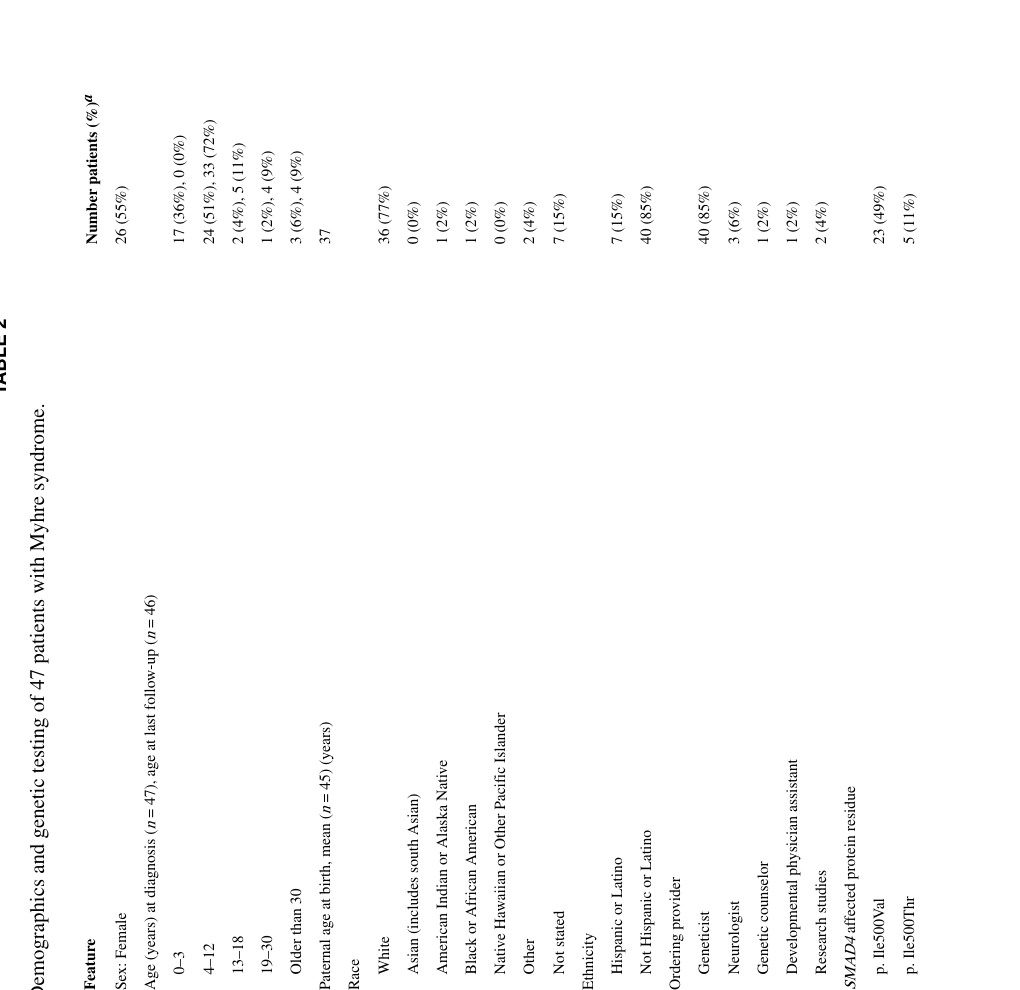
snippet: "Pathogenic variants in SMAD4 involved protein residues p.Ile500Val (49%), p.Ile500Thr (11%), p.Ile500Leu (2%), and p.Arg496Cys (38%)."
explanation: The MGH cohort documents the narrow SMAD4 hotspot mutational spectrum at codons 500 and 496 that defines Myhre syndrome.
- reference: PMID:39116879
reference_title: "SMAD4 mutations causing Myhre syndrome are under positive selection in the male germline."
supports: SUPPORT
evidence_source: IN_VITRO
snippet: "we demonstrate the selfish nature of the SMAD4 DNMs causing Myhre syndrome"
explanation: Wood et al. demonstrate the selfish (positively selected, functionally distinctive) nature of the Myhre-causing SMAD4 de novo variants via in vitro assays; this supports an altered/gain-of-function behavior of the recurrent SMAD4 variants without itself proving the ubiquitination model.
- reference: PMID:27302097
reference_title: "Gain-of-function mutations in SMAD4 cause a distinctive repertoire of cardiovascular phenotypes in patients with Myhre syndrome."
supports: SUPPORT
evidence_source: HUMAN_CLINICAL
snippet: "We hypothesize that the expanded spectrum of cardiovascular abnormalities relates to the ability of the SMAD4 protein to integrate diverse signaling pathways, including canonical TGF-β, BMP, and Activin signaling."
explanation: Lin et al. attribute the multisystem phenotype to SMAD4's role integrating canonical TGF-beta, BMP, and Activin signaling.
- name: Proliferative Fibrosis and Extracellular Matrix Deposition
description: >
Defective/dysregulated TGF-beta/BMP signaling through mutant SMAD4 promotes the
proliferation of abnormal fibrous tissue with excessive extracellular matrix and
collagen deposition. This proliferative-fibrotic response thickens and stiffens
the skin, restricts joints, and produces interstitial fibrosis with airway
collagen and smooth-muscle hyperplasia. The fibroproliferative tendency is
progressive and is characteristically exacerbated by trauma, invasive medical
procedures, or surgery (abnormal scarring, adhesions, restenosis).
cell_types:
- preferred_term: Fibroblast
term:
id: CL:0000057
label: fibroblast
biological_processes:
- preferred_term: Extracellular Matrix Organization
term:
id: GO:0030198
label: extracellular matrix organization
modifier: INCREASED
- preferred_term: Collagen Fibril Organization
term:
id: GO:0030199
label: collagen fibril organization
modifier: INCREASED
- preferred_term: Wound Healing and Scarring
term:
id: GO:0042060
label: wound healing
modifier: INCREASED
downstream:
- target: Multilevel Laryngotracheal Stenosis
description: >-
Progressive proliferative fibrosis and airway remodeling narrow tubular
airway structures, producing multilevel laryngotracheal stenosis.
- target: Cardiovascular Fibroproliferative Disease
description: >-
Aberrant ECM deposition and fibrosis contribute to pericardial disease,
restrictive cardiomyopathy, aortic/vascular stenosis, and pulmonary
hypertension.
- target: Thickened and Stiff Skin
- target: Joint Limitation and Contractures
- target: Muscular Build
evidence:
- reference: PMID:32175297
reference_title: "Myhre syndrome associated with Dunbar syndrome and urinary tract abnormalities: a case report."
supports: SUPPORT
evidence_source: HUMAN_CLINICAL
snippet: "Myhre syndrome is a rare condition caused by a mutation in the SMAD4 gene, which leads to a defective TGF-β/BMP signaling, resulting in the proliferation of abnormal fibrous tissues."
explanation: Varenyiova et al. give a concise mechanistic statement linking SMAD4-mediated TGF-beta/BMP dysregulation to proliferation of abnormal fibrous tissue.
- reference: PMID:32917212
reference_title: "A case of Myhre syndrome mimicking juvenile scleroderma."
supports: SUPPORT
evidence_source: HUMAN_CLINICAL
snippet: "Myhre syndrome is a genetic disorder caused by gain of function mutations in the SMAD Family Member 4 (SMAD4) gene, resulting in progressive, proliferative skin and organ fibrosis."
explanation: Jensen et al. characterize Myhre syndrome as gain-of-function SMAD4 disease producing progressive proliferative skin and organ fibrosis.
- reference: PMID:28406602
reference_title: "Myhre Syndrome."
supports: SUPPORT
evidence_source: OTHER
snippet: "The highly distinctive (and often severe) findings of joint stiffness, restrictive lung and cardiovascular disease, progressive and proliferative fibrosis, and thickening of the skin usually occur spontaneously. Some proliferation such as abnormal scarring or adhesions may follow trauma, invasive medical procedures, or surgery."
explanation: GeneReviews documents the progressive proliferative fibrosis and the post-procedural/post-traumatic exacerbation that are central to Myhre syndrome pathophysiology and management.
- name: Cardiovascular Fibroproliferative Disease
description: >
Myhre syndrome cardiovascular involvement reflects SMAD4-driven
fibroproliferative remodeling affecting cardiac, pericardial, vascular, and
pulmonary vascular tissues.
downstream:
- target: Congenital Heart Defects
- target: Pericardial Disease
- target: Restrictive Cardiomyopathy
- target: Pulmonary Hypertension
- target: Pleural Effusion
- name: Disrupted Chondrogenesis and Skeletal Growth
description: >
SMAD4 is the obligate co-SMAD regulating chondrogenesis, including
condensation, proliferation, ECM deposition, and differentiation in the growth
plate. Dysregulated SMAD4-dependent TGF-beta signaling disturbs growth-plate
cartilage development, contributing to short stature, brachydactyly, and the
skeletal features of the acromelic-dysplasia spectrum. Chondrocyte-specific
Smad4 loss in mice disrupts growth plates and causes dwarfism, supporting
SMAD4's central role in skeletal growth, although Myhre syndrome itself results
from gain-of-function rather than loss-of-function alleles.
cell_types:
- preferred_term: Chondrocyte
term:
id: CL:0000138
label: chondrocyte
biological_processes:
- preferred_term: Cartilage Development
term:
id: GO:0051216
label: cartilage development
evidence:
- reference: PMID:25798233
reference_title: "Chondrodysplasias and TGFβ signaling."
supports: SUPPORT
evidence_source: OTHER
snippet: "This review is focused on the involvement of transforming growth factor-β signaling in a group of chondrodysplasias, entitled acromelic dysplasia, characterized by short stature, short hands and restricted joint mobility."
explanation: Le Goff and Cormier-Daire place TGF-beta signaling at the center of the acromelic dysplasia spectrum (short stature, short hands, restricted joint mobility) to which Myhre syndrome belongs; evidence is mechanistic/pathway-level rather than Myhre-specific.
downstream:
- target: Short Stature
- target: Intrauterine Growth Restriction
- target: Distinctive Facial Features
- target: Maxillary Hypoplasia
- target: Short Palpebral Fissures
- target: Deeply Set Eyes
- target: Short Philtrum
- target: Thin Upper Lip Vermilion
- target: Narrow Mouth
- target: Brachydactyly
- target: Scoliosis
- target: Precocious Puberty
phenotypes:
- name: Short Stature
category: Phenotypic
description: >
Intrauterine growth restriction is consistently present, followed by postnatal
growth failure and short stature (French cohort postnatal height median about
-3.5 SD).
phenotype_term:
preferred_term: Short stature
term:
id: HP:0004322
label: Short stature
frequency: VERY_FREQUENT
evidence:
- reference: PMID:35907855
reference_title: "Natural history of Myhre syndrome."
supports: SUPPORT
evidence_source: HUMAN_CLINICAL
snippet: "Intrauterine and postnatal growth retardation were consistently reported."
explanation: The French natural-history cohort reports consistent intrauterine and postnatal growth retardation.
- name: Intrauterine Growth Restriction
category: Phenotypic
description: >
Prenatal growth deficiency was reported in all patients in the French cohort.
phenotype_term:
preferred_term: Intrauterine growth retardation
term:
id: HP:0001511
label: Intrauterine growth retardation
onset:
onset_category: ANTENATAL
evidence:
- reference: PMID:35907855
reference_title: "Natural history of Myhre syndrome."
supports: SUPPORT
evidence_source: HUMAN_CLINICAL
snippet: "Intrauterine and postnatal growth retardation were consistently reported."
explanation: The French cohort documents intrauterine growth retardation as a consistent prenatal-onset feature.
- name: Intellectual Disability / Developmental Delay
category: Phenotypic
description: >
Developmental delay and cognitive disability, typically mild to moderate, are
characteristic. Neurodevelopmental disorders were reported in 80% of children
at preschool age in the French cohort; intellectual disability was present in
32% of the MGH cohort.
phenotype_term:
preferred_term: Intellectual disability
term:
id: HP:0001249
label: Intellectual disability
severity: MILD
frequency: FREQUENT
evidence:
- reference: PMID:28406602
reference_title: "Myhre Syndrome."
supports: SUPPORT
evidence_source: OTHER
snippet: "characteristic facial features (short palpebral fissures, deeply set eyes, maxillary underdevelopment, short philtrum, thin vermilion of the upper lip, narrow mouth, and prognathism) and developmental delay / cognitive disability, typically in the mild-to-moderate range."
explanation: GeneReviews documents developmental delay/cognitive disability, typically mild-to-moderate, as a characteristic feature.
- reference: PMID:35907855
reference_title: "Natural history of Myhre syndrome."
supports: SUPPORT
evidence_source: HUMAN_CLINICAL
snippet: "In preschool age, neurodevelopment disorders were reported in 80% of children."
explanation: The French cohort reports neurodevelopmental disorders in 80% of children at preschool age.
- name: Autism Spectrum Disorder and Neurobehavioral Features
category: Phenotypic
description: >
Neurobehavioral issues including autism spectrum disorder (ASD),
attention-deficit/hyperactivity disorder (ADHD), and anxiety are common. ASD
was diagnosed in 72% of the MGH cohort, with social challenges in 91%.
phenotype_term:
preferred_term: Autistic behavior
term:
id: HP:0000729
label: Autistic behavior
frequency: FREQUENT
evidence:
- reference: PMID:28406602
reference_title: "Myhre Syndrome."
supports: SUPPORT
evidence_source: OTHER
snippet: "Neurobehavioral issues may include autism spectrum disorder (ASD), attention-deficit/hyperactivity disorder (ADHD), and/or anxiety."
explanation: GeneReviews lists ASD, ADHD, and anxiety among the neurobehavioral features of Myhre syndrome.
- name: Attention-Deficit/Hyperactivity Disorder
category: Phenotypic
description: >
ADHD is part of the neurobehavioral phenotype and may be undertreated.
phenotype_term:
preferred_term: Attention deficit hyperactivity disorder
term:
id: HP:0007018
label: Attention deficit hyperactivity disorder
evidence:
- reference: PMID:28406602
reference_title: "Myhre Syndrome."
supports: SUPPORT
evidence_source: OTHER
snippet: "Neurobehavioral issues may include autism spectrum disorder (ASD), attention-deficit/hyperactivity disorder (ADHD), and/or anxiety."
explanation: GeneReviews lists ADHD among the neurobehavioral features.
- name: Hearing Impairment
category: Phenotypic
description: >
Mixed (conductive and sensorineural) hearing loss that can progress over time;
detectable from about age 2 years. Present in 58% of the French cohort.
Individuals with p.Arg496Cys are less likely to have hearing loss.
phenotype_term:
preferred_term: Hearing impairment
term:
id: HP:0000365
label: Hearing impairment
clinical_course: PROGRESSIVE
frequency: FREQUENT
evidence:
- reference: PMID:28406602
reference_title: "Myhre Syndrome."
supports: SUPPORT
evidence_source: OTHER
snippet: "Hearing loss can progress over time."
explanation: GeneReviews documents progressive hearing loss.
- reference: PMID:38779990
reference_title: "Emergence of the natural history of Myhre syndrome: 47 patients evaluated in the Massachusetts General Hospital Myhre Syndrome Clinic (2016-2023)."
supports: SUPPORT
evidence_source: HUMAN_CLINICAL
snippet: "Individuals with the SMAD4 variant p.Arg496Cys were less likely to have hearing loss, growth restriction, and aortic hypoplasia than the other variant groups."
explanation: The MGH cohort establishes a genotype-phenotype correlation for hearing loss with the p.Arg496Cys variant.
- name: Thickened and Stiff Skin
category: Phenotypic
description: >
Thickened, stiff skin emerges typically in school age (around age 6) and is
progressive. It can be mistaken for scleroderma. Present in 67% of the French
cohort.
phenotype_term:
preferred_term: Thickened skin
term:
id: HP:0001072
label: Thickened skin
clinical_course: PROGRESSIVE
frequency: FREQUENT
evidence:
- reference: PMID:28406602
reference_title: "Myhre Syndrome."
supports: SUPPORT
evidence_source: OTHER
snippet: "progressive and proliferative fibrosis, and thickening of the skin usually occur spontaneously."
explanation: GeneReviews documents progressive skin thickening as a distinctive feature.
- reference: PMID:32917212
reference_title: "A case of Myhre syndrome mimicking juvenile scleroderma."
supports: SUPPORT
evidence_source: HUMAN_CLINICAL
snippet: "Skin thickening and joint contractures are often the main presenting features of the disease and may be mistaken for juvenile scleroderma."
explanation: Jensen et al. report skin thickening as a main presenting feature that mimics scleroderma.
- name: Joint Limitation and Contractures
category: Phenotypic
description: >
Limited joint mobility, stiffness, and contractures (arthropathy) are
characteristic and progressive, beginning in small joints and generalizing.
Joint limitation occurred in 89% of the French cohort (median onset 6 years);
contractures were present in the majority of the MGH cohort, with earliest
onset at 26 months.
phenotype_term:
preferred_term: Limitation of joint mobility
term:
id: HP:0001376
label: Limitation of joint mobility
clinical_course: PROGRESSIVE
frequency: VERY_FREQUENT
evidence:
- reference: PMID:35907855
reference_title: "Natural history of Myhre syndrome."
supports: SUPPORT
evidence_source: HUMAN_CLINICAL
snippet: "Specifics facial and skeletal features, thickened skin and joint limitation occured mainly in school age children." # codespell:ignore-line
explanation: The French cohort documents joint limitation emerging mainly in school-age children.
- reference: PMID:28406602
reference_title: "Myhre Syndrome."
supports: SUPPORT
evidence_source: OTHER
snippet: "joint stiffness, restrictive lung and cardiovascular disease"
explanation: GeneReviews lists joint stiffness among the highly distinctive findings.
- name: Distinctive Facial Features
category: Phenotypic
description: >
Characteristic facies including short palpebral fissures, deeply set eyes,
maxillary hypoplasia, short philtrum, thin upper lip, narrow mouth, and
prognathism.
phenotype_term:
preferred_term: Mandibular prognathia
term:
id: HP:0000303
label: Mandibular prognathia
frequency: VERY_FREQUENT
evidence:
- reference: PMID:28406602
reference_title: "Myhre Syndrome."
supports: SUPPORT
evidence_source: OTHER
snippet: "characteristic facial features (short palpebral fissures, deeply set eyes, maxillary underdevelopment, short philtrum, thin vermilion of the upper lip, narrow mouth, and prognathism)"
explanation: GeneReviews enumerates the characteristic facial features including prognathism.
- name: Maxillary Hypoplasia
category: Phenotypic
description: >
Maxillary underdevelopment is part of the characteristic facies; present in
82% of the French cohort.
phenotype_term:
preferred_term: Hypoplasia of the maxilla
term:
id: HP:0000327
label: Hypoplasia of the maxilla
frequency: VERY_FREQUENT
evidence:
- reference: PMID:28406602
reference_title: "Myhre Syndrome."
supports: SUPPORT
evidence_source: OTHER
snippet: "maxillary underdevelopment"
explanation: GeneReviews lists maxillary underdevelopment among the characteristic facial features.
- name: Short Palpebral Fissures
category: Phenotypic
description: >
Short/narrow palpebral fissures are part of the
characteristic facies; present in 75% of the French cohort.
phenotype_term:
preferred_term: Short palpebral fissure
term:
id: HP:0012745
label: Short palpebral fissure
evidence:
- reference: PMID:28406602
reference_title: "Myhre Syndrome."
supports: SUPPORT
evidence_source: OTHER
snippet: "short palpebral fissures, deeply set eyes"
explanation: GeneReviews lists short palpebral fissures among the characteristic facial features.
- name: Deeply Set Eyes
category: Phenotypic
description: >
Deeply set eyes are part of the characteristic facial gestalt of Myhre syndrome.
phenotype_term:
preferred_term: Deeply set eye
term:
id: HP:0000490
label: Deeply set eye
evidence:
- reference: PMID:28406602
reference_title: "Myhre Syndrome."
supports: SUPPORT
evidence_source: OTHER
snippet: "short palpebral fissures, deeply set eyes"
explanation: GeneReviews lists deeply set eyes among the characteristic facial features.
- name: Short Philtrum
category: Phenotypic
description: >
A short philtrum is part of the characteristic facial gestalt of Myhre syndrome.
phenotype_term:
preferred_term: Short philtrum
term:
id: HP:0000322
label: Short philtrum
evidence:
- reference: PMID:28406602
reference_title: "Myhre Syndrome."
supports: SUPPORT
evidence_source: OTHER
snippet: "maxillary underdevelopment, short philtrum, thin vermilion of the upper lip"
explanation: GeneReviews lists a short philtrum among the characteristic facial features.
- name: Thin Upper Lip Vermilion
category: Phenotypic
description: >
A thin vermilion of the upper lip is part of the characteristic facial gestalt
of Myhre syndrome.
phenotype_term:
preferred_term: Thin upper lip vermilion
term:
id: HP:0000219
label: Thin upper lip vermilion
evidence:
- reference: PMID:28406602
reference_title: "Myhre Syndrome."
supports: SUPPORT
evidence_source: OTHER
snippet: "maxillary underdevelopment, short philtrum, thin vermilion of the upper lip"
explanation: GeneReviews lists a thin vermilion of the upper lip among the characteristic facial features.
- name: Narrow Mouth
category: Phenotypic
description: >
A narrow mouth is part of the characteristic facial gestalt of Myhre syndrome.
phenotype_term:
preferred_term: Narrow mouth
term:
id: HP:0000160
label: Narrow mouth
evidence:
- reference: PMID:28406602
reference_title: "Myhre Syndrome."
supports: SUPPORT
evidence_source: OTHER
snippet: "narrow mouth, and prognathism"
explanation: GeneReviews lists a narrow mouth among the characteristic facial features.
- name: Muscular Build
category: Phenotypic
description: >
A striking muscular ("pseudomuscular") build with skeletal muscle hypertrophy
appears from about age 6 years; present in 75% of the French cohort.
phenotype_term:
preferred_term: Muscular build
term:
id: HP:0003712
label: Skeletal muscle hypertrophy
frequency: FREQUENT
evidence:
- reference: PMID:32175297
reference_title: "Myhre syndrome associated with Dunbar syndrome and urinary tract abnormalities: a case report."
supports: SUPPORT
evidence_source: HUMAN_CLINICAL
snippet: "we present a case of a 16-year-old female with skeletal abnormalities, reduced articular mobility, skin, and muscular hypertrophy and cardiovascular defects characteristic of Myhre syndrome."
explanation: Varenyiova et al. report muscular hypertrophy as a characteristic feature of Myhre syndrome.
- name: Brachydactyly
category: Phenotypic
description: >
Short fingers (brachydactyly) and small hands are early features, present in
most patients (100% small hands in the French cohort; 64% brachydactyly in the
MGH cohort).
phenotype_term:
preferred_term: Brachydactyly
term:
id: HP:0001156
label: Brachydactyly
frequency: VERY_FREQUENT
evidence:
- reference: PMID:27302097
reference_title: "Gain-of-function mutations in SMAD4 cause a distinctive repertoire of cardiovascular phenotypes in patients with Myhre syndrome."
supports: SUPPORT
evidence_source: HUMAN_CLINICAL
snippet: "The characteristic phenotype includes short stature, dysmorphic facial features, hearing loss, laryngotracheal anomalies, arthropathy, radiographic defects, intellectual disability"
explanation: Lin et al. enumerate the characteristic skeletal/radiographic phenotype; brachydactyly is part of the recognized hand involvement in the acromelic dysplasia spectrum.
- name: Multilevel Laryngotracheal Stenosis
category: Phenotypic
description: >
Progressive, often multilevel laryngotracheal stenosis from proliferative
fibrosis and airway remodeling; potentially lethal and characteristically
exacerbated by airway instrumentation or surgery.
phenotype_term:
preferred_term: Laryngotracheal stenosis
term:
id: HP:0004894
label: Laryngotracheal stenosis
clinical_course: PROGRESSIVE
evidence:
- reference: PMID:27302097
reference_title: "Gain-of-function mutations in SMAD4 cause a distinctive repertoire of cardiovascular phenotypes in patients with Myhre syndrome."
supports: SUPPORT
evidence_source: HUMAN_CLINICAL
snippet: "The characteristic phenotype includes short stature, dysmorphic facial features, hearing loss, laryngotracheal anomalies, arthropathy"
explanation: Lin et al. include laryngotracheal anomalies among the characteristic phenotype of Myhre syndrome.
- name: Congenital Heart Defects
category: Phenotypic
description: >
Congenital heart defects occur in a majority of patients (58% in the French
cohort; ~63% congenital heart defects in a literature review of 54
SMAD4-mutation patients). SMAD4 is required for both developmental and
postnatal cardiovascular homeostasis.
phenotype_term:
preferred_term: Abnormal heart morphology
term:
id: HP:0001627
label: Abnormal heart morphology
frequency: FREQUENT
evidence:
- reference: PMID:27302097
reference_title: "Gain-of-function mutations in SMAD4 cause a distinctive repertoire of cardiovascular phenotypes in patients with Myhre syndrome."
supports: SUPPORT
evidence_source: HUMAN_CLINICAL
snippet: "Seventy percent had a cardiovascular abnormality including congenital heart defects (63%), pericardial disease (17%), restrictive cardiomyopathy (9%), and systemic hypertension (15%)."
explanation: Lin et al.'s literature review quantifies cardiovascular abnormalities including congenital heart defects in 63% of patients.
- name: Pericardial Disease
category: Phenotypic
description: >
Recurrent pericardial effusions and restrictive pericardial disease occur and
are associated with high mortality. Effusions of the heart and other serosal
surfaces may progress to fibrosis.
phenotype_term:
preferred_term: Pericardial effusion
term:
id: HP:0001698
label: Pericardial effusion
evidence:
- reference: PMID:27302097
reference_title: "Gain-of-function mutations in SMAD4 cause a distinctive repertoire of cardiovascular phenotypes in patients with Myhre syndrome."
supports: SUPPORT
evidence_source: HUMAN_CLINICAL
snippet: "Pericarditis and restrictive cardiomyopathy are associated with high mortality (three patients each among 10 deaths)"
explanation: Lin et al. document pericardial disease and restrictive cardiomyopathy as high-mortality cardiovascular complications.
- name: Restrictive Cardiomyopathy
category: Phenotypic
description: >
Restrictive cardiomyopathy occurs (9% in the cardiovascular literature review)
and is associated with high mortality, distinguishing Myhre syndrome from other
TGF-beta-pathway disorders.
phenotype_term:
preferred_term: Restrictive cardiomyopathy
term:
id: HP:0001723
label: Restrictive cardiomyopathy
evidence:
- reference: PMID:27302097
reference_title: "Gain-of-function mutations in SMAD4 cause a distinctive repertoire of cardiovascular phenotypes in patients with Myhre syndrome."
supports: SUPPORT
evidence_source: HUMAN_CLINICAL
snippet: "Cardiomyopathy and pericardial abnormalities distinguish Myhre syndrome from other disorders caused by mutations in the TGF-β signaling cascade (Marfan, Loeys-Dietz, or Shprintzen-Goldberg syndromes)."
explanation: Lin et al. identify restrictive cardiomyopathy and pericardial disease as distinguishing cardiovascular features of Myhre syndrome.
- name: Pulmonary Hypertension
category: Phenotypic
description: >
Pulmonary arterial hypertension is a major life-threatening complication, often
emerging in adolescence; reported in 63% of assessed patients in the French
cohort, with deaths from PAH crises.
phenotype_term:
preferred_term: Pulmonary arterial hypertension
term:
id: HP:0002092
label: Pulmonary arterial hypertension
evidence:
- reference: PMID:35907855
reference_title: "Natural history of Myhre syndrome."
supports: SUPPORT
evidence_source: HUMAN_CLINICAL
snippet: "The adolescence was marked by the occurrence of pulmonary arterial hypertension (PAH) and vascular stenosis."
explanation: The French cohort documents pulmonary arterial hypertension and vascular stenosis as major adolescent-onset complications.
- name: Pleural Effusion
category: Phenotypic
description: >
Pleural effusions occur (60% in the French cohort) and can contribute to
chronic respiratory failure; serosal effusions may progress to fibrosis.
phenotype_term:
preferred_term: Pleural effusion
term:
id: HP:0002202
label: Pleural effusion
evidence:
- reference: PMID:28406602
reference_title: "Myhre Syndrome."
supports: SUPPORT
evidence_source: OTHER
snippet: "Effusions of the heart, airways, lungs, uterus, and peritoneum may occur and can progress to fibrosis."
explanation: GeneReviews documents serosal effusions (including pleural/lung) that may progress to fibrosis.
- name: Scoliosis
category: Phenotypic
description: >
Scoliosis occurs in a subset of patients (21% in the MGH cohort), typically in
childhood/adolescence.
phenotype_term:
preferred_term: Scoliosis
term:
id: HP:0002650
label: Scoliosis
frequency: OCCASIONAL
evidence:
- reference: PMID:27302097
reference_title: "Gain-of-function mutations in SMAD4 cause a distinctive repertoire of cardiovascular phenotypes in patients with Myhre syndrome."
supports: SUPPORT
evidence_source: HUMAN_CLINICAL
snippet: "The characteristic phenotype includes short stature, dysmorphic facial features, hearing loss, laryngotracheal anomalies, arthropathy, radiographic defects"
explanation: Lin et al. note radiographic skeletal defects as part of the characteristic phenotype; scoliosis is a documented skeletal feature in cohort studies.
- name: Precocious Puberty
category: Phenotypic
description: >
Precocious puberty, reported mainly in females (around age 8 years in the
French cohort), is part of the surveillance recommendations.
phenotype_term:
preferred_term: Precocious puberty
term:
id: HP:0000826
label: Precocious puberty
evidence:
- reference: PMID:28406602
reference_title: "Myhre Syndrome."
supports: SUPPORT
evidence_source: OTHER
snippet: "monitor for premature puberty in childhood"
explanation: GeneReviews recommends surveillance for premature (precocious) puberty, reflecting its occurrence in Myhre syndrome.
- name: Hypogammaglobulinemia and Recurrent Infections
category: Phenotypic
description: >
IgG and IgA deficiency are rare but affected individuals can experience
recurrent infections (otitis media, sinusitis, mastoiditis, croup).
Hypogammaglobulinemia was found in over half of tested patients in the MGH
cohort.
phenotype_term:
preferred_term: Decreased circulating immunoglobulin concentration
term:
id: HP:0004313
label: Decreased circulating immunoglobulin concentration
frequency: OCCASIONAL
evidence:
- reference: PMID:28406602
reference_title: "Myhre Syndrome."
supports: SUPPORT
evidence_source: OTHER
snippet: "Although immunoglobulin (Ig) G and IgA deficiency are rare, affected individuals can experience recurrent infections (including otitis media, sinusitis, mastoiditis, or croup)."
explanation: GeneReviews documents IgG/IgA deficiency and a tendency to recurrent infections.
treatments:
- name: Losartan (Angiotensin Receptor Blocker)
description: >
Losartan, an angiotensin II type 1 receptor blocker, has an anti-fibrotic
rationale because it antagonizes TGF-beta signaling; prior in vitro work showed
losartan improved ECM deposition in Myhre syndrome fibroblasts. A small pilot
trial (3 treated for 12 months) reported improvement in skin thickness and
joint range of motion, with adverse effects including dizziness and orthostatic
hypotension. Larger controlled trials are needed.
therapeutic_modality: SMALL_MOLECULE
treatment_term:
preferred_term: Pharmacotherapy
term:
id: NCIT:C15986
label: Pharmacotherapy
therapeutic_agent:
- preferred_term: losartan
term:
id: CHEBI:6541
label: losartan
evidence:
- reference: PMID:33369056
reference_title: "A pilot clinical trial with losartan in Myhre syndrome."
supports: SUPPORT
evidence_source: HUMAN_CLINICAL
snippet: "In three MS subjects, improvements in skin thickness, joint ROM and to a lesser extent of myocardial strain, were observed after 6 and 12 months of losartan treatment."
explanation: The losartan pilot trial reports improvements in skin, joint, and myocardial measures, though the small uncontrolled design limits the strength of evidence.
- reference: PMID:33369056
reference_title: "A pilot clinical trial with losartan in Myhre syndrome."
supports: SUPPORT
evidence_source: IN_VITRO
snippet: "Previous studies showed that losartan improved ECM deposition in MS fibroblasts."
explanation: Provides the in vitro mechanistic anti-fibrotic rationale for losartan in Myhre syndrome.
- name: Physical Therapy
description: >
Physical therapy is recommended to preserve mobility and function given
progressive joint contractures and decreased range of motion.
therapeutic_modality: BEHAVIORAL
treatment_term:
preferred_term: Physical Therapy
term:
id: NCIT:C15302
label: Physical Therapy
evidence:
- reference: PMID:28406602
reference_title: "Myhre Syndrome."
supports: SUPPORT
evidence_source: OTHER
snippet: "physical therapy for decreased range of motion of joints"
explanation: GeneReviews recommends physical therapy for decreased range of motion of joints.
- name: Airway Procedures (Balloon Dilation / Tracheostomy)
description: >
For complete or recurrent tracheal stenosis, balloon dilation or long-term
tracheostomy may be considered. Airway procedures and instrumentation carry a
substantial risk of stimulating restenosis and proliferative fibrosis;
multilevel airway stenosis is typically lethal, so interventions must be
carefully counseled and minimized. Smaller-size, uncuffed endotracheal tubes
are advised for anesthesia.
treatment_term:
preferred_term: tracheostomy
term:
id: NCIT:C15341
label: Tracheotomy
evidence:
- reference: PMID:28406602
reference_title: "Myhre Syndrome."
supports: SUPPORT
evidence_source: OTHER
snippet: "consideration of balloon dilation or long-term tracheostomy for those with complete or recurrent tracheal stenosis; use of smaller-size, uncuffed endotracheal tubes for anesthesia"
explanation: GeneReviews describes balloon dilation/tracheostomy and anesthesia precautions for tracheal stenosis.
- name: Minimization of Tissue Trauma and Invasive Procedures
description: >
Because of the fibroproliferative response, limiting tissue trauma is the
single most important preventive measure. Noninvasive approaches should be
preferred during diagnosis and management. GeneReviews lists agents/
circumstances to avoid: smoking, tissue trauma, elective tracheal
surgery/intubation, tracheal resection, and growth hormone therapy.
treatment_term:
preferred_term: supportive care
term:
id: NCIT:C15747
label: Supportive Care
evidence:
- reference: PMID:28406602
reference_title: "Myhre Syndrome."
supports: SUPPORT
evidence_source: OTHER
snippet: "Limiting tissue trauma appears to be the single most important preventive measure. When possible, alternative noninvasive approaches should be pursued during diagnosis and management."
explanation: GeneReviews identifies limiting tissue trauma as the single most important preventive measure, reflecting the fibroproliferative pathophysiology.
- reference: PMID:28406602
reference_title: "Myhre Syndrome."
supports: SUPPORT
evidence_source: OTHER
snippet: "Agents/circumstances to avoid: Smoking; tissue trauma; elective tracheal surgery/intubation (if possible); tracheal resection; growth hormone therapy."
explanation: GeneReviews enumerates specific agents/circumstances to avoid in Myhre syndrome.
- name: Cardiovascular and Aortic Surveillance
description: >
Structured anticipatory cardiovascular surveillance: echocardiography (every
two years if initially normal/asymptomatic) and CT or MR angiography of the
aorta every five to ten years starting in childhood (age 5-10 years), with
frequency adjusted to the presence and degree of aortic disease.
treatment_term:
preferred_term: supportive care
term:
id: NCIT:C15747
label: Supportive Care
evidence:
- reference: PMID:28406602
reference_title: "Myhre Syndrome."
supports: SUPPORT
evidence_source: OTHER
snippet: "Every five to ten years starting in childhood (age 5-10 years), CT or MR angiogram of the aorta, the exact frequency of which is based on the presence and degree of aortic disease."
explanation: GeneReviews recommends periodic CT/MR aortic angiography surveillance from childhood.
genetic:
- name: SMAD4
association: Causative
gene_term:
preferred_term: SMAD4
term:
id: hgnc:6770
label: SMAD4
notes: >
Myhre syndrome is caused by recurrent heterozygous gain-of-function missense
variants in SMAD4, the co-mediator SMAD of TGF-beta/BMP signaling. The
mutational spectrum is unusually narrow, restricted to MH2-domain residues
Ile500 (c.1498A>G p.Ile500Val; c.1499T>C p.Ile500Thr; c.1500A>G p.Ile500Met;
p.Ile500Leu) and Arg496 (c.1486C>T p.Arg496Cys). Variants are almost always de
novo and of paternal germline origin.
variants:
- name: p.Ile500Val (c.1498A>G)
description: >
The most common Myhre-associated SMAD4 variant (49% of the MGH cohort),
affecting MH2-domain residue Ile500.
evidence:
- reference: PMID:38779990
reference_title: "Emergence of the natural history of Myhre syndrome: 47 patients evaluated in the Massachusetts General Hospital Myhre Syndrome Clinic (2016-2023)."
supports: SUPPORT
evidence_source: HUMAN_CLINICAL
snippet: "Pathogenic variants in SMAD4 involved protein residues p.Ile500Val (49%), p.Ile500Thr (11%), p.Ile500Leu (2%), and p.Arg496Cys (38%)."
explanation: The MGH cohort reports p.Ile500Val as the most frequent variant (49%).
- name: p.Arg496Cys (c.1486C>T)
description: >
A recurrent MH2-domain variant (38% of the MGH cohort) associated with milder
hearing loss, growth restriction, and aortic hypoplasia.
evidence:
- reference: PMID:38779990
reference_title: "Emergence of the natural history of Myhre syndrome: 47 patients evaluated in the Massachusetts General Hospital Myhre Syndrome Clinic (2016-2023)."
supports: SUPPORT
evidence_source: HUMAN_CLINICAL
snippet: "Individuals with the SMAD4 variant p.Arg496Cys were less likely to have hearing loss, growth restriction, and aortic hypoplasia than the other variant groups."
explanation: The MGH cohort documents the attenuated phenotype associated with p.Arg496Cys (38% of the cohort).
- name: p.Ile500Thr (c.1499T>C)
description: >
An MH2-domain variant associated with moderate/severe aortic hypoplasia in a
majority of carriers in the MGH cohort.
evidence:
- reference: PMID:38779990
reference_title: "Emergence of the natural history of Myhre syndrome: 47 patients evaluated in the Massachusetts General Hospital Myhre Syndrome Clinic (2016-2023)."
supports: SUPPORT
evidence_source: HUMAN_CLINICAL
snippet: "Those with the p.Ile500Thr variant had moderate/severe aortic hypoplasia in three patients (60%)"
explanation: The MGH cohort reports moderate/severe aortic hypoplasia in 60% of p.Ile500Thr carriers.
evidence:
- reference: PMID:35907855
reference_title: "Natural history of Myhre syndrome."
supports: SUPPORT
evidence_source: HUMAN_CLINICAL
snippet: "Myhre syndrome (MS) is a rare genetic disease characterized by skeletal disorders, facial features and joint limitation, caused by a gain of function mutation in SMAD4 gene."
explanation: Establishes SMAD4 gain-of-function variants as the cause of Myhre syndrome.
- reference: PMID:38779990
reference_title: "Emergence of the natural history of Myhre syndrome: 47 patients evaluated in the Massachusetts General Hospital Myhre Syndrome Clinic (2016-2023)."
supports: SUPPORT
evidence_source: HUMAN_CLINICAL
snippet: "Pathogenic variants in SMAD4 involved protein residues p.Ile500Val (49%), p.Ile500Thr (11%), p.Ile500Leu (2%), and p.Arg496Cys (38%)."
explanation: Documents the recurrent SMAD4 variant spectrum and relative frequencies in a large cohort.
datasets: []
references:
- reference: PMID:28406602
title: "Myhre Syndrome."
tags:
- GeneReviews
- reference: PMID:38779990
title: "Emergence of the natural history of Myhre syndrome: 47 patients evaluated in the Massachusetts General Hospital Myhre Syndrome Clinic (2016-2023)."
- reference: PMID:35907855
title: "Natural history of Myhre syndrome."
- reference: PMID:39116879
title: "SMAD4 mutations causing Myhre syndrome are under positive selection in the male germline."
- reference: PMID:27302097
title: "Gain-of-function mutations in SMAD4 cause a distinctive repertoire of cardiovascular phenotypes in patients with Myhre syndrome."
- reference: PMID:33369056
title: "A pilot clinical trial with losartan in Myhre syndrome."
- reference: PMID:40476377
title: "Research Review of Myhre Syndrome."
References & Deep Research
References
7Deep Research
1Deep research results are used as seeds for research; they do not undergo the same validation as the main records and may contain errors. How we use deep research.
1. Disease Information
1.1 Overview (current understanding)
Myhre syndrome is an ultrarare, progressive, multisystem developmental/connective-tissue disorder caused by recurrent heterozygous SMAD4 missense variants, classically affecting residues Arg496 and Ile500 in the SMAD4 MH2 domain. Natural-history cohorts show progression across systems with time, including cardiopulmonary/vascular disease and fibroproliferative stenoses. (lin2024emergenceofthe pages 1-3, lin2024emergenceofthe pages 3-5)
A key historical synonym is Laryngotracheal–Arthropathy–Prognathism–Short Stature (LAPS) syndrome; modern molecular evidence indicates LAPS and Myhre syndrome are allelic disorders caused by SMAD4 variants. (brand2025researchreviewof pages 1-2)
1.2 Key identifiers (as available from retrieved sources)
- OMIM/MIM: 139210 (Myhre syndrome) (yang2022naturalhistoryof pages 1-2)
- Orphanet (ORPHA): 2588 (yang2022naturalhistoryof pages 1-2)
1.3 Synonyms / alternative names
- Myhre syndrome
- LAPS syndrome (Laryngotracheal–Arthropathy–Prognathism–Short Stature) (brand2025researchreviewof pages 1-2, lin2024emergenceofthe pages 24-25)
1.4 Evidence sources underlying disease knowledge
The literature base is dominated by case reports and small series, but increasingly includes cohort natural-history studies and dedicated multidisciplinary clinics. A 2025 research review compiled 92 publications (1988–2024), including many case reports/series and emerging natural-history work. (brand2025researchreviewof pages 2-3, brand2025researchreviewof pages 1-2)
Concrete aggregated sources include: - A French reference-center retrospective longitudinal cohort using medical records, EHR data warehouse, imaging, and photographs (n=12). (yang2022naturalhistoryof pages 1-2, yang2022naturalhistoryof pages 2-4) - A Massachusetts General Hospital (MGH) multispecialty clinic cohort with deep phenotyping and longitudinal follow-up (n=47). (lin2024emergenceofthe pages 1-3)
2. Etiology
2.1 Disease causal factors
Primary cause: pathogenic heterozygous missense variants in SMAD4, acting via gain-of-function mechanisms in Myhre syndrome. (yang2022naturalhistoryof pages 1-2, wood2024smad4mutationscausing pages 1-3)
Direct abstract-supported definition (French cohort): Myhre syndrome is "caused by a gain of function mutation in SMAD4 gene." (yang2022naturalhistoryof pages 1-2)
2.2 Risk factors
- Genetic: presence of a pathogenic SMAD4 Myhre-associated missense variant (Arg496Cys or codon 500 substitutions). (wood2024smad4mutationscausing pages 1-3, lin2024emergenceofthe pages 1-3)
- Parental age/sex-specific germline factors: 2024 AJHG evidence indicates Myhre-causing variants arise on the paternally derived allele in informative trios and are associated with a paternal age effect ("6.3 years excess for fathers"), consistent with selfish spermatogonial selection. (wood2024smad4mutationscausing pages 1-3)
2.3 Protective factors
No established genetic or environmental protective factors were identified in the retrieved sources.
2.4 Gene–environment interactions
Not established for Myhre syndrome in the retrieved sources.
3. Phenotypes
The two best-characterized cohorts in the retrieved corpus (French n=12; MGH n=47) demonstrate that Myhre syndrome is progressive and affects growth, skeleton/joints, skin, neurodevelopment, ENT/hearing, cardiovascular/vascular, and respiratory/airway systems. (lin2024emergenceofthe pages 3-5, yang2022naturalhistoryof pages 1-2)
Cohort-derived phenotype frequencies and timing
A structured cohort summary with suggested HPO terms, frequencies/denominators, and temporal notes is provided here:
| Domain | Specific feature (plain language) | Suggested HPO term(s) | Frequency/statistic (with denominator) | Typical onset/temporal notes | Key source/citation context IDs |
|---|---|---|---|---|---|
| Cohort overview | Longitudinal follow-up in dedicated natural-history cohorts | HP:0000007 Autosomal dominant inheritance; HP:0003674 Progressive | MGH: 47 patients; 81% had at least 1 follow-up; among those followed ≥5 years, progression observed in all. French: 12 molecularly confirmed patients, median follow-up 7 years | Progressive multisystem disease across childhood to adulthood | (lin2024emergenceofthe pages 3-5, lin2024emergenceofthe pages 1-3, yang2022naturalhistoryof pages 2-4) |
| Growth | Intrauterine growth restriction / prenatal growth deficiency | HP:0001511 Intrauterine growth retardation | French: 12/12 (100%) | Prenatal onset; postnatal short stature persists | (yang2022naturalhistoryof pages 1-2) |
| Growth | Postnatal growth failure / short stature | HP:0004322 Short stature; HP:0001510 Growth delay | French: postnatal height median about -3.5 SD; MGH: short stature described as common, but no cohort-wide % in retrieved text | Begins in infancy/childhood and persists | (yang2022naturalhistoryof pages 1-2, lin2024emergenceofthe pages 3-5) |
| Hearing | Hearing impairment | HP:0000365 Hearing impairment | French: 7/12 (58%) | Detectable from about age 2 years; mixed conductive/sensorineural etiologies | (yang2022naturalhistoryof pages 2-4) |
| Hearing / genotype-phenotype | p.Arg496Cys associated with less hearing loss | HP:0000365 Hearing impairment | Qualitative reduction vs other variant groups in MGH cohort | Suggests milder sensory involvement for this variant subgroup | (lin2024emergenceofthe pages 1-3) |
| Vision | Visual problems (mainly refractive error/strabismus) | HP:0000505 Visual impairment; HP:0000486 Strabismus; HP:0000545 Myopia/Hyperopia as applicable | French: 9/12 (75%) | Childhood onset | (yang2022naturalhistoryof pages 2-4) |
| Craniofacial | Prognathism | HP:0000303 Mandibular prognathia | French: 11/12 (92%) | Childhood, persistent | (yang2022naturalhistoryof pages 1-2) |
| Craniofacial | Maxillary hypoplasia | HP:0000327 Hypoplasia of the maxilla | French: 9/11 (82%) | Childhood | (yang2022naturalhistoryof pages 1-2) |
| Craniofacial | Narrow/short palpebral fissures | HP:0000581 Narrow palpebral fissure | French: 9/12 (75%) | Childhood | (yang2022naturalhistoryof pages 1-2) |
| Craniofacial | Prominent chin | HP:0000303 Mandibular prognathia | MGH: 35/47 (74%), severe in 7/35 | Persistent dysmorphic feature | (lin2024emergenceofthe pages 17-19) |
| Neurodevelopment | Neurodevelopmental disorders in early childhood | HP:0012758 Neurodevelopmental abnormality | French: 80% in preschool age | Preschool onset | (yang2022naturalhistoryof pages 1-2) |
| Neurodevelopment | Developmental delay / intellectual disability | HP:0001263 Global developmental delay; HP:0001249 Intellectual disability | French: developmental delay/intellectual disability 9/12 (75%); MGH: intellectual disability in 32% | Early childhood onset; persistent | (yang2022naturalhistoryof pages 4-5, lin2024emergenceofthe pages 17-19) |
| Neurobehavioral | Autism spectrum disorder / social communication difficulties | HP:0000729 Autism; HP:0000733 Stereotypy/behavioral abnormality | MGH: ASD diagnosis in 72%; social challenges in 91%; academic accommodations in 44/47 (94%) | Usually recognized in childhood; major QoL/education impact | (lin2024emergenceofthe pages 17-19) |
| Neurobehavioral | ADHD | HP:0007018 Attention deficit hyperactivity disorder | MGH: 14 patients (56% of subgroup discussed) had combined inattentive/hyperactive ADHD | Childhood; may be undertreated | (lin2024emergenceofthe pages 29-31) |
| Neurologic / cerebrovascular | Brain MRI abnormalities | HP:0410263 Abnormal brain MRI; HP:0002500 Abnormal cerebral white matter morphology | French: 5/8 imaged | Childhood/adolescence | (yang2022naturalhistoryof pages 4-5) |
| Neurologic / vascular | Moyamoya-associated recurrent strokes | HP:0002527 Stroke; HP:0002134 Moyamoya disease | French: 1 patient | First reported from age 26 years in cohort | (yang2022naturalhistoryof pages 1-2, yang2022naturalhistoryof pages 4-5) |
| Skin | Thickened / stiff skin | HP:0008067 Thickened skin; HP:0000974 Skin sclerosis | French: 8/12 (67%); MGH: described as common/progressive but no overall % in retrieved text | Typically emerges in school age / around age 6; progressive | (yang2022naturalhistoryof pages 2-4, yang2022naturalhistoryof pages 4-5, lin2024emergenceofthe pages 25-27) |
| Musculoskeletal | Muscular hypertrophy / pseudomuscular build | HP:0009041 Muscular hypertrophy | French: 9/12 (75%) | Appears from about age 6 years | (yang2022naturalhistoryof pages 1-2) |
| Musculoskeletal | Joint limitation / contractures | HP:0001371 Flexion contracture; HP:0001382 Joint limitation | French: 8/9 (89%); MGH: severe contractures 5/47 (11%), less severe contractures 23/47 (49%) | Median onset 6 years in French cohort; earliest contracture at 26 months in MGH; progressive from small joints to generalized limitation | (yang2022naturalhistoryof pages 2-4, lin2024emergenceofthe pages 17-19) |
| Musculoskeletal | Stiff gait | HP:0002361 Stiff gait | MGH: 44/47 (94%) | Progressive mobility impact | (lin2024emergenceofthe pages 17-19) |
| Musculoskeletal | Brachydactyly | HP:0001156 Brachydactyly | French: 11/11 (100%); MGH: 30/47 (64%) | Early childhood / first years of life | (yang2022naturalhistoryof pages 2-4, lin2024emergenceofthe pages 17-19) |
| Musculoskeletal | Small hands | HP:0200055 Small hand | French: 8/8 (100%) | Early childhood | (yang2022naturalhistoryof pages 2-4) |
| Musculoskeletal | Clinodactyly | HP:0030084 Clinodactyly | French: 4/8 (50%); MGH: 33/47 (70%) | Early childhood | (yang2022naturalhistoryof pages 2-4, lin2024emergenceofthe pages 17-19) |
| Musculoskeletal | Toe 2-3 syndactyly | HP:0001770 Syndactyly of toes | MGH: 31/47 (66%) | Congenital/early childhood | (lin2024emergenceofthe pages 17-19) |
| Musculoskeletal | Scoliosis | HP:0002650 Scoliosis | MGH: 10/47 (21%) | Childhood/adolescence | (lin2024emergenceofthe pages 17-19) |
| Musculoskeletal | Fractures | HP:0002757 Pathologic fracture / recurrent fractures | MGH: 13/47 (28%) | From infancy to adulthood; authors note apparently elevated fracture burden | (lin2024emergenceofthe pages 17-19, lin2024emergenceofthe pages 29-31) |
| Skeletal imaging | Thickened calvarium | HP:0002684 Thick calvarium | French: 5/7 (71%) | Childhood | (yang2022naturalhistoryof pages 2-4) |
| Skeletal imaging | Enlarged vertebral pedicles | HP:0008467 Abnormal vertebral pedicle morphology | French: 7/10 (70%) | Childhood | (yang2022naturalhistoryof pages 2-4) |
| Cardiovascular | Congenital heart defects | HP:0001627 Abnormality of the cardiovascular system; HP:0001626 Congenital cardiovascular malformation | French: 7/12 (58%) | Often identified in infancy/childhood | (yang2022naturalhistoryof pages 2-4) |
| Cardiovascular | Pulmonary hypertension / pulmonary arterial hypertension | HP:0002092 Pulmonary hypertension | French: 5/8 assessed (63%) | Early childhood in Shone complex; early adolescence in others; major life-threatening complication | (yang2022naturalhistoryof pages 2-4) |
| Cardiovascular | Aortic hypoplasia | HP:0004970 Ascending aorta hypoplasia / aortic hypoplasia | MGH: overall % not retrieved; p.Ile500Thr subgroup 3/5 (60%) had moderate/severe aortic hypoplasia | Childhood recognition; important surveillance lesion | (lin2024emergenceofthe pages 3-5, lin2024emergenceofthe pages 1-3) |
| Cardiovascular / genotype-phenotype | p.Arg496Cys associated with less growth restriction and less aortic hypoplasia | HP:0001511 Intrauterine growth retardation; HP:0004970 Aortic hypoplasia | Qualitative reduction vs other variants in MGH cohort | Suggests variant-specific attenuation of some core phenotypes | (lin2024emergenceofthe pages 3-5, lin2024emergenceofthe pages 1-3) |
| Respiratory / airway | Multilevel laryngotracheal stenosis | HP:0001609 Laryngotracheal stenosis | French: 2 cases specifically described; MGH: severe feature recognized, % not retrieved in quoted text | Progressive; may emerge in childhood/adolescence; potentially lethal | (yang2022naturalhistoryof pages 4-5, lin2024emergenceofthe pages 24-25) |
| Respiratory | Obstructive sleep apnea | HP:0010535 Sleep apnea | French: 4 patients | Childhood/adolescence | (yang2022naturalhistoryof pages 4-5) |
| Respiratory / pleural | Pleural effusion | HP:0002202 Pleural effusion | French: 6/10 (60%) | Often later/progressive; contributed to chronic respiratory failure in severe cases | (yang2022naturalhistoryof pages 4-5) |
| Respiratory | Chronic respiratory failure | HP:0002878 Respiratory insufficiency | French: 2 adolescents | Severe late complication | (yang2022naturalhistoryof pages 4-5) |
| ENT / sinus-mastoid imaging | Opacified mastoids / sinusitis / opacified sinuses | HP:0010628 Abnormal mastoid morphology; HP:0000246 Sinusitis | MGH: 30%, 38%, and 13% respectively | Chronic/recurrent ENT burden | (lin2024emergenceofthe pages 24-25) |
| Endocrine / puberty | Precocious puberty (reported mainly in females) | HP:0000826 Precocious puberty | French: 8 females affected; MGH notes underascertainment due to age distribution | Around age 8 years in French cohort | (yang2022naturalhistoryof pages 4-5, lin2024emergenceofthe pages 25-27) |
| Immune | Hypogammaglobulinemia | HP:0004313 Decreased circulating immunoglobulin level | French: 4 patients; MGH outside testing: 7/13 (54%) had hypogammaglobulinemia | Variable; may prompt vaccine-response testing or IgG replacement in selected cases | (yang2022naturalhistoryof pages 4-5, lin2024emergenceofthe pages 17-19) |
| Gastrointestinal | Abdominal pain | HP:0002027 Abdominal pain | MGH: 40% | Chronic symptom; multifactorial | (lin2024emergenceofthe pages 24-25) |
| Gastrointestinal | Celiac disease | HP:0002608 Celiac disease | MGH review incidence 6% vs ~1% general population | Screening may be considered | (lin2024emergenceofthe pages 25-27) |
| Mortality / prognosis | Disease-related deaths | HP:0001423 Sudden death / mortality not directly mapped | MGH: 2 deaths; French: 3 deaths | Causes included complex cardiovascular disease, airway stenosis, PAH crisis, mesenteric ischemia, severe esophageal atresia | (lin2024emergenceofthe pages 3-5, yang2022naturalhistoryof pages 1-2) |
Table: This table summarizes cohort-derived phenotype frequencies, timing, and genotype-phenotype observations for Myhre syndrome from the major recent natural-history studies. It is useful for building disease knowledge-base phenotype assertions with suggested HPO mappings and citation-ready evidence links.
Selected high-yield phenotype notes (with statistics)
- Growth restriction: French cohort reported 100% IUGR (12/12), with persistent postnatal short stature (median ~ −3.5 SD). (yang2022naturalhistoryof pages 1-2)
- Neurodevelopment: French cohort reported neurodevelopmental disorders in 80% in preschool age; developmental delay/intellectual disability was 75% (9/12). (yang2022naturalhistoryof pages 1-2, yang2022naturalhistoryof pages 4-5)
- ASD/social difficulties: MGH cohort reported ASD diagnosis 72% and social challenges 91%; academic accommodations were 94% (44/47)—a major functional/QoL impact. (lin2024emergenceofthe pages 17-19)
- Joint limitation/contractures: French cohort 89% (8/9) with median onset 6 years; MGH cohort had severe contractures 11% (5/47) and less severe 49% (23/47), with earliest contractures at 26 months. (yang2022naturalhistoryof pages 2-4, lin2024emergenceofthe pages 17-19)
- Cardiovascular: French cohort CHD 58% (7/12) and pulmonary hypertension 63% (5/8 assessed). (yang2022naturalhistoryof pages 2-4)
- Respiratory/airway: French cohort reported multilevel acquired laryngotracheal stenosis in 2 cases; obstructive sleep apnea was reported in 4 patients; pleural effusion 60% (6/10). (yang2022naturalhistoryof pages 4-5)
Genotype–phenotype correlations (MGH cohort)
- MGH cohort showed variant clustering and associations: p.Arg496Cys carriers were less likely to have hearing loss, growth restriction, and aortic hypoplasia; p.Ile500Thr subgroup showed moderate/severe aortic hypoplasia in 60% (3/5). (lin2024emergenceofthe pages 1-3, lin2024emergenceofthe pages 3-5)
4. Genetic / Molecular Information
4.1 Causal gene
- SMAD4 (core mediator/co-SMAD in TGF-β/BMP signaling). (goff2015chondrodysplasiasandtgfβ pages 2-3, varenyiova2020myhresyndromeassociated pages 1-2)
4.2 Pathogenic variant spectrum (hotspot)
The mutational spectrum is unusually narrow: - c.1486C>T (p.Arg496Cys) - c.1498A>G (p.Ile500Val) - c.1499T>C (p.Ile500Thr) - c.1500A>G (p.Ile500Met) All within the MH2 domain; described as the four resolved variants "to date" in the 2024 AJHG study. (wood2024smad4mutationscausing pages 1-3)
In the MGH natural-history clinic cohort, variants were distributed: p.Ile500Val 49%, p.Ile500Thr 11%, p.Ile500Leu 2%, p.Arg496Cys 38%. (lin2024emergenceofthe pages 1-3)
4.3 Inheritance
- Typically autosomal dominant and de novo (clinic cohort statement: "autosomal dominant de novo variants"). (lin2024emergenceofthe pages 1-3)
- Strong evidence for paternal origin of DNMs and paternal age effect from 2024 AJHG. (wood2024smad4mutationscausing pages 1-3)
4.4 Functional consequences
Mechanistic models include gain-of-function, potentially via: - altered stability of the SMAD heterotrimer - reduced SMAD4 ubiquitination and a dominant-negative model has been proposed in the literature; the 2024 AJHG paper frames these as leading models. (wood2024smad4mutationscausing pages 1-3)
4.5 Modifier genes / epigenetics
- Modifier genes: not established in retrieved sources.
- Epigenetics/episignature: no Myhre-specific DNA methylation episignature was retrieved in this corpus; this remains a gap for this report.
5. Environmental Information
No validated environmental, lifestyle, or infectious causal contributors were identified in the retrieved sources; Myhre syndrome is primarily genetic.
6. Mechanism / Pathophysiology
6.1 Core pathway dysfunction
Myhre syndrome is consistently linked to dysregulation of TGF-β/BMP signaling mediated through SMAD4, with downstream consequences on extracellular matrix biology and fibrotic remodeling. (varenyiova2020myhresyndromeassociated pages 1-2, goff2015chondrodysplasiasandtgfβ pages 2-3)
A concise mechanistic statement from a clinical case report: SMAD4 mutation leads to defective TGF-β/BMP signaling "resulting in the proliferation of abnormal fibrous tissues." (varenyiova2020myhresyndromeassociated pages 1-2)
6.2 Fibroproliferation, ECM deposition, and stenosis (causal chain)
A clinic-derived mechanistic hypothesis in 2024 proposes multilevel airway stenosis arises from developmental vulnerability plus "proliferative … desquamation" causing progressive narrowing of tubular structures (external ear canals → sinuses/choanae → larynx/trachea/bronchi), with "copious debris" contributing to occlusion. (lin2024emergenceofthe pages 24-25)
Pulmonary pathology described in the MGH cohort includes "diffuse interstitial fibrosis with copious collagen and smooth muscle hyperplasia of the airways," consistent with aberrant ECM deposition and airway remodeling. (lin2024emergenceofthe pages 24-25)
6.3 Skeletal growth plate / cartilage mechanisms
A TGF-β skeletal dysplasia review places SMAD4 as the co-mediator SMAD regulating chondrogenesis (condensation, proliferation, ECM deposition, differentiation), and highlights mouse evidence that chondrocyte-specific Smad4 loss disrupts growth plates and causes dwarfism—supporting involvement of chondrocyte/osteoblast programs in skeletal phenotypes seen in Myhre syndrome. (goff2015chondrodysplasiasandtgfβ pages 2-3)
6.4 Candidate ontology terms
Suggested GO Biological Process terms (mechanism-grounded):
- transforming growth factor beta receptor signaling pathway
- BMP signaling pathway
- SMAD protein signal transduction
- extracellular matrix organization
- collagen fibril organization
- cartilage development / growth plate cartilage development
- wound healing / scarring
Supported broadly by pathway reviews and case-based mechanistic statements tying SMAD4 to TGF-β/BMP signaling and ECM. (goff2015chondrodysplasiasandtgfβ pages 2-3, varenyiova2020myhresyndromeassociated pages 1-2, lin2024emergenceofthe pages 24-25)
Suggested Cell Ontology (CL) terms (based on implicated tissues/processes):
- fibroblast (CL:0000057)
- endothelial cell (CL:0000115)
- vascular smooth muscle cell (CL:0000629)
- cardiomyocyte (CL:0000556)
- chondrocyte (cartilage; consistent with growth plate involvement)
These are motivated by connective tissue fibrosis/ECM deposition, vascular stenosis, cardiac remodeling/pericardial fibrosis, and skeletal dysplasia mechanisms. (varenyiova2020myhresyndromeassociated pages 1-2, goff2015chondrodysplasiasandtgfβ pages 2-3, lin2016gain‐of‐functionmutationsin pages 10-11)
Suggested UBERON anatomical structures (high-level): - skin, joints, cartilage/growth plate, heart/pericardium, aorta/large arteries, trachea/bronchi/lungs, inner ear. (yang2022naturalhistoryof pages 4-5, lin2016gain‐of‐functionmutationsin pages 9-10, lin2024emergenceofthe pages 24-25)
7. Anatomical Structures Affected
- Connective tissues: skin (stiff/thickened), joints (contractures/arthropathy). (yang2022naturalhistoryof pages 4-5, jensen2020acaseof pages 1-2)
- Cardiovascular system: congenital heart defects, aortic hypoplasia/branch involvement, pericardial disease, restrictive cardiomyopathy, pulmonary hypertension. (yang2022naturalhistoryof pages 2-4, lin2024emergenceofthe pages 22-24, lin2016gain‐of‐functionmutationsin pages 9-10)
- Respiratory system: laryngotracheal stenosis, obstructive sleep apnea, restrictive/obstructive defects, interstitial fibrosis. (yang2022naturalhistoryof pages 4-5, lin2024emergenceofthe pages 24-25)
- CNS: variable neurodevelopmental phenotype; occasional cerebrovascular events (moyamoya strokes reported in French cohort). (yang2022naturalhistoryof pages 4-5)
8. Temporal Development
- Prenatal/infancy: IUGR and postnatal failure to thrive are consistent. (yang2022naturalhistoryof pages 1-2)
- Preschool: neurodevelopmental disorders often recognized (80% in French cohort). (yang2022naturalhistoryof pages 1-2)
- School age (~6 years): thickened/stiff skin and joint limitation emerge; muscular hypertrophy around age ~6 (French cohort). (yang2022naturalhistoryof pages 1-2, yang2022naturalhistoryof pages 2-4)
- Adolescence/adulthood: higher risk period for severe cardiopulmonary/vascular complications such as pulmonary arterial hypertension, vascular stenosis, and multilevel airway stenosis; deaths in cohorts occurred in late adolescence/20s, and MGH cohort notes progression in all followed ≥5 years. (yang2022naturalhistoryof pages 1-2, lin2024emergenceofthe pages 1-3)
9. Inheritance and Population
9.1 Inheritance pattern
Autosomal dominant, most often de novo; paternal germline enrichment and paternal-age effect supported by 2024 AJHG. (lin2024emergenceofthe pages 1-3, wood2024smad4mutationscausing pages 1-3)
9.2 Epidemiology
Robust prevalence/incidence estimates were not identified in the retrieved sources. Available evidence highlights that it is ultrarare and historically had ~90 published cases by 2022 with ~70 molecularly confirmed. (yang2022naturalhistoryof pages 1-2)
10. Diagnostics
10.1 Clinical suspicion
Clinical suspicion is often triggered by a recognizable pattern: short stature, characteristic facial features (prognathism), stiff joints/contractures, hearing impairment, neurodevelopmental differences, and cardiopulmonary/vascular disease. (yang2022naturalhistoryof pages 1-2, lin2016gain‐of‐functionmutationsin pages 10-11)
10.2 Genetic confirmation and testing strategy
- Diagnosis is confirmed by identifying a pathogenic SMAD4 hotspot missense variant. (lin2016gain‐of‐functionmutationsin pages 11-12, lin2024emergenceofthe pages 1-3)
- A rheumatology case report emphasizes that early-onset scleroderma-like presentations should prompt genetic testing; in a misdiagnosed patient, genetic testing identified SMAD4 c.1499T>C (p.Ile500Thr) and allowed cessation of immunosuppression. (jensen2020acaseof pages 2-4, jensen2020acaseof pages 1-2)
- The same report supports modern NGS approaches (targeted panels/WES/WGS) and highlights de novo status via parental testing. (jensen2020acaseof pages 2-4)
10.3 Differential diagnosis
- Juvenile systemic sclerosis / juvenile scleroderma (Myhre can mimic; biopsy may resemble scleroderma). (jensen2020acaseof pages 2-4, jensen2020acaseof pages 1-2)
- Other genetic scleroderma mimics and syndromes with aortic hypoplasia/coarctation patterns: Williams, Alagille, Ras-MAPK pathway syndromes; additionally, RCM/pericarditis differentials such as MULIBREY dwarfism, Cantu syndrome, and CACP syndrome were discussed in earlier cardiovascular work. (lin2024emergenceofthe pages 29-31, lin2016gain‐of‐functionmutationsin pages 10-11)
10.4 Surveillance and monitoring tests (real-world implementation)
MGH clinic recommendations provide concrete implementation details: - Whole-aorta CTA generally at ages ~5–7 years without anesthesia, repeat ~every 5 years or sooner for unexplained hypertension; MRA after ~9–11 years as an alternative to reduce radiation. (lin2024emergenceofthe pages 22-24) - Echocardiography promptly if pericardial disease suspected; consider cardiac catheterization if restrictive cardiomyopathy suspected and echo is nondiagnostic. (lin2024emergenceofthe pages 22-24) - Pulmonary: increased PFT use and advanced modalities (oscillometry, lung clearance index), CT angiography, and selective biopsy/postmortem studies to delineate lung disease. (lin2024emergenceofthe pages 24-25) - ENT/hearing: tympanometry and behavioral audiometry, ABR under anesthesia if needed; classroom accommodations and hearing assistive technologies; debris removal due to canal obstruction risk. (lin2024emergenceofthe pages 24-25)
11. Outcome / Prognosis
Natural-history cohorts indicate Myhre syndrome is progressive and can have life-threatening complications. - In the MGH cohort, among those followed ≥5 years, progression was seen in all; two deaths were reported (complex cardiovascular disease; airway stenosis). (lin2024emergenceofthe pages 1-3, lin2024emergenceofthe pages 3-5) - In the French cohort, deaths occurred from PAH crises and mesenteric ischemia in late adolescence/20s, and a toddler death from severe congenital anomaly; cerebrovascular complications (moyamoya stroke) occurred in adulthood in one patient. (yang2022naturalhistoryof pages 1-2, yang2022naturalhistoryof pages 4-5)
12. Treatment
12.1 Pharmacotherapy (anti-fibrotic rationale): losartan
A small pilot clinical trial assessed losartan in Myhre syndrome (4 enrolled; 3 treated 12 months). The study used systemic-sclerosis endpoints including modified Rodnan skin score (mRSS), goniometry for joint ROM, and speckle-tracking echocardiography (GLPS). (cappuccio2021apilotclinical pages 1-2)
Quantitative and safety details from the trial: - One subject discontinued due to dizziness; another developed orthostatic hypotension at 100 mg/day requiring dose reduction to 50 mg/day. (cappuccio2021apilotclinical pages 3-5) - After 12 months, mRSS decreased in all treated subjects and joint ROM improved in all, with statistically significant changes only in one individual (S2); GLPS showed a trend toward improvement in others. (cappuccio2021apilotclinical pages 3-5) - Baseline myocardial strain was reduced: average GLPS in four subjects 15.3 ± 2% vs normative ~20.2%. (cappuccio2021apilotclinical pages 3-5)
12.2 Multidisciplinary and interventional management (real-world implementation)
- Airway disease management emphasizes prevention and cautious evaluation because procedures may stimulate stenosis; multilevel airway stenosis is described as "typically lethal" and education of anesthesiologists is part of care. (lin2024emergenceofthe pages 24-25)
- Cardiovascular interventions include angioplasty, surgical repairs, valve replacements, and even heart transplantation in severe disease (historical cardiovascular cohort). (lin2016gain‐of‐functionmutationsin pages 9-10)
- ENT/hearing management includes assistive technologies, cerumen/keratin debris removal, and carefully counseled surgeries given scarring/anesthesia risks. (lin2024emergenceofthe pages 24-25)
- Physical therapy is recommended to preserve mobility and function; QoL impact of progressive arthritis/contractures is emphasized. (lin2024emergenceofthe pages 29-31)
12.3 MAXO term suggestions (treatment actions)
- angiotensin receptor blocker therapy (losartan)
- cardiovascular imaging surveillance (CTA/MRA, echocardiography)
- cardiac catheterization
- physical therapy / rehabilitation therapy
- hearing assistive device use
- airway dilation procedures (balloon dilation) / tracheostomy (in severe airway stenosis)
(Clinical action types supported in cohort descriptions and review excerpts.) (lin2024emergenceofthe pages 22-24, lin2024emergenceofthe pages 24-25, yang2022naturalhistoryof pages 4-5)
13. Prevention
Primary prevention is not currently feasible because most cases are de novo; prevention focuses on anticipatory surveillance and complication prevention (tertiary prevention) through structured cardiopulmonary/vascular monitoring and careful peri-procedural planning. (lin2024emergenceofthe pages 22-24, lin2024emergenceofthe pages 24-25)
14. Other Species / Natural Disease
No naturally occurring Myhre syndrome in other species was identified in the retrieved sources.
15. Model Organisms
A 2025 research review notes that there are no research articles describing animal models specifically for Myhre syndrome in the published literature it reviewed, although conference abstracts may exist. (brand2025researchreviewof pages 2-3)
However, related mechanistic inference is supported by mouse studies of Smad4 function in cartilage/ear development cited in natural-history work and reviews, indicating relevant pathway biology even if not a disease-specific knock-in model. (yang2022naturalhistoryof pages 12-12, goff2015chondrodysplasiasandtgfβ pages 2-3)
Recent developments and latest research emphasis (2023–2024)
- Large clinic-based natural history (MGH 2016–2023; published 2024): deep phenotyping in 47 individuals, documenting progression and providing multiple feature frequencies (including neurodevelopmental, skeletal, immune, and ENT imaging findings) plus variant-specific associations. URL: https://doi.org/10.1002/ajmg.a.63638 (May 2024). (lin2024emergenceofthe pages 1-3, lin2024emergenceofthe pages 17-19, lin2024emergenceofthe pages 22-24)
- Male germline selection mechanism (AJHG 2024): paternal origin in all informative trios, paternal age effect, sperm enrichment at codon 500, supporting selfish spermatogonial selection. URL: https://doi.org/10.1016/j.ajhg.2024.07.006 (Sept 2024). (wood2024smad4mutationscausing pages 1-3)
Evidence gaps (for knowledge base completion)
- MONDO ID / MeSH / ICD codes were not retrievable from the current corpus.
- Population prevalence/incidence and penetrance estimates were not identified in retrieved sources.
- Myhre-specific epigenetic episignature evidence was not found in the retrieved sources.
Key quoted statements from abstracts (for evidence items)
- "Myhre syndrome is an increasingly diagnosed ultrarare condition caused by recurrent germline autosomal dominant de novo variants in SMAD4." (Lin et al., 2024; URL in tool output) (lin2024emergenceofthe pages 1-3)
- "Myhre syndrome (MS) is a rare genetic disease… caused by a gain of function mutation in SMAD4 gene." (Yang et al., 2022; URL in tool output) (yang2022naturalhistoryof pages 1-2)
References
-
(lin2024emergenceofthe pages 1-3): Angela E. Lin, Eleanor R. Scimone, Robyn P. Thom, Duraisamy Balaguru, T. Bernard Kinane, Peter P. Moschovis, Michael S. Cohen, Weizhen Tan, Cole D. Hague, Katelyn Dannheim, Lynne L. Levitsky, Evelyn Lilly, Daniel V. DiGiacomo, Kara M. Masse, Sarah M. Kadzielski, Claire A. Zar‐Kessler, Leo C. Ginns, Ann M. Neumeyer, Mary K. Colvin, Jack S. Elder, Christopher P. Learn, Hongmei Mou, Kathryn M. Weagle, Karen A. Buch, William E. Butler, Kenda Alhadid, Patricia L. Musolino, Sadia Sultana, Dhrubajyoti Bandyopadhyay, Otto Rapalino, Zachary S. Peacock, Elizabeth L. Chou, Gena Heidary, Aaron T. Dorfman, Shaine A. Morris, James D. Bergin, Jonathan H. Rayment, Lisa A. Schimmenti, and Mark E. Lindsay. Emergence of the natural history of myhre syndrome: 47 patients evaluated in the massachusetts general hospital myhre syndrome clinic (2016–2023). American Journal of Medical Genetics Part A, May 2024. URL: https://doi.org/10.1002/ajmg.a.63638, doi:10.1002/ajmg.a.63638. This article has 30 citations.
-
(lin2024emergenceofthe pages 3-5): Angela E. Lin, Eleanor R. Scimone, Robyn P. Thom, Duraisamy Balaguru, T. Bernard Kinane, Peter P. Moschovis, Michael S. Cohen, Weizhen Tan, Cole D. Hague, Katelyn Dannheim, Lynne L. Levitsky, Evelyn Lilly, Daniel V. DiGiacomo, Kara M. Masse, Sarah M. Kadzielski, Claire A. Zar‐Kessler, Leo C. Ginns, Ann M. Neumeyer, Mary K. Colvin, Jack S. Elder, Christopher P. Learn, Hongmei Mou, Kathryn M. Weagle, Karen A. Buch, William E. Butler, Kenda Alhadid, Patricia L. Musolino, Sadia Sultana, Dhrubajyoti Bandyopadhyay, Otto Rapalino, Zachary S. Peacock, Elizabeth L. Chou, Gena Heidary, Aaron T. Dorfman, Shaine A. Morris, James D. Bergin, Jonathan H. Rayment, Lisa A. Schimmenti, and Mark E. Lindsay. Emergence of the natural history of myhre syndrome: 47 patients evaluated in the massachusetts general hospital myhre syndrome clinic (2016–2023). American Journal of Medical Genetics Part A, May 2024. URL: https://doi.org/10.1002/ajmg.a.63638, doi:10.1002/ajmg.a.63638. This article has 30 citations.
-
(brand2025researchreviewof pages 1-2): Maggie R. Brand, Ryan Monsberger, Robert J. Hopkin, and Angela E. Lin. Research review of myhre syndrome. American journal of medical genetics. Part C, Seminars in medical genetics, pages e32145, Jun 2025. URL: https://doi.org/10.1002/ajmg.c.32145, doi:10.1002/ajmg.c.32145. This article has 6 citations.
-
(yang2022naturalhistoryof pages 1-2): David Dawei Yang, Marlene Rio, Caroline Michot, Nathalie Boddaert, Wael Yacoub, Nicolas Garcelon, Briac Thierry, Damien Bonnet, Sophie Rondeau, Dominique Herve, Stephanie Guey, Francois Angoulvant, and Valerie Cormier-Daire. Natural history of myhre syndrome. Orphanet Journal of Rare Diseases, Jul 2022. URL: https://doi.org/10.1186/s13023-022-02447-x, doi:10.1186/s13023-022-02447-x. This article has 35 citations and is from a peer-reviewed journal.
-
(lin2024emergenceofthe pages 24-25): Angela E. Lin, Eleanor R. Scimone, Robyn P. Thom, Duraisamy Balaguru, T. Bernard Kinane, Peter P. Moschovis, Michael S. Cohen, Weizhen Tan, Cole D. Hague, Katelyn Dannheim, Lynne L. Levitsky, Evelyn Lilly, Daniel V. DiGiacomo, Kara M. Masse, Sarah M. Kadzielski, Claire A. Zar‐Kessler, Leo C. Ginns, Ann M. Neumeyer, Mary K. Colvin, Jack S. Elder, Christopher P. Learn, Hongmei Mou, Kathryn M. Weagle, Karen A. Buch, William E. Butler, Kenda Alhadid, Patricia L. Musolino, Sadia Sultana, Dhrubajyoti Bandyopadhyay, Otto Rapalino, Zachary S. Peacock, Elizabeth L. Chou, Gena Heidary, Aaron T. Dorfman, Shaine A. Morris, James D. Bergin, Jonathan H. Rayment, Lisa A. Schimmenti, and Mark E. Lindsay. Emergence of the natural history of myhre syndrome: 47 patients evaluated in the massachusetts general hospital myhre syndrome clinic (2016–2023). American Journal of Medical Genetics Part A, May 2024. URL: https://doi.org/10.1002/ajmg.a.63638, doi:10.1002/ajmg.a.63638. This article has 30 citations.
-
(brand2025researchreviewof pages 2-3): Maggie R. Brand, Ryan Monsberger, Robert J. Hopkin, and Angela E. Lin. Research review of myhre syndrome. American journal of medical genetics. Part C, Seminars in medical genetics, pages e32145, Jun 2025. URL: https://doi.org/10.1002/ajmg.c.32145, doi:10.1002/ajmg.c.32145. This article has 6 citations.
-
(yang2022naturalhistoryof pages 2-4): David Dawei Yang, Marlene Rio, Caroline Michot, Nathalie Boddaert, Wael Yacoub, Nicolas Garcelon, Briac Thierry, Damien Bonnet, Sophie Rondeau, Dominique Herve, Stephanie Guey, Francois Angoulvant, and Valerie Cormier-Daire. Natural history of myhre syndrome. Orphanet Journal of Rare Diseases, Jul 2022. URL: https://doi.org/10.1186/s13023-022-02447-x, doi:10.1186/s13023-022-02447-x. This article has 35 citations and is from a peer-reviewed journal.
-
(wood2024smad4mutationscausing pages 1-3): Katherine A. Wood, R Spencer Tong, Marialetizia Motta, Viviana Cordeddu, Eleanor R. Scimone, Stephen J. Bush, Dale W. Maxwell, Eleni Giannoulatou, Viviana Caputo, Alice Traversa, Cecilia Mancini, Giovanni B. Ferrero, Francesco Benedicenti, Paola Grammatico, Daniela Melis, Katharina Steindl, Nicola Brunetti-Pierri, Eva Trevisson, Andrew OM. Wilkie, Angela E. Lin, Valerie Cormier-Daire, Stephen RF. Twigg, Marco Tartaglia, and Anne Goriely. Smad4 mutations causing myhre syndrome are under positive selection in the male germline. The American Journal of Human Genetics, 111:1953-1969, Sep 2024. URL: https://doi.org/10.1016/j.ajhg.2024.07.006, doi:10.1016/j.ajhg.2024.07.006. This article has 19 citations.
-
(lin2024emergenceofthe pages 17-19): Angela E. Lin, Eleanor R. Scimone, Robyn P. Thom, Duraisamy Balaguru, T. Bernard Kinane, Peter P. Moschovis, Michael S. Cohen, Weizhen Tan, Cole D. Hague, Katelyn Dannheim, Lynne L. Levitsky, Evelyn Lilly, Daniel V. DiGiacomo, Kara M. Masse, Sarah M. Kadzielski, Claire A. Zar‐Kessler, Leo C. Ginns, Ann M. Neumeyer, Mary K. Colvin, Jack S. Elder, Christopher P. Learn, Hongmei Mou, Kathryn M. Weagle, Karen A. Buch, William E. Butler, Kenda Alhadid, Patricia L. Musolino, Sadia Sultana, Dhrubajyoti Bandyopadhyay, Otto Rapalino, Zachary S. Peacock, Elizabeth L. Chou, Gena Heidary, Aaron T. Dorfman, Shaine A. Morris, James D. Bergin, Jonathan H. Rayment, Lisa A. Schimmenti, and Mark E. Lindsay. Emergence of the natural history of myhre syndrome: 47 patients evaluated in the massachusetts general hospital myhre syndrome clinic (2016–2023). American Journal of Medical Genetics Part A, May 2024. URL: https://doi.org/10.1002/ajmg.a.63638, doi:10.1002/ajmg.a.63638. This article has 30 citations.
-
(yang2022naturalhistoryof pages 4-5): David Dawei Yang, Marlene Rio, Caroline Michot, Nathalie Boddaert, Wael Yacoub, Nicolas Garcelon, Briac Thierry, Damien Bonnet, Sophie Rondeau, Dominique Herve, Stephanie Guey, Francois Angoulvant, and Valerie Cormier-Daire. Natural history of myhre syndrome. Orphanet Journal of Rare Diseases, Jul 2022. URL: https://doi.org/10.1186/s13023-022-02447-x, doi:10.1186/s13023-022-02447-x. This article has 35 citations and is from a peer-reviewed journal.
-
(lin2024emergenceofthe pages 29-31): Angela E. Lin, Eleanor R. Scimone, Robyn P. Thom, Duraisamy Balaguru, T. Bernard Kinane, Peter P. Moschovis, Michael S. Cohen, Weizhen Tan, Cole D. Hague, Katelyn Dannheim, Lynne L. Levitsky, Evelyn Lilly, Daniel V. DiGiacomo, Kara M. Masse, Sarah M. Kadzielski, Claire A. Zar‐Kessler, Leo C. Ginns, Ann M. Neumeyer, Mary K. Colvin, Jack S. Elder, Christopher P. Learn, Hongmei Mou, Kathryn M. Weagle, Karen A. Buch, William E. Butler, Kenda Alhadid, Patricia L. Musolino, Sadia Sultana, Dhrubajyoti Bandyopadhyay, Otto Rapalino, Zachary S. Peacock, Elizabeth L. Chou, Gena Heidary, Aaron T. Dorfman, Shaine A. Morris, James D. Bergin, Jonathan H. Rayment, Lisa A. Schimmenti, and Mark E. Lindsay. Emergence of the natural history of myhre syndrome: 47 patients evaluated in the massachusetts general hospital myhre syndrome clinic (2016–2023). American Journal of Medical Genetics Part A, May 2024. URL: https://doi.org/10.1002/ajmg.a.63638, doi:10.1002/ajmg.a.63638. This article has 30 citations.
-
(lin2024emergenceofthe pages 25-27): Angela E. Lin, Eleanor R. Scimone, Robyn P. Thom, Duraisamy Balaguru, T. Bernard Kinane, Peter P. Moschovis, Michael S. Cohen, Weizhen Tan, Cole D. Hague, Katelyn Dannheim, Lynne L. Levitsky, Evelyn Lilly, Daniel V. DiGiacomo, Kara M. Masse, Sarah M. Kadzielski, Claire A. Zar‐Kessler, Leo C. Ginns, Ann M. Neumeyer, Mary K. Colvin, Jack S. Elder, Christopher P. Learn, Hongmei Mou, Kathryn M. Weagle, Karen A. Buch, William E. Butler, Kenda Alhadid, Patricia L. Musolino, Sadia Sultana, Dhrubajyoti Bandyopadhyay, Otto Rapalino, Zachary S. Peacock, Elizabeth L. Chou, Gena Heidary, Aaron T. Dorfman, Shaine A. Morris, James D. Bergin, Jonathan H. Rayment, Lisa A. Schimmenti, and Mark E. Lindsay. Emergence of the natural history of myhre syndrome: 47 patients evaluated in the massachusetts general hospital myhre syndrome clinic (2016–2023). American Journal of Medical Genetics Part A, May 2024. URL: https://doi.org/10.1002/ajmg.a.63638, doi:10.1002/ajmg.a.63638. This article has 30 citations.
-
(goff2015chondrodysplasiasandtgfβ pages 2-3): Carine Le Goff and Valerie Cormier-Daire. Chondrodysplasias and tgfβ signaling. BoneKEy reports, 4:642, Mar 2015. URL: https://doi.org/10.1038/bonekey.2015.9, doi:10.1038/bonekey.2015.9. This article has 12 citations.
-
(varenyiova2020myhresyndromeassociated pages 1-2): Zofia Varenyiova, Gabriela Hrckova, Denisa Ilencikova, and Ludmila Podracka. Myhre syndrome associated with dunbar syndrome and urinary tract abnormalities: a case report. Frontiers in Pediatrics, Feb 2020. URL: https://doi.org/10.3389/fped.2020.00072, doi:10.3389/fped.2020.00072. This article has 13 citations.
-
(lin2016gain‐of‐functionmutationsin pages 10-11): Angela E. Lin, Caroline Michot, Valerie Cormier‐Daire, Thomas J. L'Ecuyer, G. Paul Matherne, Barrett H. Barnes, Jennifer B. Humberson, Andrew C. Edmondson, Elaine Zackai, Matthew J. O'Connor, Julie D. Kaplan, Makram R. Ebeid, Joel Krier, Elizabeth Krieg, Brian Ghoshhajra, and Mark E. Lindsay. Gain‐of‐function mutations in smad4 cause a distinctive repertoire of cardiovascular phenotypes in patients with myhre syndrome. American Journal of Medical Genetics Part A, 170:2617-2631, Jun 2016. URL: https://doi.org/10.1002/ajmg.a.37739, doi:10.1002/ajmg.a.37739. This article has 80 citations.
-
(lin2016gain‐of‐functionmutationsin pages 9-10): Angela E. Lin, Caroline Michot, Valerie Cormier‐Daire, Thomas J. L'Ecuyer, G. Paul Matherne, Barrett H. Barnes, Jennifer B. Humberson, Andrew C. Edmondson, Elaine Zackai, Matthew J. O'Connor, Julie D. Kaplan, Makram R. Ebeid, Joel Krier, Elizabeth Krieg, Brian Ghoshhajra, and Mark E. Lindsay. Gain‐of‐function mutations in smad4 cause a distinctive repertoire of cardiovascular phenotypes in patients with myhre syndrome. American Journal of Medical Genetics Part A, 170:2617-2631, Jun 2016. URL: https://doi.org/10.1002/ajmg.a.37739, doi:10.1002/ajmg.a.37739. This article has 80 citations.
-
(jensen2020acaseof pages 1-2): Barbara Jensen, Rebecca James, Ying Hong, Ebun Omoyinmi, Clarissa Pilkington, Neil J. Sebire, Kevin J. Howell, Paul A. Brogan, and Despina Eleftheriou. A case of myhre syndrome mimicking juvenile scleroderma. Pediatric Rheumatology Online Journal, Sep 2020. URL: https://doi.org/10.1186/s12969-020-00466-1, doi:10.1186/s12969-020-00466-1. This article has 14 citations.
-
(lin2024emergenceofthe pages 22-24): Angela E. Lin, Eleanor R. Scimone, Robyn P. Thom, Duraisamy Balaguru, T. Bernard Kinane, Peter P. Moschovis, Michael S. Cohen, Weizhen Tan, Cole D. Hague, Katelyn Dannheim, Lynne L. Levitsky, Evelyn Lilly, Daniel V. DiGiacomo, Kara M. Masse, Sarah M. Kadzielski, Claire A. Zar‐Kessler, Leo C. Ginns, Ann M. Neumeyer, Mary K. Colvin, Jack S. Elder, Christopher P. Learn, Hongmei Mou, Kathryn M. Weagle, Karen A. Buch, William E. Butler, Kenda Alhadid, Patricia L. Musolino, Sadia Sultana, Dhrubajyoti Bandyopadhyay, Otto Rapalino, Zachary S. Peacock, Elizabeth L. Chou, Gena Heidary, Aaron T. Dorfman, Shaine A. Morris, James D. Bergin, Jonathan H. Rayment, Lisa A. Schimmenti, and Mark E. Lindsay. Emergence of the natural history of myhre syndrome: 47 patients evaluated in the massachusetts general hospital myhre syndrome clinic (2016–2023). American Journal of Medical Genetics Part A, May 2024. URL: https://doi.org/10.1002/ajmg.a.63638, doi:10.1002/ajmg.a.63638. This article has 30 citations.
-
(lin2016gain‐of‐functionmutationsin pages 11-12): Angela E. Lin, Caroline Michot, Valerie Cormier‐Daire, Thomas J. L'Ecuyer, G. Paul Matherne, Barrett H. Barnes, Jennifer B. Humberson, Andrew C. Edmondson, Elaine Zackai, Matthew J. O'Connor, Julie D. Kaplan, Makram R. Ebeid, Joel Krier, Elizabeth Krieg, Brian Ghoshhajra, and Mark E. Lindsay. Gain‐of‐function mutations in smad4 cause a distinctive repertoire of cardiovascular phenotypes in patients with myhre syndrome. American Journal of Medical Genetics Part A, 170:2617-2631, Jun 2016. URL: https://doi.org/10.1002/ajmg.a.37739, doi:10.1002/ajmg.a.37739. This article has 80 citations.
-
(jensen2020acaseof pages 2-4): Barbara Jensen, Rebecca James, Ying Hong, Ebun Omoyinmi, Clarissa Pilkington, Neil J. Sebire, Kevin J. Howell, Paul A. Brogan, and Despina Eleftheriou. A case of myhre syndrome mimicking juvenile scleroderma. Pediatric Rheumatology Online Journal, Sep 2020. URL: https://doi.org/10.1186/s12969-020-00466-1, doi:10.1186/s12969-020-00466-1. This article has 14 citations.
-
(cappuccio2021apilotclinical pages 1-2): Gerarda Cappuccio, Martina Caiazza, Alessandro Roca, Daniela Melis, Antonella Iuliano, Gabor Matyas, Marta Rubino, Giuseppe Limongelli, and Nicola Brunetti‐Pierri. A pilot clinical trial with losartan in myhre syndrome. American Journal of Medical Genetics. Part a, 185:702-709, Dec 2021. URL: https://doi.org/10.1002/ajmg.a.62019, doi:10.1002/ajmg.a.62019. This article has 23 citations and is from a peer-reviewed journal.
-
(cappuccio2021apilotclinical pages 3-5): Gerarda Cappuccio, Martina Caiazza, Alessandro Roca, Daniela Melis, Antonella Iuliano, Gabor Matyas, Marta Rubino, Giuseppe Limongelli, and Nicola Brunetti‐Pierri. A pilot clinical trial with losartan in myhre syndrome. American Journal of Medical Genetics. Part a, 185:702-709, Dec 2021. URL: https://doi.org/10.1002/ajmg.a.62019, doi:10.1002/ajmg.a.62019. This article has 23 citations and is from a peer-reviewed journal.
-
(yang2022naturalhistoryof pages 12-12): David Dawei Yang, Marlene Rio, Caroline Michot, Nathalie Boddaert, Wael Yacoub, Nicolas Garcelon, Briac Thierry, Damien Bonnet, Sophie Rondeau, Dominique Herve, Stephanie Guey, Francois Angoulvant, and Valerie Cormier-Daire. Natural history of myhre syndrome. Orphanet Journal of Rare Diseases, Jul 2022. URL: https://doi.org/10.1186/s13023-022-02447-x, doi:10.1186/s13023-022-02447-x. This article has 35 citations and is from a peer-reviewed journal.