KCNH1 Associated Disorder
A Mendelian neurodevelopmental disorder caused by heterozygous, almost always de novo, gain-of-function missense variants in KCNH1, which encodes Kv10.1 (EAG1, ether-a-go-go), a voltage-gated potassium channel expressed predominantly in the central nervous system. KCNH1 disease is best understood as a single gene-centric phenotypic spectrum rather than a set of separate syndromes. The two clinically recognisable endpoints — Temple-Baraitser syndrome (TBS) and Zimmermann-Laband syndrome type 1 (ZLS1) — sit at the syndromic end and share a common facial gestalt, while a substantial and growing share of KCNH1-positive individuals ascertained through exome sequencing or epilepsy gene panels have intellectual disability and epilepsy with attenuated or absent gingival and nail features, so that neither syndromic diagnosis is clinically suspected. At the mildest end are individuals with isolated epilepsy or febrile seizures, typically carrying inherited or mosaic rather than de novo variants. Features of the neurodevelopmental arms include intellectual disability, seizures, neonatal hypotonia, and a distinctive face (hypertelorism, broad nasal tip, wide mouth); syndrome-defining features are nail aplasia or hypoplasia with broad, long, proximally implanted thumbs and long halluces at the TBS end and gingival enlargement with hypertrichosis at the ZLS1 end. Pathogenic variants cluster in the S4 voltage sensor and the S6 pore-lining helix and shift channel activation in the hyperpolarizing direction, so Kv10.1 opens at more negative membrane potentials than normal. Because haploinsufficiency does not reproduce the phenotype, gain — not loss — of channel function is the pathogenic mechanism, which makes Kv10.1 inhibition the rational therapeutic target; the principal obstacle is achieving selectivity over the closely related cardiac channel Kv11.1 (hERG).
Ask OpenScientist
Ask a research question about KCNH1 Associated Disorder. OpenScientist will conduct autonomous deep research using the Disorder Mechanisms Knowledge Base and PubMed literature (typically 10-30 minutes).
Do not include personal health information in your question. Questions and results are cached in your browser's local storage.
Classifications
Mappings
Inheritance
2Show evidence (2 references)
Show evidence (1 reference)
Subtypes
4Show evidence (1 reference)
Show evidence (1 reference)
Show evidence (2 references)
Show evidence (2 references)
Mechanistic Hypotheses
2Show evidence (1 reference)
Show evidence (2 references)
Discussions and Knowledge Gaps
3Show evidence (1 reference)
Show evidence (1 reference)
Show evidence (1 reference)
Pathophysiology
7Show evidence (3 references)
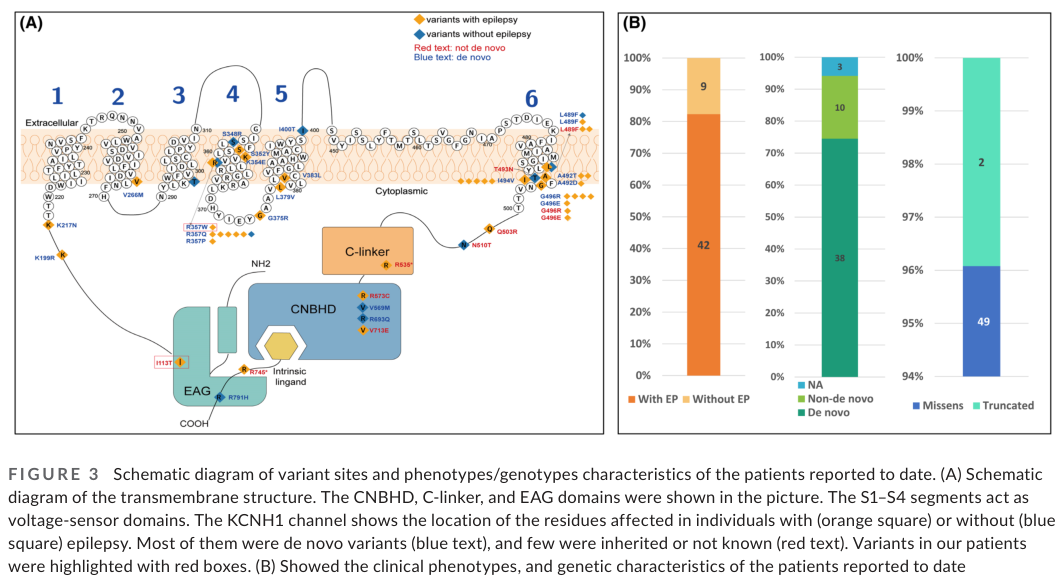
Show evidence (3 references)
Show evidence (3 references)
Show evidence (2 references)
Show evidence (1 reference)
Show evidence (3 references)
Show evidence (2 references)
Pathograph
Phenotypes
23Eye 1
Show evidence (1 reference)
Head and Neck 4
Show evidence (1 reference)
Show evidence (1 reference)
Show evidence (1 reference)
Show evidence (1 reference)
Integument 2
Show evidence (2 references)
Show evidence (2 references)
Limbs 5
Show evidence (1 reference)
Show evidence (2 references)
Show evidence (2 references)
Show evidence (1 reference)
Show evidence (1 reference)
Musculoskeletal 3
Show evidence (1 reference)
Show evidence (1 reference)
Show evidence (1 reference)
Nervous System 8
Show evidence (2 references)
Show evidence (2 references)
Show evidence (3 references)
Show evidence (2 references)
Show evidence (2 references)
Show evidence (1 reference)
Show evidence (1 reference)
Show evidence (1 reference)
Genetic Associations
1Show evidence (2 references)
Medical Actions
4Show evidence (3 references)
Show evidence (3 references)
Show evidence (2 references)
Show evidence (1 reference)
Diagnosis
3Show evidence (1 reference)
Show evidence (1 reference)
Show evidence (1 reference)
Prevalence
1Show evidence (2 references)
Differential Diagnoses
3Conditions with similar clinical presentations that must be differentiated from KCNH1 Associated Disorder:
Source YAML
click to showname: KCNH1 Associated Disorder
creation_date: "2026-07-31T00:00:00Z"
category: Mendelian
description: >-
A Mendelian neurodevelopmental disorder caused by heterozygous, almost always
de novo, gain-of-function missense variants in KCNH1, which encodes Kv10.1
(EAG1, ether-a-go-go), a voltage-gated potassium channel expressed
predominantly in the central nervous system. KCNH1 disease is best understood
as a single gene-centric phenotypic spectrum rather than a set of separate
syndromes. The two clinically recognisable endpoints — Temple-Baraitser
syndrome (TBS) and Zimmermann-Laband syndrome type 1 (ZLS1) — sit at the
syndromic end and share a common facial gestalt, while a substantial and
growing share of KCNH1-positive individuals ascertained through exome
sequencing or epilepsy gene panels have intellectual disability and epilepsy
with attenuated or absent gingival and nail features, so that neither
syndromic diagnosis is clinically suspected. At the mildest end are
individuals with isolated epilepsy or febrile seizures, typically carrying
inherited or mosaic rather than de novo variants. Features of the neurodevelopmental arms include intellectual
disability, seizures, neonatal hypotonia, and a
distinctive face (hypertelorism, broad nasal tip, wide mouth);
syndrome-defining features are nail aplasia or hypoplasia with broad, long,
proximally implanted thumbs and long halluces at the TBS end and gingival
enlargement with hypertrichosis at the ZLS1 end. Pathogenic variants cluster
in the S4 voltage sensor and the S6 pore-lining helix and shift channel
activation in the hyperpolarizing direction, so Kv10.1 opens at more negative
membrane potentials than normal. Because haploinsufficiency does not
reproduce the phenotype, gain — not loss — of channel function is the
pathogenic mechanism, which makes Kv10.1 inhibition the rational therapeutic
target; the principal obstacle is achieving selectivity over the closely
related cardiac channel Kv11.1 (hERG).
synonyms:
- KCNH1 related disorder
- KCNH1-related neurodevelopmental disorder
- KCNH1-related encephalopathy
- KCNH1 epilepsy
- Kv10.1 channelopathy
- EAG1 channelopathy
disease_term:
preferred_term: KCNH1 associated disorder
term:
id: MONDO:0100485
label: KCNH1 associated disorder
parents:
- Neurodevelopmental disorder
- Channelopathy
- Intellectual disability syndrome
- Developmental and epileptic encephalopathy
has_subtypes:
- name: TBS
display_name: Temple-Baraitser syndrome (syndromic, limb/nail-predominant)
description: >-
The limb- and nail-predominant syndromic endpoint of the spectrum:
intellectual disability and epilepsy with hypoplasia or aplasia of the
thumbnails and great-toe nails and broad, elongated, proximally implanted
thumbs and halluces. Curated in full as the separate dismech entry
Temple-Baraitser Syndrome (MONDO:0012735).
subtype_term:
preferred_term: Temple-Baraitser syndrome
term:
id: MONDO:0012735
label: Temple-Baraitser syndrome
genes:
- preferred_term: KCNH1
term:
id: hgnc:6250
label: KCNH1
evidence:
- reference: PMID:25420144
reference_title: "Mutations in the voltage-gated potassium channel gene KCNH1 cause Temple-Baraitser syndrome and epilepsy."
supports: SUPPORT
evidence_source: HUMAN_CLINICAL
snippet: >-
Temple-Baraitser syndrome (TBS) is a multisystem developmental disorder
characterized by intellectual disability, epilepsy, and hypoplasia or
aplasia of the nails of the thumb and great toe.
explanation: >-
Defines the TBS endpoint of the KCNH1 spectrum and its distinguishing
nail and digit features.
- name: ZLS1
display_name: Zimmermann-Laband syndrome type 1 (syndromic, gingival/hypertrichosis-predominant)
description: >-
The gingival- and hypertrichosis-predominant syndromic endpoint:
intellectual disability with coarse facial features, a large nose, gingival
enlargement, hypertrichosis, and hypoplasia of the terminal phalanges and
nails. KCNH1 is one of three ZLS genes (with KCNN3 and ATP6V1B2); only the
KCNH1 arm belongs to this spectrum. Curated in full as the separate dismech
entry Zimmermann-Laband Syndrome.
subtype_term:
preferred_term: Zimmermann-Laband syndrome 1
term:
id: MONDO:0024526
label: Zimmermann-Laband syndrome 1
genes:
- preferred_term: KCNH1
term:
id: hgnc:6250
label: KCNH1
evidence:
- reference: PMID:26264464
reference_title: "'Splitting versus lumping': Temple-Baraitser and Zimmermann-Laband Syndromes."
supports: SUPPORT
evidence_source: HUMAN_CLINICAL
snippet: >-
ZLS is characterized by facial dysmorphism including coarsening of the
face and a large nose, gingival enlargement, ID, hypoplasia of terminal
phalanges and nails and hypertrichosis.
explanation: >-
Defines the ZLS endpoint of the KCNH1 spectrum and its distinguishing
gingival and hypertrichosis features.
- name: Attenuated non-syndromic
display_name: KCNH1-related intellectual disability without TBS/ZLS features
description: >-
Individuals with severe intellectual disability with or without epilepsy in
whom the distinctive gingival and nail features of TBS/ZLS are absent, so
that neither syndromic diagnosis is clinically considered. This subtype is
recognised only after molecular diagnosis by exome sequencing or an
epilepsy gene panel, and is enriched for recurrent Gly496 substitutions and
for variants in the C-terminal cyclic nucleotide-binding homology domain
(CNBHD). It is the reason the gene-centric umbrella entity is needed: these
individuals have no syndromic label to be assigned to.
genes:
- preferred_term: KCNH1
term:
id: hgnc:6250
label: KCNH1
evidence:
- reference: PMID:33811134
reference_title: "Patients with KCNH1-related intellectual disability without distinctive features of Zimmermann-Laband/Temple-Baraitser syndrome."
supports: SUPPORT
evidence_source: HUMAN_CLINICAL
snippet: >-
Our study expands the phenotypical spectrum of KCNH1-related
encephalopathies to individuals with an attenuated extraneurological
phenotype preventing a clinical diagnosis of TBS or ZLS.
explanation: >-
Establishes the attenuated, non-syndromic subtype as a distinct arm of
the KCNH1 spectrum.
- reference: PMID:33811134
reference_title: "Patients with KCNH1-related intellectual disability without distinctive features of Zimmermann-Laband/Temple-Baraitser syndrome."
supports: SUPPORT
evidence_source: HUMAN_CLINICAL
snippet: >-
This subtype may be related to recurrent substitutions of the Gly496,
suggesting a genotype-phenotype correlation and, possibly, to variants in
the CNBHD domain.
explanation: >-
Provides the proposed genotypic correlate (Gly496 and CNBHD variants) of
the attenuated subtype.
- name: Isolated epilepsy
display_name: Isolated epilepsy or febrile seizures without encephalopathy
description: >-
The mildest arm of the spectrum: genetic generalized epilepsy, focal
epilepsy, or familial febrile seizures without intellectual disability or
syndromic dysmorphism. In contrast with the de novo variants that cause
encephalopathy, this arm is associated with inherited germline or
mosaic/somatic variants, consistent with the low-level mosaic mothers of
TBS probands who have epilepsy but are otherwise healthy.
genes:
- preferred_term: KCNH1
term:
id: hgnc:6250
label: KCNH1
evidence:
- reference: PMID:36285361
reference_title: "Phenotypic expansion of KCNH1-associated disorders to include isolated epilepsy and its associations with genotypes and molecular sub-regional locations."
supports: SUPPORT
evidence_source: HUMAN_CLINICAL
snippet: >-
Further analysis of 30 variants in 51 patients demonstrated that de novo
variants were associated with epileptic encephalopathy, while
mosaic/somatic or germline variants cause isolated epilepsy/FS.
explanation: >-
Separates the isolated-epilepsy arm from the encephalopathy arm and ties
the split to variant origin.
- reference: PMID:33494179
reference_title: "Novel KCNH1 Mutations Associated with Epilepsy: Broadening the Phenotypic Spectrum of KCNH1-Associated Diseases."
supports: SUPPORT
evidence_source: HUMAN_CLINICAL
snippet: >-
Here, we describe four patients suffering from a rather broad spectrum of
epilepsy-related disorders, ranging from developmental and epileptic
encephalopathy with intellectual disability (DEE) to genetic generalized
epilepsy (GGE), which all harbor novel KCNH1 mutations.
explanation: >-
Documents genetic generalized epilepsy at the mild end of the KCNH1
epilepsy spectrum.
inheritance:
- name: Autosomal dominant
inheritance_term:
preferred_term: Autosomal dominant inheritance
term:
id: HP:0000006
label: Autosomal dominant inheritance
description: >-
Heterozygous KCNH1 missense variants act dominantly, and the majority of
individuals with the syndromic or encephalopathic phenotypes carry de novo
variants, with inherited and mosaic alleles concentrated at the milder end
of the spectrum. A `de_novo_rate` is deliberately not asserted: the only
pooled figure available (38 of 51 published patients) comes from a
full-text table rather than any abstract cached here, so no quotable
source supports a specific percentage. Because dominance operates through a gain of channel
function on the tetrameric Kv10.1 complex rather than through
haploinsufficiency, truncating alleles are not straightforwardly pathogenic
and one reported nonsense variant segregated only weakly with epilepsy.
evidence:
- reference: PMID:25420144
reference_title: "Mutations in the voltage-gated potassium channel gene KCNH1 cause Temple-Baraitser syndrome and epilepsy."
supports: SUPPORT
evidence_source: HUMAN_CLINICAL
snippet: >-
Here we report damaging de novo mutations in KCNH1 (encoding a protein
called ether à go-go, EAG1 or KV10.1), a voltage-gated potassium channel
that is predominantly expressed in the central nervous system (CNS), in
six individuals with TBS.
explanation: >-
Establishes de novo heterozygous KCNH1 variants as the cause of the
syndromic phenotype.
- reference: PMID:33494179
reference_title: "Novel KCNH1 Mutations Associated with Epilepsy: Broadening the Phenotypic Spectrum of KCNH1-Associated Diseases."
supports: SUPPORT
evidence_source: HUMAN_CLINICAL
snippet: >-
In one family, we found a weak association of a novel nonsense mutation
with epilepsy, suggesting reduced penetrance, and which shows, in
agreement with previous findings, that gain-of-function effects rather
than haploinsufficiency are important for the pathogenicity of mutations.
explanation: >-
Supports that dominance is mediated by gain of function rather than
haploinsufficiency, which is why truncating alleles behave differently.
- name: Parental mosaicism
inheritance_term:
preferred_term: Somatic mosaicism
term:
id: HP:0001442
label: Typified by somatic mosaicism
description: >-
Low-level parental mosaicism for a pathogenic KCNH1 variant produces a
markedly attenuated phenotype — epilepsy without the syndromic features —
and explains apparently sporadic recurrence. This is the clearest natural
demonstration that KCNH1 phenotype severity scales with mutant allele
burden.
evidence:
- reference: PMID:25420144
reference_title: "Mutations in the voltage-gated potassium channel gene KCNH1 cause Temple-Baraitser syndrome and epilepsy."
supports: SUPPORT
evidence_source: HUMAN_CLINICAL
snippet: >-
we find that two mothers of children with TBS, who have epilepsy but are
otherwise healthy, are low-level (10% and 27%) mosaic carriers of
pathogenic KCNH1 mutations.
explanation: >-
Documents low-level maternal mosaicism producing an isolated-epilepsy
phenotype.
prevalence:
- population: Published literature cohorts worldwide
measure_type: CASES_IN_LITERATURE
prevalence_class: ULTRA_RARE
notes: >-
No population-based prevalence estimate exists. Case accrual is by
literature report: 23 cases were reported at the time of the 2022
non-syndromic series, and a 2023 genotype-phenotype analysis pooled 30
variants in 51 patients. Ascertainment is shifting from syndromic clinical
recognition to untargeted exome/panel sequencing, so the attenuated and
isolated-epilepsy arms are likely under-counted.
evidence:
- reference: PMID:33811134
reference_title: "Patients with KCNH1-related intellectual disability without distinctive features of Zimmermann-Laband/Temple-Baraitser syndrome."
supports: SUPPORT
evidence_source: HUMAN_CLINICAL
snippet: >-
Affected patients have severe intellectual disability (ID) with or
without epilepsy, hypertrichosis and distinctive features such as
gingival hyperplasia and nail hypoplasia/aplasia (present in 20/23
reported cases).
explanation: >-
Gives the published case count at the time of the series and the
proportion with the distinctive syndromic features.
- reference: PMID:36285361
reference_title: "Phenotypic expansion of KCNH1-associated disorders to include isolated epilepsy and its associations with genotypes and molecular sub-regional locations."
supports: SUPPORT
evidence_source: HUMAN_CLINICAL
snippet: >-
Further analysis of 30 variants in 51 patients demonstrated that de novo
variants were associated with epileptic encephalopathy
explanation: >-
Documents the size of the pooled published KCNH1 patient set analysed in
2023.
pathophysiology:
- name: KCNH1 Gain-of-Function Variants
biological_scale: MOLECULAR
description: >-
Heterozygous missense variants in KCNH1 alter Kv10.1 (EAG1), the
pore-forming subunit of a tetrameric voltage-gated potassium channel of the
ether-a-go-go family that is predominantly expressed in the central nervous
system. Pathogenic variants are concentrated in two structural hotspots —
the S4 voltage-sensor helix and the S6 pore-lining helix — with additional
variants in S3 and in the C-terminal cyclic nucleotide-binding homology
domain (CNBHD). The lesion is a gain, not a loss, of channel function:
haploinsufficiency does not reproduce the phenotype.
genes:
- preferred_term: KCNH1
term:
id: hgnc:6250
label: KCNH1
molecular_functions:
- preferred_term: voltage-gated potassium channel activity
term:
id: GO:0005249
label: voltage-gated potassium channel activity
modifier: INCREASED
evidence:
- reference: PMID:40986435
reference_title: "The molecular basis of KCNH1-related epileptic encephalopathy and the challenge of developing targeted therapeutics."
supports: SUPPORT
evidence_source: OTHER
snippet: >-
we review the molecular basis, clinical phenotype and treatment options
for KCNH1 epilepsy, which is caused by gain-of-function mutations in the
gene KCNH1, encoding the voltage-gated potassium channel Kv10.1
explanation: >-
States the core molecular lesion — gain-of-function variants in the
Kv10.1-encoding gene KCNH1.
- reference: PMID:36285361
reference_title: "Phenotypic expansion of KCNH1-associated disorders to include isolated epilepsy and its associations with genotypes and molecular sub-regional locations."
supports: SUPPORT
evidence_source: HUMAN_CLINICAL
snippet: >-
All hotspot variants associated with epileptic encephalopathy clustered
in transmembrane domain (S4 and S6), while those with isolated
epilepsy/seizures or TBS/ZLS without epilepsy were scattered in the
KCNH1.
explanation: >-
Localises the severity-determining hotspots to the S4 voltage sensor and
S6 pore helix. The accompanying figure is that paper's schematic of the
KCNH1 transmembrane topology with each reported variant site plotted and
colour-coded by whether the carrier had epilepsy.
images:
- KCNH1_Associated_Disorder-deep-research-falcon_artifacts/image-1.png
- reference: PMID:33811134
reference_title: "Patients with KCNH1-related intellectual disability without distinctive features of Zimmermann-Laband/Temple-Baraitser syndrome."
supports: SUPPORT
evidence_source: HUMAN_CLINICAL
snippet: >-
Four of these variants, p.(Thr294Met), p.(Ala492Asp), p.(Thr493Asn) and
p.(Gly496Arg), were located in the transmembrane domains S3 and S6 of
Kv10.1 and one, p.(Arg693Gln), in its C-terminal cyclic
nucleotide-binding homology domain (CNBHD).
explanation: >-
Documents the S3, S6, and CNBHD variant locations found in the
attenuated non-syndromic arm.
downstream:
- target: Hyperpolarizing Shift of Kv10.1 Activation
description: >-
Variants in the voltage sensor and pore helix lower the voltage
threshold at which the channel opens.
causal_link_type: DIRECT
- target: Disrupted Ciliary Localization and Sonic Hedgehog Signaling
description: >-
Pathogenic L352V and R330Q variants are associated with altered ciliogenesis and signaling
in patient-derived fibroblasts. The intervening molecular steps are unresolved; the
developmental interpretation is scoped to the emerging ciliary hypothesis.
causal_link_type: INDIRECT_UNKNOWN_INTERMEDIATES
hypothesis_groups:
- ciliary_hedgehog_extraneurological
- target: Seizures
description: >-
Pathogenic Kv10.1 gain of function causes the epileptic seizure phenotype.
This established etiologic relationship does not require choosing among the
still-unresolved neuronal, network, or developmental intermediate routes.
causal_link_type: INDIRECT_UNKNOWN_INTERMEDIATES
evidence:
- reference: PMID:40986435
reference_title: "The molecular basis of KCNH1-related epileptic encephalopathy and the challenge of developing targeted therapeutics."
supports: SUPPORT
evidence_source: OTHER
snippet: >-
Here we review the molecular basis, clinical phenotype and treatment options
for KCNH1 epilepsy, which is caused by gain-of-function mutations in the gene
KCNH1, encoding the voltage-gated potassium channel Kv10.1.
explanation: >-
The review explicitly identifies channel gain of function as the cause of
KCNH1 epilepsy; the causal endpoint is supported even though its intervening
neuronal route remains unresolved.
directness: INDIRECT
- reference: PMID:25420144
reference_title: "Mutations in the voltage-gated potassium channel gene KCNH1 cause Temple-Baraitser syndrome and epilepsy."
supports: SUPPORT
evidence_source: IN_VITRO
snippet: >-
Characterization of the mutant channels in both Xenopus laevis oocytes and human HEK293T cells showed a decreased threshold of activation and delayed deactivation, demonstrating that TBS-associated KCNH1 mutations lead to deleterious gain of function.
explanation: >-
The functional assays establish gain of function for the disease-associated channels; the clinical observation supplies the human epilepsy endpoint.
directness: INDIRECT
- reference: PMID:25420144
reference_title: "Mutations in the voltage-gated potassium channel gene KCNH1 cause Temple-Baraitser syndrome and epilepsy."
supports: SUPPORT
evidence_source: HUMAN_CLINICAL
snippet: >-
Consistent with this result, we find that two mothers of children with TBS, who have epilepsy but are otherwise healthy, are low-level (10% and 27%) mosaic carriers of pathogenic KCNH1 mutations.
explanation: >-
Epilepsy in low-level mosaic carriers supports the clinical endpoint independently of the functional assay, without demonstrating the intervening neuronal steps.
directness: INDIRECT
- target: Intellectual disability
description: >-
Pathogenic channel gain of function produces the neurodevelopmental
phenotype. The intervening developmental and neuronal steps are unresolved;
this relation does not assume that seizures cause the impairment or that it
occurs in the isolated-epilepsy arm.
causal_link_type: INDIRECT_UNKNOWN_INTERMEDIATES
evidence:
- reference: PMID:41656275
reference_title: "Crosstalk of KCNH1 and KCNH5 gain-of-function mutations leading to epilepsy and neurodevelopmental disorders."
supports: SUPPORT
evidence_source: IN_VITRO
snippet: >-
Gain-of-function (GoF) mutations in KCNH1 (Kv10.1, hEAG1) and KCNH5 (Kv10.2,
hEAG2) give rise to developmental disorders, intellectual disability, and
epilepsy.
explanation: >-
The authors identify gain of function as causing neurological developmental
phenotypes. This supports the broad etiologic relation; their channel
experiments do not identify its complete neuronal route.
directness: INDIRECT
- reference: PMID:33594261
reference_title: "Syndromic disorders caused by gain-of-function variants in KCNH1, KCNK4, and KCNN3-a subgroup of K(+) channelopathies."
supports: SUPPORT
evidence_source: HUMAN_CLINICAL
snippet: >-
Eighteen of 21 (86%) patients with dominant KCNH1 variant had severe DD and the level
of ID, determined in 23 individuals, was severe in 22 (96%) and mild to moderate in
1 (4%).
explanation: >-
The KCNH1 subgroup independently documents developmental delay and
intellectual disability as the human clinical endpoints. The selected-cohort
counts are not assigned as whole-spectrum frequencies.
directness: INDIRECT
- target: Global developmental delay
description: >-
Pathogenic channel gain of function produces the neurodevelopmental
phenotype. The intervening developmental and neuronal steps are unresolved;
this relation does not assume that seizures cause the impairment or that it
occurs in the isolated-epilepsy arm.
causal_link_type: INDIRECT_UNKNOWN_INTERMEDIATES
evidence:
- reference: PMID:41656275
reference_title: "Crosstalk of KCNH1 and KCNH5 gain-of-function mutations leading to epilepsy and neurodevelopmental disorders."
supports: SUPPORT
evidence_source: IN_VITRO
snippet: >-
Gain-of-function (GoF) mutations in KCNH1 (Kv10.1, hEAG1) and KCNH5 (Kv10.2,
hEAG2) give rise to developmental disorders, intellectual disability, and
epilepsy.
explanation: >-
The authors identify gain of function as causing neurological developmental
phenotypes. This supports the broad etiologic relation; their channel
experiments do not identify its complete neuronal route.
directness: INDIRECT
- reference: PMID:33594261
reference_title: "Syndromic disorders caused by gain-of-function variants in KCNH1, KCNK4, and KCNN3-a subgroup of K(+) channelopathies."
supports: SUPPORT
evidence_source: HUMAN_CLINICAL
snippet: >-
Eighteen of 21 (86%) patients with dominant KCNH1 variant had severe DD and the level
of ID, determined in 23 individuals, was severe in 22 (96%) and mild to moderate in
1 (4%).
explanation: >-
The KCNH1 subgroup independently documents developmental delay and
intellectual disability as the human clinical endpoints. The selected-cohort
counts are not assigned as whole-spectrum frequencies.
directness: INDIRECT
- name: Hyperpolarizing Shift of Kv10.1 Activation
biological_scale: MOLECULAR
description: >-
Disease-associated Kv10.1 subunits open at more negative membrane
potentials than wild type and close more slowly, so potassium conductance
is available at or near the resting potential where the wild-type channel
would be shut. Functional characterisation in Xenopus oocytes and human
HEK293T cells shows a decreased threshold of activation together with
delayed deactivation. Several severe variants, including Gly496Glu, are
non-functional when expressed alone and produce their gain of function only
after assembly with wild-type subunits, so the pathogenic species is the
heteromeric channel.
biological_processes:
- preferred_term: potassium ion transmembrane transport
term:
id: GO:0071805
label: potassium ion transmembrane transport
modifier: INCREASED
evidence:
- reference: PMID:25420144
reference_title: "Mutations in the voltage-gated potassium channel gene KCNH1 cause Temple-Baraitser syndrome and epilepsy."
supports: SUPPORT
evidence_source: IN_VITRO
snippet: >-
Characterization of the mutant channels in both Xenopus laevis oocytes
and human HEK293T cells showed a decreased threshold of activation and
delayed deactivation, demonstrating that TBS-associated KCNH1 mutations
lead to deleterious gain of function.
explanation: >-
Directly demonstrates the lowered activation threshold and slowed
deactivation that constitute the gain of function.
- reference: PMID:25915598
reference_title: "Mutations in KCNH1 and ATP6V1B2 cause Zimmermann-Laband syndrome."
supports: SUPPORT
evidence_source: IN_VITRO
snippet: >-
These data support a gain-of-function effect for all ZLS-associated
KCNH1 mutants.
explanation: >-
Confirms that the same gain-of-function direction holds for the variants
found at the ZLS end of the spectrum.
- reference: PMID:41656275
reference_title: "Crosstalk of KCNH1 and KCNH5 gain-of-function mutations leading to epilepsy and neurodevelopmental disorders."
supports: SUPPORT
evidence_source: IN_VITRO
snippet: >-
While Kv10.1-G496E alone did not yield functional K+ channels,
coexpression with Kv10.1 or Kv10.2 shifted the half-maximum voltage of
activation in the hyperpolarizing direction.
explanation: >-
Shows that the hyperpolarizing activation shift requires heteromeric
assembly with wild-type subunits for at least one severe variant.
downstream:
- target: Kv10 Heteromeric Crosstalk and Membrane Hyperpolarization
description: >-
The shifted channels assemble with wild-type Kv10.1 and Kv10.2 subunits
and hyperpolarize the cell.
causal_link_type: DIRECT
- target: Aberrant Neuronal Excitability and Network Dysfunction
description: >-
Altered channel gating is proposed to perturb neuronal signaling and circuit
function. The direction of native-neuron excitability changes and the
intervening cellular steps are unresolved.
causal_link_type: INDIRECT_UNKNOWN_INTERMEDIATES
evidence:
- reference: PMID:27267311
reference_title: "Epilepsy in KCNH1-related syndromes."
supports: SUPPORT
evidence_source: HUMAN_CLINICAL
snippet: |-
The
mechanism by whichKCNH1mutations cause epilepsy
remains to be elucidated; a possible mechanism could
be that gain of Kv10.1 channel function results in
increased potassium conductance with subsequent
inhibition of sodium and calcium currents and pertur-
bation of neurotransmitter release (Ufarteset al., 2013;
Kortüm et al., 2015; Mortensen et al., 2015).
explanation: >-
The authors propose a conductance-to-neurotransmission route to epilepsy
while leaving the intervening neuronal mechanism unresolved. This supports a
candidate causal route, not a demonstrated change in native-neuron firing.
directness: INDIRECT
hypothesis_groups:
- channel_to_network_dysfunction
- name: Kv10 Heteromeric Crosstalk and Membrane Hyperpolarization
biological_scale: CELLULAR
description: >-
Mutant Kv10.1-G496E subunits co-assemble with wild-type Kv10.1 and the paralogous Kv10.2
in HEK293T cells; the resulting channels augment membrane hyperpolarization. These experiments
found no functional interaction with Kv11.1 (hERG), but do not exclude cardiac manifestations
clinically. Coexpression of KCNH1 and KCNH5 in cortical glutamatergic neurons provides
a possible anatomical substrate; endogenous neuronal heteromerization and its clinical
consequences remain to be tested.
cell_types:
- preferred_term: glutamatergic cortical neuron
term:
id: CL:0000679
label: glutamatergic neuron
biological_processes:
- preferred_term: regulation of membrane potential
term:
id: GO:0042391
label: regulation of membrane potential
modifier: ABNORMAL
evidence:
- reference: PMID:41656275
reference_title: "Crosstalk of KCNH1 and KCNH5 gain-of-function mutations leading to epilepsy and neurodevelopmental disorders."
supports: SUPPORT
evidence_source: IN_VITRO
snippet: >-
we used the fluorescent genetically encoded voltage indicator mK2-rEstus
and found that both, Kv10.1 and Kv10.2, hyperpolarized HEK293T cells, and
that coexpression of the GoF mutants augmented this hyperpolarization.
explanation: >-
Demonstrates that the gain-of-function subunits augment membrane
hyperpolarization in a cellular assay.
- reference: PMID:41656275
reference_title: "Crosstalk of KCNH1 and KCNH5 gain-of-function mutations leading to epilepsy and neurodevelopmental disorders."
supports: SUPPORT
evidence_source: IN_VITRO
snippet: >-
Our findings imply that interpretation of clinical symptoms related to
Kv10 GoF mutations requires considering the functional crosstalk with
Kv10.1 and Kv10.2 subunits, which are both expressed in glutamatergic
neurons in cortical Layers III and IV.
explanation: >-
Locates the Kv10.1/Kv10.2 crosstalk in cortical glutamatergic neurons and
argues it modulates the clinical phenotype.
- reference: PMID:41656275
reference_title: "Crosstalk of KCNH1 and KCNH5 gain-of-function mutations leading to epilepsy and neurodevelopmental disorders."
supports: SUPPORT
evidence_source: IN_VITRO
snippet: >-
By contrast, the mutants did not affect the function of Kv11.1 (KCNH2,
hERG1) channels.
explanation: >-
The tested mutant subunits did not affect Kv11.1 function in HEK293T cells. This is
not evidence that all patients lack cardiac disease.
downstream:
- target: Aberrant Neuronal Excitability and Network Dysfunction
description: >-
Heteromeric gain of function is proposed to modify neuronal signaling in
coexpressing cells. The demonstrated HEK293T hyperpolarization does not
establish native-neuron firing behavior; this is a candidate route within the
channel-to-network hypothesis.
causal_link_type: INDIRECT_UNKNOWN_INTERMEDIATES
evidence:
- reference: PMID:41656275
reference_title: "Crosstalk of KCNH1 and KCNH5 gain-of-function mutations leading to epilepsy and neurodevelopmental disorders."
supports: SUPPORT
evidence_source: IN_VITRO
snippet: >-
In summary, we identify heteromeric crosstalk between Kv10.1 and Kv10.2 as a
key mechanism by which gain-of-function mutations may propagate their
effects, extending pathogenic influence beyond the mutated gene itself. This
mechanism provides a possible explanation for the variability of neurological
phenotypes associated withKCNH1andKCNH5mutations and highlights the
importance of considering subfamily-wide interactions in understanding
channelopathies.
explanation: >-
The authors propose heteromeric crosstalk as an explanation for neurological
variability. The experiments were in HEK293T cells, and endogenous neuronal
stoichiometry and effects still require testing.
directness: INDIRECT
hypothesis_groups:
- channel_to_network_dysfunction
- name: Aberrant Neuronal Excitability and Network Dysfunction
biological_scale: CELLULAR
description: >-
KCNH1 disease includes epilepsy and neurodevelopmental impairment, indicating disturbed
cerebral function. The specific neuronal and network changes connecting channel gain of
function to these clinical outcomes remain unresolved. HEK293T hyperpolarization experiments
do not establish the direction of excitability changes in native neurons. Altered neurotransmitter
release, cell-type-specific effects, and developmental circuit changes remain candidate
explanations.
cell_types:
- preferred_term: neuron
term:
id: CL:0000540
label: neuron
biological_processes:
- preferred_term: regulation of membrane potential
term:
id: GO:0042391
label: regulation of membrane potential
modifier: ABNORMAL
evidence:
- reference: PMID:27267311
reference_title: "Epilepsy in KCNH1-related syndromes."
supports: SUPPORT
evidence_source: HUMAN_CLINICAL
snippet: >-
Epilepsy is a key phenotypic feature in most individuals with
KCNH1-related syndromes, suggesting a direct role of KCNH1 in
epileptogenesis, although the underlying mechanism is not understood.
explanation: >-
Establishes the clinical epilepsy association while explicitly identifying the cellular
epileptogenic mechanism as unresolved. It does not demonstrate the proposed channel-to-network
intermediate.
directness: INDIRECT
- reference: PMID:30149017
reference_title: "Novel venom-derived inhibitors of the human EAG channel, a putative antiepileptic drug target."
supports: SUPPORT
evidence_source: IN_VITRO
snippet: >-
However, the physiological role of hEAG1 in the central nervous system
remains elusive.
explanation: >-
States that normal CNS function remains elusive; this contextualizes the gap rather
than demonstrating a specific neuronal defect.
directness: INDIRECT
downstream:
- target: Developmental and Epileptic Encephalopathy
description: >-
Disturbed neuronal and circuit function is proposed to produce the severe
epileptic and developmental presentation. The contribution of developmental
circuit defects versus ongoing epileptic activity is unresolved; this does
not assert that seizures cause every developmental feature.
causal_link_type: INDIRECT_UNKNOWN_INTERMEDIATES
evidence:
- reference: PMID:33494179
reference_title: "Novel KCNH1 Mutations Associated with Epilepsy: Broadening the Phenotypic Spectrum of KCNH1-Associated Diseases."
supports: SUPPORT
evidence_source: HUMAN_CLINICAL
snippet: >-
De novo missense variants in the pore region of the channel result in severe
phenotypes presenting usually with DEE with various malformations.
explanation: >-
The clinical series supports the severe channel-associated encephalopathy
outcome; its route through neuronal dysfunction is an indirect
interpretation, not a measured intermediate.
directness: INDIRECT
hypothesis_groups:
- channel_to_network_dysfunction
- name: Disrupted Ciliary Localization and Sonic Hedgehog Signaling
biological_scale: CELLULAR
description: >-
Kv10.1 localizes to the primary-cilium base in human fibroblasts and hTERT RPE1 cells.
Patient-derived fibroblasts carrying L352V or R330Q show variant-dependent changes in
cilium morphology, assembly/disassembly, and basal Sonic Hedgehog signaling. These cellular
observations motivate a developmental hypothesis for clinical features, but do not demonstrate
the cause of each nail, digit, facial, gingival, or hair finding.
cell_types:
- preferred_term: dermal fibroblast
term:
id: CL:0002551
label: fibroblast of dermis
- preferred_term: retinal pigment epithelial cell
term:
id: CL:0002586
label: retinal pigment epithelial cell
biological_processes:
- preferred_term: smoothened signaling pathway
term:
id: GO:0007224
label: smoothened signaling pathway
modifier: ABNORMAL
- preferred_term: cilium assembly
term:
id: GO:0060271
label: cilium assembly
modifier: ABNORMAL
evidence:
- reference: PMID:35639255
reference_title: "Potassium Channel KCNH1 Activating Variants Cause Altered Functional and Morphological Ciliogenesis."
supports: SUPPORT
evidence_source: IN_VITRO
snippet: >-
In this work, we provide evidence that KCNH1 localizes at the base of the
cilium in pre-ciliary vesicles and ciliary pocket of human dermal
fibroblasts and retinal pigment epithelial (hTERT RPE1) cells and that
the pathogenic missense variants (L352V and R330Q; NP_002229.1) perturb
cilia morphology, assembly/disassembly, and Sonic Hedgehog signaling,
disclosing a multifaceted role of the protein.
explanation: >-
Demonstrates ciliary localization of KCNH1 and disruption of ciliogenesis
and Hedgehog signalling by pathogenic activating variants.
downstream:
- target: Extraneurological Developmental Anomalies
description: >-
Proposed developmental connection from altered ciliary signaling to clinical malformations.
The intermediate tissue-patterning events have not been demonstrated in KCNH1 disease;
this edge belongs only to the emerging hypothesis.
causal_link_type: INDIRECT_UNKNOWN_INTERMEDIATES
hypothesis_groups:
- ciliary_hedgehog_extraneurological
- name: Developmental and Epileptic Encephalopathy
biological_scale: ORGANISM
description: >-
The severe neurological presentation combines developmental impairment and epilepsy, often
with early onset and a slow EEG background. Drug resistance and status epilepticus occur,
but epilepsy severity varies across the spectrum. This node summarizes the clinical presentation;
it is not itself a demonstrated mechanism causing intellectual disability or seizures.
evidence:
- reference: PMID:27267311
reference_title: "Epilepsy in KCNH1-related syndromes."
supports: SUPPORT
evidence_source: HUMAN_CLINICAL
snippet: >-
Complete seizure control was achieved with pharmacological treatment in
2/7 patients; polytherapy was required in 4/7 patients. Status
epilepticus occurred in 4/7 patients.
explanation: >-
Reports seizure control and status epilepticus in the seven patients with epilepsy in
a nine-person syndromic series; these fractions do not describe the entire expanded
KCNH1 spectrum.
- reference: PMID:27267311
reference_title: "Epilepsy in KCNH1-related syndromes."
supports: SUPPORT
evidence_source: HUMAN_CLINICAL
snippet: >-
EEG showed a diffusely slow background in 7/7 patients with epilepsy,
with variable epileptiform abnormalities.
explanation: >-
Documents the consistent diffusely slow EEG background, the
encephalopathic signature.
- reference: PMID:40986435
reference_title: "The molecular basis of KCNH1-related epileptic encephalopathy and the challenge of developing targeted therapeutics."
supports: SUPPORT
evidence_source: OTHER
snippet: >-
these genetic disorders are now recognized as belonging to a broad
spectrum of KCNH1-related encephalopathies characterized by developmental
delay, intellectual disability, facial dysmorphism and infantile-onset
seizures.
explanation: >-
Defines the shared encephalopathic core of the spectrum, including
infantile seizure onset.
- name: Extraneurological Developmental Anomalies
biological_scale: ORGANISM
description: >-
A clinical summary of variably expressed nail, distal phalangeal, thumb, toe, facial,
gingival, and hair abnormalities. The syndrome-defining gingival and nail features may
be attenuated or absent. This phenotype constellation is not a mechanism explaining its
component findings; its proposed connection to ciliary signaling is recorded separately
as an emerging hypothesis.
evidence:
- reference: PMID:26264464
reference_title: "'Splitting versus lumping': Temple-Baraitser and Zimmermann-Laband Syndromes."
supports: SUPPORT
evidence_source: HUMAN_CLINICAL
snippet: >-
KCNH1 mutation-positive individuals present with severe ID, neonatal
hypotonia, hypertelorism, broad nasal tip, wide mouth, nail a/hypoplasia,
a proximal implanted and long thumb and long great toes.
explanation: >-
Enumerates the shared core phenotype of the spectrum, spanning the
neurological and extraneurological features.
- reference: PMID:26264464
reference_title: "'Splitting versus lumping': Temple-Baraitser and Zimmermann-Laband Syndromes."
supports: SUPPORT
evidence_source: HUMAN_CLINICAL
snippet: >-
Clinical evaluation of our mutation-positive individuals revealed that
one of the main characteristics of TMBTS/ZLS, namely the pronounced nail
hypoplasia of the great toes and thumbs, can be mild and develop over
time.
explanation: >-
Documents the age-dependence and variable expressivity of the
syndrome-defining nail feature.
mechanistic_hypotheses:
- hypothesis_group_id: ciliary_hedgehog_extraneurological
hypothesis_label: >-
Ciliary Kv10.1 and Hedgehog signalling explain the extraneurological
features
status: EMERGING
description: >-
Proposes that the limb, nail, craniofacial, hair, and gingival features of
the spectrum arise not from neuronal hyperexcitability but from a separate,
non-excitable-cell role of Kv10.1 at the base of the primary cilium, where
activating variants disturb ciliogenesis and Sonic Hedgehog signal
transduction during development. The supporting data are from human dermal
fibroblasts and hTERT RPE1 cells; the causal link from disturbed
fibroblast/RPE Hedgehog signalling to the specific human malformations has
not been demonstrated in developing tissue, which is why this is recorded
as emerging rather than canonical.
evidence:
- reference: PMID:35639255
reference_title: "Potassium Channel KCNH1 Activating Variants Cause Altered Functional and Morphological Ciliogenesis."
supports: SUPPORT
evidence_source: IN_VITRO
snippet: >-
the pathogenic missense variants (L352V and R330Q; NP_002229.1) perturb
cilia morphology, assembly/disassembly, and Sonic Hedgehog signaling,
disclosing a multifaceted role of the protein
explanation: >-
Provides the in vitro basis for the ciliary/Hedgehog explanation of the
extraneurological features.
- hypothesis_group_id: channel_to_network_dysfunction
hypothesis_label: Altered Kv10 gating and heteromeric crosstalk perturb neuronal circuits
status: EMERGING
description: >-
The causal relation between pathogenic KCNH1 gain of function and epilepsy is
established. This hypothesis concerns its intervening route: altered gating
and heteromeric subunit interactions may disturb neuronal signaling and
developmental circuit function. The neurotransmission route is proposed in
the clinical literature, and heteromeric effects are demonstrated in HEK293T
cells, but their endogenous neuronal consequences remain untested. No
specific inhibitory-versus-excitatory cell effect is asserted.
evidence:
- reference: PMID:27267311
reference_title: "Epilepsy in KCNH1-related syndromes."
supports: SUPPORT
evidence_source: HUMAN_CLINICAL
snippet: |-
The
mechanism by whichKCNH1mutations cause epilepsy
remains to be elucidated; a possible mechanism could
be that gain of Kv10.1 channel function results in
increased potassium conductance with subsequent
inhibition of sodium and calcium currents and pertur-
bation of neurotransmitter release (Ufarteset al., 2013;
Kortüm et al., 2015; Mortensen et al., 2015).
explanation: >-
The authors propose a conductance-to-neurotransmission route to epilepsy
while leaving the intervening neuronal mechanism unresolved. This supports a
candidate causal route, not a demonstrated change in native-neuron firing.
directness: INDIRECT
- reference: PMID:41656275
reference_title: "Crosstalk of KCNH1 and KCNH5 gain-of-function mutations leading to epilepsy and neurodevelopmental disorders."
supports: SUPPORT
evidence_source: IN_VITRO
snippet: >-
In summary, we identify heteromeric crosstalk between Kv10.1 and Kv10.2 as a
key mechanism by which gain-of-function mutations may propagate their
effects, extending pathogenic influence beyond the mutated gene itself. This
mechanism provides a possible explanation for the variability of neurological
phenotypes associated withKCNH1andKCNH5mutations and highlights the
importance of considering subfamily-wide interactions in understanding
channelopathies.
explanation: >-
The authors propose heteromeric crosstalk as an explanation for neurological
variability. The experiments were in HEK293T cells, and endogenous neuronal
stoichiometry and effects still require testing.
directness: INDIRECT
phenotypes:
- category: Neurologic
name: Intellectual disability
description: >-
Intellectual disability is present across the syndromic and attenuated arms
of the spectrum and is typically severe; it is absent in the
isolated-epilepsy arm.
phenotype_term:
preferred_term: Intellectual disability
term:
id: HP:0001249
label: Intellectual disability
evidence:
- reference: PMID:33594261
reference_title: "Syndromic disorders caused by gain-of-function variants in KCNH1, KCNK4, and KCNN3-a subgroup of K(+) channelopathies."
supports: SUPPORT
evidence_source: HUMAN_CLINICAL
snippet: >-
Eighteen of 21 (86%) patients with dominant KCNH1 variant had severe DD and the level
of ID, determined in 23 individuals, was severe in 22 (96%) and mild to moderate in
1 (4%).
explanation: >-
In the syndromic KCNH1 series, ID severity was assessed in 23 individuals: 22 severe
and one mild to moderate. This is a severity distribution among assessed cases, not
a whole-spectrum frequency of intellectual disability.
- reference: PMID:26264464
reference_title: "'Splitting versus lumping': Temple-Baraitser and Zimmermann-Laband Syndromes."
supports: SUPPORT
evidence_source: HUMAN_CLINICAL
snippet: >-
KCNH1 mutation-positive individuals present with severe ID, neonatal
hypotonia, hypertelorism, broad nasal tip, wide mouth, nail a/hypoplasia,
a proximal implanted and long thumb and long great toes.
explanation: >-
Documents these features in the published syndromic KCNH1 cases; it does not establish
their frequency across the expanded spectrum.
- category: Neurologic
name: Global developmental delay
description: >-
Delay across developmental domains occurs in syndromic and attenuated KCNH1 neurodevelopmental
disease; it is not obligatory in individuals with isolated epilepsy.
phenotype_term:
preferred_term: Global developmental delay
term:
id: HP:0001263
label: Global developmental delay
evidence:
- reference: PMID:33594261
reference_title: "Syndromic disorders caused by gain-of-function variants in KCNH1, KCNK4, and KCNN3-a subgroup of K(+) channelopathies."
supports: SUPPORT
evidence_source: HUMAN_CLINICAL
snippet: >-
Patients 3 and 4 showed severe developmental delay (DD) and hypotonia.
explanation: >-
The KCNH1 patients 3 and 4 had severe developmental delay; Table 1 documents both motor
and language delay. The aggregate severe-DD figure of 18/21 is limited to the syndromic
series.
- reference: PMID:40986435
reference_title: "The molecular basis of KCNH1-related epileptic encephalopathy and the challenge of developing targeted therapeutics."
supports: SUPPORT
evidence_source: OTHER
snippet: >-
a broad spectrum of KCNH1-related encephalopathies characterized by
developmental delay, intellectual disability, facial dysmorphism and
infantile-onset seizures
explanation: >-
Names developmental delay as a defining feature of the spectrum.
- category: Neurologic
name: Seizures
description: >-
Seizures range from isolated febrile or non-febrile episodes to developmental and epileptic
encephalopathy. Infantile onset is common in the severe syndromic presentations, but later
onset occurs and some individuals have no seizures.
phenotype_term:
preferred_term: Seizure
term:
id: HP:0001250
label: Seizure
evidence:
- reference: PMID:33594261
reference_title: "Syndromic disorders caused by gain-of-function variants in KCNH1, KCNK4, and KCNN3-a subgroup of K(+) channelopathies."
supports: SUPPORT
evidence_source: HUMAN_CLINICAL
snippet: |-
The majority of individuals with dominant KCNH1
variant had seizures (24/27; 89%), while only two of the
three (66%) with dominant KCNK4 variant developed sei-
zures.
explanation: >-
Reports seizures in 24/27 syndromic KCNH1 cases; this is not an unselected whole-spectrum
estimate.
- reference: PMID:27267311
reference_title: "Epilepsy in KCNH1-related syndromes."
supports: SUPPORT
evidence_source: HUMAN_CLINICAL
snippet: >-
Epilepsy was present in 7/9 patients.
explanation: >-
Seven of nine patients in the 2016 epilepsy-phenotyping series had epilepsy. These published
patients overlap the later Gripp aggregation and are not independent replication.
- reference: PMID:27267311
reference_title: "Epilepsy in KCNH1-related syndromes."
supports: SUPPORT
evidence_source: HUMAN_CLINICAL
snippet: >-
Both generalized and focal tonic-clonic seizures were observed.
explanation: >-
Documents the seizure semiologies observed across the spectrum.
- category: Neurologic
name: Status epilepticus
description: >-
Status epilepticus is a potentially fatal complication of KCNH1-associated epilepsy; refractory
status epilepticus caused acute encephalopathy and death in a reported patient.
phenotype_term:
preferred_term: Status epilepticus
term:
id: HP:0002133
label: Status epilepticus
evidence:
- reference: PMID:27267311
reference_title: "Epilepsy in KCNH1-related syndromes."
supports: SUPPORT
evidence_source: HUMAN_CLINICAL
snippet: >-
Status epilepticus occurred in 4/7 patients.
explanation: >-
Status epilepticus occurred in four of seven patients with epilepsy in this nine-person
series. The epilepsy-only denominator does not define a whole-spectrum frequency.
- reference: PMID:36285361
reference_title: "Phenotypic expansion of KCNH1-associated disorders to include isolated epilepsy and its associations with genotypes and molecular sub-regional locations."
supports: SUPPORT
evidence_source: HUMAN_CLINICAL
snippet: >-
Two patients experienced refractory status epilepticus (SE), of which one
patient died of acute encephalopathy induced by SE.
explanation: >-
Documents the mortality risk of refractory status epilepticus in this
disorder.
- category: Neurologic
name: Febrile seizures
description: >-
Febrile seizures occur in inherited isolated-seizure presentations and also in syndromic
KCNH1 disease; they do not uniquely define the mild arm.
phenotype_term:
preferred_term: Febrile seizure
term:
id: HP:0002373
label: Febrile seizure (within the age range of 3 months to 6 years)
evidence:
- reference: PMID:36285361
reference_title: "Phenotypic expansion of KCNH1-associated disorders to include isolated epilepsy and its associations with genotypes and molecular sub-regional locations."
supports: SUPPORT
evidence_source: HUMAN_CLINICAL
snippet: >-
Two novel KCNH1 variants were identified in three cases, including two
patients with FS with inherited variant (p.Ile113Thr) and one boy with
epilepsy with de novo variant (p.Arg357Trp).
explanation: >-
Documents inherited-variant febrile seizures as a KCNH1 presentation.
- reference: PMID:27267311
reference_title: "Epilepsy in KCNH1-related syndromes."
supports: SUPPORT
evidence_source: HUMAN_CLINICAL
snippet: >-
Febrile seizures were observed in Patient 3 only.
explanation: >-
Documents febrile seizures in a syndromic patient, so this feature is not restricted
to inherited isolated epilepsy.
- category: Neurologic
name: Neonatal hypotonia
description: >-
Neonatal hypotonia is a reported early manifestation of syndromic KCNH1
disease.
phenotype_term:
preferred_term: Neonatal hypotonia
term:
id: HP:0001319
label: Neonatal hypotonia
onset:
onset_category: NEONATAL
evidence:
- reference: PMID:26264464
reference_title: "'Splitting versus lumping': Temple-Baraitser and Zimmermann-Laband Syndromes."
supports: SUPPORT
evidence_source: HUMAN_CLINICAL
snippet: >-
KCNH1 mutation-positive individuals present with severe ID, neonatal hypotonia, hypertelorism,
broad nasal tip, wide mouth, nail a/hypoplasia, a proximal implanted and long thumb
and long great toes.
explanation: >-
Documents these features in the published syndromic KCNH1 cases; it does not establish
their frequency across the expanded spectrum.
notes: >-
Gripp et al. (PMID:33594261) report hypotonia without onset restriction in 26/27 (96%)
in the narrative, whereas Table 2 prints 25/27 with the same 96%. Neither count quantifies
neonatal hypotonia specifically, and no neonatal or whole-spectrum band is assigned.
- category: Skeletal
name: Nail aplasia or hypoplasia
description: >-
Absent or hypoplastic nails, most pronounced on the thumbs and great toes,
are a cardinal extraneurological feature at the syndromic end. They may be
mild and develop over time, and can be absent in attenuated presentations.
Site-specific counts remain in the cited evidence below.
phenotype_term:
preferred_term: Aplasia/Hypoplasia of the nails
term:
id: HP:0008386
label: Aplasia/Hypoplasia of the nails
evidence:
- reference: PMID:33594261
reference_title: "Syndromic disorders caused by gain-of-function variants in KCNH1, KCNK4, and KCNN3-a subgroup of K(+) channelopathies."
supports: SUPPORT
evidence_source: HUMAN_CLINICAL
snippet: >-
24/27 (89%) and 16/20 (80%) patients with dominant KCNH1 variant had absent or hypoplastic
great toe nail and anonychia or nail hypoplasia of other fingers and/or toes, respectively.
explanation: >-
Documents absent or hypoplastic great-toe nails and other finger/toe nails in the syndromic
KCNH1 group. These distinct site-specific denominators do not directly measure whole-spectrum
nail involvement.
- reference: PMID:33811134
reference_title: "Patients with KCNH1-related intellectual disability without distinctive features of Zimmermann-Laband/Temple-Baraitser syndrome."
supports: SUPPORT
evidence_source: HUMAN_CLINICAL
snippet: >-
Affected patients have severe intellectual disability (ID) with or
without epilepsy, hypertrichosis and distinctive features such as
gingival hyperplasia and nail hypoplasia/aplasia (present in 20/23
reported cases).
explanation: >-
Quantifies the distinctive gingival and nail features in 20 of 23
reported cases at the syndromic end of the spectrum.
- category: Skeletal
name: Short distal phalanges of fingers
description: >-
Short distal phalanges of the fingers are documented in KCNH1-associated syndromic disease.
Finger and toe involvement should not be conflated when describing anatomical sites.
phenotype_term:
preferred_term: Short distal phalanges of fingers
term:
id: HP:0009882
label: Short distal phalanx of finger
evidence:
- reference: PMID:33594261
reference_title: "Syndromic disorders caused by gain-of-function variants in KCNH1, KCNK4, and KCNN3-a subgroup of K(+) channelopathies."
supports: SUPPORT
evidence_source: HUMAN_CLINICAL
snippet: >-
All six individuals with dominant KCNN3 variant and 13 of 17 (76%) with dominant KCNH1
variant had hypoplastic terminal phalanges of some or all fingers and/or toes.
explanation: >-
Thirteen of seventeen KCNH1 cases had hypoplastic terminal phalanges of fingers and/or
toes. Table 1 specifically describes short distal finger phalanges in KCNH1 patient
2. The combined finger-or-toe percentage is not assigned to either site separately.
notes: >-
The 13/17 aggregate pools finger and/or toe involvement; it cannot provide a finger-specific
frequency.
- category: Skeletal
name: Broad thumb
description: >-
Thumb broadening is documented at the syndromic end of KCNH1 disease. Thumb length and
proximal placement are separate findings.
phenotype_term:
preferred_term: Broad thumb
term:
id: HP:0011304
label: Broad thumb
evidence:
- reference: PMID:26264464
reference_title: "'Splitting versus lumping': Temple-Baraitser and Zimmermann-Laband Syndromes."
supports: SUPPORT
evidence_source: HUMAN_CLINICAL
snippet: >-
TMBTS is characterized by intellectual disability (ID), epilepsy, dysmorphic facial
features, broad thumbs and great toes with absent/hypoplastic nails.
explanation: >-
Describes broad thumbs in the KCNH1-associated TMBTS phenotype.
- reference: PMID:33594261
reference_title: "Syndromic disorders caused by gain-of-function variants in KCNH1, KCNK4, and KCNN3-a subgroup of K(+) channelopathies."
supports: SUPPORT
evidence_source: HUMAN_CLINICAL
snippet: >-
Broad thumb and/or toe was observed in 46% of individuals with dominant KCNH1 variant
and in 17% with dominant KCNN3 variant.
explanation: >-
The discussion reports broad thumbs and/or toes in 46% of syndromic KCNH1 cases; Table
2 gives 11/24. The combined anatomical sites do not establish a thumb-only frequency.
- category: Skeletal
name: Long hallux
description: >-
Long great toes are documented in the syndromic KCNH1 phenotype, alongside variably expressed
thumb abnormalities.
phenotype_term:
preferred_term: Long hallux
term:
id: HP:0001847
label: Long hallux
evidence:
- reference: PMID:33594261
reference_title: "Syndromic disorders caused by gain-of-function variants in KCNH1, KCNK4, and KCNN3-a subgroup of K(+) channelopathies."
supports: SUPPORT
evidence_source: HUMAN_CLINICAL
snippet: >-
Overall, 15/24 (63%) individuals with dominant KCNH1 variant and 2/6 (33%) with dominant
KCNN3 variant had long great toes.
explanation: >-
Reports long great toes in 15/24 KCNH1 cases in the syndromic cohort, separately from
KCNN3 cases.
- reference: PMID:26264464
reference_title: "'Splitting versus lumping': Temple-Baraitser and Zimmermann-Laband Syndromes."
supports: SUPPORT
evidence_source: HUMAN_CLINICAL
snippet: >-
KCNH1 mutation-positive individuals present with severe ID, neonatal hypotonia, hypertelorism,
broad nasal tip, wide mouth, nail a/hypoplasia, a proximal implanted and long thumb
and long great toes.
explanation: >-
Documents these features in the published syndromic KCNH1 cases; it does not establish
their frequency across the expanded spectrum.
- category: Craniofacial
name: Hypertelorism
description: >-
Increased orbital separation is reported in syndromic KCNH1 cases.
phenotype_term:
preferred_term: Hypertelorism
term:
id: HP:0000316
label: Hypertelorism
evidence:
- reference: PMID:26264464
reference_title: "'Splitting versus lumping': Temple-Baraitser and Zimmermann-Laband Syndromes."
supports: SUPPORT
evidence_source: HUMAN_CLINICAL
snippet: >-
KCNH1 mutation-positive individuals present with severe ID, neonatal hypotonia, hypertelorism,
broad nasal tip, wide mouth, nail a/hypoplasia, a proximal implanted and long thumb
and long great toes.
explanation: >-
Documents these features in the published syndromic KCNH1 cases; it does not establish
their frequency across the expanded spectrum.
- category: Craniofacial
name: Wide mouth
description: >-
A wide mouth is part of the reported syndromic KCNH1 facial gestalt.
phenotype_term:
preferred_term: Wide mouth
term:
id: HP:0000154
label: Wide mouth
evidence:
- reference: PMID:26264464
reference_title: "'Splitting versus lumping': Temple-Baraitser and Zimmermann-Laband Syndromes."
supports: SUPPORT
evidence_source: HUMAN_CLINICAL
snippet: >-
KCNH1 mutation-positive individuals present with severe ID, neonatal hypotonia, hypertelorism,
broad nasal tip, wide mouth, nail a/hypoplasia, a proximal implanted and long thumb
and long great toes.
explanation: >-
Documents these features in the published syndromic KCNH1 cases; it does not establish
their frequency across the expanded spectrum.
- category: Craniofacial
name: Broad nasal tip
description: >-
A broad nasal tip is reported in syndromic KCNH1 cases.
phenotype_term:
preferred_term: Broad nasal tip
term:
id: HP:0000455
label: Broad nasal tip
evidence:
- reference: PMID:26264464
reference_title: "'Splitting versus lumping': Temple-Baraitser and Zimmermann-Laband Syndromes."
supports: SUPPORT
evidence_source: HUMAN_CLINICAL
snippet: >-
KCNH1 mutation-positive individuals present with severe ID, neonatal hypotonia, hypertelorism,
broad nasal tip, wide mouth, nail a/hypoplasia, a proximal implanted and long thumb
and long great toes.
explanation: >-
Documents these features in the published syndromic KCNH1 cases; it does not establish
their frequency across the expanded spectrum.
- category: Neurologic
name: Absent speech
description: >-
Speech may remain absent into later childhood or adulthood in severely affected individuals.
This annotation denotes absent speech; patients with delayed but acquired speech are not
counted as having absent speech.
phenotype_term:
preferred_term: Absent speech
term:
id: HP:0001344
label: Absent speech
evidence:
- reference: PMID:33594261
reference_title: "Syndromic disorders caused by gain-of-function variants in KCNH1, KCNK4, and KCNN3-a subgroup of K(+) channelopathies."
supports: SUPPORT
evidence_source: HUMAN_CLINICAL
snippet: >-
She had mixed seizures and ID with no spoken language at age 9 years.
explanation: >-
The preceding paragraph identifies this as KCNH1 patient 2, who had no spoken language
at age nine.
- category: Craniofacial
name: Coarse facial features
description: >-
Coarsening of the face, with a large nose, is characteristic at the
Zimmermann-Laband end and is shared with the other syndromic potassium
channelopathies.
phenotype_term:
preferred_term: Coarse facial features
term:
id: HP:0000280
label: Coarse facial features
evidence:
- reference: PMID:33594261
reference_title: "Syndromic disorders caused by gain-of-function variants in KCNH1, KCNK4, and KCNN3-a subgroup of K(+) channelopathies."
supports: SUPPORT
evidence_source: HUMAN_CLINICAL
snippet: >-
Patient 4 showed coarse face with epicanthal folds and slightly broad nasal tip (Fig.
1).
explanation: >-
Documents coarse facial features in KCNH1 patient 4, separately from the KCNN3 cases
in this mixed-gene paper.
- category: Oral
name: Gingival enlargement
description: >-
Gingival overgrowth is the cardinal extraneurological feature at the
Zimmermann-Laband end. It is absent in the attenuated non-syndromic
subtype, and its presence or absence is a principal determinant of which
clinical label is applied.
phenotype_term:
preferred_term: Gingival overgrowth
term:
id: HP:0000212
label: Gingival overgrowth
evidence:
- reference: PMID:33594261
reference_title: "Syndromic disorders caused by gain-of-function variants in KCNH1, KCNK4, and KCNN3-a subgroup of K(+) channelopathies."
supports: SUPPORT
evidence_source: HUMAN_CLINICAL
snippet: |-
Gingival enlargement was documented in 15/19 (79%)
individuals with dominant KCNH1, in 4/6 (67%) indivi-
duals with dominant KCNN3, and in all three (100%) with
dominant KCNK4 variant.
explanation: >-
Reports gingival enlargement in 15/19 syndromic KCNH1 cases, separately from KCNN3 and
KCNK4.
notes: >-
No whole-spectrum frequency is assigned from the syndromic cohort. In PMID:33811134, clinical
reappraisal of seven KCNH1 patients confirmed absence of the distinctive gingival and
nail features of TBS/ZLS. That subgroup absence is retained as clinical context, not as
SUPPORT or disease-wide REFUTE evidence.
- category: Integumentary
name: Hypertrichosis
description: >-
Excessive hair growth is characteristic of the Zimmermann-Laband end of the
spectrum and is shared across the syndromic potassium channelopathies. It
is, however, the least frequent of the classical ZLS features in
KCNH1-mutated individuals specifically — 3 of the 16 KCNH1 patients scored
for it (19%), against 50% of KCNN3 and 100% of KCNK4 cases — so it
discriminates poorly within the KCNH1 arm.
phenotype_term:
preferred_term: Hypertrichosis
term:
id: HP:0000998
label: Hypertrichosis
evidence:
- reference: PMID:33594261
reference_title: "Syndromic disorders caused by gain-of-function variants in KCNH1, KCNK4, and KCNN3-a subgroup of K(+) channelopathies."
supports: SUPPORT
evidence_source: HUMAN_CLINICAL
snippet: >-
Similarly, all individuals with dominant KCNK4 variant (100%) had hypertrichosis, while
only 3/16 (19%) and 3/6 (50%) with dominant KCNH1 and KCNN3 variant, respectively, showed
hypertrichosis.
explanation: >-
Reports hypertrichosis in 3/16 assessed syndromic KCNH1 cases, separately from the other
genes; the small selected denominator is not a whole-spectrum frequency.
- reference: PMID:33811134
reference_title: "Patients with KCNH1-related intellectual disability without distinctive features of Zimmermann-Laband/Temple-Baraitser syndrome."
supports: SUPPORT
evidence_source: HUMAN_CLINICAL
snippet: >-
Affected patients have severe intellectual disability (ID) with or
without epilepsy, hypertrichosis and distinctive features such as
gingival hyperplasia and nail hypoplasia/aplasia
explanation: >-
Documents hypertrichosis in the attenuated neurodevelopmental subgroup, independently
of the syndromic cohort count.
- category: Skeletal
name: Long thumb
description: >-
Thumb elongation is described independently of thumb width in syndromic KCNH1 disease.
phenotype_term:
preferred_term: Long thumb
term:
id: HP:0032524
label: Long thumb
evidence:
- reference: PMID:26264464
reference_title: "'Splitting versus lumping': Temple-Baraitser and Zimmermann-Laband Syndromes."
supports: SUPPORT
evidence_source: HUMAN_CLINICAL
snippet: >-
KCNH1 mutation-positive individuals present with severe ID, neonatal hypotonia, hypertelorism,
broad nasal tip, wide mouth, nail a/hypoplasia, a proximal implanted and long thumb
and long great toes.
explanation: >-
Documents these features in the published syndromic KCNH1 cases; it does not establish
their frequency across the expanded spectrum.
- category: Skeletal
name: Proximal placement of thumb
description: >-
Proximal thumb implantation is documented in syndromic KCNH1 disease, including patients
with hypoplastic rather than broad thumbs.
phenotype_term:
preferred_term: Proximal placement of thumb
term:
id: HP:0009623
label: Proximal placement of thumb
evidence:
- reference: PMID:26264464
reference_title: "'Splitting versus lumping': Temple-Baraitser and Zimmermann-Laband Syndromes."
supports: SUPPORT
evidence_source: HUMAN_CLINICAL
snippet: >-
KCNH1 mutation-positive individuals present with severe ID, neonatal hypotonia, hypertelorism,
broad nasal tip, wide mouth, nail a/hypoplasia, a proximal implanted and long thumb
and long great toes.
explanation: >-
Documents these features in the published syndromic KCNH1 cases; it does not establish
their frequency across the expanded spectrum.
- category: Skeletal
name: Kyphosis
description: >-
Kyphosis was reported together with thoracolumbar scoliosis in a KCNH1 patient; no frequency
across the spectrum is established.
phenotype_term:
preferred_term: Kyphosis
term:
id: HP:0002808
label: Kyphosis
evidence:
- reference: PMID:33594261
reference_title: "Syndromic disorders caused by gain-of-function variants in KCNH1, KCNK4, and KCNN3-a subgroup of K(+) channelopathies."
supports: SUPPORT
evidence_source: HUMAN_CLINICAL
snippet: |-
Patient 4 had elongated toes
with hypoplastic nails (Fig. 1) and thoracolumbar sco-
liosis and kyphosis.
explanation: >-
Documents kyphosis in KCNH1 patient 4, alongside thoracolumbar scoliosis.
- category: Skeletal
name: Scoliosis
description: >-
Scoliosis is documented in KCNH1 patients, with variable severity; no frequency across
the spectrum is established.
phenotype_term:
preferred_term: Scoliosis
term:
id: HP:0002650
label: Scoliosis
evidence:
- reference: PMID:33594261
reference_title: "Syndromic disorders caused by gain-of-function variants in KCNH1, KCNK4, and KCNN3-a subgroup of K(+) channelopathies."
supports: SUPPORT
evidence_source: HUMAN_CLINICAL
snippet: |-
Patient 4 had elongated toes
with hypoplastic nails (Fig. 1) and thoracolumbar sco-
liosis and kyphosis.
explanation: >-
Documents thoracolumbar scoliosis in KCNH1 patient 4.
- category: Neurologic
name: Autistic behavior
description: >-
Autistic features have been reported in KCNH1 neurodevelopmental disease, including a
child without seizures; this does not establish a formal autism diagnosis or a frequency.
phenotype_term:
preferred_term: Autistic behavior
term:
id: HP:0000729
label: Autistic behavior
evidence:
- reference: PMID:27267311
reference_title: "Epilepsy in KCNH1-related syndromes."
supports: SUPPORT
evidence_source: HUMAN_CLINICAL
snippet: >-
Patient 8 was a 4-year-old girl with severe developmental delay, autistic features,
hypotonia, and a normal EEG.
explanation: >-
Documents autistic features in KCNH1 patient 8 without epilepsy.
- category: Neurologic
name: Generalized EEG background slowing
description: >-
Diffuse background slowing was reported in eight of nine patients in a syndromic series,
including one patient without seizures. It is a functional brain readout, not a consequence
of having a clinical seizure.
phenotype_term:
preferred_term: EEG with generalized slow activity
term:
id: HP:0010845
label: EEG with generalized slow activity
evidence:
- reference: PMID:27267311
reference_title: "Epilepsy in KCNH1-related syndromes."
supports: SUPPORT
evidence_source: HUMAN_CLINICAL
snippet: >-
EEG studies showed diffuse background slowing in 8/9 patients ( table 1 ).
explanation: >-
Documents diffuse slowing across eight of nine patients; Table 1 and the discussion
identify patient 6 as seizure-free with background slowing.
reports_on:
- target: Aberrant Neuronal Excitability and Network Dysfunction
relationship: READOUT_OF
description: >-
Diffuse slowing reflects disturbed cerebral function. It does not establish the cellular
route from Kv10.1 gain of function to network dysfunction, nor require clinical seizures.
evidence:
- reference: PMID:27267311
reference_title: "Epilepsy in KCNH1-related syndromes."
supports: SUPPORT
evidence_source: HUMAN_CLINICAL
snippet: |-
Our EEG studies showed
background slowing in 8/9 patients and in two pub-
lished patients, consistent with their severe intellec-
tual disability (table 2) (Simons et al., 2015).
explanation: >-
The authors interpret background slowing as consistent with severe intellectual disability;
its linkage to the broad cerebral-function node is an indirect physiological interpretation,
not proof of the channel-to-network mechanism.
directness: INDIRECT
genetic:
- name: KCNH1
gene_term:
preferred_term: KCNH1
term:
id: hgnc:6250
label: KCNH1
relationship_type: CAUSATIVE
variant_origin: DE_NOVO
presence: PRESENT
notes: >-
KCNH1 encodes Kv10.1 (EAG1), the single causal gene of this spectrum.
Pathogenic alleles are missense and act by gain of function; the position
of the substitution, together with whether it arose de novo or was
inherited/mosaic, is the main determinant of where an individual falls on
the phenotypic spectrum. De novo variants in the S4 and S6 transmembrane
hotspots produce epileptic encephalopathy; recurrent Gly496 substitutions
and CNBHD variants are associated with the attenuated non-syndromic
presentation; inherited germline or mosaic variants produce isolated
epilepsy or febrile seizures. Truncating alleles are not straightforwardly
pathogenic, since haploinsufficiency is not the mechanism.
evidence:
- reference: PMID:36285361
reference_title: "Phenotypic expansion of KCNH1-associated disorders to include isolated epilepsy and its associations with genotypes and molecular sub-regional locations."
supports: SUPPORT
evidence_source: HUMAN_CLINICAL
snippet: >-
Variants in the KCNH1 cause a spectrum of epileptic disorders ranging
from a benign form of genetic isolated epilepsy/FS to intractable form of
epileptic encephalopathy. The genotypes and variant locations help
explaining the phenotypic variation of patients with KCNH1 variant.
explanation: >-
States the genotype-to-position-to-severity relationship that structures
the spectrum.
- reference: PMID:33494179
reference_title: "Novel KCNH1 Mutations Associated with Epilepsy: Broadening the Phenotypic Spectrum of KCNH1-Associated Diseases."
supports: SUPPORT
evidence_source: HUMAN_CLINICAL
snippet: >-
De novo missense variants in the pore region of the channel result in
severe phenotypes presenting usually with DEE with various malformations.
explanation: >-
Independently confirms that de novo pore-region variants produce the
severe encephalopathic end of the spectrum.
treatments:
- name: Anti-Seizure Medication
description: >-
Seizure control is the mainstay of management, but the epilepsy is
frequently drug-resistant: in a nine-patient series only a minority
achieved complete control on medication and most required polytherapy. No
anti-seizure medication is specific for the KCNH1 mechanism, and none of
the currently available agents targets Kv10.1. The agents listed are those
reported to have produced control or meaningful seizure reduction in the
published series; they reflect what was tried in a small cohort rather than
an evidence-based preference, and the same series records poor control on
clonazepam, nitrazepam, ethosuximide, prednisone, and lacosamide, with
rufinamide causing seizure exacerbation.
therapeutic_modality: SMALL_MOLECULE
treatment_term:
preferred_term: Pharmacotherapy
term:
id: NCIT:C15986
label: Pharmacotherapy
therapeutic_agent:
- preferred_term: carbamazepine
term:
id: CHEBI:3387
label: carbamazepine
- preferred_term: valproic acid
term:
id: CHEBI:39867
label: valproic acid
- preferred_term: phenytoin
term:
id: CHEBI:8107
label: phenytoin
- preferred_term: topiramate
term:
id: CHEBI:63631
label: topiramate
- preferred_term: lamotrigine
term:
id: CHEBI:6367
label: lamotrigine
target_mechanisms:
- target: Seizures
treatment_effect: INHIBITS
description: >-
Anti-seizure medication is symptomatic, acting on the seizure phenotype
rather than on the upstream Kv10.1 channel defect.
evidence:
- reference: PMID:27267311
reference_title: "Epilepsy in KCNH1-related syndromes."
supports: SUPPORT
evidence_source: HUMAN_CLINICAL
snippet: >-
Complete seizure control was achieved with pharmacological treatment in
2/7 patients; polytherapy was required in 4/7 patients.
explanation: >-
Supports pharmacotherapy as standard management while documenting its
limited efficacy in that series.
- reference: PMID:27267311
reference_title: "Epilepsy in KCNH1-related syndromes."
supports: SUPPORT
evidence_source: HUMAN_CLINICAL
snippet: >-
Complete seizure control was obtained with monotherapy in one patient
(carbamazepine in Patient 3). Patient 5 responded to valproic acid with
phenytoin.
explanation: >-
Names carbamazepine, valproic acid, and phenytoin as agents associated
with seizure control in individual patients.
- reference: PMID:27267311
reference_title: "Epilepsy in KCNH1-related syndromes."
supports: SUPPORT
evidence_source: HUMAN_CLINICAL
snippet: |-
Topiramate and lamotrig-
ine resulted in significant seizure reduction in Patients
2 and 4.
explanation: >-
Documents topiramate and lamotrigine responses in the reported patients;
the quote preserves the source PDF's line-break hyphenation and ligature.
- name: Kv10.1-Directed Precision Therapy (Investigational)
description: >-
Because the disorder is caused by gain of Kv10.1 function, inhibiting or
right-shifting the channel is the rational disease-specific target. No such
agent is approved. Two obstacles dominate development. First, selectivity:
Kv10.1 is closely related to the cardiac channel Kv11.1 (hERG), which is
uniquely promiscuous in binding drugs, so a non-selective Kv10.1 blocker
risks cardiac repolarization toxicity. Second, mechanism of action: expert
argument favours allosteric modulators that shift the activation threshold
in the depolarizing direction over pore blockers that abolish channel
function altogether. Spider-venom inhibitor cystine knot peptides (Aa1a,
Ap1a) that target both activation and inactivation gating are the most
potent peptidic hEAG1 inhibitors reported and are being pursued as leads.
This is investigational: no clinical trial data exist.
therapeutic_modality: PEPTIDE
treatment_term:
preferred_term: Pharmacotherapy
term:
id: NCIT:C15986
label: Pharmacotherapy
target_mechanisms:
- target: Hyperpolarizing Shift of Kv10.1 Activation
treatment_effect: INHIBITS
description: >-
A Kv10.1-selective inhibitor or a depolarizing allosteric modulator would
reverse the lowered activation threshold that constitutes the primary
molecular lesion.
evidence:
- reference: PMID:40986435
reference_title: "The molecular basis of KCNH1-related epileptic encephalopathy and the challenge of developing targeted therapeutics."
supports: SUPPORT
evidence_source: OTHER
snippet: >-
A major challenge in developing disease-specific anti-seizure
medications for KCNH1 epilepsy is selectivity over Kv11.1 (hERG), a
closely related channel that plays a fundamental role in repolarization
of the cardiac action potential and which is uniquely susceptible to
inhibition by a diverse range of drugs.
explanation: >-
Identifies hERG cross-reactivity as the principal obstacle to a
Kv10.1-directed therapy.
- reference: PMID:40986435
reference_title: "The molecular basis of KCNH1-related epileptic encephalopathy and the challenge of developing targeted therapeutics."
supports: SUPPORT
evidence_source: OTHER
snippet: >-
We argue that allosteric modulators of Kv10.1 that induce a depolarizing
shift in the channel's activation threshold are more likely to provide
seizure control in KCNH1 epilepsy patients than pore blockers that
annihilate channel function.
explanation: >-
States the preferred pharmacological strategy, matching the direction of
the molecular lesion.
- reference: PMID:30149017
reference_title: "Novel venom-derived inhibitors of the human EAG channel, a putative antiepileptic drug target."
supports: SUPPORT
evidence_source: IN_VITRO
snippet: >-
Aa1a and Ap1a are the most potent peptidic inhibitors of hEAG1 reported
to date, and they present a novel mode of action by targeting both the
activation and inactivation gating of the channel.
explanation: >-
Documents the leading peptidic Kv10.1 inhibitor leads and their
gating-modifier mechanism.
- name: Gingivectomy and Gingivoplasty
description: >-
Surgical reduction of the enlarged gingiva, performed under general
anaesthesia, is the definitive management for the gingival fibromatosis at
the Zimmermann-Laband end of the spectrum. It is functional as well as
cosmetic: gingival overgrowth can bury the dentition and block tooth
eruption, and resection restores masticatory function and a normal
occlusal relationship. Regrowth is expected — recurrence was documented at
two-year follow-up — so this is a repeatable palliative procedure rather
than a cure, and it does not address the channel defect.
therapeutic_modality: SURGERY
treatment_term:
preferred_term: Gingivectomy
term:
id: NCIT:C82090
label: Gingivectomy
target_mechanisms:
- target: Gingival enlargement
treatment_effect: INHIBITS
description: >-
Resects the overgrown tissue, acting on the gingival manifestation
itself rather than on any upstream mechanism node.
evidence:
- reference: PMID:39087232
reference_title: "Clinical and genetic evaluations of Zimmermann-Laband syndrome with gingival fibromatosis: a rare case report."
supports: SUPPORT
evidence_source: HUMAN_CLINICAL
snippet: >-
Gingivectomy and gingivoplasty were performed under general anesthesia.
After surgery, the gingival appearance improved significantly, and the
masticatory function of the teeth was restored.
explanation: >-
Documents the procedure and its functional benefit in a
KCNH1-confirmed patient.
- reference: PMID:39087232
reference_title: "Clinical and genetic evaluations of Zimmermann-Laband syndrome with gingival fibromatosis: a rare case report."
supports: SUPPORT
evidence_source: HUMAN_CLINICAL
snippet: >-
After 2-year follow-up, the gingival showed slightly hyperplasia.
explanation: >-
Documents recurrence at two years, supporting the palliative rather than
curative framing in this case.
- name: Genetic Counseling
description: >-
Counseling addresses the predominantly de novo origin of the pathogenic
variant and the consequent low but non-negligible recurrence risk. Because
low-level parental mosaicism is documented — mothers with only epilepsy
carrying 10% and 27% mutant allele fractions — a negative standard
parental test does not exclude recurrence, and mosaicism-sensitive testing
should be considered.
therapeutic_modality: BEHAVIORAL
treatment_term:
preferred_term: Genetic Counseling
term:
id: NCIT:C15240
label: Genetic Counseling
evidence:
- reference: PMID:25420144
reference_title: "Mutations in the voltage-gated potassium channel gene KCNH1 cause Temple-Baraitser syndrome and epilepsy."
supports: SUPPORT
evidence_source: HUMAN_CLINICAL
snippet: >-
we find that two mothers of children with TBS, who have epilepsy but are
otherwise healthy, are low-level (10% and 27%) mosaic carriers of
pathogenic KCNH1 mutations.
explanation: >-
Establishes documented parental mosaicism as the basis for the
recurrence-risk counseling caveat.
diagnosis:
- name: Molecular Genetic Testing
description: >-
Diagnosis rests on identification of a heterozygous pathogenic KCNH1
missense variant. Because a substantial share of affected individuals lack
the gingival and nail features that would prompt a clinical diagnosis of
TBS or ZLS, the diagnosis is now most often made by untargeted testing —
whole-exome sequencing or an epilepsy gene panel — rather than by
phenotype-driven single-gene testing. Clinical reappraisal after a
molecular result is worthwhile, since nail hypoplasia can be subtle and can
emerge over time.
evidence:
- reference: PMID:33811134
reference_title: "Patients with KCNH1-related intellectual disability without distinctive features of Zimmermann-Laband/Temple-Baraitser syndrome."
supports: SUPPORT
evidence_source: HUMAN_CLINICAL
snippet: >-
We report a series of seven patients with ID and de novo pathogenic
KCNH1 variants identified by whole-exome sequencing or an epilepsy gene
panel in whom the diagnosis of TBS/ZLS had not been first considered.
explanation: >-
Shows that untargeted sequencing, not clinical syndrome recognition, is
the route to diagnosis for a substantial subset.
- name: Electroencephalography
description: >-
EEG is the characteristic supporting investigation. The consistent finding
is a diffusely slow background — present in every patient with epilepsy in
the reported series — on which variable epileptiform abnormalities are
superimposed. The diffuse slowing is what marks the picture as
encephalopathic rather than as isolated epilepsy, so EEG contributes to
placing an individual on the spectrum as well as to seizure management. It
is not diagnostic of KCNH1 disease on its own.
evidence:
- reference: PMID:27267311
reference_title: "Epilepsy in KCNH1-related syndromes."
supports: SUPPORT
evidence_source: HUMAN_CLINICAL
snippet: >-
EEG showed a diffusely slow background in 7/7 patients with epilepsy,
with variable epileptiform abnormalities.
explanation: >-
Establishes the consistent EEG signature across all patients with
epilepsy in the series.
- name: Brain MRI
description: >-
Brain MRI is performed to exclude structural causes rather than to confirm
the diagnosis. Findings are inconsistent and non-specific, reported in a
minority of patients, so a normal scan does not argue against the
diagnosis.
evidence:
- reference: PMID:27267311
reference_title: "Epilepsy in KCNH1-related syndromes."
supports: SUPPORT
evidence_source: HUMAN_CLINICAL
snippet: |-
MRI showed non-specific abnormalities in 3/9 patients:
ventricular asymmetry, cystic enlargement of the sub-
arachnoid spaces of the temporal lobes and dilatation
of cavum vergae, increased extra-axial spaces, and cor-
pus callosal hypoplasia (table 1).
explanation: >-
Documents non-specific MRI findings in this series; this is not evidence
of diagnostic specificity.
differential_diagnoses:
- name: KCNK4-related FHEIG syndrome
description: >-
Gain-of-function KCNK4 variants produce facial dysmorphism, hypertrichosis,
epilepsy, intellectual disability, and gingival overgrowth — a phenotype
that overlaps the KCNH1 spectrum closely enough that the two have been
proposed as members of one syndromic potassium channelopathy group.
Distinguished by molecular testing.
evidence:
- reference: PMID:33594261
reference_title: "Syndromic disorders caused by gain-of-function variants in KCNH1, KCNK4, and KCNN3-a subgroup of K(+) channelopathies."
supports: SUPPORT
evidence_source: HUMAN_CLINICAL
snippet: >-
We suggest to combine the phenotypes and define a new subgroup of
potassium channelopathies caused by increased K+ conductance, referred to
as syndromic neurodevelopmental K+ channelopathies due to dominant
variants in KCNH1, KCNK4, or KCNN3.
explanation: >-
Establishes KCNK4 and KCNN3 disorders as the closest phenotypic mimics of
the KCNH1 spectrum.
- name: KCNN3-related syndromic neurodevelopmental disorder
description: >-
Dominant KCNN3 gain-of-function variants produce a clinical picture sharing
developmental delay, coarse facial features, gingival enlargement, distal
digital hypoplasia, and hypertrichosis with the KCNH1 spectrum. KCNN3 is
also a cause of Zimmermann-Laband syndrome, so the overlap is at the
syndromic label as well as at the feature level. Distinguished by molecular
testing.
evidence:
- reference: PMID:33594261
reference_title: "Syndromic disorders caused by gain-of-function variants in KCNH1, KCNK4, and KCNN3-a subgroup of K(+) channelopathies."
supports: SUPPORT
evidence_source: HUMAN_CLINICAL
snippet: >-
There is notable overlap in the phenotypic findings of these syndromes
associated with dominant KCNN3, KCNH1, and KCNK4 variants, sharing
developmental delay and/or ID, coarse facial features, gingival
enlargement, distal digital hypoplasia, and hypertrichosis.
explanation: >-
Documents the specific overlapping features that make KCNN3 disorder a
differential.
- name: KCNH5-related neurodevelopmental disorder and epilepsy
description: >-
Gain-of-function variants in the paralogous KCNH5 (Kv10.2) cause
developmental disorders, intellectual disability, and epilepsy through the
same mechanism, and Kv10.1 and Kv10.2 subunits co-assemble, so the two
disorders are mechanistically as well as clinically adjacent.
Distinguished by molecular testing.
evidence:
- reference: PMID:41656275
reference_title: "Crosstalk of KCNH1 and KCNH5 gain-of-function mutations leading to epilepsy and neurodevelopmental disorders."
supports: SUPPORT
evidence_source: IN_VITRO
snippet: >-
Gain-of-function (GoF) mutations in KCNH1 (Kv10.1, hEAG1) and KCNH5
(Kv10.2, hEAG2) give rise to developmental disorders, intellectual
disability, and epilepsy.
explanation: >-
Establishes KCNH5 disease as the paralogous differential with a shared
mechanism.
discussions:
- discussion_id: kcnh1_gof_to_hyperexcitability
prompt: >-
How does KCNH1 gain of function produce seizures through neuronal and circuit
dysfunction, given that the mutant channels hyperpolarize heterologous cells?
kind: KNOWLEDGE_GAP
status: OPEN
attaches_to:
- pathophysiology#Aberrant Neuronal Excitability and Network Dysfunction
- phenotypes#Intellectual disability
- phenotypes#Global developmental delay
- phenotypes#Seizures
- phenotypes#Status epilepticus
- phenotypes#Febrile seizures
- phenotypes#Neonatal hypotonia
- phenotypes#Absent speech
- phenotypes#Autistic behavior
rationale: >-
The causal relations from pathogenic channel gain of function to seizures,
intellectual disability and global developmental delay are retained as
indirect edges. The three channel-to-network-to-encephalopathy edges
represent a literature-supported emerging route, with unknown intermediates;
lack of a complete route does not negate causation. Heterologous-cell
hyperpolarization does not establish the direction of native-neuron
excitability changes. The cellular contributions to developmental impairment,
neonatal hypotonia, absent speech and autistic behavior remain unresolved,
and the DEE summary is not treated as a cause of every component finding.
Status epilepticus and febrile seizures remain separately observed
presentations without additional feature-specific causal assertions. EEG
slowing remains an observational readout, including in a patient without
seizures.
proposed_experiments:
- experiment_id: kcnh1_interneuron_selectivity
name: Cell-type-resolved excitability phenotyping
description: >-
Cell-type-resolved electrophysiology in patient-derived or knock-in
neurons, testing whether inhibitory interneurons are preferentially
silenced by the gain of function while excitatory neurons are spared,
producing net disinhibition.
- experiment_id: kcnh1_developmental_circuit_assembly
name: Developmental-stage-resolved circuit characterisation
description: >-
Developmental-stage-resolved characterisation in a knock-in model,
testing whether the pathogenic effect is on circuit assembly during
development rather than on acute excitability in the mature network.
evidence:
- reference: PMID:27267311
reference_title: "Epilepsy in KCNH1-related syndromes."
supports: SUPPORT
evidence_source: HUMAN_CLINICAL
snippet: >-
suggesting a direct role of KCNH1 in epileptogenesis, although the
underlying mechanism is not understood
explanation: >-
Explicit statement from the epilepsy-phenotype series that the mechanism
is unresolved.
- discussion_id: kcnh1_lump_versus_split
prompt: >-
Should Temple-Baraitser syndrome and Zimmermann-Laband syndrome type 1 be
lumped into a single KCNH1-related entity, or kept as separate clinical
diagnoses?
kind: CONTROVERSY
status: OPEN
rationale: >-
The question was posed explicitly in the literature in 2015 and has not
been formally settled. The case for lumping is strong: the same variant has
been seen in both syndromes, the facial phenotype is shared, the limb
phenotype is variable and age-dependent, and a large group of patients fits
neither label. The case for splitting is that the two clinical gestalts are
recognisable and useful at the bedside. dismech resolves this pragmatically
rather than dogmatically — this gene-centric umbrella entry models the
spectrum and its shared mechanism, while the separate Temple-Baraitser
Syndrome and Zimmermann-Laband Syndrome entries retain the clinically
useful syndromic descriptions.
evidence:
- reference: PMID:26264464
reference_title: "'Splitting versus lumping': Temple-Baraitser and Zimmermann-Laband Syndromes."
supports: SUPPORT
evidence_source: HUMAN_CLINICAL
snippet: >-
In summary, we show that the phenotypic variability of individuals with
KCNH1 mutations is more pronounced than previously expected, and we
discuss whether KCNH1 mutations allow for "lumping" or for "splitting" of
TMBTS and ZLS.
explanation: >-
Poses the lumping-versus-splitting question that this entry's scope
decision answers.
- discussion_id: kcnh1_cilia_to_clinical_features
kind: HUMAN_MODEL_MISMATCH
status: OPEN
prompt: Do the ciliary and Hedgehog changes in cultured cells explain the individual human developmental anomalies?
attaches_to:
- phenotypes#Nail aplasia or hypoplasia
- phenotypes#Short distal phalanges of fingers
- phenotypes#Broad thumb
- phenotypes#Long hallux
- phenotypes#Hypertelorism
- phenotypes#Wide mouth
- phenotypes#Broad nasal tip
- phenotypes#Coarse facial features
- phenotypes#Gingival enlargement
- phenotypes#Hypertrichosis
- phenotypes#Long thumb
- phenotypes#Proximal placement of thumb
- phenotypes#Kyphosis
- phenotypes#Scoliosis
rationale: >-
The cultured-cell findings establish a biological effect of two KCNH1 variants. They do
not establish the developmental route to each nail, finger, toe, craniofacial, gingival,
hair, or spinal finding. Ciliary signaling is an emerging hypothesis for facial and digital
abnormalities; extension to gingival enlargement, hypertrichosis, or scoliosis is particularly
uncertain. These clinical phenotypes remain without causal in-edges rather than being
attached to a summary of the same phenotype constellation.
evidence:
- reference: PMID:35639255
reference_title: "Potassium Channel KCNH1 Activating Variants Cause Altered Functional and Morphological Ciliogenesis."
supports: SUPPORT
evidence_source: IN_VITRO
snippet: |-
Further functional studies are required to clearly
link ciliary phenotypes to clinical phenotypes caused by spe-
cific gain-of-function KCNH1 mutations impacting different
domains.
explanation: The authors explicitly require further functional work to link cellular ciliary defects to the clinical phenotypes.
classifications:
harrisons_chapter:
- classification_value: NEUROLOGIC
- classification_value: GENETICS_ENVIRONMENT_DISEASE
channelopathy_category:
classification_value: neurological channelopathy
mappings:
mondo_mappings:
- term:
id: MONDO:0100485
label: KCNH1 associated disorder
mapping_predicate: skos:exactMatch
mapping_source: MONDO
mapping_justification: Primary MONDO disease term for this entry.
- term:
id: MONDO:0012735
label: Temple-Baraitser syndrome
mapping_predicate: skos:narrowMatch
mapping_source: MONDO
mapping_justification: >-
Syndromic endpoint of this spectrum; a MONDO descendant of
MONDO:0100485, curated separately as Temple-Baraitser Syndrome.
- term:
id: MONDO:0024526
label: Zimmermann-Laband syndrome 1
mapping_predicate: skos:narrowMatch
mapping_source: MONDO
mapping_justification: >-
Syndromic endpoint of this spectrum; a MONDO descendant of
MONDO:0100485. The dismech Zimmermann-Laband Syndrome entry is bound to
the gene-agnostic parent MONDO:0000200, which also covers the KCNN3 and
ATP6V1B2 causes that fall outside this spectrum.
notes: >
Scope and relationship to the two syndromic entries. This entry is the gene-centric umbrella for the KCNH1 phenotypic spectrum (MONDO:0100485, itself the parent of Temple-Baraitser syndrome and Zimmermann-Laband syndrome type 1 in MONDO). It is deliberately not a duplicate of the existing Temple-Baraitser Syndrome and Zimmermann-Laband Syndrome entries: those curate the two recognisable clinical gestalts in depth, whereas this entry curates what they have in common and, crucially, the two arms of the spectrum that have no syndromic label at all — the attenuated non-syndromic intellectual disability group and the isolated epilepsy/febrile seizure group. Without this entry those patients have nowhere to live in the knowledge base.
It is modelled as a Disease rather than a Grouping because it is a MONDO disease entity in its own right with a single shared causal gene and a single shared molecular mechanism, and because two of its four arms are not themselves separate dismech Disease entries — a Grouping, which is an explicit union over existing entries, could not represent them.
Note that the dismech Zimmermann-Laband Syndrome entry is bound to MONDO:0000200, the gene-agnostic ZLS parent, and therefore also covers the KCNN3 and ATP6V1B2 causes of ZLS. Only its KCNH1 arm (ZLS1, MONDO:0024526) belongs to this spectrum.
NEC preflight. A gene-frequency-versus-MONDO named-entity-confusion preflight was run before curation: the MONDO definition of MONDO:0100485 names KCNH1 as the causal gene (RO:0004003 HGNC:6250), and every reference cited here is a KCNH1 paper, so the entity resolved correctly.
GeneReviews. No GeneReviews chapter exists for KCNH1, Temple-Baraitser syndrome, or Zimmermann-Laband syndrome; PubMed searches for all three returned no GeneReviews records, so the mandatory GeneReviews phenotype baseline does not apply to this entry.
Why two subtypes have no subtype_term. The TBS and ZLS1 arms are grounded to MONDO:0012735 and MONDO:0024526, but the "Attenuated non-syndromic" and "Isolated epilepsy" arms are deliberately left ungrounded, which raises an advisory test warning. MONDO contains exactly three terms in this space — MONDO:0100485 and those two syndromic endpoints — and has no term for either remaining arm. That absence is not a curation oversight; it is the very gap this entry exists to fill, since those patients have no syndromic label. Grounding them would require either inventing a term or circularly reusing the parent MONDO:0100485, which would wrongly assert that the subtype is the whole disease. Minting MONDO terms for these two arms is the correct upstream fix and a reasonable follow-up request to the MONDO maintainers.
Frequency scope. No whole-spectrum frequency is assigned: the quoted counts describe historically ascertained syndromic KCNH1 cases, with phenotype-specific missing data, rather than the expanded spectrum including isolated epilepsy. These pooled syndromic KCNH1 counts are not separately stratified into TBS and ZLS1, so assigning either subtype the pooled frequency would introduce a new unsupported denominator. Published counts are retained in phenotype evidence and explanations; subtype-scoped bands await subtype-specific ascertainment and denominators.
datasets:
References & Deep Research
Deep Research
1Deep research results are used as seeds for research; they do not undergo the same validation as the main records and may contain errors. How we use deep research.
Evaluations and curation notes (1)
Create: KCNH1 Associated Disorder · 2026-07-31T21:49:48Z · View source
Created the gene-centric umbrella entry for the KCNH1 phenotypic spectrum (MONDO:0100485), the MONDO parent of Temple-Baraitser syndrome (MONDO:0012735) and Zimmermann-Laband syndrome 1 (MONDO:0024526), both of which already exist as separate dismech entries. The umbrella was curated because two arms of the spectrum have no syndromic label and therefore no home in the KB: the attenuated non-syndromic intellectual-disability group (PMID:33811134) and the isolated epilepsy / febrile seizure group (PMID:36285361, PMID:33494179). Modelled as a Disease rather than a Grouping because it is a MONDO disease entity with one causal gene and one shared molecular mechanism, and because two of its four arms are not themselves separate Disease entries. Deep research: falcon (Edison), 756s, 23 citations, 2 artifacts; its reference set (Tian 2023, von Wrede 2021, Gripp 2021, Napoli 2022, Bramswig 2015) was a subset of the independently assembled PubMed set and added no new primary sources, so it served as confirmation rather than as the evidence base. One falcon artifact was used: Figure 3 of Tian 2023 (KCNH1 transmembrane topology with variant sites colour-coded by epilepsy status), attached via the images slot to the S4/S6 hotspot evidence item it directly illustrates. Curated four has_subtypes arms, a seven-node pathophysiology chain (KCNH1 GoF variants to hyperpolarizing activation shift to Kv10.1/Kv10.2 heteromeric crosstalk to aberrant neuronal excitability to DEE, plus a parallel ciliary/Sonic-Hedgehog arm to extraneurological anomalies), 17 phenotypes, genetic, four treatments including the Kv10.1-directed precision-therapy target with its hERG-selectivity obstacle (PMID:40986435), diagnosis, three differentials, and one EMERGING mechanistic hypothesis for the ciliary arm. Two discussions record the open items honestly: a KNOWLEDGE_GAP for the unresolved step from potassium-conductance gain to seizures (sources state the epileptogenic mechanism is not understood), and a CONTROVERSY for the 2015 lumping-versus-splitting question. NEC preflight passed: MONDO:0100485 names KCNH1 (RO:0004003 HGNC:6250) and all citations are KCNH1 papers. No GeneReviews chapter exists for KCNH1, TBS, or ZLS (PubMed searches returned zero results), so that baseline does not apply. Validation: just validate passes schema, terms, and references with snippets verified against cached references. Revised in the same PR after review (ai4c-reviewer, changes_requested): reconnected the ciliary arm to the root node with an INDIRECT_KNOWN_INTERMEDIATES edge scoped to the ciliary hypothesis group; dropped the unsupported de_novo_rate; re-grounded every frequency band on the quantitative KCNH1 column of the Gripp 2021 cohort table (PMID:33594261), which corrected hypertrichosis FREQUENT to OCCASIONAL (3/16, 19%) and raised seizures and hypotonia to VERY_FREQUENT (24/27 and 25/27), and removed frequency from the facial features no source quantifies; specialised the cell types to CL:0000679, CL:0002551 and CL:0002586; added broad nasal tip and absent speech phenotypes, gingivectomy (PMID:39087232), and EEG and brain MRI diagnosis entries. Third round, after the reviewer disproved one of my stated reasons: I had claimed the anti-seizure drug names appeared in PMID:27267311 only in a table abbreviation legend and skipped therapeutic_agent on that basis, but the cached full text has a dedicated Antiepileptic drugs treatment section naming them in prose. Added therapeutic_agent (carbamazepine CHEBI:3387, valproic acid CHEBI:39867, phenytoin CHEBI:8107, topiramate CHEBI:63631, lamotrigine CHEBI:6367) with a quoting evidence item, and recorded the agents that failed or exacerbated seizures so the list does not imply an evidence-based preference. Also raised nail aplasia to VERY_FREQUENT (great toe nail 24/27, other nails 16/20; the general HP:0008386 descriptor reads as any-nail-involved) and corrected a denominator slip in the hypertrichosis prose (3/16, not a fifth of 27). Noted in the evidence explanation that topiramate and lamotrigine are left uncovered by the quoting snippet. The reason was corrected after review: the validator's normalisation does replace punctuation with spaces, so a string reproducing both the cached PDF's hyphenation (lamotrig-ine) and its U+FB01 fi ligature does validate. It is not that no quote exists, but that the only validating quote reproduces two text-extraction artifacts and would misquote the paper, which reads lamotrigine and significant. Not added, for the same reason de_novo_rate was dropped: missense 49/51 and Motor delay, both of which live only in uncached full texts. Final validation: 76/76 snippets verified; approved by ai4c-reviewer at b8c8c12a.
KCNH1-Associated Disorder: Comprehensive Disease-Characteristics Report
Executive summary
KCNH1-associated disorder is an autosomal-dominant neurodevelopmental potassium-channelopathy spectrum caused principally by heterozygous activating missense variants in KCNH1, which encodes the voltage-gated potassium channel Kv10.1/Eag1. The spectrum includes Temple–Baraitser syndrome (TMBTS), KCNH1-related Zimmermann–Laband syndrome type 1 (ZLS1), syndromic developmental delay with hypotonia and epilepsy, developmental and epileptic encephalopathy (DEE), and—based on newer evidence—milder isolated febrile seizures or epilepsy. Boundaries between TMBTS and ZLS1 are clinically and molecularly porous; it is often more accurate to represent them as overlapping manifestations of one KCNH1-related spectrum. (tian2023phenotypicexpansionof pages 1-2, wrede2021novelkcnh1mutations pages 1-2, gripp2021syndromicdisorderscaused pages 1-2)
The best recent aggregate analysis included 51 affected individuals and 30 variants: 42/51 (82%) had epilepsy or seizures, 38/51 carried de novo variants, and 49/51 (96%) had missense variants. Inherited, mosaic, or brain-somatic variants generally produced later-onset or more restricted epilepsy, whereas recurrent de novo variants in voltage-sensor S4 and pore-associated S6 regions were enriched in severe early-onset epilepsy and moderate-to-severe developmental impairment. (tian2023phenotypicexpansionof pages 1-2, tian2023phenotypicexpansionof pages 9-10, tian2023phenotypicexpansionof pages 3-5, tian2023phenotypicexpansionof pages 5-8, tian2023phenotypicexpansionof media 96944f0f)
| Domain | Established findings | Quantitative evidence | Suggested ontology terms | Evidence limitations |
|---|---|---|---|---|
| Disease scope / identifiers | KCNH1-associated disorder is best treated as a dominant KCNH1-related neurodevelopmental potassium-channelopathy spectrum that includes Temple-Baraitser syndrome (TMBTS), KCNH1-related Zimmermann-Laband syndrome type 1 (ZLS1), syndromic developmental delay/hypotonia/seizures, and milder isolated epilepsy. Distinguish from ATP6V1B2-related ZLS2 and KCNN3-related ZLS3. Open Targets supports associations with Temple-Baraitser syndrome and Zimmermann-Laband syndrome. (gripp2021syndromicdisorderscaused pages 1-2, napoli2022potassiumchannelkcnh1 pages 1-2, gu2024clinicalandgenetic pages 1-2, OpenTargets Search: Temple-Baraitser syndrome,Zimmermann-Laband syndrome-KCNH1) | Open Targets evidence size: 5 for Temple-Baraitser syndrome and 5 for Zimmermann-Laband syndrome; association scores ~0.79-0.80. (OpenTargets Search: Temple-Baraitser syndrome,Zimmermann-Laband syndrome-KCNH1) | MONDO_0000200 Zimmermann-Laband syndrome; EFO_0009062 Temple-Baraitser syndrome; NCIT: potassium channelopathy | No single universally adopted MONDO term for the full KCNH1 spectrum was retrieved; nomenclature varies across reports. |
| Inheritance / genetics | Predominantly heterozygous missense KCNH1 variants with autosomal dominant effect, usually de novo; inherited, mosaic, and somatic variants also occur and are often associated with milder or more focal phenotypes. Gain-of-function is the main pathogenic mechanism; truncating variants appear less consistently pathogenic. (tian2023phenotypicexpansionof pages 1-2, wrede2021novelkcnh1mutations pages 1-2, tian2023phenotypicexpansionof pages 9-10, wrede2021novelkcnh1mutations pages 6-8, tian2023phenotypicexpansionof pages 5-8) | In aggregated review of 51 patients: 42/51 had epilepsy; 38/51 had de novo variants; 13/51 had non-de novo variants; 49/51 (96%) harbored missense variants. In an ID cohort, de novo pathogenic KCNH1 variants were found in 4/1447 individuals (0.3%). (tian2023phenotypicexpansionof pages 9-10, tian2023phenotypicexpansionof pages 5-8, bramswig2015‘splittingversuslumping’ pages 2-4) | HGNC: KCNH1; SO: missense_variant, stop_gained, somatic_variant; HPO: HP:0000006 Autosomal dominant inheritance | Formal penetrance estimates are unavailable; low penetrance is suggested for p.Arg535* from family observations only. |
| Core phenotypes | Core syndromic findings include developmental delay/intellectual disability, epilepsy/seizures, hypotonia, coarse facial features, gingival enlargement, distal digital/terminal phalangeal and nail hypoplasia, and occasional hypertrichosis. Milder isolated febrile seizures/epilepsy without classic dysmorphism also occur. (gripp2021syndromicdisorderscaused pages 1-2, gripp2021syndromicdisorderscaused pages 9-10, tian2023phenotypicexpansionof pages 3-5, tian2023phenotypicexpansionof pages 5-8, gu2024clinicalandgenetic pages 1-2) | Among dominant KCNH1 cases summarized by Gripp et al.: absent/hypoplastic great toe nail 24/27 (89%); other finger/toe nail anomalies 16/20 (80%); gingival enlargement 15/19 (79%); hypertrichosis 3/16 (19%); hypoplasia of terminal phalanges 76%; proximal placement/long thumb 78%; long great toes 63%; broad thumb/toe 46%. Epilepsy/seizures in 82% of 51 reported patients. (gripp2021syndromicdisorderscaused pages 9-10, tian2023phenotypicexpansionof pages 5-8) | HPO: HP:0001263 Global developmental delay; HP:0001249 Intellectual disability; HP:0001250 Seizure; HP:0001290 Generalized hypotonia; HP:0000212 Gingival overgrowth; HP:0001558 Hypertrichosis; HP:0010808 Nail dysplasia; HP:0009882 Short distal phalanx of toe | Frequencies come from pooled case reports/reviews with missing data denominators; phenotype ascertainment is heterogeneous. |
| Mechanism / pathophysiology | Functional evidence supports pathogenic gain-of-function in Kv10.1/Eag1, with epilepsy-linked hotspots enriched in S4 and S6. KCNH1 localizes to the ciliary base/ciliary pocket; activating variants perturb cilia morphology, assembly/disassembly, intraflagellar transport, and SHH signaling, providing a developmental mechanism beyond excitability alone. (tian2023phenotypicexpansionof pages 9-10, tian2023phenotypicexpansionof pages 5-8, napoli2022potassiumchannelkcnh1 pages 9-11, napoli2022potassiumchannelkcnh1 pages 1-2, tian2023phenotypicexpansionof media 96944f0f) | Nine missense mutations showed gain-of-function electrophysiologic effects in prior studies summarized by Napoli et al.; in Tian et al., hotspot variants associated with epilepsy clustered in S4/S6, whereas milder non-epilepsy variants were more scattered. (tian2023phenotypicexpansionof pages 5-8, napoli2022potassiumchannelkcnh1 pages 9-11) | GO: potassium ion transmembrane transport; GO: regulation of membrane potential; GO: cilium assembly; GO: cilium organization; GO: Hedgehog signaling pathway; CL: neuron; CL: fibroblast; UBERON: primary cilium | Mechanistic evidence is largely in vitro and inferential; no direct in vivo KCNH1 disease model was retrieved. |
| Diagnosis | Diagnosis relies on syndrome recognition plus molecular testing, especially trio-WES/WES, with Sanger confirmation in reported cases. EEG and brain MRI help characterize seizures/complications; some patients have normal MRI/EEG early, whereas severe cases show diffuse slowing, subclinical temporal seizures, acute encephalopathy changes, or corpus callosum anomalies. (tian2023phenotypicexpansionof pages 3-5, tian2023phenotypicexpansionof pages 5-8, bramswig2015‘splittingversuslumping’ pages 2-4, gu2024clinicalandgenetic pages 1-2, gu2024clinicalandgenetic pages 6-7) | In Tian et al., 98 patients with unexplained epilepsy/familial febrile seizures were screened and 2 KCNH1 missense variants were identified in 3 individuals. Case series report seizure onset from neonatal period to adolescence; newly reported isolated-epilepsy cases began at 8 months to 1.5 years. (tian2023phenotypicexpansionof pages 2-3, tian2023phenotypicexpansionof pages 8-9, tian2023phenotypicexpansionof pages 3-5) | NCIT: Whole Exome Sequencing; HPO: HP:0002353 EEG abnormality; HP:0410018 Abnormal brain MRI; HP:0001250 Seizure | No standardized disease-specific diagnostic criteria or biomarker panel was retrieved; evidence is from case reports/series. |
| Treatment / management | Management is symptomatic: antiseizure medications (ASMs) are mainstay for epilepsy; gingivectomy/gingivoplasty and dental rehabilitation are used for severe gingival overgrowth. Reported ASMs include valproate, diazepam, phenobarbital, midazolam, carbamazepine, phenytoin, levetiracetam, lamotrigine, clobazam, sulthiame, lacosamide, oxcarbazepine; cannabidiol was reported effective in at least one case. (tian2023phenotypicexpansionof pages 8-9, tian2023phenotypicexpansionof pages 3-5, bramswig2015‘splittingversuslumping’ pages 2-4, tian2023phenotypicexpansionof pages 9-10, gu2024clinicalandgenetic pages 1-2, gu2024clinicalandgenetic pages 6-7) | More than half of epilepsy patients responded well to ASMs: 20/34 (59%). Case 3 in Tian et al. became seizure-free on valproate after refractory febrile seizures required IV midazolam. Dental surgery in a 2-year-old ZLS case improved mastication/lip closure, with slight recurrence at 2-year follow-up. (tian2023phenotypicexpansionof pages 9-10, tian2023phenotypicexpansionof pages 3-5, gu2024clinicalandgenetic pages 1-2, gu2024clinicalandgenetic pages 6-7) | NCIT: Anticonvulsant Therapy; NCIT: Valproic Acid; NCIT: Midazolam; NCIT: Gingivectomy; NCIT: Gingivoplasty | No KCNH1-targeted therapy, approved precision treatment, or interventional trial was retrieved. Reported responses are anecdotal/case-based. |
| Prognosis / outcomes | Outcomes are highly variable: some patients have mild isolated febrile seizures with normal cognition, whereas others develop severe DEE, regression, gait impairment, status epilepticus, acute encephalopathy, or death. Non-de novo/inherited or mosaic variants tend to be milder on average. (tian2023phenotypicexpansionof pages 1-2, wrede2021novelkcnh1mutations pages 2-4, tian2023phenotypicexpansionof pages 3-5, tian2023phenotypicexpansionof pages 5-8, tian2023phenotypicexpansionof pages 9-10) | Status epilepticus occurred in 21% of reported patients; 2 newly reported patients developed super-refractory SE. One newly reported patient died 20 days after seizure onset due to uncontrollable seizures and severe brain damage. (tian2023phenotypicexpansionof pages 3-5, tian2023phenotypicexpansionof pages 9-10) | HPO: HP:0002349 Status epilepticus; HP:0002376 Developmental regression; HP:0001252 Hypotonia; HP:0012378 Poor prognosis | No formal survival curves, life-expectancy estimates, or validated quality-of-life studies were retrieved. |
| Epidemiology / population | The disorder is very rare and currently described through aggregated case reports, case series, and review cohorts rather than population registries. Cases are reported across multiple ancestries and both sexes. (gripp2021syndromicdisorderscaused pages 1-2, bramswig2015‘splittingversuslumping’ pages 2-4, gu2024clinicalandgenetic pages 1-2) | Largest aggregated dataset cited here includes 51 patients with KCNH1 variants; another review summarized 27 dominant KCNH1 syndromic cases. No prevalence or incidence estimates were retrieved. (gripp2021syndromicdisorderscaused pages 9-10, tian2023phenotypicexpansionof pages 5-8) | NCIT: Rare Disease | No population-based prevalence, incidence, carrier frequency, founder effect, or sex-ratio data were found. |
| Model / experimental systems | Experimental support comes from in vitro systems: Xenopus laevis oocytes, HEK293T cells, CHO cells, human dermal fibroblasts, and hTERT-RPE1 cells. These show altered channel gating and ciliary defects for pathogenic missense variants. (tian2023phenotypicexpansionof pages 9-10, napoli2022potassiumchannelkcnh1 pages 9-11, napoli2022potassiumchannelkcnh1 pages 1-2) | Functional studies summarized for 9 missense variants indicate increased whole-cell K+ conductance at negative potentials; Napoli et al. demonstrated abnormal cilia morphology and SHH-related defects in patient/mutant cell systems. (napoli2022potassiumchannelkcnh1 pages 9-11) | CL: fibroblast; CL: retinal pigment epithelial cell; GO: voltage-gated potassium channel activity | No dedicated mammalian or zebrafish KCNH1 disease model with recapitulated syndrome-level phenotype was retrieved from the gathered evidence. |
Table: This table condenses the current evidence base for KCNH1-associated disorder across clinical, genetic, mechanistic, diagnostic, and management domains. It is useful for rapid knowledge-base population because it highlights established findings, numeric evidence, ontology suggestions, and major evidence gaps.
Evidence framework
Evidence is primarily aggregated disease-level evidence from published case reports, small cohorts, functional studies, and reviews—not population registries or longitudinal EHR studies. Patient-level observations are frequently re-aggregated across papers, so denominators vary by feature and should not be interpreted as unbiased prevalence estimates. The most informative recent sources are Tian et al. (published online October 2022; journal issue 2023; DOI 10.1111/cns.14001), Napoli et al. (31 May 2022; DOI 10.1007/s12035-022-02886-4), and the 2024 dental case report by Gu et al. (July 2024; DOI 10.22514/jocpd.2024.095). Foundational KCNH1 disease-association literature is indexed under PMID 25420144 and 25915598. (OpenTargets Search: Temple-Baraitser syndrome,Zimmermann-Laband syndrome-KCNH1, tian2023phenotypicexpansionof pages 1-2, napoli2022potassiumchannelkcnh1 pages 1-2, gu2024clinicalandgenetic pages 1-2)
1. Disease information
Definition and scope
The disorder is a Mendelian, dominant, syndromic neurodevelopmental channelopathy. Its defining manifestations are variable combinations of developmental delay/intellectual disability, early hypotonia, epilepsy, characteristic craniofacial appearance, gingival enlargement, hypoplasia of terminal phalanges and nails, and occasionally hypertrichosis. Mild presentations may consist of febrile seizures or epilepsy without dysmorphism or intellectual disability. (gripp2021syndromicdisorderscaused pages 1-2, gripp2021syndromicdisorderscaused pages 9-10, tian2023phenotypicexpansionof pages 3-5)
Identifiers and synonyms
- Gene: KCNH1; approved name potassium voltage-gated channel subfamily H member 1; Ensembl ENSG00000143473.
- Protein synonyms: Kv10.1, Eag1, ether-à-go-go 1.
- Temple–Baraitser syndrome: OMIM #611816; Open Targets/EFO EFO:0009062.
- Zimmermann–Laband syndrome 1: OMIM #135500; broader Zimmermann–Laband syndrome has MONDO:0000200.
- Other names: KCNH1-related neurodevelopmental disorder, KCNH1-related developmental and epileptic encephalopathy, KCNH1-associated epilepsy, and syndromic neurodevelopmental K+ channelopathy. (OpenTargets Search: Temple-Baraitser syndrome,Zimmermann-Laband syndrome-KCNH1, napoli2022potassiumchannelkcnh1 pages 9-11, napoli2022potassiumchannelkcnh1 pages 1-2)
- No specific ICD-10, ICD-11, or MeSH code unique to the complete KCNH1 spectrum was established in the retrieved sources; coding generally uses broader congenital-malformation, intellectual-disability, or epilepsy categories.
Important nomenclature distinction: KCNH1 causes ZLS1. ATP6V1B2-related disease is commonly called ZLS2, while KCNN3-related disease is ZLS3; KCNK4 causes an overlapping FHEIG/channelopathy phenotype. These should not be merged into a KCNH1 gene-specific entry. (gripp2021syndromicdisorderscaused pages 1-2, gripp2021syndromicdisorderscaused pages 9-10)
2. Etiology
Causal factor
The primary cause is a pathogenic or likely pathogenic germline heterozygous KCNH1 variant, most often de novo and missense. Activating variants alter Kv10.1 gating and increase potassium conductance over physiologically important negative membrane potentials. The relationship between increased K+ conductance and epilepsy is not simply “more potassium current equals less excitation”: cell-type-specific effects, impaired inhibitory-network function, developmental signaling, and altered ciliary biology may all contribute. (tian2023phenotypicexpansionof pages 9-10, tian2023phenotypicexpansionof pages 5-8, napoli2022potassiumchannelkcnh1 pages 9-11)
Genetic risk factors
- Recurrent severe-disease residues include Arg357, Leu489, Ala492, Ile/Leu494, and Gly496, concentrated in S4 or S6/channel-gating regions.
- Reported variants include p.Ile113Thr, p.Lys199Arg, p.Arg330Gln under the short isoform/p.Arg357Gln under the long isoform, p.Arg357Trp, p.Leu489Phe, p.Ala492Thr, p.Gly496Glu, p.Arg535*, p.Val713Glu, and the 2024 p.Pro733Leu case.
- Variants p.Ile113Thr and p.Arg357Trp were absent from gnomAD in Tian et al.; severe recurrent missense variants are generally exceptionally rare or absent from population databases. (tian2023phenotypicexpansionof pages 2-3, wrede2021novelkcnh1mutations pages 6-8, tian2023phenotypicexpansionof pages 3-5, gu2024clinicalandgenetic pages 6-7)
- Somatic mosaicism: p.Val713Glu was detected in resected focal cortical dysplasia type IIb tissue but not adjacent healthy brain or blood, supporting a brain-somatic mechanism for focal epilepsy. (wrede2021novelkcnh1mutations pages 6-8)
Environmental, lifestyle, and infectious factors
No toxin, infection, diet, smoking, occupational exposure, or other environmental factor is known to cause the disorder. Fever, hot-water bathing, and acute illness may trigger seizures or status epilepticus in susceptible individuals but are not etiologic. One p.Arg357Trp patient had seizures precipitated by low-grade fever or hot-water bathing. (tian2023phenotypicexpansionof pages 3-5)
Protective factors and gene–environment interaction
No validated genetic or environmental protective factor has been identified. Prompt fever management and an individualized seizure-rescue plan may reduce complications, but this is tertiary risk management rather than primary prevention. Modifier genes are unconfirmed; apparent severity differences remain only partly explained by variant location, functional strength, and mosaic fraction. (tian2023phenotypicexpansionof pages 5-8)
3. Phenotypes
Quantified syndromic phenotype
In 27 individuals with dominant KCNH1 variants summarized by Gripp et al.:
- Great-toe nail absence/hypoplasia: 24/27 (89%).
- Other fingernail/toenail absence or hypoplasia: 16/20 (80%).
- Gingival enlargement: 15/19 (79%).
- Hypertrichosis: 3/16 (19%).
- Terminal phalangeal hypoplasia: approximately 76%.
- Proximally placed/long thumb: 78%.
- Long great toes: 63%.
- Broad thumb and/or toe: 46%.
- Seizures/epilepsy were reported as a hallmark in approximately 89% of the syndromic KCNH1 group. (gripp2021syndromicdisorderscaused pages 9-10)
Across the broader 51-person KCNH1 spectrum, epilepsy/seizures occurred in 42/51 (82%). (tian2023phenotypicexpansionof pages 3-5, tian2023phenotypicexpansionof pages 5-8)
Phenotype annotations
| Manifestation | Characteristics and course | Suggested HPO terms |
|---|---|---|
| Developmental delay/ID | Usually congenital or recognized in infancy; severe/profound in classic syndromic disease, but normal cognition is possible in inherited isolated epilepsy. May plateau or regress after seizure onset. | HP:0001263 Global developmental delay; HP:0001249 Intellectual disability; HP:0002376 Developmental regression |
| Epilepsy | Neonatal through adolescent onset; commonly infancy/early childhood. Focal, generalized tonic-clonic, tonic, myoclonic, atonic, absence, febrile, and mixed seizures occur. Severity ranges from self-limited febrile seizures to drug-resistant DEE and super-refractory status epilepticus. | HP:0001250 Seizure; HP:0002349 Focal seizures; HP:0002069 Generalized tonic-clonic seizure; HP:0002349 Status epilepticus |
| Hypotonia/motor impairment | Often neonatal or early infantile; variable gait acquisition. Some severely affected individuals never walk independently. | HP:0001319 Neonatal hypotonia; HP:0001290 Generalized hypotonia; HP:0001270 Motor delay |
| Speech/language impairment | Common in severe disease; ranges from delayed few-word speech to absent speech or loss of acquired words. | HP:0000750 Delayed speech and language development; HP:0001344 Absent speech |
| Behavioral findings | Autism-spectrum features, poor eye contact, and social-developmental delay have been reported, but frequencies are uncertain. | HP:0000729 Autistic behavior; HP:0000735 Impaired social interactions |
| Craniofacial phenotype | Coarse or long face, thick hair/eyebrows/eyelashes, broad or depressed nasal bridge, bulbous/prominent nose, full cheeks/lips, open mouth, and prominent earlobes; gestalt may evolve with age. | HP:0000280 Coarse facial features; HP:0000316 Hypertelorism; HP:0000455 Broad nasal tip |
| Gingival enlargement | Usually progressive; may delay tooth eruption, impair mastication, pronunciation, lip closure, oral hygiene, and occlusion. | HP:0000212 Gingival overgrowth; HP:0000680 Delayed eruption of teeth |
| Digital/nail abnormalities | Congenital or increasingly evident with age; broad/long thumbs or great toes, terminal phalangeal hypoplasia, and absent/hypoplastic nails. | HP:0001597 Abnormality of the nail; HP:0001792 Small nail; HP:0009882 Short distal phalanx of toe; HP:0011304 Broad thumb |
| Hypertrichosis | Variable and less frequent in KCNH1 than gingival/nail abnormalities. | HP:0000998 Hypertrichosis |
| Brain abnormalities | Many MRIs are normal. Reported abnormalities include corpus-callosum agenesis/hypoplasia, focal cortical dysplasia, and acute encephalopathy-related diffusion changes. | HP:0001274 Agenesis of corpus callosum; HP:0002539 Cortical dysplasia; HP:0410018 Abnormal brain MRI |
A 2023 patient with p.Arg357Trp had febrile seizures beginning at eight months, more than ten seizures/hour during fever at 14 months, mild developmental delay, and no nail or facial abnormalities. Conversely, severe classic patients may have profound ID, absent ambulation, gingival hyperplasia requiring repeated operations, and pharmacoresistant epilepsy. (tian2023phenotypicexpansionof pages 3-5, bramswig2015‘splittingversuslumping’ pages 2-4)
Quality of life
No validated EQ-5D, SF-36, PROMIS, or disease-specific quality-of-life dataset was found. Nevertheless, severe epilepsy, inability to walk or communicate, feeding/oral-health burden, repeated gingival surgery, and dependence in activities of daily living imply substantial patient and caregiver burden. The mild end of the spectrum can have normal cognition and seizure remission. (tian2023phenotypicexpansionof pages 3-5, bramswig2015‘splittingversuslumping’ pages 2-4, gu2024clinicalandgenetic pages 1-2)
4. Genetic and molecular information
Gene and protein
KCNH1 is located on chromosome 1 and encodes a 989-amino-acid voltage-gated K+ channel with six transmembrane segments, an N-terminal EAG domain, S1–S4 voltage-sensor region, S5–S6 pore/gate region, C-linker, cyclic nucleotide-binding homology domain (CNBHD), and calmodulin-regulated C terminus. It is highly expressed in brain and also functions in non-excitable cells. (wrede2021novelkcnh1mutations pages 6-8, bramswig2015‘splittingversuslumping’ pages 2-4)
Variant classes and consequences
- Missense variants: dominant disease class; 49/51 (96%) in the largest aggregate analysis.
- Truncating variants: substantially less convincing as a general disease mechanism. p.Arg535* segregated to an affected individual but also an unaffected father and sister; multiple nonsense alleles occur in population controls, indicating that simple haploinsufficiency is comparatively tolerated.
- Germline: usual origin; most severe variants are de novo.
- Mosaic/somatic: documented and generally associated with isolated or focal epilepsy.
- Functional consequence: chiefly gain of function, including negative shifts in voltage-dependent activation and increased whole-cell K+ conductance. Nine missense variants had GOF evidence in summarized electrophysiological studies. (tian2023phenotypicexpansionof pages 9-10, wrede2021novelkcnh1mutations pages 6-8, napoli2022potassiumchannelkcnh1 pages 9-11)
The 2023 distribution is visually summarized in Tian et al.’s channel-domain figure: epilepsy-associated variants are concentrated around gating-critical transmembrane regions, while inherited/non-de novo and non-epilepsy-associated variants are more dispersed. (tian2023phenotypicexpansionof media 96944f0f)
ClinVar/ACMG interpretation
Individual variants should be evaluated under ACMG/AMP criteria using de novo status, population absence, phenotype specificity, recurrence, functional evidence, and domain constraint. A variant outside established hotspots should not be called pathogenic solely because it occurs in KCNH1. Conversely, truncating variants require particular caution because haploinsufficiency is not the established mechanism. The retrieved literature did not provide a complete current ClinVar enumeration or consistent ACMG classification for every reported allele.
Modifier genes, epigenetics, and structural variation
No replicated modifier gene, disease-associated methylation signature, histone alteration, or recurrent pathogenic chromosomal rearrangement specifically defining KCNH1-associated disorder has been established. Large deletions involving KCNH1 may not phenocopy activating missense disease because loss of function is comparatively tolerated. (wrede2021novelkcnh1mutations pages 6-8)
5. Environmental information
There is no evidence that pollution, radiation, toxins, smoking, alcohol, diet, exercise, occupation, or infectious agents cause KCNH1-associated disorder. Fever and hyperthermic exposures can precipitate seizures in some genotypes. This suggests a clinically relevant trigger interaction—constitutive channel dysfunction plus temperature/illness-related reduction in seizure threshold—but not an environmental etiology. No infectious-agent taxonomy or CHEBI toxicant annotation is applicable. (tian2023phenotypicexpansionof pages 3-5)
6. Mechanism and pathophysiology
Upstream causal chain
- Heterozygous activating KCNH1 missense variant—often in S4/S6 gating regions.
- Altered Kv10.1 activation/gating, usually activation at more negative potentials and increased K+ conductance.
- Disturbed membrane-potential and network development. Depending on cell type, increased K+ current may suppress inhibitory interneurons, alter firing adaptation, or disrupt developmental bioelectric signals, producing network disinhibition and epilepsy.
- Non-conducting/developmental effects: mutant KCNH1 at the ciliary base perturbs ciliogenesis, intraflagellar transport, cell-cycle coordination, and Sonic Hedgehog signaling.
- Clinical consequences: epilepsy/DEE from abnormal neuronal networks; ID and autism-related behavior from impaired neurodevelopment; nail, terminal-phalanx, craniofacial, and gingival abnormalities from altered morphogenesis. (tian2023phenotypicexpansionof pages 5-8, napoli2022potassiumchannelkcnh1 pages 9-11, napoli2022potassiumchannelkcnh1 pages 1-2)
Ciliary and signaling mechanism
Napoli et al. localized KCNH1 to pre-ciliary vesicles and the ciliary pocket in human dermal fibroblasts and hTERT-RPE1 cells. Pathogenic p.Leu352Val and p.Arg330Gln variants caused short or fragmented cilia, bulbous tips, multiciliation, defective IFT172 accumulation, impaired assembly/disassembly, ciliary-tip excision, and ectopic SHH activation. The authors’ abstract states that the variants “perturb cilia morphology, assembly/disassembly, and Sonic Hedgehog signaling.” This is in-vitro human-cell evidence, not proof that every patient manifestation is a classical ciliopathy. (napoli2022potassiumchannelkcnh1 pages 9-11, napoli2022potassiumchannelkcnh1 pages 1-2)
Suggested ontology annotations
- GO biological process: potassium ion transmembrane transport; regulation of membrane potential; action-potential repolarization; cilium assembly; cilium organization; regulation of cell cycle; intraciliary transport; Hedgehog signaling.
- GO molecular function: voltage-gated potassium channel activity.
- GO cellular component: plasma membrane; voltage-gated potassium channel complex; primary cilium; ciliary pocket; pre-ciliary vesicle.
- Cell Ontology: neuron; GABAergic neuron (mechanistically plausible but not directly proven for KCNH1); dermal fibroblast; retinal pigment epithelial cell; neural progenitor cell.
No reproducible patient transcriptomic, proteomic, metabolomic, lipidomic, single-cell, spatial-transcriptomic, or integrated multi-omic signature was found. Computational structural modeling predicts variant-specific destabilization or conformational change but remains supporting rather than definitive functional evidence. (wrede2021novelkcnh1mutations pages 6-8, tian2023phenotypicexpansionof pages 3-5)
7. Anatomical structures affected
- Primary organ/system: central nervous system—developing cerebral cortex and neuronal networks (UBERON:0000955 brain; UBERON:0001950 neocortex).
- Oral/craniofacial: gingiva, dentition, maxillofacial structures (UBERON:0001828 gingiva; UBERON:0001091 tooth).
- Musculoskeletal/integumentary: terminal phalanges, thumbs, great toes, and nail units.
- Subcellular: neuronal plasma membrane, primary cilium/ciliary pocket, pre-ciliary vesicles, and channel complex.
- Secondary involvement: scoliosis, joint hypermobility, strabismus, and corpus-callosum anomalies occur in subsets.
Digital and nail involvement is usually bilateral, although detailed lateralization is inconsistently reported. Focal cortical dysplasia, when driven by a brain-somatic variant, is anatomically localized rather than generalized. (gripp2021syndromicdisorderscaused pages 5-6, wrede2021novelkcnh1mutations pages 6-8, napoli2022potassiumchannelkcnh1 pages 9-11)
8. Temporal development
- Onset: congenital malformations and hypotonia may be evident neonatally; developmental delay emerges during infancy. Seizures range from neonatal onset to adolescence but most severe hotspot-associated epilepsy begins before age two.
- In 14 patients with variants at p.Leu489, p.Ala492, or p.Gly496, all had epilepsy onset before two years; five p.Ile494Val patients had later onset averaging about five years. (tian2023phenotypicexpansionof pages 5-8)
- Course: chronic and lifelong for developmental/dysmorphic manifestations. Epilepsy may remit, remain medication-responsive, or become recurrent/drug-resistant. A mother carrying p.Ile113Thr had four to five febrile seizures from 1.5 to five years and normal adult neuropsychological status. (tian2023phenotypicexpansionof pages 3-5)
- Critical period: prenatal/early postnatal neurodevelopment is probably a major vulnerability window; prevention of prolonged seizures and status epilepticus is a practical postnatal intervention window.
- No formal stages or remission criteria exist. Facial appearance, nail abnormalities, and gingival enlargement may become more apparent with age. (bramswig2015‘splittingversuslumping’ pages 2-4)
9. Inheritance and population
Inheritance
- Pattern: autosomal dominant.
- Origin: predominantly de novo in severe syndromic disease—38/51 in the 2023 aggregate dataset.
- Penetrance: probably high for recurrent activating hotspot variants, but not formally quantified. It can be low for some truncating alleles; p.Arg535* was present in an unaffected father and sister.
- Expressivity: markedly variable, ranging from normal cognition with self-limited febrile seizures to profound DEE and multiple congenital abnormalities.
- Mosaicism: somatic and mosaic variants are documented. Parental germline mosaicism remains a biologically plausible recurrence mechanism even when parental blood testing is negative.
- No anticipation, founder effect, consanguinity association, or population-specific carrier frequency is established. (tian2023phenotypicexpansionof pages 1-2, wrede2021novelkcnh1mutations pages 6-8, tian2023phenotypicexpansionof pages 3-5)
Epidemiology
Population prevalence and incidence are unknown. The largest literature aggregation available here comprised only 51 individuals. In one trio-WES-based intellectual-disability series, de novo pathogenic KCNH1 variants occurred in 4/1,447 (0.3%), but this is a diagnostic yield in an enriched ID cohort—not population prevalence. No robust sex ratio, ethnic enrichment, or geographic concentration is apparent. (tian2023phenotypicexpansionof pages 3-5, bramswig2015‘splittingversuslumping’ pages 2-4)
10. Diagnostics
Clinical evaluation
Consider KCNH1 testing in a child with developmental delay/ID plus epilepsy, particularly when accompanied by broad or long thumbs/great toes, nail hypoplasia, gingival enlargement, coarse facial features, or neonatal hypotonia. The absence of dysmorphism does not exclude KCNH1-related isolated epilepsy. (tian2023phenotypicexpansionof pages 3-5, tian2023phenotypicexpansionof pages 5-8)
Recommended characterization includes:
- Detailed developmental, neurologic, dysmorphology, nail/digital, dental, and three-generation family assessment.
- EEG; prolonged/video EEG when events or subclinical seizures are suspected.
- Brain MRI for malformations, focal cortical dysplasia, corpus-callosum abnormalities, or status-related injury.
- Dental/periodontal assessment, swallowing/nutrition review, ophthalmologic examination, and orthopedic assessment when indicated.
- Standard safety laboratory monitoring dictated by antiseizure treatment; no disease-specific blood, urine, enzyme, metabolic, or circulating biomarker exists. (gripp2021syndromicdisorderscaused pages 5-6, tian2023phenotypicexpansionof pages 3-5, gu2024clinicalandgenetic pages 1-2)
Genetic-testing strategy
- Preferred: trio exome sequencing or trio genome sequencing, or a comprehensive epilepsy/neurodevelopmental panel that includes KCNH1.
- Confirmation: Sanger confirmation and parental testing to establish de novo status.
- Mosaicism: high-depth sequencing of affected tissue should be considered when focal cortical dysplasia is resected and blood testing is negative or inconclusive.
- WGS: useful for poorly covered exons, mosaicism, structural/noncoding variants, or negative exome/panel results.
- CMA: appropriate when multiple congenital anomalies or ID warrant copy-number analysis, but it is not the optimal test for the usual activating single-nucleotide variants.
- Karyotype, FISH, mitochondrial sequencing, and repeat-expansion assays are not disease-specific tests.
- RNA-seq, proteomics, metabolomics, liquid biopsy, or methylation profiling are not validated diagnostic modalities. (tian2023phenotypicexpansionof pages 2-3, wrede2021novelkcnh1mutations pages 6-8, bramswig2015‘splittingversuslumping’ pages 2-4)
Differential diagnosis
Major differentials include ATP6V1B2-related ZLS2/DDOD, KCNN3-related ZLS3, KCNK4-related FHEIG syndrome, Coffin–Siris syndromes, DOORS syndrome, Cantú syndrome, Cornelia de Lange spectrum, and other genetic DEEs. Nail/phalangeal pattern, gingival enlargement, hearing loss, hypertrichosis, cardiac findings, and molecular testing are discriminating features. (gripp2021syndromicdisorderscaused pages 1-2, gripp2021syndromicdisorderscaused pages 9-10)
No consensus clinical diagnostic criteria or newborn-screening assay exists.
11. Outcome and prognosis
Prognosis is genotype- and phenotype-dependent. Inherited or low-level mosaic variants tend to be associated with later seizure onset, less ID/DD, and a higher probability of seizure freedom. De novo S4/S6 hotspot variants more often produce early DEE, severe disability, and recurrent or drug-resistant seizures. (tian2023phenotypicexpansionof pages 1-2, tian2023phenotypicexpansionof pages 5-8)
- ASM response: 20/34 patients with documented epilepsy treatment (59%) responded well.
- Status epilepticus: approximately 21% of reported epilepsy patients experienced SE; super-refractory SE occurred in two newly reported patients.
- Mortality: one patient died 20 days after seizure onset following uncontrollable seizures, acute encephalopathy, and severe brain damage. This demonstrates possible early mortality but does not establish a mortality rate.
- No five- or ten-year survival estimates, life-expectancy model, formal SUDEP rate, or prognostic biomarker has been published in the retrieved evidence. (tian2023phenotypicexpansionof pages 3-5, tian2023phenotypicexpansionof pages 9-10)
Long-term morbidity may include profound cognitive and communication impairment, non-ambulation, recurrent seizures, dental/periodontal disease, and dependence for daily care. Recovery from the underlying developmental disorder is not expected, although seizure control, rehabilitation, and oral surgery can improve function.
12. Treatment
Antiseizure treatment
There is no approved disease-modifying or KCNH1-selective therapy. Treatment follows seizure type and standard pediatric epilepsy/DEE practice. Reported agents include valproate, levetiracetam, lamotrigine, carbamazepine, oxcarbazepine, phenytoin, phenobarbital, clobazam, sulthiame, lacosamide, diazepam, and intravenous midazolam; cannabidiol was effective in at least one published case. Responses are heterogeneous, and several patients were resistant to multiple drugs. (wrede2021novelkcnh1mutations pages 2-4, tian2023phenotypicexpansionof pages 8-9, tian2023phenotypicexpansionof pages 9-10)
A p.Arg357Trp child with fever-triggered frequent seizures failed diazepam, valproate, and phenobarbital acutely, responded to continuous IV midazolam, and subsequently remained seizure-free on valproate 22 mg/kg/day through age two. This is anecdotal evidence, not a genotype-specific algorithm. (tian2023phenotypicexpansionof pages 3-5)
Suggested NCIT annotations: Anticonvulsant Therapy, Valproic Acid, Levetiracetam, Clobazam, Midazolam, and Cannabidiol.
Oral and dental treatment
For mild gingival enlargement, meticulous periodontal hygiene and surveillance are appropriate. Severe enlargement impairing eruption, mastication, speech, lip closure, or hygiene can require gingivectomy/gingivoplasty. In the 2024 p.Pro733Leu case, surgery restored mastication and gingival form; slight recurrence was present at two years, while permanent-tooth eruption progressed. Stainless-steel crowns successfully treated carious primary molars without secondary caries or periapical disease at follow-up. (gu2024clinicalandgenetic pages 1-2, gu2024clinicalandgenetic pages 6-7)
Suggested NCIT terms: Gingivectomy, Gingivoplasty, Dental Restoration Procedure.
Supportive treatment
Early physical, occupational, speech/language, feeding, behavioral, and augmentative-communication therapies are appropriate. Orthotics, mobility equipment, scoliosis surveillance, nutrition support, and caregiver respite should be individualized. A written fever and seizure-rescue plan is important for patients with temperature-sensitive epilepsy.
Experimental and precision therapies
No relevant KCNH1-specific interventional ClinicalTrials.gov study, gene therapy, ASO/siRNA program, CRISPR trial, cell therapy, or validated channel-blocker trial was found. Kv10.1 blockade is mechanistically attractive for activating variants, but currently available blockers have substantial off-target/cardiac or oncologic-development concerns; clinical use cannot be recommended without disease-specific safety and efficacy studies.
13. Prevention
- Primary prevention: no lifestyle, vaccine, environmental intervention, or medication prevents a de novo KCNH1 variant.
- Reproductive prevention/options: genetic counseling; parental testing; prenatal diagnosis or preimplantation genetic testing when the familial pathogenic variant is known.
- Recurrence counseling: for an apparently de novo variant, recurrence is low but not zero because parental germline mosaicism cannot be excluded. An affected heterozygous individual has up to a 50% transmission risk, modified by penetrance and expressivity.
- Secondary prevention: no population or newborn screening program. Cascade testing is appropriate in families with an inherited variant, interpreted cautiously for truncating/VUS alleles.
- Tertiary prevention: seizure-rescue planning, rapid management of prolonged seizures/fever, medication adherence, developmental intervention, aspiration/nutrition assessment, dental hygiene, periodontal surveillance, and regular assessment for orthopedic and visual complications. (wrede2021novelkcnh1mutations pages 6-8, tian2023phenotypicexpansionof pages 3-5, gu2024clinicalandgenetic pages 1-2)
Immunization should follow routine schedules; no KCNH1-specific vaccine indication or contraindication was identified.
14. Other species and natural disease
KCNH1/Eag-family channels are evolutionarily conserved, including homology to the Drosophila melanogaster ether-à-go-go channel. Xenopus oocytes are extensively used for functional expression and electrophysiology. (tian2023phenotypicexpansionof pages 9-10, bramswig2015‘splittingversuslumping’ pages 2-4)
No naturally occurring companion-animal, livestock, or wildlife syndrome convincingly equivalent to human KCNH1-associated disorder was identified. Therefore, no breed/VBO association, veterinary prevalence, cross-species transmission, or zoonotic potential applies. This is a genetic channelopathy and is not transmissible between species.
15. Model organisms and experimental models
Available systems
- Xenopus laevis oocytes: heterologous channel electrophysiology; several missense variants demonstrate GOF gating.
- HEK293T and CHO cells: patch-clamp and channel-expression assays.
- Human dermal fibroblasts: patient/mutant-cell analysis of ciliary morphology, assembly/disassembly, cell cycle, and SHH signaling.
- hTERT-RPE1 cells: localization to pre-ciliary vesicles/ciliary pocket and mechanistic ciliogenesis experiments.
- Computational models: AlphaFold/Robetta structures and stability/hydrogen-bond predictions for variant interpretation. (tian2023phenotypicexpansionof pages 9-10, wrede2021novelkcnh1mutations pages 6-8, tian2023phenotypicexpansionof pages 3-5, napoli2022potassiumchannelkcnh1 pages 9-11)
Strengths and limitations
These models directly test channel gating and cellular consequences but do not reproduce organism-level cognition, epilepsy networks, craniofacial development, or longitudinal treatment response. No dedicated KCNH1 knock-in mouse, zebrafish, Drosophila syndrome model, patient-derived neuronal iPSC model, or brain organoid with validated recapitulation of the human disorder was retrieved. Such models are a major research need for resolving the potassium-channel GOF epilepsy paradox and testing Kv10.1-selective therapies.
Direct abstract quotations supporting central conclusions
- Tian et al. defined the objective succinctly: “This study aimed to expand the phenotypic spectrum of KCNH1 and explore the correlations between epilepsy and molecular sub-regional locations.” Their 2023 analysis supports inclusion of isolated epilepsy within the spectrum. (tian2023phenotypicexpansionof pages 1-2)
- Gripp et al. described the shared phenotype as including “developmental delay and/or ID, coarse facial features, gingival enlargement, distal digital hypoplasia, and hypertrichosis” and proposed a subgroup of syndromic neurodevelopmental K+ channelopathies. (gripp2021syndromicdisorderscaused pages 1-2)
- Napoli et al. reported that KCNH1 variants “perturb cilia morphology, assembly/disassembly, and Sonic Hedgehog signaling,” supplying a developmental mechanism beyond altered electrical excitability. (napoli2022potassiumchannelkcnh1 pages 1-2)
- Von Wrede et al. concluded that their cases ranged “from developmental and epileptic encephalopathy with intellectual disability (DEE) to genetic generalized epilepsy (GGE)” and that GOF rather than haploinsufficiency is central to pathogenicity. (wrede2021novelkcnh1mutations pages 1-2)
Knowledge gaps and expert assessment
The evidence strongly supports KCNH1 gain of function as the principal upstream mechanism, but current clinical knowledge remains limited by small, overlapping case series, inconsistent phenotype ascertainment, and lack of prospective natural-history data. The most defensible knowledge-base representation is therefore a KCNH1-associated disorder spectrum, with TMBTS, ZLS1, DEE, and isolated epilepsy retained as phenotype labels rather than rigidly separate molecular diseases. High priorities are an international longitudinal registry, standardized seizure/developmental and quality-of-life outcomes, functional classification of individual variants, deep sequencing for mosaicism, patient-derived neuronal models, and development of safe Kv10.1-selective modulation. (tian2023phenotypicexpansionof pages 1-2, gripp2021syndromicdisorderscaused pages 1-2, tian2023phenotypicexpansionof pages 5-8, napoli2022potassiumchannelkcnh1 pages 9-11)
References
-
(tian2023phenotypicexpansionof pages 1-2): Mao‐Qiang Tian, Ren‐Ke Li, Fan Yang, Xiao‐Mei Shu, Juan Li, Jing Chen, Long‐Ying Peng, Xiao‐Hua Yu, and Chang‐Jian Yang. Phenotypic expansion of kcnh1 ‐associated disorders to include isolated epilepsy and its associations with genotypes and molecular sub‐regional locations. CNS Neuroscience & Therapeutics, 29:270-281, Oct 2023. URL: https://doi.org/10.1111/cns.14001, doi:10.1111/cns.14001. This article has 15 citations and is from a peer-reviewed journal.
-
(wrede2021novelkcnh1mutations pages 1-2): Randi von Wrede, Monika Jeub, Idil Ariöz, Christian E. Elger, Hubertus von Voss, Hanns-Georg Klein, Albert J. Becker, Susanne Schoch, Rainer Surges, and Wolfram S. Kunz. Novel kcnh1 mutations associated with epilepsy: broadening the phenotypic spectrum of kcnh1-associated diseases. Genes, 12:132, Jan 2021. URL: https://doi.org/10.3390/genes12020132, doi:10.3390/genes12020132. This article has 20 citations.
-
(gripp2021syndromicdisorderscaused pages 1-2): Karen W. Gripp, Sarah F. Smithson, Ingrid J. Scurr, Julia Baptista, Anirban Majumdar, Germaine Pierre, Maggie Williams, Lindsay B. Henderson, Ingrid M. Wentzensen, Heather McLaughlin, Lisette Leeuwen, Marleen E. H. Simon, Ellen van Binsbergen, Mary Beth P. Dinulos, Julie D. Kaplan, Anne McRae, Andrea Superti-Furga, Jean-Marc Good, and Kerstin Kutsche. Syndromic disorders caused by gain-of-function variants in kcnh1, kcnk4, and kcnn3—a subgroup of k+ channelopathies. European Journal of Human Genetics, 29:1384-1395, Feb 2021. URL: https://doi.org/10.1038/s41431-021-00818-9, doi:10.1038/s41431-021-00818-9. This article has 51 citations and is from a domain leading peer-reviewed journal.
-
(tian2023phenotypicexpansionof pages 9-10): Mao‐Qiang Tian, Ren‐Ke Li, Fan Yang, Xiao‐Mei Shu, Juan Li, Jing Chen, Long‐Ying Peng, Xiao‐Hua Yu, and Chang‐Jian Yang. Phenotypic expansion of kcnh1 ‐associated disorders to include isolated epilepsy and its associations with genotypes and molecular sub‐regional locations. CNS Neuroscience & Therapeutics, 29:270-281, Oct 2023. URL: https://doi.org/10.1111/cns.14001, doi:10.1111/cns.14001. This article has 15 citations and is from a peer-reviewed journal.
-
(tian2023phenotypicexpansionof pages 3-5): Mao‐Qiang Tian, Ren‐Ke Li, Fan Yang, Xiao‐Mei Shu, Juan Li, Jing Chen, Long‐Ying Peng, Xiao‐Hua Yu, and Chang‐Jian Yang. Phenotypic expansion of kcnh1 ‐associated disorders to include isolated epilepsy and its associations with genotypes and molecular sub‐regional locations. CNS Neuroscience & Therapeutics, 29:270-281, Oct 2023. URL: https://doi.org/10.1111/cns.14001, doi:10.1111/cns.14001. This article has 15 citations and is from a peer-reviewed journal.
-
(tian2023phenotypicexpansionof pages 5-8): Mao‐Qiang Tian, Ren‐Ke Li, Fan Yang, Xiao‐Mei Shu, Juan Li, Jing Chen, Long‐Ying Peng, Xiao‐Hua Yu, and Chang‐Jian Yang. Phenotypic expansion of kcnh1 ‐associated disorders to include isolated epilepsy and its associations with genotypes and molecular sub‐regional locations. CNS Neuroscience & Therapeutics, 29:270-281, Oct 2023. URL: https://doi.org/10.1111/cns.14001, doi:10.1111/cns.14001. This article has 15 citations and is from a peer-reviewed journal.
-
(tian2023phenotypicexpansionof media 96944f0f): Mao‐Qiang Tian, Ren‐Ke Li, Fan Yang, Xiao‐Mei Shu, Juan Li, Jing Chen, Long‐Ying Peng, Xiao‐Hua Yu, and Chang‐Jian Yang. Phenotypic expansion of kcnh1 ‐associated disorders to include isolated epilepsy and its associations with genotypes and molecular sub‐regional locations. CNS Neuroscience & Therapeutics, 29:270-281, Oct 2023. URL: https://doi.org/10.1111/cns.14001, doi:10.1111/cns.14001. This article has 15 citations and is from a peer-reviewed journal.
-
(napoli2022potassiumchannelkcnh1 pages 1-2): Giulia Napoli, Noemi Panzironi, Alice Traversa, Caterina Catalanotto, Valentina Pace, Francesco Petrizzelli, Agnese Giovannetti, Sara Lazzari, Carlo Cogoni, Marco Tartaglia, Massimo Carella, Tommaso Mazza, Antonio Pizzuti, Chiara Parisi, and Viviana Caputo. Potassium channel kcnh1 activating variants cause altered functional and morphological ciliogenesis. Molecular Neurobiology, 59:4825-4838, May 2022. URL: https://doi.org/10.1007/s12035-022-02886-4, doi:10.1007/s12035-022-02886-4. This article has 15 citations and is from a peer-reviewed journal.
-
(gu2024clinicalandgenetic pages 1-2): Yang Gu, Xiaoxue Yang, Xiaohe Guo, Meiling Wu, Xiaoyao Huang, Hao Guo, Shijie Li, Fei Fu, Mingyuan Liu, K. Xuan, and Anqi Liu. Clinical and genetic evaluations of zimmermann-laband syndrome with gingival fibromatosis: a rare case report. The Journal of clinical pediatric dentistry, 48 4:206-213, Jul 2024. URL: https://doi.org/10.22514/jocpd.2024.095, doi:10.22514/jocpd.2024.095. This article has 3 citations.
-
(OpenTargets Search: Temple-Baraitser syndrome,Zimmermann-Laband syndrome-KCNH1): Open Targets Query (Temple-Baraitser syndrome,Zimmermann-Laband syndrome-KCNH1, 2 results). Buniello, A. et al. (2025). Open Targets Platform: facilitating therapeutic hypotheses building in drug discovery. Nucleic Acids Research.
-
(wrede2021novelkcnh1mutations pages 6-8): Randi von Wrede, Monika Jeub, Idil Ariöz, Christian E. Elger, Hubertus von Voss, Hanns-Georg Klein, Albert J. Becker, Susanne Schoch, Rainer Surges, and Wolfram S. Kunz. Novel kcnh1 mutations associated with epilepsy: broadening the phenotypic spectrum of kcnh1-associated diseases. Genes, 12:132, Jan 2021. URL: https://doi.org/10.3390/genes12020132, doi:10.3390/genes12020132. This article has 20 citations.
-
(bramswig2015‘splittingversuslumping’ pages 2-4): Nuria C. Bramswig, C. W. Ockeloen, J. C. Czeschik, A. J. van Essen, R. Pfundt, J. Smeitink, B. T. Poll-The, H. Engels, T. M. Strom, D. Wieczorek, T. Kleefstra, and H.-J. Lüdecke. ‘splitting versus lumping’: temple–baraitser and zimmermann–laband syndromes. Human Genetics, 134:1089-1097, Aug 2015. URL: https://doi.org/10.1007/s00439-015-1590-1, doi:10.1007/s00439-015-1590-1. This article has 43 citations and is from a peer-reviewed journal.
-
(gripp2021syndromicdisorderscaused pages 9-10): Karen W. Gripp, Sarah F. Smithson, Ingrid J. Scurr, Julia Baptista, Anirban Majumdar, Germaine Pierre, Maggie Williams, Lindsay B. Henderson, Ingrid M. Wentzensen, Heather McLaughlin, Lisette Leeuwen, Marleen E. H. Simon, Ellen van Binsbergen, Mary Beth P. Dinulos, Julie D. Kaplan, Anne McRae, Andrea Superti-Furga, Jean-Marc Good, and Kerstin Kutsche. Syndromic disorders caused by gain-of-function variants in kcnh1, kcnk4, and kcnn3—a subgroup of k+ channelopathies. European Journal of Human Genetics, 29:1384-1395, Feb 2021. URL: https://doi.org/10.1038/s41431-021-00818-9, doi:10.1038/s41431-021-00818-9. This article has 51 citations and is from a domain leading peer-reviewed journal.
-
(napoli2022potassiumchannelkcnh1 pages 9-11): Giulia Napoli, Noemi Panzironi, Alice Traversa, Caterina Catalanotto, Valentina Pace, Francesco Petrizzelli, Agnese Giovannetti, Sara Lazzari, Carlo Cogoni, Marco Tartaglia, Massimo Carella, Tommaso Mazza, Antonio Pizzuti, Chiara Parisi, and Viviana Caputo. Potassium channel kcnh1 activating variants cause altered functional and morphological ciliogenesis. Molecular Neurobiology, 59:4825-4838, May 2022. URL: https://doi.org/10.1007/s12035-022-02886-4, doi:10.1007/s12035-022-02886-4. This article has 15 citations and is from a peer-reviewed journal.
-
(gu2024clinicalandgenetic pages 6-7): Yang Gu, Xiaoxue Yang, Xiaohe Guo, Meiling Wu, Xiaoyao Huang, Hao Guo, Shijie Li, Fei Fu, Mingyuan Liu, K. Xuan, and Anqi Liu. Clinical and genetic evaluations of zimmermann-laband syndrome with gingival fibromatosis: a rare case report. The Journal of clinical pediatric dentistry, 48 4:206-213, Jul 2024. URL: https://doi.org/10.22514/jocpd.2024.095, doi:10.22514/jocpd.2024.095. This article has 3 citations.
-
(tian2023phenotypicexpansionof pages 2-3): Mao‐Qiang Tian, Ren‐Ke Li, Fan Yang, Xiao‐Mei Shu, Juan Li, Jing Chen, Long‐Ying Peng, Xiao‐Hua Yu, and Chang‐Jian Yang. Phenotypic expansion of kcnh1 ‐associated disorders to include isolated epilepsy and its associations with genotypes and molecular sub‐regional locations. CNS Neuroscience & Therapeutics, 29:270-281, Oct 2023. URL: https://doi.org/10.1111/cns.14001, doi:10.1111/cns.14001. This article has 15 citations and is from a peer-reviewed journal.
-
(tian2023phenotypicexpansionof pages 8-9): Mao‐Qiang Tian, Ren‐Ke Li, Fan Yang, Xiao‐Mei Shu, Juan Li, Jing Chen, Long‐Ying Peng, Xiao‐Hua Yu, and Chang‐Jian Yang. Phenotypic expansion of kcnh1 ‐associated disorders to include isolated epilepsy and its associations with genotypes and molecular sub‐regional locations. CNS Neuroscience & Therapeutics, 29:270-281, Oct 2023. URL: https://doi.org/10.1111/cns.14001, doi:10.1111/cns.14001. This article has 15 citations and is from a peer-reviewed journal.
-
(wrede2021novelkcnh1mutations pages 2-4): Randi von Wrede, Monika Jeub, Idil Ariöz, Christian E. Elger, Hubertus von Voss, Hanns-Georg Klein, Albert J. Becker, Susanne Schoch, Rainer Surges, and Wolfram S. Kunz. Novel kcnh1 mutations associated with epilepsy: broadening the phenotypic spectrum of kcnh1-associated diseases. Genes, 12:132, Jan 2021. URL: https://doi.org/10.3390/genes12020132, doi:10.3390/genes12020132. This article has 20 citations.
-
(gripp2021syndromicdisorderscaused pages 5-6): Karen W. Gripp, Sarah F. Smithson, Ingrid J. Scurr, Julia Baptista, Anirban Majumdar, Germaine Pierre, Maggie Williams, Lindsay B. Henderson, Ingrid M. Wentzensen, Heather McLaughlin, Lisette Leeuwen, Marleen E. H. Simon, Ellen van Binsbergen, Mary Beth P. Dinulos, Julie D. Kaplan, Anne McRae, Andrea Superti-Furga, Jean-Marc Good, and Kerstin Kutsche. Syndromic disorders caused by gain-of-function variants in kcnh1, kcnk4, and kcnn3—a subgroup of k+ channelopathies. European Journal of Human Genetics, 29:1384-1395, Feb 2021. URL: https://doi.org/10.1038/s41431-021-00818-9, doi:10.1038/s41431-021-00818-9. This article has 51 citations and is from a domain leading peer-reviewed journal.