Follicular Lymphoma
Follicular lymphoma (FL) is an indolent germinal center B-cell non-Hodgkin lymphoma that usually arises from precursor cells harboring the t(14;18)(q32;q21)/IGH::BCL2 translocation. The disease is characterized by follicular growth, recurrent mutations in chromatin-modifying genes such as KMT2D, CREBBP, and EZH2, and sustained dependence on a supportive immune and stromal microenvironment. FL typically follows a relapsing course with long survival but retains a persistent risk of histologic transformation to aggressive large B-cell lymphoma.
Ask OpenScientist
Ask a research question about Follicular Lymphoma. OpenScientist will conduct autonomous deep research using the Disorder Mechanisms Knowledge Base and PubMed literature (typically 10-30 minutes).
Do not include personal health information in your question. Questions and results are cached in your browser's local storage.
Classifications
Subtypes
3Show evidence (1 reference)
Show evidence (1 reference)
Show evidence (1 reference)
Discussions and Knowledge Gaps
3Show evidence (1 reference)
Show evidence (1 reference)
Show evidence (1 reference)
Pathophysiology
6Show evidence (1 reference)
Show evidence (1 reference)
Show evidence (2 references)
Show evidence (1 reference)
Show evidence (1 reference)
Histopathology
1Show evidence (1 reference)
Pathograph
Phenotypes
8Blood 3
Show evidence (1 reference)
Show evidence (1 reference)
Show evidence (1 reference)
Cardiovascular 2
Show evidence (1 reference)
Show evidence (1 reference)
Constitutional 2
Show evidence (1 reference)
Growth 1
Show evidence (1 reference)
Genetic Associations
4Show evidence (1 reference)
Show evidence (1 reference)
Show evidence (1 reference)
Show evidence (1 reference)
Medical Actions
7Show evidence (1 reference)
Show evidence (1 reference)
Show evidence (1 reference)
Show evidence (1 reference)
Biochemical Markers
2Show evidence (1 reference)
Progression
4Show evidence (1 reference)
Show evidence (2 references)
Show evidence (1 reference)
Show evidence (1 reference)
Differential Diagnoses
2Conditions with similar clinical presentations that must be differentiated from Follicular Lymphoma:
- FL is CD10+/BCL6+ germinal-center phenotype; MZL is typically CD10-negative
- t(14;18)/IGH::BCL2 is characteristic of FL, absent in MZL
Show evidence (1 reference)
- Aggressive clinical course and high proliferation versus indolent FL
- Transformed FL has inferior survival relative to de novo DLBCL
Show evidence (1 reference)
Related Datasets
5Clinical Trials
3Show evidence (1 reference)
Show evidence (1 reference)
Show evidence (1 reference)
Source YAML
click to showname: Follicular Lymphoma
creation_date: '2026-04-12T05:13:04Z'
description: >-
Follicular lymphoma (FL) is an indolent germinal center B-cell non-Hodgkin
lymphoma that usually arises from precursor cells harboring the
t(14;18)(q32;q21)/IGH::BCL2 translocation. The disease is characterized by
follicular growth, recurrent mutations in chromatin-modifying genes such as
KMT2D, CREBBP, and EZH2, and sustained dependence on a supportive immune and
stromal microenvironment. FL typically follows a relapsing course with long
survival but retains a persistent risk of histologic transformation to
aggressive large B-cell lymphoma.
categories:
- Hematologic Malignancy
- B-cell Neoplasm
- Non-Hodgkin Lymphoma
parents:
- B-cell non-Hodgkin lymphoma
has_subtypes:
- name: Classic Follicular Lymphoma
description: >-
Conventional nodal FL with a follicular growth pattern and frequent
t(14;18)(q32;q21)/IGH::BCL2 translocation. Usually composed of centrocytes
with variable centroblasts and follows an indolent relapsing course.
evidence:
- reference: PMID:39490765
reference_title: "Bridging clinicopathologic features and genetics in follicular lymphoma: Towards enhanced diagnostic accuracy and subtype differentiation."
supports: SUPPORT
evidence_source: HUMAN_CLINICAL
snippet: "These cases are referred to as classic FL in the current World Health Organization classification"
explanation: >-
The t(14;18)/BCL2-positive majority is designated classic FL in the current
WHO classification.
- name: t(14;18)-Negative Follicular Lymphoma
description: >-
Minority subset lacking IGH::BCL2 rearrangement. These cases can show
alternative genetic drivers and may require more careful clinicopathologic
and molecular correlation for diagnosis.
evidence:
- reference: PMID:39490765
reference_title: "Bridging clinicopathologic features and genetics in follicular lymphoma: Towards enhanced diagnostic accuracy and subtype differentiation."
supports: SUPPORT
evidence_source: HUMAN_CLINICAL
snippet: "about 15% of FL cases are negative for the t(14;18), which could present diagnostic challenges"
explanation: >-
Defines the ~15% t(14;18)-negative subset and its diagnostic challenge.
- name: Transformed Follicular Lymphoma
description: >-
Histologic progression from indolent FL to aggressive large B-cell lymphoma,
typically accompanied by increased proliferation, loss of follicular
architecture, and worse prognosis.
evidence:
- reference: DOI:10.1186/s40364-023-00525-1
reference_title: "Survival of patients with transformed follicular lymphoma in the United States: a multiple cohort study"
supports: SUPPORT
evidence_source: HUMAN_CLINICAL
snippet: "patients with t-FL continue to have an inferior survival in the modern era and should be prioritized for enrollment in clinical trials"
explanation: >-
Population-based data confirm that transformed FL carries inferior survival
relative to de novo DLBCL, underscoring its adverse prognosis.
pathophysiology:
- name: BCL2 Overexpression
conforms_to: "resisting_cell_death#Apoptosis-Evasion Lesion"
description: >-
In most cases, the hallmark t(14;18)(q32;q21)/IGH::BCL2 rearrangement
places BCL2 under immunoglobulin enhancer control, driving constitutive
BCL2 overexpression in germinal center B cells.
evidence:
- reference: PMID:39490765
reference_title: 'Bridging clinicopathologic features and genetics in follicular lymphoma: Towards enhanced diagnostic accuracy and subtype differentiation.'
supports: SUPPORT
snippet: "Approximately 85% of FL cases harbor the t(14;18)(q32;q21)/IGH::BCL2 which leads to the overexpression of BCL2."
explanation: Abstract identifies the hallmark IGH::BCL2 rearrangement and resulting BCL2 overexpression in classic FL.
cell_types:
- preferred_term: germinal center B cell
term:
id: CL:0000844
label: germinal center B cell
downstream:
- target: Apoptosis Resistance
description: BCL2 overexpression prevents deletion of germinal center B cells
- target: Clonal Persistence and Evolution
description: Oncogenic BCL2 expression helps establish long-lived precursor clones
causal_link_type: INDIRECT_KNOWN_INTERMEDIATES
evidence:
- reference: PMID:38536645
reference_title: "Recent advances in understanding the biology of follicular lymphoma."
supports: SUPPORT
evidence_source: MODEL_ORGANISM
snippet: "Studies in mouse models have shown that BCL2 overexpression and epigenetic deregulation in B cells cooperatively promote lymphomagenesis."
explanation: >-
Mouse-model evidence that BCL2 overexpression cooperates with epigenetic
deregulation to drive clonal lymphomagenesis.
- name: Apoptosis Resistance
conforms_to: "resisting_cell_death#BCL-2 Family Rheostat Shift Toward Survival"
description: >-
Constitutive BCL2 expression blocks the mitochondrial apoptosis program,
allowing germinal center B cells that would normally be deleted during the
germinal center reaction to survive as lymphoma precursors.
evidence:
- reference: PMID:38536645
reference_title: Recent advances in understanding the biology of follicular lymphoma.
supports: SUPPORT
snippet: "BCL2 overexpression by t(14;18) confers a survival advantage to B cells during the germinal center reaction"
explanation: Review abstract states that t(14;18)-driven BCL2 expression provides a survival advantage during the germinal center reaction.
biological_processes:
- preferred_term: apoptotic process
modifier: DECREASED
term:
id: GO:0006915
label: apoptotic process
downstream:
- target: Clonal Persistence and Evolution
description: Anti-apoptotic signaling allows precursor and tumor B cells to persist long enough to accumulate additional lesions
- name: Epigenetic Deregulation of Germinal Center Program
conforms_to: "germinal_center_reaction#Germinal Center Reaction"
description: >-
FL commonly carries recurrent mutations in chromatin-modifying genes
including KMT2D, CREBBP, and EZH2. These lesions distort transcriptional
programs required for normal germinal center exit and differentiation,
reinforcing the malignant state.
evidence:
- reference: PMID:39490765
reference_title: 'Bridging clinicopathologic features and genetics in follicular lymphoma: Towards enhanced diagnostic accuracy and subtype differentiation.'
supports: SUPPORT
snippet: "These neoplasms often exhibit hallmark epigenetic deregulation due to recurrent mutations in genes such as KMT2D, CREBBP, and EZH2"
explanation: Abstract directly links FL to recurrent mutations in major chromatin-modifying genes.
- reference: PMID:38536645
reference_title: Recent advances in understanding the biology of follicular lymphoma.
supports: SUPPORT
snippet: "abnormalities in epigenetic modifier genes lead to desynchronization of gene expression changes in germinal center B cells."
explanation: Abstract supports disruption of the normal germinal center transcriptional program by epigenetic lesions.
cell_types:
- preferred_term: germinal center B cell
term:
id: CL:0000844
label: germinal center B cell
biological_processes:
- preferred_term: germinal center B cell differentiation
modifier: DYSREGULATED
term:
id: GO:0002314
label: germinal center B cell differentiation
downstream:
- target: Clonal Persistence and Evolution
description: Distorted chromatin programs stabilize malignant identity and support ongoing clonal diversification
- name: Microenvironmental Supportive Synapse
conforms_to: "germinal_center_reaction#Cognate T Follicular Helper Cell Help"
description: >-
FL cells remain highly dependent on the lymph node microenvironment.
Reciprocal signaling with follicular helper T cells, stromal cells, and
other immune cells provides survival, adhesion, and immune-evasive signals
that preserve tumor fitness.
evidence:
- reference: PMID:33028033
reference_title: 'Integrative Analysis of Cell Crosstalk within Follicular Lymphoma Cell Niche: Towards a Definition of the FL Supportive Synapse.'
supports: SUPPORT
snippet: "Follicular lymphoma (FL), the most frequent indolent non-Hodgkin's B cell lymphoma, is considered as a prototypical centrocyte-derived lymphoma, dependent on a specific microenvironment mimicking the normal germinal center (GC)."
explanation: Abstract states that FL biology depends on a supportive microenvironment resembling the normal germinal center.
cell_types:
- preferred_term: follicular helper T cell
term:
id: CL:0002038
label: T follicular helper cell
- preferred_term: fibroblast
term:
id: CL:0000057
label: fibroblast
biological_processes:
- preferred_term: B cell activation
modifier: INCREASED
term:
id: GO:0042113
label: B cell activation
downstream:
- target: Clonal Persistence and Evolution
description: Sustained trophic signaling from the niche promotes relapse-prone survival and immune escape
- name: Chronic B-Cell Receptor Signaling
description: >-
FL immunoglobulins often acquire N-linked glycosylation motifs that support
chronic B-cell receptor signaling. This persistent signaling promotes
dark-zone polarization and ongoing clonal evolution.
evidence:
- reference: PMID:38536645
reference_title: Recent advances in understanding the biology of follicular lymphoma.
supports: SUPPORT
snippet: "FL cells frequently carry N-linked glycosylation motifs within the immunoglobulin gene, leading to chronic activation of the B-cell receptor (BCR). Recent evidence suggests that this chronic BCR signaling drives FL polarization toward a dark-zone phenotype and promotes clonal evolution."
explanation: Review abstract directly links chronic BCR signaling to clonal evolution in FL.
biological_processes:
- preferred_term: B cell receptor signaling pathway
modifier: INCREASED
term:
id: GO:0050853
label: B cell receptor signaling pathway
downstream:
- target: Clonal Persistence and Evolution
description: Persistent BCR signaling supports ongoing adaptation and outgrowth of FL clones
- name: Clonal Persistence and Evolution
description: >-
The combination of anti-apoptotic signaling, epigenetic deregulation, and
microenvironmental support, and chronic BCR signaling allows FL clones to
survive for years, relapse after therapy, and occasionally transform into
aggressive large B-cell lymphoma.
cell_types:
- preferred_term: germinal center B cell
term:
id: CL:0000844
label: germinal center B cell
histopathology:
- name: Follicular Lymphoma
finding_term:
preferred_term: Follicular Lymphoma
term:
id: NCIT:C3209
label: Follicular Lymphoma
frequency: VERY_FREQUENT
description: Follicular lymphoma is a germinal center B-cell neoplasm with at least a partial follicular growth pattern.
evidence:
- reference: PMID:39490765
reference_title: 'Bridging clinicopathologic features and genetics in follicular lymphoma: Towards enhanced diagnostic accuracy and subtype differentiation.'
supports: SUPPORT
snippet: "Follicular lymphoma (FL) is a neoplasm that originates from germinal center B cells and typically forms at least a partial follicular pattern."
explanation: Abstract defines FL as a germinal center B-cell neoplasm with follicular architecture.
phenotypes:
- category: Neoplastic
name: Follicular Lymphoma
description: >-
Follicular lymphoma is a neoplasm of germinal-center B cells and is
classified as an indolent B-cell non-Hodgkin lymphoma.
phenotype_term:
preferred_term: Follicular lymphoma
term:
id: HP:0033125
label: Follicular lymphoma
evidence:
- reference: PMID:38536645
reference_title: Recent advances in understanding the biology of follicular lymphoma.
supports: SUPPORT
evidence_source: HUMAN_CLINICAL
snippet: >-
Follicular lymphoma (FL), the most common indolent B-cell lymphoma,
develops over decades before manifesting as overt disease.
explanation: Directly classifies follicular lymphoma as an indolent B-cell lymphoma.
- category: Lymphatic
name: Generalized Lymphadenopathy
frequency: VERY_FREQUENT
description: >-
Painless lymph node enlargement is the most common presentation, often
involving multiple nodal stations at diagnosis.
phenotype_term:
preferred_term: Generalized lymphadenopathy
term:
id: HP:0008940
label: Generalized lymphadenopathy
evidence:
- reference: DOI:10.1002/ajh.26737
reference_title: "Follicular lymphoma: 2023 update on diagnosis and management"
supports: SUPPORT
evidence_source: HUMAN_CLINICAL
snippet: "FL is characterized by diffuse lymphadenopathy, bone marrow involvement, and splenomegaly."
explanation: >-
Diffuse lymphadenopathy is identified as a characteristic presenting
feature of FL.
- category: Abdominal
name: Splenomegaly
frequency: FREQUENT
description: >-
Splenic enlargement is common in disseminated disease and may accompany bone
marrow involvement.
phenotype_term:
preferred_term: Splenomegaly
term:
id: HP:0001744
label: Splenomegaly
evidence:
- reference: DOI:10.1002/ajh.26737
reference_title: "Follicular lymphoma: 2023 update on diagnosis and management"
supports: SUPPORT
evidence_source: HUMAN_CLINICAL
snippet: "FL is characterized by diffuse lymphadenopathy, bone marrow involvement, and splenomegaly."
explanation: >-
Splenomegaly is identified as a characteristic feature of FL.
- category: Hematologic
name: Bone Marrow Involvement
frequency: FREQUENT
description: >-
Bone marrow involvement is a common manifestation of disseminated follicular
lymphoma and can contribute to cytopenias when marrow hematopoiesis is
displaced.
phenotype_term:
preferred_term: Bone marrow involvement
term:
id: HP:0005561
label: Abnormal bone marrow cell morphology
evidence:
- reference: DOI:10.1002/ajh.26737
reference_title: 'Follicular lymphoma: 2023 update on diagnosis and management'
supports: SUPPORT
evidence_source: HUMAN_CLINICAL
snippet: "FL is characterized by diffuse lymphadenopathy, bone marrow involvement, and splenomegaly."
explanation: Review identifies bone marrow involvement as a characteristic clinical feature of FL.
- category: Constitutional
name: Fatigue
frequency: FREQUENT
description: >-
Fatigue reflects chronic tumor burden, cytokine effects, and in some
patients accompanying cytopenias.
phenotype_term:
preferred_term: Fatigue
term:
id: HP:0012378
label: Fatigue
- category: Constitutional
name: Night Sweats
frequency: OCCASIONAL
description: >-
Drenching night sweats are part of the B-symptom complex and usually reflect
more active or bulky disease.
phenotype_term:
preferred_term: Night sweats
term:
id: HP:0030166
label: Night sweats
evidence:
- reference: DOI:10.1002/ajh.26737
reference_title: "Follicular lymphoma: 2023 update on diagnosis and management"
supports: SUPPORT
evidence_source: HUMAN_CLINICAL
snippet: "constitutional symptoms of fever, night sweats, and weight loss are uncommon in the absence of transformation to diffuse large B cell lymphoma"
explanation: >-
Night sweats are an uncommon B-symptom in untransformed indolent FL,
supporting the OCCASIONAL frequency.
- category: Constitutional
name: Weight Loss
frequency: OCCASIONAL
description: >-
Unintentional weight loss is less common in indolent FL than in aggressive
lymphomas but may accompany symptomatic advanced disease or transformation.
phenotype_term:
preferred_term: Weight loss
term:
id: HP:0001824
label: Weight loss
evidence:
- reference: DOI:10.1002/ajh.26737
reference_title: "Follicular lymphoma: 2023 update on diagnosis and management"
supports: SUPPORT
evidence_source: HUMAN_CLINICAL
snippet: "constitutional symptoms of fever, night sweats, and weight loss are uncommon in the absence of transformation to diffuse large B cell lymphoma"
explanation: >-
Weight loss is an uncommon B-symptom in untransformed indolent FL,
supporting the OCCASIONAL frequency.
- category: Hematologic
name: Anemia
frequency: OCCASIONAL
description: >-
Anemia can result from marrow infiltration, chronic inflammation, or
treatment-related myelosuppression.
phenotype_term:
preferred_term: Anemia
term:
id: HP:0001903
label: Anemia
evidence:
- reference: DOI:10.1002/ajh.26737
reference_title: "Follicular lymphoma: 2023 update on diagnosis and management"
supports: SUPPORT
evidence_source: HUMAN_CLINICAL
snippet: "Cytopenias are relatively common"
explanation: >-
Cytopenias including anemia are relatively common in FL, particularly with
marrow involvement.
biochemical:
- name: Germinal Center Immunophenotype
notes: >-
Neoplastic cells typically express pan-B-cell markers together with germinal
center markers such as CD10 and BCL6, with aberrant BCL2 expression in most
classic t(14;18)-positive cases.
evidence:
- reference: DOI:10.1002/ajh.26737
reference_title: "Follicular lymphoma: 2023 update on diagnosis and management"
supports: SUPPORT
evidence_source: HUMAN_CLINICAL
snippet: "Immunohistochemical staining is positive in virtually all cases for cell surface CD19, CD20, CD10, and monoclonal immunoglobulin, as well as cytoplasmic expression of bcl"
explanation: >-
Confirms the characteristic CD19/CD20/CD10-positive, BCL2-expressing
germinal-center immunophenotype of FL.
- name: Elevated Lactate Dehydrogenase (LDH)
notes: >-
LDH may increase with higher tumor burden or histologic transformation and
remains a common prognostic laboratory marker in FL.
genetic:
- name: BCL2/IGH Translocation
gene_term:
preferred_term: BCL2
term:
id: hgnc:990
label: BCL2
association: Defining Genetic Lesion
notes: >-
The hallmark t(14;18)(q32;q21)/IGH::BCL2 rearrangement is present in most
classic FL cases and promotes lymphoma cell survival through BCL2
overexpression.
evidence:
- reference: PMID:39490765
reference_title: "Bridging clinicopathologic features and genetics in follicular lymphoma: Towards enhanced diagnostic accuracy and subtype differentiation."
supports: SUPPORT
evidence_source: HUMAN_CLINICAL
snippet: "Approximately 85% of FL cases harbor the t(14;18)(q32;q21)/IGH::BCL2 which leads to the overexpression of BCL2."
explanation: >-
Quantifies the defining t(14;18)/IGH::BCL2 lesion in ~85% of FL and links
it to BCL2 overexpression.
- name: KMT2D
gene_term:
preferred_term: KMT2D
term:
id: hgnc:7133
label: KMT2D
association: Founding Mutation
notes: >-
KMT2D loss-of-function mutations are among the most frequent early lesions
in FL and contribute to aberrant enhancer regulation and germinal center
reprogramming.
evidence:
- reference: PMID:39490765
reference_title: "Bridging clinicopathologic features and genetics in follicular lymphoma: Towards enhanced diagnostic accuracy and subtype differentiation."
supports: SUPPORT
evidence_source: HUMAN_CLINICAL
snippet: "with KMT2D and CREBBP considered founding events in FL lymphomagenesis"
explanation: >-
Identifies KMT2D as a founding genetic event in FL lymphomagenesis.
- name: CREBBP
gene_term:
preferred_term: CREBBP
term:
id: hgnc:2348
label: CREBBP
association: Founding Mutation
notes: >-
CREBBP mutations impair acetylation-dependent transcriptional control,
affecting antigen presentation and germinal center exit programs.
evidence:
- reference: PMID:39490765
reference_title: "Bridging clinicopathologic features and genetics in follicular lymphoma: Towards enhanced diagnostic accuracy and subtype differentiation."
supports: SUPPORT
evidence_source: HUMAN_CLINICAL
snippet: "with KMT2D and CREBBP considered founding events in FL lymphomagenesis"
explanation: >-
Identifies CREBBP as a founding genetic event in FL lymphomagenesis.
- name: EZH2
gene_term:
preferred_term: EZH2
term:
id: hgnc:3527
label: EZH2
association: Recurrent Somatic Mutation
notes: >-
Gain-of-function EZH2 mutations alter histone methylation, reinforce the
germinal center phenotype, and provide a targetable vulnerability in a
subset of relapsed FL.
evidence:
- reference: PMID:39490765
reference_title: "Bridging clinicopathologic features and genetics in follicular lymphoma: Towards enhanced diagnostic accuracy and subtype differentiation."
supports: SUPPORT
evidence_source: HUMAN_CLINICAL
snippet: "These neoplasms often exhibit hallmark epigenetic deregulation due to recurrent mutations in genes such as KMT2D, CREBBP, and EZH2"
explanation: >-
Lists EZH2 among the recurrent epigenetic-modifier mutations characteristic
of FL.
treatments:
- name: Anti-CD20-Based Immunochemotherapy
description: >-
Standard therapy for symptomatic advanced FL combines an anti-CD20 antibody
such as rituximab or obinutuzumab with chemotherapy backbones such as
bendamustine, CHOP, or CVP, depending on patient fitness and disease burden.
treatment_term:
preferred_term: chemotherapy
term:
id: NCIT:C15632
label: Chemotherapy
therapeutic_agent:
- preferred_term: rituximab
term:
id: NCIT:C1702
label: Rituximab
- preferred_term: bendamustine
term:
id: CHEBI:135515
label: bendamustine
- name: Lenalidomide Plus Anti-CD20 Therapy
description: >-
The chemo-free lenalidomide plus rituximab regimen is an established option
for selected patients in frontline or relapsed settings.
treatment_term:
preferred_term: Pharmacotherapy
term:
id: NCIT:C15986
label: Pharmacotherapy
therapeutic_agent:
- preferred_term: lenalidomide
term:
id: CHEBI:63791
label: lenalidomide
- preferred_term: rituximab
term:
id: NCIT:C1702
label: Rituximab
- name: Tazemetostat
description: >-
Oral EZH2 inhibition with tazemetostat is used in relapsed or refractory FL,
especially in tumors with EZH2 mutation, and offers a targeted option with
relatively favorable tolerability.
treatment_term:
preferred_term: Pharmacotherapy
term:
id: NCIT:C15986
label: Pharmacotherapy
therapeutic_agent:
- preferred_term: tazemetostat
term:
id: CHEBI:231598
label: tazemetostat
- name: Mosunetuzumab
description: >-
CD20xCD3 bispecific antibody immunotherapy for relapsed or refractory FL
after at least two prior systemic therapy lines, supported by the GO29781
phase I/II program.
treatment_term:
preferred_term: immunotherapy
term:
id: NCIT:C15262
label: Immunotherapy
therapeutic_agent:
- preferred_term: mosunetuzumab
term:
id: NCIT:C129691
label: Mosunetuzumab
evidence:
- reference: DOI:10.3324/haematol.2023.283737
reference_title: Matching-adjusted indirect comparison from the Lymphoma Epidemiology of Outcomes Consortium for Real World Evidence (LEO CReWE) study to a clinical trial of mosunetuzumab in relapsed or refractory follicular lymphoma
supports: SUPPORT
evidence_source: HUMAN_CLINICAL
snippet: "A recent pivotal phase I/II clinical trial (GO29781) demonstrated that mosunetuzumab induced an overall response rate of 80%, complete response rate of 60%, and a median progression-free survival of 17.9 months in patients with relapsed/refractory (r/r) follicular lymphoma (FL) following at least two prior lines of systemic therapy, including alkylator and anti-CD20 antibody-based therapy."
explanation: Phase I/II clinical trial data support mosunetuzumab as an active therapy for relapsed or refractory FL after multiple prior lines.
- name: Axicabtagene Ciloleucel
description: >-
Autologous anti-CD19 CAR-T cell therapy used for relapsed or refractory
follicular lymphoma after prior anti-CD20 antibody and alkylator-based
therapy, supported by the ZUMA-5 phase II trial.
treatment_term:
preferred_term: immunotherapy
term:
id: NCIT:C15262
label: Immunotherapy
therapeutic_agent:
- preferred_term: axicabtagene ciloleucel
term:
id: NCIT:C120309
label: Axicabtagene Ciloleucel
evidence:
- reference: PMID:34895487
reference_title: "Axicabtagene ciloleucel in relapsed or refractory indolent non-Hodgkin lymphoma (ZUMA-5): a single-arm, multicentre, phase 2 trial."
supports: SUPPORT
evidence_source: HUMAN_CLINICAL
snippet: "Axicabtagene ciloleucel showed high rates of durable responses"
explanation: ZUMA-5 provides phase II clinical evidence for axicabtagene ciloleucel in relapsed or refractory indolent non-Hodgkin lymphoma including FL.
- name: Tisagenlecleucel
description: >-
Autologous anti-CD19 CAR-T cell therapy for adults with relapsed or
refractory follicular lymphoma after multiple prior treatment lines,
supported by the ELARA phase II trial.
treatment_term:
preferred_term: immunotherapy
term:
id: NCIT:C15262
label: Immunotherapy
therapeutic_agent:
- preferred_term: tisagenlecleucel
term:
id: NCIT:C102758
label: Tisagenlecleucel
evidence:
- reference: PMID:34921238
reference_title: "Tisagenlecleucel in adult relapsed or refractory follicular lymphoma: the phase 2 ELARA trial."
supports: SUPPORT
evidence_source: HUMAN_CLINICAL
snippet: "Tisagenlecleucel is safe and effective in extensively pretreated r/r FL, including in high-risk patients."
explanation: The ELARA phase 2 trial's conclusion directly supports tisagenlecleucel as an effective therapy for extensively pretreated relapsed or refractory FL.
- name: Active Surveillance (Watch and Wait)
description: >-
For asymptomatic patients with low tumor burden and no cytopenias,
observation without immediate therapy is standard, as early treatment confers
no overall-survival advantage. Treatment is initiated at symptomatic,
bulky/progressive disease or cytopenias.
action_category: MONITORING
evidence:
- reference: DOI:10.1002/ajh.26737
reference_title: "Follicular lymphoma: 2023 update on diagnosis and management"
supports: SUPPORT
evidence_source: HUMAN_CLINICAL
snippet: "Observation continues to be appropriate for asymptomatic patients with low bulk disease and no cytopenias. There is no overall survival (OS) advantage for early treatment"
explanation: >-
Establishes active surveillance as appropriate for asymptomatic low-burden
FL, with no survival benefit from early treatment.
disease_term:
preferred_term: follicular lymphoma
term:
id: MONDO:0018906
label: follicular lymphoma
classifications:
icdo_morphology:
classification_value: Lymphoma
harrisons_chapter:
- classification_value: ONCOLOGY_HEMATOLOGY
progression:
- phase: Indolent natural history
notes: >-
FL develops over decades from t(14;18)-bearing precursor cells and typically
follows a chronic, relapsing-remitting course with prolonged survival.
evidence:
- reference: PMID:38536645
reference_title: "Recent advances in understanding the biology of follicular lymphoma."
supports: SUPPORT
evidence_source: HUMAN_CLINICAL
snippet: "Follicular lymphoma (FL), the most common indolent B-cell lymphoma, develops over decades before manifesting as overt disease."
explanation: >-
Establishes the prolonged, decades-long natural history of FL.
- phase: Risk stratification (FLIPI)
notes: >-
Prognosis is stratified by the Follicular Lymphoma International Prognostic
Index (FLIPI), with early relapse (progression of disease within ~24 months,
POD24) marking a high-risk group.
evidence:
- reference: DOI:10.1002/ajh.26737
reference_title: "Follicular lymphoma: 2023 update on diagnosis and management"
supports: SUPPORT
evidence_source: HUMAN_CLINICAL
snippet: "The Follicular Lymphoma International Prognostic Index (FLIPI) uses five independent predictors of inferior survival: age >60 years, hemoglobin <12 g/dL, serum LDH > normal, Ann Arbor stage III/IV, number of involved nodal areas >4."
explanation: >-
Defines the FLIPI prognostic index and its five adverse predictors.
- reference: DOI:10.1002/ajh.26737
reference_title: "Follicular lymphoma: 2023 update on diagnosis and management"
supports: SUPPORT
evidence_source: HUMAN_CLINICAL
snippet: "time to relapse of less than 2 years from chemoimmunotherapy and specific gene mutations may also be useful for prognosis"
explanation: >-
Identifies early relapse (POD24) as an additional adverse prognostic
factor.
- phase: Histologic transformation
notes: >-
A persistent risk over time is transformation to aggressive diffuse large
B-cell lymphoma, which carries markedly inferior survival.
evidence:
- reference: DOI:10.1186/s40364-023-00525-1
reference_title: "Survival of patients with transformed follicular lymphoma in the United States: a multiple cohort study"
supports: SUPPORT
evidence_source: HUMAN_CLINICAL
snippet: "Patients with t-FL had an estimated 5-year RS of 54%"
explanation: >-
Quantifies the adverse outcome of transformed FL (5-year relative survival
~54%).
- phase: Survival outcomes
notes: >-
In the rituximab era, untransformed FL has an excellent prognosis, with
SEER-based 5-year relative survival above 90%.
evidence:
- reference: DOI:10.3389/fonc.2022.942122
reference_title: "Analysis and prediction of relative survival trends in patients with non-Hodgkin lymphoma in the United States using a model-based period analysis method"
supports: SUPPORT
evidence_source: HUMAN_CLINICAL
snippet: "with marginal-zone lymphoma having the highest 5-year relative survival rate (92.5%) followed by follicular lymphoma (91.6%)"
explanation: >-
SEER-based period analysis reports a 5-year relative survival of 91.6% for
follicular lymphoma.
differential_diagnoses:
- name: Marginal Zone Lymphoma
description: >-
Another indolent mature B-cell neoplasm that can resemble FL clinically but
differs in histopathology, immunophenotype (typically CD10-negative), and
molecular features (lacks t(14;18)/IGH::BCL2).
distinguishing_features:
- FL is CD10+/BCL6+ germinal-center phenotype; MZL is typically CD10-negative
- t(14;18)/IGH::BCL2 is characteristic of FL, absent in MZL
evidence:
- reference: DOI:10.1007/s00428-022-03432-2
reference_title: "Follicular lymphoma and marginal zone lymphoma: how many diseases?"
supports: SUPPORT
evidence_source: HUMAN_CLINICAL
snippet: "Follicular lymphoma (FL) and marginal zone lymphoma (MZL) are indolent mature B-cell neoplasms with variable clinical presentation and distinct histopathologic features."
explanation: >-
FL and MZL are distinct indolent B-cell neoplasms requiring
histopathologic and molecular distinction.
- name: Diffuse Large B-Cell Lymphoma
description: >-
Aggressive large B-cell lymphoma is both the differential for grade 3B FL and
the entity into which FL transforms; distinguishing de novo DLBCL from
transformed FL has prognostic importance.
distinguishing_features:
- Aggressive clinical course and high proliferation versus indolent FL
- Transformed FL has inferior survival relative to de novo DLBCL
evidence:
- reference: DOI:10.1186/s40364-023-00525-1
reference_title: "Survival of patients with transformed follicular lymphoma in the United States: a multiple cohort study"
supports: SUPPORT
evidence_source: HUMAN_CLINICAL
snippet: "patients with t-FL continue to have an inferior survival in the modern era and should be prioritized for enrollment in clinical trials"
explanation: >-
Highlights the prognostic distinction between transformed FL and de novo
DLBCL.
clinical_trials:
- name: NCT03105336
phase: PHASE_II
status: COMPLETED
description: >-
ZUMA-5: axicabtagene ciloleucel (anti-CD19 CAR-T) in relapsed/refractory
indolent non-Hodgkin lymphoma, including follicular lymphoma.
evidence:
- reference: clinicaltrials:NCT03105336
reference_title: "A Phase 2 Multicenter Study of Axicabtagene Ciloleucel in Subjects With Relapsed/Refractory Indolent Non-Hodgkin Lymphoma (iNHL)"
supports: SUPPORT
evidence_source: HUMAN_CLINICAL
snippet: "assess whether axicabtagene ciloleucel improves the clinical outcome in participants with relapsed or refractory indolent non-Hodgkin lymphoma"
explanation: >-
The ZUMA-5 trial evaluates axicabtagene ciloleucel in relapsed/refractory
indolent NHL including FL.
- name: NCT03568461
phase: PHASE_II
status: COMPLETED
description: >-
ELARA: tisagenlecleucel (anti-CD19 CAR-T) in adults with relapsed/refractory
follicular lymphoma.
evidence:
- reference: clinicaltrials:NCT03568461
reference_title: "A Phase II, Single Arm, Multicenter Open Label Trial to Determine the Efficacy and Safety of Tisagenlecleucel (CTL019) in Adult Patients With Refractory or Relapsed Follicular Lymphoma"
supports: SUPPORT
evidence_source: HUMAN_CLINICAL
snippet: "determine the efficacy and safety of tisagenlecleucel in adult patients with relapsed or refractory FL"
explanation: >-
The ELARA trial evaluates tisagenlecleucel specifically in
relapsed/refractory FL.
- name: NCT02500407
phase: PHASE_I
status: COMPLETED
description: >-
GO29781: mosunetuzumab (CD20xCD3 bispecific antibody) as monotherapy and with
atezolizumab in relapsed/refractory B-cell NHL including follicular lymphoma.
evidence:
- reference: clinicaltrials:NCT02500407
reference_title: "An Open-Label, Multicenter, Phase I/II Trial Evaluating the Safety, Efficacy, and Pharmacokinetics of Escalating Doses of Mosunetuzumab (BTCT4465A) as a Single Agent and Combined With Atezolizumab in Patients With Relapsed or Refractory B-Cell Non-Hodgkin's Lymphoma and Chronic Lymphocytic Leukemia"
supports: SUPPORT
evidence_source: HUMAN_CLINICAL
snippet: "dose-escalation study of BTCT4465A (Mosunetuzumab) administered as a single agent and in combination with atezolizumab"
explanation: >-
The GO29781 trial evaluates mosunetuzumab, the CD20xCD3 bispecific that
gained FL approval.
discussions:
- discussion_id: gap_fl_t1418_negative_biology
prompt: >-
What are the alternative oncogenic drivers and the correct classification of
the ~15% of follicular lymphomas that lack the t(14;18)/IGH::BCL2
translocation?
kind: KNOWLEDGE_GAP
status: OPEN
attaches_to:
- pathophysiology#BCL2 Overexpression
rationale: >-
The BCL2-overexpression model explains classic t(14;18)-positive FL, but a
substantial minority lack the translocation, may use alternative drivers, and
present diagnostic and nosologic challenges (e.g., the provisional
t(14;18)-negative CD23+ follicle center lymphoma entity).
evidence:
- reference: PMID:39490765
reference_title: "Bridging clinicopathologic features and genetics in follicular lymphoma: Towards enhanced diagnostic accuracy and subtype differentiation."
supports: SUPPORT
evidence_source: HUMAN_CLINICAL
snippet: "about 15% of FL cases are negative for the t(14;18), which could present diagnostic challenges"
explanation: >-
Defines the t(14;18)-negative subset whose biology and classification
remain incompletely resolved.
- discussion_id: gap_fl_pod24_prediction
prompt: >-
Can the high-risk early-progression group (progression of disease within 24
months, POD24) be reliably identified at diagnosis to guide risk-adapted
therapy?
kind: KNOWLEDGE_GAP
status: OPEN
attaches_to:
- pathophysiology#Clonal Persistence and Evolution
rationale: >-
Early relapse after chemoimmunotherapy is a powerful adverse prognostic
marker, but it is currently recognized only retrospectively; a validated
upfront predictor of POD24 would enable risk-adapted treatment.
evidence:
- reference: DOI:10.1002/ajh.26737
reference_title: "Follicular lymphoma: 2023 update on diagnosis and management"
supports: SUPPORT
evidence_source: HUMAN_CLINICAL
snippet: "time to relapse of less than 2 years from chemoimmunotherapy and specific gene mutations may also be useful for prognosis"
explanation: >-
Early relapse (POD24) is prognostically important but is identified only
after it occurs.
- discussion_id: gap_fl_transformation_mechanism
prompt: >-
What molecular events drive histologic transformation of indolent FL to
aggressive large B-cell lymphoma, and can transformation risk be predicted
and prevented?
kind: KNOWLEDGE_GAP
status: OPEN
attaches_to:
- pathophysiology#Clonal Persistence and Evolution
rationale: >-
Transformation is the major driver of FL mortality and carries survival
inferior even to de novo DLBCL, yet the triggering molecular events and a
means to predict or prevent it remain incompletely defined.
evidence:
- reference: DOI:10.1186/s40364-023-00525-1
reference_title: "Survival of patients with transformed follicular lymphoma in the United States: a multiple cohort study"
supports: SUPPORT
evidence_source: HUMAN_CLINICAL
snippet: "patients with t-FL continue to have an inferior survival in the modern era and should be prioritized for enrollment in clinical trials"
explanation: >-
Transformed FL retains inferior survival, underscoring the unmet need to
understand and predict transformation.
references:
- reference: DOI:10.1002/ajh.26737
title: 'Follicular lymphoma: 2023 update on diagnosis and management'
found_in:
- Follicular_Lymphoma-deep-research-falcon.md
findings:
- statement: Disease OverviewFollicular lymphoma (FL) is generally an indolent B cell lymphoproliferative disorder of transformed follicular center B cells.
supporting_text: Disease OverviewFollicular lymphoma (FL) is generally an indolent B cell lymphoproliferative disorder of transformed follicular center B cells.
evidence:
- reference: DOI:10.1002/ajh.26737
reference_title: 'Follicular lymphoma: 2023 update on diagnosis and management'
supports: SUPPORT
evidence_source: HUMAN_CLINICAL
snippet: Disease OverviewFollicular lymphoma (FL) is generally an indolent B cell lymphoproliferative disorder of transformed follicular center B cells.
explanation: Deep research cited this publication as relevant literature for Follicular Lymphoma.
- reference: DOI:10.1002/hon.3138
title: Update on follicular lymphoma
found_in:
- Follicular_Lymphoma-deep-research-falcon.md
findings:
- statement: The past two decades have seen remarkable progress in both biological understanding and optimizing treatment of follicular lymphoma.
supporting_text: The past two decades have seen remarkable progress in both biological understanding and optimizing treatment of follicular lymphoma.
evidence:
- reference: DOI:10.1002/hon.3138
reference_title: Update on follicular lymphoma
supports: SUPPORT
evidence_source: HUMAN_CLINICAL
snippet: The past two decades have seen remarkable progress in both biological understanding and optimizing treatment of follicular lymphoma.
explanation: Deep research cited this publication as relevant literature for Follicular Lymphoma.
- reference: PMID:34895487
title: "Axicabtagene ciloleucel in relapsed or refractory indolent non-Hodgkin lymphoma (ZUMA-5): a single-arm, multicentre, phase 2 trial."
found_in:
- Follicular_Lymphoma-deep-research-falcon.md
findings:
- statement: Axicabtagene ciloleucel showed high rates of durable responses.
supporting_text: Axicabtagene ciloleucel showed high rates of durable responses.
evidence:
- reference: PMID:34895487
reference_title: "Axicabtagene ciloleucel in relapsed or refractory indolent non-Hodgkin lymphoma (ZUMA-5): a single-arm, multicentre, phase 2 trial."
supports: SUPPORT
evidence_source: HUMAN_CLINICAL
snippet: Axicabtagene ciloleucel showed high rates of durable responses
explanation: Phase II ZUMA-5 clinical trial evidence supports axicabtagene ciloleucel for relapsed or refractory indolent non-Hodgkin lymphoma including FL.
- reference: PMID:34921238
title: "Tisagenlecleucel in adult relapsed or refractory follicular lymphoma: the phase 2 ELARA trial."
found_in:
- Follicular_Lymphoma-deep-research-falcon.md
findings:
- statement: Tisagenlecleucel is an autologous anti-CD19 chimeric antigen receptor-T cell therapy.
supporting_text: Tisagenlecleucel is an autologous anti-CD19 chimeric antigen receptor-T cell therapy.
evidence:
- reference: PMID:34921238
reference_title: "Tisagenlecleucel in adult relapsed or refractory follicular lymphoma: the phase 2 ELARA trial."
supports: SUPPORT
evidence_source: HUMAN_CLINICAL
snippet: Tisagenlecleucel is an autologous anti-CD19 chimeric antigen receptor-T cell
explanation: Phase II ELARA clinical trial evidence supports tisagenlecleucel for extensively pretreated relapsed or refractory FL.
- reference: DOI:10.1007/s00428-022-03432-2
title: 'Follicular lymphoma and marginal zone lymphoma: how many diseases?'
found_in:
- Follicular_Lymphoma-deep-research-falcon.md
findings:
- statement: Follicular lymphoma (FL) and marginal zone lymphoma (MZL) are indolent mature B-cell neoplasms with variable clinical presentation and distinct histopathologic features.
supporting_text: Follicular lymphoma (FL) and marginal zone lymphoma (MZL) are indolent mature B-cell neoplasms with variable clinical presentation and distinct histopathologic features.
evidence:
- reference: DOI:10.1007/s00428-022-03432-2
reference_title: 'Follicular lymphoma and marginal zone lymphoma: how many diseases?'
supports: SUPPORT
evidence_source: HUMAN_CLINICAL
snippet: Follicular lymphoma (FL) and marginal zone lymphoma (MZL) are indolent mature B-cell neoplasms with variable clinical presentation and distinct histopathologic features.
explanation: Deep research cited this publication as relevant literature for Follicular Lymphoma.
- reference: DOI:10.1007/s12185-024-03834-9
title: 'Tazemetostat for relapsed/refractory B-cell non-Hodgkin lymphoma with EZH2 mutation in Japan: 3-year follow-up for a phase II study'
found_in:
- Follicular_Lymphoma-deep-research-falcon.md
findings:
- statement: 'Tazemetostat for relapsed/refractory B-cell non-Hodgkin lymphoma with EZH2 mutation in Japan: 3-year follow-up for a phase II study'
supporting_text: Previously, we reported the efficacy and safety of tazemetostat in Japanese patients with relapsed/refractory follicular lymphoma (FL) and diffuse large B-cell lymphoma (DLBCL) harboring the EZH2 mutation in a multicenter, open-label, phase II study.
evidence:
- reference: DOI:10.1007/s12185-024-03834-9
reference_title: 'Tazemetostat for relapsed/refractory B-cell non-Hodgkin lymphoma with EZH2 mutation in Japan: 3-year follow-up for a phase II study'
supports: SUPPORT
evidence_source: HUMAN_CLINICAL
snippet: Previously, we reported the efficacy and safety of tazemetostat in Japanese patients with relapsed/refractory follicular lymphoma (FL) and diffuse large B-cell lymphoma (DLBCL) harboring the EZH2 mutation in a multicenter, open-label, phase II study.
explanation: Deep research cited this publication as relevant literature for Follicular Lymphoma.
- reference: DOI:10.1007/s12325-024-02882-1
title: 'Quality of Life Evaluation in Patients with Follicular Cell Lymphoma: A Real-World Study in Europe and the United States'
found_in:
- Follicular_Lymphoma-deep-research-falcon.md
findings:
- statement: 'Quality of Life Evaluation in Patients with Follicular Cell Lymphoma: A Real-World Study in Europe and the United States'
supporting_text: 'Quality of Life Evaluation in Patients with Follicular Cell Lymphoma: A Real-World Study in Europe and the United States'
- reference: DOI:10.1186/s40164-024-00551-1
title: Current and future therapies for follicular lymphoma
found_in:
- Follicular_Lymphoma-deep-research-falcon.md
findings:
- statement: Follicular lymphoma (FL) is an indolent, germinal center B cell–derived lymphoid neoplasm, for which recent advances in treatment have substantially improved patient survival.
supporting_text: Follicular lymphoma (FL) is an indolent, germinal center B cell–derived lymphoid neoplasm, for which recent advances in treatment have substantially improved patient survival.
evidence:
- reference: DOI:10.1186/s40164-024-00551-1
reference_title: Current and future therapies for follicular lymphoma
supports: SUPPORT
evidence_source: HUMAN_CLINICAL
snippet: Follicular lymphoma (FL) is an indolent, germinal center B cell–derived lymphoid neoplasm, for which recent advances in treatment have substantially improved patient survival.
explanation: Deep research cited this publication as relevant literature for Follicular Lymphoma.
- reference: DOI:10.1186/s40364-023-00525-1
title: 'Survival of patients with transformed follicular lymphoma in the United States: a multiple cohort study'
found_in:
- Follicular_Lymphoma-deep-research-falcon.md
findings:
- statement: Population-based data comparing the outcomes of patients with transformed follicular lymphoma (t-FL) and de novo diffuse large B-cell lymphoma (DLBCL) are lacking.
supporting_text: Population-based data comparing the outcomes of patients with transformed follicular lymphoma (t-FL) and de novo diffuse large B-cell lymphoma (DLBCL) are lacking.
evidence:
- reference: DOI:10.1186/s40364-023-00525-1
reference_title: 'Survival of patients with transformed follicular lymphoma in the United States: a multiple cohort study'
supports: SUPPORT
evidence_source: HUMAN_CLINICAL
snippet: Population-based data comparing the outcomes of patients with transformed follicular lymphoma (t-FL) and de novo diffuse large B-cell lymphoma (DLBCL) are lacking.
explanation: Deep research cited this publication as relevant literature for Follicular Lymphoma.
- reference: DOI:10.3324/haematol.2023.283737
title: Matching-adjusted indirect comparison from the Lymphoma Epidemiology of Outcomes Consortium for Real World Evidence (LEO CReWE) study to a clinical trial of mosunetuzumab in relapsed or refractory follicular lymphoma
found_in:
- Follicular_Lymphoma-deep-research-falcon.md
findings:
- statement: Mosunetuzumab is a novel bispecific antibody targeting epitopes on CD3 on T cells and CD20 on B cells with the goal of inducing T-cell mediated elimination of malignant B cells.
supporting_text: Mosunetuzumab is a novel bispecific antibody targeting epitopes on CD3 on T cells and CD20 on B cells with the goal of inducing T-cell mediated elimination of malignant B cells.
evidence:
- reference: DOI:10.3324/haematol.2023.283737
reference_title: Matching-adjusted indirect comparison from the Lymphoma Epidemiology of Outcomes Consortium for Real World Evidence (LEO CReWE) study to a clinical trial of mosunetuzumab in relapsed or refractory follicular lymphoma
supports: SUPPORT
evidence_source: HUMAN_CLINICAL
snippet: Mosunetuzumab is a novel bispecific antibody targeting epitopes on CD3 on T cells and CD20 on B cells with the goal of inducing T-cell mediated elimination of malignant B cells.
explanation: Deep research cited this publication as relevant literature for Follicular Lymphoma.
- reference: DOI:10.3390/cancers15030785
title: Follicular Lymphoma in the 5th Edition of the WHO-Classification of Haematolymphoid Neoplasms—Updated Classification and New Biological Data
found_in:
- Follicular_Lymphoma-deep-research-falcon.md
findings:
- statement: The conceptual description of Follicular lymphoma (FL) in the 5th edition of the World Health Organization (WHO) classification of haematolymphoid tumors (WHO-HAEM5) has undergone significant revision.
supporting_text: The conceptual description of Follicular lymphoma (FL) in the 5th edition of the World Health Organization (WHO) classification of haematolymphoid tumors (WHO-HAEM5) has undergone significant revision.
evidence:
- reference: DOI:10.3390/cancers15030785
reference_title: Follicular Lymphoma in the 5th Edition of the WHO-Classification of Haematolymphoid Neoplasms—Updated Classification and New Biological Data
supports: SUPPORT
evidence_source: OTHER
snippet: The conceptual description of Follicular lymphoma (FL) in the 5th edition of the World Health Organization (WHO) classification of haematolymphoid tumors (WHO-HAEM5) has undergone significant revision.
explanation: Deep research cited this publication as relevant literature for Follicular Lymphoma.
- reference: DOI:10.3390/cancers15174403
title: Burden of Illness in Follicular Lymphoma with Multiple Lines of Treatment, Italian RWE Analysis
found_in:
- Follicular_Lymphoma-deep-research-falcon.md
findings:
- statement: This real-world analysis investigated patients with follicular lymphoma in Italy receiving three or more treatment lines (≥3L), focusing on therapeutic pathways with their rebounds on healthcare resource consumptions and costs.
supporting_text: This real-world analysis investigated patients with follicular lymphoma in Italy receiving three or more treatment lines (≥3L), focusing on therapeutic pathways with their rebounds on healthcare resource consumptions and costs.
evidence:
- reference: DOI:10.3390/cancers15174403
reference_title: Burden of Illness in Follicular Lymphoma with Multiple Lines of Treatment, Italian RWE Analysis
supports: SUPPORT
evidence_source: HUMAN_CLINICAL
snippet: This real-world analysis investigated patients with follicular lymphoma in Italy receiving three or more treatment lines (≥3L), focusing on therapeutic pathways with their rebounds on healthcare resource consumptions and costs.
explanation: Deep research cited this publication as relevant literature for Follicular Lymphoma.
- reference: DOI:10.3390/hemato4010003
title: 'Classification of B-Cell Lymphomas and Immunodeficiency-Related Lymphoproliferations: What’s New?'
found_in:
- Follicular_Lymphoma-deep-research-falcon.md
findings:
- statement: 'Classification of B-Cell Lymphomas and Immunodeficiency-Related Lymphoproliferations: What’s New?'
supporting_text: New insights from genomic studies have had an impact on the definition and the diagnosis of several lymphoid tumors including follicular B-cell lymphomas, aggressive diffuse large B-cell lymphomas, and lymphoproliferations associated with acquired and posttransplant immunodeficiencies.
evidence:
- reference: DOI:10.3390/hemato4010003
reference_title: 'Classification of B-Cell Lymphomas and Immunodeficiency-Related Lymphoproliferations: What’s New?'
supports: SUPPORT
evidence_source: OTHER
snippet: New insights from genomic studies have had an impact on the definition and the diagnosis of several lymphoid tumors including follicular B-cell lymphomas, aggressive diffuse large B-cell lymphomas, and lymphoproliferations associated with acquired and posttransplant immunodeficiencies.
explanation: Deep research cited this publication as relevant literature for Follicular Lymphoma.
- reference: DOI:10.7150/ijbs.80401
title: Advances in the multi-omics landscape of follicular lymphoma
found_in:
- Follicular_Lymphoma-deep-research-falcon.md
findings:
- statement: Advances in the multi-omics landscape of follicular lymphoma
supporting_text: Advances in the multi-omics landscape of follicular lymphoma
datasets:
- accession: ega:EGAS00001000399
title: Integrated genomic analysis identifies recurrent mutations and evolution patterns driving the initiation and progression of follicular lymphoma.
description: follicular lymphoma (FL), the most common indolent non-Hodgkin’s lymphoma, remains incurable. A well-recognized complication of FL is its transformation to a diffuse large B-cell lymphoma (DLBCL)-morphology in a subset of patients, for which the clinical outcomes are poor. Recent genetic profiling and single case studies of donor-derived FL following stem cell transplantation had alluded to the putative existence of a ‘long lived’ tumor-initiating progenitor cell compartment from which successive disease events occurred.
organism:
preferred_term: human
term:
id: NCBITaxon:9606
label: Homo sapiens
data_type: WGS
notes: 'European Genome-phenome Archive study, matched because the disease is named in the study''s own title ("Follicular Lymphoma"); description-level mentions were not accepted. EGA study_type: Whole Genome Sequencing. Controlled access -- data require a Data Access Agreement. EGA metadata retrieved 2026-08-01.'
- accession: ega:EGAS00001001190
title: Recurrent mTORC1-activating RRAGC mutations in follicular lymphoma
description: Follicular lymphoma (FL) is an incurable B-cell malignancy characterized by the t(14;18) and mutations in one or more components of the epigenome. Whilst frequent gene mutations in signaling pathways, including JAK-STAT, NOTCH and NF-κB, have also been defined, the spectrum of these mutations typically overlap with the closely-related diffuse large B cell lymphoma (DLBCL). A combination of discovery exome and extended targeted sequencing revealed recurrent somatic mutations in RRAGC uniquely enriched in FL patients (17%).
organism:
preferred_term: human
term:
id: NCBITaxon:9606
label: Homo sapiens
notes: 'European Genome-phenome Archive study, matched because the disease is named in the study''s own title ("Follicular Lymphoma"); description-level mentions were not accepted. EGA study_type: Other. Controlled access -- data require a Data Access Agreement. EGA metadata retrieved 2026-08-01.'
- accession: ega:EGAS00001001709
title: 'Histological Transformation and Progression in Follicular Lymphoma: a Clonal Evolution Study'
description: 'Background: Follicular lymphoma (FL) is an indolent, yet incurable B-cell malignancy. A subset of patients experience increased mortality rate driven by two distinct clinical end points: histological transformation and early progression after immuno-chemotherapy. The nature of tumor clonal dynamics leading to these clinical endpoints is poorly understood and previously determined genetic alterations do not explain the majority of transformed cases or accurately predict early progressive disease.'
organism:
preferred_term: human
term:
id: NCBITaxon:9606
label: Homo sapiens
notes: 'European Genome-phenome Archive study, matched because the disease is named in the study''s own title ("Follicular Lymphoma"); description-level mentions were not accepted. EGA study_type: Other. Controlled access -- data require a Data Access Agreement. EGA metadata retrieved 2026-08-01.'
- accession: dbgap:phs000729
title: Follicular Lymphoma 2013 - Malek
description: A cohort of follicular lymphoma cases had tumor cells purified from tissue samples after informed consent using flow cytometry. DNA was extracted from the cells, and samples were subjected to solution-based exome capture using the Illumina TruSeq Exome Enrichment Kit and the Illumina HiSeq 2000 platform.
notes: Located via OmicsDI, which aggregates across omics repositories; this record comes from dbgap. Only repositories with no other discovery route in this project and with a working accession resolver are curated from OmicsDI -- GEO, ArrayExpress, PRIDE, MetaboLights and EGA hits are excluded as duplicates of dedicated passes. Matched because the disease is named in the dataset's own title ("Follicular Lymphoma"). Retrieved 2026-08-02.
- accession: dbgap:phs001229
title: Sequencing Follicular Lymphoma
description: We performed exome sequencing of tumor (lymph node) and normal (skin) frozen tissue pairs from 24 patients in a discovery cohort with untreated follicular lymphoma (FL), relapsed FL, or transformed FL/iNHL (indolent non-Hodgkin lymphoma). From 24 patients, 28 tumor samples were exome sequenced including 1 patient with both untreated and relapse samples and 3 patients with samples derived from both bulk lymph node and following flow-sorting to purify light chain-restricted CD19+ lymphoma cells.
notes: Located via OmicsDI, which aggregates across omics repositories; this record comes from dbgap. Only repositories with no other discovery route in this project and with a working accession resolver are curated from OmicsDI -- GEO, ArrayExpress, PRIDE, MetaboLights and EGA hits are excluded as duplicates of dedicated passes. Matched because the disease is named in the dataset's own title ("Follicular Lymphoma"). Retrieved 2026-08-02.
References & Deep Research
References
14Show evidence (1 reference)
Show evidence (1 reference)
Show evidence (1 reference)
Show evidence (1 reference)
Show evidence (1 reference)
Show evidence (1 reference)
Show evidence (1 reference)
Show evidence (1 reference)
Show evidence (1 reference)
Show evidence (1 reference)
Show evidence (1 reference)
Show evidence (1 reference)
Deep Research
1Deep research results are used as seeds for research; they do not undergo the same validation as the main records and may contain errors. How we use deep research.
Evaluations and curation notes (1)
Evidence-integrity review: claims vs cited publication text · 2026-08-29T21:37:52Z · View source
Evidence-integrity review of all 52 evidence items against 21 unique cached references (5 PMIDs, 13 DOIs, 3 ClinicalTrials.gov records), re-reading each cited publication in references_cache/. All 28 DOI/clinicaltrials snippets that the repo validator skips by prefix were manually substring-verified against their caches; all exact. Two defects found and fixed: (1) a snippet-grading divergence in which the FL/MZL indolent-neoplasm quote (DOI:10.1007/s00428-022-03432-2) was graded HUMAN_CLINICAL at differential_diagnoses but OTHER in the references stub - aligned both to HUMAN_CLINICAL; (2) the tisagenlecleucel treatment item quoted a definitional sentence while its explanation claimed efficacy - replaced with the ELARA trial's conclusion sentence stating safety and efficacy in extensively pretreated relapsed/refractory FL. Confirmed sound: MODEL_ORGANISM grading of the mouse-model sentence; transformed-FL survival explanations matching the cached abstract (RS 54 percent vs 67 percent); FLIPI, watch-and-wait and B-symptom claims; all three CAR-T/bispecific trial items. Left unfixed with reasons recorded: unevidenced Fatigue/LDH and three unevidenced treatments (coverage gaps, not misuse), a cosmetic snippet truncation, one HP term-fit question (a terms issue, not evidence), and title-statement deep-research stubs carrying no evidence claims. Validation: just validate, count-verified-snippets --strict, and the offline snippet gates all pass; no baselines touched.
1. Disease Information
1.1 Concise overview
Follicular lymphoma is an indolent GC B‑cell lymphoproliferative disorder that commonly presents with diffuse lymphadenopathy and frequent bone marrow involvement and splenomegaly (jacobsen2022follicularlymphoma2023 pages 1-2). A defining biological feature in most cases is dysregulated anti‑apoptotic signaling driven by IGH::BCL2 rearrangement (t(14;18)), but FL is clinically and biologically heterogeneous, with a subset showing early progression, repeated relapse, or histologic transformation to diffuse large B‑cell lymphoma (DLBCL) (jacobsen2022follicularlymphoma2023 pages 1-2, kurz2023follicularlymphomain pages 2-4).
Direct abstract quote (definition/clinical): Jacobsen’s “2023 update on diagnosis and management” describes FL as “generally an indolent B cell lymphoproliferative disorder of transformed follicular center B cells” and notes it is characterized by “diffuse lymphadenopathy, bone marrow involvement, and splenomegaly” (jacobsen2022follicularlymphoma2023 pages 1-2).
1.2 Key identifiers (available in current evidence)
- MONDO: MONDO:0018906 (OpenTargets Search: follicular lymphoma)
- Other identifiers requested (ICD‑10/11, MeSH, OMIM, Orphanet): not retrieved in the current evidence set; would require additional ontology-specific queries beyond the papers/records gathered here.
1.3 Common synonyms / alternative names
- “Classic follicular lymphoma (cFL)” (WHO‑HAEM5 term for the predominant entity) (kurz2023follicularlymphomain pages 1-2)
- “Follicular large B‑cell lymphoma (FLBCL)” (WHO‑HAEM5 term corresponding to former FL grade 3B) (kurz2023follicularlymphomain pages 1-2)
1.4 Evidence source type
The synthesis here uses aggregated disease-level resources (WHO‑HAEM5 classification review; therapy reviews; registry/SEER analyses; meta-analyses) and clinical trial reports, rather than individual patient EHR data (nizamuddin2024bispecificantibodiesin pages 2-4, testa2024cartcelltherapy pages 1-2, kurz2023follicularlymphomain pages 1-2, odutola2020lifestyleandrisk pages 1-2, xie2022analysisandprediction pages 1-2).
2. Etiology
2.1 Disease causal factors (current understanding)
Multistep lymphomagenesis from GC B cells is a dominant model: early acquisition of t(14;18) and subsequent accumulation of cooperating lesions (particularly in chromatin/epigenetic regulators) in the GC context, with selection pressures from the tumor microenvironment (TME) (kurz2023follicularlymphomain pages 2-4, carreras2023thepathobiologyof pages 3-4).
A key concept from pathology literature is that t(14;18) alone is not sufficient: the t(14;18) can be detectable in healthy individuals, supporting the need for additional alterations for malignant FL (randall2020pathologyanddiagnosis pages 1-2).
2.2 Risk factors
2.2.1 Genetic susceptibility (population-level)
Within the retrieved evidence, we did not capture GWAS/ClinVar/ClinGen-specific loci; however, strong somatic genetic drivers are consistently reported (Section 4).
2.2.2 Environmental/occupational exposures
- Glyphosate exposure and FL subtype risk: An updated meta-analysis reported a subtype estimate for FL of meta‑RR 0.84 (95% CI 0.61–1.17) (odutola2020lifestyleandrisk pages 1-2).
(Note: this is subtype-specific and does not support increased FL risk in that synthesis; additional pesticide classes/solvents specific to FL were not extracted in the current evidence set.)
2.2.3 Lifestyle factors
A systematic review/meta-analysis focused on FL reported: - Alcohol intake: inverse association, meta‑RR 0.87 (95% CI 0.81–0.94) with dose–response (p‑trend reported) (odutola2020lifestyleandrisk pages 1-2). - Smoking (current): meta‑RR 1.11 (95% CI 0.92–1.35) (odutola2020lifestyleandrisk pages 1-2). - Hair dye use before 1980: meta‑RR 1.66 (95% CI 1.22–2.25); no association after 1980 (odutola2020lifestyleandrisk pages 1-2).
2.3 Protective factors
Evidence for a statistically protective association is present for alcohol intake in the FL-specific meta-analysis (meta‑RR < 1), though causality is uncertain in observational syntheses (odutola2020lifestyleandrisk pages 1-2).
2.4 Gene–environment interactions
No explicit gene–environment interaction results were retrieved in the current evidence set.
3. Phenotypes
3.1 Core clinical phenotypes (with HPO suggestions)
Clinical presentation (systemic FL): - Diffuse lymphadenopathy (HPO: HP:0002716 Lymphadenopathy) (jacobsen2022follicularlymphoma2023 pages 1-2) - Bone marrow involvement; cytopenias can occur (HPO: HP:0001875 Neutropenia, HP:0001903 Anemia, depending on cytopenia type) (jacobsen2022follicularlymphoma2023 pages 1-2) - Splenomegaly (HPO: HP:0001744 Splenomegaly) (jacobsen2022follicularlymphoma2023 pages 1-2) - “B symptoms” are uncommon without transformation (HPO: HP:0001945 Fever, HP:0004375 Night sweats, HP:0004322 Weight loss) (jacobsen2022follicularlymphoma2023 pages 1-2)
Transformation-associated phenotype (clinical suspicion): rapid lymph node growth, more systemic symptoms; transformation risk ~2%/year is cited in WHO‑HAEM5 review context (kurz2023follicularlymphomain pages 2-4).
3.2 Age of onset / course
- Typical diagnosis occurs in older adults; median age reported ~63–65 years (jacobsen2022follicularlymphoma2023 pages 1-2, randall2020pathologyanddiagnosis pages 1-2, odutola2020lifestyleandrisk pages 1-2).
- Disease course is often long/indolent, but relapsing and at risk of transformation (jacobsen2022follicularlymphoma2023 pages 1-2, kurz2023follicularlymphomain pages 2-4).
3.3 Pathology phenotype (with HPO suggestions)
- Follicular/nodular growth pattern composed of centrocytes/centroblasts (morphology feature; map to pathology descriptors rather than HPO in many KBs) (kurz2023follicularlymphomain pages 1-2).
3.4 Quality of life impact
QoL instruments were not captured in the current evidence set; however, chronic relapsing disease and treatment sequencing imply long-term burden (jacobsen2022follicularlymphoma2023 pages 1-2, russlergermain2024sequencingbispecificantibodies pages 1-2).
4. Genetic / Molecular Information
4.1 Hallmark lesions
IGH::BCL2 translocation (t(14;18)(q32;q21)) is the central hallmark in the majority of cases: - WHO‑HAEM5 review: cFL typically harbors t(14;18) in ~85% of cases (kurz2023follicularlymphomain pages 1-2). - Clinical review: BCL2 overexpression driven by t(14;18) present in ~85% (jacobsen2022follicularlymphoma2023 pages 1-2).
4.2 Recurrent somatic mutations (frequencies captured in evidence)
From a 2023 pathobiology review: - KMT2D: 80–90% - CREBBP: 33–70% - EZH2: 7–30% - Additional recurrent lesions include TNFRSF14, BCL6, RRAGC (carreras2023thepathobiologyof pages 3-4).
4.3 Epigenetic information
Epigenetic dysregulation is repeatedly emphasized through frequent alterations of chromatin regulators (KMT2D, CREBBP, EZH2) (jacobsen2022follicularlymphoma2023 pages 1-2, carreras2023thepathobiologyof pages 3-4). Mechanistic in vivo evidence shows cooperative effects of chromatin modifier perturbation on immune microenvironment states (cancemi2025singleagentandassociated pages 4-5).
4.4 Chromosomal abnormalities and subtype-associated genetics (WHO‑HAEM5)
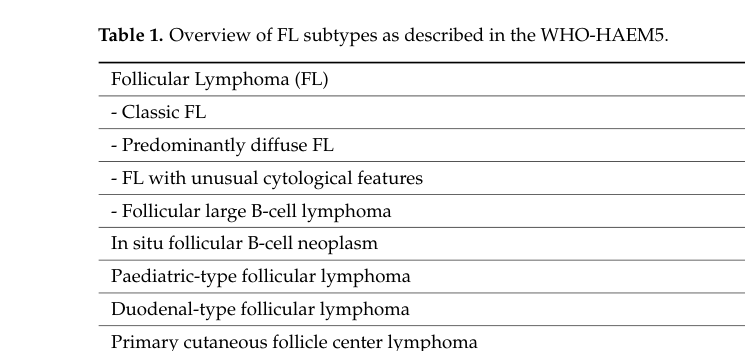
WHO‑HAEM5 recognizes related subtypes beyond cFL; for example, a predominantly diffuse subtype is associated with absence of IGH::BCL2 fusion, frequent STAT6 mutations, and 1p36 deletion or TNFRSF14 mutation (kurz2023follicularlymphomain pages 1-2). Table evidence for the subtype schema is captured in Kurz et al. (kurz2023follicularlymphomain media dfd5fc5e).
4.5 Suggested GO and CL terms (mechanism-linked)
- GO (biological process):
- Regulation of apoptotic process (BCL2-driven survival)
- Chromatin organization / histone modification (KMT2D/CREBBP/EZH2)
- Germinal center formation / B‑cell activation
- CL (cell types):
- Germinal center B cell (central malignant population)
- T follicular helper cell and follicular dendritic cell as key microenvironmental partners (supported conceptually by microenvironment dependence noted in FL reviews) (russlergermain2024sequencingbispecificantibodies pages 1-2)
(These ontology suggestions are consistent with the mechanistic themes explicitly described in the retrieved reviews; they are not exhaustive.)
5. Environmental Information
5.1 Environmental / occupational factors
Evidence retrieved here is limited to a glyphosate meta-analysis subtype estimate for FL (meta‑RR 0.84, 95% CI 0.61–1.17) (odutola2020lifestyleandrisk pages 1-2). Broader pesticide class associations were not extracted specifically for FL subtype in the current evidence.
5.2 Lifestyle factors
See Section 2.2.3 for quantitative meta-analytic associations (odutola2020lifestyleandrisk pages 1-2).
5.3 Infectious agents
No infectious etiology evidence was retrieved in the current evidence set.
6. Mechanism / Pathophysiology
6.1 Causal chain (integrated)
1) Initiation: early acquisition of IGH::BCL2 translocation in B cells leading to BCL2 overexpression and survival advantage (jacobsen2022follicularlymphoma2023 pages 1-2, kurz2023follicularlymphomain pages 1-2). 2) GC evolution: accumulation of recurrent epigenetic/chromatin regulator mutations (KMT2D/CREBBP/EZH2) shaping transcriptional programs and differentiation states (carreras2023thepathobiologyof pages 3-4). 3) TME dependence: FL survival and progression are supported by immune microenvironment interactions (notably emphasized in T‑cell engager landscape reviews) (russlergermain2024sequencingbispecificantibodies pages 1-2). 4) Progression/relapse/transformation: clonal evolution over time contributes to relapse and risk of transformation to aggressive lymphoma, associated with inferior outcomes (kurz2023follicularlymphomain pages 2-4, carreras2023thepathobiologyof pages 3-4).
6.2 Recent mechanistic developments (2024)
- Longitudinal multi‑omics profiling: a 2024 report analyzed longitudinal biopsies and “confirmed recurrent mutations in genes encoding epigenetic regulators (CREBBP, KMT2D, EZH2, EP300)” and identified CREBBP/KMT2D as early events (cancemi2025singleagentandassociated pages 4-5).
- Epigenetic cooperation shaping immune evasion: a 2024 Nature Communications study reports that combined CREBBP/KMT2D haploinsufficiency in mouse models “confers an immune evasive microenvironment manifesting as CD8+ T-cell exhaustion and reduced infiltration” (cancemi2025singleagentandassociated pages 4-5).
7. Anatomical Structures Affected
7.1 Organ/tissue involvement (UBERON suggestions)
- Lymph nodes (UBERON: UBERON:0000029) (jacobsen2022follicularlymphoma2023 pages 1-2)
- Bone marrow (UBERON: UBERON:0002371) (jacobsen2022follicularlymphoma2023 pages 1-2)
- Spleen (UBERON: UBERON:0002106) (jacobsen2022follicularlymphoma2023 pages 1-2)
7.2 Cell level (CL suggestions)
- Germinal center B cell (primary malignant cell type) (jacobsen2022follicularlymphoma2023 pages 1-2, kurz2023follicularlymphomain pages 1-2)
- Tumor-infiltrating T cells (therapeutic target of CD3×CD20 bispecifics) (nizamuddin2024bispecificantibodiesin pages 2-4)
8. Temporal Development
- Onset pattern: typically insidious; older adult onset (median ~63–65 years) (randall2020pathologyanddiagnosis pages 1-2, odutola2020lifestyleandrisk pages 1-2).
- Course: prolonged/relapsing; transformation risk cited ~2% per year in WHO‑HAEM5 review context (kurz2023follicularlymphomain pages 2-4).
9. Inheritance and Population
9.1 Epidemiology (recent registry/meta-analytic data captured)
- US SEER-based 5‑year relative survival: 91.6% for FL (period analysis; SEER 2004–2018; prediction 2019–2023) (xie2022analysisandprediction pages 1-2).
- Pathology review survival estimate: 5‑year survival 88.4% (randall2020pathologyanddiagnosis pages 1-2).
- Sex ratio: slight male predominance reported (≈1.2:1) (odutola2020lifestyleandrisk pages 1-2).
- Incidence variation: substantial geographic variation; US age-standardized rates reported around ~3–4 per 100,000 in some periods vs ~0.2–0.3 per 100,000 in Korea; race/ethnicity gradients were reported within the US (odutola2020lifestyleandrisk pages 1-2).
9.2 Genetics and heritability
No inheritance mode (Mendelian) applies for typical FL as a somatic malignancy in the retrieved evidence.
10. Diagnostics
10.1 Core diagnostic approach
Diagnosis generally integrates morphology plus immunophenotype and, when needed, cytogenetics/molecular profiling (cancemi2025singleagentandassociated pages 4-5).
Immunophenotype features captured: - Positive: CD19, CD20, CD22, CD79a (nearly all cases), CD10 ~60%, BCL2 strongly expressed in most grade 1–2 tumors (cancemi2025singleagentandassociated pages 4-5). - Negative/typically absent: CD5, CD43, CD11c; CD23 variable/generally negative (cancemi2025singleagentandassociated pages 4-5).
Hallmark cytogenetics: - t(14;18)(q32;q21) leading to constitutive BCL2 overexpression is present in “most cases (80–90%)” in a pathology review (randall2020pathologyanddiagnosis pages 1-2).
10.2 Pathology and classification updates (WHO‑HAEM5)
WHO‑HAEM5 classifies the predominant entity as classic FL (cFL) and makes grading no longer mandatory; related subtypes include predominantly diffuse FL, unusual cytology FL, and FLBCL (former grade 3B) (kurz2023follicularlymphomain pages 1-2). A tabular summary of WHO‑HAEM5 subtypes is available in Kurz et al. Table 1 (image evidence) (kurz2023follicularlymphomain media dfd5fc5e).
11. Outcome / Prognosis
11.1 Transformation outcomes
Transformation to aggressive lymphoma is a key adverse event; transformed FL shows inferior survival compared with de novo DLBCL in registry comparisons (concept captured in disease reviews; transformation risk ~2%/year cited) (kurz2023follicularlymphomain pages 2-4).
11.2 Early progression as a prognostic discriminator
A review excerpt reports that among R‑CHOP–treated patients, 5‑year OS was markedly worse with early progression versus without early progression (50% vs 90%) (cancemi2025singleagentandassociated pages 4-5).
11.3 Survival benchmarks
- 5‑year relative survival for FL in US SEER period analysis: 91.6% (xie2022analysisandprediction pages 1-2).
- 5‑year survival estimate from pathology review: 88.4% (randall2020pathologyanddiagnosis pages 1-2).
12. Treatment
12.1 Standard frontline and early-stage options (context)
Clinical review notes frontline strategies include observation for asymptomatic advanced-stage patients, radiotherapy for limited-stage disease (curative in a subset), and anti‑CD20–based therapy alone or with chemotherapy (jacobsen2022follicularlymphoma2023 pages 9-9, jacobsen2022follicularlymphoma2023 pages 1-2).
12.2 Recent developments (2023–2024 prioritized): bispecific antibodies and CAR‑T
CD20×CD3 bispecific antibodies (off‑the‑shelf T‑cell engagers)
- Mosunetuzumab (GO29781): ORR 80%, CR 60%, median follow‑up 37 months; 36‑month PFS 43.2%, 36‑month OS 82.9%, median duration of response 35.9 months (nizamuddin2024bispecificantibodiesin pages 2-4).
- Epcoritamab (EPCORE NHL‑1): ORR 82%, CR 63%; follow‑up reported, with median duration of response ~15.4 months in the review excerpt (nizamuddin2024bispecificantibodiesin pages 2-4).
Expert opinion (sequencing): An ASH Hematology 2024 review states that, given emerging durability and feasibility, they “generally favor BsAbs before CAR T as the standard-of-care third-line treatment for the typical patient with R/R FL without concern for aggressive histologic transformation” (russlergermain2024sequencingbispecificantibodies pages 1-2).
CAR‑T cell therapy (anti‑CD19)
- Axicabtagene ciloleucel (axi‑cel), ZUMA‑5: ORR 94%, CR 79% after a single infusion; 3‑year follow‑up indicates durable remissions with median duration of response ~38.6 months and median PFS ~40.2 months (testa2024cartcelltherapy pages 1-2).
EZH2 inhibitor (epigenetic therapy)
- Tazemetostat (EZH2‑mutant R/R FL; Japan phase II follow‑up): ORR 70.6%; 24‑month PFS 72.1% and 36‑month PFS 64.1%; no unexpected grade ≥3 treatment-related AEs on long follow‑up (cao2025efficacyandsafety pages 12-12).
12.3 Treatment ontology suggestions
- MAXO (examples): anti‑CD20 monoclonal antibody therapy; chemoimmunotherapy; radiotherapy; CAR‑T cell therapy; bispecific antibody therapy; epigenetic therapy (EZH2 inhibition).
- CHEBI (examples): lenalidomide (immunomodulatory drug, target context); tazemetostat (EZH2 inhibitor) (jacobsen2022follicularlymphoma2023 pages 9-9, cao2025efficacyandsafety pages 12-12).
13. Prevention
No established primary prevention or population screening strategy for FL was retrieved in this evidence set. Risk-factor evidence exists from observational syntheses (e.g., alcohol intake associations, hair dye before 1980), but these are not actionable clinical prevention guidelines within the retrieved materials (odutola2020lifestyleandrisk pages 1-2).
14. Other Species / Natural Disease
Not directly retrieved in the current evidence set.
15. Model Organisms
Mechanistic model organism evidence supports GC-context initiation and epigenetic cooperation: - A 2024 Nature Communications study used mouse genetics to show combined CREBBP/KMT2D haploinsufficiency accelerates lymphoma phenotypes and shapes immune evasion (cancemi2025singleagentandassociated pages 4-5).
Evidence summary table
| Domain | Key points | Key sources | URLs |
|---|---|---|---|
| Classification | WHO-HAEM5: most FL with follicular growth are classic FL (cFL) (~85%), composed of centrocytes/centroblasts; grading of cFL is no longer mandatory; FLBCL corresponds to prior grade 3B (kurz2023follicularlymphomain pages 1-2) | Kurz 2023 | https://doi.org/10.3390/cancers15030785 |
| Genetics | Hallmark lesion: t(14;18)(q32;q21)/IGH::BCL2 in ~85% of cFL/manifest FL; considered an initiating event (kurz2023follicularlymphomain pages 2-4, kurz2023follicularlymphomain pages 1-2) | Kurz 2023 | https://doi.org/10.3390/cancers15030785 |
| Genetics | Recurrent mutation frequencies reported in FL: KMT2D 80–90%, CREBBP 33–70%, EZH2 7–30%; other recurrent lesions include TNFRSF14, BCL6, RRAGC (carreras2023thepathobiologyof pages 3-4) | Carreras 2023 | https://doi.org/10.3960/jslrt.23014 |
| Clinical | Typical presentation: diffuse lymphadenopathy, frequent bone marrow involvement and splenomegaly; extranodal involvement less common; cytopenias relatively common, B symptoms uncommon without transformation (jacobsen2022follicularlymphoma2023 pages 1-2) | Jacobsen 2022 | https://doi.org/10.1002/ajh.26737 |
| Epidemiology/Outcome | FL is the second most common lymphoma in the US/Western Europe; median diagnosis age ~65 years; rituximab-era registry data cited 10-year OS ~80% overall (age-stratified ~92% to 64%); transformation risk about 2%/year (jacobsen2022follicularlymphoma2023 pages 1-2, kurz2023follicularlymphomain pages 2-4) | Jacobsen 2022; Kurz 2023 | https://doi.org/10.1002/ajh.26737; https://doi.org/10.3390/cancers15030785 |
| Treatment | Mosunetuzumab (GO29781): ORR 80%, CR 60%; median follow-up 37 months; median PFS 24 months; 36-month PFS 43.2%; median OS not reached; 36-month OS 82.9%; median DOR 35.9 months (nizamuddin2024bispecificantibodiesin pages 2-4) | Nizamuddin 2024 | https://doi.org/10.3324/haematol.2024.285245 |
| Treatment | Epcoritamab (EPCORE NHL-1): ORR 82%, CR 63%; median follow-up 27 months; median DOR about 15.4 months (nizamuddin2024bispecificantibodiesin pages 2-4) | Nizamuddin 2024 | https://doi.org/10.3324/haematol.2024.285245 |
| Treatment | Axicabtagene ciloleucel (axi-cel), ZUMA-5: ORR 94%, CR 79% after single infusion; updated ~40.5-month follow-up with median DOR 38.6 months, median PFS 40.2 months, and 62% of CRs maintained at 36 months (testa2024cartcelltherapy pages 1-2) | Testa 2024 | https://doi.org/10.4084/mjhid.2024.012 |
| Treatment | Tazemetostat in Japanese EZH2-mutant R/R FL: ORR 70.6%; 24-month PFS 72.1%; 36-month PFS 64.1%; long-term median follow-up 35.0 months; no unexpected grade ≥3 treatment-related AEs in follow-up (cao2025efficacyandsafety pages 12-12) | Izutsu 2024 | https://doi.org/10.1007/s12185-024-03834-9 |
Table: This table condenses the most relevant classification, molecular, clinical, epidemiologic, and 2023–2024 therapy outcome findings for follicular lymphoma from the gathered evidence. It is useful as a quick-reference summary for building a disease knowledge-base entry.
Key WHO‑HAEM5 classification visual evidence
Kurz et al. Table 1 (WHO‑HAEM5 subtype overview, including optional grading of cFL and renamed entities) is available as an extracted image (kurz2023follicularlymphomain media dfd5fc5e).
Limitations of the current evidence set
- Formal cross-ontology identifiers (MeSH, ICD‑10/11, Orphanet, OMIM) were not retrieved in the current tool calls.
- Some requested content areas (explicit gene–environment interaction studies; infectious triggers; QoL instrument statistics; comprehensive differential diagnosis tables) were not captured in the current extracted excerpts.
- PMID-level citation mapping is incomplete in these excerpts; several sources provide DOIs/URLs, but PMIDs were not consistently available in the retrieved text segments.
References
-
(OpenTargets Search: follicular lymphoma): Open Targets Query (follicular lymphoma, 42 results). Buniello, A. et al. (2025). Open Targets Platform: facilitating therapeutic hypotheses building in drug discovery. Nucleic Acids Research.
-
(jacobsen2022follicularlymphoma2023 pages 1-2): Eric Jacobsen. Follicular lymphoma: 2023 update on diagnosis and management. American Journal of Hematology, 97:1638-1651, Oct 2022. URL: https://doi.org/10.1002/ajh.26737, doi:10.1002/ajh.26737. This article has 163 citations and is from a domain leading peer-reviewed journal.
-
(kurz2023follicularlymphomain pages 1-2): Katrin S. Kurz, Sabrina Kalmbach, Michaela Ott, Annette M. Staiger, German Ott, and Heike Horn. Follicular lymphoma in the 5th edition of the who-classification of haematolymphoid neoplasms—updated classification and new biological data. Cancers, 15:785, Jan 2023. URL: https://doi.org/10.3390/cancers15030785, doi:10.3390/cancers15030785. This article has 55 citations.
-
(kurz2023follicularlymphomain pages 2-4): Katrin S. Kurz, Sabrina Kalmbach, Michaela Ott, Annette M. Staiger, German Ott, and Heike Horn. Follicular lymphoma in the 5th edition of the who-classification of haematolymphoid neoplasms—updated classification and new biological data. Cancers, 15:785, Jan 2023. URL: https://doi.org/10.3390/cancers15030785, doi:10.3390/cancers15030785. This article has 55 citations.
-
(nizamuddin2024bispecificantibodiesin pages 2-4): Imran A. Nizamuddin and Nancy L. Bartlett. Bispecific antibodies in follicular lymphoma. Haematologica, 110:1472-1482, Oct 2024. URL: https://doi.org/10.3324/haematol.2024.285245, doi:10.3324/haematol.2024.285245. This article has 17 citations.
-
(testa2024cartcelltherapy pages 1-2): Ugo Testa, Francesco D'Alò, Elvira Pelosi, Germana Castelli, and Giuseppe Leone. Car-t cell therapy for follicular lymphomas. Mediterranean Journal of Hematology and Infectious Diseases, 16:e2024012, Jan 2024. URL: https://doi.org/10.4084/mjhid.2024.012, doi:10.4084/mjhid.2024.012. This article has 12 citations.
-
(odutola2020lifestyleandrisk pages 1-2): Michael K. Odutola, Eriobu Nnakelu, Graham G. Giles, Marina T. van Leeuwen, and Claire M. Vajdic. Lifestyle and risk of follicular lymphoma: a systematic review and meta-analysis of observational studies. Cancer Causes & Control, 31:979-1000, Aug 2020. URL: https://doi.org/10.1007/s10552-020-01342-9, doi:10.1007/s10552-020-01342-9. This article has 12 citations and is from a peer-reviewed journal.
-
(xie2022analysisandprediction pages 1-2): Shuping Xie, Zhongjie Yu, Aozi Feng, Shuai Zheng, Yunmei Li, You Zeng, and J. Lyu. Analysis and prediction of relative survival trends in patients with non-hodgkin lymphoma in the united states using a model-based period analysis method. Frontiers in Oncology, Sep 2022. URL: https://doi.org/10.3389/fonc.2022.942122, doi:10.3389/fonc.2022.942122. This article has 34 citations.
-
(carreras2023thepathobiologyof pages 3-4): Joaquim Carreras. The pathobiology of follicular lymphoma. Journal of Clinical and Experimental Hematopathology : JCEH, 63:152-163, Jul 2023. URL: https://doi.org/10.3960/jslrt.23014, doi:10.3960/jslrt.23014. This article has 17 citations.
-
(randall2020pathologyanddiagnosis pages 1-2): Cara Randall and Yuri Fedoriw. Pathology and diagnosis of follicular lymphoma and related entities. Jan 2020. URL: https://doi.org/10.1016/j.pathol.2019.09.010, doi:10.1016/j.pathol.2019.09.010. This article has 34 citations and is from a peer-reviewed journal.
-
(russlergermain2024sequencingbispecificantibodies pages 1-2): David A. Russler-Germain and Nancy L. Bartlett. Sequencing bispecific antibodies and car t cells for fl. Hematology, 2024:310-317, Dec 2024. URL: https://doi.org/10.1182/hematology.2024000667, doi:10.1182/hematology.2024000667. This article has 8 citations and is from a peer-reviewed journal.
-
(cancemi2025singleagentandassociated pages 4-5): Gabriella Cancemi, Chiara Campo, Santino Caserta, Iolanda Rizzotti, and Donato Mannina. Single-agent and associated therapies with monoclonal antibodies: what about follicular lymphoma? Cancers, 17:1602, May 2025. URL: https://doi.org/10.3390/cancers17101602, doi:10.3390/cancers17101602. This article has 11 citations.
-
(kurz2023follicularlymphomain media dfd5fc5e): Katrin S. Kurz, Sabrina Kalmbach, Michaela Ott, Annette M. Staiger, German Ott, and Heike Horn. Follicular lymphoma in the 5th edition of the who-classification of haematolymphoid neoplasms—updated classification and new biological data. Cancers, 15:785, Jan 2023. URL: https://doi.org/10.3390/cancers15030785, doi:10.3390/cancers15030785. This article has 55 citations.
-
(jacobsen2022follicularlymphoma2023 pages 9-9): Eric Jacobsen. Follicular lymphoma: 2023 update on diagnosis and management. American Journal of Hematology, 97:1638-1651, Oct 2022. URL: https://doi.org/10.1002/ajh.26737, doi:10.1002/ajh.26737. This article has 163 citations and is from a domain leading peer-reviewed journal.
-
(cao2025efficacyandsafety pages 12-12): Junning Cao, Guangliang Chen, Lihua Qiu, Liling Zhang, Ming Jiang, Ying Cheng, Qiaohua Zhang, Lihong Liu, Ping Li, Yuerong Shuang, Huaqing Wang, Hongwei Xue, Huijing Wu, Meifang Zheng, Keshu Zhou, Zhiming Li, Hongmei Jing, Wei Yang, Zunmin Zhu, Wenyu Li, Jiaxuan Wangwu, Heyu Huang, Qiantao Jia, Dongmei Chen, Songhua Fan, M. Ming Shi, and Weiguo Su. Efficacy and safety of tazemetostat, an ezh2 inhibitor, in chinese patients with relapsed/refractory follicular lymphoma: a multicentre, single-arm, phase 2 study. Sep 2025. URL: https://doi.org/10.1016/j.eclinm.2025.103399, doi:10.1016/j.eclinm.2025.103399. This article has 5 citations and is from a peer-reviewed journal.