Flea-Borne Spotted Fever
Flea-borne spotted fever is a febrile rickettsiosis attributed to the obligately intracellular Gram-negative bacterium Rickettsia felis. R. felis is carried by cat fleas, and reported human disease presents as an undifferentiated fever that can include headache, myalgia, maculopapular rash, and occasional eschar. The causal role of R. felis in every PCR-positive febrile illness is less settled than the R. typhi-murine typhus relationship, because R. felis DNA has also been detected in afebrile controls and on skin swabs; curated mechanisms therefore focus on rickettsial processes directly supported for R. felis or shared across flea-borne rickettsiae.
Ask OpenScientist
Ask a research question about Flea-Borne Spotted Fever. OpenScientist will conduct autonomous deep research using the Disorder Mechanisms Knowledge Base and PubMed literature (typically 10-30 minutes).
Do not include personal health information in your question. Questions and results are cached in your browser's local storage.
Classifications
Pathophysiology
7Show evidence (1 reference)
Show evidence (3 references)
Show evidence (1 reference)
Show evidence (3 references)
Show evidence (1 reference)
Show evidence (1 reference)
Show evidence (1 reference)
Pathograph
Phenotypes
5Immune 1
Show evidence (2 references)
Integument 1
Show evidence (1 reference)
Metabolism 1
Show evidence (1 reference)
Nervous System 2
Show evidence (1 reference)
Show evidence (1 reference)
Medical Actions
1Show evidence (1 reference)
Diagnosis
2Show evidence (2 references)
Show evidence (1 reference)
Prevalence
1Show evidence (1 reference)
Infectious Agent
1Show evidence (1 reference)
Transmission
1Show evidence (1 reference)
Source YAML
click to showname: Flea-Borne Spotted Fever
creation_date: "2026-09-28T13:09:20Z"
category: Infectious Disease
description: >-
Flea-borne spotted fever is a febrile rickettsiosis attributed to the
obligately intracellular Gram-negative bacterium Rickettsia felis. R. felis is
carried by cat fleas, and reported human disease presents as an
undifferentiated fever that can include headache, myalgia, maculopapular rash,
and occasional eschar. The causal role of R. felis in every PCR-positive
febrile illness is less settled than the R. typhi-murine typhus relationship,
because R. felis DNA has also been detected in afebrile controls and on skin
swabs; curated mechanisms therefore focus on rickettsial processes directly
supported for R. felis or shared across flea-borne rickettsiae.
disease_term:
preferred_term: flea-borne spotted fever
term:
id: MONDO:0019364
label: pseudotyphus of California
parents:
- Spotted fever rickettsiosis
synonyms:
- Pseudotyphus of California
- Rickettsia felis infection
references:
- reference: PMID:33574726
title: "Manifestations and Management of Flea-Borne Rickettsioses."
findings:
- statement: >-
Review defining murine typhus and flea-borne spotted fever as flea-borne
infections caused by Rickettsia typhi and Rickettsia felis, respectively,
and summarizing R. felis uncertainty, symptoms, serology, and doxycycline
treatment.
supporting_text: >-
Murine typhus and flea-borne spotted fever are undifferentiated febrile
illnesses caused by Rickettsia typhi and Rickettsia felis, respectively.
- reference: PMID:31253864
title: >-
A new role for host annexin A2 in establishing bacterial adhesion to
vascular endothelial cells: lines of evidence from atomic force microscopy
and an in vivo study.
found_in:
- Flea_Borne_Spotted_Fever-deep-research-openscientist.md
findings:
- statement: >-
Endothelial ANXA2 functions as a luminal-surface rickettsial adherence
receptor, with OmpB as the bacterial ligand.
supporting_text: >-
We found that deletion of ANXA2 impeded rickettsial attachment to the ECs
in vitro and blocked rickettsial adherence to the blood vessel luminal
surface in vivo.
- reference: PMID:28806774
title: >-
Fibroblast growth factor receptor-1 mediates internalization of pathogenic
spotted fever rickettsiae into host endothelium.
found_in:
- Flea_Borne_Spotted_Fever-deep-research-openscientist.md
findings:
- statement: >-
FGFR1/heparan-sulfate signaling contributes to pathogenic spotted-fever
rickettsial internalization into human microvascular endothelial cells.
supporting_text: >-
Inhibition of HSPGs by heparinase and FGFRs by AZD4547 (a selective
small-molecule inhibitor) results in significant reduction in rickettsial
internalization into cultured human microvascular endothelial cells (ECs),
which represent the primary targets of pathogenic rickettsiae during human
infections.
- reference: PMID:29736763
title: "Serum cytokine responses in Rickettsia felis infected febrile children, Ghana."
found_in:
- Flea_Borne_Spotted_Fever-deep-research-openscientist.md
findings:
- statement: >-
Human R. felis mono-infection is associated with increased serum IL-8,
IP-10, MCP-1, MIP-1-alpha, and VEGF in febrile Ghanaian children.
supporting_text: >-
Levels of IL-8 (interleukin-8), IP-10 (interferon-γ-induced protein-10),
MCP-1 (monocyte chemotactic protein-1), MIP-1α (macrophage inflammatory
protein-1α) and VEGF (vascular endothelial growth factor) were
significantly elevated in R. felis mono-infection
- reference: PMID:12860594
title: Pathogenic mechanisms of diseases caused by Rickettsia.
found_in:
- Flea_Borne_Spotted_Fever-deep-research-openscientist.md
findings:
- statement: >-
Review supporting the shared typhus/spotted-fever sequence from dermal
rickettsial entry to endothelial dissemination, permeability, edema, and
cytotoxic/NK-cell immunity.
supporting_text: >-
The pathogenetic sequence includes rickettsial entry into the dermis,
hematogenous dissemination to vascular endothelial cells
- reference: PMID:9539792
title: >-
NF-kappa B-dependent inhibition of apoptosis is essential for host
cellsurvival during Rickettsia rickettsii infection.
found_in:
- Flea_Borne_Spotted_Fever-deep-research-openscientist.md
findings:
- statement: >-
Rickettsia rickettsii activates endothelial NF-kappaB to suppress
host-cell apoptosis during intracellular infection.
supporting_text: >-
R. rickettsii, therefore, appeared to inhibit host cell apoptosis via a
mechanism dependent on NF-kappa B activation.
- reference: PMID:22617213
title: >-
Contribution of NK cells to the innate phase of host protection against an
intracellular bacterium targeting systemic endothelium.
found_in:
- Flea_Borne_Spotted_Fever-deep-research-openscientist.md
findings:
- statement: >-
NK-cell IFN-gamma and cytotoxicity protect mice against endothelial
rickettsial infection and infection-induced thrombosis.
supporting_text: >-
Together, these findings reveal that NK cells mediate the innate phase of
host protection against infection with rickettsiae, most likely via IFN-γ
production.
- reference: PMID:24188709
title: Common epidemiology of Rickettsia felis infection and malaria, Africa.
found_in:
- Flea_Borne_Spotted_Fever-deep-research-openscientist.md
findings:
- statement: >-
R. felis PCR positivity among febrile patients varied geographically and
reached 15% in rural Senegal in a 3,122-patient comparison of France,
North Africa, and sub-Saharan Africa.
supporting_text: >-
The risks were lowest in France, Tunisia, and Algeria (1%), and highest
in rural Senegal (15%).
- reference: PMID:25706392
title: >-
Comparison of two quantitative real time PCR assays for Rickettsia
detection in patients from Tunisia.
found_in:
- Flea_Borne_Spotted_Fever-deep-research-openscientist.md
findings:
- statement: >-
Rickettsial duplex qPCR was markedly more often positive from skin
biopsies than from whole blood in confirmed Tunisian rickettsiosis.
supporting_text: >-
Among 44 skin biopsies obtained from patients with confirmed diagnosis,
the first duplex was positive in 24 samples (54.5%), with three patients
positive by Rtt qPCR.
- reference: PMID:24336183
title: Ribosome-targeting antibiotics and mechanisms of bacterial resistance.
findings:
- statement: Review establishing the bacterial ribosome as a major antibiotic target.
supporting_text: The ribosome is one of the main antibiotic targets in the bacterial cell.
- reference: PMID:18611821
title: Intracellular organisms.
findings:
- statement: >-
Review supporting intracellular bacterial niches as a reason that
poorly cell-penetrant agents can be ineffective.
supporting_text: >-
The intracellular location of some microorganisms allow them to resist
antibiotics with poor ability to penetrate eukaryotic cell membranes, such
as the beta-lactam compounds.
classifications:
harrisons_chapter:
- classification_value: INFECTIOUS_DISEASES
evidence:
- reference: PMID:33574726
reference_title: "Manifestations and Management of Flea-Borne Rickettsioses."
supports: SUPPORT
evidence_source: OTHER
quote_role: REVIEW_SYNTHESIS
snippet: >-
Murine typhus and flea-borne spotted fever are undifferentiated febrile
illnesses caused by Rickettsia typhi and Rickettsia felis, respectively.
These organisms are small gram-negative obligately intracellular
coccobacilli transmitted to humans by fleas.
explanation: >-
Defines flea-borne spotted fever as a bacterial rickettsial infection
transmitted by fleas, placing it in Harrison's Infectious Diseases Part.
infectious_agent:
- name: Rickettsia felis
infectious_agent_term:
preferred_term: Rickettsia felis
term:
id: NCBITaxon:42862
label: Rickettsia felis
description: >-
Obligate intracellular flea-associated Rickettsia species implicated as the
cause of flea-borne spotted fever.
evidence:
- reference: PMID:33574726
reference_title: "Manifestations and Management of Flea-Borne Rickettsioses."
supports: SUPPORT
evidence_source: OTHER
quote_role: REVIEW_SYNTHESIS
snippet: >-
Murine typhus and flea-borne spotted fever are undifferentiated febrile
illnesses caused by Rickettsia typhi and Rickettsia felis, respectively.
explanation: The review names R. felis as the etiologic organism of flea-borne spotted fever.
transmission:
- name: Cat-flea-associated transmission
description: >-
R. felis is primarily associated with the ubiquitous cat flea
Ctenocephalides felis, although the organism has been molecularly detected
in many arthropods and vertebrates and its definitive vertebrate reservoir
is not established.
evidence:
- reference: PMID:33574726
reference_title: "Manifestations and Management of Flea-Borne Rickettsioses."
supports: SUPPORT
evidence_source: OTHER
quote_role: REVIEW_SYNTHESIS
snippet: >-
Since the discovery of R. felis infecting a cat flea colony in California
in 1990,77 it has been increasingly found within a diverse variety of
vertebrate and invertebrate species throughout the world.3 Its primary
recognized invertebrate host and reservoir is C. felis.
explanation: >-
Supports C. felis as the principal recognized invertebrate host and
reservoir for R. felis.
prevalence:
- population: Febrile patients in rural Senegal
measure_type: PERIOD_PREVALENCE
prevalence_class: ABOVE_1_IN_1000
notes: >-
PCR positivity was 15% among febrile patients in rural Senegal in a
cross-region study of France, North Africa, and sub-Saharan Africa; this is
a focal febrile-patient fraction rather than a population incidence rate.
evidence:
- reference: PMID:24188709
reference_title: Common epidemiology of Rickettsia felis infection and malaria, Africa.
supports: SUPPORT
evidence_source: HUMAN_CLINICAL
snippet: >-
The risks were lowest in France, Tunisia, and Algeria (1%), and highest
in rural Senegal (15%).
explanation: >-
Supports the focal high R. felis PCR-positivity fraction among febrile
patients.
pathophysiology:
- name: Rickettsia felis Ribosomal Translation
description: >-
R. felis, like other bacteria, depends on 70S-ribosome translation of its
mRNA. Doxycycline targets this conserved bacterial translation machinery,
explaining why a tetracycline is the preferred treatment for flea-borne
rickettsioses.
role: therapeutic_vulnerability
conforms_to: "bacterial_protein_synthesis_inhibition#Bacterial mRNA Translation by the Ribosome"
biological_processes:
- preferred_term: translation
term:
id: GO:0006412
label: translation
evidence:
- reference: PMID:24336183
reference_title: Ribosome-targeting antibiotics and mechanisms of bacterial resistance.
supports: SUPPORT
evidence_source: OTHER
quote_role: REVIEW_SYNTHESIS
snippet: The ribosome is one of the main antibiotic targets in the bacterial cell.
explanation: >-
The review establishes the conserved bacterial ribosome target represented
by this R. felis translation node.
- name: Obligate Intracellular Rickettsia felis Niche
description: >-
R. felis is an obligately intracellular Gram-negative coccobacillus.
Occupancy of a eukaryotic cytosolic niche makes the organism intrinsically
difficult to treat with antimicrobials that do not penetrate host cells.
role: intrinsic_resistance
conforms_to: "intracellular_pathogen_persistence#Intracellular Niche and Beta-Lactam Exclusion"
biological_processes:
- preferred_term: biological process involved in interaction with host
term:
id: GO:0051701
label: biological process involved in interaction with host
evidence:
- reference: PMID:33574726
reference_title: "Manifestations and Management of Flea-Borne Rickettsioses."
supports: SUPPORT
evidence_source: OTHER
quote_role: REVIEW_SYNTHESIS
snippet: >-
Flea-borne rickettsiae are small (~1.3 X 0.4 µm) gram-negative
coccobacilli.
explanation: The review characterizes flea-borne rickettsiae as Gram-negative coccobacilli.
- reference: PMID:33574726
reference_title: "Manifestations and Management of Flea-Borne Rickettsioses."
supports: SUPPORT
evidence_source: OTHER
quote_role: REVIEW_SYNTHESIS
snippet: >-
Thus, they have a strict obligately intracellular lifestyle and depend on
the host cell’s cytosol to provide the nutrients to survive.
explanation: The review explains the obligate intracellular niche of flea-borne rickettsiae.
- reference: PMID:18611821
reference_title: Intracellular organisms.
supports: SUPPORT
evidence_source: OTHER
quote_role: REVIEW_SYNTHESIS
snippet: >-
The intracellular location of some microorganisms allow them to resist
antibiotics with poor ability to penetrate eukaryotic cell membranes, such
as the beta-lactam compounds.
explanation: >-
The review supports the pharmacologic consequence of an intracellular
bacterial niche.
- name: Dermal Rickettsial Inoculation
description: >-
After R. felis or another flea-borne rickettsia is inoculated into skin,
mononuclear antigen-presenting cells can encounter the organism and carry the
response toward lymphatics and regional lymph nodes.
role: entry_process
biological_processes:
- preferred_term: biological process involved in interaction with host
term:
id: GO:0051701
label: biological process involved in interaction with host
evidence:
- reference: PMID:33574726
reference_title: "Manifestations and Management of Flea-Borne Rickettsioses."
supports: SUPPORT
evidence_source: OTHER
quote_role: REVIEW_SYNTHESIS
snippet: >-
After the inoculation of rickettsiae into the skin, macrophages and
dendritic cells target the organism, which then spread through the
lymphatics to regional lymph nodes.
explanation: >-
The review describes the early dermal step after cutaneous rickettsial
inoculation.
downstream:
- target: Endothelial Rickettsial Invasion and Vascular Leak
causal_link_type: INDIRECT_KNOWN_INTERMEDIATES
description: >-
Flea-borne rickettsiae can disseminate from skin and lymphatics to the
bloodstream and then infect vascular endothelium.
- target: Eschar
causal_link_type: INDIRECT_UNKNOWN_INTERMEDIATES
description: >-
Local inoculation occasionally produces an eschar in flea-borne spotted fever.
- name: Endothelial Rickettsial Invasion and Vascular Leak
description: >-
Rickettsiae disseminate hematogenously into vascular endothelial cells. On
endothelial surfaces, rickettsial OmpB can use ANXA2 for adherence, while
pathogenic spotted-fever rickettsiae also use an FGFR1/HSPG entry program
to internalize into microvascular endothelial cells. Systemic endothelial
infection and inflammatory injury then increase vascular permeability.
role: effector
biological_scale: CELLULAR
cell_types:
- preferred_term: vascular endothelial cell
term:
id: CL:0002139
label: endothelial cell of vascular tree
biological_processes:
- preferred_term: biological process involved in interaction with host
term:
id: GO:0051701
label: biological process involved in interaction with host
- preferred_term: positive regulation of vascular permeability
modifier: INCREASED
term:
id: GO:0043117
label: positive regulation of vascular permeability
evidence:
- reference: PMID:33574726
reference_title: "Manifestations and Management of Flea-Borne Rickettsioses."
supports: SUPPORT
evidence_source: OTHER
quote_role: REVIEW_SYNTHESIS
snippet: >-
The rickettsiae escape hematogenously and infect endothelial cells.
Systemic endothelial infection and resultant inflammatory damage lead to
increased vascular permeability.
explanation: >-
The review links hematogenous endothelial infection to vascular leak in
flea-borne rickettsioses.
- reference: PMID:31253864
reference_title: >-
A new role for host annexin A2 in establishing bacterial adhesion to
vascular endothelial cells: lines of evidence from atomic force microscopy
and an in vivo study.
supports: SUPPORT
evidence_source: MODEL_ORGANISM
snippet: >-
We found that deletion of ANXA2 impeded rickettsial attachment to the ECs
in vitro and blocked rickettsial adherence to the blood vessel luminal
surface in vivo.
explanation: >-
The adhesion study supports ANXA2-dependent rickettsial attachment to
endothelial cells.
- reference: PMID:28806774
reference_title: >-
Fibroblast growth factor receptor-1 mediates internalization of pathogenic
spotted fever rickettsiae into host endothelium.
supports: SUPPORT
evidence_source: IN_VITRO
snippet: >-
Inhibition of HSPGs by heparinase and FGFRs by AZD4547 (a selective
small-molecule inhibitor) results in significant reduction in rickettsial
internalization into cultured human microvascular endothelial cells (ECs),
which represent the primary targets of pathogenic rickettsiae during human
infections.
explanation: >-
Cultured human endothelial-cell data support HSPG/FGFR-dependent
internalization as a spotted-fever rickettsial entry mechanism.
downstream:
- target: Chemokine and VEGF Response
causal_link_type: INDIRECT_KNOWN_INTERMEDIATES
description: >-
Endothelial rickettsial infection is paired with systemic inflammatory and
vascular-permeability mediators during acute R. felis infection.
- target: Rickettsial NF-kappaB-Dependent Endothelial Survival
causal_link_type: DIRECT
description: >-
Rickettsial invasion of endothelial cells activates an NF-kappaB-dependent
anti-apoptotic program that lets infected cells survive during bacterial
replication.
- target: Maculopapular rash
causal_link_type: INDIRECT_KNOWN_INTERMEDIATES
description: >-
Vascular permeability and cutaneous microvascular inflammation contribute
to the rickettsial rash.
- name: Rickettsial NF-kappaB-Dependent Endothelial Survival
description: >-
In R. rickettsii-infected cells, NF-kappaB activation masks an apoptosis
signal in infected host cells and thereby preserves the intracellular
endothelial niche long enough for rickettsial replication and cell-to-cell
spread.
role: effector
biological_scale: CELLULAR
cell_types:
- preferred_term: vascular endothelial cell
term:
id: CL:0002139
label: endothelial cell of vascular tree
biological_processes:
- preferred_term: positive regulation of NF-kappaB transcription factor activity
modifier: INCREASED
term:
id: GO:0043123
label: positive regulation of canonical NF-kappaB signal transduction
- preferred_term: negative regulation of apoptotic process
modifier: INCREASED
term:
id: GO:0043066
label: negative regulation of apoptotic process
evidence:
- reference: PMID:9539792
reference_title: >-
NF-kappa B-dependent inhibition of apoptosis is essential for host
cellsurvival during Rickettsia rickettsii infection.
supports: SUPPORT
evidence_source: IN_VITRO
directness: INDIRECT
snippet: >-
However, when R. rickettsii-induced activation of NF-kappa B was
inhibited, apoptosis of infected but not uninfected endothelial cells
rapidly ensued.
explanation: >-
R. rickettsii infection of cultured cells shows the NF-kappaB-dependent
host-cell survival switch expected to support an endothelial niche for
spotted-fever rickettsiae.
- name: NK and CD8 IFN-Gamma Rickettsial Control
description: >-
Natural killer cells and CD8-positive T cells limit rickettsial infection
severity through IFN-gamma-linked and cytotoxic responses; NK-cell loss in a
Rickettsia mouse model impaired clearance, lowered IFN-gamma, and worsened
infection-induced hepatic thrombosis.
role: protective
biological_scale: CELLULAR
cell_types:
- preferred_term: natural killer cell
term:
id: CL:0000623
label: natural killer cell
- preferred_term: CD8-positive, alpha-beta T cell
term:
id: CL:0000625
label: CD8-positive, alpha-beta T cell
biological_processes:
- preferred_term: response to type II interferon
modifier: INCREASED
term:
id: GO:0034341
label: response to type II interferon
- preferred_term: natural killer cell mediated cytotoxicity
modifier: INCREASED
term:
id: GO:0042267
label: natural killer cell mediated cytotoxicity
evidence:
- reference: PMID:22617213
reference_title: >-
Contribution of NK cells to the innate phase of host protection against an
intracellular bacterium targeting systemic endothelium.
supports: SUPPORT
evidence_source: MODEL_ORGANISM
directness: INDIRECT
snippet: >-
NK cell-deficient Rag(-/-)γc(-/-) animals displayed significantly
increased susceptibility to Rickettsia infection compared with NK
cell-sufficient Rag(-/-) mice
explanation: >-
The endothelial rickettsiosis mouse model supports NK-cell/IFN-gamma
control as a protective arm of host defense against rickettsiae.
- name: Chemokine and VEGF Response
description: >-
Acute R. felis mono-infection in febrile children is associated with higher
circulating IL-8, IP-10, MCP-1, MIP-1-alpha, and VEGF, linking infection to
leukocyte-recruiting chemokines and a vascular permeability mediator.
role: immune_response
biological_scale: ORGANISM
biological_processes:
- preferred_term: cytokine production
term:
id: GO:0001816
label: cytokine production
modifier: INCREASED
- preferred_term: positive regulation of vascular permeability
term:
id: GO:0043117
label: positive regulation of vascular permeability
modifier: INCREASED
evidence:
- reference: PMID:29736763
reference_title: "Serum cytokine responses in Rickettsia felis infected febrile children, Ghana."
supports: SUPPORT
evidence_source: HUMAN_CLINICAL
snippet: >-
Levels of IL-8 (interleukin-8), IP-10 (interferon-γ-induced protein-10),
MCP-1 (monocyte chemotactic protein-1), MIP-1α (macrophage inflammatory
protein-1α) and VEGF (vascular endothelial growth factor) were
significantly elevated in R. felis mono-infection
explanation: >-
Serum from acutely ill children with R. felis mono-infection showed higher
chemokine and VEGF concentrations.
downstream:
- target: Fever
causal_link_type: INDIRECT_KNOWN_INTERMEDIATES
description: The systemic inflammatory response contributes to fever.
- target: Headache
causal_link_type: INDIRECT_UNKNOWN_INTERMEDIATES
description: Systemic inflammatory illness contributes to headache.
- target: Neurological manifestations
causal_link_type: INDIRECT_UNKNOWN_INTERMEDIATES
description: >-
Systemic rickettsial endothelial inflammation can include neurologic
signs in a minority of reported flea-borne spotted fever cases.
phenotypes:
- category: Clinical
name: Fever
description: Fever is the dominant reported symptom in flea-borne spotted fever.
frequency: VERY_FREQUENT
phenotype_term:
preferred_term: Fever
term:
id: HP:0001945
label: Fever
evidence:
- reference: PMID:33574726
reference_title: "Manifestations and Management of Flea-Borne Rickettsioses."
supports: SUPPORT
evidence_source: HUMAN_CLINICAL
quote_role: REVIEW_SYNTHESIS
snippet: >-
Signs and symptoms from these compiled cases include fever (94%), rash
(71%), neurologic signs (15%), gastrointestinal symptoms (9%), and cough
(9%).
explanation: The review summarizes fever frequency from compiled FBSF cases.
- category: Clinical
name: Headache
description: >-
Headache is a frequent symptom accompanying the fever of flea-borne
rickettsioses.
phenotype_term:
preferred_term: Headache
term:
id: HP:0002315
label: Headache
evidence:
- reference: PMID:33574726
reference_title: "Manifestations and Management of Flea-Borne Rickettsioses."
supports: SUPPORT
evidence_source: OTHER
quote_role: REVIEW_SYNTHESIS
snippet: Headache, malaise, and myalgia are frequent symptoms that accompany fever.
explanation: The review identifies headache as a frequent flea-borne rickettsiosis symptom.
- category: Clinical
name: Maculopapular rash
description: >-
The rash reported in flea-borne spotted fever is usually maculopapular.
frequency: FREQUENT
phenotype_term:
preferred_term: Maculopapular rash
term:
id: HP:0040186
label: Maculopapular exanthema
evidence:
- reference: PMID:33574726
reference_title: "Manifestations and Management of Flea-Borne Rickettsioses."
supports: SUPPORT
evidence_source: HUMAN_CLINICAL
quote_role: REVIEW_SYNTHESIS
snippet: >-
Signs and symptoms from these compiled cases include fever (94%), rash
(71%), neurologic signs (15%), gastrointestinal symptoms (9%), and cough
(9%).
explanation: The review supports rash as frequent in compiled FBSF cases.
- reference: PMID:33574726
reference_title: "Manifestations and Management of Flea-Borne Rickettsioses."
supports: SUPPORT
evidence_source: HUMAN_CLINICAL
quote_role: REVIEW_SYNTHESIS
snippet: The rash is usually maculopapular, and unlike murine typhus, eschar has been noted in 12% of cases.
explanation: The review states that the FBSF rash is usually maculopapular.
- category: Neurological
name: Neurological manifestations
description: >-
A compiled flea-borne spotted fever case set reported unspecified
neurologic signs in 15% of published cases.
frequency: OCCASIONAL
phenotype_term:
preferred_term: Neurological manifestations
term:
id: HP:0000707
label: Abnormality of the nervous system
coarse_binding_basis: SOURCE_UNSPECIFIED
evidence:
- reference: PMID:33574726
reference_title: "Manifestations and Management of Flea-Borne Rickettsioses."
supports: SUPPORT
evidence_source: HUMAN_CLINICAL
quote_role: REVIEW_SYNTHESIS
snippet: >-
Signs and symptoms from these compiled cases include fever (94%), rash
(71%), neurologic signs (15%), gastrointestinal symptoms (9%), and cough
(9%).
explanation: >-
The review's compiled FBSF cases quantify neurologic signs as an
occasional finding but do not specify their form.
- category: Clinical
name: Eschar
description: >-
An inoculation eschar is reported in a minority of flea-borne spotted fever
cases.
frequency: OCCASIONAL
phenotype_term:
preferred_term: Eschar
term:
id: HP:6000793
label: Eschar
evidence:
- reference: PMID:33574726
reference_title: "Manifestations and Management of Flea-Borne Rickettsioses."
supports: SUPPORT
evidence_source: HUMAN_CLINICAL
quote_role: REVIEW_SYNTHESIS
snippet: The rash is usually maculopapular, and unlike murine typhus, eschar has been noted in 12% of cases.
explanation: The review reports eschar in a minority of FBSF cases.
diagnosis:
- name: Paired-serum indirect immunofluorescence assay
description: >-
Serologic confirmation of a rickettsial illness is retrospective, using
paired acute and convalescent sera to show seroconversion or a fourfold
antibody-titer rise; antibodies to R. felis cross-react more strongly with
spotted-fever-group antigen than with typhus-group antigen.
diagnosis_term:
preferred_term: indirect immunofluorescence assay
term:
id: NCIT:C25294
label: Laboratory Procedure
results: Seroconversion or a fourfold rise in spotted-fever-group antibody titer supports infection.
evidence:
- reference: PMID:33574726
reference_title: "Manifestations and Management of Flea-Borne Rickettsioses."
supports: SUPPORT
evidence_source: OTHER
quote_role: REVIEW_SYNTHESIS
snippet: >-
The serologic confirmation of diagnosis is therefore retrospective –
requiring demonstration of seroconversion or 4-fold increase in antibody
titer from acute- and convalescent-phase specimens.
explanation: >-
The review describes the paired-serum criterion used to confirm a
rickettsial illness.
- reference: PMID:33574726
reference_title: "Manifestations and Management of Flea-Borne Rickettsioses."
supports: SUPPORT
evidence_source: OTHER
quote_role: REVIEW_SYNTHESIS
snippet: >-
Antibodies against R. felis have been shown to be more cross reactive to
spotted fever group antigen than to typhus group antigen.
explanation: The review supports use of spotted-fever-group serology for R. felis infection.
- name: Skin-biopsy Rickettsia qPCR
description: >-
Real-time PCR on skin-biopsy material can support an acute spotted-fever or
typhus-group rickettsiosis diagnosis while first-serum serology is still
negative; skin-biopsy qPCR is substantially more often positive than
whole-blood qPCR because circulating organisms are few.
diagnosis_term:
preferred_term: polymerase chain reaction
term:
id: NCIT:C17003
label: Polymerase Chain Reaction
results: A positive pan-rickettsial or group-specific qPCR supports acute rickettsial infection.
evidence:
- reference: PMID:25706392
reference_title: >-
Comparison of two quantitative real time PCR assays for Rickettsia
detection in patients from Tunisia.
supports: SUPPORT
evidence_source: HUMAN_CLINICAL
directness: INDIRECT
snippet: >-
Among 44 skin biopsies obtained from patients with confirmed diagnosis,
the first duplex was positive in 24 samples (54.5%), with three patients
positive by Rtt qPCR.
explanation: >-
The Tunisian rickettsiosis series shows that direct molecular testing of
skin material can detect Rickettsia DNA in acute human rickettsioses.
treatments:
- name: Doxycycline
description: >-
Preferred empiric tetracycline therapy for flea-borne rickettsioses; because
early serology is often negative, treatment is started when the syndrome is
suspected rather than waiting for retrospective seroconversion.
treatment_term:
preferred_term: Pharmacotherapy
term:
id: NCIT:C15986
label: Pharmacotherapy
therapeutic_agent:
- preferred_term: doxycycline
term:
id: CHEBI:50845
label: doxycycline
therapeutic_modality: SMALL_MOLECULE
target_mechanisms:
- target: Rickettsia felis Ribosomal Translation
description: Doxycycline inhibits bacterial ribosomal protein synthesis.
evidence:
- reference: PMID:33574726
reference_title: "Manifestations and Management of Flea-Borne Rickettsioses."
supports: SUPPORT
evidence_source: OTHER
quote_role: REVIEW_SYNTHESIS
snippet: Doxycycline is the preferred agent for the treatment of flea-borne rickettsioses.
explanation: The review identifies doxycycline as the preferred treatment.
References & Deep Research
References
11Deep Research
1Deep research results are used as seeds for research; they do not undergo the same validation as the main records and may contain errors. How we use deep research.
Evaluations and curation notes (1)
Create: Flea-Borne Spotted Fever · 2026-09-28T13:58:44Z · View source
Created a new flea-borne spotted fever entry for MONDO:0019364. Ran just research-disorder with Asta requested and explicit fallback to OpenAI, Perplexity, Falcon, and OpenScientist; Asta, OpenAI, Perplexity, and Falcon were unconfigured and OpenScientist produced research/Flea_Borne_Spotted_Fever-deep-research-openscientist.md. Read the report validation: 21 of 21 references resolved, no off-topic references, and no ontology CURIEs suggested. Ran just preflight-dr, which returned SKIP because MONDO records no causal gene for this Rickettsia felis infection. Manually confirmed the report matched the intended R. felis flea-borne spotted fever entity and curated a compact pathograph for the R. felis ribosomal target, obligate intracellular niche, dermal inoculation, endothelial invasion/vascular leak, and R. felis chemokine/VEGF response, with fever, headache, maculopapular rash, eschar, paired-serum serology, and doxycycline treatment. Validated schema, ontology terms, and 20 of 20 evidence snippets.
Pathophysiology and Clinical Mechanisms of Flea-Borne Spotted Fever
1. Summary (Answer to the Research Question)
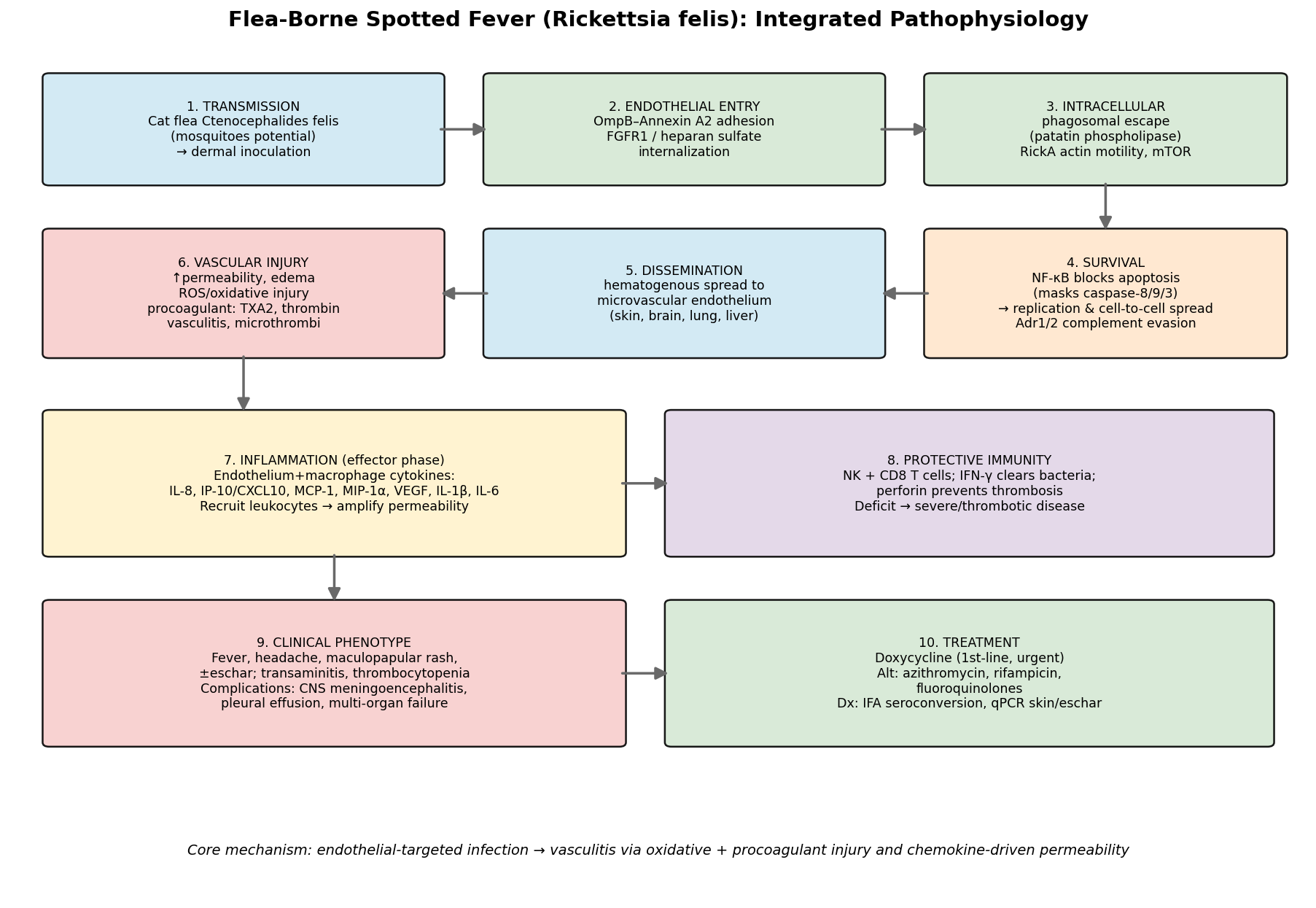
Flea-Borne Spotted Fever (FBSF) is an emerging rickettsiosis caused by Rickettsia felis, an atypical, plasmid-bearing spotted-fever-group (SFG) obligate intracellular Gram-negative bacterium transmitted primarily by the cat flea Ctenocephalides felis (with mosquitoes such as Anopheles gambiae as candidate vectors), and epidemiologically entangled with malaria in sub-Saharan Africa. Its core disease mechanism is an endothelial-targeted vasculitis: after dermal inoculation the bacterium adheres to and invades microvascular endothelial cells (OmpB–Annexin A2 adhesion; FGFR1/heparan-sulfate–dependent entry), escapes the phagosome and moves intracellularly by RickA-driven actin polymerization, and subverts host death programs by activating NF-κB to block a masked caspase-8/9/3 apoptotic cascade, allowing replication and cell-to-cell spread. Disseminated endothelial infection produces increased vascular permeability, reactive-oxygen-species (ROS)–mediated oxidative injury, and a procoagulant/platelet-activated state (thromboxane A2, thrombin, endothelin-1) that manifests clinically as fever, headache, maculopapular rash, and—when severe—CNS meningoencephalitis, pleural effusion, and multi-organ failure. A Th1/cytotoxic immune axis (NK and CD8⁺ T cells via IFN-γ, with NK-derived perforin) controls the infection and protects the vasculature, while chemokines (IL-8, IP-10, MCP-1, MIP-1α) and VEGF amplify inflammation and permeability. Doxycycline is the mechanism-based, life-saving first-line therapy.
2. Key Findings (with Statistical/Experimental Evidence)
Etiology, vectors, and epidemiology
- R. felis is a distinctive SFG rickettsia with a conjugative plasmid (pRF), diverse-origin genes, and a low optimal growth temperature (<32 °C) [PMID 27155905]. The cat flea is the main reservoir/vector; ~26% of C. felis in Sicily carried R. felis DNA [PMID 25203839]. An. gambiae mosquitoes acquire, maintain (qPCR-positive to day 15), and transmit R. felis by bite (transient rickettsemia in mice) [PMID 26056256].
- In Africa, R. felis is a common cause of "fever of unknown origin," with prevalence rising from ~1% (France/N. Africa) to ~15% (rural Senegal) and strong geographic/seasonal correlation with malaria [PMID 24188709].
Molecular and cellular pathways of infection
- Adhesion/invasion: Endothelial surface Annexin A2 is the adherence receptor; OmpB is the bacterial ligand (AFM + in vivo) [PMID 31253864]. Internalization requires FGFR1 and heparan-sulfate proteoglycans; heparinase and the FGFR inhibitor AZD4547 reduce entry and lower pulmonary bacterial burden in vivo [PMID 28806774].
- Intracellular lifestyle/virulence genes: The genome encodes RickA (Arp2/3 actin nucleator), patatin-like phospholipase, ankyrin/tetratricopeptide effectors, toxin–antitoxin systems, and confirmed beta-lactamase, hemolytic, and actin-motility phenotypes [PMID 15984913, 16481487]; strain diversification tracks arthropod host [PMID 25477419]. mTOR (mTORC1/mTORC2) is activated in infected endothelium [PMID 33003310].
- Survival switch: Infection activates NF-κB, which prevents apoptosis of infected endothelium; NF-κB inhibition unmasks apical caspases 8/9 and executioner caspase 3 (mitochondrial cytochrome-c/PARP pathway, peak 12 h), killing infected cells [PMID 9539792, 12819104]. Adr1/Adr2 adhesins evade complement via vitronectin/factor H [PMID 28662039].
Vascular injury and inflammation (effector phase)
- Pathogenetic sequence: dermis → hematogenous dissemination → vascular endothelial cells (brain, lung) → increased permeability and edema [PMID 12860594].
- Oxidative injury: infected endothelium shows glutathione depletion and increased intracellular peroxide [PMID 9720025].
- Procoagulant state: MSF patients show TXA2-dependent platelet activation, thrombin generation, and endothelial dysfunction → vasculitis and microthrombi [PMID 8584998].
- Human cytokine signature: R. felis mono-infection significantly elevates IL-8, IP-10, MCP-1, MIP-1α, VEGF [PMID 29736763]; infected macrophages add IL-1β and IL-6 [PMID 11953398].
Protective immunity and severity
- NK and CD8⁺ T cells clear rickettsiae via IFN-γ; NK-derived perforin prevents infection-induced thrombosis. NK-deficient mice show impaired clearance, low IFN-γ, and severe hepatic thrombosis [PMID 22617213].
Clinical phenotypes, progression, diagnosis, and treatment
- Phenotype: fever, fatigue, headache, maculopapular rash (±eschar); labs show transaminitis, thrombocytopenia, elevated CRP/ESR, hypoalbuminemia [PMID 42715280, 33269795]. Complications: pleural effusion [PMID 42715280], CNS meningoencephalitis (usually >1 week; seizures, meningeal enhancement, pleocytosis) [PMID 39447222], neurological involvement/multi-organ failure [PMID 30419355].
- Diagnosis: IFA seroconversion (4-fold IgG rise); skin/eschar qPCR (~48–55% positive) far outperforms whole-blood qPCR (~5–6%) because rickettsemia is low-level [PMID 25706392, 32682398].
- Treatment: Doxycycline first-line, given promptly (severe prognosis if delayed) [PMID 30419355]; alternatives azithromycin, rifampicin, fluoroquinolones (documented R. felis response) [PMID 42715280]; doxycycline malaria prophylaxis also protects against R. felis [PMID 24188709].
3. Supported and Refuted Hypotheses
Supported (evidence-backed): 1. FBSF pathology is driven by endothelial infection → vasculitis rather than a secreted toxin. 2. Entry uses defined host receptors (Annexin A2, FGFR1/HSPG) — druggable interfaces. 3. NF-κB anti-apoptosis is essential for the pathogen to sustain its target cell. 4. Tissue damage arises from oxidative + procoagulant endothelial injury amplified by chemokines/VEGF. 5. IFN-γ/perforin (NK, CD8) immunity gates disease severity; deficits → thrombotic/severe disease. 6. Doxycycline efficacy reflects intracellular penetration + protein-synthesis inhibition.
Refuted / not supported: No evidence that FBSF causes damage via a classical exotoxin or via disseminated intravascular coagulation/thrombosis-mediated ischemia as the dominant mechanism (hemostatic mechanisms largely prevent major hemorrhage) [PMID 12860594].
4. Limitations and Future Directions
- Much mechanistic detail derives from related SFG species (R. rickettsii, R. conorii, R. parkeri) as models; R. felis-specific in vivo studies remain sparse.
- The role of mosquitoes in natural human transmission is unproven; ecology/epidemiology remain incompletely defined.
- Eschar frequency and the earliest dermal events for R. felis specifically are under-characterized.
- Host-directed therapy (FGFR inhibition, calcium-channel/vascular-barrier modulation, antioxidant/antithrombotic adjuncts) is promising but unproven clinically; one candidate (benidipine) worsened outcomes in a model, underscoring caution.
- Future work: R. felis-specific animal models, prospective clinical cohorts distinguishing FBSF from murine typhus and malaria, and biomarker validation (IL-8/VEGF/IP-10) for severity.
Figure: fbsf_pathophysiology_schematic.png — integrated 10-stage mechanistic model.
Artifacts
Reference Validation
Checked with linkml-reference-validator 0.3.0rc3.
| Outcome | Count |
|---|---|
| References checked | 21 |
| Resolved | 21 |
| Unresolved (possible confabulation) | 0 |
| Unverifiable | 0 |
| References weighed for topical relevance | 21 |
| On topic | 8 |
| Off topic | 0 |
All extracted references resolved successfully.
Term Validation
No ontology term identifiers were found in this report.