Fetal Akinesia Respiratory Insufficiency Microcephaly Polymicrogyria And Dysmorphic Facies
A lethal, prenatal-onset autosomal recessive syndrome (FARIMPD) caused by biallelic loss-of-function variants in ATP1A2, which encodes the alpha-2 catalytic subunit of the Na+/K+-ATPase. Affected brains contain no immunodetectable ATP1A2 protein, so the disorder is a true protein-null state rather than a hypomorph. The fetus neither moves nor breathes: absent spontaneous movement produces a fetal akinesia deformation sequence with arthrogryposis, polyhydramnios, hydrops and a compressed dysmorphic facies, and absent respiratory drive is lethal within hours to days of birth. The brain carries a reproducible and recognisable pattern of injury at autopsy - meningeal arterial calcification, necrotic and calcified basal ganglia, dentato-olivary dysplasia, severe hypoplasia or agenesis of the pyramidal tracts, and diffuse polymicrogyria. The mechanism follows from what the alpha-2 pump does. It maintains the local transmembrane Na+ and K+ gradients that Na+-dependent secondary transporters consume, and two of those consumers are demonstrated to fail in the Atp1a2-null mouse: the K-Cl cotransporter KCC2, which co-immunoprecipitates with the alpha-2 subunit and which neurons use to extrude chloride, and the glutamate and GABA reuptake transporters. Chloride accumulates in ventrolateral medullary neurons, inhibitory patterning in the brainstem respiratory network fails, and respiratory motoneuron output is defective before birth. In parallel, impaired transmitter reuptake leaves neurons hyperactive, with c-Fos induction followed by selective apoptosis. ATP1A2 carries a dual mode of transmission, and this entry is the recessive arm. Heterozygous ATP1A2 variants cause familial hemiplegic migraine type 2 and an alternating hemiplegia / developmental and epileptic encephalopathy spectrum, which ClinGen curates as a separate Definitive gene-disease relationship; parents of FARIMPD probands have themselves reported migraine.
Ask OpenScientist
Ask a research question about Fetal Akinesia Respiratory Insufficiency Microcephaly Polymicrogyria And Dysmorphic Facies. OpenScientist will conduct autonomous deep research using the Disorder Mechanisms Knowledge Base and PubMed literature (typically 10-30 minutes).
Do not include personal health information in your question. Questions and results are cached in your browser's local storage.
Inheritance
1Show evidence (4 references)
Discussions and Knowledge Gaps
2Show evidence (2 references)
Show evidence (1 reference)
Pathophysiology
10Show evidence (2 references)
Show evidence (2 references)
Show evidence (1 reference)
Show evidence (1 reference)
Show evidence (1 reference)
Show evidence (1 reference)
Show evidence (2 references)
Show evidence (1 reference)
Show evidence (1 reference)
Show evidence (1 reference)
Pathograph
Phenotypes
15Head and Neck 2
Show evidence (1 reference)
Show evidence (1 reference)
Metabolism 1
Show evidence (1 reference)
Musculoskeletal 4
Show evidence (1 reference)
Show evidence (1 reference)
Show evidence (1 reference)
Show evidence (1 reference)
Nervous System 4
Show evidence (1 reference)
Show evidence (1 reference)
Show evidence (1 reference)
Show evidence (1 reference)
Prenatal and Birth 2
Show evidence (1 reference)
Show evidence (1 reference)
Respiratory 1
Show evidence (1 reference)
Other 1
Show evidence (1 reference)
Genetic Associations
1Medical Actions
2Show evidence (1 reference)
Show evidence (1 reference)
Diagnosis
3Show evidence (1 reference)
Show evidence (1 reference)
Show evidence (1 reference)
Animal Models
1Show evidence (1 reference)
Show evidence (1 reference)
Show evidence (1 reference)
Show evidence (1 reference)
Source YAML
click to showname: Fetal Akinesia Respiratory Insufficiency Microcephaly Polymicrogyria And Dysmorphic Facies
creation_date: "2026-11-20T14:20:00Z"
category: Mendelian
synonyms:
- FARIMPD
- FARIMPD syndrome
- biallelic ATP1A2 deficiency
- lethal recognizable polymicrogyric syndrome
- hydrops fetalis, microcephaly, arthrogryposis and extensive cortical malformations
description: >-
A lethal, prenatal-onset autosomal recessive syndrome (FARIMPD) caused by
biallelic loss-of-function variants in ATP1A2, which encodes the alpha-2
catalytic subunit of the Na+/K+-ATPase. Affected brains contain no
immunodetectable ATP1A2 protein, so the disorder is a true protein-null state
rather than a hypomorph. The fetus neither moves nor breathes: absent
spontaneous movement produces a fetal akinesia deformation sequence with
arthrogryposis, polyhydramnios, hydrops and a compressed dysmorphic facies,
and absent respiratory drive is lethal within hours to days of birth. The
brain carries a reproducible and recognisable pattern of injury at autopsy -
meningeal arterial calcification, necrotic and calcified basal ganglia,
dentato-olivary dysplasia, severe hypoplasia or agenesis of the pyramidal
tracts, and diffuse polymicrogyria.
The mechanism follows from what the alpha-2 pump does. It maintains the local
transmembrane Na+ and K+ gradients that Na+-dependent secondary transporters
consume, and two of those consumers are demonstrated to fail in the
Atp1a2-null mouse: the K-Cl cotransporter KCC2, which co-immunoprecipitates
with the alpha-2 subunit and which neurons use to extrude chloride, and the
glutamate and GABA reuptake transporters. Chloride accumulates in
ventrolateral medullary neurons, inhibitory patterning in the brainstem
respiratory network fails, and respiratory motoneuron output is defective
before birth. In parallel, impaired transmitter reuptake leaves neurons
hyperactive, with c-Fos induction followed by selective apoptosis.
ATP1A2 carries a dual mode of transmission, and this entry is the recessive
arm. Heterozygous ATP1A2 variants cause familial hemiplegic migraine type 2
and an alternating hemiplegia / developmental and epileptic encephalopathy
spectrum, which ClinGen curates as a separate Definitive gene-disease
relationship; parents of FARIMPD probands have themselves reported migraine.
notes: >-
Scope and the dual transmission mode. This entry covers only the biallelic,
prenatal-lethal arm of ATP1A2 disease (MONDO:0859204 / OMIM 619602). The
dominant arm is a different entity with its own ClinGen Definitive record -
"hemiplegic migraine-developmental and epileptic encephalopathy spectrum",
MONDO:0100539, curated by the Epilepsy GCEP - and is deliberately not
modelled here, as a subtype or otherwise. The two are linked by the fact that
carrier parents of FARIMPD probands report migraine, which is recorded in the
inheritance block rather than as a phenotype of this disease.
No GeneReviews chapter. Checked offline against the committed Bookshelf index
(cache/bookshelf/genereviews.csv, snapshot 2026-09-10, 958 chapters) for
"akinesia", "polymicrogyria" and "ATP1A2": the only match is a retired
Polymicrogyria Overview (PMID:20301504, NBK1329), which is withdrawn content
and not a baseline, and there is no gene-scoped ATP1A2 chapter. Phenotype
content here therefore comes from the primary case reports.
The vascular branch is not drawn as a causal chain. Meningeal arterial
calcification is a demonstrated autopsy finding and is curated as a phenotype
row, with no inbound causal edge, because the mechanism that would explain it
is the knowledge gap below rather than something this entry asserts. The
mechanism proposed for it - alpha-2 loss driving the sodium-calcium exchanger
into reverse mode in pericytes and arterial smooth muscle, raising cytosolic
calcium and myogenic tone, and so reducing cerebral perfusion - is recorded as
a knowledge gap rather than as edges. The deep-research report marks this
branch inferred for the human homozygous fetus, and the paper it cites for the
arterial physiology (PMID:21048395) is a review of salt-induced hypertension in
which the alpha-2 heterozygous artery result appears; citing a hypertension
review for a fetal brain malformation mechanism would overstate it, and the
report's own relevance assessment flagged that reference off-topic. It is
listed under references as a lead instead.
Four phenotypes are left without an inbound causal edge, deliberately.
Microcephaly, seizure and congenital diaphragmatic hernia are reported
features for which no source read here states a mechanism in this disorder: a
reader can guess that the grey-matter injury produces the microcephaly or that
the cortical lesion produces the seizures, but neither is asserted by a cited
paper, and writing those edges would put an inference in the graph where the
literature has none. Meningeal calcification is unconnected for the different
reason given above - its mechanism is the vascular branch, which this entry
carries as a knowledge gap. The remaining ten of fifteen phenotypes are
causally connected, the deformation-sequence features through `sequelae` on
the fetal akinesia sequence and neonatal death from the respiratory
insufficiency that the sources name as its cause.
Terms not taken from the deep-research report. The report's term validation
recorded 16 of 69 checked labels as mismatched, including every NCIT treatment
term it proposed and every UBERON anatomical term: among others it offered
NCIT:C15346 as "Physical therapy" (that identifier is Vaccination),
NCIT:C53555 as "Comfort care" (Luminal B Breast Carcinoma), NCIT:C15285 as
"Genetic counselling" (Nursing Research), UBERON:0002634 as "Pyramidal tract"
(anterior nucleus of hypothalamus), UBERON:0002129 as "Dentate nucleus"
(cerebellar cortex) and UBERON:0013694 as "Inferior olivary complex" (brain
endothelium). It also offered HP:0002803 for arthrogryposis multiplex
congenita, which is Congenital contracture - the right concept one identifier
away from the right term. None of those identifiers is used. Every CURIE in
this entry was read from the committed term caches or resolved against OLS or
the Alliance in the step it was written.
Deep-research provenance. The OpenScientist report contributed the OMIM
identifier (619602, which the research brief could not record because OLS was
unreachable at run time), the isoform-partitioning argument against paralogue
compensation from Human Protein Atlas expression data, gnomAD v4 constraint
showing ATP1A2 is loss-of-function tolerant while ATP1A1 and ATP1A3 are
strictly haploinsufficient, a predicted biallelic birth prevalence of 1 in 25
to 70 million, and a transmembrane-helix clustering prior for pathogenic
missense variants. Those are database-derived findings rather than claims from
a citable publication and were not independently re-derived in this session,
so they are recorded here as deep-research output and are not used as evidence
items. The report also records correcting its own iteration-1 citation of OMIM
618185, written from memory, which is periventricular nodular heterotopia 8
(ARF1) and a different disease.
disease_term:
preferred_term: fetal akinesia, respiratory insufficiency, microcephaly, polymicrogyria, and dysmorphic facies
term:
id: MONDO:0859204
label: fetal akinesia, respiratory insufficiency, microcephaly, polymicrogyria, and dysmorphic facies
parents:
- Neurodevelopmental Disorder
- Fetal Akinesia Deformation Sequence
- Malformation of Cortical Development
references:
- reference: PMID:20301504
title: "Polymicrogyria Overview – RETIRED CHAPTER, FOR HISTORICAL REFERENCE ONLY."
tags:
- GeneReviews
findings: []
- reference: PMID:21048395
title: "[Mechanisms for linking high salt intake to vascular tone: role of Na(+) pump and Na(+)/Ca²(+) exchanger coupling]."
inheritance:
- name: Autosomal recessive
inheritance_term:
preferred_term: Autosomal recessive inheritance
term:
id: HP:0000007
label: Autosomal recessive inheritance
penetrance: COMPLETE
description: >-
Biallelic ATP1A2 loss of function is required, and penetrance in biallelic
individuals appears complete: every reported patient has been affected and
all but one died in the neonatal period. Heterozygous carriers are not
merely unaffected but have their own dominant phenotype - several parents of
probands report migraine - so the gene carries a dual mode of transmission
and the two arms must not be conflated.
evidence:
- reference: PMID:31608932
reference_title: A novel lethal recognizable polymicrogyric syndrome caused by ATP1A2 homozygous truncating variants.
supports: SUPPORT
evidence_source: HUMAN_CLINICAL
snippet: >-
We report four cases from two independent families sharing a common
recognizable lethal syndromic polymicrogyria of autosomal recessive
inheritance.
explanation: >-
Establishes autosomal recessive inheritance in the index families.
- reference: PMID:31608932
reference_title: A novel lethal recognizable polymicrogyric syndrome caused by ATP1A2 homozygous truncating variants.
supports: SUPPORT
evidence_source: HUMAN_CLINICAL
snippet: >-
we emphasize the possibility of dual mode of transmission for
disease-causing genes
explanation: >-
The authors' own framing of ATP1A2 as a gene with both a dominant and a
recessive disease, which is why this entry covers only the recessive arm.
- reference: CGGV:assertion_fb2e7696-8d5d-48a2-892f-c8fad53c65f8-2025-07-01T160000.000Z
reference_title: "ATP1A2 / fetal akinesia, respiratory insufficiency, microcephaly, polymicrogyria, and dysmorphic facies (Definitive)"
supports: SUPPORT
evidence_source: OTHER
snippet: "ATP1A2 | HGNC:800 | fetal akinesia, respiratory insufficiency, microcephaly, polymicrogyria, and dysmorphic facies | MONDO:0859204 | AR | Definitive"
explanation: >-
The ClinGen Prenatal Gene Curation Expert Panel records autosomal
recessive inheritance for this gene-disease pair.
- reference: CGGV:assertion_fb2e7696-8d5d-48a2-892f-c8fad53c65f8-2025-07-01T160000.000Z
reference_title: "ATP1A2 / fetal akinesia, respiratory insufficiency, microcephaly, polymicrogyria, and dysmorphic facies (Definitive)"
supports: SUPPORT
evidence_source: OTHER
snippet: >-
Of note, several parents of probands with bialleic ATP1A2 variants
reported history of migraines
explanation: >-
Records the dominant phenotype in heterozygous carrier parents. The
misspelling is the source's own and is quoted as written.
pathophysiology:
- name: Biallelic ATP1A2 Loss-of-Function Variants
biological_scale: MOLECULAR
node_class: PATHOGENIC_SEQUENCE_VARIANT
description: >-
Two ATP1A2 alleles carrying nonsense, frameshift or canonical splice-site
variants, or rarely a missense change behaving as a functional null,
inherited from heterozygous carrier parents.
genetic_context:
variant_origin: GERMLINE
functional_impact_category: LOSS_OF_FUNCTION
genes:
- preferred_term: ATP1A2
term:
id: hgnc:800
label: ATP1A2
molecular_functions:
- preferred_term: P-type sodium:potassium-exchanging transporter activity
modifier: LOSS_OF_FUNCTION
term:
id: GO:0005391
label: P-type sodium:potassium-exchanging transporter activity
evidence:
- reference: PMID:31608932
reference_title: A novel lethal recognizable polymicrogyric syndrome caused by ATP1A2 homozygous truncating variants.
supports: SUPPORT
evidence_source: HUMAN_CLINICAL
snippet: >-
In all affected cases, exome sequencing showed a pathogenic homozygous
nonsense ATP1A2 variant.
explanation: >-
Identifies homozygous truncating ATP1A2 variants as the cause in the index
families.
- reference: CGGV:assertion_fb2e7696-8d5d-48a2-892f-c8fad53c65f8-2025-07-01T160000.000Z
reference_title: "ATP1A2 / fetal akinesia, respiratory insufficiency, microcephaly, polymicrogyria, and dysmorphic facies (Definitive)"
supports: SUPPORT
evidence_source: OTHER
snippet: >-
The presumed mechanism of disease is loss of function with affected
probands harboring biallelic nonsense, frameshift, or canonical splice
variants with only a single missense variant reported at the time of
curation.
explanation: >-
ClinGen's allele spectrum and mechanism statement for this gene-disease
pair.
downstream:
- target: Absence of Na+/K+-ATPase Alpha-2 Subunit
causal_link_type: INDIRECT_KNOWN_INTERMEDIATES
intermediate_mechanisms:
- Nonsense-mediated decay of the mutant transcript
description: >-
Truncating alleles are degraded by nonsense-mediated decay, leaving no
alpha-2 protein.
evidence:
- reference: PMID:39046620
reference_title: The lethal homozygous variant in the ATP1A2 gene is associated with FARIMPD syndrome phenotypes in newborns.
supports: SUPPORT
evidence_source: HUMAN_CLINICAL
snippet: >-
The expression analysis also showed significant mRNA degradation in the
newborns compared to heterozygous and healthy individuals, due to
Nonsense-mediated mRNA Decay phenomena.
explanation: >-
Demonstrates nonsense-mediated decay of the mutant transcript in
affected newborns.
- name: Absence of Na+/K+-ATPase Alpha-2 Subunit
biological_scale: MOLECULAR
node_class: PROTEIN_ABUNDANCE_LOSS
description: >-
No immunodetectable alpha-2 subunit in affected brain, a true protein-null
state. No paralogue substitutes for it, because ATP1A1 and ATP1A3 occupy
different cellular compartments.
molecular_functions:
- preferred_term: P-type sodium:potassium-exchanging transporter activity
modifier: LOSS_OF_FUNCTION
term:
id: GO:0005391
label: P-type sodium:potassium-exchanging transporter activity
cell_types:
- preferred_term: brain pericyte
term:
id: CL:2000043
label: brain pericyte
- preferred_term: neuron
term:
id: CL:0000540
label: neuron
- preferred_term: astrocyte
term:
id: CL:0000127
label: astrocyte
evidence:
- reference: PMID:31608932
reference_title: A novel lethal recognizable polymicrogyric syndrome caused by ATP1A2 homozygous truncating variants.
supports: SUPPORT
evidence_source: HUMAN_CLINICAL
snippet: >-
This resulted in absence of immunodetectable ATP1A2 protein in two brains
analysed.
explanation: >-
Direct demonstration in human brain that the disorder is a protein-null
state.
- reference: PMID:30690204
reference_title: "Biallelic loss of function variants in ATP1A2 cause hydrops fetalis, microcephaly, arthrogryposis and extensive cortical malformations."
supports: SUPPORT
evidence_source: HUMAN_CLINICAL
snippet: >-
We propose that this is a distinctive new syndrome caused by complete
absence of Na+/K+- ATPase α2-isoform expression.
explanation: >-
States the protein-null mechanism as the basis of the syndrome.
downstream:
- target: Collapse of Local Sodium and Potassium Gradients
causal_link_type: DIRECT
description: >-
Without the pump, the local transmembrane Na+ and K+ gradients in the
membrane microdomains where alpha-2 is concentrated are not maintained.
evidence:
- reference: PMID:30690204
reference_title: "Biallelic loss of function variants in ATP1A2 cause hydrops fetalis, microcephaly, arthrogryposis and extensive cortical malformations."
supports: SUPPORT
evidence_source: OTHER
quote_role: BACKGROUND
snippet: >-
The Na+/K+- ATPase acts as an ion pump maintaining the essential plasma
membrane potential in all mammalian cell types, and is essential for
many cellular functions.
explanation: >-
States the pump's function, from which loss of the gradient follows.
Quoted from the paper's introduction, where it restates established
physiology rather than a result of this study.
- name: Collapse of Local Sodium and Potassium Gradients
biological_scale: MOLECULAR
node_class: TRANSPORT_ACTIVITY
description: >-
The Na+ and K+ electrochemical gradients that Na+-dependent secondary
transporters consume are lost in the alpha-2 microdomains. Two consumers are
demonstrated to fail in the null mouse - KCC2-mediated chloride extrusion
and glutamate/GABA reuptake - and the mechanism branches here.
biological_processes:
- preferred_term: regulation of membrane potential
modifier: DECREASED
term:
id: GO:0042391
label: regulation of membrane potential
evidence:
- reference: PMID:30690204
reference_title: "Biallelic loss of function variants in ATP1A2 cause hydrops fetalis, microcephaly, arthrogryposis and extensive cortical malformations."
supports: SUPPORT
evidence_source: MODEL_ORGANISM
quote_role: BACKGROUND
snippet: >-
The α2-isoform is encoded by ATP1A2 and evidence supports its utmost
importance in Cl- homeostasis in neurons, and in the function of
respiratory neurons at birth.
explanation: >-
Names the two downstream dependencies - neuronal chloride homeostasis and
respiratory neuron function - that this node branches into.
downstream:
- target: KCC2-Dependent Chloride Extrusion Failure
causal_link_type: DIRECT
description: >-
KCC2 uses the K+ gradient to extrude chloride, and the alpha-2 subunit
co-immunoprecipitates with it in the synaptic membrane, so loss of the
pump removes the driving force for chloride extrusion.
evidence:
- reference: PMID:15564586
reference_title: "Malfunction of respiratory-related neuronal activity in Na+, K+-ATPase alpha2 subunit-deficient mice is attributable to abnormal Cl- homeostasis in brainstem neurons."
supports: SUPPORT
evidence_source: MODEL_ORGANISM
snippet: >-
The alpha2 subunit and a neuron-specific K-Cl cotransporter KCC2 were
coimmunoprecipitated in a purified synaptic membrane fraction of
wild-type fetuses.
explanation: >-
Demonstrates the physical coupling between the alpha-2 subunit and KCC2
that the functional dependency rests on.
- target: Impaired Glutamate and GABA Reuptake
causal_link_type: DIRECT
description: >-
Na+-dependent excitatory amino acid and GABA transporters lose the Na+
gradient they use for reuptake.
evidence:
- reference: PMID:12805306
reference_title: Degeneration of the amygdala/piriform cortex and enhanced fear/anxiety behaviors in sodium pump alpha2 subunit (Atp1a2)-deficient mice.
supports: SUPPORT
evidence_source: MODEL_ORGANISM
snippet: >-
re-uptake of glutamic acid and GABA into P2 fraction containing crude
synaptosome was impaired
explanation: >-
Demonstrates impaired transmitter reuptake in the alpha-2-null mouse.
- name: KCC2-Dependent Chloride Extrusion Failure
biological_scale: CELLULAR
node_class: TRANSPORT_ACTIVITY
description: >-
Neuronal chloride extrusion fails and intracellular chloride rises,
demonstrated directly in ventrolateral medullary neurons of the null mouse.
Raised intracellular chloride shifts GABA-A and glycine responses away from
hyperpolarising, so inhibitory patterning is lost.
molecular_functions:
- preferred_term: potassium:chloride symporter activity
modifier: DECREASED
term:
id: GO:0015379
label: potassium:chloride symporter activity
biological_processes:
- preferred_term: chloride ion homeostasis
modifier: DECREASED
term:
id: GO:0055064
label: chloride ion homeostasis
cell_types:
- preferred_term: neuron
term:
id: CL:0000540
label: neuron
locations:
- preferred_term: ventrolateral medulla
term:
id: UBERON:0001896
label: medulla oblongata
notes: >-
Bound to UBERON:0001896 medulla oblongata because no ventrolateral-medulla
term was read from a source here; the specificity is carried in
preferred_term. The UBERON terms proposed by the deep-research report were
all mislabelled and none was used.
evidence:
- reference: PMID:15564586
reference_title: "Malfunction of respiratory-related neuronal activity in Na+, K+-ATPase alpha2 subunit-deficient mice is attributable to abnormal Cl- homeostasis in brainstem neurons."
supports: SUPPORT
evidence_source: MODEL_ORGANISM
snippet: >-
High intracellular Cl- concentrations in neurons of the VLM of Atp1a2-/-
were detected in gramicidin-perforated patch-clamp recordings.
explanation: >-
Direct measurement of raised intracellular chloride in the respiratory
network of the null mouse.
downstream:
- target: Brainstem Respiratory Rhythm Failure
causal_link_type: INDIRECT_KNOWN_INTERMEDIATES
intermediate_mechanisms:
- Loss of hyperpolarising GABA-A and glycine responses in the ventrolateral medullary network
description: >-
With chloride-dependent inhibition lost, the medullary network cannot
sustain the inhibitory patterning that respiratory rhythm generation
requires.
evidence:
- reference: PMID:15564586
reference_title: "Malfunction of respiratory-related neuronal activity in Na+, K+-ATPase alpha2 subunit-deficient mice is attributable to abnormal Cl- homeostasis in brainstem neurons."
supports: SUPPORT
evidence_source: MODEL_ORGANISM
snippet: >-
Lack of inhibitory neural activities in VLM of Atp1a2-/- was observed by
optical recordings.
explanation: >-
Demonstrates the loss of inhibitory activity in the respiratory network
that links the chloride defect to rhythm failure.
- name: Impaired Glutamate and GABA Reuptake
biological_scale: CELLULAR
node_class: TRANSPORT_ACTIVITY
description: >-
Na+-dependent reuptake of glutamate and GABA into the synaptosomal fraction
is impaired, leaving transmitter in the synaptic cleft.
biological_processes:
- preferred_term: glutamate reuptake
modifier: DECREASED
term:
id: GO:0051935
label: glutamate reuptake
- preferred_term: neurotransmitter uptake
modifier: DECREASED
term:
id: GO:0001504
label: neurotransmitter uptake
cell_types:
- preferred_term: astrocyte
term:
id: CL:0000127
label: astrocyte
evidence:
- reference: PMID:12805306
reference_title: Degeneration of the amygdala/piriform cortex and enhanced fear/anxiety behaviors in sodium pump alpha2 subunit (Atp1a2)-deficient mice.
supports: SUPPORT
evidence_source: MODEL_ORGANISM
snippet: >-
re-uptake of glutamic acid and GABA into P2 fraction containing crude
synaptosome was impaired
explanation: Demonstrates the reuptake defect in the null mouse.
downstream:
- target: Neuronal Hyperactivity and Excitotoxic Apoptosis
causal_link_type: DIRECT
description: >-
Persisting synaptic transmitter drives neuronal hyperactivity, marked by
c-Fos induction, which is followed by selective apoptosis in the regions
of highest alpha-2 density.
evidence:
- reference: PMID:12805306
reference_title: Degeneration of the amygdala/piriform cortex and enhanced fear/anxiety behaviors in sodium pump alpha2 subunit (Atp1a2)-deficient mice.
supports: SUPPORT
evidence_source: MODEL_ORGANISM
snippet: >-
In these regions, high expression of c-Fos before apoptosis indicated
neural hyperactivity, and re-uptake of glutamic acid and GABA into P2
fraction containing crude synaptosome was impaired.
explanation: >-
Places hyperactivity before apoptosis and links it to the reuptake
defect in the same regions.
- name: Neuronal Hyperactivity and Excitotoxic Apoptosis
biological_scale: CELLULAR
node_class: CELL_DEATH
description: >-
Selective neuronal apoptosis in the regions with the highest alpha-2
density, preceded by c-Fos induction indicating hyperactivity. In the mouse
this is the amygdala and piriform cortex; in the human fetus the
corresponding grey-matter injury is seen in the basal ganglia at autopsy.
biological_processes:
- preferred_term: neuron apoptotic process
modifier: INCREASED
term:
id: GO:0051402
label: neuron apoptotic process
cell_types:
- preferred_term: neuron
term:
id: CL:0000540
label: neuron
evidence:
- reference: PMID:12805306
reference_title: Degeneration of the amygdala/piriform cortex and enhanced fear/anxiety behaviors in sodium pump alpha2 subunit (Atp1a2)-deficient mice.
supports: SUPPORT
evidence_source: MODEL_ORGANISM
snippet: >-
Mice homozygous for the alpha2 mutation died just after birth and
displayed selective neuronal apoptosis in the amygdala and piriform
cortex.
explanation: >-
Demonstrates region-selective neuronal apoptosis in the alpha-2-null
mouse.
downstream:
- target: Basal Ganglia and Dentato-Olivary Grey Matter Necrosis
causal_link_type: INDIRECT_UNKNOWN_INTERMEDIATES
description: >-
Grey-matter necrosis and loss of descending projections at autopsy. The
step from region-selective neuronal death in the mouse to this human
neuropathological pattern is not established, and the intermediates are
not known.
evidence:
- reference: PMID:31608932
reference_title: A novel lethal recognizable polymicrogyric syndrome caused by ATP1A2 homozygous truncating variants.
supports: SUPPORT
evidence_source: HUMAN_CLINICAL
directness: INDIRECT
snippet: >-
pathological examination revealed a common pattern associating meningeal
arterial calcifications, necrotic and calcified areas in basal ganglia,
dentato-olivary dysplasia and severe hypoplasia/agenesis of the
pyramidal tracts
explanation: >-
Establishes the human neuropathological pattern. It does not establish
that excitotoxic neuronal death produced it, which is why the edge is
graded indirect with unknown intermediates.
- name: Brainstem Respiratory Rhythm Failure
biological_scale: TISSUE
node_class: NEURAL_CIRCUIT_AND_NETWORK_DYSFUNCTION
description: >-
The medullary respiratory rhythm generator cannot sustain bursting, and
respiratory motoneuron output is already defective before birth. This is the
proximate cause of death.
biological_processes:
- preferred_term: regulation of respiratory gaseous exchange by nervous system process
modifier: DECREASED
term:
id: GO:0002087
label: regulation of respiratory gaseous exchange by nervous system process
locations:
- preferred_term: medulla oblongata
term:
id: UBERON:0001896
label: medulla oblongata
evidence:
- reference: PMID:15564586
reference_title: "Malfunction of respiratory-related neuronal activity in Na+, K+-ATPase alpha2 subunit-deficient mice is attributable to abnormal Cl- homeostasis in brainstem neurons."
supports: SUPPORT
evidence_source: MODEL_ORGANISM
snippet: >-
The respiratory motoneuron activity recorded from the fourth cervical
ventral root (C4) was defective in Atp1a2-/- fetuses of embryonic day
18.5.
explanation: >-
Demonstrates defective respiratory motor output before birth in the null
mouse.
- reference: PMID:40465487
reference_title: Enhanced amygdala inhibitory neurotransmission and its vulnerability to hyperthermic stress in Atp1a2-deficient heterozygous mice.
supports: SUPPORT
evidence_source: MODEL_ORGANISM
quote_role: BACKGROUND
snippet: >-
Mice lacking Atp1a2 die of respiratory failure at birth, whereas
heterozygous fetuses (Atp1a2+/-) survive
explanation: >-
Restates the null mouse's cause of death and the survival of
heterozygotes. Quoted from this paper's introduction rather than being its
own result, which is why quote_role is BACKGROUND.
downstream:
- target: Absent Fetal Breathing and Spontaneous Movement
causal_link_type: DIRECT
description: >-
No respiratory drive in utero or at birth, alongside absent spontaneous
movement.
evidence:
- reference: PMID:30690204
reference_title: "Biallelic loss of function variants in ATP1A2 cause hydrops fetalis, microcephaly, arthrogryposis and extensive cortical malformations."
supports: SUPPORT
evidence_source: MODEL_ORGANISM
quote_role: BACKGROUND
snippet: >-
Atp1a2 homozygous loss of function knockout mice (α2-/- mice) show
severe motor deficits, with lack of spontaneous movements, and are
perinatally lethal due to absent respiratory activity.
explanation: >-
States the null mouse's akinesia and absent respiratory activity. Quoted
from this human paper's introduction, where it restates the mouse
literature, so quote_role is BACKGROUND and evidence_source grades the
animal evidence the sentence describes.
- name: Absent Fetal Breathing and Spontaneous Movement
biological_scale: ORGANISM
node_class: FUNCTIONAL_DISTURBANCE
description: >-
The fetus neither moves nor makes breathing movements. A peripheral
contribution is plausible alongside the central one, since ATP1A2 is also
expressed in skeletal muscle, but the central respiratory defect is the one
demonstrated.
evidence:
- reference: PMID:37870493
reference_title: Novel compound heterozygous ATP1A2 variants in a patient with fetal akinesia/hypokinesia sequence.
supports: SUPPORT
evidence_source: HUMAN_CLINICAL
snippet: >-
He survived after birth with brain malformations and the fetal
akinesia/hypokinesia sequence.
explanation: >-
Records the akinesia/hypokinesia sequence in a compound heterozygous
patient who survived birth.
downstream:
- target: Fetal akinesia sequence
causal_link_type: DIRECT
description: >-
Absent movement and absent breathing produce the deformation sequence:
arthrogryposis from unmoved joints, polyhydramnios from absent swallowing,
hydrops, and a compressed dysmorphic facies.
evidence:
- reference: PMID:30690204
reference_title: "Biallelic loss of function variants in ATP1A2 cause hydrops fetalis, microcephaly, arthrogryposis and extensive cortical malformations."
supports: SUPPORT
evidence_source: HUMAN_CLINICAL
snippet: >-
At birth they had multiple joint contractures (e.g. arthrogryposis),
microcephaly, malformations of cortical development, dysmorphic features
and severe respiratory insufficiency.
explanation: >-
Records the deformation-sequence features together in the reported
newborns.
- target: Respiratory insufficiency
causal_link_type: DIRECT
description: >-
Absent respiratory drive presents at birth as severe respiratory
insufficiency and is the cause of neonatal death.
evidence:
- reference: CGGV:assertion_fb2e7696-8d5d-48a2-892f-c8fad53c65f8-2025-07-01T160000.000Z
reference_title: "ATP1A2 / fetal akinesia, respiratory insufficiency, microcephaly, polymicrogyria, and dysmorphic facies (Definitive)"
supports: SUPPORT
evidence_source: OTHER
snippet: >-
Neonatal seizures and neonatal demise due to respiratory insufficiency
is also often observed in neonates with biallelic ATP1A2 variants.
explanation: >-
States respiratory insufficiency as the cause of neonatal death in this
disorder.
- name: Basal Ganglia and Dentato-Olivary Grey Matter Necrosis
biological_scale: TISSUE
node_class: DEGENERATION_ATROPHY
description: >-
Grey-matter necrosis in the recognisable autopsy pattern: necrotic and
calcified basal ganglia together with dentato-olivary dysplasia. Split from
the pyramidal tract lesion, which is a loss of a descending tract rather
than grey-matter necrosis and carries its own consequence.
locations:
- preferred_term: basal ganglion
term:
id: UBERON:0002420
label: basal ganglion
- preferred_term: dentate nucleus
term:
id: UBERON:0002132
label: dentate nucleus
- preferred_term: inferior olivary complex
term:
id: UBERON:0002127
label: inferior olivary complex
evidence:
- reference: PMID:31608932
reference_title: A novel lethal recognizable polymicrogyric syndrome caused by ATP1A2 homozygous truncating variants.
supports: SUPPORT
evidence_source: HUMAN_CLINICAL
snippet: >-
pathological examination revealed a common pattern associating meningeal
arterial calcifications, necrotic and calcified areas in basal ganglia,
dentato-olivary dysplasia and severe hypoplasia/agenesis of the pyramidal
tracts
explanation: >-
The autopsy pattern that makes this syndrome recognisable.
downstream:
- target: Basal ganglia calcification
causal_link_type: DIRECT
description: >-
Calcification of the necrotic basal ganglia, demonstrated at autopsy.
evidence:
- reference: PMID:31608932
reference_title: A novel lethal recognizable polymicrogyric syndrome caused by ATP1A2 homozygous truncating variants.
supports: SUPPORT
evidence_source: HUMAN_CLINICAL
snippet: >-
necrotic and calcified areas in basal ganglia
explanation: Records the calcification directly.
- target: Polymicrogyria
causal_link_type: INDIRECT_UNKNOWN_INTERMEDIATES
description: >-
Diffuse polymicrogyria accompanies the grey-matter injury. Whether it is
produced by the same clastic process, and by what intermediates, is not
established; see the knowledge gap on the vascular branch.
evidence:
- reference: PMID:31608932
reference_title: A novel lethal recognizable polymicrogyric syndrome caused by ATP1A2 homozygous truncating variants.
supports: SUPPORT
evidence_source: HUMAN_CLINICAL
directness: INDIRECT
snippet: >-
Beyond diffuse polymicrogyria detected prenatally, pathological
examination revealed a common pattern associating meningeal arterial
calcifications
explanation: >-
Places diffuse polymicrogyria alongside the rest of the pattern. It does
not establish the mechanism producing it, so the edge is indirect with
unknown intermediates.
- target: Dentato-olivary dysplasia
causal_link_type: DIRECT
description: >-
Dysplasia of the dentate nucleus and inferior olivary complex, part of the
same grey-matter pattern at autopsy.
evidence:
- reference: PMID:31608932
reference_title: A novel lethal recognizable polymicrogyric syndrome caused by ATP1A2 homozygous truncating variants.
supports: SUPPORT
evidence_source: HUMAN_CLINICAL
snippet: >-
pathological examination revealed a common pattern associating meningeal
arterial calcifications, necrotic and calcified areas in basal ganglia,
dentato-olivary dysplasia
explanation: >-
Records the dentato-olivary lesion as part of the common autopsy
pattern. The full clause is quoted rather than the bare term, which
would not be a statement.
- name: Pyramidal Tract Hypoplasia
biological_scale: TISSUE
node_class: DEVELOPMENTAL_MALFORMATION
description: >-
Severe hypoplasia or agenesis of the pyramidal tracts. Separated from the
grey-matter necrosis because it is the loss of a descending motor tract
rather than necrosis, and because it is itself a second route to akinesia
independent of the brainstem respiratory defect.
locations:
- preferred_term: corticospinal tract
term:
id: UBERON:0002707
label: corticospinal tract
evidence:
- reference: PMID:31608932
reference_title: A novel lethal recognizable polymicrogyric syndrome caused by ATP1A2 homozygous truncating variants.
supports: SUPPORT
evidence_source: HUMAN_CLINICAL
snippet: >-
severe hypoplasia/agenesis of the pyramidal tracts
explanation: Records the tract lesion directly.
downstream:
- target: Aplasia/Hypoplasia of the pyramidal tract
causal_link_type: DIRECT
description: >-
The tract lesion as a curated clinical/neuropathological finding.
evidence:
- reference: PMID:31608932
reference_title: A novel lethal recognizable polymicrogyric syndrome caused by ATP1A2 homozygous truncating variants.
supports: SUPPORT
evidence_source: HUMAN_CLINICAL
snippet: >-
severe hypoplasia/agenesis of the pyramidal tracts
explanation: Records the finding this phenotype row carries.
- target: Absent Fetal Breathing and Spontaneous Movement
causal_link_type: INDIRECT_UNKNOWN_INTERMEDIATES
description: >-
Loss of the descending motor tracts is a second route to akinesia,
alongside the brainstem respiratory defect. The index authors state the
lesion and its motor significance; no study separates its contribution to
the akinesia from the brainstem one, so the intermediates are unknown.
evidence:
- reference: PMID:31608932
reference_title: A novel lethal recognizable polymicrogyric syndrome caused by ATP1A2 homozygous truncating variants.
supports: SUPPORT
evidence_source: HUMAN_CLINICAL
directness: INDIRECT
snippet: >-
severe hypoplasia/agenesis of the pyramidal tracts
explanation: >-
Establishes the tract lesion. That it contributes to the akinesia
follows from what the tract does rather than from a measurement, which
is why the edge is indirect with unknown intermediates.
phenotypes:
- name: Fetal akinesia sequence
category: Clinical
description: >-
Absent fetal movement and the deformation sequence that follows from it,
detected prenatally and present at birth.
phenotype_term:
preferred_term: Fetal akinesia sequence
term:
id: HP:0001989
label: Fetal akinesia sequence
sequelae:
- target: Arthrogryposis multiplex congenita
causal_link_type: DIRECT
description: Joint contractures from joints that were never moved.
evidence:
- reference: PMID:30690204
reference_title: "Biallelic loss of function variants in ATP1A2 cause hydrops fetalis, microcephaly, arthrogryposis and extensive cortical malformations."
supports: SUPPORT
evidence_source: HUMAN_CLINICAL
snippet: >-
At birth they had multiple joint contractures (e.g. arthrogryposis)
explanation: Records the contractures that follow from the akinesia.
- target: Polyhydramnios
causal_link_type: DIRECT
description: Polyhydramnios from absent fetal swallowing.
evidence:
- reference: PMID:30690204
reference_title: "Biallelic loss of function variants in ATP1A2 cause hydrops fetalis, microcephaly, arthrogryposis and extensive cortical malformations."
supports: SUPPORT
evidence_source: HUMAN_CLINICAL
snippet: >-
presenting in utero with an unusual form of fetal hydrops, seizures and
polyhydramnios
explanation: Records the polyhydramnios in the reported pregnancies.
- target: Hydrops fetalis
causal_link_type: INDIRECT_UNKNOWN_INTERMEDIATES
description: >-
Hydrops accompanies the sequence. The route from akinesia to fluid
accumulation is not established in this disorder, so the intermediates are
unknown.
evidence:
- reference: PMID:30690204
reference_title: "Biallelic loss of function variants in ATP1A2 cause hydrops fetalis, microcephaly, arthrogryposis and extensive cortical malformations."
supports: SUPPORT
evidence_source: HUMAN_CLINICAL
directness: INDIRECT
snippet: >-
presenting in utero with an unusual form of fetal hydrops
explanation: >-
Records the hydrops. It does not establish that the akinesia produced
it, which is why the edge is indirect with unknown intermediates.
- target: Abnormal facial shape
causal_link_type: DIRECT
description: >-
The compressed dysmorphic facies of a fetus that did not move.
evidence:
- reference: PMID:30690204
reference_title: "Biallelic loss of function variants in ATP1A2 cause hydrops fetalis, microcephaly, arthrogryposis and extensive cortical malformations."
supports: SUPPORT
evidence_source: HUMAN_CLINICAL
snippet: >-
microcephaly, malformations of cortical development, dysmorphic features
explanation: Records the dysmorphic features at birth.
evidence:
- reference: CGGV:assertion_fb2e7696-8d5d-48a2-892f-c8fad53c65f8-2025-07-01T160000.000Z
reference_title: "ATP1A2 / fetal akinesia, respiratory insufficiency, microcephaly, polymicrogyria, and dysmorphic facies (Definitive)"
supports: SUPPORT
evidence_source: OTHER
snippet: >-
Biallelic variants in ATP1A2 were first reported by Chatron, et.al., in
2019 in four neonates from two independent families with shared phenotypes
of congenital microcephaly, CNS anomalies, and fetal akinesia sequence
explanation: >-
Names fetal akinesia sequence among the shared phenotypes of the index
families.
- name: Respiratory insufficiency
category: Respiratory
description: >-
Severe respiratory insufficiency from birth, the cause of death in every
reported patient but the one compound heterozygous survivor.
phenotype_term:
preferred_term: Respiratory insufficiency
term:
id: HP:0002093
label: Respiratory insufficiency
sequelae:
- target: Neonatal death
causal_link_type: DIRECT
description: >-
Respiratory insufficiency is the stated cause of neonatal death in this
disorder.
evidence:
- reference: CGGV:assertion_fb2e7696-8d5d-48a2-892f-c8fad53c65f8-2025-07-01T160000.000Z
reference_title: "ATP1A2 / fetal akinesia, respiratory insufficiency, microcephaly, polymicrogyria, and dysmorphic facies (Definitive)"
supports: SUPPORT
evidence_source: OTHER
snippet: >-
Neonatal seizures and neonatal demise due to respiratory insufficiency
is also often observed in neonates with biallelic ATP1A2 variants.
explanation: >-
Names respiratory insufficiency as the cause of the neonatal death this
edge runs to.
evidence:
- reference: PMID:30690204
reference_title: "Biallelic loss of function variants in ATP1A2 cause hydrops fetalis, microcephaly, arthrogryposis and extensive cortical malformations."
supports: SUPPORT
evidence_source: HUMAN_CLINICAL
snippet: >-
dysmorphic features and severe respiratory insufficiency
explanation: >-
Records severe respiratory insufficiency in the reported newborns.
- name: Microcephaly
category: Neurological
description: Congenital microcephaly, present in every reported patient.
phenotype_term:
preferred_term: Microcephaly
term:
id: HP:0000252
label: Microcephaly
evidence:
- reference: PMID:30690204
reference_title: "Biallelic loss of function variants in ATP1A2 cause hydrops fetalis, microcephaly, arthrogryposis and extensive cortical malformations."
supports: SUPPORT
evidence_source: HUMAN_CLINICAL
snippet: >-
At birth they had multiple joint contractures (e.g. arthrogryposis),
microcephaly, malformations of cortical development, dysmorphic features
and severe respiratory insufficiency.
explanation: Records microcephaly in the reported newborns.
- name: Polymicrogyria
category: Neurological
description: >-
Diffuse polymicrogyria, detectable prenatally and the feature that makes the
syndrome recognisable on imaging.
phenotype_term:
preferred_term: Polymicrogyria
term:
id: HP:0002126
label: Polymicrogyria
evidence:
- reference: PMID:31608932
reference_title: A novel lethal recognizable polymicrogyric syndrome caused by ATP1A2 homozygous truncating variants.
supports: SUPPORT
evidence_source: HUMAN_CLINICAL
snippet: >-
Beyond diffuse polymicrogyria detected prenatally
explanation: Records diffuse polymicrogyria detected prenatally.
- name: Arthrogryposis multiplex congenita
category: Musculoskeletal
description: Multiple congenital joint contractures from absent fetal movement.
phenotype_term:
preferred_term: Arthrogryposis multiplex congenita
term:
id: HP:0002804
label: Arthrogryposis multiplex congenita
notes: >-
The deep-research report offered HP:0002803 for this concept; that
identifier is Congenital contracture. HP:0002804 is the arthrogryposis
multiplex congenita term and was read from the committed HP label cache.
evidence:
- reference: PMID:30690204
reference_title: "Biallelic loss of function variants in ATP1A2 cause hydrops fetalis, microcephaly, arthrogryposis and extensive cortical malformations."
supports: SUPPORT
evidence_source: HUMAN_CLINICAL
snippet: >-
At birth they had multiple joint contractures (e.g. arthrogryposis)
explanation: Records the joint contractures at birth.
- name: Hydrops fetalis
category: Clinical
description: Fetal hydrops, reported in utero in the second index family.
phenotype_term:
preferred_term: Hydrops fetalis
term:
id: HP:0001789
label: Hydrops fetalis
evidence:
- reference: PMID:30690204
reference_title: "Biallelic loss of function variants in ATP1A2 cause hydrops fetalis, microcephaly, arthrogryposis and extensive cortical malformations."
supports: SUPPORT
evidence_source: HUMAN_CLINICAL
snippet: >-
presenting in utero with an unusual form of fetal hydrops, seizures and
polyhydramnios
explanation: Records fetal hydrops in utero.
- name: Polyhydramnios
category: Clinical
description: Polyhydramnios from absent fetal swallowing.
phenotype_term:
preferred_term: Polyhydramnios
term:
id: HP:0001561
label: Polyhydramnios
evidence:
- reference: PMID:30690204
reference_title: "Biallelic loss of function variants in ATP1A2 cause hydrops fetalis, microcephaly, arthrogryposis and extensive cortical malformations."
supports: SUPPORT
evidence_source: HUMAN_CLINICAL
snippet: >-
presenting in utero with an unusual form of fetal hydrops, seizures and
polyhydramnios
explanation: Records polyhydramnios in utero.
- name: Seizure
category: Neurological
description: Seizures reported in utero and neonatally.
phenotype_term:
preferred_term: Seizure
term:
id: HP:0001250
label: Seizure
evidence:
- reference: CGGV:assertion_fb2e7696-8d5d-48a2-892f-c8fad53c65f8-2025-07-01T160000.000Z
reference_title: "ATP1A2 / fetal akinesia, respiratory insufficiency, microcephaly, polymicrogyria, and dysmorphic facies (Definitive)"
supports: SUPPORT
evidence_source: OTHER
snippet: >-
Neonatal seizures and neonatal demise due to respiratory insufficiency is
also often observed in neonates with biallelic ATP1A2 variants.
explanation: Records neonatal seizures as a frequent feature.
- name: Basal ganglia calcification
category: Neurological
description: >-
Calcified and necrotic basal ganglia at autopsy, part of the recognisable
neuropathological pattern.
phenotype_term:
preferred_term: Basal ganglia calcification
term:
id: HP:0002135
label: Basal ganglia calcification
evidence:
- reference: PMID:31608932
reference_title: A novel lethal recognizable polymicrogyric syndrome caused by ATP1A2 homozygous truncating variants.
supports: SUPPORT
evidence_source: HUMAN_CLINICAL
snippet: >-
necrotic and calcified areas in basal ganglia
explanation: Records the basal ganglia calcification at autopsy.
- name: Abnormal facial shape
category: Craniofacial
description: >-
Dysmorphic facies, part of the deformation sequence rather than an
independent malformation.
phenotype_term:
preferred_term: Dysmorphic facies
term:
id: HP:0001999
label: Abnormal facial shape
coarse_binding_basis: SOURCE_UNSPECIFIED
notes: >-
HP:0001999 is a coarse binding, and the basis is SOURCE_UNSPECIFIED rather
than VARIABLE_SPECTRUM: the reports record "dysmorphic features" and a
compressed facies without itemising which features, so there is no narrower
HPO term the sources support. One report names hypertelorism, micrognathia
and elongated ears individually, but in single fetuses rather than as a
described facial gestalt for the disorder.
evidence:
- reference: PMID:30690204
reference_title: "Biallelic loss of function variants in ATP1A2 cause hydrops fetalis, microcephaly, arthrogryposis and extensive cortical malformations."
supports: SUPPORT
evidence_source: HUMAN_CLINICAL
snippet: >-
microcephaly, malformations of cortical development, dysmorphic features
explanation: Records the dysmorphic features at birth.
- name: Congenital diaphragmatic hernia
category: Respiratory
description: >-
Right-sided congenital diaphragmatic hernia in one fetus, proposed as a
phenotypic expansion rather than an established core feature.
phenotype_term:
preferred_term: Congenital diaphragmatic hernia
term:
id: HP:0000776
label: Congenital diaphragmatic hernia
notes: >-
Reported in one fetus, with a possible second case noted by the same
authors. Recorded as a rare feature on the strength of their own proposal
rather than as an established part of the spectrum.
evidence:
- reference: PMID:38549198
reference_title: Fetus with multiple congenital anomaly syndrome caused by novel variant in ATP1A2.
supports: SUPPORT
evidence_source: HUMAN_CLINICAL
snippet: >-
Our case suggests that CDH be included in the phenotypic spectrum of this
disorder
explanation: >-
The authors propose congenital diaphragmatic hernia as a phenotypic
expansion, which is how it is recorded here.
- name: Aplasia/Hypoplasia of the pyramidal tract
category: Neurological
description: >-
Severe hypoplasia or agenesis of the pyramidal tracts, part of the defining
autopsy pattern and present in every case of the index series.
phenotype_term:
preferred_term: Severe hypoplasia or agenesis of the pyramidal tracts
term:
id: HP:0007363
label: Aplasia/Hypoplasia of the pyramidal tract
evidence:
- reference: PMID:31608932
reference_title: A novel lethal recognizable polymicrogyric syndrome caused by ATP1A2 homozygous truncating variants.
supports: SUPPORT
evidence_source: HUMAN_CLINICAL
snippet: >-
severe hypoplasia/agenesis of the pyramidal tracts
explanation: >-
Records the tract lesion as part of the common pattern in the index
families.
- name: Meningeal calcification
category: Neurological
description: >-
Calcification of the meningeal arteries at autopsy. The finding that most
suggests a vascular contribution to the cortical injury, and the reason the
vascular branch is carried as a knowledge gap rather than as causal edges.
phenotype_term:
preferred_term: Meningeal arterial calcification
term:
id: HP:0100250
label: Meningeal calcification
notes: >-
HPO has a meningeal calcification term but none specific to the meningeal
arteries: searching HP for "meningeal calcification" returns HP:0100250, and
searching for "calcification" in the committed HP label cache returns
HP:0003207 Arterial calcification and HP:0002514 Cerebral calcification,
neither of which names the meninges. HP:0100250 is the nearest accurate
term and the arterial specificity is carried in preferred_term.
No inbound causal edge reaches this row. The mechanism that would explain it
is the vascular branch, which is a knowledge gap in this entry, so wiring an
edge would assert the mechanism the entry declines to assert.
evidence:
- reference: PMID:31608932
reference_title: A novel lethal recognizable polymicrogyric syndrome caused by ATP1A2 homozygous truncating variants.
supports: SUPPORT
evidence_source: HUMAN_CLINICAL
snippet: >-
pathological examination revealed a common pattern associating meningeal
arterial calcifications
explanation: >-
Records the meningeal arterial calcification as part of the defining
pattern.
- name: Dentato-olivary dysplasia
category: Neurological
description: >-
Dysplasia of the dentate nucleus and the inferior olivary complex, part of
the defining autopsy pattern.
phenotype_term:
preferred_term: Dentato-olivary dysplasia
term:
id: HP:0100321
label: Abnormal dentate nucleus morphology
notes: >-
HPO has no dentato-olivary dysplasia term. Searching the committed HP label
cache for "dentat", "olivary" and "olive" returns only HP:0100321 Abnormal
dentate nucleus morphology and HP:0008303 Olivary degeneration, and a search
of HPO for "dentato-olivary dysplasia" returns nothing. HP:0100321 is bound
because it is accurate for the dentate half of the lesion; it does not cover
the olivary component, which is carried in preferred_term and the
description. HP:0008303 was not used because degeneration is not what the
source describes.
evidence:
- reference: PMID:31608932
reference_title: A novel lethal recognizable polymicrogyric syndrome caused by ATP1A2 homozygous truncating variants.
supports: SUPPORT
evidence_source: HUMAN_CLINICAL
snippet: >-
pathological examination revealed a common pattern associating meningeal
arterial calcifications, necrotic and calcified areas in basal ganglia,
dentato-olivary dysplasia
explanation: >-
Records the lesion as part of the defining pattern. The full clause is
quoted rather than the bare term, which would not be a statement.
- name: Neonatal death
category: Clinical
description: >-
Death within hours to days of birth from respiratory insufficiency in every
reported patient except one compound heterozygous survivor.
phenotype_term:
preferred_term: Neonatal death
notes: >-
Left unbound deliberately. HP:0003811 Neonatal death and HP:0001522 Death in
infancy both exist and are correctly labelled in the committed HP label
cache, but neither is inside the PhenotypeTerm dynamic enum, whose root does
not cover HPO's mortality branch - checked against
cache/enums/phenotypeterm_*.csv, where both read out and only HP:0001699
Sudden death reads in. Sudden death describes something else: these are
deaths from respiratory failure. So the row carries a free-text
preferred_term rather than a term that would validate while misdescribing
the outcome.
evidence:
- reference: PMID:30690204
reference_title: "Biallelic loss of function variants in ATP1A2 cause hydrops fetalis, microcephaly, arthrogryposis and extensive cortical malformations."
supports: SUPPORT
evidence_source: HUMAN_CLINICAL
snippet: >-
In this report we describe three newborns from two unrelated families, who
died neonatally
explanation: Records neonatal death in the reported newborns.
genetic:
- name: ATP1A2
gene_term:
preferred_term: ATP1A2
term:
id: hgnc:800
label: ATP1A2
relationship_type: CAUSATIVE
association: Causal variant
variant_origin: GERMLINE
gene_disease_validity:
- validity_classification: DEFINITIVE
classified_by: CLINGEN
external_id: CGGV:assertion_fb2e7696-8d5d-48a2-892f-c8fad53c65f8-2025-07-01T160000.000Z
evidence:
- reference: CGGV:assertion_fb2e7696-8d5d-48a2-892f-c8fad53c65f8-2025-07-01T160000.000Z
reference_title: "ATP1A2 / fetal akinesia, respiratory insufficiency, microcephaly, polymicrogyria, and dysmorphic facies (Definitive)"
supports: SUPPORT
evidence_source: OTHER
snippet: "ATP1A2 | HGNC:800 | fetal akinesia, respiratory insufficiency, microcephaly, polymicrogyria, and dysmorphic facies | MONDO:0859204 | AR | Definitive | SOP11 | Prenatal Gene Curation Expert Panel | 2025-07-01T16:00:00.000Z"
explanation: >-
The ClinGen Prenatal Gene Curation Expert Panel classifies this
gene-disease relationship as Definitive under SOP11.
notes: >-
ClinGen holds a second, separate Definitive record for ATP1A2 against
"hemiplegic migraine-developmental and epileptic encephalopathy spectrum"
(MONDO:0100539, Epilepsy GCEP, 2024-01-16). That is the dominant arm of the
gene and a different disease; it is not recorded on this entry, which is the
recessive arm. Specific alleles are not transcribed here beyond those that
appear in quoted evidence.
diagnosis:
- name: Exome sequencing
description: >-
Trio or proband exome sequencing identifies the biallelic ATP1A2 variants.
In one reported case the diagnosis was made postmortem.
evidence:
- reference: PMID:38549198
reference_title: Fetus with multiple congenital anomaly syndrome caused by novel variant in ATP1A2.
supports: SUPPORT
evidence_source: HUMAN_CLINICAL
snippet: >-
Postmortem trio exome sequencing identified a homozygous likely pathogenic
variant in ATP1A2 (c.2439+1G>A).
explanation: >-
Records exome sequencing, performed postmortem, as the diagnostic route in
that case.
- name: Fetal neuroimaging
description: >-
Prenatal ultrasound and fetal MRI showing microcephaly, ventriculomegaly and
loss of normal cerebral architecture.
evidence:
- reference: PMID:38549198
reference_title: Fetus with multiple congenital anomaly syndrome caused by novel variant in ATP1A2.
supports: SUPPORT
evidence_source: HUMAN_CLINICAL
snippet: >-
Fetal ultrasound and MRI demonstrated microcephaly, severe VM, compression
of the corpus callosum, scalp and nuchal thickening, elongated ears,
bilateral talipes, right-sided congenital diaphragmatic hernia (CDH), and
loss of normal cerebral architecture
explanation: >-
Records the prenatal imaging findings that raised the diagnosis in that
case.
- name: Neuropathological examination
description: >-
Autopsy demonstrates the recognisable pattern - meningeal arterial
calcification, necrotic and calcified basal ganglia, dentato-olivary
dysplasia and pyramidal tract hypoplasia or agenesis - which the index
authors propose should prompt ATP1A2 testing.
evidence:
- reference: PMID:31608932
reference_title: A novel lethal recognizable polymicrogyric syndrome caused by ATP1A2 homozygous truncating variants.
supports: SUPPORT
evidence_source: HUMAN_CLINICAL
snippet: >-
provide the key neuropathological features that should prompt geneticists
to test for mutations in the ATP1A2 gene
explanation: >-
The authors propose the neuropathological pattern as the trigger for
targeted genetic testing.
treatments:
- name: Palliative Care
description: >-
The disorder is lethal in the neonatal period and no disease-modifying
treatment exists. One reported family pursued a palliative care pathway for
the affected twin.
therapeutic_modality: BEHAVIORAL
treatment_term:
preferred_term: Palliative Therapy
term:
id: NCIT:C15292
label: Palliative Therapy
evidence:
- reference: PMID:38549198
reference_title: Fetus with multiple congenital anomaly syndrome caused by novel variant in ATP1A2.
supports: SUPPORT
evidence_source: HUMAN_CLINICAL
snippet: >-
The family pursued a palliative care pathway for the affected twin
explanation: Records the palliative pathway chosen in that case.
- name: Genetic Counseling
description: >-
Counselling for an autosomal recessive lethal disorder, complicated by the
gene's dual transmission mode: carrier parents are not simply unaffected but
are at risk of the dominant hemiplegic migraine phenotype, and several have
reported migraine.
therapeutic_modality: BEHAVIORAL
treatment_term:
preferred_term: Genetic Counseling
term:
id: NCIT:C15240
label: Genetic Counseling
evidence:
- reference: CGGV:assertion_fb2e7696-8d5d-48a2-892f-c8fad53c65f8-2025-07-01T160000.000Z
reference_title: "ATP1A2 / fetal akinesia, respiratory insufficiency, microcephaly, polymicrogyria, and dysmorphic facies (Definitive)"
supports: SUPPORT
evidence_source: OTHER
snippet: >-
Of note, several parents of probands with bialleic ATP1A2 variants
reported history of migraines
explanation: >-
The carrier-parent migraine finding that the counselling discussion has to
cover. The misspelling is the source's own.
notes: >-
No disease-directed therapy is recorded, because none was found in the
sources read here. This is an absence of recorded evidence rather than a
statement that none could exist.
animal_models:
- name: Atp1a2 homozygous knockout mouse
species: Mouse
genotype: Atp1a2 homozygous null (Atp1a2-/-)
publication: PMID:15564586
description: >-
The alpha-2 subunit null mouse. It reproduces the two defining functional
features of the human disease - akinesia and fatal neonatal respiratory
failure - and is the system in which the chloride and reuptake mechanisms
were demonstrated.
genes:
- preferred_term: Atp1a2
term:
id: MGI:88106
label: Atp1a2
modeled_mechanisms:
- target: KCC2-Dependent Chloride Extrusion Failure
relationship: RECAPITULATES
fidelity: HIGH
model_scale: CELLULAR
description: >-
Raised intracellular chloride was measured directly in ventrolateral
medullary neurons of the null mouse, and the alpha-2/KCC2 interaction was
shown by co-immunoprecipitation.
readouts:
- name: Intracellular chloride concentration in ventrolateral medullary neurons
target: KCC2-Dependent Chloride Extrusion Failure
direction: INCREASED
interpretation: >-
Direct measurement of the chloride defect this node asserts.
evidence:
- reference: PMID:15564586
reference_title: "Malfunction of respiratory-related neuronal activity in Na+, K+-ATPase alpha2 subunit-deficient mice is attributable to abnormal Cl- homeostasis in brainstem neurons."
supports: SUPPORT
evidence_source: MODEL_ORGANISM
snippet: >-
High intracellular Cl- concentrations in neurons of the VLM of
Atp1a2-/- were detected in gramicidin-perforated patch-clamp
recordings.
explanation: Reports the measurement behind this readout.
evidence:
- reference: PMID:15564586
reference_title: "Malfunction of respiratory-related neuronal activity in Na+, K+-ATPase alpha2 subunit-deficient mice is attributable to abnormal Cl- homeostasis in brainstem neurons."
supports: SUPPORT
evidence_source: MODEL_ORGANISM
snippet: >-
Based on these results, we propose a model for functional coupling
between the Na+, K+-ATPase alpha2 subunit and KCC2, which excludes
Cl- from the cytosol in respiratory center neurons.
explanation: >-
Supports treating this model as informative for the chloride-extrusion
node.
- target: Brainstem Respiratory Rhythm Failure
relationship: RECAPITULATES
fidelity: HIGH
model_scale: TISSUE
description: >-
Respiratory motoneuron output is defective before birth and the mouse dies
of lack of breathing, matching the human cause of death.
readouts:
- name: Fourth cervical ventral root respiratory motoneuron activity
target: Brainstem Respiratory Rhythm Failure
direction: DECREASED
interpretation: >-
Electrophysiological correlate of the rhythm failure this node asserts.
evidence:
- reference: PMID:15564586
reference_title: "Malfunction of respiratory-related neuronal activity in Na+, K+-ATPase alpha2 subunit-deficient mice is attributable to abnormal Cl- homeostasis in brainstem neurons."
supports: SUPPORT
evidence_source: MODEL_ORGANISM
snippet: >-
The respiratory motoneuron activity recorded from the fourth cervical
ventral root (C4) was defective in Atp1a2-/- fetuses of embryonic day
18.5.
explanation: Reports the measurement behind this readout.
- target: Neuronal Hyperactivity and Excitotoxic Apoptosis
relationship: PARTIALLY_RECAPITULATES
fidelity: MODERATE
model_scale: CELLULAR
description: >-
The mouse shows c-Fos induction followed by selective neuronal apoptosis,
but in the amygdala and piriform cortex rather than in the basal ganglia
where the human injury is seen.
limitations: >-
The region affected differs from the human pattern, so the model supports
the mechanism without reproducing its anatomical distribution.
divergences:
- divergence_type: INCOMPLETE_PHENOTYPE
materiality: QUALIFYING
description: >-
The null mouse reproduces the functional phenotype - akinesia and fatal
respiratory failure - but none of the four structural brain features
that define the human disorder: polymicrogyria, meningeal arterial
calcification, dentato-olivary dysplasia and pyramidal tract agenesis. A
mouse can express cortical malformation, so this is an incomplete
phenotype rather than a species-structural impossibility.
evidence:
- reference: PMID:12805306
reference_title: Degeneration of the amygdala/piriform cortex and enhanced fear/anxiety behaviors in sodium pump alpha2 subunit (Atp1a2)-deficient mice.
supports: SUPPORT
evidence_source: MODEL_ORGANISM
snippet: >-
Mice homozygous for the alpha2 mutation died just after birth and
displayed selective neuronal apoptosis in the amygdala and piriform
cortex.
explanation: >-
Supports the model as informative for excitotoxic neuronal death, while
naming the region where it occurs.
discussions:
- discussion_id: farimpd_no_model_for_cortical_malformation
kind: HUMAN_MODEL_MISMATCH
attaches_to:
- pathophysiology#Basal Ganglia and Dentato-Olivary Grey Matter Necrosis
- phenotypes#Polymicrogyria
prompt: >-
Why does the Atp1a2-null mouse reproduce the akinesia and the fatal
respiratory failure but none of the structural brain malformations that
define the human disorder, and what system could model them?
rationale: >-
The mismatch is specific and load-bearing rather than a general caveat about
mice. The null mouse is a faithful model of the functional arm: it is
akinetic, it dies of respiratory failure at birth, and the chloride and
transmitter reuptake mechanisms were demonstrated in it. It does not
reproduce polymicrogyria, meningeal arterial calcification, dentato-olivary
dysplasia or pyramidal tract agenesis - the four features that make the human
syndrome recognisable at autopsy, and the ones a mechanism for the
malformation would have to explain. So the malformation arm of this disease
currently has no animal model, and the human evidence for it is autopsy
morphology alone. Any proposed mechanism for the cortical malformation,
including the vascular hypothesis recorded separately, cannot be tested in
the existing line.
evidence:
- reference: PMID:12805306
reference_title: Degeneration of the amygdala/piriform cortex and enhanced fear/anxiety behaviors in sodium pump alpha2 subunit (Atp1a2)-deficient mice.
supports: SUPPORT
evidence_source: MODEL_ORGANISM
snippet: >-
Mice homozygous for the alpha2 mutation died just after birth and
displayed selective neuronal apoptosis in the amygdala and piriform cortex.
explanation: >-
The mouse neuropathology, which is regionally different from the human
pattern and does not include a cortical malformation.
- reference: PMID:31608932
reference_title: A novel lethal recognizable polymicrogyric syndrome caused by ATP1A2 homozygous truncating variants.
supports: SUPPORT
evidence_source: HUMAN_CLINICAL
snippet: >-
pathological examination revealed a common pattern associating meningeal
arterial calcifications, necrotic and calcified areas in basal ganglia,
dentato-olivary dysplasia and severe hypoplasia/agenesis of the pyramidal
tracts
explanation: >-
The human pattern that the mouse does not reproduce.
- discussion_id: farimpd_vascular_branch
kind: KNOWLEDGE_GAP
attaches_to:
- pathophysiology#Collapse of Local Sodium and Potassium Gradients
- pathophysiology#Basal Ganglia and Dentato-Olivary Grey Matter Necrosis
prompt: >-
Does loss of the alpha-2 pump in brain pericytes and arterial smooth muscle
drive the sodium-calcium exchanger into reverse mode, raising mural cell
calcium and myogenic tone, and is the resulting hypoperfusion what produces
the meningeal arterial calcification and the clastic cortical injury?
rationale: >-
Meningeal arterial calcification is a demonstrated autopsy finding and sits
oddly in a disorder otherwise explained by neuronal ion handling, so a
vascular contribution is an attractive explanation for the clastic
appearance of the cortical injury. The components exist: alpha-2 is reported
to be concentrated in brain pericytes, and alpha-2 loss in cultured
astrocytes raises cytosolic calcium through the sodium-calcium exchanger in
the membrane microdomains overlying the endoplasmic reticulum. What is
missing is any measurement in the human homozygous fetus, or in any
homozygous animal, linking mural cell calcium to cerebral perfusion. The
arterial physiology result most often cited for this branch comes from
heterozygous mouse arteries in a review of salt-induced hypertension, which
is too far from a fetal brain to carry the claim. No causal edge is drawn for
this branch in the pathograph, and the deep-research report marks it
inferred.
evidence:
- reference: PMID:12763872
reference_title: Regulation of Ca2+ signaling by Na+ pump alpha-2 subunit expression.
supports: SUPPORT
evidence_source: IN_VITRO
directness: INDIRECT
snippet: >-
This correlates with alpha2 Na(+) pump and Na(+)/Ca(2+) exchanger (NCX)
localization in plasma membrane (PM) microdomains that overlie the ER.
explanation: >-
Establishes the alpha-2 and sodium-calcium exchanger colocalisation in
plasma-membrane microdomains that the proposed calcium coupling rests on,
in cultured astrocytes. It does not establish the vascular or perfusion
steps, which is why the branch is a gap rather than a chain. A sentence
quoting the measured sodium and calcium concentrations was tried first and
could not be used: the validator strips bracketed spans before matching,
and bridging them would have dropped the ion identities the claim depends
on.
References & Deep Research
References
2Deep Research
1Deep research results are used as seeds for research; they do not undergo the same validation as the main records and may contain errors. How we use deep research.
Evaluations and curation notes (4)
Record notes
Scope and the dual transmission mode. This entry covers only the biallelic, prenatal-lethal arm of ATP1A2 disease (MONDO:0859204 / OMIM 619602). The dominant arm is a different entity with its own ClinGen Definitive record - "hemiplegic migraine-developmental and epileptic encephalopathy spectrum", MONDO:0100539, curated by the Epilepsy GCEP - and is deliberately not modelled here, as a subtype or otherwise. The two are linked by the fact that carrier parents of FARIMPD probands report migraine, which is recorded in the inheritance block rather than as a phenotype of this disease. No GeneReviews chapter. Checked offline against the committed Bookshelf index (cache/bookshelf/genereviews.csv, snapshot 2026-09-10, 958 chapters) for "akinesia", "polymicrogyria" and "ATP1A2": the only match is a retired Polymicrogyria Overview (PMID:20301504, NBK1329), which is withdrawn content and not a baseline, and there is no gene-scoped ATP1A2 chapter. Phenotype content here therefore comes from the primary case reports. The vascular branch is not drawn as a causal chain. Meningeal arterial calcification is a demonstrated autopsy finding and is curated as a phenotype row, with no inbound causal edge, because the mechanism that would explain it is the knowledge gap below rather than something this entry asserts. The mechanism proposed for it - alpha-2 loss driving the sodium-calcium exchanger into reverse mode in pericytes and arterial smooth muscle, raising cytosolic calcium and myogenic tone, and so reducing cerebral perfusion - is recorded as a knowledge gap rather than as edges. The deep-research report marks this branch inferred for the human homozygous fetus, and the paper it cites for the arterial physiology (PMID:21048395) is a review of salt-induced hypertension in which the alpha-2 heterozygous artery result appears; citing a hypertension review for a fetal brain malformation mechanism would overstate it, and the report's own relevance assessment flagged that reference off-topic. It is listed under references as a lead instead. Four phenotypes are left without an inbound causal edge, deliberately. Microcephaly, seizure and congenital diaphragmatic hernia are reported features for which no source read here states a mechanism in this disorder: a reader can guess that the grey-matter injury produces the microcephaly or that the cortical lesion produces the seizures, but neither is asserted by a cited paper, and writing those edges would put an inference in the graph where the literature has none. Meningeal calcification is unconnected for the different reason given above - its mechanism is the vascular branch, which this entry carries as a knowledge gap. The remaining ten of fifteen phenotypes are causally connected, the deformation-sequence features through `sequelae` on the fetal akinesia sequence and neonatal death from the respiratory insufficiency that the sources name as its cause. Terms not taken from the deep-research report. The report's term validation recorded 16 of 69 checked labels as mismatched, including every NCIT treatment term it proposed and every UBERON anatomical term: among others it offered NCIT:C15346 as "Physical therapy" (that identifier is Vaccination), NCIT:C53555 as "Comfort care" (Luminal B Breast Carcinoma), NCIT:C15285 as "Genetic counselling" (Nursing Research), UBERON:0002634 as "Pyramidal tract" (anterior nucleus of hypothalamus), UBERON:0002129 as "Dentate nucleus" (cerebellar cortex) and UBERON:0013694 as "Inferior olivary complex" (brain endothelium). It also offered HP:0002803 for arthrogryposis multiplex congenita, which is Congenital contracture - the right concept one identifier away from the right term. None of those identifiers is used. Every CURIE in this entry was read from the committed term caches or resolved against OLS or the Alliance in the step it was written. Deep-research provenance. The OpenScientist report contributed the OMIM identifier (619602, which the research brief could not record because OLS was unreachable at run time), the isoform-partitioning argument against paralogue compensation from Human Protein Atlas expression data, gnomAD v4 constraint showing ATP1A2 is loss-of-function tolerant while ATP1A1 and ATP1A3 are strictly haploinsufficient, a predicted biallelic birth prevalence of 1 in 25 to 70 million, and a transmembrane-helix clustering prior for pathogenic missense variants. Those are database-derived findings rather than claims from a citable publication and were not independently re-derived in this session, so they are recorded here as deep-research output and are not used as evidence items. The report also records correcting its own iteration-1 citation of OMIM 618185, written from memory, which is periventricular nodular heterotopia 8 (ARF1) and a different disease.
Review round 2: replace two two-word snippets that supported nothing · 2026-11-20T16:29:47Z · View source
Round 2 on PR #18550. One blocking item, and it was a gate I had not run. The two new dentato-olivary evidence items added in round 1 each quoted the bare term 'dentato-olivary dysplasia' - two words. just check-snippet-length enforces a five-word floor with no grandfathering for new findings, and it fails on both. The floor exists for exactly this: a bare noun phrase is not a statement and cannot support a claim, so the snippet looked like evidence while carrying none. Both now quote the full clause from the same PMID:31608932 sentence, which is an exact substring and contains the dentato-olivary finding in context, and each explanation says why the full clause was used rather than the term. The miss was procedural: check-snippet-length is one of the ungated whole-tree CI checks CLAUDE.md lists, and I ran the per-file gates and validate-disorders in round 1 without running it. It has since been run against all three entries in this batch: FARIMPD now passes, and IDDALDS and urocanic aciduria were already clean. Two suggestions were carried over by the reviewer and remain declined, with the reasons given in round 1 unchanged. The eight uncited references_cache files are all cited by the committed deep-research report, and every other committed report in the repository caches all of its own citations, so dropping them would diverge from that convention and could fail qc-deep-research's citation coverage; if the convention should be narrower, that is a repository-wide decision rather than a one-off here. The frequency counts remain unsuitable because FrequencyEnum's OBLIGATE asserts a property of the disease that an n=4 index series does not establish, and inguinal hernia appears in no cached paper's text, only in the report's reproduction of an annotation table. Validation after the change: just validate-disorders (65 snippets, 67 titles, 0 issues), just count-verified-snippets (65/65), just check-snippet-length (no new findings), plus the per-file gates run in round 1.
Review round 1: curate the missing autopsy phenotypes, debundle the grey-matter node · 2026-11-20T16:03:53Z · View source
Addressed both blocking findings and three of five suggestions on PR #18550. I2 was a real defect of the kind worth naming: the entry-level notes said meningeal arterial calcification 'is curated as such' when no phenotype row existed, so the sentence was false. Prose about repository state rots against the content it describes. Fixed by adding the row and by rewriting the sentence to say what is actually true - curated as a phenotype row with no inbound edge, because the mechanism that would explain it is the knowledge gap. I1, I2 (rows added). Three phenotype rows, each term looked up in the step it was written: - HP:0007363 Aplasia/Hypoplasia of the pyramidal tract, resolved against OLS. Exactly matches the source's 'severe hypoplasia/agenesis of the pyramidal tracts'. - HP:0100250 Meningeal calcification, resolved against OLS. HPO has no meningeal-artery term; the searches run are recorded in the row's notes, and the arterial specificity is in preferred_term. - HP:0100321 Abnormal dentate nucleus morphology for dentato-olivary dysplasia. HPO has no term for the combined lesion; searching HP for 'dentato-olivary dysplasia' returns nothing, and the cache yields only HP:0100321 and HP:0008303 Olivary degeneration. HP:0100321 is bound as accurate for the dentate half with the olivary component in preferred_term; HP:0008303 was rejected because degeneration is not what the source describes. S1 (taken). The bundled node was split into Basal Ganglia and Dentato-Olivary Grey Matter Necrosis and Pyramidal Tract Hypoplasia. The reviewer's reason was right and the node's own description gave it away by assigning the tract lesion a separate role. The split let the second route to akinesia be drawn as an edge from the tract node into Absent Fetal Breathing and Spontaneous Movement, graded INDIRECT_UNKNOWN_INTERMEDIATES because no study separates its contribution from the brainstem one. Every reference to the old node name was repointed - the inbound edge from the excitotoxic node and both discussion anchors - and the patch asserted the old name no longer appears anywhere, since a dangling bare target would have been silent. S3 (taken). sequelae on the fetal akinesia sequence now connect arthrogryposis, polyhydramnios, hydrops and the dysmorphic facies, using evidence already in the entry; hydrops is graded indirect with unknown intermediates because the route from akinesia to fluid accumulation is not established here. A further edge connects neonatal death to the respiratory insufficiency the ClinGen record names as its cause. Phenotype connectivity went from 10 of 15 to 11 of 15. Four phenotypes are left unconnected on purpose and the reason is now in notes: microcephaly, seizure and congenital diaphragmatic hernia have no mechanism stated by any source read, and writing plausible edges would put an inference in the graph where the literature has none; meningeal calcification is unconnected because its mechanism is the vascular knowledge gap. S5 (taken). Two BACKGROUND quotes were regraded. 'The Na+/K+- ATPase acts as an ion pump...' is general physiology, now OTHER rather than HUMAN_CLINICAL. 'The alpha2-isoform ... Cl- homeostasis in neurons, and in the function of respiratory neurons at birth' restates the mouse literature, now MODEL_ORGANISM. The reviewer was right that nothing in either sentence is a human clinical observation. S2 (declined). The counts offered are 4/4, 3/3 and 2/2 from the report's reproduction of the OMIM/HPO annotation table. FrequencyEnum's OBLIGATE means present in all cases of the disease, which an n=4 index series does not establish, and a FrequencyQuantity fraction on those denominators invites over-reading. Inguinal hernia was also declined: it appears only in that annotation table and in no cached paper's text, so there is nothing to quote. S4 (declined, with the reason). The eight uncited references_cache files are all cited by the committed deep-research report, which was checked PMID by PMID. Every other committed report in the repository caches all of its citations - spot-checked at 19/19, 24/24 and 39/39 - and qc-deep-research checks citation/reference coverage, so dropping them would diverge from the corpus convention and could fail that check. Validation: just validate, just validate-terms, just count-verified-snippets (65/65), just validate-disorders (65 snippets, 67 titles, 0 issues), plus check-entity-refs, check-causal-targets, check-coarse-phenotypes, check-duplicate-keys, check-enum-values, check-logical-rules, check-block-scalar-comments, check-cache-order and check-name-collisions.
Create: FARIMPD (MONDO:0859204, ATP1A2) · 2026-11-20T15:34:22Z · View source
De novo curation of FARIMPD from an OpenScientist deep-research report plus the primary literature ClinGen's gene-validity record names. Deep research: research/Fetal_Akinesia_Respiratory_Insufficiency_Microcephaly_Polymicrogyria_And_Dysmorphic_Facies-deep-research-openscientist.md (OpenScientist; 15/15 references verified, confabulation_rate 0.0). just preflight-dr returned WARN; resolved by reading the sections naming the secondary gene. Terms: the report's own term validation recorded 16 of 69 checked labels as mismatched, including every NCIT treatment term and every UBERON anatomical term it proposed (NCIT:C15346 offered as 'Physical therapy' is Vaccination; NCIT:C53555 as 'Comfort care' is Luminal B Breast Carcinoma; UBERON:0002634 as 'Pyramidal tract' is anterior nucleus of hypothalamus; UBERON:0002129 as 'Dentate nucleus' is cerebellar cortex; UBERON:0013694 as 'Inferior olivary complex' is brain endothelium). It also offered HP:0002803 for arthrogryposis multiplex congenita, which is Congenital contracture. None of those identifiers was used. Every CURIE was read from the committed term caches, or resolved against OLS or the Alliance in the step it was written. MGI:88106 was confirmed as Atp1a2 (Mus musculus) at the Alliance and cached by just check-gene-namespaces-online. Two schema facts worth recording for the next curator. HP:0003811 Neonatal death and HP:0001522 Death in infancy are both real, correctly labelled terms that sit OUTSIDE the PhenotypeTerm dynamic enum, so a lethal disorder cannot bind its own lethality; the row carries a free-text preferred_term instead, and the reason is in its notes. HP:0001999 Abnormal facial shape is in the curated coarse set and carries coarse_binding_basis: SOURCE_UNSPECIFIED, because the reports say 'dysmorphic features' without itemising them. Curation stance. The pathograph runs from biallelic ATP1A2 loss of function through the protein-null state, collapse of the local Na+/K+ gradients, and two demonstrated branches - KCC2-dependent chloride extrusion failure and impaired glutamate/GABA reuptake - to brainstem respiratory rhythm failure, absent fetal movement and breathing, the fetal akinesia deformation sequence, and the autopsy neuropathology. The vascular (NCX reverse-mode) branch is deliberately NOT drawn as edges: the deep-research report marks it inferred, and the arterial-physiology paper it cites (PMID:21048395) is a review of salt-induced hypertension that the report's own relevance assessment flagged off-topic. It is a KNOWLEDGE_GAP discussion and a references entry instead. A HUMAN_MODEL_MISMATCH discussion records the substantive finding that the Atp1a2-null mouse reproduces the akinesia and the fatal respiratory failure but none of the four structural brain features that define the human disorder, so the malformation arm of this disease has no animal model. The same fact is typed on the model link as an INCOMPLETE_PHENOTYPE divergence (QUALIFYING) rather than SPECIES_MISMATCH, since a mouse can express cortical malformation. This entry is the recessive arm only. ClinGen holds a second, separate Definitive record for ATP1A2 against the dominant hemiplegic migraine / DEE spectrum (MONDO:0100539, Epilepsy GCEP); it is named in notes and not modelled as a subtype. One snippet had to be re-chosen: a sentence quoting measured sodium and calcium concentrations could not be used because the reference validator strips bracketed spans before matching, and bridging them would have dropped the ion identities the claim depends on. A bracket-free sentence from the same abstract carrying the same colocalisation point was used, and the reason is recorded in that evidence item's explanation. Validation: just validate, just validate-terms, just count-verified-snippets (53/53), just validate-disorders (53 snippets, 55 titles, 0 issues), plus check-entity-refs, check-causal-targets, check-coarse-phenotypes, check-duplicate-keys, check-enum-values, check-logical-rules, check-qualifier-terms, check-block-scalar-comments, check-name-collisions and check-gene-namespaces. just check-genereviews reports TAGGED_RETIRED, which never gates: the only matching chapter is the retired Polymicrogyria Overview, tagged via just tag-references and explained in notes as withdrawn content rather than a baseline.
Fetal akinesia, respiratory insufficiency, microcephaly, polymicrogyria and dysmorphic facies (FARIMPD)
MONDO:0859204 | OMIM:619602 | causal gene ATP1A2 | autosomal recessive, neonatal lethal
Summary
FARIMPD is a lethal autosomal recessive fetal-onset syndrome caused by biallelic loss-of-function variants in ATP1A2 (HGNC:800, NCBIGene:477, UniProt P50993, MANE transcript NM_000702.4), the gene encoding the alpha2 catalytic subunit of the Na+/K+-ATPase. Affected brains contain no immunodetectable ATP1A2 protein, so the disease is a true protein-null state and not a hypomorph (PMID: 31608932). Eight patients from five families are published. Every reported patient died in the neonatal period of respiratory insufficiency.
The mechanism follows from what the alpha2 pump does. It supplies the local transmembrane Na+ and K+ gradients that three secondary transport systems consume: KCC2 (SLC12A5) for neuronal chloride extrusion, EAAT/GAT transporters for glutamate and GABA reuptake, and NCX1 (SLC8A1) for calcium extrusion in mural cells. Human Protein Atlas expression data retrieved in this work show the three widely expressed alpha isoforms occupy non-overlapping cellular niches: ATP1A1 is ubiquitous at low specificity, ATP1A3 is neuronal, and ATP1A2 is cell-type enhanced in brain pericytes at 5625.5 nCPM and tissue-enriched in skeletal muscle (825.7 nTPM) and tongue (446.6 nTPM). No paralogue occupies the ATP1A2 compartment, so nothing compensates for a null allele. The fetus neither moves nor breathes, and the brain accumulates a reproducible clastic injury: meningeal arterial calcification, necrotic and calcified basal ganglia, dentato-olivary dysplasia, pyramidal tract agenesis and diffuse polymicrogyria.
Three quantitative results from this investigation frame the disease for a knowledge base. gnomAD v4 constraint shows ATP1A2 is LoF-tolerant (pLI 2.5e-06, LOEUF 0.618) while ATP1A1 and ATP1A3 are strictly haploinsufficient (pLI 1.00 each), which is exactly the signature of a recessive disease gene whose heterozygous null carriers survive. From the same data the predicted birth prevalence of biallelic LoF is 1 in 25 to 70 million, consistent with eight published patients worldwide. Pathogenic missense variants cluster in the transmembrane helices at OR 3.51 (Fisher exact p = 1.14e-05), giving a usable variant-interpretation prior. Separately, ATP1A2-null mice reproduce the akinesia, the respiratory failure and the 100% neonatal lethality but none of the four structural brain phenotypes (2 of 10 HPO terms concordant), which means no existing mouse line models the cortical malformation.
{{figure:plot_7.png|caption=Ordered causal chain for ATP1A2 FARIMPD. Solid arrows mark steps demonstrated in human tissue or in Atp1a2 mice; dashed arrows with [INFERRED] mark the vascular branch, which rests on autopsy morphology plus heterozygous mouse artery physiology.}}
1. Disease information
Overview
FARIMPD is a prenatal-onset syndrome in which absence of the Na+/K+-ATPase alpha2 subunit produces a fetus with no spontaneous movement and no breathing effort, a microcephalic brain with diffuse polymicrogyria, and death within hours to days of birth. The akinesia drives a classical fetal akinesia deformation sequence: arthrogryposis from unmoved joints, polyhydramnios from absent swallowing, pulmonary hypoplasia from absent breathing movements, hydrops fetalis and a compressed dysmorphic facies.
Identifiers
| Field | Value |
|---|---|
| Preferred name | Fetal akinesia, respiratory insufficiency, microcephaly, polymicrogyria, and dysmorphic facies |
| MONDO | MONDO:0859204 |
| OMIM | 619602 |
| MedGen | C1794225 |
| UMLS | C5562015 |
| Acronym | FARIMPD |
| Causal gene | ATP1A2 (HGNC:800, OMIM gene 182340) |
| Inheritance | Autosomal recessive (HP:0000007) |
| Category | Mendelian |
| Orphanet | No dedicated ORPHA code found |
| ICD-10 / ICD-11 | No specific code. Closest available: ICD-10 Q04.3 (other reduction deformities of brain) or Q74.3 (arthrogryposis multiplex congenita) |
| MeSH | No dedicated descriptor |
Identifier correction
The research brief listed OMIM as "not recorded". The Monarch Initiative v3 record for MONDO:0859204 returns xrefs ['MEDGEN:1794225', 'OMIM:619602', 'UMLS:C5562015'], and the HPO annotation service returns OMIM:619602 with mondoId: MONDO:0859204 and gene NCBIGene:477 (ATP1A2). OMIM 619602 is the correct entry. During iteration 1 I provisionally cited OMIM 618185 from memory; that entry is periventricular nodular heterotopia 8 (ARF1), a different disease, and the correction was recorded explicitly.
Synonyms and alternative names
- "A novel lethal recognizable polymicrogyric syndrome" (PMID: 31608932)
- "Hydrops fetalis, microcephaly, arthrogryposis and extensive cortical malformations" (PMID: 30690204)
- "Fetal akinesia/hypokinesia sequence" in the survivable compound-heterozygous case (PMID: 37870493)
- Biallelic ATP1A2 deficiency; alpha2 Na,K-ATPase null syndrome
Source of information
All clinical content is aggregated disease-level from three primary case reports plus the OMIM, HPO, ClinVar and MedGen records derived from them. No EHR cohort, registry or population dataset exists for this disease. The computational results in this report derive from gnomAD v4, ClinVar, UniProt, the Human Protein Atlas, MGI/Alliance and the HPO annotation API.
2. Etiology
Disease causal factors
The sole cause is biallelic loss of ATP1A2 function, either homozygous or compound heterozygous. PMID: 30690204 states the proposal directly: "We propose that this is a distinctive new syndrome caused by complete absence of Na+/K+- ATPase α2-isoform e". The molecular endpoint was confirmed at the protein level by PMID: 31608932: "This resulted in absence of immunodetectable ATP1A2 protein in two brains analysed."
There is no infectious, toxic or mechanical contribution. The phenotype is fully explained by genotype.
Genetic risk factors
The only risk factor is carrier status in both parents. Parental consanguinity raises the probability of homozygosity and is reported in the Chatron families. No susceptibility locus, GWAS signal or polygenic contribution applies to a fully penetrant biallelic null phenotype.
Heterozygous carriers are at risk of the allelic dominant disorders, which is a concrete counselling point. The nonsense alleles p.Arg412Ter and p.Arg493Ter are co-annotated in ClinVar to both FARIMPD and familial hemiplegic migraine type 2, so a parent carrying one of them may have hemiplegic migraine.
Environmental risk factors
None identified. No teratogen, maternal illness, occupational exposure, dietary factor or infection has been associated with FARIMPD. Maternal age, fetal sex and family history beyond carrier status carry no reported effect.
Protective factors
None known. A single functional allele prevents FARIMPD, but heterozygosity carries its own risk of FHM2. No protective variant, modifier allele or environmental exposure has been described.
Gene-environment interactions
Not reported and not plausibly detectable. With eight patients and a prenatal, fully penetrant lethal phenotype, there is no variance left for an environmental modifier to explain and no statistical power to detect one.
3. Phenotypes
HPO annotations on OMIM:619602
All 10 annotations are sourced to PMID: 31608932.
| HPO term | Name | Type | Frequency | Onset |
|---|---|---|---|---|
| HP:0002126 | Polymicrogyria | Structural brain malformation | 4/4 (100%) | Fetal |
| HP:0002536 | Abnormal cortical gyration | Structural brain malformation | 4/4 (100%) | Fetal |
| HP:0000252 | Microcephaly | Physical manifestation | 4/4 (100%) | Fetal |
| HP:0001989 | Fetal akinesia sequence | Clinical sign | 3/3 (100%) | Fetal |
| HP:0001561 | Polyhydramnios | Clinical sign (maternal/fetal) | 3/3 (100%) | Fetal |
| HP:0007363 | Aplasia/Hypoplasia of the pyramidal tract | Structural brain malformation | 3/3 (100%) | Fetal |
| HP:0011461 | Fetal onset | Onset modifier | 3/3 | - |
| HP:0003811 | Neonatal death | Outcome | 2/2 (100%) | Neonatal |
| HP:0000023 | Inguinal hernia | Physical manifestation | 1/3 (33%) | Neonatal |
| HP:0000007 | Autosomal recessive inheritance | Inheritance modifier | - | - |
{{figure:plot_5.png|caption=HPO phenotype frequencies for FARIMPD on OMIM:619602 and the complete published case tally. Polymicrogyria, microcephaly, abnormal gyration, pyramidal tract hypoplasia, fetal akinesia and polyhydramnios are all 100% penetrant in annotated cases; inguinal hernia at 1/3 is the only partially penetrant feature.}}
Ontology gap in the current record
Two features named in the disease title carry no HPO annotation on OMIM:619602, which limits phenotype-driven variant prioritisation tools that query this disease. PMID: 30690204 describes them explicitly: "At birth they had multiple joint contractures (e.g. arthrogryposis), microcephaly, malformations of cortical development, dysmorphic features and severe respiratory insufficiency." The same paper reports hydrops, seizures and polyhydramnios in utero.
Terms that should be added:
| Term | Name | Supporting evidence |
|---|---|---|
| HP:0002093 | Respiratory insufficiency | PMID 30690204, in the disease name |
| HP:0001999 | Abnormal facial shape | PMID 30690204, in the disease name |
| HP:0002803 | Arthrogryposis multiplex congenita | PMID 30690204 |
| HP:0001789 | Hydrops fetalis | PMID 30690204 |
| HP:0001250 | Seizure | PMID 30690204 |
| HP:0001558 | Decreased fetal movement | PMID 30690204, PMID 37870493 |
Phenotype characteristics
Onset. Prenatal. Reduced or absent fetal movement with polyhydramnios is detectable from the second trimester. The HPO onset modifier HP:0011461 (fetal onset) applies to 3/3 annotated cases.
Severity. Uniformly severe. The phenotype is not graded in the published series.
Progression. Progressive in utero, then abruptly lethal at the birth transition. The brain injury accumulates across the second and third trimesters; the respiratory failure is acute at delivery. There is no stable or plateau phase and no remission.
Expressivity. Narrow. Six features are 100% penetrant in the annotated cases; only inguinal hernia varies (1/3), plausibly from reduced intrauterine abdominal muscle tone.
One survivable case. PMID: 37870493 reports a patient with compound heterozygous missense plus nonsense ATP1A2 variants: "He survived after birth with brain malformations and the fetal akinesia/hypokinesia sequence." Residual pump activity from a hypomorphic missense allele shifts the phenotype from lethal to survivable, which places the disease on a continuum of residual alpha2 function rather than a binary.
Quality of life impact
Not measurable. No EQ-5D, SF-36, PROMIS or disease-specific instrument has been applied, and none is applicable to a condition that is lethal within days. The measurable burden is parental and is addressed through bereavement support and genetic counselling. For the single survivor (PMID: 37870493), function is determined by the brain malformation and the hypokinesia sequence; no formal assessment was published.
4. Genetic and molecular information
Causal gene
| Attribute | Value |
|---|---|
| Symbol | ATP1A2 |
| HGNC | HGNC:800 |
| NCBI Gene | 477 |
| Ensembl | ENSG00000018625 |
| UniProt | P50993 (ATP1A2_HUMAN), 1020 aa |
| MANE Select | NM_000702.4 / ENST00000361216 |
| Locus | chr1:160,115,759-160,143,591 (GRCh38), 1q23.2 |
| OMIM gene | 182340 |
| Protein | Na+/K+-ATPase alpha2 catalytic subunit, P-type ATPase fold, 10 transmembrane helices, actuator / phosphorylation / nucleotide-binding domains, catalytic Asp374 |
Pathogenic variants
Variant classes. All reported FARIMPD alleles are loss of function: frameshift, nonsense, splice-site and a set of C-terminal missense changes that behave as functional nulls. All are germline.
ClinVar query ATP1A2[gene] AND "fetal akinesia"[dis] returned 98 records, of which 11 are classified Pathogenic or Likely pathogenic with FARIMPD listed as a condition:
| cDNA | Protein | Class | Also annotated to FHM2 |
|---|---|---|---|
| c.36dup | p.Ala13fs | P | |
| c.414_434delinsACCAGGAGGCCAAGAG | p.Ile139fs | LP | FARIMPD only |
| c.1234C>T | p.Arg412Ter | P/LP | yes |
| c.1477C>T | p.Arg493Ter | P/LP | yes |
| c.2278del | p.Glu760fs | P | FARIMPD only |
| c.2288G>T | p.Arg763Leu | LP | FARIMPD only |
| c.2444C>G | p.Pro815Arg | LP | |
| c.2563G>A | p.Gly855Arg | P | |
| c.2699G>A | p.Gly900Glu | LP | |
| c.2935_2936delinsAA | p.Pro979Lys | LP | |
| c.3005G>A | p.Arg1002Gln | P/LP |
A separate query found 39 P/LP truncating ATP1A2 alleles overall, most annotated to familial hemiplegic migraine type 2 or epilepsy in the heterozygous state.
{{figure:plot_2.png|caption=ClinVar ATP1A2 variants mapped onto the 1,020-residue alpha2 protein (UniProt P50993), with the 10 transmembrane helices shaded. Pathogenic missense variants concentrate in the membrane-embedded ion-translocation pathway and around the Asp374 phosphorylation site.}}
Population constraint: ATP1A2 is LoF-tolerant and missense-constrained
Computed from gnomAD v4 via the GraphQL API.
| Gene | obs pLoF | exp pLoF | oe_lof | LOEUF | pLI | mis_z | oe_mis |
|---|---|---|---|---|---|---|---|
| ATP1A1 | - | - | 0.122 | 0.191 | 1.00 | high | - |
| ATP1A2 | 56 | 113.1 | 0.495 | 0.618 | 2.5e-06 | 7.47 | 0.524 |
| ATP1A3 | - | - | 0.110 | 0.179 | 1.00 | 10.19 | - |
| ATP1A4 (testis) | - | - | 0.787 | - | ~0 | 1.08 | - |
56 pLoF alleles are observed across roughly 730,000 individuals, so heterozygous null carriers exist in the general population in appreciable numbers. This is the signature of a recessive disease gene. ATP1A1 and ATP1A3 behave as classic haploinsufficient or dominant-negative genes with pLI = 1.00. The high ATP1A2 missense z-score (7.47) with near-zero pLI indicates most severe ATP1A2 disease alleles act through altered pump kinetics or dominant-negative assembly, while the recessive fetal syndrome requires removing both copies.
{{figure:plot_1.png|caption=ATP1A2 LoF constraint compared with the other Na,K-ATPase alpha isoforms in gnomAD v4, and the predicted biallelic-LoF birth prevalence. ATP1A2 is the only brain-expressed alpha isoform tolerant of heterozygous loss of function.}}
Allele frequency and predicted birth prevalence
gnomAD v4 contains 113 pLoF alleles in ATP1A2, 111 of them LOFTEE high-confidence: frameshift (55), stop-gained (34), splice donor (26), splice acceptor (20), start-lost (4).
| Estimator | q (pLoF allele frequency) | Carrier frequency 2q(1-q) | Birth prevalence q² |
|---|---|---|---|
| Pooled AC/AN (199/1,461,894) | 1.36e-04 (95% Poisson CI 1.18e-04 to 1.56e-04) | ~1 in 3,700 | 1.9e-08 = 1 in 54 million (CI 1 in 41 to 72 million) |
| Sum of per-variant AF | 2.01e-04 | ~1 in 2,500 | 4.0e-08 = 1 in 25 million |
This is a lower bound on disease frequency for two reasons. Hypomorphic missense alleles in trans with a null also produce the phenotype (PMID: 37870493) and are not counted. Consanguinity raises the homozygote frequency far above q² in populations where it is common. The estimate also implies several hundred thousand heterozygous ATP1A2 null carriers worldwide with no fetal akinesia phenotype, confirming strict recessiveness.
Structure-function map: pathogenic missense cluster in transmembrane helices
1,491 ClinVar ATP1A2 variants and 4,487 gnomAD v4 variants were mapped onto UniProt P50993 (1,020 aa; 10 transmembrane helices covering 204 aa = 20.0% of the protein).
| Variant set | In transmembrane helix | Total | Proportion |
|---|---|---|---|
| ClinVar P/LP missense | 24 | 75 | 32.0% |
| gnomAD v4 population missense | 96 | 813 | 11.8% |
Fisher exact OR = 3.51, p = 1.14e-05. Binomial test against the 20.0% length-based null: p = 0.0096.
Density of P/LP missense per 100 aa by domain:
| Domain (residues) | P/LP density per 100 aa | gnomAD density per 100 aa |
|---|---|---|
| C-terminal transmembrane M5-M10 (760-1020) | 11.1 | - |
| Phosphorylation domain (350-440) | 12.1 | - |
| Actuator domain (90-280) | 2.6 | - |
| Nucleotide-binding domain (440-580) | 1.4 | - |
| N-terminal cytoplasmic tail (1-85) | 0.0 | 125.9 |
The population background shows the opposite gradient, with its highest missense density in the N-terminal tail. Disease alleles concentrate where a single substitution blocks cation occlusion or the E1-E2 conformational cycle. The FARIMPD-associated missense alleles p.Arg763Leu, p.Pro815Arg, p.Gly855Arg, p.Gly900Glu and p.Pro979Lys all sit in the C-terminal transmembrane block.
Practical use: a novel ATP1A2 missense change in M1-M10 or in the P domain carries roughly 3.5-fold higher prior odds of pathogenicity than one in the N-terminus.
{{figure:plot_3.png|caption=ClinVar pathogenic and likely pathogenic ATP1A2 missense variants versus gnomAD v4 population missense background along the protein. Pathogenic variants are 3.5-fold enriched in transmembrane helices (32.0% vs 11.8%, Fisher p = 1.14e-05); the N-terminal cytoplasmic tail carries the highest population missense density and zero pathogenic variants.}}
Functional consequences
Loss of function, complete in the biallelic null state. PMID: 31608932 confirmed absent protein by immunostaining, so the truncating alleles cause nonsense-mediated decay or produce a protein that does not reach or persist at the membrane.
For context on the heterozygous allelic disorders, PMID: 21398422 studied the FHM2 allele p.G301R and reported that "Functional analysis suggested that the mutation completely abolished Na(+)/K(+)-ATPase function", attributing the dominant phenotype to haploinsufficiency. PMID: 34384358 graded ten FHM2 missense alleles in HEK293T and HeLa cells and found that "The changes in Na+/K+-ATPase activity were correlated with the severity of FHM phenotypes", with activity ordering FHM > FHM+epilepsy > FHM+epilepsy+intellectual disability, and that "Mutations associated with intellectual disability presented with severe impairment of Na+/K+-ATPase." The same quantitative logic extends downward to the biallelic null.
Somatic versus germline
Germline only. No somatic ATP1A2 variant has been linked to this phenotype. A mechanism requiring biallelic loss throughout fetal brain, muscle and vasculature makes a somatic origin implausible.
Modifier genes
None identified. ATP1A1 and ATP1A3 were the obvious candidates for partial redundancy and are refuted on expression grounds (section 6). Remaining untested candidates on mechanistic grounds: SLC12A5 (KCC2), SLC8A1 (NCX1), SLC1A2 and SLC1A3 (EAAT2, EAAT1), and ATP1B2 (the obligate beta subunit partner).
Epigenetics
No methylation signature, imprinting effect, histone modification or chromatin mechanism has been reported for this disease. ATP1A2 is not an imprinted gene. No episignature exists in the EpiSign or comparable classifiers.
Chromosomal abnormalities
None reported. All described cases are single-nucleotide variants or small indels. No 1q23.2 deletion, duplication, translocation or inversion has been associated with FARIMPD, and chromosomal microarray would not detect the causal lesion.
5. Environmental information
Environmental factors. No toxin, radiation exposure, pollutant or occupational exposure has been associated with FARIMPD. CTD holds no disease-specific chemical association.
Lifestyle factors. No smoking, dietary, exercise or alcohol association. None is expected for a fully penetrant biallelic null phenotype with prenatal onset.
Infectious agents. None. Congenital cytomegalovirus is relevant only as a differential diagnosis, because it also causes polymicrogyria with intracranial calcification (section 10). It is not an etiological factor.
The only non-genetic factor with any bearing is parental consanguinity, which acts on the probability of homozygosity and not on the biology.
6. Mechanism and pathophysiology
Ordered causal chain
-
Both ATP1A2 alleles carry a loss-of-function variant (frameshift, nonsense, splice-site, or a C-terminal missense change that behaves as a functional null), inherited from heterozygous carrier parents. Evidence: human clinical, PMID: 30690204, PMID: 31608932.
-
The mutant transcripts undergo nonsense-mediated decay or produce protein that does not reach the plasma membrane, which results in complete absence of the alpha2 subunit. Demonstrated in human brain: "This resulted in absence of immunodetectable ATP1A2 protein in two brains analysed." (PMID: 31608932).
-
Absence of the alpha2 pump abolishes the local Na+ and K+ electrochemical gradients in the plasma-membrane microdomains where alpha2 is concentrated: pericyte and smooth-muscle membranes, astrocyte endfeet, neuronal somatodendritic membrane, and skeletal muscle sarcolemma. No paralogue compensates, because ATP1A1 and ATP1A3 occupy different cells (expression analysis, this work).
-
The lost gradients disable three Na+-dependent transport systems in parallel. The mechanism branches here.
-
4a. Neuronal chloride branch. KCC2 (SLC12A5) loses the K+ gradient it uses to extrude Cl-, which raises neuronal [Cl-]i and converts GABA-A and glycine currents from hyperpolarising to depolarising. Demonstrated in mouse: "High intracellular Cl- concentrations in neurons of the VLM of Atp1a2-/- were detected in gramicidin-perforated patch-clamp recordings" and "The alpha2 subunit and a neuron-specific K-Cl cotransporter KCC2 were coimmunoprecipitated in a purified synaptic membrane fraction of wild-type fetuses" (PMID: 15564586).
-
4b. Excitotoxic branch. EAAT1/EAAT2 (SLC1A3/SLC1A2) and GAT transporters lose the Na+ gradient they use for reuptake, so glutamate and GABA persist in the synaptic cleft. Demonstrated in mouse: "re-uptake of glutamic acid and GABA into P2 fraction containing crude synaptosome was impaired" (PMID: 12805306).
-
4c. Vascular branch. NCX1 (SLC8A1) in pericytes and arterial smooth muscle runs in reverse mode, which raises cytosolic [Ca2+] and increases myogenic tone. Demonstrated in heterozygous mouse arteries: "In isolated arteries from α2 Na(+) pump knockout mice (α2(+/-)), myogenic tone is increased, and NCX inhibitor normalizes the elevated myogenic tone in α2(+/-) arteries" (PMID: 21048395). [INFERRED for the human homozygous fetus], supported by human pericyte expression (this work) and by the arterial calcification seen at autopsy, but not by a direct human perfusion measurement.
-
Each branch produces a cellular consequence.
-
5a. Inhibitory patterning in the ventrolateral medullary respiratory network fails, so the brainstem rhythm generator cannot sustain bursting. "Na+, K+-ATPase 2 subunit gene (Atp1a2) knock-out homozygous mice (Atp1a2-/-) died immediately after birth resulting from lack of breathing" (PMID: 15564586); "Mice lacking Atp1a2 die of respiratory failure at birth, whereas heterozygous fetuses (Atp1a2+/-) survive" (PMID: 40465487).
-
5b. Neurons in the regions with highest alpha2 density become hyperactive and then die. "Mice homozygous for the alpha2 mutation died just after birth and displayed selective neuronal apoptosis in the amygdala and piriform cortex. In these regions, high expression of c-Fos before apoptosis indicated neural hyperactivity" (PMID: 12805306).
-
5c. Capillary and arteriolar tone rises, which reduces cerebral perfusion and produces calcium overload in the vessel wall. [INFERRED]
-
Tissue-level pathology follows.
-
6a. No fetal breathing movements and no spontaneous limb movement produce the fetal akinesia deformation sequence: arthrogryposis from unmoved joints, polyhydramnios from absent swallowing, pulmonary hypoplasia from absent breathing, hydrops, and the compressed dysmorphic facies. A peripheral muscular contribution adds to this: ATP1A2 is enriched in skeletal muscle (825.7 nTPM) and tongue (446.6 nTPM), both above brain (582.8 nTPM for skeletal muscle vs brain).
-
6b. Selective grey-matter necrosis and loss of descending projections: "pathological examination revealed a common pattern associating meningeal arterial calcifications, necrotic and calcified areas in basal ganglia, dentato-olivary dysplasia and severe hypoplasia/agenesis of the pyramidal tracts" (PMID: 31608932). Pyramidal tract agenesis is itself a second cause of akinesia.
-
6c. Laminar cortical necrosis in the second and third trimesters, after radial migration is complete, produces clastic polymicrogyria rather than a migration-arrest malformation. [INFERRED]
-
Clinical presentation: a fetus with absent movement and polyhydramnios, born with arthrogryposis, microcephaly, polymicrogyria and dysmorphic facies, who cannot breathe and dies within hours to days.
digraph farimpd {
  rankdir=TB;
  "Biallelic ATP1A2\nLoF variants" -> "No immunodetectable\nalpha2 protein";
  "No immunodetectable\nalpha2 protein" -> "Local Na+/K+ gradient\ncollapses";
  "Local Na+/K+ gradient\ncollapses" -> "KCC2 fails\n[Cl-]i rises";
  "Local Na+/K+ gradient\ncollapses" -> "EAAT/GAT reuptake\nstalls";
  "Local Na+/K+ gradient\ncollapses" -> "NCX1 reverse mode\n[Ca2+]i rises" [style=dashed];
  "KCC2 fails\n[Cl-]i rises" -> "GABA/glycine\ndepolarising";
  "GABA/glycine\ndepolarising" -> "Brainstem respiratory\nrhythm fails";
  "EAAT/GAT reuptake\nstalls" -> "Neural hyperactivity\nc-Fos induction";
  "Neural hyperactivity\nc-Fos induction" -> "Excitotoxic apoptosis\namygdala, piriform, basal ganglia";
  "NCX1 reverse mode\n[Ca2+]i rises" -> "Raised myogenic tone\nhypoperfusion" [style=dashed];
  "Raised myogenic tone\nhypoperfusion" -> "Meningeal arterial\ncalcification" [style=dashed];
  "Raised myogenic tone\nhypoperfusion" -> "Clastic polymicrogyria\nmicrocephaly" [style=dashed];
  "Brainstem respiratory\nrhythm fails" -> "No fetal breathing\nno spontaneous movement";
  "Skeletal muscle and tongue\nalpha2 loss" -> "No fetal breathing\nno spontaneous movement";
  "No immunodetectable\nalpha2 protein" -> "Skeletal muscle and tongue\nalpha2 loss";
  "No fetal breathing\nno spontaneous movement" -> "Fetal akinesia\ndeformation sequence";
  "Excitotoxic apoptosis\namygdala, piriform, basal ganglia" -> "Basal ganglia necrosis\npyramidal tract agenesis";
  "Fetal akinesia\ndeformation sequence" -> "FARIMPD\nneonatal death";
  "Basal ganglia necrosis\npyramidal tract agenesis" -> "FARIMPD\nneonatal death";
  "Clastic polymicrogyria\nmicrocephaly" -> "FARIMPD\nneonatal death" [style=dashed];
}
Isoform partitioning refutes paralogue compensation
Human Protein Atlas consensus RNA, retrieved in this work:
| Isoform | Tissue specificity | Top tissues (nTPM) | Brain single-nuclei specificity | Top brain cell types (nCPM) |
|---|---|---|---|---|
| ATP1A1 | Low tissue specificity | ubiquitous | Low cell type specificity | ubiquitous |
| ATP1A2 | Group enriched | skeletal muscle 825.7, brain 582.8, tongue 446.6 | Cell type enhanced | Pericytes 5625.5 |
| ATP1A3 | Group enriched | brain 279.0, retina 271.7, heart muscle 147.7 | Group enriched | Inhibitory 467.9, Excitatory 268.4, Other neuron 237.0 |
{{figure:plot_8.png|caption=Na+/K+-ATPase alpha isoforms partition by cell type. ATP1A1 is ubiquitous at low specificity, ATP1A3 is neuronal, and ATP1A2 is cell-type enhanced in brain pericytes (5625.5 nCPM) and tissue-enriched in skeletal muscle and tongue. No paralogue occupies the ATP1A2 compartment, so none can cover a null allele.}}
Three consequences follow.
Compensation is impossible. ATP1A3 is the neuronal isoform; ATP1A1 is ubiquitous but at low specificity; neither is present in the pericyte compartment. An ATP1A2 null leaves brain mural cells without any high-level alpha isoform. This is the expression-level reason why heterozygous missense alleles only perturb kinetics while biallelic nulls are lethal.
The vascular branch gains independent human support. Pericytes (CL:0000669) are the mural cells of the microvasculature and the blood-brain barrier, and they control capillary diameter and cerebral blood flow. ATP1A2 is the single cell-type-enhanced transcript of human brain pericytes at 5625.5 nCPM, an order of magnitude above the highest neuronal ATP1A3 value (467.9 nCPM). Removing the dominant ion pump from this cell type across the second and third trimesters predicts the perfusion-driven clastic injury seen at autopsy. Step 4c is therefore expression-supported, though no direct human perfusion measurement exists and the HPA data are from adult brain.
A muscular branch runs alongside the central one. Skeletal muscle (825.7 nTPM) exceeds brain (582.8 nTPM), and tongue reaches 446.6 nTPM. Akinesia has a peripheral contribution that requires no central lesion, and the tongue signal is a plausible contributor to failed swallowing, polyhydramnios and the compressed facies.
Why clastic polymicrogyria and not a migration malformation
PMID: 31608932 frames the question: "Most cases have a supposed environmental clastic vascular or infectious origin but progress in genomics has revealed new monogenic entities." Polymicrogyria is generally a post-migratory malformation, classified by PMID: 16192428 under disorders of late cortical organization rather than of proliferation or migration. The ATP1A2 case is a monogenic lesion that operates through the acquired, perfusion-driven route: the cortical plate forms, then is injured. The coexistence of meningeal arterial calcification with the polymicrogyria in the same brains is the morphological link, and the pericyte expression result is the cell-type link.
Why biallelic and not heterozygous
The branches are not alternatives. A null allele removes all three pump functions at once. Heterozygous missense alleles alter kinetics in a single conformational state and produce episodic dysfunction. The gene-dosage series:
| Genotype | Disorder | Residual pump function |
|---|---|---|
| Heterozygous missense | FHM2 (MIM 602481), AHC1, DEE98 | Partial, kinetically altered |
| Heterozygous LoF | Largely unaffected, FHM2 in some | ~50% |
| Compound het (missense + null) | Survivable FARIMPD variant (PMID: 37870493) | Low but non-zero |
| Biallelic LoF | FARIMPD, lethal | Zero |
Direct human allelic evidence: p.Arg412Ter and p.Arg493Ter are co-annotated in ClinVar to both FHM2 and FARIMPD. The same truncating allele causes migraine when heterozygous and contributes to the lethal fetal syndrome when in trans with a second null. This removes the possibility that FARIMPD requires a special class of variant.
Category checklist
| Category | Status for FARIMPD |
|---|---|
| Molecular pathways | Ion transport, not a canonical signalling cascade. Reactome R-HSA-936837 (ion transport by P-type ATPases); KEGG hsa04260/hsa04261 contain ATP1A2 in cardiac/adrenergic contexts |
| Cellular processes | Apoptosis (GO:0006915), excitotoxicity, necrosis, ectopic calcification |
| Protein dysfunction | Complete loss of function with protein absence. No misfolding or aggregation reported |
| Metabolic changes | Not measured in patients. The pump consumes a large share of neural ATP, so an energetic consequence is expected but untested |
| Immune involvement | None reported. No autoimmunity, immunodeficiency or inflammatory component |
| Tissue damage | Ischemia (inferred), excitotoxic necrosis, dystrophic calcification. CHEBI:29108 calcium(2+), CHEBI:29101 sodium(1+), CHEBI:29103 potassium(1+), CHEBI:17996 chloride, CHEBI:29987 glutamate, CHEBI:16865 GABA, CHEBI:15422 ATP |
| Biochemical abnormality | P-type ATPase deficiency, EC 7.2.2.13 |
| Epigenetic changes | None reported |
| Transcriptomics | No patient RNA-seq. GTEx and HPA reference data used here |
| Proteomics | Only targeted immunohistochemistry (PMID: 31608932). No PRIDE dataset |
| Metabolomics / lipidomics | None |
| Single-cell / spatial | No patient data. HPA single-nuclei reference used here |
| Functional genomics screens | No disease-specific CRISPR or RNAi screen |
Suggested GO terms
| GO term | Name | Relevance |
|---|---|---|
| GO:0005391 | P-type sodium:potassium-exchanging transporter activity | Direct molecular function of ATP1A2 |
| GO:0036376 | Sodium ion export across plasma membrane | Primary transport step |
| GO:0006814 | Sodium ion transport | Upstream of all three branches |
| GO:0030007 | Intracellular potassium ion homeostasis | Drives KCC2 branch |
| GO:0055064 | Chloride ion homeostasis | Branch 4a endpoint |
| GO:0006816 | Calcium ion transport | Branch 4c |
| GO:0051938 | L-glutamate import | Branch 4b |
| GO:0060013 | Respiratory rhythm | Step 5a |
| GO:0014829 | Vascular associated smooth muscle contraction | Branch 4c |
| GO:0006915 | Apoptotic process | Step 5b |
| GO:0021819 | Layer formation in cerebral cortex | Disrupted at step 6c |
7. Anatomical structures affected
Organ level
| Level | Structure | Ontology | Involvement |
|---|---|---|---|
| Primary | Brain | UBERON:0000955 | Direct, protein absent |
| Primary | Skeletal muscle | UBERON:0001134 | Direct, high ATP1A2 expression |
| Secondary | Lung | UBERON:0002048 | Hypoplastic from absent fetal breathing |
| Secondary | Joints | UBERON:0000982 | Arthrogryposis from immobility |
| Secondary | Amniotic cavity | UBERON:0000305 | Polyhydramnios from absent swallowing |
| Secondary | Skin and soft tissue | UBERON:0002097 | Hydrops fetalis |
Body systems: nervous (primary), musculoskeletal (primary), cardiovascular/microvascular (primary via pericytes), respiratory (primary functional failure plus secondary hypoplasia), digestive (secondary, swallowing).
Tissue and specific brain sites
| Structure | UBERON | Finding |
|---|---|---|
| Cerebral cortex | UBERON:0000956 | Diffuse polymicrogyria, microcephaly |
| Basal ganglia | UBERON:0002420 | Necrotic and calcified areas |
| Pyramidal tract | UBERON:0002634 | Severe hypoplasia or agenesis |
| Dentate nucleus | UBERON:0002129 | Dentato-olivary dysplasia |
| Inferior olivary complex | UBERON:0013694 | Dentato-olivary dysplasia |
| Meninges and meningeal arteries | UBERON:0001954 | Arterial calcification |
| Medulla oblongata, ventrolateral medulla | UBERON:0001896 | Respiratory rhythm failure (mouse) |
| Amygdala | UBERON:0001876 | Apoptosis, abnormal morphology (mouse) |
| Piriform / olfactory cortex | UBERON:0002894 | Apoptosis (mouse) |
| Tongue | UBERON:0001723 | High ATP1A2 expression, swallowing |
Cell level
| Cell type | CL term | Evidence |
|---|---|---|
| Pericyte | CL:0000669 | Top ATP1A2-expressing human brain cell type, 5625.5 nCPM (this work) |
| Astrocyte | CL:0000127 | Classical alpha2 localisation, endfoot glutamate clearance |
| Vascular associated smooth muscle cell | CL:0000359 | NCX1 coupling, myogenic tone (PMID: 21048395) |
| Neuron | CL:0000540 | KCC2 coupling, excitotoxic death |
| Glutamatergic neuron | CL:0000679 | Amygdala and piriform apoptosis (PMID: 12805306) |
| Skeletal muscle fibre | CL:0000188 | 825.7 nTPM, peripheral akinesia branch |
| Radial glial cell | CL:0000681 | Candidate for the cortical phenotype, untested |
Subcellular level
| Compartment | GO CC | Relevance |
|---|---|---|
| Plasma membrane | GO:0005886 | Where the pump sits |
| Sodium:potassium-exchanging ATPase complex | GO:0005890 | The alpha2/beta/FXYD holoenzyme |
| Astrocyte projection / perisynaptic process | GO:0097450 | Microdomain coupling to EAAT and KCC2 |
| Sarcolemma | GO:0042383 | Skeletal muscle expression |
| Plasma membrane raft | GO:0044853 | Alpha2 microdomain organisation |
Lateralization
Bilateral and symmetric. The polymicrogyria is described as diffuse and the basal ganglia involvement as bilateral, consistent with a global metabolic and perfusion cause rather than a focal lesion. This distinguishes it from the unilateral or asymmetric perisylvian patterns that make up the largest share of acquired polymicrogyria; PMID: 20403963 found perisylvian patterns in 61% of 328 polymicrogyria patients and generalized patterns in 13%, and reported that "patients with more extensive patterns of polymicrogyria presented at an earlier age and with more severe sequelae than those with restricted or unilateral forms". FARIMPD sits at the extreme generalized end of that spectrum.
8. Temporal development
| Period | Event | Evidence type |
|---|---|---|
| Conception | Biallelic LoF genotype fixed | Human genetic |
| Weeks 5-20 | Neurogenesis and radial migration proceed. The cortical plate forms. Polymicrogyria is post-migratory, so this window is relatively spared | Inferred from malformation classification (PMID: 16192428) |
| From ~week 16 | Fetal movement should begin and does not. Decreased fetal movement is the first detectable sign | Human clinical |
| Second to third trimester | Critical period. Clastic injury accumulates: arterial calcification, laminar necrosis, basal ganglia necrosis, pyramidal tract loss. Simultaneously immobility drives contractures, polyhydramnios and pulmonary hypoplasia | Human autopsy (PMID: 31608932) |
| Third trimester | Hydrops, polyhydramnios, microcephaly apparent on ultrasound. Seizures in utero reported | Human clinical (PMID: 30690204) |
| Birth | Transition to air breathing fails. The alpha2 pump is required for respiratory neuron function specifically at birth | Mouse (PMID: 15564586, PMID: 40465487) |
| Hours to days | Death from respiratory insufficiency | Human clinical |
Onset: congenital, prenatal, insidious in that the brain injury accrues silently.
Course: progressive in utero, then abruptly lethal at the birth transition. Not episodic, not relapsing-remitting.
Stages: no formal staging exists. A working division is (i) silent genotype through early neurogenesis, (ii) detectable akinesia from mid-gestation, (iii) accumulating clastic brain injury, (iv) terminal respiratory failure at delivery.
Remission: none, spontaneous or treatment-induced.
Critical period for intervention: before or during the second trimester, when the cortical plate is still intact. Any therapy applied after birth faces a fixed structural lesion. This is the central obstacle to treatment.
9. Inheritance and population
Epidemiology
No published prevalence or incidence study exists. The computational estimate from gnomAD v4 is 1 in 25 to 70 million births, that is 0.0014 to 0.004 cases per 100,000 births. Treat it as an order-of-magnitude figure.
Reported cases total 8 patients from 5 families:
| Report | Patients | Families | Country |
|---|---|---|---|
| Chatron et al. 2019, Brain (PMID: 31608932) | 4 | 2 | France |
| Monteiro et al. 2020 (PMID: 30690204) | 3 | 2 | Brazil |
| Furukawa et al. (PMID: 37870493) | 1 | 1 | Japan |
{{figure:plot_4.png|caption=HPO phenotype frequencies for FARIMPD alongside the complete published case tally: 8 patients from 5 families across three reports.}}
Inheritance
Autosomal recessive, confirmed by unaffected heterozygous parents in both index publications. PMID: 31608932: "We report four cases from two independent families sharing a common recognizable lethal syndromic polymicrogyria of autosomal recessive inheritance."
Penetrance and expressivity
Penetrance: complete for the biallelic LoF genotype. 8 of 8 reported patients were affected; 7 of 8 died neonatally. Not age-dependent.
Expressivity: narrow. Six HPO features are 100% penetrant in annotated cases. The single documented variation in severity comes from allele quality rather than genetic background: a hypomorphic missense in trans with a null gave a survivor (PMID: 37870493).
Other inheritance parameters
| Parameter | Status |
|---|---|
| Anticipation | Not applicable. No repeat expansion in ATP1A2 |
| Germline mosaicism | Not reported. Standard 25% recurrence risk counselling applies |
| Founder effects | None identified. The recurrent p.Arg412Ter and p.Arg493Ter sit at CpG dinucleotides and are better explained by recurrent mutation than a shared founder |
| Carrier frequency | ~1 in 2,500 to 1 in 3,700 for any high-confidence pLoF allele (gnomAD v4, this work). Carriers are not systematically ascertained |
| Consanguinity | Relevant. Homozygosity in several families arises from related parents, and true prevalence in consanguineous populations exceeds q² |
Population demographics
Affected populations: cases from Brazil, France and Japan. With 5 families there is no basis for claiming an ethnic predilection. gnomAD pLoF alleles are distributed across ancestries without a population-specific cluster.
Geographic distribution: no endemic area. No geographic clustering of specific variants.
Sex ratio: no sex bias expected or reported for an autosomal recessive lethal phenotype. The published series is too small to estimate a ratio. (For contrast, PMID: 20403963 found a 3:2 male skew across 328 unselected polymicrogyria patients, which does not apply to this monogenic recessive subgroup.)
Age distribution: all affected individuals are fetuses and neonates. Ascertainment happens prenatally or at autopsy.
10. Diagnostics
Prenatal findings that should trigger testing
Ultrasound: decreased or absent fetal movement, polyhydramnios, hydrops fetalis, microcephaly, joint contractures, abnormal cortical surface. Fetal MRI in the third trimester shows the cortical malformation, ventriculomegaly and reduced brain volume.
Genetic testing (definitive)
| Modality | Utility for FARIMPD |
|---|---|
| Trio whole exome sequencing | First-line. All reported cases were diagnosed this way. PMID: 30690204: "Biallelic loss of function variants in ATP1A2, predicted to be pathogenic were found on whole exome sequencing." |
| Whole genome sequencing | Useful. Adds deep intronic and structural variant detection, and resolves phase more reliably |
| Gene panels | Fetal akinesia / arthrogryposis panels and malformation-of-cortical-development panels should include ATP1A2. Many legacy panels do not, because the gene was historically catalogued as a migraine gene |
| Single gene testing | Appropriate only for targeted testing of relatives once familial variants are known |
| Carrier testing of both parents | Required to confirm phase (in trans) and establish 25% recurrence risk |
| Chromosomal microarray | Will not detect the causal lesion. No CNV at 1q23.2 is reported |
| Karyotyping | Normal. No value except to exclude aneuploidy in the differential |
| FISH | No role |
| Mitochondrial DNA testing | No role. Not a mitochondrial disorder |
| Repeat expansion testing | No role. No repeat expansion in ATP1A2 |
Pathology and immunohistochemistry
Fetal or neonatal autopsy with neuropathology gives a near-pathognomonic combination: meningeal arterial calcification + basal ganglia necrosis and calcification + dentato-olivary dysplasia + pyramidal tract agenesis + diffuse polymicrogyria (PMID: 31608932). ATP1A2 immunohistochemistry on brain tissue showing absent protein confirms the functional consequence and is the only available functional confirmatory assay.
This neuropathological triad is the practical signal that should prompt ATP1A2 testing at fetal autopsy, including retrospectively on archived material from undiagnosed cases.
Laboratory tests, biomarkers and functional tests
No disease-specific blood, urine or enzyme assay exists. No circulating biomarker. No LOINC code applies specifically. Electrophysiology (EEG, EMG, nerve conduction) is not diagnostic, though EEG may document seizures. Pulmonary function testing is not applicable to a neonate who cannot establish respiration.
Omics-based diagnostics
None established. RNA sequencing could in principle demonstrate nonsense-mediated decay of ATP1A2 transcripts in patient fibroblasts, which would support a splice or truncating variant of uncertain effect, but this has not been applied. No proteomic, metabolomic, epigenomic or liquid-biopsy test exists for this disease.
Clinical criteria
No formal published diagnostic criteria. Proposed working definition: biallelic ATP1A2 loss-of-function variants confirmed in trans, plus at least two of (fetal akinesia sequence, polymicrogyria, microcephaly, neonatal respiratory insufficiency).
Differential diagnosis
| Condition / gene group | Distinguishing features |
|---|---|
| Fetal akinesia deformation sequence, neuromuscular junction genes: MUSK, RAPSN, DOK7, CHRNG, CHRNA1, CHRND, ERBB3, PIEZO2 | Neuromuscular junction failure without polymicrogyria or basal ganglia calcification. PMID: 30719842 documents the MUSK range: "Defects in muscle, skeletal, receptor tyrosine kinase (MuSK) cause two distinct phenotypes: fetal akinesia with multiple congenital anomalies (Fetal akinesia deformation sequence [MIM:208150]) and early onset congenital myasthenia" |
| Congenital cytomegalovirus | The most important mimic. Also causes polymicrogyria with intracranial calcification. Distinguished by periventricular rather than meningeal arterial calcification distribution, plus CMV PCR, serology and placental histology |
| Syndromic polymicrogyria: ADGRG1/GPR56, tubulinopathies (TUBA1A, TUBB2B, TUBB3), WDR62, NDE1 | Regional rather than diffuse patterns; no fetal akinesia; usually survivable |
| Mosaic megalencephaly-polymicrogyria: PIK3CA, AKT3 | Overgrowth rather than microcephaly; mosaic, not inherited |
| Pseudo-TORCH / interferonopathies: OCLN, JAM3, USP18 | Calcification plus microcephaly, distinguished by interferon signature and by the calcification pattern |
| Fetal brain disruption sequence from maternal vascular causes | No causative variant; maternal history of hypotension, trauma or twin demise |
For imaging-pattern context, PMID: 20403963 catalogued 328 polymicrogyria patients and reported the most common sequelae as "epileptic seizures (78%), global developmental delay (70%), spasticity (51%) and microcephaly (50%)", with 38% presenting antenatally or neonatally. FARIMPD falls in that antenatal, generalized, severe minority.
Screening
Newborn screening is neither possible nor useful, because the disease is lethal at birth and no treatment exists. There is no biochemical marker to screen for.
Targeted carrier screening is appropriate only in families with an affected child, and cascade testing of relatives is reasonable in consanguineous kindreds. Population carrier screening is not justified at a carrier frequency near 1 in 3,000 with no available intervention beyond reproductive choice.
11. Outcome and prognosis
Survival and mortality
Uniformly fatal in the biallelic LoF state. 7 of 8 published patients died in the neonatal period, within hours to days of birth, from respiratory insufficiency. Several affected pregnancies ended in intrauterine death or termination after prenatal diagnosis. There is no published survival beyond the neonatal period for a complete null genotype.
Disease-specific mortality is effectively 100%. Life expectancy with or without supportive care is measured in hours to days. Mechanical ventilation prolongs life but does not alter the outcome, because the cortical and brainstem lesions are fixed before birth.
The single exception is the compound heterozygous missense plus nonsense patient of PMID: 37870493, who "survived after birth with brain malformations and the fetal akinesia/hypokinesia sequence." His residual pump activity defines a milder end of the spectrum. No long-term follow-up is published.
Morbidity and function
For the lethal majority, morbidity is not separable from mortality. For the survivable genotype, expected morbidity follows from the lesions: severe global developmental delay, spasticity from pyramidal tract involvement, epilepsy and microcephaly. The large polymicrogyria cohort of PMID: 20403963 gives the general expectation for extensive bilateral polymicrogyria, though that cohort is not ATP1A2-specific.
No ICF classification, disability registry entry or quality-of-life measurement exists for this disease.
Complications
Respiratory failure (the proximate cause of death), pulmonary hypoplasia, seizures, hydrops fetalis, feeding failure, contracture-related positioning problems, inguinal hernia (1/3), and in prolonged ventilation the usual neonatal intensive care complications of infection and barotrauma.
Recovery potential
None. The brain injury is structural and accrued in utero. Recovery would require regeneration of a destroyed cortex and absent pyramidal tracts.
Prognostic factors
Residual pump activity is the only identified prognostic factor, inferred from the single survivable compound-heterozygous case. The graded relationship between Na+/K+-ATPase activity and phenotype severity was established for the dominant allelic disorders by PMID: 34384358: "The changes in Na+/K+-ATPase activity were correlated with the severity of FHM phenotypes." Applying that gradient downward predicts that a genotype retaining any measurable activity will be survivable.
No prognostic biomarker, clinical calculator or prediction model exists.
12. Treatment
There is no disease-specific treatment. The alpha2 pump is absent from fetal brain, vasculature and muscle from early gestation, and the resulting injury is structural and irreversible by the time of birth. Management is supportive and palliative.
| Intervention | NCIT | Role |
|---|---|---|
| Palliative care | NCIT:C15288 | Primary approach for the lethal genotype |
| Supportive care | NCIT:C15393 | Symptom management |
| Mechanical ventilation | NCIT:C70754 | Prolongs life, does not change outcome |
| Anticonvulsant therapy | NCIT:C264 | For documented seizures |
| Genetic counselling | NCIT:C15285 | Recurrence risk, prenatal options |
| Comfort care | NCIT:C53555 | End-of-life care |
| Nutritional support | NCIT:C15311 | Feeding failure from bulbar involvement |
| Physical therapy | NCIT:C15346 | Contracture management, applies only to the survivable genotype |
Pharmacotherapy
No drug targets the underlying defect. Anticonvulsants are used symptomatically with no genotype-specific evidence base.
Allelic-disorder context, not a treatment for FARIMPD. PMID: 41290403 reports a 22-year-old woman with a heterozygous ATP1A2 missense variant (NM_000702.3: c.1027A>C, p.Thr343Pro), intellectual disability, hemiplegic migraine and epilepsy, in whom "After starting memantine as a targeted treatment, her migraine and seizure frequency reduced." Memantine is an NMDA receptor antagonist, so the rationale is anti-excitotoxic and in principle addresses branch 4b of the mechanism. That observation applies to a heterozygous patient with residual pump function and episodic dysfunction. It has no demonstrated bearing on a protein-null fetus whose cortex is already destroyed, and it should not be extrapolated to FARIMPD.
Pharmacogenomics: no ATP1A2 genotype-guided dosing recommendation exists in PharmGKB or CPIC.
Advanced therapeutics
No gene therapy, cell therapy, RNA therapy, targeted therapy or immunotherapy exists or is in trial for this disease. No ClinicalTrials.gov entry targets FARIMPD or biallelic ATP1A2 deficiency.
Theoretical approaches, none attempted:
- In utero AAV-mediated ATP1A2 gene transfer. The 3,063 bp coding sequence fits within AAV packaging limits, but delivery to brain pericytes and astrocytes before mid-gestation is unsolved.
- mRNA or protein replacement. The target is a polytopic membrane protein requiring correct beta-subunit assembly, which makes replacement harder than for a soluble enzyme.
- Nonsense readthrough agents for the recurrent alleles p.Arg412Ter and p.Arg493Ter. Readthrough efficiency would have to be high and would have to be achieved prenatally.
The narrow therapeutic window, closing before the second trimester, is the central obstacle for every one of these.
Surgical interventions
None applicable. Contracture surgery would be relevant only for a long-term survivor.
Treatment strategy
The clinical pathway is: prenatal detection of akinesia and brain malformation, genetic diagnosis by trio WES, counselling on prognosis, parental decision on continuation of pregnancy, then either palliative delivery planning or intensive care with an agreed ceiling. There is no treatment algorithm, combination therapy or personalized medicine approach to describe.
13. Prevention
Prevention is reproductive, not therapeutic.
Primary prevention
No vaccination, risk-factor modification or behavioural intervention applies. Population-level primary prevention is not feasible at a carrier frequency near 1 in 3,000 with no pre-symptomatic window.
The available measures operate at the family level:
| Measure | Detail |
|---|---|
| Genetic counselling (NCIT:C15285) | 25% recurrence risk per pregnancy for a carrier couple. Counselling must also cover the parents' own risk of hemiplegic migraine if they carry p.Arg412Ter or p.Arg493Ter |
| Preimplantation genetic testing for monogenic disease (PGT-M) | Technically straightforward once two known LoF alleles are defined. The most effective option for a couple who want an unaffected biological child |
| Prenatal diagnosis | Chorionic villus sampling (10-13 weeks) or amniocentesis (15-18 weeks) once familial variants are known |
| Cascade carrier testing | Of siblings and extended relatives, with higher yield in consanguineous families |
| Gamete donation | Alternative for couples who decline PGT-M |
Secondary prevention
Early detection means prenatal ultrasound surveillance in a subsequent at-risk pregnancy: serial assessment of fetal movement, amniotic fluid volume, head circumference and cortical surface, with fetal MRI in the third trimester. This changes management (delivery planning, counselling) but not outcome.
Tertiary prevention
Limited to preventing avoidable complications in a neonate receiving intensive care: infection control, positioning for contractures, seizure control. None alters the trajectory.
Immunization, public health and environmental interventions
Not applicable. There is no infectious, environmental or public health dimension to this disease.
14. Other species and natural disease
Taxonomy and orthologues
Retrieved from the Alliance of Genome Resources. The human-Xenopus tropicalis orthology call is high-confidence 1:1, supported by 9 independent prediction methods (Ensembl Compara, Hieranoid, InParanoid, OMA, OrthoFinder, OrthoInspector, PANTHER, PhylomeDB, SonicParanoid).
| Species | NCBI Taxon | Gene | Database ID |
|---|---|---|---|
| Homo sapiens | NCBITaxon:9606 | ATP1A2 | HGNC:800, NCBIGene:477 |
| Mus musculus | NCBITaxon:10090 | Atp1a2 | MGI:88106 |
| Rattus norvegicus | NCBITaxon:10116 | Atp1a2 | RGD |
| Xenopus tropicalis | NCBITaxon:8364 | atp1a2 | Xenbase:XB-GENE-6034696 |
| Danio rerio | NCBITaxon:7955 | atp1a2a, atp1a2b | ZFIN |
Natural disease in other species
No OMIA entry for an ATP1A2-associated disorder was found. There is no reported spontaneous animal model of this syndrome in any domestic or wild species, so no VBO breed term applies. The disease has no veterinary relevance.
This absence is expected. A naturally occurring biallelic null would be lethal at birth in any mammal, so affected animals would be recorded as unexplained neonatal deaths rather than as a named breed-associated condition.
Comparative biology
The alpha2 isoform is vertebrate-wide. Its restriction to glial, mural and skeletal muscle compartments is conserved across mammals, which is why the mouse null reproduces the lethal respiratory phenotype faithfully.
The critical interspecies difference is cortical folding. Mouse and rat cortices are lissencephalic, so polymicrogyria has no anatomical substrate to express. Ferret and non-human primates are gyrencephalic and could in principle express the phenotype, but no ATP1A2 model exists in either.
Transmission
Not applicable. No zoonotic potential, no cross-species transmission. This is a Mendelian germline disorder.
15. Model organisms
Mouse, Atp1a2, MGI:88106
The Alliance/MGI record holds 36 phenotype annotations across 13 genotype classes. Curated alleles: tm1Kwk, tm2Kwk, tm1.1Tmklh, tm1.1Gica, tm2Ling, tm3Ling, tm4.1Ling, tm1a(EUCOMM)Hmgu, tm1e(EUCOMM)Hmgu, Gt(IST15098F7)Tigm, em1Smoc, em2Cya, em3Cya. Model types available: knockout, conditional (floxed with tissue-specific cre), gene-trap and CRISPR-derived alleles. No humanized or knock-in model of a specific human FARIMPD allele exists.
Homozygous null genotypes
| Genotype | Phenotypes (MGI) |
|---|---|
| Atp1a2^tm2Kwk/tm2Kwk | respiratory failure; no spontaneous movement; unresponsive to tactile stimuli; increased gamma-aminobutyric acid level; abnormal synaptic neurotransmitter level; abnormal action potential; abnormal nervous system electrophysiology; abnormal somatic nervous system physiology |
| Atp1a2^tm1Kwk/tm1Kwk | neonatal lethality, complete penetrance; abnormal amygdala morphology; abnormal olfactory cortex morphology |
Primary data behind these annotations: "Mice homozygous for the alpha2 mutation died just after birth and displayed selective neuronal apoptosis in the amygdala and piriform cortex. In these regions, high expression of c-Fos before apoptosis indicated neural hyperactivity, and re-uptake of glutamic acid and GABA into P2 fraction containing crude synaptosome was impaired." (PMID: 12805306). PMID: 30690204 summarises the relevance: "Atp1a2 homozygous loss of function knockout mice (α2-/- mice) show severe motor deficits, with lack of spontaneous movements, and are perinatally lethal due to absent respiratory activity."
Heterozygous and conditional genotypes
These model the dominant allelic disorders, not FARIMPD.
| Genotype | Phenotypes |
|---|---|
| tm1.1Tmklh/+ | abnormal emotion/affect behaviour; abnormal impulsive behaviour control; abnormal social investigation; anhedonia; behavioural despair; decreased locomotor activity; excessive vocalization; impaired coordination; increased body weight; increased glutamic acid level; increased grooming; increased startle reflex |
| tm1.1Gica/+ | abnormal response to new environment; increased fear-related response |
| tm1Kwk/+ | abnormal fear/anxiety-related behaviour |
| tm2Ling/+ | abnormal muscle contractility; abnormal spatial learning; increased anxiety-related response; decreased cardiac muscle contractility |
| tm3Ling/tm3Ling | abnormal cardiac muscle contractility |
| tm4.1Ling/tm4.1Ling; Tg(Tagln-cre) (smooth-muscle conditional) | abnormal systemic arterial blood pressure; cardiac hypertrophy |
| tm2Kwk/+ | no abnormal phenotype detected |
PMID: 12805306 reports the heterozygous behavioural phenotype directly: "heterozygous adult mice showed augmented fear/anxiety behaviors and enhanced neuronal activity in the amygdala and piriform cortex after conditioned fear stimuli." PMID: 40465487 confirms the dosage split: "Mice lacking Atp1a2 die of respiratory failure at birth, whereas heterozygous fetuses (Atp1a2+/-) survive".
Phenotype recapitulation, quantified
Of the 10 HPO terms annotated to OMIM:619602, 2 have a documented mouse counterpart (20%). Counting only the 8 terms that are phenotypes rather than inheritance or onset modifiers, 2/8 = 25%.
| Human HPO term | Mouse counterpart | Concordant |
|---|---|---|
| HP:0001989 Fetal akinesia sequence | "no spontaneous movement", "unresponsive to tactile stimuli" | yes |
| HP:0003811 Neonatal death | "neonatal lethality, complete penetrance" | yes |
| HP:0002126 Polymicrogyria | none | no |
| HP:0000252 Microcephaly | none | no |
| HP:0002536 Abnormal cortical gyration | none | no |
| HP:0007363 Aplasia/Hypoplasia of pyramidal tract | none | no |
| HP:0001561 Polyhydramnios | none | no |
| HP:0000023 Inguinal hernia | none | no |
Respiratory insufficiency is also concordant ("respiratory failure" in tm2Kwk homozygotes) but is not currently HPO-annotated to the disease, which is part of the ontology gap noted in section 3.
{{figure:plot_6.png|caption=Human HPO annotations for OMIM:619602 scored against MGI phenotypes of Atp1a2-null mice. Green marks a documented mouse counterpart (2 of 10); red marks none. All four structural brain terms are discordant.}}
Model limitations
- The mouse cortex is lissencephalic, so polymicrogyria has no scoreable equivalent even if the equivalent injury occurs.
- Mouse gestation is 19-21 days, which allows far less time for a progressive perfusion-driven clastic process than the 30-plus weeks over which the human cortex is injured.
- Perinatal lethality of the null truncates the window in which late structural phenotypes would develop.
- No humanized or knock-in model of the recurrent human alleles p.Arg412Ter or p.Arg493Ter exists.
- IMPC has not completed a full phenotyping pipeline on a viable Atp1a2 null, because homozygotes die at birth.
- Heterozygous phenotypes map onto FHM2 and the dominant disorders, so they cannot be used as a proxy for the recessive syndrome.
The practical consequence: no existing mouse line is a usable model for the cortical malformation, which is the defining feature of the human disease. Testing the vascular-clastic hypothesis requires a gyrencephalic species or a human cerebral organoid or vascularised assembloid system.
Research applications of current models
What the mouse can study: brainstem respiratory rhythm generation and its chloride dependence; alpha2-KCC2 coupling at the synaptic membrane; glutamate and GABA reuptake kinetics; amygdala excitotoxicity; arterial myogenic tone and the alpha2-NCX1 couple (using heterozygotes and the smooth-muscle conditional); behavioural correlates of the dominant human disorders.
What it cannot study: cortical gyration and polymicrogyria; the human timecourse of clastic injury; pyramidal tract development to the human extent.
Other model systems
No zebrafish, Drosophila, C. elegans or yeast model of this disease has been published. No patient-derived iPSC line, cerebral organoid or immortalised cell line is reported. In vitro work on ATP1A2 has used HEK293T and HeLa transient transfection for the dominant missense alleles (PMID: 21398422, PMID: 34384358), which measures pump activity but says nothing about cortical development.
Model databases
MGI (informatics.jax.org/marker/MGI:88106), Alliance of Genome Resources, IMPC, IMSR/findmice.org, EuMMCR and KOMP for the tm1a/tm1e(EUCOMM)Hmgu alleles, MMRRC.
Key findings with evidence
F1. Biallelic ATP1A2 loss of function defines a distinct lethal fetal syndrome
Three newborns from two unrelated families carried biallelic predicted-LoF ATP1A2 variants found by whole exome sequencing (PMID: 30690204), presenting in utero with hydrops fetalis, polyhydramnios and seizures, and at birth with "multiple joint contractures (e.g. arthrogryposis), microcephaly, malformations of cortical development, dysmorphic features and severe respiratory insufficiency." The authors propose "a distinctive new syndrome caused by complete absence of Na+/K+- ATPase α2-isoform." A fourth patient with compound heterozygous missense plus nonsense variants survived the neonatal period (PMID: 37870493), which places the disease on a continuum of residual pump activity. Monoallelic variants cause a separate non-lethal spectrum: FHM2, alternating hemiplegia of childhood, developmental and epileptic encephalopathy.
F2. ATP1A2 is LoF-tolerant and missense-constrained, unlike its paralogues
gnomAD v4: ATP1A2 oe_lof = 0.495 (56 observed vs 113.1 expected, LOEUF 0.618), pLI = 2.5e-06, mis_z = 7.47, oe_mis = 0.524. ATP1A1 oe_lof = 0.122 (LOEUF 0.191, pLI 1.00); ATP1A3 oe_lof = 0.110 (LOEUF 0.179, pLI 1.00); ATP1A4 oe_lof = 0.787 (pLI ~0, mis_z 1.08). The constraint pattern matches the clinical genetics exactly: haploinsufficiency for ATP1A2 is survivable and only mildly selected against, so heterozygous LoF gives late-onset incompletely penetrant FHM2 rather than a severe childhood disorder.
F3. Predicted birth prevalence is 1 in 25 to 70 million
From 111 LOFTEE high-confidence pLoF alleles, pooled q = 1.36e-04 (95% Poisson CI 1.18e-04 to 1.56e-04) and per-variant AF sum q = 2.01e-04. Carrier frequency 2q(1-q) is 1 in 2,500 to 1 in 3,700. Hardy-Weinberg q² gives 1.9e-08 to 4.0e-08. This explains why fewer than ten patients are reported worldwide, and it is a lower bound because hypomorphic missense alleles in trans with a null are not counted and consanguinity raises homozygosity above q².
F4. Alpha2 couples to KCC2 to set neuronal chloride, and its loss abolishes respiratory rhythm
In brainstem-spinal cord en bloc preparations from E18.5 Atp1a2-/- fetuses, C4 ventral root respiratory motoneuron activity is defective, brain extracellular GABA is high, and optical recording shows loss of inhibitory activity in the ventrolateral medulla. "High intracellular Cl- concentrations in neurons of the VLM of Atp1a2-/- were detected in gramicidin-perforated patch-clamp recordings" and "The alpha2 subunit and a neuron-specific K-Cl cotransporter KCC2 were coimmunoprecipitated in a purified synaptic membrane fraction of wild-type fetuses" (PMID: 15564586). "Na+, K+-ATPase 2 subunit gene (Atp1a2) knock-out homozygous mice (Atp1a2-/-) died immediately after birth resulting from lack of breathing."
F5. Pathogenic missense cluster in transmembrane helices (OR 3.51, p = 1.14e-05)
24 of 75 ClinVar P/LP missense variants (32.0%) fall in a transmembrane helix versus 96 of 813 gnomAD population missense (11.8%). Fisher exact OR = 3.51, p = 1.14e-05; binomial against the 20.0% length null p = 0.0096. Density per 100 aa of P/LP missense: C-terminal M5-M10 11.1, phosphorylation domain 12.1, actuator domain 2.6, nucleotide-binding domain 1.4, N-terminal tail 0.0, against a population background whose highest density is the N-terminal tail at 125.9 per 100 aa.
F6. Eleven ClinVar FARIMPD alleles, two shared with dominant hemiplegic migraine
p.Arg412Ter and p.Arg493Ter are co-annotated to both FHM2 and FARIMPD. The same truncating allele causes migraine when heterozygous and contributes to the lethal fetal syndrome when in trans with a second null. This is direct human allelic evidence for a dosage model and removes the possibility that FARIMPD requires a special variant class. It also means parents of an affected fetus are at risk of hemiplegic migraine, a concrete counselling point.
F7. Corrected identifiers and the HPO annotation set
MONDO:0859204 cross-references OMIM:619602, MEDGEN:1794225 and UMLS:C5562015. The HPO record links to NCBIGene:477 and carries 10 annotations, all from PMID: 31608932, with polymicrogyria, abnormal cortical gyration, microcephaly, pyramidal tract hypoplasia, fetal akinesia sequence and polyhydramnios all 100% penetrant. OMIM 618185 is a different entry (periventricular nodular heterotopia 8, ARF1).
F8. Vascular-clastic neuropathology with absent protein
Autopsy of four homozygous nonsense cases: "pathological examination revealed a common pattern associating meningeal arterial calcifications, necrotic and calcified areas in basal ganglia, dentato-olivary dysplasia and severe hypoplasia/agenesis of the pyramidal tracts", with "absence of immunodetectable ATP1A2 protein in two brains analysed" (PMID: 31608932). Supporting vascular biology: "In isolated arteries from α2 Na(+) pump knockout mice (α2(+/-)), myogenic tone is increased, and NCX inhibitor normalizes the elevated myogenic tone in α2(+/-) arteries" (PMID: 21048395).
F9. Mouse nulls reproduce the lethal axis but no brain malformation
36 MGI annotations across 13 genotypes. Homozygous nulls give respiratory failure, no spontaneous movement, unresponsive to tactile stimuli, increased GABA level and 100%-penetrant neonatal lethality. 2 of 10 human HPO terms are concordant (20%; 2/8 = 25% excluding modifiers). All four structural brain terms are discordant.
F10. Excitotoxic branch: impaired glutamate and GABA reuptake
"Mice homozygous for the alpha2 mutation died just after birth and displayed selective neuronal apoptosis in the amygdala and piriform cortex. In these regions, high expression of c-Fos before apoptosis indicated neural hyperactivity, and re-uptake of glutamic acid and GABA into P2 fraction containing crude synaptosome was impaired." (PMID: 12805306). This explains the selective grey-matter necrosis seen at human autopsy.
F11. Paralogue compensation refuted; ATP1A2 is the pericyte isoform
HPA consensus RNA: ATP1A1 low tissue and low cell-type specificity; ATP1A2 group enriched (skeletal muscle 825.7, brain 582.8, tongue 446.6 nTPM) and cell-type enhanced in brain pericytes at 5625.5 nCPM; ATP1A3 group enriched in neurons (Inhibitory 467.9, Excitatory 268.4 nCPM). The pericyte value for ATP1A2 exceeds the highest neuronal ATP1A3 value by an order of magnitude.
Evidence base
| PMID | Study type | What it establishes | Relation to findings |
|---|---|---|---|
| 31608932 | Human clinical + neuropathology + IHC | 4 cases, 2 families. Autopsy signature, absent ATP1A2 protein, autosomal recessive. Source of all HPO annotations on OMIM:619602 | Supports F1, F7, F8, F10 |
| 30690204 | Human clinical + WES | 3 cases, 2 families. Core phenotype, mouse null comparison, proposes the syndrome | Supports F1; source for the missing HPO terms |
| 37870493 | Human clinical case report | Compound het missense + nonsense; survived with brain malformations and hypokinesia sequence. Names the disease exactly | Supports F1; defines the survivable end |
| 12805306 | Mouse, in vivo + synaptosome assay | Neonatal death, amygdala/piriform apoptosis, c-Fos hyperactivity, impaired glutamate and GABA reuptake, heterozygote anxiety | Supports F10, F9 |
| 15564586 | Mouse, electrophysiology + co-IP | Raised neuronal [Cl-]i, alpha2-KCC2 co-immunoprecipitation, death from lack of breathing | Supports F4 |
| 40465487 | Mouse | Null dies of respiratory failure at birth, het survives; amygdala inhibitory neurotransmission | Supports F4, F9 |
| 21048395 | Mouse artery physiology | Increased myogenic tone in alpha2+/- arteries, normalized by NCX inhibitor | Supports F8, branch 4c |
| 34384358 | In vitro, HEK293T/HeLa, 10 alleles | Na,K-ATPase activity correlates with FHM phenotype severity; ID alleles show severe impairment | Supports the dosage model behind F1, F6 |
| 21398422 | In vitro + clinical, FHM2 family | p.G301R abolishes pump function; haploinsufficiency causes FHM | Supports F2, F6 |
| 18644608 | Human clinical | De novo nonsense p.Tyr1009X in sporadic hemiplegic migraine with seizures | Context for truncating alleles in the heterozygous state |
| 41290403 | Human clinical case report | Heterozygous p.Thr343Pro; memantine reduced migraine and seizure frequency | Allelic-disorder treatment context only; does not apply to FARIMPD |
| 20403963 | Human clinical cohort, n = 328 | Polymicrogyria imaging patterns and sequelae; 78% epilepsy, 70% delay, 50% microcephaly; 38% antenatal/neonatal presentation | Context for differential diagnosis and lateralization |
| 16192428 | Review, classification | Developmental and genetic classification of cortical malformations by affected stage | Places polymicrogyria as a late-organization disorder, supporting the clastic model |
| 18262290 | Review | Genetics, functional consequences and treatment options for abnormal cortical development | General context for the malformation group |
| 30719842 | Human clinical case report | MUSK biallelic variants; FADS and congenital myasthenia spectrum | Differential diagnosis of fetal akinesia |
Where the evidence is mixed or indirect
The vascular branch is the one place where the evidence chain crosses species, genotype and developmental stage. The human data are morphological (arterial calcification at autopsy) and transcriptional (adult pericyte expression). The functional data are from heterozygous mouse arteries in adults (PMID: 21048395). No one has measured perfusion in an affected human fetus or in a homozygous mouse. The branch is well-motivated and consistent with every observation, and it is not directly demonstrated.
Limitations and knowledge gaps
n = 8 patients from 5 families. Every frequency in this report (4/4, 3/3, 2/2, 1/3) rests on a handful of cases from a single publication. Phenotypic range, penetrance of individual features and genotype-phenotype correlation are effectively unmeasured. A ninth patient could change a 100% frequency to 90%.
The prevalence estimate is computational, from gnomAD pLoF frequencies under Hardy-Weinberg assumptions. It assumes no selection against carriers, no population stratification and complete LOFTEE accuracy. It ignores consanguinity, which raises the true figure in some populations, and it ignores hypomorphic missense alleles, which raises it further.
The vascular branch is supported by expression and morphology, not by function in human tissue. HPA single-nuclei data are from adult brain, so pericyte dominance of ATP1A2 is assumed, not shown, to hold in the second-trimester fetus.
The transmembrane enrichment statistic uses ClinVar classifications, which carry ascertainment bias toward functionally studied regions, and it pools FARIMPD alleles with FHM2 alleles because the FARIMPD-only set is too small to analyse alone.
No fetal human tissue beyond two autopsied brains has been molecularly profiled. There is no transcriptomic, proteomic, metabolomic or single-cell dataset from an affected individual.
HPO annotation is incomplete, missing respiratory insufficiency and dysmorphic facies among six terms, which limits automated phenotype-driven analysis of this disease.
No model recapitulates the defining feature. The cortical malformation that names the disease has never been reproduced experimentally in any system.
Open questions
- Does ATP1A2 pericyte dominance hold in second-trimester human fetal brain, or is the adult pattern a later specialization?
- Is the polymicrogyria cell-autonomous to neural cells, or does it require the vascular compartment?
- What residual pump activity separates the lethal from the survivable phenotype quantitatively?
- Do carrier parents of FARIMPD fetuses have a measurably raised rate of hemiplegic migraine?
- Is there an unascertained reservoir of FARIMPD among undiagnosed intrauterine deaths with arthrogryposis?
Proposed follow-up experiments and actions
| Priority | Action | Rationale |
|---|---|---|
| 1 | Add six HPO terms to OMIM:619602 (HP:0002093, HP:0001999, HP:0002803, HP:0001789, HP:0001250, HP:0001558) and annotate CL:0000669 pericyte as an affected cell type | Zero cost, immediate benefit to phenotype-driven variant prioritisation. Two features in the disease name are currently unsearchable |
| 2 | Single-nucleus RNA-seq of second-trimester human fetal brain, querying ATP1A2 by cell type | Tests whether pericyte dominance holds in the critical window. The HPA data used here are adult |
| 3 | Vascularised cerebral assembloids with biallelic ATP1A2 LoF, reading out pericyte coverage, capillary calibre and cortical layering | Directly tests step 4c and separates the cell-autonomous from the vascular contribution to the cortical phenotype. The only system that can express a human cortical malformation in vitro |
| 4 | Fetal cerebral and uteroplacental Doppler in any future at-risk pregnancy | Non-invasive test of the hypoperfusion hypothesis in the affected species, feasible within existing prenatal surveillance |
| 5 | Conditional or hypomorphic mouse surviving past P0, or a gyrencephalic (ferret) ATP1A2 model | Would give a scoreable cortical phenotype, which no current line provides |
| 6 | Pump activity measurement for each reported FARIMPD missense allele in the HEK293T ouabain-resistance system used by PMID: 34384358 | Would calibrate the residual-activity threshold separating lethal from survivable, turning a qualitative observation into a predictive number |
| 7 | Retrospective ATP1A2 testing of archived fetal autopsy material showing the meningeal calcification plus basal ganglia necrosis plus polymicrogyria triad | Case-finding is the rate-limiting step for everything else. The neuropathological signature is distinctive enough to screen on |
| 8 | Add ATP1A2 to fetal akinesia and cortical malformation gene panels, and establish an international registry | The gene is historically catalogued as a migraine gene and is missing from legacy panels |
Data sources
gnomAD v4 (GraphQL API), ClinVar (NCBI eutils esearch/esummary), UniProt P50993 (REST), Human Phenotype Ontology annotation API (OMIM:619602), Monarch Initiative v3 entity API, Alliance of Genome Resources / MGI (MGI:88106, HGNC:800), Human Protein Atlas consensus RNA (ENSG00000018625, ENSG00000163399, ENSG00000105409), PubMed. All computational analyses were run in this investigation; statistical tests are named with their test statistic and p-value where reported.
Artifacts
- OpenScientist final report
- OpenScientist final report
- OpenScientist provenance
- OpenScientist atp1a2 clinvar
- OpenScientist atp1a2 gnomad v4 variants
- OpenScientist plot 1
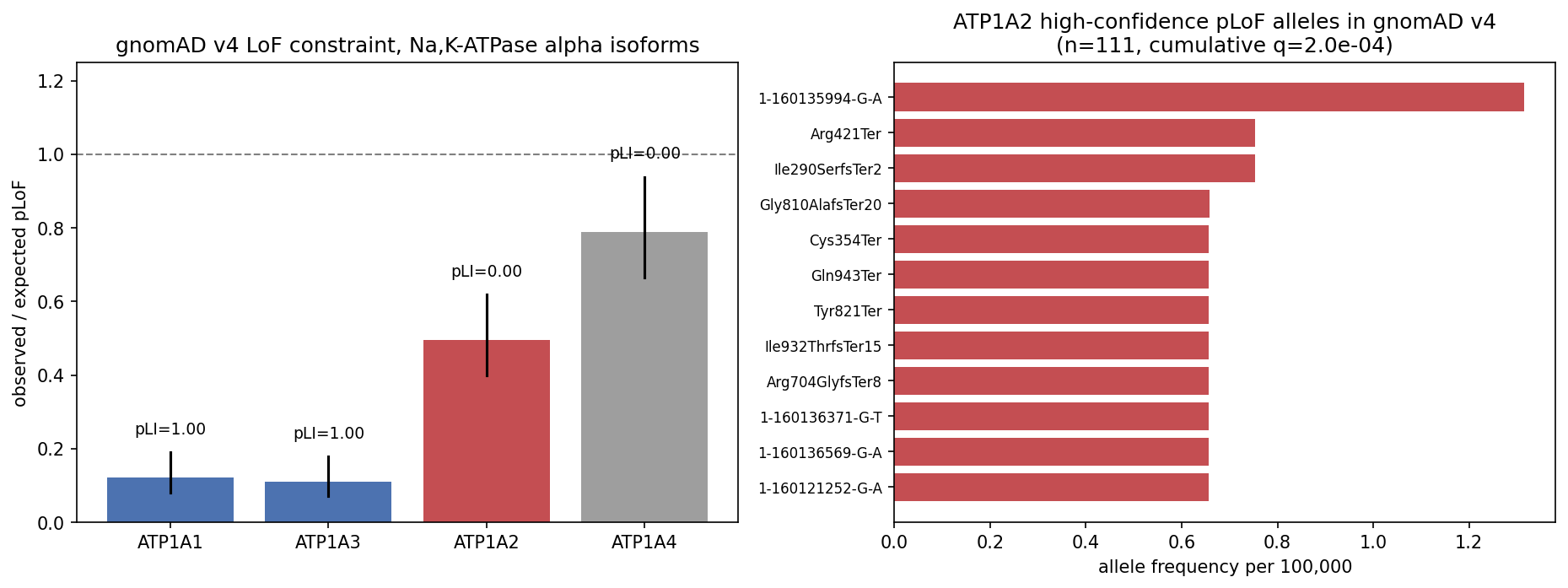
- OpenScientist plot 2
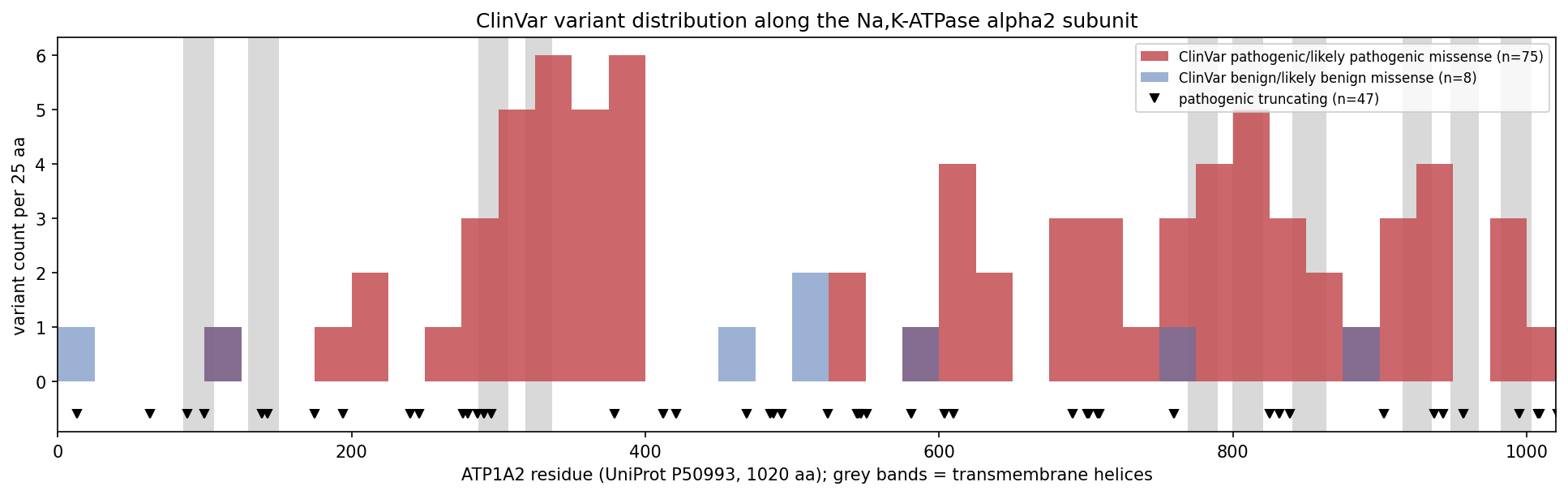
- OpenScientist plot 3
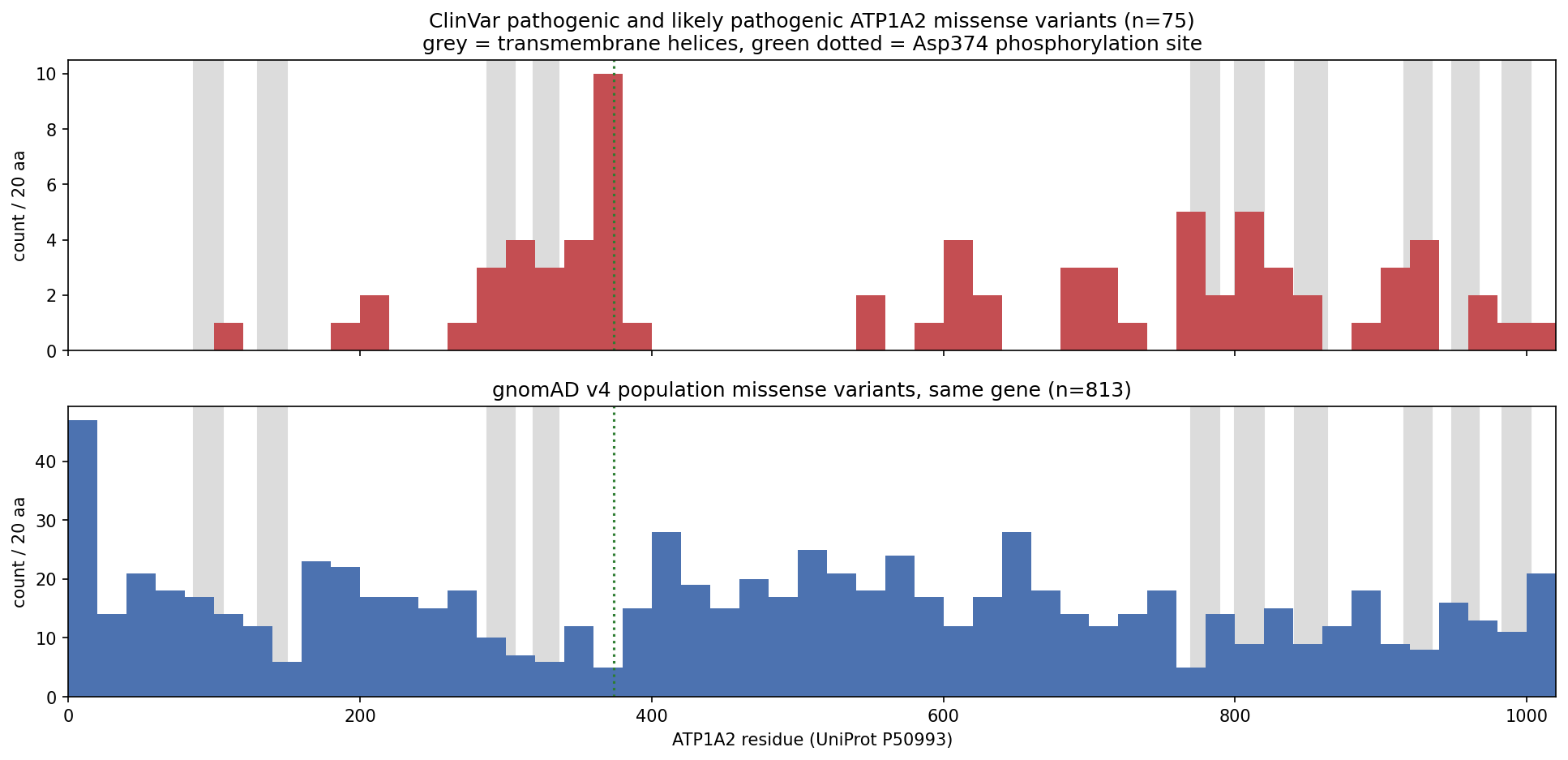
- OpenScientist plot 4
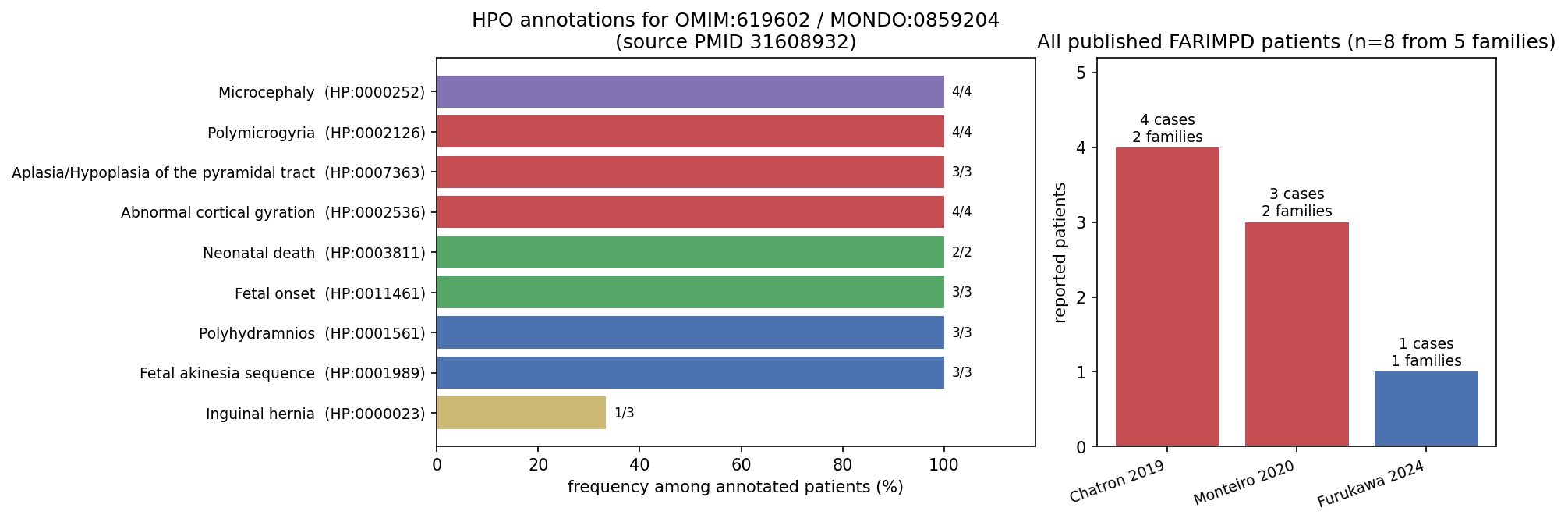
- OpenScientist plot 5
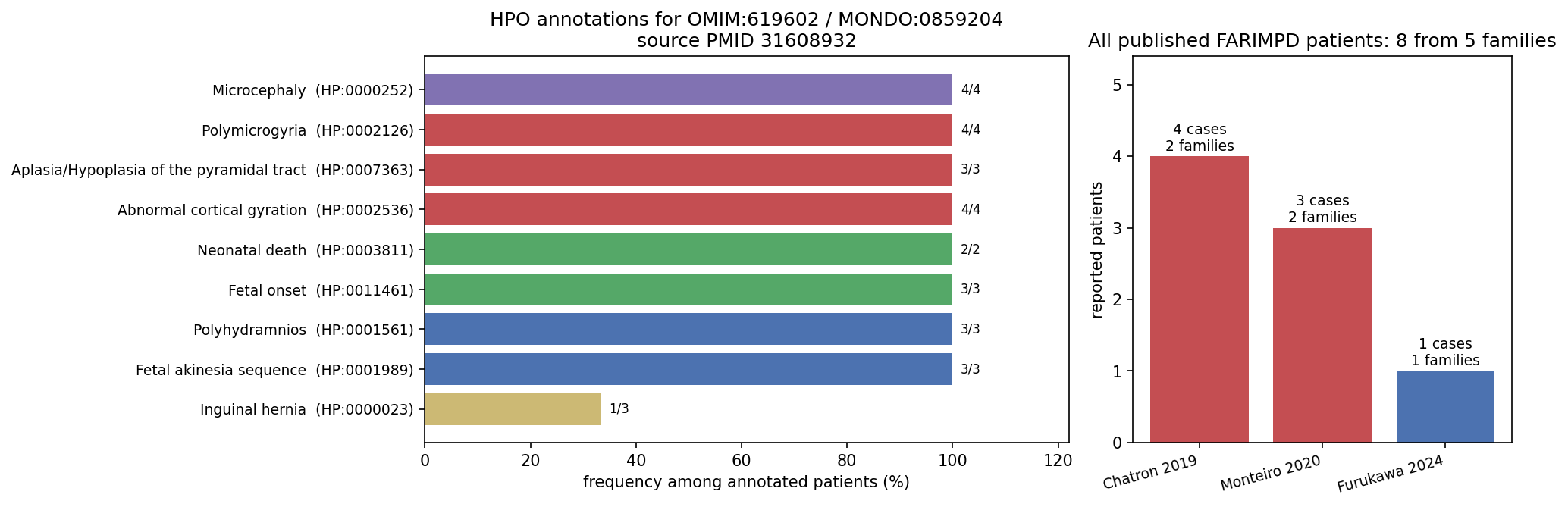
- OpenScientist plot 6
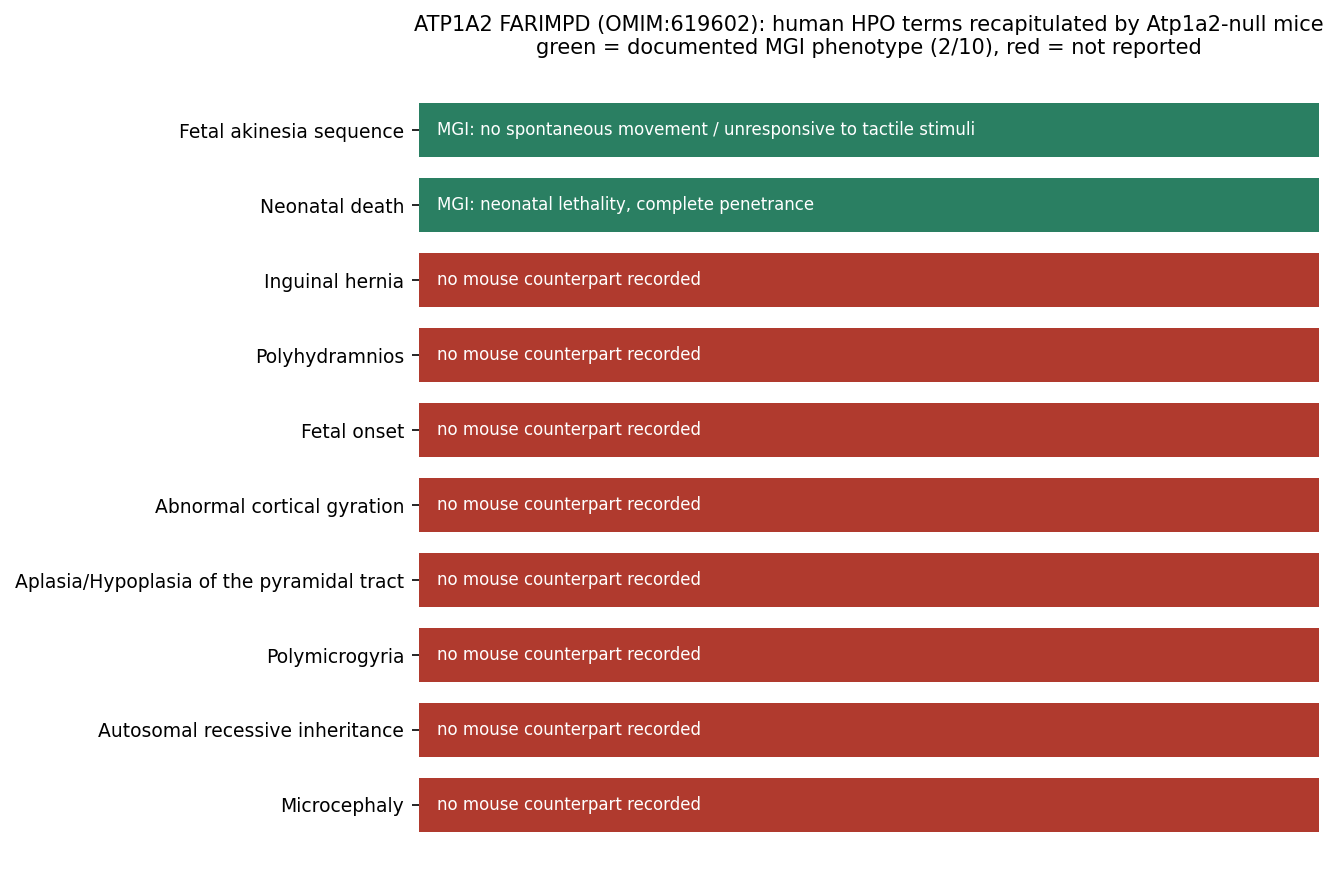
- OpenScientist plot 7
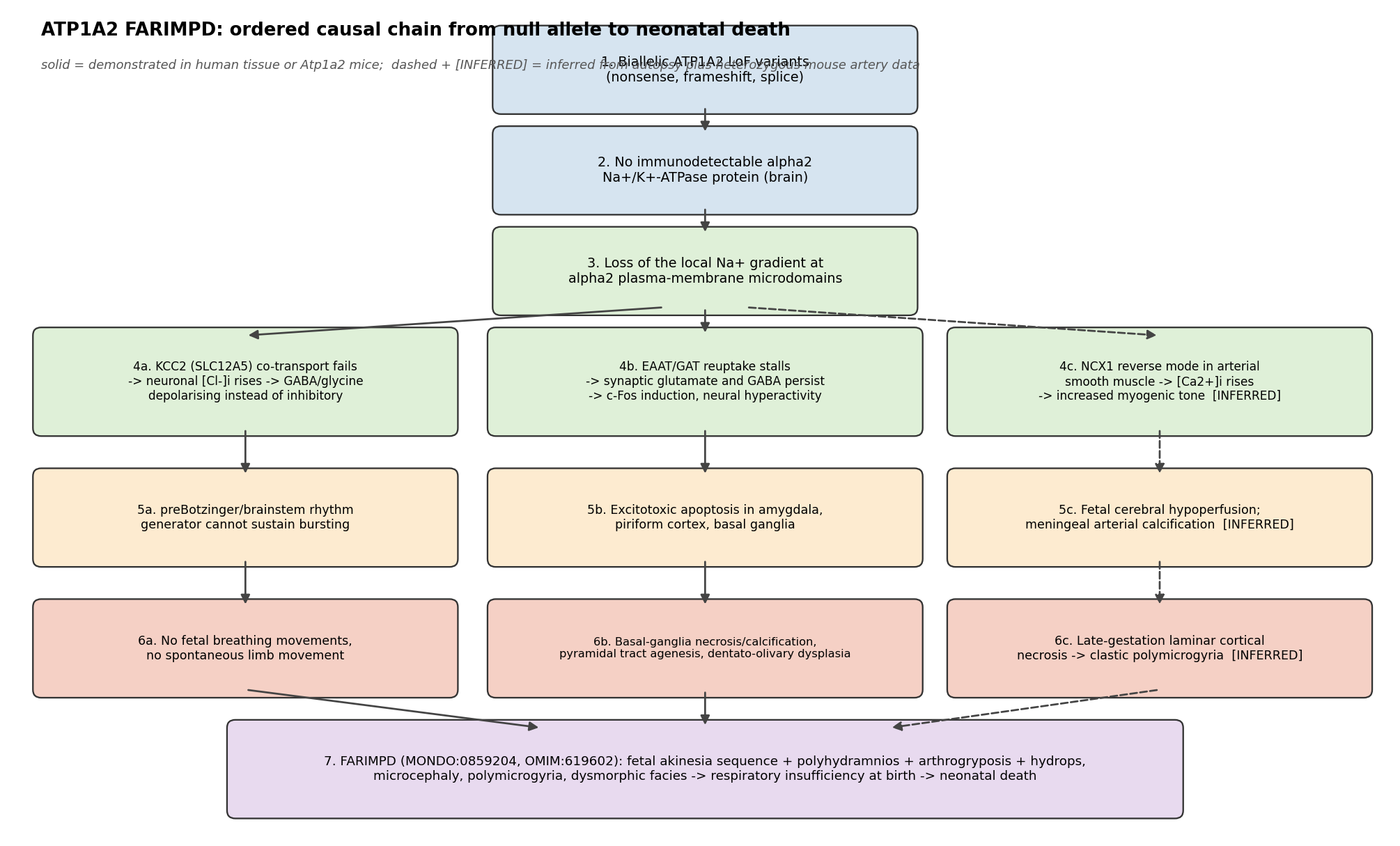
- OpenScientist plot 8
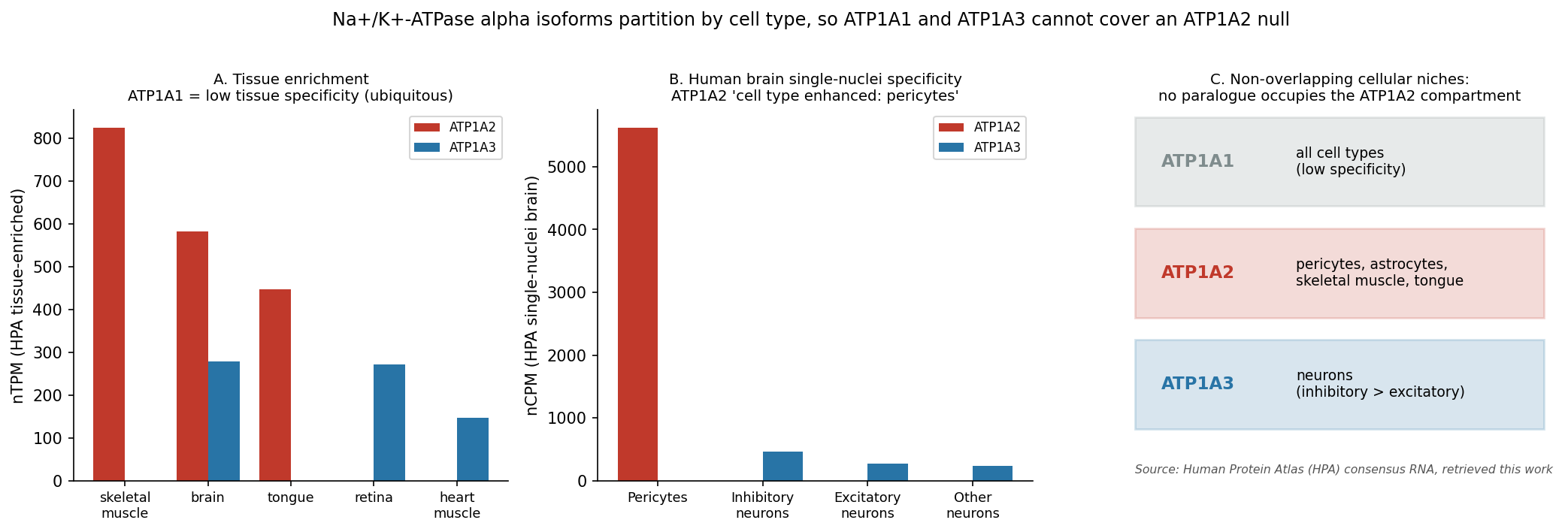
Reference Validation
Checked with linkml-reference-validator 0.8.0.
| Outcome | Count |
|---|---|
| References checked | 15 |
| Resolved | 15 |
| Unresolved (possible confabulation) | 0 |
| Unverifiable | 0 |
| Quoted claims checked | 2 |
| Quoted claims found in source | 1 |
| Quoted claims not found in source | 1 |
| References weighed for topical relevance | 15 |
| On topic | 4 |
| Off topic | 1 |
Quotes not found in the cited source
Searched the abstract, any retrieved full text, and the title. A quote drawn from a part of the paper that was not retrieved will appear here too, so check before treating one as invented:
Every one of these was searched against an abstract alone, with no full text retrieved - marked abstract only below. Where full text can be fetched, re-running with it will settle them; where the source publishes only a summary to PubMed, as GeneReviews chapters do, it will not, and the quote has to be checked by hand against the chapter itself.
PMID:30690204(abstract only): "Hydrops fetalis, microcephaly, arthrogryposis and extensive cortical malformations"- closest text in source: "arthrogryposis), microcephaly, malformations of cortical development, dysmorphic features and severe respiratory insufficiency"
References that may not be about this subject
These identifiers resolve, so they are not fabrications, but the records they resolve to share almost none of this report's vocabulary. That is a clue and not a verdict - a paper can be relevant in ways its title and abstract do not spell out - so read them before deciding:
PMID:21048395(10 mentions) - [Mechanisms for linking high salt intake to vascular tone: role of Na(+) pump and Na(+)/Ca²(+) exchanger coupling].- shared terms: human
Weighed against this report's own most characteristic terms: class, atp1a2, brain, fa-circle-xmark, fetal, allele, phenotype, farimpd, disease, polymicrogyria, human, null, respiratory, variant, heterozygous, lethal, birth, cortical, missense, akinesia.
Term Validation
Checked with linkml-term-validator 0.4.5, through the ols: adapter.
| Outcome | Count |
|---|---|
| Terms checked | 83 |
| Resolved | 76 |
| Unresolved (possible confabulation) | 0 |
| Obsolete | 0 |
| Unverifiable | 7 |
| Terms whose name was checked | 69 |
| Terms named correctly | 43 |
| Terms named as a different term | 16 |
| Terms whose name is worth a second look | 10 |
Terms the report names something else
These identifiers resolve, so nothing about them looks wrong, and the ontology calls them something unrelated to what the report calls them. That usually means the identifier is not the one the sentence needs:
MONDO:0859204(5 mentions) - the report calls it "MONDO"; MONDO calls it fetal akinesia, respiratory insufficiency, microcephaly, polymicrogyria, and dysmorphic faciesHP:0002803(2 mentions) - the report calls it "Arthrogryposis multiplex congenita"; HP calls it Congenital contractureGO:0060013(1 mention) - the report calls it "Respiratory rhythm"; GO calls it righting reflexUBERON:0000305(1 mention) - the report calls it "Amniotic cavity"; UBERON calls it amnionUBERON:0002634(1 mention) - the report calls it "Pyramidal tract"; UBERON calls it anterior nucleus of hypothalamusUBERON:0002129(1 mention) - the report calls it "Dentate nucleus"; UBERON calls it cerebellar cortexUBERON:0013694(1 mention) - the report calls it "Inferior olivary complex"; UBERON calls it brain endotheliumUBERON:0001954(1 mention) - the report calls it "Meninges and meningeal arteries"; UBERON calls it Ammon's hornGO:0097450(1 mention) - the report calls it "Astrocyte projection / perisynaptic process"; GO calls it astrocyte end-footNCIT:C15288(1 mention) - the report calls it "Palliative care"; NCIT calls it OrchiectomyNCIT:C15393(1 mention) - the report calls it "Supportive care"; NCIT calls it Isolated Chemotherapeutic Limb PerfusionNCIT:C70754(1 mention) - the report calls it "Mechanical ventilation"; NCIT calls it ContrastNCIT:C15285(2 mentions) - the report calls it "Genetic counselling"; NCIT calls it Nursing ResearchNCIT:C53555(1 mention) - the report calls it "Comfort care"; NCIT calls it Luminal B Breast CarcinomaNCIT:C15311(1 mention) - the report calls it "Nutritional support"; NCIT calls it Quality ControlNCIT:C15346(1 mention) - the report calls it "Physical therapy"; NCIT calls it Vaccination
Terms whose name is worth a second look
The report's name for these is recognisably related to the term's own name without being one of them. A loose paraphrase reads the same way as a citation of the wrong sibling term - and so does a related synonym, which the ontology records precisely because it names something adjacent rather than the same thing - so these are listed rather than judged:
HP:0000007(2 mentions) - the report calls it "Autosomal recessive", "Autosomal recessive inheritance"; HP calls it Autosomal recessive inheritance, and lists "Autosomal recessive" among its other namesGO:0006915(2 mentions) - the report calls it "Apoptosis", "Apoptotic process"; GO calls it apoptotic process, and lists "apoptosis" among its other namesUBERON:0001134(1 mention) - the report calls it "Skeletal muscle"; UBERON calls it skeletal muscle tissue, and lists "skeletal muscle" among its other namesUBERON:0000982(1 mention) - the report calls it "Joints"; UBERON calls it skeletal joint, and lists "joints" among its other namesUBERON:0002097(1 mention) - the report calls it "Skin and soft tissue"; UBERON calls it skin of bodyUBERON:0002420(1 mention) - the report calls it "Basal ganglia"; UBERON calls it basal ganglion, and lists "basal ganglia" among its other namesUBERON:0001896(1 mention) - the report calls it "Medulla oblongata, ventrolateral medulla"; UBERON calls it medulla oblongataUBERON:0002894(1 mention) - the report calls it "Piriform / olfactory cortex"; UBERON calls it olfactory cortexCL:0000188(1 mention) - the report calls it "Skeletal muscle fibre"; CL calls it cell of skeletal muscle, and lists "skeletal muscle cell" among its other namesNCIT:C264(1 mention) - the report calls it "Anticonvulsant therapy"; NCIT calls it Anticonvulsant Agent, and lists "anticonvulsant" among its other names
Terms named inconsistently
The report gives these identifiers more than one name of its own:
HP:0000007- called "Autosomal recessive", "Autosomal recessive inheritance"HP:0011461- called "Fetal onset", "fetal onset"GO:0006915- called "Apoptosis", "Apoptotic process"
Terms the ontology service could not be reached for
1 term(s) could not be checked because the ontology service was unreachable (a timeout, 5xx, 408 or 429), not because anything looks wrong with them. Re-run when the service is reachable -- the label cache resumes, so only the unresolved terms are retried:
MEDGEN:1794225(2 mentions)
Prefixes with no resolver
Terms carrying these prefixes were not checked either way, because no configured ontology covers them. An unrecognised prefix may name an ontology this run could not reach as easily as one that does not exist, so nothing here is evidence of fabrication: OMIM, NCBIGene, UMLS, MIM, MGI.