Exstrophy-Epispadias Complex
The exstrophy-epispadias complex (EEC, also bladder exstrophy-epispadias complex / BEEC) is a spectrum of congenital ventral body-wall and genitourinary malformations arising from abnormal development of the cloacal membrane and deficient mesodermal ingrowth into the lower (infraumbilical) abdominal wall. Severity ranges from isolated epispadias (the mildest form, with a dorsal urethral defect) through classic bladder exstrophy (an open, everted bladder plate on the lower abdominal wall with pubic diastasis and epispadias) to exstrophy of the cloaca / OEIS complex (the most severe form, combining exstrophy of a persistent cloaca, omphalocele, imperforate anus, and spinal defects). The unifying developmental lesion is thought to be mechanical disruption or enlargement of an abnormally large, caudally positioned cloacal membrane; the timing of its premature rupture determines the severity of the malformation. EEC represents the severe end of the uro-rectal malformation spectrum and of congenital anomalies of the kidney and urinary tract (CAKUT). Both genetic (notably the susceptibility gene ISL1) and environmental factors are likely to contribute, and management is primarily surgical, aimed at secure abdominal wall closure, urinary continence with preservation of renal function, and adequate genital reconstruction.
Ask OpenScientist
Ask a research question about Exstrophy-Epispadias Complex. OpenScientist will conduct autonomous deep research using the Disorder Mechanisms Knowledge Base and PubMed literature (typically 10-30 minutes).
Do not include personal health information in your question. Questions and results are cached in your browser's local storage.
Classifications
Mappings
Subtypes
3Pathophysiology
2Show evidence (2 references)
Show evidence (3 references)
Pathograph
Phenotypes
11Digestive 4
Show evidence (2 references)
Show evidence (2 references)
Show evidence (2 references)
Show evidence (2 references)
Genitourinary 5
Show evidence (2 references)
Show evidence (2 references)
Show evidence (1 reference)
Show evidence (2 references)
Show evidence (1 reference)
Musculoskeletal 1
Show evidence (1 reference)
Nervous System 1
Show evidence (1 reference)
Genetic Associations
2Show evidence (2 references)
Show evidence (2 references)
Medical Actions
5Show evidence (2 references)
Show evidence (2 references)
Show evidence (1 reference)
Show evidence (2 references)
Show evidence (2 references)
Progression
1Show evidence (2 references)
Prevalence
2Show evidence (1 reference)
Show evidence (1 reference)
Source YAML
click to showname: Exstrophy-Epispadias Complex
creation_date: "2026-06-17T00:00:00Z"
description: >-
The exstrophy-epispadias complex (EEC, also bladder exstrophy-epispadias
complex / BEEC) is a spectrum of congenital ventral body-wall and genitourinary
malformations arising from abnormal development of the cloacal membrane and
deficient mesodermal ingrowth into the lower (infraumbilical) abdominal wall.
Severity ranges from isolated epispadias (the mildest form, with a dorsal
urethral defect) through classic bladder exstrophy (an open, everted bladder
plate on the lower abdominal wall with pubic diastasis and epispadias) to
exstrophy of the cloaca / OEIS complex (the most severe form, combining
exstrophy of a persistent cloaca, omphalocele, imperforate anus, and spinal
defects). The unifying developmental lesion is thought to be mechanical
disruption or enlargement of an abnormally large, caudally positioned cloacal
membrane; the timing of its premature rupture determines the severity of the
malformation. EEC represents the severe end of the uro-rectal malformation
spectrum and of congenital anomalies of the kidney and urinary tract (CAKUT).
Both genetic (notably the susceptibility gene ISL1) and environmental factors
are likely to contribute, and management is primarily surgical, aimed at secure
abdominal wall closure, urinary continence with preservation of renal function,
and adequate genital reconstruction.
category: Congenital
disease_term:
preferred_term: Exstrophy-Epispadias Complex
term:
id: MONDO:0017919
label: exstrophy-epispadias complex
synonyms:
- EEC
- Bladder exstrophy-epispadias complex
- BEEC
- OEIS complex
parents:
- Urogenital tract malformation
mappings:
mondo_mappings:
- term:
id: MONDO:0017919
label: exstrophy-epispadias complex
mapping_predicate: skos:exactMatch
mapping_source: MONDO
mapping_justification: >-
MONDO:0017919 (exstrophy-epispadias complex) is the disease term for this
entry; it carries Orphanet:322, OMIM:258040, NCIT:C99142, and
DOID:0080173 cross-references and groups the epispadias, classic bladder
exstrophy, and cloacal exstrophy child terms.
classifications:
harrisons_chapter:
- classification_value: KIDNEY_URINARY_TRACT
evidence:
- reference: PMID:28176844
reference_title: "ISL1 is a major susceptibility gene for classic bladder exstrophy and a regulator of urinary tract development."
supports: SUPPORT
evidence_source: HUMAN_CLINICAL
snippet: "The bladder exstrophy-epispadias complex (BEEC; OMIM %600057) represents the severe end of human congenital anomalies of the kidney and urinary tract (CAKUT), and involves the abdominal wall, pelvis, all of the urinary tract, the genitalia, and occasionally the spine and anus."
explanation: >-
BEEC is characterized as the severe end of congenital anomalies of the
kidney and urinary tract (CAKUT), supporting placement in Harrison's
Disorders of the Kidney and Urinary Tract Part.
- classification_value: GENETICS_ENVIRONMENT_DISEASE
evidence:
- reference: PMID:19878548
reference_title: "The exstrophy-epispadias complex."
supports: SUPPORT
evidence_source: HUMAN_CLINICAL
snippet: "The underlying cause remains unknown: both genetic and environmental factors are likely to play a role in the etiology of EEC."
explanation: >-
EEC is a congenital malformation with combined genetic and environmental
etiology, supporting placement in Harrison's Genes, Environment, and
Disease Part.
has_subtypes:
- name: Epispadias
display_name: Isolated epispadias
description: >-
The mildest end of the spectrum, in which there is an open urethral plate on
the dorsal aspect of the penis in males, or a cleft in females (often with a
bifid clitoris), without an open everted bladder plate. Reflects the least
extensive cloacal membrane defect.
- name: Classic Bladder Exstrophy
display_name: Classic bladder exstrophy (CBE/CEB)
description: >-
The prototypical and most common clinically recognized form, with an open,
evaginated bladder plate on the lower abdominal wall, epispadias, pubic
symphyseal diastasis, low umbilical insertion, and anterior displacement of
the anus.
- name: Cloacal Exstrophy
display_name: Cloacal exstrophy / OEIS complex
description: >-
The most severe form, in which two exstrophied hemibladders are separated by
an intervening exstrophied bowel field and associated with omphalocele,
imperforate anus, and spinal/vertebral defects (the OEIS complex:
Omphalocele, Exstrophy of the cloaca, Imperforate anus, Spinal defects).
pathophysiology:
- name: Cloacal Membrane Overdevelopment and Premature Rupture
description: >-
The leading developmental hypothesis holds that EEC results from mechanical
disruption or enlargement of the cloacal membrane. The cloacal membrane is a
bilaminar (ectoderm-endoderm) structure at the caudal end of the embryo with
no intervening mesoderm. An abnormally large, caudally positioned membrane
acts as a mechanical wedge that prevents the medial migration of
infraumbilical mesenchyme that should form the lower abdominal wall, pelvis,
and genital tubercle. The timing of premature rupture of this unstable
membrane determines the severity of the resulting malformation: rupture after
complete urorectal septation yields classic bladder exstrophy, very early
rupture (before the urorectal septum has divided the cloaca) yields cloacal
exstrophy, and a limited dorsal defect yields isolated epispadias.
cell_types:
- preferred_term: Infraumbilical body-wall mesenchymal cell
term:
id: CL:0008019
label: mesenchymal cell
locations:
- preferred_term: Cloacal membrane
term:
id: UBERON:0006217
label: cloacal membrane
- preferred_term: Urorectal septum
term:
id: UBERON:0005760
label: urorectal septum
biological_processes:
- preferred_term: Cloaca development
term:
id: GO:0035844
label: cloaca development
modifier: ABNORMAL
- preferred_term: Embryonic morphogenesis of the ventral body wall
term:
id: GO:0048598
label: embryonic morphogenesis
modifier: ABNORMAL
- preferred_term: Medial migration of mesenchyme into the lower abdominal wall
term:
id: GO:0090497
label: mesenchymal cell migration
modifier: DECREASED
evidence:
- reference: PMID:19878548
reference_title: "The exstrophy-epispadias complex."
supports: SUPPORT
evidence_source: HUMAN_CLINICAL
snippet: "EEC results from mechanical disruption or enlargement of the cloacal membrane; the timing of the rupture determines the severity of the malformation."
explanation: >-
Directly supports the cloacal-membrane disruption/enlargement model and the
rupture-timing-determines-severity mechanism.
- reference: PMID:25763902
reference_title: "Genome-wide association study and meta-analysis identify ISL1 as genome-wide significant susceptibility gene for bladder exstrophy."
supports: SUPPORT
evidence_source: HUMAN_CLINICAL
snippet: "is thought to result from aberrant embryonic morphogenesis of the cloacal membrane and the urorectal septum"
explanation: >-
Supports the involvement of aberrant cloacal-membrane and urorectal-septum
morphogenesis in the pathogenesis of the complex.
downstream:
- target: Epispadias
description: Limited cloacal-membrane disruption produces the mild epispadias end of the EEC spectrum.
causal_link_type: INDIRECT_KNOWN_INTERMEDIATES
evidence:
- reference: PMID:19878548
reference_title: "The exstrophy-epispadias complex."
supports: SUPPORT
evidence_source: HUMAN_CLINICAL
snippet: "EEC results from mechanical disruption or enlargement of the cloacal membrane; the timing of the rupture determines the severity of the malformation."
explanation: The rupture-timing model supports epispadias as one outcome of cloacal-membrane disruption.
- reference: ORPHA:322
reference_title: "Exstrophy-epispadias complex"
supports: SUPPORT
snippet: "HP:0000039 | Epispadias | Frequent (79-30%)"
explanation: Orphanet lists epispadias as a frequent EEC phenotype.
- target: Bladder Exstrophy
description: Cloacal-membrane rupture after urorectal septation yields classic bladder exstrophy.
causal_link_type: INDIRECT_KNOWN_INTERMEDIATES
evidence:
- reference: PMID:19878548
reference_title: "The exstrophy-epispadias complex."
supports: SUPPORT
evidence_source: HUMAN_CLINICAL
snippet: "EEC results from mechanical disruption or enlargement of the cloacal membrane; the timing of the rupture determines the severity of the malformation."
explanation: The rupture-timing model supports classic bladder exstrophy as one outcome of cloacal-membrane disruption.
- reference: ORPHA:322
reference_title: "Exstrophy-epispadias complex"
supports: SUPPORT
snippet: "HP:0002836 | Bladder exstrophy | Frequent (79-30%)"
explanation: Orphanet lists bladder exstrophy as a frequent EEC phenotype.
- target: Cloacal Exstrophy
description: Very early cloacal-membrane rupture before cloacal septation yields cloacal exstrophy.
causal_link_type: INDIRECT_KNOWN_INTERMEDIATES
evidence:
- reference: PMID:19878548
reference_title: "The exstrophy-epispadias complex."
supports: SUPPORT
evidence_source: HUMAN_CLINICAL
snippet: "EEC results from mechanical disruption or enlargement of the cloacal membrane; the timing of the rupture determines the severity of the malformation."
explanation: The rupture-timing model supports cloacal exstrophy as the severe end of the EEC spectrum.
- reference: ORPHA:322
reference_title: "Exstrophy-epispadias complex"
supports: SUPPORT
snippet: "HP:0010475 | Cloacal exstrophy | Very rare (<4-1%)"
explanation: Orphanet lists cloacal exstrophy as a rare EEC phenotype.
- name: ISL1-Associated Disruption of Pericloacal Mesenchyme and Urinary Tract Development
description: >-
Genome-wide association studies have identified the LIM-homeodomain
transcription factor ISL1 (at chromosomal region 5q11.1) as the major
susceptibility gene for classic bladder exstrophy. ISL1 is a master control
gene expressed in the pericloacal mesenchyme and urorectal septum during the
critical time frame for human bladder-exstrophy development. Developmental
biology models (mouse lineage tracing, zebrafish) localize ISL1 activity to
the forming urinary tract and genital region, supporting a model in which
altered ISL1-dependent regulation of pericloacal mesenchyme and urinary tract
development predisposes to the failure of lower abdominal wall and bladder
closure.
cell_types:
- preferred_term: Pericloacal mesenchymal cell
term:
id: CL:0008019
label: mesenchymal cell
locations:
- preferred_term: Urorectal septum
term:
id: UBERON:0005760
label: urorectal septum
biological_processes:
- preferred_term: Urinary bladder development
term:
id: GO:0060157
label: urinary bladder development
modifier: ABNORMAL
- preferred_term: External genitalia morphogenesis
term:
id: GO:0035261
label: external genitalia morphogenesis
modifier: ABNORMAL
evidence:
- reference: PMID:25763902
reference_title: "Genome-wide association study and meta-analysis identify ISL1 as genome-wide significant susceptibility gene for bladder exstrophy."
supports: SUPPORT
evidence_source: HUMAN_CLINICAL
snippet: "The present study identified the first genome-wide significant locus for CBE at chromosomal region 5q11.1, and provides strong evidence for the hypothesis that ISL1 is the responsible candidate gene in this region."
explanation: >-
Establishes ISL1 at 5q11.1 as the first genome-wide significant
susceptibility locus for classic bladder exstrophy.
- reference: PMID:25763902
reference_title: "Genome-wide association study and meta-analysis identify ISL1 as genome-wide significant susceptibility gene for bladder exstrophy."
supports: SUPPORT
evidence_source: MODEL_ORGANISM
snippet: "Isl1 expression was detected in the genital region within the critical time frame for human CBE development. Genital regions with Isl1 expression included the peri-cloacal mesenchyme and the urorectal septum."
explanation: >-
Murine expression analysis localizes Isl1 to the pericloacal mesenchyme and
urorectal septum in the developmental window relevant to human bladder
exstrophy.
- reference: PMID:28176844
reference_title: "ISL1 is a major susceptibility gene for classic bladder exstrophy and a regulator of urinary tract development."
supports: SUPPORT
evidence_source: MODEL_ORGANISM
snippet: "Genetic lineage analysis of Isl1-expressing cells by the lineage tracer mouse model showed Isl1-expressing cells in the urinary tract of mouse embryos at E10.5 and distributed in the bladder at E15.5."
explanation: >-
Lineage tracing shows Isl1-expressing cells contribute to the developing
urinary tract and bladder, supporting ISL1 as a regulator of urinary tract
development.
downstream:
- target: Bladder Exstrophy
description: ISL1-associated disruption of urinary tract development contributes to classic bladder exstrophy susceptibility.
causal_link_type: INDIRECT_KNOWN_INTERMEDIATES
evidence:
- reference: PMID:28176844
reference_title: "ISL1 is a major susceptibility gene for classic bladder exstrophy and a regulator of urinary tract development."
supports: SUPPORT
evidence_source: HUMAN_CLINICAL
snippet: "Our study supports ISL1 as a major susceptibility gene for CBE and as a regulator of urinary tract development."
explanation: The study links ISL1 to classic bladder exstrophy and urinary tract development.
- reference: ORPHA:322
reference_title: "Exstrophy-epispadias complex"
supports: SUPPORT
snippet: "HP:0002836 | Bladder exstrophy | Frequent (79-30%)"
explanation: Orphanet lists bladder exstrophy as a frequent EEC phenotype.
phenotypes:
- name: Bladder Exstrophy
category: Physical
frequency: FREQUENT
description: >-
An open, evaginated bladder plate exposed on the lower abdominal wall, the
defining lesion of classic bladder exstrophy.
phenotype_term:
preferred_term: Bladder exstrophy
term:
id: HP:0002836
label: Bladder exstrophy
subtype: Classic Bladder Exstrophy
evidence:
- reference: PMID:19878548
reference_title: "The exstrophy-epispadias complex."
supports: SUPPORT
evidence_source: HUMAN_CLINICAL
snippet: "EEC is characterized by a visible defect of the lower abdominal wall, either with an evaginated bladder plate (CEB), or with an open urethral plate in males or a cleft in females (E)."
explanation: >-
Describes the evaginated bladder plate of classic bladder exstrophy as the
defining lower abdominal wall defect.
- reference: ORPHA:322
reference_title: "Exstrophy-epispadias complex"
supports: SUPPORT
snippet: "HP:0002836 | Bladder exstrophy | Frequent (79-30%)"
explanation: Orphanet classifies bladder exstrophy as frequent in EEC.
- name: Epispadias
category: Physical
frequency: FREQUENT
description: >-
Dorsal placement of the urethral meatus, present across the spectrum as the
open urethral plate in males or a cleft in females; isolated epispadias is the
mildest form of the complex.
phenotype_term:
preferred_term: Epispadias
term:
id: HP:0000039
label: Epispadias
evidence:
- reference: PMID:19878548
reference_title: "The exstrophy-epispadias complex."
supports: SUPPORT
evidence_source: HUMAN_CLINICAL
snippet: "Exstrophy-epispadias complex (EEC) represents a spectrum of genitourinary malformations ranging in severity from epispadias (E) to classical bladder exstrophy (CEB) and exstrophy of the cloaca (EC)."
explanation: >-
Establishes epispadias as the mild end of the EEC spectrum.
- reference: ORPHA:322
reference_title: "Exstrophy-epispadias complex"
supports: SUPPORT
snippet: "HP:0000039 | Epispadias | Frequent (79-30%)"
explanation: Orphanet classifies epispadias as frequent in EEC.
- name: Cloacal Exstrophy
category: Physical
frequency: VERY_RARE
description: >-
The most severe presentation, with two exstrophied hemibladders, omphalocele,
imperforate anus, and spinal defects (OEIS complex).
phenotype_term:
preferred_term: Cloacal exstrophy
term:
id: HP:0010475
label: Cloacal exstrophy
subtype: Cloacal Exstrophy
evidence:
- reference: PMID:19878548
reference_title: "The exstrophy-epispadias complex."
supports: SUPPORT
evidence_source: HUMAN_CLINICAL
snippet: "In CE, two exstrophied hemibladders, as well as omphalocele, an imperforate anus and spinal defects, can be seen after birth."
explanation: >-
Describes the cloacal-exstrophy (OEIS) constellation of two hemibladders,
omphalocele, imperforate anus, and spinal defects.
- reference: ORPHA:322
reference_title: "Exstrophy-epispadias complex"
supports: SUPPORT
snippet: "HP:0010475 | Cloacal exstrophy | Very rare (<4-1%)"
explanation: Orphanet classifies cloacal exstrophy as very rare within EEC.
- name: Omphalocele
category: Physical
frequency: OCCASIONAL
description: >-
A midline ventral abdominal wall defect with herniation of viscera into the
umbilical cord, a component of cloacal exstrophy / OEIS complex.
phenotype_term:
preferred_term: Omphalocele
term:
id: HP:0001539
label: Omphalocele
subtype: Cloacal Exstrophy
evidence:
- reference: PMID:19878548
reference_title: "The exstrophy-epispadias complex."
supports: SUPPORT
evidence_source: HUMAN_CLINICAL
snippet: "In CE, two exstrophied hemibladders, as well as omphalocele, an imperforate anus and spinal defects, can be seen after birth."
explanation: >-
Lists omphalocele as a component of cloacal exstrophy.
- reference: ORPHA:322
reference_title: "Exstrophy-epispadias complex"
supports: SUPPORT
snippet: "HP:0001539 | Omphalocele | Occasional (29-5%)"
explanation: Orphanet classifies omphalocele as occasional in EEC.
- name: Anal Atresia
category: Physical
frequency: VERY_RARE
description: >-
Imperforate anus, a component of cloacal exstrophy / OEIS complex.
phenotype_term:
preferred_term: Imperforate anus
term:
id: HP:0002023
label: Anal atresia
subtype: Cloacal Exstrophy
evidence:
- reference: PMID:19878548
reference_title: "The exstrophy-epispadias complex."
supports: SUPPORT
evidence_source: HUMAN_CLINICAL
snippet: "In CE, two exstrophied hemibladders, as well as omphalocele, an imperforate anus and spinal defects, can be seen after birth."
explanation: >-
Lists imperforate anus as a component of cloacal exstrophy.
- reference: ORPHA:322
reference_title: "Exstrophy-epispadias complex"
supports: SUPPORT
snippet: "HP:0002023 | Anal atresia | Very rare (<4-1%)"
explanation: Orphanet classifies anal atresia as very rare within EEC.
- name: Spinal Dysraphism
category: Physical
description: >-
Spinal/vertebral defects, the "S" of the OEIS complex, seen in the most severe
cloacal-exstrophy presentations.
phenotype_term:
preferred_term: Spinal defects
term:
id: HP:0010301
label: Spinal dysraphism
subtype: Cloacal Exstrophy
evidence:
- reference: PMID:19878548
reference_title: "The exstrophy-epispadias complex."
supports: SUPPORT
evidence_source: HUMAN_CLINICAL
snippet: "In CE, two exstrophied hemibladders, as well as omphalocele, an imperforate anus and spinal defects, can be seen after birth."
explanation: >-
Lists spinal defects as a component of cloacal exstrophy (OEIS).
- name: Wide Pubic Symphysis
category: Physical
description: >-
Pubic symphyseal diastasis from anterior rotation and shortening of the pelvic
bones, contributing to the abdominal wall and pelvic-floor defect.
phenotype_term:
preferred_term: Pubic diastasis
term:
id: HP:0003183
label: Wide pubic symphysis
evidence:
- reference: PMID:19878548
reference_title: "The exstrophy-epispadias complex."
supports: SUPPORT
evidence_source: HUMAN_CLINICAL
snippet: "Depending on severity, EEC may involve the urinary system, musculoskeletal system, pelvis, pelvic floor, abdominal wall, genitalia, and sometimes the spine and anus."
explanation: >-
Supports musculoskeletal/pelvic involvement; pubic diastasis is the
characteristic pelvic-bone abnormality of the complex.
- name: Vesicoureteral Reflux
category: Physical
frequency: FREQUENT
description: >-
Retrograde flow of urine from the bladder into the ureters, observed
frequently in both sexes in BEEC.
phenotype_term:
preferred_term: Vesicoureteral reflux
term:
id: HP:0000076
label: Vesicoureteral reflux
evidence:
- reference: PMID:28176844
reference_title: "ISL1 is a major susceptibility gene for classic bladder exstrophy and a regulator of urinary tract development."
supports: SUPPORT
evidence_source: HUMAN_CLINICAL
snippet: "Vesicoureteral reflux and obstruction of the ureteropelvic junction are observed frequently in both genders, and cryptorchidism is common in males"
explanation: >-
Documents vesicoureteral reflux as a frequent associated urinary-tract
finding in BEEC.
- reference: ORPHA:322
reference_title: "Exstrophy-epispadias complex"
supports: SUPPORT
snippet: "HP:0000076 | Vesicoureteral reflux | Frequent (79-30%)"
explanation: Orphanet classifies vesicoureteral reflux as frequent in EEC.
- name: Ureteropelvic Junction Obstruction
category: Physical
description: >-
Obstruction at the ureteropelvic junction, observed frequently in both sexes
in BEEC.
phenotype_term:
preferred_term: Ureteropelvic junction obstruction
term:
id: HP:0000074
label: Ureteropelvic junction obstruction
evidence:
- reference: PMID:28176844
reference_title: "ISL1 is a major susceptibility gene for classic bladder exstrophy and a regulator of urinary tract development."
supports: SUPPORT
evidence_source: HUMAN_CLINICAL
snippet: "Vesicoureteral reflux and obstruction of the ureteropelvic junction are observed frequently in both genders, and cryptorchidism is common in males"
explanation: >-
Documents ureteropelvic junction obstruction as a frequent associated
urinary-tract finding in BEEC.
- name: Cryptorchidism
category: Physical
frequency: VERY_RARE
description: >-
Undescended testis, common in affected males.
phenotype_term:
preferred_term: Cryptorchidism
term:
id: HP:0000028
label: Cryptorchidism
evidence:
- reference: PMID:28176844
reference_title: "ISL1 is a major susceptibility gene for classic bladder exstrophy and a regulator of urinary tract development."
supports: SUPPORT
evidence_source: HUMAN_CLINICAL
snippet: "Vesicoureteral reflux and obstruction of the ureteropelvic junction are observed frequently in both genders, and cryptorchidism is common in males"
explanation: >-
Documents cryptorchidism as a common finding in affected males.
- reference: ORPHA:322
reference_title: "Exstrophy-epispadias complex"
supports: SUPPORT
snippet: "HP:0000028 | Cryptorchidism | Very rare (<4-1%)"
explanation: Orphanet classifies cryptorchidism as very rare within the overall EEC spectrum.
- name: Bifid Clitoris
category: Physical
description: >-
Split clitoris in affected females, the female counterpart of the genital
component of the complex.
phenotype_term:
preferred_term: Bifid clitoris
term:
id: HP:0030911
label: Bifid clitoris
evidence:
- reference: PMID:19878548
reference_title: "The exstrophy-epispadias complex."
supports: SUPPORT
evidence_source: HUMAN_CLINICAL
snippet: "or with an open urethral plate in males or a cleft in females (E)"
explanation: >-
Supports the female genital defect (clitoral/urethral cleft) of the
complex.
genetic:
- name: ISL1 (5q11.1) susceptibility
gene_term:
preferred_term: ISL1
term:
id: hgnc:6132
label: ISL1
features: >-
Genome-wide association studies and meta-analyses have identified ISL1, a
LIM-homeodomain transcription factor at 5q11.1, as the major genome-wide
significant susceptibility gene for classic bladder exstrophy. ISL1 is
expressed in the pericloacal mesenchyme and regulates urinary tract
development. BEEC is largely sporadic and multifactorial rather than
monogenic, but identified genetic causes with high penetrance inform
recurrence-risk counseling.
evidence:
- reference: PMID:28176844
reference_title: "ISL1 is a major susceptibility gene for classic bladder exstrophy and a regulator of urinary tract development."
supports: SUPPORT
evidence_source: HUMAN_CLINICAL
snippet: "Our study supports ISL1 as a major susceptibility gene for CBE and as a regulator of urinary tract development."
explanation: >-
Confirms ISL1 as a major susceptibility gene for classic bladder exstrophy
and a regulator of urinary tract development in a large multi-cohort study.
- reference: PMID:34911128
reference_title: "Genetic Counseling for Bladder Exstrophy-Epispadias Complex."
supports: SUPPORT
evidence_source: HUMAN_CLINICAL
snippet: "Certainty about the risk of recurrence and the provision of information about the current state of knowledge about the identified genetic causes with high penetrance will have an impact on family planning"
explanation: >-
Supports the relevance of identified high-penetrance genetic causes for
recurrence-risk counseling in BEEC.
- name: Rare CELSR3 exonic variants
gene_term:
preferred_term: CELSR3
term:
id: hgnc:3230
label: CELSR3
features: >-
Whole-exome sequencing of BEEC patients has identified rare heterozygous
exonic variants in CELSR3 (a planar-cell-polarity gene) among genes previously
implicated in bladder exstrophy, consistent with a genetically heterogeneous
contribution from urogenital-pathway genes. CELSR3 acts through Wnt/planar
cell polarity signaling.
evidence:
- reference: PMID:38903756
reference_title: "Rare exonic CELSR3 variants identified in Bladder Exstrophy Epispadias Complex."
supports: SUPPORT
evidence_source: HUMAN_CLINICAL
snippet: "We identified rare variants in seven previously implicated genes in our BEEC specimens."
explanation: >-
Whole-exome sequencing identified rare variants in genes previously
implicated in BEEC, supporting a genetically heterogeneous contribution
(the study title specifies CELSR3 variants).
- reference: PMID:38903756
reference_title: "Rare exonic CELSR3 variants identified in Bladder Exstrophy Epispadias Complex."
supports: SUPPORT
evidence_source: HUMAN_CLINICAL
snippet: "Variants in several genes expressed in the urogenital pathway have been reported as causative for bladder exstrophy in human and murine models."
explanation: >-
Supports that urogenital-pathway gene variants contribute to bladder
exstrophy across human and murine evidence.
prevalence:
- population: Whole EEC spectrum at birth
notes: >-
Birth prevalence for the whole spectrum is reported at about 1 in 10,000,
ranging from about 1 in 30,000 for classic bladder exstrophy to about 1 in
200,000 for exstrophy of the cloaca, with an overall greater proportion of
affected males.
evidence:
- reference: PMID:19878548
reference_title: "The exstrophy-epispadias complex."
supports: SUPPORT
evidence_source: HUMAN_CLINICAL
snippet: "Prevalence at birth for the whole spectrum is reported at 1/10,000, ranging from 1/30,000 for CEB to 1/200,000 for EC, with an overall greater proportion of affected males."
explanation: >-
Provides birth-prevalence figures across the EEC spectrum and the male
predominance.
- population: Classic bladder exstrophy by ethnicity (North America)
notes: >-
Birth prevalence for classic bladder exstrophy ranges from about 1 in 30,000
to 1 in 50,000, varying among North American ethnic groups, with the highest
prevalence among Native Americans (8 in 100,000) and the lowest among Asians
(1 in 100,000).
evidence:
- reference: PMID:28176844
reference_title: "ISL1 is a major susceptibility gene for classic bladder exstrophy and a regulator of urinary tract development."
supports: SUPPORT
evidence_source: HUMAN_CLINICAL
snippet: "Birth prevalence rates for the most common defect form, classic bladder exstrophy (CBE), range from 1 in 30,000 to 1 in 50,000, varying among North American ethnic groups with the highest prevalence being observed among Native Americans (8 in 100,000) and the lowest among Asians (1 in 100,000)"
explanation: >-
Provides classic-bladder-exstrophy prevalence figures and ethnic variation.
progression:
- phase: Long-term outcome and continence
notes: >-
EEC is congenital and may be detected prenatally by ultrasound through
repeated non-visualization of a normally filled fetal bladder. Outcome is now
considered favorable; after reconstructive bladder surgery, continence rates
of about 80% are expected during childhood, although additional surgery may be
needed to optimize bladder storage and emptying. Long-term complications
include malignancies of the bladder mucosa.
evidence:
- reference: PMID:19878548
reference_title: "The exstrophy-epispadias complex."
supports: SUPPORT
evidence_source: HUMAN_CLINICAL
snippet: "After reconstructive surgery of the bladder, continence rates of about 80% are expected during childhood."
explanation: >-
Quantifies expected childhood continence rates after bladder
reconstruction.
- reference: PMID:28176844
reference_title: "ISL1 is a major susceptibility gene for classic bladder exstrophy and a regulator of urinary tract development."
supports: SUPPORT
evidence_source: HUMAN_CLINICAL
snippet: "Long-term complications are malignancies of the bladder mucosa, with 95% of these malignancies being adenocarcinomas"
explanation: >-
Documents bladder-mucosal malignancy (predominantly adenocarcinoma) as a
long-term complication.
treatments:
- name: Primary or staged surgical closure of the bladder and abdominal wall
description: >-
The mainstay of management is surgical, with the principal aims of obtaining
secure abdominal wall closure, achieving urinary continence with preservation
of renal function, and adequate cosmetic and functional genital
reconstruction. Reconstruction may be staged or performed as a complete
primary repair; several methods for bladder reconstruction with creation of an
outlet resistance during the newborn period are favored worldwide.
treatment_term:
preferred_term: reconstructive surgical procedure
term:
id: NCIT:C25351
label: Reconstructive Surgery
evidence:
- reference: PMID:19878548
reference_title: "The exstrophy-epispadias complex."
supports: SUPPORT
evidence_source: HUMAN_CLINICAL
snippet: "Management is primarily surgical, with the main aims of obtaining secure abdominal wall closure, achieving urinary continence with preservation of renal function, and, finally, adequate cosmetic and functional genital reconstruction."
explanation: >-
States the primary surgical goals of EEC management.
- reference: PMID:19878548
reference_title: "The exstrophy-epispadias complex."
supports: SUPPORT
evidence_source: HUMAN_CLINICAL
snippet: "Several methods for bladder reconstruction with creation of an outlet resistance during the newborn period are favored worldwide."
explanation: >-
Supports neonatal bladder reconstruction with outlet resistance as a
favored approach.
- name: Bladder neck reconstruction for continence
description: >-
Bladder neck reconstruction (e.g., the Young-Dees-Leadbetter procedure) is a
final stage of repair aimed at achieving urinary continence. In a single-center
cohort, this yielded full continence in 33% and social continence in 67% of
patients; a preoperative bladder capacity of 110 mL or more was the sole
predictor of social continence.
therapeutic_modality: SURGERY
treatment_term:
preferred_term: surgical procedure
term:
id: NCIT:C15329
label: Surgical Procedure
evidence:
- reference: PMID:36549335
reference_title: "Preoperative Bladder Capacity Predicts Social Continence following Bladder Neck Reconstruction in Children Born with Exstrophy-Epispadias Complex."
supports: SUPPORT
evidence_source: HUMAN_CLINICAL
snippet: "Young-Dees-Leadbetter bladder neck reconstruction yielded rates of 33% for full continence and 67% for social continence and volitional voiding."
explanation: >-
Quantifies continence outcomes after Young-Dees-Leadbetter bladder neck
reconstruction.
- reference: PMID:36549335
reference_title: "Preoperative Bladder Capacity Predicts Social Continence following Bladder Neck Reconstruction in Children Born with Exstrophy-Epispadias Complex."
supports: SUPPORT
evidence_source: HUMAN_CLINICAL
snippet: "A preoperative capacity of 110 mL or more was the sole predictor of social continence."
explanation: >-
Identifies preoperative bladder capacity as the key predictor of continence
outcome.
- name: Pelvic osteotomy
description: >-
Pelvic osteotomy is used adjunctively to facilitate secure abdominal wall and
bladder closure by approximating the diastatic pubic bones and reducing
tension on the closure.
treatment_term:
preferred_term: osteotomy
term:
id: NCIT:C51903
label: Osteotomy
evidence:
- reference: PMID:19878548
reference_title: "The exstrophy-epispadias complex."
supports: SUPPORT
evidence_source: HUMAN_CLINICAL
snippet: "Management is primarily surgical, with the main aims of obtaining secure abdominal wall closure"
explanation: >-
Supports surgical measures (including osteotomy as an adjunct) aimed at
secure abdominal wall closure; osteotomy is indexed as a MeSH keyword for
this authoritative review.
- name: Urinary diversion
description: >-
When final reconstruction fails, urinary diversion should be undertaken;
removal of the bladder template with complete urinary diversion to a rectal
reservoir can also be used as an alternative to bladder reconstruction.
treatment_term:
preferred_term: urinary diversion
term:
id: NCIT:C91841
label: Urinary Diversion
evidence:
- reference: PMID:19878548
reference_title: "The exstrophy-epispadias complex."
supports: SUPPORT
evidence_source: HUMAN_CLINICAL
snippet: "In cases of final reconstruction failure, urinary diversion should be undertaken."
explanation: >-
Supports urinary diversion as the fallback when bladder reconstruction
fails.
- reference: PMID:19878548
reference_title: "The exstrophy-epispadias complex."
supports: SUPPORT
evidence_source: HUMAN_CLINICAL
snippet: "Removal of the bladder template with complete urinary diversion to a rectal reservoir can be an alternative."
explanation: >-
Supports complete urinary diversion to a rectal reservoir as an
alternative to bladder reconstruction.
- name: Genetic counseling
description: >-
Multidisciplinary counseling for parents and affected individuals addresses
recurrence risk and family planning, informed by the current state of
knowledge about identified high-penetrance genetic causes. Because of the
favorable outcome, termination of pregnancy is no longer recommended.
treatment_term:
preferred_term: Genetic Counseling
term:
id: NCIT:C15240
label: Genetic Counseling
evidence:
- reference: PMID:19878548
reference_title: "The exstrophy-epispadias complex."
supports: SUPPORT
evidence_source: HUMAN_CLINICAL
snippet: "Counseling should be provided to parents but, due to a favorable outcome, termination of the pregnancy is no longer recommended."
explanation: >-
Supports parental counseling and the recommendation against pregnancy
termination given the favorable outcome.
- reference: PMID:34911128
reference_title: "Genetic Counseling for Bladder Exstrophy-Epispadias Complex."
supports: SUPPORT
evidence_source: HUMAN_CLINICAL
snippet: "Psychosocial and psychosexual outcomes and adequate health-related quality of life depend on long-term multidisciplinary care."
explanation: >-
Supports long-term multidisciplinary care, including counseling, for
psychosocial and quality-of-life outcomes.
references:
- reference: PMID:19878548
title: "The exstrophy-epispadias complex."
- reference: PMID:25763902
title: "Genome-wide association study and meta-analysis identify ISL1 as genome-wide significant susceptibility gene for bladder exstrophy."
- reference: PMID:28176844
title: "ISL1 is a major susceptibility gene for classic bladder exstrophy and a regulator of urinary tract development."
- reference: PMID:30563179
title: "Towards a Central Role of ISL1 in the Bladder Exstrophy-Epispadias Complex (BEEC): Computational Characterization of Genetic Variants and Structural Modelling."
- reference: PMID:34911128
title: "Genetic Counseling for Bladder Exstrophy-Epispadias Complex."
- reference: PMID:36549335
title: "Preoperative Bladder Capacity Predicts Social Continence following Bladder Neck Reconstruction in Children Born with Exstrophy-Epispadias Complex."
- reference: PMID:38903756
title: "Rare exonic CELSR3 variants identified in Bladder Exstrophy Epispadias Complex."
References & Deep Research
References
7Deep Research
1Deep research results are used as seeds for research; they do not undergo the same validation as the main records and may contain errors. How we use deep research.
1. Disease Information
1.1 Overview (current understanding)
Exstrophy–Epispadias Complex (EEC), often termed bladder exstrophy–epispadias complex (BEEC), is a congenital spectrum of malformations involving the lower abdominal wall and urinary bladder, with variable involvement of the bony pelvis, external genitalia, and in more severe phenotypes the gastrointestinal tract, anus, spine, and other organs. (brockwell2024pathophysiologyofcongenital pages 8-10, kollges2023exomesurveyand pages 1-2)
The clinical spectrum is commonly ordered by severity as: - Epispadias (E) (mild) - Classic bladder exstrophy (CBE) (intermediate/most common) - Cloacal exstrophy (CE) (most severe; overlaps the OEIS complex concept) (kollges2023exomesurveyand pages 1-2, brockwell2024pathophysiologyofcongenital pages 8-10)
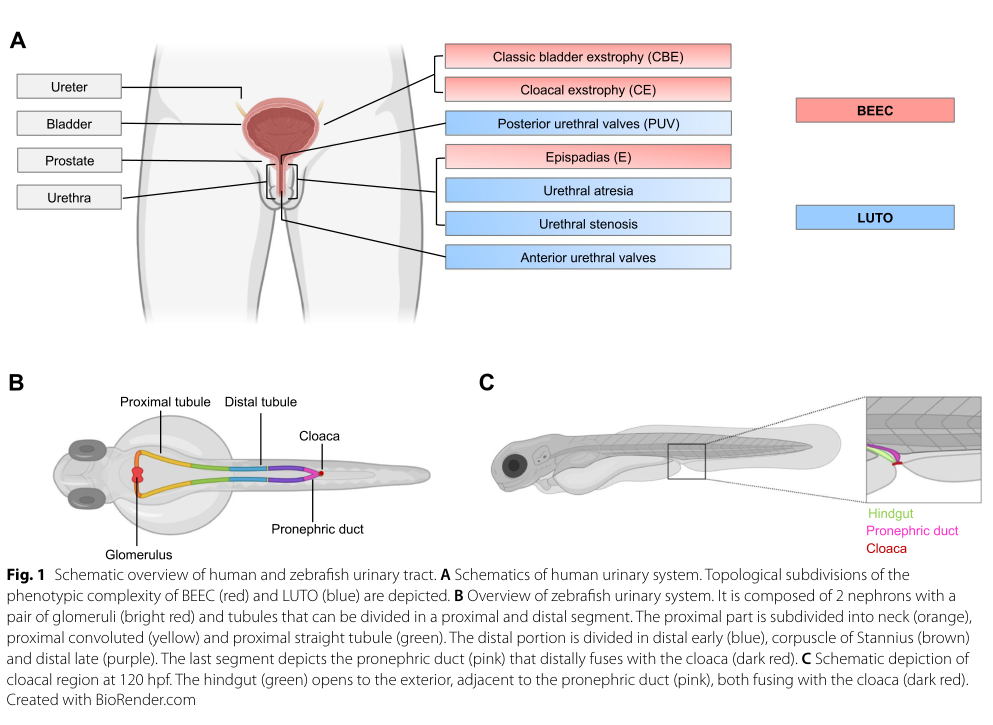
A recent schematic figure shows the BEEC spectrum alongside related lower urinary tract obstruction phenotypes (PUV/atresia/stenosis). (kolvenbach2023modellinghumanlower media da323983)
1.2 Key identifiers
- OMIM / MIM: BEEC; OMIM %600057 (explicitly stated). (kollges2023exomesurveyand pages 1-2)
- MONDO ID: not available in retrieved sources.
- Orphanet ID: not available in retrieved sources.
- ICD‑10/ICD‑11: not available in retrieved sources.
- MeSH: not available in retrieved sources.
1.3 Common synonyms / alternative names
- Exstrophy–epispadias complex (EEC)
- Bladder exstrophy–epispadias complex (BEEC) (brockwell2024pathophysiologyofcongenital pages 8-10, kollges2023exomesurveyand pages 1-2)
- Bladder exstrophy (often used for the CBE phenotype) (brockwell2024pathophysiologyofcongenital pages 8-10)
- Cloacal exstrophy; OEIS complex (omphalocele–exstrophy–imperforate anus–spinal defects) (kollges2023exomesurveyand pages 1-2)
1.4 Evidence source type
The information summarized here is derived from aggregated disease-level resources (reviews, cohort genetics studies, and clinical trials) as well as some case‑based clinical literature. (brockwell2024pathophysiologyofcongenital pages 8-10, kollges2023exomesurveyand pages 1-2, NCT07294612 chunk 1, NCT04935918 chunk 1)
2. Etiology
2.1 Disease causal factors (genetic/developmental)
EEC is primarily a developmental malformation with evidence for a hereditary/genetic component, but no single causal gene explains most cases. The CAKUT review notes a hereditary basis from familial/twin studies while stating that the exact mode of inheritance remains uncertain. (brockwell2024pathophysiologyofcongenital pages 8-10)
A 2023 genetics study summarizes multiple lines of evidence supporting genetic contribution including increased recurrence risk for siblings and offspring and higher concordance in monozygotic twins. (kollges2023exomesurveyand pages 1-2)
Direct abstract quote (2023 genetics, BEEC definition and involvement): - “The bladder exstrophy-epispadias complex (BEEC) is a spectrum of congenital abnormalities that involves the abdominal wall, the bony pelvis, the urinary tract, the external genitalia, and, in severe cases, the gastrointestinal tract as well.” (Köllges et al., 2023, Biomolecules; URL https://doi.org/10.3390/biom13071117; published 2023‑07‑13) (kollges2023exomesurveyand pages 1-2)
2.2 Risk factors
Genetic risk factors (strongest evidence)
- 22q11.21 microduplication: reported as the “strongest associated chromosomal abnormality,” accounting for ~3% of BEEC cases in a 2024 review. (brockwell2024pathophysiologyofcongenital pages 8-10)
- CNV burden: in a cohort of 140 individuals with bladder exstrophy, pathogenic/possibly pathogenic CNVs were found in 16/140 (11.4%), suggesting a meaningful contribution of structural variation for a subset of cases. (nordenskjold2023copynumbervariants pages 11-11)
- Common variant susceptibility: GWAS/meta-analyses implicate loci including ISL1, and review literature highlights significant associations for WNT3, WNT9B, TP63. (brockwell2024pathophysiologyofcongenital pages 8-10, chan2024wholegenomesequencingreveals pages 9-11)
Environmental risk factors
No specific environmental exposures were identified as risk factors in the retrieved sources; thus environmental risk factors are not established in this evidence set.
2.3 Protective factors
No protective genetic or environmental factors were identified in the retrieved sources.
2.4 Gene–environment interactions
No gene–environment interaction evidence was identified in the retrieved sources.
3. Phenotypes
3.1 Phenotypic spectrum and key manifestations
A 2024 review describes BEEC as affecting “the lower urinary tract and surrounding structures, including the abdominal wall, pelvis, genitalia, anus, and spine.” (brockwell2024pathophysiologyofcongenital pages 8-10)
- Epispadias (E): failed closure of urethra with dorsal urethral meatus displacement; often surgically managed early; incontinence can be a long‑term complication. (brockwell2024pathophysiologyofcongenital pages 8-10)
- Bladder exstrophy / CBE: exposed bladder plate through ventral abdominal wall, usually with epispadias; long‑term issues include incontinence and upper tract complications (e.g., hydronephrosis, renal scarring, CKD). (brockwell2024pathophysiologyofcongenital pages 8-10)
- Cloacal exstrophy (CE): abdominal wall defect with exposed bladder and bowel plus pelvic/genital anomalies; associated defects include omphalocele, vertebral defects, imperforate anus, intestinal malrotation/duplication and CAKUT phenotypes such as renal agenesis/ectopia/hydronephrosis. (brockwell2024pathophysiologyofcongenital pages 8-10)
A 2023 genetics paper reports that additional urinary tract anomalies such as ectopic kidney, horseshoe kidney, renal hypoplasia/agenesis, and UPJ obstruction occur in ~1/3 of cases, “mainly in the form of the CE phenotype.” (kollges2023exomesurveyand pages 1-2)
3.2 Suggested HPO terms (examples; not exhaustive)
Because ontology databases were not directly queried in this run, the following are suggested mappings based on clinical descriptions: - Abnormality of the abdominal wall (e.g., abdominal wall defect) (brockwell2024pathophysiologyofcongenital pages 8-10) - Bladder exstrophy (open bladder plate) (brockwell2024pathophysiologyofcongenital pages 8-10) - Epispadias (dorsal urethral meatus) (brockwell2024pathophysiologyofcongenital pages 8-10) - Urinary incontinence (common long‑term issue) (brockwell2024pathophysiologyofcongenital pages 8-10) - Vesicoureteral reflux (post‑surgical risk described) (brockwell2024pathophysiologyofcongenital pages 8-10) - Hydronephrosis, renal scarring, chronic kidney disease (complications) (brockwell2024pathophysiologyofcongenital pages 8-10) - Omphalocele, imperforate anus, vertebral defects / spinal defects (CE/OEIS) (brockwell2024pathophysiologyofcongenital pages 8-10, kollges2023exomesurveyand pages 1-2) - Genital anomalies / impaired sexual function, fertility issues (kollges2023exomesurveyand pages 1-2, song2025neonatalbladderexstrophy pages 3-4)
3.3 Quality-of-life impact
Long‑term quality of life is influenced by repeated surgeries and complications; continence is highlighted as a dominant issue in long‑term management discussions. (song2025neonatalbladderexstrophy pages 3-4)
4. Genetic / Molecular Information
4.1 Genes and loci implicated (human evidence)
Recurrent CNVs and cytogenetic regions
- 22q11.21 / 22q11.2 microduplication: repeatedly associated; review estimate ~3% of cases. (brockwell2024pathophysiologyofcongenital pages 8-10)
- Additional terminal deletions (e.g., 1q, 1p36, 9q34.1) are mentioned as associated chromosomal abnormalities in a review. (brockwell2024pathophysiologyofcongenital pages 8-10)
Candidate genes from exome/CNV and association studies
- LZTR1: 2023 exome survey and resequencing identified a frameshift variant in LZTR1 c.978_985del (p.Ser327fs*6) in an independent CBE male and concluded it further implicates LZTR1. (kollges2023exomesurveyand pages 1-2)
- SLC7A4: frameshift variant c.1087delC (p.Arg363fs*68) reported in an independent CBE male (interpretation varies; VUS discussed in detailed excerpt). (kollges2023exomesurveyand pages 1-2, kollges2023exomesurveyand pages 9-10)
- WNT3 / WNT9B / TP63: highlighted as significantly associated genes in a 2024 CAKUT review (GWAS evidence). (brockwell2024pathophysiologyofcongenital pages 8-10)
- ISL1: replicated susceptibility locus; mechanistic role in genital tubercle development via downstream effects on Fgf10/Wnt5a/Bmp4 is discussed in review; sequencing-based GWAS replication reported OR ~1.62 for a common variant at ISL1 locus. (brockwell2024pathophysiologyofcongenital pages 8-10, chan2024wholegenomesequencingreveals pages 9-11)
- SLC20A1: implicated in urinary tract/urorectal development; zebrafish functional assays show excretory/cloacal phenotypes upon ortholog knockdown. (nordenskjold2023copynumbervariants pages 11-12, kolvenbach2023modellinghumanlower pages 4-6)
4.2 2023–2024 genetic study statistics and findings
- CNV yield (2023 AJMG): In 140 patients with bladder exstrophy, pathogenic/possibly pathogenic CNVs were found in 11.4% (16/140). (nordenskjold2023copynumbervariants pages 11-11)
- Exome survey (2023 Biomolecules): Exome analysis in CE trios reported de novo candidate genes NR1H2, GKAP1, recessive candidates AKR1B10, CLSTN3, NDST4, PLEKHB1, and suggestive UPD involving SVEP1; resequencing in 480 BEEC individuals did not find additional carriers for these genes. (kollges2023exomesurveyand pages 1-2)
- Sequencing-based GWAS (2024 preprint): 97 CBE cases vs 22,037 controls; replication of ISL1 locus and limited evidence for additional loci; authors emphasize contribution of rare and common variants. (chan2024wholegenomesequencingreveals pages 9-11)
4.3 Variant types and functional consequences
- Reported variants include frameshifts/early termination (LZTR1, SLC7A4), and copy number variants (duplications/deletions) impacting multiple developmental pathways (e.g., WNT signaling, Golgi/vesicle trafficking). (kollges2023exomesurveyand pages 1-2, nordenskjold2023copynumbervariants pages 7-8)
4.4 Modifier genes / epigenetics
No modifier‑gene or epigenetic signatures were identified in the retrieved sources.
5. Environment (non-genetic factors)
The retrieved evidence set is largely genetic/developmental and does not identify validated environmental exposures contributing to EEC risk.
6. Mechanism / Pathophysiology
6.1 Embryologic causal chain (upstream → downstream)
A 2024 CAKUT review outlines leading developmental hypotheses: - Upstream developmental defect: abnormal development of the cloacal membrane with failed mesenchymal migration (or insufficient support) (brockwell2024pathophysiologyofcongenital pages 8-10) - Trigger: membrane becomes “prone to rupture” (brockwell2024pathophysiologyofcongenital pages 8-10) - Timing effect: rupture before urorectal septum formation leads to cloacal exstrophy (bowel + bladder herniation), while rupture after abdominal mesenchyme migration but before urethral mesenchyme migration may result in epispadias (brockwell2024pathophysiologyofcongenital pages 8-10) - Alternative upstream model: defect in pelvic ring formation enabling exstrophy (brockwell2024pathophysiologyofcongenital pages 8-10)
6.2 Pathway-level hypotheses and gene links
Evidence supports multiple developmental programs: - Wnt signaling (WNT3/WNT9B) in bladder development; candidate susceptibility loci and functional zebrafish phenotypes for wnt3 knockdown suggest relevance to cloacal/lower outflow structures. (brockwell2024pathophysiologyofcongenital pages 8-10, kolvenbach2023modellinghumanlower pages 4-6) - ISL1 developmental regulation affecting genital tubercle via Fgf10/Wnt5a/Bmp4 (downstream developmental signaling). (brockwell2024pathophysiologyofcongenital pages 8-10) - CNV pathway analyses suggest contributions from WNT signaling, RIT2/POU-family networks, and Golgi/vesicle trafficking (SNARE/Golgi-related genes). (nordenskjold2023copynumbervariants pages 7-8, nordenskjold2023copynumbervariants pages 5-7)
6.3 Suggested GO biological process terms (examples)
- Urogenital system development; urinary bladder development; urethra development
- Mesenchymal cell migration
- Epithelial morphogenesis
- Wnt signaling pathway
- Regulation of apoptosis (developmental tissue remodeling) (Conceptual mapping supported by developmental theories and pathway discussions in the retrieved reviews and CNV network analyses.) (brockwell2024pathophysiologyofcongenital pages 8-10, nordenskjold2023copynumbervariants pages 7-8)
6.4 Suggested cell types (Cell Ontology; examples)
- Mesenchymal cells (migrating mesenchyme supporting cloacal membrane)
- Urothelial cells (bladder plate epithelium)
- Smooth muscle cells (bladder wall differentiation) (Conceptual mapping based on described embryologic processes and bladder development context.) (brockwell2024pathophysiologyofcongenital pages 8-10)
7. Anatomical Structures Affected
7.1 Organ/system level (UBERON examples)
- Urinary bladder, urethra, kidney, ureter (urinary tract) (brockwell2024pathophysiologyofcongenital pages 8-10)
- Abdominal wall (ventral wall defect) (brockwell2024pathophysiologyofcongenital pages 8-10)
- Pelvis / pelvic ring (pubic diastasis concept; pelvic anomalies) (brockwell2024pathophysiologyofcongenital pages 8-10)
- External genitalia (male/female) (brockwell2024pathophysiologyofcongenital pages 8-10, kollges2023exomesurveyand pages 1-2)
- Anus / hindgut / bowel (especially CE) (brockwell2024pathophysiologyofcongenital pages 8-10)
- Spine (CE/OEIS) (brockwell2024pathophysiologyofcongenital pages 8-10, kollges2023exomesurveyand pages 1-2)
7.2 Tissue/cell level and subcellular
The retrieved sources emphasize developmental tissue interactions (mesenchyme support, epithelial closure). No subcellular pathology hallmark is established; however, CNV network interpretation suggests possible involvement of Golgi/vesicle trafficking processes. (nordenskjold2023copynumbervariants pages 7-8, nordenskjold2023copynumbervariants pages 5-7)
8. Temporal Development
8.1 Onset
EEC is congenital, present at birth, and can be suspected prenatally via imaging. (brockwell2024pathophysiologyofcongenital pages 8-10)
8.2 Course / progression
Clinical course is dominated by surgical reconstruction over infancy/childhood and by long‑term functional outcomes (continence, renal health, sexual function) into adolescence/adulthood. (song2025neonatalbladderexstrophy pages 3-4)
9. Inheritance and Population
9.1 Epidemiology (recent summaries)
A 2024 CAKUT review reports these incidence estimates: - Epispadias: 2 per 100,000 births - Bladder exstrophy: 4 per 100,000 births - Cloacal exstrophy: 0.5–1 per 100,000 births (brockwell2024pathophysiologyofcongenital pages 8-10)
A 2023 genetics paper reports: - Epispadias: ~2.4:100,000 births - CBE: 1–2:50,000 births - CE: 0.5–1:200,000 births - Overall birth prevalence in European descent: ~1:10,000 (kollges2023exomesurveyand pages 1-2)
9.2 Sex distribution
- Epispadias and bladder exstrophy: more common in males
- Cloacal exstrophy: more common in females (brockwell2024pathophysiologyofcongenital pages 8-10, kollges2023exomesurveyand pages 1-2)
9.3 Inheritance pattern
The mode is heterogeneous, with evidence supporting a genetic contribution but no single Mendelian pattern for most cases. The 2024 review notes uncertain inheritance mode. (brockwell2024pathophysiologyofcongenital pages 8-10)
10. Diagnostics
10.1 Prenatal imaging
A 2024 case report supports prenatal pathways including targeted prenatal ultrasound and fetal MRI confirmation in suspected fetal bladder exstrophy, used for diagnosis confirmation and multidisciplinary planning. (arlandis2025thinktank2 pages 4-4)
10.2 Postnatal diagnosis
Diagnosis is typically clinical at birth based on the characteristic anatomic presentation (e.g., exposed bladder plate/urethral anomaly). (brockwell2024pathophysiologyofcongenital pages 8-10)
10.3 Genetic testing utility
Given heterogeneity: - Chromosomal microarray / CNV analysis can identify recurrent CNVs and pathogenic/likely pathogenic CNVs in a minority of patients (e.g., 11.4% yield in one cohort). (nordenskjold2023copynumbervariants pages 11-11) - Exome sequencing is used in research/selected clinical contexts (e.g., CE trios), but yields are currently limited and candidate genes often require further functional validation. (kollges2023exomesurveyand pages 1-2)
10.4 Differential diagnosis
Not systematically enumerated in retrieved sources. Practically, differential considerations in prenatal imaging may include other ventral wall defects and urinary tract malformations; BEEC should be considered in the context of cloacal development anomalies. (brockwell2024pathophysiologyofcongenital pages 8-10)
11. Outcome / Prognosis
11.1 Continence outcomes (statistics)
A 2025 case report/review summarizes a large study of 432 CBE patients (median age 14.8 years) reporting: - 23% able to void volitionally through the urethra without catheter/diversion with dry interval ≥3 h (song2025neonatalbladderexstrophy pages 3-4) - Continence rates varied by procedure: BNR alone 64%, and BNC with continent catheterizable stoma 93% (song2025neonatalbladderexstrophy pages 3-4)
In a CPRE cohort example: 33/40 voided but only 5/40 (13%) had volitional continence >2 h; 3/40 (8%) >3 h. (song2025neonatalbladderexstrophy pages 3-4)
11.2 Renal outcomes (statistics)
The same 2025 review reports an adult follow-up cohort (median age 30.1 years) where: - 44% (7/16) had stage II or higher chronic kidney disease - 31% (5/16) had hydronephrosis - 44% (7/16) had bladder calculi - 56% (9/16) had history of pyelonephritis (song2025neonatalbladderexstrophy pages 3-4)
A 2024 review notes that more recent data suggest long-term renal function “may not be as impaired as previously believed,” highlighting ongoing uncertainty and cohort dependence. (brockwell2024pathophysiologyofcongenital pages 8-10)
11.3 Sexual function and fertility
A 2023 genetics paper states both sexes may have impaired sexual function and fertility issues; male fertility may be decreased due to low ejaculate volume and sperm quality. (kollges2023exomesurveyand pages 1-2) A 2025 review summarizes multiple cohorts reporting substantial sexual activity and satisfaction in adulthood after reconstruction, but persistent fertility challenges. (song2025neonatalbladderexstrophy pages 3-4)
12. Treatment
12.1 Standard of care (real-world implementation)
Management is predominantly surgical, typically initiated in infancy and extending across childhood.
A 2025 review states the primary surgical approaches are modern staged repair of exstrophy (MSRE) and complete primary repair of exstrophy (CPRE), with the staged approach including bladder closure within ~72 hours and later staged repairs. (song2025neonatalbladderexstrophy pages 3-4)
Because continence is often not achieved by primary repair alone, additional operations are frequently needed: - Bladder neck reconstruction (BNR) - Augmentation cystoplasty (AC) - Continent catheterizable stoma - Bladder neck closure (BNC) with continent catheterizable stoma (song2025neonatalbladderexstrophy pages 3-4)
12.2 Interventional/experimental therapies (clinical trials)
Two representative contemporary trials: - Adjustable Continence Therapy (ACT) balloons for incontinence in bladder exstrophy/epispadias: primary endpoint is ≥50% reduction in 24‑h pad weight at 6–24 months; includes QoL (PIN‑Q) and safety endpoints. (ClinicalTrials.gov NCT04935918, posted 2021; https://clinicaltrials.gov/study/NCT04935918) (NCT04935918 chunk 1) - Platelet-rich fibrin (PRF) adjunct during primary repair: 20 male children randomized; outcome includes penopubic fistula and wound dehiscence within 6 months. (ClinicalTrials.gov NCT07294612, 2022; https://clinicaltrials.gov/study/NCT07294612) (NCT07294612 chunk 1)
12.3 Suggested MAXO terms (examples)
- Surgical repair of bladder exstrophy / abdominal wall closure
- Bladder neck reconstruction
- Augmentation cystoplasty
- Creation of continent catheterizable urinary stoma
- Continence device implantation (periurethral balloon therapy)
- Use of platelet-rich fibrin as surgical adjunct
13. Prevention
No primary prevention strategies are established in the retrieved sources given congenital/developmental etiology. Secondary prevention focuses on prenatal detection (ultrasound ± fetal MRI) and early specialized referral to optimize postnatal surgical planning. (arlandis2025thinktank2 pages 4-4)
14. Other Species / Natural Disease
No naturally occurring veterinary analogs were identified in the retrieved sources.
15. Model Organisms
15.1 Zebrafish (Danio rerio)
A 2023 mini‑review highlights zebrafish as a practical vertebrate model for testing candidate genes in lower urinary tract malformations, citing advantages such as rapid reproduction and genetic manipulability (Morpholino, CRISPR). (kolvenbach2023modellinghumanlower pages 1-3)
Direct abstract quote (2023 zebrafish review): - “This has recently led to the identification of … WNT3 and SLC20A1 as genes implicated in the pathogenesis of the group of conditions called bladder-exstrophy-epispadias complex (BEEC).” (Kolvenbach et al., 2023, Molecular and Cellular Pediatrics; URL https://doi.org/10.1186/s40348-023-00156-4; published 2023‑03) (kolvenbach2023modellinghumanlower pages 1-3)
Functional phenotypes include: - wnt3 knockdown leading to cloacal defects - slc20a1a knockdown impairing cloacal excretory function and hindgut distension (kolvenbach2023modellinghumanlower pages 4-6)
Limitations: zebrafish lack human genitalia and urinary bladder anatomy, so mammalian models may be needed for some phenotype aspects. (kolvenbach2023modellinghumanlower pages 4-6)
Expert synthesis / analysis (authoritative perspective)
Collectively, the 2023–2024 literature supports that EEC/BEEC is best understood as a multifactorial developmental field defect with contributions from rare structural variation (CNVs), specific recurrent cytogenetic risk (22q11.21 duplication), and polygenic susceptibility loci (e.g., ISL1/WNT pathway genes). (brockwell2024pathophysiologyofcongenital pages 8-10, nordenskjold2023copynumbervariants pages 11-11, chan2024wholegenomesequencingreveals pages 9-11)
Clinically, the field is moving toward (i) better genomic stratification (CMA/exome/genome studies and pathway interpretation), and (ii) improved long‑term functional outcomes through iterative surgical refinements and continence-directed devices/adjuncts that can be evaluated in trials with standardized endpoints (pad weight, PIN‑Q; fistula/dehiscence). (nordenskjold2023copynumbervariants pages 11-11, NCT04935918 chunk 1, NCT07294612 chunk 1)
Key URLs (from retrieved sources)
- Köllges et al. 2023 (Biomolecules): https://doi.org/10.3390/biom13071117 (published 2023‑07‑13) (kollges2023exomesurveyand pages 1-2)
- Nordenskjöld et al. 2023 (Am J Med Genet A): https://doi.org/10.1002/ajmg.a.63031 (published 2023‑11) (nordenskjold2023copynumbervariants pages 11-11)
- Brockwell et al. 2024 (Cells): https://doi.org/10.3390/cells13221866 (published 2024‑11) (brockwell2024pathophysiologyofcongenital pages 8-10)
- Kolvenbach et al. 2023 (Molecular and Cellular Pediatrics): https://doi.org/10.1186/s40348-023-00156-4 (published 2023‑03) (kolvenbach2023modellinghumanlower pages 1-3)
- Chan et al. 2024 (medRxiv preprint): https://doi.org/10.1101/2024.10.10.24315242 (posted 2024‑10) (chan2024wholegenomesequencingreveals pages 9-11)
- Clinical trial NCT04935918: https://clinicaltrials.gov/study/NCT04935918 (NCT04935918 chunk 1)
- Clinical trial NCT07294612: https://clinicaltrials.gov/study/NCT07294612 (NCT07294612 chunk 1)
Evidence gaps / not found in retrieved sources
- MONDO/Orphanet/ICD‑10/ICD‑11/MeSH identifiers for EEC/BEEC
- Robust, population-based global prevalence estimates beyond summarized incidence
- Validated environmental risk/protective factors and gene–environment interactions
- Systematic differential diagnosis criteria and formal diagnostic guidelines
- Comprehensive epigenetic or multi‑omics signatures specific to EEC
(These gaps reflect limitations of the retrieved corpus/tools during this run rather than definitive absence in the broader literature.)
References
-
(kollges2023exomesurveyand pages 1-2): Ricarda Köllges, Jil Stegmann, Sophia Schneider, Lea Waffenschmidt, Julia Fazaal, Katinka Breuer, Alina C. Hilger, Gabriel C. Dworschak, Enrico Mingardo, Wolfgang Rösch, Aybike Hofmann, Claudia Neissner, Anne-Karolin Ebert, Raimund Stein, Nina Younsi, Karin Hirsch-Koch, Eberhard Schmiedeke, Nadine Zwink, Ekkehart Jenetzky, Holger Thiele, Kerstin U. Ludwig, and Heiko Reutter. Exome survey and candidate gene re-sequencing identifies novel exstrophy candidate genes and implicates lztr1 in disease formation. Biomolecules, 13:1117, Jul 2023. URL: https://doi.org/10.3390/biom13071117, doi:10.3390/biom13071117. This article has 2 citations.
-
(kolvenbach2023modellinghumanlower pages 1-3): Caroline M. Kolvenbach, Gabriel C. Dworschak, Johanna M. Rieke, Adrian S. Woolf, Heiko Reutter, Benjamin Odermatt, and Alina C. Hilger. Modelling human lower urinary tract malformations in zebrafish. Molecular and Cellular Pediatrics, Mar 2023. URL: https://doi.org/10.1186/s40348-023-00156-4, doi:10.1186/s40348-023-00156-4. This article has 7 citations.
-
(kolvenbach2023modellinghumanlower media da323983): Caroline M. Kolvenbach, Gabriel C. Dworschak, Johanna M. Rieke, Adrian S. Woolf, Heiko Reutter, Benjamin Odermatt, and Alina C. Hilger. Modelling human lower urinary tract malformations in zebrafish. Molecular and Cellular Pediatrics, Mar 2023. URL: https://doi.org/10.1186/s40348-023-00156-4, doi:10.1186/s40348-023-00156-4. This article has 7 citations.
-
(brockwell2024pathophysiologyofcongenital pages 8-10): Maximilian Brockwell, Sean Hergenrother, Matthew Satariano, Raghav Shah, and Rupesh Raina. Pathophysiology of congenital anomalies of the kidney and urinary tract: a comprehensive review. Cells, 13:1866, Nov 2024. URL: https://doi.org/10.3390/cells13221866, doi:10.3390/cells13221866. This article has 16 citations.
-
(mingardoUnknownyearclassicbladderexstrophy pages 17-22): E Mingardo. Classic bladder exstrophy: identification of genetic markers and characterization of its associated isl1 gene. Unknown journal, Unknown year.
-
(nordenskjold2023copynumbervariants pages 11-11): Agneta Nordenskjöld, Samara Arkani, Maria Pettersson, Johanna Winberg, Jia Cao, Magdalena Fossum, Magnus Anderberg, Gillian Barker, Gundela Holmdahl, and Johanna Lundin. Copy number variants suggest different molecular pathways for the pathogenesis of bladder exstrophy. American Journal of Medical Genetics. Part a, 191:378-390, Nov 2023. URL: https://doi.org/10.1002/ajmg.a.63031, doi:10.1002/ajmg.a.63031. This article has 7 citations and is from a peer-reviewed journal.
-
(nordenskjold2023copynumbervariants pages 11-12): Agneta Nordenskjöld, Samara Arkani, Maria Pettersson, Johanna Winberg, Jia Cao, Magdalena Fossum, Magnus Anderberg, Gillian Barker, Gundela Holmdahl, and Johanna Lundin. Copy number variants suggest different molecular pathways for the pathogenesis of bladder exstrophy. American Journal of Medical Genetics. Part a, 191:378-390, Nov 2023. URL: https://doi.org/10.1002/ajmg.a.63031, doi:10.1002/ajmg.a.63031. This article has 7 citations and is from a peer-reviewed journal.
-
(chan2024wholegenomesequencingreveals pages 9-11): Melanie MY Chan, Omid Sadeghi-Alavijeh, Catalin D Voinescu, Loes FM van der Zanden, Sander Groen in ’t Woud, Michiel F Schreuder, Wout Feitz, Enrico Mingardo, Alina C Hilger, Heiko Reutter, Lisanne M Vendrig, Rik Westland, Horia C Stanescu, Adam P Levine, Detlef Böckenhauer, and Daniel P Gale. Whole-genome sequencing reveals contribution of rare and common variation to structural kidney and urinary tract malformations. MedRxiv, Oct 2024. URL: https://doi.org/10.1101/2024.10.10.24315242, doi:10.1101/2024.10.10.24315242. This article has 0 citations.
-
(kollges2023exomesurveyand pages 9-10): Ricarda Köllges, Jil Stegmann, Sophia Schneider, Lea Waffenschmidt, Julia Fazaal, Katinka Breuer, Alina C. Hilger, Gabriel C. Dworschak, Enrico Mingardo, Wolfgang Rösch, Aybike Hofmann, Claudia Neissner, Anne-Karolin Ebert, Raimund Stein, Nina Younsi, Karin Hirsch-Koch, Eberhard Schmiedeke, Nadine Zwink, Ekkehart Jenetzky, Holger Thiele, Kerstin U. Ludwig, and Heiko Reutter. Exome survey and candidate gene re-sequencing identifies novel exstrophy candidate genes and implicates lztr1 in disease formation. Biomolecules, 13:1117, Jul 2023. URL: https://doi.org/10.3390/biom13071117, doi:10.3390/biom13071117. This article has 2 citations.
-
(kollges2023exomesurveyand pages 7-9): Ricarda Köllges, Jil Stegmann, Sophia Schneider, Lea Waffenschmidt, Julia Fazaal, Katinka Breuer, Alina C. Hilger, Gabriel C. Dworschak, Enrico Mingardo, Wolfgang Rösch, Aybike Hofmann, Claudia Neissner, Anne-Karolin Ebert, Raimund Stein, Nina Younsi, Karin Hirsch-Koch, Eberhard Schmiedeke, Nadine Zwink, Ekkehart Jenetzky, Holger Thiele, Kerstin U. Ludwig, and Heiko Reutter. Exome survey and candidate gene re-sequencing identifies novel exstrophy candidate genes and implicates lztr1 in disease formation. Biomolecules, 13:1117, Jul 2023. URL: https://doi.org/10.3390/biom13071117, doi:10.3390/biom13071117. This article has 2 citations.
-
(kollges2023exomesurveyand pages 2-3): Ricarda Köllges, Jil Stegmann, Sophia Schneider, Lea Waffenschmidt, Julia Fazaal, Katinka Breuer, Alina C. Hilger, Gabriel C. Dworschak, Enrico Mingardo, Wolfgang Rösch, Aybike Hofmann, Claudia Neissner, Anne-Karolin Ebert, Raimund Stein, Nina Younsi, Karin Hirsch-Koch, Eberhard Schmiedeke, Nadine Zwink, Ekkehart Jenetzky, Holger Thiele, Kerstin U. Ludwig, and Heiko Reutter. Exome survey and candidate gene re-sequencing identifies novel exstrophy candidate genes and implicates lztr1 in disease formation. Biomolecules, 13:1117, Jul 2023. URL: https://doi.org/10.3390/biom13071117, doi:10.3390/biom13071117. This article has 2 citations.
-
(nordenskjold2023copynumbervariants pages 7-8): Agneta Nordenskjöld, Samara Arkani, Maria Pettersson, Johanna Winberg, Jia Cao, Magdalena Fossum, Magnus Anderberg, Gillian Barker, Gundela Holmdahl, and Johanna Lundin. Copy number variants suggest different molecular pathways for the pathogenesis of bladder exstrophy. American Journal of Medical Genetics. Part a, 191:378-390, Nov 2023. URL: https://doi.org/10.1002/ajmg.a.63031, doi:10.1002/ajmg.a.63031. This article has 7 citations and is from a peer-reviewed journal.
-
(mingardoUnknownyearclassicbladderexstrophy pages 96-101): E Mingardo. Classic bladder exstrophy: identification of genetic markers and characterization of its associated isl1 gene. Unknown journal, Unknown year.
-
(mingardoUnknownyearclassicbladderexstrophy pages 89-90): E Mingardo. Classic bladder exstrophy: identification of genetic markers and characterization of its associated isl1 gene. Unknown journal, Unknown year.
-
(kolvenbach2023modellinghumanlower pages 4-6): Caroline M. Kolvenbach, Gabriel C. Dworschak, Johanna M. Rieke, Adrian S. Woolf, Heiko Reutter, Benjamin Odermatt, and Alina C. Hilger. Modelling human lower urinary tract malformations in zebrafish. Molecular and Cellular Pediatrics, Mar 2023. URL: https://doi.org/10.1186/s40348-023-00156-4, doi:10.1186/s40348-023-00156-4. This article has 7 citations.
-
(kolvenbach2023modellinghumanlower pages 3-4): Caroline M. Kolvenbach, Gabriel C. Dworschak, Johanna M. Rieke, Adrian S. Woolf, Heiko Reutter, Benjamin Odermatt, and Alina C. Hilger. Modelling human lower urinary tract malformations in zebrafish. Molecular and Cellular Pediatrics, Mar 2023. URL: https://doi.org/10.1186/s40348-023-00156-4, doi:10.1186/s40348-023-00156-4. This article has 7 citations.
-
(NCT07294612 chunk 1): Zafar Abdullaev. Use of Platelet-Rich Fibrin in Bladder Exstrophy Repair. National Children's Medical Center, Uzbekistan. 2022. ClinicalTrials.gov Identifier: NCT07294612
-
(song2025neonatalbladderexstrophy pages 3-4): Yan Song, Ru Yang, and Xiaowen Li. Neonatal bladder exstrophy: a case report and literature review of long-term outcomes. American Journal of Translational Research, 17:6481-6487, Jan 2025. URL: https://doi.org/10.62347/uyra1911, doi:10.62347/uyra1911. This article has 0 citations and is from a peer-reviewed journal.
-
(NCT04935918 chunk 1): EVALUATION OF THE SAFETY AND EFFICACY OF ADJUSTABLE CONTINENCE THERAPY BALLOONS IN BLADDER EXSTROPHY AND INCONTINENT EPISPADIAS PATIENTS. Assistance Publique Hopitaux De Marseille. 2021. ClinicalTrials.gov Identifier: NCT04935918
-
(NCT07294612 chunk 2): Zafar Abdullaev. Use of Platelet-Rich Fibrin in Bladder Exstrophy Repair. National Children's Medical Center, Uzbekistan. 2022. ClinicalTrials.gov Identifier: NCT07294612
-
(nordenskjold2023copynumbervariants pages 5-7): Agneta Nordenskjöld, Samara Arkani, Maria Pettersson, Johanna Winberg, Jia Cao, Magdalena Fossum, Magnus Anderberg, Gillian Barker, Gundela Holmdahl, and Johanna Lundin. Copy number variants suggest different molecular pathways for the pathogenesis of bladder exstrophy. American Journal of Medical Genetics. Part a, 191:378-390, Nov 2023. URL: https://doi.org/10.1002/ajmg.a.63031, doi:10.1002/ajmg.a.63031. This article has 7 citations and is from a peer-reviewed journal.
-
(arlandis2025thinktank2 pages 4-4): S Arlandis, C Fry, M Wyndaele, and A Apostolidis. Think tank 2: how do we precisely define the" high risk bladder" and what. Unknown journal, 2025.