DDX41-related Hematologic Malignancy Predisposition Syndrome
Autosomal dominant predisposition to hematologic malignancy caused by a heterozygous germline loss-of-function variant in DDX41, a DEAD-box RNA helicase. Unlike RUNX1, GATA2 or CEBPA predisposition, the malignancies are late-onset: risk of a myeloid neoplasm is negligible before age 40 and rises steeply thereafter, the median age at myelodysplastic syndrome or acute myeloid leukemia diagnosis is in the seventh decade, and men are affected several-fold more often than women. Most carriers have no recognized family history, so the syndrome is usually found by germline confirmation of a DDX41 variant on a myeloid tumor panel. Germline alleles are mostly truncating or start-loss and population-specific; the malignant clone typically acquires a somatic missense variant, most often p.R525H in the helicase domain, on the other allele. Disease is characteristically hypocellular, normal-karyotype and low-blast, often preceded by years of cytopenia, and responds well to intensive chemotherapy or hypomethylating agents but relapses late. Lymphoid neoplasms are also over-represented. Pediatric presentation is exceptional. Related-donor selection for allogeneic transplant requires DDX41 genotyping because donor-cell leukemia from carrier relatives has been documented.
Ask OpenScientist
Ask a research question about DDX41-related Hematologic Malignancy Predisposition Syndrome. OpenScientist will conduct autonomous deep research using the Disorder Mechanisms Knowledge Base and PubMed literature (typically 10-30 minutes).
Do not include personal health information in your question. Questions and results are cached in your browser's local storage.
Inheritance
1Show evidence (5 references)
Discussions and Knowledge Gaps
3Show evidence (2 references)
Show evidence (2 references)
Show evidence (2 references)
Pathophysiology
9Show evidence (4 references)
Show evidence (2 references)
Show evidence (2 references)
Show evidence (3 references)
Show evidence (2 references)
Show evidence (2 references)
Show evidence (3 references)
Show evidence (7 references)
Show evidence (2 references)
Pathograph
Phenotypes
18Blood 17
Show evidence (4 references)
Show evidence (2 references)
Show evidence (2 references)
Show evidence (3 references)
Show evidence (1 reference)
Show evidence (3 references)
Show evidence (2 references)
Show evidence (1 reference)
Show evidence (1 reference)
Show evidence (2 references)
Show evidence (1 reference)
Show evidence (1 reference)
Show evidence (2 references)
Show evidence (1 reference)
Show evidence (2 references)
Show evidence (1 reference)
Show evidence (1 reference)
Other 1
Genetic Associations
1Show evidence (5 references)
Variants (2)
Show evidence (1 reference)
Show evidence (1 reference)
Medical Actions
5Show evidence (4 references)
Show evidence (1 reference)
Show evidence (2 references)
Show evidence (1 reference)
Show evidence (3 references)
Diagnosis
1Show evidence (2 references)
Prevalence
2Show evidence (1 reference)
Show evidence (1 reference)
Animal Models
3Show evidence (1 reference)
Show evidence (1 reference)
Show evidence (1 reference)
Show evidence (1 reference)
Show evidence (1 reference)
Source YAML
click to showname: DDX41-related Hematologic Malignancy Predisposition Syndrome
creation_date: "2026-10-13T18:57:44Z"
description: >-
Autosomal dominant predisposition to hematologic malignancy caused by a
heterozygous germline loss-of-function variant in DDX41, a DEAD-box RNA
helicase. Unlike RUNX1, GATA2 or CEBPA predisposition, the malignancies are
late-onset: risk of a myeloid neoplasm is negligible before age 40 and rises
steeply thereafter, the median age at myelodysplastic syndrome or acute
myeloid leukemia diagnosis is in the seventh decade, and men are affected
several-fold more often than women. Most carriers have no recognized family
history, so the syndrome is usually found by germline confirmation of a
DDX41 variant on a myeloid tumor panel. Germline alleles are mostly
truncating or start-loss and population-specific; the malignant clone
typically acquires a somatic missense variant, most often p.R525H in the
helicase domain, on the other allele. Disease is characteristically
hypocellular, normal-karyotype and low-blast, often preceded by years of
cytopenia, and responds well to intensive chemotherapy or hypomethylating
agents but relapses late. Lymphoid neoplasms are also over-represented.
Pediatric presentation is exceptional. Related-donor selection for
allogeneic transplant requires DDX41 genotyping because donor-cell leukemia
from carrier relatives has been documented.
category: Mendelian
parents:
- hereditary neoplastic syndrome
synonyms:
- DDX41-associated familial myelodysplastic syndrome and acute myeloid leukemia
- DDX41 hereditary neoplastic syndrome
- myeloid neoplasm with germline DDX41 variant
- MPLPF
disease_term:
preferred_term: DDX41-related hematologic malignancy predisposition syndrome
term:
id: MONDO:0014809
label: DDX41-related hematologic malignancy predisposition syndrome
inheritance:
- name: Autosomal dominant inheritance
inheritance_term:
preferred_term: Autosomal dominant inheritance
term:
id: HP:0000006
label: Autosomal dominant inheritance
penetrance: INCOMPLETE
description: >-
Heterozygous germline DDX41 pathogenic variants segregate as an autosomal
dominant trait with incomplete, strongly age-dependent penetrance. Two
cohort estimates differ by design: in a Japanese case-control and
first-degree-relative study, myeloid neoplasm risk was negligible before
40 and reached 49 percent by 90 years; in French relatives ascertained
through an affected proband, the genotype-restricted likelihood estimate
was 19.5 percent by 70 years with a very wide confidence interval. In
genotype-first population cohorts (UK Biobank, Geisinger DiscovEHR),
about 1 in 19 to 1 in 39 heterozygotes had a recorded hematologic
malignancy over available follow-up, a lower figure reflecting unselected
ascertainment and limited follow-up rather than lifetime risk.
Transmitting parents are frequently unaffected.
evidence:
- reference: PMID:34723452
reference_title: "DDX41-Associated Familial Myelodysplastic Syndrome and Acute Myeloid Leukemia."
supports: SUPPORT
evidence_source: OTHER
snippet: "DDX41-associated familial MDS/AML is inherited in an autosomal dominant manner."
explanation: GeneReviews states the mode of inheritance.
- reference: PMID:34723452
reference_title: "DDX41-Associated Familial Myelodysplastic Syndrome and Acute Myeloid Leukemia."
supports: SUPPORT
evidence_source: OTHER
snippet: "The heterozygous parent may or may not have developed a hematologic malignancy."
explanation: GeneReviews records non-penetrance in transmitting parents.
- reference: PMID:36322930
reference_title: "Germ line DDX41 mutations define a unique subtype of myeloid neoplasms."
supports: SUPPORT
evidence_source: HUMAN_CLINICAL
snippet: "P/LP DDX41 variants conferred a large risk of developing MNs, which was negligible until 40 years of age but rapidly increased to 49% by 90 years of age."
explanation: Age-dependent penetrance estimate from the Japanese cohort.
- reference: PMID:41044237
reference_title: "Myeloid neoplasms risks for germline DDX41 pathogenic variants carriers."
supports: SUPPORT
evidence_source: HUMAN_CLINICAL
snippet: "The cumulative risk of MN at 70 years for DDX41 PV carriers was estimated at 19.5%"
explanation: >-
Independent penetrance estimate in genotyped relatives of French probands;
lower than the Japanese figure, and measured at a younger age cut-off.
- reference: PMID:39501104
reference_title: "Genome-first determination of the prevalence and penetrance of eight germline myeloid malignancy predisposition genes: a study of two population-based cohorts."
supports: SUPPORT
evidence_source: HUMAN_CLINICAL
snippet: "DDX41 heterozygotes were prevalent in the population (1:576–870), with high likelihood to develop a hematological malignancy (1:19–1:39), and had an increased overall all-cause mortality."
explanation: >-
Genotype-first estimate free of family or clinic ascertainment; a
record-based observed proportion, not lifetime penetrance.
pathophysiology:
- name: Germline DDX41 Heterozygous Loss of Function
conforms_to: "germline_two_hit_tumor_predisposition#Constitutional First-Hit Tumor Suppressor Inactivation"
biological_scale: MOLECULAR
role: trigger
description: >-
A constitutional heterozygous DDX41 variant, most often frameshift,
nonsense or start-loss and located upstream of the second helicase
domain, halves DDX41 dosage in every cell. In hematopoietic-specific
heterozygous mice this has little steady-state effect beyond a mild
persistent reduction in red cell counts, but HSPC fitness fails under
replicative stress and with age.
genetic_context:
variant_origin: GERMLINE
zygosity: HETEROZYGOUS
allelic_hit_role: FIRST_HIT
functional_impact_category: LOSS_OF_FUNCTION
genes:
- preferred_term: DDX41
term:
id: hgnc:18674
label: DDX41
molecular_functions:
- preferred_term: DEAD-box RNA helicase activity
term:
id: GO:0003724
label: RNA helicase activity
modifier: DECREASED
evidence:
- reference: "CGGV:assertion_e3db8214-a39d-408d-a3c2-7b4e817b1cc1-2020-07-30T202935.621Z"
reference_title: "DDX41 / DDX41-related hematologic malignancy predisposition syndrome (Definitive)"
supports: SUPPORT
evidence_source: OTHER
snippet: "The DDX41 gene encodes a DEAD-box RNA helicase"
explanation: >-
ClinGen summary naming the molecular function whose dosage the germline
truncating alleles reduce.
- reference: PMID:25920683
reference_title: "Inherited and Somatic Defects in DDX41 in Myeloid Neoplasms."
supports: SUPPORT
evidence_source: HUMAN_CLINICAL
snippet: "Here, we describe an adult familial acute myeloid leukemia (AML) syndrome caused by germline mutations in the DEAD/H-box helicase gene DDX41."
explanation: Index description of the germline syndrome.
- reference: PMID:30963592
reference_title: "DDX41 mutations in myeloid neoplasms are associated with male gender, TP53 mutations and high-risk disease."
supports: SUPPORT
evidence_source: HUMAN_CLINICAL
snippet: "The majority of presumed germline mutations were upstream of the Helicase 2 domain (93%) and involved loss of the start codon (30%)."
explanation: Positional distribution of germline alleles, consistent with loss of function.
- reference: PMID:38937548
reference_title: "DDX41 haploinsufficiency causes inefficient hematopoiesis under stress and cooperates with p53 mutations to cause hematologic malignancy."
supports: SUPPORT
evidence_source: MODEL_ORGANISM
snippet: "Under normal steady-state conditions, there was minimal effect on lifelong hematopoiesis, resulting in a mild yet persistent reduction in red blood cell counts."
explanation: Hematopoietic-specific Ddx41 heterozygous mice show a mild steady-state erythroid effect.
downstream:
- target: Impaired snoRNA Processing and Ribosome Biogenesis
description: >-
Reduced DDX41 dosage limits intronic snoRNA processing and downstream
rRNA modification and ribosome assembly.
- target: Splicing-Coupled R-Loop Accumulation and Replication Stress
description: >-
Loss of DDX41 at 5' splice sites uncouples splicing from RNA polymerase
II pausing, leaving R-loops that collide with replication forks.
- target: Somatic Second-Hit DDX41 Mutation
description: >-
Carrier marrow acquires a somatic mutation in the remaining DDX41
allele far more often than DDX41 wild-type marrow does.
- target: Lymphoma
description: >-
Carriers have an excess of lymphoma. No mechanism specific to the
lymphoid lineage has been established, so this edge records the
epidemiological predisposition only.
- target: Multiple Myeloma
description: >-
Epidemiological predisposition only; no plasma-cell-specific mechanism
has been established.
- target: Chronic Lymphocytic Leukemia
description: >-
Epidemiological predisposition only; no lineage-specific mechanism has
been established.
- target: Acute Lymphoblastic Leukemia
description: >-
Epidemiological predisposition only; no lineage-specific mechanism has
been established.
- name: Impaired snoRNA Processing and Ribosome Biogenesis
biological_scale: MOLECULAR
description: >-
DDX41 is required to process intronic small nucleolar RNAs. In
DDX41-deficient mouse progenitors, unprocessed snoRNA host transcripts
accumulate, mature H/ACA snoRNAs fall, rRNA pseudouridylation and
processing are impaired, and protein synthesis drops. The defect is
marked with biallelic loss and subtle with one allele.
biological_processes:
- preferred_term: snoRNA processing
term:
id: GO:0043144
label: sno(s)RNA processing
modifier: DECREASED
- preferred_term: ribosome biogenesis
term:
id: GO:0042254
label: ribosome biogenesis
modifier: DECREASED
evidence:
- reference: PMID:34473945
reference_title: "Germline DDX41 mutations cause ineffective hematopoiesis and myelodysplasia."
supports: SUPPORT
evidence_source: MODEL_ORGANISM
snippet: "Mechanistically, DDX41 is essential for small nucleolar RNA (snoRNA) processing, ribosome assembly, and protein synthesis."
explanation: Mouse Ddx41 mutant hematopoietic cells define the snoRNA-ribosome function.
- reference: PMID:27174803
reference_title: "Biological implications of somatic DDX41 p.R525H mutation in acute myeloid leukemia."
supports: SUPPORT
evidence_source: IN_VITRO
snippet: "Data from cord blood cells and leukemia cell lines suggest a role for DDX41 in preribosomal RNA processing, in which the expression of the p.R525H mutant causes a certain ribosomopathy phenotype in hematopoietic cells by suppressing MDM2-mediated RB degradation, thus triggering the inhibition of E2F activity."
explanation: Independent cell-based evidence linking DDX41 and the R525H allele to pre-rRNA processing.
downstream:
- target: Ineffective Erythropoiesis and Marrow Dysplasia
description: >-
Erythroid progenitors, with the highest translational demand, are the
most sensitive to the ribosome defect.
- name: Splicing-Coupled R-Loop Accumulation and Replication Stress
biological_scale: MOLECULAR
description: >-
DDX41 binds 5' splice sites and coordinates splicing with transcriptional
elongation. Its loss prevents splicing-coupled RNA polymerase II pausing,
allowing R-loops to accumulate and collide with replication forks. Cells
enter mitosis with under-replicated DNA and form micronuclei.
biological_processes:
- preferred_term: mRNA splicing
term:
id: GO:0000398
label: mRNA splicing, via spliceosome
modifier: DECREASED
- preferred_term: R-loop resolution
term:
id: GO:0062176
label: R-loop processing
modifier: DECREASED
evidence:
- reference: PMID:36229594
reference_title: "DDX41 coordinates RNA splicing and transcriptional elongation to prevent DNA replication stress in hematopoietic cells."
supports: SUPPORT
evidence_source: IN_VITRO
snippet: "Here, we demonstrate that loss of DDX41 function impairs efficient RNA splicing, resulting in DNA replication stress with excess R-loop formation."
explanation: Cell-based demonstration of the splicing to R-loop to replication-stress chain.
- reference: PMID:25920683
reference_title: "Inherited and Somatic Defects in DDX41 in Myeloid Neoplasms."
supports: SUPPORT
evidence_source: IN_VITRO
snippet: "DDX41 lesions caused altered pre-mRNA splicing and RNA processing."
explanation: The index report's functional experiments already linked DDX41 lesions to splicing defects.
downstream:
- target: Erythroid Genome Instability
description: >-
Under-replicated DNA carried into mitosis produces micronuclei and DNA
damage.
- name: Erythroid Genome Instability
biological_scale: CELLULAR
description: >-
DDX41 also binds and resolves G-quadruplexes on the erythroid genome;
myeloid-neoplasm-associated DDX41 mutants do this poorly. G-quadruplex
accumulation and replication stress produce DNA damage and an
ATM/ATR-dependent cell-cycle arrest in erythroid progenitors.
cell_types:
- preferred_term: erythroid progenitor cell
term:
id: CL:0000038
label: erythroid progenitor cell
biological_processes:
- preferred_term: DNA damage response
term:
id: GO:0006974
label: DNA damage response
modifier: INCREASED
evidence:
- reference: PMID:40764304
reference_title: "DDX41 resolves G-quadruplexes to maintain erythroid genome integrity and prevent cGAS-mediated cell death."
supports: SUPPORT
evidence_source: IN_VITRO
snippet: "DDX41 directly binds to and resolves G4, which is significantly compromised in MN-associated DDX41 mutants."
explanation: Biochemical evidence that disease alleles impair G-quadruplex resolution.
- reference: PMID:36229594
reference_title: "DDX41 coordinates RNA splicing and transcriptional elongation to prevent DNA replication stress in hematopoietic cells."
supports: SUPPORT
evidence_source: IN_VITRO
snippet: "Although the degree of DNA replication stress acquired in S phase is small, cells undergo mitosis with under-replicated DNA being remained, resulting in micronuclei formation and significant DNA damage, thus leading to impaired cell proliferation and genomic instability."
explanation: Links the replication-stress node to micronuclei and genome instability.
- reference: PMID:33763998
reference_title: "Ddx41 inhibition of DNA damage signaling permits erythroid progenitor expansion in zebrafish."
supports: SUPPORT
evidence_source: MODEL_ORGANISM
snippet: "We delineated that the DNA damage response is activated in mutant cells resulting in an Ataxiatelangiectasia mutated (ATM) and Ataxia-telangiectasia and Rad3-related (ATR)-triggered cell cycle arrest."
explanation: Zebrafish ddx41 mutants show an ATM/ATR-mediated arrest in erythroid progenitors.
downstream:
- target: cGAS-STING Activation in Hematopoietic Progenitors
description: >-
Micronuclear and damaged DNA engages the cytosolic cGAS sensor.
- target: p53-Dependent Hematopoietic Stress Response
description: >-
DNA damage and ribosomal stress activate p53 target genes in erythroid
progenitors.
- target: Ineffective Erythropoiesis and Marrow Dysplasia
description: >-
Cell-cycle arrest of damaged erythroid progenitors reduces red cell
output.
- name: cGAS-STING Activation in Hematopoietic Progenitors
conforms_to: "cgas_sting_pathway_activation#Cytosolic DNA Accumulation and cGAS-Dependent cGAMP Synthesis"
biological_scale: CELLULAR
description: >-
Genome instability in DDX41-deficient hematopoietic cells activates
cGAS-STING, and in the hematopoietic-specific knockout mouse this, rather
than p53, accounts for lethality. Lymphoblastoid lines and blood from
germline carriers show altered inflammation-associated proteins, but
whether cGAS-STING signaling is raised in heterozygous human marrow has
not been shown.
biological_processes:
- preferred_term: cGAS/STING signaling pathway
term:
id: GO:0140896
label: cGAS/STING signaling pathway
modifier: INCREASED
evidence:
- reference: PMID:40764304
reference_title: "DDX41 resolves G-quadruplexes to maintain erythroid genome integrity and prevent cGAS-mediated cell death."
supports: SUPPORT
evidence_source: MODEL_ORGANISM
snippet: "In parallel, genome instability also activates the cGas-Sting pathway, impairing survival, as cGas deficiency rescues the lethality of hematopoietic-specific Ddx41 knockout mice."
explanation: Genetic rescue in mice places cGAS downstream of DDX41 loss.
- reference: PMID:39945023
reference_title: "Overall cancer risk in people with deleterious germline DDX41 variants."
supports: SUPPORT
evidence_source: HUMAN_CLINICAL
directness: INDIRECT
snippet: "Finally, both lymphoblastoid cell lines and primary peripheral blood from individuals with germline DDX41LoF variants exhibited differential levels of inflammation-associated proteins."
explanation: >-
Human carrier material shows inflammatory dysregulation; this does not
by itself show that cGAS-STING is the source.
downstream:
- target: Ineffective Erythropoiesis and Marrow Dysplasia
description: >-
cGAS-STING-mediated cell death of DDX41-deficient progenitors
contributes to reduced hematopoietic output.
- name: p53-Dependent Hematopoietic Stress Response
biological_scale: CELLULAR
description: >-
Transplant stress of Ddx41 heterozygous marrow upregulates p53 targets in
erythroid progenitors and impairs HSPC fitness. Halving p53 restores
fitness but lets transformed clones emerge, so p53 activation both
constrains and selects.
cell_types:
- preferred_term: hematopoietic stem cell
term:
id: CL:0000037
label: hematopoietic stem cell
biological_processes:
- preferred_term: p53-mediated intrinsic apoptosis
term:
id: GO:0072332
label: intrinsic apoptotic signaling pathway by p53 class mediator
modifier: INCREASED
evidence:
- reference: PMID:38937548
reference_title: "DDX41 haploinsufficiency causes inefficient hematopoiesis under stress and cooperates with p53 mutations to cause hematologic malignancy."
supports: SUPPORT
evidence_source: MODEL_ORGANISM
snippet: "However, stress induced by transplantation of the Ddx41+/- BM resulted in hematopoietic stem/progenitor cell (HSPC) defects and onset of hematopoietic failure upon aging."
explanation: Heterozygous Ddx41 marrow fails under replicative stress and with age.
- reference: PMID:38937548
reference_title: "DDX41 haploinsufficiency causes inefficient hematopoiesis under stress and cooperates with p53 mutations to cause hematologic malignancy."
supports: SUPPORT
evidence_source: MODEL_ORGANISM
snippet: "The reduction in p53 expression rescued the fitness defects in HSPC caused by Ddx41 heterozygosity. However, the combined Ddx41 and Trp53 mutant mice were prone to developing hematologic malignancies that resemble human myelodysplastic syndrome and acute myeloid leukemia."
explanation: p53 loss both rescues fitness and permits MDS/AML-like disease.
downstream:
- target: Ineffective Erythropoiesis and Marrow Dysplasia
description: >-
p53-driven arrest and apoptosis of stressed progenitors lowers output.
- target: Myeloid Transformation
description: >-
Clones that escape p53-mediated restraint, for example through TP53
mutation, are selected toward transformation.
- name: Ineffective Erythropoiesis and Marrow Dysplasia
biological_scale: TISSUE
description: >-
Carriers develop mild dysplasia, small hypolobated megakaryocytes and red
cell macrocytosis long before malignancy, and often a hypocellular marrow
with cytopenias. Biallelic DDX41-mutant progenitors die by apoptosis, and
in chimeric mice a minor biallelic clone worsens cytopenias in
heterozygous marrow.
cell_types:
- preferred_term: erythroid progenitor cell
term:
id: CL:0000038
label: erythroid progenitor cell
biological_processes:
- preferred_term: erythrocyte differentiation
term:
id: GO:0030218
label: erythrocyte differentiation
modifier: DECREASED
evidence:
- reference: PMID:39945023
reference_title: "Overall cancer risk in people with deleterious germline DDX41 variants."
supports: SUPPORT
evidence_source: HUMAN_CLINICAL
snippet: "Among 43 families with germline DDX41LoF variants, bone marrow (BM) biopsies in those without (N=8) or with malignancies (N=21) revealed mild dysplasia in peripheral blood (57%) and BM (88%), long before the average age of DDX41-related HM onset."
explanation: Baseline dysplasia in carriers before malignancy.
- reference: PMID:33763998
reference_title: "Ddx41 inhibition of DNA damage signaling permits erythroid progenitor expansion in zebrafish."
supports: SUPPORT
evidence_source: MODEL_ORGANISM
snippet: "We demonstrated that loss of ddx41 leads to anemia caused by diminished proliferation and defective differentiation of erythroid progenitors."
explanation: Zebrafish model of the erythroid defect.
- reference: PMID:34473945
reference_title: "Germline DDX41 mutations cause ineffective hematopoiesis and myelodysplasia."
supports: SUPPORT
evidence_source: MODEL_ORGANISM
snippet: "Mice chimeric for monoallelic DDX41 mutant BM cells and a minor population of biallelic mutant BM cells develop hematopoietic defects at a younger age, suggesting that biallelic DDX41 mutant cells are disease modifying in the context of monoallelic DDX41 mutant BM."
explanation: A minor biallelic clone aggravates ineffective hematopoiesis in heterozygous marrow.
downstream:
- target: Increased Mean Corpuscular Volume
description: Disordered erythropoiesis produces macrocytic red cells.
- target: Megakaryocyte Hypolobulation
description: Dysplastic megakaryopoiesis is a common baseline marrow finding in carriers.
- target: Macrocytic Anemia
description: Ineffective erythropoiesis produces macrocytic anemia, the most common presenting cytopenia.
- target: Thrombocytopenia
description: Ineffective megakaryopoiesis reduces platelet output.
- target: Neutropenia
description: Reduced effective myeloid output lowers the neutrophil count.
- target: Pancytopenia
description: Multilineage failure of effective hematopoiesis produces pancytopenia.
- target: Aplastic Anemia
description: Severe progenitor loss presents as aplastic anemia in some carriers.
- target: Bone Marrow Hypocellularity
description: Progenitor loss leaves a hypocellular marrow.
- target: Myelodysplastic Syndrome
description: >-
Age-dependent dyshematopoiesis of heterozygous marrow, worsened by
biallelic subclones, progresses to MDS.
- name: Somatic Second-Hit DDX41 Mutation
conforms_to: "germline_two_hit_tumor_predisposition#Somatic Second-Hit Inactivation of the Wild-Type Allele"
biological_scale: MOLECULAR
description: >-
Roughly 50 to 96 percent of germline carriers with a myeloid neoplasm
carry a somatic DDX41 variant in trans, overwhelmingly the helicase-motif
VI missense p.R525H. This is a hypomorphic or altered-function allele,
not a null, and its variant allele fraction is usually low (median about
10 percent), so the biallelic cells are typically a minority subclone at
diagnosis. Somatic DDX41 mutation is rare in DDX41 wild-type myeloid
neoplasms.
genetic_context:
variant_origin: SOMATIC
allelic_hit_role: SECOND_HIT
genes:
- preferred_term: DDX41
term:
id: hgnc:18674
label: DDX41
molecular_functions:
- preferred_term: G-quadruplex unwinding activity
term:
id: GO:0160225
label: G-quadruplex unwinding activity
modifier: DECREASED
cell_types:
- preferred_term: hematopoietic stem cell
term:
id: CL:0000037
label: hematopoietic stem cell
evidence:
- reference: PMID:25920683
reference_title: "Inherited and Somatic Defects in DDX41 in Myeloid Neoplasms."
supports: SUPPORT
evidence_source: HUMAN_CLINICAL
snippet: "About 50% of patients with germline DDX41 mutations also acquired the somatic mutation, while 0.8% patients with wild-type (WT) DDX41 acquired a somatic DDX41 mutation"
explanation: Somatic DDX41 mutation is strongly enriched in germline carriers.
- reference: PMID:25920683
reference_title: "Inherited and Somatic Defects in DDX41 in Myeloid Neoplasms."
supports: SUPPORT
evidence_source: HUMAN_CLINICAL
snippet: "The additional somatic mutations were always acquired in the remaining WT allele"
explanation: The somatic hit lies in trans to the germline allele.
- reference: PMID:30963592
reference_title: "DDX41 mutations in myeloid neoplasms are associated with male gender, TP53 mutations and high-risk disease."
supports: SUPPORT
evidence_source: HUMAN_CLINICAL
snippet: "The majority of somatic mutations were within the Helicase 2 domain (78%), with the missense mutation p.R525H being most common (67%)."
explanation: R525H dominates the somatic spectrum.
- reference: PMID:35443031
reference_title: "Prognostic impact of DDX41 germline mutations in intensively treated acute myeloid leukemia patients: an ALFA-FILO study."
supports: SUPPORT
evidence_source: HUMAN_CLINICAL
snippet: "A second somatic DDX41 mutation (DDX41MutSom) was found in 82% of patients, and clonal architecture inference suggested that it could be the main driver for AML progression."
explanation: High frequency of the second hit in germline-carrier AML.
- reference: PMID:33626862
reference_title: "Unique ethnic features of DDX41 mutations in patients with idiopathic cytopenia of undetermined significance, myelodysplastic syndrome, or acute myeloid leukemia."
supports: SUPPORT
evidence_source: HUMAN_CLINICAL
snippet: "Germline DDX41 mutations with causality were identified in 28 (6.1%) patients, of whom 27 (96.4%) had somatic mutations in the other position of DDX41."
explanation: Near-universal second hit in a Korean ICUS/MDS/AML cohort.
- reference: PMID:34473945
reference_title: "Germline DDX41 mutations cause ineffective hematopoiesis and myelodysplasia."
supports: SUPPORT
evidence_source: HUMAN_CLINICAL
snippet: "the variant allele frequency (VAF) of the acquired R525H mutation is ~10% (median frequency) at diagnosis, indicative that <20% of the BM cells possess biallelic DDX41 mutations in patients with objective disease"
explanation: Meta-analysis of published patient data showing the second hit is usually subclonal.
- reference: PMID:40764304
reference_title: "DDX41 resolves G-quadruplexes to maintain erythroid genome integrity and prevent cGAS-mediated cell death."
supports: SUPPORT
evidence_source: IN_VITRO
snippet: "Our findings are consistent with this report, as we also observed impaired G4 unwinding activity of the R525H mutant in our FRET-based assays"
explanation: >-
Biochemical evidence that the recurrent R525H second hit impairs
G-quadruplex unwinding; the same study found R525H only mildly reduces
G4 binding, so this is a partial rather than null activity defect.
downstream:
- target: Ineffective Erythropoiesis and Marrow Dysplasia
description: >-
Biallelic DDX41-mutant progenitors undergo arrest and apoptosis and
aggravate cytopenias in the surrounding heterozygous marrow.
- target: Myeloid Transformation
description: >-
The second hit accompanies, and on clonal inference may drive,
progression to AML.
- name: Myeloid Transformation
biological_scale: CELLULAR
description: >-
DDX41-mutated MDS and AML are typically normal-karyotype, hypocellular and
low-blast with few cooperating mutations; progression from MDS to AML is
rapid in carriers of truncating alleles. Cooperating TP53, ASXL1, TET2
and DNMT3A mutations occur but did not alter outcome in the largest
series.
cell_types:
- preferred_term: hematopoietic stem cell
term:
id: CL:0000037
label: hematopoietic stem cell
biological_processes:
- preferred_term: myeloid cell differentiation
term:
id: GO:0030099
label: myeloid cell differentiation
modifier: ABNORMAL
evidence:
- reference: PMID:36322930
reference_title: "Germ line DDX41 mutations define a unique subtype of myeloid neoplasms."
supports: SUPPORT
evidence_source: HUMAN_CLINICAL
snippet: "Patients with myelodysplastic syndromes (MDS) along with a DDX41-mutation rapidly progressed to acute myeloid leukemia (AML), which was however, confined to those having truncating variants."
explanation: Allele-class-dependent progression from MDS to AML.
- reference: PMID:31484648
reference_title: "Germline DDX41 mutations define a significant entity within adult MDS/AML patients."
supports: SUPPORT
evidence_source: HUMAN_CLINICAL
snippet: "Most patients had a normal karyotype (85%), and the most frequent somatic alteration was a second DDX41 mutation (79%)."
explanation: Characteristic normal-karyotype disease with the second DDX41 hit as the main co-mutation.
downstream:
- target: Myelodysplastic Syndrome
description: Transformed clones present as MDS.
- target: Acute Myeloid Leukemia
description: Transformed clones present as, or progress to, AML.
- target: Chronic Myelomonocytic Leukemia
description: Less often the transformed clone presents as CMML.
- target: Myeloproliferative Neoplasm
description: Less often the transformed clone presents as an MPN.
- target: Chronic Myeloid Leukemia
description: Rarely the clone presents as CML.
- target: Therapy-Related Myeloid Neoplasm
description: >-
Myeloid neoplasms arising after cytotoxic therapy are among the common
presentations in carriers.
prevalence:
- population: UK Biobank exome-sequenced participants
measure_type: CARRIER_FREQUENCY
prevalence_class: ABOVE_1_IN_1000
rate_per_100000: 173.6
notes: >-
Heterozygote frequency for pathogenic DDX41 variants, reported as 1:576
(815 of 469,595). This is the frequency of the predisposing genotype, not
of disease.
evidence:
- reference: PMID:39501104
reference_title: "Genome-first determination of the prevalence and penetrance of eight germline myeloid malignancy predisposition genes: a study of two population-based cohorts."
supports: SUPPORT
evidence_source: HUMAN_CLINICAL
snippet: "DDX41 shows higher prevalence but lower, albeit still elevated, penetrance in both DiscovEHR and UKBB (heterozygotes: DiscovEHR n = 196, UKBB n = 815; heterozygotes with HM: DiscovEHR n = 5, UKBB n = 43; prevalence: DiscovEHR 1:870, UKBB 1:576"
explanation: UK Biobank heterozygote count and frequency.
- population: Geisinger MyCode DiscovEHR participants
measure_type: CARRIER_FREQUENCY
prevalence_class: ABOVE_1_IN_1000
rate_per_100000: 114.9
notes: >-
Heterozygote frequency for pathogenic DDX41 variants, reported as 1:870
(196 of 170,503).
evidence:
- reference: PMID:39501104
reference_title: "Genome-first determination of the prevalence and penetrance of eight germline myeloid malignancy predisposition genes: a study of two population-based cohorts."
supports: SUPPORT
evidence_source: HUMAN_CLINICAL
snippet: "DDX41 shows higher prevalence but lower, albeit still elevated, penetrance in both DiscovEHR and UKBB (heterozygotes: DiscovEHR n = 196, UKBB n = 815; heterozygotes with HM: DiscovEHR n = 5, UKBB n = 43; prevalence: DiscovEHR 1:870, UKBB 1:576"
explanation: DiscovEHR heterozygote count and frequency.
phenotypes:
- category: Neoplastic
name: Myelodysplastic Syndrome
description: >-
The most common outcome. Median age at diagnosis is about 70 years, with
a male excess. Most carriers have normal counts until malignancy, but a
substantial minority have documented cytopenia years earlier. Baseline
dysplasia in unaffected carriers means MDS should not be diagnosed on
morphology alone without a prior baseline.
phenotype_term:
preferred_term: Myelodysplasia
term:
id: HP:0002863
label: Myelodysplasia
onset:
onset_category: LATE
evidence:
- reference: PMID:34723452
reference_title: "DDX41-Associated Familial Myelodysplastic Syndrome and Acute Myeloid Leukemia."
supports: SUPPORT
evidence_source: OTHER
snippet: "The most common myeloid neoplasms include MDS, AML, and therapy-related myeloid neoplasms."
explanation: GeneReviews names MDS as a principal neoplasm.
- reference: PMID:31484648
reference_title: "Germline DDX41 mutations define a significant entity within adult MDS/AML patients."
supports: SUPPORT
evidence_source: HUMAN_CLINICAL
snippet: "Only 9 patients (27%) had a family history of hematological malignancy, and 15 (46%) had a personal history of cytopenia years before MDS/AML diagnosis."
explanation: Most probands lack a family history; antecedent cytopenia is common.
- reference: PMID:39945023
reference_title: "Overall cancer risk in people with deleterious germline DDX41 variants."
supports: SUPPORT
evidence_source: HUMAN_CLINICAL
snippet: "Therefore, we recommend baseline BM biopsies in people with germline DDX41LoF alleles to avoid over-diagnosis of myelodysplastic syndromes."
explanation: Baseline dysplasia confounds MDS diagnosis in carriers.
- reference: PMID:33626862
reference_title: "Unique ethnic features of DDX41 mutations in patients with idiopathic cytopenia of undetermined significance, myelodysplastic syndrome, or acute myeloid leukemia."
supports: SUPPORT
evidence_source: HUMAN_CLINICAL
snippet: "Three of the four ICUS patients with germline DDX41 mutations progressed to MDS."
explanation: Cytopenia without dysplasia progresses to MDS in carriers.
- category: Neoplastic
name: Acute Myeloid Leukemia
description: >-
AML in carriers is typically in the seventh decade, male-predominant,
leukopenic, low-blast and normal-karyotype. It accounts for about 5
percent of intensively treated adult AML in a French cooperative group.
Onset in the index pedigree ranged from 44 to 70 years.
phenotype_term:
preferred_term: Acute myeloid leukemia
term:
id: HP:0004808
label: Acute myeloid leukemia
onset:
onset_category: LATE
evidence:
- reference: PMID:35443031
reference_title: "Prognostic impact of DDX41 germline mutations in intensively treated acute myeloid leukemia patients: an ALFA-FILO study."
supports: SUPPORT
evidence_source: HUMAN_CLINICAL
snippet: "Patients with DDX41MutGL AML were mostly male (75%), in their seventh decade, and with low leukocyte count (median, 2 × 10⁹/L), low bone marrow blast infiltration (median, 33%), normal cytogenetics (75%), and few additional somatic mutations (median, 2)."
explanation: Clinical profile of germline-DDX41 AML in 191 patients.
- reference: PMID:25920683
reference_title: "Inherited and Somatic Defects in DDX41 in Myeloid Neoplasms."
supports: SUPPORT
evidence_source: HUMAN_CLINICAL
snippet: "Age at disease onset ranged from 44–70 years."
explanation: Age range in the index AML/MDS pedigree.
- category: Neoplastic
name: Chronic Myelomonocytic Leukemia
description: >-
Less common than MDS and AML; one CMML among 34 DDX41-mutated myeloid
neoplasms in a referral series that mixed germline and somatic-only cases.
phenotype_term:
preferred_term: Chronic myelomonocytic leukemia
term:
id: HP:0012325
label: Chronic myelomonocytic leukemia
evidence:
- reference: PMID:34723452
reference_title: "DDX41-Associated Familial Myelodysplastic Syndrome and Acute Myeloid Leukemia."
supports: SUPPORT
evidence_source: OTHER
snippet: "Chronic myelomonocytic leukemia, chronic myeloid leukemia, and myeloproliferative neoplasms are less common."
explanation: GeneReviews lists CMML among the less common myeloid neoplasms.
- reference: PMID:30963592
reference_title: "DDX41 mutations in myeloid neoplasms are associated with male gender, TP53 mutations and high-risk disease."
supports: SUPPORT
evidence_source: HUMAN_CLINICAL
snippet: "20 acute myeloid leukemia (AML), 10 myelodysplastic syndrome (MDS), 1 chronic myelomonocytic leukemia (CMML) and 3 myeloproliferative neoplasms (MPN)"
explanation: Diagnosis counts in a DDX41-mutated referral series; not restricted to confirmed germline carriers.
- category: Neoplastic
name: Myeloproliferative Neoplasm
description: >-
Less common than MDS and AML; 6.7 percent of a Mayo DDX41
germline-predisposition cohort in which more than half carried variants
of uncertain significance.
phenotype_term:
preferred_term: Myeloproliferative neoplasm
term:
id: HP:0005547
label: Myeloproliferative disorder
evidence:
- reference: PMID:34723452
reference_title: "DDX41-Associated Familial Myelodysplastic Syndrome and Acute Myeloid Leukemia."
supports: SUPPORT
evidence_source: OTHER
snippet: "Chronic myelomonocytic leukemia, chronic myeloid leukemia, and myeloproliferative neoplasms are less common."
explanation: GeneReviews lists myeloproliferative neoplasms among the less common myeloid neoplasms.
- reference: PMID:40040251
reference_title: "Prevalence of cytopenia(s) and somatic variants in patients with DDX41 mutant germline predisposition syndrome."
supports: SUPPORT
evidence_source: HUMAN_CLINICAL
snippet: "Clinical diagnoses included asymptomatic carriers (10.2%), clonal cytopenia of undetermined significance (CCUS, 6.1%), myeloproliferative neoplasms (6.7%), myelodysplastic syndrome (40.5%), acute myeloid leukaemia (20.5%), lymphoid neoplasms (9.2%), plasma cell dyscrasias (6.1%) and solid tumours (22.5%)."
explanation: MPN frequency in the Mayo cohort, which includes VUS carriers.
- reference: PMID:30963592
reference_title: "DDX41 mutations in myeloid neoplasms are associated with male gender, TP53 mutations and high-risk disease."
supports: SUPPORT
evidence_source: HUMAN_CLINICAL
snippet: "20 acute myeloid leukemia (AML), 10 myelodysplastic syndrome (MDS), 1 chronic myelomonocytic leukemia (CMML) and 3 myeloproliferative neoplasms (MPN)"
explanation: Three MPN among 34 DDX41-mutated myeloid neoplasms; not restricted to confirmed germline carriers.
- category: Neoplastic
name: Chronic Myeloid Leukemia
description: >-
Reported but uncommon; no frequency is given in the GeneReviews summary.
phenotype_term:
preferred_term: Chronic myeloid leukemia
term:
id: HP:0005506
label: Chronic myelogenous leukemia
evidence:
- reference: PMID:34723452
reference_title: "DDX41-Associated Familial Myelodysplastic Syndrome and Acute Myeloid Leukemia."
supports: SUPPORT
evidence_source: OTHER
snippet: "Chronic myelomonocytic leukemia, chronic myeloid leukemia, and myeloproliferative neoplasms are less common."
explanation: GeneReviews lists CML among the less common myeloid neoplasms.
- category: Neoplastic
name: Therapy-Related Myeloid Neoplasm
description: >-
GeneReviews lists therapy-related myeloid neoplasms with MDS and AML as
the most common myeloid neoplasms in carriers. Whether the germline
variant raises risk after cytotoxic therapy beyond the baseline carrier
risk has not been quantified in the cited sources.
evidence:
- reference: PMID:34723452
reference_title: "DDX41-Associated Familial Myelodysplastic Syndrome and Acute Myeloid Leukemia."
supports: SUPPORT
evidence_source: OTHER
snippet: "The most common myeloid neoplasms include MDS, AML, and therapy-related myeloid neoplasms."
explanation: GeneReviews names therapy-related myeloid neoplasms among the most common myeloid neoplasms.
notes: >-
Left without a phenotype_term. OLS searches of the hp ontology for
"therapy-related" and "treatment-related" returned no myeloid neoplasm
term (top hits were Pulmonary hyperplasia and Popliteal synovial cyst).
- category: Neoplastic
name: Lymphoma
description: >-
Non-Hodgkin and Hodgkin lymphoma are reported in carriers; an early-onset
follicular lymphoma was seen in one family.
phenotype_term:
preferred_term: Lymphoma
term:
id: HP:0002665
label: Lymphoma
evidence:
- reference: PMID:34723452
reference_title: "DDX41-Associated Familial Myelodysplastic Syndrome and Acute Myeloid Leukemia."
supports: SUPPORT
evidence_source: OTHER
snippet: "Lymphoid neoplasms include non-Hodgkin lymphoma, Hodgkin lymphoma, multiple myeloma, chronic lymphocytic leukemia, and acute lymphoblastic leukemia."
explanation: GeneReviews lists non-Hodgkin and Hodgkin lymphoma.
- reference: PMID:26712909
reference_title: "Novel germ line DDX41 mutations define families with a lower age of MDS/AML onset and lymphoid malignancies."
supports: SUPPORT
evidence_source: HUMAN_CLINICAL
snippet: "As previously observed, MDS and AML were the most common malignancies, often of the erythroblastic subtype, and 1 family displayed early-onset follicular lymphoma."
explanation: Family-based evidence for lymphoma.
- reference: PMID:40040251
reference_title: "Prevalence of cytopenia(s) and somatic variants in patients with DDX41 mutant germline predisposition syndrome."
supports: SUPPORT
evidence_source: HUMAN_CLINICAL
snippet: "Clinical diagnoses included asymptomatic carriers (10.2%), clonal cytopenia of undetermined significance (CCUS, 6.1%), myeloproliferative neoplasms (6.7%), myelodysplastic syndrome (40.5%), acute myeloid leukaemia (20.5%), lymphoid neoplasms (9.2%), plasma cell dyscrasias (6.1%) and solid tumours (22.5%)."
explanation: Lymphoid neoplasms (all types together) in 9.2 percent of the Mayo cohort, which includes VUS carriers.
- category: Neoplastic
name: Multiple Myeloma
description: >-
Multiple myeloma is reported in carriers; plasma cell dyscrasias as a
whole made up 6.1 percent of the Mayo cohort.
phenotype_term:
preferred_term: Multiple myeloma
term:
id: HP:0006775
label: Multiple myeloma
evidence:
- reference: PMID:34723452
reference_title: "DDX41-Associated Familial Myelodysplastic Syndrome and Acute Myeloid Leukemia."
supports: SUPPORT
evidence_source: OTHER
snippet: "Lymphoid neoplasms include non-Hodgkin lymphoma, Hodgkin lymphoma, multiple myeloma, chronic lymphocytic leukemia, and acute lymphoblastic leukemia."
explanation: GeneReviews lists multiple myeloma among the lymphoid neoplasms.
- reference: PMID:40040251
reference_title: "Prevalence of cytopenia(s) and somatic variants in patients with DDX41 mutant germline predisposition syndrome."
supports: SUPPORT
evidence_source: HUMAN_CLINICAL
snippet: "Clinical diagnoses included asymptomatic carriers (10.2%), clonal cytopenia of undetermined significance (CCUS, 6.1%), myeloproliferative neoplasms (6.7%), myelodysplastic syndrome (40.5%), acute myeloid leukaemia (20.5%), lymphoid neoplasms (9.2%), plasma cell dyscrasias (6.1%) and solid tumours (22.5%)."
explanation: Plasma cell dyscrasias, a broader category than multiple myeloma, in 6.1 percent of the Mayo cohort, which includes VUS carriers.
- category: Neoplastic
name: Chronic Lymphocytic Leukemia
description: >-
Reported in carriers; no frequency is given in the GeneReviews summary.
phenotype_term:
preferred_term: Chronic lymphocytic leukemia
term:
id: HP:0005550
label: Chronic lymphatic leukemia
evidence:
- reference: PMID:34723452
reference_title: "DDX41-Associated Familial Myelodysplastic Syndrome and Acute Myeloid Leukemia."
supports: SUPPORT
evidence_source: OTHER
snippet: "Lymphoid neoplasms include non-Hodgkin lymphoma, Hodgkin lymphoma, multiple myeloma, chronic lymphocytic leukemia, and acute lymphoblastic leukemia."
explanation: GeneReviews lists chronic lymphocytic leukemia among the lymphoid neoplasms.
- category: Neoplastic
name: Acute Lymphoblastic Leukemia
description: >-
Reported in carriers; no frequency is given in the GeneReviews summary.
phenotype_term:
preferred_term: Acute lymphoblastic leukemia
term:
id: HP:0006721
label: Acute lymphoblastic leukemia
evidence:
- reference: PMID:34723452
reference_title: "DDX41-Associated Familial Myelodysplastic Syndrome and Acute Myeloid Leukemia."
supports: SUPPORT
evidence_source: OTHER
snippet: "Lymphoid neoplasms include non-Hodgkin lymphoma, Hodgkin lymphoma, multiple myeloma, chronic lymphocytic leukemia, and acute lymphoblastic leukemia."
explanation: GeneReviews lists acute lymphoblastic leukemia among the lymphoid neoplasms.
- category: Hematologic
name: Macrocytic Anemia
description: >-
Adult-onset macrocytic anemia is the most common presenting cytopenia
before neoplasia.
phenotype_term:
preferred_term: Macrocytic anemia
term:
id: HP:0001972
label: Macrocytic anemia
evidence:
- reference: PMID:34723452
reference_title: "DDX41-Associated Familial Myelodysplastic Syndrome and Acute Myeloid Leukemia."
supports: SUPPORT
evidence_source: OTHER
snippet: "DDX41-associated familial myelodysplastic syndrome and acute myeloid leukemia (MDS/AML) is characterized by an increased risk of myeloid neoplasms, lymphoid neoplasms, adult-onset single- or multiple-lineage cytopenias (including aplastic anemia), and red blood cell macrocytosis."
explanation: GeneReviews lists adult-onset cytopenias and red cell macrocytosis.
- reference: PMID:40040251
reference_title: "Prevalence of cytopenia(s) and somatic variants in patients with DDX41 mutant germline predisposition syndrome."
supports: SUPPORT
evidence_source: HUMAN_CLINICAL
snippet: "most patients first presented with macrocytic anaemia (n = 5, 42.0%), followed by thrombocytopenia (n = 4, 33.0%), neutropenia (n = 3, 25.0%) or pancytopenia (n = 2, 17.0%)"
explanation: Presenting cytopenia lineages among DDX41 carriers with CCUS. The Mayo CCUS figures are from 12 patients in a cohort that includes VUS carriers.
- category: Hematologic
name: Thrombocytopenia
description: >-
Isolated thrombocytopenia is a presenting cytopenia in some carriers
before neoplasia.
phenotype_term:
preferred_term: Thrombocytopenia
term:
id: HP:0001873
label: Thrombocytopenia
evidence:
- reference: PMID:40040251
reference_title: "Prevalence of cytopenia(s) and somatic variants in patients with DDX41 mutant germline predisposition syndrome."
supports: SUPPORT
evidence_source: HUMAN_CLINICAL
snippet: "most patients first presented with macrocytic anaemia (n = 5, 42.0%), followed by thrombocytopenia (n = 4, 33.0%), neutropenia (n = 3, 25.0%) or pancytopenia (n = 2, 17.0%)"
explanation: Presenting cytopenia lineages among DDX41 carriers with CCUS. The Mayo CCUS figures are from 12 patients in a cohort that includes VUS carriers.
- category: Hematologic
name: Neutropenia
description: >-
Neutropenia is a presenting cytopenia in some carriers before neoplasia.
phenotype_term:
preferred_term: Neutropenia
term:
id: HP:0001875
label: Decreased total neutrophil count
evidence:
- reference: PMID:40040251
reference_title: "Prevalence of cytopenia(s) and somatic variants in patients with DDX41 mutant germline predisposition syndrome."
supports: SUPPORT
evidence_source: HUMAN_CLINICAL
snippet: "most patients first presented with macrocytic anaemia (n = 5, 42.0%), followed by thrombocytopenia (n = 4, 33.0%), neutropenia (n = 3, 25.0%) or pancytopenia (n = 2, 17.0%)"
explanation: Presenting cytopenia lineages among DDX41 carriers with CCUS. The Mayo CCUS figures are from 12 patients in a cohort that includes VUS carriers.
- category: Hematologic
name: Pancytopenia
description: >-
Pancytopenia may be the presenting cytopenia or develop over years from a
single-lineage cytopenia.
phenotype_term:
preferred_term: Pancytopenia
term:
id: HP:0001876
label: Pancytopenia
evidence:
- reference: PMID:40040251
reference_title: "Prevalence of cytopenia(s) and somatic variants in patients with DDX41 mutant germline predisposition syndrome."
supports: SUPPORT
evidence_source: HUMAN_CLINICAL
snippet: "most patients first presented with macrocytic anaemia (n = 5, 42.0%), followed by thrombocytopenia (n = 4, 33.0%), neutropenia (n = 3, 25.0%) or pancytopenia (n = 2, 17.0%)"
explanation: Presenting cytopenia lineages among DDX41 carriers with CCUS. The Mayo CCUS figures are from 12 patients in a cohort that includes VUS carriers.
- reference: PMID:40040251
reference_title: "Prevalence of cytopenia(s) and somatic variants in patients with DDX41 mutant germline predisposition syndrome."
supports: SUPPORT
evidence_source: HUMAN_CLINICAL
snippet: "42.0% (n = 5) progressed to pancytopenia after a median of 3.2 years"
explanation: Evolution to pancytopenia during follow-up of the CCUS subgroup.
- category: Hematologic
name: Aplastic Anemia
description: >-
Aplastic anemia is the one cytopenic form GeneReviews names among the
adult-onset cytopenias of carriers.
phenotype_term:
preferred_term: Aplastic anemia
term:
id: HP:0001915
label: Aplastic anemia
evidence:
- reference: PMID:34723452
reference_title: "DDX41-Associated Familial Myelodysplastic Syndrome and Acute Myeloid Leukemia."
supports: SUPPORT
evidence_source: OTHER
snippet: "DDX41-associated familial myelodysplastic syndrome and acute myeloid leukemia (MDS/AML) is characterized by an increased risk of myeloid neoplasms, lymphoid neoplasms, adult-onset single- or multiple-lineage cytopenias (including aplastic anemia), and red blood cell macrocytosis."
explanation: GeneReviews lists aplastic anemia among the adult-onset cytopenias.
- category: Hematologic
name: Increased Mean Corpuscular Volume
description: >-
Red cell macrocytosis is common in carriers and can be present in
adolescence, before any cytopenia.
phenotype_term:
preferred_term: Red blood cell macrocytosis
term:
id: HP:0005518
label: Increased mean corpuscular volume
evidence:
- reference: PMID:34723452
reference_title: "DDX41-Associated Familial Myelodysplastic Syndrome and Acute Myeloid Leukemia."
supports: SUPPORT
evidence_source: OTHER
snippet: "DDX41-associated familial myelodysplastic syndrome and acute myeloid leukemia (MDS/AML) is characterized by an increased risk of myeloid neoplasms, lymphoid neoplasms, adult-onset single- or multiple-lineage cytopenias (including aplastic anemia), and red blood cell macrocytosis."
explanation: GeneReviews names red cell macrocytosis.
- reference: PMID:39945023
reference_title: "Overall cancer risk in people with deleterious germline DDX41 variants."
supports: SUPPORT
evidence_source: HUMAN_CLINICAL
snippet: "The most frequent morphologies observed at baseline were small, hypolobated megakaryocytes (75%) and macrocytic erythrocytes (50%; Online Supplementary Table S3), even in individuals as young as 17yo (Figure 1B-E)."
explanation: Frequency of macrocytosis at baseline, including a 17-year-old carrier.
- category: Hematologic
name: Megakaryocyte Hypolobulation
description: >-
Small hypolobated megakaryocytes are the most frequent baseline marrow
finding in carriers.
phenotype_term:
preferred_term: Small hypolobated megakaryocytes
term:
id: HP:0031385
label: Megakaryocyte nucleus hypolobulation
evidence:
- reference: PMID:39945023
reference_title: "Overall cancer risk in people with deleterious germline DDX41 variants."
supports: SUPPORT
evidence_source: HUMAN_CLINICAL
snippet: "The most frequent morphologies observed at baseline were small, hypolobated megakaryocytes (75%) and macrocytic erythrocytes (50%; Online Supplementary Table S3), even in individuals as young as 17yo (Figure 1B-E)."
explanation: Frequency of hypolobated megakaryocytes at baseline.
- category: Hematologic
name: Bone Marrow Hypocellularity
description: >-
Hypocellular marrow and leukopenia at diagnosis distinguish DDX41-mutated
myeloid neoplasms from DDX41 wild-type cases.
phenotype_term:
preferred_term: Bone marrow hypocellularity
term:
id: HP:0005528
label: Bone marrow hypocellularity
evidence:
- reference: PMID:33626862
reference_title: "Unique ethnic features of DDX41 mutations in patients with idiopathic cytopenia of undetermined significance, myelodysplastic syndrome, or acute myeloid leukemia."
supports: SUPPORT
evidence_source: HUMAN_CLINICAL
snippet: "Compared with non-mutated patients, patients with a DDX41 mutation were more frequently male, older, had a normal karyotype, low leukocyte count, and hypocellular marrow at diagnosis."
explanation: Hypocellularity and leukopenia as distinguishing features.
genetic:
- name: DDX41
gene_term:
preferred_term: DDX41
term:
id: hgnc:18674
label: DDX41
relationship_type: CAUSATIVE
variant_origin: GERMLINE
gene_disease_validity:
- validity_classification: DEFINITIVE
classified_by: CLINGEN
external_id: CGGV:assertion_e3db8214-a39d-408d-a3c2-7b4e817b1cc1-2020-07-30T202935.621Z
evidence:
- reference: CGGV:assertion_e3db8214-a39d-408d-a3c2-7b4e817b1cc1-2020-07-30T202935.621Z
reference_title: "DDX41 / DDX41-related hematologic malignancy predisposition syndrome (Definitive)"
supports: SUPPORT
evidence_source: OTHER
snippet: "DDX41 | HGNC:18674 | DDX41-related hematologic malignancy predisposition syndrome | MONDO:0014809 | AD | Definitive"
explanation: ClinGen Hereditary Cancer GCEP classifies DDX41 for this MONDO term as Definitive (AD).
notes: >-
Germline alleles are predominantly truncating (frameshift, nonsense,
start-loss) and cluster upstream of the second helicase domain; missense
and splice alleles also occur, and variants of uncertain significance are
common and behave clinically like pathogenic ones in at least one series.
The allele spectrum is population-specific: p.D140fs and p.M1? predominate
in white cohorts, p.A500fs in Japanese and p.V152G in Korean patients.
Germline carriers account for about 2.4 percent of unselected adult
MDS/AML in a French series and about 80 percent of known germline
predisposition to adult myeloid neoplasms in a Japanese series.
evidence:
- reference: "CGGV:assertion_e3db8214-a39d-408d-a3c2-7b4e817b1cc1-2020-07-30T202935.621Z"
supports: SUPPORT
evidence_source: OTHER
snippet: "The most commonly seen DDX41 variants are frameshifts, resulting in premature termination of the protein, suggesting loss of function or haploinsufficiency is the mechanism of tumorigenesis for this disorder"
explanation: ClinGen summary of the allele spectrum and disease mechanism.
- reference: PMID:36322930
reference_title: "Germ line DDX41 mutations define a unique subtype of myeloid neoplasms."
supports: SUPPORT
evidence_source: HUMAN_CLINICAL
snippet: "P/LP DDX41 germ line variants explained ∼80% of known germ line predisposition to MNs in adults."
explanation: DDX41 is the dominant adult myeloid predisposition gene in the Japanese series.
- reference: PMID:31484648
reference_title: "Germline DDX41 mutations define a significant entity within adult MDS/AML patients."
supports: SUPPORT
evidence_source: HUMAN_CLINICAL
snippet: "We focused on the 33 patients having causal variants, representing 2.4% of our cohort."
explanation: Fraction of unselected adult MDS/AML explained by causal germline DDX41 variants.
- reference: PMID:40040251
reference_title: "Prevalence of cytopenia(s) and somatic variants in patients with DDX41 mutant germline predisposition syndrome."
supports: SUPPORT
evidence_source: HUMAN_CLINICAL
snippet: "In our mostly white cohort, p.Met1? was most common, followed by p.Asp140fs*2, and none of our patients had p.Ala500fs (most common in Japanese patients) or p.Val152Gly (most common in Korean patients)."
explanation: Population-specific allele spectrum.
- reference: PMID:37199125
reference_title: "Clinical and molecular correlates of somatic and germline DDX41 variants in patients and families with myeloid neoplasms."
supports: SUPPORT
evidence_source: HUMAN_CLINICAL
snippet: "Comparable molecular profiles and clinical outcomes among DDX41path and DDX41VUS patients highlights the need for a comprehensive DDX41 variant interrogation/classification system"
explanation: VUS carriers resemble pathogenic-variant carriers clinically, complicating classification.
variants:
- name: p.V152G
description: Germline DDX41 missense variant; the most common germline allele in a Korean cohort.
population_effects:
- population: Korean patients with ICUS, MDS or AML
ancestry_terms:
- preferred_term: Korean
term:
id: HANCESTRO:0022
label: Korean
ancestry_basis: NOT_STATED
comparator_stratum: Japanese and other populations
effect_differences:
- ALLELE_FREQUENCY
cohort_size: 457
description: >-
p.V152G was the most frequent germline allele in Korean patients and
was not found in Japanese or other populations.
evidence:
- reference: PMID:33626862
reference_title: "Unique ethnic features of DDX41 mutations in patients with idiopathic cytopenia of undetermined significance, myelodysplastic syndrome, or acute myeloid leukemia."
supports: SUPPORT
evidence_source: HUMAN_CLINICAL
snippet: "p.V152G was only found in Koreans and not in Japanese or other ethnic populations"
explanation: The source states the population restriction of this allele.
- name: p.R525H
description: >-
Somatic helicase-motif VI missense variant acquired in trans in the
myeloid clone of germline carriers; the dominant somatic second hit.
Not a germline predisposition allele in this syndrome.
evidence:
- reference: PMID:27174803
reference_title: "Biological implications of somatic DDX41 p.R525H mutation in acute myeloid leukemia."
supports: SUPPORT
evidence_source: HUMAN_CLINICAL
quote_role: BACKGROUND
snippet: "The acquired mutation in DDX41 is highly concentrated at c.G1574A (p.R525H) in the conserved motif VI located at the C-terminus of the helicase core domain where ATP interacts and is hydrolyzed."
explanation: Locates the recurrent somatic allele in the ATP-hydrolysis motif.
diagnosis:
- name: Germline DDX41 testing after tumor profiling
diagnosis_term:
preferred_term: germline genetic testing
term:
id: NCIT:C15709
label: Genetic Testing
description: >-
A DDX41 variant at about 50 percent allele fraction on a myeloid tumor
panel, particularly with a low-fraction R525H in trans, should prompt
germline confirmation on non-hematopoietic tissue. Family history is
absent in most probands, so ascertainment relies on tumor sequencing.
results: >-
A heterozygous germline pathogenic DDX41 variant establishes the
diagnosis.
evidence:
- reference: PMID:34723452
reference_title: "DDX41-Associated Familial Myelodysplastic Syndrome and Acute Myeloid Leukemia."
supports: SUPPORT
evidence_source: OTHER
snippet: "The diagnosis of DDX41-associated familial MDS/AML is established in a proband with suggestive findings and a heterozygous germline pathogenic variant in DDX41 identified by molecular genetic testing."
explanation: GeneReviews diagnostic criterion.
- reference: PMID:30963592
reference_title: "DDX41 mutations in myeloid neoplasms are associated with male gender, TP53 mutations and high-risk disease."
supports: SUPPORT
evidence_source: HUMAN_CLINICAL
snippet: "These findings support the recognition of myeloid neoplasms with DDX41 mutation as unique, need for germline confirmation, and further assessment of family members."
explanation: Tumor-panel series arguing for germline confirmation and cascade testing.
treatments:
- name: Allogeneic Hematopoietic Stem Cell Transplantation with Donor DDX41 Genotyping
description: >-
Transplant evaluation early in the course of malignancy, with DDX41
genotyping of any related donor. Outcomes after HSCT were not worse than
in DDX41 wild-type matched controls, but seven cases of donor-cell
leukemia arising from carrier related donors have been reported.
therapeutic_modality: CELL_THERAPY
treatment_term:
preferred_term: allogeneic hematopoietic cell transplantation
term:
id: NCIT:C15431
label: Hematopoietic Cell Transplantation
target_mechanisms:
- target: Myeloid Transformation
description: >-
Replaces the germline-mutant hematopoietic compartment, removing the
substrate for further clonal evolution.
evidence:
- reference: PMID:34723452
reference_title: "DDX41-Associated Familial Myelodysplastic Syndrome and Acute Myeloid Leukemia."
supports: SUPPORT
evidence_source: OTHER
snippet: "Treatment: Standard neoplasm-specific therapy; allogeneic hematopoietic stem cell transplant evaluation early in the course of hematologic malignancy if appropriate based on the age of the individual, malignancy, and health status – including identification of potential related donors for genetic counseling and genotyping."
explanation: GeneReviews treatment recommendation, including donor genotyping.
- reference: PMID:40924929
reference_title: "Allogeneic hematopoietic stem cell transplantation in patients with germ line DDX41 mutated myeloid malignancies."
supports: SUPPORT
evidence_source: HUMAN_CLINICAL
snippet: "Given the familial nature of the disease, we specifically examined patients who relapsed after HSCT with a related donor and identified 7 cases of DDX41mut donor cell leukemia."
explanation: Donor-cell leukemia from carrier related donors.
- reference: PMID:40924929
reference_title: "Allogeneic hematopoietic stem cell transplantation in patients with germ line DDX41 mutated myeloid malignancies."
supports: SUPPORT
evidence_source: HUMAN_CLINICAL
snippet: "In this study, HSCT in patients with DDX41mut AML was not associated with an increased risk for toxicity. However, we observed a potential for later relapse, which could potentially be mitigated by selecting related donors based on DDX41 status."
explanation: No excess transplant toxicity; donor selection by DDX41 status recommended.
- reference: PMID:35443031
reference_title: "Prognostic impact of DDX41 germline mutations in intensively treated acute myeloid leukemia patients: an ALFA-FILO study."
supports: SUPPORT
evidence_source: HUMAN_CLINICAL
snippet: "HSCT in first complete remission was associated with prolonged relapse-free survival (hazard ratio, 0.43; 95% confidence interval, 0.21-0.88; P = .02) but not with longer overall survival (hazard ratio, 0.77; 95% confidence interval, 0.35-1.68; P = .5)."
explanation: Transplant in CR1 improved relapse-free but not overall survival.
- name: Intensive Chemotherapy
description: >-
Germline-DDX41 AML has a higher complete remission rate with intensive
induction than intermediate/adverse-risk DDX41 wild-type AML, but
relapses accumulate after the first year.
therapeutic_modality: SMALL_MOLECULE
treatment_term:
preferred_term: intensive induction chemotherapy
term:
id: NCIT:C15632
label: Chemotherapy
target_mechanisms:
- target: Myeloid Transformation
description: Cytoreduction of the transformed clone.
evidence:
- reference: PMID:35443031
reference_title: "Prognostic impact of DDX41 germline mutations in intensively treated acute myeloid leukemia patients: an ALFA-FILO study."
supports: SUPPORT
evidence_source: HUMAN_CLINICAL
snippet: "DDX41MutGL patients displayed higher complete remission rates (94% vs 69%; P < .0001)"
explanation: Higher CR rate than comparator DDX41 wild-type AML.
- name: Hypomethylating Agent Therapy
description: >-
Azacitidine produced a high response rate in higher-risk DDX41 MDS/AML;
an 8-year-old with MDS-EB-2 reached remission on azacitidine with
venetoclax before cord blood transplant.
therapeutic_modality: SMALL_MOLECULE
treatment_term:
preferred_term: hypomethylating agent therapy
term:
id: NCIT:C15986
label: Pharmacotherapy
therapeutic_agent:
- preferred_term: azacitidine
term:
id: CHEBI:2038
label: 5-azacytidine
target_mechanisms:
- target: Myeloid Transformation
description: Cytoreduction and differentiation of the transformed clone.
evidence:
- reference: PMID:31484648
reference_title: "Germline DDX41 mutations define a significant entity within adult MDS/AML patients."
supports: SUPPORT
evidence_source: HUMAN_CLINICAL
snippet: "High-risk DDX41 MDS/AML patients treated with intensive chemotherapy (n = 9) or azacitidine (n = 11) had an overall response rate of 100% or 73%, respectively, with a median overall survival of 5.2 years."
explanation: Response rates to intensive chemotherapy and azacitidine.
- reference: PMID:42363987
reference_title: "Allogeneic hematopoietic stem cell transplantation for a pediatric case of myelodysplastic syndrome with germline DDX41 mutation."
supports: SUPPORT
evidence_source: HUMAN_CLINICAL
snippet: "An 8-year-old female patient achieved bone marrow remission with azacitidine and venetoclax"
explanation: Single pediatric case report.
- name: Lenalidomide for Transfusion-Dependent Anemia
description: >-
In the index report, identical twins with germline p.I396T and somatic
R525H MDS were treated successfully with lenalidomide for
transfusion-dependent anemia. This is a two-patient observation, not a
tested indication.
therapeutic_modality: SMALL_MOLECULE
treatment_term:
preferred_term: Pharmacotherapy
term:
id: NCIT:C15986
label: Pharmacotherapy
therapeutic_agent:
- preferred_term: lenalidomide
term:
id: CHEBI:63791
label: lenalidomide
evidence:
- reference: PMID:25920683
reference_title: "Inherited and Somatic Defects in DDX41 in Myeloid Neoplasms."
supports: SUPPORT
evidence_source: HUMAN_CLINICAL
snippet: "Both were successfully treated with lenalidomide for transfusion-dependent anemia."
explanation: Two-patient report of lenalidomide response.
- name: Carrier Surveillance
description: >-
GeneReviews advises a CBC with differential every 6 to 12 months and
annual clinical review, with consideration of a baseline marrow. A French
penetrance study proposes yearly CBC from age 50 but notes female cases
before 50. A baseline marrow is recommended so that pre-existing
low-grade dysplasia is not later read as MDS. No pediatric surveillance
regimen is defined, consistent with the negligible risk before 40.
therapeutic_modality: OTHER
treatment_term:
preferred_term: Supportive Care
term:
id: NCIT:C15747
label: Supportive Care
target_mechanisms:
- target: Ineffective Erythropoiesis and Marrow Dysplasia
description: >-
Serial counts and baseline marrow detect progression of
dyshematopoiesis toward MDS.
evidence:
- reference: PMID:34723452
reference_title: "DDX41-Associated Familial Myelodysplastic Syndrome and Acute Myeloid Leukemia."
supports: SUPPORT
evidence_source: OTHER
snippet: "Surveillance: Complete blood count with differential every six to 12 months or more frequently as clinically indicated; annual clinical examination for constitutional signs and symptoms of MDS/AML (e.g., fatigue, infections, bleeding, and skin changes)."
explanation: GeneReviews surveillance schedule.
- reference: PMID:41044237
reference_title: "Myeloid neoplasms risks for germline DDX41 pathogenic variants carriers."
supports: SUPPORT
evidence_source: HUMAN_CLINICAL
snippet: "Based on these findings, we suggest yearly complete blood count from the age of 50 for DDX41 PV carriers. Of note, we observed cases before the age of 50 in females, which could suggest sex-differentiated monitoring."
explanation: Age-based surveillance proposal from the penetrance study.
- reference: PMID:39945023
reference_title: "Overall cancer risk in people with deleterious germline DDX41 variants."
supports: SUPPORT
evidence_source: HUMAN_CLINICAL
snippet: "Therefore, we recommend baseline BM biopsies in people with germline DDX41LoF alleles to avoid over-diagnosis of myelodysplastic syndromes."
explanation: Rationale for a baseline marrow.
animal_models:
- name: Hematopoietic Ddx41 heterozygous and biallelic mutant mice
species: Mouse
genotype: Ddx41 floxed frameshift-mimicking allele with conditional R525H knock-in (Ddx41 +/-, KI/+, KI/-)
publication: PMID:34473945
description: >-
Inducible hematopoietic deletion of one Ddx41 allele, alone or with an
R525H knock-in on the other allele, and chimeras mixing monoallelic and
biallelic marrow.
modeled_mechanisms:
- target: Impaired snoRNA Processing and Ribosome Biogenesis
relationship: RECAPITULATES
fidelity: MODERATE
model_scale: MOLECULAR
description: Biallelic mutant progenitors show snoRNA processing and ribosome defects.
limitations: >-
The defect is marked only with biallelic loss; heterozygous HSPCs did
not show significant snoRNA or protein-synthesis defects, so the model
does not establish this mechanism for the germline state alone.
evidence:
- reference: PMID:34473945
reference_title: "Germline DDX41 mutations cause ineffective hematopoiesis and myelodysplasia."
supports: SUPPORT
evidence_source: MODEL_ORGANISM
snippet: "Mechanistically, DDX41 is essential for small nucleolar RNA (snoRNA) processing, ribosome assembly, and protein synthesis."
explanation: Model-level evidence for the molecular node.
- target: Myelodysplastic Syndrome
relationship: PARTIALLY_RECAPITULATES
fidelity: MODERATE
model_scale: ORGANISM
description: A subset of aged monoallelic mice develop MDS features.
limitations: >-
Only a subset of aged mice are affected and the model uses
transplanted marrow, not a constitutional allele.
evidence:
- reference: PMID:34473945
reference_title: "Germline DDX41 mutations cause ineffective hematopoiesis and myelodysplasia."
supports: SUPPORT
evidence_source: MODEL_ORGANISM
snippet: "Although monoallelic DDX41 mutations do not affect hematopoiesis in young mice, a subset of aged mice develops features of MDS."
explanation: Age-dependent MDS-like phenotype in heterozygous mice.
- name: Hematopoietic Ddx41 heterozygous mice with and without Trp53 heterozygosity
species: Mouse
genotype: Ddx41 +/f;Vav-iCre (hematopoietic Ddx41 heterozygous), alone or with Trp53 heterozygous deletion
publication: PMID:38937548
description: >-
Hematopoietic-specific deletion of one Ddx41 allele, the closest model of
the human germline state, studied at steady state, after competitive
transplantation, and combined with Trp53 heterozygosity.
modeled_mechanisms:
- target: p53-Dependent Hematopoietic Stress Response
relationship: RECAPITULATES
fidelity: MODERATE
model_scale: ORGANISM
description: >-
Transplant stress exposes HSPC fitness defects with p53 target
upregulation, and Trp53 reduction rescues fitness.
limitations: >-
Heterozygosity is restricted to hematopoietic cells and the phenotype
appears mainly after transplantation stress, which is not equivalent to
natural human aging.
evidence:
- reference: PMID:38937548
reference_title: "DDX41 haploinsufficiency causes inefficient hematopoiesis under stress and cooperates with p53 mutations to cause hematologic malignancy."
supports: SUPPORT
evidence_source: MODEL_ORGANISM
snippet: "The reduction in p53 expression rescued the fitness defects in HSPC caused by Ddx41 heterozygosity."
explanation: Genetic rescue places p53 activity downstream of Ddx41 heterozygosity.
- target: Myeloid Transformation
relationship: PARTIALLY_RECAPITULATES
fidelity: MODERATE
model_scale: ORGANISM
description: Combined Ddx41 and Trp53 heterozygous mice develop MDS/AML-like malignancies.
limitations: >-
Transformation needed an engineered Trp53 lesion; Ddx41 heterozygosity
alone did not produce overt malignancy, and Trp53 loss is only one of the
cooperating events seen in patients.
evidence:
- reference: PMID:38937548
reference_title: "DDX41 haploinsufficiency causes inefficient hematopoiesis under stress and cooperates with p53 mutations to cause hematologic malignancy."
supports: SUPPORT
evidence_source: MODEL_ORGANISM
snippet: "However, the combined Ddx41 and Trp53 mutant mice were prone to developing hematologic malignancies that resemble human myelodysplastic syndrome and acute myeloid leukemia."
explanation: Cooperating-lesion model of transformation.
- name: Zebrafish ddx41 loss-of-function mutant
species: Zebrafish
genotype: ddx41 sa14887 homozygous
publication: PMID:33763998
description: >-
Homozygous ddx41 loss-of-function zebrafish develop anemia from defective
erythroid progenitor expansion and differentiation.
modeled_mechanisms:
- target: Erythroid Genome Instability
relationship: RECAPITULATES
fidelity: MODERATE
model_scale: ORGANISM
description: Mutant erythroid progenitors activate an ATM/ATR DNA damage response and arrest.
limitations: >-
The model is homozygous and developmental, so it reflects complete loss
in embryonic erythropoiesis rather than the human heterozygous germline
state and its decades-long latency.
evidence:
- reference: PMID:33763998
reference_title: "Ddx41 inhibition of DNA damage signaling permits erythroid progenitor expansion in zebrafish."
supports: SUPPORT
evidence_source: MODEL_ORGANISM
snippet: "We delineated that the DNA damage response is activated in mutant cells resulting in an Ataxiatelangiectasia mutated (ATM) and Ataxia-telangiectasia and Rad3-related (ATR)-triggered cell cycle arrest."
explanation: Direct model evidence for the DNA damage node.
- target: Ineffective Erythropoiesis and Marrow Dysplasia
relationship: PARTIALLY_RECAPITULATES
fidelity: MODERATE
model_scale: ORGANISM
description: ddx41 mutants are anemic from impaired erythroid progenitor proliferation and differentiation.
limitations: >-
Embryonic anemia from complete ddx41 loss; marrow dysplasia and the
other lineages affected in human carriers are not modeled.
evidence:
- reference: PMID:33763998
reference_title: "Ddx41 inhibition of DNA damage signaling permits erythroid progenitor expansion in zebrafish."
supports: SUPPORT
evidence_source: MODEL_ORGANISM
snippet: "We demonstrated that loss of ddx41 leads to anemia caused by diminished proliferation and defective differentiation of erythroid progenitors."
explanation: Erythroid-progenitor defect underlying the anemia.
discussions:
- discussion_id: controversy_ddx41_r525h_driver_or_minor_clone
prompt: >-
Is the somatic DDX41 R525H second hit the clonal driver of transformation,
or a minor disease-modifying subclone acting on heterozygous marrow?
kind: CONTROVERSY
status: OPEN
attaches_to:
- pathophysiology#Somatic Second-Hit DDX41 Mutation
rationale: >-
French AML clonal inference proposes R525H as the main driver of
progression, whereas a meta-analysis of published patient data finds a
median R525H allele fraction near 10 percent, and in mice biallelic
progenitors are at a competitive disadvantage and act mainly by
worsening cytopenias. This is why the entry conforms to the second-hit
node of the germline two-hit module but not to its biallelic-inactivation
node, which asserts a selective growth advantage for the doubly mutant
cell.
evidence:
- reference: PMID:35443031
reference_title: "Prognostic impact of DDX41 germline mutations in intensively treated acute myeloid leukemia patients: an ALFA-FILO study."
supports: SUPPORT
evidence_source: HUMAN_CLINICAL
snippet: "A second somatic DDX41 mutation (DDX41MutSom) was found in 82% of patients, and clonal architecture inference suggested that it could be the main driver for AML progression."
explanation: Driver interpretation.
- reference: PMID:34473945
reference_title: "Germline DDX41 mutations cause ineffective hematopoiesis and myelodysplasia."
supports: SUPPORT
evidence_source: MODEL_ORGANISM
snippet: "Although a somatic DDX41 mutation is typically acquired in DDX41-mutant germline patients, our mouse model data suggest that a biallelic DDX41-mutant BM subclone will have a competitive disadvantage."
explanation: Minor-clone interpretation.
- discussion_id: gap_ddx41_solid_tumor_risk
prompt: >-
Do germline DDX41 loss-of-function variants raise solid tumor risk, and
if so by what mechanism?
kind: KNOWLEDGE_GAP
status: OPEN
attaches_to:
- phenotypes#
rationale: >-
One family series reports solid tumors with 24 percent penetrance by 75,
but no somatic DDX41 second hit in 15 solid tumors, and a third of
solid-tumor-rich pedigrees carried a second germline cancer-predisposition
variant. Solid tumors are therefore not recorded as a phenotype of this
entry; the authors raise inflammatory dysfunction as a possible modifier.
evidence:
- reference: PMID:39945023
reference_title: "Overall cancer risk in people with deleterious germline DDX41 variants."
supports: SUPPORT
evidence_source: HUMAN_CLINICAL
snippet: "A variety of solid tumors were also observed in our cohort, with 24% penetrance by age 75. Although acquired DDX41 mutations are common in HM, we failed to identify such alleles in solid tumors arising in those with germline DDX41LoF variants (N=15), suggesting an alternative mechanism driving solid tumor development."
explanation: Solid-tumor penetrance without a DDX41 second hit.
- reference: PMID:39945023
reference_title: "Overall cancer risk in people with deleterious germline DDX41 variants."
supports: SUPPORT
evidence_source: HUMAN_CLINICAL
snippet: "Furthermore, 33% of pedigrees in which ≥15% of first-degree relatives including the proband were diagnosed with a solid tumor had second germline deleterious variants in other cancer-predisposition genes, likely serving as primary cancer drivers."
explanation: Confounding by second germline predisposition variants.
- discussion_id: gap_ddx41_biallelic_germline_retinal_dystrophy
prompt: >-
Biallelic germline DDX41 variants have been reported, in a preprint, to
cause Leber congenital amaurosis or early-onset severe retinal dystrophy.
Is this a separate autosomal recessive disease, and do heterozygous
parents carry the hematologic risk?
kind: KNOWLEDGE_GAP
status: OPEN
attaches_to:
- disease#DDX41-related Hematologic Malignancy Predisposition Syndrome
rationale: >-
The retinal phenotype is biallelic, congenital or early-childhood onset,
and not reported with hematologic malignancy, so it is not lumped into
this autosomal dominant entry. An OLS search of the mondo ontology for
"DDX41" returned no MONDO disease term other than MONDO:0014809. The evidence is a non-peer-reviewed
preprint. One of the retinal alleles, p.I396T, is the same germline
allele reported heterozygous in the index MDS twins, which makes the
carrier-parent question concrete.
evidence:
- reference: PMID:41646732
reference_title: "Biallelic germline variants in the hematologic malignancy predisposition gene DDX41 cause retinal dystrophy through dysregulation of retinal homeostasis."
supports: SUPPORT
evidence_source: HUMAN_CLINICAL
snippet: "we identified eight families of patients with LCA/EOSRD carrying biallelic combination of six germline variants in"
explanation: Preprint report of biallelic germline DDX41 in retinal dystrophy.
- reference: PMID:25920683
reference_title: "Inherited and Somatic Defects in DDX41 in Myeloid Neoplasms."
supports: SUPPORT
evidence_source: HUMAN_CLINICAL
snippet: "Both twins showed a germline DDX41 variant (c.T1187C; p.I396T"
explanation: The same p.I396T allele is a heterozygous germline MDS allele in the index report.
references:
- reference: PMID:34723452
title: "DDX41-Associated Familial Myelodysplastic Syndrome and Acute Myeloid Leukemia."
tags:
- GeneReviews
findings:
- statement: >-
GeneReviews chapter NBK574843 is the phenotype baseline for this
entry: myeloid and lymphoid neoplasm spectrum, adult-onset cytopenias
and macrocytosis, diagnosis, treatment with donor genotyping,
surveillance and autosomal dominant counseling. Only the abstract is
cached, so only abstract text is quoted.
notes: >-
Lump/split: curated as one DISEASE entry at the gene level, matching the
MONDO term and the ClinGen Definitive AD assertion for MONDO:0014809. The
myeloid neoplasms that arise in carriers are kept as phenotypes, not
merged into the somatic Acute_Myeloid_Leukemia or Myelodysplastic_Syndrome
entries. Biallelic germline DDX41 retinal dystrophy is excluded (see
discussions). Pediatric framing is deliberately minimal: risk is
negligible before 40 and pediatric myeloid neoplasm with germline DDX41
is reported as extremely rare.
References & Deep Research
References
1Deep Research
1Deep research results are used as seeds for research; they do not undergo the same validation as the main records and may contain errors. How we use deep research.
Evaluations and curation notes (1)
Create: DDX41-related_Hematologic_Malignancy_Predisposition_Syndrome · 2026-10-13T19:33:32Z · View source
New entry for the germline DDX41 predisposition syndrome (MONDO:0014809), curated as a single gene-level DISEASE entry matching the MONDO term and the ClinGen Hereditary Cancer GCEP Definitive (AD) assertion, which is copied from the cached CGGV record. GeneReviews (PMID:34723452, abstract only cached) is the phenotype baseline. Primary sources: index germline/somatic report (PMID:25920683), French and Japanese MDS/AML cohorts (PMID:31484648, 35443031, 36322930), French penetrance study (PMID:41044237), genome-first UK Biobank/DiscovEHR study (PMID:39501104), family dysplasia and solid-tumor series (PMID:39945023), Korean and Mayo cohorts (PMID:33626862, 40040251), HSCT and donor-cell leukemia series (PMID:40924929), and mouse, zebrafish and cell models (PMID:34473945, 38937548, 33763998, 36229594, 40764304, 27174803). One falcon (Edison) deep-research report was run and used only as a lead: all 24 resolved citations, none off-topic; its single term-validation mismatch is a template artifact ('if available'). The report pointed to the UK Biobank genome-first study, which was then fetched and quoted directly; its review-derived GVHD figure for DDX41 transplants was not used because the primary subgroup was not checked. preflight-dr exited 2 because the local mondo.db build is absent. Pathograph: germline LoF -> snoRNA/ribosome and splicing/R-loop defects -> erythroid genome instability -> cGAS-STING and p53 stress -> ineffective erythropoiesis/dysplasia -> cytopenia, macrocytosis, MDS; somatic R525H second hit -> myeloid transformation -> MDS/AML/other myeloid neoplasms; lymphoid neoplasms linked from the germline node as an epidemiological edge with no lineage-specific mechanism. Conforms to the germline two-hit module at the first-hit and second-hit nodes only, not the biallelic-inactivation node, because biallelic DDX41-mutant cells are a minority subclone with a competitive disadvantage in mice (recorded as a CONTROVERSY discussion). Gaps recorded as discussions: solid-tumor risk (confounded, no second hit), biallelic germline DDX41 retinal dystrophy (preprint; not lumped). Validated with just validate, validate-terms, count-verified-snippets (76/76), entity-ref, causal-target, duplicate-key, qualifier, GeneReviews, gene-term-mismatch and block-scalar checks, the whole-KB ungated gates, and validate-disorders.
Question: You are an expert researcher providing comprehensive, well-cited information.
Provide detailed information focusing on: 1. Key concepts and definitions with current understanding 2. Recent developments and latest research (prioritize 2023-2024 sources) 3. Current applications and real-world implementations 4. Expert opinions and analysis from authoritative sources 5. Relevant statistics and data from recent studies
Format as a comprehensive research report with proper citations. Include URLs and publication dates where available. Always prioritize recent, authoritative sources and provide specific citations for all major claims.
Disease Characteristics Research Template
Target Disease
- Disease Name: DDX41-related Hematologic Malignancy Predisposition Syndrome
- MONDO ID: MONDO:0014809 (if available)
- Category: Mendelian
Research Objectives
Please provide a comprehensive research report on DDX41-related Hematologic Malignancy Predisposition Syndrome covering all of the disease characteristics listed below. This report will be used to populate a disease knowledge base entry. Be thorough and cite primary literature (PMID preferred) for all claims.
For each section, suggested databases/resources are listed. These are the first places you should search for information on each topic.
1. Disease Information
Search first: OMIM, Orphanet, ICD-10/ICD-11, MeSH, PubMed
- What is the disease? Provide a concise overview.
- What are the key identifiers? (OMIM, Orphanet, ICD-10/ICD-11, MeSH, Mondo)
- What are the common synonyms and alternative names?
- Is the information derived from individual patients (e.g., EHR) or aggregated disease-level resources?
2. Etiology
- Disease Causal Factors: What are the primary causes? (genetic, environmental, infectious, mechanistic)
- Risk Factors:
Search first: PubMed, Cochrane Library, UpToDate, clinical guidelines, ClinVar, ClinGen, GWAS Catalog, PheGenI, CTD, CDC, WHO, epidemiological databases
- Genetic risk factors (causal variants, susceptibility loci, modifier genes)
- Environmental risk factors (toxins, lifestyle, occupational exposures, age, sex, family history)
- Protective Factors:
Search first: PubMed, Cochrane Library, clinical trial databases, GWAS Catalog, gnomAD, WHO, CDC, nutrition databases
- Genetic protective factors (protective variants, modifier alleles)
- Environmental protective factors (diet, lifestyle, exposures that reduce risk)
- Gene-Environment Interactions: How do genetic and environmental factors interact to influence disease?
Search first: CTD, PubMed, PheGenI, GxE databases
3. Phenotypes
Search first: HPO (Human Phenotype Ontology), OMIM, Orphanet, PubMed, clinicaltrials.gov, MedDRA, SNOMED CT, DECIPHER, LOINC
For each phenotype, provide: - Phenotype type: symptoms, clinical signs, physical manifestations, behavioral changes, or laboratory abnormalities
For symptoms/signs: HPO, OMIM, Orphanet, PubMed For behavioral changes: HPO, DSM, RDoC (Research Domain Criteria), PubMed For laboratory abnormalities: LOINC, SNOMED CT, LabTests Online, PubMed - Phenotype characteristics: Search first: OMIM, Orphanet, HPO, PubMed - Age of symptom onset (neonatal, childhood, adult-onset, late-onset) - Symptom severity (mild, moderate, severe, variable) - Symptom progression (stable, progressive, episodic, fluctuating) - Frequency among affected individuals (percentage or qualitative) - Quality of life impact: Effects on daily functioning and well-being (per-phenotype when possible) Search first: EQ-5D database, SF-36, WHO QOL databases, PubMed - Suggest HPO (Human Phenotype Ontology) terms for each phenotype
4. Genetic/Molecular Information
- Causal Genes: Gene mutations or chromosomal abnormalities responsible for disease (gene symbols, OMIM IDs)
Search first: OMIM, ClinVar, HGMD, Ensembl, NCBI Gene
- Pathogenic Variants:
- Affected genes (gene symbols, HGNC IDs) > Search first: OMIM, NCBI Gene, Ensembl, HGNC, UniProt, GeneCards
- Variant classification (pathogenic, likely pathogenic, VUS per ACMG/AMP guidelines) > Search first: ClinVar, ClinGen, ACMG/AMP guidelines, VarSome
- Variant type/class (missense, frameshift, nonsense, splice-site, structural)
- Allele frequency in population databases > Search first: gnomAD, 1000 Genomes, ExAC, TOPMed, dbSNP
- Somatic vs germline origin > Search first: COSMIC (somatic), ClinVar, ICGC, TCGA
- Functional consequences (loss of function, gain of function, dominant negative)
- Modifier Genes: Genes that modify disease severity or expression
- Epigenetic Information: DNA methylation, histone modifications, chromatin changes affecting disease
Search first: ENCODE, Roadmap Epigenomics, MethBase, DiseaseMeth
- Chromosomal Abnormalities: Large-scale genetic changes (aneuploidy, translocations, inversions)
Search first: DECIPHER, ClinVar, ECARUCA, UCSC Genome Browser
5. Environmental Information
- Environmental Factors: Non-genetic contributing factors (toxins, radiation, pollution, occupational exposure)
Search first: CTD (Comparative Toxicogenomics Database), TOXNET, PubMed, EPA databases
- Lifestyle Factors: Behavioral factors (smoking, diet, exercise, alcohol consumption)
Search first: CDC databases, WHO, PubMed, NHANES
- Infectious Agents: If applicable, pathogens causing or triggering disease (bacteria, viruses, fungi, parasites)
Search first: NCBI Taxonomy, ViPR, BV-BRC, MicrobeDB, GIDEON
6. Mechanism / Pathophysiology
Present this section as an ordered causal chain first, then the detail below. Open with a numbered sequence of mechanistic steps running from the initiating lesion (mutation, exposure, infection) to the clinical manifestation, one step per line, each naming what it causes next. State the causal verb explicitly ("leads to", "results in") and say where a step is inferred rather than demonstrated. Where the mechanism branches, show the branch. The categories below are a checklist of what to cover within those steps, not the organizing structure — a step may draw on several of them, and a category may contribute to several steps.
- Molecular Pathways: Specific signaling cascades or biochemical pathways involved (Wnt, MAPK, mTOR, PI3K-AKT, etc.)
Search first: KEGG, Reactome, WikiPathways, PathBank, BioCyc
- Cellular Processes: Cell-level mechanisms (apoptosis, autophagy, cell cycle dysregulation, inflammation, etc.)
Search first: Gene Ontology (GO), Reactome, KEGG, PubMed
- Protein Dysfunction: How protein structure or function is altered (misfolding, aggregation, loss of function, gain of function)
Search first: UniProt, PDB (Protein Data Bank), InterPro, Pfam, AlphaFold
- Metabolic Changes: Alterations in metabolic processes (energy metabolism, lipid metabolism, amino acid metabolism)
Search first: KEGG, BioCyc, HMDB (Human Metabolome Database), BRENDA
- Immune System Involvement: Role of immune response (autoimmunity, immunodeficiency, chronic inflammation)
Search first: ImmPort, Immunome Database, IEDB, Gene Ontology
- Tissue Damage Mechanisms: How tissues/ are injured (oxidative stress, ischemia, fibrosis, necrosis)
Search first: PubMed, Gene Ontology, Reactome
- Biochemical Abnormalities: Specific molecular defects (enzyme deficiencies, receptor dysfunction, ion channel defects)
Search first: BRENDA, UniProt, KEGG, OMIM, PubMed
- Epigenetic Changes: DNA methylation, histone modifications affecting gene expression in disease
Search first: ENCODE, Roadmap Epigenomics, MethBase, DiseaseMeth
- Molecular Profiling (if available):
- Transcriptomics/gene expression changes > Search first: GEO (Gene Expression Omnibus), ArrayExpress, GTEx, Human Cell Atlas, SRA
- Proteomics findings > Search first: PRIDE, ProteomeXchange, Human Protein Atlas, STRING, BioGRID
- Metabolomics signatures > Search first: MetaboLights, Metabolomics Workbench, HMDB, METLIN
- Lipidomics alterations > Search first: LIPID MAPS, SwissLipids, LipidHome, Metabolomics Workbench
- Genomic structural features > Search first: UCSC Genome Browser, Ensembl, NCBI, dbVar, DGV
- Advanced Technologies (if applicable):
- Single-cell analysis findings (cell-type specific mechanisms, cellular heterogeneity) > Search first: Human Cell Atlas, Single Cell Portal, GEO, CELLxGENE
- Spatial transcriptomics findings > Search first: GEO, Spatial Research, Vizgen, 10x Genomics data
- Multi-omics integration results > Search first: TCGA, ICGC, cBioPortal, LinkedOmics, PubMed
- Functional genomics screens (CRISPR, RNAi) > Search first: DepMap, GenomeRNAi, PubMed, BioGRID ORCS
For each mechanism, describe: - The causal chain from initial trigger to clinical manifestation - Which mechanisms are upstream vs downstream - What cell types and biological processes are involved - Suggest GO terms for biological processes and CL terms for cell types
7. Anatomical Structures Affected
- Organ Level:
- Primary organs directly affected
- Secondary organ involvement (complications, secondary effects)
- Body systems involved (cardiovascular, nervous, digestive, respiratory, endocrine, etc.)
Search first: Uberon, FMA (Foundational Model of Anatomy), OMIM, HPO, ICD-11, MeSH, SNOMED CT
- Tissue and Cell Level:
- Specific tissue types affected (epithelial, connective, muscle, nervous)
- Specific cell populations targeted (with Cell Ontology terms)
Search first: Uberon, Human Protein Atlas, Cell Ontology, Human Cell Atlas, CellMarker, PanglaoDB
- Subcellular Level:
- Cellular compartments involved (mitochondria, nucleus, ER, lysosomes) (with GO Cellular Component terms)
Search first: Gene Ontology (Cellular Component), UniProt, Human Protein Atlas
- Localization:
- Specific anatomical sites (with UBERON terms) > Search first: FMA, Uberon, NeuroNames (for brain), SNOMED CT
- Lateralization (unilateral, bilateral, asymmetric) > Search first: HPO, clinical literature, imaging databases
8. Temporal Development
- Onset:
- Typical age of onset (congenital, pediatric, adult, geriatric)
- Onset pattern (acute, subacute, chronic, insidious)
Search first: OMIM, Orphanet, HPO, PubMed
- Progression:
- Disease stages (early, intermediate, advanced, end-stage) > Search first: Cancer Staging Manual (AJCC), WHO classifications, PubMed
- Progression rate (rapid, slow, variable)
- Disease course pattern (episodic, relapsing-remitting, progressive, stable)
- Disease duration (self-limited, chronic lifelong)
Search first: Disease registries, longitudinal cohort databases, natural history studies, PubMed, Orphanet, OMIM
- Patterns:
- Remission patterns (spontaneous, treatment-induced) > Search first: Clinical trial databases, disease registries, PubMed
- Critical periods (time windows of vulnerability or opportunity for intervention) > Search first: PubMed, developmental biology databases, clinical guidelines
9. Inheritance and Population
- Epidemiology:
- Prevalence (cases per 100,000 at given time)
- Incidence (new cases per 100,000 per year)
Search first: Orphanet, CDC, WHO, GBD (Global Burden of Disease), national registries, SEER, disease registries
- For Genetic Etiology:
- Inheritance pattern (AD, AR, X-linked, mitochondrial, multifactorial, polygenic) > Search first: OMIM, Orphanet, ClinVar, GTR (Genetic Testing Registry)
- Penetrance (complete, incomplete, age-dependent) > Search first: ClinVar, OMIM, PubMed, ClinGen
- Expressivity (variable, consistent) > Search first: OMIM, ClinVar, PubMed
- Genetic anticipation (increasing severity in successive generations) > Search first: OMIM, PubMed (especially for repeat expansion disorders)
- Germline mosaicism > Search first: ClinVar, OMIM, genetic counseling literature, PubMed
- Founder effects (population-specific mutations) > Search first: gnomAD, population genetics databases, PubMed
- Consanguinity role > Search first: OMIM, population studies, genetic counseling resources
- Carrier frequency > Search first: gnomAD, carrier screening databases, GeneReviews, GTR
- Population Demographics:
- Affected populations (ethnic or demographic groups with higher prevalence) > Search first: gnomAD, 1000 Genomes, PAGE Study, PubMed, population registries
- Geographic distribution (endemic areas, regional variation) > Search first: WHO, CDC, GBD, Orphanet, geographic epidemiology databases
- Geographic distribution of specific variants
- Sex ratio (male:female) > Search first: Disease registries, OMIM, PubMed, epidemiological databases
- Age distribution of affected individuals > Search first: CDC, disease registries, SEER, Orphanet
10. Diagnostics
- Clinical Tests:
- Laboratory tests (blood, urine, tissue chemistry, specific enzyme assays) > Search first: LOINC, LabTests Online, PubMed
- Biomarkers (proteins, metabolites, genetic markers, circulating biomarkers) > Search first: FDA Biomarker List, BEST (Biomarkers, EndpointS, and other Tools), PubMed
- Imaging studies (X-ray, CT, MRI, PET, ultrasound) > Search first: RadLex, DICOM, Radiopaedia, imaging databases
- Functional tests (pulmonary function, cardiac stress tests) > Search first: LOINC, clinical guidelines, PubMed
- Electrophysiology (EEG, EMG, ECG, nerve conduction studies) > Search first: LOINC, clinical neurophysiology databases, PubMed
- Biopsy findings (histopathology, immunohistochemistry) > Search first: SNOMED CT, College of American Pathologists resources, PubMed
- Pathology findings (microscopic examination) > Search first: SNOMED CT, Digital Pathology databases, PubMed
- Genetic Testing:
Search first: GTR (Genetic Testing Registry), GeneReviews, ClinGen
- Overview of recommended genetic testing approach
- Whole genome sequencing (WGS) utility > Search first: GTR, ClinVar, GEL (Genomics England), gnomAD
- Whole exome sequencing (WES) utility > Search first: GTR, ClinVar, OMIM, GeneMatcher
- Gene panels (which panels, which genes) > Search first: GTR, ClinVar, laboratory-specific databases
- Single gene testing > Search first: GTR, ClinVar, OMIM, GeneReviews
- Chromosomal microarray (CMA) > Search first: DECIPHER, ClinVar, dbVar, ECARUCA
- Karyotyping > Search first: Chromosome Abnormality Database, ClinVar, cytogenetics resources
- FISH > Search first: ClinVar, cytogenetics databases, PubMed
- Mitochondrial DNA testing > Search first: MITOMAP, MSeqDR, ClinVar, GTR
- Repeat expansion testing > Search first: GTR, ClinVar, repeat expansion databases, PubMed
- Omics-Based Diagnostics (if applicable):
- RNA sequencing / transcriptomics > Search first: GEO, ArrayExpress, GTEx, RNA-seq databases
- Proteomics > Search first: PRIDE, ProteomeXchange, FDA Biomarker database
- Metabolomics > Search first: MetaboLights, Metabolomics Workbench, HMDB
- Epigenomics > Search first: GEO, ENCODE, Roadmap Epigenomics, MethBase
- Liquid biopsy > Search first: COSMIC, ClinVar, liquid biopsy databases, PubMed
- Clinical Criteria:
- Standardized diagnostic criteria (DSM, ICD, society guidelines) > Search first: DSM-5, ICD-11, clinical society guidelines, UpToDate
- Differential diagnosis (other conditions to rule out, with distinguishing features) > Search first: DynaMed, UpToDate, clinical decision support systems
- Screening:
- Screening methods for asymptomatic individuals (newborn screening, carrier screening, cascade screening) > Search first: ACMG recommendations, CDC newborn screening, GTR
11. Outcome/Prognosis
- Survival and Mortality:
- Survival rate (5-year, 10-year, overall) > Search first: SEER, cancer registries, disease-specific registries, PubMed
- Life expectancy (with and without treatment if applicable) > Search first: Orphanet, disease registries, actuarial databases, PubMed
- Mortality rate > Search first: CDC, WHO, GBD, national mortality databases
- Disease-specific mortality (deaths directly attributable to disease) > Search first: Disease registries, CDC Wonder, GBD, PubMed
- Morbidity and Function:
- Morbidity (disease-related disability and health impacts) > Search first: GBD, WHO, disability databases, PubMed
- Disability outcomes (long-term functional impairments) > Search first: ICF (International Classification of Functioning), disability registries
- Quality of life measures (EQ-5D, SF-36, PROMIS, disease-specific tools) > Search first: EQ-5D database, SF-36, PROMIS, PubMed
- Disease Course:
- Complications (secondary problems: infections, organ failure, etc.) > Search first: ICD codes, disease registries, clinical databases, PubMed
- Recovery potential (likelihood and extent of recovery, with vs without treatment) > Search first: Natural history studies, rehabilitation databases, PubMed
- Prediction:
- Prognostic factors (age, disease severity, biomarkers, treatment response) > Search first: Prognostic models databases, clinical calculators, PubMed
- Prognostic biomarkers (molecular markers predicting disease course) > Search first: FDA Biomarker database, PubMed, cancer prognostic databases
12. Treatment
- Pharmacotherapy:
- Pharmacological treatments (drug names, drug classes, mechanisms of action) > Search first: DrugBank, RxNorm, ATC classification, DailyMed, FDA databases
- Pharmacogenomics (how genetic variants affect drug metabolism, efficacy, toxicity) > Search first: PharmGKB, CPIC (Clinical Pharmacogenetics), FDA Table of PGx Biomarkers
- Advanced Therapeutics:
- Gene therapy (viral vectors, CRISPR, gene replacement, gene editing) > Search first: ClinicalTrials.gov, FDA gene therapy database, ASGCT resources
- Cell therapy (stem cell transplant, CAR-T, cellular therapeutics) > Search first: ClinicalTrials.gov, FDA cell therapy database, FACT standards
- RNA-based therapies (ASOs, siRNA, mRNA therapies) > Search first: ClinicalTrials.gov, FDA approvals, PubMed
- Targeted therapies (treatments directed at specific molecular targets) > Search first: My Cancer Genome, OncoKB, ClinicalTrials.gov, FDA approvals
- Immunotherapies (checkpoint inhibitors, monoclonal antibodies) > Search first: Cancer Immunotherapy Database, FDA approvals, ClinicalTrials.gov
- Surgical and Interventional:
- Surgical interventions (types of surgery, timing, outcomes) > Search first: CPT codes, surgical registries, clinical guidelines, PubMed
- Supportive and Rehabilitative:
- Supportive care (symptom management, pain control, nutrition) > Search first: Clinical guidelines, Cochrane Library, PubMed
- Rehabilitation (physical therapy, occupational therapy, speech therapy) > Search first: Rehabilitation medicine databases, clinical guidelines, PubMed
- Experimental:
- Experimental treatments in clinical trials (with NCT identifiers if available) > Search first: ClinicalTrials.gov, EU Clinical Trials Register, WHO ICTRP
- Treatment Outcomes:
- Treatment response rates > Search first: Clinical trial databases, FDA reviews, systematic reviews, PubMed
- Side effects and adverse events > Search first: FDA Adverse Event Reporting System (FAERS), MedWatch, PubMed
- Treatment Strategy:
- Treatment algorithms (clinical pathways, decision trees) > Search first: Clinical practice guidelines, NCCN Guidelines, UpToDate
- Combination therapies > Search first: ClinicalTrials.gov, treatment guidelines, PubMed
- Personalized medicine approaches (genotype-guided treatment) > Search first: My Cancer Genome, CIViC, PharmGKB, precision medicine databases
For each treatment, suggest NCIT (NCI Thesaurus) clinical-intervention terms where applicable.
13. Prevention
- Prevention Levels:
- Primary prevention (preventing disease occurrence: vaccination, risk factor modification) > Search first: CDC, WHO, USPSTF recommendations, Cochrane Library
- Secondary prevention (early detection and treatment: screening programs, early intervention) > Search first: USPSTF, CDC screening guidelines, WHO
- Tertiary prevention (preventing complications in those with disease) > Search first: Clinical guidelines, disease management protocols, PubMed
- Immunization: Vaccine strategies (if applicable)
Search first: CDC vaccine schedules, WHO immunization, FDA vaccine database
- Screening and Early Detection:
- Screening programs (population-based: newborn screening, cancer screening) > Search first: CDC screening programs, USPSTF, cancer screening databases
- Genetic screening (carrier screening, preimplantation genetic diagnosis, prenatal testing) > Search first: ACMG recommendations, ACOG guidelines, GTR
- Risk stratification (identifying high-risk individuals for targeted prevention) > Search first: Risk prediction models, clinical calculators, PubMed
- Behavioral Interventions: Lifestyle modifications to reduce risk
Search first: CDC, WHO, behavioral intervention databases, Cochrane Library
- Counseling: Genetic counseling (risk assessment, family planning guidance)
Search first: NSGC resources, ACMG guidelines, GeneReviews
- Public Health:
- Public health interventions (sanitation, vector control, health education) > Search first: CDC, WHO, public health databases, PubMed
- Environmental interventions (reducing environmental risk factors) > Search first: EPA databases, WHO environmental health, PubMed
- Prophylaxis: Preventive medications or procedures
Search first: Clinical guidelines, FDA approvals, PubMed
14. Other Species / Natural Disease
- Taxonomy: Species affected (with NCBI Taxon identifiers)
Search first: NCBI Taxonomy
- Breed: Specific breeds affected (with VBO identifiers if applicable)
Search first: VBO (Vertebrate Breed Ontology)
- Gene: Orthologous genes in other species (with NCBI Gene IDs)
Search first: NCBI Gene
- Natural Disease:
- Naturally occurring disease in other species (companion animals, wildlife) > Search first: OMIA (Online Mendelian Inheritance in Animals), VetCompass, PubMed
- Veterinary relevance and importance in animal health > Search first: OMIA, veterinary databases, PubMed
- Comparative Biology:
- Comparative pathology (similarities and differences across species) > Search first: OMIA, comparative pathology databases, PubMed
- Evolutionary conservation of disease mechanisms > Search first: HomoloGene, OrthoMCL, Alliance of Genome Resources
- Transmission (if applicable):
- Zoonotic potential > Search first: CDC zoonotic diseases, WHO zoonoses, GIDEON
- Cross-species susceptibility > Search first: NCBI Taxonomy, veterinary databases, PubMed
15. Model Organisms
- Model Types:
- Model organism type (mammalian, invertebrate, cellular, in vitro) > Search first: Alliance of Genome Resources, model organism databases
- Specific model systems (mouse, rat, zebrafish, Drosophila, C. elegans, yeast, cell lines, organoids, iPSCs) > Search first: MGI, RGD, ZFIN, FlyBase, WormBase, SGD, ATCC, Cellosaurus
- Induced models (drug treatment, surgical intervention, environmental manipulation) > Search first: MGI, model organism databases, PubMed
- Genetic Models:
- Types available (knockout, knock-in, transgenic, conditional, humanized) > Search first: MGI, IMPC, KOMP, EuMMCR, IMSR
- Model Characteristics:
- Phenotype recapitulation (how well model reproduces human disease features) > Search first: Model organism databases, comparative studies, PubMed
- Model limitations (aspects of human disease not captured) > Search first: Model organism databases, PubMed, review articles
- Applications:
- Research applications (what aspects of disease can be studied) > Search first: Model organism databases, PubMed
- Resources:
- Model databases > Search first: MGI, RGD, ZFIN, FlyBase, WormBase, IMSR, EMMA, MMRRC
Citation Requirements
- Cite primary literature (PMID preferred) for all mechanistic and clinical claims
- Prioritize recent reviews and landmark papers
- Include direct quotes from abstracts where possible to support key statements
- Distinguish evidence source types: human clinical, model organism, in vitro, computational
Output Format
Structure your response as a comprehensive narrative organized by the sections above. For each section, provide: - Factual content with specific details (numbers, percentages, gene names, variant nomenclature) - Ontology term suggestions (HPO, GO, CL, UBERON, CHEBI, NCIT, MONDO) where applicable - Evidence citations with PMIDs - Direct quotes from abstracts to support key claims - Clear indication when information is not available or not applicable for this disease
This report will be used to populate a disease knowledge base entry with: - Pathophysiology descriptions with causal chains - Gene/protein annotations (HGNC, GO terms) - Phenotype associations (HP terms) with frequencies - Cell type involvement (CL terms) - Anatomical locations (UBERON terms) - Chemical entities (CHEBI terms) - Treatment annotations (NCIT terms) - Evidence items with PMIDs and exact abstract quotes - Epidemiology, prognosis, diagnostic, and prevention information - Animal model descriptions with phenotype recapitulation details
DDX41-related hematologic malignancy predisposition syndrome: disease-characteristics report
Scope and evidence standard. This report concerns the predominantly autosomal-dominant, heterozygous germline DDX41 predisposition to myeloid neoplasia, not every cancer in which a somatic DDX41 variant is detected. Evidence is labeled as human clinical, population-genetic, animal-model, or cell-based where that distinction matters. Reported percentages from selected clinics are not population prevalence or lifetime risk. Publications from 2023–2025 receive emphasis; a DOI URL is supplied when available. PMID numbers and ontology cross-references that could not be independently verified are deliberately not invented. (kusne2025prevalenceofcytopenia(s) pages 1-2, badar2023clinicalandmolecular pages 1-2, hendricks2025genomefirstdeterminationof pages 3-3)
The principal studies and their denominators are summarized here before the disease-level synthesis. (kusne2025prevalenceofcytopenia(s) pages 1-2, badar2023clinicalandmolecular pages 1-2, hendricks2025genomefirstdeterminationof pages 3-3, korotev2025overallcancerrisk pages 4-8, tesi2025validationofguidelines pages 4-5)
| Source / year / DOI | Design and denominator | Exact key numerical observation | Main limitations |
|---|---|---|---|
| Badar et al., 2023 — 10.3324/haematol.2023.282867 | Retrospective, clinically ascertained sequencing cohort: 4,524 patients evaluated for suspected/known myeloid neoplasms; 107 had DDX41 variants (44 P/LP, 63 VUS, including 11 with both). (badar2023clinicalandmolecular pages 1-2) | DDX41 P/LP variants occurred in 44/4,524 (0.9%) and VUS in 63/4,524 (1.4%). Among high-risk MDS/AML, median overall survival was 63.4 months with P/LP versus 55.7 months with VUS (P=0.93). (badar2023clinicalandmolecular pages 1-2, badar2023clinicalandmolecular pages 6-9) | Referral/testing cohort, not population-based; many variants were presumed germline from variant allele fraction rather than confirmed in nonhematopoietic tissue; VUS inclusion complicates causal inference. |
| Kusne et al., 2025 — 10.1111/bjh.20018 | Retrospective Mayo Clinic DDX41 germline-predisposition cohort: 195 individuals; 42.3% P/LP and 57.6% VUS. (kusne2025prevalenceofcytopenia(s) pages 1-2) | Within this selected cohort, diagnoses included MDS 79/195 (40.5%), AML 40/195 (20.5%), and MPN 13/195 (6.7%); these are cohort case proportions, not population prevalence. Among myeloid-neoplasm patients, 78.8% had a normal karyotype. (kusne2025prevalenceofcytopenia(s) pages 1-2, kusne2025prevalenceofcytopenia(s) pages 2-3) | Clinic-based ascertainment enriched for disease; most participants were White (92%); more than half carried VUS; retrospective categories overlap with other malignancy histories and do not establish longitudinal transition rates. |
| Tesi et al., 2025 — 10.1158/1078-0432.CCR-24-4251 | Prospective multicenter Swedish validation of Nordic germline-testing criteria: 85 selected patients with AML, MDS, thrombocytopenia, or related phenotypes. | P/LP germline variants were found in 30/85 (35%); DDX41 accounted for 13/30 (43%) positive cases. Yield was 6% (1/16) under family-history criteria versus 52% (17/33) under tumor cytogenetic/molecular criteria. (tesi2025validationofguidelines pages 4-5) | Only patients already meeting investigation criteria were enrolled; therefore, the 35% yield is not prevalence among all AML/MDS patients. Cohort size and national testing practices may limit generalizability. |
| Hendricks et al., 2025; online 6 Nov 2024 — 10.1038/s41375-024-02436-y | Genome-first population analysis; UK Biobank included 469,595 exomes and 815 DDX41 P/LP heterozygotes. | DDX41 P/LP-carrier frequency was 815/469,595, approximately 1 in 576. Hematologic malignancy was recorded in 43/815 (5.2%; 1 in 19) carriers; myeloid-malignancy risk was elevated (OR 5.7, 95% CI 3.9–8.3). (hendricks2025genomefirstdeterminationof pages 3-3, hendricks2025genomefirstdeterminationof pages 1-2) | Electronic-record and tumor-registry outcomes may miss diagnoses; UK Biobank has healthy-volunteer and ancestry biases; 5.2% is observed record-based penetrance over available follow-up, not lifetime penetrance. |
| Korotev et al., 2025 — 10.3324/haematol.2024.286887 | Family-based cohort: 93 P/LP DDX41 carriers from 43 families; marrow was reviewed in 29 carriers. | Estimated hematologic-malignancy penetrance was 50/93 (54%) by age 90. Among reviewed marrows, small hypolobated megakaryocytes and macrocytic erythrocytes were reported in 75% and 50%, respectively. (korotev2025overallcancerrisk pages 4-8) | Families were clinically selected for suspected predisposition, which can inflate penetrance; only a subset had marrow review; baseline dysplasia can cause MDS overdiagnosis and requires clinical context. |
| Stepanchick et al., 2024 — 10.1038/s41375-024-02304-9 | Primary experimental study using hematopoietic-specific Ddx41+/− mice, competitive bone-marrow transplantation, transcriptomics, and combined Ddx41+/−;Trp53+/− mice. | Ddx41 haploinsufficiency caused only mild persistent red-cell reduction at steady state, but transplantation stress exposed HSPC fitness defects and age-related hematopoietic failure; reduced Trp53 dosage rescued fitness yet promoted MDS/AML-like malignancies. (stepanchick2024ddx41haploinsufficiencycauses pages 1-2, stepanchick2024ddx41haploinsufficiencycauses pages 11-11) | Mouse transplantation stress is not equivalent to natural human aging; heterozygous Ddx41 loss alone did not reproduce overt human malignancy; the cooperating Trp53 model represents only one possible secondary pathway. |
| Bi et al., 2025 — 10.1038/s41467-025-62307-7 | Mechanistic study spanning conditional mouse knockouts, a DDX41-mutated human sample, and human iPSC-derived bone-marrow organoids. | DDX41 deficiency increased G-quadruplex accumulation, erythroid genome instability, ribosomal defects, and p53 signaling; cGas deficiency rescued embryonic lethality in hematopoietic-specific Ddx41-knockout mice. (bi2025ddx41resolvesgquadruplexes pages 1-2) | Primarily preclinical; complete knockout is more severe than typical human heterozygous germline disease; rescue of mouse lethality does not establish that cGAS inhibition prevents human MDS/AML. |
Table: Primary clinical and experimental evidence is organized by design, denominator, exact quantitative finding, and major limitation. Cohort proportions are explicitly distinguished from population frequency and lifetime penetrance.
1. Disease information
Definition. A pathogenic constitutional variant in DDX41, which encodes DEAD-box helicase 41, confers a usually late-onset predisposition to myelodysplastic neoplasms/syndromes (MDS) and acute myeloid leukemia (AML). Carriers can remain clinically well for decades; affected marrow often subsequently acquires a somatic alteration, commonly in the other DDX41 allele. Related names in the literature include germline DDX41-associated myeloid neoplasm, DDX41-associated susceptibility to myeloid neoplasms, and DDX41 mutant germline predisposition syndrome. The predisposition and the eventual MDS/AML diagnosis should be recorded as related but distinct concepts. (arai2024germlinevariantsand pages 5-6, kusne2025prevalenceofcytopenia(s) pages 1-2, badar2023clinicalandmolecular pages 1-2, badar2022germlineandsomatic pages 1-3)
Identifiers and provenance. The requested MONDO:0014809 is a proposed entry identifier requiring direct ontology verification before database ingestion. A syndrome-specific OMIM number, Orphanet number, MeSH descriptor, and dedicated ICD-10/ICD-11 code were not verified in the retrieved source material; do not substitute an MDS or AML code as though it uniquely identified inherited predisposition. The clinical-trial record maps the manifestations MDS and AML to MeSH D009190 and D015470, respectively, not to a DDX41-specific syndrome descriptor. The numerical data below derive from aggregated publications, registries, family cohorts, experiments, and trial registrations—not a disclosed individual-patient EHR record. (NCT06022016 chunk 1, korotev2025overallcancerrisk pages 30-35)
2. Etiology and risk or protective factors
Established cause: an inherited, pathogenic/likely pathogenic heterozygous DDX41 variant. Germline changes include start-loss, frameshift, nonsense, splice-site, and selected functionally consequential missense variants. An acquired second DDX41 variant—often p.Arg525His—frequently accompanies overt disease, although other somatic drivers can participate and a demonstrable second DDX41 hit is not mandatory in every case. Advancing age, male sex in several affected cohorts, and a pathogenic variant in a first-degree relative inform risk assessment. Because of late onset and incomplete penetrance, an apparently negative family history does not exclude the syndrome. (arai2024germlinevariantsand pages 5-6, kusne2025prevalenceofcytopenia(s) pages 1-2, stepanchick2024ddx41haploinsufficiencycauses pages 1-2, badar2022germlineandsomatic pages 1-3, lee2026germlineddx41mutations pages 4-5, tesi2025validationofguidelines pages 17-17)
Modifiers and environment: somatic alterations in TP53, ASXL1, TET2, and DNMT3A can accompany DDX41-associated neoplasia; TP53 reduction experimentally cooperates with Ddx41 haploinsufficiency, but no second germline gene has been validated as a generally predictive penetrance modifier. Transplantation stress reveals a phenotype in heterozygous mice, providing a mechanistic hypothesis, not evidence that ordinary physical stress causes the human syndrome. Infection and inflammation are proposed contributors to inherited leukemia progression generally, but no DDX41-specific pathogen, occupational toxin, radiation dose, smoking threshold, diet, or exercise exposure has an established syndrome-specific risk estimate. No validated protective DDX41 allele, diet, supplement, prophylactic medication, or lifestyle intervention prevents malignant transformation. Avoiding tobacco and unnecessary carcinogenic exposures remains reasonable general cancer prevention, not demonstrated DDX41-specific protection. (kusne2025prevalenceofcytopenia(s) pages 3-5, stepanchick2024ddx41haploinsufficiencycauses pages 1-2, stepanchick2024ddx41haploinsufficiencycauses pages 11-11, korotev2025overallcancerrisk pages 4-8)
3. Phenotypes
The following figures describe 195 selected Mayo Clinic individuals, 42.3% with pathogenic variants and 57.6% with variants of uncertain significance (VUS). Categories therefore do not estimate the phenotype frequencies among all confirmed pathogenic-variant carriers. (kusne2025prevalenceofcytopenia(s) pages 1-2)
| Phenotype and suggested HPO concept | Type, onset and course | Observed frequency and impact |
|---|---|---|
| Asymptomatic predisposition; no disease-sign HPO term should be assigned simply for carrier status | Genetic risk present from birth; may remain clinically silent into late adulthood. | 20/195 (10.2%) in the Mayo clinical cohort; absence of symptoms does not mean absence of risk. (kusne2025prevalenceofcytopenia(s) pages 2-3, kusne2025prevalenceofcytopenia(s) pages 5-6) |
| Unexplained cytopenia; Anemia, Macrocytic anemia, Neutropenia, Thrombocytopenia, Pancytopenia | Laboratory abnormalities, generally adult onset; can be indolent or progressive. Anemia may cause fatigue and exertional dyspnea; neutropenia and thrombocytopenia can predispose to infection and bleeding. | ICUS 10/195 (5.1%); CCUS 12/195 (6.1%). Within the 12 CCUS cases, initial macrocytic anemia was reported in 5, thrombocytopenia in 4, neutropenia in 3, and pancytopenia in 2; these findings can coexist and must not be extrapolated to all carriers. (kusne2025prevalenceofcytopenia(s) pages 2-3, kusne2025prevalenceofcytopenia(s) pages 8-9, wagner2023casereportof pages 1-2) |
| Clonal hematopoiesis; Clonal hematopoiesis as a proposed ontology mapping requiring verification | Molecular/laboratory finding, often preceding neoplasia; not itself AML. | 10/195 (5.1%) had CH and 12/195 had CCUS in the Mayo cohort; these selected clinical categories are not longitudinal transition probabilities. (kusne2025prevalenceofcytopenia(s) pages 2-3, kusne2025prevalenceofcytopenia(s) pages 5-6) |
| MDS; suggested Myelodysplasia, Bone marrow hypocellularity, Abnormality of the megakaryocytes | Marrow pathology with ineffective hematopoiesis and persistent cytopenias; severity and progression to AML vary. | 79/195 (40.5%); among affected myeloid-neoplasm patients, 78.8% had normal karyotypes. Marrow need not be hypocellular: it can be hypo-, normo-, or hypercellular. Dysplasia can affect otherwise unaffected carriers and alone must not establish MDS. (kusne2025prevalenceofcytopenia(s) pages 1-2, kusne2025prevalenceofcytopenia(s) pages 3-5, li2022amlwithgermline pages 1-2, korotev2025overallcancerrisk pages 4-8) |
| AML; suggested Acute myeloid leukemia | Potentially life-threatening expansion of myeloid blasts, usually late adulthood; may arise after a prolonged cytopenic phase. | 40/195 (20.5%). In an independent 28-patient germline-DDX41 AML series, antecedent cytopenia averaged 11.2 months and 75% had normal karyotypes. (kusne2025prevalenceofcytopenia(s) pages 1-2, li2022amlwithgermline pages 1-2) |
| Less certain associated diagnoses; use disease-specific HPO/ontology mapping only after adjudication | Myeloproliferative, lymphoid, and plasma-cell disorders have been reported; attribution to DDX41 varies by variant and competing drivers. | Mayo cohort: MPN 13/195 (6.7%), lymphoid neoplasms 9.2%, plasma-cell dyscrasias 6.1%. Observed solid tumors 22.5% are not proof that DDX41 directly causes each tumor. (kusne2025prevalenceofcytopenia(s) pages 1-2, kusne2025prevalenceofcytopenia(s) pages 8-9, korotev2025overallcancerrisk pages 14-17) |
These suggested HPO labels are candidate mappings, not validated HP accession numbers. Disease-specific EQ-5D, SF-36, PROMIS scores and symptom-by-symptom quality-of-life estimates were not established in the accessible studies. The chief functional consequences are those of cytopenias, malignancy and its treatment; a published familial AML patient reported reduced exercise tolerance and dyspnea. (kusne2025prevalenceofcytopenia(s) pages 8-9, wagner2023casereportof pages 1-2)
4. Genetic and molecular information
Gene and location: DDX41, chromosome 5q35, encodes a DEAD-box RNA helicase implicated in RNA processing and nucleic-acid homeostasis. The DDX41 HGNC and gene-OMIM accession numbers require authoritative database lookup before structured entry. Examples of germline changes documented in clinical series are the initiation-codon variant p.Met1Ile or more generally p.Met1?, frameshift p.Asp140Glyfs2, and nonsense p.Gln41; reported splice-site and other missense alleles require independent, variant-specific ACMG/AMP assessment. Do not automatically classify every DDX41 missense change as pathogenic: VUS is not a molecular diagnosis. Individual-allele gnomAD frequencies and ClinVar accessions were not reliably available here. (kusne2025prevalenceofcytopenia(s) pages 1-2, badar2023clinicalandmolecular pages 1-2, badar2022germlineandsomatic pages 1-3, goyal2021clinicalandpathologic pages 6-8, kusne2025prevalenceofcytopenia(s) pages 8-9)
Acquired genetics and biological effect: somatic p.Arg525His is a recurrent helicase-domain second hit; p.Gly530Asp is another reported acquired alteration. In the Mayo cohort somatic DDX41 alterations occurred in 67/195 (34.4%); 53.8% of these 67 were p.Arg525His. Other acquired variants included TET2 11.2%, DNMT3A approximately 9.6%–9.7%, and ASXL1 9.2% of the overall selected cohort. Germline truncating variants commonly reduce functional dosage; the somatic missense hotspot impairs helicase-associated functions, but its precise consequences are context-dependent and should not be flattened into an established universal “complete loss-of-function” mechanism. Chromosomal del(5q) can affect the locus but is not established as the characteristic second hit: normal conventional karyotypes predominate. (kusne2025prevalenceofcytopenia(s) pages 1-2, kusne2025prevalenceofcytopenia(s) pages 3-5, stepanchick2024ddx41haploinsufficiencycauses pages 11-11, badar2022germlineandsomatic pages 1-3, maciejewski2017ddx41relatedmyeloidneoplasia. pages 1-3)
Epigenetics: a 2024 experiment concerns N6-methyladenosine (m6A) on RNA and its recognition in R-loop control; this is not equivalent to demonstrating disease-specific DNA-methylation or histone-mark signatures. Somatic mutations in epigenetic regulators can coexist but do not establish a diagnostic DDX41-specific epigenetic assay. (kusne2025prevalenceofcytopenia(s) pages 3-5, hwang2024impairedbindingaffinity pages 1-3)
5. Environmental information
No infectious agent is recognized as the cause of this Mendelian syndrome, and it has no infectious transmission. Pathogen sensing is a normal DDX41 protein function; it must not be mistaken for evidence that a particular infection initiates inherited DDX41 disease. Neither a disease-specific chemical exposure, pollution effect, radiation interaction, smoking effect, nor evidence-based dietary, alcohol, or exercise modifier was quantified in the retrieved human carrier studies. One individual case documents smoking history but cannot establish a gene–smoking interaction. (ma2024multifunctionalroleof pages 8-9, korotev2025overallcancerrisk pages 4-8, wagner2023casereportof pages 1-2)
6. Mechanism and pathophysiology
Ordered causal chain—evidence varies by arrow:
- Inherited heterozygous pathogenic DDX41 alteration leads to reduced or altered helicase function in hematopoietic cells; experimentally supported for several loss-of-function models, but the effect must be established variant by variant. (stepanchick2024ddx41haploinsufficiencycauses pages 1-2, ma2024multifunctionalroleof pages 8-9)
- Reduced DDX41 function leads to vulnerability of hematopoietic stem/progenitor cells (HSPCs) and erythroid progenitors under proliferative stress; demonstrated in mice and zebrafish, with human penetrance and the initiating everyday stressor still uncertain. (stepanchick2024ddx41haploinsufficiencycauses pages 1-2, stepanchick2024ddx41haploinsufficiencycauses pages 5-5, weinreb2022clinicalandmechanistic pages 7-8)
- Branch A—impaired RNA splicing/transcription coordination and altered m6A–R-loop regulation lead to excess RNA:DNA hybrids and transcription–replication conflicts; demonstrated in cellular and experimental hematopoietic models, with the m6A–METTL3/METTL14–YTHDC1 interaction demonstrated in 2024 knock-in/knockout cells and MDS specimens. (shinriki2022ddx41coordinatesrna pages 14-14, hwang2024impairedbindingaffinity pages 1-3)
- Branch B—defective G-quadruplex resolution leads to erythroid genome stress and activation of p53 and cGAS–STING; demonstrated predominantly in conditional mice, with supportive human patient and iPSC-organoid findings. Whether this branch is the principal cause of common adult-onset carrier disease remains inferred. (bi2025ddx41resolvesgquadruplexes pages 1-2)
- Branch C—impaired RNA/snoRNA processing and protein-production programs lead to reduced translational capacity and ineffective erythropoiesis; experimentally supported, although a complete quantitative metabolic signature for affected patients is unavailable. (stepanchick2024ddx41haploinsufficiencycauses pages 5-5, ma2024multifunctionalroleof pages 8-9)
- R-loop/genome or cell-cycle stress leads to impaired erythroid-progenitor proliferation, DNA-damage signaling, arrest and cytopenia; supported in models and by genotype-integrated single-cell analysis of one human MDS patient’s erythroid colony-forming cells. (shinriki2022ddx41coordinatesrna pages 14-14, matsui2025genotypeintegratedsinglecelltranscriptome pages 1-2)
- An acquired second DDX41 variant or another cooperating somatic alteration leads to expansion/evolution of a predisposed marrow clone; the frequent germline–somatic association is observed clinically, while the exact selective steps in each person are inferred. In one mouse model, reduced Trp53 dosage rescued HSPC fitness but led to MDS/AML-like malignancy. (kusne2025prevalenceofcytopenia(s) pages 3-5, stepanchick2024ddx41haploinsufficiencycauses pages 1-2, stepanchick2024ddx41haploinsufficiencycauses pages 11-11)
- Ineffective or dysplastic hematopoiesis leads to circulating cytopenias and MDS; further malignant evolution results in AML in a subset. This final clinical linkage is established, but an individual carrier’s progression is not inevitable. (kusne2025prevalenceofcytopenia(s) pages 1-2, li2022amlwithgermline pages 1-2)
Pathway and cell-level detail. DDX41 links spliceosomal activity and RNA polymerase II pausing to RNA:DNA-hybrid homeostasis; loss can generate micronuclei and DNA damage. Hwang and colleagues’ 2024 primary work found that DDX41 deficiency disrupted METTL3/METTL14–YTHDC1 interactions and increased m6A-associated R-loops. Stepanchick and colleagues observed p53 stress-response transcription and reduced HSPC translation after transplantation, but did not observe increased DNA-damage foci as the dominant mechanism in their heterozygous model—an important counterexample to assuming all models share the same upstream lesion. Innate-immune cGAS–STING, type-I interferon and NF-κB responses are biologically implicated, not a proven pathogen-driven clinical subtype. (stepanchick2024ddx41haploinsufficiencycauses pages 5-5, shinriki2022ddx41coordinatesrna pages 14-14, stepanchick2024ddx41haploinsufficiencycauses pages 11-11, hwang2024impairedbindingaffinity pages 1-3, bi2025ddx41resolvesgquadruplexes pages 1-2, korotev2025overallcancerrisk pages 14-17)
Profiling and advanced methods. A 2025 genotype-integrated single-cell study of one human MDS patient associated acquired p.Arg525His with G2/M arrest, R-loop accumulation and DNA damage in colony-forming unit–erythroid cells; stem/myeloid-progenitor expression was more similar between mutant and nonmutant cells, and proposed intercellular effects came from computational ligand–receptor analyses. In a separate study, transcriptomics of patient-derived lymphoblastoid lines implicated TNF/NF-κB inflammatory programs; UK Biobank 49-carrier versus 98-control plasma-proteomic comparison suggested inflammatory dysregulation, not a clinically validated test. A disease-specific spatial-transcriptomic, metabolomic, or lipidomic diagnostic signature was not established. (matsui2025genotypeintegratedsinglecelltranscriptome pages 1-2, matsui2025genotypeintegratedsinglecelltranscriptome pages 8-10, korotev2025overallcancerrisk pages 4-8, korotev2025overallcancerrisk pages 14-17)
Ontology suggestions, requiring accession validation: GO biological processes—mRNA splicing via spliceosome, RNA processing, ribosome biogenesis, regulation of DNA replication, DNA damage response, erythrocyte differentiation, innate immune response; Cell Ontology (CL)—hematopoietic stem cell, hematopoietic progenitor cell, erythroid progenitor cell/colony-forming unit–erythroid, myeloid progenitor cell, and dendritic cell. These are process/cell-type annotations, not claims that a specific GO or CL accession was checked. (stepanchick2024ddx41haploinsufficiencycauses pages 1-2, shinriki2022ddx41coordinatesrna pages 14-14, hwang2024impairedbindingaffinity pages 1-3, matsui2025genotypeintegratedsinglecelltranscriptome pages 1-2)
7. Anatomical structures affected
The primary organ is bone marrow, particularly its hematopoietic stem/progenitor and erythroid-progenitor compartments; secondary clinical involvement is the circulating blood, where cytopenias manifest. Marrow megakaryocytes, erythroid precursors, and myeloid blasts are relevant according to disease stage. Suggested UBERON mappings are bone marrow and blood; suggested GO cellular-component mappings are nucleus/nucleoplasm and spliceosomal complex for RNA/genome-associated activity, plus cytosol for nucleic-acid sensing. Other organs can be affected secondarily by anemia, bleeding, infection, treatment, or leukemic infiltration but are not a defining inherited anatomic malformation. Laterality is not applicable. A rare biallelic DDX41 multisystem case involving bone dysplasia and ichthyosis should not be merged into the phenotype of typical heterozygous adult predisposition. (sharma2024biallelicgermlineddx41 pages 4-6, shinriki2022ddx41coordinatesrna pages 14-14, kusne2025prevalenceofcytopenia(s) pages 8-9, korotev2025overallcancerrisk pages 4-8)
8. Temporal development
The variant is congenital, but the cancer-predisposition phenotype is usually adult or later-life onset, commonly in the sixth to eighth decades; persistent cytopenias can precede neoplasia. The Mayo cohort’s median age was 68.6 years, with a wide 16.2–93.4-year range across its mixed clinical categories. Among Mayo patients with CCUS, first detected cytopenia occurred at a median 66.0 years; five of 12 later developed pancytopenia after a median 3.2 years. The process can remain clinically silent, progress through cytopenic/clonal states, or present as MDS or AML without a documented intermediate stage. These are possible courses, not mandatory stages. (kusne2025prevalenceofcytopenia(s) pages 1-2, kusne2025prevalenceofcytopenia(s) pages 2-3, kusne2025prevalenceofcytopenia(s) pages 8-9)
Spontaneous remission of an inherited predisposition is not established. Cancer remission can be treatment-induced; a pathogenic constitutional variant remains present outside the transplanted hematopoietic compartment. A clinically important intervention window is before using a related transplant donor, when familial genetic testing can prevent selection of a carrier donor. Long-term prospective timing and optimal age at surveillance initiation remain unresolved; longitudinal studies are registered. (NCT07019155 chunk 1, NCT06022016 chunk 1, wagner2023casereportof pages 1-2)
9. Inheritance and population epidemiology
Inheritance: autosomal dominant predisposition with incomplete, age-dependent penetrance and variable expressivity, rather than a guarantee of leukemia. Each child of a heterozygous carrier has a 50% probability of inheriting that variant, not a 50% probability of developing malignancy. Evidence for genetic anticipation, clinically relevant germline mosaicism, or consanguinity as an established explanation of the usual adult syndrome was not found. Rare biallelic presentations should be assessed separately. Ancestry-associated recurrent variants are reported—particularly p.A500fs in Japanese cohorts and start-loss/p.Asp140 frameshifts in European-ancestry cohorts—but neither ethnicity nor an isolated recurrent variant is a substitute for molecular diagnosis. (sharma2024biallelicgermlineddx41 pages 4-6, kusne2025prevalenceofcytopenia(s) pages 1-2, badar2022germlineandsomatic pages 1-3, lee2026germlineddx41mutations pages 4-5)
Different denominators produce different estimates. In a large affected-patient analysis summarized in a recent review, 293/9,082 (3.2%) myeloid-neoplasm patients had pathogenic/likely pathogenic germline DDX41 variants; estimated malignancy penetrance approached 49.3% by age 90, with higher reported male than female risk. Those original 2023 primary-study figures were not independently accessible here and should be treated as secondary-reported estimates. In contrast, the genome-first UK Biobank study identified 815 pathogenic/likely pathogenic heterozygotes among 469,595 participants, approximately 1 in 576, and recorded hematologic malignancy in 43/815 (5.2%) over available records; myeloid-malignancy odds ratio was 5.7 (95% CI 3.9–8.3). The record-based 5.2% and age-90 family/cohort estimates describe different ascertainment, time horizons and outcomes and must not be averaged. In another family-ascertained cohort, 50/93 (54%) carriers from 43 families had hematologic malignancy by age 90, subject to familial ascertainment bias. Disease-specific incidence or point prevalence per 100,000 people/year was not verified. (lee2026germlineddx41mutations pages 4-5, hendricks2025genomefirstdeterminationof pages 3-3, hendricks2025genomefirstdeterminationof pages 1-2, korotev2025overallcancerrisk pages 4-8)
Male predominance is common in clinically affected series—for example 64.1% male in the selected 195-person Mayo cohort—but a genome-first cohort did not establish the same carrier-sex predominance. Thus observed clinical sex ratios should not be confused with allele frequency or treated as a universal penetrance coefficient. Geographic incidence and population-wide carrier frequency by specific HGVS allele remain incompletely established. (kusne2025prevalenceofcytopenia(s) pages 1-2, hendricks2025genomefirstdeterminationof pages 7-9, lee2026germlineddx41mutations pages 4-5)
10. Diagnostics and screening
Clinical work-up: personal and three-generation family history; serial complete blood count with differential, smear and examination for persistent cytopenias or other abnormalities; if indicated, marrow aspirate/biopsy for cellularity, dysplasia and blasts, plus conventional karyotype, appropriate FISH, flow cytometry and somatic myeloid sequencing. Normal karyotype and absent family history do not rule out DDX41-associated disease. Marrow dysplasia alone needs caution: in a 2025 family study, mild blood or marrow dysplasia appeared even in some individuals without overt malignancy. CT/MRI/PET, electrocardiography, electrophysiology and functional organ studies do not diagnose the inherited predisposition; they are used for particular complications or treatment planning. (kusne2025prevalenceofcytopenia(s) pages 1-2, badar2023clinicalandmolecular pages 1-2, goyal2021clinicalandpathologic pages 9-10, korotev2025overallcancerrisk pages 4-8, wagner2023casereportof pages 1-2)
Molecular confirmation: include DDX41 in inherited MDS/AML predisposition panels; targeted single-gene familial-variant testing is appropriate for cascade screening. WES or WGS is useful if a broader inherited syndrome is suspected or panel testing is unresolved, provided coverage and copy-number assessment are appropriate. Tumor/blood sequencing may raise suspicion through variant allele fraction or a second hit, but it does not establish constitutional origin: confirm with a suitable nonhematopoietic reference sample, preferably cultured skin fibroblasts when feasible, with attention to hematopoietic contamination of buccal or saliva material. As a warning against rigid VAF cutoffs, one reported germline start-loss variant appeared at only 29%–35% VAF because of amplification bias. Interpret pathogenicity using ACMG/AMP principles and curated gene-specific evidence; distinguish pathogenic/likely pathogenic from VUS. CMA, karyotyping and FISH characterize copy-number/cytogenetic findings but cannot replace sequence-based germline confirmation; mitochondrial DNA and repeat-expansion testing have no established routine role. RNA-seq, proteomics, metabolomics and liquid biopsy are not validated stand-alone diagnostic tests for this predisposition. (badar2023clinicalandmolecular pages 1-2, kusne2025prevalenceofcytopenia(s) pages 1-2, goyal2021clinicalandpathologic pages 9-10, goyal2021clinicalandpathologic pages 6-8, korotev2025overallcancerrisk pages 4-8)
Clinical implementation: in a prospective Swedish validation of selected germline-testing referrals, 30/85 (35%) had a pathogenic/likely pathogenic germline result; 13/30 (43%) positives were DDX41. Yield was 1/16 (6%) under the family-history criterion versus 17/33 (52%) in the tumor cytogenetic/molecular criterion subgroup. These are testing yields in preselected referrals, not prevalence among all patients. The 2022 WHO/ICC categories for myeloid neoplasms with germline predisposition inform malignancy classification; genetic testing establishes the inherited state separately from morphologic MDS/AML criteria. Key differentials include sporadic or therapy-related MDS/AML, non-neoplastic cytopenias, aplastic anemia, and other germline syndromes involving RUNX1, GATA2, CEBPA, ETV6, or ANKRD26. There is no routine population newborn-screening program established for DDX41 predisposition. (kusne2025prevalenceofcytopenia(s) pages 1-2, chen2026apatientwith pages 1-2, tesi2025validationofguidelines pages 4-5)
11. Outcomes and prognosis
An unaffected pathogenic-variant carrier does not have the prognosis of someone with AML. Prognosis after neoplasia depends on age, disease subtype/stage, cytogenetics, additional somatic lesions, treatment response and transplant risks. In one 28-patient germline-DDX41 AML series, median overall survival was not reached, versus 21 months in an age-matched DDX41-wild-type comparator; this nonrandomized result should not be turned into an untreated life-expectancy estimate. In Badar and colleagues’ selected high-risk MDS/AML groups, median survival was 63.4 months with pathogenic variants versus 55.7 months with VUS (P=0.93); this is not evidence that VUS are individually disease-causing. A universal five- or ten-year syndrome-wide survival or disease-specific mortality rate was not established. (badar2023clinicalandmolecular pages 1-2, badar2023clinicalandmolecular pages 6-9, li2022amlwithgermline pages 6-7)
Complications include marrow failure, transfusion requirements, bleeding/infection risk from cytopenias, AML progression, relapse, and treatment/transplant toxicity. In the 2025 Mayo CCUS subgroup, 2 patients were reported to progress to MDS, but the underlying passage also gives a discordant percentage denominator; therefore no reliable CCUS-to-MDS rate should be calculated from it. Direct EQ-5D/SF-36 and long-term disability estimates specific to DDX41 are unavailable in these sources. (kusne2025prevalenceofcytopenia(s) pages 8-9, badar2023clinicalandmolecular pages 6-9)
12. Treatment and real-world implementation
Treatment targets the manifested disease, not the inherited allele. For higher-risk MDS, approaches include disease-appropriate hypomethylating agents (azacitidine or decitabine) and consideration of allogeneic hematopoietic-cell transplantation. For AML, treatment is individualized by fitness, disease genetics and goals: conventional cytarabine/anthracycline-based induction where appropriate; azacitidine or decitabine-based lower-intensity regimens, sometimes with the BCL2 inhibitor venetoclax; supportive transfusions and infection management. Selected low-risk MDS patients may receive erythropoiesis-stimulating or other indication-specific supportive therapy. None is established as a DDX41-specific approved targeted drug. Suggested intervention concepts for NCI Thesaurus mapping are azacitidine, decitabine, venetoclax, cytarabine, erythropoiesis-stimulating agent, red blood cell transfusion, allogeneic hematopoietic stem cell transplantation, and genetic counseling; confirm current NCIT accessions before importing. Suggested ChEBI substance mappings for the named drugs likewise require lookup. (kusne2025prevalenceofcytopenia(s) pages 8-9, badar2023clinicalandmolecular pages 6-9)
In the 2023 Mayo report, pathogenic-variant versus VUS groups received hypomethylating-agent-based treatment in 22/44 (50%) versus 5/63 (reported 18.5%) and intensive chemotherapy in 7/44 (16%) versus 1/63; 7/8 evaluable treated AML patients achieved complete remission (87.5%). The inconsistent quoted VUS denominator/percentage and small evaluable AML group caution against interpreting these as genotype-specific comparative efficacy. A 2021 systematic review reported approximately 70% HMA response in its pooled MDS sample and 96% AML chemotherapy complete remission, but heterogeneous treatment selection and small subgroups limit inference. Drug-specific pharmacogenomic rules, an approved gene-editing/ASO therapy, CAR-T indication, or preventive transplantation standard for an otherwise well DDX41 carrier were not established. (badar2023clinicalandmolecular pages 6-9, badar2022germlineandsomatic pages 1-3)
Transplant-specific decision: test a prospective related donor for the familial pathogenic variant and avoid using a carrier donor where possible because donor-derived leukemia has been reported. In a published family, 5/6 siblings carried the variant and the initially selected HLA-matched sister was excluded as donor. Allogeneic transplantation may provide curative potential for the hematologic malignancy, but risks include graft-versus-host disease (GVHD), infection, non-relapse mortality and late relapse. A review summarizes a 21-patient DDX41 transplant subgroup with severe acute GVHD in approximately 38% and a possible reduction with post-transplant cyclophosphamide; because primary subgroup estimates were not directly verified here, these observations should not be treated as a DDX41-specific randomized prophylaxis recommendation. Conventional surgery does not treat the predisposition; rare procedures are complication-specific. (lee2026germlineddx41mutations pages 7-9, korotev2025overallcancerrisk pages 4-8, wagner2023casereportof pages 1-2, hu2026allogeneichematopoieticstem pages 16-21)
Research registration, not proof of therapy: NCT06022016, LUCID, first posted 1 September 2023, aims to quantify age-specific familial risk with planned enrollment 910; its intervention is genetic assessment, not a drug. NIH NCT07019155, first posted 13 June 2025, is an observational natural-history protocol planning 510 participants and annual follow-up. Neither registration establishes a treatment response. (NCT07019155 chunk 1, NCT06022016 chunk 1)
13. Prevention
Primary: genetic counseling and family planning can clarify inherited risk, but there is no established vaccine, preventive drug, proven lifestyle intervention, or routine prophylactic transplant that prevents DDX41-associated MDS/AML. A normal childhood blood count does not exclude adult susceptibility. Secondary: cascade testing for an established familial pathogenic variant, baseline clinical/CBC assessment, and individualized longitudinal CBC surveillance can identify evolving cytopenias; marrow assessment is considered for concerning or persistent changes and may help establish an interpretive baseline, but its routine interval is not settled. The 2025 family study specifically cautions that mild baseline dysplasia can cause MDS overdiagnosis. Tertiary: treat established cytopenia or neoplasia and prevent treatment-related infection, bleeding and transplant complications; screen related transplant donors. No DDX41-specific immunization schedule exists—use vaccination appropriate to age, malignancy therapy and transplantation. Prenatal or preimplantation testing is technically discussable after variant confirmation, with counseling about adult onset and incomplete penetrance, but it is not a population screening recommendation. (lee2026germlineddx41mutations pages 9-10, korotev2025overallcancerrisk pages 4-8, wagner2023casereportof pages 1-2, wagner2023casereportof pages 5-6, li2022amlwithgermline pages 7-8)
14. Other species and naturally occurring disease
Experiments involve human (Homo sapiens; NCBI Taxon 9606), mouse (Mus musculus; 10090) and zebrafish (Danio rerio; 7955) DDX41/Ddx41/ddx41 orthologs; taxon IDs are suggested standard identifiers rather than independently retrieved database records here. Conserved hematopoietic and nucleic-acid-processing effects support comparative biology, not documentation of a naturally occurring veterinary syndrome. No spontaneous companion-animal or wildlife homolog, affected breed/VBO entry, animal-disease incidence, zoonotic transmission or cross-species infection applies on current evidence. Ortholog NCBI Gene IDs and any OMIA record require verification before database entry. (stepanchick2024ddx41haploinsufficiencycauses pages 1-2, weinreb2022clinicalandmechanistic pages 7-8, hwang2024impairedbindingaffinity pages 1-3)
15. Model organisms and experimental systems
- Hematopoietic-specific heterozygous Ddx41 mouse, 2024: near-normal steady-state production apart from mild persistent red-cell reduction; transplantation revealed HSPC fitness failure, age-related marrow failure, stress transcription and reduced translation. Combined Ddx41/Trp53 heterozygosity produced MDS/AML-like neoplasia. This is particularly informative about the need for secondary events, but transplantation pressure and engineered Trp53 dosage do not reproduce every human carrier. Stepanchick et al., Leukemia, 2024; DOI. (stepanchick2024ddx41haploinsufficiencycauses pages 1-2, stepanchick2024ddx41haploinsufficiencycauses pages 5-5, stepanchick2024ddx41haploinsufficiencycauses pages 11-11)
- Zebrafish ddx41 loss-of-function: defective erythroid-progenitor proliferation/differentiation, anemia, and ATM/ATR-associated cell-cycle arrest; kinase inhibition partially rescued anemia. Developmental loss in fish models erythropoietic vulnerability, not decades-long human latency. Weinreb et al., Haematologica, published online 2021/in volume 2022; DOI. (weinreb2022clinicalandmechanistic pages 7-8)
- Conditional Ddx41 knockout mouse and human iPSC-derived marrow organoid, 2025: G-quadruplex accumulation and erythroid genomic injury; mouse cGas deletion rescued embryonic lethality. Complete knockout and embryonic lethality should not be mistaken for the usual human heterozygous course. Bi et al., Nature Communications, August 2025; DOI. (bi2025ddx41resolvesgquadruplexes pages 1-2)
- Engineered cell lines and primary MDS material, 2024: DDX41 knockout or p.Arg525His/p.Tyr259Cys knock-in interrogated m6A-associated R-loops and METTL3/METTL14–YTHDC1 interactions. One-patient genotype-resolved human single-cell RNA-seq in 2025 investigated erythroid arrest and possible non-cell-autonomous signaling. Models show biological plausibility but do not supply an independently validated risk-prediction test or therapy. Hwang et al., Leukemia, March 2024; DOI; Matsui et al., Scientific Reports, July 2025; DOI. (hwang2024impairedbindingaffinity pages 1-3, matsui2025genotypeintegratedsinglecelltranscriptome pages 1-2)
Verbatim abstract evidence anchors, with source type. The 2024 mouse study states: “Under normal steady-state conditions, there was minimal effect on lifelong hematopoiesis”; its stress/transplant findings explain why a carrier can be well for many years. The 2024 cell/primary-sample m6A study reports that “DDX41 KO and KI led to increased levels of m6A RNA methylated R-loop.” The 2025 human single-patient study reports that acquiring p.R525H “induced G2/M cell cycle arrest selectively in colony-forming unit-erythroid cells.” The 2025 human family study recommends “baseline bone marrow biopsies in people with germline DDX41LoF alleles to avoid over-diagnosis of myelodysplastic syndromes.” These quotations support their respective experimental or clinically selected contexts, not universal carrier-level frequencies. (stepanchick2024ddx41haploinsufficiencycauses pages 1-2, hwang2024impairedbindingaffinity pages 1-3, matsui2025genotypeintegratedsinglecelltranscriptome pages 1-2, korotev2025overallcancerrisk pages 4-8)
Knowledge-base quality flags. Verify MONDO/OMIM/Orphanet/HGNC/HP/GO/CL/UBERON/ChEBI/NCIT accessions against their live authorities before release; verify PMIDs through PubMed from the cited DOI links rather than guessing. Do not merge VUS with established pathogenic alleles, attribute all co-occurring solid tumors to DDX41, equate 5.2% observed biobank malignancy with 54% family-ascertained lifetime risk, classify all acquired DDX41 variants as germline, or promote preclinical cGAS/p53 findings to established preventive treatments. (badar2023clinicalandmolecular pages 1-2, hendricks2025genomefirstdeterminationof pages 3-3, stepanchick2024ddx41haploinsufficiencycauses pages 11-11, korotev2025overallcancerrisk pages 4-8)
References
-
(kusne2025prevalenceofcytopenia(s) pages 1-2): Yael Kusne, Talha Badar, Terra Lasho, Ludovica Marando, Abhishek A. Mangaonkar, Christy Finke, James M. Foran, Aref Al‐Kali, Jeanne Palmer, Cecilia Arana Yi, Hassan B. Alkhateeb, Naseema Gangat, David Viswanatha, Mark R. Litzow, Timothy Chlon, Alejandro Ferrer, and Mrinal M. Patnaik. Prevalence of cytopenia(s) and somatic variants in patients with ddx41 mutant germline predisposition syndrome. British Journal of Haematology, 206:1109-1120, Mar 2025. URL: https://doi.org/10.1111/bjh.20018, doi:10.1111/bjh.20018. This article has 13 citations and is from a domain leading peer-reviewed journal.
-
(badar2023clinicalandmolecular pages 1-2): Talha Badar, Ahmad Nanaa, James M. Foran, David Viswanatha, Aref Al-Kali, Terra Lasho, Christy Finke, Hassan B Alkhateeb, Rong He, Naseema Gangat, Mithun Shah, Ayalew Tefferi, Abhishek A Mangaonkar, Mark R Litzow, Laura J. Ongie, Timothy Chlon, Alejandro Ferrer, and Mrinal M. Patnaik. Clinical and molecular correlates of somatic and germline ddx41 variants in patients and families with myeloid neoplasms. Haematologica, 108:3033-3043, May 2023. URL: https://doi.org/10.3324/haematol.2023.282867, doi:10.3324/haematol.2023.282867. This article has 23 citations.
-
(hendricks2025genomefirstdeterminationof pages 3-3): Rachel M. Hendricks, Jung Kim, Jeremy S. Haley, Mark Louie Ramos, Uyenlinh L. Mirshahi, David J. Carey, Douglas R. Stewart, and Lisa J. McReynolds. Genome-first determination of the prevalence and penetrance of eight germline myeloid malignancy predisposition genes: a study of two population-based cohorts. Leukemia, 39:400-411, Nov 2025. URL: https://doi.org/10.1038/s41375-024-02436-y, doi:10.1038/s41375-024-02436-y. This article has 15 citations and is from a highest quality peer-reviewed journal.
-
(korotev2025overallcancerrisk pages 4-8): Sophia C. Korotev, Jason X. Cheng, Yogameenakshi Haribabu, Joshua Strauss, Salina Dominguez, Ashwin Koppayi, Melody Perpich, Madeline Pies, Luke Moma, Aelin Kim, Hatice Basdag, Courtnee Rodgers, Satyajit Kosuri, Ryunosuke Saiki, Hideki Makishima, Sanjukta Tawde, Shelly Galasinski, Priscilla Kandikatla, Hari Prasanna Subramanian, Kehan Ren, Honghao Bi, Mona Mohammadhosseini, Seishi Ogawa, Peng Ji, Anupriya Agarwal, Soma Das, and Lucy A. Godley. Overall cancer risk in people with deleterious germline ddx41 variants. Haematologica, Feb 2025. URL: https://doi.org/10.3324/haematol.2024.286887, doi:10.3324/haematol.2024.286887. This article has 12 citations.
-
(tesi2025validationofguidelines pages 4-5): Bianca Tesi, Anna Robelius, Berivan Baskin, Vladimir Lazarevic, Stefan Deneberg, Martin Höglund, Linda Fogelstrand, Johanna Ungerstedt, Tatjana Pandzic, Magnus Tobiasson, Hege Gravdahl Garelius, Ekaterina Kuchinskaya, Fredrik Persson, Helena Ågerstam, Helene Hallböök, Thoas Fioretos, Jessika Nordin, Anna Norberg, Ann-Charlotte Thuresson, Sören Lehmann, Claes Ladenvall, Gisela Barbany, Lovisa Vennström, Elisabeth Ejerblad, Lucia Cavelier, Jörg Cammenga, Martin Jädersten, Eva Hellström-Lindberg, and Panagiotis Baliakas. Validation of guidelines for genetic investigation of myeloid neoplasms with germline predisposition: results from a prospective cohort study. Clinical Cancer Research, 31:3062-3071, May 2025. URL: https://doi.org/10.1158/1078-0432.ccr-24-4251, doi:10.1158/1078-0432.ccr-24-4251. This article has 9 citations and is from a highest quality peer-reviewed journal.
-
(badar2023clinicalandmolecular pages 6-9): Talha Badar, Ahmad Nanaa, James M. Foran, David Viswanatha, Aref Al-Kali, Terra Lasho, Christy Finke, Hassan B Alkhateeb, Rong He, Naseema Gangat, Mithun Shah, Ayalew Tefferi, Abhishek A Mangaonkar, Mark R Litzow, Laura J. Ongie, Timothy Chlon, Alejandro Ferrer, and Mrinal M. Patnaik. Clinical and molecular correlates of somatic and germline ddx41 variants in patients and families with myeloid neoplasms. Haematologica, 108:3033-3043, May 2023. URL: https://doi.org/10.3324/haematol.2023.282867, doi:10.3324/haematol.2023.282867. This article has 23 citations.
-
(kusne2025prevalenceofcytopenia(s) pages 2-3): Yael Kusne, Talha Badar, Terra Lasho, Ludovica Marando, Abhishek A. Mangaonkar, Christy Finke, James M. Foran, Aref Al‐Kali, Jeanne Palmer, Cecilia Arana Yi, Hassan B. Alkhateeb, Naseema Gangat, David Viswanatha, Mark R. Litzow, Timothy Chlon, Alejandro Ferrer, and Mrinal M. Patnaik. Prevalence of cytopenia(s) and somatic variants in patients with ddx41 mutant germline predisposition syndrome. British Journal of Haematology, 206:1109-1120, Mar 2025. URL: https://doi.org/10.1111/bjh.20018, doi:10.1111/bjh.20018. This article has 13 citations and is from a domain leading peer-reviewed journal.
-
(hendricks2025genomefirstdeterminationof pages 1-2): Rachel M. Hendricks, Jung Kim, Jeremy S. Haley, Mark Louie Ramos, Uyenlinh L. Mirshahi, David J. Carey, Douglas R. Stewart, and Lisa J. McReynolds. Genome-first determination of the prevalence and penetrance of eight germline myeloid malignancy predisposition genes: a study of two population-based cohorts. Leukemia, 39:400-411, Nov 2025. URL: https://doi.org/10.1038/s41375-024-02436-y, doi:10.1038/s41375-024-02436-y. This article has 15 citations and is from a highest quality peer-reviewed journal.
-
(stepanchick2024ddx41haploinsufficiencycauses pages 1-2): Emily Stepanchick, Andrew Wilson, Analise M. Sulentic, Kwangmin Choi, Kathleen Hueneman, Daniel T. Starczynowski, and Timothy M. Chlon. Ddx41 haploinsufficiency causes inefficient hematopoiesis under stress and cooperates with p53 mutations to cause hematologic malignancy. Leukemia, 38:1787-1798, Jun 2024. URL: https://doi.org/10.1038/s41375-024-02304-9, doi:10.1038/s41375-024-02304-9. This article has 15 citations and is from a highest quality peer-reviewed journal.
-
(stepanchick2024ddx41haploinsufficiencycauses pages 11-11): Emily Stepanchick, Andrew Wilson, Analise M. Sulentic, Kwangmin Choi, Kathleen Hueneman, Daniel T. Starczynowski, and Timothy M. Chlon. Ddx41 haploinsufficiency causes inefficient hematopoiesis under stress and cooperates with p53 mutations to cause hematologic malignancy. Leukemia, 38:1787-1798, Jun 2024. URL: https://doi.org/10.1038/s41375-024-02304-9, doi:10.1038/s41375-024-02304-9. This article has 15 citations and is from a highest quality peer-reviewed journal.
-
(bi2025ddx41resolvesgquadruplexes pages 1-2): Honghao Bi, Kehan Ren, Pan Wang, Ermin Li, Xu Han, Wen Wang, Jing Yang, Inci Aydemir, Kara Tao, Renee Ma, Lucy A. Godley, Yan Liu, Vipul Shukla, Elizabeth T. Bartom, Yuefeng Tang, Lionel Blanc, Madina Sukhanova, and Peng Ji. Ddx41 resolves g-quadruplexes to maintain erythroid genome integrity and prevent cgas-mediated cell death. Nature Communications, Aug 2025. URL: https://doi.org/10.1038/s41467-025-62307-7, doi:10.1038/s41467-025-62307-7. This article has 18 citations and is from a highest quality peer-reviewed journal.
-
(arai2024germlinevariantsand pages 5-6): Hironori Arai, Hirotaka Matsui, SungGi Chi, Yoshikazu Utsu, Shinichi Masuda, Nobuyuki Aotsuka, and Yosuke Minami. Germline variants and characteristic features of hereditary hematological malignancy syndrome. International Journal of Molecular Sciences, Jan 2024. URL: https://doi.org/10.3390/ijms25010652, doi:10.3390/ijms25010652. This article has 18 citations.
-
(badar2022germlineandsomatic pages 1-3): Talha Badar and Timothy Chlon. Germline and somatic defects in ddx41 and its impact on myeloid neoplasms. Current Hematologic Malignancy Reports, 17:113-120, Jul 2022. URL: https://doi.org/10.1007/s11899-022-00667-3, doi:10.1007/s11899-022-00667-3. This article has 33 citations.
-
(NCT06022016 chunk 1): Study of Families With an Hemopathies Predisposition Related to the DDX41 Gene.. Institut Claudius Regaud. 2023. ClinicalTrials.gov Identifier: NCT06022016
-
(korotev2025overallcancerrisk pages 30-35): Sophia C. Korotev, Jason X. Cheng, Yogameenakshi Haribabu, Joshua Strauss, Salina Dominguez, Ashwin Koppayi, Melody Perpich, Madeline Pies, Luke Moma, Aelin Kim, Hatice Basdag, Courtnee Rodgers, Satyajit Kosuri, Ryunosuke Saiki, Hideki Makishima, Sanjukta Tawde, Shelly Galasinski, Priscilla Kandikatla, Hari Prasanna Subramanian, Kehan Ren, Honghao Bi, Mona Mohammadhosseini, Seishi Ogawa, Peng Ji, Anupriya Agarwal, Soma Das, and Lucy A. Godley. Overall cancer risk in people with deleterious germline ddx41 variants. Haematologica, Feb 2025. URL: https://doi.org/10.3324/haematol.2024.286887, doi:10.3324/haematol.2024.286887. This article has 12 citations.
-
(lee2026germlineddx41mutations pages 4-5): Je-Hwan Lee, Eun-Hye Hur, and Young-Uk Cho. Germline ddx41 mutations in myeloid neoplasms: a comprehensive review. The Korean Journal of Internal Medicine, 41:396-410, May 2026. URL: https://doi.org/10.3904/kjim.2025.356, doi:10.3904/kjim.2025.356. This article has 1 citations and is from a peer-reviewed journal.
-
(tesi2025validationofguidelines pages 17-17): Bianca Tesi, Anna Robelius, Berivan Baskin, Vladimir Lazarevic, Stefan Deneberg, Martin Höglund, Linda Fogelstrand, Johanna Ungerstedt, Tatjana Pandzic, Magnus Tobiasson, Hege Gravdahl Garelius, Ekaterina Kuchinskaya, Fredrik Persson, Helena Ågerstam, Helene Hallböök, Thoas Fioretos, Jessika Nordin, Anna Norberg, Ann-Charlotte Thuresson, Sören Lehmann, Claes Ladenvall, Gisela Barbany, Lovisa Vennström, Elisabeth Ejerblad, Lucia Cavelier, Jörg Cammenga, Martin Jädersten, Eva Hellström-Lindberg, and Panagiotis Baliakas. Validation of guidelines for genetic investigation of myeloid neoplasms with germline predisposition: results from a prospective cohort study. Clinical Cancer Research, 31:3062-3071, May 2025. URL: https://doi.org/10.1158/1078-0432.ccr-24-4251, doi:10.1158/1078-0432.ccr-24-4251. This article has 9 citations and is from a highest quality peer-reviewed journal.
-
(kusne2025prevalenceofcytopenia(s) pages 3-5): Yael Kusne, Talha Badar, Terra Lasho, Ludovica Marando, Abhishek A. Mangaonkar, Christy Finke, James M. Foran, Aref Al‐Kali, Jeanne Palmer, Cecilia Arana Yi, Hassan B. Alkhateeb, Naseema Gangat, David Viswanatha, Mark R. Litzow, Timothy Chlon, Alejandro Ferrer, and Mrinal M. Patnaik. Prevalence of cytopenia(s) and somatic variants in patients with ddx41 mutant germline predisposition syndrome. British Journal of Haematology, 206:1109-1120, Mar 2025. URL: https://doi.org/10.1111/bjh.20018, doi:10.1111/bjh.20018. This article has 13 citations and is from a domain leading peer-reviewed journal.
-
(kusne2025prevalenceofcytopenia(s) pages 5-6): Yael Kusne, Talha Badar, Terra Lasho, Ludovica Marando, Abhishek A. Mangaonkar, Christy Finke, James M. Foran, Aref Al‐Kali, Jeanne Palmer, Cecilia Arana Yi, Hassan B. Alkhateeb, Naseema Gangat, David Viswanatha, Mark R. Litzow, Timothy Chlon, Alejandro Ferrer, and Mrinal M. Patnaik. Prevalence of cytopenia(s) and somatic variants in patients with ddx41 mutant germline predisposition syndrome. British Journal of Haematology, 206:1109-1120, Mar 2025. URL: https://doi.org/10.1111/bjh.20018, doi:10.1111/bjh.20018. This article has 13 citations and is from a domain leading peer-reviewed journal.
-
(kusne2025prevalenceofcytopenia(s) pages 8-9): Yael Kusne, Talha Badar, Terra Lasho, Ludovica Marando, Abhishek A. Mangaonkar, Christy Finke, James M. Foran, Aref Al‐Kali, Jeanne Palmer, Cecilia Arana Yi, Hassan B. Alkhateeb, Naseema Gangat, David Viswanatha, Mark R. Litzow, Timothy Chlon, Alejandro Ferrer, and Mrinal M. Patnaik. Prevalence of cytopenia(s) and somatic variants in patients with ddx41 mutant germline predisposition syndrome. British Journal of Haematology, 206:1109-1120, Mar 2025. URL: https://doi.org/10.1111/bjh.20018, doi:10.1111/bjh.20018. This article has 13 citations and is from a domain leading peer-reviewed journal.
-
(wagner2023casereportof pages 1-2): Jan Nicolai Wagner, Maximilian Al-Bazaz, Anika Forstreuter, Mohammad Ibrahim Hammada, Jurek Hille, Dzhoy Papingi, Carsten Bokemeyer, and Walter Fiedler. Case report of a ddx41 germline mutation in a family with multiple relatives suffering from leukemia. Biomedicines, 12:64, Dec 2023. URL: https://doi.org/10.3390/biomedicines12010064, doi:10.3390/biomedicines12010064. This article has 2 citations.
-
(li2022amlwithgermline pages 1-2): Peng Li, Thomas White, Wei Xie, Wei Cui, Deniz Peker, Gang Zeng, Huan-You Wang, Jennie Vagher, Sara Brown, Margaret Williams, Tibor Kovacsovics, and Jay L. Patel. Aml with germline ddx41 variants is a clinicopathologically distinct entity with an indolent clinical course and favorable outcome. Leukemia, 36:664-674, Oct 2022. URL: https://doi.org/10.1038/s41375-021-01404-0, doi:10.1038/s41375-021-01404-0. This article has 75 citations and is from a highest quality peer-reviewed journal.
-
(korotev2025overallcancerrisk pages 14-17): Sophia C. Korotev, Jason X. Cheng, Yogameenakshi Haribabu, Joshua Strauss, Salina Dominguez, Ashwin Koppayi, Melody Perpich, Madeline Pies, Luke Moma, Aelin Kim, Hatice Basdag, Courtnee Rodgers, Satyajit Kosuri, Ryunosuke Saiki, Hideki Makishima, Sanjukta Tawde, Shelly Galasinski, Priscilla Kandikatla, Hari Prasanna Subramanian, Kehan Ren, Honghao Bi, Mona Mohammadhosseini, Seishi Ogawa, Peng Ji, Anupriya Agarwal, Soma Das, and Lucy A. Godley. Overall cancer risk in people with deleterious germline ddx41 variants. Haematologica, Feb 2025. URL: https://doi.org/10.3324/haematol.2024.286887, doi:10.3324/haematol.2024.286887. This article has 12 citations.
-
(goyal2021clinicalandpathologic pages 6-8): Tanu Goyal, Zheng Jin Tu, Zhen Wang, and James R Cook. Clinical and pathologic spectrum of ddx41-mutated hematolymphoid neoplasms. American journal of clinical pathology, 156:829-838, Apr 2021. URL: https://doi.org/10.1093/ajcp/aqab027, doi:10.1093/ajcp/aqab027. This article has 30 citations and is from a peer-reviewed journal.
-
(maciejewski2017ddx41relatedmyeloidneoplasia. pages 1-3): Jaroslaw P. Maciejewski, Richard A. Padgett, Anna L. Brown, and Carsten Müller-Tidow. Ddx41-related myeloid neoplasia. Seminars in hematology, 54 2:94-97, Apr 2017. URL: https://doi.org/10.1053/j.seminhematol.2017.04.007, doi:10.1053/j.seminhematol.2017.04.007. This article has 76 citations and is from a peer-reviewed journal.
-
(hwang2024impairedbindingaffinity pages 1-3): Won Chan Hwang, Kibeom Park, Silvia Park, Na Young Cheon, Ja Yil Lee, Taejoo Hwang, Semin Lee, Jong-Mi Lee, Min Kyung Ju, Joo Rak Lee, Yong-Rim Kwon, Woo-Lam Jo, Myungshin Kim, Yoo-Jin Kim, and Hongtae Kim. Impaired binding affinity of ythdc1 with mettl3/mettl14 results in r-loop accumulation in myelodysplastic neoplasms with ddx41 mutation. Leukemia, 38:1353-1364, Mar 2024. URL: https://doi.org/10.1038/s41375-024-02228-4, doi:10.1038/s41375-024-02228-4. This article has 41 citations and is from a highest quality peer-reviewed journal.
-
(ma2024multifunctionalroleof pages 8-9): Jing Ma and Susan R. Ross. Multifunctional role of dead-box helicase 41 in innate immunity, hematopoiesis and disease. Frontiers in Immunology, Aug 2024. URL: https://doi.org/10.3389/fimmu.2024.1451705, doi:10.3389/fimmu.2024.1451705. This article has 14 citations and is from a peer-reviewed journal.
-
(stepanchick2024ddx41haploinsufficiencycauses pages 5-5): Emily Stepanchick, Andrew Wilson, Analise M. Sulentic, Kwangmin Choi, Kathleen Hueneman, Daniel T. Starczynowski, and Timothy M. Chlon. Ddx41 haploinsufficiency causes inefficient hematopoiesis under stress and cooperates with p53 mutations to cause hematologic malignancy. Leukemia, 38:1787-1798, Jun 2024. URL: https://doi.org/10.1038/s41375-024-02304-9, doi:10.1038/s41375-024-02304-9. This article has 15 citations and is from a highest quality peer-reviewed journal.
-
(weinreb2022clinicalandmechanistic pages 7-8): Joshua T. Weinreb and Teresa V. Bowman. Clinical and mechanistic insights into the roles of ddx41 in haematological malignancies. FEBS Letters, 596:2736-2745, Sep 2022. URL: https://doi.org/10.1002/1873-3468.14487, doi:10.1002/1873-3468.14487. This article has 12 citations and is from a peer-reviewed journal.
-
(shinriki2022ddx41coordinatesrna pages 14-14): Satoru Shinriki, Mayumi Hirayama, Akiko Nagamachi, Akihiko Yokoyama, Takeshi Kawamura, Akinori Kanai, Hidehiko Kawai, Junichi Iwakiri, Rin Liu, Manabu Maeshiro, Saruul Tungalag, Masayoshi Tasaki, Mitsuharu Ueda, Kazuhito Tomizawa, Naoyuki Kataoka, Takashi Ideue, Yutaka Suzuki, Kiyoshi Asai, Tokio Tani, Toshiya Inaba, and Hirotaka Matsui. Ddx41 coordinates rna splicing and transcriptional elongation to prevent dna replication stress in hematopoietic cells. Leukemia, 36:2605-2620, Oct 2022. URL: https://doi.org/10.1038/s41375-022-01708-9, doi:10.1038/s41375-022-01708-9. This article has 56 citations and is from a highest quality peer-reviewed journal.
-
(matsui2025genotypeintegratedsinglecelltranscriptome pages 1-2): Hirotaka Matsui, Akiko Nagamachi, Minori Koizumi, Rei Kudo, Masahiko Ajiro, Hironori Harada, Yuka Harada, Shigeyuki Shichino, and Akihide Yoshimi. Genotype-integrated single-cell transcriptome analysis reveals the role of ddx41 pr525h in a patient with myelodysplastic neoplasms. Scientific Reports, Jul 2025. URL: https://doi.org/10.1038/s41598-025-06477-w, doi:10.1038/s41598-025-06477-w. This article has 5 citations and is from a peer-reviewed journal.
-
(matsui2025genotypeintegratedsinglecelltranscriptome pages 8-10): Hirotaka Matsui, Akiko Nagamachi, Minori Koizumi, Rei Kudo, Masahiko Ajiro, Hironori Harada, Yuka Harada, Shigeyuki Shichino, and Akihide Yoshimi. Genotype-integrated single-cell transcriptome analysis reveals the role of ddx41 pr525h in a patient with myelodysplastic neoplasms. Scientific Reports, Jul 2025. URL: https://doi.org/10.1038/s41598-025-06477-w, doi:10.1038/s41598-025-06477-w. This article has 5 citations and is from a peer-reviewed journal.
-
(sharma2024biallelicgermlineddx41 pages 4-6): Prashant Sharma, Jason R. McFadden, F. Graeme Frost, Thomas C. Markello, Dorothy K. Grange, Wendy J. Introne, William A. Gahl, and May Christine V. Malicdan. Biallelic germline ddx41 variants in a patient with bone dysplasia, ichthyosis, and dysmorphic features. Human Genetics, 143:1445-1457, Oct 2024. URL: https://doi.org/10.1007/s00439-024-02708-8, doi:10.1007/s00439-024-02708-8. This article has 3 citations and is from a peer-reviewed journal.
-
(NCT07019155 chunk 1): Study of Individuals and Families With Aberrations in DDX41 or Similar Cancer Predisposition Variants. National Cancer Institute (NCI). 2025. ClinicalTrials.gov Identifier: NCT07019155
-
(hendricks2025genomefirstdeterminationof pages 7-9): Rachel M. Hendricks, Jung Kim, Jeremy S. Haley, Mark Louie Ramos, Uyenlinh L. Mirshahi, David J. Carey, Douglas R. Stewart, and Lisa J. McReynolds. Genome-first determination of the prevalence and penetrance of eight germline myeloid malignancy predisposition genes: a study of two population-based cohorts. Leukemia, 39:400-411, Nov 2025. URL: https://doi.org/10.1038/s41375-024-02436-y, doi:10.1038/s41375-024-02436-y. This article has 15 citations and is from a highest quality peer-reviewed journal.
-
(goyal2021clinicalandpathologic pages 9-10): Tanu Goyal, Zheng Jin Tu, Zhen Wang, and James R Cook. Clinical and pathologic spectrum of ddx41-mutated hematolymphoid neoplasms. American journal of clinical pathology, 156:829-838, Apr 2021. URL: https://doi.org/10.1093/ajcp/aqab027, doi:10.1093/ajcp/aqab027. This article has 30 citations and is from a peer-reviewed journal.
-
(chen2026apatientwith pages 1-2): Xiao-Yong Chen, Chun Feng, Ji-Hao Zhou, and Xue-Yan Chen. A patient with myelodysplastic/myeloproliferative neoplasm with neutrophilia (mds/mpn-n) harboring a ddx41 germline mutation: a case report. Frontiers in Oncology, Jul 2026. URL: https://doi.org/10.3389/fonc.2026.1904341, doi:10.3389/fonc.2026.1904341. This article has 0 citations.
-
(li2022amlwithgermline pages 6-7): Peng Li, Thomas White, Wei Xie, Wei Cui, Deniz Peker, Gang Zeng, Huan-You Wang, Jennie Vagher, Sara Brown, Margaret Williams, Tibor Kovacsovics, and Jay L. Patel. Aml with germline ddx41 variants is a clinicopathologically distinct entity with an indolent clinical course and favorable outcome. Leukemia, 36:664-674, Oct 2022. URL: https://doi.org/10.1038/s41375-021-01404-0, doi:10.1038/s41375-021-01404-0. This article has 75 citations and is from a highest quality peer-reviewed journal.
-
(lee2026germlineddx41mutations pages 7-9): Je-Hwan Lee, Eun-Hye Hur, and Young-Uk Cho. Germline ddx41 mutations in myeloid neoplasms: a comprehensive review. The Korean Journal of Internal Medicine, 41:396-410, May 2026. URL: https://doi.org/10.3904/kjim.2025.356, doi:10.3904/kjim.2025.356. This article has 1 citations and is from a peer-reviewed journal.
-
(hu2026allogeneichematopoieticstem pages 16-21): Tiantian Hu, Wenli Zhang, Teng Zhang, Man Wang, Zongxuan Huang, and Yanling Tao. Allogeneic hematopoietic stem cell transplantation for a pediatric case of myelodysplastic syndrome with germline ddx41 mutation. Annals of Hematology, Jun 2026. URL: https://doi.org/10.1007/s00277-026-07154-2, doi:10.1007/s00277-026-07154-2. This article has 0 citations and is from a peer-reviewed journal.
-
(lee2026germlineddx41mutations pages 9-10): Je-Hwan Lee, Eun-Hye Hur, and Young-Uk Cho. Germline ddx41 mutations in myeloid neoplasms: a comprehensive review. The Korean Journal of Internal Medicine, 41:396-410, May 2026. URL: https://doi.org/10.3904/kjim.2025.356, doi:10.3904/kjim.2025.356. This article has 1 citations and is from a peer-reviewed journal.
-
(wagner2023casereportof pages 5-6): Jan Nicolai Wagner, Maximilian Al-Bazaz, Anika Forstreuter, Mohammad Ibrahim Hammada, Jurek Hille, Dzhoy Papingi, Carsten Bokemeyer, and Walter Fiedler. Case report of a ddx41 germline mutation in a family with multiple relatives suffering from leukemia. Biomedicines, 12:64, Dec 2023. URL: https://doi.org/10.3390/biomedicines12010064, doi:10.3390/biomedicines12010064. This article has 2 citations.
-
(li2022amlwithgermline pages 7-8): Peng Li, Thomas White, Wei Xie, Wei Cui, Deniz Peker, Gang Zeng, Huan-You Wang, Jennie Vagher, Sara Brown, Margaret Williams, Tibor Kovacsovics, and Jay L. Patel. Aml with germline ddx41 variants is a clinicopathologically distinct entity with an indolent clinical course and favorable outcome. Leukemia, 36:664-674, Oct 2022. URL: https://doi.org/10.1038/s41375-021-01404-0, doi:10.1038/s41375-021-01404-0. This article has 75 citations and is from a highest quality peer-reviewed journal.
Artifacts
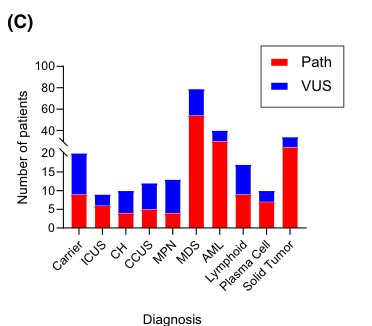
Reference Validation
Checked with linkml-reference-validator 0.3.0.
| Outcome | Count |
|---|---|
| References checked | 24 |
| Resolved | 24 |
| Unresolved (possible confabulation) | 0 |
| Unverifiable | 0 |
| References weighed for topical relevance | 24 |
| On topic | 9 |
| Off topic | 0 |
All extracted references resolved successfully.
Term Validation
Checked with linkml-term-validator 0.4.5, through the ols: adapter.
| Outcome | Count |
|---|---|
| Terms checked | 1 |
| Resolved | 1 |
| Unresolved (possible confabulation) | 0 |
| Obsolete | 0 |
| Unverifiable | 0 |
| Terms whose name was checked | 1 |
| Terms named correctly | 0 |
| Terms named as a different term | 1 |
Terms the report names something else
These identifiers resolve, so nothing about them looks wrong, and the ontology calls them something unrelated to what the report calls them. That usually means the identifier is not the one the sentence needs:
MONDO:0014809(2 mentions) - the report calls it "if available"; MONDO calls it DDX41-related hematologic malignancy predisposition syndrome