Cesium Poisoning
Cesium poisoning is an acquired toxic disorder caused by exposure to the alkali metal cesium. Two clinically distinct forms share the identifier. Chemical poisoning with non-radioactive cesium salts, most often cesium chloride taken as an unproven alternative cancer therapy, is dominated by cardiac toxicity: absorbed cesium mimics potassium, blocks cardiac and renal potassium channels, and produces hypokalemia with prolonged ventricular repolarization that can degenerate into torsade de pointes and cardiac arrest. Internal contamination with radioactive cesium, principally cesium-137 released from damaged medical or industrial sources, instead delivers continuing internal irradiation and, at sufficient absorbed dose, hematopoietic injury. The two forms differ in mechanism, assessment, and treatment, and their clinical statistics should not be pooled.
Ask OpenScientist
Ask a research question about Cesium Poisoning. OpenScientist will conduct autonomous deep research using the Disorder Mechanisms Knowledge Base and PubMed literature (typically 10-30 minutes).
Do not include personal health information in your question. Questions and results are cached in your browser's local storage.
Classifications
Mappings
Definitions
2Show evidence (2 references)
Show evidence (2 references)
Subtypes
2Show evidence (2 references)
Show evidence (2 references)
Pathophysiology
12Show evidence (2 references)
Show evidence (2 references)
Show evidence (2 references)
Show evidence (2 references)
Show evidence (1 reference)
Show evidence (2 references)
Show evidence (2 references)
Show evidence (4 references)
Show evidence (2 references)
Show evidence (2 references)
Show evidence (2 references)
Show evidence (2 references)
Pathograph
Phenotypes
13Blood 2
Show evidence (1 reference)
Show evidence (2 references)
Cardiovascular 6
Show evidence (2 references)
Show evidence (2 references)
Show evidence (2 references)
Show evidence (2 references)
Show evidence (2 references)
Show evidence (1 reference)
Digestive 2
Show evidence (1 reference)
Show evidence (1 reference)
Metabolism 1
Show evidence (2 references)
Nervous System 2
Show evidence (2 references)
Show evidence (2 references)
Medical Actions
5Show evidence (1 reference)
Show evidence (1 reference)
Show evidence (1 reference)
Show evidence (3 references)
Show evidence (1 reference)
Environmental Factors
2Show evidence (3 references)
Show evidence (2 references)
Biochemical Markers
2Show evidence (1 reference)
Show evidence (2 references)
Diagnosis
4Show evidence (2 references)
Show evidence (2 references)
Show evidence (2 references)
Show evidence (2 references)
Progression
3Show evidence (2 references)
Show evidence (2 references)
Show evidence (2 references)
Differential Diagnoses
2Conditions with similar clinical presentations that must be differentiated from Cesium Poisoning:
- Both are treated with Prussian blue, so the antidote does not distinguish them
- Thallium poisoning is dominated by painful ascending sensory neuropathy and delayed alopecia
- Cesium poisoning is dominated by repolarization abnormality, hypokalemia, and ventricular arrhythmia without alopecia
Show evidence (2 references)
- Cesium poisoning produces a markedly prolonged corrected QT that shortens within days of stopping the exposure
- An elevated blood or urine cesium concentration is present in cesium poisoning and absent in the inherited syndrome
- Hypokalemia with inappropriate urinary potassium wasting accompanies the acquired form
Show evidence (2 references)
Animal Models
2Show evidence (1 reference)
Show evidence (1 reference)
Show evidence (1 reference)
Show evidence (1 reference)
Show evidence (1 reference)
Source YAML
click to showname: Cesium Poisoning
creation_date: "2026-10-06T21:33:56Z"
category: Environmental
categories:
- Toxic Exposure Disorder
- Alkali Metal Poisoning
- Environmental Health Disorder
synonyms:
- cesium intoxication
- caesium poisoning
- cesium chloride toxicity
- cesium salt poisoning
description: >-
Cesium poisoning is an acquired toxic disorder caused by exposure to the alkali
metal cesium. Two clinically distinct forms share the identifier. Chemical
poisoning with non-radioactive cesium salts, most often cesium chloride taken
as an unproven alternative cancer therapy, is dominated by cardiac toxicity:
absorbed cesium mimics potassium, blocks cardiac and renal potassium channels,
and produces hypokalemia with prolonged ventricular repolarization that can
degenerate into torsade de pointes and cardiac arrest. Internal contamination
with radioactive cesium, principally cesium-137 released from damaged medical
or industrial sources, instead delivers continuing internal irradiation and, at
sufficient absorbed dose, hematopoietic injury. The two forms differ in
mechanism, assessment, and treatment, and their clinical statistics should not
be pooled.
disease_term:
preferred_term: cesium poisoning
term:
id: MONDO:0800384
label: cesium poisoning
mappings:
mondo_mappings:
- term:
id: MONDO:0800384
label: cesium poisoning
mapping_predicate: skos:exactMatch
mapping_source: MONDO
mapping_justification: Primary MONDO disease identifier for cesium poisoning.
classifications:
harrisons_chapter:
- classification_value: POISONING_ENVENOMATION
evidence:
- reference: PMID:41489700
reference_title: "Intoxication by Self-administered Cesium Salts, the Clinical Impact of Questionable Research Output."
supports: SUPPORT
evidence_source: HUMAN_CLINICAL
snippet: "Cesium chloride (CsCl) is a non-radioactive salt wrongly promoted and used as part of an alternative cancer treatment based on questionable research output published in the mid-eighties."
explanation: Identifies cesium salt exposure as a toxicologic entity arising from ingestion of a promoted agent, supporting the primary Harrison's home in Poisoning, Drug Overdose, and Envenomation.
- classification_value: CARDIOVASCULAR
evidence:
- reference: PMID:41489700
reference_title: "Intoxication by Self-administered Cesium Salts, the Clinical Impact of Questionable Research Output."
supports: SUPPORT
evidence_source: HUMAN_CLINICAL
snippet: "The most frequently observed abnormality was QT-interval prolongation, described in 14 cases."
explanation: Supports a secondary cardiovascular classification because repolarization abnormality and ventricular arrhythmia dominate the chemical-poisoning presentation.
definitions:
- name: Clinical toxic exposure syndrome definition for cesium poisoning
definition_type: CASE_DEFINITION
description: >-
Cesium poisoning is an exposure-defined toxic disorder. In its chemical form
it is a cardiac-dominant syndrome of hypokalemia, prolonged ventricular
repolarization, and ventricular arrhythmia following ingestion or injection
of cesium salts; in its radiological form it is internal contamination with
radioactive cesium causing continuing internal irradiation.
scope: Disease-level clinical framing spanning the chemical and radiological exposure routes
evidence:
- reference: PMID:41489700
reference_title: "Intoxication by Self-administered Cesium Salts, the Clinical Impact of Questionable Research Output."
supports: SUPPORT
evidence_source: HUMAN_CLINICAL
snippet: "Following absorption, cesium is distributed throughout the body, where it inhibits ion channels, mainly for potassium."
explanation: Supports defining the chemical syndrome around systemic distribution and potassium-channel inhibition rather than a single organ lesion.
- reference: PMID:31835766
reference_title: "Medical Therapy of Patients Contaminated with Radioactive Cesium or Iodine."
supports: SUPPORT
evidence_source: OTHER
snippet: "Internal contamination with radioactive material can expose patients to prolonged radiation, thus leading to short- and long-term clinical consequences."
explanation: Supports treating internal radioactive cesium contamination as a distinct exposure form whose harm is delivered radiation dose rather than ion-channel blockade.
- name: Practical diagnostic definition for suspected chemical cesium poisoning
definition_type: DIAGNOSTIC_CRITERIA
description: >-
Practical recognition rests on an exposure history for a cesium-containing
product together with a prolonged QT interval and hypokalemia, confirmed
where available by an elevated blood or urine cesium concentration.
scope: Clinical recognition and laboratory confirmation in suspected chemical cesium poisoning
evidence:
- reference: PMID:12548155
reference_title: "Cesium toxicity: a case of self-treatment by alternate therapy gone awry."
supports: SUPPORT
evidence_source: HUMAN_CLINICAL
snippet: "The authors describe a case of cesium toxicity manifested by syncope, polymorphic ventricular tachycardia, hypokalemia, and a QT interval prolonged to 650 milliseconds that resolved over 4 days following withdrawal of cesium."
explanation: Supports the diagnostic triad of syncope or arrhythmia, hypokalemia, and QT prolongation that reverses on withdrawal of cesium.
- reference: PMID:18657021
reference_title: "Cesium-induced QT-interval prolongation in an adolescent."
supports: SUPPORT
evidence_source: HUMAN_CLINICAL
snippet: "Her plasma cesium level was 2400 microg/dl (normal < 1 microg/dl)"
explanation: Supports laboratory confirmation by direct measurement of a markedly elevated plasma cesium concentration against a normal reference value.
parents:
- poisoning
has_subtypes:
- name: Stable Cesium Salt Poisoning
display_name: Stable (non-radioactive) cesium salt poisoning
description: >-
Chemical poisoning following ingestion or injection of non-radioactive cesium
chloride or cesium carbonate, most often self-administered as an unproven
alternative cancer treatment. The clinical picture is cardiac-dominant, with
hypokalemia, QT prolongation, and ventricular arrhythmia.
evidence:
- reference: PMID:41489700
reference_title: "Intoxication by Self-administered Cesium Salts, the Clinical Impact of Questionable Research Output."
supports: SUPPORT
evidence_source: HUMAN_CLINICAL
snippet: "Most patients used cesium as an alternative treatment for cancer"
explanation: Supports self-administration as an alternative cancer therapy as the dominant route to stable cesium salt poisoning.
- reference: PMID:41489700
reference_title: "Intoxication by Self-administered Cesium Salts, the Clinical Impact of Questionable Research Output."
supports: SUPPORT
evidence_source: HUMAN_CLINICAL
snippet: "Five patients were reported to have died because of the cesium intake."
explanation: Supports that the chemical form of the disease was lethal in a quarter of the published cases.
- name: Internal Radioactive Cesium Contamination
display_name: Internal radioactive cesium (cesium-137) contamination
description: >-
Internal contamination with radioactive cesium, principally cesium-137
released from a damaged medical or industrial source or a reactor accident.
Harm is delivered as continuing internal beta and gamma irradiation; at
sufficient absorbed dose this produces hematopoietic injury, frequently
alongside external irradiation that must be assessed separately.
evidence:
- reference: PMID:31835766
reference_title: "Medical Therapy of Patients Contaminated with Radioactive Cesium or Iodine."
supports: SUPPORT
evidence_source: OTHER
snippet: "After this accident, 249 cases out of 112,000 people examined for contamination had significant internal or external radioactive contamination"
explanation: Supports internal radioactive cesium contamination as a distinct clinical entity arising from a point-source release.
- reference: PMID:31835766
reference_title: "Medical Therapy of Patients Contaminated with Radioactive Cesium or Iodine."
supports: SUPPORT
evidence_source: OTHER
snippet: "The 137Cs isotope has physical half-life of about 30 years"
explanation: Supports the long physical persistence of the contaminating isotope that distinguishes this form from stable cesium salt exposure.
progression:
- phase: Latent accumulation during continued cesium intake
notes: >-
Chemical poisoning typically develops over days to weeks of repeated
self-administration rather than after a single dose, and the long biological
half-life means cesium accumulates while intake continues.
evidence:
- reference: PMID:23489152
reference_title: "Torsades de pointes - a report of a case induced by caesium taken as a complementary medicine, and the literature review."
supports: SUPPORT
evidence_source: HUMAN_CLINICAL
snippet: "Upon admission her QTc was 620 ms. The patient had taken caesium carbonate 10 g daily for 1 month prior to admission."
explanation: Supports an accumulation phase of sustained daily intake preceding the presenting arrhythmic event.
- reference: PMID:41489700
reference_title: "Intoxication by Self-administered Cesium Salts, the Clinical Impact of Questionable Research Output."
supports: SUPPORT
evidence_source: HUMAN_CLINICAL
snippet: "Cesium is mainly excreted via the kidneys and has a half-life of approximately 2 to 4 months"
explanation: Supports a long biological half-life permitting progressive accumulation during continued intake.
- phase: Abrupt arrhythmic presentation
notes: >-
Presentation is often sudden, with syncope, a malignant ventricular
arrhythmia, or cardiac arrest as the first recognized event despite weeks of
preceding exposure.
evidence:
- reference: PMID:18657021
reference_title: "Cesium-induced QT-interval prolongation in an adolescent."
supports: SUPPORT
evidence_source: HUMAN_CLINICAL
snippet: "the patient went to a local emergency department after experiencing two brief syncopal episodes"
explanation: Supports an abrupt symptomatic presentation with syncope after a period of asymptomatic exposure.
- reference: PMID:23489152
reference_title: "Torsades de pointes - a report of a case induced by caesium taken as a complementary medicine, and the literature review."
supports: SUPPORT
evidence_source: HUMAN_CLINICAL
snippet: "A 46-year-old woman with syncope experienced torsades de pointes and cardiac arrest."
explanation: Supports cardiac arrest as a presenting rather than late event in the chemical form.
- phase: Prolonged recovery after cesium withdrawal
notes: >-
Repolarization abnormality resolves after exposure stops, but the long
half-life and large volume of distribution mean electrolyte and rhythm
surveillance must continue well beyond the acute event.
evidence:
- reference: PMID:12548155
reference_title: "Cesium toxicity: a case of self-treatment by alternate therapy gone awry."
supports: SUPPORT
evidence_source: HUMAN_CLINICAL
snippet: "a QT interval prolonged to 650 milliseconds that resolved over 4 days following withdrawal of cesium"
explanation: Supports resolution of the repolarization abnormality over days once cesium is withdrawn.
- reference: PMID:18657021
reference_title: "Cesium-induced QT-interval prolongation in an adolescent."
supports: SUPPORT
evidence_source: HUMAN_CLINICAL
snippet: "Two months later, at a follow-up visit, her serum cesium level was 1800 microg/dl, and her QTc interval was 494 msec."
explanation: Supports persistently elevated cesium and incompletely normalized QTc two months after exposure ceased, justifying prolonged surveillance.
pathophysiology:
- name: Gastrointestinal absorption of ingested cesium salts
description: >-
Ingested cesium salts are almost completely absorbed from the small intestine,
so an oral dose is delivered systemically with little first-pass limitation.
The same potassium-like handling that drives absorption also governs
subsequent distal nephron secretion.
biological_scale: ORGANISM
locations:
- preferred_term: small intestine
term:
id: UBERON:0002108
label: small intestine
cell_types:
- preferred_term: enterocyte
term:
id: CL:0000584
label: enterocyte
biological_processes:
- preferred_term: potassium ion transmembrane transport
modifier: ABNORMAL
term:
id: GO:0071805
label: potassium ion transmembrane transport
chemical_entities:
- preferred_term: caesium chloride
term:
id: CHEBI:63039
label: caesium chloride
evidence:
- reference: PMID:41489700
reference_title: "Intoxication by Self-administered Cesium Salts, the Clinical Impact of Questionable Research Output."
supports: SUPPORT
evidence_source: HUMAN_CLINICAL
snippet: "When ingested, cesium is almost completely absorbed from the small intestine"
explanation: Directly supports near-complete small-intestinal absorption of ingested cesium.
- reference: PMID:26034598
reference_title: "Cesium-associated hypokalemia successfully treated with amiloride."
supports: SUPPORT
evidence_source: HUMAN_CLINICAL
snippet: "Like potassium, cesium is avidly absorbed in the small bowel and secreted by the distal nephron"
explanation: Supports avid small-bowel absorption and establishes that absorption follows potassium-like handling.
downstream:
- target: Systemic distribution of cesium as a potassium analog
causal_link_type: DIRECT
description: Absorbed cesium enters the circulation and distributes through soft tissue.
evidence:
- reference: PMID:41489700
reference_title: "Intoxication by Self-administered Cesium Salts, the Clinical Impact of Questionable Research Output."
supports: SUPPORT
evidence_source: HUMAN_CLINICAL
snippet: "Following absorption, cesium is distributed throughout the body, where it inhibits ion channels, mainly for potassium."
explanation: Supports the step from absorption to systemic distribution, which the source states in that order.
- name: Systemic distribution of cesium as a potassium analog
description: >-
Absorbed cesium distributes through soft tissue in a pattern resembling
potassium, with relatively higher concentrations in muscle. Because the
cesium cation is chemically similar to potassium but not identical to it,
this distribution places a poorly discriminated competitor at potassium
channels throughout the body.
biological_scale: ORGANISM
biological_processes:
- preferred_term: potassium ion homeostasis
modifier: DYSREGULATED
term:
id: GO:0055075
label: potassium ion homeostasis
chemical_entities:
- preferred_term: caesium(1+)
term:
id: CHEBI:49547
label: caesium(1+)
evidence:
- reference: PMID:31835766
reference_title: "Medical Therapy of Patients Contaminated with Radioactive Cesium or Iodine."
supports: SUPPORT
evidence_source: OTHER
snippet: "Absorbed 137Cs is uniformly distributed in soft tissues, resembling the physiological distribution of potassium, with slightly higher levels in muscles and lower levels in bone and fat."
explanation: Directly supports soft-tissue distribution following a potassium-like pattern.
- reference: PMID:41489700
reference_title: "Intoxication by Self-administered Cesium Salts, the Clinical Impact of Questionable Research Output."
supports: SUPPORT
evidence_source: HUMAN_CLINICAL
snippet: "Cesium mimics potassium ions and will disrupt normal cellular processes, particularly those involving potassium ion channels."
explanation: Supports potassium mimicry as the property that makes systemic distribution pathogenic.
downstream:
- target: Myocardial delayed rectifier potassium channel blockade
causal_link_type: DIRECT
description: Distributed cesium reaches cardiomyocyte repolarizing potassium channels and inhibits them.
evidence:
- reference: PMID:18657021
reference_title: "Cesium-induced QT-interval prolongation in an adolescent."
supports: SUPPORT
evidence_source: HUMAN_CLINICAL
snippet: "It inhibits delayed rectifier potassium channels in the myocardium, causing delayed repolarization and QT-interval prolongation."
explanation: Supports the step from systemic cesium to inhibition of myocardial delayed rectifier channels.
- target: Renal inward rectifier potassium channel blockade
causal_link_type: DIRECT
description: Distributed cesium also reaches the inward rectifier potassium channels of the distal nephron.
evidence:
- reference: PMID:41489700
reference_title: "Intoxication by Self-administered Cesium Salts, the Clinical Impact of Questionable Research Output."
supports: SUPPORT
evidence_source: HUMAN_CLINICAL
snippet: "Potassium inward rectifier channels of the KCNJ gene family are also targeted by cesium resulting in channel inhibition in the micromolar range"
explanation: Supports a second downstream branch in which distributed cesium inhibits inward rectifier potassium channels.
- target: Cardiac pacemaker HCN channel inhibition
causal_link_type: DIRECT
description: Distributed cesium additionally inhibits hyperpolarization-activated pacemaker channels.
evidence:
- reference: PMID:41489700
reference_title: "Intoxication by Self-administered Cesium Salts, the Clinical Impact of Questionable Research Output."
supports: SUPPORT
evidence_source: HUMAN_CLINICAL
snippet: "Finally, pacemaker channels of the HCN family become also inhibited by cesium in the low millimolar range"
explanation: Supports a third downstream branch in which cesium inhibits HCN pacemaker channels.
- target: Neuronal membrane potential instability
causal_link_type: DIRECT
description: >-
The same inward rectifier potassium channel family that cesium inhibits in
the kidney and heart also operates in neural tissue, where its inhibition
destabilizes the resting membrane potential.
evidence:
- reference: PMID:41489700
reference_title: "Intoxication by Self-administered Cesium Salts, the Clinical Impact of Questionable Research Output."
supports: SUPPORT
evidence_source: HUMAN_CLINICAL
snippet: "its inhibition results in, for example, unstable plasma-membrane potential in neural and cardiac cells"
explanation: Supports a fourth downstream branch in which inward rectifier inhibition destabilizes neuronal membrane potential.
- name: Myocardial delayed rectifier potassium channel blockade
description: >-
Cesium blocks the potassium channels that carry the repolarizing current of
the ventricular action potential. Classical voltage-clamp work in cardiac
Purkinje fibers established cesium as a blocker of cardiac potassium
currents, and the clinical literature attributes the observed repolarization
delay to delayed rectifier inhibition.
biological_scale: MOLECULAR
locations:
- preferred_term: cardiac ventricle
term:
id: UBERON:0002082
label: cardiac ventricle
cell_types:
- preferred_term: cardiac muscle cell
term:
id: CL:0000746
label: cardiac muscle cell
molecular_functions:
- preferred_term: delayed rectifier potassium channel activity
modifier: DECREASED
term:
id: GO:0005251
label: delayed rectifier potassium channel activity
evidence:
- reference: PMID:18657021
reference_title: "Cesium-induced QT-interval prolongation in an adolescent."
supports: SUPPORT
evidence_source: HUMAN_CLINICAL
snippet: "It inhibits delayed rectifier potassium channels in the myocardium, causing delayed repolarization and QT-interval prolongation."
explanation: Directly supports myocardial delayed rectifier blockade as the proximate molecular lesion behind repolarization delay.
- reference: PMID:988568
reference_title: "Cardiac Purkinje fibers: cesium as a tool to block inward rectifying potassium currents."
supports: SUPPORT
directness: INDIRECT
evidence_source: IN_VITRO
snippet: "exposure to Cs blocks both the pacemaker current iK2 and the instantaneous outward current iK1, while the delayed outward rectifying potassium current ix is not affected"
explanation: >-
Voltage-clamp evidence that cesium blocks cardiac potassium currents.
Graded INDIRECT because in this sheep Purkinje preparation the currents
blocked were the pacemaker and inward rectifier currents while the delayed
outward rectifier was spared, so it establishes cesium as a cardiac
potassium-channel blocker without confirming the specific delayed
rectifier attribution made in the clinical literature.
notes: >-
The clinical literature consistently attributes cesium-induced QT
prolongation to delayed rectifier blockade, while the classical
voltage-clamp study reports the delayed outward rectifier as the one current
cesium spared in sheep Purkinje fibers. Both statements are quoted here
rather than reconciled, because the apparent conflict may reflect
preparation, species, and concentration differences rather than an error in
either source.
downstream:
- target: Prolonged ventricular repolarization
causal_link_type: DIRECT
description: Loss of repolarizing potassium current lengthens the ventricular action potential.
evidence:
- reference: PMID:18657021
reference_title: "Cesium-induced QT-interval prolongation in an adolescent."
supports: SUPPORT
evidence_source: HUMAN_CLINICAL
snippet: "It inhibits delayed rectifier potassium channels in the myocardium, causing delayed repolarization and QT-interval prolongation."
explanation: The quoted sentence states the causal step from channel inhibition to delayed repolarization.
- name: Renal inward rectifier potassium channel blockade
description: >-
Cesium inhibits inward rectifier potassium channels of the KCNJ family in the
distal nephron, including ROMK (Kir1.1) and Kir4.1. Blockade is asymmetric:
extracellular cesium blocks potassium entry through ROMK while enhancing
potassium exit through it, which is how a channel blocker produces net
potassium loss rather than retention.
biological_scale: MOLECULAR
locations:
- preferred_term: distal convoluted tubule
term:
id: UBERON:0001292
label: distal convoluted tubule
cell_types:
- preferred_term: kidney collecting duct principal cell
term:
id: CL:1001431
label: kidney collecting duct principal cell
molecular_functions:
- preferred_term: inward rectifier potassium channel activity
modifier: DECREASED
term:
id: GO:0005242
label: inward rectifier potassium channel activity
evidence:
- reference: PMID:41489700
reference_title: "Intoxication by Self-administered Cesium Salts, the Clinical Impact of Questionable Research Output."
supports: SUPPORT
evidence_source: HUMAN_CLINICAL
snippet: "Potassium inward rectifier channels of the KCNJ gene family are also targeted by cesium resulting in channel inhibition in the micromolar range"
explanation: Supports inhibition of KCNJ-family inward rectifier channels by cesium at micromolar concentrations.
- reference: PMID:26034598
reference_title: "Cesium-associated hypokalemia successfully treated with amiloride."
supports: SUPPORT
evidence_source: HUMAN_CLINICAL
snippet: "Extracellular Cs+ blocks K+ influx through ROMK, but can enhance K+ efflux through ROMK up to 5-fold."
explanation: Supports the asymmetric effect on ROMK that explains net potassium secretion rather than retention.
downstream:
- target: Renal potassium wasting
causal_link_type: DIRECT
description: Disordered distal nephron potassium handling drives inappropriate urinary potassium loss.
evidence:
- reference: PMID:41489700
reference_title: "Intoxication by Self-administered Cesium Salts, the Clinical Impact of Questionable Research Output."
supports: SUPPORT
evidence_source: HUMAN_CLINICAL
snippet: "The latter likely involves inhibition of the inward rectifier channels Kir1.1 and Kir4.1, resulting in excessive renal potassium wasting, inducing hypokalemia, which contributes to the QTc prolongation"
explanation: The quoted sentence states the causal step from Kir1.1 and Kir4.1 inhibition to excessive renal potassium wasting.
- name: Renal potassium wasting
description: >-
Inappropriate urinary potassium excretion continues despite hypokalemia and
in the absence of alkalosis, hyperaldosteronism, hypercortisolism, or
hypomagnesemia. This was demonstrated directly in a patient whose kaliuresis
and potassium requirement both fell on amiloride, an epithelial sodium
channel blocker.
biological_scale: ORGANISM
locations:
- preferred_term: kidney
term:
id: UBERON:0002113
label: kidney
biological_processes:
- preferred_term: renal potassium excretion
modifier: INCREASED
term:
id: GO:0036359
label: renal potassium excretion
evidence:
- reference: PMID:26034598
reference_title: "Cesium-associated hypokalemia successfully treated with amiloride."
supports: SUPPORT
evidence_source: HUMAN_CLINICAL
snippet: "The current case report is the first to demonstrate inappropriate urinary potassium wasting in CAH."
explanation: Directly supports inappropriate urinary potassium wasting as the demonstrated renal mechanism in cesium-associated hypokalemia.
downstream:
- target: Systemic potassium depletion
causal_link_type: DIRECT
description: Sustained urinary potassium loss depletes body potassium stores.
evidence:
- reference: PMID:41489700
reference_title: "Intoxication by Self-administered Cesium Salts, the Clinical Impact of Questionable Research Output."
supports: SUPPORT
evidence_source: HUMAN_CLINICAL
snippet: "resulting in excessive renal potassium wasting, inducing hypokalemia"
explanation: The quoted fragment states the causal step from renal potassium wasting to low serum potassium.
- name: Systemic potassium depletion
description: >-
Body potassium falls through combined renal wasting, impaired dietary
potassium uptake, and gastrointestinal losses accompanying diarrhea. The
resulting low extracellular potassium is itself a repolarization-prolonging
stimulus, so it compounds the direct channel blockade rather than acting
independently of it.
biological_scale: ORGANISM
biological_processes:
- preferred_term: potassium ion homeostasis
modifier: DECREASED
term:
id: GO:0055075
label: potassium ion homeostasis
evidence:
- reference: PMID:41489700
reference_title: "Intoxication by Self-administered Cesium Salts, the Clinical Impact of Questionable Research Output."
supports: SUPPORT
evidence_source: HUMAN_CLINICAL
snippet: "Finally, potassium depletion may occur through increased gastrointestinal losses as associated with the frequently observed diarrhea"
explanation: Supports a gastrointestinal contribution to potassium depletion additional to renal wasting.
- reference: PMID:26034598
reference_title: "Cesium-associated hypokalemia successfully treated with amiloride."
supports: SUPPORT
evidence_source: HUMAN_CLINICAL
snippet: "Cesium ingestion is associated with depletion of both intracellular and extracellular potassium"
explanation: Supports depletion of both intracellular and extracellular potassium pools following cesium ingestion.
downstream:
- target: Prolonged ventricular repolarization
causal_link_type: DIRECT
description: Low extracellular potassium independently prolongs ventricular repolarization, compounding the direct channel blockade.
evidence:
- reference: PMID:41489700
reference_title: "Intoxication by Self-administered Cesium Salts, the Clinical Impact of Questionable Research Output."
supports: SUPPORT
evidence_source: HUMAN_CLINICAL
snippet: "inducing hypokalemia, which contributes to the QTc prolongation"
explanation: The quoted fragment states that the hypokalemia contributes to QTc prolongation, which is the clinical measure of prolonged repolarization.
- target: Hypokalemia
causal_link_type: DIRECT
description: Potassium depletion presents as a measurably low serum potassium concentration.
evidence:
- reference: PMID:41489700
reference_title: "Intoxication by Self-administered Cesium Salts, the Clinical Impact of Questionable Research Output."
supports: SUPPORT
evidence_source: HUMAN_CLINICAL
snippet: "Hypokalemia was observed in 10 of 12 patients with reported serum potassium levels, with a median concentration of 3.05 mmol/L"
explanation: Supports the step from potassium depletion to the measured laboratory abnormality in reported patients.
- name: Prolonged ventricular repolarization
description: >-
Reduced repolarizing potassium current, compounded by low extracellular
potassium, lengthens the ventricular action potential. This appears on the
surface electrocardiogram as QT prolongation, with median corrected QT
intervals around 620 ms among reported cases.
biological_scale: CELLULAR
cell_types:
- preferred_term: cardiac muscle cell
term:
id: CL:0000746
label: cardiac muscle cell
biological_processes:
- preferred_term: membrane repolarization during cardiac muscle cell action potential
modifier: DECREASED
term:
id: GO:0086013
label: membrane repolarization during cardiac muscle cell action potential
evidence:
- reference: PMID:41489700
reference_title: "Intoxication by Self-administered Cesium Salts, the Clinical Impact of Questionable Research Output."
supports: SUPPORT
evidence_source: HUMAN_CLINICAL
snippet: "Inhibition of the delayed rectifier potassium channels in the myocardium results in QT prolongation on the ECG, reported in 60% of the case reports."
explanation: Directly supports prolonged repolarization, measured as QT prolongation, as the consequence of myocardial potassium channel inhibition.
- reference: PMID:41489700
reference_title: "Intoxication by Self-administered Cesium Salts, the Clinical Impact of Questionable Research Output."
supports: SUPPORT
evidence_source: HUMAN_CLINICAL
snippet: "QTc interval durations were provided in eleven of these cases, with a median QTc of 620 ms"
explanation: Quantifies the magnitude of repolarization prolongation reported in published cases.
downstream:
- target: Triggered ventricular arrhythmia
causal_link_type: DIRECT
description: A prolonged repolarization phase permits triggered activity and malignant ventricular arrhythmia.
evidence:
- reference: PMID:41489700
reference_title: "Intoxication by Self-administered Cesium Salts, the Clinical Impact of Questionable Research Output."
supports: SUPPORT
evidence_source: HUMAN_CLINICAL
snippet: "QT prolongation is an established risk factor of ventricular cardiac arrhythmias"
explanation: Supports the step from prolonged repolarization to ventricular arrhythmia, stated by the source as an established risk relationship.
- target: Prolonged QT interval
causal_link_type: DIRECT
description: Prolonged ventricular repolarization is recorded on the surface electrocardiogram as a prolonged QT interval.
evidence:
- reference: PMID:18657021
reference_title: "Cesium-induced QT-interval prolongation in an adolescent."
supports: SUPPORT
evidence_source: HUMAN_CLINICAL
snippet: "An electrocardiogram revealed occasional premature ventricular contractions, a QTc interval of 683 msec"
explanation: Supports the electrocardiographic manifestation of prolonged repolarization in an affected patient.
- name: Triggered ventricular arrhythmia
description: >-
Against a background of prolonged repolarization and hypokalemia, triggered
activity initiates polymorphic ventricular tachycardia, characteristically
torsade de pointes, which may degenerate into cardiac arrest. The triggered
activity itself has been measured directly: in superfused canine and
guinea-pig Purkinje fibers, cesium at 3.6 to 4.0 mM with extracellular
potassium reduced to 2 to 3 mM produced late early afterdepolarizations in
43% of fibers, and calcium loading accelerated their appearance. Cesium
salts have been used deliberately for decades to induce exactly this
arrhythmia in animal models of the long QT syndrome.
biological_scale: TISSUE
locations:
- preferred_term: heart
term:
id: UBERON:0000948
label: heart
biological_processes:
- preferred_term: regulation of heart rate by cardiac conduction
modifier: ABNORMAL
term:
id: GO:0086091
label: regulation of heart rate by cardiac conduction
evidence:
- reference: PMID:41489700
reference_title: "Intoxication by Self-administered Cesium Salts, the Clinical Impact of Questionable Research Output."
supports: SUPPORT
evidence_source: HUMAN_CLINICAL
snippet: "Polymorphic ventricular tachycardia was reported in nine cases, with Torsades de Pointes (TdP) specifically identified in six."
explanation: Directly supports polymorphic ventricular tachycardia and torsade de pointes as the arrhythmias observed in reported human cesium poisoning.
- reference: PMID:8542076
reference_title: "Role of calcium loading in early afterdepolarizations generated by Cs+ in canine and guinea pig Purkinje fibers."
supports: SUPPORT
evidence_source: IN_VITRO
snippet: "Forty-three percent of Purkinje fibers developed L-EAD after a latent period of 17 to 123 minutes of exposure."
explanation: Direct measurement of the early-afterdepolarization step this node asserts, in superfused Purkinje fibers exposed to cesium with low extracellular potassium.
- reference: PMID:8542076
reference_title: "Role of calcium loading in early afterdepolarizations generated by Cs+ in canine and guinea pig Purkinje fibers."
supports: SUPPORT
evidence_source: IN_VITRO
snippet: "the uptake of 45Ca2+ was approximately doubled after 30 minutes"
explanation: >-
Reports the calcium loading that the same study shows accelerates
afterdepolarization appearance, which is the intracellular change linking
cesium exposure under low extracellular potassium to triggered activity.
- reference: PMID:12548155
reference_title: "Cesium toxicity: a case of self-treatment by alternate therapy gone awry."
supports: SUPPORT
directness: INDIRECT
evidence_source: HUMAN_CLINICAL
snippet: "Cesium salts have been used in animal models to induce cardiac arrhythmias for several decades, but the sequelae of human cesium toxicity have seldom been described."
explanation: >-
Supports the arrhythmogenic potency of cesium, established well enough to
serve as a deliberate experimental arrhythmia model. Graded INDIRECT
because the sentence establishes arrhythmogenicity in animal models and
explicitly notes that the human sequelae are seldom described.
downstream:
- target: Torsade de pointes
causal_link_type: DIRECT
description: Triggered activity in the setting of prolonged repolarization manifests as torsade de pointes.
evidence:
- reference: PMID:23489152
reference_title: "Torsades de pointes - a report of a case induced by caesium taken as a complementary medicine, and the literature review."
supports: SUPPORT
evidence_source: HUMAN_CLINICAL
snippet: "A 46-year-old woman with syncope experienced torsades de pointes and cardiac arrest."
explanation: Supports torsade de pointes as a realized clinical consequence of the arrhythmic mechanism.
- target: Ventricular tachycardia
causal_link_type: DIRECT
description: The arrhythmia may also present as monomorphic or unspecified ventricular tachycardia.
evidence:
- reference: PMID:15301336
reference_title: "Acquired long QT syndrome and monomorphic ventricular tachycardia after alternative treatment with cesium chloride for brain cancer."
supports: SUPPORT
evidence_source: HUMAN_CLINICAL
snippet: "We report acquired QT prolongation and sustained monomorphic ventricular tachycardia in a patient who self-initiated and completed a course of cesium chloride as adjunctive treatment for brain cancer."
explanation: Supports sustained ventricular tachycardia as a realized consequence of the arrhythmic mechanism.
- target: Cardiac arrest
causal_link_type: DIRECT
description: Malignant ventricular arrhythmia may degenerate into cardiac arrest and death.
evidence:
- reference: PMID:41489700
reference_title: "Intoxication by Self-administered Cesium Salts, the Clinical Impact of Questionable Research Output."
supports: SUPPORT
evidence_source: HUMAN_CLINICAL
snippet: "Of the five fatal cases, two resulted from cardiac arrest, one from an unspecified cardiac arrhythmia"
explanation: Supports cardiac arrest as the fatal endpoint of the arrhythmic mechanism in reported cases.
- target: Syncope
causal_link_type: DIRECT
description: Transient loss of cardiac output during the arrhythmia produces syncope, often the presenting symptom.
evidence:
- reference: PMID:17212573
reference_title: "Acquired long QT syndrome secondary to cesium chloride supplement."
supports: SUPPORT
evidence_source: HUMAN_CLINICAL
snippet: "we present the case of a 39-year-old woman who presented with new onset of syncope as a result of acquired long QT syndrome secondary to taking a cesium chloride supplement"
explanation: Supports syncope as a direct consequence of the cesium-induced repolarization and rhythm disturbance.
- name: Cardiac pacemaker HCN channel inhibition
description: >-
Cesium inhibits hyperpolarization-activated cyclic nucleotide-gated pacemaker
channels at low millimolar concentrations. This is the proposed basis for the
sinus bradycardia reported in a minority of cases; the source states the
attribution as a possibility that cannot be excluded rather than as an
established link.
biological_scale: MOLECULAR
locations:
- preferred_term: His-Purkinje system
term:
id: UBERON:0004146
label: His-Purkinje system
molecular_functions:
- preferred_term: inward rectifier potassium channel activity
modifier: DECREASED
term:
id: GO:0005242
label: inward rectifier potassium channel activity
evidence:
- reference: PMID:41489700
reference_title: "Intoxication by Self-administered Cesium Salts, the Clinical Impact of Questionable Research Output."
supports: SUPPORT
evidence_source: HUMAN_CLINICAL
snippet: "Finally, pacemaker channels of the HCN family become also inhibited by cesium in the low millimolar range"
explanation: Directly supports cesium inhibition of HCN pacemaker channels.
- reference: PMID:988568
reference_title: "Cardiac Purkinje fibers: cesium as a tool to block inward rectifying potassium currents."
supports: SUPPORT
evidence_source: IN_VITRO
snippet: "exposure to Cs blocks both the pacemaker current iK2 and the instantaneous outward current iK1"
explanation: Voltage-clamp evidence that cesium blocks the cardiac pacemaker current, the electrophysiological basis for pacemaker channel inhibition.
downstream:
- target: Sinus bradycardia
causal_link_type: INDIRECT_UNKNOWN_INTERMEDIATES
description: >-
Pacemaker current inhibition is the proposed basis for the sinus
bradycardia observed in a minority of patients.
evidence:
- reference: PMID:41489700
reference_title: "Intoxication by Self-administered Cesium Salts, the Clinical Impact of Questionable Research Output."
supports: SUPPORT
directness: INDIRECT
evidence_source: HUMAN_CLINICAL
snippet: "It cannot be excluded that the observed sinus bradycardia in six patients relates to this pacemaker channel inhibiting effect."
explanation: >-
Graded INDIRECT because the source frames the link as a possibility that
cannot be excluded rather than a demonstrated causal relationship. It
supports the edge only to the extent of establishing it as the authors'
proposed explanation for the observed bradycardia.
- name: Neuronal membrane potential instability
description: >-
Inward rectifier potassium channels of the KCNJ family operate in neural
tissue as well as in heart and kidney, and cesium inhibition destabilizes the
neuronal resting membrane potential. This is the mechanism the reviewing
authors offer for the neuromuscular manifestations; the accompanying
hypokalemia is a plausible additional contributor that the sources do not
separate out.
biological_scale: CELLULAR
cell_types:
- preferred_term: neuron
term:
id: CL:0000540
label: neuron
biological_processes:
- preferred_term: regulation of membrane potential
modifier: DYSREGULATED
term:
id: GO:0042391
label: regulation of membrane potential
molecular_functions:
- preferred_term: inward rectifier potassium channel activity
modifier: DECREASED
term:
id: GO:0005242
label: inward rectifier potassium channel activity
evidence:
- reference: PMID:41489700
reference_title: "Intoxication by Self-administered Cesium Salts, the Clinical Impact of Questionable Research Output."
supports: SUPPORT
evidence_source: HUMAN_CLINICAL
snippet: "its inhibition results in, for example, unstable plasma-membrane potential in neural and cardiac cells"
explanation: Directly supports destabilization of the neural plasma-membrane potential as a consequence of inward rectifier potassium channel inhibition.
- reference: PMID:41489700
reference_title: "Intoxication by Self-administered Cesium Salts, the Clinical Impact of Questionable Research Output."
supports: SUPPORT
evidence_source: HUMAN_CLINICAL
snippet: "This diverse inward rectifier potassium channel family has roles in multiple organ systems"
explanation: Supports that the channel family cesium inhibits is not confined to the heart and kidney, which is what licenses a neural branch of the mechanism.
downstream:
- target: Paresthesia
causal_link_type: INDIRECT_UNKNOWN_INTERMEDIATES
description: >-
Unstable neuronal membrane potential is the proposed basis for the
peripheral paresthesias reported during sustained cesium intake.
evidence:
- reference: PMID:41489700
reference_title: "Intoxication by Self-administered Cesium Salts, the Clinical Impact of Questionable Research Output."
supports: SUPPORT
directness: INDIRECT
evidence_source: HUMAN_CLINICAL
snippet: "Symptoms occurred across multiple organ systems, including the cardiovascular, neuromuscular and gastrointestinal system."
explanation: >-
Graded INDIRECT because the source documents neuromuscular symptoms and
separately proposes neural membrane instability as the mechanism, without
demonstrating that this mechanism produces the paresthesias in a given
patient. Concurrent hypokalemia is an unseparated alternative contributor.
- target: Seizure
causal_link_type: INDIRECT_UNKNOWN_INTERMEDIATES
description: >-
Unstable neuronal membrane potential is a plausible basis for the seizures
reported in cesium salt poisoning, although the sources do not establish
the link for individual patients.
evidence:
- reference: PMID:41489700
reference_title: "Intoxication by Self-administered Cesium Salts, the Clinical Impact of Questionable Research Output."
supports: SUPPORT
directness: INDIRECT
evidence_source: HUMAN_CLINICAL
snippet: "Symptoms occurred across multiple organ systems, including the cardiovascular, neuromuscular and gastrointestinal system."
explanation: >-
Graded INDIRECT because the source documents neuromuscular involvement
and proposes neural membrane instability as its mechanism, but does not
attribute the reported seizures to that mechanism specifically. Cerebral
hypoperfusion during arrhythmia is an alternative route the sources
likewise do not exclude.
- name: Internal radiocesium retention and continuing irradiation
description: >-
Absorbed radioactive cesium is retained in soft tissue and decays in place,
delivering continuing internal beta and gamma irradiation. A short excretion
component of about three days is followed by a major component near three
months, so dose accrues for a prolonged period after a single intake.
biological_scale: ORGANISM
chemical_entities:
- preferred_term: caesium-137 atom
term:
id: CHEBI:196959
label: caesium-137 atom
biological_processes:
- preferred_term: response to ionizing radiation
modifier: INCREASED
term:
id: GO:0010212
label: response to ionizing radiation
evidence:
- reference: PMID:31835766
reference_title: "Medical Therapy of Patients Contaminated with Radioactive Cesium or Iodine."
supports: SUPPORT
evidence_source: OTHER
snippet: "It is excreted in urine, an initial fraction with a biological halftime of only 3 days, whereas the major part of absorbed Cs is excreted with a halftime of almost 3 months"
explanation: Supports prolonged retention of absorbed cesium, which is what allows internal dose to accrue over months.
- reference: PMID:31835766
reference_title: "Medical Therapy of Patients Contaminated with Radioactive Cesium or Iodine."
supports: SUPPORT
evidence_source: OTHER
snippet: "Internal contamination with radioactive material can expose patients to prolonged radiation, thus leading to short- and long-term clinical consequences."
explanation: Supports continuing internal irradiation as the mechanism of harm in the radiological form.
downstream:
- target: Hematopoietic marrow suppression
causal_link_type: INDIRECT_KNOWN_INTERMEDIATES
description: >-
Sufficient absorbed dose injures the radiation-sensitive marrow
compartment through the general mechanism of ionizing radiation damage to
dividing cells.
evidence:
- reference: PMID:31835766
reference_title: "Medical Therapy of Patients Contaminated with Radioactive Cesium or Iodine."
supports: SUPPORT
directness: INDIRECT
evidence_source: HUMAN_CLINICAL
snippet: "The first report described 14 patients who developed severe bone marrow depression with neutropenia and thrombocytopenia."
explanation: >-
Supports marrow suppression following a cesium-137 source accident.
Graded INDIRECT because those patients had combined internal and
external irradiation, so the quoted outcome cannot be attributed to
internal cesium retention alone.
- name: Hematopoietic marrow suppression
description: >-
Radiation injury to the marrow produces neutropenia and thrombocytopenia,
with death from hemorrhage and infection in the most severely exposed. In
source accidents this reflects combined internal and external irradiation
rather than internal cesium alone.
biological_scale: TISSUE
locations:
- preferred_term: bone marrow
term:
id: UBERON:0002371
label: bone marrow
cell_types:
- preferred_term: hematopoietic stem cell
term:
id: CL:0000037
label: hematopoietic stem cell
biological_processes:
- preferred_term: DNA damage response
modifier: INCREASED
term:
id: GO:0006974
label: DNA damage response
evidence:
- reference: PMID:31835766
reference_title: "Medical Therapy of Patients Contaminated with Radioactive Cesium or Iodine."
supports: SUPPORT
evidence_source: HUMAN_CLINICAL
snippet: "The first report described 14 patients who developed severe bone marrow depression with neutropenia and thrombocytopenia."
explanation: Directly supports severe marrow depression with neutropenia and thrombocytopenia after a cesium-137 source accident.
- reference: PMID:31835766
reference_title: "Medical Therapy of Patients Contaminated with Radioactive Cesium or Iodine."
supports: SUPPORT
evidence_source: HUMAN_CLINICAL
snippet: "Four died from hemorrhage and infections."
explanation: Supports the fatal complications that follow marrow failure in severely exposed patients.
downstream:
- target: Decreased total neutrophil count
causal_link_type: DIRECT
description: Marrow suppression reduces circulating neutrophils and predisposes to infection.
evidence:
- reference: PMID:31835766
reference_title: "Medical Therapy of Patients Contaminated with Radioactive Cesium or Iodine."
supports: SUPPORT
evidence_source: HUMAN_CLINICAL
snippet: "severe bone marrow depression with neutropenia and thrombocytopenia"
explanation: The quoted fragment links marrow depression directly to neutropenia.
- target: Thrombocytopenia
causal_link_type: DIRECT
description: Marrow suppression reduces circulating platelets and predisposes to hemorrhage.
evidence:
- reference: PMID:31835766
reference_title: "Medical Therapy of Patients Contaminated with Radioactive Cesium or Iodine."
supports: SUPPORT
evidence_source: HUMAN_CLINICAL
snippet: "severe bone marrow depression with neutropenia and thrombocytopenia"
explanation: The quoted fragment links marrow depression directly to thrombocytopenia.
phenotypes:
- name: Prolonged QT interval
category: Laboratory
subtype: Stable Cesium Salt Poisoning
description: >-
Prolongation of the corrected QT interval is the most frequently reported
electrocardiographic abnormality in cesium salt poisoning, with a median
corrected QT of 620 ms among cases reporting a value.
phenotype_term:
preferred_term: Prolonged QT interval
term:
id: HP:0001657
label: Prolonged QT interval
evidence:
- reference: PMID:41489700
reference_title: "Intoxication by Self-administered Cesium Salts, the Clinical Impact of Questionable Research Output."
supports: SUPPORT
evidence_source: HUMAN_CLINICAL
snippet: "The most frequently observed abnormality was QT-interval prolongation, described in 14 cases."
explanation: Directly supports QT prolongation as the most frequently reported electrocardiographic abnormality.
- reference: PMID:18657021
reference_title: "Cesium-induced QT-interval prolongation in an adolescent."
supports: SUPPORT
evidence_source: HUMAN_CLINICAL
snippet: "An electrocardiogram revealed occasional premature ventricular contractions, a QTc interval of 683 msec"
explanation: Provides an individual human measurement of the magnitude of QT prolongation.
- name: Torsade de pointes
category: Cardiovascular
subtype: Stable Cesium Salt Poisoning
description: >-
Polymorphic ventricular tachycardia of the torsade de pointes type is the
characteristic malignant arrhythmia of cesium salt poisoning, arising on the
substrate of prolonged repolarization and hypokalemia.
phenotype_term:
preferred_term: Torsade de pointes
term:
id: HP:0001664
label: Torsade de pointes
evidence:
- reference: PMID:41489700
reference_title: "Intoxication by Self-administered Cesium Salts, the Clinical Impact of Questionable Research Output."
supports: SUPPORT
evidence_source: HUMAN_CLINICAL
snippet: "Polymorphic ventricular tachycardia was reported in nine cases, with Torsades de Pointes (TdP) specifically identified in six."
explanation: Directly supports torsade de pointes as a specifically identified arrhythmia in reported cases.
- reference: PMID:19746253
reference_title: "Cesium chloride-induced torsades de pointes."
supports: SUPPORT
evidence_source: HUMAN_CLINICAL
snippet: "The present report describes a 45-year-old woman with metastatic breast cancer who experienced repeated episodes of torsades de pointes polymorphic ventricular tachycardia after several months of oral cesium therapy."
explanation: Individual human case supporting recurrent torsade de pointes temporally related to oral cesium intake.
- name: Ventricular tachycardia
category: Cardiovascular
subtype: Stable Cesium Salt Poisoning
description: >-
Ventricular tachycardia occurs in monomorphic as well as polymorphic form,
and may resolve spontaneously or require antiarrhythmic therapy and
cardioversion.
phenotype_term:
preferred_term: Ventricular tachycardia
term:
id: HP:0004756
label: Ventricular tachycardia
evidence:
- reference: PMID:15301336
reference_title: "Acquired long QT syndrome and monomorphic ventricular tachycardia after alternative treatment with cesium chloride for brain cancer."
supports: SUPPORT
evidence_source: HUMAN_CLINICAL
snippet: "We report acquired QT prolongation and sustained monomorphic ventricular tachycardia in a patient who self-initiated and completed a course of cesium chloride as adjunctive treatment for brain cancer."
explanation: Directly supports sustained monomorphic ventricular tachycardia in human cesium chloride exposure.
- reference: PMID:18657021
reference_title: "Cesium-induced QT-interval prolongation in an adolescent."
supports: SUPPORT
evidence_source: HUMAN_CLINICAL
snippet: "She was admitted to the hospital and later experienced monomorphic ventricular tachycardia, which resolved spontaneously."
explanation: Second independent human case of monomorphic ventricular tachycardia during cesium exposure.
- name: Cardiac arrest
category: Cardiovascular
subtype: Stable Cesium Salt Poisoning
description: >-
Cardiac arrest is the principal fatal outcome of cesium salt poisoning and
was the documented cause of death in two of five fatal published cases.
phenotype_term:
preferred_term: Cardiac arrest
term:
id: HP:0001695
label: Cardiac arrest
evidence:
- reference: PMID:41489700
reference_title: "Intoxication by Self-administered Cesium Salts, the Clinical Impact of Questionable Research Output."
supports: SUPPORT
evidence_source: HUMAN_CLINICAL
snippet: "Of the five fatal cases, two resulted from cardiac arrest, one from an unspecified cardiac arrhythmia"
explanation: Directly supports cardiac arrest as a documented cause of death in cesium salt poisoning.
- reference: PMID:23489152
reference_title: "Torsades de pointes - a report of a case induced by caesium taken as a complementary medicine, and the literature review."
supports: SUPPORT
evidence_source: HUMAN_CLINICAL
snippet: "A 46-year-old woman with syncope experienced torsades de pointes and cardiac arrest."
explanation: Individual human case of cardiac arrest following caesium carbonate ingestion, in this instance survived.
- name: Syncope
category: Cardiovascular
subtype: Stable Cesium Salt Poisoning
description: >-
Syncope or presyncope is frequently the presenting symptom that brings an
exposed patient to medical attention, reflecting transient loss of cardiac
output during an arrhythmic episode.
phenotype_term:
preferred_term: Syncope
term:
id: HP:0001279
label: Syncope
evidence:
- reference: PMID:17212573
reference_title: "Acquired long QT syndrome secondary to cesium chloride supplement."
supports: SUPPORT
evidence_source: HUMAN_CLINICAL
snippet: "we present the case of a 39-year-old woman who presented with new onset of syncope as a result of acquired long QT syndrome secondary to taking a cesium chloride supplement"
explanation: Directly supports syncope as the presenting manifestation of cesium-induced acquired long QT syndrome.
- reference: PMID:18657021
reference_title: "Cesium-induced QT-interval prolongation in an adolescent."
supports: SUPPORT
evidence_source: HUMAN_CLINICAL
snippet: "the patient went to a local emergency department after experiencing two brief syncopal episodes"
explanation: Second independent human case in which syncopal episodes prompted presentation.
- name: Hypokalemia
category: Laboratory
subtype: Stable Cesium Salt Poisoning
description: >-
Low serum potassium is characteristic and was present in 10 of 12 reported
patients with a measured value, at a median concentration of 3.05 mmol/L. It
is driven by renal potassium wasting rather than by transcellular shift
alone, and it compounds the direct repolarization effect of cesium.
phenotype_term:
preferred_term: Hypokalemia
term:
id: HP:0002900
label: Hypokalemia
evidence:
- reference: PMID:41489700
reference_title: "Intoxication by Self-administered Cesium Salts, the Clinical Impact of Questionable Research Output."
supports: SUPPORT
evidence_source: HUMAN_CLINICAL
snippet: "Hypokalemia was observed in 10 of 12 patients with reported serum potassium levels, with a median concentration of 3.05 mmol/L"
explanation: Directly supports hypokalemia with a quantified median concentration among reported patients.
- reference: PMID:26034598
reference_title: "Cesium-associated hypokalemia successfully treated with amiloride."
supports: SUPPORT
evidence_source: HUMAN_CLINICAL
snippet: "Among these is hypokalemia predisposing to life-threatening arrhythmia."
explanation: Supports hypokalemia as a recognized complication of cesium self-administration that predisposes to arrhythmia.
- name: Sinus bradycardia
category: Cardiovascular
subtype: Stable Cesium Salt Poisoning
description: >-
Sinus bradycardia was reported in a minority of patients and is proposed to
reflect inhibition of HCN pacemaker channels, although the source states the
attribution as a possibility rather than an established link.
phenotype_term:
preferred_term: Sinus bradycardia
term:
id: HP:0001688
label: Sinus bradycardia
evidence:
- reference: PMID:41489700
reference_title: "Intoxication by Self-administered Cesium Salts, the Clinical Impact of Questionable Research Output."
supports: SUPPORT
evidence_source: HUMAN_CLINICAL
snippet: "Other ECG abnormalities included sinus bradycardia and premature ventricular depolarizations."
explanation: Directly supports sinus bradycardia as a reported electrocardiographic abnormality in cesium poisoning.
- name: Seizure
category: Neurologic
subtype: Stable Cesium Salt Poisoning
description: >-
Seizures occur in cesium salt poisoning and contributed to one fatal course
in which the patient developed sepsis and recurrent seizures during
hospitalization.
phenotype_term:
preferred_term: Seizure
term:
id: HP:0001250
label: Seizure
evidence:
- reference: PMID:23841836
reference_title: "Fatal cesium chloride toxicity after alternative cancer treatment."
supports: SUPPORT
evidence_source: HUMAN_CLINICAL
snippet: "Oral and intravenous CsCl use has been associated with seizures, cardiotoxicity, syncope, and death."
explanation: Directly supports seizures among the reported manifestations of cesium chloride exposure in humans.
- reference: PMID:41489700
reference_title: "Intoxication by Self-administered Cesium Salts, the Clinical Impact of Questionable Research Output."
supports: SUPPORT
evidence_source: HUMAN_CLINICAL
snippet: "one occurred during hospitalization after a seizure, during which the patient developed sepsis and multiple subsequent seizures"
explanation: Supports seizures as a clinically significant manifestation contributing to a fatal course.
- name: Nausea
category: Gastrointestinal
subtype: Stable Cesium Salt Poisoning
description: >-
Nausea is among the frequently reported less severe manifestations, recorded
alongside diarrhea and paresthesias in the published case series.
phenotype_term:
preferred_term: Nausea
term:
id: HP:0002018
label: Nausea
evidence:
- reference: PMID:41489700
reference_title: "Intoxication by Self-administered Cesium Salts, the Clinical Impact of Questionable Research Output."
supports: SUPPORT
evidence_source: HUMAN_CLINICAL
snippet: "Less severe but frequently reported symptoms included diarrhea, nausea, and paresthesias."
explanation: Directly supports nausea as a frequently reported manifestation in the case series, in the same sentence as the diarrhea and paresthesia already curated.
- name: Paresthesia
category: Neurologic
subtype: Stable Cesium Salt Poisoning
description: >-
Peripheral paresthesias develop during sustained cesium intake, in one
documented patient after two months of daily cesium chloride while
hypokalemic.
phenotype_term:
preferred_term: Paresthesia
term:
id: HP:0003401
label: Paresthesia
evidence:
- reference: PMID:26034598
reference_title: "Cesium-associated hypokalemia successfully treated with amiloride."
supports: SUPPORT
evidence_source: HUMAN_CLINICAL
snippet: "Peripheral paresthesias were noted after 2 months on this regimen"
explanation: Directly supports peripheral paresthesias developing during sustained cesium chloride self-administration.
- reference: PMID:41489700
reference_title: "Intoxication by Self-administered Cesium Salts, the Clinical Impact of Questionable Research Output."
supports: SUPPORT
evidence_source: HUMAN_CLINICAL
snippet: "Less severe but frequently reported symptoms included diarrhea, nausea, and paresthesias."
explanation: Independent support for paresthesias as a frequently reported manifestation across the case series rather than a single-case finding.
- name: Diarrhea
category: Gastrointestinal
subtype: Stable Cesium Salt Poisoning
description: >-
Diarrhea is frequently observed and is itself a contributor to potassium
depletion through increased gastrointestinal losses.
phenotype_term:
preferred_term: Diarrhea
term:
id: HP:0002014
label: Diarrhea
evidence:
- reference: PMID:41489700
reference_title: "Intoxication by Self-administered Cesium Salts, the Clinical Impact of Questionable Research Output."
supports: SUPPORT
evidence_source: HUMAN_CLINICAL
snippet: "Finally, potassium depletion may occur through increased gastrointestinal losses as associated with the frequently observed diarrhea"
explanation: Directly supports diarrhea as a frequently observed manifestation, and connects it to the potassium depletion mechanism.
- name: Decreased total neutrophil count
category: Hematologic
subtype: Internal Radioactive Cesium Contamination
description: >-
Neutropenia follows radiation injury to the marrow in severe internal
cesium-137 contamination, and predisposes to the infections that are a
leading cause of death.
phenotype_term:
preferred_term: Decreased total neutrophil count
term:
id: HP:0001875
label: Decreased total neutrophil count
evidence:
- reference: PMID:31835766
reference_title: "Medical Therapy of Patients Contaminated with Radioactive Cesium or Iodine."
supports: SUPPORT
evidence_source: HUMAN_CLINICAL
snippet: "The first report described 14 patients who developed severe bone marrow depression with neutropenia and thrombocytopenia."
explanation: Directly supports neutropenia in severely contaminated patients following a cesium-137 source accident.
- name: Thrombocytopenia
category: Hematologic
subtype: Internal Radioactive Cesium Contamination
description: >-
Thrombocytopenia accompanies radiation marrow injury in severe internal
cesium-137 contamination and contributes to fatal hemorrhage.
phenotype_term:
preferred_term: Thrombocytopenia
term:
id: HP:0001873
label: Thrombocytopenia
evidence:
- reference: PMID:31835766
reference_title: "Medical Therapy of Patients Contaminated with Radioactive Cesium or Iodine."
supports: SUPPORT
evidence_source: HUMAN_CLINICAL
snippet: "The first report described 14 patients who developed severe bone marrow depression with neutropenia and thrombocytopenia."
explanation: Directly supports thrombocytopenia in severely contaminated patients following a cesium-137 source accident.
- reference: PMID:31835766
reference_title: "Medical Therapy of Patients Contaminated with Radioactive Cesium or Iodine."
supports: SUPPORT
evidence_source: HUMAN_CLINICAL
snippet: "Four died from hemorrhage and infections."
explanation: Supports fatal hemorrhage as the clinical consequence of the thrombocytopenia in this cohort.
biochemical:
- name: Serum potassium concentration
presence: DECREASED
subtype: Stable Cesium Salt Poisoning
loinc_term:
id: LOINC:2823-3
label: Potassium [Moles/volume] in Serum or Plasma
notes: >-
Serum potassium is the central laboratory measurement in chemical cesium
poisoning, both as a marker of toxicity and as a modifiable contributor to
arrhythmic risk. Reported concentrations clustered around a median of
3.05 mmol/L. LOINC:2823-3 is the method-less, Serum-or-Plasma code; no
reference range is recorded here since a normal potassium interval is a
population fact rather than disease content.
evidence:
- reference: PMID:41489700
reference_title: "Intoxication by Self-administered Cesium Salts, the Clinical Impact of Questionable Research Output."
supports: SUPPORT
evidence_source: HUMAN_CLINICAL
snippet: "Hypokalemia was observed in 10 of 12 patients with reported serum potassium levels, with a median concentration of 3.05 mmol/L"
explanation: Supports decreased serum potassium as the characteristic biochemical abnormality, with a quantified median.
- name: Blood and urine cesium concentration
presence: INCREASED
loinc_term:
id: LOINC:5616-8
label: Cesium [Mass/volume] in Serum or Plasma
notes: >-
Direct measurement of cesium in blood or urine confirms exposure and can be
orders of magnitude above the reference value. No validated universal toxic
threshold has been established in the sources consulted, so the measurement
establishes exposure rather than grading severity. LOINC:5616-8 covers the
blood-side (serum or plasma) measurement cited above; `loinc_term` is
single-valued, so the paired urine measurement (LOINC:5618-4) is bound on
the diagnosis row's multivalued `measurements` list instead.
evidence:
- reference: PMID:18657021
reference_title: "Cesium-induced QT-interval prolongation in an adolescent."
supports: SUPPORT
evidence_source: HUMAN_CLINICAL
snippet: "Her plasma cesium level was 2400 microg/dl (normal < 1 microg/dl)"
explanation: Supports markedly elevated plasma cesium against a stated normal reference value.
- reference: PMID:26034598
reference_title: "Cesium-associated hypokalemia successfully treated with amiloride."
supports: SUPPORT
evidence_source: HUMAN_CLINICAL
snippet: "Serum cesium concentration was 28 000 mcg/L (or 0.2 mM; normal value <10 mcg/L), with a urine cesium concentration of 130 000 mcg/L"
explanation: Supports measurement of both serum and urine cesium against stated reference values in a confirmed case.
environmental:
- name: Oral self-administration of cesium chloride as alternative cancer therapy
description: >-
The dominant route to chemical cesium poisoning is deliberate ingestion of
cesium chloride or cesium carbonate promoted as an alternative cancer
treatment. The promotion rests on a mid-1980s hypothesis that has never been
independently verified, and most published cases took cesium for cancer.
exposure_term:
preferred_term: exposure to caesium
term:
id: ECTO:9000184
label: exposure to caesium
qualifiers:
- predicate:
preferred_term: has input
term:
id: RO:0002233
label: has input
value:
preferred_term: caesium chloride
term:
id: CHEBI:63039
label: caesium chloride
effect: Establishes a sustained systemic cesium burden through repeated gram-scale ingestion.
evidence:
- reference: PMID:41489700
reference_title: "Intoxication by Self-administered Cesium Salts, the Clinical Impact of Questionable Research Output."
supports: SUPPORT
evidence_source: HUMAN_CLINICAL
snippet: "Most patients used cesium as an alternative treatment for cancer"
explanation: Supports alternative cancer treatment as the predominant reason for the exposure.
- reference: PMID:23841836
reference_title: "Fatal cesium chloride toxicity after alternative cancer treatment."
supports: SUPPORT
evidence_source: HUMAN_CLINICAL
snippet: "Cesium chloride (CsCl) is sold as a treatment for several types of cancers."
explanation: Supports commercial availability of cesium chloride as a purported cancer treatment, the proximate source of the exposure.
- reference: PMID:41489700
reference_title: "Intoxication by Self-administered Cesium Salts, the Clinical Impact of Questionable Research Output."
supports: SUPPORT
evidence_source: HUMAN_CLINICAL
snippet: "Cesium chloride (CsCl) is a non-radioactive salt wrongly promoted and used as part of an alternative cancer treatment based on questionable research output published in the mid-eighties."
explanation: Supports that the exposure is driven by promotion resting on questionable research rather than any established indication.
influences_mechanisms:
- target: Gastrointestinal absorption of ingested cesium salts
environmental_effect: TRIGGERS
causal_link_type: DIRECT
description: Repeated oral dosing delivers cesium salt to the small intestine, where it is almost completely absorbed.
evidence:
- reference: PMID:41489700
reference_title: "Intoxication by Self-administered Cesium Salts, the Clinical Impact of Questionable Research Output."
supports: SUPPORT
evidence_source: HUMAN_CLINICAL
snippet: "When ingested, cesium is almost completely absorbed from the small intestine"
explanation: Supports the exposure route initiating the absorption step of the mechanism.
- name: Internal contamination from a damaged radioactive cesium source
description: >-
Breach of a sealed cesium-137 source, as in the 1987 Goiania radiotherapy
source accident, disperses soluble radiocesium that is then ingested or
inhaled. Screening after that accident identified 249 people with
significant internal or external contamination out of 112,000 examined.
exposure_term:
preferred_term: exposure to ionizing radiation
term:
id: ECTO:7000047
label: exposure to ionizing radiation
qualifiers:
- predicate:
preferred_term: has input
term:
id: RO:0002233
label: has input
value:
preferred_term: caesium-137 atom
term:
id: CHEBI:196959
label: caesium-137 atom
effect: Establishes an internal radiocesium body burden that irradiates soft tissue from within.
evidence:
- reference: PMID:31835766
reference_title: "Medical Therapy of Patients Contaminated with Radioactive Cesium or Iodine."
supports: SUPPORT
evidence_source: OTHER
snippet: "After this accident, 249 cases out of 112,000 people examined for contamination had significant internal or external radioactive contamination"
explanation: Supports a breached radiotherapy source as a route to significant internal radiocesium contamination, with the scale of the screened population.
- reference: PMID:8106241
reference_title: "137Cs internal contamination involving a Brazilian accident, and the efficacy of Prussian Blue treatment."
supports: SUPPORT
evidence_source: HUMAN_CLINICAL
snippet: "Brazil, 39 individuals had a high level of 137Cs internal contamination"
explanation: Supports that the accident produced high-level internal contamination in a defined group of individuals.
influences_mechanisms:
- target: Internal radiocesium retention and continuing irradiation
environmental_effect: TRIGGERS
causal_link_type: DIRECT
description: Ingested or inhaled soluble radiocesium is absorbed and retained, establishing a decaying internal body burden.
evidence:
- reference: PMID:31835766
reference_title: "Medical Therapy of Patients Contaminated with Radioactive Cesium or Iodine."
supports: SUPPORT
evidence_source: OTHER
snippet: "Absorbed 137Cs is uniformly distributed in soft tissues, resembling the physiological distribution of potassium, with slightly higher levels in muscles and lower levels in bone and fat."
explanation: Supports the exposure route establishing a retained soft-tissue radiocesium burden.
treatments:
- name: Cessation of cesium exposure
description: >-
The first intervention is to stop all cesium intake, which halts further
absorption and allows the repolarization abnormality to resolve over days.
Cessation was documented in eight of twenty published cases.
therapeutic_modality: BEHAVIORAL
treatment_term:
preferred_term: cesium exposure avoidance
term:
id: NCIT:C15900
label: Lifestyle Therapy
qualifiers:
- predicate:
preferred_term: has input
term:
id: RO:0002233
label: has input
value:
preferred_term: caesium chloride
term:
id: CHEBI:63039
label: caesium chloride
target_mechanisms:
- target: Gastrointestinal absorption of ingested cesium salts
treatment_effect: INHIBITS
description: Stopping intake prevents further intestinal absorption of cesium.
evidence:
- reference: PMID:41489700
reference_title: "Intoxication by Self-administered Cesium Salts, the Clinical Impact of Questionable Research Output."
supports: SUPPORT
evidence_source: HUMAN_CLINICAL
snippet: "Cesium cessation was reported in eight cases to limit exposure"
explanation: Supports cessation as an intervention applied specifically to limit continuing exposure and therefore absorption.
evidence:
- reference: PMID:12548155
reference_title: "Cesium toxicity: a case of self-treatment by alternate therapy gone awry."
supports: SUPPORT
evidence_source: HUMAN_CLINICAL
snippet: "a QT interval prolonged to 650 milliseconds that resolved over 4 days following withdrawal of cesium"
explanation: Supports clinical benefit of withdrawal, with resolution of the repolarization abnormality over days.
- name: Potassium and magnesium repletion
description: >-
Correction of potassium, usually combined with magnesium, is the mainstay of
reducing arrhythmic risk. Because the underlying defect is ongoing renal
potassium wasting, requirements can be large and prolonged.
therapeutic_modality: SMALL_MOLECULE
treatment_term:
preferred_term: Pharmacotherapy
term:
id: NCIT:C15986
label: Pharmacotherapy
therapeutic_agent:
- preferred_term: potassium chloride
term:
id: CHEBI:32588
label: potassium chloride
- preferred_term: magnesium sulfate
term:
id: CHEBI:32599
label: magnesium sulfate
target_mechanisms:
- target: Systemic potassium depletion
treatment_effect: RESTORES
description: Supplementation replaces the depleted potassium pool and removes hypokalemia as a contributor to repolarization delay.
evidence:
- reference: PMID:41489700
reference_title: "Intoxication by Self-administered Cesium Salts, the Clinical Impact of Questionable Research Output."
supports: SUPPORT
evidence_source: HUMAN_CLINICAL
snippet: "Potassium supplementation, often combined with magnesium supplementation, was given to correct hypokalemia."
explanation: Supports supplementation as the intervention directed at correcting the potassium depletion.
evidence:
- reference: PMID:41489700
reference_title: "Intoxication by Self-administered Cesium Salts, the Clinical Impact of Questionable Research Output."
supports: SUPPORT
evidence_source: HUMAN_CLINICAL
snippet: "Potassium supplementation, often combined with magnesium supplementation, was given to correct hypokalemia."
explanation: Supports potassium with magnesium repletion as the documented electrolyte correction strategy in reported cases.
- name: Amiloride for cesium-associated renal potassium wasting
description: >-
Amiloride, an epithelial sodium channel blocker, reduced urinary potassium
excretion and abolished the supplemental potassium requirement in a patient
with cesium-associated hypokalemia. This rests on a single case report rather
than established practice, and amiloride was used in only one of the twenty
published cases.
therapeutic_modality: SMALL_MOLECULE
treatment_term:
preferred_term: Pharmacotherapy
term:
id: NCIT:C15986
label: Pharmacotherapy
therapeutic_agent:
- preferred_term: amiloride
term:
id: CHEBI:2639
label: amiloride
target_mechanisms:
- target: Renal potassium wasting
treatment_effect: INHIBITS
description: Epithelial sodium channel blockade reduces the electrical driving force for distal nephron potassium secretion.
evidence:
- reference: PMID:26034598
reference_title: "Cesium-associated hypokalemia successfully treated with amiloride."
supports: SUPPORT
evidence_source: HUMAN_CLINICAL
snippet: "After 1 week of amiloride treatment, the patient no longer required extra-dietary potassium supplementation, and his urine K+ excretion decreased to 36 mmol/day."
explanation: Supports a measured reduction in urinary potassium excretion on amiloride, directly addressing the renal wasting mechanism.
evidence:
- reference: PMID:26034598
reference_title: "Cesium-associated hypokalemia successfully treated with amiloride."
supports: SUPPORT
evidence_source: HUMAN_CLINICAL
snippet: "We report urinary potassium wasting responsive to amiloride therapy in a cancer patient with CAH, and discuss possible mechanisms."
explanation: Supports amiloride responsiveness of the potassium wasting in a single reported patient.
- name: Prussian blue for internal radioactive cesium contamination
description: >-
Insoluble Prussian blue (ferric ferrocyanide, marketed as Radiogardase) binds
cesium in the gut and interrupts its enterohepatic recirculation, increasing
fecal elimination. It is the approved antidote for internal radioactive
cesium contamination, given as 3 g orally every 8 hours for at least 30 days
in adults. Its use in stable cesium salt poisoning is reported but not
established, having been given in only three of twenty published chemical
cases.
therapeutic_modality: SMALL_MOLECULE
treatment_term:
preferred_term: Pharmacotherapy
term:
id: NCIT:C15986
label: Pharmacotherapy
therapeutic_agent:
- preferred_term: prussian blue insoluble
term:
id: CHEBI:750441
label: prussian blue insoluble
dosing_interval: 3 g orally every 8 hours
target_mechanisms:
- target: Internal radiocesium retention and continuing irradiation
treatment_effect: INHIBITS
description: Gut binding of cesium and interruption of enterohepatic recirculation shortens the time cesium is retained and therefore the accrued internal dose.
evidence:
- reference: PMID:31835766
reference_title: "Medical Therapy of Patients Contaminated with Radioactive Cesium or Iodine."
supports: SUPPORT
evidence_source: OTHER
snippet: "The drug binds cesium in the intestinal tract, thereby also interrupting the enterohepatic circulation."
explanation: Supports the mechanism by which Prussian blue reduces cesium retention and hence continuing irradiation.
evidence:
- reference: PMID:31835766
reference_title: "Medical Therapy of Patients Contaminated with Radioactive Cesium or Iodine."
supports: SUPPORT
evidence_source: OTHER
snippet: "If radioactive cesium is a significant pollutant, Prussian blue is the approved antidote for internal detoxification."
explanation: Supports Prussian blue as the approved antidote for internal radioactive cesium contamination.
- reference: PMID:8106241
reference_title: "137Cs internal contamination involving a Brazilian accident, and the efficacy of Prussian Blue treatment."
supports: SUPPORT
evidence_source: HUMAN_CLINICAL
snippet: "Prussian Blue caused dose reductions in the range of 51-84%, with an average of 71%."
explanation: Quantifies the committed-dose reduction achieved with Prussian blue in contaminated adults from the Goiania accident.
- reference: PMID:31835766
reference_title: "Medical Therapy of Patients Contaminated with Radioactive Cesium or Iodine."
supports: SUPPORT
evidence_source: OTHER
snippet: "The dose in adults is 3 g given orally every 8 h for at least 30 days."
explanation: Supports the stated adult dosing regimen for the approved antidote.
- name: Continuous cardiac monitoring and antiarrhythmic management
description: >-
Patients require continuous electrocardiographic monitoring with serial
corrected QT assessment, and standard emergency management of malignant
arrhythmia. Reported cases received lidocaine, cardiopulmonary
resuscitation, and electrical cardioversion.
therapeutic_modality: SMALL_MOLECULE
treatment_term:
preferred_term: Cardiac Monitoring
term:
id: NCIT:C98935
label: Cardiac Monitoring
therapeutic_agent:
- preferred_term: lidocaine
term:
id: CHEBI:6456
label: lidocaine
target_mechanisms:
- target: Triggered ventricular arrhythmia
treatment_effect: INHIBITS
description: Antiarrhythmic therapy and electrical cardioversion terminate and suppress the triggered ventricular arrhythmia.
evidence:
- reference: PMID:41489700
reference_title: "Intoxication by Self-administered Cesium Salts, the Clinical Impact of Questionable Research Output."
supports: SUPPORT
evidence_source: HUMAN_CLINICAL
snippet: "Cardiovascular support commonly involved lidocaine, cardiopulmonary resuscitation (CPR), and electrical cardioversion."
explanation: Supports the cardiovascular interventions directed at the arrhythmia itself in reported cases.
evidence:
- reference: PMID:18657021
reference_title: "Cesium-induced QT-interval prolongation in an adolescent."
supports: SUPPORT
evidence_source: HUMAN_CLINICAL
snippet: "Lidocaine therapy was started, and the patient was transferred to a cardiac intensive care unit at our hospital."
explanation: Individual human case supporting lidocaine therapy with intensive cardiac monitoring in cesium-induced arrhythmia.
animal_models:
- name: Cesium-exposed canine and guinea-pig Purkinje fiber preparation
species: Dog
publication: PMID:8542076
description: >-
Superfused Purkinje strands and ventricular myocardium from dogs and guinea
pigs, exposed to 3.6 to 4.0 mM cesium with extracellular potassium reduced
to 2 to 3 mM at slow pacing rates. This is the preparation in which the
triggered-activity step of the mechanism was measured directly rather than
inferred.
modeled_mechanisms:
- target: Triggered ventricular arrhythmia
relationship: RECAPITULATES
fidelity: MODERATE
model_scale: CELLULAR
description: >-
Reproduces the afterdepolarization step under the same two conditions the
human disease creates, cesium exposure together with low extracellular
potassium.
limitations: >-
An ex vivo fiber preparation at fixed cesium and potassium concentrations
and slow pacing, so it establishes the cellular mechanism but supplies no
human tissue threshold and no whole-heart arrhythmia outcome. The clinical
arrhythmia is an organ-level event that this preparation cannot show.
readouts:
- name: Late early afterdepolarization incidence in Purkinje fibers
target: Triggered ventricular arrhythmia
direction: INCREASED
interpretation: Proportion of fibers developing the triggered activity that initiates the arrhythmia.
evidence:
- reference: PMID:8542076
reference_title: "Role of calcium loading in early afterdepolarizations generated by Cs+ in canine and guinea pig Purkinje fibers."
supports: SUPPORT
evidence_source: IN_VITRO
snippet: "Forty-three percent of Purkinje fibers developed L-EAD after a latent period of 17 to 123 minutes of exposure."
explanation: Reports the measured incidence and latency of the afterdepolarizations in this preparation.
evidence:
- reference: PMID:8542076
reference_title: "Role of calcium loading in early afterdepolarizations generated by Cs+ in canine and guinea pig Purkinje fibers."
supports: SUPPORT
evidence_source: IN_VITRO
snippet: "the uptake of 45Ca2+ was approximately doubled after 30 minutes"
explanation: Supports treating this preparation as informative for the human node, by reporting the calcium loading that drives the triggered activity in it.
evidence:
- reference: PMID:8542076
reference_title: "Role of calcium loading in early afterdepolarizations generated by Cs+ in canine and guinea pig Purkinje fibers."
supports: SUPPORT
evidence_source: IN_VITRO
snippet: "In Ca(2+)-loaded preparations, delayed afterdepolarizations (DADs) as well as L-EADs developed."
explanation: Characterizes the model further, showing calcium loading adds delayed afterdepolarizations to the late early afterdepolarizations.
- name: Cesium-exposed sheep cardiac Purkinje fiber voltage-clamp preparation
species: Sheep
publication: PMID:988568
description: >-
Voltage-clamped sheep cardiac Purkinje fibers exposed to 20 mM cesium, the
classical preparation establishing cesium as a blocker of cardiac potassium
currents.
modeled_mechanisms:
- target: Cardiac pacemaker HCN channel inhibition
relationship: RECAPITULATES
fidelity: MODERATE
model_scale: MOLECULAR
description: Demonstrates block of the cardiac pacemaker current by cesium under voltage clamp.
limitations: >-
Uses 20 mM cesium, far above any plasma concentration reached in human
poisoning, and in this preparation the delayed outward rectifier was the
one current cesium spared. It therefore supports pacemaker-current block
but not the delayed rectifier attribution the clinical literature makes.
evidence:
- reference: PMID:988568
reference_title: "Cardiac Purkinje fibers: cesium as a tool to block inward rectifying potassium currents."
supports: SUPPORT
evidence_source: IN_VITRO
snippet: "exposure to Cs blocks both the pacemaker current iK2 and the instantaneous outward current iK1"
explanation: Supports treating this preparation as informative for pacemaker-current inhibition specifically.
evidence:
- reference: PMID:988568
reference_title: "Cardiac Purkinje fibers: cesium as a tool to block inward rectifying potassium currents."
supports: SUPPORT
evidence_source: IN_VITRO
snippet: "When a cardiac Purkinje fiber is exposed to 20 mM Cs the membrane potential falls to about -60 mV within 1 min."
explanation: Characterizes the preparation's response, and records the supraphysiological concentration that limits its translational reach.
diagnosis:
- name: Serial electrocardiography with corrected QT measurement
description: >-
The diagnostic pivot in the chemical form is the electrocardiogram.
Comparison against a prior baseline is what establishes the abnormality as
acquired, and serial measurement tracks resolution after withdrawal.
Reported corrected QT intervals ran to a median of 620 ms.
diagnosis_term:
preferred_term: serial electrocardiography
term:
id: NCIT:C38053
label: Electrocardiography
measurements:
- preferred_term: Corrected QT interval
term:
id: LOINC:8636-3
label: Q-T interval corrected
notes: >-
LOINC:8636-3 is the method-less corrected-QT code, bound rather than the
Bazett- or Fridericia-formula-specific variants (LOINC:76635-2,
LOINC:76634-5) since the cited sources do not state which correction
formula was used.
evidence:
- reference: PMID:18657021
reference_title: "Cesium-induced QT-interval prolongation in an adolescent."
supports: SUPPORT
evidence_source: HUMAN_CLINICAL
snippet: "An electrocardiogram revealed occasional premature ventricular contractions, a QTc interval of 683 msec"
explanation: Supports electrocardiography as the test that identifies the abnormality, with an individual measured value.
- reference: PMID:12548155
reference_title: "Cesium toxicity: a case of self-treatment by alternate therapy gone awry."
supports: SUPPORT
evidence_source: HUMAN_CLINICAL
snippet: "conclude that cesium toxicity should be considered among the differential diagnoses of prolonged QT interval"
explanation: Supports the diagnostic inference running the other way, from a prolonged QT interval to considering cesium toxicity as its cause.
- name: Serum potassium and magnesium measurement
description: >-
Potassium is measured repeatedly, both because hypokalemia is a defining
feature and because it is the modifiable contributor to arrhythmic risk.
Magnesium is measured alongside it since the two are corrected together.
diagnosis_term:
preferred_term: serum electrolyte measurement
term:
id: NCIT:C74946
label: Electrolyte Measurement
measurements:
- preferred_term: Potassium
term:
id: LOINC:2823-3
label: Potassium [Moles/volume] in Serum or Plasma
- preferred_term: Magnesium
term:
id: LOINC:2601-3
label: Magnesium [Moles/volume] in Serum or Plasma
evidence:
- reference: PMID:41489700
reference_title: "Intoxication by Self-administered Cesium Salts, the Clinical Impact of Questionable Research Output."
supports: SUPPORT
evidence_source: HUMAN_CLINICAL
snippet: "Hypokalemia was observed in 10 of 12 patients with reported serum potassium levels, with a median concentration of 3.05 mmol/L"
explanation: Supports serum potassium measurement as the test that identifies the characteristic abnormality, with its distribution in reported patients.
- reference: PMID:26034598
reference_title: "Cesium-associated hypokalemia successfully treated with amiloride."
supports: SUPPORT
evidence_source: HUMAN_CLINICAL
snippet: "Serum levels of cortisol, renin and aldosterone were normal."
explanation: >-
Supports the endocrine work-up measured alongside the electrolytes to
exclude the alternative causes of hypokalemia, which in this case
established cesium as the cause by elimination.
- name: Blood and urine cesium quantification
description: >-
A specialist laboratory quantifies cesium in blood and urine by elemental
analysis. The measurement confirms exposure against a stated reference value
and can be orders of magnitude above it, but no validated universal toxic
threshold was established in the sources consulted, so it does not grade
severity.
diagnosis_term:
preferred_term: blood and urine cesium quantification
term:
id: NCIT:C47868
label: Blood Chemistry Measurement
measurements:
- preferred_term: Blood cesium
term:
id: LOINC:5616-8
label: Cesium [Mass/volume] in Serum or Plasma
- preferred_term: Urine cesium
term:
id: LOINC:5618-4
label: Cesium [Mass/volume] in Urine
evidence:
- reference: PMID:26034598
reference_title: "Cesium-associated hypokalemia successfully treated with amiloride."
supports: SUPPORT
evidence_source: HUMAN_CLINICAL
snippet: "Serum cesium concentration was 28 000 mcg/L (or 0.2 mM; normal value <10 mcg/L), with a urine cesium concentration of 130 000 mcg/L"
explanation: Supports paired blood and urine cesium measurement against stated reference values.
- reference: PMID:18657021
reference_title: "Cesium-induced QT-interval prolongation in an adolescent."
supports: SUPPORT
evidence_source: HUMAN_CLINICAL
snippet: "Her plasma cesium level was 2400 microg/dl (normal < 1 microg/dl)"
explanation: Second independent human measurement of plasma cesium against a stated normal value.
- name: Whole-body counting and urine and fecal bioassay
description: >-
The radiological arm is assessed differently: internal contamination is
verified by whole-body counting together with analysis of urine and fecal
samples, which is also how retained activity and the effect of decorporation
are followed. Serial blood counts and clinical chemistry run alongside,
since marrow is the organ at risk. This route applies to the internal
radioactive cesium contamination subtype; the Diagnosis class has no
subtype slot, so the scoping is stated here.
diagnosis_term:
preferred_term: whole-body counting and urine and fecal bioassay
term:
id: NCIT:C25294
label: Laboratory Procedure
evidence:
- reference: PMID:31835766
reference_title: "Medical Therapy of Patients Contaminated with Radioactive Cesium or Iodine."
supports: SUPPORT
evidence_source: OTHER
snippet: "Internal contamination was verified by the analysis of urine and fecal samples and in a whole-body counter."
explanation: Directly supports the assessment route used to verify internal radiocesium contamination after a source accident.
- reference: PMID:31835766
reference_title: "Medical Therapy of Patients Contaminated with Radioactive Cesium or Iodine."
supports: SUPPORT
evidence_source: OTHER
snippet: "Adequate clinical chemistry monitoring, including measurements of blood cell counts, is routinely done."
explanation: Supports serial blood counts and clinical chemistry as routine monitoring in the radiological arm, where marrow is the organ at risk.
differential_diagnoses:
- name: Thallium Poisoning
distinguishing_features:
- Both are treated with Prussian blue, so the antidote does not distinguish them
- Thallium poisoning is dominated by painful ascending sensory neuropathy and delayed alopecia
- Cesium poisoning is dominated by repolarization abnormality, hypokalemia, and ventricular arrhythmia without alopecia
evidence:
- reference: PMID:31835766
reference_title: "Medical Therapy of Patients Contaminated with Radioactive Cesium or Iodine."
supports: SUPPORT
evidence_source: OTHER
snippet: "Prussian blue insoluble capsules (Radiogardase, Heyl Co, Germany) are approved by the FDA for the treatment of internal contamination with radioactive cesium or thallium."
explanation: Supports that the same antidote is approved for both metals, which is why the treatment cannot be used to discriminate between them.
- reference: PMID:41489700
reference_title: "Intoxication by Self-administered Cesium Salts, the Clinical Impact of Questionable Research Output."
supports: SUPPORT
evidence_source: HUMAN_CLINICAL
snippet: "The most frequently observed abnormality was QT-interval prolongation, described in 14 cases."
explanation: Supports the cardiac-dominant presentation of cesium poisoning, in contrast to the neurocutaneous dominance of thallium poisoning.
- name: Congenital Long QT Syndrome
distinguishing_features:
- Cesium poisoning produces a markedly prolonged corrected QT that shortens within days of stopping the exposure
- An elevated blood or urine cesium concentration is present in cesium poisoning and absent in the inherited syndrome
- Hypokalemia with inappropriate urinary potassium wasting accompanies the acquired form
evidence:
- reference: PMID:12548155
reference_title: "Cesium toxicity: a case of self-treatment by alternate therapy gone awry."
supports: SUPPORT
evidence_source: HUMAN_CLINICAL
snippet: "a QT interval prolonged to 650 milliseconds that resolved over 4 days following withdrawal of cesium"
explanation: Supports reversibility on withdrawal of the exposure, which is the feature that separates the acquired form from an inherited channelopathy.
- reference: PMID:12548155
reference_title: "Cesium toxicity: a case of self-treatment by alternate therapy gone awry."
supports: SUPPORT
evidence_source: HUMAN_CLINICAL
snippet: "conclude that cesium toxicity should be considered among the differential diagnoses of prolonged QT interval"
explanation: The cited authors explicitly place cesium toxicity in the differential diagnosis of a prolonged QT interval.
notes: >-
Frequency bands are deliberately omitted from the phenotypes in this entry. The
only systematic human series is a review of 20 published case reports, and that
review's own scope statement warns that its case-report percentages are not
population frequencies: the denominators reflect what individual authors chose
to report rather than systematic screening of everyone exposed. A FrequencyEnum
band derived from those fractions would assert a population frequency the
source explicitly disclaims.
The two subtypes should not have their statistics pooled. Case fatality in the
chemical series (5 of 20) and mortality after the Goiania source accident are
measurements on different populations with different mechanisms of harm, and
the accident deaths cannot be attributed to internal cesium alone because
external irradiation co-occurred in the same patients.
No causal gene, susceptibility locus, or validated genetic modifier is
established for cesium poisoning, so the entry carries no genetic section. A
2024 study associated a KCNE1 variant with drug-induced long QT from other
QT-prolonging medications, but it did not test cesium exposure and must not be
recorded here as a cesium susceptibility gene.
Diarrhea is left causally unconnected on purpose. It is well documented as a
manifestation, and the sources use it to explain part of the potassium
depletion, but none of them states a mechanism by which cesium produces the
diarrhea itself. An edge drawn from the absorption or distribution node would
be invented rather than sourced.
references:
- reference: PMID:41489700
title: "Intoxication by Self-administered Cesium Salts, the Clinical Impact of Questionable Research Output."
- reference: PMID:31835766
title: "Medical Therapy of Patients Contaminated with Radioactive Cesium or Iodine."
- reference: PMID:26034598
title: "Cesium-associated hypokalemia successfully treated with amiloride."
- reference: PMID:23841836
title: "Fatal cesium chloride toxicity after alternative cancer treatment."
- reference: PMID:23489152
title: "Torsades de pointes - a report of a case induced by caesium taken as a complementary medicine, and the literature review."
- reference: PMID:19746253
title: "Cesium chloride-induced torsades de pointes."
- reference: PMID:18657021
title: "Cesium-induced QT-interval prolongation in an adolescent."
- reference: PMID:17212573
title: "Acquired long QT syndrome secondary to cesium chloride supplement."
- reference: PMID:15301336
title: "Acquired long QT syndrome and monomorphic ventricular tachycardia after alternative treatment with cesium chloride for brain cancer."
- reference: PMID:12548155
title: "Cesium toxicity: a case of self-treatment by alternate therapy gone awry."
- reference: PMID:8106241
title: "137Cs internal contamination involving a Brazilian accident, and the efficacy of Prussian Blue treatment."
- reference: PMID:988568
title: "Cardiac Purkinje fibers: cesium as a tool to block inward rectifying potassium currents."
- reference: PMID:8542076
title: "Role of calcium loading in early afterdepolarizations generated by Cs+ in canine and guinea pig Purkinje fibers."
References & Deep Research
References
13Deep Research
1Deep research results are used as seeds for research; they do not undergo the same validation as the main records and may contain errors. How we use deep research.
Evaluations and curation notes (2)
Review round 1: Cesium Poisoning · 2026-10-06T23:36:10Z · View source
Addressed the ai4c-reviewer round on PR #13631 in one push. CRITICAL, confirmed. references_cache/PMID_988568.md was genuinely not committed. Root cause was a shell staging loop, 'while read r; do git add ...; done' over a list written without a trailing newline: read returns false on the unterminated final line, so git add was never called for it and nothing warned. The dropped file was the alphabetically last cited PMID in each of three PRs from the same session (#13631 PMID_988568, #13632 PMID_42302087, #13633 PMID_40913680); all three are corrected. Staging is now verified per cited reference with git ls-files --error-unmatch, which reports 13/13 for this entry. Both PMID:988568 quotes were re-read against the cached record: it is abstract_only but does carry the abstract, and both verify. IMPORTANT, diagnosis section added, covering both arms as the entry's own description promises. Serial electrocardiography with corrected QT measurement (NCIT:C38053), serum potassium and magnesium measurement (NCIT:C74946), blood and urine cesium quantification (NCIT:C47868), and for the radiological arm whole-body counting with urine and fecal bioassay plus serial blood counts (NCIT:C25294). All four terms were checked reachable from NCIT:C25218. IMPORTANT, the Triggered ventricular arrhythmia node now carries the early-afterdepolarization step directly rather than resting on a QT risk-association sentence. PMID:8542076 was located and cached (the Szabo 1995 Purkinje study the deep-research report cited only by DOI) and supplies the measured 43% of fibers developing late early afterdepolarizations after a 17-123 minute latency, plus the calcium-loading result. The node description was tightened to state the measurement rather than the animal-model framing. IMPORTANT, partly accepted with a correction to the finding. Nausea was added as a phenotype on the strength of 'Less severe but frequently reported symptoms included diarrhea, nausea, and paresthesias' from the cached series, and that same sentence was added as independent support to the existing Paresthesia phenotype. Vomiting and muscle cramps or weakness were NOT added: neither appears in PMID:41489700's cached full text. A case-insensitive search of that cache returns no occurrence of 'vomit' at all, and the single occurrence of 'weakness' is 'methodological weaknesses' in the critical note. Those symptoms appear in the deep-research report's synthesis across other sources, not in this cached series, so adding them would have meant an unsourced claim. They are left out rather than asserted. Suggestion accepted: the two ex vivo models are now wired into the pathograph through animal_models[].modeled_mechanisms. The canine and guinea-pig Purkinje preparation RECAPITULATES Triggered ventricular arrhythmia at model_scale CELLULAR with a readout for afterdepolarization incidence; the sheep voltage-clamp preparation RECAPITULATES Cardiac pacemaker HCN channel inhibition at MOLECULAR. Both carry limitations: the first has no whole-heart outcome and no human threshold, the second uses 20 mM cesium far above any human plasma concentration and is the preparation in which the delayed outward rectifier was spared, so it supports pacemaker-current block and not the delayed rectifier attribution. Suggestions declined with reasons. Prussian blue's own hypokalemia and constipation are real but not quotable from the cached sources: the sentence stating them is the deep-research report's synthesis, and PMID:31835766's cached full text contains no adverse-effect sentence for the drug. Rather than cite a report paraphrase as a paper quote it is left out. The monitoring-and-antiarrhythmic treatment bundling a procedure with a drug under SMALL_MOLECULE is a real imprecision, but the alternative is splitting one clinical action into two treatment records, and the therapeutic_modality enum has no value for a monitoring procedure paired with an agent; left as is pending a clearer convention. Two self-inflicted errors caught during this round. A snippet containing [K+]o and [Cs+]o failed because bracketed spans are stripped before matching; it was replaced with a bracket-free sentence from the same abstract and both dependent explanations were realigned so they describe the new quote rather than the old one. And a subtype: key on a diagnosis entry failed schema validation, because the Diagnosis class has no subtype slot; the scoping was moved into the description with a note saying why. Validation after the fixes, run to completion and read: just validate-disorders (124 snippets, 137 titles, 0 issues), just validate-terms (passed), just count-verified-snippets (124/124), just check-entity-refs (OK), just check-causal-targets (no new broken targets), just check-duplicate-keys (OK), just check-case-collisions (OK), and uv run pytest tests/test_data.py -k 'entity_ref or model_readout or animal' (3552 passed). conf/ is unmodified.
Create: Cesium Poisoning · 2026-10-06T22:23:57Z · View source
New Disease entry for cesium poisoning (MONDO:0800384), an exposure-defined toxic disorder with two clinically distinct forms curated as has_subtypes: stable (non-radioactive) cesium salt poisoning and internal radioactive cesium-137 contamination. Deep research: Edison Falcon (research/Cesium_Poisoning-deep-research-falcon.md, 13/13 references verified, confabulation_rate 0.0). The report's needs_review flag was set for one off-topic DOI and for a label mismatch in which the report echoed the template placeholder 'if available' instead of the MONDO label; neither is a content defect, and the MONDO binding was verified independently against the local MONDO build. The report was used as a lead set only: every citation in the entry was re-fetched into references_cache/ and snippet-verified, and all ontology CURIEs were looked up in OAK at the moment of writing rather than copied from the report. Pathograph: 12 pathophysiology nodes forming one connected component with no orphans. Chemical branch runs small-intestinal absorption -> systemic distribution as a potassium analog -> four parallel molecular lesions (myocardial delayed rectifier blockade, renal inward rectifier/ROMK blockade, HCN pacemaker inhibition, neuronal membrane potential instability) -> renal potassium wasting -> systemic potassium depletion -> prolonged ventricular repolarization -> triggered ventricular arrhythmia -> torsade de pointes, ventricular tachycardia, cardiac arrest, syncope. Radiological branch runs internal radiocesium retention -> hematopoietic marrow suppression -> neutropenia and thrombocytopenia. Both root nodes are entered through environmental influences_mechanisms links, so neither is a floating root. Deliberate curation decisions, each recorded in the entry's notes: (1) No FrequencyEnum bands on any phenotype. The only systematic human series is a 20-case review whose own scope statement states its percentages are not population frequencies, so a band would assert what the source disclaims. (2) Diarrhea left causally unconnected - documented as a manifestation and used by the sources to explain part of the potassium depletion, but no source states a mechanism by which cesium produces it. 11 of 12 phenotypes are connected. (3) No genetic section. A 2024 KCNE1 drug-induced long QT association exists but did not test cesium exposure and is not recorded as a susceptibility gene. (4) A note on the myocardial blockade node records that the clinical literature attributes QT prolongation to delayed rectifier blockade while the 1976 voltage-clamp study reports the delayed outward rectifier as the one current cesium spared in sheep Purkinje fibers; both are quoted rather than reconciled, and that evidence item is graded directness: INDIRECT. Validation run and read: just validate (0 issues), just validate-terms (passed), just count-verified-snippets (107/107), just check-entity-refs (OK), just check-causal-targets (no new broken targets), just check-duplicate-keys (OK), just check-qualifier-terms (3 labels match; 3 RO terms unvalidatable by any current tooling), just check-term-cache-integrity (OK), and the authoritative just validate-disorders batch (107 snippets, 119 titles, 0 issues). New MONDO/CHEBI/ECTO/NCIT/GO/UBERON terms were seeded by pointing conf/oak_config.yaml at local sqlite adapters for the validator run and then restoring it; conf/ is unmodified in the diff and the cache rows were written by the validator itself.
Question: You are an expert researcher providing comprehensive, well-cited information.
Provide detailed information focusing on: 1. Key concepts and definitions with current understanding 2. Recent developments and latest research (prioritize 2023-2024 sources) 3. Current applications and real-world implementations 4. Expert opinions and analysis from authoritative sources 5. Relevant statistics and data from recent studies
Format as a comprehensive research report with proper citations. Include URLs and publication dates where available. Always prioritize recent, authoritative sources and provide specific citations for all major claims.
Disease Characteristics Research Template
Target Disease
- Disease Name: Cesium Poisoning
- MONDO ID: MONDO:0800384 (if available)
- Category: Environmental
Research Objectives
Please provide a comprehensive research report on Cesium Poisoning covering all of the disease characteristics listed below. This report will be used to populate a disease knowledge base entry. Be thorough and cite primary literature (PMID preferred) for all claims.
For each section, suggested databases/resources are listed. These are the first places you should search for information on each topic.
1. Disease Information
Search first: OMIM, Orphanet, ICD-10/ICD-11, MeSH, PubMed
- What is the disease? Provide a concise overview.
- What are the key identifiers? (OMIM, Orphanet, ICD-10/ICD-11, MeSH, Mondo)
- What are the common synonyms and alternative names?
- Is the information derived from individual patients (e.g., EHR) or aggregated disease-level resources?
2. Etiology
- Disease Causal Factors: What are the primary causes? (genetic, environmental, infectious, mechanistic)
- Risk Factors:
Search first: PubMed, Cochrane Library, UpToDate, clinical guidelines, ClinVar, ClinGen, GWAS Catalog, PheGenI, CTD, CDC, WHO, epidemiological databases
- Genetic risk factors (causal variants, susceptibility loci, modifier genes)
- Environmental risk factors (toxins, lifestyle, occupational exposures, age, sex, family history)
- Protective Factors:
Search first: PubMed, Cochrane Library, clinical trial databases, GWAS Catalog, gnomAD, WHO, CDC, nutrition databases
- Genetic protective factors (protective variants, modifier alleles)
- Environmental protective factors (diet, lifestyle, exposures that reduce risk)
- Gene-Environment Interactions: How do genetic and environmental factors interact to influence disease?
Search first: CTD, PubMed, PheGenI, GxE databases
3. Phenotypes
Search first: HPO (Human Phenotype Ontology), OMIM, Orphanet, PubMed, clinicaltrials.gov, MedDRA, SNOMED CT, DECIPHER, LOINC
For each phenotype, provide: - Phenotype type: symptoms, clinical signs, physical manifestations, behavioral changes, or laboratory abnormalities
For symptoms/signs: HPO, OMIM, Orphanet, PubMed For behavioral changes: HPO, DSM, RDoC (Research Domain Criteria), PubMed For laboratory abnormalities: LOINC, SNOMED CT, LabTests Online, PubMed - Phenotype characteristics: Search first: OMIM, Orphanet, HPO, PubMed - Age of symptom onset (neonatal, childhood, adult-onset, late-onset) - Symptom severity (mild, moderate, severe, variable) - Symptom progression (stable, progressive, episodic, fluctuating) - Frequency among affected individuals (percentage or qualitative) - Quality of life impact: Effects on daily functioning and well-being (per-phenotype when possible) Search first: EQ-5D database, SF-36, WHO QOL databases, PubMed - Suggest HPO (Human Phenotype Ontology) terms for each phenotype
4. Genetic/Molecular Information
- Causal Genes: Gene mutations or chromosomal abnormalities responsible for disease (gene symbols, OMIM IDs)
Search first: OMIM, ClinVar, HGMD, Ensembl, NCBI Gene
- Pathogenic Variants:
- Affected genes (gene symbols, HGNC IDs) > Search first: OMIM, NCBI Gene, Ensembl, HGNC, UniProt, GeneCards
- Variant classification (pathogenic, likely pathogenic, VUS per ACMG/AMP guidelines) > Search first: ClinVar, ClinGen, ACMG/AMP guidelines, VarSome
- Variant type/class (missense, frameshift, nonsense, splice-site, structural)
- Allele frequency in population databases > Search first: gnomAD, 1000 Genomes, ExAC, TOPMed, dbSNP
- Somatic vs germline origin > Search first: COSMIC (somatic), ClinVar, ICGC, TCGA
- Functional consequences (loss of function, gain of function, dominant negative)
- Modifier Genes: Genes that modify disease severity or expression
- Epigenetic Information: DNA methylation, histone modifications, chromatin changes affecting disease
Search first: ENCODE, Roadmap Epigenomics, MethBase, DiseaseMeth
- Chromosomal Abnormalities: Large-scale genetic changes (aneuploidy, translocations, inversions)
Search first: DECIPHER, ClinVar, ECARUCA, UCSC Genome Browser
5. Environmental Information
- Environmental Factors: Non-genetic contributing factors (toxins, radiation, pollution, occupational exposure)
Search first: CTD (Comparative Toxicogenomics Database), TOXNET, PubMed, EPA databases
- Lifestyle Factors: Behavioral factors (smoking, diet, exercise, alcohol consumption)
Search first: CDC databases, WHO, PubMed, NHANES
- Infectious Agents: If applicable, pathogens causing or triggering disease (bacteria, viruses, fungi, parasites)
Search first: NCBI Taxonomy, ViPR, BV-BRC, MicrobeDB, GIDEON
6. Mechanism / Pathophysiology
Present this section as an ordered causal chain first, then the detail below. Open with a numbered sequence of mechanistic steps running from the initiating lesion (mutation, exposure, infection) to the clinical manifestation, one step per line, each naming what it causes next. State the causal verb explicitly ("leads to", "results in") and say where a step is inferred rather than demonstrated. Where the mechanism branches, show the branch. The categories below are a checklist of what to cover within those steps, not the organizing structure — a step may draw on several of them, and a category may contribute to several steps.
- Molecular Pathways: Specific signaling cascades or biochemical pathways involved (Wnt, MAPK, mTOR, PI3K-AKT, etc.)
Search first: KEGG, Reactome, WikiPathways, PathBank, BioCyc
- Cellular Processes: Cell-level mechanisms (apoptosis, autophagy, cell cycle dysregulation, inflammation, etc.)
Search first: Gene Ontology (GO), Reactome, KEGG, PubMed
- Protein Dysfunction: How protein structure or function is altered (misfolding, aggregation, loss of function, gain of function)
Search first: UniProt, PDB (Protein Data Bank), InterPro, Pfam, AlphaFold
- Metabolic Changes: Alterations in metabolic processes (energy metabolism, lipid metabolism, amino acid metabolism)
Search first: KEGG, BioCyc, HMDB (Human Metabolome Database), BRENDA
- Immune System Involvement: Role of immune response (autoimmunity, immunodeficiency, chronic inflammation)
Search first: ImmPort, Immunome Database, IEDB, Gene Ontology
- Tissue Damage Mechanisms: How tissues/ are injured (oxidative stress, ischemia, fibrosis, necrosis)
Search first: PubMed, Gene Ontology, Reactome
- Biochemical Abnormalities: Specific molecular defects (enzyme deficiencies, receptor dysfunction, ion channel defects)
Search first: BRENDA, UniProt, KEGG, OMIM, PubMed
- Epigenetic Changes: DNA methylation, histone modifications affecting gene expression in disease
Search first: ENCODE, Roadmap Epigenomics, MethBase, DiseaseMeth
- Molecular Profiling (if available):
- Transcriptomics/gene expression changes > Search first: GEO (Gene Expression Omnibus), ArrayExpress, GTEx, Human Cell Atlas, SRA
- Proteomics findings > Search first: PRIDE, ProteomeXchange, Human Protein Atlas, STRING, BioGRID
- Metabolomics signatures > Search first: MetaboLights, Metabolomics Workbench, HMDB, METLIN
- Lipidomics alterations > Search first: LIPID MAPS, SwissLipids, LipidHome, Metabolomics Workbench
- Genomic structural features > Search first: UCSC Genome Browser, Ensembl, NCBI, dbVar, DGV
- Advanced Technologies (if applicable):
- Single-cell analysis findings (cell-type specific mechanisms, cellular heterogeneity) > Search first: Human Cell Atlas, Single Cell Portal, GEO, CELLxGENE
- Spatial transcriptomics findings > Search first: GEO, Spatial Research, Vizgen, 10x Genomics data
- Multi-omics integration results > Search first: TCGA, ICGC, cBioPortal, LinkedOmics, PubMed
- Functional genomics screens (CRISPR, RNAi) > Search first: DepMap, GenomeRNAi, PubMed, BioGRID ORCS
For each mechanism, describe: - The causal chain from initial trigger to clinical manifestation - Which mechanisms are upstream vs downstream - What cell types and biological processes are involved - Suggest GO terms for biological processes and CL terms for cell types
7. Anatomical Structures Affected
- Organ Level:
- Primary organs directly affected
- Secondary organ involvement (complications, secondary effects)
- Body systems involved (cardiovascular, nervous, digestive, respiratory, endocrine, etc.)
Search first: Uberon, FMA (Foundational Model of Anatomy), OMIM, HPO, ICD-11, MeSH, SNOMED CT
- Tissue and Cell Level:
- Specific tissue types affected (epithelial, connective, muscle, nervous)
- Specific cell populations targeted (with Cell Ontology terms)
Search first: Uberon, Human Protein Atlas, Cell Ontology, Human Cell Atlas, CellMarker, PanglaoDB
- Subcellular Level:
- Cellular compartments involved (mitochondria, nucleus, ER, lysosomes) (with GO Cellular Component terms)
Search first: Gene Ontology (Cellular Component), UniProt, Human Protein Atlas
- Localization:
- Specific anatomical sites (with UBERON terms) > Search first: FMA, Uberon, NeuroNames (for brain), SNOMED CT
- Lateralization (unilateral, bilateral, asymmetric) > Search first: HPO, clinical literature, imaging databases
8. Temporal Development
- Onset:
- Typical age of onset (congenital, pediatric, adult, geriatric)
- Onset pattern (acute, subacute, chronic, insidious)
Search first: OMIM, Orphanet, HPO, PubMed
- Progression:
- Disease stages (early, intermediate, advanced, end-stage) > Search first: Cancer Staging Manual (AJCC), WHO classifications, PubMed
- Progression rate (rapid, slow, variable)
- Disease course pattern (episodic, relapsing-remitting, progressive, stable)
- Disease duration (self-limited, chronic lifelong)
Search first: Disease registries, longitudinal cohort databases, natural history studies, PubMed, Orphanet, OMIM
- Patterns:
- Remission patterns (spontaneous, treatment-induced) > Search first: Clinical trial databases, disease registries, PubMed
- Critical periods (time windows of vulnerability or opportunity for intervention) > Search first: PubMed, developmental biology databases, clinical guidelines
9. Inheritance and Population
- Epidemiology:
- Prevalence (cases per 100,000 at given time)
- Incidence (new cases per 100,000 per year)
Search first: Orphanet, CDC, WHO, GBD (Global Burden of Disease), national registries, SEER, disease registries
- For Genetic Etiology:
- Inheritance pattern (AD, AR, X-linked, mitochondrial, multifactorial, polygenic) > Search first: OMIM, Orphanet, ClinVar, GTR (Genetic Testing Registry)
- Penetrance (complete, incomplete, age-dependent) > Search first: ClinVar, OMIM, PubMed, ClinGen
- Expressivity (variable, consistent) > Search first: OMIM, ClinVar, PubMed
- Genetic anticipation (increasing severity in successive generations) > Search first: OMIM, PubMed (especially for repeat expansion disorders)
- Germline mosaicism > Search first: ClinVar, OMIM, genetic counseling literature, PubMed
- Founder effects (population-specific mutations) > Search first: gnomAD, population genetics databases, PubMed
- Consanguinity role > Search first: OMIM, population studies, genetic counseling resources
- Carrier frequency > Search first: gnomAD, carrier screening databases, GeneReviews, GTR
- Population Demographics:
- Affected populations (ethnic or demographic groups with higher prevalence) > Search first: gnomAD, 1000 Genomes, PAGE Study, PubMed, population registries
- Geographic distribution (endemic areas, regional variation) > Search first: WHO, CDC, GBD, Orphanet, geographic epidemiology databases
- Geographic distribution of specific variants
- Sex ratio (male:female) > Search first: Disease registries, OMIM, PubMed, epidemiological databases
- Age distribution of affected individuals > Search first: CDC, disease registries, SEER, Orphanet
10. Diagnostics
- Clinical Tests:
- Laboratory tests (blood, urine, tissue chemistry, specific enzyme assays) > Search first: LOINC, LabTests Online, PubMed
- Biomarkers (proteins, metabolites, genetic markers, circulating biomarkers) > Search first: FDA Biomarker List, BEST (Biomarkers, EndpointS, and other Tools), PubMed
- Imaging studies (X-ray, CT, MRI, PET, ultrasound) > Search first: RadLex, DICOM, Radiopaedia, imaging databases
- Functional tests (pulmonary function, cardiac stress tests) > Search first: LOINC, clinical guidelines, PubMed
- Electrophysiology (EEG, EMG, ECG, nerve conduction studies) > Search first: LOINC, clinical neurophysiology databases, PubMed
- Biopsy findings (histopathology, immunohistochemistry) > Search first: SNOMED CT, College of American Pathologists resources, PubMed
- Pathology findings (microscopic examination) > Search first: SNOMED CT, Digital Pathology databases, PubMed
- Genetic Testing:
Search first: GTR (Genetic Testing Registry), GeneReviews, ClinGen
- Overview of recommended genetic testing approach
- Whole genome sequencing (WGS) utility > Search first: GTR, ClinVar, GEL (Genomics England), gnomAD
- Whole exome sequencing (WES) utility > Search first: GTR, ClinVar, OMIM, GeneMatcher
- Gene panels (which panels, which genes) > Search first: GTR, ClinVar, laboratory-specific databases
- Single gene testing > Search first: GTR, ClinVar, OMIM, GeneReviews
- Chromosomal microarray (CMA) > Search first: DECIPHER, ClinVar, dbVar, ECARUCA
- Karyotyping > Search first: Chromosome Abnormality Database, ClinVar, cytogenetics resources
- FISH > Search first: ClinVar, cytogenetics databases, PubMed
- Mitochondrial DNA testing > Search first: MITOMAP, MSeqDR, ClinVar, GTR
- Repeat expansion testing > Search first: GTR, ClinVar, repeat expansion databases, PubMed
- Omics-Based Diagnostics (if applicable):
- RNA sequencing / transcriptomics > Search first: GEO, ArrayExpress, GTEx, RNA-seq databases
- Proteomics > Search first: PRIDE, ProteomeXchange, FDA Biomarker database
- Metabolomics > Search first: MetaboLights, Metabolomics Workbench, HMDB
- Epigenomics > Search first: GEO, ENCODE, Roadmap Epigenomics, MethBase
- Liquid biopsy > Search first: COSMIC, ClinVar, liquid biopsy databases, PubMed
- Clinical Criteria:
- Standardized diagnostic criteria (DSM, ICD, society guidelines) > Search first: DSM-5, ICD-11, clinical society guidelines, UpToDate
- Differential diagnosis (other conditions to rule out, with distinguishing features) > Search first: DynaMed, UpToDate, clinical decision support systems
- Screening:
- Screening methods for asymptomatic individuals (newborn screening, carrier screening, cascade screening) > Search first: ACMG recommendations, CDC newborn screening, GTR
11. Outcome/Prognosis
- Survival and Mortality:
- Survival rate (5-year, 10-year, overall) > Search first: SEER, cancer registries, disease-specific registries, PubMed
- Life expectancy (with and without treatment if applicable) > Search first: Orphanet, disease registries, actuarial databases, PubMed
- Mortality rate > Search first: CDC, WHO, GBD, national mortality databases
- Disease-specific mortality (deaths directly attributable to disease) > Search first: Disease registries, CDC Wonder, GBD, PubMed
- Morbidity and Function:
- Morbidity (disease-related disability and health impacts) > Search first: GBD, WHO, disability databases, PubMed
- Disability outcomes (long-term functional impairments) > Search first: ICF (International Classification of Functioning), disability registries
- Quality of life measures (EQ-5D, SF-36, PROMIS, disease-specific tools) > Search first: EQ-5D database, SF-36, PROMIS, PubMed
- Disease Course:
- Complications (secondary problems: infections, organ failure, etc.) > Search first: ICD codes, disease registries, clinical databases, PubMed
- Recovery potential (likelihood and extent of recovery, with vs without treatment) > Search first: Natural history studies, rehabilitation databases, PubMed
- Prediction:
- Prognostic factors (age, disease severity, biomarkers, treatment response) > Search first: Prognostic models databases, clinical calculators, PubMed
- Prognostic biomarkers (molecular markers predicting disease course) > Search first: FDA Biomarker database, PubMed, cancer prognostic databases
12. Treatment
- Pharmacotherapy:
- Pharmacological treatments (drug names, drug classes, mechanisms of action) > Search first: DrugBank, RxNorm, ATC classification, DailyMed, FDA databases
- Pharmacogenomics (how genetic variants affect drug metabolism, efficacy, toxicity) > Search first: PharmGKB, CPIC (Clinical Pharmacogenetics), FDA Table of PGx Biomarkers
- Advanced Therapeutics:
- Gene therapy (viral vectors, CRISPR, gene replacement, gene editing) > Search first: ClinicalTrials.gov, FDA gene therapy database, ASGCT resources
- Cell therapy (stem cell transplant, CAR-T, cellular therapeutics) > Search first: ClinicalTrials.gov, FDA cell therapy database, FACT standards
- RNA-based therapies (ASOs, siRNA, mRNA therapies) > Search first: ClinicalTrials.gov, FDA approvals, PubMed
- Targeted therapies (treatments directed at specific molecular targets) > Search first: My Cancer Genome, OncoKB, ClinicalTrials.gov, FDA approvals
- Immunotherapies (checkpoint inhibitors, monoclonal antibodies) > Search first: Cancer Immunotherapy Database, FDA approvals, ClinicalTrials.gov
- Surgical and Interventional:
- Surgical interventions (types of surgery, timing, outcomes) > Search first: CPT codes, surgical registries, clinical guidelines, PubMed
- Supportive and Rehabilitative:
- Supportive care (symptom management, pain control, nutrition) > Search first: Clinical guidelines, Cochrane Library, PubMed
- Rehabilitation (physical therapy, occupational therapy, speech therapy) > Search first: Rehabilitation medicine databases, clinical guidelines, PubMed
- Experimental:
- Experimental treatments in clinical trials (with NCT identifiers if available) > Search first: ClinicalTrials.gov, EU Clinical Trials Register, WHO ICTRP
- Treatment Outcomes:
- Treatment response rates > Search first: Clinical trial databases, FDA reviews, systematic reviews, PubMed
- Side effects and adverse events > Search first: FDA Adverse Event Reporting System (FAERS), MedWatch, PubMed
- Treatment Strategy:
- Treatment algorithms (clinical pathways, decision trees) > Search first: Clinical practice guidelines, NCCN Guidelines, UpToDate
- Combination therapies > Search first: ClinicalTrials.gov, treatment guidelines, PubMed
- Personalized medicine approaches (genotype-guided treatment) > Search first: My Cancer Genome, CIViC, PharmGKB, precision medicine databases
For each treatment, suggest NCIT (NCI Thesaurus) clinical-intervention terms where applicable.
13. Prevention
- Prevention Levels:
- Primary prevention (preventing disease occurrence: vaccination, risk factor modification) > Search first: CDC, WHO, USPSTF recommendations, Cochrane Library
- Secondary prevention (early detection and treatment: screening programs, early intervention) > Search first: USPSTF, CDC screening guidelines, WHO
- Tertiary prevention (preventing complications in those with disease) > Search first: Clinical guidelines, disease management protocols, PubMed
- Immunization: Vaccine strategies (if applicable)
Search first: CDC vaccine schedules, WHO immunization, FDA vaccine database
- Screening and Early Detection:
- Screening programs (population-based: newborn screening, cancer screening) > Search first: CDC screening programs, USPSTF, cancer screening databases
- Genetic screening (carrier screening, preimplantation genetic diagnosis, prenatal testing) > Search first: ACMG recommendations, ACOG guidelines, GTR
- Risk stratification (identifying high-risk individuals for targeted prevention) > Search first: Risk prediction models, clinical calculators, PubMed
- Behavioral Interventions: Lifestyle modifications to reduce risk
Search first: CDC, WHO, behavioral intervention databases, Cochrane Library
- Counseling: Genetic counseling (risk assessment, family planning guidance)
Search first: NSGC resources, ACMG guidelines, GeneReviews
- Public Health:
- Public health interventions (sanitation, vector control, health education) > Search first: CDC, WHO, public health databases, PubMed
- Environmental interventions (reducing environmental risk factors) > Search first: EPA databases, WHO environmental health, PubMed
- Prophylaxis: Preventive medications or procedures
Search first: Clinical guidelines, FDA approvals, PubMed
14. Other Species / Natural Disease
- Taxonomy: Species affected (with NCBI Taxon identifiers)
Search first: NCBI Taxonomy
- Breed: Specific breeds affected (with VBO identifiers if applicable)
Search first: VBO (Vertebrate Breed Ontology)
- Gene: Orthologous genes in other species (with NCBI Gene IDs)
Search first: NCBI Gene
- Natural Disease:
- Naturally occurring disease in other species (companion animals, wildlife) > Search first: OMIA (Online Mendelian Inheritance in Animals), VetCompass, PubMed
- Veterinary relevance and importance in animal health > Search first: OMIA, veterinary databases, PubMed
- Comparative Biology:
- Comparative pathology (similarities and differences across species) > Search first: OMIA, comparative pathology databases, PubMed
- Evolutionary conservation of disease mechanisms > Search first: HomoloGene, OrthoMCL, Alliance of Genome Resources
- Transmission (if applicable):
- Zoonotic potential > Search first: CDC zoonotic diseases, WHO zoonoses, GIDEON
- Cross-species susceptibility > Search first: NCBI Taxonomy, veterinary databases, PubMed
15. Model Organisms
- Model Types:
- Model organism type (mammalian, invertebrate, cellular, in vitro) > Search first: Alliance of Genome Resources, model organism databases
- Specific model systems (mouse, rat, zebrafish, Drosophila, C. elegans, yeast, cell lines, organoids, iPSCs) > Search first: MGI, RGD, ZFIN, FlyBase, WormBase, SGD, ATCC, Cellosaurus
- Induced models (drug treatment, surgical intervention, environmental manipulation) > Search first: MGI, model organism databases, PubMed
- Genetic Models:
- Types available (knockout, knock-in, transgenic, conditional, humanized) > Search first: MGI, IMPC, KOMP, EuMMCR, IMSR
- Model Characteristics:
- Phenotype recapitulation (how well model reproduces human disease features) > Search first: Model organism databases, comparative studies, PubMed
- Model limitations (aspects of human disease not captured) > Search first: Model organism databases, PubMed, review articles
- Applications:
- Research applications (what aspects of disease can be studied) > Search first: Model organism databases, PubMed
- Resources:
- Model databases > Search first: MGI, RGD, ZFIN, FlyBase, WormBase, IMSR, EMMA, MMRRC
Citation Requirements
- Cite primary literature (PMID preferred) for all mechanistic and clinical claims
- Prioritize recent reviews and landmark papers
- Include direct quotes from abstracts where possible to support key statements
- Distinguish evidence source types: human clinical, model organism, in vitro, computational
Output Format
Structure your response as a comprehensive narrative organized by the sections above. For each section, provide: - Factual content with specific details (numbers, percentages, gene names, variant nomenclature) - Ontology term suggestions (HPO, GO, CL, UBERON, CHEBI, NCIT, MONDO) where applicable - Evidence citations with PMIDs - Direct quotes from abstracts to support key claims - Clear indication when information is not available or not applicable for this disease
This report will be used to populate a disease knowledge base entry with: - Pathophysiology descriptions with causal chains - Gene/protein annotations (HGNC, GO terms) - Phenotype associations (HP terms) with frequencies - Cell type involvement (CL terms) - Anatomical locations (UBERON terms) - Chemical entities (CHEBI terms) - Treatment annotations (NCIT terms) - Evidence items with PMIDs and exact abstract quotes - Epidemiology, prognosis, diagnostic, and prevention information - Animal model descriptions with phenotype recapitulation details
Cesium poisoning: disease-characteristics research report
Scope and evidence standard. “Cesium poisoning” encompasses two related but clinically distinct problems: chemical toxicity from a substantial dose of cesium, usually nonradioactive cesium chloride or carbonate, and internal contamination with radioactive cesium, principally ¹³⁷Cs, which causes radiation exposure in addition to any chemical exposure. An environmental measurement or detectable ¹³⁷Cs body burden alone does not establish clinical poisoning. The human chemical-toxicity literature consists largely of selected case reports; radiological evidence includes accident cohorts and exposure surveillance. Accordingly, case-report percentages below are not population frequencies. (brouwer2026intoxicationbyselfadministered pages 1-3, giussani2020euradosreviewof pages 9-11, kim2024relationshipbetweenthe pages 1-5)
The following comparison keeps these evidence populations separate.
| Evidence stratum | Trigger | Primary pathology | Clinical findings and quantitative human data | Key test | Treatment | Evidence limitations |
|---|---|---|---|---|---|---|
| Stable cesium-salt poisoning | Usually deliberate oral or intravenous use of nonradioactive CsCl or Cs₂CO₃, commonly as unsupported alternative cancer therapy | Chemical cardiotoxicity: potassium-channel and HCN-channel inhibition, renal/GI potassium loss, delayed repolarization, early afterdepolarizations, and malignant ventricular arrhythmia | Review of 20 case reports: 5 deaths (25%), cardiac arrest in 7, hypokalemia in 10/12 measured patients (median K⁺ 3.05 mmol/L), and QT prolongation reported in 14/20 in the article text; 11 reported QTc values had median 620 ms. The article’s Figure 3 appears to show a lower QT count, so the explicit textual count is used here. (brouwer2026intoxicationbyselfadministered pages 3-4, brouwer2026intoxicationbyselfadministered pages 4-5) | Exposure history; serial ECG/telemetry and QTc; serum K⁺, Mg²⁺, renal function; cesium measurement by ICP-MS/AES-ICP where available | Stop exposure; intensive cardiac monitoring; aggressive K⁺/Mg²⁺ correction; ACLS, cardioversion/defibrillation, lidocaine or pacing as clinically indicated; Prussian blue has been used, but stable-Cs evidence is limited to case reports. (brouwer2026intoxicationbyselfadministered pages 5-7, brouwer2026intoxicationbyselfadministered pages 7-8) | Publication and selection bias are substantial; no controlled trials, validated toxic threshold, population incidence, or cesium-specific genetic susceptibility data. Most cases involved gram-scale self-administration, so ordinary environmental trace exposure is not comparable. |
| Severe internal radioactive cesium contamination: Goiânia, 1987 | Rupture of a 50.9-TBq ¹³⁷CsCl teletherapy source, causing ingestion, skin contamination, and external irradiation | Internal β/γ irradiation distributed broadly through soft tissues, combined in many victims with external/cutaneous exposure; sufficiently high dose can cause hematopoietic acute radiation syndrome (ARS) | Of 112,000 screened, 249 had external and/or internal contamination; 20 developed hematopoietic ARS and 4 died within four weeks. These figures describe one accident cohort, not disease incidence or prevalence. (giussani2020euradosreviewof pages 9-11) | Radiation survey and decontamination assessment; whole-body gamma counting; urine/fecal bioassay; CBC with serial lymphocyte counts; cytogenetic biodosimetry and committed-dose reconstruction | Insoluble Prussian blue; 46 internally contaminated people received 3–10 g/day as adults/adolescents or 1–3 g/day as children in the reported reconstruction; treat ARS, infection, hemorrhage, electrolyte abnormalities, and cutaneous injury concurrently. (giussani2020euradosreviewof pages 9-11, aaseth2019medicaltherapyof pages 3-5) | Outcomes cannot be attributed solely to internal ¹³⁷Cs because external irradiation and skin contamination co-occurred; treatment was not randomized, and dose reconstruction was complex. |
| Low-dose residual radiocesium exposure: Fukushima retrospective study, 2024 | Environmental ¹³⁴Cs/¹³⁷Cs intake after the 2011 Fukushima accident, varying with evacuation timing and location | Low-level internal radiation exposure detectable retrospectively; not equivalent to acute cesium poisoning or ARS | Whole-body-counter analysis of 1,145 adults found 90th-percentile committed effective doses ranging from 0.04 mSv in one lower-exposure group to 0.16 mSv in the highest reported group. Participants were exposure cohorts, not diagnosed poisoning cases. (kim2024relationshipbetweenthe pages 1-5) | Whole-body counting for ¹³⁴Cs/¹³⁷Cs plus biokinetic back-calculation of committed effective dose and reconstruction of evacuation behavior | Exposure control, food/environmental monitoring, and individualized radiological assessment; these reported dose levels do not themselves establish an indication for Prussian blue | Retrospective measurements began months after release and required modeling; temporary re-entry or surface contamination may have affected some results. The study does not estimate cesium-poisoning incidence or demonstrate clinical illness from the measured doses. (kim2024relationshipbetweenthe pages 1-5, kim2024relationshipbetweenthe pages 16-22) |
Table: Comparison of chemically toxic stable cesium-salt poisoning, severe internal ¹³⁷Cs contamination, and low-dose Fukushima radiocesium exposure. The strata are separated to prevent conflating cardiac poisoning, radiation injury, and detectable exposure without diagnosed disease.
1. Disease information
Definition and names. Cesium intoxication, caesium poisoning, cesium chloride toxicity, cesium-salt poisoning, internal radiocesium contamination, and ¹³⁷Cs incorporation are useful search terms; the last two specifically denote radionuclide exposure. Stable ¹³³Cs is nonradioactive, whereas ¹³⁷Cs emits ionizing radiation and has a physical half-life of approximately 30 years. The clinical syndrome depends on chemical form, amount, route, radiation activity, external co-exposure, and time since exposure. (aaseth2019medicaltherapyof pages 3-5, giussani2020euradosreviewof pages 9-11, brouwer2026intoxicationbyselfadministered pages 3-4)
Knowledge-base identifiers. The requested identifier is MONDO:0800384, supplied with the query; its label and current status were not independently verified. A dedicated OMIM number, Orphanet number, or exact MeSH identifier for this acquired condition was not established from the retrieved sources. Do not substitute an unverified specific ICD-10/ICD-11 code: coding may distinguish toxic effects of metals from radiation exposure and must be checked against the applicable national coding release and the documented circumstances. Data provenance: this report synthesizes published individual case reports, a radiological accident cohort, primary experiments, and aggregated reviews; it is not an individual’s EHR record. (brouwer2026intoxicationbyselfadministered pages 1-3, giussani2020euradosreviewof pages 9-11)
2. Etiology, susceptibility, and protection
Causes. The best-documented severe chemical exposures were self-administration of CsCl or Cs₂CO₃, usually as purported cancer therapy. In a review searching reports through 16 September 2024, 16 of 20 patients used CsCl, two used carbonate, and two had an unspecified formulation; cancer-related indications predominated. Such use has no established anticancer benefit and should not be confused with medically supervised radioactive-cesium decorporation. Radiological causes include release from damaged medical/industrial sources, reactor accidents, contaminated food or dust, and combined internal and external exposure. (brouwer2026intoxicationbyselfadministered pages 3-4, brouwer2026intoxicationbyselfadministered pages 1-3, giussani2020euradosreviewof pages 9-11)
Risk and protective factors. Important practical risks are gram-scale supplementation, intravenous administration, an exposure source with high ¹³⁷Cs activity, delayed recognition, and circumstances that increase radiocesium ingestion or inhalation. Hypokalemia and other long-QT risk factors plausibly aggravate arrhythmia risk; these are clinical susceptibility considerations, not validated cesium-specific risk estimates. A 2024 study of 6,083 patients prescribed other QT-prolonging medications found KCNE1 p.Asp85Asn associated with drug-induced long QT (adjusted OR 2.24, 95% CI 1.35–3.58); it did not test cesium exposure, so KCNE1 must not be entered as a proven cesium-poisoning gene. Source control, avoiding cesium supplements, food/radiation monitoring, prompt exposure cessation, and correction of low potassium are better-supported protective actions than any particular genetic allele or diet. No cesium-specific protective variant, susceptibility locus, or established gene–environment interaction was identified. (lopezmedina2024geneticriskfactors pages 1-2, brouwer2026intoxicationbyselfadministered pages 4-5, hromyk2024radiologicalanalysisof pages 1-3)
3. Phenotypes and effects on functioning
Suggested HPO mappings are provisional phenotype annotations, not verified disease–HPO associations or confirmed term IDs. Reported chemical-poisoning manifestations include:
- Cardiovascular signs: prolonged QT/QTc (14 cases in the 2026 review’s text; QTc available in 11, median 620 ms, IQR 596–691), polymorphic ventricular tachycardia (9), explicitly identified torsades de pointes (6), cardiac arrest (7), bradycardia, ventricular ectopy, and syncope/presyncope. Candidate HPO labels: Long QT interval, Torsade de pointes, Ventricular tachycardia, Bradycardia, and Syncope. There is an apparent discrepancy between the review narrative’s QT count and its plotted Figure 3; retain the explicitly stated textual count, flag the inconsistency, and do not infer a precise population prevalence from either. (brouwer2026intoxicationbyselfadministered pages 4-5, brouwer2026intoxicationbyselfadministered media e86d6e58)
- Laboratory abnormality: hypokalemia in 10/12 patients with reported serum potassium, median 3.05 mmol/L (IQR 2.8–3.25). Candidate HPO label: Hypokalemia. These denominators indicate reporting, not systematic screening of all exposed persons. (brouwer2026intoxicationbyselfadministered pages 3-4)
- Neurological, neuromuscular, and digestive manifestations: seizures (6/20 reports), paresthesias, muscle cramps or weakness, nausea, diarrhea, and vomiting; candidate HPO labels: Seizure, Paresthesia, Muscle weakness, Diarrhea, Nausea, and Vomiting. Symptoms can be abrupt or evolve during continued use; age of onset reflects age at exposure rather than a developmental disease program. Functional impacts plausibly include inability to work or perform daily activities during syncope, seizures, intensive care, or prolonged hospitalization, but no cesium-specific EQ-5D, SF-36, or phenotype-specific quality-of-life estimate was identified. (brouwer2026intoxicationbyselfadministered pages 4-5, brouwer2026intoxicationbyselfadministered pages 5-7)
The reviewed patients included a child aged 8 and adults up to 84; they were not a population-based age distribution. With radiocesium, hematopoietic acute radiation syndrome (ARS)—cytopenias, infection and bleeding—requires sufficiently high radiation exposure, often alongside external irradiation. Radiation-associated cutaneous injury can accompany source accidents but is not a defining effect of internally distributed cesium. Do not transfer stable-salt ECG case frequencies to low-level radiocesium exposure. Candidate HPO labels for documented high-dose complications are Neutropenia and Thrombocytopenia. (brouwer2026intoxicationbyselfadministered pages 3-4, aaseth2019medicaltherapyof pages 3-5, giussani2020euradosreviewof pages 9-11)
4. Genetic and molecular information
No Mendelian causal gene, pathogenic cesium-poisoning variant, allele frequency, inheritance pattern, chromosomal lesion, or validated modifier gene is established. Consequently ACMG pathogenicity classifications, HGNC disease-gene assignments, gnomAD carrier rates, germline/somatic status, and penetrance are not applicable to this exposure-defined disease. Cardiac potassium-channel families and HCN pacemaker channels are protein targets affected by Cs⁺, not genes mutated by poisoning. The review discusses potassium inward-rectifier KCNJ channels, including Kir1.1 and Kir4.1, as plausible mediators of membrane and renal-potassium effects; exact protein–gene assignments and HGNC identifiers should be checked against a nomenclature database before loading annotations. (brouwer2026intoxicationbyselfadministered pages 4-5, brouwer2026intoxicationbyselfadministered pages 5-7)
Ionizing radiation can damage DNA, but neither a distinctive human cesium-poisoning epigenetic signature nor a disease-specific chromosomal abnormality, methylation marker, or validated genotype-guided treatment was found. A genetic study of general drug-induced long QT is mechanistic context only, not proof of cesium-specific inheritance. (lopezmedina2024geneticriskfactors pages 1-2, giussani2020euradosreviewof pages 9-11)
5. Environmental and lifestyle information
The relevant chemical entities for provisional ChEBI mapping are cesium(1+), cesium chloride, cesium carbonate, cesium-137, and insoluble ferric hexacyanoferrate/Prussian blue; confirm accession numbers and isotope-specific identity against ChEBI before import. In addition to intentional supplement use, environmental routes include contaminated dust and foods and damaged ¹³⁷Cs sources. A 2024 survey of Ukrainian forest foods collected in 2020–2022 reported mushroom and berry specimens exceeding applicable radiocesium limits; that is evidence for a potential exposure pathway, not a count of clinically poisoned residents. Smoking, exercise, alcohol, infectious agents, and family history have no established disease-specific causal role here. (hromyk2024radiologicalanalysisof pages 1-3, giussani2020euradosreviewof pages 9-11, brouwer2026intoxicationbyselfadministered pages 3-4)
6. Mechanism/pathophysiology
Ordered causal chain—chemical branch and radiological branch:
- Substantial Cs⁺ uptake after ingestion or injection leads to systemic distribution into soft tissues, including excitable muscle; soluble ¹³⁷Cs intake additionally leads to continuing internal radioactive decay. (brouwer2026intoxicationbyselfadministered pages 4-5, aaseth2019medicaltherapyof pages 3-5)
- Cs⁺ interaction with potassium-handling channels leads to reduced repolarizing potassium currents and, as proposed rather than established in every patient, impaired renal potassium handling; gastrointestinal loss can further lead to hypokalemia. (brouwer2026intoxicationbyselfadministered pages 4-5)
- Reduced cardiac potassium currents and low extracellular potassium lead to prolonged ventricular repolarization/QTc; Cs⁺ inhibition of HCN pacemaker currents may lead to sinus bradycardia (inferred contributor). (brouwer2026intoxicationbyselfadministered pages 4-5)
- Prolonged repolarization plus calcium loading leads to early afterdepolarizations in experimentally exposed Purkinje fibers, which can lead to triggered ventricular arrhythmias, syncope, cardiac arrest, or death; extrapolating this exact cellular sequence to each human case is inferred. (szabo1995roleofcalcium pages 1-2, dalal2004acquiredlongqt pages 1-2)
- Branch—absorbed ¹³⁷Cs β/γ emissions lead to direct molecular injury and water-radiolysis reactive oxygen species, which can lead to DNA damage and, if absorbed dose is sufficiently high, hematopoietic injury and infection/hemorrhage. External-source irradiation may independently contribute and must not be attributed entirely to internal Cs. (aaseth2019medicaltherapyof pages 3-5, giussani2020euradosreviewof pages 9-11)
Experimental resolution and interpretation. In the primary dog/guinea-pig Purkinje preparation, 3.6–4.0 mM extracellular Cs⁺, low extracellular K⁺ (2–3 mM), and slow pacing produced late early afterdepolarizations in 43% of Purkinje fibers after 17–123 minutes; calcium preloading accelerated their appearance. This supports an upstream electrophysiological mechanism, not a clinically measured human tissue Cs threshold. A 2023 rat experiment found cardiac/skeletal accumulation and histological injury after stable-CsCl dosing; the investigators proposed potassium antagonism and peroxide injury, but their tissue findings do not establish human clinical causality. The conventional MAPK/Wnt/mTOR pathway labels are not substantiated as defining cesium-poisoning mechanisms. (szabo1995roleofcalcium pages 1-2, yermishev2023ecologicalandtoxicological pages 1-2, yermishev2023ecologicalandtoxicological pages 2-2)
Ontology suggestions, to validate before curation: GO biological-process labels potassium ion transmembrane transport, cardiac muscle cell action-potential repolarization, regulation of heart rate, response to ionizing radiation, cellular response to oxidative stress, and DNA repair; GO cellular components plasma membrane, sarcoplasmic reticulum, and, for radiation injury, nucleus. CL labels cardiomyocyte, cardiac Purkinje cell, skeletal muscle cell, renal tubular epithelial cell (renal involvement mechanistically proposed), and hematopoietic stem/progenitor cell (radiation-sensitive population; not uniquely targeted by Cs). No validated human cesium-poisoning transcriptomic, proteomic, metabolomic, lipidomic, single-cell, spatial-omics, or CRISPR-screen diagnostic signature was found. (brouwer2026intoxicationbyselfadministered pages 4-5, szabo1995roleofcalcium pages 1-2, giussani2020euradosreviewof pages 9-11)
7. Anatomical structures
In chemical poisoning, the cardiac conduction system and ventricular myocardium are clinically central; kidney and gastrointestinal tract contribute to potassium handling, and skeletal muscle and nervous system may produce weakness, paresthesias, or seizures. In rats exposed to stable CsCl, myocardial and thigh-muscle histology showed myocyte injury, edema, hemorrhage, endothelial injury, and inflammatory infiltrates—animal findings, not a required human biopsy pattern. Radiocesium distributes broadly through soft tissues, relatively more in muscle than bone or fat; severe radiation accidents additionally affect marrow and potentially skin owing to co-exposure. Suggested UBERON labels: heart, ventricular myocardium, skeletal muscle tissue, kidney, small intestine, bone marrow, and skin; confirm exact term IDs independently. The main relevant subcellular site for chemical electrophysiology is the plasma membrane; sarcoplasmic reticulum calcium loading contributes in ex-vivo experiments, and radiation can injure nuclear DNA. There is no characteristic unilateral or lateralized distribution. (brouwer2026intoxicationbyselfadministered pages 4-5, yermishev2023ecologicalandtoxicological pages 1-2, szabo1995roleofcalcium pages 1-2, aaseth2019medicaltherapyof pages 3-5)
8. Temporal development
This is acquired, not congenital. Chemical toxicity can occur after days to weeks of self-administration, and severe cardiac episodes may be abrupt; in one primary August 2004 case, a 43-year-old woman developed QTc 624 ms versus 446 ms previously, potassium 3.1 mEq/L, seizure, and pulseless ventricular tachycardia after using CsCl. Accumulated cesium has an approximate biological half-life of 2–4 months, so ECG and electrolyte surveillance may need to continue after stopping exposure; duration must be individualized rather than inferred from the half-life alone. (dalal2004acquiredlongqt pages 1-2, brouwer2026intoxicationbyselfadministered pages 4-5)
For radionuclide exposure, a review describes an early excretion component of about 3 days and a major component near 3 months, whereas ¹³⁷Cs physical decay takes approximately 30 years. Clinical course is governed by intake, additional exposure, dosimetry, and whether ARS occurs; no validated cesium-specific stage or relapsing–remitting classification exists. Early intervention is important because gut binding prevents absorption and interrupts recirculation. (aaseth2019medicaltherapyof pages 3-5, aaseth2019medicaltherapyof pages 7-9)
9. Inheritance, epidemiology, and population
Inheritance, penetrance, anticipation, mosaicism, founder effects, consanguinity, carrier frequency, and geographic distribution of pathogenic variants: not applicable. No reliable general-population incidence/prevalence per 100,000 or male:female disease ratio was established. The selected stable-salt literature comprised 19 reports, 20 patients, 14 women, and five reported deaths; the observed sex and mortality fractions reflect publication/selection biases and must not be presented as population risks. (brouwer2026intoxicationbyselfadministered pages 3-4, brouwer2026intoxicationbyselfadministered pages 1-3)
Accident-specific epidemiology: after the 1987 Goiânia ¹³⁷Cs source accident, 112,000 people were screened, 249 had external and/or internal contamination, 20 developed hematopoietic ARS, and four died within four weeks. The four deaths cannot be assigned uniquely to chemical cesium toxicity or internal irradiation because external exposure was also present. In a March 2024 Fukushima retrospective study, 1,145 adults underwent analysis of earlier whole-body-counter data; the reported 90th-percentile committed effective doses were 0.04 mSv in the Namie lower-exposure subgroup and 0.16 mSv in the Futaba higher-exposure subgroup. These subjects were exposure-surveillance participants, not 1,145 poisoning cases. (giussani2020euradosreviewof pages 9-11, kim2024relationshipbetweenthe pages 1-5)
10. Diagnosis and screening
Chemical-exposure assessment: establish the product, elemental-cesium dose, route, duration, and concurrent QT-prolonging drugs; obtain a 12-lead ECG and continuous cardiac monitoring if symptomatic or QT-prolonged, and repeatedly assess potassium, magnesium, renal function, and other clinically indicated electrolytes. The primary case above documents the diagnostic value of comparing QTc and electrolytes with a prior baseline. A specialized laboratory may quantify cesium in blood or urine using elemental-analysis methods, but the retrieved evidence did not establish a validated universal toxic concentration or threshold for treatment. Standard CT/MRI, biopsy, and omics tests are not diagnostic for uncomplicated chemical poisoning. Distinguish alternative causes of acquired long QT, seizure, and hypokalemia; assess possible underlying congenital long-QT disorder only when the history independently warrants it. (dalal2004acquiredlongqt pages 1-2, brouwer2026intoxicationbyselfadministered pages 3-4, yermishev2023ecologicalandtoxicological pages 2-2)
Radiological-exposure assessment: protect staff and stabilize emergencies first; use appropriate contamination surveys, whole-body gamma spectrometry for retained radiocesium, urine/fecal bioassay and biokinetic dose reconstruction, serial blood counts, and specialist biodosimetry where significant radiation injury is possible. External exposure and internal contamination require separate assessment. Cytogenetic dose estimates after Goiânia did not correlate significantly with ¹³⁷Cs intake in one analysis (r = 0.2925; p = 0.21), underscoring the mixed-exposure problem. The 2024 Fukushima analysis illustrates real-world whole-body counting but not screening for symptomatic disease at those low measured doses. WGS, WES, gene panels, CMA, karyotype, FISH, mitochondrial testing, repeat-expansion testing, prenatal genetics, and newborn/carrier screening are not routine tests for cesium exposure. (giussani2020euradosreviewof pages 9-11, kim2024relationshipbetweenthe pages 1-5)
11. Outcome and prognosis
Among selected published stable-salt cases, 5/20 deaths were reported, but this 25% is not a case-fatality estimate for everyone exposed. The immediate threats are ventricular arrhythmia and cardiac arrest; neurological symptoms and prolonged monitoring contribute to morbidity. Outcome depends on exposure magnitude, QTc/electrolyte abnormalities, speed of withdrawal and resuscitation, and coexisting illness. No reliable five-year survival curve, life-expectancy decrement, prospective prognostic score, or validated disease-specific quality-of-life instrument was identified. (brouwer2026intoxicationbyselfadministered pages 3-4, brouwer2026intoxicationbyselfadministered pages 4-5, dalal2004acquiredlongqt pages 1-2)
Radiological prognosis requires the absorbed dose and exposure geometry; Goiânia survivors and fatalities had mixed internal/external exposures. Therefore, the accident’s four deaths and Fukushima’s low modeled internal doses must not be combined into a single cesium-poisoning mortality statistic. (giussani2020euradosreviewof pages 9-11, kim2024relationshipbetweenthe pages 1-5)
12. Treatment and real-world implementation
Chemical CsCl/Cs₂CO₃ poisoning: immediately stop cesium, obtain emergency/toxicology and cardiology input, monitor ECG continuously, correct potassium and magnesium, and treat ventricular arrhythmia, cardiac arrest, and seizure with standard emergency care. Published cases used potassium (12/20), magnesium (9/20), lidocaine (6/20), CPR (5/20), cardioversion (4/20), and Prussian blue (3/20); these are practice frequencies in reported cases, not response rates or a comparative trial. A primary case required 200-J defibrillation, IV lidocaine, and electrolyte replacement. Specialist consideration of Prussian blue for substantial stable Cs exposure is supported by limited reports and binding biology, but its FDA-indicated cesium use is for internal radioactive cesium, not established routine treatment of every stable-Cs ingestion. (brouwer2026intoxicationbyselfadministered pages 5-7, dalal2004acquiredlongqt pages 1-2, aaseth2019medicaltherapyof pages 7-9)
Internal ¹³⁷Cs contamination: insoluble Prussian blue (Radiogardase) binds Cs⁺ in the gut and interrupts enterohepatic recirculation, increasing fecal elimination. A cited adult regimen is 3 g orally every eight hours for at least 30 days, adjusted to measured burden and clinical response. In Goiânia, 46 internally contaminated people received Prussian blue; reported historical daily doses varied (3–10 g adults/adolescents; 1–3 g children in one dosimetry account), rather than representing a single modern pediatric prescribing rule. A historical two-volunteer experiment reported that 0.5 g with a test meal reduced ¹³⁴Cs uptake by approximately 50%, and 0.5 g three times daily shortened previously absorbed ¹³⁴Cs biological half-time from about 100 to 50 days. This is useful human pharmacodynamic evidence but extremely small and not a randomized poisoning trial. Potential adverse effects include constipation, gastrointestinal symptoms, and hypokalemia, warranting bowel and electrolyte monitoring. Manage concurrent ARS, infection/bleeding, and cutaneous injury separately. Potassium iodide is for radioiodine thyroid protection, not an antidote to cesium. (aaseth2019medicaltherapyof pages 7-9, giussani2020euradosreviewof pages 9-11, aaseth2019medicaltherapyof pages 3-5, altagraciamartinez2012prussianblueas pages 3-5)
Recent experimental therapeutics: an April 2024 study found bacterial capture of Cs/Sr in vitro; Bifidobacterium adolescentis JCM1275 retained 55.7 mg Cs and 8.1 mg Sr per gram dry cells under simultaneous exposure. Another April 2024 study tested gastrointestinal binding by chitosan@DOTAGA in vitro against Cs(I), but its in-vivo mouse efficacy experiment used uranium, not cesium. A November 2025 sequential gastrointestinal in-vitro experiment found that Prussian-blue formulation and pH affected cesium binding (formulation p < 0.0001); it does not demonstrate superior patient outcomes or justify replacing an approved product. No cesium-specific interventional-trial NCT identifier was established by the trial search. No gene, cell, RNA, immunotherapy, surgery, or genotype-guided therapy treats the exposure itself. Candidate NCIT intervention-label mappings, without asserting verified codes, are Prussian Blue, Potassium Replacement Therapy, Magnesium Replacement Therapy, Cardioversion, Cardiopulmonary Resuscitation, and Radiation Decontamination. (endo2024simultaneousremovalof pages 1-2, durand2024enhancingradioprotectiona pages 1-2, martinezalonso2025prussianbluetablets pages 1-2)
13. Prevention
Primary: prevent ingestion/injection of cesium sold as alternative cancer therapy; secure and track radioactive sources, avoid unverified contaminated food/water, use occupational controls, and monitor environmental radioactivity. Secondary: promptly identify significant suspected exposures with history/ECG/electrolytes or radiological survey and whole-body counting as appropriate, and initiate specialist-directed decorporation early. Tertiary: prevent recurrent arrhythmia through continued electrolyte and rhythm assessment and prevent ongoing internal radiation dose by monitoring body burden and treatment effectiveness. A 2024 field survey documents persisting food-monitoring needs after Chernobyl; Fukushima exposure analysis associates lower measured body burdens with particular evacuation histories but does not constitute a randomized prevention trial. There is no vaccine, cesium-specific immunization, genetic carrier screening, or universal preventive medication. (hromyk2024radiologicalanalysisof pages 1-3, kim2024relationshipbetweenthe pages 1-5, aaseth2019medicaltherapyof pages 7-9, brouwer2026intoxicationbyselfadministered pages 3-4)
14. Other species and natural exposure
Radiocesium can move through animal food webs; livestock and wildlife may acquire body burdens in contaminated environments, creating veterinary and food-safety concerns. However, finding ¹³⁷Cs in an animal does not establish clinical veterinary cesium poisoning. The isotope’s chemical uptake pathways are broadly shared among mammals, whereas radiation dose, life history, and ecology differ. Species relevant to the cited studies include Homo sapiens (NCBI Taxon 9606), Rattus norvegicus (10116), Mus musculus (10090), Canis lupus familiaris (9615, beagles used experimentally), and Cavia porcellus (10141); taxon accession verification remains appropriate at data import. No credible cesium-specific breed/VBO disease susceptibility, orthologous causal disease gene, or zoonotic transmission was identified: cesium is an exposure, not a transmissible pathogen. (yermishev2023ecologicalandtoxicological pages 2-2, aaseth2019medicaltherapyof pages 3-5, szabo1995roleofcalcium pages 1-2)
15. Model organisms and comparative evidence
Rat, stable-cesium model—primary, August 2023: young male rats (two groups of eight) received 75 mg/kg/day oral CsCl for 24 days, compared with intact controls. Investigators examined left-ventricular and thigh muscle histology and tissue elements; they reported approximately 214.9-fold heart and 695.3-fold skeletal-muscle cesium accumulation, and 19.2% and 29.1% lower potassium, respectively, plus myocyte and microvascular lesions. The rat model supports biological plausibility but uses deliberate high dosing and cannot supply human exposure thresholds or radiation-risk estimates. (yermishev2023ecologicalandtoxicological pages 2-2, yermishev2023ecologicalandtoxicological pages 1-2)
Ex-vivo dog/guinea-pig cardiac model—primary, October 1995: superfused Purkinje fibers reproduced Cs⁺/low-K⁺-dependent calcium loading and afterdepolarizations, elucidating arrhythmia mechanisms; differences in experimental concentration and pacing limit direct clinical extrapolation. Beagle-radiocesium decorporation model: age-stratified animals showed reported Prussian-blue-associated whole-body ¹³⁷Cs reductions of 51% in immature, 31% in young-adult, and 38% in aged dogs. Microbial in-vitro model—2024: bacterial Cs retention is a proposed removal technology, not an approved human probiotic antidote. No cesium-poisoning-specific knockout, knock-in, humanized line, iPSC organoid, or validated CRISPR disease model was found. Relevant model-resource starting points are RGD for rat and MGI for mouse, but the cited models are exposure-induced rather than genetic. (szabo1995roleofcalcium pages 1-2, aaseth2019medicaltherapyof pages 3-5, endo2024simultaneousremovalof pages 1-2)
Selected exact abstract statements and source record
These short verbatim statements are included to distinguish what the publications themselves asserted from subsequent interpretation:
- Clinical review, published January 2026; DOI 10.1007/s12012-025-10081-9: “A total of 20 cases were included in this literature review” and “Five patients were reported to have died because of the cesium intake.” Evidence type: aggregation of individual human reports; review, not a population cohort. (brouwer2026intoxicationbyselfadministered pages 1-3)
- Primary 2024 Fukushima retrospective study, Health Physics, March 2024; DOI 10.1097/HP.0000000000001781: “The study population was 1,145 adults.” Evidence type: human radiological exposure/dosimetry; not diagnosed poisoning. (kim2024relationshipbetweenthe pages 1-5)
- Primary 2024 microbial study, Scientific Reports, April 2024; DOI 10.1038/s41598-024-57678-8: “Bifidobacterium adolescentis JCM1275 could simultaneously retain 55.7 mg-Cs/g-dry cell and 8.1 mg-Sr/g-dry cell.” Evidence type: laboratory culture. (endo2024simultaneousremovalof pages 1-2)
- Primary 2023 rat study, Regulatory Mechanisms in Biosystems, August 2023; DOI 10.15421/10.15421/022361: “the most intensive accumulative process appeared to be in the heart by 214.9 times and by 695.3 times with skeletal muscles.” Evidence type: experimentally exposed rats; the DOI is reproduced as supplied by the indexed article and should be checked on resolution. (yermishev2023ecologicalandtoxicological pages 1-2)
- Primary 1995 isolated-fiber experiment, Journal of Cardiovascular Electrophysiology, October 1995; DOI 10.1111/j.1540-8167.1995.tb00356.x: “Forty-three percent of Purkinje fibers developed L-EAD after a latent period of 17 to 123 minutes of exposure.” Evidence type: ex-vivo animal tissue. (szabo1995roleofcalcium pages 1-2)
- Treatment overview, Biomolecules, December 2019; DOI 10.3390/biom9120856: “If radioactive cesium is a significant pollutant, Prussian blue is the approved antidote for internal detoxification.” Evidence type: review of radiological management. The accident-specific dosimetry synthesis is 10.1007/s00411-020-00845-y, published May 2020. (aaseth2019medicaltherapyof pages 7-9, giussani2020euradosreviewof pages 9-11)
Identifier limitation: the retrieved indexed records supplied DOIs and dates, but did not consistently supply independently verified PMIDs. To avoid fabricating identifiers, DOI URLs are supplied for the cited papers; PMIDs, exact HPO/GO/CL/UBERON/ChEBI/NCIT accessions, MeSH/ICD mappings, and the MONDO label should be resolved directly against their current authoritative registries before automated knowledge-base import.
References
-
(brouwer2026intoxicationbyselfadministered pages 1-3): Jasmijn Brouwer, Soumaya Asaggau, Marjan Wafa, Julia P. J. Janssen, Willem Y. Hament, Hiela Bazgarjar, Kim G. Zwinkels, Ruben A. van Diest, and Marcel A. G. van der Heyden. Intoxication by self-administered cesium salts, the clinical impact of questionable research output. Cardiovascular Toxicology, Jan 2026. URL: https://doi.org/10.1007/s12012-025-10081-9, doi:10.1007/s12012-025-10081-9. This article has 2 citations and is from a peer-reviewed journal.
-
(giussani2020euradosreviewof pages 9-11): A. Giussani, M. A. Lopez, H. Romm, A. Testa, E. A. Ainsbury, M. Degteva, S. Della Monaca, G. Etherington, P. Fattibene, I. Güclu, A. Jaworska, D. C. Lloyd, I. Malátová, S. McComish, D. Melo, J. Osko, A. Rojo, S. Roch-Lefevre, L. Roy, E. Shishkina, N. Sotnik, S. Y. Tolmachev, A. Wieser, C. Woda, and M. Youngman. Eurados review of retrospective dosimetry techniques for internal exposures to ionising radiation and their applications. Radiation and Environmental Biophysics, 59:357-387, May 2020. URL: https://doi.org/10.1007/s00411-020-00845-y, doi:10.1007/s00411-020-00845-y. This article has 50 citations and is from a peer-reviewed journal.
-
(kim2024relationshipbetweenthe pages 1-5): Eunjoo Kim, Shozo Hashimoto, Kotaro Tani, Masayuki Naito, Yoshio Takashima, Tetsuo Ishikawa, Seiji Yasumura, Kenji Kamiya, and Osamu Kurihara. Relationship between the residual cesium body contents and individual behaviors among evacuees from municipalities near the fukushima daiichi nuclear power plant. Health Physics, 126:141-150, Mar 2024. URL: https://doi.org/10.1097/hp.0000000000001781, doi:10.1097/hp.0000000000001781. This article has 0 citations and is from a peer-reviewed journal.
-
(brouwer2026intoxicationbyselfadministered pages 3-4): Jasmijn Brouwer, Soumaya Asaggau, Marjan Wafa, Julia P. J. Janssen, Willem Y. Hament, Hiela Bazgarjar, Kim G. Zwinkels, Ruben A. van Diest, and Marcel A. G. van der Heyden. Intoxication by self-administered cesium salts, the clinical impact of questionable research output. Cardiovascular Toxicology, Jan 2026. URL: https://doi.org/10.1007/s12012-025-10081-9, doi:10.1007/s12012-025-10081-9. This article has 2 citations and is from a peer-reviewed journal.
-
(brouwer2026intoxicationbyselfadministered pages 4-5): Jasmijn Brouwer, Soumaya Asaggau, Marjan Wafa, Julia P. J. Janssen, Willem Y. Hament, Hiela Bazgarjar, Kim G. Zwinkels, Ruben A. van Diest, and Marcel A. G. van der Heyden. Intoxication by self-administered cesium salts, the clinical impact of questionable research output. Cardiovascular Toxicology, Jan 2026. URL: https://doi.org/10.1007/s12012-025-10081-9, doi:10.1007/s12012-025-10081-9. This article has 2 citations and is from a peer-reviewed journal.
-
(brouwer2026intoxicationbyselfadministered pages 5-7): Jasmijn Brouwer, Soumaya Asaggau, Marjan Wafa, Julia P. J. Janssen, Willem Y. Hament, Hiela Bazgarjar, Kim G. Zwinkels, Ruben A. van Diest, and Marcel A. G. van der Heyden. Intoxication by self-administered cesium salts, the clinical impact of questionable research output. Cardiovascular Toxicology, Jan 2026. URL: https://doi.org/10.1007/s12012-025-10081-9, doi:10.1007/s12012-025-10081-9. This article has 2 citations and is from a peer-reviewed journal.
-
(brouwer2026intoxicationbyselfadministered pages 7-8): Jasmijn Brouwer, Soumaya Asaggau, Marjan Wafa, Julia P. J. Janssen, Willem Y. Hament, Hiela Bazgarjar, Kim G. Zwinkels, Ruben A. van Diest, and Marcel A. G. van der Heyden. Intoxication by self-administered cesium salts, the clinical impact of questionable research output. Cardiovascular Toxicology, Jan 2026. URL: https://doi.org/10.1007/s12012-025-10081-9, doi:10.1007/s12012-025-10081-9. This article has 2 citations and is from a peer-reviewed journal.
-
(aaseth2019medicaltherapyof pages 3-5): Jan Aaseth, Valeria Marina Nurchi, and Ole Andersen. Medical therapy of patients contaminated with radioactive cesium or iodine. Biomolecules, 9:856, Dec 2019. URL: https://doi.org/10.3390/biom9120856, doi:10.3390/biom9120856. This article has 49 citations.
-
(kim2024relationshipbetweenthe pages 16-22): Eunjoo Kim, Shozo Hashimoto, Kotaro Tani, Masayuki Naito, Yoshio Takashima, Tetsuo Ishikawa, Seiji Yasumura, Kenji Kamiya, and Osamu Kurihara. Relationship between the residual cesium body contents and individual behaviors among evacuees from municipalities near the fukushima daiichi nuclear power plant. Health Physics, 126:141-150, Mar 2024. URL: https://doi.org/10.1097/hp.0000000000001781, doi:10.1097/hp.0000000000001781. This article has 0 citations and is from a peer-reviewed journal.
-
(lopezmedina2024geneticriskfactors pages 1-2): A. I. Lopez-Medina, Alessandra M. Campos-Staffico, Choudhary Anwar A Chahal, Isabella Volkers, Juliet P. Jacoby, Omer Berenfeld, and Jasmine A. Luzum. Genetic risk factors for drug-induced long qt syndrome: findings from a large real-world case-control study. Pharmacogenomics, 25:117-131, Feb 2024. URL: https://doi.org/10.2217/pgs-2023-0229, doi:10.2217/pgs-2023-0229. This article has 11 citations and is from a peer-reviewed journal.
-
(hromyk2024radiologicalanalysisof pages 1-3): Oksana Hromyk, Leonid Ilyin, Mykola Zinchuk, Igor Grygus, Serhii Korotun, and Walery Zukow. Radiological analysis of food products of forest origin in the pollution zone of the kamin-kashyrskyi district of the volyn region of ukraine. Geology, Geophysics and Environment, 50:307-316, Sep 2024. URL: https://doi.org/10.7494/geol.2024.50.3.307, doi:10.7494/geol.2024.50.3.307. This article has 4 citations.
-
(brouwer2026intoxicationbyselfadministered media e86d6e58): Jasmijn Brouwer, Soumaya Asaggau, Marjan Wafa, Julia P. J. Janssen, Willem Y. Hament, Hiela Bazgarjar, Kim G. Zwinkels, Ruben A. van Diest, and Marcel A. G. van der Heyden. Intoxication by self-administered cesium salts, the clinical impact of questionable research output. Cardiovascular Toxicology, Jan 2026. URL: https://doi.org/10.1007/s12012-025-10081-9, doi:10.1007/s12012-025-10081-9. This article has 2 citations and is from a peer-reviewed journal.
-
(szabo1995roleofcalcium pages 1-2): BELA SZABO, TIBOR KOVACS, and RALPH LAZZARA. Role of calcium loading in early afterdepolarizations generated by cs+ in canine and guinea pig purkinje fibers. Journal of Cardiovascular Electrophysiology, 6:796-812, Oct 1995. URL: https://doi.org/10.1111/j.1540-8167.1995.tb00356.x, doi:10.1111/j.1540-8167.1995.tb00356.x. This article has 59 citations and is from a peer-reviewed journal.
-
(dalal2004acquiredlongqt pages 1-2): Anuj K. Dalal, John D. Harding, and Ralph J. Verdino. Acquired long qt syndrome and monomorphic ventricular tachycardia after alternative treatment with cesium chloride for brain cancer. Mayo Clinic proceedings, 79 8:1065-9, Aug 2004. URL: https://doi.org/10.4065/79.8.1065, doi:10.4065/79.8.1065. This article has 36 citations and is from a domain leading peer-reviewed journal.
-
(yermishev2023ecologicalandtoxicological pages 1-2): O. Yermishev. Ecological and toxicological features of the effect of stable cesium on striated muscle tissue (myocardium and skeletal muscles) of mammals. Regulatory Mechanisms in Biosystems, 14:415-423, Aug 2023. URL: https://doi.org/10.15421/10.15421/022361, doi:10.15421/10.15421/022361. This article has 3 citations.
-
(yermishev2023ecologicalandtoxicological pages 2-2): O. Yermishev. Ecological and toxicological features of the effect of stable cesium on striated muscle tissue (myocardium and skeletal muscles) of mammals. Regulatory Mechanisms in Biosystems, 14:415-423, Aug 2023. URL: https://doi.org/10.15421/10.15421/022361, doi:10.15421/10.15421/022361. This article has 3 citations.
-
(aaseth2019medicaltherapyof pages 7-9): Jan Aaseth, Valeria Marina Nurchi, and Ole Andersen. Medical therapy of patients contaminated with radioactive cesium or iodine. Biomolecules, 9:856, Dec 2019. URL: https://doi.org/10.3390/biom9120856, doi:10.3390/biom9120856. This article has 49 citations.
-
(altagraciamartinez2012prussianblueas pages 3-5): Marina Altagracia-Martínez, J. Kravzov-Jinich, J. Martínez-Núñez, C. Ríos-Castañeda, and F. López-Naranjo. Prussian blue as an antidote for radioactive thallium and cesium poisoning. ArXiv, 2:13-21, Jun 2012. URL: https://doi.org/10.2147/odrr.s31881, doi:10.2147/odrr.s31881. This article has 67 citations.
-
(endo2024simultaneousremovalof pages 1-2): Rin Endo, Satoshi Karasawa, and Hideki Aoyagi. Simultaneous removal of caesium and strontium using different removal mechanisms of probiotic bacteria. Scientific Reports, Apr 2024. URL: https://doi.org/10.1038/s41598-024-57678-8, doi:10.1038/s41598-024-57678-8. This article has 8 citations and is from a peer-reviewed journal.
-
(durand2024enhancingradioprotectiona pages 1-2): Arthur Durand, Tatiana Borisova, François Lux, Jordyn A. Howard, Augustin Tillement, Halyna Kuznietsova, Natalia Dziubenko, Vladimir Lysenko, Laurent David, Daphné Morel, Ross Berbeco, Serhiy Komisarenko, Olivier Tillement, and Eric Deutsch. Enhancing radioprotection: a chitosan-based chelating polymer is a versatile radioprotective agent for prophylactic and therapeutic interventions against radionuclide contamination. PLOS ONE, 19:e0292414, Apr 2024. URL: https://doi.org/10.1371/journal.pone.0292414, doi:10.1371/journal.pone.0292414. This article has 6 citations and is from a peer-reviewed journal.
-
(martinezalonso2025prussianbluetablets pages 1-2): Borja Martínez-Alonso, Guillermo Torrado Durán, Hugo Pardo Laurel, Víctor Guarnizo-Herrero, and M. Ángeles Peña Fernández. Prussian blue tablets for cesium decorporation: ph-dependent performance under normogastric and hypochlorhydric conditions in an in vitro gastrointestinal model. Pharmaceuticals, 18:1702, Nov 2025. URL: https://doi.org/10.3390/ph18111702, doi:10.3390/ph18111702. This article has 0 citations.
Artifacts
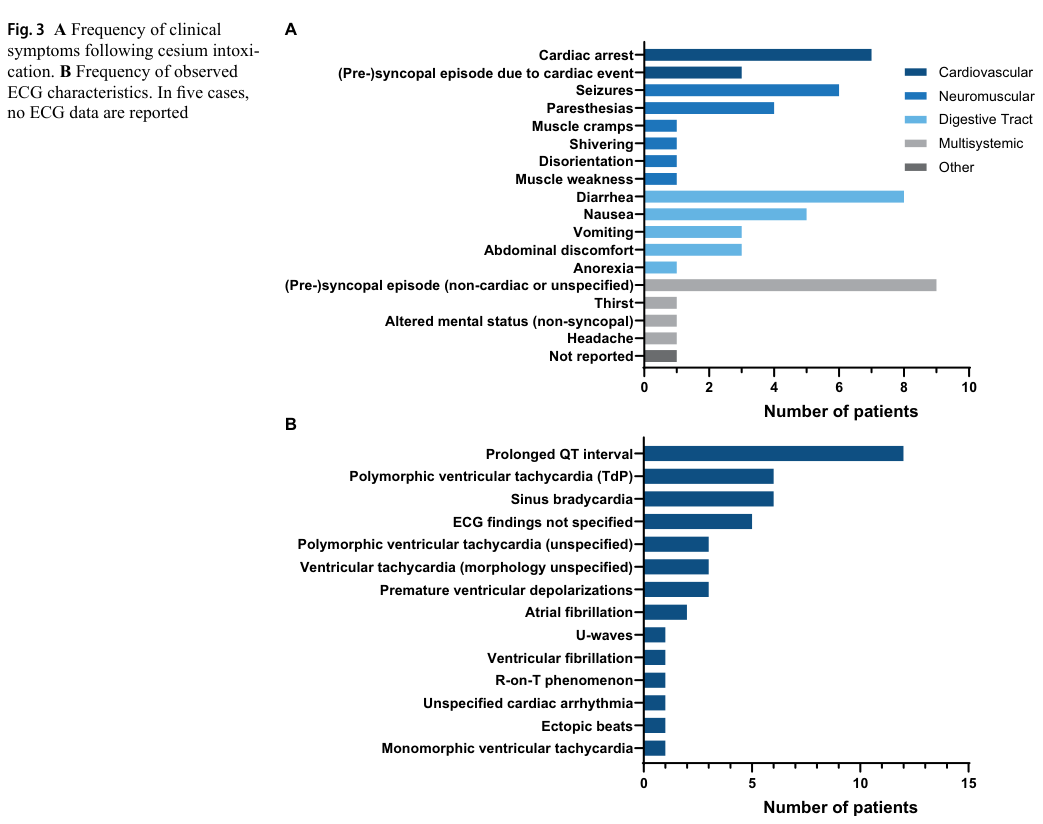
Reference Validation
Checked with linkml-reference-validator 0.3.0.
| Outcome | Count |
|---|---|
| References checked | 13 |
| Resolved | 13 |
| Unresolved (possible confabulation) | 0 |
| Unverifiable | 0 |
| References weighed for topical relevance | 13 |
| On topic | 2 |
| Off topic | 1 |
References that may not be about this subject
These identifiers resolve, so they are not fabrications, but the records they resolve to share almost none of this report's vocabulary. That is a clue and not a verdict - a paper can be relevant in ways its title and abstract do not spell out - so read them before deciding:
DOI:10.1111/j.1540-8167.1995.tb00356.x(5 mentions) - Role of Calcium Loading in Early Afterdepolarizations Generated by Cs+ in Canine and Guinea Pig Purkinje Fibers- shared terms: exposure
Weighed against this report's own most characteristic terms: disease, clinical, exposure, cesium, genetic, gene, primary, radiation, human, treatment, chemical, poisoning, cardiac, internal, potassium, effect, environmental, type, model, cell.
All extracted references resolved successfully. Resolving is not the same as being relevant, though - see the references listed above as possibly off topic.
Term Validation
Checked with linkml-term-validator 0.4.5, through the ols: adapter.
| Outcome | Count |
|---|---|
| Terms checked | 1 |
| Resolved | 1 |
| Unresolved (possible confabulation) | 0 |
| Obsolete | 0 |
| Unverifiable | 0 |
| Terms whose name was checked | 1 |
| Terms named correctly | 0 |
| Terms named as a different term | 1 |
Terms the report names something else
These identifiers resolve, so nothing about them looks wrong, and the ontology calls them something unrelated to what the report calls them. That usually means the identifier is not the one the sentence needs:
MONDO:0800384(2 mentions) - the report calls it "if available"; MONDO calls it cesium poisoning