Autosomal Recessive Spinocerebellar Ataxia 20
SCAR20 is an autosomal recessive neurodevelopmental and neurodegenerative disorder caused by biallelic pathogenic SNX14 variants. Its core includes early developmental delay or intellectual disability, limited speech, hypotonia, ataxia and progressive cerebellar atrophy, often with coarse facial features and relative macrocephaly. Hearing impairment, seizures, skeletal abnormalities and hyperkinetic movements vary between families. MRI can be normal early in childhood. Human autopsy and experimental models establish Purkinje-cell vulnerability. SNX14 participates in ER-associated lipid homeostasis and organelle interactions; proposed disease mechanisms include disturbed lipid handling and spastin-dependent axonal transport. Autophagy findings depend on the experimental system: patient neural progenitors showed slower autophagosome clearance, whereas other patient fibroblasts and engineered HEK293 cells retained autolysosome formation. A universal block of autophagosome-lysosome fusion is not established.
Ask OpenScientist
Ask a research question about Autosomal Recessive Spinocerebellar Ataxia 20. OpenScientist will conduct autonomous deep research using the Disorder Mechanisms Knowledge Base and PubMed literature (typically 10-30 minutes).
Do not include personal health information in your question. Questions and results are cached in your browser's local storage.
Inheritance
1Show evidence (2 references)
Discussions and Knowledge Gaps
3Show evidence (1 reference)
Show evidence (1 reference)
Pathophysiology
20Show evidence (4 references)
Show evidence (3 references)
Show evidence (4 references)
Show evidence (2 references)
Show evidence (3 references)
Show evidence (2 references)
Show evidence (3 references)
Show evidence (2 references)
Show evidence (2 references)
Show evidence (2 references)
Show evidence (2 references)
Show evidence (1 reference)
Show evidence (2 references)
Show evidence (1 reference)
Show evidence (4 references)
Show evidence (1 reference)
Show evidence (2 references)
Show evidence (1 reference)
Show evidence (1 reference)
Show evidence (1 reference)
Histopathology
2Show evidence (1 reference)
Show evidence (1 reference)
Pathograph
Phenotypes
39Cardiovascular 2
Show evidence (2 references)
Show evidence (1 reference)
Ear 1
Show evidence (2 references)
Eye 2
Show evidence (1 reference)
Show evidence (1 reference)
Head and Neck 9
Show evidence (1 reference)
Show evidence (1 reference)
Show evidence (1 reference)
Show evidence (1 reference)
Show evidence (1 reference)
Show evidence (1 reference)
Show evidence (1 reference)
Show evidence (1 reference)
Show evidence (1 reference)
Integument 1
Show evidence (2 references)
Limbs 3
Show evidence (1 reference)
Show evidence (1 reference)
Show evidence (2 references)
Musculoskeletal 5
Show evidence (2 references)
Show evidence (1 reference)
Show evidence (1 reference)
Show evidence (1 reference)
Show evidence (1 reference)
Nervous System 16
Show evidence (1 reference)
Show evidence (1 reference)
Show evidence (1 reference)
Show evidence (2 references)
Show evidence (1 reference)
Show evidence (1 reference)
Show evidence (1 reference)
Show evidence (1 reference)
Show evidence (1 reference)
Show evidence (1 reference)
Show evidence (1 reference)
Show evidence (1 reference)
Show evidence (1 reference)
Show evidence (1 reference)
Show evidence (1 reference)
Show evidence (1 reference)
Genetic Associations
1Show evidence (1 reference)
Variants (15)
Show evidence (1 reference)
Show evidence (1 reference)
Show evidence (2 references)
Show evidence (3 references)
Show evidence (3 references)
Show evidence (1 reference)
Show evidence (2 references)
Show evidence (1 reference)
Show evidence (1 reference)
Show evidence (2 references)
Show evidence (2 references)
Show evidence (2 references)
Show evidence (1 reference)
Show evidence (2 references)
Show evidence (2 references)
Medical Actions
12Show evidence (2 references)
Show evidence (1 reference)
Show evidence (1 reference)
Show evidence (1 reference)
Show evidence (1 reference)
Show evidence (1 reference)
Show evidence (1 reference)
Show evidence (2 references)
Show evidence (3 references)
Show evidence (2 references)
Show evidence (2 references)
Show evidence (1 reference)
Diagnosis
6Show evidence (1 reference)
Show evidence (2 references)
Show evidence (2 references)
Show evidence (1 reference)
Show evidence (1 reference)
Show evidence (2 references)
Prevalence
1Show evidence (2 references)
Differential Diagnoses
5Conditions with similar clinical presentations that must be differentiated from Autosomal Recessive Spinocerebellar Ataxia 20:
- Biallelic RUBCN variants rather than SNX14
- Coarse facial features and relative macrocephaly can favor SNX14, but their absence does not exclude it
- Distinct causal autophagy genes and organ-specific features
- Coarse facial features, variable macrocephaly and hearing impairment can favor SNX14; age-dependent cerebellar atrophy and molecular testing refine the diagnosis
- SIL1-related cataracts and myopathy versus the characteristic SNX14 facial and hearing phenotype
- Normal creatine kinase was documented in four tested individuals in the founding SNX14 series, not established as a universal exclusion test
Show evidence (1 reference)
- SNX14-associated clinical and molecular findings with variable, sometimes normal metabolic tests
- No specific lysosomal enzyme deficiency has been established as the defining defect in SCAR20
Show evidence (1 reference)
Related Datasets
2Show evidence (1 reference)
Show evidence (1 reference)
Experimental Models
8Show evidence (2 references)
Show evidence (1 reference)
Show evidence (1 reference)
Show evidence (1 reference)
Show evidence (1 reference)
Show evidence (1 reference)
Show evidence (1 reference)
Show evidence (1 reference)
Show evidence (1 reference)
Show evidence (1 reference)
Show evidence (2 references)
Show evidence (1 reference)
Show evidence (2 references)
Show evidence (1 reference)
Show evidence (1 reference)
Animal Models
6Show evidence (1 reference)
Show evidence (1 reference)
Show evidence (2 references)
Show evidence (1 reference)
Show evidence (1 reference)
Show evidence (1 reference)
Show evidence (1 reference)
Show evidence (1 reference)
Show evidence (1 reference)
Show evidence (1 reference)
Show evidence (1 reference)
Show evidence (1 reference)
Show evidence (2 references)
Show evidence (1 reference)
Show evidence (1 reference)
Show evidence (1 reference)
Show evidence (1 reference)
Source YAML
click to showname: Autosomal Recessive Spinocerebellar Ataxia 20
creation_date: '2026-08-12T00:00:00Z'
category: Mendelian
disease_term:
preferred_term: autosomal recessive spinocerebellar ataxia 20
term:
id: MONDO:0014601
label: autosomal recessive spinocerebellar ataxia 20
description: 'SCAR20 is an autosomal recessive neurodevelopmental and neurodegenerative disorder caused by biallelic pathogenic SNX14 variants. Its core includes early developmental delay or intellectual disability, limited speech, hypotonia, ataxia and progressive cerebellar atrophy, often with coarse facial features and relative macrocephaly. Hearing impairment, seizures, skeletal abnormalities and hyperkinetic movements vary between families. MRI can be normal early in childhood. Human autopsy and experimental models establish Purkinje-cell vulnerability. SNX14 participates in ER-associated lipid homeostasis and organelle interactions; proposed disease mechanisms include disturbed lipid handling and spastin-dependent axonal transport. Autophagy findings depend on the experimental system: patient neural progenitors showed slower autophagosome clearance, whereas other patient fibroblasts and engineered HEK293 cells retained autolysosome formation. A universal block of autophagosome-lysosome fusion is not established.'
inheritance:
- name: Autosomal recessive inheritance
description: 'SCAR20 is inherited in an autosomal recessive manner. It was first defined in consanguineous families with affected individuals homozygous for loss-of-function SNX14 variants; a non-consanguineous family with compound heterozygous variants has since been reported. Unaffected parents are heterozygous carriers.
'
inheritance_term:
preferred_term: Autosomal recessive inheritance
term:
id: HP:0000007
label: Autosomal recessive inheritance
evidence:
- reference: PMID:25439728
reference_title: Mutations in SNX14 cause a distinctive autosomal-recessive cerebellar ataxia and intellectual disability syndrome.
supports: SUPPORT
evidence_source: HUMAN_CLINICAL
snippet: Here we report the identification of causal mutations in Sorting Nexin 14 (SNX14) found in seven affected individuals from three unrelated consanguineous families who presented with recessively inherited moderate-severe intellectual disability, cerebellar ataxia, early-onset cerebellar atrophy, sensorineural hearing loss, and the distinctive association of progressively coarsening facial features, relative macrocephaly, and the absence of seizures.
explanation: Establishes autosomal recessive inheritance across three unrelated consanguineous families with biallelic SNX14 mutations.
- reference: PMID:33193593
reference_title: Two Compound Heterozygous Variants in SNX14 Cause Stereotypies and Dystonia in Autosomal Recessive Spinocerebellar Ataxia 20.
supports: SUPPORT
evidence_source: HUMAN_CLINICAL
snippet: Here we describe the first non-consanguineous SCAR20 family, the second Portuguese, with two siblings presenting similar clinical features caused by compound heterozygous SNX14 variants
explanation: Documents compound heterozygous inheritance in the first non-consanguineous SCAR20 family, confirming the recessive mechanism outside consanguineous pedigrees.
pathophysiology:
- name: Aberrant SNX14 Splicing
biological_scale: MOLECULAR
description: 'Specific intronic or structural alleles produce abnormal SNX14 transcripts, including pseudoexon inclusion, exon extension and multiexon loss. Patient RNA assays establish the splice products, while their frameshifts predict impaired protein function. Residual normal transcript is allele dependent: it was detected for c.462-589A>G but not for c.867+288A>G in the respective assayed samples. Nonsense-mediated decay is plausible for reduced RNA but was not directly established by these diagnostic studies.'
genes:
- preferred_term: SNX14
term:
id: hgnc:14977
label: SNX14
evidence:
- reference: PMID:37485342
reference_title: 'Homozygous deep intronic variant in SNX14 cause autosomal recessive Spinocerebellar ataxia 20: a case report.'
supports: SUPPORT
evidence_source: IN_VITRO
snippet: The RNA analysis revealed that the c.462-589A>G variant leads to the formation of a new donor splicing site within intron 5, resulting in a pseudo-exon inclusion between exons 5 and 6 of the SNX14 gene
explanation: RT-PCR and sequencing establish the aberrant splice product in PBMC-derived RNA.
- reference: PMID:42074495
reference_title: A Homozygous Deep Intronic SNX14 Variant Activates Pseudo-Exon Inclusion in a Patient with SCAR20.
supports: SUPPORT
evidence_source: IN_VITRO
snippet: RNA-seq data from the proband showed no SNX14 transcripts with normal splicing.
explanation: This result applies to the assayed fibroblast RNA, not all tissues or every SNX14 allele.
- reference: PMID:41623120
reference_title: Fibroblast Transcriptomics in Molecular Diagnostics of a Comprehensive Dystonia Cohort.
supports: SUPPORT
evidence_source: IN_VITRO
snippet: SNX14 mis‐splicing and underexpression resulted from a homozygous c.1108 + 28A>G variant, which led to extension of exon 12
explanation: RNA-guided genome reanalysis identified a splice-altering SNV; the study reports a diagnosis but no separate ACMG classification in this passage.
- reference: PMID:33193593
reference_title: Two Compound Heterozygous Variants in SNX14 Cause Stereotypies and Dystonia in Autosomal Recessive Spinocerebellar Ataxia 20.
supports: SUPPORT
evidence_source: IN_VITRO
snippet: 'Expression analysis enabled the identification of a shorter transcript with a deletion encompassing SNX14 exons 8 to 13: r.613_1171del, p.(Val205Argfs*47)'
explanation: RNA analysis supports exon loss and the predicted frameshift; this is not a protein-abundance measurement.
downstream:
- target: SNX14 Loss of Function
causal_link_type: INDIRECT_UNKNOWN_INTERMEDIATES
description: Frameshifted splice products predict premature termination and loss of normal protein function. The RNA diagnostic studies do not directly quantify all possible residual protein isoforms.
evidence:
- reference: PMID:42074495
reference_title: A Homozygous Deep Intronic SNX14 Variant Activates Pseudo-Exon Inclusion in a Patient with SCAR20.
supports: SUPPORT
evidence_source: IN_VITRO
snippet: Inclusion of this pseudo-exon produced a frameshift that created a premature stop codon
explanation: The observed transcript predicts a truncating consequence; decay and protein abundance remain inferred.
- name: SNX14 Loss of Function
biological_scale: MOLECULAR
description: Biallelic pathogenic variants reduce normal SNX14 function. Many truncating or deletion alleles eliminate detectable protein, but the PX-domain in-frame deletion p.Ala603_Gly632del produces a shortened protein with preserved ER association and a normal response to Torin1 in the tested fibroblasts. Protein abundance, localization and individual cellular functions therefore depend on the allele and assay.
evidence:
- reference: PMID:29635513
reference_title: SNX14 mutations affect endoplasmic reticulum-associated neutral lipid metabolism in autosomal recessive spinocerebellar ataxia 20.
supports: SUPPORT
evidence_source: HUMAN_CLINICAL
snippet: Mutations generally result in loss of protein although several coding region deletions have also been reported.
explanation: The abstract distinguishes frequent protein loss from coding deletions with different consequences.
quote_role: BACKGROUND
- reference: PMID:25848753
reference_title: Biallelic mutations in SNX14 cause a syndromic form of cerebellar atrophy and lysosome-autophagosome dysfunction.
supports: SUPPORT
evidence_source: HUMAN_CLINICAL
snippet: Here we describe a new clinically distinguishable recessive syndrome in 12 families with cerebellar atrophy together with ataxia, coarsened facial features and intellectual disability, due to truncating mutations in the sorting nexin gene SNX14, encoding a ubiquitously expressed modular PX domain-containing sorting factor.
explanation: Independently establishes biallelic truncating SNX14 mutations as the cause across 12 families.
- reference: url:https://pmc.ncbi.nlm.nih.gov/articles/PMC5961352/
reference_title: SNX14 mutations affect endoplasmic reticulum-associated neutral lipid metabolism in autosomal recessive spinocerebellar ataxia 20 - PMC
supports: SUPPORT
evidence_source: IN_VITRO
snippet: fibroblasts derived from a patient with a PX domain-specific SNX14 truncation (p.A603_G632del) responded to Torin1 treatment at similar levels to control cell lines
explanation: The retained autophagy response demonstrates that this patient allele is not equivalent to complete protein absence.
downstream:
- target: Impaired Autophagosome Clearance in Neural Progenitors
causal_link_type: INDIRECT_UNKNOWN_INTERMEDIATES
description: SNX14 loss perturbs clearance in patient neural progenitors; intermediates and transfer to other cell types remain unresolved.
evidence:
- reference: PMID:25848753
reference_title: Biallelic mutations in SNX14 cause a syndromic form of cerebellar atrophy and lysosome-autophagosome dysfunction.
supports: SUPPORT
evidence_source: IN_VITRO
snippet: the increased LC3 II levels were recovered to basal rates by forced expression of tagged SNX14 into patient cells
explanation: Genetic complementation supports SNX14 dependence of the neural-progenitor readout.
- target: Lysosomal Enlargement
causal_link_type: INDIRECT_UNKNOWN_INTERMEDIATES
evidence:
- reference: PMID:25848753
reference_title: Biallelic mutations in SNX14 cause a syndromic form of cerebellar atrophy and lysosome-autophagosome dysfunction.
supports: SUPPORT
evidence_source: IN_VITRO
snippet: lysosomes appeared increased in size in patient NPCs
explanation: The patient neural-progenitor imaging directly measures lysosomal enlargement.
description: Enlargement is observed in patient-derived cells lacking SNX14; the molecular intermediate is not established.
- target: Abnormal Lipid Droplet Maturation
causal_link_type: INDIRECT_UNKNOWN_INTERMEDIATES
description: SNX14 loss produces this phenotype in the specified experimental system; molecular intermediates and transfer across patient alleles remain incompletely defined.
evidence:
- reference: PMID:30765438
reference_title: Cerebellar ataxia disease-associated Snx14 promotes lipid droplet growth at ER-droplet contacts.
supports: SUPPORT
evidence_source: IN_VITRO
snippet: loss of SNX14 causes alterations in LD morphology following OA treatment, with a substantial increase in the proportion of very small and large LDs.
explanation: U2OS knockout cells have a bimodal droplet-size distribution after oleate loading.
- target: Impaired Saturated Fatty Acid Processing
causal_link_type: INDIRECT_UNKNOWN_INTERMEDIATES
description: SNX14 loss produces this phenotype in the specified experimental system; molecular intermediates and transfer across patient alleles remain incompletely defined.
evidence:
- reference: PMID:33310904
reference_title: Snx14 proximity labeling reveals a role in saturated fatty acid metabolism and ER homeostasis defective in SCAR20 disease.
supports: SUPPORT
evidence_source: IN_VITRO
snippet: This indicates thatSNX14KOcells accumulate FFAs following palmitate uptake, consistent with a defect in palmitate processing, and these effects can be reversed by SCD1 overexpression.
explanation: Time-course lipid extraction and uptake controls distinguish defective processing from enhanced uptake.
- target: Stress-Dependent Lysosomal Cholesterol Accumulation
causal_link_type: INDIRECT_UNKNOWN_INTERMEDIATES
description: SNX14 loss produces this phenotype in the specified experimental system; molecular intermediates and transfer across patient alleles remain incompletely defined.
evidence:
- reference: PMID:29635513
reference_title: SNX14 mutations affect endoplasmic reticulum-associated neutral lipid metabolism in autosomal recessive spinocerebellar ataxia 20.
supports: SUPPORT
evidence_source: IN_VITRO
snippet: SNX14KO cells display distinct perinuclear accumulation of filipin in LAMP1-positive lysosomal structures indicating cholesterol accumulation.
explanation: The full study places this HEK293 filipin phenotype under U18666A treatment; the quoted abstract sentence alone omits that condition.
- target: Accelerated Spastin Turnover
causal_link_type: INDIRECT_UNKNOWN_INTERMEDIATES
description: SNX14 loss produces this phenotype in the specified experimental system; molecular intermediates and transfer across patient alleles remain incompletely defined.
evidence:
- reference: PMID:34691693
reference_title: SNX14 deficiency-induced defective axonal mitochondrial transport in Purkinje cells underlies cerebellar ataxia and can be reversed by valproate.
supports: SUPPORT
evidence_source: MODEL_ORGANISM
snippet: Spastin protein levels were downregulated in the cerebella of cKO mice compared to cHet mice
explanation: Mouse cerebellar protein abundance is reduced without a corresponding transcript decrease.
- target: Reduced Cortical Neuron Excitability
causal_link_type: INDIRECT_UNKNOWN_INTERMEDIATES
description: Acute knockdown produces the electrophysiological phenotype in cultured mouse neurons; the molecular intermediates and consequences of individual human alleles are unresolved.
evidence:
- reference: PMID:24859318
reference_title: Snx14 regulates neuronal excitability, promotes synaptic transmission, and is imprinted in the brain of mice.
supports: SUPPORT
evidence_source: IN_VITRO
snippet: We found that Snx14 knockdown reduced intrinsic excitability of pyramidal neurons
explanation: Current-clamp recordings in mouse cortical cultures; reduced input resistance and increased rheobase accompany reduced firing.
- target: Reduced Cortical Synaptic Transmission
causal_link_type: INDIRECT_UNKNOWN_INTERMEDIATES
description: Acute knockdown produces the electrophysiological phenotype in cultured mouse neurons; the molecular intermediates and consequences of individual human alleles are unresolved.
evidence:
- reference: PMID:24859318
reference_title: Snx14 regulates neuronal excitability, promotes synaptic transmission, and is imprinted in the brain of mice.
supports: SUPPORT
evidence_source: IN_VITRO
snippet: We observed a dramatic reduction in mEPSC and mIPSC frequency, but not amplitude, with Snx14 knockdown
explanation: Voltage-clamp recordings measure fewer spontaneous excitatory and inhibitory events; unchanged amplitudes limit the interpretation.
- target: Cerebellar Acylcarnitine Accumulation
causal_link_type: INDIRECT_UNKNOWN_INTERMEDIATES
description: The constitutive knockout produces this tissue lipid phenotype. The relevant storage, clearance and intercellular intermediates remain unresolved.
evidence:
- reference: PMID:38625743
reference_title: Altered lipid homeostasis is associated with cerebellar neurodegeneration in SNX14 deficiency.
supports: SUPPORT
evidence_source: MODEL_ORGANISM
snippet: This accounted for the majority of AcCa-s detected in cerebella (6 out of 8) and resulted in an overall increase of total AcCa concentration in Snx14-KO cerebella.
explanation: Direct mouse lipidomic observation; clinical and cell-specific implications remain provisional.
- target: Regional Cerebellar Triglyceride Depletion
causal_link_type: INDIRECT_UNKNOWN_INTERMEDIATES
description: The constitutive knockout produces this tissue lipid phenotype. The relevant storage, clearance and intercellular intermediates remain unresolved.
evidence:
- reference: PMID:38625743
reference_title: Altered lipid homeostasis is associated with cerebellar neurodegeneration in SNX14 deficiency.
supports: SUPPORT
evidence_source: MODEL_ORGANISM
snippet: 2 TGs were reduced in Snx14-KO cerebella, 1 of which (TG 53:2) is specific to the outermost layer of the cerebellar cortex comprised by PC soma and dendrites
explanation: Direct mouse lipidomic observation; clinical and cell-specific implications remain provisional.
- target: Forebrain Neuronal Loss
causal_link_type: INDIRECT_UNKNOWN_INTERMEDIATES
description: Forebrain neuronal loss was observed in human SNX14 disease; the intervening cellular mechanism remains unestablished.
evidence:
- reference: PMID:25848753
reference_title: Biallelic mutations in SNX14 cause a syndromic form of cerebellar atrophy and lysosome-autophagosome dysfunction.
supports: SUPPORT
evidence_source: HUMAN_CLINICAL
snippet: Forebrain also presented neuronal loss although less severe than in the cerebellum
explanation: Direct human autopsy evidence for extracerebellar neuronal loss in one affected individual.
genes:
- preferred_term: SNX14
term:
id: hgnc:14977
label: SNX14
- name: Impaired Autophagosome Clearance in Neural Progenitors
biological_scale: CELLULAR
description: 'SNX14-deficient patient-derived neural progenitors showed slower LC3 flux during nutrient deprivation without increased autophagosome formation. Re-expression of SNX14 normalized elevated LC3-II. These findings support impaired clearance in this system, but do not establish a universal fusion defect: a later study found preserved autolysosome formation in patient fibroblasts and SNX14-knockout HEK293 cells, with allele-dependent responses to Torin1.'
biological_processes:
- preferred_term: autophagosome maturation
term:
id: GO:0097352
label: autophagosome maturation
modifier: ABNORMAL
evidence:
- reference: PMID:25848753
reference_title: Biallelic mutations in SNX14 cause a syndromic form of cerebellar atrophy and lysosome-autophagosome dysfunction.
supports: SUPPORT
evidence_source: IN_VITRO
snippet: we identified slower LC3 flux in patient cells compared to controls.
explanation: Flux was measured in nutrient-deprived patient neural progenitors using leupeptin and ammonium chloride, rather than inferred solely from steady-state LC3-II.
- reference: PMID:25848753
reference_title: Biallelic mutations in SNX14 cause a syndromic form of cerebellar atrophy and lysosome-autophagosome dysfunction.
supports: SUPPORT
evidence_source: IN_VITRO
snippet: the increased LC3 II levels were recovered to basal rates by forced expression of tagged SNX14 into patient cells
explanation: Genetic complementation supports SNX14 dependence of the neural-progenitor readout.
- reference: url:https://pmc.ncbi.nlm.nih.gov/articles/PMC5961352/
reference_title: SNX14 mutations affect endoplasmic reticulum-associated neutral lipid metabolism in autosomal recessive spinocerebellar ataxia 20 - PMC
supports: REFUTE
evidence_source: IN_VITRO
snippet: indicating that loss of SNX14 did not impact autophagosome-lysosome fusion
explanation: Tandem fluorescent LC3 in HEK293 cells did not show a general fusion block. This challenges generalization across cellular systems without negating the earlier neural-progenitor flux measurement.
- reference: url:https://pmc.ncbi.nlm.nih.gov/articles/PMC5961352/
reference_title: SNX14 mutations affect endoplasmic reticulum-associated neutral lipid metabolism in autosomal recessive spinocerebellar ataxia 20 - PMC
supports: REFUTE
evidence_source: IN_VITRO
snippet: we observe a very strong colocalization of autophagosome and lysosome associated markers indicating the efficient formation of autolysosomes in SCAR20 mutant fibroblasts
explanation: The fibroblast colocalization and p62-degradation assays support preserved autolysosome formation under the tested conditions.
downstream:
- target: Cerebellar Purkinje Cell Neurodegeneration
causal_link_type: INDIRECT_UNKNOWN_INTERMEDIATES
description: Neural-progenitor clearance defects and morpholino-associated neuronal death motivate this proposed link. The experiments do not isolate defective autophagic clearance as sufficient to kill human Purkinje cells.
evidence:
- reference: PMID:25848753
reference_title: Biallelic mutations in SNX14 cause a syndromic form of cerebellar atrophy and lysosome-autophagosome dysfunction.
supports: SUPPORT
evidence_source: MODEL_ORGANISM
snippet: Zebrafish morphants for snx14 showed dramatic loss of cerebellar parenchyma, accumulation of autophagosomes and activation of apoptosis.
explanation: Autophagic structures and neural apoptosis co-occur after snx14 knockdown; this is indirect model evidence for the proposed causal link. A later stable genetic zebrafish model did not reproduce gross neural loss, limiting generalization from morphants.
directness: INDIRECT
mechanism_confidence: PROVISIONAL
- name: Lysosomal Enlargement
biological_scale: CELLULAR
description: Patient-derived neural progenitors have enlarged lysosomes, and patient fibroblasts and engineered cells accumulate abnormal vacuolar structures. Morphological enlargement is distinct from defective autophagosome fusion or generalized loss of lysosomal enzyme activity.
evidence:
- reference: PMID:25848753
reference_title: Biallelic mutations in SNX14 cause a syndromic form of cerebellar atrophy and lysosome-autophagosome dysfunction.
supports: SUPPORT
evidence_source: IN_VITRO
snippet: lysosomes appeared increased in size in patient NPCs
explanation: The patient neural-progenitor imaging directly measures lysosomal enlargement.
- reference: PMID:25848753
reference_title: Biallelic mutations in SNX14 cause a syndromic form of cerebellar atrophy and lysosome-autophagosome dysfunction.
supports: NO_EVIDENCE
evidence_source: IN_VITRO
snippet: found no obvious differences in intensity of stained lysosomes
explanation: Bodipy-pepstatin labeling did not show an obvious difference in active cathepsin D signal, although immunoblot levels were slightly reduced; enlargement does not establish global enzyme inactivity.
- name: Abnormal Lipid Droplet Maturation
biological_scale: CELLULAR
mechanism_confidence: PROVISIONAL
description: In oleate-loaded SNX14-knockout U2OS cells, lipid droplets are fewer and more heterogeneous in size, with reduced total droplet area and modestly reduced ER contact extent. SNX14 remains anchored to the ER through its N terminus and contacts droplets through a C-terminal amphipathic helix; ACSL3 acts upstream of its recruitment. Total triacylglycerol, cholesterol and cholesterol ester levels were not significantly changed in this system. These results distinguish defective droplet maturation from universal failure of neutral-lipid synthesis. The route from this cellular phenotype to human Purkinje-cell death remains unresolved.
evidence:
- reference: PMID:30765438
reference_title: Cerebellar ataxia disease-associated Snx14 promotes lipid droplet growth at ER-droplet contacts.
supports: SUPPORT
evidence_source: IN_VITRO
snippet: loss of SNX14 causes alterations in LD morphology following OA treatment, with a substantial increase in the proportion of very small and large LDs.
explanation: U2OS knockout cells have a bimodal droplet-size distribution after oleate loading.
- reference: PMID:30765438
reference_title: Cerebellar ataxia disease-associated Snx14 promotes lipid droplet growth at ER-droplet contacts.
supports: SUPPORT
evidence_source: IN_VITRO
snippet: SNX14KO cells displayed mildly reduced ER–LD contacts that could be observed by TEM
explanation: TEM supports a reduction in ER-droplet contact extent, not complete loss of contacts.
- reference: PMID:30765438
reference_title: Cerebellar ataxia disease-associated Snx14 promotes lipid droplet growth at ER-droplet contacts.
supports: NO_EVIDENCE
evidence_source: IN_VITRO
snippet: loss of SNX14 did not significantly affect TAG levels at any time point
explanation: Normal total TAG under these conditions limits a generalized synthesis-deficiency interpretation.
biological_processes:
- preferred_term: lipid droplet formation
term:
id: GO:0140042
label: lipid droplet formation
modifier: ABNORMAL
- name: Stress-Dependent Lysosomal Cholesterol Accumulation
biological_scale: CELLULAR
mechanism_confidence: PROVISIONAL
description: In SNX14-knockout HEK293 cells, the cholesterol-trafficking inhibitor U18666A unmasks prominent perinuclear filipin-positive lysosomal cholesterol accumulation; untreated cells did not show a comparable distribution difference. Patient fibroblasts also showed altered cholesterol handling. This phenotype does not establish loss of all ER-lysosome contacts or a universal block of autophagic fusion. Its causal contribution to neuronal degeneration is unresolved; cyclodextrin did not rescue degeneration in a conditional mouse model.
evidence:
- reference: PMID:29635513
reference_title: SNX14 mutations affect endoplasmic reticulum-associated neutral lipid metabolism in autosomal recessive spinocerebellar ataxia 20.
supports: SUPPORT
evidence_source: IN_VITRO
snippet: SNX14KO cells display distinct perinuclear accumulation of filipin in LAMP1-positive lysosomal structures indicating cholesterol accumulation.
explanation: The full study places this HEK293 filipin phenotype under U18666A treatment; the quoted abstract sentence alone omits that condition.
- reference: PMID:34691693
reference_title: SNX14 deficiency-induced defective axonal mitochondrial transport in Purkinje cells underlies cerebellar ataxia and can be reversed by valproate.
supports: NO_EVIDENCE
evidence_source: MODEL_ORGANISM
snippet: failed to ameliorate cerebellar degeneration in Snx14-deficient mice
explanation: The negative mouse intervention limits a cholesterol-only account of Purkinje-cell degeneration.
biological_processes:
- preferred_term: cholesterol homeostasis
term:
id: GO:0042632
label: cholesterol homeostasis
modifier: ABNORMAL
- name: Impaired Saturated Fatty Acid Processing
biological_scale: CELLULAR
mechanism_confidence: PROVISIONAL
description: Palmitate-loaded SNX14-knockout U2OS cells accumulate excess free fatty acids without increased fatty-acid uptake. SNX14 co-immunoprecipitates with SCD1 and requires its ER anchor and PXA domain for protection from palmitate. SCD1 overexpression rescues free-fatty-acid accumulation, but direct microsomal assays found no significant reduction of SCD1 enzymatic activity after SNX14 loss. A substrate-presentation or organizational role is proposed; SNX14 is not established as an obligate activator of SCD1.
evidence:
- reference: PMID:33310904
reference_title: Snx14 proximity labeling reveals a role in saturated fatty acid metabolism and ER homeostasis defective in SCAR20 disease.
supports: SUPPORT
evidence_source: IN_VITRO
snippet: This indicates thatSNX14KOcells accumulate FFAs following palmitate uptake, consistent with a defect in palmitate processing, and these effects can be reversed by SCD1 overexpression.
explanation: Time-course lipid extraction and uptake controls distinguish defective processing from enhanced uptake.
- reference: PMID:33310904
reference_title: Snx14 proximity labeling reveals a role in saturated fatty acid metabolism and ER homeostasis defective in SCAR20 disease.
supports: NO_EVIDENCE
evidence_source: IN_VITRO
snippet: there was no significant change in relative SCD1 activity
explanation: The radiolabeled microsomal desaturase assay argues against a direct loss of SCD1 enzyme activity.
- reference: PMID:33310904
reference_title: Snx14 proximity labeling reveals a role in saturated fatty acid metabolism and ER homeostasis defective in SCAR20 disease.
supports: SUPPORT
evidence_source: IN_VITRO
snippet: the Snx14 PXA domain was required for FFA processing
explanation: Deletion complementation separates the PXA requirement from the ability to co-immunoprecipitate SCD1.
downstream:
- target: Increased Lipid Acyl-Chain Saturation
causal_link_type: INDIRECT_UNKNOWN_INTERMEDIATES
description: Defective processing changes acyl-chain composition during palmitate loading; the complete biochemical route remains unresolved.
evidence:
- reference: PMID:33310904
reference_title: Snx14 proximity labeling reveals a role in saturated fatty acid metabolism and ER homeostasis defective in SCAR20 disease.
supports: SUPPORT
evidence_source: IN_VITRO
snippet: there was a greater proportion of saturated fatty acyl chains within several lipid classes.
explanation: Mass-spectrometry lipidomics measures altered saturation rather than a uniform decrease in all lipid abundance.
- target: Saturated Fatty Acid Lipotoxicity
causal_link_type: INDIRECT_UNKNOWN_INTERMEDIATES
description: SCD1-mediated rescue of both free-fatty-acid accumulation and viability supports this connection within engineered U2OS cells.
evidence:
- reference: PMID:33310904
reference_title: Snx14 proximity labeling reveals a role in saturated fatty acid metabolism and ER homeostasis defective in SCAR20 disease.
supports: SUPPORT
evidence_source: IN_VITRO
snippet: This indicates thatSNX14KOcells accumulate FFAs following palmitate uptake, consistent with a defect in palmitate processing, and these effects can be reversed by SCD1 overexpression.
explanation: Time-course lipid extraction and uptake controls distinguish defective processing from enhanced uptake.
- reference: PMID:33310904
reference_title: Snx14 proximity labeling reveals a role in saturated fatty acid metabolism and ER homeostasis defective in SCAR20 disease.
supports: SUPPORT
evidence_source: IN_VITRO
snippet: SCD1 overexpression rescuedSNX14KOcells even with DGATi
explanation: Rescue despite inhibition of triglyceride synthesis argues for a protective step upstream of droplet storage.
- name: Increased Lipid Acyl-Chain Saturation
biological_scale: CELLULAR
mechanism_confidence: PROVISIONAL
description: After palmitate exposure, SNX14-knockout U2OS cells incorporate more saturated acyl chains into several neutral and membrane lipid species. Triglyceride and lysophosphatidylcholine profiles resemble SCD1-inhibited cells, despite preserved measured SCD1 activity. This is a lipid-composition readout in cultured cells, not evidence of a systemic desaturase deficiency.
evidence:
- reference: PMID:33310904
reference_title: Snx14 proximity labeling reveals a role in saturated fatty acid metabolism and ER homeostasis defective in SCAR20 disease.
supports: SUPPORT
evidence_source: IN_VITRO
snippet: there was a greater proportion of saturated fatty acyl chains within several lipid classes.
explanation: Mass-spectrometry lipidomics measures altered saturation rather than a uniform decrease in all lipid abundance.
- reference: PMID:33310904
reference_title: Snx14 proximity labeling reveals a role in saturated fatty acid metabolism and ER homeostasis defective in SCAR20 disease.
supports: SUPPORT
evidence_source: IN_VITRO
snippet: Analysis revealed a significant (∼40%) increase in the levels of DAG, lysophosphatidylethanolamine (LPE), and PC
explanation: The palmitate-treated knockout lipid profile includes increases in specific lipid classes.
downstream:
- target: Palmitate-Induced ER Structural Disruption
causal_link_type: INDIRECT_UNKNOWN_INTERMEDIATES
description: SCD1 overexpression reverses both altered saturation profiles and ER fragmentation, supporting a lipid-dependent connection without isolating one lipid species as causal.
evidence:
- reference: PMID:33310904
reference_title: Snx14 proximity labeling reveals a role in saturated fatty acid metabolism and ER homeostasis defective in SCAR20 disease.
supports: SUPPORT
evidence_source: IN_VITRO
snippet: ectopic expression of SCD1 in palmitate-treatedSNX14KOcells rescued ER morphology
explanation: Rescue links the stress-dependent ER phenotype to fatty-acid handling.
- name: Palmitate-Induced ER Structural Disruption
biological_scale: CELLULAR
mechanism_confidence: PROVISIONAL
description: 'SNX14-knockout U2OS cells have normal ER morphology under basal conditions but marked ER dilation and fragmentation after prolonged palmitate exposure. SCD1 overexpression rescues this morphology. An exaggerated unfolded-protein response was not established: spliced XBP1 was not significantly different between genotypes, and IRE1 or PERK inhibition did not rescue viability.'
evidence:
- reference: PMID:33310904
reference_title: Snx14 proximity labeling reveals a role in saturated fatty acid metabolism and ER homeostasis defective in SCAR20 disease.
supports: SUPPORT
evidence_source: IN_VITRO
snippet: ectopic expression of SCD1 in palmitate-treatedSNX14KOcells rescued ER morphology
explanation: Rescue links the stress-dependent ER phenotype to fatty-acid handling.
- reference: PMID:33310904
reference_title: Snx14 proximity labeling reveals a role in saturated fatty acid metabolism and ER homeostasis defective in SCAR20 disease.
supports: NO_EVIDENCE
evidence_source: IN_VITRO
snippet: altered or hyperactive UPR signaling was not causative ofSNX14KOcell death following palmitate exposure
explanation: UPR inhibitor experiments constrain interpretation of the ER morphology phenotype.
- name: Saturated Fatty Acid Lipotoxicity
biological_scale: CELLULAR
mechanism_confidence: PROVISIONAL
description: Engineered SNX14-knockout U2OS cells and patient-derived fibroblasts are more susceptible to saturated-fatty-acid exposure. SCD1 overexpression or oleate cotreatment rescues viability in the engineered cells. Rescue persists with DGAT inhibition, so it cannot be attributed solely to triglyceride storage in lipid droplets. The contribution of this stress response to human neuronal loss is proposed and remains unproven.
evidence:
- reference: PMID:33310904
reference_title: Snx14 proximity labeling reveals a role in saturated fatty acid metabolism and ER homeostasis defective in SCAR20 disease.
supports: SUPPORT
evidence_source: IN_VITRO
snippet: both SNX14KO cells and SCAR20 disease patient-derived cells are hypersensitive to SFA-mediated lipotoxic cell death.
explanation: Engineered U2OS cells and patient fibroblasts provide distinct cellular evidence.
- reference: PMID:33310904
reference_title: Snx14 proximity labeling reveals a role in saturated fatty acid metabolism and ER homeostasis defective in SCAR20 disease.
supports: SUPPORT
evidence_source: IN_VITRO
snippet: SCD1 overexpression rescuedSNX14KOcells even with DGATi
explanation: Rescue despite inhibition of triglyceride synthesis argues for a protective step upstream of droplet storage.
downstream:
- target: Cerebellar Purkinje Cell Neurodegeneration
causal_link_type: INDIRECT_UNKNOWN_INTERMEDIATES
description: Cellular lipotoxicity and predegenerative mouse lipid changes motivate this proposed link; neither experiment proves lipotoxicity is sufficient for human Purkinje-cell death.
evidence:
- reference: PMID:38625743
reference_title: Altered lipid homeostasis is associated with cerebellar neurodegeneration in SNX14 deficiency.
supports: SUPPORT
evidence_source: MODEL_ORGANISM
snippet: These data suggest an exciting hypothesis implicating lipotoxicity-induced ferroptosis as a pathogenic mechanism of cerebellar degeneration in SCAR20 that warrants future investigation.
explanation: The authors explicitly frame ferroptosis as a hypothesis; it is not established by a ferroptosis-specific perturbation or rescue.
directness: INDIRECT
- name: Accelerated Spastin Turnover
biological_scale: MOLECULAR
mechanism_confidence: PROVISIONAL
description: SNX14 associates with the M1 spastin isoform through N-terminal regions. In conditional mouse cerebella, spastin protein is reduced while SPAST transcript is unchanged. In SNX14-depleted HEK293T cells, leupeptin largely reverses enhanced spastin turnover whereas proteasome inhibition does not. This supports posttranscriptional destabilization in the tested systems; the intervening trafficking mechanism and its prevalence across human alleles remain unresolved.
evidence:
- reference: PMID:34691693
reference_title: SNX14 deficiency-induced defective axonal mitochondrial transport in Purkinje cells underlies cerebellar ataxia and can be reversed by valproate.
supports: SUPPORT
evidence_source: MODEL_ORGANISM
snippet: Spastin protein levels were downregulated in the cerebella of cKO mice compared to cHet mice
explanation: Mouse cerebellar protein abundance is reduced without a corresponding transcript decrease.
- reference: PMID:34691693
reference_title: SNX14 deficiency-induced defective axonal mitochondrial transport in Purkinje cells underlies cerebellar ataxia and can be reversed by valproate.
supports: SUPPORT
evidence_source: IN_VITRO
snippet: enhanced spastin turnover with SNX14 deficiency was largely reversed by the inhibition of lysosomal, rather than proteasomal, protein degradation
explanation: Inhibitor experiments in HEK293T cells support increased lysosomal turnover.
downstream:
- target: Axonal Microtubule Disorganization
causal_link_type: INDIRECT_UNKNOWN_INTERMEDIATES
description: Reduced spastin abundance is proposed to disrupt axonal microtubule organization; severing activity itself was not measured.
evidence:
- reference: PMID:34691693
reference_title: SNX14 deficiency-induced defective axonal mitochondrial transport in Purkinje cells underlies cerebellar ataxia and can be reversed by valproate.
supports: SUPPORT
evidence_source: MODEL_ORGANISM
snippet: SNX14 deficiency disrupted microtubule organization, and reduced spastin expression.
explanation: The study connects these findings while identifying spastin activity as a future question.
directness: INDIRECT
- target: Axonal Mitochondrial Transport Failure
causal_link_type: INDIRECT_UNKNOWN_INTERMEDIATES
description: Restoring M1 spastin rescues mitochondrial motility in cultured knockout neurons.
evidence:
- reference: PMID:34691693
reference_title: SNX14 deficiency-induced defective axonal mitochondrial transport in Purkinje cells underlies cerebellar ataxia and can be reversed by valproate.
supports: SUPPORT
evidence_source: IN_VITRO
snippet: M1 spastin overexpression largely restored mitochondrial motility in Snx14 KO neurons
explanation: Recombinant AAV-mediated spastin re-expression provides functional rescue evidence.
- name: Axonal Microtubule Disorganization
biological_scale: CELLULAR
mechanism_confidence: PROVISIONAL
description: Conditional Snx14-deficient mouse Purkinje axons show microtubule misalignment and swelling. Spastin destabilization is a proposed mediator based on its function and rescue of mitochondrial motility by M1 spastin re-expression; the study did not directly establish altered spastin severing activity.
evidence:
- reference: PMID:34691693
reference_title: SNX14 deficiency-induced defective axonal mitochondrial transport in Purkinje cells underlies cerebellar ataxia and can be reversed by valproate.
supports: SUPPORT
evidence_source: MODEL_ORGANISM
snippet: marked microtubule disorganization (Fig. 4A and C) in the swollen axons from Snx14-deficient Purkinje cells.
explanation: Electron microscopy identifies the structural defect in mouse Purkinje axons.
downstream:
- target: Axonal Mitochondrial Transport Failure
causal_link_type: INDIRECT_UNKNOWN_INTERMEDIATES
description: Disorganized microtubules provide a structural explanation for impaired axonal mitochondrial transport, although the experiments do not selectively repair microtubules while holding other effects constant.
evidence:
- reference: PMID:34691693
reference_title: SNX14 deficiency-induced defective axonal mitochondrial transport in Purkinje cells underlies cerebellar ataxia and can be reversed by valproate.
supports: SUPPORT
evidence_source: MODEL_ORGANISM
snippet: SNX14 deficiency disrupted microtubule organization and mitochondrial transport in axons by destabilizing the microtubule-severing enzyme spastin
explanation: The study integrates ultrastructure, cultured-neuron transport and spastin rescue into this pathway.
directness: INDIRECT
- name: Axonal Mitochondrial Transport Failure
biological_scale: CELLULAR
mechanism_confidence: PROVISIONAL
description: Live imaging of cultured neurons from conditional Snx14-deficient mice shows reduced mitochondrial motility in both directions, with greater impairment of anterograde movement. M1 spastin re-expression restores motility. This cultured-neuron readout is distinct from ultrastructural measurements in Purkinje axons and has not been established in patient neurons.
evidence:
- reference: PMID:34691693
reference_title: SNX14 deficiency-induced defective axonal mitochondrial transport in Purkinje cells underlies cerebellar ataxia and can be reversed by valproate.
supports: SUPPORT
evidence_source: IN_VITRO
snippet: Anterograde and retrograde mitochondrial transport was compromised.
explanation: Time-lapse microscopy measures the transport defect directly in cultured mouse neurons.
- reference: PMID:34691693
reference_title: SNX14 deficiency-induced defective axonal mitochondrial transport in Purkinje cells underlies cerebellar ataxia and can be reversed by valproate.
supports: SUPPORT
evidence_source: IN_VITRO
snippet: M1 spastin overexpression largely restored mitochondrial motility in Snx14 KO neurons
explanation: Recombinant AAV-mediated spastin re-expression provides functional rescue evidence.
biological_processes:
- preferred_term: mitochondrial transport
term:
id: GO:0006839
label: mitochondrial transport
modifier: DECREASED
downstream:
- target: Reduced Cerebellar Mitochondrial Respiration
causal_link_type: INDIRECT_UNKNOWN_INTERMEDIATES
description: The study proposes that impaired mitochondrial distribution contributes to respiratory dysfunction; valproate rescues both endpoints but is not a selective transport perturbation.
evidence:
- reference: PMID:34691693
reference_title: SNX14 deficiency-induced defective axonal mitochondrial transport in Purkinje cells underlies cerebellar ataxia and can be reversed by valproate.
supports: SUPPORT
evidence_source: MODEL_ORGANISM
snippet: Axonal transport disruption and mitochondrial dysfunction further led to degeneration of high-energy-demanding Purkinje cells
explanation: The mouse study supports a coupled transport-bioenergetic model rather than a uniquely isolated causal step.
directness: INDIRECT
- name: Reduced Cerebellar Mitochondrial Respiration
biological_scale: CELLULAR
mechanism_confidence: PROVISIONAL
description: Conditional Snx14-deficient mouse cerebellar tissue has reduced ATP content, complex I- and II-linked oxidative phosphorylation and maximal electron-transport capacity. These are functional tissue assays; they do not establish a primary defect in a single respiratory-chain enzyme. Valproate restores respiratory capacity together with axonal transport and neuronal survival, but the causal sequence between these endpoints is not fully isolated.
evidence:
- reference: PMID:34691693
reference_title: SNX14 deficiency-induced defective axonal mitochondrial transport in Purkinje cells underlies cerebellar ataxia and can be reversed by valproate.
supports: SUPPORT
evidence_source: MODEL_ORGANISM
snippet: These results indicate that Snx14 deficiency impairs mitochondrial respiration in the cerebellum.
explanation: FluoRespirometry and ATP measurements support impaired cerebellar bioenergetics.
downstream:
- target: Cerebellar Purkinje Cell Neurodegeneration
causal_link_type: INDIRECT_UNKNOWN_INTERMEDIATES
description: Bioenergetic impairment is a proposed contributor to Purkinje-cell vulnerability, supported by combined rescue of respiration and cell survival in mice.
evidence:
- reference: PMID:34691693
reference_title: SNX14 deficiency-induced defective axonal mitochondrial transport in Purkinje cells underlies cerebellar ataxia and can be reversed by valproate.
supports: SUPPORT
evidence_source: MODEL_ORGANISM
snippet: VPA treatment promotes Purkinje cell survival by reversing mitochondrial dysfunction in Snx14-deficient mice.
explanation: The intervention supports this pathway while its pleiotropic action limits causal specificity.
directness: INDIRECT
- name: Cerebellar Purkinje Cell Neurodegeneration
biological_scale: CELLULAR
conforms_to: cerebellar_purkinje_degeneration#Purkinje Neuron Degeneration
description: Human autopsy showed near absence of cerebellar Purkinje cells, with atrophic ectopic residual neurons and Bergmann gliosis. Forebrain neuronal loss was less severe, so selective vulnerability does not mean exclusive cerebellar involvement in patients. Conditional mouse models establish a cell-autonomous requirement for SNX14 in Purkinje cells; zebrafish morphants provide a separate early neural-loss phenotype.
cell_types:
- preferred_term: cerebellar Purkinje cell
term:
id: CL:0000121
label: Purkinje cell
locations:
- preferred_term: cerebellum
term:
id: UBERON:0002037
label: cerebellum
evidence:
- reference: PMID:25848753
reference_title: Biallelic mutations in SNX14 cause a syndromic form of cerebellar atrophy and lysosome-autophagosome dysfunction.
supports: SUPPORT
evidence_source: HUMAN_CLINICAL
snippet: One deceased patient studied neuropathologically showed near absence of Purkinje cells.
explanation: Direct human autopsy evidence replaces a later review introduction as support for the cellular lesion.
- reference: PMID:38625743
reference_title: Altered lipid homeostasis is associated with cerebellar neurodegeneration in SNX14 deficiency.
supports: SUPPORT
evidence_source: MODEL_ORGANISM
snippet: We demonstrate that cerebellar Purkinje cells (PCs) are selectively vulnerable to SNX14 deficiency while forebrain regions preserve their neuronal content.
explanation: Shows the selective cerebellar Purkinje-cell vulnerability in a SNX14-deficient mouse model.
- reference: PMID:25848753
reference_title: Biallelic mutations in SNX14 cause a syndromic form of cerebellar atrophy and lysosome-autophagosome dysfunction.
supports: SUPPORT
evidence_source: MODEL_ORGANISM
snippet: Zebrafish morphants for snx14 showed dramatic loss of cerebellar parenchyma, accumulation of autophagosomes and activation of apoptosis.
explanation: Model-organism evidence linking snx14 loss to cerebellar tissue loss, autophagosome accumulation, and apoptosis.
- reference: PMID:32792680
reference_title: Diverse species-specific phenotypic consequences of loss of function sorting nexin 14 mutations.
supports: NO_EVIDENCE
evidence_source: MODEL_ORGANISM
snippet: We detected no discernible impact on eye or brain morphology in 4dpf snx14Mut/Mut fish either in our morphants or genetic mutants.
explanation: This challenges the generality of the early zebrafish neural-loss phenotype without refuting human autopsy or mouse Purkinje-cell findings.
downstream:
- target: Cerebellar atrophy
description: Loss of Purkinje neurons contributes to cerebellar volume loss; the relative developmental and degenerative contributions vary with age.
evidence:
- reference: PMID:25848753
reference_title: Biallelic mutations in SNX14 cause a syndromic form of cerebellar atrophy and lysosome-autophagosome dysfunction.
supports: SUPPORT
evidence_source: HUMAN_CLINICAL
snippet: One deceased patient studied neuropathologically showed near absence of Purkinje cells.
explanation: Human neuropathology provides a cellular substrate for cerebellar atrophy, without quantifying the contribution of other cell populations.
directness: INDIRECT
causal_link_type: INDIRECT_UNKNOWN_INTERMEDIATES
- target: Cerebellar ataxia
description: Loss of Purkinje cells removes the sole output of the cerebellar cortex, producing the progressive ataxia.
evidence:
- reference: PMID:34691693
reference_title: SNX14 deficiency-induced defective axonal mitochondrial transport in Purkinje cells underlies cerebellar ataxia and can be reversed by valproate.
supports: SUPPORT
evidence_source: MODEL_ORGANISM
snippet: We observed that the Purkinje cell number negatively correlated with foot slips in balance beam tests
explanation: Cell loss covaries with motor impairment in conditional mice; Purkinje-specific deletion provides additional support for the circuit link.
directness: INDIRECT
causal_link_type: INDIRECT_UNKNOWN_INTERMEDIATES
- name: Reduced Cortical Neuron Excitability
biological_scale: CELLULAR
mechanism_confidence: PROVISIONAL
description: Partial acute Snx14 knockdown in cultured mouse cortical pyramidal neurons reduces current-evoked firing, decreases input resistance and increases rheobase. The relevant ion-channel or trafficking intermediate was not identified. This experiment does not establish the mechanism of seizures in patients or a temporal ordering with synaptic abnormalities.
evidence:
- reference: PMID:24859318
reference_title: Snx14 regulates neuronal excitability, promotes synaptic transmission, and is imprinted in the brain of mice.
supports: SUPPORT
evidence_source: IN_VITRO
snippet: We found that Snx14 knockdown reduced intrinsic excitability of pyramidal neurons
explanation: Current-clamp recordings in mouse cortical cultures; reduced input resistance and increased rheobase accompany reduced firing.
- name: Reduced Cortical Synaptic Transmission
biological_scale: CELLULAR
mechanism_confidence: PROVISIONAL
description: Partial Snx14 knockdown in mouse cortical cultures reduces the frequency of miniature excitatory and inhibitory postsynaptic currents without reducing their amplitudes. Whether this is primary or secondary to altered intrinsic excitability remains unresolved. In a separate constitutive knockout mouse, fewer cortical synaptic puncta and reduced SV2A accompany cognitive behavioral deficits despite preserved forebrain neuronal counts.
evidence:
- reference: PMID:24859318
reference_title: Snx14 regulates neuronal excitability, promotes synaptic transmission, and is imprinted in the brain of mice.
supports: SUPPORT
evidence_source: IN_VITRO
snippet: We observed a dramatic reduction in mEPSC and mIPSC frequency, but not amplitude, with Snx14 knockdown
explanation: Voltage-clamp recordings measure fewer spontaneous excitatory and inhibitory events; unchanged amplitudes limit the interpretation.
- reference: PMID:38625743
reference_title: Altered lipid homeostasis is associated with cerebellar neurodegeneration in SNX14 deficiency.
supports: SUPPORT
evidence_source: MODEL_ORGANISM
snippet: IF and WB results were consistent with a reduction of excitatory and inhibitory synaptic puncta
explanation: Structural and protein readouts in mouse cortex complement, but are not equivalent to, the earlier cultured-neuron electrophysiology.
downstream:
- target: Intellectual disability
causal_link_type: INDIRECT_UNKNOWN_INTERMEDIATES
description: Synaptic dysfunction is a proposed contributor to cognitive impairment. Support comes from mouse behavioral and cortical-marker associations; direct causal rescue of human cognition has not been shown.
evidence:
- reference: PMID:38625743
reference_title: Altered lipid homeostasis is associated with cerebellar neurodegeneration in SNX14 deficiency.
supports: SUPPORT
evidence_source: MODEL_ORGANISM
snippet: cognitive behavioral deficits in SNX14 deficiency are likely caused by defects in synaptic signaling of forebrain cortical neurons.
explanation: The mouse study proposes this link from synaptic-marker and behavioral findings; it does not directly establish the cause of human intellectual disability.
directness: INDIRECT
- name: Cerebellar Acylcarnitine Accumulation
biological_scale: MOLECULAR
mechanism_confidence: PROVISIONAL
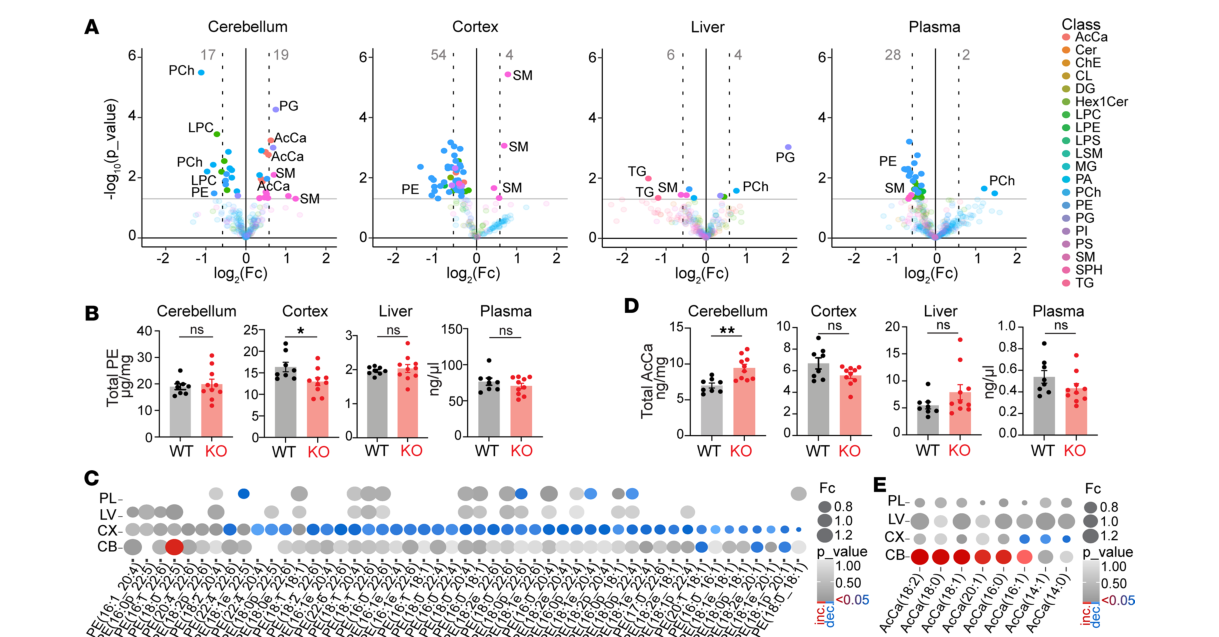
description: Predegenerating two-month-old constitutive Snx14-knockout mouse cerebella have increased acylcarnitines by UPLC-HRMS, while cortex, liver and plasma do not show the same total increase. Bulk tissue data do not assign the metabolite pool to Purkinje cells. Mostly intact mitochondrial ultrastructure at this age argues against gross mitochondrial destruction as the sole explanation, but does not exclude functional mitochondrial defects. Acylcarnitine toxicity is a proposed contributor to degeneration, not a validated human SCAR20 biomarker.
evidence:
- reference: PMID:38625743
reference_title: Altered lipid homeostasis is associated with cerebellar neurodegeneration in SNX14 deficiency.
supports: SUPPORT
evidence_source: MODEL_ORGANISM
snippet: This accounted for the majority of AcCa-s detected in cerebella (6 out of 8) and resulted in an overall increase of total AcCa concentration in Snx14-KO cerebella.
explanation: Direct mouse lipidomic observation; clinical and cell-specific implications remain provisional.
downstream:
- target: Cerebellar Purkinje Cell Neurodegeneration
causal_link_type: INDIRECT_UNKNOWN_INTERMEDIATES
description: Possible lipotoxic contribution suggested by predegenerative accumulation. Temporal precedence and tissue selectivity support the hypothesis, but neither is proof of metabolite-specific causation.
evidence:
- reference: PMID:38625743
reference_title: Altered lipid homeostasis is associated with cerebellar neurodegeneration in SNX14 deficiency.
supports: SUPPORT
evidence_source: MODEL_ORGANISM
snippet: a cerebellar-specific AcCa accumulation that may be associated with the selective cerebellar neurodegeneration characteristic of SNX14 deficiency.
explanation: The authors propose an association; no acylcarnitine-specific intervention establishes a causal rescue.
directness: INDIRECT
- name: Regional Cerebellar Triglyceride Depletion
biological_scale: MOLECULAR
mechanism_confidence: PROVISIONAL
description: MALDI mass-spectrometry imaging shows reduced cerebellar triglyceride species in constitutive Snx14-knockout mice, including TG 53:2 in the outer cerebellar cortex. This spatial assay is distinct from bulk UPLC-HRMS, in which triglycerides were undetectable in both cortical and cerebellar extracts. Reduced storage is a proposed contributor to excess fatty-acid stress; the lipidomics do not establish cell-specific causal flux.
evidence:
- reference: PMID:38625743
reference_title: Altered lipid homeostasis is associated with cerebellar neurodegeneration in SNX14 deficiency.
supports: SUPPORT
evidence_source: MODEL_ORGANISM
snippet: 2 TGs were reduced in Snx14-KO cerebella, 1 of which (TG 53:2) is specific to the outermost layer of the cerebellar cortex comprised by PC soma and dendrites
explanation: Direct mouse lipidomic observation; clinical and cell-specific implications remain provisional.
- name: Forebrain Neuronal Loss
biological_scale: CELLULAR
description: 'One human autopsy showed forebrain neuronal loss, less severe than the cerebellar degeneration. This can contribute to cerebral volume loss. The finding is not universal across model systems: the viable constitutive mouse preserves forebrain neuronal content despite cognitive and synaptic abnormalities.'
evidence:
- reference: PMID:25848753
reference_title: Biallelic mutations in SNX14 cause a syndromic form of cerebellar atrophy and lysosome-autophagosome dysfunction.
supports: SUPPORT
evidence_source: HUMAN_CLINICAL
snippet: Forebrain also presented neuronal loss although less severe than in the cerebellum
explanation: Direct human autopsy evidence for extracerebellar neuronal loss in one affected individual.
downstream:
- target: Cerebral atrophy
causal_link_type: INDIRECT_UNKNOWN_INTERMEDIATES
description: Neuronal loss contributes to reduced cerebral tissue volume; the single autopsy does not establish the cause of every cortical imaging abnormality.
evidence:
- reference: PMID:25848753
reference_title: Biallelic mutations in SNX14 cause a syndromic form of cerebellar atrophy and lysosome-autophagosome dysfunction.
supports: SUPPORT
evidence_source: HUMAN_CLINICAL
snippet: Forebrain also presented neuronal loss although less severe than in the cerebellum
explanation: Human forebrain neuronal loss provides a plausible substrate for the cortical atrophy reported in the same cohort; its contribution was not quantified.
directness: INDIRECT
phenotypes:
- name: Global developmental delay
description: Early global developmental delay preceding the recognizable syndrome.
phenotype_term:
preferred_term: Global developmental delay
term:
id: HP:0001263
label: Global developmental delay
evidence:
- reference: PMID:41294032
reference_title: 'Exploring the Genetic Variations Underlying SNX14-Linked Autosomal Recessive Spinocerebellar Ataxia Type 20: A Case Series of 17 Patients From a Single Center in the Omani Population and Review of Literature.'
supports: SUPPORT
evidence_source: HUMAN_CLINICAL
snippet: Autosomal recessive spinocerebellar ataxia type 20 (SCAR20) is a rare neurodevelopmental disorder caused by biallelic variants in the SNX14 gene and characterized by developmental delay, hypotonia, cerebellar atrophy, and hearing loss.
explanation: A 17-patient Omani cohort lists developmental delay among the characterizing features.
- name: Intellectual disability
description: Moderate-to-severe intellectual disability; a defining feature.
phenotype_term:
preferred_term: Intellectual disability
term:
id: HP:0001249
label: Intellectual disability
evidence:
- reference: PMID:25439728
reference_title: Mutations in SNX14 cause a distinctive autosomal-recessive cerebellar ataxia and intellectual disability syndrome.
supports: SUPPORT
evidence_source: HUMAN_CLINICAL
snippet: recessively inherited moderate-severe intellectual disability, cerebellar ataxia, early-onset cerebellar atrophy, sensorineural hearing loss, and the distinctive association of progressively coarsening facial features, relative macrocephaly, and the absence of seizures
explanation: Intellectual disability (moderate-severe) is a core feature in the discovery cohort.
- name: Cerebellar ataxia
description: Early-onset cerebellar ataxia; typically apparent in early childhood.
phenotype_term:
preferred_term: Cerebellar ataxia
term:
id: HP:0001251
label: Ataxia
evidence:
- reference: PMID:25848753
reference_title: Biallelic mutations in SNX14 cause a syndromic form of cerebellar atrophy and lysosome-autophagosome dysfunction.
supports: SUPPORT
evidence_source: HUMAN_CLINICAL
snippet: Here we describe a new clinically distinguishable recessive syndrome in 12 families with cerebellar atrophy together with ataxia, coarsened facial features and intellectual disability, due to truncating mutations in the sorting nexin gene SNX14
explanation: Ataxia is a defining feature across 12 families.
- name: Cerebellar atrophy
description: Progressive atrophy of the cerebellar hemispheres and vermis. MRI can be normal in infancy and the first years of life; later thin folia and enlarged fissures support atrophy rather than obligatory congenital hypoplasia. Pontine thinning can occur.
phenotype_term:
preferred_term: Cerebellar atrophy
term:
id: HP:0001272
label: Cerebellar atrophy
evidence:
- reference: PMID:25439728
reference_title: Mutations in SNX14 cause a distinctive autosomal-recessive cerebellar ataxia and intellectual disability syndrome.
supports: SUPPORT
evidence_source: HUMAN_CLINICAL
snippet: recessively inherited moderate-severe intellectual disability, cerebellar ataxia, early-onset cerebellar atrophy, sensorineural hearing loss, and the distinctive association of progressively coarsening facial features, relative macrocephaly, and the absence of seizures
explanation: Early-onset cerebellar atrophy is part of the defining syndrome.
- reference: url:https://discovery.ucl.ac.uk/1453669/2/mmc2-1.pdf
reference_title: https://discovery.ucl.ac.uk/1453669/2/mmc2-1.pdf
supports: SUPPORT
evidence_source: HUMAN_CLINICAL
snippet: At older ages, affected individuals have a small cerebellum with thin folia and enlarged fissures, suggestive of global cerebellar atrophy
explanation: Serial imaging and age-dependent findings distinguish progressive atrophy from a requirement for congenital hypoplasia.
- name: Coarse facial features
description: Progressively coarsening facial features, a distinctive clue to SCAR20.
phenotype_term:
preferred_term: Coarse facial features
term:
id: HP:0000280
label: Coarse facial features
clinical_course: PROGRESSIVE
evidence:
- reference: PMID:25439728
reference_title: Mutations in SNX14 cause a distinctive autosomal-recessive cerebellar ataxia and intellectual disability syndrome.
supports: SUPPORT
evidence_source: HUMAN_CLINICAL
snippet: the distinctive association of progressively coarsening facial features, relative macrocephaly, and the absence of seizures
explanation: Progressively coarsening facial features are a distinctive syndromic feature.
- name: Relative macrocephaly
description: Relative (occasionally absolute) macrocephaly.
phenotype_term:
preferred_term: Relative macrocephaly
term:
id: HP:0004482
label: Relative macrocephaly
evidence:
- reference: PMID:25439728
reference_title: Mutations in SNX14 cause a distinctive autosomal-recessive cerebellar ataxia and intellectual disability syndrome.
supports: SUPPORT
evidence_source: HUMAN_CLINICAL
snippet: the distinctive association of progressively coarsening facial features, relative macrocephaly, and the absence of seizures
explanation: Relative macrocephaly is part of the distinctive syndromic association.
- name: Sensorineural hearing impairment
description: Sensorineural hearing loss is documented in several families. The 2015 cohort table lists 5 of 22, whereas its narrative says about one third; no population frequency is inferred from the discrepant summaries.
phenotype_term:
preferred_term: Sensorineural hearing impairment
term:
id: HP:0000407
label: Sensorineural hearing impairment
evidence:
- reference: PMID:25439728
reference_title: Mutations in SNX14 cause a distinctive autosomal-recessive cerebellar ataxia and intellectual disability syndrome.
supports: SUPPORT
evidence_source: HUMAN_CLINICAL
snippet: recessively inherited moderate-severe intellectual disability, cerebellar ataxia, early-onset cerebellar atrophy, sensorineural hearing loss, and the distinctive association of progressively coarsening facial features, relative macrocephaly, and the absence of seizures
explanation: Sensorineural hearing loss is documented in the discovery cohort.
- reference: PMID:25848753
reference_title: Biallelic mutations in SNX14 cause a syndromic form of cerebellar atrophy and lysosome-autophagosome dysfunction.
supports: SUPPORT
evidence_source: HUMAN_CLINICAL
snippet: '| Storage disorder phenotype | |
| Coarse facies | 22/22 |
| Hearing loss (SNHL) | 5/22 |
| Kyphoscoliosis, clinodactyly | 10/22 |
| Hepatosplenomegaly | 5/22 |
| Hypertrichosis | 12/22 |
| Macroglossia | 12/22 |'
explanation: Table 1 storage-disorder-phenotype section lists sensorineural hearing impairment in 5/22. The surrounding rows provide table context, not the denominator for a different feature.
- name: Hypotonia
description: 'Hypotonia is common, but not universal: the 2017 missense-variant case had normal tone and deep tendon reflexes.'
phenotype_term:
preferred_term: Hypotonia
term:
id: HP:0001252
label: Hypotonia
evidence:
- reference: PMID:35195341
reference_title: Autosomal recessive spinocerebellar ataxia-20 due to a novel SNX14 variant in an Indian girl.
supports: SUPPORT
evidence_source: HUMAN_CLINICAL
snippet: Coarse facies, intellectual disability with severe speech delay, hypotonia, and cerebellar atrophy were universal findings in the published cases.
explanation: The 2022 review describes hypotonia as universal in its selected published cases; the directly examined 2017 case is a counterexample.
- reference: PMID:27913285
reference_title: 'Autosomal recessive spinocerebellar ataxia 20: Report of a new patient and review of literature.'
supports: REFUTE
evidence_source: HUMAN_CLINICAL
snippet: Tone and deep tendon reflexes were normal.
explanation: The directly examined six-year-old child had normal tone, refuting universality rather than the occurrence of hypotonia in other patients.
- name: Delayed speech and language development
description: Delayed or absent expressive speech; severe speech delay is typical.
phenotype_term:
preferred_term: Delayed speech and language development
term:
id: HP:0000750
label: Delayed speech and language development
evidence:
- reference: PMID:35195341
reference_title: Autosomal recessive spinocerebellar ataxia-20 due to a novel SNX14 variant in an Indian girl.
supports: SUPPORT
evidence_source: HUMAN_CLINICAL
snippet: Coarse facies, intellectual disability with severe speech delay, hypotonia, and cerebellar atrophy were universal findings in the published cases.
explanation: Severe speech delay is reported as a universal finding across published cases.
- name: Dystonia
description: 'Dystonia, reported in a compound-heterozygous SCAR20 sibling pair, expanding the movement-disorder spectrum of the syndrome.
'
phenotype_term:
preferred_term: Dystonia
term:
id: HP:0001332
label: Dystonia
evidence:
- reference: PMID:33193593
reference_title: Two Compound Heterozygous Variants in SNX14 Cause Stereotypies and Dystonia in Autosomal Recessive Spinocerebellar Ataxia 20.
supports: SUPPORT
evidence_source: HUMAN_CLINICAL
snippet: Clinical phenotype includes dystonia and stereotypies never associated with SCAR20.
explanation: Reports dystonia as a newly recognized SCAR20 feature.
- name: Motor stereotypy
description: Stereotypies, reported alongside dystonia in a compound-heterozygous SCAR20 family.
phenotype_term:
preferred_term: Motor stereotypy
term:
id: HP:0000733
label: Motor stereotypy
evidence:
- reference: PMID:33193593
reference_title: Two Compound Heterozygous Variants in SNX14 Cause Stereotypies and Dystonia in Autosomal Recessive Spinocerebellar Ataxia 20.
supports: SUPPORT
evidence_source: HUMAN_CLINICAL
snippet: Clinical phenotype includes dystonia and stereotypies never associated with SCAR20.
explanation: Reports stereotypies as a newly recognized SCAR20 feature.
- name: Seizures
description: Seizures were absent in the founding families but present in later cohorts. The 2015 narrative reports onset in half by age two and control with anticonvulsants, whereas Table 1 lists 8 of 22 with epilepsy. These discrepant summaries should not be treated as a precise population rate.
phenotype_term:
preferred_term: Seizures
term:
id: HP:0001250
label: Seizure
evidence:
- reference: PMID:25848753
reference_title: Biallelic mutations in SNX14 cause a syndromic form of cerebellar atrophy and lysosome-autophagosome dysfunction.
supports: SUPPORT
evidence_source: HUMAN_CLINICAL
snippet: Seizures developed in half by 2 years, and were well controlled with anticonvulsant medication.
explanation: The narrative supports occurrence and reported anticonvulsant response; its frequency differs from Table 1 (8/22).
- name: Nystagmus
description: Nystagmus occurs in SCAR20. The 2015 cohort narrative says most children, while its Table 1 lists 11 of 22; no population frequency is inferred from these inconsistent summaries.
phenotype_term:
preferred_term: Nystagmus
term:
id: HP:0000639
label: Nystagmus
evidence:
- reference: PMID:25848753
reference_title: Biallelic mutations in SNX14 cause a syndromic form of cerebellar atrophy and lysosome-autophagosome dysfunction.
supports: SUPPORT
evidence_source: HUMAN_CLINICAL
snippet: Nystagmus, difficulty ambulating and reduced deep tendon reflexes were seen in most children
explanation: Places nystagmus among the features seen in most children in the cohort.
- name: Hepatosplenomegaly
description: Mild hepatosplenomegaly was directly reported in the younger 2018 Omani sibling. The 2015 cohort narrative instead records a palpable liver or spleen edge in 5/18, while its Table 1 labels 5/22 as hepatosplenomegaly; the older organ-specific findings and denominator remain unresolved.
evidence:
- reference: PMID:25848753
reference_title: Biallelic mutations in SNX14 cause a syndromic form of cerebellar atrophy and lysosome-autophagosome dysfunction.
supports: SUPPORT
evidence_source: HUMAN_CLINICAL
snippet: Palpable liver or spleen edge was detected in 5 of 18 patients
explanation: This earlier combined examination finding cannot establish simultaneous enlargement of both organs; the later Omani case provides that direct evidence.
- reference: PMID:30473892
reference_title: Exome Sequencing Identifies a Novel Sorting Nexin 14 Gene Mutation Causing Cerebellar Atrophy and Intellectual Disability.
supports: SUPPORT
evidence_source: HUMAN_CLINICAL
snippet: She had mild hepatosplenomegaly, mild hypotonia, and hyporeflexia
explanation: Direct description of both-organ enlargement in the younger sibling.
phenotype_term:
preferred_term: Hepatosplenomegaly
term:
id: HP:0001433
label: Hepatosplenomegaly
- name: Hypertrichosis
description: Increased facial and body hair is described in individual cases and listed in 12 of 22 individuals in the 2015 cohort. This is an ascertained cohort count, not a population frequency.
phenotype_term:
preferred_term: Hypertrichosis
term:
id: HP:0000998
label: Hypertrichosis
evidence:
- reference: PMID:27913285
reference_title: 'Autosomal recessive spinocerebellar ataxia 20: Report of a new patient and review of literature.'
supports: SUPPORT
evidence_source: HUMAN_CLINICAL
snippet: She had increased facial and body hair
explanation: Single-patient description of increased facial and body hair. Supports the presence of the feature only; no cohort proportion is asserted here.
- reference: PMID:25848753
reference_title: Biallelic mutations in SNX14 cause a syndromic form of cerebellar atrophy and lysosome-autophagosome dysfunction.
supports: SUPPORT
evidence_source: HUMAN_CLINICAL
snippet: '| Storage disorder phenotype | |
| Coarse facies | 22/22 |
| Hearing loss (SNHL) | 5/22 |
| Kyphoscoliosis, clinodactyly | 10/22 |
| Hepatosplenomegaly | 5/22 |
| Hypertrichosis | 12/22 |
| Macroglossia | 12/22 |'
explanation: Table 1 storage-disorder-phenotype section lists hypertrichosis in 12/22. The surrounding rows provide table context, not the denominator for a different feature.
- name: Pectus carinatum
description: Reported in the 2017 synthesis of SCAR20 cases. The combined skeletal-abnormality rate does not give a frequency for this individual feature.
phenotype_term:
preferred_term: Pectus carinatum
term:
id: HP:0000768
label: Pectus carinatum
evidence:
- reference: PMID:27913285
reference_title: 'Autosomal recessive spinocerebellar ataxia 20: Report of a new patient and review of literature.'
supports: SUPPORT
evidence_source: HUMAN_CLINICAL
snippet: Skeletal abnormalities were observed in more than half and included spinal deformities, pectus carinatum, brachydactyly and camptodactyly.
explanation: The review names this specific skeletal manifestation; its combined rate is not assigned to individual skeletal findings.
- name: Brachydactyly
description: Reported in the 2017 synthesis of SCAR20 cases. The combined skeletal-abnormality rate does not give a frequency for this individual feature.
phenotype_term:
preferred_term: Brachydactyly
term:
id: HP:0001156
label: Brachydactyly
evidence:
- reference: PMID:27913285
reference_title: 'Autosomal recessive spinocerebellar ataxia 20: Report of a new patient and review of literature.'
supports: SUPPORT
evidence_source: HUMAN_CLINICAL
snippet: Skeletal abnormalities were observed in more than half and included spinal deformities, pectus carinatum, brachydactyly and camptodactyly.
explanation: The review names this specific skeletal manifestation; its combined rate is not assigned to individual skeletal findings.
- name: Camptodactyly of fifth fingers
description: Fifth-finger flexion contractures are described in the founding families.
phenotype_term:
preferred_term: Camptodactyly of fifth fingers
term:
id: HP:0009183
label: Joint contracture of the 5th finger
evidence:
- reference: url:https://discovery.ucl.ac.uk/1453669/2/mmc2-1.pdf
reference_title: https://discovery.ucl.ac.uk/1453669/2/mmc2-1.pdf
supports: SUPPORT
evidence_source: HUMAN_CLINICAL
snippet: sensorineural hearing loss and camptodactyly of fifth fingers seem also to be prevalent
explanation: The founding clinical discussion specifies the involved digit.
- name: Kyphosis
description: Kyphosis was present in both compound-heterozygous Portuguese siblings.
phenotype_term:
preferred_term: Kyphosis
term:
id: HP:0002808
label: Kyphosis
evidence:
- reference: PMID:33193593
reference_title: Two Compound Heterozygous Variants in SNX14 Cause Stereotypies and Dystonia in Autosomal Recessive Spinocerebellar Ataxia 20.
supports: SUPPORT
evidence_source: HUMAN_CLINICAL
snippet: bilateral talipes equinovarus with a dystonic hallux, dystonic posture hands, kyphosis, hand stereotypies
explanation: The male case has kyphosis; the preceding female case description reports the same finding.
- name: Scoliosis
description: Scoliosis developed in the adult patient with the c.867+288A>G splice variant and was managed with orthotic bracing.
phenotype_term:
preferred_term: Scoliosis
term:
id: HP:0002650
label: Scoliosis
evidence:
- reference: PMID:42074495
reference_title: A Homozygous Deep Intronic SNX14 Variant Activates Pseudo-Exon Inclusion in a Patient with SCAR20.
supports: SUPPORT
evidence_source: HUMAN_CLINICAL
snippet: He also developed scoliosis that was managed with orthotic bracing.
explanation: Direct longitudinal case observation; no frequency or comparative treatment efficacy is inferred.
- name: Talipes equinovarus
description: Equinovarus feet occur with dystonic posturing in several reports. In the 2026 adult case the foot posturing began at eight years, supporting an acquired component rather than universally congenital clubfoot.
phenotype_term:
preferred_term: Talipes equinovarus
term:
id: HP:0001762
label: Talipes equinovarus
evidence:
- reference: PMID:33193593
reference_title: Two Compound Heterozygous Variants in SNX14 Cause Stereotypies and Dystonia in Autosomal Recessive Spinocerebellar Ataxia 20.
supports: SUPPORT
evidence_source: HUMAN_CLINICAL
snippet: bilateral talipes equinovarus with a dystonic hallux, dystonic posture hands, kyphosis, hand stereotypies
explanation: Direct observation in the Portuguese sibling pair.
- reference: PMID:42074495
reference_title: A Homozygous Deep Intronic SNX14 Variant Activates Pseudo-Exon Inclusion in a Patient with SCAR20.
supports: SUPPORT
evidence_source: HUMAN_CLINICAL
snippet: From 8 years of age, he developed dystonic posturing of the feet, later confirmed as equinovarus deformities.
explanation: The age of onset qualifies interpretation of the foot deformity.
- name: Hip dysplasia
description: Developmental hip dysplasia required adductor tenotomy and closed reduction in one Korean sibling. It is a reported associated feature; a direct SNX14-dependent developmental mechanism is unestablished.
phenotype_term:
preferred_term: Hip dysplasia
term:
id: HP:0001385
label: Hip dysplasia
evidence:
- reference: DOI:10.5734/jgm.2021.18.2.127
reference_title: Two Korean siblings with autosomal recessive spinocerebellar ataxia 20 caused by homozygous variants in <i>SNX14</i>
supports: SUPPORT
evidence_source: HUMAN_CLINICAL
snippet: 'At 6 months of age, she underwent adductor tenotomy and close reduc-
tion due to developmental dysplasia of the hip.'
explanation: Single-patient clinical observation.
- name: Absent speech
description: Some affected adults never acquire speech; others have a few words. Lack of expressive language does not establish lack of nonverbal communication.
phenotype_term:
preferred_term: Absent speech
term:
id: HP:0001344
label: Absent speech
evidence:
- reference: PMID:33193593
reference_title: Two Compound Heterozygous Variants in SNX14 Cause Stereotypies and Dystonia in Autosomal Recessive Spinocerebellar Ataxia 20.
supports: SUPPORT
evidence_source: HUMAN_CLINICAL
snippet: She never acquired independent walking or speech and severe intellectual disability was evident. Although speechless she communicates with the eyes and hands.
explanation: Direct adult observation preserves nonverbal communication.
- name: Hyporeflexia
description: Reduced tendon reflexes are common in reports, but normal or increased reflexes also occur.
phenotype_term:
preferred_term: Hyporeflexia
term:
id: HP:0001265
label: Hyporeflexia
evidence:
- reference: PMID:25848753
reference_title: Biallelic mutations in SNX14 cause a syndromic form of cerebellar atrophy and lysosome-autophagosome dysfunction.
supports: SUPPORT
evidence_source: HUMAN_CLINICAL
snippet: Nystagmus, difficulty ambulating and reduced deep tendon reflexes were seen in most children
explanation: Supports reduced reflexes in the 2015 cohort; other reports establish variability.
- name: Babinski sign
description: Bilateral extensor plantar responses were reported in both sisters with c.462-589A>G and in the adult c.867+288A>G case.
phenotype_term:
preferred_term: Babinski sign
term:
id: HP:0003487
label: Babinski sign
evidence:
- reference: PMID:42074495
reference_title: A Homozygous Deep Intronic SNX14 Variant Activates Pseudo-Exon Inclusion in a Patient with SCAR20.
supports: SUPPORT
evidence_source: HUMAN_CLINICAL
snippet: Deep tendon reflexes were difficult to elicit, but bilateral plantar responses were extensor with toe fanning.
explanation: Pyramidal signs can coexist with depressed tendon reflexes.
- name: Macrocephaly
description: Absolute macrocephaly can accompany relative macrocephaly; the adult 2026 case had a head circumference above the 97th centile. It is not universal.
phenotype_term:
preferred_term: Macrocephaly
term:
id: HP:0000256
label: Macrocephaly
evidence:
- reference: PMID:42074495
reference_title: A Homozygous Deep Intronic SNX14 Variant Activates Pseudo-Exon Inclusion in a Patient with SCAR20.
supports: SUPPORT
evidence_source: HUMAN_CLINICAL
snippet: He was macrocephalic, with a head circumference of 62 cm (2.5 cm > 97th centile at 21 years).
explanation: Direct head measurement, distinct from relative macrocephaly.
- name: Aggressive behavior
description: Aggression was observed in the 2017 child with p.Glu370Lys; behavioral findings vary and sociable interaction is described in other families.
phenotype_term:
preferred_term: Aggressive behavior
term:
id: HP:0000718
label: Aggressive behavior
evidence:
- reference: PMID:27913285
reference_title: 'Autosomal recessive spinocerebellar ataxia 20: Report of a new patient and review of literature.'
supports: SUPPORT
evidence_source: HUMAN_CLINICAL
snippet: Behavioral abnormalities particularly aggression were noted in her.
explanation: Single-patient behavioral observation.
- name: Telecanthus
description: A component of the recognizable facial phenotype, directly described in the 2017 child and corroborated in other reports.
phenotype_term:
preferred_term: Telecanthus
term:
id: HP:0000506
label: Telecanthus
evidence:
- reference: PMID:27913285
reference_title: 'Autosomal recessive spinocerebellar ataxia 20: Report of a new patient and review of literature.'
supports: SUPPORT
evidence_source: HUMAN_CLINICAL
snippet: Small forehead, thick eyebrows with lateral flaring, telecanthus, broad bridge and base of nose, long philtrum, thick and everted vermillion of the lower lip with small and narrow chin were noted # codespell:ignore vermillion
explanation: The examination specifies this facial feature; no frequency is inferred.
- name: Wide nasal bridge
description: A component of the recognizable facial phenotype, directly described in the 2017 child and corroborated in other reports.
phenotype_term:
preferred_term: Wide nasal bridge
term:
id: HP:0000431
label: Wide nasal bridge
evidence:
- reference: PMID:27913285
reference_title: 'Autosomal recessive spinocerebellar ataxia 20: Report of a new patient and review of literature.'
supports: SUPPORT
evidence_source: HUMAN_CLINICAL
snippet: Small forehead, thick eyebrows with lateral flaring, telecanthus, broad bridge and base of nose, long philtrum, thick and everted vermillion of the lower lip with small and narrow chin were noted # codespell:ignore vermillion
explanation: The examination specifies this facial feature; no frequency is inferred.
- name: Long philtrum
description: A component of the recognizable facial phenotype, directly described in the 2017 child and corroborated in other reports.
phenotype_term:
preferred_term: Long philtrum
term:
id: HP:0000343
label: Long philtrum
evidence:
- reference: PMID:27913285
reference_title: 'Autosomal recessive spinocerebellar ataxia 20: Report of a new patient and review of literature.'
supports: SUPPORT
evidence_source: HUMAN_CLINICAL
snippet: Small forehead, thick eyebrows with lateral flaring, telecanthus, broad bridge and base of nose, long philtrum, thick and everted vermillion of the lower lip with small and narrow chin were noted # codespell:ignore vermillion
explanation: The examination specifies this facial feature; no frequency is inferred.
- name: Thick lower lip vermilion
description: A component of the recognizable facial phenotype, directly described in the 2017 child and corroborated in other reports.
phenotype_term:
preferred_term: Thick lower lip vermilion
term:
id: HP:0000179
label: Thick lower lip vermilion
evidence:
- reference: PMID:27913285
reference_title: 'Autosomal recessive spinocerebellar ataxia 20: Report of a new patient and review of literature.'
supports: SUPPORT
evidence_source: HUMAN_CLINICAL
snippet: Small forehead, thick eyebrows with lateral flaring, telecanthus, broad bridge and base of nose, long philtrum, thick and everted vermillion of the lower lip with small and narrow chin were noted # codespell:ignore vermillion
explanation: The examination specifies this facial feature; no frequency is inferred.
- name: Hypertelorism
description: Increased interorbital distance is reported in several families, separately from telecanthus.
phenotype_term:
preferred_term: Hypertelorism
term:
id: HP:0000316
label: Hypertelorism
evidence:
- reference: PMID:30473892
reference_title: Exome Sequencing Identifies a Novel Sorting Nexin 14 Gene Mutation Causing Cerebellar Atrophy and Intellectual Disability.
supports: SUPPORT
evidence_source: HUMAN_CLINICAL
snippet: Physical examination showed coarse facial features, depressed nasal bridge, hypertelorism, and epicanthal folds.
explanation: Direct clinical observation in the 2018 Omani proband.
- name: Epicanthus
description: Epicanthal folds occur within the facial phenotype.
phenotype_term:
preferred_term: Epicanthus
term:
id: HP:0000286
label: Epicanthus
evidence:
- reference: PMID:30473892
reference_title: Exome Sequencing Identifies a Novel Sorting Nexin 14 Gene Mutation Causing Cerebellar Atrophy and Intellectual Disability.
supports: SUPPORT
evidence_source: HUMAN_CLINICAL
snippet: Physical examination showed coarse facial features, depressed nasal bridge, hypertelorism, and epicanthal folds.
explanation: Direct examination finding.
- name: Autistic behavior
description: Autistic-like behavior is listed in 12 of 22 individuals in the 2015 cohort. This does not establish a formal autism-spectrum diagnosis in each individual.
phenotype_term:
preferred_term: Autistic behavior
term:
id: HP:0000729
label: Autistic behavior
evidence:
- reference: PMID:25848753
reference_title: Biallelic mutations in SNX14 cause a syndromic form of cerebellar atrophy and lysosome-autophagosome dysfunction.
supports: SUPPORT
evidence_source: HUMAN_CLINICAL
snippet: '| Delayed gross motor | 22/22 |
| Delayed fine motor | 22/22 |
| Delayed or absent language | 22/22 |
| Delayed or absent social | 22/22 |
| Autistic-like behavior | 12/22 |'
explanation: Table 1 developmental section; the autistic-like-behavior row supplies 12/22, distinct from the four preceding universal developmental findings.
- name: Macroglossia
description: Macroglossia is listed in 12 of 22 individuals in the 2015 cohort.
phenotype_term:
preferred_term: Macroglossia
term:
id: HP:0000158
label: Macroglossia
evidence:
- reference: PMID:25848753
reference_title: Biallelic mutations in SNX14 cause a syndromic form of cerebellar atrophy and lysosome-autophagosome dysfunction.
supports: SUPPORT
evidence_source: HUMAN_CLINICAL
snippet: '| Storage disorder phenotype | |
| Coarse facies | 22/22 |
| Hearing loss (SNHL) | 5/22 |
| Kyphoscoliosis, clinodactyly | 10/22 |
| Hepatosplenomegaly | 5/22 |
| Hypertrichosis | 12/22 |
| Macroglossia | 12/22 |'
explanation: Table 1 storage-disorder-phenotype section; only its final row supports the macroglossia count. The table does not establish a lysosomal enzyme defect.
- name: Cerebral atrophy
description: Cerebral cortical atrophy was reported in about half of the 2015 cohort. Human autopsy also showed less severe forebrain neuronal loss than cerebellar loss, so the disease need not be exclusively cerebellar.
phenotype_term:
preferred_term: Cerebral atrophy
term:
id: HP:0002059
label: Cerebral atrophy
evidence:
- reference: PMID:25848753
reference_title: Biallelic mutations in SNX14 cause a syndromic form of cerebellar atrophy and lysosome-autophagosome dysfunction.
supports: SUPPORT
evidence_source: HUMAN_CLINICAL
snippet: with evidence of cerebral cortical atrophy in about half
explanation: The clinical cohort narrative supports extracerebellar atrophy; this is not inferred from the mouse model.
- name: Delayed CNS myelination
description: Delayed white-matter myelination was seen on the older Korean sibling’s MRI at two years, before cerebellar atrophy appeared at four. This does not establish a universal leukodystrophy.
phenotype_term:
preferred_term: Delayed CNS myelination
term:
id: HP:0002188
label: Delayed CNS myelination
evidence:
- reference: DOI:10.5734/jgm.2021.18.2.127
reference_title: Two Korean siblings with autosomal recessive spinocerebellar ataxia 20 caused by homozygous variants in <i>SNX14</i>
supports: SUPPORT
evidence_source: HUMAN_CLINICAL
snippet: revealed a delayed myelination of white matter for her age
explanation: Direct age-specific MRI finding in one sibling; the younger sibling’s neonatal periventricular leukomalacia is not assigned as an SNX14-specific phenotype.
- name: Pontocerebellar atrophy
description: Pontine thinning or atrophy accompanies cerebellar atrophy in some older patients. The primary reports describe a small pons in a progressive condition, rather than establishing congenital pontine hypoplasia.
phenotype_term:
preferred_term: Pontocerebellar atrophy
term:
id: HP:0006879
label: Pontocerebellar atrophy
evidence:
- reference: PMID:33193593
reference_title: Two Compound Heterozygous Variants in SNX14 Cause Stereotypies and Dystonia in Autosomal Recessive Spinocerebellar Ataxia 20.
supports: SUPPORT
evidence_source: HUMAN_CLINICAL
snippet: Brain MRI (Figure 1C) showed diffuse cerebellar atrophy, involving both the vermis and the hemispheres, as well as pontine atrophy
explanation: Direct imaging in the Portuguese sibling pair.
- name: Secundum atrial septal defect
description: One Omani child had an ASD II closed surgically at six months. This is a reported association; a reproducible SNX14-dependent cardiac-development mechanism has not been established.
phenotype_term:
preferred_term: Secundum atrial septal defect
term:
id: HP:0001684
label: Secundum atrial septal defect
evidence:
- reference: PMID:30473892
reference_title: Exome Sequencing Identifies a Novel Sorting Nexin 14 Gene Mutation Causing Cerebellar Atrophy and Intellectual Disability.
supports: SUPPORT
evidence_source: HUMAN_CLINICAL
snippet: Echocardiography showed ASD II, which was closed surgically at 6 months of age.
explanation: Direct patient observation. The combined ASD-or-patent-ductus count in the 2015 cohort does not provide an ASD-specific frequency.
genetic:
- name: SNX14
notes: Biallelic pathogenic SNX14 variants cause SCAR20. The allelic spectrum includes coding truncations, canonical splice variants, in-frame deletions, complex structural alleles and RNA-confirmed intronic splice defects. Functional consequences depend on the allele and assay. Recurrent alleles do not by themselves establish a founder effect. A reported p.Gln915Leu missense allele remains a VUS in its primary study and is not equivalent to a confirmed pathogenic allele.
gene_term:
preferred_term: SNX14
term:
id: hgnc:14977
label: SNX14
relationship_type: CAUSATIVE
variants:
- name: SNX14 c.647_648del (p.Glu216ValfsX24)
description: Recurrent frameshift allele detected in seven patients in a 17-patient Omani series. The available abstract establishes recurrence but does not demonstrate a founder haplotype.
type: frameshift
clinical_significance: PATHOGENIC
regulatory_category: LOF
evidence:
- reference: PMID:41294032
reference_title: 'Exploring the Genetic Variations Underlying SNX14-Linked Autosomal Recessive Spinocerebellar Ataxia Type 20: A Case Series of 17 Patients From a Single Center in the Omani Population and Review of Literature.'
supports: SUPPORT
evidence_source: HUMAN_CLINICAL
snippet: The most common variant was SNX14 c.647_648del (p.Glu216Valfs24), identified in seven patients.
explanation: Identifies the recurrent frameshift allele; recurrence alone does not establish a founder effect.
variant_type: deletion
genomic_contexts:
- coding sequence
- name: SNX14 NM_001350532.1:c.1195C>T (p.Arg399Ter)
description: Pathogenic nonsense allele inherited from the mother in the 2020 Portuguese family, in trans with a paternally inherited complex SNX14 rearrangement. The two alleles are distinct lesions, not one complex variant.
type: nonsense
variant_type: single nucleotide variant
genomic_contexts:
- coding sequence
evidence:
- reference: PMID:33193593
reference_title: Two Compound Heterozygous Variants in SNX14 Cause Stereotypies and Dystonia in Autosomal Recessive Spinocerebellar Ataxia 20.
supports: SUPPORT
evidence_source: HUMAN_CLINICAL
snippet: 'the previously published SNX14 nonsense variant NM_001350532.1: c.1195C>T, p.(Arg399*), described as pathogenic'
explanation: The primary study identifies the nonsense allele and confirms maternal segregation.
clinical_significance: PATHOGENIC
- name: SNX14 complex deletion-inversion-deletion allele
description: The paternal allele in the 2020 family is NM_001350532.1:c.[612+3028_698-2759del;698-2758_698-516inv;698-515_1171+1366delinsAG]. It contains two deletions, an inversion and an AG insertion. Quantitative and long-range PCR resolved the physical rearrangement. Blood RNA showed deletion of exons 8-13, r.613_1171del, with predicted p.Val205ArgfsTer47. The mutational repair mechanism remains unresolved; repetitive elements near breakpoints do not prove a particular repair pathway.
type: complex deletion-inversion-deletion with insertion
genomic_contexts:
- coding sequence
- intron
clinical_significance: PATHOGENIC
evidence:
- reference: PMID:33193593
reference_title: Two Compound Heterozygous Variants in SNX14 Cause Stereotypies and Dystonia in Autosomal Recessive Spinocerebellar Ataxia 20.
supports: SUPPORT
evidence_source: HUMAN_CLINICAL
snippet: Long-range PCR allowed the characterization of the genomic region breakpoints, revealing a complex rearrangement that includes two deletions, an inversion and an AG insertion
explanation: Genomic assays resolve the physical lesion separately from its transcript consequence.
- reference: PMID:33193593
reference_title: Two Compound Heterozygous Variants in SNX14 Cause Stereotypies and Dystonia in Autosomal Recessive Spinocerebellar Ataxia 20.
supports: SUPPORT
evidence_source: IN_VITRO
snippet: 'Expression analysis enabled the identification of a shorter transcript with a deletion encompassing SNX14 exons 8 to 13: r.613_1171del, p.(Val205Argfs*47)'
explanation: RNA analysis supports exon loss and the predicted frameshift; this is not a protein-abundance measurement.
- name: SNX14 NM_153816.6:c.462-589A>G
description: Homozygous intron-5 SNV in two affected sisters; both healthy parents were heterozygous. Patient PBMC RT-PCR demonstrated inclusion of an 82-nucleotide pseudoexon between exons 5 and 6, predicting p.Asp155ValfsTer8. Residual normally spliced transcript remained in the homozygous proband. The authors reclassified the variant from VUS to likely pathogenic after RNA analysis; truncated-protein production and nonsense-mediated decay were inferred rather than directly quantified.
type: deep intronic splice-altering SNV
variant_type: single nucleotide variant
genomic_contexts:
- intron
evidence:
- reference: PMID:37485342
reference_title: 'Homozygous deep intronic variant in SNX14 cause autosomal recessive Spinocerebellar ataxia 20: a case report.'
supports: SUPPORT
evidence_source: HUMAN_CLINICAL
snippet: Sanger sequencing confirmed that this variant was heterozygous in the healthy parents and homozygous in the affected sisters
explanation: Segregation supports recessive inheritance.
- reference: PMID:37485342
reference_title: 'Homozygous deep intronic variant in SNX14 cause autosomal recessive Spinocerebellar ataxia 20: a case report.'
supports: SUPPORT
evidence_source: HUMAN_CLINICAL
snippet: After analysis the variant was reclassified as likely pathogenic (PS3, PM2) according to ACMG criteria
explanation: Records the source-reported classification after RNA testing.
- reference: PMID:37485342
reference_title: 'Homozygous deep intronic variant in SNX14 cause autosomal recessive Spinocerebellar ataxia 20: a case report.'
supports: SUPPORT
evidence_source: IN_VITRO
snippet: we observed a residual amount of wild-type transcript
explanation: The PBMC RNA result does not establish complete absence of normal transcript.
clinical_significance: LIKELY_PATHOGENIC
- name: SNX14 NM_153816.6:c.867+288A>G
description: Homozygous intron-9 SNV identified by fibroblast RNA sequencing and retrospective genome analysis in the 2026 report. Pseudoexon inclusion predicts p.Asp290ProfsTer12; SNX14 RNA is reduced and no normal splice product was detected in that assay. The authors classified it as likely pathogenic. Reduced RNA is consistent with nonsense-mediated decay, but decay and protein loss were not directly tested. Parental samples were unavailable, so biparental inheritance was inferred from consanguinity and a 9.2-Mb homozygous interval rather than demonstrated.
type: deep intronic splice-altering SNV
variant_type: single nucleotide variant
genomic_contexts:
- intron
evidence:
- reference: PMID:42074495
reference_title: A Homozygous Deep Intronic SNX14 Variant Activates Pseudo-Exon Inclusion in a Patient with SCAR20.
supports: SUPPORT
evidence_source: HUMAN_CLINICAL
snippet: the NM_153816.6(SNX14):c.867+288A>G variant was classified as likely pathogenic
explanation: Preserves the 2026 source classification.
- reference: PMID:42074495
reference_title: A Homozygous Deep Intronic SNX14 Variant Activates Pseudo-Exon Inclusion in a Patient with SCAR20.
supports: SUPPORT
evidence_source: IN_VITRO
snippet: RNA-seq data from the proband showed no SNX14 transcripts with normal splicing.
explanation: This result applies to the assayed fibroblast RNA, not all tissues or every SNX14 allele.
- reference: PMID:42074495
reference_title: A Homozygous Deep Intronic SNX14 Variant Activates Pseudo-Exon Inclusion in a Patient with SCAR20.
supports: SUPPORT
evidence_source: HUMAN_CLINICAL
snippet: The parents were not available to confirm the inheritance pattern
explanation: Parental origin is not molecularly confirmed.
clinical_significance: LIKELY_PATHOGENIC
- name: SNX14 NM_153816.6:c.1108+28A>G
description: Homozygous intronic SNV in patient R140, a 12-year-old girl in the 2026 dystonia transcriptomics cohort. Fibroblast RNA showed exon-12 extension and reduced SNX14 expression (fold change 0.23), supporting the study diagnosis of SCAR20. The clinical findings included developmental delay, cerebellar atrophy, dystonia and stereotypies, with elevated urinary glycosaminoglycans. The variant is 28 bases from the exon boundary; it is not a greater-than-100-base deep-intronic allele. RNA measurements do not independently establish protein abundance.
type: intronic splice-altering SNV
variant_type: single nucleotide variant
genomic_contexts:
- intron
evidence:
- reference: PMID:41623120
reference_title: Fibroblast Transcriptomics in Molecular Diagnostics of a Comprehensive Dystonia Cohort.
supports: SUPPORT
evidence_source: IN_VITRO
snippet: SNX14 mis‐splicing and underexpression resulted from a homozygous c.1108 + 28A>G variant, which led to extension of exon 12
explanation: RNA-guided genome reanalysis identified a splice-altering SNV; the study reports a diagnosis but no separate ACMG classification in this passage.
- name: SNX14 NM_153816.6:c.712A>T (p.Arg238Ter)
description: Nonsense SNV reported as pathogenic in the 2024 family, inherited in trans with p.Gln915Leu, which remains a VUS. Some narrative passages call this a missense variant; the stop-gain notation and Table 2 identify it correctly as nonsense. The cell assay used a C-terminal HA tag, so absent HA signal cannot independently establish absence of a truncated N-terminal protein.
type: nonsense
variant_type: single nucleotide variant
genomic_contexts:
- coding sequence
evidence:
- reference: PMID:38655056
reference_title: Compound heterozygous mutation of the SNX14 gene causes autosomal recessive spinocerebellar ataxia 20.
supports: SUPPORT
evidence_source: HUMAN_CLINICAL
snippet: the SNX14 c.712A>T (p.Arg238Ter) variant was predicted to be pathogenic (P)
explanation: The source classification applies to the stop-gain allele.
- reference: PMID:38655056
reference_title: Compound heterozygous mutation of the SNX14 gene causes autosomal recessive spinocerebellar ataxia 20.
supports: SUPPORT
evidence_source: IN_VITRO
snippet: We constructed C-termination HA-tagged plasmids
explanation: The tag position limits interpretation of absent signal for a protein truncated before the tag.
clinical_significance: PATHOGENIC
- name: SNX14 NM_153816.6:c.2744A>T (p.Gln915Leu)
description: Missense SNV reported in trans with p.Arg238Ter in two siblings in 2024. The authors retain a VUS classification despite reduced RNA and HA-tagged expression in transfected HEK293T cells and predicted structural changes. The experiment does not justify converting the source classification to pathogenic or treating all prenatal findings in this family as established SCAR20 features.
type: missense
variant_type: single nucleotide variant
genomic_contexts:
- coding sequence
evidence:
- reference: PMID:38655056
reference_title: Compound heterozygous mutation of the SNX14 gene causes autosomal recessive spinocerebellar ataxia 20.
supports: SUPPORT
evidence_source: HUMAN_CLINICAL
snippet: SNX14 c.2744A>T (p.Gln915Leu) remains classified as VUS
explanation: The final discussion retains the uncertain classification despite experimental findings.
clinical_significance: UNCERTAIN_SIGNIFICANCE
- name: SNX14 c.2596C>T (p.Gln866Ter)
description: Homozygous nonsense allele in the founding Portuguese family, with reduced fibroblast RNA and no detectable normal-sized SNX14 band. Nonsense-mediated decay and protein instability were proposed explanations; neither was directly isolated in that study.
type: nonsense
variant_type: single nucleotide variant
genomic_contexts:
- coding sequence
clinical_significance: PATHOGENIC
evidence:
- reference: url:https://discovery.ucl.ac.uk/1453669/2/mmc2-1.pdf
reference_title: https://discovery.ucl.ac.uk/1453669/2/mmc2-1.pdf
supports: SUPPORT
evidence_source: HUMAN_CLINICAL
snippet: The c.2596C >T mutation was identified within an exon that codes for both transcripts
explanation: The discovery study identified the segregating homozygous nonsense allele.
- name: SNX14 exon 13-21 deletion (p.Val369_Leu702del)
description: A 25,640-base homozygous deletion in the founding Turkish family joins exons 12 and 22 in frame and removes 334 amino acids, including the RGS and PX domains. The transcript was retained. The original immunoblot could not distinguish absent protein from failure of antibody recognition because the deletion removed most of the immunogen sequence. This large deletion differs from the smaller PX-domain deletion caused by c.1894+1G>T.
type: in-frame multiexon deletion
variant_type: deletion
genomic_contexts:
- coding sequence
- intron
clinical_significance: PATHOGENIC
evidence:
- reference: url:https://discovery.ucl.ac.uk/1453669/2/mmc2-1.pdf
reference_title: https://discovery.ucl.ac.uk/1453669/2/mmc2-1.pdf
supports: SUPPORT
evidence_source: HUMAN_CLINICAL
snippet: predicted to remove 334 amino acids (p.Val369_Leu702del) from the full-length protein, including the entire RGS and PX domains
explanation: Patient cDNA establishes the in-frame exon junction.
- reference: url:https://discovery.ucl.ac.uk/1453669/2/mmc2-1.pdf
reference_title: https://discovery.ucl.ac.uk/1453669/2/mmc2-1.pdf
supports: SUPPORT
evidence_source: IN_VITRO
snippet: it is conceivable that a truncated protein is pre- sent but not detectable with this assay.
explanation: The original authors explicitly identify the antibody-detection limitation.
- name: SNX14 c.1894+1G>T (p.Ala603_Gly632del)
description: Canonical intron-19 donor variant causing in-frame skipping of exon 19 and deletion of 30 amino acids from the PX domain. A shortened protein remains detectable; the later fibroblast study found preserved ER association and Torin1 responsiveness. The 2015 correction fixes c.1894+1G>A to c.1894+1G>T and intron 17 to intron 19; the erroneous original notations are not separate alleles.
type: canonical splice-donor variant with in-frame exon skipping
variant_type: single nucleotide variant
genomic_contexts:
- intron
clinical_significance: PATHOGENIC
evidence:
- reference: url:https://discovery.ucl.ac.uk/1453669/2/mmc2-1.pdf
reference_title: https://discovery.ucl.ac.uk/1453669/2/mmc2-1.pdf
supports: SUPPORT
evidence_source: IN_VITRO
snippet: protein of slightly lower molecular weight (~107 kDa) is detected, approximating to the loss of amino acids due to skipping of exon 19.
explanation: The founding immunoblot detects a shortened SNX14 species.
- reference: url:https://pmc.ncbi.nlm.nih.gov/articles/PMC4457954/
reference_title: Mutations in SNX14 Cause a Distinctive Autosomal-Recessive Cerebellar Ataxia and Intellectual Disability Syndrome - PMC
supports: SUPPORT
evidence_source: OTHER
snippet: In this article, mutation c.1894+1G>A in Table 1 and on page 616 is incorrect and should have been c.1894+1G>T
explanation: The published correction supplies the authoritative donor-variant identity. The generated HTML cache preserves greater-than signs as HTML entities.
- name: SNX14 NM_153816.5:c.1108G>A (p.Glu370Lys)
type: missense
variant_type: single nucleotide variant
description: Homozygous RGS-domain missense variant in the 2017 child, with heterozygous parents and absence in the unaffected sibling. The authors regarded it as likely disease-causing from segregation, phenotype and structural predictions. Protein modeling is computational evidence, not a demonstrated change in SNX14 abundance, splicing or biochemical function; no formal ACMG class is assigned here.
evidence:
- reference: PMID:27913285
reference_title: 'Autosomal recessive spinocerebellar ataxia 20: Report of a new patient and review of literature.'
supports: SUPPORT
evidence_source: HUMAN_CLINICAL
snippet: A homozygous variant p.E370K (c.1108G>A, NM_153816.5) was identified in the proband in exon 12 of SNX14.
explanation: The primary report supplies transcript and sequence identity.
- reference: PMID:27913285
reference_title: 'Autosomal recessive spinocerebellar ataxia 20: Report of a new patient and review of literature.'
supports: SUPPORT
evidence_source: HUMAN_CLINICAL
snippet: The phenotype, prediction of functional consequences and segregation of the variant suggest the mutation is likely to be disease causing.
explanation: The wording preserves the authors’ conclusion without converting predictions into functional measurements.
- name: SNX14 c.2746-2A>G
type: splice acceptor variant
variant_type: single nucleotide variant
genomic_contexts:
- intron
clinical_significance: PATHOGENIC
description: Homozygous canonical splice-acceptor variant in two Korean sisters with nonconsanguineous heterozygous parents, classified as pathogenic in the 2021 report. Splicing and protein loss were predicted; RNA and protein assays were not reported. The paper inconsistently predicts nonsense-mediated decay in the case section and escape from decay in the discussion, so neither outcome is treated as measured.
evidence:
- reference: DOI:10.5734/jgm.2021.18.2.127
reference_title: Two Korean siblings with autosomal recessive spinocerebellar ataxia 20 caused by homozygous variants in <i>SNX14</i>
supports: SUPPORT
evidence_source: HUMAN_CLINICAL
snippet: the c.2746-2A>G variant in SNX14 was classified as “pathogenic”
explanation: Source-reported 2021 ACMG classification; experimental confirmation of the transcript consequence is absent.
- name: SNX14 c.140+3A>T
type: splice-region variant
variant_type: single nucleotide variant
genomic_contexts:
- intron
description: Reported in a nine-year-old Indian girl in 2022. The available abstract describes reduced SNX14 mRNA expression in the proband and parents and vacuolated patient fibroblasts. It does not provide the exact abnormal splice product, quantify protein loss or state an ACMG class. Full text was not recovered, so those details are not inferred.
evidence:
- reference: PMID:35195341
reference_title: Autosomal recessive spinocerebellar ataxia-20 due to a novel SNX14 variant in an Indian girl.
supports: SUPPORT
evidence_source: HUMAN_CLINICAL
snippet: Trio exome sequencing with Sanger confirmation revealed a novel splice site variant, c.140 + 3A > T in the SNX14 gene.
explanation: Variant identity from the available abstract.
- reference: PMID:35195341
reference_title: Autosomal recessive spinocerebellar ataxia-20 due to a novel SNX14 variant in an Indian girl.
supports: SUPPORT
evidence_source: IN_VITRO
snippet: The variant pathogenicity established by mRNA expression study showed a significant reduction in the expression levels of SNX14 gene in proband and her parents on comparison to the control.
explanation: The abstract reports expression reduction, not the sequence of a demonstrated splice product.
- name: SNX14 NM_153816.5:c.2319_2322del (p.Arg774Serfs*10)
type: frameshift deletion
variant_type: deletion
description: Homozygous exon-24 deletion in two affected Omani sisters in 2018; parents were confirmed carriers. The frameshift predicts a premature stop and loss of normal function. Despite strong loss-of-function wording in the report, no patient RNA or protein assay was performed to establish complete absence of SNX14.
evidence:
- reference: PMID:30473892
reference_title: Exome Sequencing Identifies a Novel Sorting Nexin 14 Gene Mutation Causing Cerebellar Atrophy and Intellectual Disability.
supports: SUPPORT
evidence_source: HUMAN_CLINICAL
snippet: This frameshift variation in exon 24 of SNX14 is predicted to lead to a premature stop codon and truncated protein p.(Arg774Serfs∗10).
explanation: The predicted coding consequence is distinguished from experimentally measured protein loss.
- reference: PMID:30473892
reference_title: Exome Sequencing Identifies a Novel Sorting Nexin 14 Gene Mutation Causing Cerebellar Atrophy and Intellectual Disability.
supports: SUPPORT
evidence_source: HUMAN_CLINICAL
snippet: Sanger sequencing confirmed the nature and homozygous state of the mutation in the proband and her affected sibling
explanation: The variant segregates with disease in this family.
evidence:
- reference: PMID:25439728
reference_title: Mutations in SNX14 cause a distinctive autosomal-recessive cerebellar ataxia and intellectual disability syndrome.
supports: SUPPORT
evidence_source: HUMAN_CLINICAL
snippet: Here we report the identification of causal mutations in Sorting Nexin 14 (SNX14) found in seven affected individuals from three unrelated consanguineous families who presented with recessively inherited moderate-severe intellectual disability, cerebellar ataxia, early-onset cerebellar atrophy, sensorineural hearing loss, and the distinctive association of progressively coarsening facial features, relative macrocephaly, and the absence of seizures.
explanation: Establishes SNX14 as the causative gene for the syndrome.
diagnosis:
- name: Molecular Genetic Testing
description: Molecular confirmation requires biallelic pathogenic or likely pathogenic SNX14 variants interpreted with phenotype and segregation. Exome sequencing identifies many coding variants, but a negative result or a single detected allele does not exclude intronic or complex structural disease alleles. Early MRI may be normal; later cerebellar atrophy, developmental impairment and characteristic facial features guide testing. A pathogenic allele paired with a VUS does not by itself establish a fully resolved molecular diagnosis.
evidence:
- reference: PMID:25439728
reference_title: Mutations in SNX14 cause a distinctive autosomal-recessive cerebellar ataxia and intellectual disability syndrome.
supports: SUPPORT
evidence_source: HUMAN_CLINICAL
snippet: We used homozygosity mapping and whole-exome sequencing to identify a homozygous nonsense mutation and an in-frame multiexon deletion in two families.
explanation: Describes the homozygosity-mapping plus exome-sequencing diagnostic approach.
- name: RNA-guided genome reanalysis
description: Fibroblast RNA sequencing or targeted RT-PCR can reveal splice defects missed during initial exome or genome interpretation. Combine the transcript result with DNA sequence and segregation. The c.867+288A>G case was unresolved after initial genome analysis, illustrating that sequencing coverage alone does not guarantee variant prioritization.
evidence:
- reference: PMID:42074495
reference_title: A Homozygous Deep Intronic SNX14 Variant Activates Pseudo-Exon Inclusion in a Patient with SCAR20.
supports: SUPPORT
evidence_source: HUMAN_CLINICAL
snippet: 'Retrospective WGS data analysis revealed a homozygous NM_153816.6(SNX14): c.867+288A>G deep intronic variant, which caused pseudo-exon activation and reduced transcript levels.'
explanation: RNA analysis guided reinterpretation of already available genome data.
- reference: PMID:37485342
reference_title: 'Homozygous deep intronic variant in SNX14 cause autosomal recessive Spinocerebellar ataxia 20: a case report.'
supports: SUPPORT
evidence_source: HUMAN_CLINICAL
snippet: After analysis the variant was reclassified as likely pathogenic (PS3, PM2) according to ACMG criteria
explanation: Records the source-reported classification after RNA testing.
- name: Targeted structural-variant characterization
description: When one pathogenic SNX14 allele is found and the phenotype strongly fits, targeted dosage analysis and breakpoint characterization can resolve a second complex allele. In the Portuguese family, exome CNV screening was unrevealing; quantitative PCR, long-range PCR and blood RNA analysis established the paternal rearrangement.
evidence:
- reference: PMID:33193593
reference_title: Two Compound Heterozygous Variants in SNX14 Cause Stereotypies and Dystonia in Autosomal Recessive Spinocerebellar Ataxia 20.
supports: SUPPORT
evidence_source: HUMAN_CLINICAL
snippet: Long-range PCR allowed the characterization of the genomic region breakpoints, revealing a complex rearrangement that includes two deletions, an inversion and an AG insertion
explanation: Genomic assays resolve the physical lesion separately from its transcript consequence.
- reference: PMID:33193593
reference_title: Two Compound Heterozygous Variants in SNX14 Cause Stereotypies and Dystonia in Autosomal Recessive Spinocerebellar Ataxia 20.
supports: SUPPORT
evidence_source: IN_VITRO
snippet: 'Expression analysis enabled the identification of a shorter transcript with a deletion encompassing SNX14 exons 8 to 13: r.613_1171del, p.(Val205Argfs*47)'
explanation: RNA analysis supports exon loss and the predicted frameshift; this is not a protein-abundance measurement.
- name: Age-aware brain MRI assessment
description: Cerebellar atrophy supports the phenotype, but a normal early MRI does not exclude SCAR20. Review the age at imaging and clinical progression rather than requiring congenital pontocerebellar hypoplasia.
evidence:
- reference: url:https://discovery.ucl.ac.uk/1453669/2/mmc2-1.pdf
reference_title: https://discovery.ucl.ac.uk/1453669/2/mmc2-1.pdf
supports: SUPPORT
evidence_source: HUMAN_CLINICAL
snippet: In the first years of life, no neuroradiological anomalies were observed in affected individuals, as depicted
explanation: The founding report documents normal early scans followed by later cerebellar abnormalities.
- name: Audiologic assessment
description: Assess hearing when delayed communication or suspected hearing loss is present. Brainstem auditory evoked responses can provide objective evidence when behavioral audiometry is limited by developmental impairment. A normal reported response to sound does not substitute for an audiologic evaluation.
evidence:
- reference: PMID:42074495
reference_title: A Homozygous Deep Intronic SNX14 Variant Activates Pseudo-Exon Inclusion in a Patient with SCAR20.
supports: SUPPORT
evidence_source: HUMAN_CLINICAL
snippet: Brainstem auditory evoked response tested at 3 years showed thresholds > 80 dB, consistent with neurogenic deafness.
explanation: Direct example of objective hearing assessment in SCAR20; the threshold is this patient’s result, not a diagnostic cutoff for the syndrome.
- name: Interpretation of storage-disease-like biochemical findings
description: Coarse facies and organ enlargement can prompt investigation for lysosomal storage disease. Urine glycosaminoglycans or oligosaccharides may be abnormal in some SNX14 cases, while other patients have normal metabolic testing. These results do not diagnose or exclude SCAR20, and tested lysosomal enzyme activities were normal in two members of the 2015 cohort.
evidence:
- reference: PMID:25848753
reference_title: Biallelic mutations in SNX14 cause a syndromic form of cerebellar atrophy and lysosome-autophagosome dysfunction.
supports: SUPPORT
evidence_source: HUMAN_CLINICAL
snippet: Urine oligosaccharides showed an abnormal pattern in one affected, and two patients showed elevated urinary glycosoaminoglycans.
explanation: The narrative gives separate observations rather than one universal biomarker.
- reference: PMID:25848753
reference_title: Biallelic mutations in SNX14 cause a syndromic form of cerebellar atrophy and lysosome-autophagosome dysfunction.
supports: SUPPORT
evidence_source: HUMAN_CLINICAL
snippet: However detailed lysosomal enzyme analysis in plasma and leukocytes from two affected members proved unremarkable
explanation: Normal enzyme results limit interpreting the storage-like appearance as a defined enzymatic deficiency.
differential_diagnoses:
- name: Autosomal recessive spinocerebellar ataxia 15 (RUBCN)
description: RUBCN-related recessive cerebellar ataxia with intellectual disability and seizures overlaps clinically with SNX14 disease. Seizures can occur in both, so molecular testing and the broader phenotype distinguish them.
distinguishing_features:
- Biallelic RUBCN variants rather than SNX14
- Coarse facial features and relative macrocephaly can favor SNX14, but their absence does not exclude it
- name: Other congenital disorders of autophagy
description: 'A broader class of autophagy-gene disorders (e.g. EPG5/Vici syndrome, WDR45, SPG11/SPG15) presenting with neurodevelopmental delay and neurodegeneration, distinguished by their specific genes and additional systemic features.
'
distinguishing_features:
- Distinct causal autophagy genes and organ-specific features
- name: Other recessive/childhood ataxias with cerebellar atrophy
description: 'Broad differential of childhood cerebellar-atrophy ataxias (e.g. Friedreich ataxia, ataxia with vitamin E deficiency, ataxia-telangiectasia, ARSACS), distinguished by additional system involvement and their specific genes.
'
distinguishing_features:
- Coarse facial features, variable macrocephaly and hearing impairment can favor SNX14; age-dependent cerebellar atrophy and molecular testing refine the diagnosis
- name: Marinesco-Sjogren syndrome
description: SIL1-related disease shares intellectual disability, cerebellar atrophy, hypotonia and ataxia. Cataracts and myopathy favor Marinesco-Sjogren syndrome; the founding SNX14 report proposed testing SNX14 in overlapping SIL1-negative cases.
distinguishing_features:
- SIL1-related cataracts and myopathy versus the characteristic SNX14 facial and hearing phenotype
- Normal creatine kinase was documented in four tested individuals in the founding SNX14 series, not established as a universal exclusion test
evidence:
- reference: url:https://discovery.ucl.ac.uk/1453669/2/mmc2-1.pdf
reference_title: https://discovery.ucl.ac.uk/1453669/2/mmc2-1.pdf
supports: SUPPORT
evidence_source: HUMAN_CLINICAL
snippet: SNX14 should be screened in MSS-like individuals not carrying an SIL1 mutation, especially in those without microcephaly, cataracts, or myopathy
explanation: The original paper identifies Marinesco-Sjogren-like presentations as a clinically relevant differential.
- name: Lysosomal storage disorders
description: Coarse facial features, macroglossia, organ enlargement and occasional urine abnormalities can resemble mucopolysaccharidosis or other lysosomal storage disorders. SNX14 molecular testing and disorder-directed biochemical assessment distinguish these overlapping presentations; normal lysosomal enzyme tests do not exclude SCAR20.
distinguishing_features:
- SNX14-associated clinical and molecular findings with variable, sometimes normal metabolic tests
- No specific lysosomal enzyme deficiency has been established as the defining defect in SCAR20
evidence:
- reference: PMID:25848753
reference_title: Biallelic mutations in SNX14 cause a syndromic form of cerebellar atrophy and lysosome-autophagosome dysfunction.
supports: SUPPORT
evidence_source: HUMAN_CLINICAL
snippet: features approximating mucopolysaccharidosis or other lysosomal storage disorders
explanation: The primary cohort explicitly identifies this clinical resemblance.
prevalence:
- population: Worldwide
measure_type: CASES_IN_LITERATURE
prevalence_class: ULTRA_RARE
notes: Population prevalence is unknown. Published series are small and partly overlapping; historical literature counts differ between reports and cannot be added to estimate the total number of affected people.
evidence:
- reference: PMID:35195341
reference_title: Autosomal recessive spinocerebellar ataxia-20 due to a novel SNX14 variant in an Indian girl.
supports: SUPPORT
evidence_source: HUMAN_CLINICAL
snippet: Autosomal recessive spinocerebellar ataxia-20 is a rare disorder having distinctive coarse facies in addition to intellectual disability and cerebellar ataxia, with less than 35 cases reported worldwide.
explanation: This paper reports a historical count below 35, whereas the 2018 study already cited at least 45 individuals. The discrepancy prevents treating this statement as a reliable worldwide census.
- reference: url:https://pmc.ncbi.nlm.nih.gov/articles/PMC5961352/
reference_title: SNX14 mutations affect endoplasmic reticulum-associated neutral lipid metabolism in autosomal recessive spinocerebellar ataxia 20 - PMC
supports: SUPPORT
evidence_source: HUMAN_CLINICAL
snippet: at least 45 individuals from 24 families have been reported
explanation: The 2018 historical literature count exceeds the later 2022 abstract count; neither provides a population denominator.
quote_role: BACKGROUND
animal_models:
- name: Hungarian Vizsla cerebellar cortical degeneration (natural SNX14 model)
species: Dog
genotype: Homozygous canine SNX14 c.2653+1G>A (CanFam3.1 chr12:45,530,566); p.Gly885Aspfs*16 predicted from aberrant RNA
background: Hungarian Vizsla
publication: PMID:27566131
description: Two Hungarian Vizsla littermates developed rapidly progressive cerebellar ataxia at two to three months. Both had extensive Purkinje-cell loss, secondary granule-layer depletion and gliosis, with relative caudoventral sparing. MRI in one dog showed mild cerebellar changes. Cerebellar RNA from one case demonstrated a 275-base extension of exon 26; Western blot with an antibody targeting sequence upstream of the splice defect detected neither full-length nor shortened SNX14. The allele is strongly supported as causal, but parental genotypes were unavailable. The dogs were euthanized young, limiting assessment of later manifestations.
evidence:
- reference: PMID:27566131
reference_title: Genome sequencing reveals a splice donor site mutation in the SNX14 gene associated with a novel cerebellar cortical degeneration in the Hungarian Vizsla dog breed.
supports: SUPPORT
evidence_source: MODEL_ORGANISM
snippet: Whole genome sequencing was used to successfully identify a disease-associated splice donor site variant in the sorting nexin 14 gene (SNX14) as a strong causative candidate.
explanation: Establishes a naturally occurring SNX14 loss-of-function canine model of cerebellar cortical degeneration.
- reference: PMID:27566131
reference_title: Genome sequencing reveals a splice donor site mutation in the SNX14 gene associated with a novel cerebellar cortical degeneration in the Hungarian Vizsla dog breed.
supports: SUPPORT
evidence_source: MODEL_ORGANISM
snippet: Western blot analysis using an antibody targeting an amino acid sequence before the splice variant, failed to identify SNX14 protein (either full length or reduced) in cerebellum tissue of the CCD case
explanation: The antibody epitope was upstream of the splice defect, supporting loss of detectable protein rather than loss of the epitope alone.
modeled_mechanisms:
- target: Cerebellar Purkinje Cell Neurodegeneration
relationship: RECAPITULATES
fidelity: MODERATE
description: Spontaneous, early-onset progressive cerebellar ataxia with primary Purkinje-neuron loss and cerebellar atrophy, driven by SNX14 loss of function as in human SCAR20.
limitations: Two juvenile siblings with a rapid course and early euthanasia. No distinctive facial differences were seen. Hearing appeared normal on examination, but auditory electrophysiology was not performed; cognition was difficult to assess and later manifestations could not be excluded. The model therefore does not establish absence of the human syndromic features.
readouts:
- name: Cerebellar Purkinje neuron content
target: Cerebellar Purkinje Cell Neurodegeneration
description: Cerebellar histopathology in affected Vizsla puppies.
direction: DECREASED
interpretation: Primary Purkinje-neuron loss is the structural correlate of the degeneration node in this natural model.
evidence:
- reference: PMID:27566131
reference_title: Genome sequencing reveals a splice donor site mutation in the SNX14 gene associated with a novel cerebellar cortical degeneration in the Hungarian Vizsla dog breed.
supports: SUPPORT
evidence_source: MODEL_ORGANISM
snippet: Histopathological examination revealed primary Purkinje neuron loss consistent with CCD.
explanation: Documents the primary Purkinje-neuron loss underlying the model's ataxia.
evidence:
- reference: PMID:27566131
reference_title: Genome sequencing reveals a splice donor site mutation in the SNX14 gene associated with a novel cerebellar cortical degeneration in the Hungarian Vizsla dog breed.
supports: SUPPORT
evidence_source: MODEL_ORGANISM
snippet: Two full-sibling Hungarian Vizsla puppies from a litter of nine presented with a history of progressive ataxia, starting around three months of age.
explanation: Supports treating the Vizsla CCD as an informative natural model of the cerebellar-degeneration node.
- name: Neural conditional Snx14 deletion (Nestin-Cre)
species: Mouse
genotype: Snx14 floxed exons 9-12; Nestin-Cre; homozygous conditional deletion in neurons and glia
publication: PMID:34691693
description: Neural conditional deletion bypasses the embryonic lethality of constitutive deletion of exons 9-12. Mice are viable and fertile, with motor deficits from one month, axonal swelling before overt cell loss, and progressive Purkinje-cell degeneration at two to three months. Spastin protein and cerebellar respiration are reduced. Valproate treatment from postnatal day 25 partially rescues motor, histological and bioenergetic endpoints. This is distinct from the viable exon-14 frameshift model used for the 2024 lipid study.
evidence:
- reference: PMID:34691693
reference_title: SNX14 deficiency-induced defective axonal mitochondrial transport in Purkinje cells underlies cerebellar ataxia and can be reversed by valproate.
supports: SUPPORT
evidence_source: MODEL_ORGANISM
snippet: we generated a conditional Snx14-knockout mouse model in neurons and glia by crossing Snx14f/f mice with a Nestin-Cre line.
explanation: The Cre driver defines the neural conditional model.
modeled_mechanisms:
- target: Cerebellar Purkinje Cell Neurodegeneration
relationship: RECAPITULATES
fidelity: MODERATE
description: Progressive Purkinje-cell loss and motor impairment; axonopathy precedes overt loss.
limitations: Neural conditional deletion does not reproduce all systemic human features; rescue remains preclinical.
evidence:
- reference: PMID:34691693
reference_title: SNX14 deficiency-induced defective axonal mitochondrial transport in Purkinje cells underlies cerebellar ataxia and can be reversed by valproate.
supports: SUPPORT
evidence_source: MODEL_ORGANISM
snippet: we generated a conditional Snx14-knockout mouse model in neurons and glia by crossing Snx14f/f mice with a Nestin-Cre line.
explanation: The Cre driver defines the neural conditional model.
- target: Reduced Cerebellar Mitochondrial Respiration
relationship: RECAPITULATES
fidelity: MODERATE
description: Cerebellar ATP and respiration assays show impaired bioenergetics.
limitations: Whole-tissue respiration does not isolate Purkinje cells from other cerebellar cell types.
evidence:
- reference: PMID:34691693
reference_title: SNX14 deficiency-induced defective axonal mitochondrial transport in Purkinje cells underlies cerebellar ataxia and can be reversed by valproate.
supports: SUPPORT
evidence_source: MODEL_ORGANISM
snippet: These results indicate that Snx14 deficiency impairs mitochondrial respiration in the cerebellum.
explanation: FluoRespirometry and ATP measurements support impaired cerebellar bioenergetics.
- name: Purkinje-specific Snx14 deletion (Pcp2-Cre)
species: Mouse
genotype: Snx14 floxed exons 9-12; Pcp2-Cre
publication: PMID:34691693
description: Purkinje-specific deletion causes progressive Purkinje-cell loss, axonal swelling and motor deficits emerging at three to four months, supporting a cell-autonomous requirement for SNX14. Female animals showed greater severity. In contrast, Olig1-Cre deletion caused hypomyelination and mild Purkinje-cell loss without motor impairment through six months; this comparison limits attributing the full syndrome to oligodendrocytes alone.
evidence:
- reference: PMID:34691693
reference_title: SNX14 deficiency-induced defective axonal mitochondrial transport in Purkinje cells underlies cerebellar ataxia and can be reversed by valproate.
supports: SUPPORT
evidence_source: MODEL_ORGANISM
snippet: male and female Snx14f/f; Pcp2-Cre mice exhibited a progressive loss of Purkinje cells with age
explanation: The cell-specific perturbation supports intrinsic Purkinje vulnerability.
modeled_mechanisms:
- target: Cerebellar Purkinje Cell Neurodegeneration
relationship: RECAPITULATES
fidelity: MODERATE
description: Cell-restricted deletion reproduces progressive cell loss.
limitations: Cre timing and species differences limit transfer to congenital human disease.
evidence:
- reference: PMID:34691693
reference_title: SNX14 deficiency-induced defective axonal mitochondrial transport in Purkinje cells underlies cerebellar ataxia and can be reversed by valproate.
supports: SUPPORT
evidence_source: MODEL_ORGANISM
snippet: male and female Snx14f/f; Pcp2-Cre mice exhibited a progressive loss of Purkinje cells with age
explanation: The cell-specific perturbation supports intrinsic Purkinje vulnerability.
- name: Viable constitutive Snx14 exon-14 frameshift mouse
species: Mouse
genotype: Homozygous Snx14 c.1432delG; p.Glu478Argfs*18
background: C57BL/6J
publication: PMID:38625743
description: A subset of homozygotes survives to adulthood despite absent detectable SNX14; birth frequency is 9.9% rather than the Mendelian expectation of 25%. Adults have growth and facial abnormalities, mild gait changes, impaired complex motor tasks and social-memory deficits despite preserved social preference. Purkinje-cell loss appears earlier in anterior lobes than posterior lobes. Forebrain neuronal content is preserved, but cortical synaptic markers and phosphatidylethanolamines are reduced. Predegenerative cerebella accumulate acylcarnitines and show regional triglyceride reductions by MALDI imaging; bulk brain triglycerides were below detection in the separate LC-MS assay.
evidence:
- reference: PMID:38625743
reference_title: Altered lipid homeostasis is associated with cerebellar neurodegeneration in SNX14 deficiency.
supports: SUPPORT
evidence_source: MODEL_ORGANISM
snippet: we successfully generated SNX14-deficient mice (Snx14-KO) that are viable and thrive despite a complete loss of SNX14 protein
explanation: A constitutive frameshift model differs from earlier embryonic-lethal deletions.
- reference: PMID:38625743
reference_title: Altered lipid homeostasis is associated with cerebellar neurodegeneration in SNX14 deficiency.
supports: SUPPORT
evidence_source: MODEL_ORGANISM
snippet: We demonstrate that cerebellar Purkinje cells (PCs) are selectively vulnerable to SNX14 deficiency while forebrain regions preserve their neuronal content.
explanation: Shows the selective cerebellar Purkinje-cell vulnerability in a SNX14-deficient mouse model.
modeled_mechanisms:
- target: Cerebellar Purkinje Cell Neurodegeneration
relationship: RECAPITULATES
fidelity: MODERATE
description: Age- and region-dependent Purkinje loss with preserved forebrain neuron counts.
limitations: Cognitive abnormalities need not reflect forebrain cell death; normal home-cage walking understates deficits on complex tasks.
evidence:
- reference: PMID:38625743
reference_title: Altered lipid homeostasis is associated with cerebellar neurodegeneration in SNX14 deficiency.
supports: SUPPORT
evidence_source: MODEL_ORGANISM
snippet: We demonstrate that cerebellar Purkinje cells (PCs) are selectively vulnerable to SNX14 deficiency while forebrain regions preserve their neuronal content.
explanation: Shows the selective cerebellar Purkinje-cell vulnerability in a SNX14-deficient mouse model.
- target: Lysosomal Enlargement
relationship: RECAPITULATES
fidelity: MODERATE
description: Predegenerative Purkinje cells contain fewer, enlarged telolysosomes.
limitations: Ultrastructure measures organelle morphology, not autophagic flux.
evidence:
- reference: PMID:38625743
reference_title: Altered lipid homeostasis is associated with cerebellar neurodegeneration in SNX14 deficiency.
supports: SUPPORT
evidence_source: MODEL_ORGANISM
snippet: Snx14-KO PCs have less and larger telolysosomes
explanation: TEM demonstrates altered lipid-rich lysosomal storage organelles before overt degeneration.
- target: Cerebellar Acylcarnitine Accumulation
relationship: RECAPITULATES
fidelity: LOW
description: Predegenerative cerebellar lipidomics measures this change.
limitations: Whole-tissue or regional mouse measurements; the corresponding human cell-specific lipid phenotype has not been established.
evidence:
- reference: PMID:38625743
reference_title: Altered lipid homeostasis is associated with cerebellar neurodegeneration in SNX14 deficiency.
supports: SUPPORT
evidence_source: MODEL_ORGANISM
snippet: This accounted for the majority of AcCa-s detected in cerebella (6 out of 8) and resulted in an overall increase of total AcCa concentration in Snx14-KO cerebella.
explanation: Direct mouse lipidomic observation; clinical and cell-specific implications remain provisional.
- target: Regional Cerebellar Triglyceride Depletion
relationship: RECAPITULATES
fidelity: LOW
description: Predegenerative cerebellar lipidomics measures this change.
limitations: Whole-tissue or regional mouse measurements; the corresponding human cell-specific lipid phenotype has not been established.
evidence:
- reference: PMID:38625743
reference_title: Altered lipid homeostasis is associated with cerebellar neurodegeneration in SNX14 deficiency.
supports: SUPPORT
evidence_source: MODEL_ORGANISM
snippet: 2 TGs were reduced in Snx14-KO cerebella, 1 of which (TG 53:2) is specific to the outermost layer of the cerebellar cortex comprised by PC soma and dendrites
explanation: Direct mouse lipidomic observation; clinical and cell-specific implications remain provisional.
- name: Constitutive Snx14 exon-3 deletion mouse
species: Mouse
genotype: Homozygous exon-3 deletion; 571 bp deletion on C57BL/6J or 585 bp deletion on C57BL/6N
publication: PMID:32792680
description: Both exon-3 deletion lines show midgestation lethality with growth retardation, reduced placental labyrinth and deficient syncytiotrophoblast differentiation. These lines cannot model postnatal ataxia, and their lethality should not be generalized to every Snx14 mouse allele or human SNX14 deficiency.
evidence:
- reference: PMID:32792680
reference_title: Diverse species-specific phenotypic consequences of loss of function sorting nexin 14 mutations.
supports: SUPPORT
evidence_source: MODEL_ORGANISM
snippet: loss of SNX14 in mice, which resulted in embryonic lethality around mid-gestation due to placental pathology that involves severe disruption to syncytiotrophoblast cell differentiation.
explanation: This early developmental phenotype limits postnatal disease modeling.
modeled_mechanisms:
- target: Cerebellar Purkinje Cell Neurodegeneration
relationship: FAILS_TO_RECAPITULATE
fidelity: LOW
description: Embryonic-lethal deletion prevents assessment of postnatal Purkinje degeneration.
limitations: This is failure to model the postnatal endpoint, not evidence that SNX14 is dispensable in Purkinje cells.
evidence:
- reference: PMID:32792680
reference_title: Diverse species-specific phenotypic consequences of loss of function sorting nexin 14 mutations.
supports: SUPPORT
evidence_source: MODEL_ORGANISM
snippet: loss of SNX14 in mice, which resulted in embryonic lethality around mid-gestation due to placental pathology that involves severe disruption to syncytiotrophoblast cell differentiation.
explanation: This early developmental phenotype limits postnatal disease modeling.
- name: Maternal-zygotic snx14 F55* zebrafish
species: Zebrafish
genotype: Homozygous ENU-induced snx14 sa18413 (F55*), including maternal-zygotic mutants
publication: PMID:32792680
description: Genetic mutants are viable and fertile, with normal larval head and eye dimensions, gross neural anatomy and baseline locomotor metrics under the tested conditions. Whole-larval fatty acids in neutral-lipid and phospholipid fractions are increased. Protein loss could not be directly confirmed because a suitable antibody was unavailable. These results challenge simple transfer of the earlier morpholino-associated neural-loss phenotype to stable genetic mutants.
evidence:
- reference: PMID:32792680
reference_title: Diverse species-specific phenotypic consequences of loss of function sorting nexin 14 mutations.
supports: SUPPORT
evidence_source: MODEL_ORGANISM
snippet: zebrafish carrying a homozygous, maternal zygotic snx14 genetic loss-of-function mutation were both viable and anatomically normal.
explanation: The stable genetic model differs from the earlier morpholino model.
modeled_mechanisms:
- target: Cerebellar Purkinje Cell Neurodegeneration
relationship: FAILS_TO_RECAPITULATE
fidelity: LOW
description: No corresponding gross larval neural-loss phenotype was detected.
limitations: No direct adult Purkinje-cell count was supplied; subtle or later phenotypes remain possible, and loss of protein was predicted rather than demonstrated.
evidence:
- reference: PMID:32792680
reference_title: Diverse species-specific phenotypic consequences of loss of function sorting nexin 14 mutations.
supports: SUPPORT
evidence_source: MODEL_ORGANISM
snippet: zebrafish carrying a homozygous, maternal zygotic snx14 genetic loss-of-function mutation were both viable and anatomically normal.
explanation: The stable genetic model differs from the earlier morpholino model.
treatments:
- name: Supportive and Multidisciplinary Care
description: Management addresses developmental, motor, communication, hearing and orthopedic needs. Supportive recommendations draw on clinical SCAR20 reports and general hereditary-ataxia guidance. The reviewed literature does not establish a disease-modifying treatment in people; cellular and mouse rescue experiments remain preclinical.
treatment_term:
preferred_term: Supportive Care
term:
id: NCIT:C15747
label: Supportive Care
evidence:
- reference: PMID:41294032
reference_title: 'Exploring the Genetic Variations Underlying SNX14-Linked Autosomal Recessive Spinocerebellar Ataxia Type 20: A Case Series of 17 Patients From a Single Center in the Omani Population and Review of Literature.'
supports: SUPPORT
evidence_source: HUMAN_CLINICAL
snippet: This report expands the mutational and clinical spectrum of SCAR20 in the Middle East and highlights the importance of early genetic testing, diagnostic vigilance, and multidisciplinary care in consanguineous populations.
explanation: Emphasizes early diagnosis and multidisciplinary supportive care as the mainstay of management.
- reference: url:https://www.ncbi.nlm.nih.gov/sites/books/NBK1138/
reference_title: Hereditary Ataxia Overview - GeneReviews® - NCBI Bookshelf
supports: SUPPORT
evidence_source: OTHER
snippet: The goals of supportive care are to maximize function and reduce complications.
explanation: General hereditary-ataxia guidance extrapolated to SCAR20. Supports function-directed multidisciplinary management, not a disease-specific efficacy estimate.
action_category: THERAPEUTIC
- name: Rehabilitation and Physical Therapy
description: Individualized balance, gait and strengthening work, adaptive mobility devices and home modifications support function and reduce falls. General hereditary-ataxia recommendations must be adapted to developmental ability, hypotonia and whether independent walking has been acquired.
treatment_term:
preferred_term: Physical Therapy
term:
id: NCIT:C15302
label: Physical Therapy
therapeutic_modality: BEHAVIORAL
action_category: THERAPEUTIC
evidence:
- reference: url:https://www.ncbi.nlm.nih.gov/sites/books/NBK1138/
reference_title: Hereditary Ataxia Overview - GeneReviews® - NCBI Bookshelf
supports: SUPPORT
evidence_source: OTHER
snippet: PT (balance exercises, gait training, muscle strengthening) to maintain mobility
explanation: General hereditary-ataxia guidance extrapolated to SCAR20. Supports these rehabilitation components.
target_phenotypes:
- preferred_term: Cerebellar ataxia
term:
id: HP:0001251
label: Ataxia
- preferred_term: Hypotonia
term:
id: HP:0001252
label: Hypotonia
- name: Valproate (preclinical disease-modification lead)
description: In conditional Snx14-deficient mice, daily intraperitoneal valproate from P25 for 35 days improved motor coordination, Purkinje-cell survival and cerebellar respiration. Spastin abundance, microtubule organization and cultured-neuron mitochondrial motility improved. The tested mouse regimen was 250 mg/kg/day; this is not a human dosing recommendation. SAHA and panobinostat did not reproduce the rescue, limiting a simple generic HDAC-inhibition explanation. Human disease-modifying efficacy remains unestablished.
action_category: THERAPEUTIC
therapeutic_modality: SMALL_MOLECULE
evidence:
- reference: PMID:34691693
reference_title: SNX14 deficiency-induced defective axonal mitochondrial transport in Purkinje cells underlies cerebellar ataxia and can be reversed by valproate.
supports: SUPPORT
evidence_source: MODEL_ORGANISM
snippet: The antiepileptic drug valproate ameliorated motor deficits and cerebellar degeneration in Snx14-deficient mice via the restoration of mitochondrial transport and function in Purkinje cells.
explanation: This is a mouse intervention, not evidence of disease modification in people.
target_mechanisms:
- target: Axonal Mitochondrial Transport Failure
treatment_effect: RESTORES
description: Partial rescue in the mouse study; no clinical efficacy claim.
evidence:
- reference: PMID:34691693
reference_title: SNX14 deficiency-induced defective axonal mitochondrial transport in Purkinje cells underlies cerebellar ataxia and can be reversed by valproate.
supports: SUPPORT
evidence_source: MODEL_ORGANISM
snippet: The antiepileptic drug valproate ameliorated motor deficits and cerebellar degeneration in Snx14-deficient mice via the restoration of mitochondrial transport and function in Purkinje cells.
explanation: This is a mouse intervention, not evidence of disease modification in people.
- target: Reduced Cerebellar Mitochondrial Respiration
treatment_effect: RESTORES
description: Partial rescue in the mouse study; no clinical efficacy claim.
evidence:
- reference: PMID:34691693
reference_title: SNX14 deficiency-induced defective axonal mitochondrial transport in Purkinje cells underlies cerebellar ataxia and can be reversed by valproate.
supports: SUPPORT
evidence_source: MODEL_ORGANISM
snippet: The antiepileptic drug valproate ameliorated motor deficits and cerebellar degeneration in Snx14-deficient mice via the restoration of mitochondrial transport and function in Purkinje cells.
explanation: This is a mouse intervention, not evidence of disease modification in people.
- target: Cerebellar Purkinje Cell Neurodegeneration
treatment_effect: RESTORES
description: Partial rescue in the mouse study; no clinical efficacy claim.
evidence:
- reference: PMID:34691693
reference_title: SNX14 deficiency-induced defective axonal mitochondrial transport in Purkinje cells underlies cerebellar ataxia and can be reversed by valproate.
supports: SUPPORT
evidence_source: MODEL_ORGANISM
snippet: The antiepileptic drug valproate ameliorated motor deficits and cerebellar degeneration in Snx14-deficient mice via the restoration of mitochondrial transport and function in Purkinje cells.
explanation: This is a mouse intervention, not evidence of disease modification in people.
- name: SCD1 augmentation (cellular rescue lead)
description: Ectopic SCD1 expression rescues palmitate sensitivity, free-fatty-acid accumulation and ER morphology in SNX14-knockout U2OS cells. Oleate cotreatment also rescues viability. No delivery method, human efficacy or dietary treatment is established. Basal measured SCD1 enzyme activity is preserved, so this is compensatory augmentation rather than replacement of a proven enzyme deficiency.
action_category: THERAPEUTIC
evidence:
- reference: PMID:33310904
reference_title: Snx14 proximity labeling reveals a role in saturated fatty acid metabolism and ER homeostasis defective in SCAR20 disease.
supports: SUPPORT
evidence_source: IN_VITRO
snippet: SCD1 overexpression rescuedSNX14KOcell viability, andSNX14KOcells now responded similarly to WT cells exposed to dose-dependent palmitate treatment
explanation: U2OS rescue after palmitate challenge supports an experimental target, not an established treatment.
target_mechanisms:
- target: Saturated Fatty Acid Lipotoxicity
treatment_effect: INHIBITS
description: Cell viability improves after palmitate challenge.
evidence:
- reference: PMID:33310904
reference_title: Snx14 proximity labeling reveals a role in saturated fatty acid metabolism and ER homeostasis defective in SCAR20 disease.
supports: SUPPORT
evidence_source: IN_VITRO
snippet: SCD1 overexpression rescuedSNX14KOcell viability, andSNX14KOcells now responded similarly to WT cells exposed to dose-dependent palmitate treatment
explanation: U2OS rescue after palmitate challenge supports an experimental target, not an established treatment.
- target: Impaired Saturated Fatty Acid Processing
treatment_effect: RESTORES
description: The excess free-fatty-acid pool is reduced in engineered cells.
evidence:
- reference: PMID:33310904
reference_title: Snx14 proximity labeling reveals a role in saturated fatty acid metabolism and ER homeostasis defective in SCAR20 disease.
supports: SUPPORT
evidence_source: IN_VITRO
snippet: This indicates thatSNX14KOcells accumulate FFAs following palmitate uptake, consistent with a defect in palmitate processing, and these effects can be reversed by SCD1 overexpression.
explanation: Time-course lipid extraction and uptake controls distinguish defective processing from enhanced uptake.
- name: M1 spastin re-expression (cellular rescue lead)
description: Recombinant AAV-mediated M1 spastin expression restores mitochondrial motility in cultured Snx14-deficient mouse neurons. This is a mechanistic rescue experiment; systemic delivery, in-vivo disease modification and human treatment efficacy were not established.
action_category: THERAPEUTIC
evidence:
- reference: PMID:34691693
reference_title: SNX14 deficiency-induced defective axonal mitochondrial transport in Purkinje cells underlies cerebellar ataxia and can be reversed by valproate.
supports: SUPPORT
evidence_source: IN_VITRO
snippet: M1 spastin overexpression largely restored mitochondrial motility in Snx14 KO neurons
explanation: Recombinant AAV-mediated spastin re-expression provides functional rescue evidence.
target_mechanisms:
- target: Axonal Mitochondrial Transport Failure
treatment_effect: RESTORES
description: Restores mitochondrial motility in cultured knockout neurons.
evidence:
- reference: PMID:34691693
reference_title: SNX14 deficiency-induced defective axonal mitochondrial transport in Purkinje cells underlies cerebellar ataxia and can be reversed by valproate.
supports: SUPPORT
evidence_source: IN_VITRO
snippet: M1 spastin overexpression largely restored mitochondrial motility in Snx14 KO neurons
explanation: Recombinant AAV-mediated spastin re-expression provides functional rescue evidence.
- name: Speech and Language Therapy
description: Speech-language assessment, developmental communication support and augmentative or alternative communication when speech is limited or absent. The general hereditary-ataxia communication guidance is adapted to SCAR20; nonverbal communication can remain meaningful despite absent speech.
therapeutic_modality: BEHAVIORAL
treatment_term:
preferred_term: speech and language therapy
term:
id: NCIT:C159273
label: Speech Language Therapy
evidence:
- reference: url:https://www.ncbi.nlm.nih.gov/sites/books/NBK1138/
reference_title: Hereditary Ataxia Overview - GeneReviews® - NCBI Bookshelf
supports: SUPPORT
evidence_source: OTHER
snippet: Consider alternative communication methods as needed
explanation: 'General hereditary-ataxia guidance, extrapolated to SCAR20: The dysarthria row recommends speech-language therapy and communication aids.'
action_category: THERAPEUTIC
target_phenotypes:
- preferred_term: Delayed speech and language development
term:
id: HP:0000750
label: Delayed speech and language development
- preferred_term: Absent speech
term:
id: HP:0001344
label: Absent speech
- name: Occupational Therapy
description: Occupational therapy and adaptive equipment support feeding, dressing and other daily activities. Apply general hereditary-ataxia guidance to the individual’s developmental and motor abilities.
therapeutic_modality: BEHAVIORAL
treatment_term:
preferred_term: occupational therapy
term:
id: NCIT:C121351
label: Occupational Therapy
evidence:
- reference: url:https://www.ncbi.nlm.nih.gov/sites/books/NBK1138/
reference_title: Hereditary Ataxia Overview - GeneReviews® - NCBI Bookshelf
supports: SUPPORT
evidence_source: OTHER
snippet: supportive care by a multidisciplinary team of specialists including neurologists, occupational therapists, physical therapists
explanation: 'General hereditary-ataxia guidance, extrapolated to SCAR20: Supports occupational therapy and adaptive strategies for daily activities.'
action_category: THERAPEUTIC
target_phenotypes:
- preferred_term: Cerebellar ataxia
term:
id: HP:0001251
label: Ataxia
- name: Genetic Counseling
description: Confirm the familial SNX14 variants, phase and parental carrier status. When both parents carry the recessive familial pathogenic alleles, each pregnancy has a 25% chance of an affected child. Carrier testing of relatives depends on identifying those alleles. Consanguinity is not required, and a reported VUS or unconfirmed parental origin requires individualized interpretation rather than an assumed fully resolved diagnosis.
therapeutic_modality: BEHAVIORAL
treatment_term:
preferred_term: genetic counseling
term:
id: NCIT:C15240
label: Genetic Counseling
evidence:
- reference: url:https://www.ncbi.nlm.nih.gov/sites/books/NBK1138/
reference_title: Hereditary Ataxia Overview - GeneReviews® - NCBI Bookshelf
supports: SUPPORT
evidence_source: OTHER
snippet: each sib of an affected individual has at conception a 25% chance of being affected
explanation: General hereditary-ataxia guidance extrapolated to SCAR20. The recurrence figure is conditional on both parents being heterozygous for the familial pathogenic variants.
- reference: PMID:33193593
reference_title: Two Compound Heterozygous Variants in SNX14 Cause Stereotypies and Dystonia in Autosomal Recessive Spinocerebellar Ataxia 20.
supports: SUPPORT
evidence_source: HUMAN_CLINICAL
snippet: Here we describe the first non-consanguineous SCAR20 family, the second Portuguese, with two siblings presenting similar clinical features caused by compound heterozygous SNX14 variants
explanation: Documents compound heterozygous inheritance in the first non-consanguineous SCAR20 family, confirming the recessive mechanism outside consanguineous pedigrees.
action_category: COUNSELING_INFORMATIONAL
- name: Orthopedic management
action_category: THERAPEUTIC
therapeutic_modality: OTHER
description: Assess spinal curvature, foot deformities and contractures for orthoses or specialist intervention. One adult SCAR20 case used a scoliosis brace and one child underwent hip reduction and adductor tenotomy. These case descriptions document management, not comparative efficacy.
target_phenotypes:
- preferred_term: Scoliosis
term:
id: HP:0002650
label: Scoliosis
- preferred_term: Hip dysplasia
term:
id: HP:0001385
label: Hip dysplasia
- preferred_term: Talipes equinovarus
term:
id: HP:0001762
label: Talipes equinovarus
evidence:
- reference: PMID:42074495
reference_title: A Homozygous Deep Intronic SNX14 Variant Activates Pseudo-Exon Inclusion in a Patient with SCAR20.
supports: SUPPORT
evidence_source: HUMAN_CLINICAL
snippet: He also developed scoliosis that was managed with orthotic bracing.
explanation: Direct longitudinal case observation; no frequency or comparative treatment efficacy is inferred.
- reference: DOI:10.5734/jgm.2021.18.2.127
reference_title: Two Korean siblings with autosomal recessive spinocerebellar ataxia 20 caused by homozygous variants in <i>SNX14</i>
supports: SUPPORT
evidence_source: HUMAN_CLINICAL
snippet: 'At 6 months of age, she underwent adductor tenotomy and close reduc-
tion due to developmental dysplasia of the hip.'
explanation: Single-patient clinical observation.
- reference: url:https://www.ncbi.nlm.nih.gov/sites/books/NBK1138/
reference_title: Hereditary Ataxia Overview - GeneReviews® - NCBI Bookshelf
supports: SUPPORT
evidence_source: OTHER
snippet: Refer to orthopedic surgeon when required.
explanation: General hereditary-ataxia guidance extrapolated to SCAR20. The skeletal-involvement row supports referral based on clinical need.
- name: Antiseizure treatment
action_category: THERAPEUTIC
therapeutic_modality: SMALL_MOLECULE
description: Treat epilepsy when present using individualized antiseizure therapy. The 2015 series reports seizure control with anticonvulsants without establishing a preferred drug. Seizures can recur after years, as in the 2026 adult case. Mouse valproate rescue is separate evidence and does not establish clinical disease modification.
target_phenotypes:
- preferred_term: Seizures
term:
id: HP:0001250
label: Seizure
evidence:
- reference: PMID:25848753
reference_title: Biallelic mutations in SNX14 cause a syndromic form of cerebellar atrophy and lysosome-autophagosome dysfunction.
supports: SUPPORT
evidence_source: HUMAN_CLINICAL
snippet: Seizures developed in half by 2 years, and were well controlled with anticonvulsant medication.
explanation: The narrative supports occurrence and reported anticonvulsant response; its frequency differs from Table 1 (8/22).
- reference: PMID:42074495
reference_title: A Homozygous Deep Intronic SNX14 Variant Activates Pseudo-Exon Inclusion in a Patient with SCAR20.
supports: SUPPORT
evidence_source: HUMAN_CLINICAL
snippet: After a decade, epilepsy recurred and has been managed with antiepileptic medication to date.
explanation: Direct longitudinal observation of recurrence and treatment.
- name: Longitudinal Neurologic and Functional Surveillance
therapeutic_modality: OTHER
description: Follow motor function, mobility, falls and neurologic progression, with rehabilitation reassessment and communication or feeding review as needs change. General hereditary-ataxia guidance suggests annual neurologic and functional review and more frequent reassessment for deterioration. Standardized ataxia measures may need adaptation for severely developmentally impaired or nonambulant patients; this is not a validated SCAR20-specific surveillance schedule.
evidence:
- reference: url:https://www.ncbi.nlm.nih.gov/sites/books/NBK1138/
reference_title: Hereditary Ataxia Overview - GeneReviews® - NCBI Bookshelf
supports: SUPPORT
evidence_source: OTHER
snippet: Monitor ataxia progression w/standardized scale (SARA).
explanation: 'General hereditary-ataxia guidance, extrapolated to SCAR20: Table 7 recommends annual neurologic and functional review, more often for acute exacerbation.'
- reference: url:https://www.ncbi.nlm.nih.gov/sites/books/NBK1138/
reference_title: Hereditary Ataxia Overview - GeneReviews® - NCBI Bookshelf
supports: SUPPORT
evidence_source: OTHER
snippet: Assess aspiration risk & feeding methods.
explanation: 'General hereditary-ataxia guidance, extrapolated to SCAR20: Swallowing surveillance follows symptom progression.'
action_category: MONITORING
- name: Feeding and nutritional assessment
action_category: MONITORING
description: Assess nutritional status and aspiration risk if choking, swallowing difficulty or poor weight gain emerges, with feeding-team input as indicated. This is general hereditary-ataxia care; it does not assert that dysphagia occurs in every person with SCAR20.
evidence:
- reference: url:https://www.ncbi.nlm.nih.gov/sites/books/NBK1138/
reference_title: Hereditary Ataxia Overview - GeneReviews® - NCBI Bookshelf
supports: SUPPORT
evidence_source: OTHER
snippet: For those w/frequent choking or severe dysphagia, assess nutritional status
explanation: General hereditary-ataxia guidance extrapolated to SCAR20. Supports symptom-triggered feeding assessment.
experimental_models:
- name: Patient-derived neural progenitors
experimental_model_type: IPSC_DERIVED_MODEL
description: Neural progenitors generated from patient iPSCs show lysosomal enlargement and reduced starvation-induced LC3 flux. SNX14 re-expression normalizes elevated LC3-II. These cells are not mature Purkinje neurons.
publication: PMID:25848753
modeled_mechanisms:
- target: Impaired Autophagosome Clearance in Neural Progenitors
relationship: RECAPITULATES
fidelity: MODERATE
description: LC3 flux under starvation and genetic complementation.
limitations: The patient-line result differs from later fibroblast and HEK293 findings and does not prove universal fusion failure.
evidence:
- reference: PMID:25848753
reference_title: Biallelic mutations in SNX14 cause a syndromic form of cerebellar atrophy and lysosome-autophagosome dysfunction.
supports: SUPPORT
evidence_source: IN_VITRO
snippet: we identified slower LC3 flux in patient cells compared to controls.
explanation: Flux was measured in nutrient-deprived patient neural progenitors using leupeptin and ammonium chloride, rather than inferred solely from steady-state LC3-II.
- reference: PMID:25848753
reference_title: Biallelic mutations in SNX14 cause a syndromic form of cerebellar atrophy and lysosome-autophagosome dysfunction.
supports: SUPPORT
evidence_source: IN_VITRO
snippet: the increased LC3 II levels were recovered to basal rates by forced expression of tagged SNX14 into patient cells
explanation: Genetic complementation supports SNX14 dependence of the neural-progenitor readout.
- target: Lysosomal Enlargement
relationship: RECAPITULATES
fidelity: MODERATE
description: Enlarged lysosomes assessed by imaging.
limitations: Active cathepsin-D staining was not obviously different; enlargement does not establish global enzyme failure.
evidence:
- reference: PMID:25848753
reference_title: Biallelic mutations in SNX14 cause a syndromic form of cerebellar atrophy and lysosome-autophagosome dysfunction.
supports: SUPPORT
evidence_source: IN_VITRO
snippet: lysosomes appeared increased in size in patient NPCs
explanation: The patient neural-progenitor imaging directly measures lysosomal enlargement.
- name: SNX14-knockout U2OS lipid and SCD1 rescue system
experimental_model_type: CELL_LINE
description: Engineered U2OS cells are challenged with oleate or palmitate. Imaging, lipidomics, fatty-acid uptake and microsomal desaturase assays separate droplet morphology, free-fatty-acid processing and acyl-chain saturation. SCD1 overexpression rescues viability, free-fatty-acid accumulation and ER morphology without showing that endogenous SCD1 activity was deficient.
publication: PMID:33310904
modeled_mechanisms:
- target: Abnormal Lipid Droplet Maturation
relationship: RECAPITULATES
fidelity: MODERATE
description: Cellular perturbation and rescue assays measure this phenotype.
limitations: Immortalized non-neural cells under fatty-acid loading; results are not human neuronal treatment efficacy.
evidence:
- reference: PMID:30765438
reference_title: Cerebellar ataxia disease-associated Snx14 promotes lipid droplet growth at ER-droplet contacts.
supports: SUPPORT
evidence_source: IN_VITRO
snippet: loss of SNX14 causes alterations in LD morphology following OA treatment, with a substantial increase in the proportion of very small and large LDs.
explanation: U2OS knockout cells have a bimodal droplet-size distribution after oleate loading.
- target: Impaired Saturated Fatty Acid Processing
relationship: RECAPITULATES
fidelity: MODERATE
description: Cellular perturbation and rescue assays measure this phenotype.
limitations: Immortalized non-neural cells under fatty-acid loading; results are not human neuronal treatment efficacy.
evidence:
- reference: PMID:33310904
reference_title: Snx14 proximity labeling reveals a role in saturated fatty acid metabolism and ER homeostasis defective in SCAR20 disease.
supports: SUPPORT
evidence_source: IN_VITRO
snippet: This indicates thatSNX14KOcells accumulate FFAs following palmitate uptake, consistent with a defect in palmitate processing, and these effects can be reversed by SCD1 overexpression.
explanation: Time-course lipid extraction and uptake controls distinguish defective processing from enhanced uptake.
- target: Increased Lipid Acyl-Chain Saturation
relationship: RECAPITULATES
fidelity: MODERATE
description: Cellular perturbation and rescue assays measure this phenotype.
limitations: Immortalized non-neural cells under fatty-acid loading; results are not human neuronal treatment efficacy.
evidence:
- reference: PMID:33310904
reference_title: Snx14 proximity labeling reveals a role in saturated fatty acid metabolism and ER homeostasis defective in SCAR20 disease.
supports: SUPPORT
evidence_source: IN_VITRO
snippet: there was a greater proportion of saturated fatty acyl chains within several lipid classes.
explanation: Mass-spectrometry lipidomics measures altered saturation rather than a uniform decrease in all lipid abundance.
- target: Palmitate-Induced ER Structural Disruption
relationship: RECAPITULATES
fidelity: MODERATE
description: Cellular perturbation and rescue assays measure this phenotype.
limitations: Immortalized non-neural cells under fatty-acid loading; results are not human neuronal treatment efficacy.
evidence:
- reference: PMID:33310904
reference_title: Snx14 proximity labeling reveals a role in saturated fatty acid metabolism and ER homeostasis defective in SCAR20 disease.
supports: SUPPORT
evidence_source: IN_VITRO
snippet: ectopic expression of SCD1 in palmitate-treatedSNX14KOcells rescued ER morphology
explanation: Rescue links the stress-dependent ER phenotype to fatty-acid handling.
- target: Saturated Fatty Acid Lipotoxicity
relationship: RECAPITULATES
fidelity: MODERATE
description: Cellular perturbation and rescue assays measure this phenotype.
limitations: Immortalized non-neural cells under fatty-acid loading; results are not human neuronal treatment efficacy.
evidence:
- reference: PMID:33310904
reference_title: Snx14 proximity labeling reveals a role in saturated fatty acid metabolism and ER homeostasis defective in SCAR20 disease.
supports: SUPPORT
evidence_source: IN_VITRO
snippet: both SNX14KO cells and SCAR20 disease patient-derived cells are hypersensitive to SFA-mediated lipotoxic cell death.
explanation: Engineered U2OS cells and patient fibroblasts provide distinct cellular evidence.
- name: SCAR20 patient dermal fibroblasts
experimental_model_type: PRIMARY_CELL_CULTURE
description: Patient fibroblasts show abnormal vacuolar and lipid handling phenotypes, with allele-dependent responses to Torin1 and preserved autolysosome formation in the 2018 study. The 2020 lipid study tested palmitate sensitivity in one patient line against two controls.
publication: PMID:33310904
modeled_mechanisms:
- target: Saturated Fatty Acid Lipotoxicity
relationship: RECAPITULATES
fidelity: MODERATE
description: Patient fibroblasts show enhanced sensitivity to saturated fatty acids.
limitations: Few donor lines; non-neural tissue and no proof of patient clinical response to the cellular rescue interventions.
evidence:
- reference: PMID:33310904
reference_title: Snx14 proximity labeling reveals a role in saturated fatty acid metabolism and ER homeostasis defective in SCAR20 disease.
supports: SUPPORT
evidence_source: IN_VITRO
snippet: both SNX14KO cells and SCAR20 disease patient-derived cells are hypersensitive to SFA-mediated lipotoxic cell death.
explanation: Engineered U2OS cells and patient fibroblasts provide distinct cellular evidence.
- target: Impaired Autophagosome Clearance in Neural Progenitors
relationship: FAILS_TO_RECAPITULATE
fidelity: MODERATE
description: Fibroblasts retain efficient autolysosome formation under the tested conditions.
limitations: Different cell type, allele and stimulus from the patient neural-progenitor assay.
evidence:
- reference: url:https://pmc.ncbi.nlm.nih.gov/articles/PMC5961352/
reference_title: SNX14 mutations affect endoplasmic reticulum-associated neutral lipid metabolism in autosomal recessive spinocerebellar ataxia 20 - PMC
supports: REFUTE
evidence_source: IN_VITRO
snippet: we observe a very strong colocalization of autophagosome and lysosome associated markers indicating the efficient formation of autolysosomes in SCAR20 mutant fibroblasts
explanation: The fibroblast colocalization and p62-degradation assays support preserved autolysosome formation under the tested conditions.
- name: SNX14-depleted HEK293T spastin-turnover assays
experimental_model_type: CELL_LINE
description: Co-immunoprecipitation and domain mapping test the SNX14-M1 spastin interaction. Leupeptin and MG132 distinguish lysosomal from proteasomal turnover of spastin.
publication: PMID:34691693
modeled_mechanisms:
- target: Accelerated Spastin Turnover
relationship: RECAPITULATES
fidelity: MODERATE
description: Spastin abundance and inhibitor-sensitive turnover are assayed.
limitations: Engineered non-neural cells; molecular trafficking intermediates remain unresolved.
evidence:
- reference: PMID:34691693
reference_title: SNX14 deficiency-induced defective axonal mitochondrial transport in Purkinje cells underlies cerebellar ataxia and can be reversed by valproate.
supports: SUPPORT
evidence_source: IN_VITRO
snippet: enhanced spastin turnover with SNX14 deficiency was largely reversed by the inhibition of lysosomal, rather than proteasomal, protein degradation
explanation: Inhibitor experiments in HEK293T cells support increased lysosomal turnover.
- name: Conditional Snx14 mouse primary neuronal cultures
experimental_model_type: PRIMARY_CELL_CULTURE
description: Live imaging measures axonal mitochondrial motility in conditional mouse neurons, with recombinant AAV M1-spastin or valproate rescue. Separately, FACS-isolated P6 Pcp2-Cre Purkinje cells show increased ROS and reduced neurite size and complexity after five days in culture; valproate improves these readouts.
publication: PMID:34691693
modeled_mechanisms:
- target: Axonal Mitochondrial Transport Failure
relationship: RECAPITULATES
fidelity: MODERATE
description: Bidirectional motility and rescue are measured by time-lapse microscopy.
limitations: Cultured mouse neurons; the main-text motility assay should not be relabeled as a patient-derived Purkinje-cell assay.
evidence:
- reference: PMID:34691693
reference_title: SNX14 deficiency-induced defective axonal mitochondrial transport in Purkinje cells underlies cerebellar ataxia and can be reversed by valproate.
supports: SUPPORT
evidence_source: IN_VITRO
snippet: Anterograde and retrograde mitochondrial transport was compromised.
explanation: Time-lapse microscopy measures the transport defect directly in cultured mouse neurons.
- reference: PMID:34691693
reference_title: SNX14 deficiency-induced defective axonal mitochondrial transport in Purkinje cells underlies cerebellar ataxia and can be reversed by valproate.
supports: SUPPORT
evidence_source: IN_VITRO
snippet: M1 spastin overexpression largely restored mitochondrial motility in Snx14 KO neurons
explanation: Recombinant AAV-mediated spastin re-expression provides functional rescue evidence.
- name: Oleate-stimulated Snx14 exon-14 knockout cerebellar cultures
experimental_model_type: PRIMARY_CELL_CULTURE
description: Mixed embryonic cerebellar cultures from the viable constitutive mouse model were stimulated with oleate. Calbindin-positive Purkinje cells showed reduced droplet number. Lipid droplets were not detected in intact Purkinje cells in tissue by the same study, so the culture result is not an in-vivo droplet count.
publication: PMID:38625743
modeled_mechanisms:
- target: Abnormal Lipid Droplet Maturation
relationship: PARTIALLY_RECAPITULATES
fidelity: MODERATE
description: Oleate stimulation reveals reduced lipid-droplet formation in cultured Purkinje cells.
limitations: Exogenous lipid challenge and mixed embryonic culture differ from intact adult cerebellum.
evidence:
- reference: PMID:38625743
reference_title: Altered lipid homeostasis is associated with cerebellar neurodegeneration in SNX14 deficiency.
supports: SUPPORT
evidence_source: IN_VITRO
snippet: the number of LDs detected in Snx14-KO PCs was half the number in WT PCs
explanation: Calbindin-positive Purkinje cells in oleate-stimulated cerebellar cultures have fewer lipid droplets; intact tissue did not yield a comparable droplet count.
- name: Patient RNA assays for SNX14 splice variants
experimental_model_type: PRIMARY_CELL_CULTURE
description: Patient-derived fibroblast RNA-seq identified pseudoexon inclusion or exon extension and reduced SNX14 expression in the 2026 diagnostic studies. The 2023 family instead underwent PBMC RT-PCR. These accessible tissues establish splice consequences but do not measure neural protein function or validate an antisense treatment.
publication: PMID:42074495
modeled_mechanisms:
- target: Aberrant SNX14 Splicing
relationship: MEASURES
fidelity: MODERATE
description: Assays identify allele-specific abnormal splice products.
limitations: Different tissues and assays; RNA defects do not substitute for protein-level measurements.
evidence:
- reference: PMID:42074495
reference_title: A Homozygous Deep Intronic SNX14 Variant Activates Pseudo-Exon Inclusion in a Patient with SCAR20.
supports: SUPPORT
evidence_source: IN_VITRO
snippet: RNA-seq data from the proband showed no SNX14 transcripts with normal splicing.
explanation: This result applies to the assayed fibroblast RNA, not all tissues or every SNX14 allele.
- reference: PMID:41623120
reference_title: Fibroblast Transcriptomics in Molecular Diagnostics of a Comprehensive Dystonia Cohort.
supports: SUPPORT
evidence_source: IN_VITRO
snippet: SNX14 mis‐splicing and underexpression resulted from a homozygous c.1108 + 28A>G variant, which led to extension of exon 12
explanation: RNA-guided genome reanalysis identified a splice-altering SNV; the study reports a diagnosis but no separate ACMG classification in this passage.
- name: Acute Snx14 knockdown in mouse cortical pyramidal neurons
experimental_model_type: PRIMARY_CELL_CULTURE
publication: PMID:24859318
description: Embryonic mouse cortical neurons were transduced with lentiviral shRNA at DIV4, selected with puromycin, and assayed at DIV11. Approximately 60% protein knockdown altered intrinsic firing and miniature synaptic currents. Recorded pyramidal neurons were identified by morphology and negative GAD67 staining. This is an acute partial knockdown, not a patient-allele model; the study did not report a genetic rescue of these electrophysiological effects. Mouse neuron-specific paternal expression in the same paper does not establish imprinting in humans.
modeled_mechanisms:
- target: Reduced Cortical Neuron Excitability
relationship: RECAPITULATES
fidelity: LOW
description: Patch-clamp assays quantify the neuronal phenotype after partial knockdown.
limitations: Cultured embryonic mouse cortex; no human-allele test or rescue, and primary versus homeostatic effects remain unresolved.
evidence:
- reference: PMID:24859318
reference_title: Snx14 regulates neuronal excitability, promotes synaptic transmission, and is imprinted in the brain of mice.
supports: SUPPORT
evidence_source: IN_VITRO
snippet: We found that Snx14 knockdown reduced intrinsic excitability of pyramidal neurons
explanation: Current-clamp recordings in mouse cortical cultures; reduced input resistance and increased rheobase accompany reduced firing.
- target: Reduced Cortical Synaptic Transmission
relationship: RECAPITULATES
fidelity: LOW
description: Patch-clamp assays quantify the neuronal phenotype after partial knockdown.
limitations: Cultured embryonic mouse cortex; no human-allele test or rescue, and primary versus homeostatic effects remain unresolved.
evidence:
- reference: PMID:24859318
reference_title: Snx14 regulates neuronal excitability, promotes synaptic transmission, and is imprinted in the brain of mice.
supports: SUPPORT
evidence_source: IN_VITRO
snippet: We observed a dramatic reduction in mEPSC and mIPSC frequency, but not amplitude, with Snx14 knockdown
explanation: Voltage-clamp recordings measure fewer spontaneous excitatory and inhibitory events; unchanged amplitudes limit the interpretation.
datasets:
- accession: geo:GSE215834
title: Altered lipid homeostasis underlies selective neurodegeneration in SNX14 deficiency.
description: Mouse cerebral-cortex and cerebellar bulk RNA sequencing in the viable constitutive Snx14 exon-14 frameshift study, spanning predegenerative and late ages. GEO SuperSeries combines the one-month and one-year experiments. This is model-organism tissue, not SCAR20 patient material.
data_type: BULK_RNA_SEQ
publication: PMID:38625743
evidence:
- reference: PMID:38625743
reference_title: Altered lipid homeostasis is associated with cerebellar neurodegeneration in SNX14 deficiency.
supports: SUPPORT
evidence_source: MODEL_ORGANISM
snippet: RNA-Seq data were deposited in GEO under the accession no. GSE215834.
explanation: The primary study identifies the public transcriptomic dataset.
notes: The same paper provides lipidomics in Supplemental Data 3; those measurements should not be described as RNA-seq data.
- accession: bioproject:PRJEB12339
title: Hungarian Vizsla cerebellar cortical degeneration genome sequencing
data_type: WGS
description: Canine whole-genome sequence from the affected Hungarian Vizsla used to identify the SNX14 splice-donor allele. This is an animal disease-model dataset, not a human SCAR20 cohort.
publication: PMID:27566131
evidence:
- reference: PMID:27566131
reference_title: Genome sequencing reveals a splice donor site mutation in the SNX14 gene associated with a novel cerebellar cortical degeneration in the Hungarian Vizsla dog breed.
supports: SUPPORT
evidence_source: MODEL_ORGANISM
snippet: 'The genome sequencing dataset has been submitted to the European Nucleotide Archive (accession number: PRJEB12339)'
explanation: The primary article provides the genomic dataset accession.
histopathology:
- name: Purkinje-cell depletion and Bergmann gliosis
description: Autopsy of one affected individual showed near absence of Purkinje cells, with ectopic atrophic residual neurons and prominent Bergmann gliosis. This is human neuropathology, not a routine diagnostic biopsy finding.
evidence:
- reference: PMID:25848753
reference_title: Biallelic mutations in SNX14 cause a syndromic form of cerebellar atrophy and lysosome-autophagosome dysfunction.
supports: SUPPORT
evidence_source: HUMAN_CLINICAL
snippet: The few Purkinje cells remaining were ectopically located and atrophic with enlarged apical neurites. Bergmann gliosis was prominent in the depopulated Purkinje cell layer
explanation: Direct microscopic observation in one deceased patient.
- name: Spinal axonal spheroids containing membranous material
description: Ultrastructural examination of human spinal cord showed spheroids with membranous structures resembling storage material. This resemblance does not establish a specific lysosomal enzyme deficiency.
evidence:
- reference: PMID:25848753
reference_title: Biallelic mutations in SNX14 cause a syndromic form of cerebellar atrophy and lysosome-autophagosome dysfunction.
supports: SUPPORT
evidence_source: HUMAN_CLINICAL
snippet: ultrastructural analysis of spinal cord tissue found axonal spheroids filled with membranous structures reminiscent of cytoplasmic membranous bodies in LSDs
explanation: Direct human tissue observation; diagnostic specificity is limited.
discussions:
- discussion_id: scar20-systemic-mechanisms
kind: KNOWLEDGE_GAP
status: OPEN
prompt: Which SNX14-dependent processes connect the cellular defects to hearing impairment, facial and skeletal findings, macroglossia and organ enlargement?
rationale: These clinical manifestations are documented, but the available cellular and mouse studies do not establish their individual causal pathways. The syndromic resemblance to lysosomal storage disorders does not by itself prove a storage-enzyme mechanism.
attaches_to:
- phenotypes#Sensorineural hearing impairment
- phenotypes#Coarse facial features
- phenotypes#Macroglossia
- phenotypes#Hepatosplenomegaly
- phenotypes#Hip dysplasia
- discussion_id: scar20-neural-translation
kind: HUMAN_MODEL_MISMATCH
status: OPEN
prompt: How do the lipid, axonal-transport and cortical electrophysiology phenotypes combine in human neurons to cause developmental disability and degeneration?
rationale: Patient-derived neural progenitors, non-neural cell lines and mouse neurons show different autophagy, lipid and physiological phenotypes. Evidence for one assay or allele cannot establish a universal pathway. In particular, the cause of seizures, dystonia and stereotypies remains unresolved. Adult mouse cognition and acute cortical electrophysiology do not by themselves establish the developmental and speech pathways in people.
attaches_to:
- pathophysiology#Reduced Cortical Synaptic Transmission
- pathophysiology#Cerebellar Acylcarnitine Accumulation
- phenotypes#Seizures
- phenotypes#Dystonia
- phenotypes#Motor stereotypy
- phenotypes#Global developmental delay
- phenotypes#Delayed speech and language development
evidence:
- reference: PMID:24859318
reference_title: Snx14 regulates neuronal excitability, promotes synaptic transmission, and is imprinted in the brain of mice.
supports: SUPPORT
evidence_source: IN_VITRO
snippet: future investigations are needed to distinguish the primary consequences of SNX14 loss from secondary, perhaps homeostatic, consequences.
explanation: The primary electrophysiology study explicitly leaves causal ordering unresolved.
- discussion_id: scar20-ferroptosis
kind: EMERGING_HYPOTHESIS
status: OPEN
prompt: Does lipid stress trigger ferroptosis in SNX14-deficient Purkinje cells?
rationale: The 2024 mouse study links lipid abnormalities and ferroptosis-associated transcript changes, but does not demonstrate ferroptotic death or rescue with a selective ferroptosis intervention. This remains a hypothesis rather than an established cell-death node.
attaches_to:
- pathophysiology#Cerebellar Purkinje Cell Neurodegeneration
evidence:
- reference: PMID:38625743
reference_title: Altered lipid homeostasis is associated with cerebellar neurodegeneration in SNX14 deficiency.
supports: SUPPORT
evidence_source: MODEL_ORGANISM
snippet: These data suggest an exciting hypothesis implicating lipotoxicity-induced ferroptosis as a pathogenic mechanism of cerebellar degeneration in SCAR20 that warrants future investigation.
explanation: The authors explicitly present ferroptosis as a hypothesis.
references:
- reference: PMID:20301317
title: Hereditary Ataxia Overview.
tags:
- GeneReviews
References & Deep Research
References
1Deep Research
1Deep research results are used as seeds for research; they do not undergo the same validation as the main records and may contain errors. How we use deep research.
Evaluations and curation notes (2)
Add four abstract-verifiable phenotypes; correct seizure/nystagmus prose · 2026-08-13T04:39:43Z · View source
PR shepherd follow-up to the remaining blocking item on PR #8401 (six >10% phenotypes absent from phenotypes:). Added the four the reviewer could tie to an exact quote in an abstract already cached in this PR: Seizures (HP:0001250) and Nystagmus (HP:0000639) and Hepatosplenomegaly (HP:0001433) from PMID:25848753, and Hypertrichosis (HP:0000998) from PMID:27913285. Deliberately did NOT add Autistic-like behaviour or Macroglossia: their only support is the deep-research cohort table, and curating a phenotype from a DR table without a verified abstract quote is the fabrication risk the evidence SOP warns about. Omitted frequency: throughout, consistent with the rest of this entry (no phenotype carries one) and with the frequency-evidence guidance that a band is a separate quantitative claim needing its own support; the hypertrichosis evidence in particular is a single-patient sentence that supports presence only, which its explanation states. Also corrected the description prose flagged as item 1b: nystagmus moved out of 'reported in a subset' to reflect 'seen in most children', and the seizure sentence rewritten from 'a minority of patients' to the cohort's own 'developed in half by 2 years'. Validated with just validate (all validations passed, snippets 46/46 verified against cached references, up from 42/42) and just validate-terms (passed), plus pytest tests/test_data.py (9810 passed). No cache churn.
Create: Autosomal Recessive Spinocerebellar Ataxia 20 (SCAR20, SNX14) · 2026-08-12T18:50:00Z · View source
Created SCAR20 (MONDO:0014601, SNX14) de novo. Deep research: falcon (Edison Scientific); NEC preflight-dr PASS (SNX14 dominant, 41 mentions, OMIM 616354 match). Foundational human evidence from Thomas 2014 (PMID:25439728) and Akizu 2015 (PMID:25848753); mechanistic ER/lipid-droplet and lysosome-autophagy evidence (Bryant 2018 PMID:29635513, Datta 2019 PMID:30765438, 2020 PMID:33310904); Purkinje-cell and mito-transport mechanism (Zhang 2021 PMID:34691693, Zhou 2024 PMID:38625743); phenotype review (Shukla 2017 PMID:27913285, Bhavani 2022 PMID:35195341); Omani cohort/founder allele (PMID:41294032); compound-het/dystonia expansion (Maia 2020 PMID:33193593). Added animal_models: natural canine Hungarian Vizsla SNX14 model (Fenn 2016 PMID:27566131) and Snx14-deficient mouse with valproate rescue framed strictly as mouse-only preclinical. Validated: schema + terms pass; count-verified-snippets 39/39; validate-disorders CI check passes; weighted compliance 88.5%. Post-creation red-team review (fresh-context subagent): applied fixes — added Skeletal abnormalities phenotype (HP:0000924, PMID:27913285); wired Axonal Mitochondrial Transport Failure into the pathograph as downstream of SNX14 Loss of Function (single connected component); corrected the ER-lipid node cell type from neuron to fibroblast to match the in-vitro evidence. Re-validated: count-verified-snippets 40/40; validate-disorders CI check passes.
Autosomal Recessive Spinocerebellar Ataxia 20 (SCAR20): Disease-Characteristics Report
Scope and evidence date. This report emphasizes primary human and experimental evidence available through 2024. SCAR20 is exceptionally rare; consequently, many clinical estimates derive from small, partly overlapping cohorts rather than population registries. Statements labeled unknown should not be interpreted as evidence of absence.
Executive summary
Autosomal recessive spinocerebellar ataxia 20 (SCAR20) is a childhood-onset syndromic neurodevelopmental and neurodegenerative disorder caused by biallelic loss-of-function or function-reducing variants in SNX14. The defining phenotype combines global developmental delay or severe intellectual disability, markedly limited or absent speech, congenital/early hypotonia, gait ataxia, progressive cerebellar atrophy, relative macrocephaly, and recognizable coarse facial features. In the principal 22-person cohort, delayed motor development, delayed/absent language and social development, hypotonia, gait abnormality, cerebellar atrophy, and coarse facies were each reported in 22/22 individuals; seizures occurred in 8/22 and autistic-like behavior in 12/22. (akizu2015biallelicmutationsin pages 21-23)
Current mechanistic evidence converges on defective lipid handling at endoplasmic-reticulum (ER)–lipid-droplet and lysosomal interfaces, impaired fatty-acid desaturation and storage, and disturbed microtubule-dependent mitochondrial transport. Cerebellar Purkinje cells are selectively vulnerable. A 2024 mouse study found cerebellum-specific acylcarnitine accumulation, reduced triglyceride species, fewer lipid droplets, and enlarged telolysosomes before overt Purkinje-cell degeneration. No disease-modifying human treatment or SCAR20-specific interventional trial has been established; valproate and SCD1-directed rescue remain preclinical findings. (zhou2024alteredlipidhomeostasis pages 1-2, zhou2024alteredlipidhomeostasis pages 9-12, zhou2024alteredlipidhomeostasis pages 12-13)
| Domain | Best-established finding | Evidence type / year | Key quantitative data | Knowledge-base ontology suggestions |
|---|---|---|---|---|
| Identity / causal gene | SCAR20 is an ultra-rare Mendelian neurodevelopmental/neurodegenerative disorder caused by biallelic loss-of-function or loss-reducing variants in SNX14; identifiers include OMIM #616354 and MONDO:0014601. | Human disease-gene association, discovery cohort and curated disease-target evidence, 2015-2024 (akizu2015biallelicmutationsin pages 4-6, OpenTargets Search: autosomal recessive spinocerebellar ataxia 20-SNX14) | Open Targets lists 1 associated target (SNX14) for MONDO_0014601; early human reports established 22 affected individuals in one major cohort (OpenTargets Search: autosomal recessive spinocerebellar ataxia 20-SNX14, akizu2015biallelicmutationsin pages 21-23) | MONDO:0014601; OMIM:616354; HGNC:SNX14; NCBI Gene: SNX14; inheritance: HP:0000007 |
| Core human phenotype and frequencies | Core syndrome: developmental delay/intellectual disability, hypotonia, gait abnormality/ataxia, cerebellar atrophy, coarse facies; frequent autistic-like behavior, nystagmus, hypertrichosis/macroglossia; seizures and hearing loss occur in a subset. | Primary human cohort, 2015; expanded case reports 2020-2024 (akizu2015biallelicmutationsin pages 21-23, kim2021twokoreansiblings pages 1-3, levchenko2023homozygousdeepintronic pages 1-2, maia2020twocompoundheterozygous pages 1-2) | In 22/22: delayed gross/fine motor development, delayed/absent language and social skills, hypotonia, gait abnormalities, cerebellar atrophy, coarse facies. Additional features: autistic-like behavior 12/22 (55%), nystagmus 11/22 (50%), hypertrichosis 12/22 (55%), macroglossia 12/22 (55%), epileptic seizures 8/22 (36%), hepatosplenomegaly 5/22 (23%) (akizu2015biallelicmutationsin pages 21-23) | HPO: HP:0001263 developmental delay; HP:0001249 intellectual disability; HP:0001252 hypotonia; HP:0002066 gait ataxia; HP:0001251 ataxia; HP:0001272 cerebellar atrophy; HP:0000280 coarse face; HP:0000717 autism; HP:0000639 nystagmus; HP:0000998 hypertrichosis; HP:0000158 macroglossia; HP:0001250 seizures; HP:0000407 sensorineural hearing impairment |
| Course / imaging | Typically childhood-onset, often evident in infancy with progressive cerebellar degeneration; MRI may be normal early and then become abnormal, showing progressive cerebellar atrophy/hypotrophy, sometimes delayed myelination, pontine atrophy, thin corpus callosum, or extra-axial fluid prominence. | Primary human case series, 2020-2024 (kim2021twokoreansiblings pages 1-3, kim2021twokoreansiblings pages 3-4, levchenko2023homozygousdeepintronic pages 1-2, maia2020twocompoundheterozygous pages 1-2) | Examples: onset by 3 months with hypotonia/lack of head control in one family; one child had cerebellum normal on MRI at 2 years but sibling showed progressive cerebellar atrophy by 4 years; delayed sitting at 11 months, ataxic gait at 1.5 years, first words at 2 years reported in 2023 case (kim2021twokoreansiblings pages 1-3, levchenko2023homozygousdeepintronic pages 1-2, maia2020twocompoundheterozygous pages 1-2) | HPO: HP:0012759 neurodevelopmental delay; HP:0001317 delayed myelination; HP:0001272 cerebellar atrophy; HP:0002500 abnormal cerebral white matter morphology; HP:0002060 abnormality of cerebellar vermis; UBERON:0002037 cerebellum; UBERON:0001891 pons; UBERON:0000955 brain |
| Molecular mechanism | SNX14 localizes to ER and ER-lipid droplet contacts and is required for neutral lipid homeostasis, fatty-acid desaturation/lipid droplet biogenesis, lysosome-autophagy function, and in mouse Purkinje cells also supports spastin-dependent microtubule organization and axonal mitochondrial transport. | Human cells, engineered cell lines, mouse mechanistic studies, 2018-2024 (bryant2018snx14mutationsaffect pages 1-2, zhang2021snx14deficiencyinduceddefective pages 8-9, zhou2024alteredlipidhomeostasis pages 1-2, zhang2021snx14deficiencyinduceddefective pages 12-12) | SNX14-deficient Purkinje cells formed about 50% fewer oleic-acid-induced lipid droplets than WT; spastin interaction and mitochondrial transport defects were quantified in 28-29 cells/group in mouse neuron assays; discovery paper identified lysosome/autophagosome dysfunction in affected individuals (zhou2024alteredlipidhomeostasis pages 9-12, zhang2021snx14deficiencyinduceddefective pages 8-9, akizu2015biallelicmutationsin pages 4-6) | GO:0005783 endoplasmic reticulum; GO:0005811 lipid droplet; GO:0005764 lysosome; GO:0016236 macroautophagy; GO:0006869 lipid transport; GO:0035357 peroxisome organization not established; GO:0007005 mitochondrion organization; GO:0007018 microtubule-based movement; CL:0000121 Purkinje cell |
| 2024 omics findings | 2024 mouse multi-omics/ultrastructure work linked selective cerebellar vulnerability to lipid dyshomeostasis, especially acylcarnitine accumulation and triglyceride depletion before overt Purkinje-cell loss. | Mouse lipidomics, MALDI-MS imaging, TEM, RNA-seq-associated paper, 2024 (zhou2024alteredlipidhomeostasis pages 1-2, zhou2024alteredlipidhomeostasis pages 9-12, zhou2024alteredlipidhomeostasis pages 12-13) | Lipidomics in n=8 WT and n=10 KO mice showed significantly increased acylcarnitines only in cerebellum; MALDI-MS showed cerebellar reduction of PE C38:2, TG 46:1, TG 53:2 and accumulation of L-carnitine; TEM in n=3 mice/genotype showed fewer but enlarged telolysosomes; predegenerating PCs had mostly intact mitochondria, supporting a primary lipid storage/clearance defect (zhou2024alteredlipidhomeostasis pages 9-12) | CHEBI: acylcarnitine, L-carnitine, triglyceride, phosphatidylethanolamine; GO:0006631 fatty acid metabolic process; GO:0016042 lipid catabolic process; GO:0005773 vacuole/lysosomal compartment; CL:0000121 Purkinje cell; UBERON:0002037 cerebellum |
| Diagnosis | Diagnosis is gene-first plus phenotyping: WES commonly identifies biallelic SNX14 variants; WGS can solve deep intronic disease; RNA studies confirm aberrant splicing; MRI and clinical pattern support interpretation. | Human diagnostic studies, 2015-2024 (akizu2015biallelicmutationsin pages 4-6, kim2021twokoreansiblings pages 1-3, levchenko2023homozygousdeepintronic pages 1-2, shao2024compoundheterozygousmutation pages 1-2, maia2020twocompoundheterozygous pages 1-2) | WES enabled discovery and additional families in 2015; 2023 report identified first deep intronic variant c.462-589A>G by trio WGS, causing pseudo-exon inclusion and predicted p.Asp155Valfs*8; 2021 Korean family had homozygous c.2746-2A>G; 2024 family had p.Arg238Ter plus p.Gln915Leu with in-vitro expression reduction (levchenko2023homozygousdeepintronic pages 1-2, kim2021twokoreansiblings pages 1-3, shao2024compoundheterozygousmutation pages 1-2) | SO:0001589 frameshift_variant; SO:0001578 stop_gained; SO:0001629 splice_acceptor_variant / splice_region_variant; NCIT: whole exome sequencing, whole genome sequencing, Sanger sequencing, magnetic resonance imaging |
| Treatment status | No disease-specific human therapy or interventional SCAR20 trial identified; management is supportive/rehabilitative. Valproate is mouse-only preclinical evidence and should not be interpreted as established patient treatment. | Clinical-trial search plus preclinical rescue studies, 2021-2024 (zhang2021snx14deficiencyinduceddefective pages 8-9, zhou2024alteredlipidhomeostasis pages 12-13) | ClinicalTrials searches retrieved no relevant SCAR20 interventional trials. In mice, valproate/valproic acid partially rescued motor deficits or Purkinje-cell degeneration; SCD1 overexpression rescued cellular lipid phenotypes in vitro, also preclinical only (zhang2021snx14deficiencyinduceddefective pages 8-9, zhou2024alteredlipidhomeostasis pages 12-13) | NCIT: supportive care; physical therapy; occupational therapy; speech therapy; valproic acid mouse-only preclinical; genetic counseling |
| Models | Experimental and natural models converge on Purkinje-cell/cerebellar pathology and lipid-homeostasis mechanisms. | Zebrafish, mouse, dog, human cell models, 2015-2024 (fenn2016genomesequencingreveals pages 1-2, akizu2015biallelicmutationsin pages 4-6, zhang2021snx14deficiencyinduceddefective pages 8-9, zhou2024alteredlipidhomeostasis pages 1-2, bryant2018snx14mutationsaffect pages 1-2) | Zebrafish knockdown showed loss of neural tissue volume/reduced Purkinje-cell area; mouse KO models show selective Purkinje-cell degeneration and motor deficits; Hungarian Vizsla natural disease involved 2 affected full-sibling puppies from a litter of 9 and carrier detection in 3/133 unaffected dogs; no epidemiologic prevalence/incidence estimate for human SCAR20 is established (unknown) (fenn2016genomesequencingreveals pages 1-2, akizu2015biallelicmutationsin pages 4-6) | NCBI Taxon: 10090 mouse, 7955 zebrafish, 9615 dog, 9606 human; CL:0000121 Purkinje cell; UBERON:0002037 cerebellum; disease frequency metadata: prevalence unknown, incidence unknown |
Table: This table summarizes the strongest currently gathered evidence for SNX14-related autosomal recessive spinocerebellar ataxia 20 across clinical, mechanistic, diagnostic, and model-system domains. It is designed to help populate a structured knowledge base while clearly separating human-established findings from mouse-only preclinical results.
1. Disease information
Definition and identifiers
SCAR20 is a Mendelian, autosomal-recessive, syndromic cerebellar ataxia caused by biallelic pathogenic variants in SNX14, encoding sorting nexin 14. It combines impaired neurodevelopment with progressive cerebellar degeneration rather than representing an isolated adult-onset ataxia. Open Targets links SNX14 (Ensembl ENSG00000135317) to SCAR20 with five supporting evidence records, including expert-panel and human-genetic evidence. (OpenTargets Search: autosomal recessive spinocerebellar ataxia 20-SNX14)
- MONDO: MONDO:0014601
- OMIM phenotype: 616354
- Gene: SNX14, sorting nexin 14; Ensembl ENSG00000135317
- Common names: SCAR20; autosomal recessive spinocerebellar ataxia type 20; SNX14-related cerebellar ataxia; SNX14-related cerebellar atrophy–intellectual disability syndrome; syndromic cerebellar atrophy and lysosome-autophagosome dysfunction.
- Orphanet: a stable disease-specific Orphanet identifier was not established in the retrieved evidence.
- ICD-10/ICD-11: no unique SCAR20 code was identified; clinically it is generally represented under hereditary ataxia/cerebellar-degeneration categories.
- MeSH: no disease-specific MeSH descriptor was identified; broader terms include Spinocerebellar Ataxias and Cerebellar Atrophy.
The evidence is principally aggregated disease-level literature and curated genetic resources, underpinned by individually phenotyped families. It is not derived from large electronic-health-record cohorts.
Important nomenclature caution: the correct OMIM number is 616354. One 2023 article’s introductory text was rendered as “MIM:216354” in an extracted passage, but the established identifier in the broader literature is 616354. (kim2021twokoreansiblings pages 1-3, levchenko2023homozygousdeepintronic pages 1-2, bryant2018snx14mutationsaffect pages 1-2)
2. Etiology, risk, protection, and gene–environment interaction
Causal factor
The necessary causal factor is biallelic germline SNX14 dysfunction. Most established alleles are nonsense, frameshift, canonical splice, exon-level deletion, or complex structural variants expected to cause absent/truncated protein or nonsense-mediated decay. Missense alleles require especially careful functional and segregation evidence because loss of SNX14 is the best-supported disease mechanism. (levchenko2023homozygousdeepintronic pages 1-2, bryant2018snx14mutationsaffect pages 1-2, kim2021twokoreansiblings pages 4-5)
Recent examples include:
- Homozygous c.462-589A>G, a deep-intronic allele that inserts an 82-nt pseudo-exon and generates p.Asp155Valfs*8; trio WGS and RNA analysis were required (Frontiers in Genetics, 25 July 2023; DOI: https://doi.org/10.3389/fgene.2023.1197681; PMID 37485342). (levchenko2023homozygousdeepintronic pages 1-2)
- Compound heterozygosity for c.712A>T (p.Arg238Ter), classified pathogenic, and c.2744A>T (p.Gln915Leu), classified VUS under ACMG criteria; both reduced SNX14 expression in vitro (Frontiers in Genetics, 9 April 2024; DOI: https://doi.org/10.3389/fgene.2024.1379366; PMID 38655056). The VUS should not be represented as independently proven pathogenic. (shao2024compoundheterozygousmutation pages 1-2)
- Homozygous c.2746-2A>G, predicted to disrupt splicing and cause loss of function, in two Korean siblings. (kim2021twokoreansiblings pages 1-3)
- p.Arg399Ter in trans with a complex deletion–inversion–insertion rearrangement in the first reported non-consanguineous compound-heterozygous family. (maia2020twocompoundheterozygous pages 1-2)
Risk factors
- Genetic: two pathogenic SNX14 alleles; parental carrier status; consanguinity; and family history of a compatible recessive neurodevelopmental syndrome.
- Recurrence: when both parents are confirmed heterozygous carriers, each pregnancy has a 25% affected, 50% carrier, and 25% unaffected/non-carrier probability, assuming no unusual mosaicism or uniparental mechanism.
- Environmental, infectious, toxic, occupational, lifestyle, age, and sex risks: none are established as causes or susceptibility factors.
- Modifier genes: none validated.
- Protective alleles: none validated.
- Epigenetic modifiers: no disease-specific methylation or chromatin signature has been established.
Experimental saturated-fatty-acid exposure intensifies ER stress/toxicity in SNX14-deficient cells, whereas oleate is used experimentally to stimulate lipid droplets. This demonstrates cellular context sensitivity, not a proven dietary gene–environment interaction in patients. No evidence currently supports prescribing a particular fat intake to alter human SCAR20. (zhou2024alteredlipidhomeostasis pages 1-2, bryant2018snx14mutationsaffect pages 1-2)
3. Phenotypes
The best quantitative estimates come from the 22-person discovery/expansion cohort and should be treated as approximate because ascertainment favored recognizable severe cases. (akizu2015biallelicmutationsin pages 21-23)
| Phenotype | Type, onset/course, reported frequency | Functional impact | Suggested HPO term |
|---|---|---|---|
| Global developmental delay | Symptom/sign; infancy; severe; 22/22 in principal cohort | Delayed milestones and lifelong dependence | HP:0001263 |
| Intellectual disability | Neurobehavioral; usually severe; core feature | Major limitation in learning and independent living | HP:0001249 |
| Delayed/absent speech | Symptom; early childhood; 22/22 had delayed/absent language/social skills; approximately two-thirds lacked verbal output in a separate review | Communication impairment; AAC often required | HP:0000750; HP:0001344 |
| Hypotonia | Sign; congenital/infantile; 22/22 | Delayed head control, sitting, standing, and walking | HP:0001252 |
| Gait abnormality/ataxia | Sign; childhood, progressive; 22/22 in principal cohort | Falls, impaired ambulation; some never walk independently | HP:0002066; HP:0001251 |
| Cerebellar atrophy/hypotrophy | MRI sign; may emerge progressively; 22/22 | Correlates with motor disability | HP:0001272 |
| Coarse facial appearance | Physical manifestation; becomes recognizable with age; 22/22 | Diagnostic clue; not itself a major disability | HP:0000280 |
| Relative macrocephaly | Physical sign; common qualitatively | Diagnostic clue | HP:0004482 |
| Autistic-like behavior | Behavioral; 12/22 (55%) | Social/behavioral support needs | HP:0000729 / HP:0000717 |
| Nystagmus | Ocular sign; 11/22 (50%) | May impair visual fixation | HP:0000639 |
| Hypertrichosis | Physical; 12/22 (55%) | Primarily cosmetic | HP:0000998 |
| Macroglossia | Physical; 12/22 (55%) | May compound feeding/speech difficulty | HP:0000158 |
| Epileptic seizures | Neurologic; 8/22 (36%) | Episodic morbidity and treatment burden | HP:0001250 |
| Sensorineural hearing loss | Clinical/functional; approximately one-third in the early cohort | Communication impairment | HP:0000407 |
| Hepatosplenomegaly | Organ sign; 5/22 (23%) | Variable; surveillance implication | HP:0001433 |
| Skeletal abnormalities | Physical; variable—spinal deformity, pectus carinatum, brachy-/camptodactyly, talipes | Mobility, posture, and orthopedic burden | HP:0000924; phenotype-specific child terms |
| Dystonia/stereotypies | Movement/behavior; reported in two siblings, not established as common | Abnormal posture and repetitive movements | HP:0001332; HP:0000733 |
Characteristic facial findings include prominent/high forehead, telecanthus or epicanthal folds, depressed/broad nasal bridge and base, upturned nares, long/broad philtrum, and full/thick lips. (kim2021twokoreansiblings pages 1-3, akizu2015biallelicmutationsin pages 4-6, akizu2015biallelicmutationsin pages 21-23)
MRI findings beyond cerebellar atrophy include delayed myelination, thin corpus callosum, prominent extra-axial fluid, occasional periventricular white-matter injury, and pontine atrophy. A Korean sibling had a normal-appearing cerebellum at age two while the older sibling developed clear progressive atrophy between ages two and four, showing that an early normal MRI does not exclude SCAR20. Routine metabolic investigations have generally been unrevealing. (kim2021twokoreansiblings pages 1-3, kim2021twokoreansiblings pages 3-4, maia2020twocompoundheterozygous pages 1-2)
No SCAR20-specific EQ-5D, SF-36, PROMIS, or validated quality-of-life dataset was found. Nevertheless, severe communication impairment, dependence for mobility and self-care, seizures, hearing impairment, and orthopedic complications imply substantial patient and caregiver burden.
4. Genetic and molecular information
Gene and variant architecture
SNX14 is the sole established SCAR20 gene. The Open Targets association is supported by human genetics and a Cerebellar Ataxia Gene Curation Expert Panel. (OpenTargets Search: autosomal recessive spinocerebellar ataxia 20-SNX14)
Reported disease alleles encompass:
- nonsense and frameshift variants;
- canonical and deep-intronic splice variants;
- exon/gene deletions;
- complex rearrangements containing deletions, inversion, and insertion;
- rare missense variants with uncertain or function-reducing evidence.
All are germline in reported families; no somatic SCAR20 mechanism is known. The dominant functional consequence is loss of function, not gain of function or dominant negative action. By 2018, at least 45 affected individuals from 24 families and 18 distinct point mutations/deletions had been described; by 2020, at least 47 individuals from 25 consanguineous families and 19 homozygous pathogenic alleles were cited. A 2021 report counted 19 homozygous and two compound-heterozygous pathogenic genotypes. These counts overlap and are historical snapshots, not prevalence estimates. (bryant2018snx14mutationsaffect pages 1-2, kim2021twokoreansiblings pages 4-5, maia2020twocompoundheterozygous pages 1-2)
Population allele frequencies were not consistently available in the retrieved primary texts. For a severe ultra-rare recessive condition, confidently pathogenic alleles are expected to be absent or extremely rare in gnomAD, but each candidate must be checked against the current transcript/build and ancestry-specific dataset. No validated founder allele or reliable human carrier-frequency estimate is established from the gathered literature.
There is no evidence for recurrent aneuploidy, translocation, anticipation, or a disease-specific epigenetic abnormality. Germline mosaicism has not been demonstrated, although low residual recurrence risk after an apparently de novo parental-negative result is a general counseling consideration.
5. Environmental information
No toxin, radiation, pollution, occupation, smoking, alcohol, diet, exercise pattern, or infectious organism is known to cause SCAR20. The disorder is not infectious or transmissible. Saturated-fatty-acid sensitivity in cultured SNX14-deficient cells is mechanistically informative but cannot currently be translated into a human dietary recommendation. (zhou2024alteredlipidhomeostasis pages 1-2)
6. Mechanism and pathophysiology
Integrated causal chain
- Upstream trigger: biallelic SNX14 loss reduces or eliminates functional SNX14 protein.
- Organelle-interface dysfunction: SNX14 normally associates with the ER and ER–lipid-droplet contacts and participates in non-vesicular lipid handling, lipid-droplet growth, and fatty-acid desaturation in functional cooperation with SCD1. N-terminal transmembrane helices are required for ER localization; the PX domain was dispensable in one cell study. (zhou2024alteredlipidhomeostasis pages 1-2, bryant2018snx14mutationsaffect pages 1-2)
- Lipid-storage/clearance defect: deficient cells accumulate saturated lipids, show impaired neutral-lipid storage and lipid-droplet biogenesis, abnormal lysosomal cholesterol distribution, enlarged lysosomes, and altered autophagy. (zhou2024alteredlipidhomeostasis pages 1-2, bryant2018snx14mutationsaffect pages 1-2)
- Transport/energy defect: mouse evidence indicates SNX14 interacts with and stabilizes spastin, supporting microtubule organization and axonal mitochondrial transport. Deficiency compromises mitochondrial delivery/function in long Purkinje-cell axons. (zhang2021snx14deficiencyinduceddefective pages 8-9, zhang2021snx14deficiencyinduceddefective pages 12-12)
- Selective cellular vulnerability: high-energy-demanding Purkinje cells develop lipid-storage stress, enlarged telolysosomes, later ER swelling and mitochondrial damage, and ultimately cell-autonomous degeneration.
- Tissue and clinical outcome: progressive cerebellar cortical loss produces ataxia, impaired coordination, and cerebellar atrophy; developmental effects and possibly broader lysosome/autophagy dysfunction contribute to intellectual disability, absent speech, autism-like behavior, and systemic features.
2024 molecular profiling
In two-month-old, predegenerating Snx14-knockout mice, lipidomics using n=8 wild-type and n=10 knockout animals found significantly increased total acylcarnitines specifically in cerebellum. MALDI mass-spectrometry imaging showed cerebellar depletion of PE C38:2, TG 46:1, and TG 53:2 and accumulation of L-carnitine. Snx14-deficient Purkinje cells formed approximately half as many oleate-induced lipid droplets as controls. TEM showed fewer but enlarged telolysosomes, while predegenerating mitochondria remained mostly intact—supporting lipid storage/clearance failure as an early lesion rather than merely a consequence of mitochondrial destruction. RNA-seq data are deposited as GEO GSE215834. (zhou2024alteredlipidhomeostasis pages 9-12, zhou2024alteredlipidhomeostasis pages 17-18)
The corresponding figure directly demonstrates tissue-selective acylcarnitine elevation and triglyceride/phosphatidylethanolamine changes, followed by fewer lipid droplets, enlarged telolysosomes, and a morphological gradient of Purkinje-cell degeneration. (zhou2024alteredlipidhomeostasis media 516308f2, zhou2024alteredlipidhomeostasis media 2328fed7, zhou2024alteredlipidhomeostasis media 36ea72c9, zhou2024alteredlipidhomeostasis media 6cd7fcc8, zhou2024alteredlipidhomeostasis media 28783b99)
Suggested ontology annotations
- GO biological process: lipid transport (GO:0006869); fatty-acid metabolic process (GO:0006631); lipid-droplet organization (GO:0034389); macroautophagy (GO:0016236); microtubule-based movement (GO:0007018); mitochondrial transport along microtubule (more specific descendant where supported); neuron death (GO:0070997).
- GO cellular component: ER (GO:0005783); lipid droplet (GO:0005811); lysosome (GO:0005764); mitochondrion (GO:0005739); microtubule cytoskeleton (GO:0015630).
- Cell Ontology: Purkinje cell (CL:0000121); neuron (CL:0000540). Direct disease evidence is strongest for Purkinje cells.
- CHEBI concepts: saturated fatty acid; oleic acid; acylcarnitine; L-carnitine; triacylglycerol; phosphatidylethanolamine; cholesterol ester.
No replicated human single-cell, spatial-transcriptomic, proteomic, lipidomic, or metabolomic biomarker study was found. The detailed profiling above is from mice, not patient biofluids.
7. Anatomical structures affected
The primary organ is the central nervous system, especially the cerebellum (UBERON:0002037), cerebellar cortex, vermis and hemispheres. The principal vulnerable cell is the Purkinje neuron (CL:0000121), with its dendrites and long axon. Pontine and cerebral white-matter/corpus-callosum abnormalities occur in some patients but are less consistent. Degeneration appears bilateral/diffuse rather than characteristically lateralized. (kim2021twokoreansiblings pages 1-3, maia2020twocompoundheterozygous pages 1-2, zhou2024alteredlipidhomeostasis pages 1-2)
At the subcellular level, implicated compartments are the ER, lipid droplets, lysosomes/telolysosomes, autophagosomes, microtubules, axons, and mitochondria. Secondary systemic findings can include hearing apparatus involvement, skeleton, liver and spleen, but there is no established progressive primary hepatic storage disease. (akizu2015biallelicmutationsin pages 4-6, akizu2015biallelicmutationsin pages 21-23)
8. Temporal development
Onset is usually congenital or infantile, often beginning with hypotonia and delayed motor milestones. One family showed hypotonia and absent head control by three months; another report documented sitting at 11 months, an ataxic gait at 18 months, and first words at two years. (levchenko2023homozygousdeepintronic pages 1-2, maia2020twocompoundheterozygous pages 1-2)
The course is chronic and lifelong. Neurodevelopmental impairment is early and usually severe, while cerebellar atrophy and ataxia can be progressive. MRI may lag behind clinical abnormalities. There are no validated disease stages, annualized progression rates, remission patterns, or intervention windows in humans. A rational—but unproven—therapeutic window would precede extensive Purkinje-cell loss, because mouse lipid abnormalities and telolysosomal enlargement are present at “predegenerating” ages. (zhou2024alteredlipidhomeostasis pages 9-12)
9. Inheritance and population
Inheritance is autosomal recessive. Affected individuals may be homozygous, often in consanguineous families, or compound heterozygous. The first reported non-consanguineous compound-heterozygous family broadened the recognized architecture. (maia2020twocompoundheterozygous pages 1-2)
- Penetrance: apparently high for clearly biallelic loss-of-function genotypes in reported families, but no unbiased age-specific penetrance estimate exists.
- Expressivity: variable, particularly for walking ability, seizures, hearing loss, skeletal manifestations, autism-like behavior, and MRI timing.
- Anticipation: not expected and not reported; SCAR20 is not a repeat-expansion disorder.
- Sex ratio: no reliable estimate and no evidence for sex-linked risk.
- Founder effects/geographic distribution: reports span Middle Eastern, North African, Turkish, Portuguese, Indian, Korean, Russian and other families, but no global geographic prevalence can be calculated from case reports.
- Incidence/prevalence: unknown; no population-based numerator or denominator is available.
- Carrier frequency: unknown for humans.
Consanguinity is a major ascertainment and reproductive-risk factor but is not required. In the 2023 deep-intronic family and many earlier families, homozygosity was facilitated by parental relatedness. (levchenko2023homozygousdeepintronic pages 1-2, maia2020twocompoundheterozygous pages 1-2)
10. Diagnostics
Clinical suspicion and baseline assessment
Suspect SCAR20 in a child with severe global developmental delay/intellectual disability, congenital hypotonia, minimal or absent speech, progressive gait ataxia, cerebellar atrophy, relative macrocephaly, and coarse facial features. Hearing loss, seizures, skeletal abnormalities, hypertrichosis, macroglossia, or hepatosplenomegaly provide additional support. (kim2021twokoreansiblings pages 3-4, akizu2015biallelicmutationsin pages 21-23)
Recommended clinical evaluation includes:
- neurologic and developmental examination, including gait and movement-disorder assessment;
- brain MRI with attention to cerebellar hemispheres/vermis, pons, corpus callosum and myelination;
- formal hearing and vision/oculomotor assessment;
- EEG when seizures are suspected;
- feeding/swallowing, nutrition, orthopedic and rehabilitation assessments;
- routine metabolic testing principally to exclude treatable mimics; no diagnostic biochemical marker is established.
No disease-specific diagnostic clinical criteria, enzyme assay, blood/urine biomarker, electrophysiologic signature, or biopsy criterion exists.
Genetic testing algorithm
- Use a comprehensive childhood-onset ataxia/neurodevelopmental panel that includes SNX14, or trio WES when the phenotype is heterogeneous.
- Confirm candidate variants and phase by parental testing/Sanger sequencing; evaluate CNVs and exon-level deletions.
- If WES is negative but suspicion remains high, perform WGS, because deep-intronic and complex structural alleles may be missed.
- Perform RNA studies from an informative tissue/cell type to confirm suspected splice effects or pseudo-exon inclusion.
- Interpret missense variants under ACMG/AMP criteria and avoid converting a VUS into a diagnostic allele without segregation and functional support.
The 2023 report is a strong demonstration of WGS utility: trio WGS found c.462-589A>G after an extensive negative diagnostic search, and RNA analysis established pseudo-exon inclusion. (levchenko2023homozygousdeepintronic pages 1-2)
CMA can detect a large deletion but will miss most sequence alleles; karyotyping and FISH are not first-line. Repeat-expansion and mitochondrial-DNA testing do not diagnose SCAR20, although they may be part of a broad ataxia differential. Prenatal and preimplantation testing become technically feasible once familial pathogenic variants are known.
Differential diagnosis
Differentials include other syndromic recessive ataxias and congenital cerebellar disorders, particularly PNKP-, PMPCA-, EXOSC3-, COQ8A/ADCK3-, SETX-, VPS13D-, PTF1A-, ATCAY-, GRID2-, and SEPSECS-related conditions; lysosomal/autophagy disorders; congenital disorders of glycosylation; mitochondrial disease; and treatable causes such as coenzyme-Q deficiency and vitamin E deficiency. Coarse facies and hepatosplenomegaly can suggest mucopolysaccharidosis, but routine metabolic studies in SCAR20 are generally normal and molecular testing is decisive. (kim2021twokoreansiblings pages 3-4, akizu2015biallelicmutationsin pages 4-6)
11. Outcome and prognosis
SCAR20 causes substantial, usually lifelong disability. Many patients have severe intellectual and communication impairment; some never achieve independent walking or functional speech. Progressive cerebellar degeneration may worsen coordination after an initially developmental presentation. Seizures, hearing loss, dysphagia/nutritional difficulty, falls, contractures, spinal deformity, and loss of mobility are plausible or reported morbidity drivers. (kim2021twokoreansiblings pages 1-3, maia2020twocompoundheterozygous pages 1-2, akizu2015biallelicmutationsin pages 21-23)
No reliable survival curve, life-expectancy estimate, mortality rate, disease-specific cause-of-death profile, recovery rate, or validated prognostic biomarker exists. Published children and young adults demonstrate survival beyond infancy, but available reports are too small and short to infer normal life expectancy. Genotype–severity correlations remain unproven.
12. Treatment
Current clinical management
There is no approved disease-modifying pharmacotherapy. Management is multidisciplinary and symptom-directed:
- Physical therapy for balance, strength, contracture prevention, transfers and mobility aids.
- Occupational therapy and adaptive equipment for daily activities.
- Speech-language therapy, augmentative/alternative communication, and swallowing assessment.
- Standard antiseizure medication selected by seizure type when epilepsy occurs.
- Audiology and hearing devices when indicated.
- Nutrition/feeding support and aspiration-risk management.
- Orthopedic surveillance and treatment of scoliosis, talipes, contractures or chest-wall abnormalities.
- Behavioral/developmental and educational support.
Suggested NCIT intervention concepts include Supportive Care, Physical Therapy, Occupational Therapy, Speech Therapy, Assistive Device, Genetic Counseling, Magnetic Resonance Imaging, and phenotype-specific anticonvulsant treatment.
Experimental approaches
In SNX14-deficient mice, valproate improved motor deficits and cerebellar degeneration while restoring mitochondrial transport/function. Another mouse analysis described partial rescue of Purkinje-cell degeneration. In cells, SCD1 overexpression rescued aspects of SNX14-loss lipid dysfunction. Conversely, hydroxypropyl-β-cyclodextrin failed to rescue mouse cerebellar degeneration. These findings support pathway exploration but do not establish valproate, lipid supplementation, SCD1 manipulation, or cyclodextrin as effective or safe human SCAR20 treatments. (zhang2021snx14deficiencyinduceddefective pages 8-9, zhou2024alteredlipidhomeostasis pages 12-13, zhang2021snx14deficiencyinduceddefective pages 12-12)
No SCAR20-specific gene therapy, ASO, siRNA, CRISPR, cell therapy, immunotherapy, surgery, combination regimen, treatment-response statistic, or pharmacogenomic guideline was found. Targeted ClinicalTrials.gov searches identified no relevant SCAR20 interventional trial.
13. Prevention
Because SCAR20 is genetic, primary prevention is reproductive rather than behavioral:
- preconception carrier testing for the reproductive partner of a known carrier;
- cascade testing of at-risk adult relatives;
- genetic counseling with explicit 25% recurrence risk for carrier couples;
- prenatal diagnosis by chorionic-villus sampling or amniocentesis;
- preimplantation genetic testing for monogenic disease where available.
Secondary prevention consists of early molecular diagnosis and surveillance for hearing loss, seizures, feeding problems and orthopedic complications. Tertiary prevention consists of rehabilitation, fall prevention, communication support, nutrition and contracture management. There is no vaccine, newborn-screening program, prophylactic medication, or evidence-based lifestyle intervention for SCAR20.
14. Other species and natural disease
A naturally occurring SNX14-associated cerebellar cortical degeneration occurs in Hungarian Vizsla dogs (Canis lupus familiaris, NCBI Taxon 9615). Two affected full siblings from a litter of nine developed progressive hypermetric/dysmetric ataxia, truncal sway, intention tremor and absent menace responses from approximately three months. Histopathology showed primary Purkinje-neuron loss. WGS identified a splice-donor allele; RNA showed abnormal splicing and western blotting found no detectable SNX14 protein in affected cerebellum. Screening 133 unaffected Vizslas identified three heterozygous carriers. This is a natural recessive comparative model, not a zoonosis. (fenn2016genomesequencingreveals pages 1-2)
The canine disorder closely recapitulates progressive cerebellar ataxia and Purkinje-cell loss but does not reproduce the full human intellectual-disability/dysmorphism syndrome. No cross-species transmission or infectious susceptibility is involved.
15. Model organisms
- Mouse — Mus musculus (Taxon 10090): full-body, nervous-system conditional and Purkinje-cell-specific Snx14 knockout models show motor deficits, progressive cerebellar degeneration and cell-autonomous Purkinje-cell vulnerability. They enable lipidomics, ultrastructure, axonal-transport analysis and preclinical rescue. Limitations include uncertain correspondence to human cognitive/facial/systemic manifestations. (zhou2024alteredlipidhomeostasis pages 1-2, zhang2021snx14deficiencyinduceddefective pages 8-9, zhang2021snx14deficiencyinduceddefective pages 12-12)
- Zebrafish — Danio rerio (Taxon 7955): morpholino knockdown produced apoptosis, reduced neural/cerebellar tissue and Purkinje progenitors, plus excess autophagic vesicles. It supports developmental and high-throughput studies, although some stable mutants reportedly lack a clear locomotor phenotype, highlighting model/compensation limitations. (akizu2015biallelicmutationsin pages 4-6)
- Dog — Canis lupus familiaris (Taxon 9615): natural Hungarian Vizsla disease offers high face validity for Purkinje degeneration and progressive ataxia. (fenn2016genomesequencingreveals pages 1-2)
- Human patient fibroblasts and neural progenitor-like cells: demonstrate lysosomal enlargement, altered autophagy, cholesterol/neutral-lipid abnormalities and disease-relevant endogenous genotypes. They lack mature cerebellar circuitry. (zhou2024alteredlipidhomeostasis pages 1-2, bryant2018snx14mutationsaffect pages 1-2)
- Engineered HEK293 and related cell systems: useful for ER localization, lipid-droplet formation, SCD1 interaction and rescue studies, but non-neuronal context limits phenotypic inference.
Key primary publications and exact abstract statements
- Akizu et al., Nature Genetics, April 2015, “Biallelic mutations in SNX14 cause a syndromic form of cerebellar atrophy and lysosome-autophagosome dysfunction.” DOI: https://doi.org/10.1038/ng.3256; PMID 25848753. The title itself captures the authors’ central conclusion; the study supplied the principal 22-person clinical dataset and zebrafish/cellular evidence. (akizu2015biallelicmutationsin pages 4-6, akizu2015biallelicmutationsin pages 21-23)
- Bryant et al., Human Molecular Genetics, 1 June 2018, DOI: https://doi.org/10.1093/hmg/ddy101. The paper concludes that SNX14 has “an important role … in neutral lipid homeostasis between the ER, lysosomes and LDs.” (bryant2018snx14mutationsaffect pages 1-2)
- Zhang et al., National Science Review, February 2021, DOI: https://doi.org/10.1093/nsr/nwab024. Abstract: “Axonal transport disruption and mitochondrial dysfunction further led to degeneration of high-energy-demanding Purkinje cells.” The authors also reported that valproate ameliorated disease in mice, not humans. (zhang2021snx14deficiencyinduceddefective pages 8-9, zhang2021snx14deficiencyinduceddefective pages 12-12)
- Levchenko et al., Frontiers in Genetics, 25 July 2023, DOI: https://doi.org/10.3389/fgene.2023.1197681; PMID 37485342. Abstract: “This variant resulted in the inclusion of a pseudo-exon 82 nucleotides long and the formation of a premature stop codon.” (levchenko2023homozygousdeepintronic pages 1-2)
- Shao et al., Frontiers in Genetics, 9 April 2024, DOI: https://doi.org/10.3389/fgene.2024.1379366; PMID 38655056. Abstract: “In vitro experiments demonstrated that both variants reduced SNX14 expression.” (shao2024compoundheterozygousmutation pages 1-2)
- Zhou et al., JCI Insight, April/May 2024, DOI: https://doi.org/10.1172/jci.insight.168594. Abstract: “Predegenerating SNX14-deficient cerebella show a unique accumulation of acylcarnitines and depletion of triglycerides,” and the authors propose lipotoxicity as a pathogenic mechanism. (zhou2024alteredlipidhomeostasis pages 1-2, zhou2024alteredlipidhomeostasis pages 9-12)
Evidence limitations and expert interpretation
The most secure conclusions are the biallelic SNX14 loss-of-function etiology, severe early neurodevelopmental syndrome, progressive cerebellar/Purkinje-cell pathology, and disrupted lipid-organelle homeostasis. Frequencies outside the original 22-person cohort, penetrance, epidemiology, survival, quality of life and genotype–phenotype relationships remain poorly quantified. The 2024 lipidomic work materially strengthens the lipid-dyshomeostasis model by demonstrating abnormalities before neuronal loss and by localizing them to the cerebellum, but it remains mouse evidence. Valproate is therefore a hypothesis-generating repurposing candidate, not a recommended SCAR20 therapy. The principal research priorities are prospective natural-history enrollment, standardized ataxia/developmental outcomes, patient-derived Purkinje-cell models, accessible lipid biomarkers, and intervention studies initiated before irreversible cerebellar degeneration.
References
-
(akizu2015biallelicmutationsin pages 21-23): Naiara Akizu, Vincent Cantagrel, Maha S Zaki, Lihadh Al-Gazali, Xin Wang, Rasim Ozgur Rosti, Esra Dikoglu, Antoinette Bernabe Gelot, Basak Rosti, Keith K Vaux, Eric M Scott, Jennifer L Silhavy, Jana Schroth, Brett Copeland, Ashleigh E Schaffer, Philip L S M Gordts, Jeffrey D Esko, Matthew D Buschman, Seth J Field, Gennaro Napolitano, Ghada M Abdel-Salam, R Koksal Ozgul, Mahmut Samil Sagıroglu, Matloob Azam, Samira Ismail, Mona Aglan, Laila Selim, Iman G Mahmoud, Sawsan Abdel-Hadi, Amera El Badawy, Abdelrahim A Sadek, Faezeh Mojahedi, Hulya Kayserili, Amira Masri, Laila Bastaki, Samia Temtamy, Ulrich Müller, Isabelle Desguerre, Jean-Laurent Casanova, Ali Dursun, Murat Gunel, Stacey B Gabriel, Pascale de Lonlay, and Joseph G Gleeson. Biallelic mutations in snx14 cause a syndromic form of cerebellar atrophy and lysosome-autophagosome dysfunction. Apr 2015. URL: https://doi.org/10.1038/ng.3256, doi:10.1038/ng.3256. This article has 110 citations and is from a highest quality peer-reviewed journal.
-
(zhou2024alteredlipidhomeostasis pages 1-2): Yijing Zhou, Vanessa B. Sanchez, Peining Xu, Thomas Roule, Marco Flores-Mendez, Brianna Ciesielski, Donna Yoo, Hiab Teshome, Teresa Jimenez, Shibo Liu, Mike Henne, Tim O’Brien, Ye He, Clementina Mesaros, and Naiara Akizu. Altered lipid homeostasis is associated with cerebellar neurodegeneration in snx14 deficiency. JCI Insight, Apr 2024. URL: https://doi.org/10.1172/jci.insight.168594, doi:10.1172/jci.insight.168594. This article has 7 citations and is from a domain leading peer-reviewed journal.
-
(zhou2024alteredlipidhomeostasis pages 9-12): Yijing Zhou, Vanessa B. Sanchez, Peining Xu, Thomas Roule, Marco Flores-Mendez, Brianna Ciesielski, Donna Yoo, Hiab Teshome, Teresa Jimenez, Shibo Liu, Mike Henne, Tim O’Brien, Ye He, Clementina Mesaros, and Naiara Akizu. Altered lipid homeostasis is associated with cerebellar neurodegeneration in snx14 deficiency. JCI Insight, Apr 2024. URL: https://doi.org/10.1172/jci.insight.168594, doi:10.1172/jci.insight.168594. This article has 7 citations and is from a domain leading peer-reviewed journal.
-
(zhou2024alteredlipidhomeostasis pages 12-13): Yijing Zhou, Vanessa B. Sanchez, Peining Xu, Thomas Roule, Marco Flores-Mendez, Brianna Ciesielski, Donna Yoo, Hiab Teshome, Teresa Jimenez, Shibo Liu, Mike Henne, Tim O’Brien, Ye He, Clementina Mesaros, and Naiara Akizu. Altered lipid homeostasis is associated with cerebellar neurodegeneration in snx14 deficiency. JCI Insight, Apr 2024. URL: https://doi.org/10.1172/jci.insight.168594, doi:10.1172/jci.insight.168594. This article has 7 citations and is from a domain leading peer-reviewed journal.
-
(akizu2015biallelicmutationsin pages 4-6): Naiara Akizu, Vincent Cantagrel, Maha S Zaki, Lihadh Al-Gazali, Xin Wang, Rasim Ozgur Rosti, Esra Dikoglu, Antoinette Bernabe Gelot, Basak Rosti, Keith K Vaux, Eric M Scott, Jennifer L Silhavy, Jana Schroth, Brett Copeland, Ashleigh E Schaffer, Philip L S M Gordts, Jeffrey D Esko, Matthew D Buschman, Seth J Field, Gennaro Napolitano, Ghada M Abdel-Salam, R Koksal Ozgul, Mahmut Samil Sagıroglu, Matloob Azam, Samira Ismail, Mona Aglan, Laila Selim, Iman G Mahmoud, Sawsan Abdel-Hadi, Amera El Badawy, Abdelrahim A Sadek, Faezeh Mojahedi, Hulya Kayserili, Amira Masri, Laila Bastaki, Samia Temtamy, Ulrich Müller, Isabelle Desguerre, Jean-Laurent Casanova, Ali Dursun, Murat Gunel, Stacey B Gabriel, Pascale de Lonlay, and Joseph G Gleeson. Biallelic mutations in snx14 cause a syndromic form of cerebellar atrophy and lysosome-autophagosome dysfunction. Apr 2015. URL: https://doi.org/10.1038/ng.3256, doi:10.1038/ng.3256. This article has 110 citations and is from a highest quality peer-reviewed journal.
-
(OpenTargets Search: autosomal recessive spinocerebellar ataxia 20-SNX14): Open Targets Query (autosomal recessive spinocerebellar ataxia 20-SNX14, 2 results). Buniello, A. et al. (2025). Open Targets Platform: facilitating therapeutic hypotheses building in drug discovery. Nucleic Acids Research.
-
(kim2021twokoreansiblings pages 1-3): Ae Ryoung Kim, Jong-Mok Lee, Go Hun Seo, Sang In Lee, Hyunwoo Bae, and Yun Jeong Lee. Two korean siblings with autosomal recessive spinocerebellar ataxia 20 caused by homozygous variants in snx14. Journal of Genetic Medicine, 18:127-131, Dec 2021. URL: https://doi.org/10.5734/jgm.2021.18.2.127, doi:10.5734/jgm.2021.18.2.127. This article has 1 citations.
-
(levchenko2023homozygousdeepintronic pages 1-2): Olga Levchenko, Alexandra Filatova, Irina Mishina, Aleksey Antonenko, and Mikhail Skoblov. Homozygous deep intronic variant in snx14 cause autosomal recessive spinocerebellar ataxia 20: a case report. Frontiers in Genetics, Jul 2023. URL: https://doi.org/10.3389/fgene.2023.1197681, doi:10.3389/fgene.2023.1197681. This article has 5 citations and is from a peer-reviewed journal.
-
(maia2020twocompoundheterozygous pages 1-2): Nuno Maia, Gabriela Soares, Cecília Silva, Isabel Marques, Bárbara Rodrigues, Rosário Santos, Manuel Melo-Pires, Arjan PM de Brouwer, Teresa Temudo, and Paula Jorge. Two compound heterozygous variants in snx14 cause stereotypies and dystonia in autosomal recessive spinocerebellar ataxia 20. Frontiers in Genetics, Sep 2020. URL: https://doi.org/10.3389/fgene.2020.01038, doi:10.3389/fgene.2020.01038. This article has 8 citations and is from a peer-reviewed journal.
-
(kim2021twokoreansiblings pages 3-4): Ae Ryoung Kim, Jong-Mok Lee, Go Hun Seo, Sang In Lee, Hyunwoo Bae, and Yun Jeong Lee. Two korean siblings with autosomal recessive spinocerebellar ataxia 20 caused by homozygous variants in snx14. Journal of Genetic Medicine, 18:127-131, Dec 2021. URL: https://doi.org/10.5734/jgm.2021.18.2.127, doi:10.5734/jgm.2021.18.2.127. This article has 1 citations.
-
(bryant2018snx14mutationsaffect pages 1-2): Dale Bryant, Yang Liu, Sanchari Datta, Hanaa Hariri, Marian Seda, Glenn Anderson, Emma Peskett, Charalambos Demetriou, Sergio Sousa, Dagan Jenkins, Peter Clayton, Maria Bitner-Glindzicz, Gudrun E Moore, W Mike Henne, and Philip Stanier. Snx14 mutations affect endoplasmic reticulum-associated neutral lipid metabolism in autosomal recessive spinocerebellar ataxia 20. Human Molecular Genetics, 27:1927–1940, Jun 2018. URL: https://doi.org/10.1093/hmg/ddy101, doi:10.1093/hmg/ddy101. This article has 82 citations and is from a domain leading peer-reviewed journal.
-
(zhang2021snx14deficiencyinduceddefective pages 8-9): Hongfeng Zhang, Yujuan Hong, Weijie Yang, Ruimin Wang, Ting Yao, Jian Wang, Ke Liu, Huilong Yuan, Chaoqun Xu, Yuanyuan Zhou, Guanxian Li, Lishan Zhang, Hong Luo, Xian Zhang, Dan Du, Hao Sun, Qiuyang Zheng, Yun-Wu Zhang, Yingjun Zhao, Ying Zhou, Huaxi Xu, and Xin Wang. Snx14 deficiency-induced defective axonal mitochondrial transport in purkinje cells underlies cerebellar ataxia and can be reversed by valproate. National Science Review, Feb 2021. URL: https://doi.org/10.1093/nsr/nwab024, doi:10.1093/nsr/nwab024. This article has 29 citations and is from a peer-reviewed journal.
-
(zhang2021snx14deficiencyinduceddefective pages 12-12): Hongfeng Zhang, Yujuan Hong, Weijie Yang, Ruimin Wang, Ting Yao, Jian Wang, Ke Liu, Huilong Yuan, Chaoqun Xu, Yuanyuan Zhou, Guanxian Li, Lishan Zhang, Hong Luo, Xian Zhang, Dan Du, Hao Sun, Qiuyang Zheng, Yun-Wu Zhang, Yingjun Zhao, Ying Zhou, Huaxi Xu, and Xin Wang. Snx14 deficiency-induced defective axonal mitochondrial transport in purkinje cells underlies cerebellar ataxia and can be reversed by valproate. National Science Review, Feb 2021. URL: https://doi.org/10.1093/nsr/nwab024, doi:10.1093/nsr/nwab024. This article has 29 citations and is from a peer-reviewed journal.
-
(shao2024compoundheterozygousmutation pages 1-2): Yuqi Shao, Saisai Yang, Jiafu Li, Lin Cheng, Jiawei Kang, Juan Liu, Jianhong Ma, Jie Duan, and Yuanzhen Zhang. Compound heterozygous mutation of the snx14 gene causes autosomal recessive spinocerebellar ataxia 20. Frontiers in Genetics, Apr 2024. URL: https://doi.org/10.3389/fgene.2024.1379366, doi:10.3389/fgene.2024.1379366. This article has 2 citations and is from a peer-reviewed journal.
-
(fenn2016genomesequencingreveals pages 1-2): Joe Fenn, Mike Boursnell, Rebekkah J. Hitti, Christopher A. Jenkins, Rebecca L. Terry, Simon L. Priestnall, Patrick J. Kenny, Cathryn S. Mellersh, and Oliver P. Forman. Genome sequencing reveals a splice donor site mutation in the snx14 gene associated with a novel cerebellar cortical degeneration in the hungarian vizsla dog breed. BMC Genetics, Aug 2016. URL: https://doi.org/10.1186/s12863-016-0433-y, doi:10.1186/s12863-016-0433-y. This article has 22 citations.
-
(kim2021twokoreansiblings pages 4-5): Ae Ryoung Kim, Jong-Mok Lee, Go Hun Seo, Sang In Lee, Hyunwoo Bae, and Yun Jeong Lee. Two korean siblings with autosomal recessive spinocerebellar ataxia 20 caused by homozygous variants in snx14. Journal of Genetic Medicine, 18:127-131, Dec 2021. URL: https://doi.org/10.5734/jgm.2021.18.2.127, doi:10.5734/jgm.2021.18.2.127. This article has 1 citations.
-
(zhou2024alteredlipidhomeostasis pages 17-18): Yijing Zhou, Vanessa B. Sanchez, Peining Xu, Thomas Roule, Marco Flores-Mendez, Brianna Ciesielski, Donna Yoo, Hiab Teshome, Teresa Jimenez, Shibo Liu, Mike Henne, Tim O’Brien, Ye He, Clementina Mesaros, and Naiara Akizu. Altered lipid homeostasis is associated with cerebellar neurodegeneration in snx14 deficiency. JCI Insight, Apr 2024. URL: https://doi.org/10.1172/jci.insight.168594, doi:10.1172/jci.insight.168594. This article has 7 citations and is from a domain leading peer-reviewed journal.
-
(zhou2024alteredlipidhomeostasis media 516308f2): Yijing Zhou, Vanessa B. Sanchez, Peining Xu, Thomas Roule, Marco Flores-Mendez, Brianna Ciesielski, Donna Yoo, Hiab Teshome, Teresa Jimenez, Shibo Liu, Mike Henne, Tim O’Brien, Ye He, Clementina Mesaros, and Naiara Akizu. Altered lipid homeostasis is associated with cerebellar neurodegeneration in snx14 deficiency. JCI Insight, Apr 2024. URL: https://doi.org/10.1172/jci.insight.168594, doi:10.1172/jci.insight.168594. This article has 7 citations and is from a domain leading peer-reviewed journal.
-
(zhou2024alteredlipidhomeostasis media 2328fed7): Yijing Zhou, Vanessa B. Sanchez, Peining Xu, Thomas Roule, Marco Flores-Mendez, Brianna Ciesielski, Donna Yoo, Hiab Teshome, Teresa Jimenez, Shibo Liu, Mike Henne, Tim O’Brien, Ye He, Clementina Mesaros, and Naiara Akizu. Altered lipid homeostasis is associated with cerebellar neurodegeneration in snx14 deficiency. JCI Insight, Apr 2024. URL: https://doi.org/10.1172/jci.insight.168594, doi:10.1172/jci.insight.168594. This article has 7 citations and is from a domain leading peer-reviewed journal.
-
(zhou2024alteredlipidhomeostasis media 36ea72c9): Yijing Zhou, Vanessa B. Sanchez, Peining Xu, Thomas Roule, Marco Flores-Mendez, Brianna Ciesielski, Donna Yoo, Hiab Teshome, Teresa Jimenez, Shibo Liu, Mike Henne, Tim O’Brien, Ye He, Clementina Mesaros, and Naiara Akizu. Altered lipid homeostasis is associated with cerebellar neurodegeneration in snx14 deficiency. JCI Insight, Apr 2024. URL: https://doi.org/10.1172/jci.insight.168594, doi:10.1172/jci.insight.168594. This article has 7 citations and is from a domain leading peer-reviewed journal.
-
(zhou2024alteredlipidhomeostasis media 6cd7fcc8): Yijing Zhou, Vanessa B. Sanchez, Peining Xu, Thomas Roule, Marco Flores-Mendez, Brianna Ciesielski, Donna Yoo, Hiab Teshome, Teresa Jimenez, Shibo Liu, Mike Henne, Tim O’Brien, Ye He, Clementina Mesaros, and Naiara Akizu. Altered lipid homeostasis is associated with cerebellar neurodegeneration in snx14 deficiency. JCI Insight, Apr 2024. URL: https://doi.org/10.1172/jci.insight.168594, doi:10.1172/jci.insight.168594. This article has 7 citations and is from a domain leading peer-reviewed journal.
-
(zhou2024alteredlipidhomeostasis media 28783b99): Yijing Zhou, Vanessa B. Sanchez, Peining Xu, Thomas Roule, Marco Flores-Mendez, Brianna Ciesielski, Donna Yoo, Hiab Teshome, Teresa Jimenez, Shibo Liu, Mike Henne, Tim O’Brien, Ye He, Clementina Mesaros, and Naiara Akizu. Altered lipid homeostasis is associated with cerebellar neurodegeneration in snx14 deficiency. JCI Insight, Apr 2024. URL: https://doi.org/10.1172/jci.insight.168594, doi:10.1172/jci.insight.168594. This article has 7 citations and is from a domain leading peer-reviewed journal.