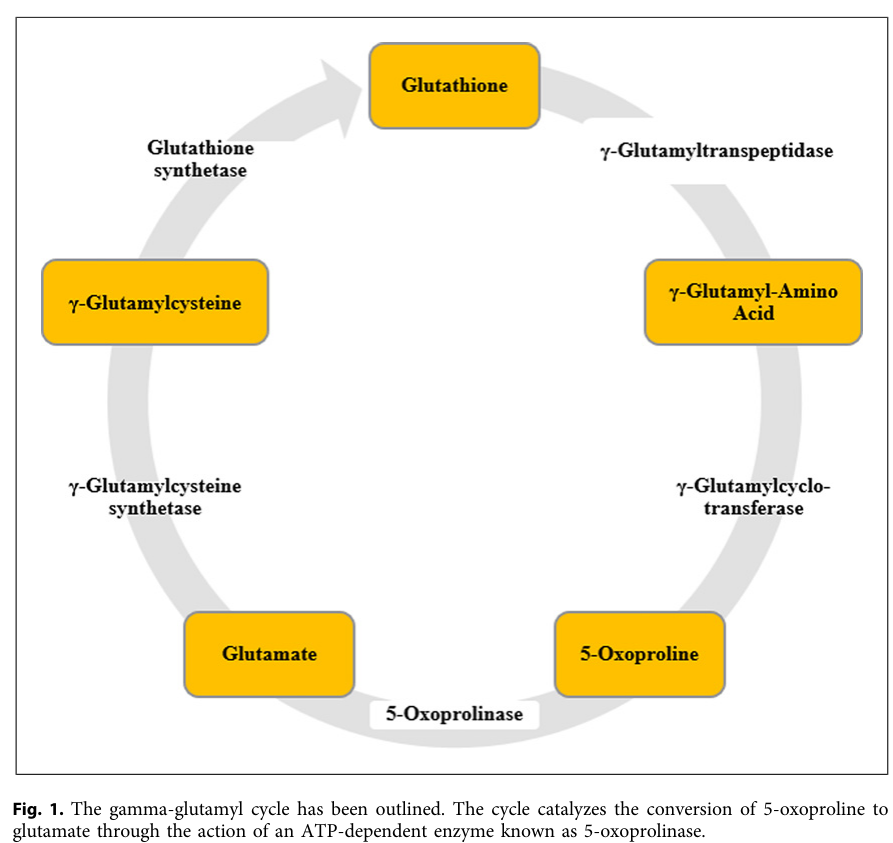
5-Oxoprolinase Deficiency
5-oxoprolinase deficiency is an ultra-rare autosomal recessive biochemical disorder caused by biallelic variants in OPLAH. Deficient ATP-dependent 5-oxoprolinase activity reduces conversion of 5-oxo-L-proline to L-glutamate and produces persistent 5-oxoprolinuria. This biochemical gene-disease relationship is well supported, but a reproducible clinical syndrome is not. Neurologic, developmental, renal, gastrointestinal, and growth findings have been reported in selected patients, while the largest family series found that clinical features were highly variable and did not segregate with 5-oxoprolinuria in several sibling pairs. Acid-base balance is usually normal; high-anion-gap metabolic acidosis or hemolysis should prompt evaluation for glutathione synthetase deficiency or an acquired or secondary cause of 5-oxoprolinuria.
Ask OpenScientist
Ask a research question about 5-Oxoprolinase Deficiency. OpenScientist will conduct autonomous deep research using the Disorder Mechanisms Knowledge Base and PubMed literature (typically 10-30 minutes).
Do not include personal health information in your question. Questions and results are cached in your browser's local storage.
Inheritance
1Show evidence (3 references)
Discussions and Knowledge Gaps
1Show evidence (5 references)
Pathophysiology
2Show evidence (3 references)
Show evidence (2 references)
Pathograph
Phenotypes
6Digestive 1
Show evidence (1 reference)
Genitourinary 2
Show evidence (2 references)
Show evidence (1 reference)
Nervous System 2
Show evidence (3 references)
Show evidence (4 references)
Growth 1
Show evidence (2 references)
Genetic Associations
1Show evidence (2 references)
Variants (1)
Show evidence (3 references)
Medical Actions
2Show evidence (2 references)
Show evidence (2 references)
Biochemical Markers
2Show evidence (2 references)
Show evidence (2 references)
Diagnosis
4Show evidence (2 references)
Show evidence (2 references)
Show evidence (2 references)
Show evidence (2 references)
Imaging Findings
4Show evidence (1 reference)
Show evidence (1 reference)
Show evidence (1 reference)
Show evidence (1 reference)
Progression
1Show evidence (1 reference)
Prevalence
1Show evidence (1 reference)
Differential Diagnoses
4Conditions with similar clinical presentations that must be differentiated from 5-Oxoprolinase Deficiency:
- Hemolytic anemia and reduced erythrocyte glutathione
- Persistent metabolic acidosis or high anion gap
- Reduced glutathione synthetase activity and biallelic GSS variants
- Recurrent bacterial infections or progressive neurologic disease in severe cases
Show evidence (2 references)
- Often transient or context-dependent biochemical abnormality
- Prematurity, pregnancy, malnutrition, severe burns, or critical illness
- A separate metabolic diagnosis such as homocystinuria, urea-cycle disease, tyrosinemia, or cystinosis
- No convincing biallelic OPLAH genotype or deficient nucleated-cell enzyme activity
Show evidence (1 reference)
- Phenotype absent in relatives with the same OPLAH biochemical trait
- Phenotype present in relatives without 5-oxoprolinuria
- A second molecular diagnosis or a better-fitting acquired explanation
- Clinical course not correlated with the urinary biochemical abnormality
Show evidence (1 reference)
Source YAML
click to showname: 5-Oxoprolinase Deficiency
category: Mendelian
creation_date: '2026-05-03T00:00:00Z'
synonyms:
- Oxoprolinuria due to oxoprolinase deficiency
- OPLAH deficiency
- OPLAHD
- Pyroglutamic aciduria due to OPLAH deficiency
description: >
5-oxoprolinase deficiency is an ultra-rare autosomal recessive biochemical
disorder caused by biallelic variants in OPLAH. Deficient ATP-dependent
5-oxoprolinase activity reduces conversion of 5-oxo-L-proline to L-glutamate
and produces persistent 5-oxoprolinuria. This biochemical gene-disease
relationship is well supported, but a reproducible clinical syndrome is not.
Neurologic, developmental, renal, gastrointestinal, and growth
findings have been reported in selected patients, while the largest family
series found that clinical features were highly variable and did not
segregate with 5-oxoprolinuria in several sibling pairs. Acid-base balance is
usually normal; high-anion-gap metabolic acidosis or hemolysis should prompt
evaluation for glutathione synthetase deficiency or an acquired or secondary
cause of 5-oxoprolinuria.
disease_term:
preferred_term: 5-oxoprolinase deficiency
term:
id: MONDO:0009825
label: 5-oxoprolinase deficiency
parents:
- Inherited Glutathione Metabolism Disease
- Inborn Error of Metabolism
inheritance:
- name: Autosomal recessive inheritance of the biochemical phenotype
inheritance_term:
preferred_term: Autosomal recessive inheritance
term:
id: HP:0000007
label: Autosomal recessive inheritance
penetrance: UNKNOWN
expressivity: UNKNOWN
description: >
Persistent 5-oxoprolinuria tracks with biallelic OPLAH variants in the
largest family series, while tested heterozygotes lacked the biochemical
phenotype. This recessive segregation establishes the biochemical trait;
it does not establish penetrance of the heterogeneous clinical findings.
evidence:
- reference: PMID:27477828
reference_title: "Unravelling 5-oxoprolinuria (pyroglutamic aciduria) due to bi-allelic OPLAH mutations: 20 new mutations in 14 families."
supports: SUPPORT
evidence_source: HUMAN_CLINICAL
snippet: >-
In all patients with 5-oxoprolinuria studied, bi-allelic mutations in
OPLAH were indicated.
explanation: >
The largest segregation series links the persistent urinary biochemical
phenotype to biallelic OPLAH variants.
- reference: PMID:27477828
reference_title: "Unravelling 5-oxoprolinuria (pyroglutamic aciduria) due to bi-allelic OPLAH mutations: 20 new mutations in 14 families."
supports: SUPPORT
evidence_source: HUMAN_CLINICAL
snippet: "the absence of 5-oxoprolinuria in all tested heterozygotes."
explanation: >
Absence of the urinary phenotype in tested carriers supports recessive
biochemical expression.
- reference: PMID:25129617
reference_title: New insights into the genetics of 5-oxoprolinase deficiency and further evidence that it is a benign biochemical condition.
supports: SUPPORT
evidence_source: HUMAN_CLINICAL
snippet: >-
hereditary 5-oxoprolinase deficiency is a benign biochemical condition
caused by mutations in the OPLAH gene, which are transmitted in an
autosomal recessive manner
explanation: >
This molecular and functional report explicitly supports autosomal
recessive inheritance while separating the biochemical trait from an
assumed clinical syndrome.
prevalence:
- population: Worldwide
measure_type: POINT_PREVALENCE
prevalence_class: BELOW_1_IN_1000000
rate_high: 0.1
notes: >
This is an Orphanet rarity category rather than a population-derived
prevalence estimate. Published evidence consists of case reports and small
family series.
evidence:
- reference: ORPHA:33572
reference_title: "5-oxoprolinase deficiency"
supports: SUPPORT
evidence_source: OTHER
snippet: "<1 / 1 000 000 | Worldwide | Point prevalence | ORPHANET"
explanation: Orphanet classifies worldwide point prevalence below one per million.
progression:
- phase: Persistent biochemical phenotype
notes: >
Urinary 5-oxoproline can be detected from infancy onward and may remain
persistently elevated despite a largely benign clinical course. There is no
established sequence of clinical progression attributable to OPLAH
deficiency.
evidence:
- reference: PMID:21651516
reference_title: "5-Oxoprolinase deficiency: report of the first human OPLAH mutation."
supports: SUPPORT
evidence_source: HUMAN_CLINICAL
snippet: "largely benign clinical course of the patients described herein despite persistent 5-oxoprolinuria"
explanation: >
The first molecular report documents persistence of the biochemical
phenotype without a corresponding progressive clinical course.
pathophysiology:
- name: OPLAH molecular function deficiency
mechanism_confidence: ESTABLISHED
description: >
Biallelic OPLAH variants reduce ATP-dependent 5-oxoprolinase activity.
5-oxoprolinase normally opens the ring of 5-oxo-L-proline and converts it
to L-glutamate in the gamma-glutamyl cycle.
genes:
- preferred_term: OPLAH
term:
id: hgnc:8149
label: OPLAH
molecular_functions:
- preferred_term: 5-oxoprolinase (ATP-hydrolyzing) activity
term:
id: GO:0017168
label: 5-oxoprolinase (ATP-hydrolyzing) activity
modifier: DECREASED
chemical_entities:
- preferred_term: 5-oxo-L-proline
term:
id: CHEBI:18183
label: 5-oxo-L-proline
- preferred_term: L-glutamate
term:
id: CHEBI:29985
label: L-glutamate(1-)
evidence:
- reference: PMID:21651516
reference_title: "5-Oxoprolinase deficiency: report of the first human OPLAH mutation."
supports: SUPPORT
evidence_source: HUMAN_CLINICAL
snippet: "mutation in OPLAH (which encodes 5-oxoprolinase)."
explanation: The first molecular report identifies OPLAH as the encoding gene.
- reference: PMID:6113726
reference_title: 5-oxoprolinuria due to hereditary 5-oxoprolinase deficiency in two brothers--a new inborn error of the gamma-glutamyl cycle.
supports: SUPPORT
evidence_source: HUMAN_CLINICAL
snippet: "Both patients had a specific deficiency of 5-oxoprolinase, the activity of which was 2-4% of that of control subjects."
explanation: >
Direct enzyme assays establish severe loss of 5-oxoprolinase activity in
affected individuals.
- reference: PMID:25129617
reference_title: New insights into the genetics of 5-oxoprolinase deficiency and further evidence that it is a benign biochemical condition.
supports: SUPPORT
evidence_source: IN_VITRO
snippet: "A yeast in vivo growth assay revealed that only p.S323R, p.G860R and p.D1241V affected the activity of the enzyme."
explanation: >
Functional testing supports activity loss for selected missense alleles
and cautions against assuming that every reported OPLAH change is
functionally damaging.
downstream:
- target: 5-oxo-L-proline accumulation and urinary excretion
causal_link_type: DIRECT
description: >
Reduced enzyme activity decreases conversion of 5-oxo-L-proline to
glutamate, causing the substrate to accumulate in body fluids and be
excreted in urine.
evidence:
- reference: PMID:17397529
reference_title: Inborn errors in the metabolism of glutathione.
supports: SUPPORT
evidence_source: OTHER
snippet: >-
decreased activity of 5-oxoprolinase leads to decreased conversion of
5-oxoproline to glutamate.
explanation: >
The biochemical review directly describes the substrate-accumulation
mechanism.
- name: 5-oxo-L-proline accumulation and urinary excretion
mechanism_confidence: ESTABLISHED
description: >
Failure to clear 5-oxo-L-proline, also called pyroglutamic acid, causes its
accumulation in body fluids and persistent urinary excretion. This is the
defining and reproducible biochemical phenotype. No causal edge is drawn
from this node to the reported clinical findings because that relationship
has not been established.
chemical_entities:
- preferred_term: 5-oxo-L-proline
term:
id: CHEBI:18183
label: 5-oxo-L-proline
modifier: INCREASED
evidence:
- reference: PMID:17397529
reference_title: Inborn errors in the metabolism of glutathione.
supports: SUPPORT
evidence_source: OTHER
snippet: "5-Oxoprolinase deficiency is associated with 5-oxoprolinuria"
explanation: The review identifies 5-oxoprolinuria as the consistent biochemical association.
- reference: PMID:6113726
reference_title: 5-oxoprolinuria due to hereditary 5-oxoprolinase deficiency in two brothers--a new inborn error of the gamma-glutamyl cycle.
supports: SUPPORT
evidence_source: HUMAN_CLINICAL
snippet: "Gas chromatography of urine from both brothers revealed massive excretion of L-5-oxoproline (pyroglutamic acid)."
explanation: The original cases directly demonstrate marked urinary excretion.
downstream:
- target: Increased urinary L-pyroglutamic acid
causal_link_type: DIRECT
description: >
Accumulated 5-oxo-L-proline is excreted as urinary L-pyroglutamic acid.
evidence:
- reference: PMID:6113726
reference_title: 5-oxoprolinuria due to hereditary 5-oxoprolinase deficiency in two brothers--a new inborn error of the gamma-glutamyl cycle.
supports: SUPPORT
evidence_source: HUMAN_CLINICAL
snippet: "Gas chromatography of urine from both brothers revealed massive excretion of L-5-oxoproline (pyroglutamic acid)."
explanation: The original biochemical study directly supports this edge.
phenotypes:
- name: Increased urinary L-pyroglutamic acid
frequency: VERY_FREQUENT
description: >
Persistent urinary 5-oxoproline elevation is the defining biochemical
phenotype of molecularly confirmed OPLAH deficiency.
phenotype_term:
preferred_term: Increased level of L-pyroglutamic acid in urine
term:
id: HP:0410132
label: Increased level of L-pyroglutamic acid in urine
evidence:
- reference: ORPHA:33572
reference_title: "5-oxoprolinase deficiency"
supports: SUPPORT
evidence_source: OTHER
snippet: "HP:0410132 | Increased level of L-pyroglutamic acid in urine | Very frequent (99-80%)"
explanation: Orphanet identifies this as the dominant biochemical phenotype.
- reference: PMID:27477828
reference_title: "Unravelling 5-oxoprolinuria (pyroglutamic aciduria) due to bi-allelic OPLAH mutations: 20 new mutations in 14 families."
supports: SUPPORT
evidence_source: HUMAN_CLINICAL
snippet: "In all patients with 5-oxoprolinuria studied, bi-allelic mutations in OPLAH were indicated."
explanation: >
The largest series establishes the link between persistent
5-oxoprolinuria and biallelic OPLAH variants.
- name: Delayed speech and language development
description: >
Speech difficulty has been reported in symptomatic ascertainment, but
causality and frequency are unresolved. It should not be attributed to
OPLAH deficiency without evaluation for an alternative diagnosis.
phenotype_term:
preferred_term: Delayed speech and language development
term:
id: HP:0000750
label: Delayed speech and language development
evidence:
- reference: PMID:39129838
reference_title: Is 5-Oxoprolinase Deficiency More than Just a Benign Condition?
supports: SUPPORT
evidence_source: HUMAN_CLINICAL
snippet: >-
He did not speak fluently. He was using 5-10 words with decreased
language fluency.
explanation: >
A single molecularly investigated three-year-old had markedly limited
expressive language. This supports co-occurrence of delayed speech and
language development but not causality.
- reference: PMID:27477828
reference_title: "Unravelling 5-oxoprolinuria (pyroglutamic aciduria) due to bi-allelic OPLAH mutations: 20 new mutations in 14 families."
supports: REFUTE
evidence_source: HUMAN_CLINICAL
snippet: "Clinical features were highly variable and in several sib pairs, did not segregate with 5-oxoprolinuria."
explanation: >
Nonsegregation in the largest family series argues against treating
developmental findings as an established OPLAH phenotype.
- reference: PMID:9453376
reference_title: "Growth failure, encephalopathy, and endocrine dysfunctions in two siblings, one with 5-oxoprolinase deficiency."
supports: REFUTE
evidence_source: HUMAN_CLINICAL
snippet: >-
The present findings give evidence that 5-oxoprolinase deficiency is not
associated with a distinct morbid phenotype.
explanation: >
Two sisters shared the same severe syndrome although only one had the
enzyme deficiency, directly arguing against attribution of their
developmental phenotype to OPLAH deficiency.
- name: Seizure
description: >
Epilepsy, including drug-resistant epilepsy, has been reported in recent
cases. The observations remain case-level and are counterbalanced by
within-family clinical diversity and earlier nonsegregation.
phenotype_term:
preferred_term: Seizure
term:
id: HP:0001250
label: Seizure
evidence:
- reference: PMID:39129838
reference_title: Is 5-Oxoprolinase Deficiency More than Just a Benign Condition?
supports: SUPPORT
evidence_source: HUMAN_CLINICAL
snippet: "presented with epilepsy at the age of 2 years."
explanation: A single case establishes co-occurrence of epilepsy and an OPLAH variant.
- reference: PMID:41675684
reference_title: "5-Oxoprolinase Deficiency and Epilepsy: A Report of Four Cases with New Clinical Findings and Clinical Diversity Even in the Same Family."
supports: SUPPORT
evidence_source: HUMAN_CLINICAL
snippet: "Patients had unreported clinical symptoms such as growth retardation and drug-resistant epilepsy."
explanation: >
The newest case series adds drug-resistant epilepsy as an observation;
this is case-level association evidence only.
- reference: PMID:41675684
reference_title: "5-Oxoprolinase Deficiency and Epilepsy: A Report of Four Cases with New Clinical Findings and Clinical Diversity Even in the Same Family."
supports: REFUTE
evidence_source: HUMAN_CLINICAL
snippet: "There were different clinical findings in the same family."
explanation: >
The full family report describes a severely affected girl and two
neurologically healthy brothers, aged 13 and 15 years, with the same
compound-heterozygous OPLAH genotype. This nonsegregation argues against
a deterministic OPLAH-associated epilepsy syndrome.
- reference: PMID:27477828
reference_title: "Unravelling 5-oxoprolinuria (pyroglutamic aciduria) due to bi-allelic OPLAH mutations: 20 new mutations in 14 families."
supports: REFUTE
evidence_source: HUMAN_CLINICAL
snippet: "Although a pathogenic role of 5-oxoprolinase deficiency remains possible, this is not supported by our findings."
explanation: >
The largest family series does not support a general clinical pathogenic
role for the biochemical defect.
- name: Growth delay
description: >
Growth retardation was reported in the 2026 case series, but no
disease-level frequency or causal relationship has been established.
phenotype_term:
preferred_term: Growth delay
term:
id: HP:0001510
label: Growth delay
evidence:
- reference: PMID:41675684
reference_title: "5-Oxoprolinase Deficiency and Epilepsy: A Report of Four Cases with New Clinical Findings and Clinical Diversity Even in the Same Family."
supports: SUPPORT
evidence_source: HUMAN_CLINICAL
snippet: "Patients had unreported clinical symptoms such as growth retardation and drug-resistant epilepsy."
explanation: >
The report supports case-level co-occurrence only; it does not establish
growth retardation as an OPLAH-caused feature.
- reference: PMID:9453376
reference_title: "Growth failure, encephalopathy, and endocrine dysfunctions in two siblings, one with 5-oxoprolinase deficiency."
supports: REFUTE
evidence_source: HUMAN_CLINICAL
snippet: >-
these patients suffer from a hitherto undescribed autosomal recessive
disorder, unrelated to the 5-oxoprolinase deficiency of the elder sib.
explanation: >
Severe growth failure affected both sisters while OPLAH enzyme deficiency
was confined to one, refuting OPLAH deficiency as the cause in that family.
- name: Nephrolithiasis
description: >
Kidney stones occurred in the two brothers from the original biochemical
report, but stones also occurred in paternal relatives and a causal
connection to OPLAH deficiency was not established.
phenotype_term:
preferred_term: Nephrolithiasis
term:
id: HP:0000787
label: Nephrolithiasis
evidence:
- reference: PMID:6113726
reference_title: 5-oxoprolinuria due to hereditary 5-oxoprolinase deficiency in two brothers--a new inborn error of the gamma-glutamyl cycle.
supports: SUPPORT
evidence_source: HUMAN_CLINICAL
snippet: "Their father and several paternal relatives have had kidney stones. Both boys developed urolithiasis"
explanation: >
The original family establishes co-occurrence but also provides a familial
confounder independent of the recessive biochemical trait.
- name: Enterocolitis
description: >
Recurrent gastrointestinal episodes were part of the original brothers'
presentation, but extensive investigation did not establish a cause and the
symptoms did not recur after treatment was stopped.
phenotype_term:
preferred_term: Enterocolitis
term:
id: HP:0004387
label: Enterocolitis
evidence:
- reference: PMID:6113726
reference_title: 5-oxoprolinuria due to hereditary 5-oxoprolinase deficiency in two brothers--a new inborn error of the gamma-glutamyl cycle.
supports: SUPPORT
evidence_source: HUMAN_CLINICAL
snippet: "In spite of extensive investigations no cause of their enterocolitis could be established."
explanation: >
The source documents the phenotype while explicitly acknowledging that
its cause was unresolved.
imaging_findings:
- name: Cerebral atrophy on brain MRI
modality: MRI
imaging_finding_term:
preferred_term: Cerebral atrophy
term:
id: HP:0002059
label: Cerebral atrophy
phenotype_term:
preferred_term: Cerebral atrophy
term:
id: HP:0002059
label: Cerebral atrophy
diagnostic: false
context: Single reported symptomatic child; causal attribution to OPLAH deficiency is uncertain.
description: >
Progressive cerebral atrophy was one component of a case-specific MRI
constellation that is not established as an OPLAH-associated pattern.
evidence:
- reference: PMID:39129838
reference_title: Is 5-Oxoprolinase Deficiency More than Just a Benign Condition?
supports: SUPPORT
evidence_source: HUMAN_CLINICAL
snippet: "Progressive cerebral atrophy, hypomyelination, ventriculomegaly, and corpus callosum hypoplasia were striking features in brain MRI."
explanation: A single case documents the imaging finding but cannot establish disease attribution.
- name: Cerebral hypomyelination on brain MRI
modality: MRI
imaging_finding_term:
preferred_term: Cerebral hypomyelination
term:
id: HP:0006808
label: Cerebral hypomyelination
phenotype_term:
preferred_term: Cerebral hypomyelination
term:
id: HP:0006808
label: Cerebral hypomyelination
diagnostic: false
context: Single reported symptomatic child; causal attribution to OPLAH deficiency is uncertain.
description: >
Hypomyelination was reported in one child and is not established as a
recurring OPLAH-associated MRI finding.
evidence:
- reference: PMID:39129838
reference_title: Is 5-Oxoprolinase Deficiency More than Just a Benign Condition?
supports: SUPPORT
evidence_source: HUMAN_CLINICAL
snippet: "Progressive cerebral atrophy, hypomyelination, ventriculomegaly, and corpus callosum hypoplasia were striking features in brain MRI."
explanation: A single case documents the imaging finding but cannot establish disease attribution.
- name: Ventriculomegaly on brain MRI
modality: MRI
imaging_finding_term:
preferred_term: Ventriculomegaly
term:
id: HP:0002119
label: Ventriculomegaly
phenotype_term:
preferred_term: Ventriculomegaly
term:
id: HP:0002119
label: Ventriculomegaly
diagnostic: false
context: Single reported symptomatic child; causal attribution to OPLAH deficiency is uncertain.
description: >
Ventriculomegaly was reported in one child and is not established as a
recurring OPLAH-associated MRI finding.
evidence:
- reference: PMID:39129838
reference_title: Is 5-Oxoprolinase Deficiency More than Just a Benign Condition?
supports: SUPPORT
evidence_source: HUMAN_CLINICAL
snippet: >-
We report a 3-year-old male patient with epilepsy and speech difficulty diagnosed as primary
5-oxoprolinuria due to a novel OPLAH gene mutation. ... Progressive cerebral atrophy,
hypomyelination, ventriculomegaly, and corpus callosum hypoplasia were striking features in
brain MRI. ... The nature of this inherited metabolic disorder must be determined through
long-term observation.
explanation: >-
Identifies the single symptomatic child with an OPLAH variant and retains the source's call
for long-term observation. This reports association without establishing a recurring MRI
pattern or causality for every observed feature.
- name: Corpus callosum hypoplasia on brain MRI
modality: MRI
imaging_finding_term:
preferred_term: Hypoplasia of the corpus callosum
term:
id: HP:0002079
label: Hypoplasia of the corpus callosum
phenotype_term:
preferred_term: Hypoplasia of the corpus callosum
term:
id: HP:0002079
label: Hypoplasia of the corpus callosum
diagnostic: false
context: Single reported symptomatic child; causal attribution to OPLAH deficiency is uncertain.
description: >
Corpus callosum hypoplasia was reported in one child and is not established
as a recurring OPLAH-associated MRI finding.
evidence:
- reference: PMID:39129838
reference_title: Is 5-Oxoprolinase Deficiency More than Just a Benign Condition?
supports: SUPPORT
evidence_source: HUMAN_CLINICAL
snippet: "Progressive cerebral atrophy, hypomyelination, ventriculomegaly, and corpus callosum hypoplasia were striking features in brain MRI."
explanation: A single case documents the imaging finding but cannot establish disease attribution.
biochemical:
- name: Increased urinary 5-oxoproline
presence: INCREASED
context: >
Persistent urinary 5-oxoproline, also called L-pyroglutamic acid, is the
defining biochemical marker. Quantification is performed by urinary organic
acid analysis, commonly gas chromatography-mass spectrometry.
biomarker_term:
preferred_term: 5-oxo-L-proline
term:
id: CHEBI:18183
label: 5-oxo-L-proline
readouts:
- target: 5-oxo-L-proline accumulation and urinary excretion
relationship: READOUT_OF
direction: POSITIVE
endpoint_context: DIAGNOSTIC
interpretation: >
Increased urinary 5-oxoproline reports failure of substrate clearance by
deficient 5-oxoprolinase.
- target: Increased urinary L-pyroglutamic acid
relationship: READOUT_OF
direction: POSITIVE
endpoint_context: DIAGNOSTIC
interpretation: >
The biochemical measurement corresponds to the urinary
L-pyroglutamic-acid HPO phenotype.
evidence:
- reference: PMID:17397529
reference_title: Inborn errors in the metabolism of glutathione.
supports: SUPPORT
evidence_source: OTHER
snippet: "The level of 5-oxoproline in urine can be determined by gas chromatography-mass spectrometry"
explanation: The biochemical review specifies the diagnostic analytical method.
- reference: PMID:6113726
reference_title: 5-oxoprolinuria due to hereditary 5-oxoprolinase deficiency in two brothers--a new inborn error of the gamma-glutamyl cycle.
supports: SUPPORT
evidence_source: HUMAN_CLINICAL
snippet: "Gas chromatography of urine from both brothers revealed massive excretion of L-5-oxoproline (pyroglutamic acid)."
explanation: The original report demonstrates the diagnostic urinary abnormality.
- name: Reduced 5-oxoprolinase activity
presence: DECREASED
context: >
Direct functional testing can demonstrate reduced enzyme activity in
leukocytes or cultured skin fibroblasts. Erythrocytes are unsuitable
because they normally lack 5-oxoprolinase.
readouts:
- target: OPLAH molecular function deficiency
relationship: READOUT_OF
direction: NEGATIVE
endpoint_context: DIAGNOSTIC
interpretation: >
Reduced activity is the direct functional readout of deficient OPLAH
molecular function.
evidence:
- reference: PMID:17397529
reference_title: Inborn errors in the metabolism of glutathione.
supports: SUPPORT
evidence_source: OTHER
snippet: "Activity of 5-oxoprolinase in leukocytes and/or cultured fibroblasts can be measured"
explanation: The review specifies the appropriate assay tissues.
- reference: PMID:6113726
reference_title: 5-oxoprolinuria due to hereditary 5-oxoprolinase deficiency in two brothers--a new inborn error of the gamma-glutamyl cycle.
supports: SUPPORT
evidence_source: HUMAN_CLINICAL
snippet: "Both patients had a specific deficiency of 5-oxoprolinase, the activity of which was 2-4% of that of control subjects."
explanation: Direct enzyme testing demonstrates markedly reduced activity.
diagnosis:
- name: Persistent urinary 5-oxoproline by organic acid analysis
diagnosis_term:
preferred_term: urine chemistry measurement
term:
id: NCIT:C61044
label: Urine Chemistry Measurement
description: >
Detect and quantify 5-oxoproline in urine, typically by GC-MS. Persistence
supports an inherited biochemical defect but is not specific for OPLAH
deficiency, so etiologic confirmation and exclusion of secondary causes are
required.
results: >
Markedly elevated or repeatedly elevated urinary 5-oxoproline
(L-pyroglutamic acid).
evidence:
- reference: PMID:17397529
reference_title: Inborn errors in the metabolism of glutathione.
supports: SUPPORT
evidence_source: OTHER
snippet: "The level of 5-oxoproline in urine can be determined by gas chromatography-mass spectrometry"
explanation: The review identifies urinary GC-MS as the biochemical test.
- reference: PMID:39129838
reference_title: Is 5-Oxoprolinase Deficiency More than Just a Benign Condition?
supports: SUPPORT
evidence_source: HUMAN_CLINICAL
snippet: "quantitation of 5-oxoproline by stable isotope dilution gave a value of 177.9 mmol/mol creatinine"
explanation: A recent case demonstrates quantitative confirmation of the urinary marker.
- name: Biallelic OPLAH molecular confirmation
diagnosis_term:
preferred_term: genetic testing
term:
id: NCIT:C15709
label: Genetic Testing
description: >
Confirm biallelic OPLAH variants in trans that are consistent with the
biochemical phenotype. Persistent 5-oxoprolinuria with only one OPLAH
variant is insufficient to establish recessive OPLAH deficiency; variant
interpretation should incorporate segregation, enzyme activity, and
allele-specific functional evidence.
results: >
Homozygous or compound-heterozygous OPLAH variants in trans, with evidence
linking them to deficient enzyme activity or persistent 5-oxoprolinuria.
evidence:
- reference: PMID:27477828
reference_title: "Unravelling 5-oxoprolinuria (pyroglutamic aciduria) due to bi-allelic OPLAH mutations: 20 new mutations in 14 families."
supports: SUPPORT
evidence_source: HUMAN_CLINICAL
snippet: "In all patients with 5-oxoprolinuria studied, bi-allelic mutations in OPLAH were indicated."
explanation: The largest series supports biallelic molecular confirmation.
- reference: PMID:25129617
reference_title: New insights into the genetics of 5-oxoprolinase deficiency and further evidence that it is a benign biochemical condition.
supports: SUPPORT
evidence_source: IN_VITRO
snippet: "A yeast in vivo growth assay revealed that only p.S323R, p.G860R and p.D1241V affected the activity of the enzyme."
explanation: >
Functional discrimination among reported missense variants supports
cautious variant interpretation rather than accepting any rare change.
- name: 5-oxoprolinase activity assay
diagnosis_term:
preferred_term: clinical laboratory procedure
term:
id: NCIT:C25294
label: Laboratory Procedure
description: >
When available, measure 5-oxoprolinase activity in leukocytes or cultured
skin fibroblasts. Do not use erythrocytes, which normally lack the enzyme.
results: Markedly reduced 5-oxoprolinase activity in an appropriate nucleated-cell specimen.
evidence:
- reference: PMID:17397529
reference_title: Inborn errors in the metabolism of glutathione.
supports: SUPPORT
evidence_source: OTHER
snippet: "leukocytes or cultured skin fibroblasts (5-oxoprolinase is not present in erythrocytes)."
explanation: The review defines the appropriate and inappropriate assay tissues.
- reference: PMID:6113726
reference_title: 5-oxoprolinuria due to hereditary 5-oxoprolinase deficiency in two brothers--a new inborn error of the gamma-glutamyl cycle.
supports: SUPPORT
evidence_source: HUMAN_CLINICAL
snippet: "the activity of which was 2-4% of that of control subjects."
explanation: The original patients had a severe measurable enzyme deficiency.
- name: Clinical attribution and alternative-diagnosis assessment
description: >
In a symptomatic person, do not treat an OPLAH result or 5-oxoprolinuria as
a sufficient explanation for neurologic or systemic findings. Review
acid-base status, complete blood count and hemolysis markers, medication and
nutrition history, renal function, intercurrent illness, and consider broad
genomic testing for an independent diagnosis.
evidence:
- reference: PMID:21651516
reference_title: "5-Oxoprolinase deficiency: report of the first human OPLAH mutation."
supports: SUPPORT
evidence_source: HUMAN_CLINICAL
snippet: "establishing a molecular diagnosis in the few cases with abnormal neurological outcome to exclude potentially overlapping biochemical defects"
explanation: >
The first molecular report explicitly recommends excluding overlapping
biochemical diagnoses in neurologically abnormal cases.
- reference: PMID:27477828
reference_title: "Unravelling 5-oxoprolinuria (pyroglutamic aciduria) due to bi-allelic OPLAH mutations: 20 new mutations in 14 families."
supports: SUPPORT
evidence_source: HUMAN_CLINICAL
snippet: "Although a pathogenic role of 5-oxoprolinase deficiency remains possible, this is not supported by our findings."
explanation: >
The largest family series cautions against default clinical attribution
to OPLAH deficiency.
differential_diagnoses:
- name: Glutathione synthetase deficiency
disease_term:
preferred_term: inherited glutathione synthetase deficiency
term:
id: MONDO:0017909
label: inherited glutathione synthetase deficiency
description: >
Biallelic GSS deficiency is the principal inherited differential because
its systemic forms also produce 5-oxoprolinuria. Unlike isolated OPLAH
deficiency, it characteristically causes glutathione depletion, hemolytic
anemia, high-anion-gap metabolic acidosis, and in severe disease recurrent
infection and progressive neurologic involvement.
distinguishing_features:
- Hemolytic anemia and reduced erythrocyte glutathione
- Persistent metabolic acidosis or high anion gap
- Reduced glutathione synthetase activity and biallelic GSS variants
- Recurrent bacterial infections or progressive neurologic disease in severe cases
evidence:
- reference: PMID:17397529
reference_title: Inborn errors in the metabolism of glutathione.
supports: SUPPORT
evidence_source: OTHER
snippet: >-
Glutathione synthetase deficiency is the most frequently recognized
disorder and, in its severe form, it is associated with hemolytic anemia,
metabolic acidosis, 5-oxoprolinuria, central nervous system (CNS) damage
and recurrent bacterial infections.
explanation: The review identifies the distinguishing systemic GSS-deficiency phenotype.
- reference: PMID:17397529
reference_title: Inborn errors in the metabolism of glutathione.
supports: SUPPORT
evidence_source: OTHER
snippet: "acid-base balance is usually normal."
explanation: >
Usually normal acid-base balance in OPLAH deficiency makes persistent
acidosis an important discriminator.
- name: Acquired drug-related pyroglutamic acidosis
description: >
Acquired 5-oxoproline accumulation usually presents as severe
high-anion-gap metabolic acidosis in an adult exposed to paracetamol,
sometimes with a beta-lactamase-resistant penicillin or vigabatrin.
Undernutrition, alcohol-use disorder, kidney disease, and infection are
common predisposing contexts.
distinguishing_features:
- Recent or prolonged paracetamol exposure
- Flucloxacillin or another beta-lactamase-resistant penicillin, or vigabatrin exposure
- Adult onset with severe high-anion-gap metabolic acidosis
- Undernutrition, alcohol-use disorder, kidney disease, or active infection
- Improvement after removal of the acquired trigger rather than recessive OPLAH segregation
evidence:
- reference: PMID:39407841
reference_title: "Drug-Related Pyroglutamic Acidosis: Systematic Literature Review."
supports: SUPPORT
evidence_source: HUMAN_CLINICAL
snippet: >-
At least 92% of patients were on paracetamol therapy for >10 days at an
appropriate dose, 32% on a β-lactamase-resistant penicillin, and 2.3% on
vigabatrin.
explanation: The systematic review quantifies the principal medication exposures.
- reference: PMID:39407841
reference_title: "Drug-Related Pyroglutamic Acidosis: Systematic Literature Review."
supports: SUPPORT
evidence_source: HUMAN_CLINICAL
snippet: >-
This condition predominantly affects adults, especially women with
factors like undernutrition, alcohol-use disorder, or kidney disease,
often during infection.
explanation: The systematic review identifies the characteristic acquired context.
- name: Other secondary or transient 5-oxoprolinuria
description: >
Urinary 5-oxoproline can rise without an inherited gamma-glutamyl-cycle
defect. Reported settings include dietary sources, severe burns or
Stevens-Johnson syndrome, ATP depletion in critical illness or other inborn
errors, homocystinuria, prematurity, malnutrition or pregnancy, and
nephropathic cystinosis.
distinguishing_features:
- Often transient or context-dependent biochemical abnormality
- Prematurity, pregnancy, malnutrition, severe burns, or critical illness
- A separate metabolic diagnosis such as homocystinuria, urea-cycle disease, tyrosinemia, or cystinosis
- No convincing biallelic OPLAH genotype or deficient nucleated-cell enzyme activity
evidence:
- reference: PMID:17397529
reference_title: Inborn errors in the metabolism of glutathione.
supports: SUPPORT
evidence_source: OTHER
snippet: "Causes of 5-oxoprolinuria beside glutathione synthetase deficiency and 5-oxoprolinase deficiency."
explanation: The review explicitly tabulates non-OPLAH causes.
- name: Independent neurologic, developmental, renal, or gastrointestinal disorder
description: >
Because clinical features have failed to segregate with 5-oxoprolinuria in
multiple families, a symptomatic individual may have an unrelated genetic
or acquired disorder while OPLAH deficiency explains only the biochemical
marker. Phenotype-driven exome or genome analysis and organ-specific
evaluation should remain open.
distinguishing_features:
- Phenotype absent in relatives with the same OPLAH biochemical trait
- Phenotype present in relatives without 5-oxoprolinuria
- A second molecular diagnosis or a better-fitting acquired explanation
- Clinical course not correlated with the urinary biochemical abnormality
evidence:
- reference: PMID:27477828
reference_title: "Unravelling 5-oxoprolinuria (pyroglutamic aciduria) due to bi-allelic OPLAH mutations: 20 new mutations in 14 families."
supports: SUPPORT
evidence_source: HUMAN_CLINICAL
snippet: "Clinical features were highly variable and in several sib pairs, did not segregate with 5-oxoprolinuria."
explanation: >
Within-family nonsegregation directly supports an active search for an
alternative cause of symptoms.
treatments:
- name: Manifestation-directed supportive care
action_category: THERAPEUTIC
description: >
No OPLAH-directed or disease-modifying treatment is established. Do not
treat an isolated urinary metabolite elevation. Provide ordinary
symptom-directed care, such as antiseizure therapy or developmental
services, only for independently assessed clinical indications.
treatment_term:
preferred_term: supportive care
term:
id: NCIT:C15747
label: Supportive Care
evidence:
- reference: PMID:17397529
reference_title: Inborn errors in the metabolism of glutathione.
supports: SUPPORT
evidence_source: OTHER
snippet: "No specific treatment has been proposed or tried."
explanation: The disease review reports no specific OPLAH-deficiency treatment.
- reference: PMID:39129838
reference_title: Is 5-Oxoprolinase Deficiency More than Just a Benign Condition?
supports: SUPPORT
evidence_source: HUMAN_CLINICAL
snippet: "well-controlled epilepsy with levetiracetam."
explanation: >
A case illustrates standard manifestation-directed seizure treatment, not
an OPLAH-directed therapy.
- name: Genetic counseling
action_category: COUNSELING_INFORMATIONAL
description: >
Counseling should address autosomal recessive inheritance of the
biochemical phenotype, recurrence risk, carrier testing, and the important
uncertainty about whether any clinical manifestations are caused by OPLAH
deficiency.
treatment_term:
preferred_term: Genetic Counseling
term:
id: NCIT:C15240
label: Genetic Counseling
evidence:
- reference: PMID:27477828
reference_title: "Unravelling 5-oxoprolinuria (pyroglutamic aciduria) due to bi-allelic OPLAH mutations: 20 new mutations in 14 families."
supports: SUPPORT
evidence_source: HUMAN_CLINICAL
snippet: "autosomal recessive mode of inheritance for 5-oxoprolinase deficiency"
explanation: Family segregation supports recessive recurrence-risk counseling.
- reference: PMID:17397529
reference_title: Inborn errors in the metabolism of glutathione.
supports: SUPPORT
evidence_source: OTHER
snippet: "They should be referred for genetic counseling."
explanation: The disease review explicitly recommends genetic counseling.
genetic:
- name: Biallelic OPLAH variants
relationship_type: CAUSATIVE
gene_term:
preferred_term: OPLAH
term:
id: hgnc:8149
label: OPLAH
variants:
- name: Biallelic OPLAH variants associated with persistent 5-oxoprolinuria
description: >
Molecularly confirmed individuals carry homozygous or compound
heterozygous OPLAH variants. Reported alleles include truncating and
missense variants, many private to individual families. Functional or
segregation evidence is particularly important for missense variants.
evidence:
- reference: PMID:21651516
reference_title: "5-Oxoprolinase deficiency: report of the first human OPLAH mutation."
supports: SUPPORT
evidence_source: HUMAN_CLINICAL
snippet: "first molecularly characterized patients with 5-oxoprolinase deficiency due to a mutation in OPLAH"
explanation: The report first established the molecular OPLAH association.
- reference: PMID:27477828
reference_title: "Unravelling 5-oxoprolinuria (pyroglutamic aciduria) due to bi-allelic OPLAH mutations: 20 new mutations in 14 families."
supports: SUPPORT
evidence_source: HUMAN_CLINICAL
snippet: "all 20 mutations identified were novel and private to the respective families."
explanation: The largest series documents extensive family-specific allelic heterogeneity.
- reference: PMID:25129617
reference_title: New insights into the genetics of 5-oxoprolinase deficiency and further evidence that it is a benign biochemical condition.
supports: SUPPORT
evidence_source: IN_VITRO
snippet: "only p.S323R, p.G860R and p.D1241V affected the activity of the enzyme."
explanation: Functional testing distinguishes damaging from non-damaging reported missense alleles.
features: >
Biallelic OPLAH dysfunction causes the recessive biochemical phenotype of
deficient 5-oxoprolinase activity and persistent 5-oxoprolinuria. Current
evidence does not establish that the same genotype causes a predictable
neurologic or multisystem phenotype.
evidence:
- reference: PMID:27477828
reference_title: "Unravelling 5-oxoprolinuria (pyroglutamic aciduria) due to bi-allelic OPLAH mutations: 20 new mutations in 14 families."
supports: SUPPORT
evidence_source: HUMAN_CLINICAL
snippet: "In all patients with 5-oxoprolinuria studied, bi-allelic mutations in OPLAH were indicated."
explanation: Biallelic OPLAH variants explain the urinary biochemical phenotype.
- reference: PMID:27477828
reference_title: "Unravelling 5-oxoprolinuria (pyroglutamic aciduria) due to bi-allelic OPLAH mutations: 20 new mutations in 14 families."
supports: SUPPORT
evidence_source: HUMAN_CLINICAL
snippet: "Although a pathogenic role of 5-oxoprolinase deficiency remains possible, this is not supported by our findings."
explanation: The same study does not support extension of the molecular association to a clinical syndrome.
discussions:
- discussion_id: gap_oplah_clinical_pathogenicity
prompt: >
Does biallelic OPLAH deficiency cause a reproducible clinical syndrome, or
is it primarily a biochemical trait that can be incidental to neurologic
and systemic disease?
kind: CONTROVERSY
status: OPEN
attaches_to:
- pathophysiology#5-oxo-L-proline accumulation and urinary excretion
- phenotypes#Delayed speech and language development
- phenotypes#Seizure
rationale: >
The enzyme defect, recessive segregation, and persistent 5-oxoprolinuria
are established. Earlier molecular reports describe benign courses, and the
largest family series found nonsegregation of clinical findings. Recent
case reports argue for epilepsy, developmental abnormalities, growth
retardation, and neuroimaging changes, but remain vulnerable to
ascertainment bias, circular phenotype-based variant interpretation, and
alternative diagnoses. Until this is resolved, the causal graph stops at
the biochemical phenotype and clinical observations are marked PARTIAL
without frequency assignments.
proposed_experiments:
- experiment_id: exp_oplah_genotype_first_natural_history
name: Prospective genotype-first OPLAH natural-history cohort
description: >
Ascertain biallelic OPLAH carriers without selecting for neurologic
disease, quantify urinary and plasma 5-oxoproline longitudinally, and use
standardized developmental, neurologic, renal, hematologic, and
gastrointestinal assessments against matched controls.
- experiment_id: exp_oplah_intrafamilial_segregation
name: Intrafamilial genotype-metabolite-phenotype segregation
description: >
Study symptomatic and asymptomatic relatives with the same OPLAH
genotypes, using quantitative metabolomics and genome-wide testing for
second diagnoses or modifiers.
- experiment_id: exp_oplah_neuronal_causality
name: Human neuronal OPLAH loss-and-rescue model
description: >
Compare OPLAH-deficient and isogenic rescued human neuronal cells or
organoids for 5-oxoproline accumulation, electrophysiology,
myelination-related readouts, cell stress, and dose-response to exogenous
5-oxoproline.
evidence:
- reference: PMID:21651516
reference_title: "5-Oxoprolinase deficiency: report of the first human OPLAH mutation."
supports: SUPPORT
evidence_source: HUMAN_CLINICAL
snippet: "Debate continues as to whether this is a benign biochemical defect"
explanation: The first molecular report explicitly identifies the controversy.
- reference: PMID:27477828
reference_title: "Unravelling 5-oxoprolinuria (pyroglutamic aciduria) due to bi-allelic OPLAH mutations: 20 new mutations in 14 families."
supports: SUPPORT
evidence_source: HUMAN_CLINICAL
snippet: "Clinical features were highly variable and in several sib pairs, did not segregate with 5-oxoprolinuria."
explanation: The largest family series supplies the strongest nonsegregation evidence.
- reference: PMID:9453376
reference_title: "Growth failure, encephalopathy, and endocrine dysfunctions in two siblings, one with 5-oxoprolinase deficiency."
supports: SUPPORT
evidence_source: HUMAN_CLINICAL
snippet: >-
The present findings give evidence that 5-oxoprolinase deficiency is not
associated with a distinct morbid phenotype.
explanation: >
Discordant enzyme deficiency in two sisters with the same severe syndrome
supplies direct evidence for the benign-biochemical interpretation.
- reference: PMID:39129838
reference_title: Is 5-Oxoprolinase Deficiency More than Just a Benign Condition?
supports: SUPPORT
evidence_source: HUMAN_CLINICAL
snippet: "We conclude that inherited 5-oxoprolinase deficiency is not a benign biochemical condition"
explanation: A recent case report represents the opposing clinical-pathogenicity interpretation.
- reference: PMID:41675684
reference_title: "5-Oxoprolinase Deficiency and Epilepsy: A Report of Four Cases with New Clinical Findings and Clinical Diversity Even in the Same Family."
supports: SUPPORT
evidence_source: HUMAN_CLINICAL
snippet: "The clinical picture is not well defined due to the limited number of cases."
explanation: The newest series acknowledges that the clinical phenotype remains unresolved.
notes: >
Expert review is tracked in
https://github.com/monarch-initiative/dismech/issues/6615.
references:
- reference: ORPHA:33572
title: 5-oxoprolinase deficiency
found_in:
- 5-Oxoprolinase_Deficiency-deep-research-cyberian-codex.md
- reference: PMID:6113726
title: 5-oxoprolinuria due to hereditary 5-oxoprolinase deficiency in two brothers--a new inborn error of the gamma-glutamyl cycle.
- reference: PMID:17397529
title: Inborn errors in the metabolism of glutathione.
found_in:
- 5-Oxoprolinase_Deficiency-deep-research-cyberian-codex.md
- reference: PMID:21651516
title: "5-Oxoprolinase deficiency: report of the first human OPLAH mutation."
found_in:
- 5-Oxoprolinase_Deficiency-deep-research-cyberian-codex.md
- reference: PMID:25129617
title: New insights into the genetics of 5-oxoprolinase deficiency and further evidence that it is a benign biochemical condition.
found_in:
- 5-Oxoprolinase_Deficiency-deep-research-cyberian-codex.md
- reference: PMID:27477828
title: "Unravelling 5-oxoprolinuria (pyroglutamic aciduria) due to bi-allelic OPLAH mutations: 20 new mutations in 14 families."
found_in:
- 5-Oxoprolinase_Deficiency-deep-research-cyberian-codex.md
- reference: PMID:39129838
title: Is 5-Oxoprolinase Deficiency More than Just a Benign Condition?
found_in:
- 5-Oxoprolinase_Deficiency-deep-research-cyberian-codex.md
- reference: PMID:9453376
title: "Growth failure, encephalopathy, and endocrine dysfunctions in two siblings, one with 5-oxoprolinase deficiency."
- reference: PMID:39407841
title: "Drug-Related Pyroglutamic Acidosis: Systematic Literature Review."
found_in:
- 5-Oxoprolinase_Deficiency-deep-research-falcon.md
- reference: PMID:41675684
title: "5-Oxoprolinase Deficiency and Epilepsy: A Report of Four Cases with New Clinical Findings and Clinical Diversity Even in the Same Family."
notes: >-
Curation distinguishes the established recessive biochemical phenotype from
the unresolved clinical phenotype. Nonspecific Orphanet clinical-frequency
bands and causal edges from 5-oxoproline accumulation to clinical findings
are intentionally omitted because published families show ascertainment bias
and nonsegregation. Duplicate DOI records and unused prokaryotic, mouse
protein-interaction, and acquired-acidosis background references were removed;
the retained acquired-acidosis systematic review is used specifically for
differential diagnosis.
References & Deep Research
References
10Deep Research
2Deep research results are used as seeds for research; they do not undergo the same validation as the main records and may contain errors. How we use deep research.
Evidence Basis
This local Codex synthesis uses the cached Orphanet record for ORPHA:33572 and the PubMed references integrated into the YAML. The Asta retrieval attempt for this disease returned off-topic literature and was not used.
Core Disease Mechanism
- 5-oxoprolinase deficiency maps directly to MONDO:0009825 and ORPHA:33572.
- Orphanet lists OPLAH as the disease-causing gene and records autosomal recessive inheritance.
- OPLAH encodes ATP-dependent 5-oxoprolinase, a gamma-glutamyl-cycle enzyme. Biallelic OPLAH variants reduce 5-oxoprolinase activity and impair clearance of 5-oxo-L-proline, also called pyroglutamic acid.
- The most consistent disease feature is persistent urinary 5-oxoproline elevation, represented in HPO as increased urinary L-pyroglutamic acid.
Clinical Interpretation
- Published molecular reports support a rare biochemical disorder with variable clinical expression. Earlier series described benign or uncertain clinical impact in some families, while later case reports and Orphanet phenotypes include developmental delay, delayed speech, seizures, metabolic acidosis, and brain imaging abnormalities.
- The YAML therefore treats neurologic and metabolic manifestations cautiously: the biochemical phenotype is high-confidence, while clinical penetrance and causality are supported at variable or case-level strength.
YAML Integration Notes
- The primary pathophysiology chain is OPLAH molecular-function deficiency to gamma-glutamyl-cycle block to 5-oxoproline accumulation.
- Genetic evidence uses biallelic OPLAH mutation series and first molecular report evidence.
- Phenotypes are anchored to Orphanet frequency statements and reinforced only where PubMed evidence supports the same clinical or biochemical feature.
Citation Inventory
- PMID:17397529
- PMID:21651516
- PMID:25129617
- PMID:25851806
- PMID:27477828
- PMID:39129838
- ORPHA:33572
Question: You are an expert researcher providing comprehensive, well-cited information.
Provide detailed information focusing on: 1. Key concepts and definitions with current understanding 2. Recent developments and latest research (prioritize 2023-2024 sources) 3. Current applications and real-world implementations 4. Expert opinions and analysis from authoritative sources 5. Relevant statistics and data from recent studies
Format as a comprehensive research report with proper citations. Include URLs and publication dates where available. Always prioritize recent, authoritative sources and provide specific citations for all major claims.
Disease Characteristics Research Template
Target Disease
- Disease Name: 5-Oxoprolinase Deficiency
- MONDO ID: (if available)
- Category: Mendelian
Research Objectives
Please provide a comprehensive research report on 5-Oxoprolinase Deficiency covering all of the disease characteristics listed below. This report will be used to populate a disease knowledge base entry. Be thorough and cite primary literature (PMID preferred) for all claims.
For each section, suggested databases/resources are listed. These are the first places you should search for information on each topic.
1. Disease Information
Search first: OMIM, Orphanet, ICD-10/ICD-11, MeSH, PubMed
- What is the disease? Provide a concise overview.
- What are the key identifiers? (OMIM, Orphanet, ICD-10/ICD-11, MeSH, Mondo)
- What are the common synonyms and alternative names?
- Is the information derived from individual patients (e.g., EHR) or aggregated disease-level resources?
2. Etiology
- Disease Causal Factors: What are the primary causes? (genetic, environmental, infectious, mechanistic)
- Risk Factors:
Search first: PubMed, Cochrane Library, UpToDate, clinical guidelines, ClinVar, ClinGen, GWAS Catalog, PheGenI, CTD, CDC, WHO, epidemiological databases
- Genetic risk factors (causal variants, susceptibility loci, modifier genes)
- Environmental risk factors (toxins, lifestyle, occupational exposures, age, sex, family history)
- Protective Factors:
Search first: PubMed, Cochrane Library, clinical trial databases, GWAS Catalog, gnomAD, WHO, CDC, nutrition databases
- Genetic protective factors (protective variants, modifier alleles)
- Environmental protective factors (diet, lifestyle, exposures that reduce risk)
- Gene-Environment Interactions: How do genetic and environmental factors interact to influence disease?
Search first: CTD, PubMed, PheGenI, GxE databases
3. Phenotypes
Search first: HPO (Human Phenotype Ontology), OMIM, Orphanet, PubMed, clinicaltrials.gov, MedDRA, SNOMED CT, DECIPHER, LOINC
For each phenotype, provide: - Phenotype type: symptoms, clinical signs, physical manifestations, behavioral changes, or laboratory abnormalities
For symptoms/signs: HPO, OMIM, Orphanet, PubMed For behavioral changes: HPO, DSM, RDoC (Research Domain Criteria), PubMed For laboratory abnormalities: LOINC, SNOMED CT, LabTests Online, PubMed - Phenotype characteristics: Search first: OMIM, Orphanet, HPO, PubMed - Age of symptom onset (neonatal, childhood, adult-onset, late-onset) - Symptom severity (mild, moderate, severe, variable) - Symptom progression (stable, progressive, episodic, fluctuating) - Frequency among affected individuals (percentage or qualitative) - Quality of life impact: Effects on daily functioning and well-being (per-phenotype when possible) Search first: EQ-5D database, SF-36, WHO QOL databases, PubMed - Suggest HPO (Human Phenotype Ontology) terms for each phenotype
4. Genetic/Molecular Information
- Causal Genes: Gene mutations or chromosomal abnormalities responsible for disease (gene symbols, OMIM IDs)
Search first: OMIM, ClinVar, HGMD, Ensembl, NCBI Gene
- Pathogenic Variants:
- Affected genes (gene symbols, HGNC IDs) > Search first: OMIM, NCBI Gene, Ensembl, HGNC, UniProt, GeneCards
- Variant classification (pathogenic, likely pathogenic, VUS per ACMG/AMP guidelines) > Search first: ClinVar, ClinGen, ACMG/AMP guidelines, VarSome
- Variant type/class (missense, frameshift, nonsense, splice-site, structural)
- Allele frequency in population databases > Search first: gnomAD, 1000 Genomes, ExAC, TOPMed, dbSNP
- Somatic vs germline origin > Search first: COSMIC (somatic), ClinVar, ICGC, TCGA
- Functional consequences (loss of function, gain of function, dominant negative)
- Modifier Genes: Genes that modify disease severity or expression
- Epigenetic Information: DNA methylation, histone modifications, chromatin changes affecting disease
Search first: ENCODE, Roadmap Epigenomics, MethBase, DiseaseMeth
- Chromosomal Abnormalities: Large-scale genetic changes (aneuploidy, translocations, inversions)
Search first: DECIPHER, ClinVar, ECARUCA, UCSC Genome Browser
5. Environmental Information
- Environmental Factors: Non-genetic contributing factors (toxins, radiation, pollution, occupational exposure)
Search first: CTD (Comparative Toxicogenomics Database), TOXNET, PubMed, EPA databases
- Lifestyle Factors: Behavioral factors (smoking, diet, exercise, alcohol consumption)
Search first: CDC databases, WHO, PubMed, NHANES
- Infectious Agents: If applicable, pathogens causing or triggering disease (bacteria, viruses, fungi, parasites)
Search first: NCBI Taxonomy, ViPR, BV-BRC, MicrobeDB, GIDEON
6. Mechanism / Pathophysiology
- Molecular Pathways: Specific signaling cascades or biochemical pathways involved (Wnt, MAPK, mTOR, PI3K-AKT, etc.)
Search first: KEGG, Reactome, WikiPathways, PathBank, BioCyc
- Cellular Processes: Cell-level mechanisms (apoptosis, autophagy, cell cycle dysregulation, inflammation, etc.)
Search first: Gene Ontology (GO), Reactome, KEGG, PubMed
- Protein Dysfunction: How protein structure or function is altered (misfolding, aggregation, loss of function, gain of function)
Search first: UniProt, PDB (Protein Data Bank), InterPro, Pfam, AlphaFold
- Metabolic Changes: Alterations in metabolic processes (energy metabolism, lipid metabolism, amino acid metabolism)
Search first: KEGG, BioCyc, HMDB (Human Metabolome Database), BRENDA
- Immune System Involvement: Role of immune response (autoimmunity, immunodeficiency, chronic inflammation)
Search first: ImmPort, Immunome Database, IEDB, Gene Ontology
- Tissue Damage Mechanisms: How tissues/ are injured (oxidative stress, ischemia, fibrosis, necrosis)
Search first: PubMed, Gene Ontology, Reactome
- Biochemical Abnormalities: Specific molecular defects (enzyme deficiencies, receptor dysfunction, ion channel defects)
Search first: BRENDA, UniProt, KEGG, OMIM, PubMed
- Epigenetic Changes: DNA methylation, histone modifications affecting gene expression in disease
Search first: ENCODE, Roadmap Epigenomics, MethBase, DiseaseMeth
- Molecular Profiling (if available):
- Transcriptomics/gene expression changes > Search first: GEO (Gene Expression Omnibus), ArrayExpress, GTEx, Human Cell Atlas, SRA
- Proteomics findings > Search first: PRIDE, ProteomeXchange, Human Protein Atlas, STRING, BioGRID
- Metabolomics signatures > Search first: MetaboLights, Metabolomics Workbench, HMDB, METLIN
- Lipidomics alterations > Search first: LIPID MAPS, SwissLipids, LipidHome, Metabolomics Workbench
- Genomic structural features > Search first: UCSC Genome Browser, Ensembl, NCBI, dbVar, DGV
- Advanced Technologies (if applicable):
- Single-cell analysis findings (cell-type specific mechanisms, cellular heterogeneity) > Search first: Human Cell Atlas, Single Cell Portal, GEO, CELLxGENE
- Spatial transcriptomics findings > Search first: GEO, Spatial Research, Vizgen, 10x Genomics data
- Multi-omics integration results > Search first: TCGA, ICGC, cBioPortal, LinkedOmics, PubMed
- Functional genomics screens (CRISPR, RNAi) > Search first: DepMap, GenomeRNAi, PubMed, BioGRID ORCS
For each mechanism, describe: - The causal chain from initial trigger to clinical manifestation - Which mechanisms are upstream vs downstream - What cell types and biological processes are involved - Suggest GO terms for biological processes and CL terms for cell types
7. Anatomical Structures Affected
- Organ Level:
- Primary organs directly affected
- Secondary organ involvement (complications, secondary effects)
- Body systems involved (cardiovascular, nervous, digestive, respiratory, endocrine, etc.)
Search first: Uberon, FMA (Foundational Model of Anatomy), OMIM, HPO, ICD-11, MeSH, SNOMED CT
- Tissue and Cell Level:
- Specific tissue types affected (epithelial, connective, muscle, nervous)
- Specific cell populations targeted (with Cell Ontology terms)
Search first: Uberon, Human Protein Atlas, Cell Ontology, Human Cell Atlas, CellMarker, PanglaoDB
- Subcellular Level:
- Cellular compartments involved (mitochondria, nucleus, ER, lysosomes) (with GO Cellular Component terms)
Search first: Gene Ontology (Cellular Component), UniProt, Human Protein Atlas
- Localization:
- Specific anatomical sites (with UBERON terms) > Search first: FMA, Uberon, NeuroNames (for brain), SNOMED CT
- Lateralization (unilateral, bilateral, asymmetric) > Search first: HPO, clinical literature, imaging databases
8. Temporal Development
- Onset:
- Typical age of onset (congenital, pediatric, adult, geriatric)
- Onset pattern (acute, subacute, chronic, insidious)
Search first: OMIM, Orphanet, HPO, PubMed
- Progression:
- Disease stages (early, intermediate, advanced, end-stage) > Search first: Cancer Staging Manual (AJCC), WHO classifications, PubMed
- Progression rate (rapid, slow, variable)
- Disease course pattern (episodic, relapsing-remitting, progressive, stable)
- Disease duration (self-limited, chronic lifelong)
Search first: Disease registries, longitudinal cohort databases, natural history studies, PubMed, Orphanet, OMIM
- Patterns:
- Remission patterns (spontaneous, treatment-induced) > Search first: Clinical trial databases, disease registries, PubMed
- Critical periods (time windows of vulnerability or opportunity for intervention) > Search first: PubMed, developmental biology databases, clinical guidelines
9. Inheritance and Population
- Epidemiology:
- Prevalence (cases per 100,000 at given time)
- Incidence (new cases per 100,000 per year)
Search first: Orphanet, CDC, WHO, GBD (Global Burden of Disease), national registries, SEER, disease registries
- For Genetic Etiology:
- Inheritance pattern (AD, AR, X-linked, mitochondrial, multifactorial, polygenic) > Search first: OMIM, Orphanet, ClinVar, GTR (Genetic Testing Registry)
- Penetrance (complete, incomplete, age-dependent) > Search first: ClinVar, OMIM, PubMed, ClinGen
- Expressivity (variable, consistent) > Search first: OMIM, ClinVar, PubMed
- Genetic anticipation (increasing severity in successive generations) > Search first: OMIM, PubMed (especially for repeat expansion disorders)
- Germline mosaicism > Search first: ClinVar, OMIM, genetic counseling literature, PubMed
- Founder effects (population-specific mutations) > Search first: gnomAD, population genetics databases, PubMed
- Consanguinity role > Search first: OMIM, population studies, genetic counseling resources
- Carrier frequency > Search first: gnomAD, carrier screening databases, GeneReviews, GTR
- Population Demographics:
- Affected populations (ethnic or demographic groups with higher prevalence) > Search first: gnomAD, 1000 Genomes, PAGE Study, PubMed, population registries
- Geographic distribution (endemic areas, regional variation) > Search first: WHO, CDC, GBD, Orphanet, geographic epidemiology databases
- Geographic distribution of specific variants
- Sex ratio (male:female) > Search first: Disease registries, OMIM, PubMed, epidemiological databases
- Age distribution of affected individuals > Search first: CDC, disease registries, SEER, Orphanet
10. Diagnostics
- Clinical Tests:
- Laboratory tests (blood, urine, tissue chemistry, specific enzyme assays) > Search first: LOINC, LabTests Online, PubMed
- Biomarkers (proteins, metabolites, genetic markers, circulating biomarkers) > Search first: FDA Biomarker List, BEST (Biomarkers, EndpointS, and other Tools), PubMed
- Imaging studies (X-ray, CT, MRI, PET, ultrasound) > Search first: RadLex, DICOM, Radiopaedia, imaging databases
- Functional tests (pulmonary function, cardiac stress tests) > Search first: LOINC, clinical guidelines, PubMed
- Electrophysiology (EEG, EMG, ECG, nerve conduction studies) > Search first: LOINC, clinical neurophysiology databases, PubMed
- Biopsy findings (histopathology, immunohistochemistry) > Search first: SNOMED CT, College of American Pathologists resources, PubMed
- Pathology findings (microscopic examination) > Search first: SNOMED CT, Digital Pathology databases, PubMed
- Genetic Testing:
Search first: GTR (Genetic Testing Registry), GeneReviews, ClinGen
- Overview of recommended genetic testing approach
- Whole genome sequencing (WGS) utility > Search first: GTR, ClinVar, GEL (Genomics England), gnomAD
- Whole exome sequencing (WES) utility > Search first: GTR, ClinVar, OMIM, GeneMatcher
- Gene panels (which panels, which genes) > Search first: GTR, ClinVar, laboratory-specific databases
- Single gene testing > Search first: GTR, ClinVar, OMIM, GeneReviews
- Chromosomal microarray (CMA) > Search first: DECIPHER, ClinVar, dbVar, ECARUCA
- Karyotyping > Search first: Chromosome Abnormality Database, ClinVar, cytogenetics resources
- FISH > Search first: ClinVar, cytogenetics databases, PubMed
- Mitochondrial DNA testing > Search first: MITOMAP, MSeqDR, ClinVar, GTR
- Repeat expansion testing > Search first: GTR, ClinVar, repeat expansion databases, PubMed
- Omics-Based Diagnostics (if applicable):
- RNA sequencing / transcriptomics > Search first: GEO, ArrayExpress, GTEx, RNA-seq databases
- Proteomics > Search first: PRIDE, ProteomeXchange, FDA Biomarker database
- Metabolomics > Search first: MetaboLights, Metabolomics Workbench, HMDB
- Epigenomics > Search first: GEO, ENCODE, Roadmap Epigenomics, MethBase
- Liquid biopsy > Search first: COSMIC, ClinVar, liquid biopsy databases, PubMed
- Clinical Criteria:
- Standardized diagnostic criteria (DSM, ICD, society guidelines) > Search first: DSM-5, ICD-11, clinical society guidelines, UpToDate
- Differential diagnosis (other conditions to rule out, with distinguishing features) > Search first: DynaMed, UpToDate, clinical decision support systems
- Screening:
- Screening methods for asymptomatic individuals (newborn screening, carrier screening, cascade screening) > Search first: ACMG recommendations, CDC newborn screening, GTR
11. Outcome/Prognosis
- Survival and Mortality:
- Survival rate (5-year, 10-year, overall) > Search first: SEER, cancer registries, disease-specific registries, PubMed
- Life expectancy (with and without treatment if applicable) > Search first: Orphanet, disease registries, actuarial databases, PubMed
- Mortality rate > Search first: CDC, WHO, GBD, national mortality databases
- Disease-specific mortality (deaths directly attributable to disease) > Search first: Disease registries, CDC Wonder, GBD, PubMed
- Morbidity and Function:
- Morbidity (disease-related disability and health impacts) > Search first: GBD, WHO, disability databases, PubMed
- Disability outcomes (long-term functional impairments) > Search first: ICF (International Classification of Functioning), disability registries
- Quality of life measures (EQ-5D, SF-36, PROMIS, disease-specific tools) > Search first: EQ-5D database, SF-36, PROMIS, PubMed
- Disease Course:
- Complications (secondary problems: infections, organ failure, etc.) > Search first: ICD codes, disease registries, clinical databases, PubMed
- Recovery potential (likelihood and extent of recovery, with vs without treatment) > Search first: Natural history studies, rehabilitation databases, PubMed
- Prediction:
- Prognostic factors (age, disease severity, biomarkers, treatment response) > Search first: Prognostic models databases, clinical calculators, PubMed
- Prognostic biomarkers (molecular markers predicting disease course) > Search first: FDA Biomarker database, PubMed, cancer prognostic databases
12. Treatment
- Pharmacotherapy:
- Pharmacological treatments (drug names, drug classes, mechanisms of action) > Search first: DrugBank, RxNorm, ATC classification, DailyMed, FDA databases
- Pharmacogenomics (how genetic variants affect drug metabolism, efficacy, toxicity) > Search first: PharmGKB, CPIC (Clinical Pharmacogenetics), FDA Table of PGx Biomarkers
- Advanced Therapeutics:
- Gene therapy (viral vectors, CRISPR, gene replacement, gene editing) > Search first: ClinicalTrials.gov, FDA gene therapy database, ASGCT resources
- Cell therapy (stem cell transplant, CAR-T, cellular therapeutics) > Search first: ClinicalTrials.gov, FDA cell therapy database, FACT standards
- RNA-based therapies (ASOs, siRNA, mRNA therapies) > Search first: ClinicalTrials.gov, FDA approvals, PubMed
- Targeted therapies (treatments directed at specific molecular targets) > Search first: My Cancer Genome, OncoKB, ClinicalTrials.gov, FDA approvals
- Immunotherapies (checkpoint inhibitors, monoclonal antibodies) > Search first: Cancer Immunotherapy Database, FDA approvals, ClinicalTrials.gov
- Surgical and Interventional:
- Surgical interventions (types of surgery, timing, outcomes) > Search first: CPT codes, surgical registries, clinical guidelines, PubMed
- Supportive and Rehabilitative:
- Supportive care (symptom management, pain control, nutrition) > Search first: Clinical guidelines, Cochrane Library, PubMed
- Rehabilitation (physical therapy, occupational therapy, speech therapy) > Search first: Rehabilitation medicine databases, clinical guidelines, PubMed
- Experimental:
- Experimental treatments in clinical trials (with NCT identifiers if available) > Search first: ClinicalTrials.gov, EU Clinical Trials Register, WHO ICTRP
- Treatment Outcomes:
- Treatment response rates > Search first: Clinical trial databases, FDA reviews, systematic reviews, PubMed
- Side effects and adverse events > Search first: FDA Adverse Event Reporting System (FAERS), MedWatch, PubMed
- Treatment Strategy:
- Treatment algorithms (clinical pathways, decision trees) > Search first: Clinical practice guidelines, NCCN Guidelines, UpToDate
- Combination therapies > Search first: ClinicalTrials.gov, treatment guidelines, PubMed
- Personalized medicine approaches (genotype-guided treatment) > Search first: My Cancer Genome, CIViC, PharmGKB, precision medicine databases
For each treatment, suggest MAXO (Medical Action Ontology) terms where applicable.
13. Prevention
- Prevention Levels:
- Primary prevention (preventing disease occurrence: vaccination, risk factor modification) > Search first: CDC, WHO, USPSTF recommendations, Cochrane Library
- Secondary prevention (early detection and treatment: screening programs, early intervention) > Search first: USPSTF, CDC screening guidelines, WHO
- Tertiary prevention (preventing complications in those with disease) > Search first: Clinical guidelines, disease management protocols, PubMed
- Immunization: Vaccine strategies (if applicable)
Search first: CDC vaccine schedules, WHO immunization, FDA vaccine database
- Screening and Early Detection:
- Screening programs (population-based: newborn screening, cancer screening) > Search first: CDC screening programs, USPSTF, cancer screening databases
- Genetic screening (carrier screening, preimplantation genetic diagnosis, prenatal testing) > Search first: ACMG recommendations, ACOG guidelines, GTR
- Risk stratification (identifying high-risk individuals for targeted prevention) > Search first: Risk prediction models, clinical calculators, PubMed
- Behavioral Interventions: Lifestyle modifications to reduce risk
Search first: CDC, WHO, behavioral intervention databases, Cochrane Library
- Counseling: Genetic counseling (risk assessment, family planning guidance)
Search first: NSGC resources, ACMG guidelines, GeneReviews
- Public Health:
- Public health interventions (sanitation, vector control, health education) > Search first: CDC, WHO, public health databases, PubMed
- Environmental interventions (reducing environmental risk factors) > Search first: EPA databases, WHO environmental health, PubMed
- Prophylaxis: Preventive medications or procedures
Search first: Clinical guidelines, FDA approvals, PubMed
14. Other Species / Natural Disease
- Taxonomy: Species affected (with NCBI Taxon identifiers)
Search first: NCBI Taxonomy
- Breed: Specific breeds affected (with VBO identifiers if applicable)
Search first: VBO (Vertebrate Breed Ontology)
- Gene: Orthologous genes in other species (with NCBI Gene IDs)
Search first: NCBI Gene
- Natural Disease:
- Naturally occurring disease in other species (companion animals, wildlife) > Search first: OMIA (Online Mendelian Inheritance in Animals), VetCompass, PubMed
- Veterinary relevance and importance in animal health > Search first: OMIA, veterinary databases, PubMed
- Comparative Biology:
- Comparative pathology (similarities and differences across species) > Search first: OMIA, comparative pathology databases, PubMed
- Evolutionary conservation of disease mechanisms > Search first: HomoloGene, OrthoMCL, Alliance of Genome Resources
- Transmission (if applicable):
- Zoonotic potential > Search first: CDC zoonotic diseases, WHO zoonoses, GIDEON
- Cross-species susceptibility > Search first: NCBI Taxonomy, veterinary databases, PubMed
15. Model Organisms
- Model Types:
- Model organism type (mammalian, invertebrate, cellular, in vitro) > Search first: Alliance of Genome Resources, model organism databases
- Specific model systems (mouse, rat, zebrafish, Drosophila, C. elegans, yeast, cell lines, organoids, iPSCs) > Search first: MGI, RGD, ZFIN, FlyBase, WormBase, SGD, ATCC, Cellosaurus
- Induced models (drug treatment, surgical intervention, environmental manipulation) > Search first: MGI, model organism databases, PubMed
- Genetic Models:
- Types available (knockout, knock-in, transgenic, conditional, humanized) > Search first: MGI, IMPC, KOMP, EuMMCR, IMSR
- Model Characteristics:
- Phenotype recapitulation (how well model reproduces human disease features) > Search first: Model organism databases, comparative studies, PubMed
- Model limitations (aspects of human disease not captured) > Search first: Model organism databases, PubMed, review articles
- Applications:
- Research applications (what aspects of disease can be studied) > Search first: Model organism databases, PubMed
- Resources:
- Model databases > Search first: MGI, RGD, ZFIN, FlyBase, WormBase, IMSR, EMMA, MMRRC
Citation Requirements
- Cite primary literature (PMID preferred) for all mechanistic and clinical claims
- Prioritize recent reviews and landmark papers
- Include direct quotes from abstracts where possible to support key statements
- Distinguish evidence source types: human clinical, model organism, in vitro, computational
Output Format
Structure your response as a comprehensive narrative organized by the sections above. For each section, provide: - Factual content with specific details (numbers, percentages, gene names, variant nomenclature) - Ontology term suggestions (HPO, GO, CL, UBERON, CHEBI, MAXO, MONDO) where applicable - Evidence citations with PMIDs - Direct quotes from abstracts to support key claims - Clear indication when information is not available or not applicable for this disease
This report will be used to populate a disease knowledge base entry with: - Pathophysiology descriptions with causal chains - Gene/protein annotations (HGNC, GO terms) - Phenotype associations (HP terms) with frequencies - Cell type involvement (CL terms) - Anatomical locations (UBERON terms) - Chemical entities (CHEBI terms) - Treatment annotations (MAXO terms) - Evidence items with PMIDs and exact abstract quotes - Epidemiology, prognosis, diagnostic, and prevention information - Animal model descriptions with phenotype recapitulation details
Comprehensive Disease Characteristics Report: 5‑Oxoprolinase Deficiency (OPLAH deficiency)
Executive summary
Inherited 5‑oxoprolinase deficiency is a very rare Mendelian disorder of the γ‑glutamyl (glutathione) cycle caused by biallelic variants in OPLAH, leading to persistent or intermittent elevation of urinary 5‑oxoproline (pyroglutamic acid). Historically it was often described as a “benign biochemical condition,” but recent case literature (2024) reports children with epilepsy, speech delay, macrocephaly/hydrocephalus, and progressive neuroimaging abnormalities, supporting that at least a subset of patients can be symptomatic. (kasapkara2024is5oxoprolinasedeficiency pages 1-2, kasapkara2024is5oxoprolinasedeficiency pages 2-3)
A major real‑world implementation issue is differential diagnosis: elevated 5‑oxoproline is much more commonly encountered as an acquired, drug‑related high‑anion‑gap metabolic acidosis (often iatrogenic) associated with prolonged paracetamol/acetaminophen exposure, sometimes with β‑lactamase‑resistant penicillins (e.g., flucloxacillin), and risk factors such as undernutrition, infection, alcohol‑use disorder, and kidney disease. A 2024 systematic review summarized 131 reported acquired cases, with 18% fatality and commonly used interventions including drug discontinuation (100%), bicarbonate (63%), and N‑acetylcysteine (42%). (scafetta2024drugrelatedpyroglutamicacidosis pages 1-2, scafetta2024drugrelatedpyroglutamicacidosis pages 5-7)
1. Disease information
1.1 What is the disease?
Inherited 5‑oxoprolinase deficiency is an inborn error of metabolism affecting glutathione metabolism (γ‑glutamyl cycle), characterized biochemically by 5‑oxoprolinuria (markedly increased urinary 5‑oxoproline). (almaghlouth20125‐oxoprolinasedeficiencyreport pages 1-2, kasapkara2024is5oxoprolinasedeficiency pages 2-3)
1.2 Key identifiers (knowledge‑base mapping fields)
- MONDO ID: not determined from available tool‑retrieved sources.
- OMIM / Orphanet / ICD‑10/ICD‑11 / MeSH: not determined in this tool environment.
Implementation note: in a production curation workflow, these should be mapped by querying OMIM/Orphanet/MONDO directly using synonyms in §1.3.
1.3 Synonyms and alternative names (literature‑used)
- 5‑oxoprolinase deficiency (OPLAH deficiency) (almaghlouth20125‐oxoprolinasedeficiencyreport pages 1-2, kasapkara2024is5oxoprolinasedeficiency pages 1-2)
- Inherited 5‑oxoprolinuria (kasapkara2024is5oxoprolinasedeficiency pages 1-2, calpena20125oxoprolinuriainheterozygous pages 1-2)
- Primary 5‑oxoprolinuria (as used in a 2024 case report) (kasapkara2024is5oxoprolinasedeficiency pages 1-2)
- Pyroglutamic aciduria / pyroglutamic acidemia (context‑dependent; may refer to inherited or acquired forms) (kasapkara2024is5oxoprolinasedeficiency pages 1-2, stewart2024pyroglutamateacidosis2023. pages 1-2)
1.4 Evidence source type
For inherited OPLAH deficiency, the information base is dominated by individual patient case reports/family studies and small literature reviews (human clinical evidence). (almaghlouth20125‐oxoprolinasedeficiencyreport pages 2-3, kasapkara2024is5oxoprolinasedeficiency pages 1-2)
2. Etiology
2.1 Disease causal factors
Primary cause (genetic): biallelic pathogenic variants in OPLAH, encoding ATP‑dependent 5‑oxoprolinase, which converts 5‑oxo‑L‑proline (5‑oxoproline) to L‑glutamate in the γ‑glutamyl cycle. (kasapkara2024is5oxoprolinasedeficiency pages 2-3, almaghlouth20125‐oxoprolinasedeficiencyreport pages 1-2)
Mechanistic consequence: reduced conversion of 5‑oxoproline to glutamate leads to accumulation of 5‑oxoproline in body fluids and urine. (kasapkara2024is5oxoprolinasedeficiency pages 1-1)
2.2 Risk factors
Genetic: * Consanguinity is a recurring context in reported biallelic cases (e.g., homozygous variants in consanguineous parents). (almaghlouth20125‐oxoprolinasedeficiencyreport pages 2-3, kasapkara2024is5oxoprolinasedeficiency pages 1-2)
Environmental/clinical modifiers: evidence is limited; elevated 5‑oxoproline can occur in many acquired settings (malnutrition, drugs, pregnancy, diabetes, artificial diets), complicating recognition of inherited disease. (almaghlouth20125‐oxoprolinasedeficiencyreport pages 1-2, kasapkara2024is5oxoprolinasedeficiency pages 1-2)
2.3 Protective factors
No established genetic or environmental protective factors were identified from the retrieved literature.
2.4 Gene–environment interactions
Direct gene–environment interaction evidence for inherited OPLAH deficiency is not established in the retrieved sources; however, acquired causes of 5‑oxoproline elevation may confound phenotyping and diagnosis in genetically affected individuals. (almaghlouth20125‐oxoprolinasedeficiencyreport pages 1-2, calpena20125oxoprolinuriainheterozygous pages 1-2)
3. Phenotypes (clinical presentation)
3.1 Core phenotype and variability
The consistent feature across reports is elevated urinary 5‑oxoproline; the clinical phenotype is variable and the field has debated whether OPLAH deficiency can be purely biochemical versus symptomatic. (calpena20125oxoprolinuriainheterozygous pages 1-2, kasapkara2024is5oxoprolinasedeficiency pages 2-3)
A 2012 family study emphasized variability from apparently normal individuals to those with neurodevelopmental and systemic features reported in the literature (e.g., low IQ, delayed psychomotor development, microcephaly, failure to thrive, microcytic anemia, nephrolithiasis, enterocolitis, transient neonatal hypoglycemia). (almaghlouth20125‐oxoprolinasedeficiencyreport pages 2-3)
A 2024 case report described a 3‑year‑old with neurologic disease and brain MRI abnormalities and concluded the condition “is not a benign biochemical condition” (direct quoted phrasing as reported in the excerpt). (kasapkara2024is5oxoprolinasedeficiency pages 1-2)
3.2 Phenotype list with suggested HPO terms
Below are phenotype elements explicitly described in tool‑retrieved texts, with suggested HPO mappings:
Neurologic / developmental * Epilepsy / seizures — HP:0001250 Seizures, HP:0001270 Epilepsy (kasapkara2024is5oxoprolinasedeficiency pages 1-2, kasapkara2024is5oxoprolinasedeficiency pages 2-3) * Speech delay / language impairment — HP:0000750 Delayed speech and language development (kasapkara2024is5oxoprolinasedeficiency pages 1-2) * Developmental delay / psychomotor retardation — HP:0001263 Global developmental delay, HP:0001252 Muscular hypotonia (hypotonia reported in reviewed cases) (kasapkara2024is5oxoprolinasedeficiency pages 2-3)
Brain imaging / neuroanatomy * Progressive cerebral atrophy — HP:0002059 Cerebral atrophy (kasapkara2024is5oxoprolinasedeficiency pages 1-2) * Hypomyelination / delayed myelination — HP:0011402 Hypomyelination, HP:0003429 Delayed myelination (kasapkara2024is5oxoprolinasedeficiency pages 1-2, kasapkara2024is5oxoprolinasedeficiency pages 2-3) * Ventriculomegaly — HP:0002119 Ventriculomegaly (kasapkara2024is5oxoprolinasedeficiency pages 1-2) * Corpus callosum hypoplasia — HP:0002079 Hypoplasia of the corpus callosum (kasapkara2024is5oxoprolinasedeficiency pages 1-2)
Growth / head size * Macrocephaly (postnatal) — HP:0000256 Macrocephaly (kasapkara2024is5oxoprolinasedeficiency pages 1-2) * Microcephaly (reported in some cases) — HP:0000252 Microcephaly (almaghlouth20125‐oxoprolinasedeficiencyreport pages 2-3, kasapkara2024is5oxoprolinasedeficiency pages 1-1)
Systemic (reported across cases/literature) * Mild metabolic acidosis — HP:0001942 Metabolic acidosis (almaghlouth20125‐oxoprolinasedeficiencyreport pages 1-2, kasapkara2024is5oxoprolinasedeficiency pages 2-3) * Nephrolithiasis (kidney stones) — HP:0000787 Nephrolithiasis (almaghlouth20125‐oxoprolinasedeficiencyreport pages 2-3, kasapkara2024is5oxoprolinasedeficiency pages 1-1) * Microcytic anemia — HP:0001935 Microcytic anemia (almaghlouth20125‐oxoprolinasedeficiencyreport pages 2-3, kasapkara2024is5oxoprolinasedeficiency pages 1-1) * Enterocolitis — HP:0004386 Enterocolitis (almaghlouth20125‐oxoprolinasedeficiencyreport pages 2-3, kasapkara2024is5oxoprolinasedeficiency pages 1-1) * Neonatal hypoglycemia (transient) — HP:0001998 Neonatal hypoglycemia (almaghlouth20125‐oxoprolinasedeficiencyreport pages 2-3, kasapkara2024is5oxoprolinasedeficiency pages 1-1)
3.3 Phenotype characteristics (onset, severity, progression)
- Age of onset: pediatric cases include infancy and early childhood; epilepsy onset at ~2 years was reported in the 2024 case. (kasapkara2024is5oxoprolinasedeficiency pages 1-2)
- Severity: ranges from apparently asymptomatic/normal development to neurologic impairment with progressive MRI abnormalities. (almaghlouth20125‐oxoprolinasedeficiencyreport pages 2-3, kasapkara2024is5oxoprolinasedeficiency pages 1-2)
- Course: at least some reports describe biochemical persistence; one infant in earlier literature had normalization of urinary 5‑oxoproline by ~1 year in the context of 5‑oxoprolinuria. (calpena20125oxoprolinuriainheterozygous pages 1-2, kasapkara2024is5oxoprolinasedeficiency pages 6-7)
3.4 Quality of life impact
Direct quality‑of‑life instruments (e.g., EQ‑5D/SF‑36) were not reported in retrieved sources. Functional impact is implied via seizures and speech/developmental delays. (kasapkara2024is5oxoprolinasedeficiency pages 1-2)
4. Genetic / molecular information
4.1 Causal gene
- OPLAH (5‑oxoprolinase; ATP‑dependent 5‑oxoproline hydrolysis) (kasapkara2024is5oxoprolinasedeficiency pages 2-3, almaghlouth20125‐oxoprolinasedeficiencyreport pages 1-2)
4.2 Inheritance
Autosomal recessive inheritance is supported by homozygous affected siblings with heterozygous parents in a consanguineous family and by other homozygous/compound heterozygous cases summarized in the 2024 review. (almaghlouth20125‐oxoprolinasedeficiencyreport pages 2-3, kasapkara2024is5oxoprolinasedeficiency pages 6-7)
4.3 Pathogenic/putative pathogenic variants reported in retrieved texts
Human evidence includes: * Frameshift: NM_017570.3:c.2601_2602insC → p.(His870Profs92) (first molecularly confirmed case report). (almaghlouth20125‐oxoprolinasedeficiencyreport pages 2-3) * Homozygous missense: NM_017570.5:c.1909C>T → p.Arg637Trp (2024 case report; classified as likely pathogenic in excerpt). (kasapkara2024is5oxoprolinasedeficiency pages 1-2) * Heterozygous missense associated with massive 5‑oxoprolinuria (uncertain clinical significance): c.969C>A (p.S323R) and c.3265G>A (p.V1089I). (calpena20125oxoprolinuriainheterozygous pages 2-4) * Additional variants listed in the 2024 review excerpt: c.1562G>A (p.Gly521Glu), c.3622G>A (p.Gly1208Arg), c.2303G>A (p.Arg768His), c.1069G>C (p.Gly357Arg), c.1237_1238delGG (Gly413Argfs), plus other newly mentioned variants (c.1904G>A, c.2813_2815delGGG, c.2978G>T). (kasapkara2024is5oxoprolinasedeficiency pages 6-7)
Population frequency notes (limited): the 2024 report notes extremely low allele frequency for p.Arg637Trp and provides an example heterozygote frequency in a Turkish variome context (1/5,090) for variant context. (kasapkara2024is5oxoprolinasedeficiency pages 3-4, kasapkara2024is5oxoprolinasedeficiency pages 2-3)
4.4 Functional consequences
- The 2012 frameshift removes the oxoprolinase domain and is expected to severely impair enzyme activity (loss of function). (almaghlouth20125‐oxoprolinasedeficiencyreport pages 2-3)
4.5 Modifier genes / epigenetics / chromosomal abnormalities
No modifier genes, epigenetic findings, or chromosomal abnormalities were identified in the retrieved evidence.
5. Environmental information
Not typically applicable as a primary driver for this Mendelian condition. However, acquired 5‑oxoproline elevation can occur due to malnutrition and drugs (e.g., vigabatrin) and other clinical states, which is critical for differential diagnosis. (almaghlouth20125‐oxoprolinasedeficiencyreport pages 1-2, kasapkara2024is5oxoprolinasedeficiency pages 1-2)
6. Mechanism / pathophysiology
6.1 Molecular pathway and causal chain
Pathway: γ‑glutamyl cycle (glutathione synthesis and degradation).
Key reaction: 5‑oxoprolinase (OPLAH) is an ATP‑dependent enzyme converting 5‑oxoproline → glutamate. (kasapkara2024is5oxoprolinasedeficiency pages 2-3, almaghlouth20125‐oxoprolinasedeficiencyreport pages 1-2)
Causal chain (inherited OPLAH deficiency): 1. Biallelic OPLAH loss‑of‑function or damaging missense variants reduce 5‑oxoprolinase activity. (almaghlouth20125‐oxoprolinasedeficiencyreport pages 2-3, kasapkara2024is5oxoprolinasedeficiency pages 1-1) 2. 5‑oxoproline cannot be efficiently converted to glutamate and accumulates, yielding 5‑oxoprolinuria on urine organic acids. (kasapkara2024is5oxoprolinasedeficiency pages 2-3, kasapkara2024is5oxoprolinasedeficiency pages 1-2) 3. Downstream clinical effects are variable; a 2024 case report emphasizes neurologic manifestations and notes that “the precise way accumulated 5‑oxoproline perturbs cellular energy metabolism and causes oxidative stress in neural cells is currently unknown” (as reported in excerpt). (kasapkara2024is5oxoprolinasedeficiency pages 1-2)
Additional mechanistic context (biochemistry / comparative biology): 5‑oxoproline is also described as an “unavoidable damage product” formed spontaneously (e.g., from glutamine cyclization), and 5‑oxoprolinase is a disposal system; accumulation has been reported to interfere with energy production and antioxidant defenses and is associated with acidosis/neurologic problems in glutathione‑metabolism inborn errors. (niehaus2017discoveryofa pages 1-2)
6.2 Suggested ontology terms
GO Biological Process (suggested): * GO:0006749 glutathione metabolic process (pathway‑level) * GO:0006750 glutathione biosynthetic process (cycle context)
GO Molecular Function (suggested): * GO:0004358 glutamate—cysteine ligase activity is not OPLAH; for OPLAH specifically use a term corresponding to 5‑oxoprolinase activity (OPLAH catalytic function) (supported conceptually by enzymatic role described). (kasapkara2024is5oxoprolinasedeficiency pages 2-3)
Cell types (CL terms; suggested, hypothesis‑driven): * Neurons (given neurologic phenotypes) — e.g., CL:0000540 neuron * Oligodendrocytes (given hypomyelination) — e.g., CL:0000128 oligodendrocyte (Clinical evidence indicates CNS involvement but does not localize to specific cell types experimentally.) (kasapkara2024is5oxoprolinasedeficiency pages 1-2)
Chemicals (ChEBI; suggested): * 5‑oxoproline / pyroglutamic acid (the metabolite measured clinically) (kasapkara2024is5oxoprolinasedeficiency pages 1-2) * L‑glutamate (product of OPLAH reaction) (kasapkara2024is5oxoprolinasedeficiency pages 2-3)
Pathway visual evidence: the γ‑glutamyl cycle depiction and the position of 5‑oxoprolinase in the cycle are shown in a figure extracted from the 2024 report. (kasapkara2024is5oxoprolinasedeficiency media cc8de042, kasapkara2024is5oxoprolinasedeficiency media c684e2b6)
7. Anatomical structures affected
Primary system implicated in symptomatic cases: central nervous system (seizures, developmental delay, brain atrophy, hypomyelination, ventriculomegaly, corpus callosum hypoplasia). (kasapkara2024is5oxoprolinasedeficiency pages 1-2)
Suggested UBERON terms (selected): * UBERON:0000955 brain * UBERON:0002285 corpus callosum * UBERON:0002113 cerebral ventricle
Systemic involvement (kidney stones, anemia, enterocolitis) is reported in some cases/literature summaries but is not consistently present. (almaghlouth20125‐oxoprolinasedeficiencyreport pages 2-3, kasapkara2024is5oxoprolinasedeficiency pages 1-1)
8. Temporal development
- Onset: childhood onset is documented; epilepsy onset at age 2 years in the 2024 case. (kasapkara2024is5oxoprolinasedeficiency pages 1-2)
- Progression: progressive cerebral atrophy and other progressive MRI changes were described in the 2024 case. (kasapkara2024is5oxoprolinasedeficiency pages 1-2)
- Episodic vs stable: earlier literature includes episodic presentations and reports of normalization of 5‑oxoproline excretion in at least one child by ~1 year, suggesting biochemical and clinical variability over time. (calpena20125oxoprolinuriainheterozygous pages 1-2, kasapkara2024is5oxoprolinasedeficiency pages 6-7)
9. Inheritance and population
9.1 Epidemiology (inherited OPLAH deficiency)
Quantitative prevalence/incidence estimates were not identified in tool‑retrieved sources. Available rarity indicators are case‑count based: * By 2012, the disorder was described as “extremely rare,” with only eight patients (six families) reported previously in the 2012 paper’s framing. (almaghlouth20125‐oxoprolinasedeficiencyreport pages 1-2) * The 2024 review excerpt refers to roughly ~20 patients reported. (kasapkara2024is5oxoprolinasedeficiency pages 2-3)
9.2 Population genetics
Limited population frequency detail is available in the retrieved excerpts (e.g., extremely low allele frequency for p.Arg637Trp and a Turkish variome heterozygote frequency example). (kasapkara2024is5oxoprolinasedeficiency pages 3-4, kasapkara2024is5oxoprolinasedeficiency pages 2-3)
9.3 Prognosis
Prognosis is not well established due to few cases and variable phenotypes; the 2024 report explicitly calls for long‑term observation. (kasapkara2024is5oxoprolinasedeficiency pages 1-2)
10. Diagnostics
10.1 Clinical laboratory diagnosis (inherited)
- Urine organic acid analysis (GC‑MS) is used to identify markedly elevated urinary 5‑oxoproline, including quantitation by stable isotope dilution in the 2024 case. (kasapkara2024is5oxoprolinasedeficiency pages 1-2)
- 2012 and 2024 reports emphasize excluding glutathione synthetase deficiency (GSS) (e.g., normal glutathione synthase enzyme levels or normal GSS analysis) when interpreting 5‑oxoprolinuria. (almaghlouth20125‐oxoprolinasedeficiencyreport pages 1-2, kasapkara2024is5oxoprolinasedeficiency pages 1-2)
Quantitative examples: * 2024 case: urine 5‑oxoproline 177.9 mmol/mol creatinine (reference 25.8–92.2), with additional samples 105.79–243.13 mmol/mol creatinine. (kasapkara2024is5oxoprolinasedeficiency pages 2-3) * 2012 heterozygous report: values up to 13,208 mmol/mol creatinine (reference <10), with later normalization in one infant. (calpena20125oxoprolinuriainheterozygous pages 2-4)
10.2 Genetic testing
- Molecular confirmation includes sequencing of OPLAH; examples include homozygous frameshift and homozygous missense variants. (almaghlouth20125‐oxoprolinasedeficiencyreport pages 2-3, kasapkara2024is5oxoprolinasedeficiency pages 1-2)
10.3 Differential diagnosis: inherited vs acquired 5‑oxoproline elevation
Acquired drug‑related pyroglutamic acidosis can present with severe high‑anion‑gap metabolic acidosis and (often) 5‑oxoproline positivity on urine organic acids. (scafetta2024drugrelatedpyroglutamicacidosis pages 4-5, scafetta2024drugrelatedpyroglutamicacidosis pages 5-7)
Key differentiators: * Clinical context: acquired cases typically occur in ill hospitalized adults with risk factors and drug exposure, especially prolonged paracetamol ± flucloxacillin. (scafetta2024drugrelatedpyroglutamicacidosis pages 1-2, stewart2024pyroglutamateacidosis2023. pages 2-3) * Acid–base severity (acquired): median arterial pH ~7.19 (IQR 7.12–7.29) and bicarbonate ~7 mmol/L (IQR 5–10), with anion gap elevated (median 25 meq/L [20–30]). (scafetta2024drugrelatedpyroglutamicacidosis pages 5-7) * Specimen considerations (acquired): in the 2024 review, pyroglutamate testing was mostly performed in urine (115/121 assays) rather than blood (6/121), and some series note low/normal blood pyroglutamate despite high urine excretion. (scafetta2024drugrelatedpyroglutamicacidosis pages 4-5, scafetta2024drugrelatedpyroglutamicacidosis pages 7-9)
11. Outcome / prognosis
Inherited OPLAH deficiency
Outcomes vary and are insufficiently characterized; literature describes individuals who appear clinically benign and others with neurologic impairment. (almaghlouth20125‐oxoprolinasedeficiencyreport pages 2-3, kasapkara2024is5oxoprolinasedeficiency pages 1-2)
Acquired drug‑related pyroglutamic acidosis (contextual comparator)
In the 2024 systematic review of 131 cases, mortality was 18% and median recovery time was 5 days (IQR 2–7). (scafetta2024drugrelatedpyroglutamicacidosis pages 5-7)
12. Treatment
12.1 Inherited OPLAH deficiency
No established treatment recommendations were identified in the retrieved excerpts (“There is no treatment recommendation” in the 2024 case report’s fact box). (kasapkara2024is5oxoprolinasedeficiency pages 1-1)
Management in practice (inferred from case literature): supportive neurologic management (e.g., anti‑seizure medications) and longitudinal follow‑up, with emphasis on confirming diagnosis molecularly in symptomatic patients with persistent 5‑oxoprolinuria. (kasapkara2024is5oxoprolinasedeficiency pages 1-2)
Suggested MAXO terms (for knowledge base; supportive): * Antiepileptic drug therapy (seizure management) (supported as levetiracetam use in 2024 case narrative) (kasapkara2024is5oxoprolinasedeficiency pages 1-2) * Genetic counseling (given AR inheritance/consanguinity context) (almaghlouth20125‐oxoprolinasedeficiencyreport pages 2-3, kasapkara2024is5oxoprolinasedeficiency pages 1-2)
12.2 Acquired drug‑related pyroglutamic acidosis (real‑world implementation)
From the 2024 systematic review (131 cases): * Stop offending drug(s): 100% (scafetta2024drugrelatedpyroglutamicacidosis pages 1-2) * Sodium bicarbonate: 63% (scafetta2024drugrelatedpyroglutamicacidosis pages 1-2) * N‑acetylcysteine: 42% (scafetta2024drugrelatedpyroglutamicacidosis pages 1-2) * Acute kidney replacement therapy/dialysis: 18% (scafetta2024drugrelatedpyroglutamicacidosis pages 1-2) * Case fatality: 18% (scafetta2024drugrelatedpyroglutamicacidosis pages 1-2)
This acquired condition is relevant operationally because it can be the most common clinical scenario in which 5‑oxoproline is detected, and because management is time‑sensitive. (scafetta2024drugrelatedpyroglutamicacidosis pages 1-2, scafetta2024drugrelatedpyroglutamicacidosis pages 5-7)
13. Prevention
Inherited OPLAH deficiency
No disease‑specific primary prevention is established; prevention is mainly via carrier screening/genetic counseling in affected families (consistent with AR inheritance and consanguinity in reported families). (almaghlouth20125‐oxoprolinasedeficiencyreport pages 2-3, kasapkara2024is5oxoprolinasedeficiency pages 1-2)
Acquired pyroglutamic acidosis prevention (context)
Risk mitigation includes avoiding prolonged paracetamol co‑prescription with flucloxacillin in high‑risk patients and recognizing predisposing factors (undernutrition, infection, kidney disease). (scafetta2024drugrelatedpyroglutamicacidosis pages 1-2, stewart2024pyroglutamateacidosis2023. pages 2-3)
14. Other species / natural disease
No naturally occurring veterinary syndrome analogous to human inherited OPLAH deficiency was identified in retrieved sources.
15. Model organisms
15.1 Mouse / nervous system evidence
A mouse brain study identified Oplah as a putative interacting protein with Cpt1c in vivo (co‑immunoprecipitation in transgenic mouse brain). The report notes that Oplah is enriched in the nervous system and that Oplah deletion in mice is associated with increased startle response and decreased heart rate (as summarized in the excerpt). (wolfgang2016carnitinepalmitoyltransfersase1cand pages 1-3, wolfgang2016carnitinepalmitoyltransfersase1cand pages 3-4)
15.2 Prokaryotic comparative biology
A 2017 JBC paper describes discovery of a widespread prokaryotic 5‑oxoprolinase system and highlights 5‑oxoproline as both a γ‑glutamyl cycle intermediate and a spontaneous metabolite “damage product,” supporting evolutionary conservation of 5‑oxoproline disposal. (niehaus2017discoveryofa pages 1-2)
Recent developments and latest research (2023–2024 emphasis)
- Symptomatic inherited OPLAH deficiency case report (2024): A 3‑year‑old with epilepsy, speech difficulty, macrocephaly/hydrocephalus, and progressive MRI abnormalities had persistently elevated urine 5‑oxoproline and a novel homozygous OPLAH variant (c.1909C>T; p.Arg637Trp). (kasapkara2024is5oxoprolinasedeficiency pages 1-2, kasapkara2024is5oxoprolinasedeficiency pages 2-3)
- Drug‑related pyroglutamic acidosis systematic review (2024): 131 cases; predominant association with therapeutic paracetamol exposure and identifiable risk‑factor cluster; provides quantitative acid–base descriptors and management/outcome statistics. (scafetta2024drugrelatedpyroglutamicacidosis pages 1-2, scafetta2024drugrelatedpyroglutamicacidosis pages 5-7)
Evidence table (curated)
The following table summarizes key human evidence (inherited OPLAH deficiency / 5‑oxoprolinuria) available from tool‑retrieved full texts.
| Study (first author, year) | Publication type | URL/DOI | Patient count / families | Inheritance / genotype | Key phenotypes | Key biochemical findings (urine 5-oxoproline values/units) | Key interpretation |
|---|---|---|---|---|---|---|---|
| Almaghlouth, 2012 | Human case report / family study | https://doi.org/10.1111/j.1399-0004.2011.01728.x | 2 homozygous siblings in 1 consanguineous family; paper notes only 8 patients from 6 families had been reported previously | Autosomal recessive; first molecularly confirmed human OPLAH defect: NM_017570.3:c.2601_2602insC, p.(His870Profs*92); parents heterozygous, sister homozygous | Variable spectrum in literature from apparently asymptomatic/developmentally normal to low IQ, delayed psychomotor development, microcephaly, failure to thrive, microcytic anemia, nephrolithiasis, enterocolitis, transient neonatal hypoglycemia; index case had mild indirect hyperbilirubinemia, mild metabolic acidosis, eczema/food allergies, slowed head growth but normal motor/social/cognitive development (almaghlouth20125‐oxoprolinasedeficiencyreport pages 2-3, almaghlouth20125‐oxoprolinasedeficiencyreport pages 1-2) | Markedly elevated urinary 5-oxoproline by GC-MS; index ratio 7.60 vs average control 0.06; homozygous sister 3.76 vs 0.06 control; prior reports had high urinary 5-oxoproline with normal glutathione synthase levels and usually no metabolic acidemia (almaghlouth20125‐oxoprolinasedeficiencyreport pages 2-3, almaghlouth20125‐oxoprolinasedeficiencyreport pages 1-2) | Supports true inherited OPLAH deficiency with highly variable expression; authors note debate over whether some prior neurologic findings were due solely to OPLAH deficiency versus overlapping defects (almaghlouth20125‐oxoprolinasedeficiencyreport pages 2-3, almaghlouth20125‐oxoprolinasedeficiencyreport pages 1-2) |
| Calpena, 2012 | Human case report / short series | https://doi.org/10.1007/8904_2012_166 | 2 unrelated probands | Expected AR disorder overall; prior homozygous p.H870Pfs truncating mutation noted in literature; in this report only single heterozygous missense OPLAH changes found: c.969C>A (p.S323R) and c.3265G>A (p.V1089I) (calpena20125oxoprolinuriainheterozygous pages 2-4, calpena20125oxoprolinuriainheterozygous pages 1-2) | Clinical significance uncertain; literature cited as inconsistent, with renal stones, mental retardation, neonatal hypoglycaemia, microcytic anemia, microcephaly, and episodic seizures in an infant; present series did not clearly support symptomatic enzymopathy, and one infant’s oxoprolinuria normalized by age 1 year (calpena20125oxoprolinuriainheterozygous pages 2-4, calpena20125oxoprolinuriainheterozygous pages 1-2) | Very high urinary pyroglutamic acid/5-oxoproline: one proband 13,208 mmol/mol creatinine, second sample 7,931 mmol/mol creatinine; decompensation examples 7,828 and 3,255 mmol/mol creatinine; later normalization example 9 mmol/mol creatinine at 1 year (reference <10); blood glutathione within reference range (e.g., 3.2 mmol/L, 2.45 mmol/L) (calpena20125oxoprolinuriainheterozygous pages 2-4, calpena20125oxoprolinuriainheterozygous pages 1-2) | Interpreted largely as a benign biochemical condition / uncertain pathogenic significance, especially for isolated heterozygous missense findings; authors suggest oxoprolinuria may sometimes be an epiphenomenon (calpena20125oxoprolinuriainheterozygous pages 2-4, calpena20125oxoprolinuriainheterozygous pages 1-2) |
| Kasapkara, 2024 | Human case report with literature review | https://doi.org/10.1159/000536295 | 1 symptomatic child; review text notes roughly 20 patients reported overall | Homozygous OPLAH variant NM_017570.5:c.1909C>T (p.Arg637Trp) in child of consanguineous parents; ACMG classification reported as likely pathogenic; review also lists additional reported homozygous/compound heterozygous/heterozygous variants in prior patients (kasapkara2024is5oxoprolinasedeficiency pages 3-4, kasapkara2024is5oxoprolinasedeficiency pages 1-2, kasapkara2024is5oxoprolinasedeficiency pages 6-7, kasapkara2024is5oxoprolinasedeficiency pages 2-3) | Epilepsy, speech difficulty/delay, developmental delay, postnatal macrocephaly, hydrocephalus, progressive cerebral atrophy, hypomyelination, ventriculomegaly, corpus callosum hypoplasia; review notes broader spectrum including psychomotor retardation, hypotonia, feeding problems, vomiting, recurrent pneumonia, severe respiratory events, microcephaly or macrocephaly, leukodystrophy/delayed myelination, mild metabolic acidosis (kasapkara2024is5oxoprolinasedeficiency pages 1-2, kasapkara2024is5oxoprolinasedeficiency pages 6-7, kasapkara2024is5oxoprolinasedeficiency pages 2-3) | Urine 5-oxoproline 177.9 mmol/mol creatinine (reference 25.8–92.2); three additional samples ranged 105.79–243.13 mmol/mol creatinine; diagnosis supported by persistent 5-oxoprolinuria and normal GSS analysis (kasapkara2024is5oxoprolinasedeficiency pages 1-2, kasapkara2024is5oxoprolinasedeficiency pages 2-3) | Authors argue inherited OPLAH deficiency is “not a benign biochemical condition” and recommend molecular testing/screening in symptomatic patients with persistent 5-oxoprolinuria (kasapkara2024is5oxoprolinasedeficiency pages 3-4, kasapkara2024is5oxoprolinasedeficiency pages 1-2, kasapkara2024is5oxoprolinasedeficiency pages 2-3) |
Table: This table summarizes the key published human evidence for inherited OPLAH deficiency/5-oxoprolinuria from the three provided studies. It highlights the shift from viewing the condition as a potentially benign biochemical finding toward recognition that some patients have clear neurologic and structural brain manifestations.
Visual evidence (figure/table)
The 2024 case report includes (i) a figure diagramming the γ‑glutamyl cycle and the OPLAH step, and (ii) a table summarizing published OPLAH variants and associated clinical findings. (kasapkara2024is5oxoprolinasedeficiency media cc8de042, kasapkara2024is5oxoprolinasedeficiency media f8f7f3ad)
Key limitations of this report (data gaps)
- Cross‑ontology identifiers (MONDO/OMIM/Orphanet/ICD/MeSH) could not be programmatically retrieved with the available tools; they should be added via direct database lookups in the curation pipeline.
- Phenotype frequencies (percent of affected individuals) and robust natural history are not well established for inherited OPLAH deficiency due to very small numbers and heterogeneous reporting. (almaghlouth20125‐oxoprolinasedeficiencyreport pages 1-2, kasapkara2024is5oxoprolinasedeficiency pages 2-3)
- ClinVar‑level variant classifications and population allele frequencies (gnomAD) were not accessible via direct database tools here; only limited frequency commentary in the 2024 case report excerpt was available. (kasapkara2024is5oxoprolinasedeficiency pages 3-4, kasapkara2024is5oxoprolinasedeficiency pages 2-3)
References
-
(kasapkara2024is5oxoprolinasedeficiency pages 1-2): Çiğdem Seher Kasapkara, Oya Kıreker Köylü, Aysenur Engin Erdal, Burak Yürek, Nesrin Ceylan, and Serdar Ceylaner. Is 5-oxoprolinase deficiency more than just a benign condition? Molecular Syndromology, 15:303-310, Feb 2024. URL: https://doi.org/10.1159/000536295, doi:10.1159/000536295. This article has 1 citations and is from a peer-reviewed journal.
-
(kasapkara2024is5oxoprolinasedeficiency pages 2-3): Çiğdem Seher Kasapkara, Oya Kıreker Köylü, Aysenur Engin Erdal, Burak Yürek, Nesrin Ceylan, and Serdar Ceylaner. Is 5-oxoprolinase deficiency more than just a benign condition? Molecular Syndromology, 15:303-310, Feb 2024. URL: https://doi.org/10.1159/000536295, doi:10.1159/000536295. This article has 1 citations and is from a peer-reviewed journal.
-
(scafetta2024drugrelatedpyroglutamicacidosis pages 1-2): Tessa Scafetta, Orsolya Kovacs, Gregorio P. Milani, Gabriel Bronz, Sebastiano A. G. Lava, Céline Betti, Federica Vanoni, Mario G. Bianchetti, Pietro B. Faré, and Pietro Camozzi. Drug-related pyroglutamic acidosis: systematic literature review. Journal of Clinical Medicine, 13:5781, Sep 2024. URL: https://doi.org/10.3390/jcm13195781, doi:10.3390/jcm13195781. This article has 2 citations.
-
(scafetta2024drugrelatedpyroglutamicacidosis pages 5-7): Tessa Scafetta, Orsolya Kovacs, Gregorio P. Milani, Gabriel Bronz, Sebastiano A. G. Lava, Céline Betti, Federica Vanoni, Mario G. Bianchetti, Pietro B. Faré, and Pietro Camozzi. Drug-related pyroglutamic acidosis: systematic literature review. Journal of Clinical Medicine, 13:5781, Sep 2024. URL: https://doi.org/10.3390/jcm13195781, doi:10.3390/jcm13195781. This article has 2 citations.
-
(almaghlouth20125‐oxoprolinasedeficiencyreport pages 1-2): IA Almaghlouth, Jawahir Y. Mohamed, M. Al-Amoudi, L. Al-Ahaidib, A. Al-Odaib, F. Alkuraya, and F. Alkuraya. 5‐oxoprolinase deficiency: report of the first human oplah mutation. Clinical Genetics, 82:193-196, Aug 2012. URL: https://doi.org/10.1111/j.1399-0004.2011.01728.x, doi:10.1111/j.1399-0004.2011.01728.x. This article has 26 citations and is from a peer-reviewed journal.
-
(calpena20125oxoprolinuriainheterozygous pages 1-2): Eduardo Calpena, Mercedes Casado, Dolores Martínez-Rubio, Andrés Nascimento, Jaume Colomer, Eva Gargallo, Angels García-Cazorla, Francesc Palau, Rafael Artuch, and Carmen Espinós. 5-oxoprolinuria in heterozygous patients for 5-oxoprolinase (oplah) missense changes. JIMD reports, 7:123-8, Jul 2012. URL: https://doi.org/10.1007/8904_2012_166, doi:10.1007/8904_2012_166. This article has 20 citations and is from a peer-reviewed journal.
-
(stewart2024pyroglutamateacidosis2023. pages 1-2): Gordon W. Stewart. Pyroglutamate acidosis 2023. a review of 100 cases. Mar 2024. URL: https://doi.org/10.1016/j.clinme.2024.100030, doi:10.1016/j.clinme.2024.100030. This article has 12 citations and is from a peer-reviewed journal.
-
(almaghlouth20125‐oxoprolinasedeficiencyreport pages 2-3): IA Almaghlouth, Jawahir Y. Mohamed, M. Al-Amoudi, L. Al-Ahaidib, A. Al-Odaib, F. Alkuraya, and F. Alkuraya. 5‐oxoprolinase deficiency: report of the first human oplah mutation. Clinical Genetics, 82:193-196, Aug 2012. URL: https://doi.org/10.1111/j.1399-0004.2011.01728.x, doi:10.1111/j.1399-0004.2011.01728.x. This article has 26 citations and is from a peer-reviewed journal.
-
(kasapkara2024is5oxoprolinasedeficiency pages 1-1): Çiğdem Seher Kasapkara, Oya Kıreker Köylü, Aysenur Engin Erdal, Burak Yürek, Nesrin Ceylan, and Serdar Ceylaner. Is 5-oxoprolinase deficiency more than just a benign condition? Molecular Syndromology, 15:303-310, Feb 2024. URL: https://doi.org/10.1159/000536295, doi:10.1159/000536295. This article has 1 citations and is from a peer-reviewed journal.
-
(kasapkara2024is5oxoprolinasedeficiency pages 6-7): Çiğdem Seher Kasapkara, Oya Kıreker Köylü, Aysenur Engin Erdal, Burak Yürek, Nesrin Ceylan, and Serdar Ceylaner. Is 5-oxoprolinase deficiency more than just a benign condition? Molecular Syndromology, 15:303-310, Feb 2024. URL: https://doi.org/10.1159/000536295, doi:10.1159/000536295. This article has 1 citations and is from a peer-reviewed journal.
-
(calpena20125oxoprolinuriainheterozygous pages 2-4): Eduardo Calpena, Mercedes Casado, Dolores Martínez-Rubio, Andrés Nascimento, Jaume Colomer, Eva Gargallo, Angels García-Cazorla, Francesc Palau, Rafael Artuch, and Carmen Espinós. 5-oxoprolinuria in heterozygous patients for 5-oxoprolinase (oplah) missense changes. JIMD reports, 7:123-8, Jul 2012. URL: https://doi.org/10.1007/8904_2012_166, doi:10.1007/8904_2012_166. This article has 20 citations and is from a peer-reviewed journal.
-
(kasapkara2024is5oxoprolinasedeficiency pages 3-4): Çiğdem Seher Kasapkara, Oya Kıreker Köylü, Aysenur Engin Erdal, Burak Yürek, Nesrin Ceylan, and Serdar Ceylaner. Is 5-oxoprolinase deficiency more than just a benign condition? Molecular Syndromology, 15:303-310, Feb 2024. URL: https://doi.org/10.1159/000536295, doi:10.1159/000536295. This article has 1 citations and is from a peer-reviewed journal.
-
(niehaus2017discoveryofa pages 1-2): Thomas D. Niehaus, Mona Elbadawi-Sidhu, Valérie de Crécy-Lagard, Oliver Fiehn, and Andrew D. Hanson. Discovery of a widespread prokaryotic 5-oxoprolinase that was hiding in plain sight. Journal of Biological Chemistry, 292:16360-16367, Sep 2017. URL: https://doi.org/10.1074/jbc.m117.805028, doi:10.1074/jbc.m117.805028. This article has 80 citations and is from a domain leading peer-reviewed journal.
-
(kasapkara2024is5oxoprolinasedeficiency media cc8de042): Çiğdem Seher Kasapkara, Oya Kıreker Köylü, Aysenur Engin Erdal, Burak Yürek, Nesrin Ceylan, and Serdar Ceylaner. Is 5-oxoprolinase deficiency more than just a benign condition? Molecular Syndromology, 15:303-310, Feb 2024. URL: https://doi.org/10.1159/000536295, doi:10.1159/000536295. This article has 1 citations and is from a peer-reviewed journal.
-
(kasapkara2024is5oxoprolinasedeficiency media c684e2b6): Çiğdem Seher Kasapkara, Oya Kıreker Köylü, Aysenur Engin Erdal, Burak Yürek, Nesrin Ceylan, and Serdar Ceylaner. Is 5-oxoprolinase deficiency more than just a benign condition? Molecular Syndromology, 15:303-310, Feb 2024. URL: https://doi.org/10.1159/000536295, doi:10.1159/000536295. This article has 1 citations and is from a peer-reviewed journal.
-
(scafetta2024drugrelatedpyroglutamicacidosis pages 4-5): Tessa Scafetta, Orsolya Kovacs, Gregorio P. Milani, Gabriel Bronz, Sebastiano A. G. Lava, Céline Betti, Federica Vanoni, Mario G. Bianchetti, Pietro B. Faré, and Pietro Camozzi. Drug-related pyroglutamic acidosis: systematic literature review. Journal of Clinical Medicine, 13:5781, Sep 2024. URL: https://doi.org/10.3390/jcm13195781, doi:10.3390/jcm13195781. This article has 2 citations.
-
(stewart2024pyroglutamateacidosis2023. pages 2-3): Gordon W. Stewart. Pyroglutamate acidosis 2023. a review of 100 cases. Mar 2024. URL: https://doi.org/10.1016/j.clinme.2024.100030, doi:10.1016/j.clinme.2024.100030. This article has 12 citations and is from a peer-reviewed journal.
-
(scafetta2024drugrelatedpyroglutamicacidosis pages 7-9): Tessa Scafetta, Orsolya Kovacs, Gregorio P. Milani, Gabriel Bronz, Sebastiano A. G. Lava, Céline Betti, Federica Vanoni, Mario G. Bianchetti, Pietro B. Faré, and Pietro Camozzi. Drug-related pyroglutamic acidosis: systematic literature review. Journal of Clinical Medicine, 13:5781, Sep 2024. URL: https://doi.org/10.3390/jcm13195781, doi:10.3390/jcm13195781. This article has 2 citations.
-
(wolfgang2016carnitinepalmitoyltransfersase1cand pages 1-3): Michael Wolfgang. Carnitine palmitoyltransfersase-1c and 5-oxoprolinase interact in the mouse brain. ArXiv, Nov 2016. URL: https://doi.org/10.19185/matters.201609000009, doi:10.19185/matters.201609000009. This article has 1 citations.
-
(wolfgang2016carnitinepalmitoyltransfersase1cand pages 3-4): Michael Wolfgang. Carnitine palmitoyltransfersase-1c and 5-oxoprolinase interact in the mouse brain. ArXiv, Nov 2016. URL: https://doi.org/10.19185/matters.201609000009, doi:10.19185/matters.201609000009. This article has 1 citations.
-
(kasapkara2024is5oxoprolinasedeficiency media f8f7f3ad): Çiğdem Seher Kasapkara, Oya Kıreker Köylü, Aysenur Engin Erdal, Burak Yürek, Nesrin Ceylan, and Serdar Ceylaner. Is 5-oxoprolinase deficiency more than just a benign condition? Molecular Syndromology, 15:303-310, Feb 2024. URL: https://doi.org/10.1159/000536295, doi:10.1159/000536295. This article has 1 citations and is from a peer-reviewed journal.