46,XX Gonadal Dysgenesis
46,XX gonadal dysgenesis is a genetically heterogeneous primary ovarian disorder in phenotypically female individuals with a 46,XX karyotype. The numbered ovarian-dysgenesis (ODG) series spans failure of ovarian development, germ-cell or follicle-pool depletion, follicular arrest, and gonadotropin resistance. Severe disease produces streak or hypoplastic ovaries, absent spontaneous puberty, and primary amenorrhea; partial FSH resistance can retain follicles, permit variable secondary sexual development, and present with early secondary amenorrhea. The shared endocrine boundary is ovarian failure with low estrogen output and elevated gonadotropins. Distinct multisystem or sex-development disorders such as Perrault syndrome and NR5A1-related disease are handled as differentials rather than imported as numbered subtypes.
Ask OpenScientist
Ask a research question about 46,XX Gonadal Dysgenesis. OpenScientist will conduct autonomous deep research using the Disorder Mechanisms Knowledge Base and PubMed literature (typically 10-30 minutes).
Do not include personal health information in your question. Questions and results are cached in your browser's local storage.
Mappings
Definitions
1Show evidence (2 references)
Inheritance
2Show evidence (3 references)
Show evidence (1 reference)
Subtypes
11Show evidence (1 reference)
Show evidence (1 reference)
Show evidence (1 reference)
Show evidence (1 reference)
Show evidence (1 reference)
Show evidence (1 reference)
Show evidence (1 reference)
Show evidence (1 reference)
Show evidence (1 reference)
Show evidence (1 reference)
Show evidence (1 reference)
Discussions and Knowledge Gaps
4Show evidence (1 reference)
Show evidence (2 references)
Show evidence (1 reference)
Show evidence (2 references)
Pathophysiology
10Show evidence (1 reference)
Show evidence (2 references)
Show evidence (4 references)
Show evidence (3 references)
Show evidence (1 reference)
Show evidence (1 reference)
Show evidence (2 references)
Show evidence (1 reference)
Show evidence (2 references)
Pathograph
Phenotypes
9Endocrine 2
Show evidence (2 references)
Show evidence (2 references)
Genitourinary 6
Show evidence (1 reference)
Show evidence (1 reference)
Show evidence (1 reference)
Show evidence (1 reference)
Show evidence (1 reference)
Show evidence (1 reference)
Musculoskeletal 1
Show evidence (2 references)
Genetic Associations
11Show evidence (1 reference)
Show evidence (1 reference)
Show evidence (1 reference)
Show evidence (1 reference)
Show evidence (1 reference)
Show evidence (1 reference)
Show evidence (1 reference)
Show evidence (1 reference)
Show evidence (1 reference)
Show evidence (1 reference)
Show evidence (2 references)
Medical Actions
6Show evidence (3 references)
Show evidence (1 reference)
Show evidence (2 references)
Show evidence (1 reference)
Show evidence (2 references)
Show evidence (2 references)
Biochemical Markers
2Show evidence (1 reference)
Show evidence (1 reference)
Show evidence (1 reference)
Show evidence (1 reference)
Diagnosis
6Show evidence (2 references)
Show evidence (2 references)
Show evidence (1 reference)
Show evidence (2 references)
Show evidence (2 references)
Show evidence (3 references)
Progression
2Show evidence (2 references)
Show evidence (2 references)
Prevalence
1Show evidence (1 reference)
Differential Diagnoses
8Conditions with similar clinical presentations that must be differentiated from 46,XX Gonadal Dysgenesis:
- Sex-chromosome abnormality or mosaicism rather than a normal 46,XX complement.
- Turner-associated somatic findings can redirect evaluation, but their absence does not exclude mosaicism.
Show evidence (1 reference)
- 46,XY karyotype or Y-chromosome material rather than 46,XX.
- Dysgenetic gonads follow a materially different malignancy-risk and management pathway.
Show evidence (1 reference)
- Müllerian structures are absent or hypoplastic, but ovaries function and spontaneous puberty is expected.
- Normal ovarian hormone production contrasts with hypergonadotropic hypoestrogenism.
Show evidence (1 reference)
- Gonadotropins are low or inappropriately normal rather than elevated.
- Central pituitary or hypothalamic evaluation replaces an ovarian-developmental mechanism.
Show evidence (1 reference)
- Sensorineural hearing loss in both sexes, with possible neurologic disease.
- Ovarian dysfunction occurs within a distinct multisystem disease and should not import hearing phenotypes into this entry.
Show evidence (1 reference)
- FMR1 premutation detected by CGG-repeat testing rather than routine exome sequencing.
- POI can occur without congenital streak-gonad disease.
Show evidence (1 reference)
- Congenital blepharophimosis, ptosis, epicanthus inversus, and telecanthus.
- FOXL2-related BPES type I includes POI but is a distinct syndromic diagnosis.
Show evidence (1 reference)
Source YAML
click to showname: 46,XX Gonadal Dysgenesis
creation_date: "2026-04-14T05:40:11Z"
category: Mendelian
description: >-
46,XX gonadal dysgenesis is a genetically heterogeneous primary ovarian
disorder in phenotypically female individuals with a 46,XX karyotype. The
numbered ovarian-dysgenesis (ODG) series spans failure of ovarian development,
germ-cell or follicle-pool depletion, follicular arrest, and gonadotropin
resistance. Severe disease produces streak or hypoplastic ovaries, absent
spontaneous puberty, and primary amenorrhea; partial FSH resistance can retain
follicles, permit variable secondary sexual development, and present with
early secondary amenorrhea. The shared endocrine boundary is ovarian failure
with low estrogen output and elevated gonadotropins. Distinct multisystem or
sex-development disorders such as Perrault syndrome and NR5A1-related disease
are handled as differentials rather than imported as numbered subtypes.
disease_term:
preferred_term: 46,XX gonadal dysgenesis
term:
id: MONDO:0009299
label: 46 XX gonadal dysgenesis
synonyms:
- 46 XX gonadal dysgenesis
- XX female gonadal dysgenesis
- 46,XX ovarian dysgenesis
- 46,XX pure gonadal dysgenesis
parents:
- Disorder of sex development
- Primary ovarian insufficiency
- Gonadal development disorder
definitions:
- name: Clinical boundary of 46,XX gonadal dysgenesis
definition_type: CASE_DEFINITION
description: >-
A primary ovarian developmental or gonadotropin-response disorder in a
phenotypically female person with a 46,XX karyotype and hypergonadotropic
ovarian failure. Ovarian morphology and clinical severity vary from
follicles with arrested maturation and partial pubertal development to
complete ovarian underdevelopment, streak gonads, absent puberty, and
primary amenorrhea.
scope: >-
This entry models the ovarian outcome shared by ODG1 through ODG11. It
excludes Turner or other sex-chromosome abnormalities, 46,XY gonadal
dysgenesis, central hypogonadotropic hypogonadism, Müllerian agenesis with
functioning ovaries, androgen-excess or testicular/ovotesticular 46,XX DSD,
acquired ovarian failure, and the substantially independent multisystem
mechanisms of Perrault and broader NR5A1-related disease.
evidence:
- reference: PMID:26485283
reference_title: A mutation in the nucleoporin-107 gene causes XX gonadal dysgenesis.
supports: SUPPORT
evidence_source: HUMAN_CLINICAL
snippet: >-
XX female gonadal dysgenesis (XX-GD) is a rare, genetically heterogeneous
disorder that is characterized by underdeveloped, dysfunctional ovaries,
with subsequent lack of spontaneous pubertal development, primary
amenorrhea, uterine hypoplasia, and hypergonadotropic hypogonadism.
explanation: >-
Defines the complete ovarian-underdevelopment end of the 46,XX disease
spectrum.
- reference: PMID:8855829
reference_title: Clinical features of primary ovarian failure caused by a point mutation in the follicle-stimulating hormone receptor gene.
supports: SUPPORT
evidence_source: HUMAN_CLINICAL
snippet: >-
Clinically, both groups of patients were characterized by primary or early
secondary amenorrhea, variable development of secondary sex
characteristics, and high serum levels of FSH and LH.
explanation: >-
The FSHR cohort establishes that amenorrhea and pubertal development are
variable and prevents defining streak gonads or absent puberty as
universal.
mappings:
mondo_mappings:
- term:
id: MONDO:0009299
label: 46 XX gonadal dysgenesis
mapping_predicate: skos:exactMatch
mapping_source: MONDO
mapping_justification: Primary MONDO disease identifier for 46,XX gonadal dysgenesis.
has_subtypes:
- name: ODG1
display_name: Ovarian dysgenesis 1 (FSHR-related)
classification: gene
description: >-
FSHR-related gonadotropin resistance with impaired receptor binding or
signal transduction and variable residual follicular development.
subtype_term:
preferred_term: ovarian dysgenesis 1
term:
id: MONDO:0024463
label: ovarian dysgenesis 1
genes:
- preferred_term: FSHR
term:
id: hgnc:3969
label: FSHR
inheritance:
- name: Autosomal recessive inheritance
inheritance_term:
preferred_term: Autosomal recessive inheritance
term:
id: HP:0000007
label: Autosomal recessive inheritance
evidence:
- reference: PMID:7553856
reference_title: Mutation in the follicle-stimulating hormone receptor gene causes hereditary hypergonadotropic ovarian failure.
supports: SUPPORT
evidence_source: HUMAN_CLINICAL
snippet: >-
Hypergonadotropic ovarian dysgenesis (ODG) with normal karyotype is a
heterogeneous condition that in some cases displays Mendelian recessive
inheritance.
explanation: Supports recessive transmission in the reported FSHR families.
evidence:
- reference: PMID:7553856
reference_title: Mutation in the follicle-stimulating hormone receptor gene causes hereditary hypergonadotropic ovarian failure.
supports: SUPPORT
evidence_source: HUMAN_CLINICAL
snippet: >-
A C566T transition in exon 7 of FSHR predicting an Ala to Val substitution
at residue 189 in the extracellular ligand-binding domain segregated
perfectly with the disease phenotype.
explanation: Establishes FSHR segregation in the families reported in this study.
- name: ODG2
display_name: Ovarian dysgenesis 2 (BMP15-related)
classification: gene
description: >-
BMP15-related folliculogenesis failure. The founding family had a
heterozygous variant transmitted by an unaffected father, so inheritance is
represented broadly as X-linked rather than flattened into a conventional
dominant or recessive model.
subtype_term:
preferred_term: ovarian dysgenesis 2
term:
id: MONDO:0010349
label: ovarian dysgenesis 2
genes:
- preferred_term: BMP15
term:
id: hgnc:1068
label: BMP15
inheritance:
- name: X-linked inheritance with sex-limited expression
inheritance_term:
preferred_term: X-linked inheritance
term:
id: HP:0001417
label: X-linked inheritance
evidence:
- reference: PMID:15136966
reference_title: Hypergonadotropic ovarian failure associated with an inherited mutation of human bone morphogenetic protein-15 (BMP15) gene.
supports: SUPPORT
evidence_source: HUMAN_CLINICAL
snippet: >-
A heterozygous nonconservative substitution in the pro region of BMP15
(Y235C) was identified in both sisters but not in 210 control alleles.
This mutation was inherited from the father.
explanation: >-
Documents paternal transmission of a heterozygous X-linked BMP15 variant
to two affected daughters.
evidence:
- reference: PMID:15136966
reference_title: Hypergonadotropic ovarian failure associated with an inherited mutation of human bone morphogenetic protein-15 (BMP15) gene.
supports: SUPPORT
evidence_source: HUMAN_CLINICAL
snippet: >-
In conclusion, the first natural mutation in human BMP15 is associated with
familial OD, indicating that the action of BMP15 is required for the
progression of human folliculogenesis.
explanation: Supports BMP15-related ovarian dysgenesis in the reported family.
- name: ODG3
display_name: Ovarian dysgenesis 3 (PSMC3IP-related)
classification: gene
description: >-
PSMC3IP/HOP2-related ovarian dysgenesis reported in a consanguineous family,
with loss of estrogen-driven transcriptional coactivation in cell assays.
subtype_term:
preferred_term: ovarian dysgenesis 3
term:
id: MONDO:0013689
label: ovarian dysgenesis 3
genes:
- preferred_term: PSMC3IP
term:
id: hgnc:17928
label: PSMC3IP
inheritance:
- name: Autosomal recessive inheritance
inheritance_term:
preferred_term: Autosomal recessive inheritance
term:
id: HP:0000007
label: Autosomal recessive inheritance
evidence:
- reference: PMID:21963259
reference_title: XX ovarian dysgenesis is caused by a PSMC3IP/HOP2 mutation that abolishes coactivation of estrogen-driven transcription.
supports: SUPPORT
evidence_source: HUMAN_CLINICAL
snippet: >-
Affected females were homozygous for a 3 bp deletion (NM_016556.2,
c.600_602del) in the PSMC3IP gene
explanation: Supports biallelic PSMC3IP disease in the reported family.
evidence:
- reference: PMID:21963259
reference_title: XX ovarian dysgenesis is caused by a PSMC3IP/HOP2 mutation that abolishes coactivation of estrogen-driven transcription.
supports: SUPPORT
evidence_source: HUMAN_CLINICAL
snippet: >-
Affected females were homozygous for a 3 bp deletion (NM_016556.2,
c.600_602del) in the PSMC3IP gene, leading to deletion of a glutamic acid
residue (p.Glu201del) in the highly conserved C-terminal acidic domain.
explanation: Establishes a homozygous PSMC3IP variant in the affected females.
- name: ODG4
display_name: Ovarian dysgenesis 4 (MCM9-related)
classification: gene
description: >-
The 46,XX ovarian dysgenesis-short stature presentation of biallelic MCM9
disease. Its broader genome-instability, male-infertility, and cancer-risk
graph is curated in the separate MCM9-related gametogenic failure entry.
subtype_term:
preferred_term: 46,XX ovarian dysgenesis-short stature syndrome
term:
id: MONDO:0014520
label: 46,XX ovarian dysgenesis-short stature syndrome
genes:
- preferred_term: MCM9
term:
id: hgnc:21484
label: MCM9
inheritance:
- name: Autosomal recessive inheritance
inheritance_term:
preferred_term: Autosomal recessive inheritance
term:
id: HP:0000007
label: Autosomal recessive inheritance
evidence:
- reference: PMID:25480036
reference_title: MCM9 mutations are associated with ovarian failure, short stature, and chromosomal instability.
supports: SUPPORT
evidence_source: HUMAN_CLINICAL
snippet: >-
Autosomal-recessive variants in MCM9 cause a genomic-instability syndrome
associated with hypergonadotropic hypogonadism and short stature.
explanation: Directly states recessive inheritance for the MCM9 syndrome.
evidence:
- reference: PMID:25480036
reference_title: MCM9 mutations are associated with ovarian failure, short stature, and chromosomal instability.
supports: SUPPORT
evidence_source: HUMAN_CLINICAL
snippet: >-
We studied two unrelated consanguineous families with daughters exhibiting
primary amenorrhea, short stature, and a 46,XX karyotype. A combination of
SNP arrays, comparative genomic hybridization arrays, and whole-exome
sequencing analyses identified homozygous pathogenic variants in MCM9, a
gene implicated in homologous recombination and repair of double-stranded
DNA breaks.
explanation: Establishes biallelic MCM9 disease in two 46,XX families.
- name: ODG5
display_name: Ovarian dysgenesis 5 (SOHLH1-related)
classification: gene
description: >-
SOHLH1-related nonsyndromic hypergonadotropic hypogonadism reported in two
unrelated families; the human abstract does not establish streak ovaries.
subtype_term:
preferred_term: ovarian dysgenesis 5
term:
id: MONDO:0054666
label: ovarian dysgenesis 5
genes:
- preferred_term: SOHLH1
term:
id: hgnc:27845
label: SOHLH1
inheritance:
- name: Autosomal recessive inheritance
inheritance_term:
preferred_term: Autosomal recessive inheritance
term:
id: HP:0000007
label: Autosomal recessive inheritance
evidence:
- reference: PMID:25774885
reference_title: Homozygous loss-of-function mutations in SOHLH1 in patients with nonsyndromic hypergonadotropic hypogonadism.
supports: SUPPORT
evidence_source: HUMAN_CLINICAL
snippet: >-
Both mutations were unique to the families and segregation was consistent
with Mendelian expectations for an autosomal-recessive mode of
inheritance.
explanation: Supports recessive segregation in both SOHLH1 families.
evidence:
- reference: PMID:25774885
reference_title: Homozygous loss-of-function mutations in SOHLH1 in patients with nonsyndromic hypergonadotropic hypogonadism.
supports: SUPPORT
evidence_source: HUMAN_CLINICAL
snippet: >-
Our results provide evidence that homozygous-truncating mutations in SOHLH1
cause female nonsyndromic hypergonadotropic hypogonadism.
explanation: Establishes SOHLH1 as the causal gene in the reported families.
- name: ODG6
display_name: Ovarian dysgenesis 6 (NUP107-related)
classification: gene
description: >-
NUP107-related complete ovarian dysgenesis reported in an extended
consanguineous family, with sex-specific oogenesis defects in Drosophila.
subtype_term:
preferred_term: ovarian dysgenesis 6
term:
id: MONDO:0054850
label: ovarian dysgenesis 6
genes:
- preferred_term: NUP107
term:
id: hgnc:29914
label: NUP107
inheritance:
- name: Autosomal recessive inheritance
inheritance_term:
preferred_term: Autosomal recessive inheritance
term:
id: HP:0000007
label: Autosomal recessive inheritance
evidence:
- reference: PMID:26485283
reference_title: A mutation in the nucleoporin-107 gene causes XX gonadal dysgenesis.
supports: SUPPORT
evidence_source: HUMAN_CLINICAL
snippet: >-
Using homozygosity mapping and whole-exome sequencing, we identified a
recessive missense mutation in nucleoporin-107 (NUP107, c.1339G>A,
p.D447N).
explanation: Directly supports recessive NUP107 disease.
evidence:
- reference: PMID:26485283
reference_title: A mutation in the nucleoporin-107 gene causes XX gonadal dysgenesis.
supports: SUPPORT
evidence_source: HUMAN_CLINICAL
snippet: >-
Here, we report an extended consanguineous family of Palestinian origin, in
which 4 females exhibited XX-GD.
explanation: Defines the human evidence base as one extended four-person family.
- name: ODG7
display_name: Ovarian dysgenesis 7 (MRPS22-related)
classification: gene
description: >-
MRPS22-related primary ovarian insufficiency reported in four adolescents
from two families, with a germ-cell-autonomous requirement demonstrated in
Drosophila.
subtype_term:
preferred_term: ovarian dysgenesis 7
term:
id: MONDO:0020857
label: ovarian dysgenesis 7
genes:
- preferred_term: MRPS22
term:
id: hgnc:14508
label: MRPS22
inheritance:
- name: Autosomal recessive inheritance
inheritance_term:
preferred_term: Autosomal recessive inheritance
term:
id: HP:0000007
label: Autosomal recessive inheritance
evidence:
- reference: PMID:29566152
reference_title: Mutations in the mitochondrial ribosomal protein MRPS22 lead to primary ovarian insufficiency.
supports: SUPPORT
evidence_source: HUMAN_CLINICAL
snippet: >-
Here we report MRPS22 homozygous missense variants c.404G>A (p.R135Q) and
c.605G>A (p.R202H) identified in four females from two independent
consanguineous families as a novel genetic cause of POI in adolescents.
explanation: Supports biallelic inheritance in two consanguineous families.
evidence:
- reference: PMID:29566152
reference_title: Mutations in the mitochondrial ribosomal protein MRPS22 lead to primary ovarian insufficiency.
supports: SUPPORT
evidence_source: HUMAN_CLINICAL
snippet: >-
Here we report MRPS22 homozygous missense variants c.404G>A (p.R135Q) and
c.605G>A (p.R202H) identified in four females from two independent
consanguineous families as a novel genetic cause of POI in adolescents.
explanation: Establishes MRPS22-related adolescent POI in four females.
- name: ODG8
display_name: Ovarian dysgenesis 8 (ESR2-related)
classification: gene
description: >-
ESR2-related complete ovarian failure is supported by one 46,XX patient with
a heterozygous loss-of-function, dominant-negative variant; penetrance and
familial segregation remain unestablished.
subtype_term:
preferred_term: ovarian dysgenesis 8
term:
id: MONDO:0032590
label: ovarian dysgenesis 8
genes:
- preferred_term: ESR2
term:
id: hgnc:3468
label: ESR2
inheritance:
- name: Proposed autosomal dominant inheritance, single reported patient
inheritance_term:
preferred_term: Autosomal dominant inheritance
term:
id: HP:0000006
label: Autosomal dominant inheritance
evidence:
- reference: PMID:30113650
reference_title: Early-Onset Complete Ovarian Failure and Lack of Puberty in a Woman With Mutated Estrogen Receptor β (ESR2).
supports: SUPPORT
evidence_source: HUMAN_CLINICAL
snippet: >-
We identified a loss-of-function heterozygous mutation of a highly
conserved residue in ESR2
explanation: Documents heterozygosity in the single reported patient without segregation.
- reference: PMID:30113650
reference_title: Early-Onset Complete Ovarian Failure and Lack of Puberty in a Woman With Mutated Estrogen Receptor β (ESR2).
supports: SUPPORT
evidence_source: IN_VITRO
snippet: >-
disrupts estradiol-dependent signaling and has a dominant negative effect
explanation: >-
The functional effect is consistent with dominant disease, but the
report does not establish familial transmission or penetrance.
evidence:
- reference: PMID:30113650
reference_title: Early-Onset Complete Ovarian Failure and Lack of Puberty in a Woman With Mutated Estrogen Receptor β (ESR2).
supports: SUPPORT
evidence_source: HUMAN_CLINICAL
snippet: >-
This is a report of a loss-of-function mutation in the estrogen receptor β
in a young woman with complete ovarian failure
explanation: Limits the ESR2 gene-disease evidence to a single reported patient.
- name: ODG9
display_name: Ovarian dysgenesis 9 (SPIDR-related)
classification: gene
description: >-
SPIDR-related ovarian dysgenesis reported in two sisters, with homologous
recombination and DNA-damage abnormalities demonstrated in patient cells.
subtype_term:
preferred_term: ovarian dysgenesis 9
term:
id: MONDO:0030506
label: ovarian dysgenesis 9
genes:
- preferred_term: SPIDR
term:
id: hgnc:28971
label: SPIDR
inheritance:
- name: Autosomal recessive inheritance
inheritance_term:
preferred_term: Autosomal recessive inheritance
term:
id: HP:0000007
label: Autosomal recessive inheritance
evidence:
- reference: PMID:27967308
reference_title: A Biallelic Mutation in the Homologous Recombination Repair Gene SPIDR Is Associated With Human Gonadal Dysgenesis.
supports: SUPPORT
evidence_source: HUMAN_CLINICAL
snippet: >-
A biallelic mutation in this gene may be associated with ovarian
dysgenesis in cases of autosomal recessive inheritance.
explanation: Preserves the authors' cautious recessive association statement.
evidence:
- reference: PMID:27967308
reference_title: A Biallelic Mutation in the Homologous Recombination Repair Gene SPIDR Is Associated With Human Gonadal Dysgenesis.
supports: SUPPORT
evidence_source: HUMAN_CLINICAL
snippet: >-
Analysis revealed a stop-gain homozygous mutation in the SPIDR gene
(KIAA0146) c.839G>A, p.W280*.
explanation: Establishes a homozygous SPIDR variant in the affected family.
- name: ODG10
display_name: Ovarian dysgenesis 10 (ZSWIM7-related)
classification: gene
description: >-
ZSWIM7-related early ovarian insufficiency supported by a founding family
and two additional unrelated patients; direct variant-functional validation
remains limited.
subtype_term:
preferred_term: ovarian dysgenesis 10
term:
id: MONDO:0030736
label: ovarian dysgenesis 10
genes:
- preferred_term: ZSWIM7
term:
id: hgnc:26993
label: ZSWIM7
inheritance:
- name: Autosomal recessive inheritance
inheritance_term:
preferred_term: Autosomal recessive inheritance
term:
id: HP:0000007
label: Autosomal recessive inheritance
evidence:
- reference: PMID:34402903
reference_title: ZSWIM7 Is Associated With Human Female Meiosis and Familial Primary Ovarian Insufficiency.
supports: SUPPORT
evidence_source: HUMAN_CLINICAL
snippet: >-
Only 1 homozygous variant cosegregating with the POI phenotype was found:
a single nucleotide substitution in zinc finger SWIM-type containing 7
(ZSWIM7)
explanation: Supports recessive cosegregation in the founding family.
evidence:
- reference: PMID:35218660
reference_title: Pathogenic Variants in ZSWIM7 Cause Primary Ovarian Insufficiency.
supports: SUPPORT
evidence_source: HUMAN_CLINICAL
snippet: >-
Homozygous deleterious variants in the ZSWIM7 gene were identified in 2
unrelated patients with amenorrhea, an absence of puberty, and prepubertal
ovaries and uterus.
explanation: Provides replication in two unrelated patients.
- name: ODG11
display_name: Ovarian dysgenesis 11 (HROB-related)
classification: gene
description: >-
HROB-related ovarian insufficiency supported by candidate biallelic variants
and a later two-sister family. Its full recombination and predicted male
gametogenic-failure graph is curated in the separate HROB entry.
subtype_term:
preferred_term: ovarian dysgenesis 11
term:
id: MONDO:0971176
label: ovarian dysgenesis 11
genes:
- preferred_term: HROB
term:
id: hgnc:28460
label: HROB
inheritance:
- name: Autosomal recessive inheritance
inheritance_term:
preferred_term: Autosomal recessive inheritance
term:
id: HP:0000007
label: Autosomal recessive inheritance
evidence:
- reference: PMID:38105698
reference_title: Genetic analysis of novel pathogenic gene HROB in a family with primary ovarian insufficiency.
supports: SUPPORT
evidence_source: HUMAN_CLINICAL
snippet: >-
Whole exome sequencing and Sanger sequencing confirmed that the proband
and her sister carried heterozygous variants of HROB gene c.718C>T
(p.Arg240*) and c.1351C>T (p.Arg451*), which were inherited from their
parents respectively and consistent with autosomal recessive inheritance.
explanation: Supports recessive segregation in the two-sister HROB family.
evidence:
- reference: PMID:34707299
reference_title: "Meiotic genes in premature ovarian insufficiency: variants in HROB and REC8 as likely genetic causes."
supports: SUPPORT
evidence_source: HUMAN_CLINICAL
snippet: >-
Each had biallelic candidate variants in genes with a primary role in DNA
damage repair and/or meiosis. This includes two genes, REC8 and HROB, not
previously associated with autosomal recessive POI.
explanation: >-
Preserves the candidate status of the initial HROB association rather than
treating it as independently definitive.
prevalence:
- population: Worldwide
measure_type: UNKNOWN
prevalence_class: RARE
notes: >-
No population prevalence estimate is established for the numbered 46,XX
ovarian-dysgenesis series; the literature consists mainly of individual
families and small cohorts.
evidence:
- reference: PMID:39529088
reference_title: "Identification of novel variants and candidate genes in women with 46,XX complete gonadal dysgenesis."
supports: SUPPORT
evidence_source: HUMAN_CLINICAL
snippet: >-
46,XX complete gonadal dysgenesis (46,XX-CGD) is a rare disorder of sexual
development (DSD)
explanation: Supports rarity of the complete-gonadal-dysgenesis branch.
inheritance:
- name: Autosomal recessive inheritance
inheritance_term:
preferred_term: Autosomal recessive inheritance
term:
id: HP:0000007
label: Autosomal recessive inheritance
description: >-
Autosomal recessive inheritance recurs across the numbered series;
family-specific counseling must use the implicated gene and variants.
evidence:
- reference: PMID:25774885
reference_title: Homozygous loss-of-function mutations in SOHLH1 in patients with nonsyndromic hypergonadotropic hypogonadism.
supports: SUPPORT
evidence_source: HUMAN_CLINICAL
snippet: >-
Both mutations were unique to the families and segregation was consistent
with Mendelian expectations for an autosomal-recessive mode of inheritance.
explanation: Supports a representative recessive numbered form.
- reference: PMID:25480036
reference_title: MCM9 mutations are associated with ovarian failure, short stature, and chromosomal instability.
supports: SUPPORT
evidence_source: HUMAN_CLINICAL
snippet: >-
Autosomal-recessive variants in MCM9 cause a genomic-instability syndrome
associated with hypergonadotropic hypogonadism and short stature.
explanation: Supports recessive inheritance in the MCM9-related numbered form.
- reference: PMID:29566152
reference_title: Mutations in the mitochondrial ribosomal protein MRPS22 lead to primary ovarian insufficiency.
supports: SUPPORT
evidence_source: HUMAN_CLINICAL
snippet: >-
Here we report MRPS22 homozygous missense variants c.404G>A (p.R135Q) and
c.605G>A (p.R202H) identified in four females from two independent
consanguineous families as a novel genetic cause of POI in adolescents.
explanation: Supports biallelic inheritance in two MRPS22-related families.
- name: X-linked inheritance with sex-limited expression
inheritance_term:
preferred_term: X-linked inheritance
term:
id: HP:0001417
label: X-linked inheritance
description: >-
ODG2 is X-linked. The founding heterozygous BMP15 variant was inherited from
an unaffected father by two affected daughters, so recurrence counseling
must remain allele- and family-specific.
evidence:
- reference: PMID:15136966
reference_title: Hypergonadotropic ovarian failure associated with an inherited mutation of human bone morphogenetic protein-15 (BMP15) gene.
supports: SUPPORT
evidence_source: HUMAN_CLINICAL
snippet: >-
A heterozygous nonconservative substitution in the pro region of BMP15
(Y235C) was identified in both sisters but not in 210 control alleles. This
mutation was inherited from the father.
explanation: Documents the sex-limited X-linked transmission pattern.
progression:
- phase: Ovarian development and follicle-pool establishment
age_range: fetal development through childhood
notes: >-
Depending on genotype, abnormal folliculogenesis, oocyte development,
nuclear-pore or mitochondrial homeostasis, or meiotic DNA repair can impair
the follicle pool before puberty. The precise fetal route is experimentally
established for only some mechanisms.
evidence:
- reference: PMID:15136966
reference_title: Hypergonadotropic ovarian failure associated with an inherited mutation of human bone morphogenetic protein-15 (BMP15) gene.
supports: SUPPORT
evidence_source: IN_VITRO
snippet: >-
Mutant BMP15 appears to be processed abnormally, is associated with reduced
GC growth, and antagonizes the stimulatory activity of wild-type protein on
GC proliferation.
explanation: Supports impaired follicular growth in the BMP15 branch.
- reference: PMID:21963259
reference_title: XX ovarian dysgenesis is caused by a PSMC3IP/HOP2 mutation that abolishes coactivation of estrogen-driven transcription.
supports: SUPPORT
evidence_source: OTHER
snippet: >-
Impaired estrogenic signaling can lead to ovarian dysgenesis both by
affecting the size of the follicular pool created during fetal development
and by failing to counteract follicular atresia during puberty.
explanation: >-
Captures the authors' proposed, rather than directly demonstrated, timing
model for PSMC3IP disease.
- phase: Pubertal or menstrual recognition
age_range: adolescence to early adulthood
notes: >-
Complete disease is recognized with absent puberty and primary amenorrhea.
Partial FSH resistance may allow variable secondary sexual development and
present with primary or early secondary amenorrhea.
evidence:
- reference: PMID:26485283
reference_title: A mutation in the nucleoporin-107 gene causes XX gonadal dysgenesis.
supports: SUPPORT
evidence_source: HUMAN_CLINICAL
snippet: >-
XX female gonadal dysgenesis (XX-GD) is a rare, genetically heterogeneous disorder that is
characterized by underdeveloped, dysfunctional ovaries, with subsequent lack of spontaneous
pubertal development, primary amenorrhea, uterine hypoplasia, and hypergonadotropic
hypogonadism.
explanation: >-
Restores XX gonadal dysgenesis as the subject of the clinical presentation. Partial FSH
resistance and secondary amenorrhea are not addressed by this sentence.
- reference: PMID:8855829
reference_title: Clinical features of primary ovarian failure caused by a point mutation in the follicle-stimulating hormone receptor gene.
supports: SUPPORT
evidence_source: HUMAN_CLINICAL
snippet: >-
primary or early secondary amenorrhea, variable development of secondary
sex characteristics, and high serum levels of FSH and LH.
explanation: Supports the variable FSHR presentation.
pathophysiology:
- name: FSHR Signaling Resistance
subtypes:
- ODG1
mechanism_confidence: ESTABLISHED
description: >-
Biallelic FSHR dysfunction reduces follicle-stimulating-hormone binding or
signal transduction in granulosa cells. Ovaries can retain follicles but
fail to mature them normally.
genes:
- preferred_term: FSHR
term:
id: hgnc:3969
label: FSHR
cell_types:
- preferred_term: granulosa cell
term:
id: CL:0000501
label: granulosa cell
biological_processes:
- preferred_term: response to follicle-stimulating hormone
term:
id: GO:0032354
label: response to follicle-stimulating hormone
modifier: DECREASED
evidence:
- reference: PMID:7553856
reference_title: Mutation in the follicle-stimulating hormone receptor gene causes hereditary hypergonadotropic ovarian failure.
supports: SUPPORT
evidence_source: IN_VITRO
snippet: >-
Expression of the gene in transfected cells demonstrated a dramatic
reduction of binding capacity and signal transduction, but apparently
normal ligand-binding affinity of the mutated receptor.
explanation: Directly demonstrates impaired receptor function in transfected cells.
downstream:
- target: Failed Follicular Growth and Maturation
description: Reduced FSH response prevents normal follicular maturation.
causal_link_type: DIRECT
evidence:
- reference: PMID:8855829
reference_title: Clinical features of primary ovarian failure caused by a point mutation in the follicle-stimulating hormone receptor gene.
supports: SUPPORT
evidence_source: HUMAN_CLINICAL
snippet: >-
the occurrence of follicles judged by transvaginal sonography (observed
in 6 of 8 FSHRO vs. 1 of 11 ODG) and ovarian histology (present in all 9
FSHRO vs. 1 of 4 ODG).
explanation: >-
Follicles persisted in many FSHR-variant patients despite ovarian
failure, supporting maturation arrest rather than universal depletion.
- name: Oocyte-Granulosa Growth and Estrogen Signaling Failure
subtypes:
- ODG2
- ODG8
mechanism_confidence: PROVISIONAL
description: >-
BMP15 and ESR2 act through different molecular routes but both support
oocyte-granulosa communication and estrogen-responsive follicular growth.
This umbrella node routes their experimentally observed signaling defects
without asserting one shared molecular lesion.
genes:
- preferred_term: BMP15
term:
id: hgnc:1068
label: BMP15
- preferred_term: ESR2
term:
id: hgnc:3468
label: ESR2
cell_types:
- preferred_term: oocyte
term:
id: CL:0000023
label: oocyte
- preferred_term: granulosa cell
term:
id: CL:0000501
label: granulosa cell
biological_processes:
- preferred_term: ovarian follicle development
term:
id: GO:0001541
label: ovarian follicle development
modifier: DECREASED
- preferred_term: BMP signaling pathway
term:
id: GO:0030509
label: BMP signaling pathway
modifier: DECREASED
- preferred_term: estrogen receptor signaling pathway
term:
id: GO:0030520
label: estrogen receptor signaling pathway
modifier: DECREASED
evidence:
- reference: PMID:15136966
reference_title: Hypergonadotropic ovarian failure associated with an inherited mutation of human bone morphogenetic protein-15 (BMP15) gene.
supports: SUPPORT
evidence_source: IN_VITRO
snippet: >-
Mutant BMP15 appears to be processed abnormally, is associated with reduced
GC growth, and antagonizes the stimulatory activity of wild-type protein on
GC proliferation.
explanation: Supports abnormal BMP15 processing and reduced granulosa-cell growth.
- reference: PMID:30113650
reference_title: Early-Onset Complete Ovarian Failure and Lack of Puberty in a Woman With Mutated Estrogen Receptor β (ESR2).
supports: SUPPORT
evidence_source: IN_VITRO
snippet: >-
We identified a loss-of-function heterozygous mutation of a highly
conserved residue in ESR2 that disrupts estradiol-dependent signaling and
has a dominant negative effect
explanation: Directly supports loss of ESR2-dependent signaling in the reported variant.
downstream:
- target: Failed Follicular Growth and Maturation
description: Disrupted BMP15 or ESR2 signaling impairs follicular growth and maintenance.
causal_link_type: INDIRECT_KNOWN_INTERMEDIATES
intermediate_mechanisms:
- reduced granulosa-cell proliferation
- impaired estradiol-dependent transcription
evidence:
- reference: PMID:15136966
reference_title: Hypergonadotropic ovarian failure associated with an inherited mutation of human bone morphogenetic protein-15 (BMP15) gene.
supports: SUPPORT
evidence_source: HUMAN_CLINICAL
snippet: >-
the action of BMP15 is required for the progression of human
folliculogenesis.
explanation: Links BMP15 activity to human follicular progression.
- reference: PMID:30113650
reference_title: Early-Onset Complete Ovarian Failure and Lack of Puberty in a Woman With Mutated Estrogen Receptor β (ESR2).
supports: SUPPORT
evidence_source: HUMAN_CLINICAL
snippet: >-
complete ovarian failure, suggesting that ESR2 is necessary for human
ovarian determination and/or maintenance
explanation: >-
Supports the proposed ESR2-to-ovarian-maintenance route but is limited to
one patient.
- name: PSMC3IP-Related Oocyte Dysfunction
subtypes:
- ODG3
mechanism_confidence: PROVISIONAL
description: >-
The reported PSMC3IP variant abolished estrogen-driven transcriptional
coactivation in cells. A resulting fetal follicle-pool and pubertal-atresia
route was proposed by the authors but was not directly measured in affected
ovarian tissue.
genes:
- preferred_term: PSMC3IP
term:
id: hgnc:17928
label: PSMC3IP
cell_types:
- preferred_term: oocyte
term:
id: CL:0000023
label: oocyte
biological_processes:
- preferred_term: estrogen receptor signaling pathway
term:
id: GO:0030520
label: estrogen receptor signaling pathway
modifier: DECREASED
evidence:
- reference: PMID:21963259
reference_title: XX ovarian dysgenesis is caused by a PSMC3IP/HOP2 mutation that abolishes coactivation of estrogen-driven transcription.
supports: SUPPORT
evidence_source: IN_VITRO
snippet: >-
In cell lines, the p.Glu201del mutation abolished PSMC3IP activation of
estrogen-driven transcription.
explanation: Directly demonstrates the transcriptional-coactivation defect.
- reference: PMID:21963259
reference_title: XX ovarian dysgenesis is caused by a PSMC3IP/HOP2 mutation that abolishes coactivation of estrogen-driven transcription.
supports: SUPPORT
quote_role: BACKGROUND
evidence_source: IN_VITRO
snippet: >-
PSMC3IP also coactivates ligand-driven transcription mediated by
estrogen, androgen, glucocorticoid, progesterone, and thyroid nuclear
receptors.
explanation: >-
Places the coactivation defect across five nuclear receptor families
rather than the estrogen receptor alone, which is why no single receptor
gene is bound on this node.
notes: >-
No estrogen receptor gene is bound on this node. PMID:21963259 reports that
PSMC3IP coactivates ligand-driven transcription mediated by estrogen,
androgen, glucocorticoid, progesterone and thyroid nuclear receptors, so
the variant impairs coactivation across several receptor families and
naming one receptor gene here would understate the defect. The gene this
node is about is PSMC3IP, bound above, and the DECREASED modifier on the
pathway term carries the consequence for estrogen receptor signaling
specifically. The cited study reports no measurement of the receptor
itself.
downstream:
- target: Oocyte Loss and Follicle-Pool Depletion
description: >-
Impaired estrogenic signaling was proposed to reduce the fetal follicle
pool and increase follicular atresia.
causal_link_type: INDIRECT_KNOWN_INTERMEDIATES
intermediate_mechanisms:
- reduced fetal follicle-pool establishment
- failure to counter follicular atresia
evidence:
- reference: PMID:21963259
reference_title: XX ovarian dysgenesis is caused by a PSMC3IP/HOP2 mutation that abolishes coactivation of estrogen-driven transcription.
supports: SUPPORT
evidence_source: OTHER
snippet: >-
Impaired estrogenic signaling can lead to ovarian dysgenesis both by
affecting the size of the follicular pool created during fetal
development and by failing to counteract follicular atresia during
puberty.
explanation: Preserves this route as the authors' mechanistic interpretation.
- name: Meiotic Homologous-Recombination Failure
subtypes:
- ODG4
- ODG9
- ODG10
- ODG11
mechanism_confidence: PROVISIONAL
description: >-
MCM9, SPIDR, ZSWIM7, and HROB participate in homologous-recombination or
meiotic genome maintenance. Evidence strength differs by gene: patient-cell
repair defects support MCM9 and SPIDR directly, whereas ZSWIM7 and HROB
mechanisms rely more heavily on expression, biological function, and model
data.
genes:
- preferred_term: MCM9
term:
id: hgnc:21484
label: MCM9
- preferred_term: SPIDR
term:
id: hgnc:28971
label: SPIDR
- preferred_term: ZSWIM7
term:
id: hgnc:26993
label: ZSWIM7
- preferred_term: HROB
term:
id: hgnc:28460
label: HROB
cell_types:
- preferred_term: oocyte
term:
id: CL:0000023
label: oocyte
biological_processes:
- preferred_term: homologous recombination
term:
id: GO:0035825
label: homologous recombination
modifier: DECREASED
- preferred_term: meiotic cell cycle
term:
id: GO:0051321
label: meiotic cell cycle
modifier: DECREASED
evidence:
- reference: PMID:25480036
reference_title: MCM9 mutations are associated with ovarian failure, short stature, and chromosomal instability.
supports: SUPPORT
evidence_source: IN_VITRO
snippet: >-
Repair of chromosome breaks was impaired in lymphocytes from affected, but
not unaffected, females in both families, consistent with MCM9 function in
homologous recombination.
explanation: Demonstrates a patient-cell repair defect for MCM9.
- reference: PMID:27967308
reference_title: A Biallelic Mutation in the Homologous Recombination Repair Gene SPIDR Is Associated With Human Gonadal Dysgenesis.
supports: SUPPORT
evidence_source: IN_VITRO
snippet: >-
This mutation altered SPIDR activity in homologous recombination, resulting
in the accumulation of 53BP1-labeled DSBs postionizing radiation and
γH2AX-labeled damage during unperturbed growth.
explanation: Demonstrates impaired homologous recombination and DNA-damage accumulation.
- reference: PMID:34402903
reference_title: ZSWIM7 Is Associated With Human Female Meiosis and Familial Primary Ovarian Insufficiency.
supports: SUPPORT
evidence_source: OTHER
snippet: >-
RNA sequencing of fetal gonad samples showed that ZSWIM7 has a similar
temporal expression profile in the developing ovary to other homologous
recombination genes.
explanation: Supports meiotic biological plausibility but not variant dysfunction.
- reference: PMID:34707299
reference_title: "Meiotic genes in premature ovarian insufficiency: variants in HROB and REC8 as likely genetic causes."
supports: SUPPORT
evidence_source: OTHER
snippet: HROB encodes a factor that recruits MCM8/9 for DNA damage repair.
explanation: Places HROB in DNA repair without directly assaying the patient variants.
downstream:
- target: Oocyte Loss and Follicle-Pool Depletion
description: Failed meiotic or repair-associated genome maintenance can eliminate oocytes and deplete follicles.
causal_link_type: INDIRECT_KNOWN_INTERMEDIATES
intermediate_mechanisms:
- unresolved meiotic DNA damage
- germ-cell arrest or loss
evidence:
- reference: PMID:25480036
reference_title: MCM9 mutations are associated with ovarian failure, short stature, and chromosomal instability.
supports: SUPPORT
evidence_source: OTHER
snippet: >-
Preferential sensitivity of germline meiosis to MCM9 functional
deficiency and compromised DNA repair in the somatic component most
likely account for the ovarian failure and short stature.
explanation: Preserves the authors' proposed MCM9 germline route.
- reference: PMID:27967308
reference_title: A Biallelic Mutation in the Homologous Recombination Repair Gene SPIDR Is Associated With Human Gonadal Dysgenesis.
supports: SUPPORT
evidence_source: HUMAN_CLINICAL
snippet: >-
Two sisters born to consanguineous parents of Israeli Muslim Arab
ancestry presented with a lack of normal progression of puberty, high
gonadotropin levels, and hypoplastic or absent ovaries on ultrasound.
explanation: >-
Links SPIDR disease to severe ovarian underdevelopment, while
follicle-pool depletion remains inferred rather than measured.
- reference: PMID:35218660
reference_title: Pathogenic Variants in ZSWIM7 Cause Primary Ovarian Insufficiency.
supports: SUPPORT
evidence_source: HUMAN_CLINICAL
snippet: >-
Homozygous deleterious variants in the ZSWIM7 gene were identified in 2
unrelated patients with amenorrhea, an absence of puberty, and prepubertal
ovaries and uterus.
explanation: >-
Links ZSWIM7 disease to prepubertal ovarian morphology, while the
depletion route remains inferred.
- reference: PMID:38105698
reference_title: Genetic analysis of novel pathogenic gene HROB in a family with primary ovarian insufficiency.
supports: SUPPORT
evidence_source: HUMAN_CLINICAL
snippet: >-
pelvic ultrasound showed a cord-like uterus and absence of bilateral
ovaries.
explanation: Supports a severe ovarian-depletion endpoint in the HROB family.
- name: Oocyte Development and Cellular-Homeostasis Failure
subtypes:
- ODG5
- ODG6
- ODG7
mechanism_confidence: PROVISIONAL
description: >-
SOHLH1, NUP107, and MRPS22 reach oocyte failure through distinct
transcriptional, nuclear-pore, and mitochondrial routes. This umbrella node
is a compact routing construct and does not imply one shared molecular
pathway.
genes:
- preferred_term: SOHLH1
term:
id: hgnc:27845
label: SOHLH1
- preferred_term: NUP107
term:
id: hgnc:29914
label: NUP107
- preferred_term: MRPS22
term:
id: hgnc:14508
label: MRPS22
cell_types:
- preferred_term: oocyte
term:
id: CL:0000023
label: oocyte
biological_processes:
- preferred_term: germ cell development
term:
id: GO:0007281
label: germ cell development
modifier: DECREASED
- preferred_term: nucleocytoplasmic transport
term:
id: GO:0006913
label: nucleocytoplasmic transport
modifier: DECREASED
- preferred_term: mitochondrial translation
term:
id: GO:0032543
label: mitochondrial translation
modifier: DECREASED
evidence:
- reference: PMID:25774885
reference_title: Homozygous loss-of-function mutations in SOHLH1 in patients with nonsyndromic hypergonadotropic hypogonadism.
supports: SUPPORT
evidence_source: OTHER
snippet: >-
Sohlh1 was known from previous mouse studies to be a transcriptional
regulator that functions in the maintenance and survival of primordial
ovarian follicles
explanation: >-
The human paper summarizes prior mouse studies; it supports biological
plausibility but is not the primary model-organism experiment.
- reference: PMID:26485283
reference_title: A mutation in the nucleoporin-107 gene causes XX gonadal dysgenesis.
supports: SUPPORT
evidence_source: MODEL_ORGANISM
snippet: >-
In Drosophila, Nup107 knockdown in somatic gonadal cells resulted in female
sterility, whereas males were fully fertile.
explanation: Supports a sex-specific gonadal requirement for NUP107.
- reference: PMID:29566152
reference_title: Mutations in the mitochondrial ribosomal protein MRPS22 lead to primary ovarian insufficiency.
supports: SUPPORT
evidence_source: MODEL_ORGANISM
snippet: >-
flies with mRpS22 deficiency specifically in germ cells were infertile and
agametic, demonstrating a cell autonomous requirement for mRpS22 in germ
cell development.
explanation: Directly supports a germ-cell-autonomous MRPS22 requirement in flies.
downstream:
- target: Oocyte Loss and Follicle-Pool Depletion
description: Distinct upstream defects converge on failure to establish or maintain the oocyte pool.
causal_link_type: INDIRECT_KNOWN_INTERMEDIATES
intermediate_mechanisms:
- impaired primordial-follicle maintenance
- defective oogenesis
- germ-cell-autonomous mitochondrial dysfunction
evidence:
- reference: PMID:25774885
reference_title: Homozygous loss-of-function mutations in SOHLH1 in patients with nonsyndromic hypergonadotropic hypogonadism.
supports: SUPPORT
evidence_source: HUMAN_CLINICAL
snippet: >-
two pairs of sisters with nonsyndromic hypergonadotropic hypogonadism
from two unrelated families.
explanation: Links SOHLH1 loss to ovarian endocrine failure but not directly to morphology.
- reference: PMID:26485283
reference_title: A mutation in the nucleoporin-107 gene causes XX gonadal dysgenesis.
supports: SUPPORT
evidence_source: HUMAN_CLINICAL
snippet: underdeveloped, dysfunctional ovaries
explanation: >-
Supports ovarian underdevelopment in NUP107 disease without directly
measuring oocyte or follicle-pool loss.
- reference: PMID:29566152
reference_title: Mutations in the mitochondrial ribosomal protein MRPS22 lead to primary ovarian insufficiency.
supports: SUPPORT
evidence_source: HUMAN_CLINICAL
snippet: >-
identified in four females from two independent consanguineous families
as a novel genetic cause of POI in adolescents.
explanation: >-
Links MRPS22 variants to adolescent ovarian insufficiency without
directly measuring follicle-pool depletion.
- name: Failed Follicular Growth and Maturation
mechanism_confidence: ESTABLISHED
description: >-
Gonadotropin resistance or disrupted ovarian signaling can leave follicles
present but unable to progress through normal maturation.
cell_types:
- preferred_term: granulosa cell
term:
id: CL:0000501
label: granulosa cell
biological_processes:
- preferred_term: ovarian follicle development
term:
id: GO:0001541
label: ovarian follicle development
modifier: DECREASED
evidence:
- reference: PMID:8855829
reference_title: Clinical features of primary ovarian failure caused by a point mutation in the follicle-stimulating hormone receptor gene.
supports: SUPPORT
evidence_source: HUMAN_CLINICAL
snippet: >-
the occurrence of follicles judged by transvaginal sonography (observed in
6 of 8 FSHRO vs. 1 of 11 ODG) and ovarian histology (present in all 9 FSHRO
vs. 1 of 4 ODG).
explanation: Demonstrates retained follicles in many FSHR-related cases.
downstream:
- target: Primary Ovarian Failure
description: Persistent failure of follicle maturation produces ovarian endocrine and reproductive failure.
causal_link_type: DIRECT
evidence:
- reference: PMID:8855829
reference_title: Clinical features of primary ovarian failure caused by a point mutation in the follicle-stimulating hormone receptor gene.
supports: SUPPORT
evidence_source: HUMAN_CLINICAL
snippet: >-
primary or early secondary amenorrhea, variable development of secondary
sex characteristics, and high serum levels of FSH and LH.
explanation: Links retained-follicle FSHR disease to ovarian failure.
- name: Oocyte Loss and Follicle-Pool Depletion
mechanism_confidence: ESTABLISHED
description: >-
Severe oocyte loss or failure to establish the follicle pool produces
hypoplastic, streak, or nonvisualized ovaries. This structural branch is not
required in FSH-resistance cases with retained follicles.
cell_types:
- preferred_term: oocyte
term:
id: CL:0000023
label: oocyte
biological_processes:
- preferred_term: germ cell development
term:
id: GO:0007281
label: germ cell development
modifier: DECREASED
evidence:
- reference: PMID:26485283
reference_title: A mutation in the nucleoporin-107 gene causes XX gonadal dysgenesis.
supports: SUPPORT
evidence_source: HUMAN_CLINICAL
snippet: underdeveloped, dysfunctional ovaries
explanation: >-
Supports ovarian underdevelopment while the specific oocyte-loss and
follicle-depletion route remains inferred.
downstream:
- target: Primary Ovarian Failure
description: Loss of the follicle pool removes effective ovarian endocrine and reproductive function.
causal_link_type: DIRECT
evidence:
- reference: PMID:29566152
reference_title: Mutations in the mitochondrial ribosomal protein MRPS22 lead to primary ovarian insufficiency.
supports: SUPPORT
evidence_source: HUMAN_CLINICAL
snippet: >-
Primary ovarian insufficiency (POI) is characterized by amenorrhea and
loss or dysfunction of ovarian follicles prior to the age of 40.
explanation: Defines follicle loss or dysfunction as the basis of POI.
- target: Gonadal dysgenesis
description: Severe depletion presents anatomically as hypoplastic or streak gonads.
causal_link_type: DIRECT
evidence:
- reference: PMID:21963259
reference_title: XX ovarian dysgenesis is caused by a PSMC3IP/HOP2 mutation that abolishes coactivation of estrogen-driven transcription.
supports: SUPPORT
evidence_source: HUMAN_CLINICAL
snippet: hypergonadotropic hypogonadism as a result of streak gonads.
explanation: >-
Supports streak gonads in the severe PSMC3IP branch; the preceding
follicle-depletion route remains inferred.
- name: Primary Ovarian Failure
mechanism_confidence: ESTABLISHED
description: >-
Follicle depletion, follicular arrest, or gonadotropin resistance converges
on loss of normal ovarian endocrine and reproductive function. Ovaries can
be streak-like, hypoplastic, nonvisualized, or structurally present with
residual follicles.
evidence:
- reference: PMID:8855829
reference_title: Clinical features of primary ovarian failure caused by a point mutation in the follicle-stimulating hormone receptor gene.
supports: SUPPORT
evidence_source: HUMAN_CLINICAL
snippet: >-
primary or early secondary amenorrhea, variable development of secondary
sex characteristics, and high serum levels of FSH and LH.
explanation: Supports functional ovarian failure despite variable pubertal development.
- reference: PMID:26485283
reference_title: A mutation in the nucleoporin-107 gene causes XX gonadal dysgenesis.
supports: SUPPORT
evidence_source: HUMAN_CLINICAL
snippet: >-
underdeveloped, dysfunctional ovaries, with subsequent lack of spontaneous
pubertal development, primary amenorrhea, uterine hypoplasia, and
hypergonadotropic hypogonadism.
explanation: Supports complete ovarian failure from underdeveloped ovaries.
downstream:
- target: Premature ovarian insufficiency
description: The ovarian-failure continuum includes POI before age 40.
causal_link_type: DIRECT
evidence:
- reference: PMID:29566152
reference_title: Mutations in the mitochondrial ribosomal protein MRPS22 lead to primary ovarian insufficiency.
supports: SUPPORT
evidence_source: HUMAN_CLINICAL
snippet: >-
Primary ovarian insufficiency (POI) is characterized by amenorrhea and
loss or dysfunction of ovarian follicles prior to the age of 40.
explanation: Defines the POI endpoint represented within the ODG spectrum.
- target: Female infertility
description: Failure of follicular maturation or loss of oocytes prevents normal ovulation and fertility.
causal_link_type: INDIRECT_KNOWN_INTERMEDIATES
intermediate_mechanisms:
- absent or arrested follicular maturation
- absent ovulation
evidence:
- reference: PMID:39647506
reference_title: "Evidence-based guideline: premature ovarian insufficiency(†)(‡)."
supports: SUPPORT
evidence_source: OTHER
snippet: >-
The potential implications include adverse effects on quality of life,
on fertility and on bone, cardiovascular and cognitive health.
explanation: Supports fertility consequences of ovarian insufficiency generally.
- target: Reduced Ovarian Steroid Output
description: Ovarian failure reduces estradiol production and ovarian negative feedback.
causal_link_type: DIRECT
evidence:
- reference: PMID:33101191
reference_title: "The Potential Synergic Effect of a Complex Pattern of Multiple Inherited Genetic Variants as a Pathogenic Factor for Ovarian Dysgenesis: A Case Report."
supports: SUPPORT
evidence_source: HUMAN_CLINICAL
snippet: >-
the patient presented with high levels of serum gonadotropins (LH 34 U/L,
FSH 159.9 U/L) with undetectable estradiol (<5 pg/mL).
explanation: Documents low estradiol with high gonadotropins in complete ovarian dysgenesis.
- name: Reduced Ovarian Steroid Output
mechanism_confidence: ESTABLISHED
description: >-
Ovarian failure lowers estradiol and other follicular feedback signals.
Hypoestrogenism drives impaired pubertal and uterine development and
contributes to loss of bone mineral density.
cell_types:
- preferred_term: granulosa cell
term:
id: CL:0000501
label: granulosa cell
biological_processes:
- preferred_term: estrogen biosynthetic process
term:
id: GO:0006703
label: estrogen biosynthetic process
modifier: DECREASED
evidence:
- reference: PMID:33101191
reference_title: "The Potential Synergic Effect of a Complex Pattern of Multiple Inherited Genetic Variants as a Pathogenic Factor for Ovarian Dysgenesis: A Case Report."
supports: SUPPORT
evidence_source: HUMAN_CLINICAL
snippet: >-
high levels of serum gonadotropins (LH 34 U/L, FSH 159.9 U/L) with
undetectable estradiol (<5 pg/mL).
explanation: Directly documents the low-estrogen endocrine state.
downstream:
- target: Delayed puberty
description: Low estrogen output delays or prevents spontaneous pubertal development.
causal_link_type: DIRECT
evidence:
- reference: PMID:26485283
reference_title: A mutation in the nucleoporin-107 gene causes XX gonadal dysgenesis.
supports: SUPPORT
evidence_source: HUMAN_CLINICAL
snippet: lack of spontaneous pubertal development
explanation: >-
Supports absent spontaneous puberty; attribution specifically to low
estrogen output is a physiologic inference.
- target: Primary amenorrhea
description: Severe prepubertal ovarian failure prevents menarche.
causal_link_type: DIRECT
evidence:
- reference: PMID:21963259
reference_title: XX ovarian dysgenesis is caused by a PSMC3IP/HOP2 mutation that abolishes coactivation of estrogen-driven transcription.
supports: SUPPORT
evidence_source: HUMAN_CLINICAL
snippet: primary amenorrhea
explanation: >-
Supports primary amenorrhea in the severe branch; the low-estrogen
causal step was not directly tested.
- target: Secondary amenorrhea
description: Partial ovarian function can permit menarche before early ovarian failure.
causal_link_type: DIRECT
evidence:
- reference: PMID:8855829
reference_title: Clinical features of primary ovarian failure caused by a point mutation in the follicle-stimulating hormone receptor gene.
supports: SUPPORT
evidence_source: HUMAN_CLINICAL
snippet: primary or early secondary amenorrhea
explanation: >-
Supports early secondary amenorrhea in FSHR-related disease; the
endocrine causal step remains inferred.
- target: Hypoplasia of the uterus
description: Sustained hypoestrogenism limits uterine growth.
causal_link_type: INDIRECT_KNOWN_INTERMEDIATES
intermediate_mechanisms:
- inadequate estrogen-dependent uterine growth
evidence:
- reference: PMID:26485283
reference_title: A mutation in the nucleoporin-107 gene causes XX gonadal dysgenesis.
supports: SUPPORT
evidence_source: HUMAN_CLINICAL
snippet: uterine hypoplasia
explanation: >-
Supports uterine hypoplasia in complete disease; attribution to sustained
hypoestrogenism is physiologically plausible but not tested in that study.
- target: Reduced bone mineral density
description: Chronic estrogen deficiency can impair acquisition or maintenance of bone mineral.
causal_link_type: INDIRECT_KNOWN_INTERMEDIATES
intermediate_mechanisms:
- altered bone remodeling under chronic hypoestrogenism
evidence:
- reference: PMID:24905063
reference_title: "Bone mineral density in young women with primary ovarian insufficiency: results of a three-year randomized controlled trial of physiological transdermal estradiol and testosterone replacement."
supports: SUPPORT
evidence_source: HUMAN_CLINICAL
snippet: >-
Women with primary ovarian insufficiency have significantly lower serum
estradiol and T levels compared with regularly menstruating women. They
also have significantly reduced bone mineral density (BMD).
explanation: Links low estradiol in 46,XX POI to reduced BMD.
- target: Compensatory Gonadotropin Elevation
description: Loss of ovarian negative feedback increases pituitary gonadotropin output.
causal_link_type: DIRECT
evidence:
- reference: PMID:33101191
reference_title: "The Potential Synergic Effect of a Complex Pattern of Multiple Inherited Genetic Variants as a Pathogenic Factor for Ovarian Dysgenesis: A Case Report."
supports: SUPPORT
evidence_source: HUMAN_CLINICAL
snippet: >-
high levels of serum gonadotropins (LH 34 U/L, FSH 159.9 U/L) with
undetectable estradiol (<5 pg/mL).
explanation: Supports high gonadotropins accompanying loss of estrogen feedback.
- name: Compensatory Gonadotropin Elevation
mechanism_confidence: ESTABLISHED
description: >-
Reduced ovarian negative feedback increases circulating FSH.
Luteinizing hormone may also rise but is not invariant across reported
individuals.
biological_processes:
- preferred_term: gonadotropin secretion
term:
id: GO:0032274
label: gonadotropin secretion
modifier: INCREASED
evidence:
- reference: PMID:8855829
reference_title: Clinical features of primary ovarian failure caused by a point mutation in the follicle-stimulating hormone receptor gene.
supports: SUPPORT
evidence_source: HUMAN_CLINICAL
snippet: high serum levels of FSH and LH.
explanation: Supports gonadotropin elevation in the FSHR cohort.
- reference: PMID:31809259
reference_title: "Misdiagnosis of Mullerian agenesis in a patient with 46, XX gonadal dysgenesis: a missed opportunity for prevention of osteoporosis."
supports: SUPPORT
evidence_source: HUMAN_CLINICAL
snippet: >-
hypergonadotrophic hypogonadism (FSH 130 IU/L, LH 2 IU/L, serum estradiol
<5 pg/mL)
explanation: Shows that FSH can be markedly high while LH is not elevated.
downstream:
- target: Hypergonadotropic hypogonadism
description: Elevated FSH in the setting of ovarian failure defines the hypergonadotropic endocrine phenotype.
causal_link_type: DIRECT
evidence:
- reference: PMID:26485283
reference_title: A mutation in the nucleoporin-107 gene causes XX gonadal dysgenesis.
supports: SUPPORT
evidence_source: HUMAN_CLINICAL
snippet: hypergonadotropic hypogonadism.
explanation: Directly supports the phenotype in complete disease.
biochemical:
- name: Serum estradiol
presence: DECREASED
context: >-
Estradiol is low or undetectable in severe ovarian failure; values vary with
residual ovarian activity and exogenous hormone use.
biomarker_term:
preferred_term: estradiol
term:
id: CHEBI:23965
label: estradiol
readouts:
- target: Reduced Ovarian Steroid Output
relationship: READOUT_OF
direction: NEGATIVE
endpoint_context: DIAGNOSTIC
interpretation: Lower serum estradiol reports reduced ovarian steroid output.
evidence:
- reference: PMID:33101191
reference_title: "The Potential Synergic Effect of a Complex Pattern of Multiple Inherited Genetic Variants as a Pathogenic Factor for Ovarian Dysgenesis: A Case Report."
supports: SUPPORT
evidence_source: HUMAN_CLINICAL
snippet: undetectable estradiol (<5 pg/mL).
explanation: Directly supports the estradiol readout.
evidence:
- reference: PMID:33101191
reference_title: "The Potential Synergic Effect of a Complex Pattern of Multiple Inherited Genetic Variants as a Pathogenic Factor for Ovarian Dysgenesis: A Case Report."
supports: SUPPORT
evidence_source: HUMAN_CLINICAL
snippet: >-
the patient presented with high levels of serum gonadotropins (LH 34 U/L,
FSH 159.9 U/L) with undetectable estradiol (<5 pg/mL).
explanation: Documents undetectable estradiol in complete ovarian dysgenesis.
- name: Serum follicle-stimulating hormone
presence: INCREASED
context: >-
Elevated FSH is the most consistent gonadotropin signal of lost ovarian
negative feedback. LH can vary and is not required to be elevated.
biomarker_term:
preferred_term: Follicle stimulating hormone
term:
id: CHEBI:81569
label: Follicle stimulating hormone
readouts:
- target: Compensatory Gonadotropin Elevation
relationship: READOUT_OF
direction: POSITIVE
endpoint_context: DIAGNOSTIC
interpretation: Elevated FSH reports loss of ovarian negative feedback.
evidence:
- reference: PMID:31809259
reference_title: "Misdiagnosis of Mullerian agenesis in a patient with 46, XX gonadal dysgenesis: a missed opportunity for prevention of osteoporosis."
supports: SUPPORT
evidence_source: HUMAN_CLINICAL
snippet: FSH 130 IU/L
explanation: Directly supports markedly elevated FSH.
evidence:
- reference: PMID:39647506
reference_title: "Evidence-based guideline: premature ovarian insufficiency(†)(‡)."
supports: SUPPORT
evidence_source: OTHER
snippet: >-
only one elevated follicle stimulating hormone (FSH) >25 IU is required
for diagnosis of POI
explanation: >-
Provides current POI threshold guidance; FSH alone does not establish the
congenital 46,XX gonadal-dysgenesis etiology.
genetic:
- name: FSHR
subtype: ODG1
gene_term:
preferred_term: FSHR
term:
id: hgnc:3969
label: FSHR
association: Biallelic loss of receptor function causes FSH-resistant ovarian dysgenesis.
relationship_type: CAUSATIVE
variant_origin: GERMLINE
features: Impaired FSH binding or signal transduction with variable residual follicles.
evidence:
- reference: PMID:7553856
reference_title: Mutation in the follicle-stimulating hormone receptor gene causes hereditary hypergonadotropic ovarian failure.
supports: SUPPORT
evidence_source: HUMAN_CLINICAL
snippet: We conclude that the mutation causes ODG in these families.
explanation: Directly states causality for the reported FSHR families.
- name: BMP15
subtype: ODG2
gene_term:
preferred_term: BMP15
term:
id: hgnc:1068
label: BMP15
association: An inherited heterozygous BMP15 variant caused familial ovarian dysgenesis in the founding family.
relationship_type: CAUSATIVE
variant_origin: GERMLINE
features: Abnormal BMP15 processing and antagonism of granulosa-cell proliferation.
evidence:
- reference: PMID:15136966
reference_title: Hypergonadotropic ovarian failure associated with an inherited mutation of human bone morphogenetic protein-15 (BMP15) gene.
supports: SUPPORT
evidence_source: HUMAN_CLINICAL
snippet: >-
the first natural mutation in human BMP15 is associated with familial OD,
indicating that the action of BMP15 is required for the progression of
human folliculogenesis.
explanation: Establishes the familial BMP15 association and folliculogenesis role.
- name: PSMC3IP
subtype: ODG3
gene_term:
preferred_term: PSMC3IP
term:
id: hgnc:17928
label: PSMC3IP
association: Homozygous PSMC3IP loss caused ovarian dysgenesis in one reported consanguineous family.
relationship_type: CAUSATIVE
variant_origin: GERMLINE
features: Loss of estrogen-driven transcriptional coactivation in cell assays.
evidence:
- reference: PMID:21963259
reference_title: XX ovarian dysgenesis is caused by a PSMC3IP/HOP2 mutation that abolishes coactivation of estrogen-driven transcription.
supports: SUPPORT
evidence_source: HUMAN_CLINICAL
snippet: >-
Affected females were homozygous for a 3 bp deletion (NM_016556.2,
c.600_602del) in the PSMC3IP gene, leading to deletion of a glutamic acid
residue (p.Glu201del) in the highly conserved C-terminal acidic domain.
explanation: Establishes a homozygous PSMC3IP variant in the affected females.
- name: MCM9
subtype: ODG4
gene_term:
preferred_term: MCM9
term:
id: hgnc:21484
label: MCM9
association: Biallelic MCM9 variants cause a genomic-instability syndrome with 46,XX ovarian failure and short stature.
relationship_type: CAUSATIVE
variant_origin: GERMLINE
features: Impaired homologous-recombination repair in patient lymphocytes.
evidence:
- reference: PMID:25480036
reference_title: MCM9 mutations are associated with ovarian failure, short stature, and chromosomal instability.
supports: SUPPORT
evidence_source: HUMAN_CLINICAL
snippet: >-
identified homozygous pathogenic variants in MCM9, a gene implicated in
homologous recombination and repair of double-stranded DNA breaks.
explanation: Establishes biallelic MCM9 variants in affected families.
- name: SOHLH1
subtype: ODG5
gene_term:
preferred_term: SOHLH1
term:
id: hgnc:27845
label: SOHLH1
association: Homozygous truncating SOHLH1 variants cause nonsyndromic hypergonadotropic hypogonadism.
relationship_type: CAUSATIVE
variant_origin: GERMLINE
features: Human molecular evidence with a model-based primordial-follicle maintenance mechanism.
evidence:
- reference: PMID:25774885
reference_title: Homozygous loss-of-function mutations in SOHLH1 in patients with nonsyndromic hypergonadotropic hypogonadism.
supports: SUPPORT
evidence_source: HUMAN_CLINICAL
snippet: >-
Our results provide evidence that homozygous-truncating mutations in SOHLH1
cause female nonsyndromic hypergonadotropic hypogonadism.
explanation: Directly states the SOHLH1 gene-disease relation.
- name: NUP107
subtype: ODG6
gene_term:
preferred_term: NUP107
term:
id: hgnc:29914
label: NUP107
association: A recessive NUP107 missense variant caused complete 46,XX gonadal dysgenesis in one extended family.
relationship_type: CAUSATIVE
variant_origin: GERMLINE
features: Human segregation plus sex-specific defective oogenesis in Drosophila.
evidence:
- reference: PMID:26485283
reference_title: A mutation in the nucleoporin-107 gene causes XX gonadal dysgenesis.
supports: SUPPORT
evidence_source: HUMAN_CLINICAL
snippet: >-
This mutation segregated with the XX-GD phenotype and was not present in
available databases or in 150 healthy ethnically matched controls.
explanation: Provides segregation and control evidence for the NUP107 variant.
- name: MRPS22
subtype: ODG7
gene_term:
preferred_term: MRPS22
term:
id: hgnc:14508
label: MRPS22
association: Homozygous MRPS22 variants caused adolescent primary ovarian insufficiency in two families.
relationship_type: CAUSATIVE
variant_origin: GERMLINE
features: Four affected females plus a Drosophila germ-cell model.
evidence:
- reference: PMID:29566152
reference_title: Mutations in the mitochondrial ribosomal protein MRPS22 lead to primary ovarian insufficiency.
supports: SUPPORT
evidence_source: HUMAN_CLINICAL
snippet: >-
Here we report MRPS22 homozygous missense variants c.404G>A (p.R135Q) and
c.605G>A (p.R202H) identified in four females from two independent
consanguineous families as a novel genetic cause of POI in adolescents.
explanation: Establishes the MRPS22 relation in four females from two families.
- name: ESR2
subtype: ODG8
gene_term:
preferred_term: ESR2
term:
id: hgnc:3468
label: ESR2
association: A heterozygous dominant-negative ESR2 variant was reported in one patient with complete ovarian failure.
variant_origin: GERMLINE
features: Single-patient evidence without familial segregation or penetrance data.
evidence:
- reference: PMID:30113650
reference_title: Early-Onset Complete Ovarian Failure and Lack of Puberty in a Woman With Mutated Estrogen Receptor β (ESR2).
supports: SUPPORT
evidence_source: HUMAN_CLINICAL
snippet: >-
This is a report of a loss-of-function mutation in the estrogen receptor β
in a young woman with complete ovarian failure
explanation: Preserves the single-patient limit of the ESR2 relation.
- name: SPIDR
subtype: ODG9
gene_term:
preferred_term: SPIDR
term:
id: hgnc:28971
label: SPIDR
association: A homozygous SPIDR stop-gain variant was associated with ovarian dysgenesis in two sisters.
variant_origin: GERMLINE
features: One family plus homologous-recombination and DNA-damage defects in patient cells.
evidence:
- reference: PMID:27967308
reference_title: A Biallelic Mutation in the Homologous Recombination Repair Gene SPIDR Is Associated With Human Gonadal Dysgenesis.
supports: SUPPORT
evidence_source: HUMAN_CLINICAL
snippet: >-
A biallelic mutation in this gene may be associated with ovarian dysgenesis
in cases of autosomal recessive inheritance.
explanation: Uses the authors' cautious generalized association statement.
- name: ZSWIM7
subtype: ODG10
gene_term:
preferred_term: ZSWIM7
term:
id: hgnc:26993
label: ZSWIM7
association: Homozygous ZSWIM7 variants are associated with familial early ovarian insufficiency.
relationship_type: CAUSATIVE
variant_origin: GERMLINE
features: Multiple small families; variant-functional evidence remains indirect or in silico.
evidence:
- reference: PMID:35218660
reference_title: Pathogenic Variants in ZSWIM7 Cause Primary Ovarian Insufficiency.
supports: SUPPORT
evidence_source: HUMAN_CLINICAL
snippet: >-
Homozygous deleterious variants in the ZSWIM7 gene were identified in 2
unrelated patients with amenorrhea, an absence of puberty, and prepubertal
ovaries and uterus.
explanation: Provides replication of homozygous ZSWIM7-associated disease.
- name: HROB
subtype: ODG11
gene_term:
preferred_term: HROB
term:
id: hgnc:28460
label: HROB
association: Biallelic HROB variants are candidate-to-moderate evidence for autosomal recessive ovarian insufficiency.
variant_origin: GERMLINE
features: Initial candidate series followed by a two-sister family; direct patient-variant functional assays are absent.
evidence:
- reference: PMID:34707299
reference_title: "Meiotic genes in premature ovarian insufficiency: variants in HROB and REC8 as likely genetic causes."
supports: SUPPORT
evidence_source: HUMAN_CLINICAL
snippet: >-
Each had biallelic candidate variants in genes with a primary role in DNA
damage repair and/or meiosis. This includes two genes, REC8 and HROB, not
previously associated with autosomal recessive POI.
explanation: Preserves the candidate status of the initial HROB association.
- reference: PMID:38105698
reference_title: Genetic analysis of novel pathogenic gene HROB in a family with primary ovarian insufficiency.
supports: SUPPORT
evidence_source: HUMAN_CLINICAL
snippet: >-
both girls were diagnosed with primary ovarian insufficiency. Whole exome
sequencing and Sanger sequencing confirmed that the proband and her sister
carried heterozygous variants of HROB gene
explanation: Provides a second family but no direct functional validation.
phenotypes:
- name: Gonadal dysgenesis
category: Reproductive
description: >-
Severe follicle-pool loss produces hypoplastic, streak, or nonvisualized
ovaries. This structural finding is not universal in FSHR-related resistance.
phenotype_term:
preferred_term: Gonadal dysgenesis
term:
id: HP:0000133
label: Gonadal dysgenesis
evidence:
- reference: PMID:26485283
reference_title: A mutation in the nucleoporin-107 gene causes XX gonadal dysgenesis.
supports: SUPPORT
evidence_source: HUMAN_CLINICAL
snippet: underdeveloped, dysfunctional ovaries
explanation: Supports ovarian dysgenesis in the complete NUP107 branch.
- name: Premature ovarian insufficiency
category: Reproductive
description: >-
ODG forms can present as loss or dysfunction of ovarian follicles before
age 40 rather than complete prepubertal streak-gonad disease.
phenotype_term:
preferred_term: Premature ovarian insufficiency
term:
id: HP:0008209
label: Premature ovarian insufficiency
evidence:
- reference: PMID:29566152
reference_title: Mutations in the mitochondrial ribosomal protein MRPS22 lead to primary ovarian insufficiency.
supports: SUPPORT
evidence_source: HUMAN_CLINICAL
snippet: >-
Primary ovarian insufficiency (POI) is characterized by amenorrhea and loss
or dysfunction of ovarian follicles prior to the age of 40.
explanation: Defines the POI presentation represented in the ODG series.
- name: Hypergonadotropic hypogonadism
category: Endocrine
description: >-
Ovarian failure causes a low-estrogen state with compensatory FSH elevation;
LH can vary between individuals.
phenotype_term:
preferred_term: Hypergonadotropic hypogonadism
term:
id: HP:0000815
label: Hypergonadotropic hypogonadism
evidence:
- reference: PMID:26485283
reference_title: A mutation in the nucleoporin-107 gene causes XX gonadal dysgenesis.
supports: SUPPORT
evidence_source: HUMAN_CLINICAL
snippet: hypergonadotropic hypogonadism.
explanation: Directly supports the core endocrine phenotype.
- reference: PMID:31809259
reference_title: "Misdiagnosis of Mullerian agenesis in a patient with 46, XX gonadal dysgenesis: a missed opportunity for prevention of osteoporosis."
supports: SUPPORT
evidence_source: HUMAN_CLINICAL
snippet: >-
hypergonadotrophic hypogonadism (FSH 130 IU/L, LH 2 IU/L, serum estradiol
<5 pg/mL)
explanation: Demonstrates that LH need not be elevated with marked FSH elevation.
- name: Delayed puberty
category: Reproductive
description: >-
Pubertal development can be absent in complete disease or incomplete and
variable in partial gonadotropin resistance.
phenotype_term:
preferred_term: Delayed puberty
term:
id: HP:0000823
label: Delayed puberty
evidence:
- reference: PMID:26485283
reference_title: A mutation in the nucleoporin-107 gene causes XX gonadal dysgenesis.
supports: SUPPORT
evidence_source: HUMAN_CLINICAL
snippet: lack of spontaneous pubertal development
explanation: Supports absent spontaneous puberty in complete disease.
- reference: PMID:8855829
reference_title: Clinical features of primary ovarian failure caused by a point mutation in the follicle-stimulating hormone receptor gene.
supports: SUPPORT
evidence_source: HUMAN_CLINICAL
snippet: variable development of secondary sex characteristics
explanation: Supports variable pubertal expression in FSHR-related disease.
- name: Primary amenorrhea
category: Reproductive
description: Severe ovarian developmental failure commonly prevents menarche.
phenotype_term:
preferred_term: Primary amenorrhea
term:
id: HP:0000786
label: Primary amenorrhea
evidence:
- reference: PMID:21963259
reference_title: XX ovarian dysgenesis is caused by a PSMC3IP/HOP2 mutation that abolishes coactivation of estrogen-driven transcription.
supports: SUPPORT
evidence_source: HUMAN_CLINICAL
snippet: primary amenorrhea
explanation: Directly supports primary amenorrhea in severe disease.
- name: Secondary amenorrhea
category: Reproductive
description: >-
Partial residual ovarian function can permit menarche before early secondary
amenorrhea develops.
phenotype_term:
preferred_term: Secondary amenorrhea
term:
id: HP:0000869
label: Secondary amenorrhea
evidence:
- reference: PMID:8855829
reference_title: Clinical features of primary ovarian failure caused by a point mutation in the follicle-stimulating hormone receptor gene.
supports: SUPPORT
evidence_source: HUMAN_CLINICAL
snippet: primary or early secondary amenorrhea
explanation: Directly supports early secondary amenorrhea in the FSHR cohort.
- name: Hypoplasia of the uterus
category: Reproductive
description: >-
Sustained estrogen deficiency can leave the uterus small or initially
nonvisualized; apparent absence should be reassessed when severe
hypoestrogenism could obscure the structure.
phenotype_term:
preferred_term: Hypoplasia of the uterus
term:
id: HP:0000013
label: Hypoplasia of the uterus
evidence:
- reference: PMID:26485283
reference_title: A mutation in the nucleoporin-107 gene causes XX gonadal dysgenesis.
supports: SUPPORT
evidence_source: HUMAN_CLINICAL
snippet: uterine hypoplasia
explanation: Supports uterine hypoplasia in complete disease.
- name: Female infertility
category: Reproductive
description: >-
Follicle depletion or arrest usually compromises fertility, but the amount
of residual ovarian activity and the feasible reproductive options are
genotype- and person-specific.
phenotype_term:
preferred_term: Female infertility
term:
id: HP:0008222
label: Female infertility
evidence:
- reference: PMID:39647506
reference_title: "Evidence-based guideline: premature ovarian insufficiency(†)(‡)."
supports: SUPPORT
evidence_source: OTHER
snippet: >-
The potential implications include adverse effects on quality of life, on
fertility and on bone, cardiovascular and cognitive health.
explanation: Supports fertility consequences of POI generally.
- name: Reduced bone mineral density
category: Skeletal
description: >-
Delayed diagnosis and chronic hypoestrogenism can impair bone-mass
acquisition or maintenance; severity varies with duration and treatment.
phenotype_term:
preferred_term: Reduced bone mineral density
term:
id: HP:0004349
label: Reduced bone mineral density
evidence:
- reference: PMID:30113650
reference_title: Early-Onset Complete Ovarian Failure and Lack of Puberty in a Woman With Mutated Estrogen Receptor β (ESR2).
supports: SUPPORT
evidence_source: HUMAN_CLINICAL
snippet: >-
complete lack of estrogen action, as demonstrated by absent breast
development, primary amenorrhea, and osteoporosis
explanation: Documents osteoporosis in the single ESR2 patient.
- reference: PMID:24905063
reference_title: "Bone mineral density in young women with primary ovarian insufficiency: results of a three-year randomized controlled trial of physiological transdermal estradiol and testosterone replacement."
supports: SUPPORT
evidence_source: HUMAN_CLINICAL
snippet: They also have significantly reduced bone mineral density (BMD).
explanation: Supports reduced BMD in young women with 46,XX POI.
diagnosis:
- name: Confirm 46,XX chromosome complement
presence: >-
46,XX chromosome complement; investigate suspected low-level X-chromosome
mosaicism or Y material with methods appropriate to the clinical context.
description: >-
Chromosome analysis establishes the 46,XX boundary and separates this
disorder from Turner-spectrum and 46,XY gonadal dysgenesis. A normal result
is interpreted within the sensitivity of the assay used.
diagnosis_term:
preferred_term: karyotyping
term:
id: NCIT:C16768
label: Karyotyping
evidence:
- reference: PMID:31809259
reference_title: "Misdiagnosis of Mullerian agenesis in a patient with 46, XX gonadal dysgenesis: a missed opportunity for prevention of osteoporosis."
supports: SUPPORT
evidence_source: HUMAN_CLINICAL
snippet: The chromosome study confirmed normal 46, XX karyotype.
explanation: Documents karyotype confirmation in a diagnosed patient.
- reference: PMID:39529088
reference_title: "Identification of novel variants and candidate genes in women with 46,XX complete gonadal dysgenesis."
supports: SUPPORT
evidence_source: HUMAN_CLINICAL
snippet: >-
primary amenorrhea and a lack of spontaneous pubertal development in
individuals with a 46,XX karyotype
explanation: Confirms the chromosome boundary in a contemporary complete-disease cohort.
- name: FSH and estradiol profile
presence: Elevated FSH with low estradiol; LH may be elevated or within range.
description: >-
The biochemical pattern establishes hypergonadotropic ovarian failure and
distinguishes it from central hypogonadism and MRKH with functioning
ovaries. FSH thresholds used for POI do not by themselves determine the
congenital cause.
diagnosis_term:
preferred_term: circulating hormone measurement
term:
id: NCIT:C74742
label: Hormone Measurement
results: >-
Low estradiol with elevated FSH supports ovarian failure; repeat FSH or AMH
can be considered when POI remains diagnostically uncertain.
evidence:
- reference: PMID:31809259
reference_title: "Misdiagnosis of Mullerian agenesis in a patient with 46, XX gonadal dysgenesis: a missed opportunity for prevention of osteoporosis."
supports: SUPPORT
evidence_source: HUMAN_CLINICAL
snippet: >-
hypergonadotrophic hypogonadism (FSH 130 IU/L, LH 2 IU/L, serum estradiol
<5 pg/mL) with confirmed 46, XX karyotype.
explanation: Demonstrates the low-estradiol, high-FSH pattern and variable LH.
- reference: PMID:39647506
reference_title: "Evidence-based guideline: premature ovarian insufficiency(†)(‡)."
supports: SUPPORT
evidence_source: OTHER
snippet: >-
AMH testing, repeat FSH measurement and/or AMH may be required where there
is diagnostic uncertainty.
explanation: Supports conditional repeat or AMH testing in uncertain POI, not routine AMH primacy.
- name: Pubertal and estrogenization assessment
presence: Absent, delayed, or incomplete estrogen-dependent pubertal development.
description: >-
Focused examination documents breast and other secondary sexual development
and helps distinguish severe hypoestrogenism from anatomic causes of
amenorrhea with normal puberty.
diagnosis_term:
preferred_term: physical examination
term:
id: NCIT:C20989
label: Physical Examination
evidence:
- reference: PMID:31809259
reference_title: "Misdiagnosis of Mullerian agenesis in a patient with 46, XX gonadal dysgenesis: a missed opportunity for prevention of osteoporosis."
supports: SUPPORT
evidence_source: OTHER
snippet: >-
Determining the presence or absence of secondary sexual characteristics
especially breast development is a simple first step to ensure the presence
of circulating estrogen level
explanation: Supports pubertal examination in the amenorrhea differential.
- name: Pelvic ultrasound
presence: >-
Small, streak, or nonvisualized ovaries; follicles may persist in
FSHR-related resistance; uterus can be prepubertal or difficult to visualize.
description: >-
Ultrasound is the first structural assessment of ovaries, follicles, and
Müllerian structures. Nonvisualization does not alone prove absence.
diagnosis_term:
preferred_term: pelvis ultrasonography
term:
id: NCIT:C19337
label: Diagnostic Ultrasound
evidence:
- reference: PMID:33101191
reference_title: "The Potential Synergic Effect of a Complex Pattern of Multiple Inherited Genetic Variants as a Pathogenic Factor for Ovarian Dysgenesis: A Case Report."
supports: SUPPORT
evidence_source: HUMAN_CLINICAL
snippet: >-
pelvic ultrasound (US), performed to explore internal genitalia, showed a
prepubertal uterus (body 1.1 cm, cervix 1.3 cm) with undetectable ovaries.
explanation: Documents ultrasound assessment and a severe structural pattern in one patient.
- reference: PMID:8855829
reference_title: Clinical features of primary ovarian failure caused by a point mutation in the follicle-stimulating hormone receptor gene.
supports: SUPPORT
evidence_source: HUMAN_CLINICAL
snippet: >-
the occurrence of follicles judged by transvaginal sonography (observed in
6 of 8 FSHRO vs. 1 of 11 ODG)
explanation: Shows why residual follicles and subtype variability must be assessed.
- name: Conditional pelvic MRI
presence: Equivocal ultrasound, nonvisualized structures, or suspected Müllerian anomaly.
description: >-
MRI can clarify ovarian and Müllerian anatomy when ultrasound is
nondiagnostic. Severe estrogen deficiency can make a small uterus difficult
to detect, so apparent uterine absence may require reassessment after
estrogenization rather than immediate classification as MRKH.
diagnosis_term:
preferred_term: pelvis MRI
term:
id: NCIT:C16809
label: Magnetic Resonance Imaging
evidence:
- reference: PMID:33101191
reference_title: "The Potential Synergic Effect of a Complex Pattern of Multiple Inherited Genetic Variants as a Pathogenic Factor for Ovarian Dysgenesis: A Case Report."
supports: SUPPORT
evidence_source: HUMAN_CLINICAL
snippet: >-
Pelvic MRI confirmed the finding of infantile internal genitalia, with the
typical occurrence of small, streak gonads.
explanation: Documents MRI clarification in one complete-disease case.
- reference: PMID:31809259
reference_title: "Misdiagnosis of Mullerian agenesis in a patient with 46, XX gonadal dysgenesis: a missed opportunity for prevention of osteoporosis."
supports: SUPPORT
evidence_source: OTHER
snippet: >-
Subsequent identification of the uterus needs to be re-evaluated after at
least 6–12 months of estrogen replacement.
explanation: Supports reassessment when hypoestrogenism may obscure the uterus.
- name: Molecular genetic testing
presence: >-
Pathogenic or likely pathogenic germline variants in an ODG-series gene,
interpreted with inheritance, segregation, phenotype, and functional data.
description: >-
A focused ovarian-dysgenesis/POI panel can be followed by exome or genome
analysis when negative. Results must distinguish established gene-disease
relations from candidates and variants of uncertain significance; FMR1 CGG
repeat testing requires an assay not replaced by exome sequencing.
diagnosis_term:
preferred_term: molecular genetic testing
term:
id: NCIT:C19770
label: Molecular Analysis
results: >-
A molecular diagnosis refines recurrence counseling and genotype-specific
surveillance, but a negative test does not exclude the disease.
evidence:
- reference: PMID:26485283
reference_title: A mutation in the nucleoporin-107 gene causes XX gonadal dysgenesis.
supports: SUPPORT
evidence_source: HUMAN_CLINICAL
snippet: >-
Using homozygosity mapping and whole-exome sequencing, we identified a
recessive missense mutation in nucleoporin-107 (NUP107, c.1339G>A,
p.D447N).
explanation: Demonstrates exome-based discovery in a molecularly defined family.
- reference: PMID:39529088
reference_title: "Identification of novel variants and candidate genes in women with 46,XX complete gonadal dysgenesis."
supports: SUPPORT
evidence_source: HUMAN_CLINICAL
snippet: >-
Based on the ACMG guidelines, 4 variants were classified as pathogenic (P)
or likely pathogenic (LP) variants and 4 variants were defined as variants
of uncertain significance (VUSs).
explanation: Shows the need to separate pathogenic findings from VUSs in broad sequencing.
- reference: PMID:20301558
reference_title: FMR1 Disorders.
supports: SUPPORT
evidence_source: OTHER
snippet: >-
typical multigene panels and comprehensive genomic testing (exome or genome
sequencing) are useful only when no CGG repeat expansion is detected
explanation: Supports separate repeat-expansion testing in the FMR1 differential.
differential_diagnoses:
- name: Turner syndrome
disease_term:
preferred_term: Turner syndrome
term:
id: MONDO:0019499
label: Turner syndrome
distinguishing_features:
- Sex-chromosome abnormality or mosaicism rather than a normal 46,XX complement.
- Turner-associated somatic findings can redirect evaluation, but their absence does not exclude mosaicism.
evidence:
- reference: PMID:33101191
reference_title: "The Potential Synergic Effect of a Complex Pattern of Multiple Inherited Genetic Variants as a Pathogenic Factor for Ovarian Dysgenesis: A Case Report."
supports: SUPPORT
evidence_source: OTHER
snippet: Ovarian dysgenesis is the most common finding in girls with Turner's syndrome.
explanation: Establishes Turner syndrome as a major chromosomal cause of ovarian dysgenesis.
- name: 46,XY complete gonadal dysgenesis
disease_term:
preferred_term: 46,XY complete gonadal dysgenesis
term:
id: MONDO:0010765
label: 46,XY complete gonadal dysgenesis
distinguishing_features:
- 46,XY karyotype or Y-chromosome material rather than 46,XX.
- Dysgenetic gonads follow a materially different malignancy-risk and management pathway.
evidence:
- reference: PMID:35720238
reference_title: "Complete gonadal dysgenesis analysis in the population of Latvia: malignant outcomes and a review of literature."
supports: SUPPORT
evidence_source: HUMAN_CLINICAL
snippet: >-
Complete gonadal dysgenesis or Swyer syndrome is a rare genetic disorder
characterized by 46,XY karyotype and female phenotype with undeveloped
streak gonads and high malignancy risk.
explanation: Defines the karyotype and tumor-risk distinction.
- name: Mayer-Rokitansky-Kuster-Hauser syndrome
disease_term:
preferred_term: Mayer-Rokitansky-Kuster-Hauser syndrome
term:
id: MONDO:0017771
label: Mayer-Rokitansky-Kuster-Hauser syndrome
distinguishing_features:
- Müllerian structures are absent or hypoplastic, but ovaries function and spontaneous puberty is expected.
- Normal ovarian hormone production contrasts with hypergonadotropic hypoestrogenism.
evidence:
- reference: PMID:31809259
reference_title: "Misdiagnosis of Mullerian agenesis in a patient with 46, XX gonadal dysgenesis: a missed opportunity for prevention of osteoporosis."
supports: SUPPORT
evidence_source: OTHER
snippet: >-
Patients with Mullerian agenesis lack all derivatives of the mullerian
ducts (fallopian tubes, uterus, cervix, and upper vagina) but have ovaries
and undergo puberty, with appropriately timed breast development and growth
of axillary and pubic hair.
explanation: Directly distinguishes MRKH by preserved ovarian function and puberty.
- name: Hypogonadotropic hypogonadism
disease_term:
preferred_term: hypogonadotropic hypogonadism
term:
id: MONDO:0018555
label: hypogonadotropic hypogonadism
distinguishing_features:
- Gonadotropins are low or inappropriately normal rather than elevated.
- Central pituitary or hypothalamic evaluation replaces an ovarian-developmental mechanism.
evidence:
- reference: PMID:36300209
reference_title: "Hypogonadism in adolescent girls: treatment and long-term effects."
supports: SUPPORT
evidence_source: OTHER
snippet: >-
Constitutional delay of growth and puberty, hypogonadotropic hypogonadism
and hypergonadotropic hypogonadism represent the principal differential
diagnosis of delayed puberty.
explanation: Establishes central and ovarian hypogonadism as principal delayed-puberty alternatives.
- name: Perrault syndrome
disease_term:
preferred_term: Perrault syndrome
term:
id: MONDO:0017312
label: Perrault syndrome
distinguishing_features:
- Sensorineural hearing loss in both sexes, with possible neurologic disease.
- Ovarian dysfunction occurs within a distinct multisystem disease and should not import hearing phenotypes into this entry.
evidence:
- reference: PMID:32423379
reference_title: "LARS2-Perrault syndrome: a new case report and literature review."
supports: SUPPORT
evidence_source: OTHER
snippet: >-
Perrault syndrome (MIM: 233400) is a rare recessive genetically
heterogeneous disorder characterized by sensorineural hearing loss in males
and females and ovarian dysfunction in females
explanation: Defines the hearing-plus-ovarian distinction.
- name: NR5A1-related sex development disorder
disease_term:
preferred_term: NR5A1-related sex development disorder
term:
id: MONDO:1060211
label: NR5A1-related sex development disorder
distinguishing_features:
- Broader sex-dependent spectrum including 46,XY DSD and possible adrenal involvement.
- Variable dominant and recessive inheritance; NR5A1 is not ODG4.
evidence:
- reference: PMID:19246354
reference_title: Mutations in NR5A1 associated with ovarian insufficiency.
supports: SUPPORT
evidence_source: HUMAN_CLINICAL
snippet: >-
Mutations were associated with a range of ovarian anomalies, including
46,XX gonadal dysgenesis and 46,XX primary ovarian insufficiency.
explanation: Establishes the overlapping ovarian axis without making it a numbered subtype.
- name: FMR1-associated primary ovarian insufficiency
disease_term:
preferred_term: premature ovarian failure 1
term:
id: MONDO:0010706
label: premature ovarian failure 1
distinguishing_features:
- FMR1 premutation detected by CGG-repeat testing rather than routine exome sequencing.
- POI can occur without congenital streak-gonad disease.
evidence:
- reference: PMID:20301558
reference_title: FMR1 Disorders.
supports: SUPPORT
evidence_source: OTHER
snippet: >-
FXPOI, defined as hypergonadotropic hypogonadism before age 40 years, has
been observed in 20% of women who carry a premutation allele
explanation: Defines the FMR1-premutation POI differential.
- name: Blepharophimosis, ptosis, and epicanthus inversus syndrome
disease_term:
preferred_term: blepharophimosis, ptosis, and epicanthus inversus syndrome
term:
id: MONDO:0007201
label: blepharophimosis, ptosis, and epicanthus inversus syndrome
distinguishing_features:
- Congenital blepharophimosis, ptosis, epicanthus inversus, and telecanthus.
- FOXL2-related BPES type I includes POI but is a distinct syndromic diagnosis.
evidence:
- reference: PMID:20301614
reference_title: "Blepharophimosis, Ptosis, and Epicanthus Inversus Syndrome."
supports: SUPPORT
evidence_source: OTHER
snippet: >-
BPES type I includes the four major features and primary ovarian
insufficiency; BPES type II includes only the four major features.
explanation: Defines the syndromic eyelid-plus-POI differential.
treatments:
- name: Individualized estradiol pubertal induction and maintenance
description: >-
Specialist-guided estradiol replacement is individualized and progressively
escalated when puberty must be induced, then continued as replacement for
ovarian estrogen deficiency. It promotes secondary sexual development and
helps protect bone, but does not restore ovarian development or fertility.
action_category: THERAPEUTIC
therapeutic_modality: SMALL_MOLECULE
treatment_term:
preferred_term: sex hormone modifying agent therapy
term:
id: NCIT:C15445
label: Hormone Therapy
therapeutic_agent:
- preferred_term: 17beta-estradiol
term:
id: CHEBI:16469
label: 17beta-estradiol
target_mechanisms:
- target: Reduced Ovarian Steroid Output
treatment_effect: BYPASSES
description: >-
Exogenous estradiol replaces a downstream ovarian output without correcting
the causal developmental, meiotic, or receptor defect.
evidence:
- reference: PMID:33101191
reference_title: "The Potential Synergic Effect of a Complex Pattern of Multiple Inherited Genetic Variants as a Pathogenic Factor for Ovarian Dysgenesis: A Case Report."
supports: SUPPORT
evidence_source: HUMAN_CLINICAL
snippet: >-
the patient was started on progressively increasing doses of transdermal
17-β-estradiol, which led to subsequent development of secondary sexual
characteristics.
explanation: >-
The response is consistent with bypassing deficient ovarian steroid
output, without demonstrating correction of the upstream ovarian defect.
target_phenotypes:
- preferred_term: Delayed puberty
term:
id: HP:0000823
label: Delayed puberty
- preferred_term: Reduced bone mineral density
term:
id: HP:0004349
label: Reduced bone mineral density
evidence:
- reference: PMID:35353710
reference_title: "Pubertal induction and transition to adult sex hormone replacement in patients with congenital pituitary or gonadal reproductive hormone deficiency: an Endo-ERN clinical practice guideline."
supports: SUPPORT
evidence_source: OTHER
snippet: >-
Puberty induction should be individualised but considered at 11 years in
girls and 12 years in boys.
explanation: Supports individualized pubertal induction in gonadal hormone deficiency.
- reference: PMID:33101191
reference_title: "The Potential Synergic Effect of a Complex Pattern of Multiple Inherited Genetic Variants as a Pathogenic Factor for Ovarian Dysgenesis: A Case Report."
supports: SUPPORT
evidence_source: HUMAN_CLINICAL
snippet: >-
the patient was started on progressively increasing doses of transdermal
17-β-estradiol, which led to subsequent development of secondary sexual
characteristics.
explanation: Documents graded estradiol induction and pubertal response in one affected adolescent.
- reference: PMID:24905063
reference_title: "Bone mineral density in young women with primary ovarian insufficiency: results of a three-year randomized controlled trial of physiological transdermal estradiol and testosterone replacement."
supports: SUPPORT
evidence_source: HUMAN_CLINICAL
snippet: >-
Long-term physiological transdermal estradiol replacement in combination
with oral medroxyprogesterone acetate restores mean femoral neck BMD to
normal in young women with spontaneous 46,XX primary ovarian insufficiency.
explanation: Randomized trial evidence supports bone benefit in the overlapping 46,XX POI population.
- name: Progestogen for endometrial protection when a uterus is present
description: >-
A progestogen is added to ongoing estrogen replacement when a uterus and
estrogen-responsive endometrium are present to avoid prolonged unopposed
estrogen exposure. The timing and regimen are individualized; the case
evidence here is not a universal dosing rule.
action_category: THERAPEUTIC
therapeutic_modality: SMALL_MOLECULE
treatment_term:
preferred_term: sex hormone modifying agent therapy
term:
id: NCIT:C15445
label: Hormone Therapy
therapeutic_agent:
- preferred_term: progesterone
term:
id: CHEBI:17026
label: progesterone
evidence:
- reference: PMID:31809259
reference_title: "Misdiagnosis of Mullerian agenesis in a patient with 46, XX gonadal dysgenesis: a missed opportunity for prevention of osteoporosis."
supports: SUPPORT
evidence_source: OTHER
snippet: >-
Treatment with estrogen and progesterone are required for reducing the
risk of endometrial hyperplasia and carcinoma, which will increase due to
long-term application of estrogen without opposition.
explanation: >-
Supports the endometrial-protection principle, while regimen details come
from a single case and are not generalized.
- name: Bone-density monitoring
description: >-
Assess bone health and use dual-energy X-ray absorptiometry when clinically
indicated, with follow-up individualized to baseline deficits, age, hormone
exposure, and response. No fixed scan interval is asserted from the sources
available here.
action_category: MONITORING
treatment_term:
preferred_term: Dual-energy X-ray absorptiometry procedure
term:
id: NCIT:C48789
label: Dual X-ray Absorptiometry
evidence:
- reference: PMID:33101191
reference_title: "The Potential Synergic Effect of a Complex Pattern of Multiple Inherited Genetic Variants as a Pathogenic Factor for Ovarian Dysgenesis: A Case Report."
supports: SUPPORT
evidence_source: HUMAN_CLINICAL
snippet: >-
Dual-energy X-ray absorptiometry (DXA scan), repeated 2 years after the
start of hormone therapy, showed a remarkable improvement in both total
body and lumbar densitometry (Z scores: −2.4 and −3.1, respectively).
explanation: Documents longitudinal DXA assessment in one affected adolescent.
- reference: PMID:39647506
reference_title: "Evidence-based guideline: premature ovarian insufficiency(†)(‡)."
supports: SUPPORT
evidence_source: OTHER
snippet: >-
The recent update of the POI guideline covers 40 clinical questions on
diagnosis of the condition, the different sequelae, including bone,
cardiovascular, neurological and sexual function, fertility and general
well-being, and treatment options, including HT.
explanation: Supports bone-health surveillance as part of comprehensive POI care without specifying an interval.
- name: Gene-specific genetic counseling
description: >-
Counseling integrates the identified gene, variant interpretation,
segregation, and the relevant autosomal-recessive, X-linked, or limited
autosomal-dominant evidence. Recurrence estimates should not be transferred
indiscriminately across ODG subtypes.
action_category: COUNSELING_INFORMATIONAL
treatment_term:
preferred_term: genetic counseling
term:
id: NCIT:C15240
label: Genetic Counseling
evidence:
- reference: PMID:24945456
reference_title: "Committee opinion no. 605: primary ovarian insufficiency in adolescents and young women."
supports: SUPPORT
evidence_source: OTHER
snippet: >-
Patients and their families should be counseled on the effect of the
patient's condition on future fertility, on the risk of comorbidities
associated with primary ovarian insufficiency, and on the condition's
potential for genetic inheritance.
explanation: >-
Supports counseling about inheritance and reproductive consequences in
POI; gene- and subtype-specific recurrence calibration is an extrapolation.
- name: Fertility counseling and reproductive-endocrinology referral
therapeutic_modality: BEHAVIORAL
description: >-
Discuss the individualized reproductive implications early and offer
referral to reproductive endocrinology when desired. Residual follicles may
occur in some FSHR-related disease, but this entry does not promise fertility
preservation or a particular assisted-reproduction outcome.
action_category: COUNSELING_INFORMATIONAL
treatment_term:
preferred_term: behavioral counseling
term:
id: NCIT:C181743
label: Behavioral Counseling
evidence:
- reference: PMID:24945456
reference_title: "Committee opinion no. 605: primary ovarian insufficiency in adolescents and young women."
supports: SUPPORT
evidence_source: OTHER
snippet: >-
Referrals to a reproductive endocrinology and infertility specialist
should be made when desired by the patient and family to further discuss
available reproductive treatments.
explanation: Supports preference-sensitive fertility counseling and specialist referral.
- reference: PMID:35353710
reference_title: "Pubertal induction and transition to adult sex hormone replacement in patients with congenital pituitary or gonadal reproductive hormone deficiency: an Endo-ERN clinical practice guideline."
supports: SUPPORT
evidence_source: OTHER
snippet: >-
Psychological aspects of puberty and fertility issues are especially
important to address in individuals with sex development disorders or
congenital pituitary deficiencies.
explanation: Supports explicit discussion of fertility in multidisciplinary care.
- name: Psychological support and transition care
therapeutic_modality: BEHAVIORAL
description: >-
Offer developmentally appropriate psychological support and coordinated
transition between pediatric and adult endocrine, gynecologic, and
reproductive care. Support is individualized rather than treated as a
substitute for medical management.
action_category: COUNSELING_INFORMATIONAL
treatment_term:
preferred_term: behavioral counseling
term:
id: NCIT:C181743
label: Behavioral Counseling
evidence:
- reference: PMID:24945456
reference_title: "Committee opinion no. 605: primary ovarian insufficiency in adolescents and young women."
supports: SUPPORT
evidence_source: OTHER
snippet: >-
Psychologic counseling also should be offered because impaired self-esteem
and emotional distress have been reported after diagnosis of primary
ovarian insufficiency.
explanation: Supports offering psychological counseling after diagnosis.
- reference: PMID:35353710
reference_title: "Pubertal induction and transition to adult sex hormone replacement in patients with congenital pituitary or gonadal reproductive hormone deficiency: an Endo-ERN clinical practice guideline."
supports: SUPPORT
evidence_source: OTHER
snippet: >-
The transition of these young adults highlights the importance of a
multidisciplinary approach, to discuss both medical issues and social and
psychological issues that arise in the context of these chronic conditions.
explanation: Supports multidisciplinary transition care addressing medical and psychosocial needs.
discussions:
- discussion_id: gap_xxgd_complete_dysgenesis_vs_poi_boundary
prompt: >-
Which clinical and molecular criteria should distinguish complete 46,XX
gonadal dysgenesis from the follicular-resistance and early-POI phenotypes
within the numbered ovarian-dysgenesis series?
kind: KNOWLEDGE_GAP
status: OPEN
attaches_to:
- pathophysiology#Primary Ovarian Failure
- phenotypes#Gonadal dysgenesis
- phenotypes#Premature ovarian insufficiency
- genetic#FSHR
rationale: >-
The umbrella term spans severe prepubertal follicle depletion and FSHR-related
ovaries that retain follicles and can present with variable secondary sexual
development or early secondary amenorrhea. A reproducible boundary is needed
for cohort inclusion, diagnostic yield estimates, and cross-study comparison.
evidence:
- reference: PMID:8855829
reference_title: Clinical features of primary ovarian failure caused by a point mutation in the follicle-stimulating hormone receptor gene.
supports: SUPPORT
evidence_source: HUMAN_CLINICAL
snippet: >-
Clinically, both groups of patients were characterized by primary or early
secondary amenorrhea, variable development of secondary sex
characteristics, and high serum levels of FSH and LH.
explanation: Demonstrates that FSHR-related disease does not uniformly match a complete-dysgenesis presentation.
- discussion_id: gap_xxgd_gene_validity_and_unsolved_fraction
prompt: >-
How much of rigorously phenotyped 46,XX gonadal dysgenesis is explained by
replicated ODG1–ODG11 gene-disease relations, and which additional candidate
genes survive segregation and functional validation?
kind: KNOWLEDGE_GAP
status: OPEN
attaches_to:
- diagnosis#Molecular genetic testing
- genetic#ESR2
- genetic#HROB
rationale: >-
Several numbered subtypes remain supported by very small family series, and
broad sequencing cohorts mix pathogenic findings with VUSs and proposed
candidates. Functional validation and independent replication are needed
before expanding the causal series or estimating diagnostic yield.
evidence:
- reference: PMID:39529088
reference_title: "Identification of novel variants and candidate genes in women with 46,XX complete gonadal dysgenesis."
supports: SUPPORT
evidence_source: HUMAN_CLINICAL
snippet: >-
We recruited 20 patients with 46,XX-CGD and identified 8 variants in 6
genes, including three homozygous variants in MCM9, POF1B, and PSMC3IP;
compound heterozygous variants in TWNK; and three heterozygous variants in
TP63 and INSRR, from 7 patients.
explanation: Shows a limited molecular yield in a contemporary complete-disease cohort.
- reference: PMID:39529088
reference_title: "Identification of novel variants and candidate genes in women with 46,XX complete gonadal dysgenesis."
supports: SUPPORT
evidence_source: OTHER
snippet: >-
In addition, the deleteriousness of the variants was only predicted in
silico, and functional studies in vivo and in vitro have not been
conducted, necessitating further in-depth research.
explanation: Directly states the functional-validation limitation of the cohort's candidate findings.
- discussion_id: gap_xxgd_residual_follicles_and_fertility_preservation
prompt: >-
Can genotype, imaging, or ovarian-reserve measures reliably identify the
minority with residual follicles early enough for evidence-based fertility
preservation counseling?
kind: KNOWLEDGE_GAP
status: OPEN
attaches_to:
- genetic#FSHR
- pathophysiology#Failed Follicular Growth and Maturation
- treatments#Fertility counseling and reproductive-endocrinology referral
rationale: >-
Follicles can persist in FSHR-related ovarian resistance, whereas many
meiotic and germ-cell-development disorders deplete the follicle pool. The
available studies do not establish a validated selection rule or treatment
outcome for fertility preservation in this heterogeneous umbrella.
evidence:
- reference: PMID:8855829
reference_title: Clinical features of primary ovarian failure caused by a point mutation in the follicle-stimulating hormone receptor gene.
supports: SUPPORT
evidence_source: HUMAN_CLINICAL
snippet: >-
These findings suggest that a subset of ovarian dysgenesis patients with
the FSH receptor mutation 566C-->T is pathogenetically distinct, possibly
due to residual receptor activity, and that these patients can be
tentatively identified by demonstrating the presence of ovarian follicles
and confirmed by mutation analysis.
explanation: Supports a residual-follicle subgroup while retaining the authors' tentative qualification.
- discussion_id: gap_xxgd_hormone_regimen_and_long_term_outcomes
prompt: >-
Which individualized estradiol and progestogen regimens best reproduce
physiologic puberty and sustain bone, cardiovascular, uterine, sexual, and
psychosocial health across the life course?
kind: KNOWLEDGE_GAP
status: OPEN
attaches_to:
- treatments#Individualized estradiol pubertal induction and maintenance
- treatments#Progestogen for endometrial protection when a uterus is present
- phenotypes#Reduced bone mineral density
rationale: >-
Guidelines recommend individualized hormone replacement, but disease-specific
comparative evidence is sparse and case reports cannot define universal
dosing, timing, formulation, or monitoring intervals.
evidence:
- reference: PMID:39647506
reference_title: "Evidence-based guideline: premature ovarian insufficiency(†)(‡)."
supports: SUPPORT
evidence_source: OTHER
snippet: >-
The guideline describes different management options, but it must be
acknowledged that for most of these options, supporting evidence is
limited for POI.
explanation: Explicitly identifies the limited evidence base for many POI management options.
- reference: PMID:35353710
reference_title: "Pubertal induction and transition to adult sex hormone replacement in patients with congenital pituitary or gonadal reproductive hormone deficiency: an Endo-ERN clinical practice guideline."
supports: SUPPORT
evidence_source: OTHER
snippet: >-
If the evidence was insufficient or lacking, then the conclusions were
based on expert opinion.
explanation: Identifies expert-opinion dependence where direct pubertal-induction evidence is lacking.
datasets: []
references:
- reference: PMID:7553856
title: Mutation in the follicle-stimulating hormone receptor gene causes hereditary hypergonadotropic ovarian failure.
- reference: PMID:8855829
title: Clinical features of primary ovarian failure caused by a point mutation in the follicle-stimulating hormone receptor gene.
- reference: PMID:15136966
title: Hypergonadotropic ovarian failure associated with an inherited mutation of human bone morphogenetic protein-15 (BMP15) gene.
- reference: PMID:19246354
title: Mutations in NR5A1 associated with ovarian insufficiency.
- reference: PMID:20301558
title: FMR1 Disorders.
tags:
- GeneReviews
- reference: PMID:20301614
title: "Blepharophimosis, Ptosis, and Epicanthus Inversus Syndrome."
tags:
- GeneReviews
- reference: PMID:21963259
title: XX ovarian dysgenesis is caused by a PSMC3IP/HOP2 mutation that abolishes coactivation of estrogen-driven transcription.
- reference: PMID:24905063
title: "Bone mineral density in young women with primary ovarian insufficiency: results of a three-year randomized controlled trial of physiological transdermal estradiol and testosterone replacement."
- reference: PMID:24945456
title: "Committee opinion no. 605: primary ovarian insufficiency in adolescents and young women."
- reference: PMID:25480036
title: MCM9 mutations are associated with ovarian failure, short stature, and chromosomal instability.
- reference: PMID:25774885
title: Homozygous loss-of-function mutations in SOHLH1 in patients with nonsyndromic hypergonadotropic hypogonadism.
- reference: PMID:26485283
title: A mutation in the nucleoporin-107 gene causes XX gonadal dysgenesis.
- reference: PMID:27967308
title: A Biallelic Mutation in the Homologous Recombination Repair Gene SPIDR Is Associated With Human Gonadal Dysgenesis.
- reference: PMID:29566152
title: Mutations in the mitochondrial ribosomal protein MRPS22 lead to primary ovarian insufficiency.
- reference: PMID:30113650
title: Early-Onset Complete Ovarian Failure and Lack of Puberty in a Woman With Mutated Estrogen Receptor β (ESR2).
- reference: PMID:31809259
title: "Misdiagnosis of Mullerian agenesis in a patient with 46, XX gonadal dysgenesis: a missed opportunity for prevention of osteoporosis."
- reference: PMID:32423379
title: "LARS2-Perrault syndrome: a new case report and literature review."
- reference: PMID:33101191
title: "The Potential Synergic Effect of a Complex Pattern of Multiple Inherited Genetic Variants as a Pathogenic Factor for Ovarian Dysgenesis: A Case Report."
- reference: PMID:34402903
title: ZSWIM7 Is Associated With Human Female Meiosis and Familial Primary Ovarian Insufficiency.
- reference: PMID:34707299
title: "Meiotic genes in premature ovarian insufficiency: variants in HROB and REC8 as likely genetic causes."
- reference: PMID:35218660
title: Pathogenic Variants in ZSWIM7 Cause Primary Ovarian Insufficiency.
- reference: PMID:35353710
title: "Pubertal induction and transition to adult sex hormone replacement in patients with congenital pituitary or gonadal reproductive hormone deficiency: an Endo-ERN clinical practice guideline."
- reference: PMID:35720238
title: "Complete gonadal dysgenesis analysis in the population of Latvia: malignant outcomes and a review of literature."
- reference: PMID:36300209
title: "Hypogonadism in adolescent girls: treatment and long-term effects."
- reference: PMID:38105698
title: Genetic analysis of novel pathogenic gene HROB in a family with primary ovarian insufficiency.
- reference: PMID:39529088
title: "Identification of novel variants and candidate genes in women with 46,XX complete gonadal dysgenesis."
- reference: PMID:39647506
title: "Evidence-based guideline: premature ovarian insufficiency(†)(‡)."
notes: >-
This entry models the shared ovarian outcome represented by the canonical
ODG1–ODG11 series, including severe complete dysgenesis and the overlapping
follicular-resistance/POI spectrum. It corrects ODG2 to BMP15, ODG4 to MCM9,
and ODG6 to NUP107. NR5A1-related sex-development disorder and Perrault
syndrome remain separate diseases; their broader mechanisms and extra-ovarian
phenotypes are not imported here. Broader cancer, chromosome-instability, and
male-gametogenic branches of MCM9- and HROB-related disease remain in their
dedicated entries. ODG8 is retained as the canonical ESR2 subtype but its
dominant relation is calibrated to a single functionally studied patient.
The broad NCT06518746 DSD fertility-preservation study was removed because it
does not provide disease-specific treatment evidence. Exact estrogen dosing,
progestogen timing, DXA intervals, universal calcium/vitamin-D supplementation,
and donor-oocyte outcomes are not asserted because the deployed sources do
not support general rules for this heterogeneous disease.
References & Deep Research
References
27Deep Research
2Deep research results are used as seeds for research; they do not undergo the same validation as the main records and may contain errors. How we use deep research.
Evaluations and curation notes (2)
Estrogen receptor binding decision on the estrogen-annotated node · 2026-09-29T04:13:08Z · View source
Fourth tranche of the estrogen-signalling pathograph work in issue #12925. No estrogen receptor gene is bound on the PSMC3IP-Related Oocyte Dysfunction node, and the node carries a recorded reason instead. The issue lists this node among fourteen that bind GO:0030520 while naming no gene. That premise does not hold here: the node already carries genes: PSMC3IP (hgnc:17928), so it is not gene-less and it already satisfies the gene-to-mechanism wiring metric. The defect PMID:21963259 demonstrates is in a coactivator of estrogen-driven transcription rather than in the receptor. The variant abolishes PSMC3IP activation of that transcription while the receptor itself is intact, so the gene the node is about is PSMC3IP and the DECREASED modifier on the pathway term carries the downstream consequence for receptor signalling. Adding ESR1 beside PSMC3IP would put two genes with different roles on one node, a lesion and the pathway that lesion acts through, and would read as receptor involvement the source does not report. The entry already represents the receptor family where it belongs: ESR2 is bound on the umbrella node covering oocyte-granulosa signalling, which is the single node in the whole disorder corpus that carried a receptor gene before this issue's work began. Deep-research reports for this disease were read before any external source was consulted. They discuss estrogen but name no ESR gene at all, so the receptor-gene fact this decision turns on is not in them. That is a gap in those reports rather than a reason to skip them, and it is recorded here so the next curator does not re-derive it.
Review: 46,XX Gonadal Dysgenesis (Changes required) · 2026-05-30T02:52:36Z · View source
GitHub review issue: https://github.com/monarch-initiative/dismech/issues/3408 Issue state: OPEN Issue created: 2026-05-30T02:52:36Z Issue updated: 2026-05-30T02:57:31Z Issue closed: not closed Review decision: Changes required Labels: curation, medium_effort, review ## Completed curation review - Disease: **46,XX Gonadal Dysgenesis** - Entry: `kb/disorders/46_XX_Gonadal_Dysgenesis.yaml` - Selection basis: #21 of 50 least-recently edited Mendelian entries - Review decision: **Changes required** - Validation stance: assumes schema/term/reference validation passes; this is a biological and clinical-content review. ## Findings 1. **Disease boundary is too broad without subtype structure.** The YAML includes NUP107, PSMC3IP, FSHR, and NR5A1 under one disease entry but has no inheritance or subtype structure. 46,XX gonadal dysgenesis is genetically heterogeneous and overlaps ovarian dysgenesis, primary ovarian insufficiency, Perrault-spectrum disease, and broader DSD/differences-of-sex-development contexts. 2. **Inheritance is missing.** Several listed genes have recessive forms, while NR5A1 can be dominant/de novo or variably penetrant. The entry should not have a gene list without inheritance/subtype mapping. 3. **Diagnosis is missing.** Core clinical evaluation should include 46,XX karyotype, hypergonadotropic hypogonadism labs, pelvic ultrasound/MRI for uterus/ovaries/streak gonads, pubertal development assessment, and molecular testing when a hereditary form is suspected. 4. **Management is too narrow.** Hormone replacement therapy is present, but fertility counseling, pubertal induction/maintenance, bone-health monitoring, psychosocial care, and gene-/karyotype-specific tumor-risk considerations should be reviewed. 5. **Pathophysiology should map genes to ovarian-development steps.** The current mechanisms describe generic female gonad development, hormonal signaling/folliculogenesis, streak gonads, and hypoestrogenism. Curators should connect NUP107, PSMC3IP, FSHR, and NR5A1 to their specific roles and evidence. ## Research-artifact cross-check Checked `research/46_XX_Gonadal_Dysgenesis-deep-research-openai.md` and `.citations.md`. The artifact supports heterogeneity, but the YAML under-consumes inheritance/subtype and diagnostic/management distinctions. ## Content-completeness summary - **Phenotypes:** core puberty/amenorrhea/hypergonadotropic hypogonadism features present. - **Subtype/lumping:** major gap; map genes/inheritance/subtypes or narrow scope. - **Pathophysiology:** needs gene-specific ovarian-development mechanisms. - **Management/diagnosis:** missing diagnosis; management should include fertility, bone health, and pubertal induction. - **References:** verify gene-specific evidence before adding subtype claims. ## Suggested remediation Add inheritance/subtype structure, diagnostic evaluation, and gene-specific pathophysiology; broaden management beyond hormone replacement alone. ## Sources used - NCBI MedGen 46,XX gonadal dysgenesis: https://www.ncbi.nlm.nih.gov/medgen/381353 No YAML files or `references_cache/*.md` files were edited.
Question: You are an expert researcher providing comprehensive, well-cited information.
Provide detailed information focusing on: 1. Key concepts and definitions with current understanding 2. Recent developments and latest research (prioritize 2023-2024 sources) 3. Current applications and real-world implementations 4. Expert opinions and analysis from authoritative sources 5. Relevant statistics and data from recent studies
Format as a comprehensive research report with proper citations. Include URLs and publication dates where available. Always prioritize recent, authoritative sources and provide specific citations for all major claims.
Disease Characteristics Research Template
Target Disease
- Disease Name: 46,XX Gonadal Dysgenesis
- MONDO ID: (if available)
- Category: Mendelian
Research Objectives
Please provide a comprehensive research report on 46,XX Gonadal Dysgenesis covering all of the disease characteristics listed below. This report will be used to populate a disease knowledge base entry. Be thorough and cite primary literature (PMID preferred) for all claims.
For each section, suggested databases/resources are listed. These are the first places you should search for information on each topic.
1. Disease Information
Search first: OMIM, Orphanet, ICD-10/ICD-11, MeSH, PubMed
- What is the disease? Provide a concise overview.
- What are the key identifiers? (OMIM, Orphanet, ICD-10/ICD-11, MeSH, Mondo)
- What are the common synonyms and alternative names?
- Is the information derived from individual patients (e.g., EHR) or aggregated disease-level resources?
2. Etiology
- Disease Causal Factors: What are the primary causes? (genetic, environmental, infectious, mechanistic)
- Risk Factors:
Search first: PubMed, Cochrane Library, UpToDate, clinical guidelines, ClinVar, ClinGen, GWAS Catalog, PheGenI, CTD, CDC, WHO, epidemiological databases
- Genetic risk factors (causal variants, susceptibility loci, modifier genes)
- Environmental risk factors (toxins, lifestyle, occupational exposures, age, sex, family history)
- Protective Factors:
Search first: PubMed, Cochrane Library, clinical trial databases, GWAS Catalog, gnomAD, WHO, CDC, nutrition databases
- Genetic protective factors (protective variants, modifier alleles)
- Environmental protective factors (diet, lifestyle, exposures that reduce risk)
- Gene-Environment Interactions: How do genetic and environmental factors interact to influence disease?
Search first: CTD, PubMed, PheGenI, GxE databases
3. Phenotypes
Search first: HPO (Human Phenotype Ontology), OMIM, Orphanet, PubMed, clinicaltrials.gov, MedDRA, SNOMED CT, DECIPHER, LOINC
For each phenotype, provide: - Phenotype type: symptoms, clinical signs, physical manifestations, behavioral changes, or laboratory abnormalities
For symptoms/signs: HPO, OMIM, Orphanet, PubMed For behavioral changes: HPO, DSM, RDoC (Research Domain Criteria), PubMed For laboratory abnormalities: LOINC, SNOMED CT, LabTests Online, PubMed - Phenotype characteristics: Search first: OMIM, Orphanet, HPO, PubMed - Age of symptom onset (neonatal, childhood, adult-onset, late-onset) - Symptom severity (mild, moderate, severe, variable) - Symptom progression (stable, progressive, episodic, fluctuating) - Frequency among affected individuals (percentage or qualitative) - Quality of life impact: Effects on daily functioning and well-being (per-phenotype when possible) Search first: EQ-5D database, SF-36, WHO QOL databases, PubMed - Suggest HPO (Human Phenotype Ontology) terms for each phenotype
4. Genetic/Molecular Information
- Causal Genes: Gene mutations or chromosomal abnormalities responsible for disease (gene symbols, OMIM IDs)
Search first: OMIM, ClinVar, HGMD, Ensembl, NCBI Gene
- Pathogenic Variants:
- Affected genes (gene symbols, HGNC IDs) > Search first: OMIM, NCBI Gene, Ensembl, HGNC, UniProt, GeneCards
- Variant classification (pathogenic, likely pathogenic, VUS per ACMG/AMP guidelines) > Search first: ClinVar, ClinGen, ACMG/AMP guidelines, VarSome
- Variant type/class (missense, frameshift, nonsense, splice-site, structural)
- Allele frequency in population databases > Search first: gnomAD, 1000 Genomes, ExAC, TOPMed, dbSNP
- Somatic vs germline origin > Search first: COSMIC (somatic), ClinVar, ICGC, TCGA
- Functional consequences (loss of function, gain of function, dominant negative)
- Modifier Genes: Genes that modify disease severity or expression
- Epigenetic Information: DNA methylation, histone modifications, chromatin changes affecting disease
Search first: ENCODE, Roadmap Epigenomics, MethBase, DiseaseMeth
- Chromosomal Abnormalities: Large-scale genetic changes (aneuploidy, translocations, inversions)
Search first: DECIPHER, ClinVar, ECARUCA, UCSC Genome Browser
5. Environmental Information
- Environmental Factors: Non-genetic contributing factors (toxins, radiation, pollution, occupational exposure)
Search first: CTD (Comparative Toxicogenomics Database), TOXNET, PubMed, EPA databases
- Lifestyle Factors: Behavioral factors (smoking, diet, exercise, alcohol consumption)
Search first: CDC databases, WHO, PubMed, NHANES
- Infectious Agents: If applicable, pathogens causing or triggering disease (bacteria, viruses, fungi, parasites)
Search first: NCBI Taxonomy, ViPR, BV-BRC, MicrobeDB, GIDEON
6. Mechanism / Pathophysiology
- Molecular Pathways: Specific signaling cascades or biochemical pathways involved (Wnt, MAPK, mTOR, PI3K-AKT, etc.)
Search first: KEGG, Reactome, WikiPathways, PathBank, BioCyc
- Cellular Processes: Cell-level mechanisms (apoptosis, autophagy, cell cycle dysregulation, inflammation, etc.)
Search first: Gene Ontology (GO), Reactome, KEGG, PubMed
- Protein Dysfunction: How protein structure or function is altered (misfolding, aggregation, loss of function, gain of function)
Search first: UniProt, PDB (Protein Data Bank), InterPro, Pfam, AlphaFold
- Metabolic Changes: Alterations in metabolic processes (energy metabolism, lipid metabolism, amino acid metabolism)
Search first: KEGG, BioCyc, HMDB (Human Metabolome Database), BRENDA
- Immune System Involvement: Role of immune response (autoimmunity, immunodeficiency, chronic inflammation)
Search first: ImmPort, Immunome Database, IEDB, Gene Ontology
- Tissue Damage Mechanisms: How tissues/ are injured (oxidative stress, ischemia, fibrosis, necrosis)
Search first: PubMed, Gene Ontology, Reactome
- Biochemical Abnormalities: Specific molecular defects (enzyme deficiencies, receptor dysfunction, ion channel defects)
Search first: BRENDA, UniProt, KEGG, OMIM, PubMed
- Epigenetic Changes: DNA methylation, histone modifications affecting gene expression in disease
Search first: ENCODE, Roadmap Epigenomics, MethBase, DiseaseMeth
- Molecular Profiling (if available):
- Transcriptomics/gene expression changes > Search first: GEO (Gene Expression Omnibus), ArrayExpress, GTEx, Human Cell Atlas, SRA
- Proteomics findings > Search first: PRIDE, ProteomeXchange, Human Protein Atlas, STRING, BioGRID
- Metabolomics signatures > Search first: MetaboLights, Metabolomics Workbench, HMDB, METLIN
- Lipidomics alterations > Search first: LIPID MAPS, SwissLipids, LipidHome, Metabolomics Workbench
- Genomic structural features > Search first: UCSC Genome Browser, Ensembl, NCBI, dbVar, DGV
- Advanced Technologies (if applicable):
- Single-cell analysis findings (cell-type specific mechanisms, cellular heterogeneity) > Search first: Human Cell Atlas, Single Cell Portal, GEO, CELLxGENE
- Spatial transcriptomics findings > Search first: GEO, Spatial Research, Vizgen, 10x Genomics data
- Multi-omics integration results > Search first: TCGA, ICGC, cBioPortal, LinkedOmics, PubMed
- Functional genomics screens (CRISPR, RNAi) > Search first: DepMap, GenomeRNAi, PubMed, BioGRID ORCS
For each mechanism, describe: - The causal chain from initial trigger to clinical manifestation - Which mechanisms are upstream vs downstream - What cell types and biological processes are involved - Suggest GO terms for biological processes and CL terms for cell types
7. Anatomical Structures Affected
- Organ Level:
- Primary organs directly affected
- Secondary organ involvement (complications, secondary effects)
- Body systems involved (cardiovascular, nervous, digestive, respiratory, endocrine, etc.)
Search first: Uberon, FMA (Foundational Model of Anatomy), OMIM, HPO, ICD-11, MeSH, SNOMED CT
- Tissue and Cell Level:
- Specific tissue types affected (epithelial, connective, muscle, nervous)
- Specific cell populations targeted (with Cell Ontology terms)
Search first: Uberon, Human Protein Atlas, Cell Ontology, Human Cell Atlas, CellMarker, PanglaoDB
- Subcellular Level:
- Cellular compartments involved (mitochondria, nucleus, ER, lysosomes) (with GO Cellular Component terms)
Search first: Gene Ontology (Cellular Component), UniProt, Human Protein Atlas
- Localization:
- Specific anatomical sites (with UBERON terms) > Search first: FMA, Uberon, NeuroNames (for brain), SNOMED CT
- Lateralization (unilateral, bilateral, asymmetric) > Search first: HPO, clinical literature, imaging databases
8. Temporal Development
- Onset:
- Typical age of onset (congenital, pediatric, adult, geriatric)
- Onset pattern (acute, subacute, chronic, insidious)
Search first: OMIM, Orphanet, HPO, PubMed
- Progression:
- Disease stages (early, intermediate, advanced, end-stage) > Search first: Cancer Staging Manual (AJCC), WHO classifications, PubMed
- Progression rate (rapid, slow, variable)
- Disease course pattern (episodic, relapsing-remitting, progressive, stable)
- Disease duration (self-limited, chronic lifelong)
Search first: Disease registries, longitudinal cohort databases, natural history studies, PubMed, Orphanet, OMIM
- Patterns:
- Remission patterns (spontaneous, treatment-induced) > Search first: Clinical trial databases, disease registries, PubMed
- Critical periods (time windows of vulnerability or opportunity for intervention) > Search first: PubMed, developmental biology databases, clinical guidelines
9. Inheritance and Population
- Epidemiology:
- Prevalence (cases per 100,000 at given time)
- Incidence (new cases per 100,000 per year)
Search first: Orphanet, CDC, WHO, GBD (Global Burden of Disease), national registries, SEER, disease registries
- For Genetic Etiology:
- Inheritance pattern (AD, AR, X-linked, mitochondrial, multifactorial, polygenic) > Search first: OMIM, Orphanet, ClinVar, GTR (Genetic Testing Registry)
- Penetrance (complete, incomplete, age-dependent) > Search first: ClinVar, OMIM, PubMed, ClinGen
- Expressivity (variable, consistent) > Search first: OMIM, ClinVar, PubMed
- Genetic anticipation (increasing severity in successive generations) > Search first: OMIM, PubMed (especially for repeat expansion disorders)
- Germline mosaicism > Search first: ClinVar, OMIM, genetic counseling literature, PubMed
- Founder effects (population-specific mutations) > Search first: gnomAD, population genetics databases, PubMed
- Consanguinity role > Search first: OMIM, population studies, genetic counseling resources
- Carrier frequency > Search first: gnomAD, carrier screening databases, GeneReviews, GTR
- Population Demographics:
- Affected populations (ethnic or demographic groups with higher prevalence) > Search first: gnomAD, 1000 Genomes, PAGE Study, PubMed, population registries
- Geographic distribution (endemic areas, regional variation) > Search first: WHO, CDC, GBD, Orphanet, geographic epidemiology databases
- Geographic distribution of specific variants
- Sex ratio (male:female) > Search first: Disease registries, OMIM, PubMed, epidemiological databases
- Age distribution of affected individuals > Search first: CDC, disease registries, SEER, Orphanet
10. Diagnostics
- Clinical Tests:
- Laboratory tests (blood, urine, tissue chemistry, specific enzyme assays) > Search first: LOINC, LabTests Online, PubMed
- Biomarkers (proteins, metabolites, genetic markers, circulating biomarkers) > Search first: FDA Biomarker List, BEST (Biomarkers, EndpointS, and other Tools), PubMed
- Imaging studies (X-ray, CT, MRI, PET, ultrasound) > Search first: RadLex, DICOM, Radiopaedia, imaging databases
- Functional tests (pulmonary function, cardiac stress tests) > Search first: LOINC, clinical guidelines, PubMed
- Electrophysiology (EEG, EMG, ECG, nerve conduction studies) > Search first: LOINC, clinical neurophysiology databases, PubMed
- Biopsy findings (histopathology, immunohistochemistry) > Search first: SNOMED CT, College of American Pathologists resources, PubMed
- Pathology findings (microscopic examination) > Search first: SNOMED CT, Digital Pathology databases, PubMed
- Genetic Testing:
Search first: GTR (Genetic Testing Registry), GeneReviews, ClinGen
- Overview of recommended genetic testing approach
- Whole genome sequencing (WGS) utility > Search first: GTR, ClinVar, GEL (Genomics England), gnomAD
- Whole exome sequencing (WES) utility > Search first: GTR, ClinVar, OMIM, GeneMatcher
- Gene panels (which panels, which genes) > Search first: GTR, ClinVar, laboratory-specific databases
- Single gene testing > Search first: GTR, ClinVar, OMIM, GeneReviews
- Chromosomal microarray (CMA) > Search first: DECIPHER, ClinVar, dbVar, ECARUCA
- Karyotyping > Search first: Chromosome Abnormality Database, ClinVar, cytogenetics resources
- FISH > Search first: ClinVar, cytogenetics databases, PubMed
- Mitochondrial DNA testing > Search first: MITOMAP, MSeqDR, ClinVar, GTR
- Repeat expansion testing > Search first: GTR, ClinVar, repeat expansion databases, PubMed
- Omics-Based Diagnostics (if applicable):
- RNA sequencing / transcriptomics > Search first: GEO, ArrayExpress, GTEx, RNA-seq databases
- Proteomics > Search first: PRIDE, ProteomeXchange, FDA Biomarker database
- Metabolomics > Search first: MetaboLights, Metabolomics Workbench, HMDB
- Epigenomics > Search first: GEO, ENCODE, Roadmap Epigenomics, MethBase
- Liquid biopsy > Search first: COSMIC, ClinVar, liquid biopsy databases, PubMed
- Clinical Criteria:
- Standardized diagnostic criteria (DSM, ICD, society guidelines) > Search first: DSM-5, ICD-11, clinical society guidelines, UpToDate
- Differential diagnosis (other conditions to rule out, with distinguishing features) > Search first: DynaMed, UpToDate, clinical decision support systems
- Screening:
- Screening methods for asymptomatic individuals (newborn screening, carrier screening, cascade screening) > Search first: ACMG recommendations, CDC newborn screening, GTR
11. Outcome/Prognosis
- Survival and Mortality:
- Survival rate (5-year, 10-year, overall) > Search first: SEER, cancer registries, disease-specific registries, PubMed
- Life expectancy (with and without treatment if applicable) > Search first: Orphanet, disease registries, actuarial databases, PubMed
- Mortality rate > Search first: CDC, WHO, GBD, national mortality databases
- Disease-specific mortality (deaths directly attributable to disease) > Search first: Disease registries, CDC Wonder, GBD, PubMed
- Morbidity and Function:
- Morbidity (disease-related disability and health impacts) > Search first: GBD, WHO, disability databases, PubMed
- Disability outcomes (long-term functional impairments) > Search first: ICF (International Classification of Functioning), disability registries
- Quality of life measures (EQ-5D, SF-36, PROMIS, disease-specific tools) > Search first: EQ-5D database, SF-36, PROMIS, PubMed
- Disease Course:
- Complications (secondary problems: infections, organ failure, etc.) > Search first: ICD codes, disease registries, clinical databases, PubMed
- Recovery potential (likelihood and extent of recovery, with vs without treatment) > Search first: Natural history studies, rehabilitation databases, PubMed
- Prediction:
- Prognostic factors (age, disease severity, biomarkers, treatment response) > Search first: Prognostic models databases, clinical calculators, PubMed
- Prognostic biomarkers (molecular markers predicting disease course) > Search first: FDA Biomarker database, PubMed, cancer prognostic databases
12. Treatment
- Pharmacotherapy:
- Pharmacological treatments (drug names, drug classes, mechanisms of action) > Search first: DrugBank, RxNorm, ATC classification, DailyMed, FDA databases
- Pharmacogenomics (how genetic variants affect drug metabolism, efficacy, toxicity) > Search first: PharmGKB, CPIC (Clinical Pharmacogenetics), FDA Table of PGx Biomarkers
- Advanced Therapeutics:
- Gene therapy (viral vectors, CRISPR, gene replacement, gene editing) > Search first: ClinicalTrials.gov, FDA gene therapy database, ASGCT resources
- Cell therapy (stem cell transplant, CAR-T, cellular therapeutics) > Search first: ClinicalTrials.gov, FDA cell therapy database, FACT standards
- RNA-based therapies (ASOs, siRNA, mRNA therapies) > Search first: ClinicalTrials.gov, FDA approvals, PubMed
- Targeted therapies (treatments directed at specific molecular targets) > Search first: My Cancer Genome, OncoKB, ClinicalTrials.gov, FDA approvals
- Immunotherapies (checkpoint inhibitors, monoclonal antibodies) > Search first: Cancer Immunotherapy Database, FDA approvals, ClinicalTrials.gov
- Surgical and Interventional:
- Surgical interventions (types of surgery, timing, outcomes) > Search first: CPT codes, surgical registries, clinical guidelines, PubMed
- Supportive and Rehabilitative:
- Supportive care (symptom management, pain control, nutrition) > Search first: Clinical guidelines, Cochrane Library, PubMed
- Rehabilitation (physical therapy, occupational therapy, speech therapy) > Search first: Rehabilitation medicine databases, clinical guidelines, PubMed
- Experimental:
- Experimental treatments in clinical trials (with NCT identifiers if available) > Search first: ClinicalTrials.gov, EU Clinical Trials Register, WHO ICTRP
- Treatment Outcomes:
- Treatment response rates > Search first: Clinical trial databases, FDA reviews, systematic reviews, PubMed
- Side effects and adverse events > Search first: FDA Adverse Event Reporting System (FAERS), MedWatch, PubMed
- Treatment Strategy:
- Treatment algorithms (clinical pathways, decision trees) > Search first: Clinical practice guidelines, NCCN Guidelines, UpToDate
- Combination therapies > Search first: ClinicalTrials.gov, treatment guidelines, PubMed
- Personalized medicine approaches (genotype-guided treatment) > Search first: My Cancer Genome, CIViC, PharmGKB, precision medicine databases
For each treatment, suggest MAXO (Medical Action Ontology) terms where applicable.
13. Prevention
- Prevention Levels:
- Primary prevention (preventing disease occurrence: vaccination, risk factor modification) > Search first: CDC, WHO, USPSTF recommendations, Cochrane Library
- Secondary prevention (early detection and treatment: screening programs, early intervention) > Search first: USPSTF, CDC screening guidelines, WHO
- Tertiary prevention (preventing complications in those with disease) > Search first: Clinical guidelines, disease management protocols, PubMed
- Immunization: Vaccine strategies (if applicable)
Search first: CDC vaccine schedules, WHO immunization, FDA vaccine database
- Screening and Early Detection:
- Screening programs (population-based: newborn screening, cancer screening) > Search first: CDC screening programs, USPSTF, cancer screening databases
- Genetic screening (carrier screening, preimplantation genetic diagnosis, prenatal testing) > Search first: ACMG recommendations, ACOG guidelines, GTR
- Risk stratification (identifying high-risk individuals for targeted prevention) > Search first: Risk prediction models, clinical calculators, PubMed
- Behavioral Interventions: Lifestyle modifications to reduce risk
Search first: CDC, WHO, behavioral intervention databases, Cochrane Library
- Counseling: Genetic counseling (risk assessment, family planning guidance)
Search first: NSGC resources, ACMG guidelines, GeneReviews
- Public Health:
- Public health interventions (sanitation, vector control, health education) > Search first: CDC, WHO, public health databases, PubMed
- Environmental interventions (reducing environmental risk factors) > Search first: EPA databases, WHO environmental health, PubMed
- Prophylaxis: Preventive medications or procedures
Search first: Clinical guidelines, FDA approvals, PubMed
14. Other Species / Natural Disease
- Taxonomy: Species affected (with NCBI Taxon identifiers)
Search first: NCBI Taxonomy
- Breed: Specific breeds affected (with VBO identifiers if applicable)
Search first: VBO (Vertebrate Breed Ontology)
- Gene: Orthologous genes in other species (with NCBI Gene IDs)
Search first: NCBI Gene
- Natural Disease:
- Naturally occurring disease in other species (companion animals, wildlife) > Search first: OMIA (Online Mendelian Inheritance in Animals), VetCompass, PubMed
- Veterinary relevance and importance in animal health > Search first: OMIA, veterinary databases, PubMed
- Comparative Biology:
- Comparative pathology (similarities and differences across species) > Search first: OMIA, comparative pathology databases, PubMed
- Evolutionary conservation of disease mechanisms > Search first: HomoloGene, OrthoMCL, Alliance of Genome Resources
- Transmission (if applicable):
- Zoonotic potential > Search first: CDC zoonotic diseases, WHO zoonoses, GIDEON
- Cross-species susceptibility > Search first: NCBI Taxonomy, veterinary databases, PubMed
15. Model Organisms
- Model Types:
- Model organism type (mammalian, invertebrate, cellular, in vitro) > Search first: Alliance of Genome Resources, model organism databases
- Specific model systems (mouse, rat, zebrafish, Drosophila, C. elegans, yeast, cell lines, organoids, iPSCs) > Search first: MGI, RGD, ZFIN, FlyBase, WormBase, SGD, ATCC, Cellosaurus
- Induced models (drug treatment, surgical intervention, environmental manipulation) > Search first: MGI, model organism databases, PubMed
- Genetic Models:
- Types available (knockout, knock-in, transgenic, conditional, humanized) > Search first: MGI, IMPC, KOMP, EuMMCR, IMSR
- Model Characteristics:
- Phenotype recapitulation (how well model reproduces human disease features) > Search first: Model organism databases, comparative studies, PubMed
- Model limitations (aspects of human disease not captured) > Search first: Model organism databases, PubMed, review articles
- Applications:
- Research applications (what aspects of disease can be studied) > Search first: Model organism databases, PubMed
- Resources:
- Model databases > Search first: MGI, RGD, ZFIN, FlyBase, WormBase, IMSR, EMMA, MMRRC
Citation Requirements
- Cite primary literature (PMID preferred) for all mechanistic and clinical claims
- Prioritize recent reviews and landmark papers
- Include direct quotes from abstracts where possible to support key statements
- Distinguish evidence source types: human clinical, model organism, in vitro, computational
Output Format
Structure your response as a comprehensive narrative organized by the sections above. For each section, provide: - Factual content with specific details (numbers, percentages, gene names, variant nomenclature) - Ontology term suggestions (HPO, GO, CL, UBERON, CHEBI, MAXO, MONDO) where applicable - Evidence citations with PMIDs - Direct quotes from abstracts to support key claims - Clear indication when information is not available or not applicable for this disease
This report will be used to populate a disease knowledge base entry with: - Pathophysiology descriptions with causal chains - Gene/protein annotations (HGNC, GO terms) - Phenotype associations (HP terms) with frequencies - Cell type involvement (CL terms) - Anatomical locations (UBERON terms) - Chemical entities (CHEBI terms) - Treatment annotations (MAXO terms) - Evidence items with PMIDs and exact abstract quotes - Epidemiology, prognosis, diagnostic, and prevention information - Animal model descriptions with phenotype recapitulation details
Comprehensive Disease Characteristics Research Report: 46,XX Gonadal Dysgenesis
Target disease
Disease name: 46,XX gonadal dysgenesis (also referred to in the literature as 46,XX gonadal dysgenesis, 46,XX ovarian dysgenesis, XX gonadal dysgenesis (XX-GD), XX ovarian dysgenesis, and sometimes discussed on a spectrum with primary ovarian insufficiency (POI) when presenting as primary amenorrhea with hypergonadotropic hypogonadism). (weinbergshukron2015amutationin pages 1-2, zangen2011xxovariandysgenesis pages 1-2, martin2020clinicalandmolecular pages 63-66)
Category: Mendelian (genetically heterogeneous; both recessive and dominant mechanisms reported; some X-linked). (weinbergshukron2015amutationin pages 1-2, zangen2011xxovariandysgenesis pages 1-2, luppino2024roleofnr5a1 pages 7-8, yatsenko2024primaryamenorrheaand pages 16-17)
MONDO / OMIM / Orphanet / ICD / MeSH identifiers: Not reliably extractable from the currently retrieved full-text evidence set using the available tools; the report below is grounded in primary literature and recent reviews that explicitly define the condition and its genetics. (weinbergshukron2015amutationin pages 1-2, zangen2011xxovariandysgenesis pages 1-2)
Evidence provenance note: The content below is primarily derived from aggregated literature sources (peer‑reviewed reviews and primary research), not from EHRs. (abalı2024diagnosisandmanagement pages 1-2, grouthier2024longtermoutcomesin pages 2-3)
1. Disease information
1.1 Concise overview (current understanding)
46,XX gonadal dysgenesis is a disorder of ovarian development and/or function in individuals with a 46,XX karyotype, typically characterized by lack of spontaneous pubertal development, primary amenorrhea, uterine hypoplasia, and hypergonadotropic hypogonadism (elevated gonadotropins with gonadal failure). (weinbergshukron2015amutationin pages 1-2, zangen2011xxovariandysgenesis pages 1-2)
A widely cited clinical framing is that affected individuals present in adolescence with failure of pubertal progression (e.g., minimal breast development), primary amenorrhea, low estrogen, and markedly elevated FSH/LH due to loss of ovarian negative feedback. (weinbergshukron2015amutationin pages 1-2, martin2020clinicalandmolecular pages 63-66)
1.2 Key synonyms / alternative names
- XX gonadal dysgenesis (XX-GD) (weinbergshukron2015amutationin pages 1-2, zangen2011xxovariandysgenesis pages 1-2)
- XX ovarian dysgenesis (zangen2011xxovariandysgenesis pages 1-2)
- 46,XX ovarian dysgenesis (zangen2011xxovariandysgenesis pages 1-2)
- 46,XX pure gonadal dysgenesis (used in some clinical discussions/case‑based literature on the POI/ovarian dysgenesis spectrum). (cattoni2020thepotentialsynergic pages 1-2)
2. Etiology
2.1 Primary causal factors
Primary cause is genetic, involving defects in pathways of ovarian determination, follicle formation/maintenance, gonadotropin signaling, and/or meiosis/DNA repair. (weinbergshukron2015amutationin pages 1-2, zangen2011xxovariandysgenesis pages 1-2, yatsenko2024primaryamenorrheaand pages 16-17)
Key mechanistic gene categories emphasized by primary studies and recent reviews: - Gonadotropin signaling / receptor resistance: e.g., FSHR loss-of-function leading to FSH resistance and hypergonadotropic ovarian failure. (martin2020clinicalandmolecular pages 63-66) - Meiosis and recombination / follicle pool establishment: e.g., PSMC3IP (HOP2) and NUP107. (zangen2011xxovariandysgenesis pages 1-2, weinbergshukron2015amutationin pages 1-2) - Ovarian developmental transcriptional regulators and maintenance factors: e.g., NR5A1, FIGLA, NOBOX, FOXL2, and pro‑ovarian pathway genes such as WNT4/RSPO1 (reported in the XX‑GD genetic landscape). (luppino2024roleofnr5a1 pages 7-8, cattoni2020thepotentialsynergic pages 1-2, weinbergshukron2015amutationin pages 1-2, zangen2011xxovariandysgenesis pages 1-2, abalı2024diagnosisandmanagement pages 6-7)
2.2 Risk factors
Because 46,XX gonadal dysgenesis is primarily genetic, “risk” is largely determined by family history and carrier status (depending on inheritance). (zangen2011xxovariandysgenesis pages 1-2, weinbergshukron2015amutationin pages 1-2)
The broader POI literature provides population-level context: non‑iatrogenic POI has estimated prevalence increasing with age (approx. 1:10,000 before age 20; 1:1,000 before age 30; 1:100 before age 40), with chromosomal abnormalities accounting for about ~9% in one synthesis. (cattoni2020thepotentialsynergic pages 1-2)
2.3 Protective factors / gene–environment interactions
No specific protective factors or gene–environment interactions were identified in the retrieved evidence set for 46,XX gonadal dysgenesis specifically; broader POI literature emphasizes multifactorial contributions in many cases, but XX‑GD itself is often described as Mendelian and rare. (zangen2011xxovariandysgenesis pages 1-2, cattoni2020thepotentialsynergic pages 1-2)
3. Phenotypes
3.1 Core phenotype (human clinical)
Hallmark phenotype constellation: - Absent or incomplete puberty / lack of spontaneous pubertal development (symptom/sign). (weinbergshukron2015amutationin pages 1-2, zangen2011xxovariandysgenesis pages 1-2) - Primary amenorrhea (symptom). (weinbergshukron2015amutationin pages 1-2, zangen2011xxovariandysgenesis pages 1-2) - Hypergonadotropic hypogonadism (laboratory abnormality): very high gonadotropins (FSH/LH) with ovarian failure. (weinbergshukron2015amutationin pages 1-2, zangen2011xxovariandysgenesis pages 1-2, martin2020clinicalandmolecular pages 63-66) - Uterine hypoplasia (anatomical finding), and ovaries may be not visualized on ultrasound/MRI in some cases. (weinbergshukron2015amutationin pages 1-2, zangen2011xxovariandysgenesis pages 1-2)
Quantitative example (from NUP107-associated XX-GD): LH reported in the range 38–60 IU/L and FSH 50–92 IU/L in affected individuals; an example proband had LH 52 IU/L and FSH 87 IU/L; uterus ~4 cm and ovaries not visualized on imaging. (weinbergshukron2015amutationin pages 1-2)
3.2 Phenotype characteristics
- Age of onset: typically adolescence, presenting as absent/delayed puberty and primary amenorrhea. (weinbergshukron2015amutationin pages 1-2, martin2020clinicalandmolecular pages 63-66)
- Severity: ranges from complete ovarian dysgenesis (no pubertal development) to milder POI spectrum with partial residual function; XX‑GD is described as a severe end of ovarian insufficiency spectrum. (zangen2011xxovariandysgenesis pages 1-2, cattoni2020thepotentialsynergic pages 1-2)
- Progression/course: usually chronic/lifelong hypogonadism unless treated hormonally; fertility is typically severely impaired. (grouthier2024longtermoutcomesin pages 2-3, cattoni2020thepotentialsynergic pages 1-2)
3.3 Suggested HPO terms (non-exhaustive)
Based on the phenotype descriptions in primary papers and reviews: - Primary amenorrhea (HPO: HP:0000786) (weinbergshukron2015amutationin pages 1-2, zangen2011xxovariandysgenesis pages 1-2) - Delayed puberty (HP:0000821) / Absent puberty (HP:0000875) (weinbergshukron2015amutationin pages 1-2, zangen2011xxovariandysgenesis pages 1-2) - Hypergonadotropic hypogonadism (HP:0000044) (weinbergshukron2015amutationin pages 1-2, zangen2011xxovariandysgenesis pages 1-2) - Uterine hypoplasia (HP:0000130) (weinbergshukron2015amutationin pages 1-2, zangen2011xxovariandysgenesis pages 1-2) - Streak gonads (often described in XX‑GD clinical definitions; map to gonadal dysgenesis concept; HPO frequently used: Gonadal dysgenesis HP:0000130?—note: exact HPO term IDs should be verified in an ontology browser; the concept is directly described in-source). (zangen2011xxovariandysgenesis pages 1-2)
3.4 Quality of life impact
For the broader non‑CAH 46,XX DSD group (which includes XX gonadal dysgenesis and monogenic POI), long‑term quality of life data are emphasized as sparse: “data … remain scarce” and adult QoL assessment is noted as lacking accurate data in this rare group. (grouthier2024longtermoutcomesin pages 2-3)
4. Genetic / molecular information
4.1 Causal genes (high-confidence examples from primary literature)
The genetic architecture is heterogeneous. Primary studies provide strong evidence for Mendelian forms including: - NUP107 (AR): recessive missense mutation segregating with XX‑GD; functional model (Drosophila) supports ovarian developmental requirement. (weinbergshukron2015amutationin pages 1-2) - PSMC3IP/HOP2 (AR): homozygous deletion; functional assays show loss of estrogen-driven transcriptional coactivation. (zangen2011xxovariandysgenesis pages 1-2) - FSHR (AR): rare; WES-identified homozygous missense variant with demonstrated membrane trafficking/signaling impairment in vitro and hypergonadotropic amenorrhea in affected sisters. (martin2020clinicalandmolecular pages 63-66)
Recent reviews further emphasize additional implicated genes and pathways (often overlapping with POI genetics) including NR5A1, FIGLA, NOBOX, FOXL2, BMP15, and pro‑ovarian pathway regulators (e.g., WNT4/RSPO1) in the ovarian dysgenesis/POI spectrum. (luppino2024roleofnr5a1 pages 7-8, yatsenko2024primaryamenorrheaand pages 16-17, zangen2011xxovariandysgenesis pages 1-2)
4.2 Pathogenic variants and functional consequences (examples)
- FSHR p.Asp408Tyr (c.1222G>T) in two affected sisters (homozygous): flow cytometry showed ~48% reduction in cell-surface receptor signal and ~50% reduction in FSH-stimulated cAMP signal in mutant‑transfected cells, consistent with impaired signaling/trafficking. (martin2020clinicalandmolecular pages 63-66)
- PSMC3IP p.Glu201del (homozygous 3-bp deletion): functional assays showed the mutation “abolished PSMC3IP activation of estrogen-driven transcription”, supporting a loss‑of‑function mechanism. (zangen2011xxovariandysgenesis pages 1-2)
- NUP107 p.D447N (homozygous missense): functional studies in Drosophila showed female sterility when Nup107 was knocked down in somatic gonadal cells, and the human-corresponding mutant allele led to near‑complete sterility and ovarian/egg chamber defects. (weinbergshukron2015amutationin pages 1-2)
4.3 Inheritance patterns (summary)
- Autosomal recessive inheritance is emphasized for several severe XX‑GD genes (e.g., NUP107, PSMC3IP, FSHR) and is suggested to account for a substantial portion of unexplained severe cases in some families/consanguinity settings. (weinbergshukron2015amutationin pages 1-2, zangen2011xxovariandysgenesis pages 1-2, martin2020clinicalandmolecular pages 63-66)
- Autosomal dominant / heterozygous contributions are relevant particularly for POI-spectrum genes such as NR5A1, with reported pathogenic variants in 0.26%–8% of sporadic POI in different studies and 2.8% in a cohort of 142 women with ovarian deficiency/diminished ovarian reserve/unexplained infertility. (luppino2024roleofnr5a1 pages 7-8)
- X-linked inheritance is noted for some genes implicated in ovarian failure/POI such as BMP15 (summarized as X‑linked recessive in XX‑GD landscape discussions). (weinbergshukron2015amutationin pages 1-2)
4.4 Oligogenic / modifier models
A 2020 case report proposed that the severe phenotype (complete ovarian dysgenesis) could reflect a synergic detrimental effect of inherited variants across FIGLA, NOBOX, and NR5A1, with relatives carrying subsets showing variable residual ovarian function. (cattoni2020thepotentialsynergic pages 1-2)
A broader 2023 review discusses oligogenic inheritance in DSD and highlights the challenges of interpreting combined variants; although this is not limited to XX‑GD, it supports the plausibility of multi‑hit models in sex development disorders. (stancampiano202446xxdifferencesof pages 4-5)
5. Environmental information
No specific environmental/lifestyle/infectious causal factors were identified for 46,XX gonadal dysgenesis in the retrieved evidence set; the condition is presented as primarily genetic. (weinbergshukron2015amutationin pages 1-2, zangen2011xxovariandysgenesis pages 1-2)
6. Mechanism / pathophysiology
6.1 Causal chain (from gene defect to phenotype)
A simplified mechanistic chain consistent with primary genetic examples: 1. Primary genetic defect (e.g., meiotic recombination factor PSMC3IP, nucleoporin NUP107, or receptor FSHR). (zangen2011xxovariandysgenesis pages 1-2, weinbergshukron2015amutationin pages 1-2, martin2020clinicalandmolecular pages 63-66) 2. Failure of follicle pool establishment/maintenance or gonadotropin response, leading to severely reduced ovarian steroidogenesis. (zangen2011xxovariandysgenesis pages 1-2, martin2020clinicalandmolecular pages 63-66) 3. Low estrogen → loss of negative feedback on hypothalamic-pituitary axis → elevated FSH/LH (hypergonadotropic hypogonadism). (weinbergshukron2015amutationin pages 1-2, zangen2011xxovariandysgenesis pages 1-2, martin2020clinicalandmolecular pages 63-66) 4. Absent/delayed puberty and primary amenorrhea; uterine hypoplasia likely reflects hypoestrogenism during puberty. (weinbergshukron2015amutationin pages 1-2, zangen2011xxovariandysgenesis pages 1-2)
6.2 Ovarian determination pathway concepts (pro‑ovarian vs pro‑testis)
A 2024 non‑CAH 46,XX DSD management review describes that WNT4 and RSPO1 stabilize β‑catenin (CTNNB1), and that in the 46,XX gonad, WNT/RSPO1/CTNNB1/FOXL2/FST promote ovarian development while suppressing testicular pathways (including inhibition of SOX9/FGF9). (abalı2024diagnosisandmanagement pages 6-7)
6.3 Suggested ontology terms
GO biological process (suggested, to be verified in GO): - gonad development; ovarian follicle development; meiotic cell cycle; steroid hormone biosynthetic process; regulation of transcription by nuclear receptor. (zangen2011xxovariandysgenesis pages 1-2, weinbergshukron2015amutationin pages 1-2, luppino2024roleofnr5a1 pages 7-8)
Cell Ontology (CL) likely relevant cell types (suggested): - granulosa cell; theca cell; oocyte; ovarian stromal cells; pituitary gonadotrophs (downstream endocrine response). (abalı2024diagnosisandmanagement pages 6-7, zangen2011xxovariandysgenesis pages 1-2)
UBERON (anatomy) (suggested): - ovary; uterus; hypothalamus; anterior pituitary gland. (weinbergshukron2015amutationin pages 1-2, zangen2011xxovariandysgenesis pages 1-2)
7. Anatomical structures affected
- Primary organs: ovaries/gonads (dysgenetic or absent follicular function). (zangen2011xxovariandysgenesis pages 1-2, weinbergshukron2015amutationin pages 1-2)
- Secondary/related structures: uterus is often hypoplastic (likely secondary to hypoestrogenism). (weinbergshukron2015amutationin pages 1-2, zangen2011xxovariandysgenesis pages 1-2)
- Systems: endocrine/reproductive axis (hypothalamic–pituitary–gonadal). (martin2020clinicalandmolecular pages 63-66)
8. Temporal development
- Typical detection: adolescence (evaluation for absent puberty/primary amenorrhea). (weinbergshukron2015amutationin pages 1-2, martin2020clinicalandmolecular pages 63-66)
- Course: persistent ovarian failure without intervention; POI spectrum may have variable residual function in some genetic contexts. (zangen2011xxovariandysgenesis pages 1-2, cattoni2020thepotentialsynergic pages 1-2)
9. Inheritance and population
9.1 Epidemiology
Direct prevalence/incidence of 46,XX gonadal dysgenesis specifically was not provided in the retrieved evidence set.
However, adjacent epidemiologic context from related 46,XX DSD conditions: - 46,XX testicular DSD prevalence estimated ~1:20,000, and ~90% are due to SRY translocation (contextual, not XX‑GD). (stancampiano202446xxdifferencesof pages 4-5) - For men with non‑CAH 46,XX DSD in Denmark, national estimate 3.5–4.7 per 100,000 (contextual, reflects XX male/testicular/ovotesticular DSD and related entities rather than ovarian dysgenesis). (grouthier2024longtermoutcomesin pages 2-3)
For POI (broader umbrella that includes ovarian dysgenesis presentations), one case-based synthesis reports age‑stratified prevalence (1:10,000 before 20; 1:1,000 before 30; 1:100 before 40). (cattoni2020thepotentialsynergic pages 1-2)
9.2 Inheritance
- AR inheritance is supported by multiple severe XX‑GD genes (NUP107, PSMC3IP, FSHR). (weinbergshukron2015amutationin pages 1-2, zangen2011xxovariandysgenesis pages 1-2, martin2020clinicalandmolecular pages 63-66)
- AD/heterozygous contribution is supported for NR5A1-related POI and gonadal development disorders. (luppino2024roleofnr5a1 pages 7-8)
- X-linked is noted for BMP15 in the XX‑GD landscape. (weinbergshukron2015amutationin pages 1-2)
10. Diagnostics
10.1 Clinical presentation prompting workup
- Primary amenorrhea with absent/delayed puberty and hypergonadotropic pattern. (weinbergshukron2015amutationin pages 1-2, martin2020clinicalandmolecular pages 63-66)
10.2 Core laboratory evaluation (supported)
- Gonadotropins: FSH and LH are elevated (hypergonadotropic hypogonadism). (weinbergshukron2015amutationin pages 1-2, zangen2011xxovariandysgenesis pages 1-2, martin2020clinicalandmolecular pages 63-66)
- Sex steroids: low estrogen is implied/typical in XX‑GD definitions. (zangen2011xxovariandysgenesis pages 1-2)
10.3 Imaging and anatomic evaluation (supported)
- Pelvic ultrasound and/or MRI often show uterine hypoplasia and may show ovaries not visualized in severe cases. (weinbergshukron2015amutationin pages 1-2, zangen2011xxovariandysgenesis pages 1-2)
10.4 Genetic testing strategy (current implementation trend)
A 2023 clinical approach review for DSD emphasizes that increased availability of next‑generation sequencing has led to recommendations for earlier integration of genetic testing into DSD diagnostic pathways and highlights that establishing a molecular diagnosis can affect individualized management and monitoring. (stancampiano202446xxdifferencesof pages 4-5)
For DSD workups more broadly, a 2021 prospective series used a stepwise genetic protocol including karyotype + SRY testing, followed by targeted gene testing for common etiologies, chromosomal microarray, and NGS panels, with yields varying by technique. (nistal2015perspectivesinpediatric pages 15-16)
For suspected XX‑GD/ovarian dysgenesis, high‑confidence Mendelian diagnoses have been achieved using homozygosity mapping + WES (PSMC3IP) and WES with functional validation (FSHR). (zangen2011xxovariandysgenesis pages 1-2, martin2020clinicalandmolecular pages 63-66)
10.5 Differential diagnosis (contextual)
In primary amenorrhea, XX‑GD/ovarian dysgenesis must be distinguished from other major causes such as Müllerian agenesis (MRKH), central (hypogonadotropic) causes, and other DSDs; the key distinguishing laboratory feature for ovarian dysgenesis is typically hypergonadotropic hypogonadism. (martin2020clinicalandmolecular pages 63-66)
11. Outcomes / prognosis
11.1 Fertility
Fertility is typically severely impaired in non‑CAH 46,XX DSD overall, and for ovarian dysgenesis specifically, ovarian function is absent or markedly reduced. (grouthier2024longtermoutcomesin pages 2-3, zangen2011xxovariandysgenesis pages 1-2)
11.2 Long-term health outcomes and QoL (what is known vs unknown)
A 2024 review on long-term outcomes in non‑CAH 46,XX DSD highlights that long‑term follow-up data are scarce, with limited adult QoL data, and emphasizes needs in bone/cardiometabolic monitoring, cancer risk, and mortality assessment. (grouthier2024longtermoutcomesin pages 2-3)
For POI more broadly, clinical impact includes fertility, psychological/sexual quality of life, and long-term bone/cardiovascular health consequences of hypoestrogenism; this context is emphasized in a 2020 report framing POI diagnostic criteria and prevalence. (cattoni2020thepotentialsynergic pages 1-2)
12. Treatment
12.1 Core management principles (evidence-supported high level)
Because the core endocrine defect is ovarian estrogen deficiency with hypergonadotropic hypogonadism, treatment typically involves: - Sex hormone replacement to induce/maintain secondary sexual development and mitigate hypoestrogenism sequelae (supported as a key management topic in 46,XX DSD reviews; specific regimens not detailed in the retrieved excerpt-level evidence). (grouthier2024longtermoutcomesin pages 2-3, stancampiano202446xxdifferencesof pages 4-5) - Fertility counseling and consideration of fertility preservation approaches where applicable; fertility is generally impaired in non‑CAH 46,XX DSD. (grouthier2024longtermoutcomesin pages 2-3)
12.2 Experimental / clinical trial activity (real-world implementation)
ClinicalTrials.gov NCT06518746 (University of Colorado, Denver; interventional pilot; posted as 2021 record) evaluates gonadal tissue cryopreservation in patients with gonadal dysgenesis/DSD undergoing clinically indicated gonadectomy or at risk of POI. The study processes gonadal tissue removed at surgery, histologically examines it, and cryopreserves tissue if viable germ cells are present and no tumor is found; outcomes include sample viability and adverse events. (NCT06518746 chunk 1, NCT06518746 chunk 2)
12.3 Suggested MAXO terms (non-exhaustive; to be verified)
- Hormone replacement therapy (MAXO concept) (grouthier2024longtermoutcomesin pages 2-3)
- Fertility preservation procedure / cryopreservation of gonadal tissue (MAXO concept; aligned with NCT06518746 intervention). (NCT06518746 chunk 1)
- Genetic counseling (MAXO concept). (stancampiano202446xxdifferencesof pages 4-5)
13. Prevention
Primary prevention of Mendelian XX‑GD is not generally feasible, but secondary/tertiary prevention focuses on: - Genetic counseling and family-based risk assessment, particularly for recessive forms in consanguineous families. (zangen2011xxovariandysgenesis pages 1-2, weinbergshukron2015amutationin pages 1-2) - Consideration of early molecular diagnosis to guide individualized monitoring and management planning in DSD conditions. (stancampiano202446xxdifferencesof pages 4-5)
14. Other species / natural disease
A specific naturally occurring veterinary analog was not identified in the retrieved evidence set. However, the NUP107 study provides direct functional evidence in Drosophila that Nup107 is required in somatic gonadal cells for female fertility, supporting evolutionary conservation of aspects of ovarian development mechanisms. (weinbergshukron2015amutationin pages 1-2)
15. Model organisms
- Drosophila model (functional genomics): Nup107 knockdown in somatic gonadal cells causes female sterility, and the human-corresponding mutant allele leads to near complete sterility and ovarian/egg chamber defects, supporting NUP107 causality in XX‑GD. (weinbergshukron2015amutationin pages 1-2)
- Cell models (in vitro): FSHR mutant functional testing in HEK293T cells and quantitative flow cytometry demonstrates impaired receptor surface localization and signaling (cAMP response), supporting pathogenicity. (martin2020clinicalandmolecular pages 63-66)
Recent developments and 2023–2024 highlights (prioritized)
- Expanded and clinically oriented reviews for non‑CAH 46,XX DSD (2024): Multiple Frontiers in Endocrinology reviews synthesize etiology, diagnostic and management challenges, and long-term outcomes, emphasizing rarity and limited adult outcome datasets. (abalı2024diagnosisandmanagement pages 1-2, grouthier2024longtermoutcomesin pages 2-3)
- Updated gene/pathway framing (2024): Reviews emphasize gene networks in ovarian determination and maintenance (WNT4/RSPO1/β‑catenin/FOXL2), and highlight ongoing uncertainty about genotype–phenotype correlation in DSD. (abalı2024diagnosisandmanagement pages 6-7)
- NR5A1 relevance to ovarian dysfunction (2024): A 2024 review summarizes reported frequencies of NR5A1 variants in POI-related cohorts and reinforces that NR5A1 contributes to ovarian failure phenotypes (amenorrhea, elevated gonadotropins, infertility) and may warrant early genetic testing and fertility considerations. (luppino2024roleofnr5a1 pages 7-8)
- Long-term outcome knowledge gaps (2024): Long-term data for non‑CAH 46,XX DSD (including XX gonadal dysgenesis/POI) remain sparse, motivating multicenter longitudinal follow-up studies. (grouthier2024longtermoutcomesin pages 2-3)
Key abstract-supported quotes (verbatim excerpts available in retrieved text)
- FSHR-WES study (Human Reproduction 2016) states: “FSHR mutations are an extremely rare cause of 46, XX gonadal dysgenesis with primary amenorrhea due to hypergonadotropic ovarian failure.” (martin2020clinicalandmolecular pages 63-66)
- PSMC3IP (Am J Hum Genet 2011) functional conclusion: mutation “abolished PSMC3IP activation of estrogen-driven transcription.” (zangen2011xxovariandysgenesis pages 1-2)
Visual evidence (extracted tables/figures)
Gene/phenotype tables relevant to 46,XX DSD etiologies (including gonadal dysgenesis/POI context) were extracted from Stancampiano et al. 2024 (Frontiers in Endocrinology). (stancampiano202446xxdifferencesof media 3d672b2a, stancampiano202446xxdifferencesof media 5ebb60ba, stancampiano202446xxdifferencesof media 7a210e9a)
Structured gene summary artifact
The following table compiles the principal evidence-supported genetic etiologies and quantitative data points relevant to 46,XX gonadal dysgenesis / XX ovarian dysgenesis and closely related POI presentations:
| Gene (HGNC symbol) | Typical inheritance pattern (AR/AD/X-linked or reported) | Molecular mechanism | Key clinical features | Key study evidence | Key quantitative data | URL |
|---|---|---|---|---|---|---|
| NUP107 | Autosomal recessive / recessive reported | Missense loss of function affecting nucleoporin function; ovarian development defect supported by functional model data | 46,XX gonadal dysgenesis with lack of spontaneous pubertal development, primary amenorrhea, uterine hypoplasia, hypergonadotropic hypogonadism; ovaries not visualized on imaging in reported cases (weinbergshukron2015amutationin pages 1-2) | Weinberg-Shukron 2015, J Clin Invest (weinbergshukron2015amutationin pages 1-2) | Example values reported: LH 38–60 IU/L, FSH 50–92 IU/L; variant absent from databases and 150 ethnically matched controls (weinbergshukron2015amutationin pages 1-2) | https://doi.org/10.1172/JCI83553 |
| PSMC3IP (HOP2) | Often autosomal recessive / often AR in unexplained XX-GD families | Loss of function; meiotic recombination defect and abolished coactivation of estrogen-driven transcription | Rare 46,XX gonadal dysgenesis with absent spontaneous puberty, primary amenorrhea, uterine hypoplasia, streak gonads, hypergonadotropic hypogonadism (zangen2011xxovariandysgenesis pages 1-2) | Zangen 2011, Am J Hum Genet (zangen2011xxovariandysgenesis pages 1-2) | Homozygous 3-bp deletion p.Glu201del identified in consanguineous family; functional assay showed mutation abolished estrogen-driven transcriptional coactivation (zangen2011xxovariandysgenesis pages 1-2) | https://doi.org/10.1016/j.ajhg.2011.09.006 |
| FSHR | Autosomal recessive / AR reported | Receptor resistance / inactivating loss of function in FSH signaling | Primary amenorrhea due to hypergonadotropic ovarian failure; 46,XX gonadal dysgenesis / ovarian dysgenesis phenotype with absent puberty or delayed puberty and high gonadotropins (weinbergshukron2015amutationin pages 1-2, martin2020clinicalandmolecular pages 63-66) | Bramble 2016, Hum Reprod; cited in reviews of XX-GD/amenorrhea (weinbergshukron2015amutationin pages 1-2, martin2020clinicalandmolecular pages 63-66) | Described as an “extremely rare” cause; novel p.Asp408Tyr showed ~48% reduction in cell-surface signal and ~50% reduction in FSH-stimulated cAMP (martin2020clinicalandmolecular pages 63-66) | https://doi.org/10.1093/humrep/dew025 |
| BMP15 | X-linked recessive reported; heterozygous and homozygous variants reported | Oocyte-derived growth factor dysfunction / impaired ovarian growth and maturation | Hypergonadotropic ovarian failure; ovarian dysgenesis/POI with primary amenorrhea possible, including severe ovarian dysgenesis phenotypes (weinbergshukron2015amutationin pages 1-2, yatsenko2024primaryamenorrheaand pages 16-17) | Di Pasquale 2004, Am J Hum Genet; summarized in later reviews (weinbergshukron2015amutationin pages 1-2, yatsenko2024primaryamenorrheaand pages 16-17) | Ovarian dysgenesis accounts for about half of primary amenorrhea cases in older review context; BMP15 variants reported in 1.5%–15% of POI in review summary (yatsenko2024primaryamenorrheaand pages 16-17) | https://doi.org/10.1086/422103 |
| NR5A1 | Heterozygous variants reported; AD/reported | Loss of function affecting ovarian steroidogenic/gonadal developmental transcriptional regulation | POI or 46,XX DSD with primary or secondary amenorrhea, estrogen deficiency, elevated gonadotropins, infertility; can overlap with ovarian dysgenesis spectrum (luppino2024roleofnr5a1 pages 7-8) | Luppino 2024, Curr Issues Mol Biol; Jaillard 2020, Maturitas summarized therein (luppino2024roleofnr5a1 pages 7-8) | NR5A1 variants found in 2.8% of 142 women with ovarian deficiency/DOR/unexplained infertility; pathogenic variants reported in 0.26%–8% of sporadic POI (luppino2024roleofnr5a1 pages 7-8) | https://doi.org/10.3390/cimb46050274 |
| FIGLA | Reported; autosomal recessive possible in some families, but not specified here | Transcription factor defect in ovarian maturation / folliculogenesis | Ovarian dysgenesis or POI spectrum with primary amenorrhea and reduced/absent ovarian function (martin2020clinicalandmolecular pages 63-66, cattoni2020thepotentialsynergic pages 1-2, yatsenko2024primaryamenorrheaand pages 16-17) | Cattoni 2020, Front Endocrinol; review summaries (martin2020clinicalandmolecular pages 63-66, cattoni2020thepotentialsynergic pages 1-2, yatsenko2024primaryamenorrheaand pages 16-17) | FIGLA variants found in 4% of one Chinese sporadic POI series (martin2020clinicalandmolecular pages 63-66) | https://doi.org/10.3389/fendo.2020.540683 |
| NOBOX | Reported; autosomal recessive possible in some families, but not specified here | Loss of function in ovarian developmental transcription factor | Ovarian dysgenesis/POI with primary amenorrhea possible; impaired ovarian function spectrum (martin2020clinicalandmolecular pages 63-66, cattoni2020thepotentialsynergic pages 1-2, yatsenko2024primaryamenorrheaand pages 16-17) | Cattoni 2020, Front Endocrinol; review summaries (martin2020clinicalandmolecular pages 63-66, cattoni2020thepotentialsynergic pages 1-2, yatsenko2024primaryamenorrheaand pages 16-17) | Loss-of-function NOBOX variants accounted for 6.2%, 6.5%, and 5.6% in three POI cohorts (martin2020clinicalandmolecular pages 63-66) | https://doi.org/10.3389/fendo.2020.540683 |
| FOXL2 | Autosomal dominant in BPES syndromic context; heterozygous and homozygous variants reported in ovarian dysgenesis/POI | Transcription factor dysfunction affecting granulosa/overy maintenance | Ovarian dysgenesis/POI with delayed puberty, primary amenorrhea, or POI; can be syndromic (BPES) or isolated ovarian insufficiency (yatsenko2024primaryamenorrheaand pages 16-17) | Yatsenko 2024, Endocrinol Metab Clin N Am; Luo 2023, J Ovarian Res summarized in gathered evidence (yatsenko2024primaryamenorrheaand pages 16-17) | In 500 POI patients, FOXL2 had the highest occurrence frequency at 3.2% (16/500); p.R349G accounted for 2.6% in that cohort (yatsenko2024primaryamenorrheaand pages 16-17) | https://doi.org/10.1016/j.ecl.2024.01.009 |
| WNT4 | Not specified in gathered evidence | Pro-ovarian developmental pathway defect / ovarian determination | Included among known causes or candidate genes for XX-GD/ovarian development disorders; detailed XX-GD phenotype specifics not provided in gathered evidence (weinbergshukron2015amutationin pages 1-2, zangen2011xxovariandysgenesis pages 1-2) | Summarized in Weinberg-Shukron 2015, J Clin Invest and Zangen 2011, Am J Hum Genet (weinbergshukron2015amutationin pages 1-2, zangen2011xxovariandysgenesis pages 1-2) | Not specified | https://doi.org/10.1172/JCI83553 |
| RSPO1 | Not specified in gathered evidence | Pro-ovarian developmental pathway defect / ovarian determination | Included among genes implicated in ovarian development disorders and 46,XX gonadal development pathways; detailed pure XX-GD quantitative data not specified here (weinbergshukron2015amutationin pages 1-2, zangen2011xxovariandysgenesis pages 1-2) | Summarized in Weinberg-Shukron 2015, J Clin Invest and Zangen 2011, Am J Hum Genet (weinbergshukron2015amutationin pages 1-2, zangen2011xxovariandysgenesis pages 1-2) | Not specified | https://doi.org/10.1172/JCI83553 |
Table: This table summarizes evidence-supported genes implicated in 46,XX gonadal dysgenesis / XX ovarian dysgenesis and closely related primary ovarian insufficiency presenting with primary amenorrhea. It highlights inheritance, mechanisms, hallmark phenotypes, and key quantitative findings to support disease knowledge base curation.
References (URLs and dates)
The citations embedded above include publication year/month and URLs where available, notably: - Stancampiano et al., 2024-05, Frontiers in Endocrinology. https://doi.org/10.3389/fendo.2024.1402579 (stancampiano202446xxdifferencesof pages 4-5) - Abalı & Guran, 2024-05, Frontiers in Endocrinology. https://doi.org/10.3389/fendo.2024.1354759 (abalı2024diagnosisandmanagement pages 1-2, abalı2024diagnosisandmanagement pages 6-7) - Grouthier & Bachelot, 2024-04, Frontiers in Endocrinology. https://doi.org/10.3389/fendo.2024.1372887 (grouthier2024longtermoutcomesin pages 2-3) - Luppino et al., 2024-05, Current Issues in Molecular Biology. https://doi.org/10.3390/cimb46050274 (luppino2024roleofnr5a1 pages 7-8) - Yatsenko et al., 2024-06, Endocrinology and Metabolism Clinics of North America. https://doi.org/10.1016/j.ecl.2024.01.009 (yatsenko2024primaryamenorrheaand pages 16-17) - Weinberg‑Shukron et al., 2015-11, J Clin Invest. https://doi.org/10.1172/JCI83553 (weinbergshukron2015amutationin pages 1-2) - Zangen et al., 2011-10, Am J Hum Genet. https://doi.org/10.1016/j.ajhg.2011.09.006 (zangen2011xxovariandysgenesis pages 1-2) - Bramble et al., 2016-02, Human Reproduction. https://doi.org/10.1093/humrep/dew025 (martin2020clinicalandmolecular pages 63-66) - ClinicalTrials.gov NCT06518746 (record year 2021). https://clinicaltrials.gov/study/NCT06518746 (NCT06518746 chunk 1, NCT06518746 chunk 2)
References
-
(weinbergshukron2015amutationin pages 1-2): Ariella Weinberg-Shukron, Paul Renbaum, Rachel Kalifa, Sharon Zeligson, Ziva Ben-Neriah, Amatzia Dreifuss, Amal Abu-Rayyan, Noa Maatuk, Nilly Fardian, Dina Rekler, Moien Kanaan, Abraham O. Samson, Ephrat Levy-Lahad, Offer Gerlitz, and David Zangen. A mutation in the nucleoporin-107 gene causes xx gonadal dysgenesis. The Journal of clinical investigation, 125 11:4295-304, Nov 2015. URL: https://doi.org/10.1172/jci83553, doi:10.1172/jci83553. This article has 111 citations.
-
(zangen2011xxovariandysgenesis pages 1-2): David Zangen, Yotam Kaufman, Sharon Zeligson, Shira Perlberg, Hila Fridman, Moein Kanaan, Maha Abdulhadi-Atwan, Abdulsalam Abu Libdeh, Ayal Gussow, Irit Kisslov, Liran Carmel, Paul Renbaum, and Ephrat Levy-Lahad. Xx ovarian dysgenesis is caused by a psmc3ip/hop2 mutation that abolishes coactivation of estrogen-driven transcription. American journal of human genetics, 89 4:572-9, Oct 2011. URL: https://doi.org/10.1016/j.ajhg.2011.09.006, doi:10.1016/j.ajhg.2011.09.006. This article has 140 citations and is from a highest quality peer-reviewed journal.
-
(martin2020clinicalandmolecular pages 63-66): I Martínez de la Piscina Martín. Clinical and molecular characterization of dsd patients: impact of next generation sequencing in diagnosis. Unknown journal, 2020.
-
(luppino2024roleofnr5a1 pages 7-8): Giovanni Luppino, Malgorzata Wasniewska, Roberto Coco, Giorgia Pepe, Letteria Anna Morabito, Alessandra Li Pomi, Domenico Corica, and Tommaso Aversa. Role of nr5a1 gene mutations in disorders of sex development: molecular and clinical features. Current Issues in Molecular Biology, 46:4519-4532, May 2024. URL: https://doi.org/10.3390/cimb46050274, doi:10.3390/cimb46050274. This article has 24 citations.
-
(yatsenko2024primaryamenorrheaand pages 16-17): Svetlana A. Yatsenko, Selma F. Witchel, and Catherine M. Gordon. Primary amenorrhea and premature ovarian insufficiency. Endocrinology and Metabolism Clinics of North America, 53:293-305, Jun 2024. URL: https://doi.org/10.1016/j.ecl.2024.01.009, doi:10.1016/j.ecl.2024.01.009. This article has 22 citations and is from a peer-reviewed journal.
-
(abalı2024diagnosisandmanagement pages 1-2): Zehra Yavas Abalı and Tulay Guran. Diagnosis and management of non-cah 46,xx disorders/differences in sex development. Frontiers in Endocrinology, May 2024. URL: https://doi.org/10.3389/fendo.2024.1354759, doi:10.3389/fendo.2024.1354759. This article has 11 citations.
-
(grouthier2024longtermoutcomesin pages 2-3): Virginie Grouthier and Anne Bachelot. Long-term outcomes in non-cah 46,xx dsd. Frontiers in Endocrinology, Apr 2024. URL: https://doi.org/10.3389/fendo.2024.1372887, doi:10.3389/fendo.2024.1372887. This article has 6 citations.
-
(cattoni2020thepotentialsynergic pages 1-2): Alessandro Cattoni, Alice Spano, Anna Tulone, Annalisa Boneschi, Nicoletta Masera, Silvia Maitz, Anna Maria Di Blasio, Luca Persani, Fabiana Guizzardi, and Raffaella Rossetti. The potential synergic effect of a complex pattern of multiple inherited genetic variants as a pathogenic factor for ovarian dysgenesis: a case report. Frontiers in Endocrinology, Sep 2020. URL: https://doi.org/10.3389/fendo.2020.540683, doi:10.3389/fendo.2020.540683. This article has 11 citations.
-
(abalı2024diagnosisandmanagement pages 6-7): Zehra Yavas Abalı and Tulay Guran. Diagnosis and management of non-cah 46,xx disorders/differences in sex development. Frontiers in Endocrinology, May 2024. URL: https://doi.org/10.3389/fendo.2024.1354759, doi:10.3389/fendo.2024.1354759. This article has 11 citations.
-
(stancampiano202446xxdifferencesof pages 4-5): Marianna Rita Stancampiano, Silvia Laura Carla Meroni, Carmen Bucolo, and Gianni Russo. 46,xx differences of sex development outside congenital adrenal hyperplasia: pathogenesis, clinical aspects, puberty, sex hormone replacement therapy and fertility outcomes. Frontiers in Endocrinology, May 2024. URL: https://doi.org/10.3389/fendo.2024.1402579, doi:10.3389/fendo.2024.1402579. This article has 9 citations.
-
(nistal2015perspectivesinpediatric pages 15-16): Manuel Nistal, Ricardo Paniagua, Pilar González-Peramato, and Miguel Reyes-Múgica. Perspectives in pediatric pathology, chapter 5. gonadal dysgenesis. Pediatric and Developmental Pathology, 18:259-278, Jul 2015. URL: https://doi.org/10.2350/14-04-1471-pb.1, doi:10.2350/14-04-1471-pb.1. This article has 22 citations and is from a peer-reviewed journal.
-
(NCT06518746 chunk 1): Gonadal Dysgenesis Tissue Cryopreservation for Fertility Preservation. University of Colorado, Denver. 2021. ClinicalTrials.gov Identifier: NCT06518746
-
(NCT06518746 chunk 2): Gonadal Dysgenesis Tissue Cryopreservation for Fertility Preservation. University of Colorado, Denver. 2021. ClinicalTrials.gov Identifier: NCT06518746
-
(stancampiano202446xxdifferencesof media 3d672b2a): Marianna Rita Stancampiano, Silvia Laura Carla Meroni, Carmen Bucolo, and Gianni Russo. 46,xx differences of sex development outside congenital adrenal hyperplasia: pathogenesis, clinical aspects, puberty, sex hormone replacement therapy and fertility outcomes. Frontiers in Endocrinology, May 2024. URL: https://doi.org/10.3389/fendo.2024.1402579, doi:10.3389/fendo.2024.1402579. This article has 9 citations.
-
(stancampiano202446xxdifferencesof media 5ebb60ba): Marianna Rita Stancampiano, Silvia Laura Carla Meroni, Carmen Bucolo, and Gianni Russo. 46,xx differences of sex development outside congenital adrenal hyperplasia: pathogenesis, clinical aspects, puberty, sex hormone replacement therapy and fertility outcomes. Frontiers in Endocrinology, May 2024. URL: https://doi.org/10.3389/fendo.2024.1402579, doi:10.3389/fendo.2024.1402579. This article has 9 citations.
-
(stancampiano202446xxdifferencesof media 7a210e9a): Marianna Rita Stancampiano, Silvia Laura Carla Meroni, Carmen Bucolo, and Gianni Russo. 46,xx differences of sex development outside congenital adrenal hyperplasia: pathogenesis, clinical aspects, puberty, sex hormone replacement therapy and fertility outcomes. Frontiers in Endocrinology, May 2024. URL: https://doi.org/10.3389/fendo.2024.1402579, doi:10.3389/fendo.2024.1402579. This article has 9 citations.
Artifacts
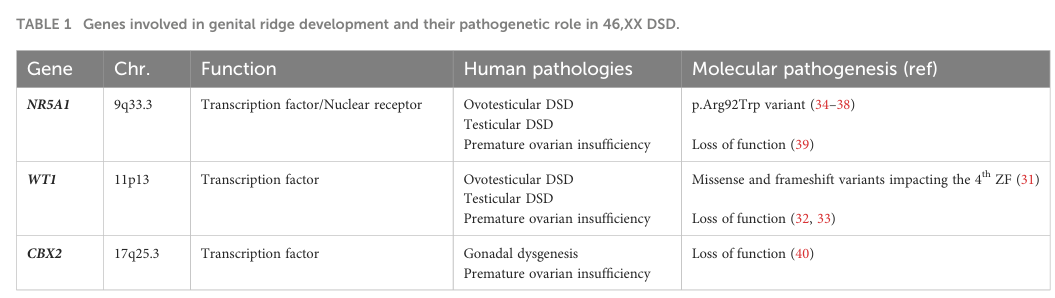
Summary
MONDO:0009299 provides a dedicated disease-level anchor for 46 XX gonadal
dysgenesis. The literature consistently treats this as a rare, genetically
heterogeneous ovarian developmental failure state in phenotypically female
individuals with a normal 46,XX karyotype, with the core phenotype defined by
streak or underdeveloped ovaries, absent spontaneous puberty, primary
amenorrhea, uterine hypoplasia, and hypergonadotropic hypogonadism.
Disease-Anchor Decision
- Anchor chosen:
46 XX gonadal dysgenesis(MONDO:0009299) - Why this anchor: the disease has its own MONDO term and multiple primary human papers describe it as a coherent clinical entity rather than only as a phenotype mention inside broader DSD literature.
- Why not a generic
46,XX DSDbucket: the core disease definition here is ovarian developmental failure with phenotypically female external genitalia, not generic 46,XX sex-development variation such as prenatal androgen excess. - Why not lump fully with broader primary ovarian insufficiency:
NR5A1demonstrates overlap with46,XX primary ovarian insufficiency, but the46,XX gonadal dysgenesisliterature is narrower and emphasizes congenital streak/underdeveloped ovaries, absent spontaneous puberty, and uterine hypoplasia. - Why not split into single-gene disorders for this issue:
NUP107,PSMC3IP,FSHR, andNR5A1all support the same disease-level anchor, and the issue explicitly asked for a disease-level dismech entry rather than a single-gene subtype.
Mechanistic Themes
- Shared proximal theme: disrupted female gonad development.
- Shared intermediate theme: impaired ovarian hormonal signaling and folliculogenesis.
- Shared downstream theme: streak or severely underdeveloped ovaries leading to hypoestrogenic hypergonadotropic ovarian failure.
Papers Used for YAML Evidence
| PMID | Use in YAML | Key contribution |
|---|---|---|
| 23087880 | prevalence framing | Rare genetically heterogeneous disease framing |
| 26485283 | case definition, pathophysiology, phenotypes, genetics | Strong disease-definition abstract plus ovarian-development mechanism |
| 21963259 | progression, pathophysiology, phenotypes, genetics | Streak gonads, estrogenic signaling, follicular-pool mechanism |
| 7553856 | pathophysiology, genetics | Direct FSHR signaling defect causing ovarian dysgenesis |
| 8855829 | pathophysiology, phenotypes | Elevated FSH/LH and amenorrhea in mechanistically defined subset |
| 19246354 | pathophysiology, genetics | Overlap boundary with broader ovarian insufficiency |
| 35142292 | treatment | Hormone replacement therapy for secondary sexual characteristics and osteoporosis prevention |
| 31809259 | PR framing / differential context | MRKH misdiagnosis pitfall and estrogen-dependent uterine visualization |
Curation Notes
- Evidence snippets were restricted to exact quoted text from the cached PMID records.
- The YAML intentionally avoids generic DSD-management statements as primary treatment evidence; management is limited to hormone replacement therapy with direct PMID-backed wording.
- The YAML intentionally avoids assigning phenotype frequency bands because the available abstracts support association but not robust quantitative frequency.